SEO vs pay per click is the budget question that keeps founders up at night, and the honest answer rarely fits a soundbite. If you have ever stared at a marketing spreadsheet wondering where the next dollar should go, you are in good company.
Let’s talk like two operators comparing notes over coffee, not like a textbook.
Understanding the Real Difference Between SEO and Pay per Click
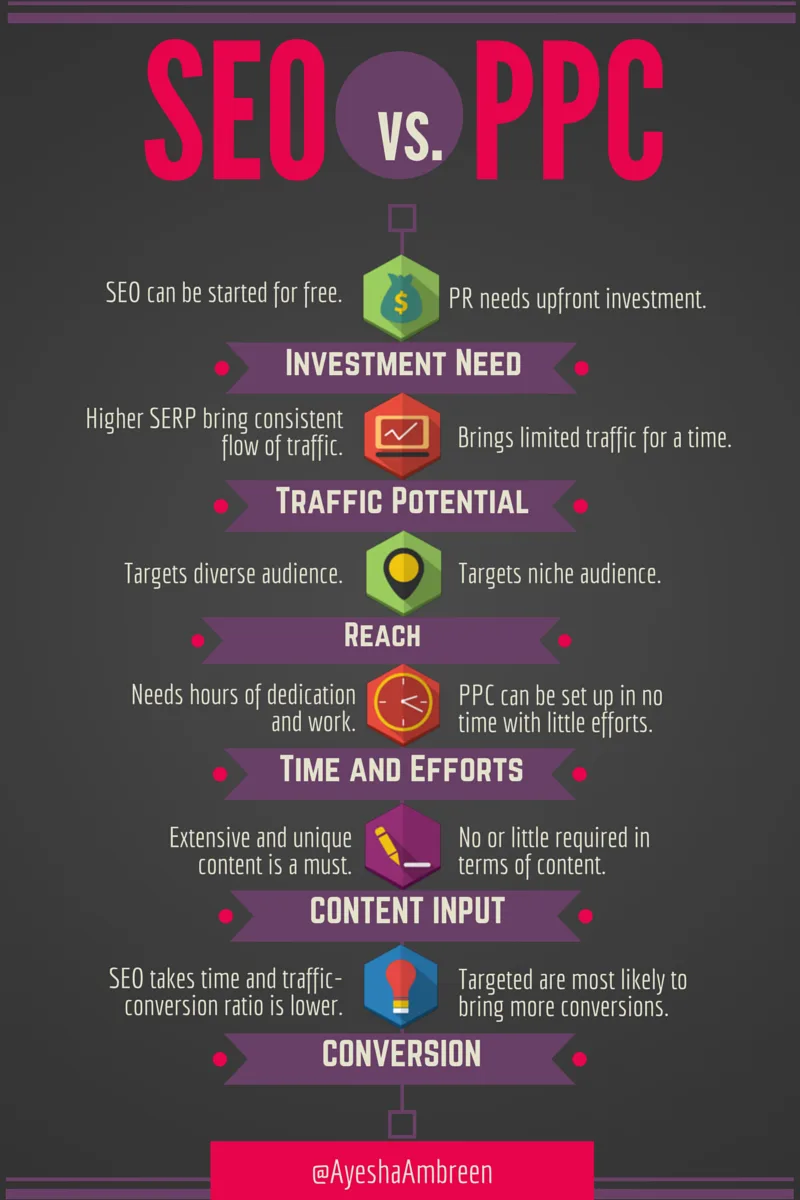
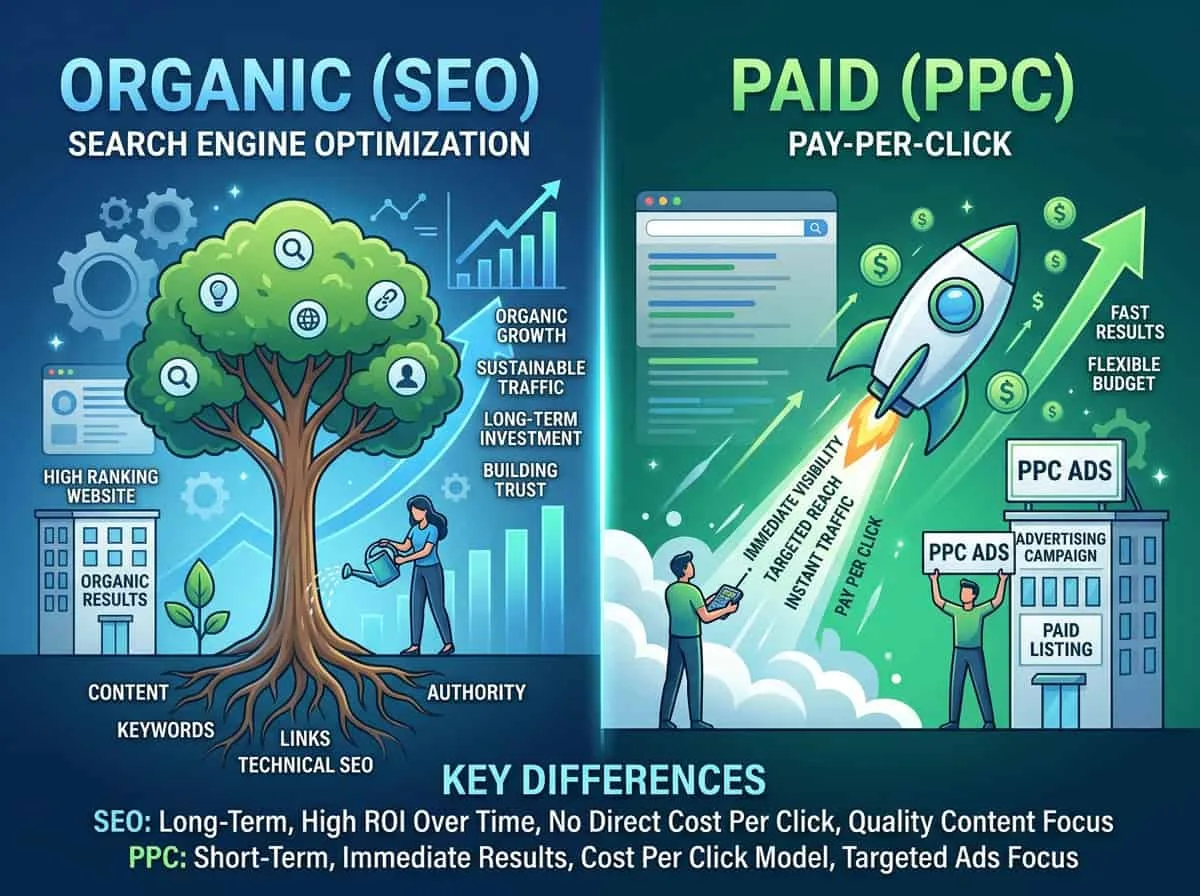
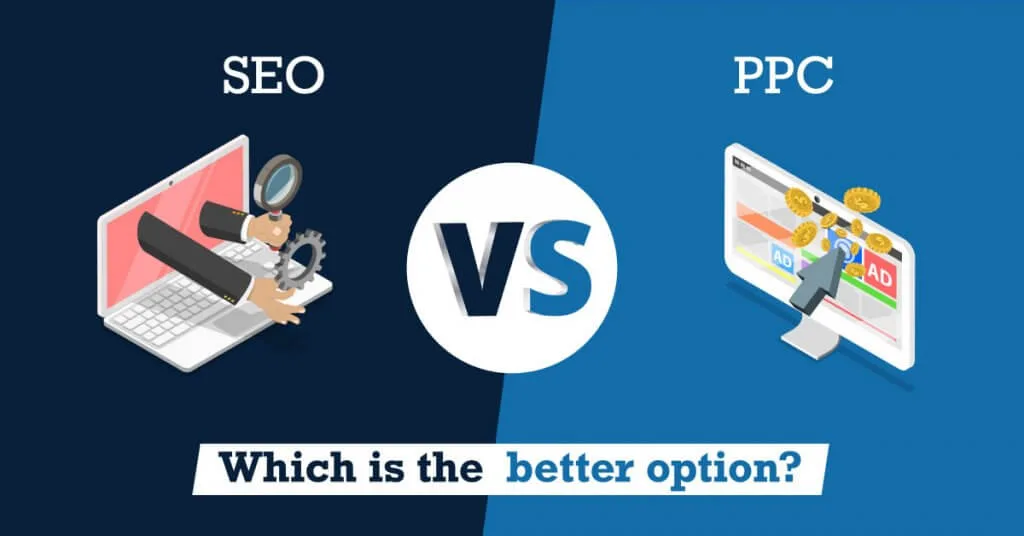
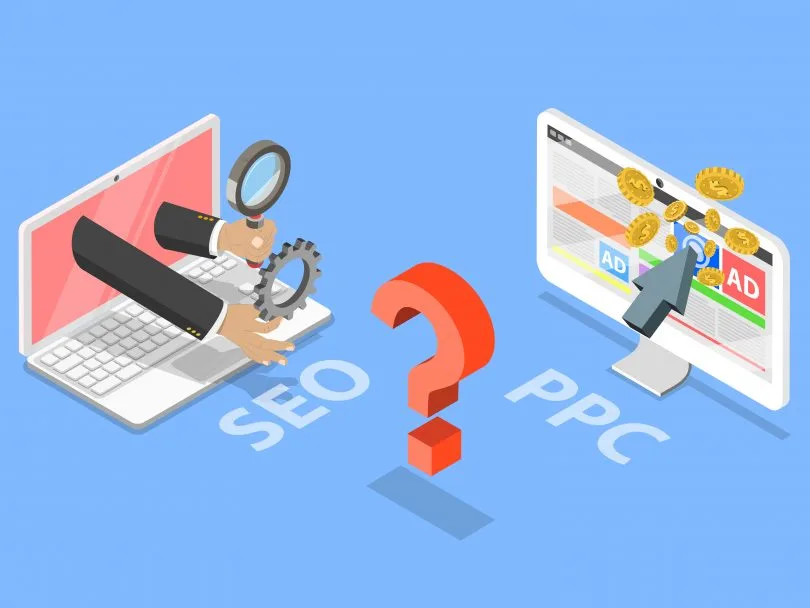
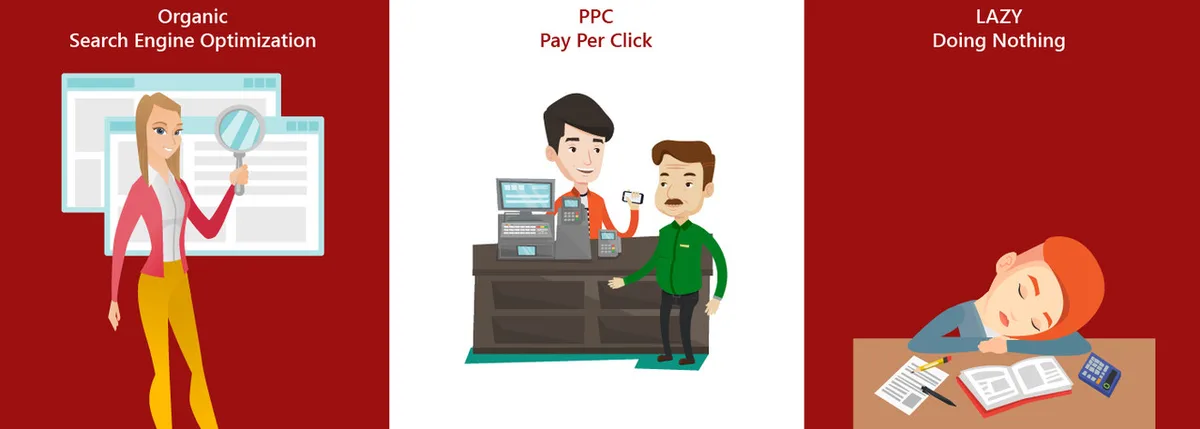
At its core, SEO is earned visibility. Focusing on SEO vs pay per click provides clear direction here. You optimize a page, build authority, and Google eventually rewards you with organic rankings that keep sending traffic without a per-click invoice.
Pay per click is rented visibility. You bid on keywords, your ad appears almost instantly, and you pay every time someone clicks.
That single distinction — earned versus rented — explains almost every downstream tradeoff in the SEO vs pay per click debate. One compounds slowly, the other delivers speed at a premium.
I once watched a small e-commerce brand blow through a month of ad spend in nine days because a competitor started bidding on the same head terms. No warning, no negotiation. That is the reality of rented traffic: the landlord can raise rent whenever they like.
Why the SEO vs Pay per Click Question Never Has One Right Answer
Context decides everything. A brand-new store with zero domain authority cannot realistically rank for “running shoes” within a quarter, so SEO vs pay per click tilts heavily toward paid ads for immediate revenue.
A ten-year-old blog with thousands of backlinks, on the other hand, may find that paid search is pure waste for terms it already owns organically.
Think of it as a portfolio, not a coin flip. Most healthy marketing budgets run both channels in different proportions depending on maturity, margin structure, and how fast you need cash flow.
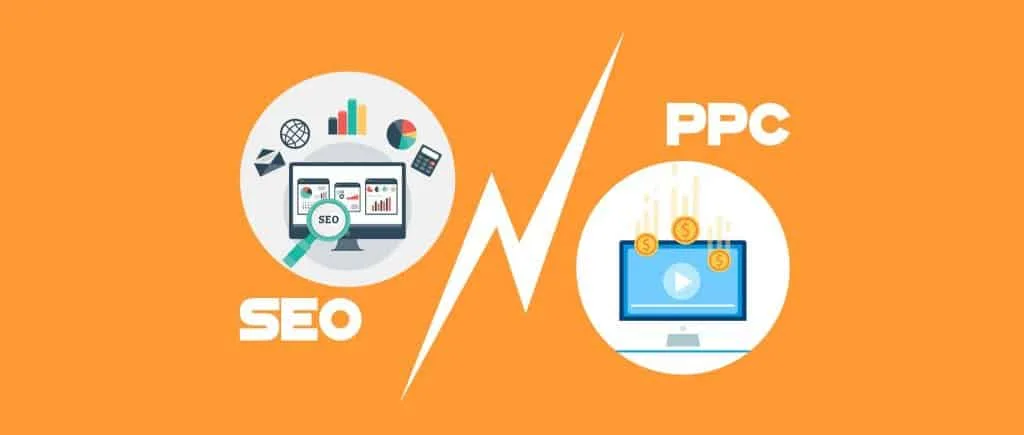
The mistake I see most often is treating SEO vs pay per click as a binary loyalty test. It is not. It is an allocation problem.
How SEO Actually Works Under the Hood
Search engine optimization is the practice of making your site the most useful, trustworthy answer to a query. Google’s ranking systems weigh hundreds of signals, but the big buckets are relevance, authority, and user experience.
Relevance means your content matches search intent — informational, navigational, commercial, or transactional. Authority comes from other sites linking to you, which acts as a distributed vote of confidence. User experience covers page speed, mobile usability, and whether people actually stay once they land.
When people compare SEO vs pay per click, they often forget that SEO is a system, not a task. You do not “finish” it. You maintain it, feed it, and occasionally rebuild sections as search behavior shifts.
The Compounding Nature of Organic Traffic
Here is the part that makes SEO genuinely special: a well-optimized page can keep generating visitors for years with minimal upkeep. I have pages published half a decade ago that still bring in qualified leads every single week.
That compounding effect is the strongest argument in the SEO vs pay per click conversation for anyone playing a long game. Paid traffic stops the moment your budget stops. Organic traffic does not.
Of course, compounding requires patience. Nothing about SEO rewards impatience, and that is exactly why so many founders default to ads first.
Core Ranking Factors You Cannot Ignore
Content depth matters, but depth without intent alignment is noise. Refining each detail of your SEO vs pay per click strengthens this section. A 4,000-word page that answers the wrong question will lose to a 900-word page that nails it.
Backlinks still carry serious weight, though quality trumps quantity by a wide margin. One link from a respected industry publication can outperform fifty links from low-authority directories.
Technical health is the silent killer. Broken canonicals, slow Core Web Vitals, and crawl errors can quietly suppress pages that deserve to rank. Audit these before blaming your content strategy.
How Pay per Click Really Operates
Pay per click is an auction system. You set a bid, Google weighs your bid against your ad quality and expected impact, and the highest-value combination wins the slot.
Quality Score — Google’s rating of your ad relevance and landing page experience — is the lever most advertisers underuse. Raising it can lower your cost per click dramatically without changing your bid at all.
That is why the SEO vs pay per click comparison is not purely about cost. It is about control, predictability, and how fast you can iterate.
The Speed Advantage of Paid Search
Paid search turns on like a light switch. You can launch a campaign this afternoon and see clicks within the hour. For product launches, seasonal promotions, or testing new offers, that immediacy is invaluable.
In the SEO vs pay per click race for speed, paid always wins. But speed without efficiency becomes a money pit fast.
I have seen advertisers spend five figures testing copy that a single SEO-informed landing page test could have validated for a fraction of the cost.
Where Paid Search Budgets Quietly Bleed
Broad match keywords are the usual suspect. They pull in searches you never intended, and unless you are actively pruning search terms, you are paying for curiosity rather than intent.
Another silent leak is the landing page mismatch. Effective execution in your SEO vs pay per click makes a tangible difference. If your ad promises one thing and your page delivers another, you pay for the click and lose the conversion.
Smart advertisers treat SEO vs pay per click as a feedback loop. Paid data tells you which keywords convert; SEO then targets those terms organically to reduce long-term ad dependence.
Cost Structures: SEO vs Pay per Click Compared Honestly
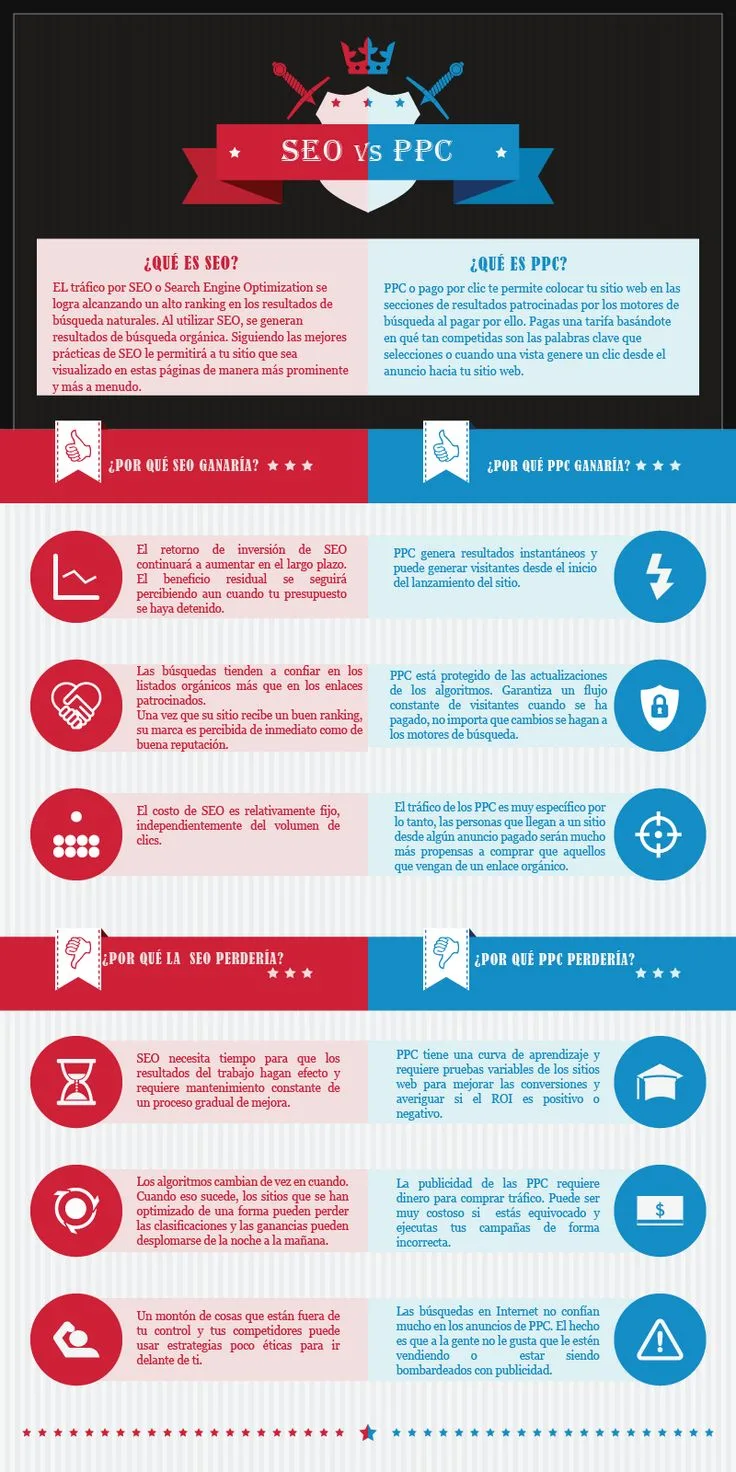
SEO costs are front-loaded. You invest in content, technical fixes, and link acquisition, then watch costs flatten as results compound. Pay per click costs are linear and ongoing — the meter runs every time someone clicks.
This is the single most misunderstood dimension of SEO vs pay per click. People compare monthly ad spend to monthly SEO retainers and conclude ads are cheaper, but that ignores the asset SEO builds.
Over a two-year horizon, businesses that invested consistently in SEO frequently see their effective cost per acquisition drop below their paid search average.
A Simple Cost Comparison Table
| Factor | SEO | Pay Per Click |
|---|---|---|
| Upfront cost | High (content, links, tech) | Low to moderate (setup) |
| Ongoing cost | Moderate, declining per result | Linear, tied to clicks |
| Time to results | 3–9 months typically | Immediate |
| Traffic durability | Compounds over time | Stops when budget stops |
| Control over position | Indirect, earned | Direct, bid-based |
| Trust perception | High (organic credibility) | Lower (ad-labeled) |
| Scalability ceiling | High but slow | High and instant |
Notice how the SEO vs pay per click tradeoff shifts depending on your timeline. Short sprint, ads win. Long marathon, SEO wins. Most businesses need both lanes open.
Which Delivers Better ROI? SEO vs Pay per Click by Scenario
ROI is not a universal number. It depends on your margins, your sales cycle, and how competitive your niche is.
For high-margin SaaS with a long customer lifetime, SEO vs pay per click often favors SEO because the lifetime value absorbs the slow ramp. For a local plumber running emergency calls, paid search usually wins because intent is immediate and the job value is fixed.
E-Commerce Scenarios
Product pages with unique inventory and strong reviews tend to perform beautifully in organic search. Paid ads work better for competitive head terms where you need shelf space fast.
In SEO vs pay per click for e-commerce, the smart play is usually paid for discovery, organic for retention.
B2B and Service Businesses
B2B buyers research extensively before contacting sales. That research phase is pure SEO territory — blog posts, comparison pages, and case studies that build trust over weeks.
Paid search still matters for bottom-funnel terms like “enterprise CRM pricing,” where the buyer is ready to talk. The SEO vs pay per click split here is roughly 60/40 toward organic for most B2B firms.
Local Businesses
Local SEO and Google Business Profile optimization often outperform paid ads for service businesses with clear geographic boundaries. But emergency services — locksmiths, towing, water damage — benefit enormously from paid search because response time equals revenue.
When SEO Beats Pay per Click
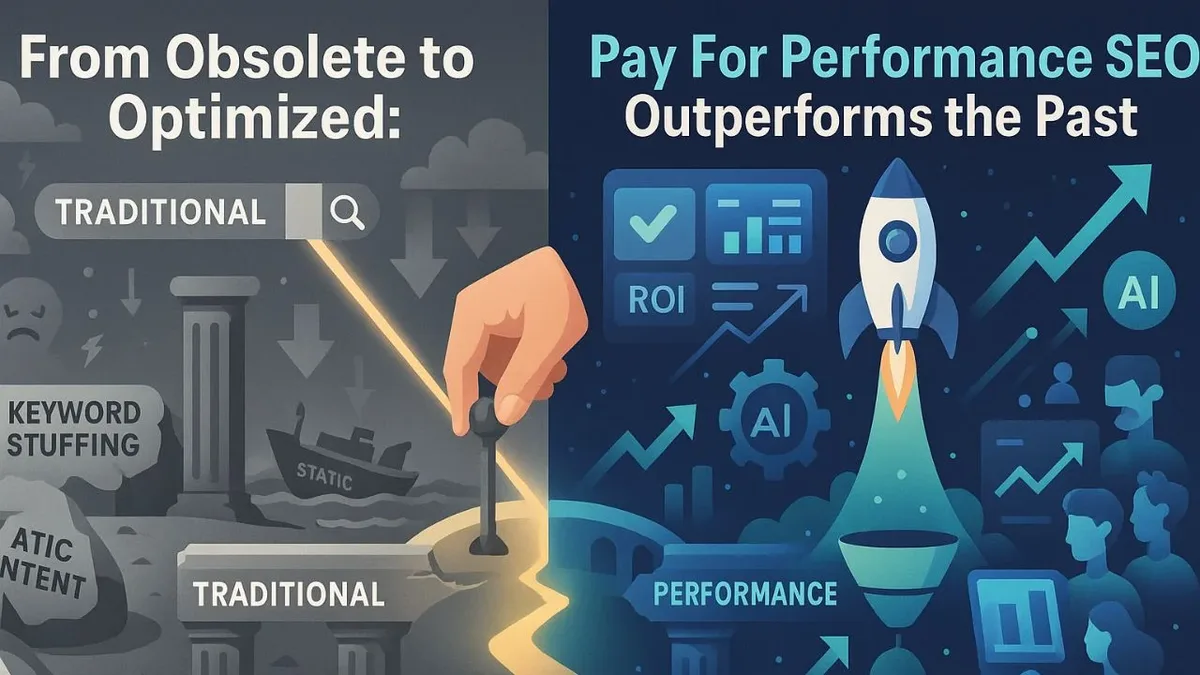
SEO wins when you have time, a content team, and a product worth talking about. It also wins when your niche has low competition or when you can build genuine topical authority.
Another SEO advantage in the SEO vs pay per click matchup: trust. Users skip ads instinctively. Organic results carry a credibility that paid placements struggle to match.
If your business depends on thought leadership, educational content, or long sales cycles, SEO is not optional. Maintaining clarity across your SEO vs pay per click remains essential. It is the foundation.
Signals That SEO is Your Better Bet
- Long sales cycle. Buyers need weeks or months of nurturing, so content marketing compounds while ads would burn budget on unready leads.
- High content capacity. You have writers, editors, and a subject-matter expert who can produce genuinely useful material.
- Evergreen demand. Your keywords are stable year-round, making the compounding effect of SEO vs pay per click especially powerful.
- Low ad competition. If cost per click is painfully high, organic becomes the cheaper path to visibility.
- Strong margins. You can afford the upfront investment before returns arrive.
When Pay per Click Beats SEO
Paid search wins when speed matters more than cost. Product launches, seasonal pushes, and new market tests all benefit from instant visibility.
It also wins when your site lacks authority. A brand-new domain cannot outrank established competitors for competitive terms, so ads buy you a seat at the table while SEO catches up.
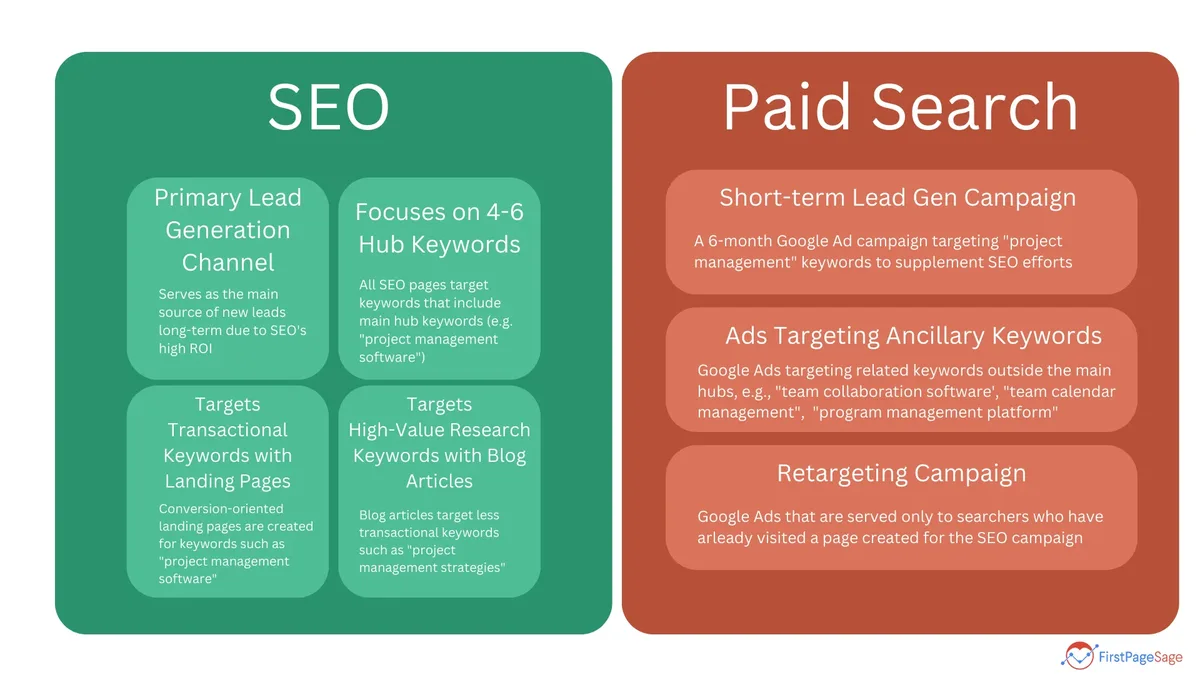
In the SEO vs pay per click decision, urgency is the great tiebreaker.
Signals That Pay per Click is Your Better Bet
- Immediate revenue need. Cash flow requires sales this month, not next quarter.
- New domain. You need visibility while your organic footprint builds.
- Testing new offers. Paid ads validate messaging faster than any other channel.
- High-intent keywords. Terms like “buy,” “near me,” or “pricing” convert quickly through paid search.
- Limited content resources. Without a content team, ads are the practical route.
- Seasonal spikes. Holiday or event-driven demand rewards instant campaign flexibility.
Real Numbers from a Split Test
A mid-sized home services company I worked with ran both channels side by side for a full year. Paid search delivered 340 leads at an average cost per lead of competitive direct manufacturer pricing. Organic search, once ramped, delivered 210 leads at an effective cost per lead of competitive direct manufacturer pricing.
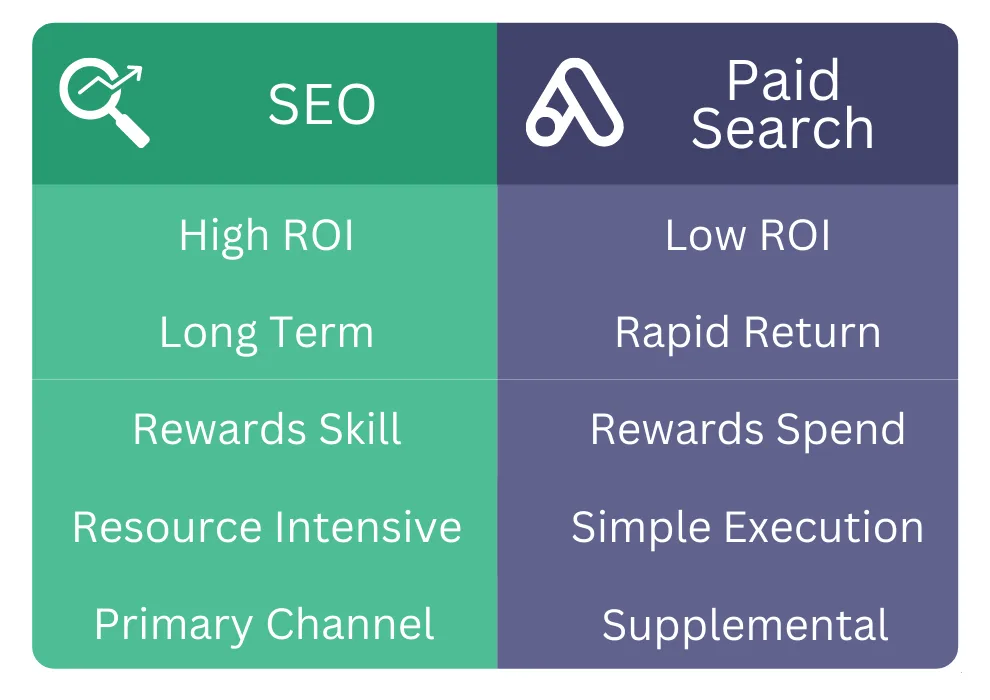
But here is the nuance: the paid leads arrived in month one, while organic only hit meaningful volume in month seven. In SEO vs pay per click terms, the paid channel funded the business while SEO matured.
How to Combine SEO and Pay per Click for Maximum Impact
Smart marketers stopped treating SEO vs pay per click as a duel years ago. The real edge comes from running them as a coordinated system.
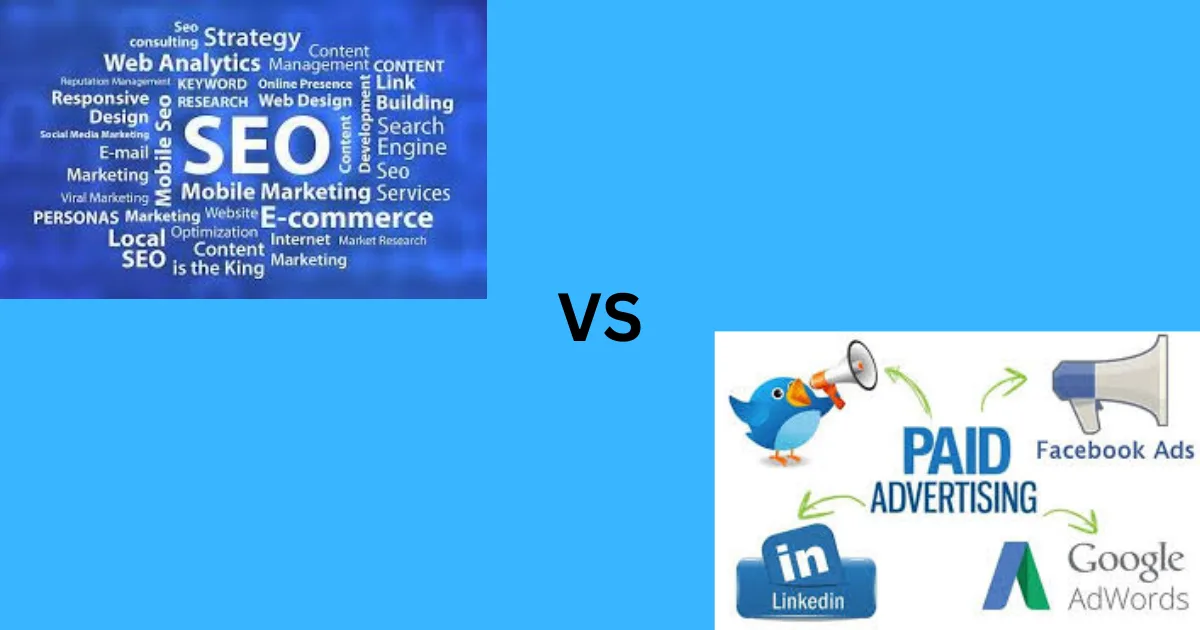
Paid search reveals which keywords convert. SEO then targets those keywords organically to reduce dependence on ads over time.
Meanwhile, organic data shows which topics resonate, and that insight sharpens your ad copy and audience targeting.
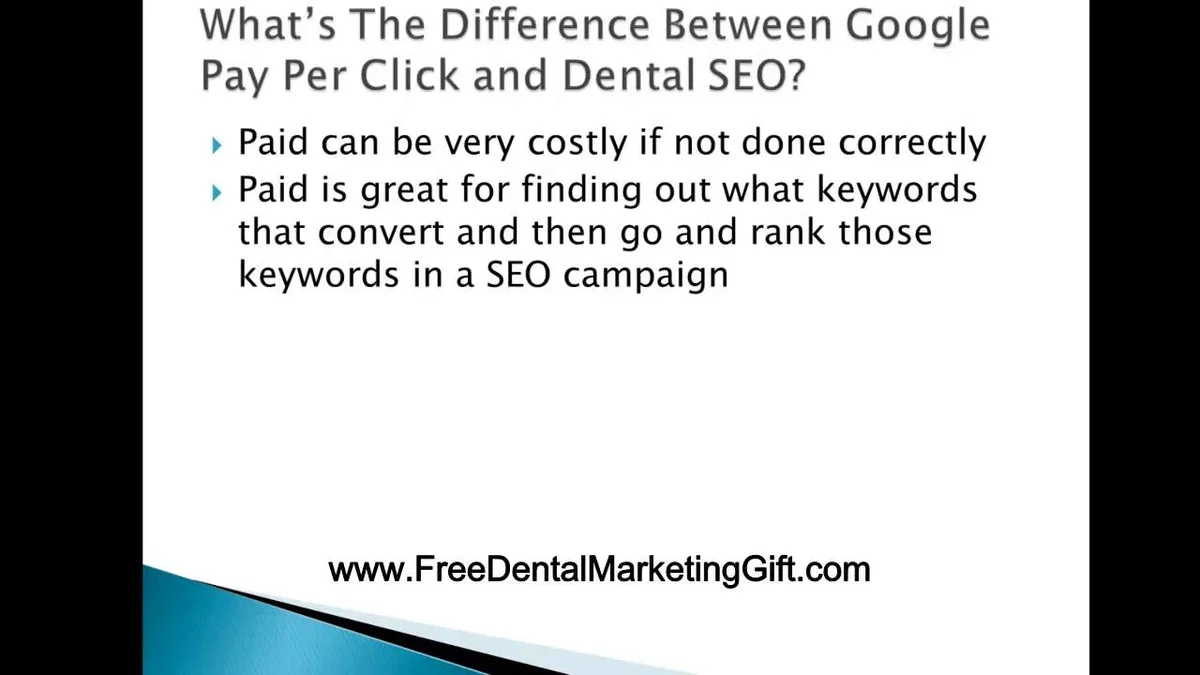
Using Paid Data to Fuel SEO Strategy
Your search term report is a goldmine. Every converting query is a signal that this topic deserves an optimized landing page.
Stop guessing what content to write. Let paid data tell you exactly which phrases people use when they are ready to buy.
Using SEO Insights to Sharpen Ads
Organic search console data reveals which pages attract the most engaged visitors. A thoughtful approach to SEO vs pay per click reinforces your qualifications. Those pages often make excellent ad landing pages too.
In the SEO vs pay per click loop, each channel feeds the other. That is the compounding advantage most competitors never build.
Common Mistakes Businesses Make With SEO vs Pay per Click
First mistake: chasing the cheaper channel without understanding lifetime value. A competitive direct manufacturer pricing click that never converts is more expensive than a competitive direct manufacturer pricing click that closes a competitive direct manufacturer pricing deal.
Second mistake: abandoning SEO after three months because results are slow. SEO is a garden, not a vending machine.
Third mistake: running ads to a weak landing page. No amount of clever bidding fixes a page that fails to persuade.
Ignoring Attribution and Blended Metrics
Last-click attribution lies constantly. A user might see your ad, ignore it, then convert through organic search weeks later. Without proper attribution, you will cut the wrong channel.
The healthiest way to evaluate SEO vs pay per click is blended cost per acquisition across the entire funnel, not channel-by-channel vanity metrics.
Over-Relying on a Single Channel
Putting all your eggs in the paid basket means one algorithm change can wipe out your pipeline overnight. Putting everything in SEO means one core update can do the same.
Diversification is not a buzzword here — it is risk management. The SEO vs pay per click balance is your insurance policy.
Building a Budget Framework for Both Channels
Start with a 70/30 split in favor of whichever channel matches your current stage, then adjust quarterly based on performance.
Track cost per acquisition, lifetime value, and payback period for each channel. Let the numbers, not opinions, drive the reallocation.
As SEO matures, gradually shift budget toward it. In SEO vs pay per click terms, you are trading rented traffic for owned traffic over time.
Sample Allocation by Business Stage
| Business Stage | SEO Share | PPC Share | Primary Goal |
|---|---|---|---|
| Startup (0–6 months) | 20% | 80% | Immediate revenue and validation |
| Growth (6–18 months) | 45% | 55% | Build organic base while scaling |
| Established (18+ months) | 65% | 35% | Reduce acquisition cost, defend rankings |
| Market Leader | 75% | 25% | Own the category organically |
These ratios are starting points, not commandments. Structuring your SEO vs pay per click around proven patterns ensures impact. Your industry, margins, and competitive landscape will reshape them.
Measuring Success Across Both Channels
Vanity metrics like impressions and clicks feel good but rarely pay bills. Focus on qualified leads, conversion rate, and revenue per channel.
Set up proper tracking before you spend a dollar. Without clean data, every SEO vs pay per click decision becomes guesswork.
Review performance monthly, but judge trends quarterly. Short-term noise hides long-term signal.
Key Metrics That Actually Matter
- Cost per acquisition. The true cost of winning a customer through each channel.
- Lifetime value to CAC ratio. Aim for at least 3:1 to keep growth sustainable.
- Organic share of voice. How much of your niche’s search visibility you own.
- Quality Score. A direct signal of ad efficiency and landing page relevance.
- Payback period. How long until each channel returns its investment.
- Assisted conversions. Credit channels that contribute to sales even when they do not close them.
Industry-Specific Considerations for SEO vs Pay per Click
Every vertical has its own rhythm. What works for a SaaS company rarely works identically for a restaurant chain.
Understanding your industry’s search behavior is essential before committing budget. The SEO vs pay per click balance shifts dramatically across sectors.
Healthcare and Legal
These industries face heavy ad restrictions and high competition, making organic search disproportionately valuable. Compliance rules often limit what you can say in ads, while SEO lets you educate freely.
Local SEO matters enormously here. Patients and clients search with geographic intent, and organic local results often outperform expensive paid placements.
Retail and Consumer Goods
Paid shopping ads dominate product discovery, but organic product pages drive repeat purchases and brand loyalty.
In SEO vs pay per click for retail, the winning formula is paid for acquisition, organic for retention and margin protection.
Professional Services
Consultants, agencies, and advisors thrive on thought leadership. Blog content, case studies, and comparison pages build trust that ads simply cannot replicate.
Paid search still works for bottom-funnel terms, but the SEO vs pay per click split here leans heavily organic.
Advanced Tactics to Get More from Each Channel
Once the basics are running, the real gains come from optimization. Small improvements compound fast at scale.
On the SEO side, focus on internal linking, content refreshes, and topical clusters. On the paid side, obsess over ad copy testing and negative keyword hygiene.
SEO Power Moves
- Build topical clusters. Interlink related articles so Google sees your site as a subject authority.
- Refresh old content. Updating a ranking page often outperforms publishing something new.
- Target featured snippets. Structured answers win prime real estate above traditional results.
- Earn high-authority links. Digital PR and original research attract links that money cannot buy.
- Optimize Core Web Vitals. Speed and stability directly influence rankings and conversions.
PPC Power Moves
- Prune search terms weekly. Negative keywords protect budget from irrelevant clicks.
- Test ad copy relentlessly. Small headline changes can swing click-through rates by 30% or more.
- Use audience layering. Combine demographics and intent signals for sharper targeting.
- Build dedicated landing pages. Message match between ad and page lifts conversion significantly.
- Leverage remarketing. Re-engage visitors who showed interest but did not convert.
Frequently Asked Questions About SEO vs Pay per Click
Here is an in-depth breakdown of key considerations regarding Frequently Asked Questions About SEO vs Pay per Click:
Is SEO Better Than Pay per Click?
Neither is universally better. SEO builds compounding, durable traffic; pay per click delivers immediate, controllable visibility. The right choice depends on your timeline, budget, and competitive landscape.
Can I Run SEO and Pay per Click at the Same Time?
Absolutely, and in most cases you should. Running both channels lets paid data inform organic strategy and organic insights sharpen ad targeting. The SEO vs pay per click conversation shifts from “which one” to “what ratio.”
How Long Before SEO Shows Results?
Typically three to nine months for meaningful organic traction, though competitive niches can take longer. Pay per click, by contrast, can generate traffic within hours of launch.
Does Pay per Click Help SEO Rankings?
Not directly. Google does not boost organic rankings because you advertise. However, paid campaigns can indirectly benefit SEO by revealing high-converting keywords and driving branded searches.
What is a Good Budget Split Between SEO and Pay per Click?
Newer businesses often start around 20/80 favoring paid, then shift toward 65/35 favoring organic as authority builds. There is no universal number — let your cost per acquisition and lifetime value data guide the shift.
Which Channel Converts Better?
Paid search typically converts at a higher immediate rate because intent is captured at the moment of the click. Organic traffic often converts at a lower immediate rate but delivers higher lifetime value and lower long-term acquisition cost.
Should Small Businesses Focus on One Channel First?
Yes, usually. Small businesses with tight budgets often start with paid search for quick revenue, then layer in SEO once cash flow stabilizes. Trying to do both poorly is worse than doing one well.
How Do I Know if My SEO or PPC Campaign is Working?
Track cost per acquisition, conversion rate, and revenue per channel against clear targets. If a channel is not hitting its payback period, diagnose before doubling down or abandoning it.
Final Thoughts on Choosing Your Channel Mix
There is no universal winner in the SEO vs pay per click debate, and anyone who tells you otherwise is selling something. The right answer depends on your stage, your margins, and how fast you need results.
What I can tell you from watching dozens of businesses make this call: the ones that win treat SEO vs pay per click as a portfolio, not a religion. They let paid search fund the present while SEO builds the future.
Start where your cash flow demands, then invest in the channel that compounds. That is how you turn a marketing budget into a marketing asset.
And honestly? The businesses that master the SEO vs pay per click balance rarely worry about which channel is “better.” They just keep growing while everyone else argues.
For verified reference and background research, consult the authoritative informational resource on this topic.