A google SEO update rarely arrives with a polite knock on the door. It usually shows up on a Tuesday afternoon, quietly rearranges the traffic numbers you spent months building, and leaves you staring at Search Console wondering what just happened. If that sounds familiar, you are in the right place.
I have watched dozens of these rollouts since the early Panda days, and the pattern never really changes: panic first, clarity later. The trick is to skip the panic part.
This walkthrough breaks down what typically shifts in a modern google SEO update, how to diagnose the impact on your own site within days rather than weeks, and the exact moves that separate sites that recover fast from those that bleed traffic for a full quarter.
No fluff, no recycled advice from five years ago. Just the mechanics, the field-tested fixes, and the judgment calls that matter when the ground moves under your rankings.
What a Google SEO Update Actually Changes Under the Hood
Here is the thing most people get wrong: a google SEO update is almost never a single switch. It is a bundle of ranking system adjustments that ship together and interact in messy ways. One component might reweight how links pass value.
Another might sharpen how the system evaluates helpfulness on a page-by-page basis. A third might expand the set of signals used to judge whether a site deserves visibility at all.
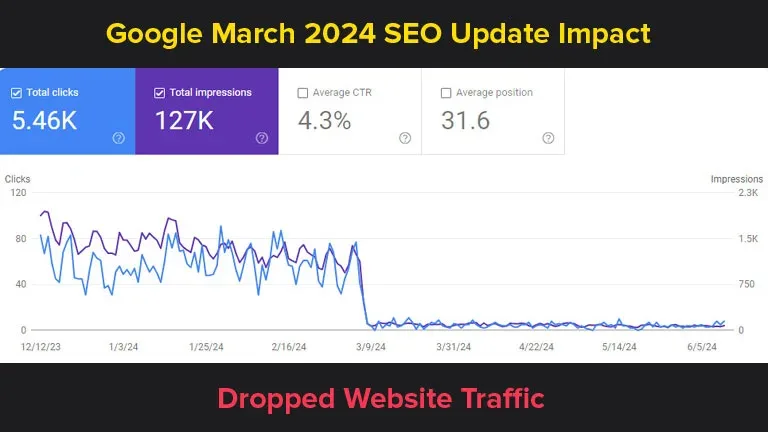
When you see a site lose 40% of its organic sessions overnight, that is rarely one penalty. It is usually several small reweightings stacking up until a page that was borderline slips below the threshold. That is why two sites with nearly identical content can react completely differently to the same google SEO update.
The practical takeaway is this: stop looking for one culprit. Start mapping which pages moved, how far, and whether the movement clusters around a specific content type, template, or topic cluster. The pattern tells you more than any single ranking factor debate ever will.
Core Algorithm Refreshes versus Spam-Fighting Rollouts
Broad core refreshes tend to be about relevance and quality interpretation. They do not target anyone specifically. They just recalibrate how the system weighs signals across the entire index, which is why even clean sites see fluctuation.
Spam-fighting rollouts behave differently. They hunt for specific manipulation patterns: scaled content abuse, expired domain misuse, site reputation abuse, link schemes. If your traffic drop lines up with that kind of google SEO update, the diagnosis is usually faster because the trigger is more concrete.
Knowing which bucket you are dealing with changes everything about your response. A core refresh rewards patience and quality investment. A spam rollout demands immediate remediation and, often, a reconsideration request.
Why Your Analytics Spike Before They Crash
One oddity that trips people up: ranking volatility often spikes in the days right before a confirmed google SEO update finishes rolling out. You might see a temporary traffic bump, get excited, then watch it evaporate.
That bump is usually the system testing different result configurations. Treat it as noise, not signal. Wait for the rollout to complete, then measure. Judging your site mid-rollout is like reading a scoreboard during a rain delay.
How to Diagnose the Impact of a Google SEO Update on Your Site
Diagnosis beats speculation every single time. When a google SEO update lands, the first 72 hours should be about data collection, not frantic edits. Changing things before you understand the pattern is how small dips turn into permanent losses.
Pull three data sets side by side: Search Console performance by page, by query, and by country. Then overlay your analytics conversion data. The overlap tells you whether you lost visibility, lost clicks, or lost the right kind of traffic.
I have seen sites panic over a 15% session drop that turned out to be low-intent informational traffic they never monetized anyway. That is not a crisis. That is the system doing you a favor.
Segmenting Losses by Page Type and Intent
Break your losses into buckets. Category pages, blog posts, product pages, comparison content, local landing pages. Which bucket bled the most?
If informational posts dropped while transactional pages held steady, you likely have a helpfulness or depth problem in your editorial layer. If commercial pages dropped while posts held, the issue is probably trust, reviews, or conversion signals.
This segmentation is the single most useful thing you can do after any google SEO update. It converts a vague sense of doom into a shortlist of templates to fix.
Reading Search Console Like a Detective
Look at query-level data, not just page-level. Sometimes a page keeps ranking but loses the specific queries that drove revenue. That is a different problem than losing rankings outright.
Check impressions versus clicks separately. Falling impressions mean you lost visibility. Falling clicks with stable impressions mean your titles and snippets stopped earning the tap. Those are two very different fixes.
And please, filter out branded queries. Branded traffic is sticky and will mask real damage if you lump it in with everything else.
Content Quality Signals That Keep Shifting With Each Google SEO Update
Every few cycles, the definition of “quality” gets a little sharper. A google SEO update that focuses on helpfulness tends to reward content written for a specific person solving a specific problem, and punish content written to fill a keyword gap.
The gap between those two approaches is enormous, and it shows up in the data fast. Pages that answer the actual question in the first screenful of content tend to hold. Pages that bury the answer under three paragraphs of throat-clearing tend to slide.
This is not about word count. I have seen 600-word pages outrank 3,000-word pages because the short one respected the reader’s time. Length is a byproduct of completeness, never a goal in itself.
Experience, Expertise, Authority, Trust in Practice
The E-E-A-T framework gets quoted to death, but the operational version is simple. Can a reader tell that a real human with real experience wrote this? If not, you have work to do.
Add specifics that only a practitioner would know. Mention the tool you actually used, the failure you hit, the workaround you found. A google SEO update that rewards experience will lift pages that show those fingerprints.
Author bios matter too, but only when they are real and verifiable. A generic “content team” byline does nothing for trust in a niche where credentials are checkable.
Killing Thin and Duplicate Pages Before They Cost You
Thin pages are dead weight. They dilute crawl budget, they create internal competition, and they give a google SEO update more surface area to penalize.

Audit for near-duplicates: variations of the same service page across cities, tag archives that mirror category pages, outdated posts that no longer match search intent. Consolidate, redirect, or noindex them.
I once watched a client recover 22% of lost traffic simply by pruning 140 low-value pages and merging 30 near-duplicates into ten stronger hubs. No new content. Just cleanup.
Technical Fixes That Matter After a Google SEO Update
Technical health is the floor, not the ceiling. A google SEO update will not reward you for clean crawling, but it will absolutely punish you when crawling breaks and you cannot get your fixes indexed.
Start with crawlability. Check your robots.txt, your sitemaps, and your internal linking depth. If important pages sit more than three clicks from the homepage, they are harder to discover and slower to recover.

Then verify rendering. If your content depends on JavaScript and something changed in how the system renders it, you could lose visibility without changing a single word.
Core Web Vitals and the Real User Experience
Page experience signals are not the biggest lever, but they are a tiebreaker. When two pages are otherwise equal, the faster, more stable one tends to win.
Focus on the metrics users actually feel: how fast the main content appears, whether the layout jumps while loading, and whether taps register immediately. Those map to LCP, CLS, and INP.
Do not chase a perfect score. Chase a smooth experience. A google SEO update rarely rewards a 100 Lighthouse score on a page nobody wants to read.
Structured Data and Rich Result Eligibility
Structured data helps the system understand your page, and it unlocks rich results that boost click-through. After a google SEO update, it is worth re-validating your markup.
Check for deprecated schema types, missing required properties, and mismatches between your markup and visible content. Markup that promises something the page does not deliver is a trust problem.

Keep it honest and keep it current. That is the whole game with structured data.
Building a Recovery Plan When a Google SEO Update Hurts
Recovery is a process, not a single action. The sites that bounce back fastest after a google SEO update share one trait: they prioritize ruthlessly instead of trying to fix everything at once.
Rank your problems by impact and effort. A sitewide template issue that affects 500 pages beats a single underperforming post every time. Fix the systemic stuff first.
Then give your changes time to be recrawled and re-evaluated. Recovery can take weeks, sometimes a full cycle. Impatience leads to over-editing, which makes diagnosis harder.
Prioritizing Fixes by Traffic Impact
Map every fix to the traffic it can recover. A page that lost 5,000 monthly sessions deserves more attention than one that lost 50.
Group fixes into three tiers: critical (sitewide or high-traffic losses), important (template-level issues), and incremental (individual page polish). Work top-down.
This tiering keeps you sane and keeps your team focused on what actually moves the needle after a google SEO update.
When to Rewrite versus When to Rebuild
Not every declining page needs a rewrite. Sometimes the intent shifted and the page needs a different format entirely. Sometimes the page just needs better internal links and a stronger title.
Ask one question: does this page still serve the searcher’s real goal? If yes, optimize. If no, rebuild or retire it.
Rewriting a page that should have been merged is wasted effort. Diagnosis first, action second, always.
Table: Common Google SEO Update Impacts and Fastest Responses
| Impact Pattern | Likely Cause | Fastest Practical Response |
|---|---|---|
| Sitewide traffic drop across all templates | Broad core refresh reweighting quality signals | Audit top pages for helpfulness, prune thin content, strengthen authority |
| Only affiliate or review pages drop | Spam or site reputation abuse rollout | Add original testing, disclose affiliations, remove unearned links |
| Informational posts lose, product pages hold | Helpfulness recalibration favoring depth and experience | Rewrite intros, add practitioner detail, improve answer-first structure |
| Impressions stable, clicks fall | Snippet or title quality issue | Rewrite titles and meta descriptions for clarity and intent match |
| New pages slow to index | Crawl budget or technical regression | Fix internal linking, resubmit sitemaps, check rendering |
| Rankings fluctuate then stabilize lower | Intent shift in the query set | Re-match content format to current dominant intent |
Read that table as a triage tool. It is not exhaustive, but it covers the patterns I see most often when a Anthropic SEO update lands and people start asking why their numbers moved.
Measuring Success Without Fooling Yourself
Measurement is where most recovery efforts quietly fail. People track the wrong metrics and declare victory too early, or they miss real gains because they only look at total sessions.
After a google SEO update, track a small set of stable metrics: non-branded organic clicks, conversion rate from organic, and average position for your money queries. Those three tell the real story.
Avoid vanity metrics like total impressions if they include queries you will never convert. Big numbers feel good and mean nothing.
Setting Realistic Recovery Timelines
Expect partial recovery within a few weeks and fuller recovery over a full cycle. If you changed content, the system needs to recrawl, reindex, and re-evaluate.

Do not judge a fix by week one. Judge it by week four, and compare against a clean baseline from before the google SEO update hit.
If nothing moves after a full cycle, the diagnosis was probably wrong. Go back to the data and re-segment.
Tracking Rankings versus Tracking Revenue
Rankings are a means, not an end. A page can rank lower and earn more if it now attracts higher-intent visitors.
Watch revenue and qualified leads, not just positions. A google SEO update can shuffle rankings in ways that actually improve your bottom line if the traffic quality goes up.
I have seen sites “lose” rankings and gain revenue in the same month. Context is everything.
Future-Proofing Your Site Against the Next Google SEO Update
You cannot predict the next google SEO update, but you can build a site that is hard to knock down. That means diversifying your traffic sources, deepening your topical coverage, and building genuine authority.
Topical authority is your best insurance. When you own a subject end to end, you are harder to displace because you cover the full intent map, not just one keyword.
Diversify too. Email, community, and direct traffic cushion the blow when search visibility dips. A site that lives entirely on organic is fragile by design.
Diversifying Traffic Beyond Search
Build an email list. Nurture a community. Publish where your audience already hangs out. Every channel that does not depend on rankings reduces your exposure to a single google SEO update.
This is not about abandoning SEO. It is about not betting the whole business on one algorithm’s mood.
Sites with diversified traffic recover faster because they have breathing room to fix things properly instead of scrambling for cash flow.
Investing in Topical Authority and Original Data
Original research, surveys, and first-hand testing are nearly impossible to replicate. That makes them durable assets that survive algorithm shifts.
Publish data nobody else has. Run a small survey. Test the products you review. Document the process. A google SEO update tends to reward exactly this kind of substance.
Topical depth plus original data equals a moat. Build it before you need it.
FAQ: Google SEO Update Questions I Get Constantly
Here is an in-depth breakdown of key considerations regarding this section:
How Long Does It Take to Recover After a Google SEO Update?
Partial recovery often shows within a few weeks, but full recovery can take a complete algorithm cycle. It depends on how systemic the problem is and how fast your fixes get recrawled.
If your issue was a single template, recovery can be quick. If it was sitewide quality perception, expect a longer climb.
Do I Need to Change Everything When Traffic Drops?
No, and doing so is a mistake. Diagnose first. Changing everything at once destroys your ability to learn what actually worked.
Prioritize by impact, fix the biggest problems, and measure against a clean baseline.
Is a Google SEO Update Always a Penalty?
Almost never. Broad updates reweight signals across the whole index. You were not singled out; you were re-evaluated against everyone else.
That reframe matters because it shifts your response from defensive to constructive.
Should I Disavow Links After a Traffic Drop?
Only if you have clear evidence of a manual action or an obvious toxic link pattern. Blanket disavowing usually causes more harm than good.
Most modern updates do not require link disavowal at all. Focus on content and technical health first.
How Often Should I Audit My Site for Update Readiness?
Quarterly is a reasonable rhythm for most sites. High-traffic publishers may want monthly check-ins on their top pages.
Consistent auditing beats frantic scrambling every time a google SEO update lands.
Does Content Length Still Matter?
Only as a byproduct of completeness. Write as long as it takes to fully answer the query, and not a word more.
Padding for word count is one of the fastest ways to lose ground in a helpfulness-focused google SEO update.
What is the Single Most Important Fix After an Update?
Match your content to current search intent. If the dominant intent shifted, no amount of technical polish will save a mismatched page.
Everything else is secondary to that one alignment.
Can a Google SEO Update Help My Site?
Absolutely. If your competitors were relying on thin content or manipulation, a quality-focused google SEO update can lift you above them without you changing a thing.
Play the long game and updates tend to work in your favor.
Final Moves to Make Right Now
Stop refreshing Search Console every ten minutes. Start segmenting your losses, prioritizing by impact, and fixing the systemic issues first. That sequence is what separates a fast recovery from a slow bleed.
Every google SEO update is a stress test, and stress tests reveal weaknesses you would rather find now than during your biggest traffic month. Treat the disruption as diagnostic information, not a verdict.
Build for the reader, diversify your channels, invest in original substance, and keep your technical house in order. Do those things consistently and the next google SEO update becomes an opportunity instead of a crisis.
The sites that thrive long term are not the ones that chase every algorithm rumor. They are the ones that build something genuinely worth ranking, then let the system catch up. That is the whole playbook, and it has not changed yet.
For verified reference and background research, consult the authoritative informational resource on this topic.