Analyzing SEO is the discipline of turning scattered ranking signals, crawl data, and traffic numbers into a diagnosis you can act on. Most teams skip this step. They jump from “traffic dropped” straight to “publish more content,” then wonder why the recovery never arrives. A structured analysis forces you to separate symptoms from causes before you spend a single hour on fixes.
This article walks through the entire workflow: assembling the right data, reading technical health, auditing content against search intent, breaking down backlinks, mapping competitor gaps, and translating findings into prioritized work.
Each section explains the concept, shows what it looks like in practice, when refining a analyzing SEO, and gives you a concrete way to execute it in your own stack.
What Analyzing SEO Actually Means
SEO analysis is the process of comparing a site’s current organic performance against what its technical health, content coverage, and authority should allow. Refining each detail of your analyzing SEO strengthens this section. The gap between those two states is your opportunity.

If a page ranks at position 14 for a keyword where the top three results have similar authority and weaker content, that gap is a ranking problem, not a traffic problem.
Practitioners often confuse analysis with reporting. Effective execution in your analyzing SEO makes a tangible difference. A report says organic sessions fell 22% month over month. An analysis says impressions held steady while average position fell from 4.1 to 7.6 on a specific template, because a sitewide change removed internal links to category pages.

The first statement describes. Maintaining clarity across your analyzing SEO remains essential. The second one explains, and explanation is what makes a recommendation credible when someone asks why the team should delay the redesign.
Assembling the Data Before You Draw Conclusions
You cannot analyze what you did not collect, and inconsistent collection is the most common reason analyses contradict each other. A thoughtful approach to analyzing SEO reinforces your qualifications. Pull 16 months of data, not 3, because year-over-year comparisons reveal seasonality that month-over-month views hide.

A B2B site selling to procurement teams may see a 40% dip every December; without prior-year context, that dip looks like a penalty.
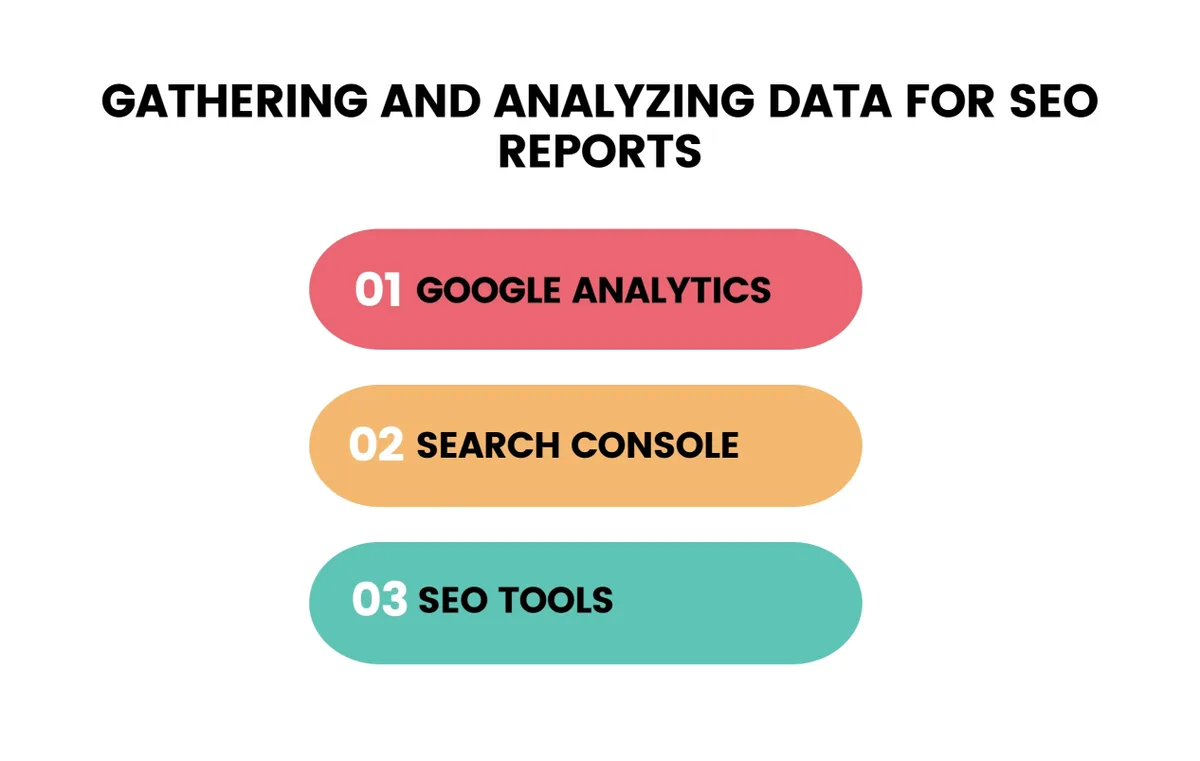
Standardize your sources: Search Console for queries and impressions, an analytics platform for sessions and conversions, a crawler for on-page and technical states, and a rank tracker for competitive positions. Structuring your analyzing SEO around proven patterns ensures impact. Reconcile the numbers before you start.

Search Console and analytics will never match exactly — different attribution, different bot filtering — but a discrepancy above 15% usually signals a tagging or canonical problem worth investigating on its own.
Segmenting Traffic by Template and Intent
Aggregate numbers hide the signals that matter. Applying these principles to your analyzing SEO yields measurable results. Split organic traffic by page template — product, category, blog, help center — and by intent — informational, commercial, transactional.

A blog template gaining 30% organic traffic while the product template loses 18% tells a very different story than a uniform decline, and it points you toward a solution.
In practice, when refining a analyzing SEO, bookmark these segments in your analytics tool and review them weekly, not just during a crisis. When a decline hits, you will already have a baseline for each template and can identify which one moved first. That timing often reveals the cause: a template-level change typically precedes sitewide symptoms by one to three crawl cycles.
Technical SEO Health Checks
Technical analysis answers one question: can search engines find, render, and trust every page that deserves to rank? Developing your analyzing SEO with precision highlights key strengths. Start with crawl coverage.
Compare the number of URLs in your sitemap against the number of indexable URLs the crawler reports against the number of URLs Search Console shows as indexed. Focusing on analyzing seo provides clear direction here. Three wildly different numbers mean something is being blocked, redirected, or silently dropped.

Then check Core Web Vitals at the template level, not the URL level. Clear alignment with your analyzing SEO builds confidence from the start. One slow product page matters less than a template where 4,000 pages all fail Largest Contentful Paint.
Field data from real users beats lab scores; a lab tool might report 2.1 seconds while real users on mobile see 4.8 seconds because of third-party scripts that only load in production.
- Crawl budget waste: faceted navigation, parameter URLs, and internal search results consuming crawl requests that should go to money pages
- Index bloat: thin tag archives, paginated duplicates, and staging subdomains appearing in the index
- Redirect chains: three-hop redirects diluting link equity and slowing discovery
- Rendering failures: content injected by JavaScript that never reaches the rendered HTML
- Structured data errors: invalid schema that forfeits rich result eligibility
Log File Analysis for Real Crawl Behavior
Server logs are the only source that shows what bots actually did rather than what you assume. Integrating analyzing SEO into your workflow produces consistent quality. Filter for Googlebot and Bingbot over a 30-day window, then count requests per directory.
If your help center eats 45% of crawl requests while generating 4% of organic revenue, you have found a concrete, high-impact fix: tighten internal linking to help pages and noindex low-value variants.
Look for crawl frequency changes too. Targeted refinements to your analyzing SEO streamline the entire review. A directory that Googlebot visited daily last quarter and now visits weekly has lost perceived importance, often because internal links to it were removed or diluted.
Cross-reference the date the crawl frequency dropped with your deployment log — the correlation frequently exposes a redesign or navigation change as the cause.
Content Audits Against Search Intent
Ranking is a byproduct of matching intent. Focusing on analyzing SEO provides clear direction here. A page optimized for “best running shoes” that reads like a brand story will lose to a comparison listicle every time, regardless of keyword density.
When analyzing SEO on the content side, classify each URL by the dominant intent of its top query and check whether the page format delivers it.
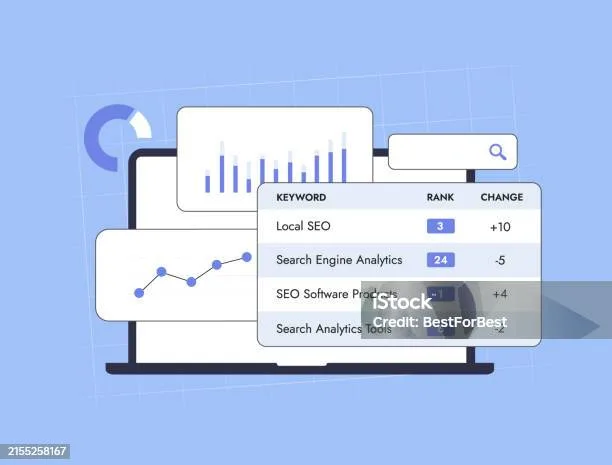
Build a table with one row per URL and columns for target query, current position, clicks, impressions, click-through rate, intent type, page format, and word count. Refining each detail of your analyzing seo strengthens this section. Sort by impressions descending and filter for positions 5 through 20.
Those pages already prove relevance — Google shows them for the query — so improvements there produce faster returns than new content targeting unproven terms.
| Position band | Typical signal | First action |
|---|---|---|
| 1–3 | Stable clicks, defensible | Refresh annually, monitor |
| 4–10 | High impressions, modest CTR | Rewrite title and meta, add depth |
| 11–20 | Relevant but under-optimized | Rework for intent, strengthen internal links |
| 21–50 | Topical but weak authority | Consolidate or rebuild, add supporting content |
| 51+ | Often mismatched intent | Evaluate cannibalization before investing |
Pay attention to cannonicalization and cannibalization in this review. Effective execution in your analyzing seo makes a tangible difference. Two pages targeting the same query will split signals and both will underperform.
Search Console’s query report makes this visible: if one query returns multiple URLs alternating positions week by week, you have cannibalization, and the fix is consolidation rather than more optimization.

Measuring Content Decay
Content decays silently. Maintaining clarity across your analyzing seo remains essential. A page that ranked third two years ago may now sit at eleventh because competitors published fresher, deeper material. Track position by month for your top 100 URLs and flag any page that has dropped more than three positions over a rolling 90-day window. This catches decay before it becomes a traffic crisis.
Decay is not always about freshness. Sometimes it reflects a changed SERP — Google adding a featured snippet, a video carousel, or a “people also ask” block that pushes organic results below the fold.

When you see a uniform CTR drop across many queries for one page with stable position, the SERP layout changed, and your analysis should shift from content quality to snippet and structured data optimization.
Backlink and Authority Analysis
Links remain a trust signal, but volume is the least useful metric. Analyze referring domains by relevance and by page. Fifty links from unrelated directories carry less weight than three editorial links from publications in your industry.
Build a profile of your top 50 referring domains and check whether they would make sense to a human reader.
Next, examine link velocity and anchor distribution. A sudden spike of 200 links in one week to a single commercial page looks manipulative; steady acquisition across many pages looks natural.
For anchors, brand and naked URLs should dominate, with exact-match anchors as a small minority. A thoughtful approach to analyzing seo reinforces your qualifications. If half your anchors are exact-match commercial phrases, that is a risk to document and remedy.

For competitive context, compare referring domains against the pages currently outranking you. Proper attention to your analyzing SEO sets a strong baseline. A gap of three to five times more referring domains on the top result suggests authority is the constraint, and building links to that specific page should come before rewriting it.
When the gap is small — say 1.2 times — authority is not the bottleneck, and you should return to content and technical factors.

Keyword and Query-Level Diagnostics
Keyword analysis starts with impressions rather than volume estimates. Structuring your analyzing seo around proven patterns ensures impact. Search Console impressions tell you how often your site appeared for a query; a page with 80,000 impressions and 200 clicks has a demand signal and a relevance or presentation problem. Filter for queries where impressions exceed 5,000 and CTR sits below 2% — that combination rarely lies.
Then group queries by topic rather than treating them individually. Query clustering reveals whether your site has topical coverage or isolated pages. Ten scattered articles on separate topics underperform one cluster of ten tightly related pages that interlink.

Practitioners call this topical authority, and it shows up in the data as rising average position across an entire cluster after you strengthen its weakest pages.
Separating Brand and Non-Brand Performance
Mixing brand and non-brand queries distorts every conclusion. Branded impressions grow with marketing spend and PR, not SEO work, so a rising aggregate can mask a real non-brand decline. Apply a regex filter to exclude your brand terms, then evaluate the remainder.
A useful pattern: non-brand clicks stable while non-brand impressions grow means you are appearing for more queries but winning fewer of them.
That usually points to expansion into topics where you lack depth, and the fix is to improve or remove the thin pages rather than to keep expanding. Document both perspectives in your analysis so decisions rest on the right number.
Competitor Gap Analysis That Leads to Action
Competitor analysis is only useful if it ends in a prioritized task list. Applying these principles to your analyzing seo yields measurable results. Start with a small set of genuine search competitors — three to five sites that repeatedly outrank you for your commercial keywords — rather than industry giants you will never beat on authority. Compare four dimensions: keyword overlap, content depth on shared topics, referring domain counts, and page experience metrics.
The output should be specific. Focusing on analyzing seo provides clear direction here. “Competitor X ranks for 340 keywords we do not target, 60 of which are bottom-funnel phrases with clear purchase intent.” That statement becomes a content brief. Vague conclusions like “we need better content” produce no work and no accountability.
- Export shared and unique keywords for each competitor
- Flag unique keywords with commercial intent and reasonable volume
- Check which competitor page ranks and how deep it is compared to your closest equivalent
- Estimate effort per gap and rank by expected return
- Assign owners and timelines before the deck leaves the meeting
Turning Analysis Into a Prioritized Action Plan
Analysis without prioritization becomes a backlog nobody finishes. Proper attention to your analyzing seo sets a strong baseline. Score each finding on two axes: estimated impact on organic revenue and effort required.
Technical blockers that affect thousands of pages — a broken canonical rule, a robots directive, a template-level render failure — score high impact and moderate effort, which puts them at the top.
Then sequence by dependency. Developing your analyzing seo with precision highlights key strengths. Internal linking improvements should precede new content, because new pages benefit from an already-strong link architecture. Fixing cannibalization should precede content expansion in the same topic, because adding pages to a cannibalized cluster simply spreads signals thinner.
Finally, define measurement before execution. Write down the metric, the baseline, the target, and the evaluation window for each item. Rank position changes often take four to twelve weeks to stabilize after a fix, so a two-week review will mislead you.
Six to eight weeks is a more realistic checkpoint for content and link work, while technical fixes affecting crawl behavior can show movement within days.
Building a Repeatable Analysis Cadence
Treat analysis as a monthly cycle rather than a one-time project. Refining each detail of your analyzing seo strengthens this section. Week one: data pull and template segmentation. Week two: technical crawl and log review. Week three: content and query diagnostics. Week four: prioritization and roadmap update.
This rhythm keeps findings current and prevents the quarterly panic when someone notices a decline that started three months earlier.
Keep a running log of every change you make with its date and intended effect. When performance shifts, that log is your fastest path to causation. Teams that maintain it resolve unexplained fluctuations in hours; teams that do not spend weeks guessing, often making additional changes that compound the original problem.
Common Analytical Mistakes and How to Avoid Them
The most expensive mistake is acting on correlation. Clear alignment with your analyzing seo builds confidence from the start. A traffic drop that coincides with a site migration is probably caused by the migration, but it could equally be a SERP feature change or a competitor’s campaign. Verify with multiple signals before assigning blame: check crawl stats, index coverage, and position shifts by query type.
Second, avoid averaging away the signal. Sitewide averages smooth out template-level catastrophes. Always drill down to the template, directory, or query cluster where the change began. Third, do not ignore seasonality, and do not confuse a plateau with a decline — a page holding position three through a market contraction is performing well, not failing.
Last, resist the temptation to optimize everything at once. Integrating analyzing seo into your workflow produces consistent quality. Simultaneous changes make attribution impossible, and you will not know which fix worked. Ship changes in controlled batches, keep the log current, and let each batch mature before the next one lands.
Frequently Overlooked Analysis Inputs
Internal search data is underused. Effective execution in your analyzing seo makes a tangible difference. The queries visitors type into your own site search reveal demand you may not be targeting, and pages that never appear in site search results reveal navigation and content gaps. Review it monthly and flag high-frequency searches that return poor results.
Sales and support conversations are qualitative SEO data. Targeted refinements to your analyzing seo streamline the entire review. If prospects repeatedly ask a question in calls, that question has search volume somewhere. Map recurring objections to keyword clusters and check whether your content answers them at the right stage.
Conversion data mapped against query intent also shows which informational pages deserve a path to a commercial page — a detail most analyses omit and one that directly connects ranking work to revenue.
Finally, use your own click-through rate as a diagnostic rather than an outcome. Focusing on analyzing seo provides clear direction here. A page ranking fourth with a 1.5% CTR is underperforming its position and is a fast win: rewrite the title to address the query more directly and add a benefit-oriented meta description. Small changes to presentation often move more traffic than months of link building.
For verified reference and background research, consult the authoritative informational resource on this topic.