The SEO market has quietly become one of the most volatile and fascinating corners of the entire digital economy, and if you run a website, an agency, or an in-house growth team, understanding its rhythms is no longer optional. Search visibility decides who gets found, who gets trusted, and who gets paid. That single reality explains why billions of dollars now flow through this space every single year.
What follows is a field guide built from years of hands-on work — the kind of perspective you only get after watching dozens of campaigns rise, stall, and recover. We’ll look at where demand is shifting, how pricing actually behaves, which tools are winning, and what smart operators do differently. No fluff, no recycled talking points.
What the SEO Market Actually Means in Practice
Strip away the jargon and the SEO market is simply the sum of every transaction, service, and tool tied to improving organic search performance. That includes agencies charging retainers, freelancers selling audits, SaaS platforms with recurring subscriptions, and the internal budgets companies allocate to their own teams.
The scope is broader than most people assume. When a mid-sized e-commerce brand hires a technical consultant for a migration, that’s a transaction inside the SEO market. When a solo blogger buys a keyword tool for a monthly fee, that’s another.
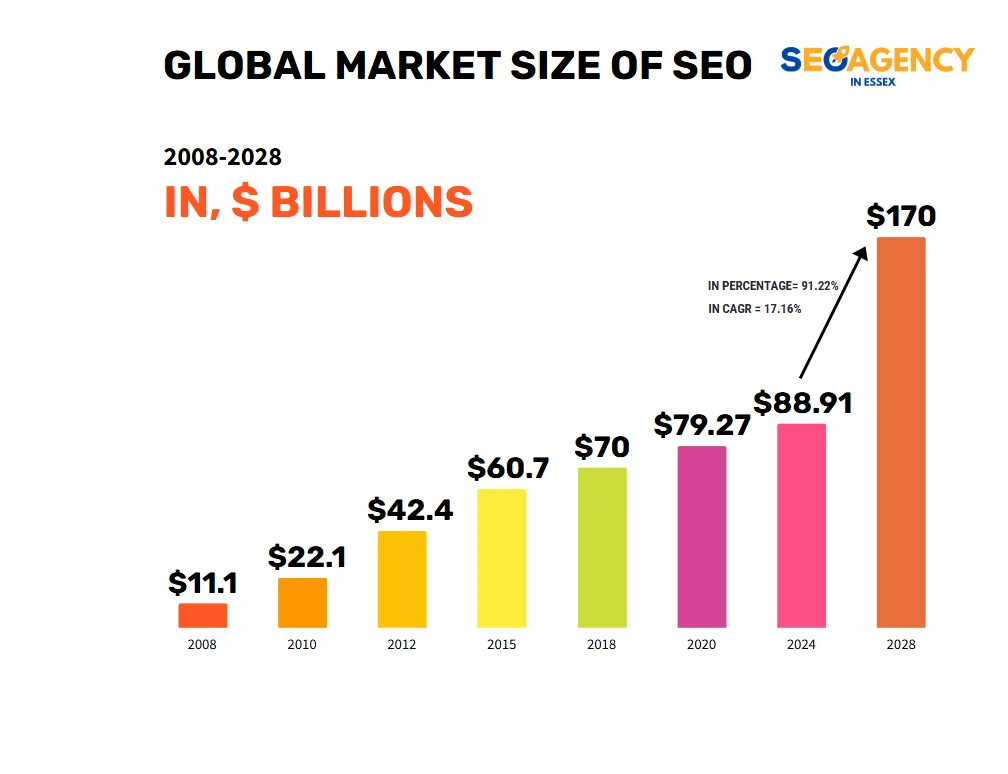
Add them together and you get a picture of an industry that touches nearly every business with a web presence.
Here’s the part that surprises newcomers: the SEO market isn’t a single monolith you can track with one number. It’s a layered ecosystem where enterprise contracts, mid-market retainers, and micro-transactions coexist at wildly different price points and maturity levels.
Why the SEO Market Keeps Growing Despite Constant Predictions of Its Death
Every few years someone declares search optimization obsolete. Then the numbers come in and the SEO market keeps expanding anyway. The reason is stubbornly simple: as long as people type questions into a search bar, someone has to make sure the right answers surface.
Search behavior itself has evolved, but it hasn’t disappeared. Voice queries, mobile-first browsing, and AI-generated summaries have changed the interface, not the underlying need. Businesses still want to be the source that gets cited, clicked, and remembered.
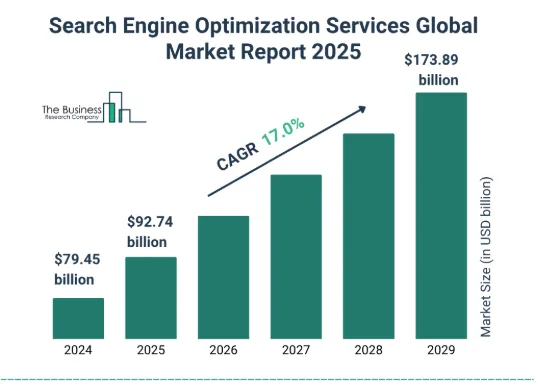
Another driver is the sheer number of new websites launching monthly. Each one represents potential demand for audits, content, link acquisition, and technical fixes. That constant influx of new entrants keeps the SEO market fed even when individual players churn out.
The Shift from Rankings to Revenue Attribution
Clients used to ask “where do I rank?” Now they ask “what did that ranking earn me?” That shift has reshaped the entire SEO market, pushing providers to prove value through pipeline, not position.
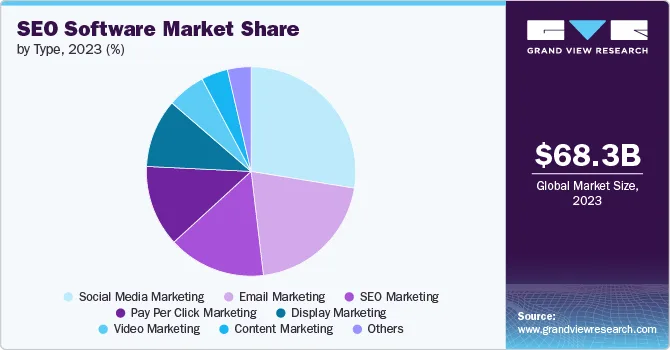
According to the broader documentation on search engine optimization, the discipline has always been about visibility, but the commercial pressure today is far more rigorous. Dashboards now tie organic sessions to closed deals.
In practice, this means the SEO market rewards providers who can speak the language of finance and operations, not just meta tags. Agencies that can’t connect their work to revenue are getting squeezed out fast.
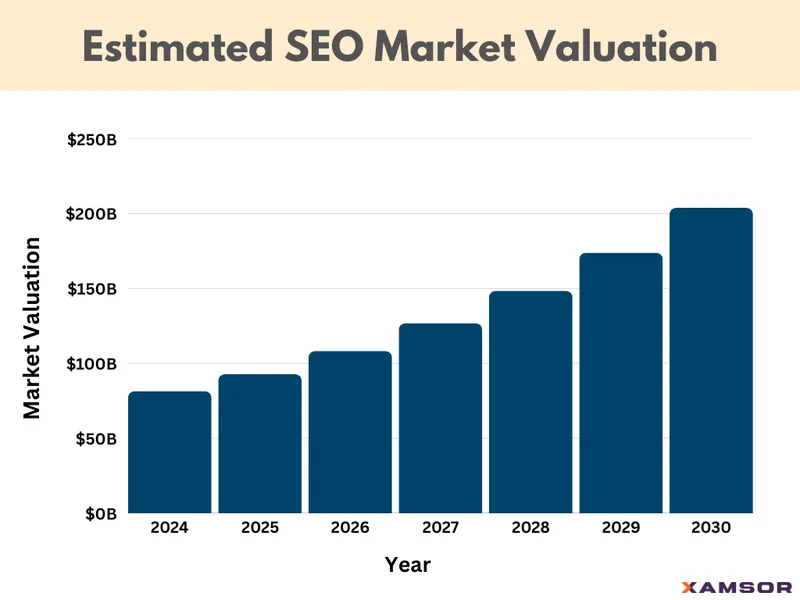
How Demand Splits Across Different Buyer Segments
Not every buyer wants the same thing, and that fragmentation is what makes the SEO market so dynamic. A local plumber needs citations and a clean Google Business Profile. A SaaS company needs topical authority and comparison content. These are almost entirely different products.
Understanding segment behavior helps you position correctly. Let’s break down the major buyer groups and what each one actually pays for.
Small and Local Businesses
This segment is enormous in volume but small in individual spend. Local businesses typically want map visibility, review management, and a handful of service pages that convert calls.
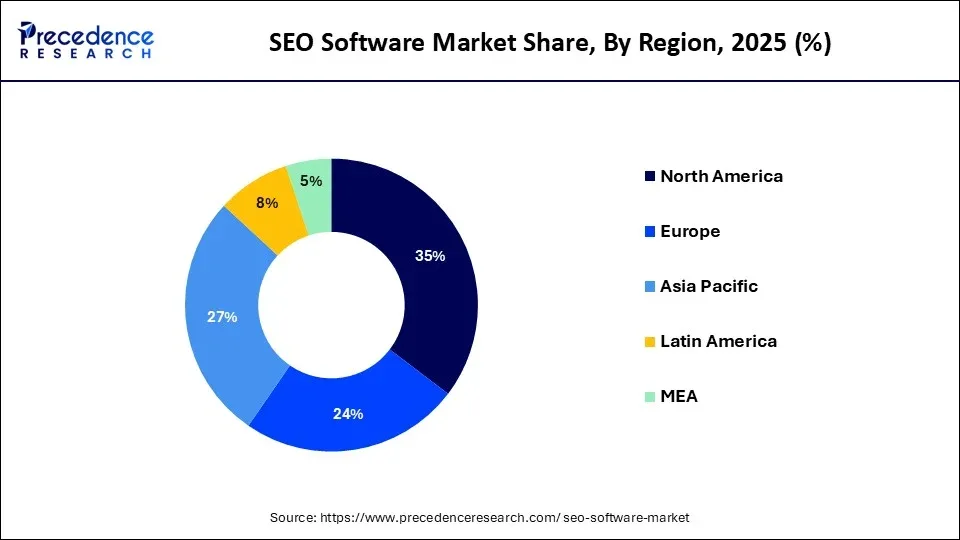
Their budgets are tight, their patience is shorter, and their definition of success is concrete: more phone calls, more walk-ins. Providers serving this tier succeed by productizing — fixed packages, clear deliverables, minimal back-and-forth.
The SEO market at this level is crowded with freelancers and small shops. Competition is fierce, margins are thin, and retention depends almost entirely on visible results within the first ninety days.
Mid-Market and Growth-Stage Companies
This is where the real money sits. Companies with established revenue but aggressive growth targets treat organic search as a channel to scale, not a checkbox.
They want content strategy, technical health, and link acquisition working in tandem. They also want reporting that ties to their CRM. Providers here need genuine strategic depth, not just execution capacity.
Deals in this tier of the SEO market often run on annual contracts with quarterly reviews. Churn is lower, but expectations are dramatically higher.
Enterprise Organizations
Enterprise buyers operate on a completely different plane. They have procurement processes, legal reviews, and multiple stakeholders who each care about different metrics.
Technical complexity is the norm — thousands of URLs, legacy CMS platforms, international subfolders, and strict brand governance. The SEO market at this level looks more like management consulting than marketing services.
Winning enterprise work requires patience and proof. Pilots, case studies, and references carry more weight than any pitch deck.
The Competitive Landscape Reshaping the SEO Market
Who’s actually competing for the money? The answer has changed dramatically over the past several years, and the SEO market now hosts a much wider cast of players than it did when agencies were the only option.
Traditional agencies still dominate certain segments, but they’re no longer the default. Software platforms, in-house teams, and hybrid consultancies have all carved out meaningful territory.
Full-Service Agencies
Agencies remain the most visible participants in the SEO market. They bundle strategy, content, technical work, and reporting into a single relationship.
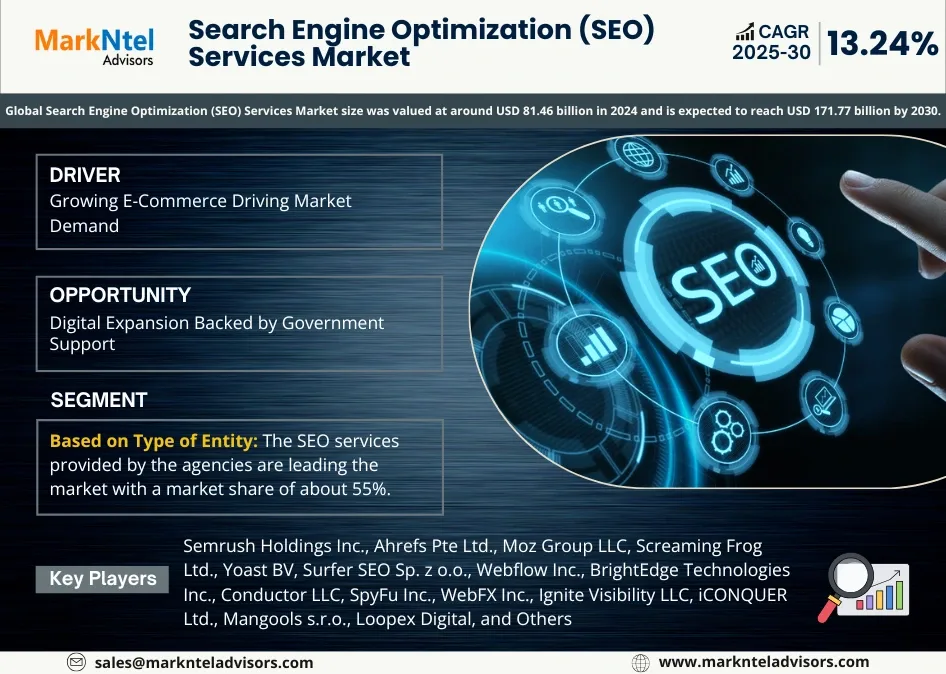
Their strength is coordination — one team accountable for the whole outcome. Their weakness is cost and, sometimes, rigidity. Smaller clients often feel like they’re paying for overhead they don’t need.
The best agencies have responded by creating tiered offerings, letting smaller clients buy focused packages while larger ones get the full integrated treatment.

Specialist Boutiques
Boutiques focus narrowly — technical audits only, digital PR only, or content production only. They’ve grown steadily because buyers increasingly prefer depth over breadth.
In my experience, a specialist often outperforms a generalist agency on a specific problem, and clients have noticed. The SEO market has rewarded this focus with premium pricing for genuine expertise.
The tradeoff is coordination. When you hire three boutiques, someone still has to manage the seams between them.
Software and Platform Providers
Tools have become a massive slice of the SEO market. Subscription revenue is predictable, scalable, and attractive to investors.
Platforms now cover keyword research, content optimization, rank tracking, backlink analysis, and technical crawling. Many have moved upmarket, offering enterprise tiers with API access and team seats.
The competitive pressure here is brutal. Features get copied within months, so differentiation increasingly comes down to data quality and workflow integration.
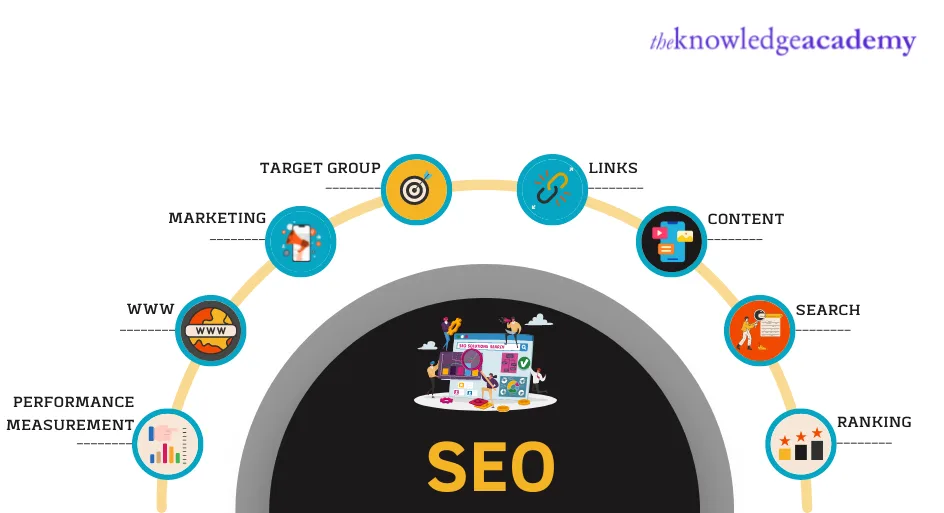
In-House Teams
Larger companies have steadily pulled work in-house, reducing their reliance on external providers. This trend has reshaped the SEO market by shrinking certain agency budgets while expanding demand for talent and tooling.
In-house teams value control, speed, and institutional knowledge. They still buy tools and occasionally hire consultants, but they rarely outsource the core work.
For providers, this means the SEO market increasingly rewards those who support internal teams rather than replace them.
Pricing Models Inside the SEO Market
How money changes hands varies enormously. There’s no single standard, which frustrates buyers and creates opportunity for providers who can justify their structure clearly.
Let’s walk through the dominant models and where each one tends to appear.
Monthly Retainers
Retainers remain the backbone of the SEO market. Clients pay a recurring fee for ongoing work, and providers get predictable revenue.
The advantage is continuity — campaigns need months to mature, and retainers align incentives around long-term results. The risk is complacency, where providers coast once the contract is signed.

Strong retainers include clear monthly deliverables and honest reporting, even when the news isn’t great.
Project-Based Engagements
Projects suit specific problems: a site migration, a technical overhaul, or a content sprint. They’re easier to approve internally because the scope and end date are defined.
In the SEO market, project work often serves as an entry point. A successful audit frequently leads to a retainer once trust is established.
The downside is that projects can become transactional, with little incentive to think beyond the deliverable.
Performance and Hybrid Deals
Some providers now tie part of their fee to outcomes — traffic growth, rankings, or revenue. These arrangements are growing within the SEO market, especially for confident specialists.
Hybrid models blend a base fee with a performance bonus, balancing stability for the provider with upside for the client.
Honestly, these deals work best when the metrics are unambiguous and both sides agree on attribution. Otherwise they create friction.
Software Subscriptions
Tool pricing spans a wide range, from entry-level plans for solo users to enterprise contracts with custom terms. Most platforms use tiered subscriptions based on seats, usage, or feature access.
Competitive direct manufacturer pricing has made advanced capabilities accessible to smaller teams, which has expanded the total SEO market considerably.
The key buyer question isn’t cost alone — it’s whether the tool replaces labor, improves decisions, or both.
A Comparison Table of Common SEO Market Service Tiers
To make the landscape concrete, here’s how the major tiers typically differ across dimensions that matter to buyers.
| Service Tier | Typical Buyer | Core Deliverables | Engagement Length | Primary Success Metric |
|---|---|---|---|---|
| Local Package | Small business | Citations, GBP optimization, service pages | Month-to-month | Calls and direction requests |
| Growth Retainer | Mid-market brand | Content, technical, links, reporting | 6–12 months | Organic pipeline and revenue |
| Technical Sprint | Any size with a specific issue | Audit, fixes, migration support | 4–12 weeks | Indexation and crawl health |
| Digital PR Campaign | Brand-focused company | Link acquisition, coverage, assets | 3–6 months | Referring domains and authority |
| Enterprise Program | Large organization | Global strategy, governance, tooling | Annual+ | Share of voice and market position |
| SaaS Subscription | Solo to enterprise | Research, optimization, tracking | Monthly or annual | Workflow efficiency and insight |
Notice how the success metric changes at every tier. That single column explains most of the miscommunication in the SEO market — buyers and providers often measure different things without realizing it.
Technology and AI Reshaping the SEO Market
Artificial intelligence has become the loudest story in the SEO market, and for good reason. It has changed how content gets produced, how search results get assembled, and how providers package their work.
But the impact is more nuanced than the headlines suggest. AI hasn’t replaced strategy — it has compressed the time required for execution while raising the bar for originality.
Content Production at Scale
Generative tools now draft, outline, and edit at a pace that would have seemed absurd a few years ago. This has flooded the SEO market with content and simultaneously devalued generic output.

The winners are using AI for research, structuring, and first drafts, then layering in genuine expertise. Pure automation produces forgettable pages that struggle to earn trust.
From what I’ve seen, teams that combine machine speed with human judgment are outperforming both extremes.
Search Generative Experiences and Zero-Click Results
AI-generated answer boxes and rich summaries have reduced clicks for informational queries. This has forced the SEO market to rethink which keywords are worth targeting.
Transactional and comparison queries still drive clicks because users want to evaluate options. Informational queries increasingly reward brand presence rather than raw traffic.

Smart operators now optimize for being cited in AI answers, not just ranked in a list. That’s a meaningful shift in how the SEO market defines success.
Automation in Technical Auditing
Technical work has benefited enormously from automation. Crawlers now surface issues continuously, and monitoring alerts catch regressions before they damage rankings.
This has lowered the labor required for routine audits, which pressures pricing in parts of the SEO market. Providers respond by moving up the value chain into strategy and prioritization.
The tooling itself has become commoditized, but knowing which fixes matter most remains a scarce skill.
Key Trends Defining the SEO Market Right Now
Trends in this space move fast, but several currents have enough momentum to shape strategy for years. Ignoring them means fighting yesterday’s battle.
Let’s examine the ones that consistently come up in serious planning conversations.
Topical Authority Over Isolated Pages
Search engines increasingly reward sites that demonstrate deep coverage of a subject. Publishing one page per keyword no longer works as well as building a connected cluster of related content.
This has changed how the SEO market sells content. Instead of per-article pricing, providers now pitch topic clusters with internal linking built in.
In practice, a well-structured cluster of twenty pages often outperforms two hundred disconnected ones. That’s a hard lesson many teams learn late.
Entity-Based Optimization
Search engines understand entities — people, places, products, concepts — rather than just strings of text. Optimizing for entities means being clear about what your brand is and what it’s connected to.
This has introduced new deliverables into the SEO market, including knowledge panel management and structured data implementation.
Brands that nail entity clarity tend to earn richer results, including enhanced snippets and stronger brand recognition in AI summaries.

Privacy, Consent, and Measurement Gaps
Tighter privacy rules have made attribution harder. Cookies disappear, cross-device tracking gets murky, and marketing teams lose confidence in their dashboards.
The SEO market has responded with modeling, server-side tracking, and blended reporting. None of it is perfect, but the direction is clear.
Providers who can explain measurement limitations honestly tend to earn more trust than those promising impossible precision.
Consolidation Among Tool Providers
Larger platforms keep acquiring smaller ones, folding niche features into broader suites. This consolidation has simplified buying decisions but reduced choice.
For the SEO market, it means fewer independent vendors and more bundled offerings. Buyers gain convenience but sometimes lose the specialized depth they relied on.
Watch this trend closely — it changes which tools are worth building workflows around.
Regional Differences That Shape the SEO Market
Geography matters more than most global guides admit. Search behavior, competition, and pricing all vary significantly by region.

Understanding these differences is essential if you operate across borders or plan to expand.
North America
North America remains the largest and most mature slice of the SEO market. Competition is intense, pricing is high, and buyers are sophisticated.
Clients here expect integrated reporting, clear attribution, and strategic thinking. Providers who only execute tactical tasks struggle to command premium fees.
The sheer density of competitors means differentiation has to be sharp and defensible.
Europe
Europe presents a fragmented picture. Language diversity creates demand for localized expertise, and privacy regulation shapes how data gets collected and used.
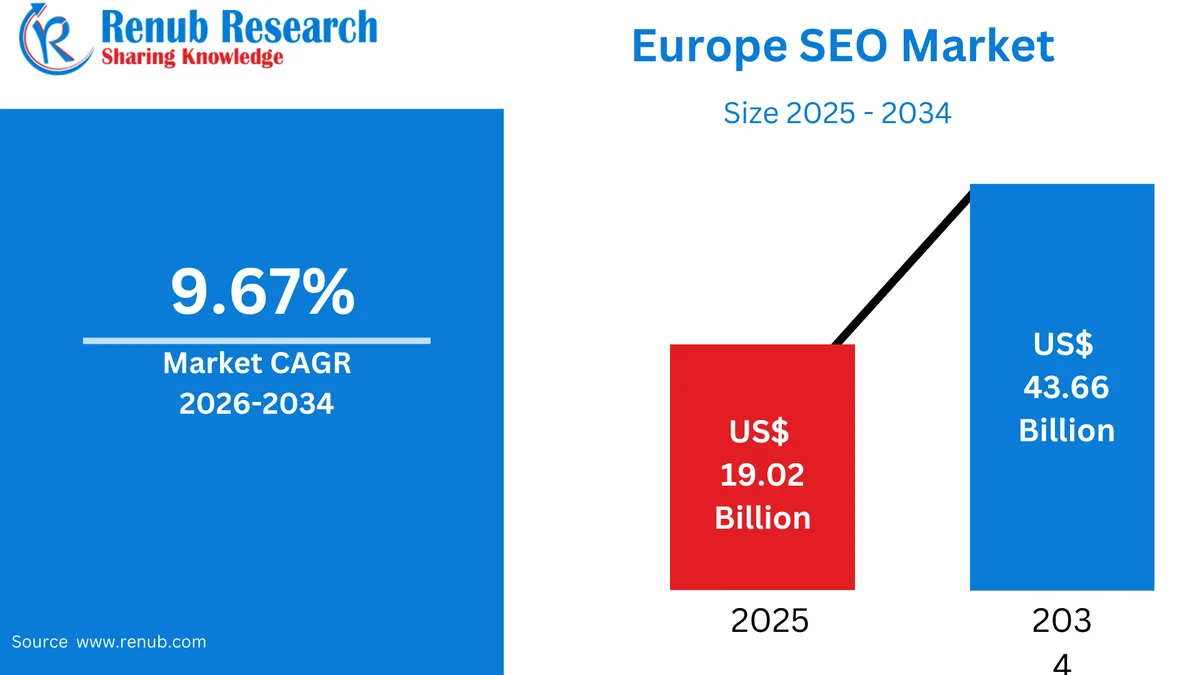
The SEO market in Europe rewards providers who can operate across multiple languages and legal frameworks. That complexity is a barrier and an opportunity.
Local search behavior also varies — some markets lean heavily on directories, others on maps, others on social discovery.
Asia-Pacific
APAC is the fastest-moving region in the SEO market, driven by rapid digital adoption and enormous populations coming online.
Search habits differ by country, and local platforms sometimes outrank global ones. Providers who assume a single playbook will fail here.

Mobile-first design isn’t a nice-to-have in this region — it’s the baseline expectation.
Latin America and Emerging Markets
Emerging markets offer significant growth potential but lower average spend. The SEO market here is younger, with fewer established players.
Providers entering early can build strong positions, but they need patience and local partnerships. Trust is earned slowly in these regions.
Mobile penetration and messaging apps often shape discovery more than traditional search engines.
Common Mistakes Buyers Make When Entering the SEO Market
Plenty of budget gets wasted on avoidable errors. Watching these patterns repeat across dozens of engagements has made the causes obvious.
Here are the ones that show up most often, along with how to sidestep them.
Buying Tactics Instead of Outcomes
Clients often request specific deliverables — a set number of articles, a set number of links — without connecting them to a business goal. This turns the SEO market into a commodity transaction.

A better approach is to define the outcome first, then let the provider propose tactics. That shift alone improves results dramatically.
Ask what success looks like in ninety days, and make sure the answer involves revenue or pipeline, not just activity.
Underinvesting in Technical Foundations
No amount of content rescues a site with crawl errors, slow load times, and broken internal linking. Yet technical work is often the first thing cut when budgets tighten.
The SEO market has plenty of providers who’ll happily sell content while ignoring the foundation. That’s a recipe for disappointing returns.
Fix the plumbing before decorating the house. It’s unglamorous but decisive.
Chasing Every Algorithm Update
Panic reactions to every update waste time and destabilize strategy. Most updates reward fundamentals that haven’t changed in years.
Seasoned operators watch for patterns rather than reacting to noise. The SEO market rewards composure, not constant pivoting.
Build for users, follow the guidelines, and let competitors exhaust themselves chasing rumors.

Ignoring Brand Signals
Brand searches, mentions, and direct traffic all influence how search engines perceive authority. Neglecting brand building weakens everything else.
Providers who integrate PR, social, and community work into their offering are gaining ground in the SEO market for exactly this reason.
The line between brand marketing and search optimization keeps blurring, and that’s healthy.
How to Evaluate Providers in a Crowded SEO Market
Choosing a partner is harder than it used to be because everyone claims the same capabilities. The SEO market is full of polished pitches that don’t survive contact with reality.
Here’s a practical framework for separating substance from noise.
Ask for Process, Not Promises
Anyone can promise page-one rankings. Fewer can describe exactly how they’ll get there, in what order, and what they’ll do when it doesn’t work.
Request a sample roadmap for your specific site. The quality of that document tells you more than any case study.
Providers who can articulate tradeoffs and sequencing are usually the ones worth hiring.
Demand Transparent Reporting
Good reporting shows what was done, what changed, and what it means. Bad reporting shows vanity metrics that look impressive but explain nothing.
Ask to see a real dashboard from a current client, with sensitive data redacted. The this practice has plenty of providers who hide behind vague summaries.
Clarity here is a strong signal of integrity.
Check References from Similar Businesses
A provider who excels for enterprise clients may flounder with local businesses, and vice versa. Fit matters as much as skill.
Ask for references from companies at your scale and in your category. The this approach is large enough that you can almost always find a close match.
Then actually call them. The answers you get will be more honest than any sales conversation.
Test Communication Early
Responsiveness during the sales process predicts responsiveness after signing. If emails go unanswered now, they’ll go unanswered later.
Set a small paid pilot before committing to a long contract. It de-risks the relationship and reveals how the team actually operates.
In the this approach, the best partnerships are built on demonstrated reliability, not persuasive promises.
Building an In-House Capability versus Outsourcing
One of the biggest strategic decisions companies face is whether to build internal expertise or buy it externally. Both paths have real tradeoffs.
The right answer depends on scale, ambition, and how central search is to your business model.
When In-House Makes Sense
If organic search drives a large share of revenue, internal ownership usually pays off. You gain speed, institutional knowledge, and tighter integration with product and engineering.
In-house teams also reduce long-term costs once they’re fully ramped. The this approach’s agency fees add up quickly over multiple years.
The catch is hiring. Experienced practitioners are expensive and in short supply, and building a team takes time.
When Outsourcing Wins
Outsourcing shines for specialized work, temporary surges, or capabilities you can’t justify hiring for permanently. It also gives you access to experience across many industries.
The this practice exists precisely because most companies can’t cover every discipline internally. Technical audits, digital PR, and advanced analytics are common examples.
A hybrid model — internal strategy with external execution — often delivers the best balance.
The Hybrid Approach in Detail
Many mature organizations run a core internal team that owns strategy and prioritization, then bring in specialists for specific projects.
This keeps knowledge inside the company while accessing outside expertise when needed. It also gives you leverage in negotiations with providers.
In the this practice, hybrid buyers tend to get the best value because they understand what they’re purchasing.
Measuring ROI Without Fooling Yourself
Attribution is genuinely difficult, and pretending otherwise leads to bad decisions. But that doesn’t mean measurement is hopeless.
It means being honest about what you can and can’t prove.
Blended Reporting Beats False Precision
Combining organic data with paid, direct, and referral channels gives a more realistic picture than isolated dashboards. No single channel owns the customer journey.
Sophisticated buyers in the this practice increasingly ask for blended views because they reflect how people actually behave.
Perfect attribution doesn’t exist. Directional clarity is achievable and useful.
Leading Indicators Matter Too
Rankings, impressions, and click-through rates move before revenue does. Tracking them gives you early signals about whether the strategy is working.
Don’t dismiss them as vanity metrics — they’re the leading edge of a lagging outcome. The this approach often gets criticized for reporting them, but ignoring them is worse.
The key is pairing them with business metrics so the full picture is visible.
Set Baselines Before You Start
Without a baseline, you can’t prove improvement. Capture current traffic, conversion rates, and revenue before any work begins.
This sounds obvious, yet it’s skipped constantly. Then six months later nobody can agree on whether anything changed.
In the this approach, disciplined measurement is what separates professional engagements from hobby projects.
Future Outlook for the SEO Market
Looking ahead, several forces will shape how this industry evolves. Some are already visible; others are still forming.
Staying ahead means watching the underlying drivers, not just the surface trends.
Search Everywhere, Optimize Everywhere
Search now happens on social platforms, marketplaces, and AI assistants, not just traditional engines. The this practice is slowly expanding to cover all of them.
Providers who understand discovery across multiple surfaces will have an advantage. Those who cling to a single channel will find their relevance shrinking.
The discipline is becoming broader, even if the name stays the same.
Quality Over Quantity in Content
The flood of AI-generated content has made differentiation harder and more valuable. Genuine expertise, original data, and clear perspective now stand out more than ever.
The this practice is adjusting by rewarding depth and penalizing volume for its own sake. That’s a healthy correction.
Brands with real knowledge to share will keep winning, regardless of how the algorithms change.
Integration With Broader Marketing
Search work increasingly overlaps with content marketing, PR, social, and lifecycle messaging. Silos are breaking down because customers don’t experience them.
Buyers in the this approach are starting to expect integrated thinking rather than channel-specific tactics. Providers who can connect the dots command higher fees.
The future belongs to teams that see the whole picture, not just their slice of it.
Practical Steps to Succeed in Today’s SEO Market
Enough theory. Here’s what actually moves the needle, distilled from real campaigns.
- Audit your technical foundation first. Crawl your site, fix indexation issues, and improve load speed before investing in content. A fast, clean site multiplies the impact of everything else you do.
- Define your topic clusters. Choose three to five core themes that matter to your business, then map every page to one of them. This builds the topical authority the seo market now rewards.
- Invest in original research. Surveys, internal data, and expert interviews produce content competitors can’t easily replicate. Originality is the moat in a crowded seo market.
- Build links through genuine value. Create assets people want to cite — tools, studies, and definitive resources. Outreach works far better when there’s something worth linking to.
- Track leading and lagging metrics together. Combine impressions and rankings with conversions and revenue. This keeps the seo market conversation grounded in business reality.
- Review and prune quarterly. Delete or consolidate pages that no longer serve a purpose. Content debt drags down performance quietly.
- Stay current without panicking. Follow primary sources, test changes on your own site, and resist chasing every rumor. The seo market punishes reactivity.
None of these steps are exotic. The difficulty is doing them consistently while the this practice shifts around you.
Frequently Asked Questions About the SEO Market
The following key points are covered in this section:
- Is the SEO Market Still Growing?
- How Much Does SEO Typically Cost?
- Will AI Replace SEO Professionals?
- How Long Before SEO Shows Results?
- Should I Hire an Agency or Build an In-house Team?
- What’s the Biggest Mistake Companies Make?
- Do Backlinks Still Matter?
- How Do I Choose the Right Provider?