SEO content marketing works best when you stop chasing algorithms and start answering real questions from real people. That single shift in mindset separates brands that quietly compound traffic month after month from those stuck refreshing their rankings every morning.
I’ve spent years watching small teams outrank bigger competitors with fewer resources, and the pattern is almost always the same. They treat content as a system, not a lottery ticket.
What SEO Content Marketing Really Means (And Why Most Teams Get It Backwards)
Let’s clear the air first. SEO content marketing isn’t “writing blog posts with keywords sprinkled in.” That definition died a long time ago, and anyone still operating on it is burning budget.
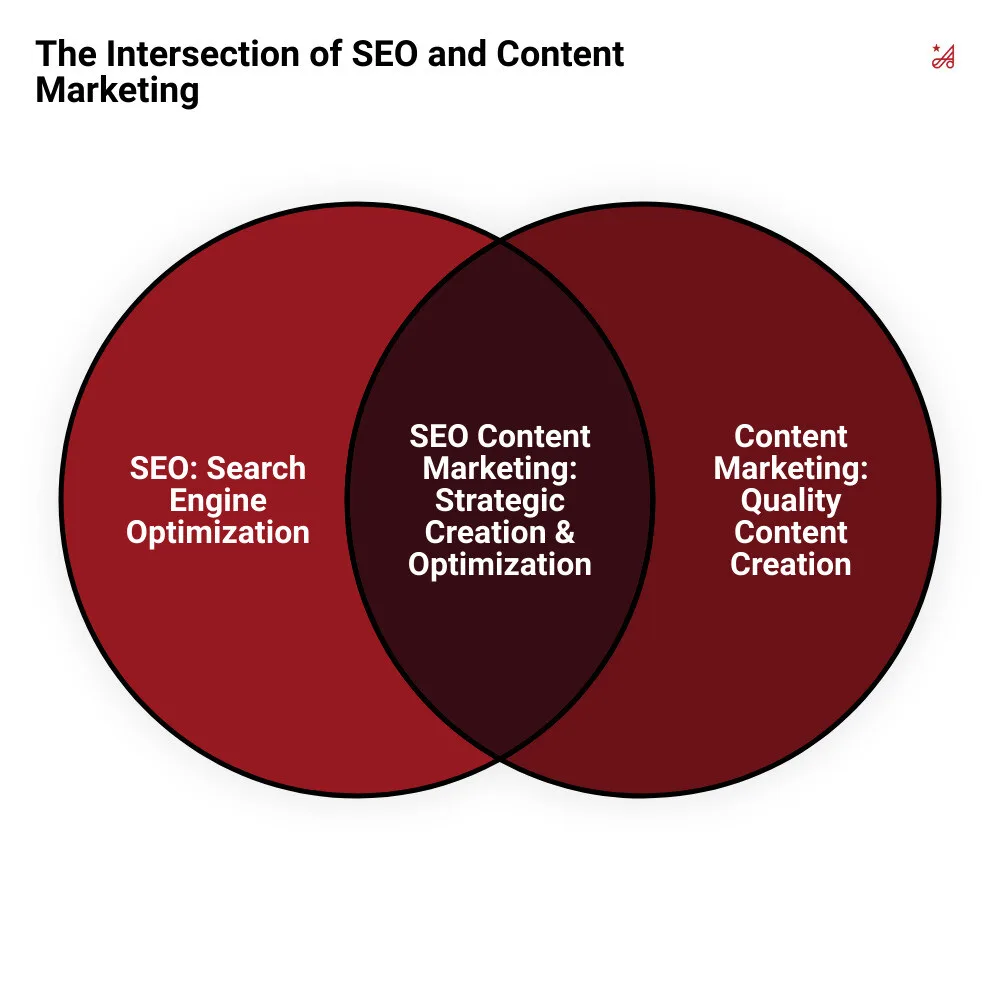
At its core, SEO content marketing is the practice of creating useful material that satisfies search intent while building topical authority over time. Search engines reward pages that genuinely answer a query, keep readers engaged, and get referenced by other credible sites.
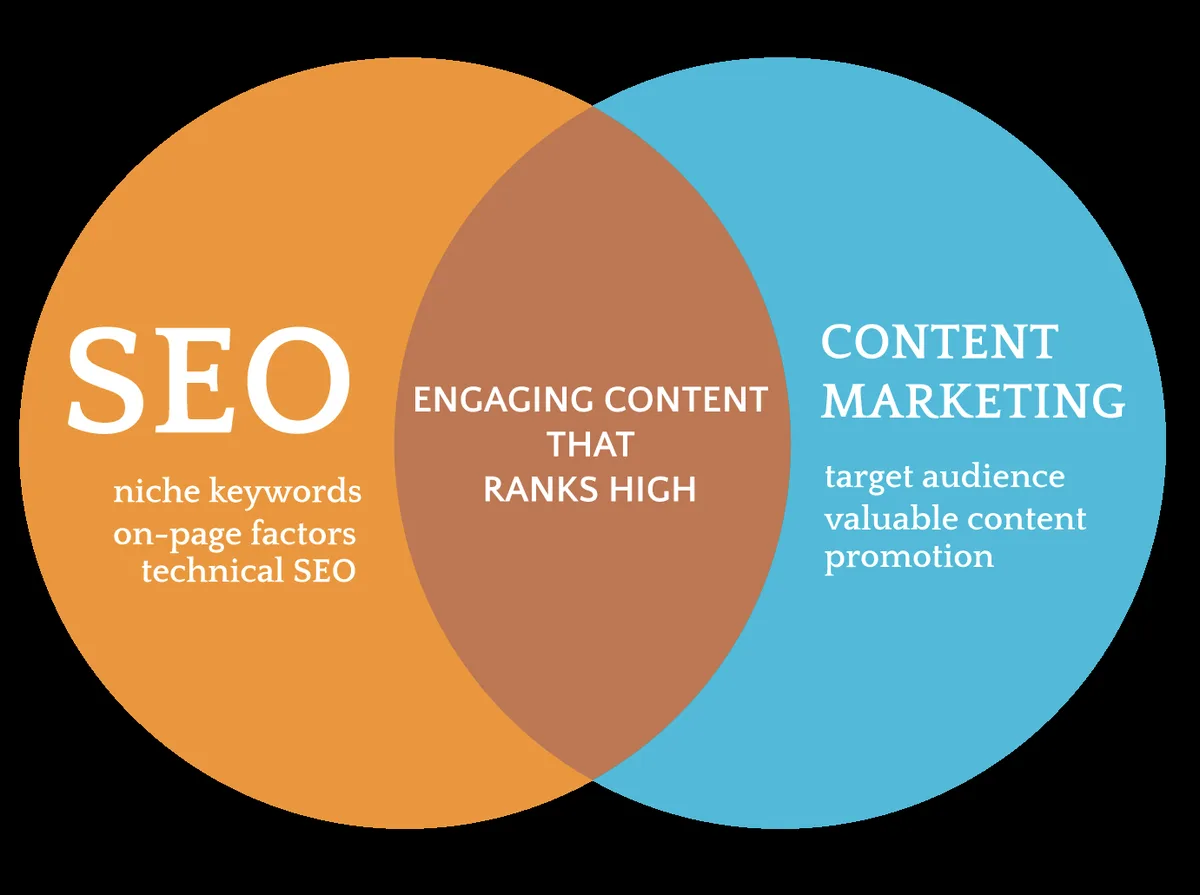
Here’s where most teams go wrong. Focusing on SEO content marketing provides clear direction here. They start with a keyword list instead of a customer question list. The result? Thin articles that technically rank but convert almost nobody.
A better sequence looks like this: identify a real problem your audience faces, research how they phrase it in search, then build content that solves it better than anything currently ranking. Focusing on seo content marketing provides clear direction here. Keywords become a byproduct of good research, not the starting point.
When I audited a regional HVAC company’s site a while back, their top-performing page wasn’t a “best AC unit” listicle. It was a plain-spoken troubleshooting guide for a strange noise their units make in humid weather. That page pulled in steady leads for two years because it matched a specific, underserved query.

How Search Intent Shapes Every SEO Content Marketing Decision
Search intent is the compass for everything. Get it wrong, and even beautiful writing flops.
There are four broad intent types you’ll bump into constantly: informational, navigational, commercial, and transactional. Refining each detail of your SEO content marketing strengthens this section. Each one demands a different content format, tone, and call to action.
Someone typing “what is a CRM” wants a clear explanation. Someone typing “best CRM for small law firms” wants comparison and recommendations. Someone typing “HubSpot pricing” is comparing. Someone typing “buy HubSpot starter plan” is ready to swipe a card.
Matching format to intent is non-negotiable in SEO content marketing. If a searcher wants a comparison table and you give them a 3,000-word essay, they’ll bounce in seconds.
Informational Intent: Teaching Without Selling
Informational queries are the top of your funnel. These readers aren’t ready to buy, and pushing a hard sell here is a mistake I see constantly.
The goal is to be genuinely helpful, build trust, and gently introduce your expertise. Think how-to guides, definitions, and explainers.
One trick that works well: end informational pieces with a soft internal link to a related commercial page. Something like “If you want to see how this plays out in practice, when refining a SEO content marketing, here’s our breakdown of X.” No pressure, just a natural next step.
Commercial Intent: Comparison and Evaluation
This is where buyers live. Refining each detail of your seo content marketing strengthens this section. They’re weighing options, reading reviews, and looking for reasons to trust one brand over another.
Comparison posts, “alternatives to X” articles, and detailed product breakdowns perform best here. Include real specs, honest tradeoffs, and use cases rather than vague praise.
According to research from HubSpot, comparison-style content consistently drives higher conversion rates than generic product pages. The reason is simple: buyers trust content that acknowledges weaknesses alongside strengths.
Transactional Intent: Removing Friction
Transactional searchers are close to the finish line. Maintaining clarity across your SEO content marketing remains essential. Your job is to remove doubt, not add information overload.
Landing pages, pricing explainers, and clear CTAs matter more than long-form education here. Keep it tight, direct, and reassuring.
A quick note from experience: adding a short FAQ block near the bottom of transactional pages often lifts conversions by answering last-minute hesitations without forcing a chat with sales.
Keyword Research That Actually Feeds SEO Content Marketing
Keyword research isn’t about finding the highest-volume term and jamming it into a title. It’s about mapping the full conversation your audience is having across the buying journey.
I like to organize keywords into three buckets: head terms, body terms, and long-tail phrases. A thoughtful approach to SEO content marketing reinforces your qualifications. Head terms are broad and competitive. Long-tail phrases are specific and often convert better.
Here’s a simple framework I use:
- Seed keywords: Broad topics directly tied to your product or service.
- Question keywords: Phrases starting with “how,” “why,” “what,” or “when.”
- Comparison keywords: “X vs Y,” “alternatives to X,” “best X for Y.”
- Problem keywords: Phrases describing pain points your audience searches when frustrated.
- Branded keywords: Terms including competitor names, useful for capturing switchers.
Tools like Ahrefs, Semrush, and Google’s own “People Also Ask” boxes cover most of this. Effective execution in your seo content marketing makes a tangible difference. But nothing beats talking to actual customers and noting the exact words they use.
One underrated move: check your support inbox and sales call recordings. The language there is pure gold for SEO content marketing because it reflects real search phrasing.
Building Topical Authority Through Clustered SEO Content Marketing
Google doesn’t just rank pages anymore. It ranks sites that demonstrate deep, reliable knowledge on a subject. That’s topical authority in a nutshell.
The practical way to build it is through content clusters: one comprehensive pillar page surrounded by supporting articles that link back to it.
Say your pillar is “email marketing for ecommerce.” Supporting posts might cover abandoned cart sequences, welcome flows, segmentation basics, and deliverability troubleshooting. Structuring your SEO content marketing around proven patterns ensures impact. Each one links up to the pillar, and the pillar links down to each.
This structure signals to search engines that you own the topic. It also keeps readers on your site longer, which correlates with better rankings.
I’ve watched sites jump from page three to page one simply by restructuring existing content into proper clusters. No new writing required — just better organization and internal linking.
Pillar Pages Vs. Supporting Content: Getting the Ratio Right
A healthy cluster usually runs one pillar to every eight to fifteen supporting pieces. Too few supporters and the pillar looks thin. Too many and you dilute focus.
Pillar pages should be long, comprehensive, and regularly updated. Applying these principles to your SEO content marketing yields measurable results. Supporting pieces can be shorter but must be tightly focused on a single subtopic.
When in doubt, ask: does this piece answer a question the pillar only touches on? Maintaining clarity across your seo content marketing remains essential. If yes, it belongs in the cluster.
Internal Linking Rules That Boost SEO Content Marketing Performance
Internal links are the connective tissue of your site. They pass authority, guide crawlers, and help readers find related material.
Use descriptive anchor text that hints at the destination. “Learn more” tells Google nothing. “Guide to abandoned cart emails” tells it everything.
Limit each page to a handful of contextual internal links. Proper attention to your SEO content marketing sets a strong baseline. Stuffing dozens in looks spammy and dilutes the value of each one.
And always link from newer content to older, established pages. It’s an easy way to breathe life into evergreen assets.
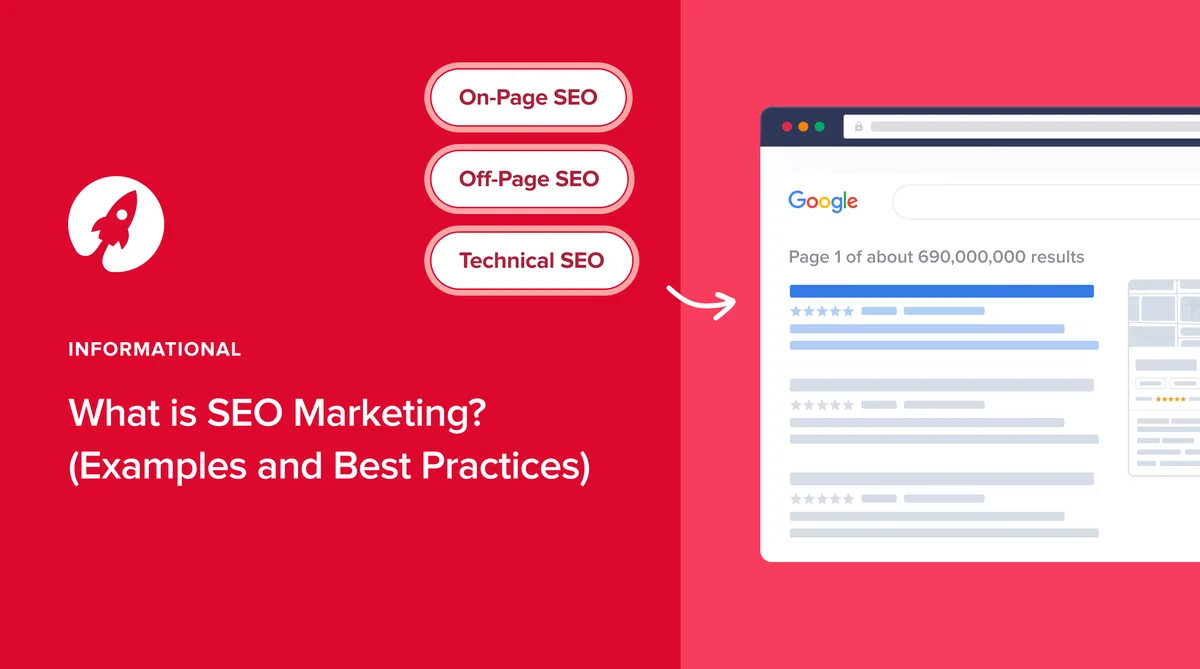
On-Page Optimization Without Over-Optimization
On-page SEO has gotten simpler over the years, but people still overcomplicate it. The goal is clarity for both readers and crawlers.
Your primary keyword should appear in the title, the first 100 words, at least one subheading, and the meta description. Beyond that, natural usage beats forced repetition every time.
Alt text on images matters too, especially for accessibility. Developing your SEO content marketing with precision highlights key strengths. Describe what the image shows, and include your keyword only if it fits naturally.
URL slugs should be short and readable. “yourdomain.com/SEO-content-marketing-guide” beats “yourdomain.com//03/post-4821” every single time.
Title Tags, Meta Descriptions, and Click-Through Rate
Your title tag is the first impression in search results. A thoughtful approach to seo content marketing reinforces your qualifications. Keep it under 60 characters, front-load the keyword, and add a hook that earns the click.
Meta descriptions don’t directly impact rankings, but they absolutely impact click-through rate. A compelling description can lift CTR by double digits in some cases.
Include the primary keyword, a clear benefit, and a subtle reason to click. Skip the fluff.
Heading Structure and Readability
Headings break up content and help readers scan. Clear alignment with your SEO content marketing builds confidence from the start. Use one H1 per page, then H2s for main sections and H3s for subsections.
Never stack headings back-to-back without body text between them. It looks lazy and hurts readability.
Short paragraphs — one to two sentences — work best on mobile, where most traffic now lives. Long walls of text scare readers off.
Content Formats That Drive SEO Content Marketing Results
Not every topic deserves a 3,000-word article. Sometimes a video, infographic, or interactive tool performs far better.
Match format to intent and audience preference. Here’s a quick reference:
| Format | Best For | Typical Word Count |
|---|---|---|
| How-to Guide | Informational queries | 1,500–3,000 |
| Comparison Post | Commercial intent | 2,000–4,000 |
| Listicle | Broad awareness | 1,200–2,500 |
| Case Study | Bottom-funnel trust | 800–1,500 |
| FAQ Page | Support & featured snippets | 500–1,200 |
Mixing formats keeps your content library fresh and covers more search intent variations. Integrating SEO content marketing into your workflow produces consistent quality. A single topic can support a guide, a video, a checklist, and a comparison post without feeling repetitive.
According to research from Content Marketing Institute, brands using multiple formats per topic see significantly higher engagement than those sticking to one format.
Technical SEO Foundations Every Content Marketer Should Know
You don’t need to be a developer, but understanding technical basics saves you from sabotaging your own content.
Page speed matters. Slow pages lose readers before they even start reading. Compress images, minimize scripts, and use a reliable host.
Mobile responsiveness is non-negotiable. Targeted refinements to your SEO content marketing streamline the entire review. More than half of all searches happen on phones, and Google indexes the mobile version of your site first.
Schema markup helps search engines understand your content. Adding FAQ, HowTo, or Article schema can earn rich results that boost visibility.
And don’t forget crawlability. If search engines can’t access your content, nothing else matters. Check your robots.txt and sitemap regularly.
Core Web Vitals and User Experience Signals
Core Web Vitals measure loading speed, interactivity, and visual stability. They’re not the biggest ranking factor, but they matter for user experience.
Large, unoptimized images are the most common culprit. Structuring your seo content marketing around proven patterns ensures impact. Switching to WebP format and lazy-loading offscreen images fixes most issues.
Beyond speed, watch for layout shifts that make text jump around while loading. Nothing frustrates readers more than tapping the wrong link because the page moved.
Indexing, Canonicals, and Duplicate Content
Duplicate content confuses search engines about which page should rank. Canonical tags help clarify, but the best fix is simply not creating duplicates.
If you have similar pages targeting different regions or variations, use hreflang and canonical tags properly. Get this wrong and you’ll cannibalize your own rankings.
Check Google Search Console regularly for indexing issues. It’s the fastest way to catch problems before they tank your traffic.
Writing SEO Content Marketing Copy That People Actually Finish
Rankings mean nothing if readers bounce after the first paragraph. Writing for humans is the whole game.
Start with a hook that speaks directly to the reader’s problem. Applying these principles to your seo content marketing yields measurable results. Skip the throat-clearing and get to the point.
Use short sentences mixed with longer ones. Vary rhythm. Read your draft aloud — if it sounds robotic, rewrite it.
Concrete examples beat abstract advice every time. Effective execution in your SEO content marketing makes a tangible difference. Instead of “improve your email subject lines,” say “try adding the recipient’s first name and a specific benefit, like ‘Sarah, your invoice is ready.'”
According to Nielsen Norman Group, readers scan in an F-pattern, hitting the first few words of each line. Front-load important information in every heading and paragraph.
Storytelling That Serves SEO Content Marketing Goals
Stories stick. Data informs, but narrative persuades.
Open with a real scenario, then unpack the lesson. A customer’s struggle, a mistake you made, a surprising result — all of these make content memorable.
Just keep stories tight. Meandering anecdotes lose readers. Two or three sentences of setup, then the payoff.
Editing for Clarity and Punch
First drafts are always messy. Editing is where good content becomes great.
Cut adverbs, passive voice, and filler phrases. Replace “in order to” with “to.” Replace “utilize” with “use.”
Read for flow. Proper attention to your seo content marketing sets a strong baseline. If a paragraph feels clunky, split it or reorder the sentences. Small fixes add up fast across a long article.
Distribution: Where SEO Content Marketing Meets Amplification
Publishing is only half the job. If nobody sees your content, it might as well not exist.
Share new posts across your email list, social channels, and relevant communities. Don’t just drop a link — add context and invite discussion.
Repurpose content into different formats. A blog post becomes a LinkedIn carousel, a short video, a Twitter thread, or a newsletter section.
Outreach still works, but it needs to be genuine. Find sites that reference similar topics and let them know about your piece if it adds real value.
One tactic that quietly works: mention other experts in your content, then email them when it goes live. Many will share it with their audience.
Social Media and Community Seeding
Reddit, Quora, and niche forums can drive meaningful traffic if you participate authentically. Developing your seo content marketing with precision highlights key strengths. Answer questions, don’t just drop links.
LinkedIn works well for B2B topics. Twitter/X is better for fast-moving niches like tech and marketing.
Whatever platform you choose, engage in the comments. Conversation extends reach and builds relationships that pay off later.
Email Marketing as a Content Multiplier
Your email list is the most reliable distribution channel you own. No algorithm changes, no platform risk.
Send new content to subscribers with a short, personal note explaining why it’s worth their time. Segment by interest when possible.
Re-engagement campaigns can revive dormant subscribers with your best-performing content. It’s a low-effort way to squeeze more value from existing assets.
Measuring SEO Content Marketing Performance Without Getting Lost in Data
Analytics can overwhelm if you try to track everything. Clear alignment with your seo content marketing builds confidence from the start. Focus on metrics that tie directly to business goals.
Traffic, rankings, and impressions matter, but they’re leading indicators. Conversions, leads, and revenue are what actually count.
Set up goal tracking in Google Analytics or your CRM so you can connect content to outcomes. Without this, you’re guessing.
Here are the metrics I check most often:
- Organic sessions: Overall traffic from search.
- Keyword rankings: Position changes for target terms.
- Click-through rate: How often searchers click your result.
- Time on page: Engagement indicator.
- Conversion rate: Percentage of visitors taking action.
- Assisted conversions: Content’s role in multi-touch journeys.
Review monthly, but don’t overreact to short-term dips. SEO content marketing compounds slowly, and one bad week means little in the long run.
Attribution and Multi-Touch Journeys
Most buyers touch multiple pieces of content before converting. Last-click attribution misses this entirely.
Use multi-touch models in your analytics to see which content assists conversions, even if it doesn’t close them. Blog posts often play a supporting role that’s easy to overlook.
Surveys can fill gaps too. Asking new customers “how did you first hear about us” often reveals content you didn’t realize was working.
Iterating Based on What’s Working
Double down on content that performs. Update old posts, expand thin sections, and refresh examples.
Kill or consolidate content that consistently underperforms. Integrating seo content marketing into your workflow produces consistent quality. A leaner, stronger library beats a bloated one every time.
Small improvements — better headlines, updated stats, new internal links — can revive pages that have gone stale.

Common SEO Content Marketing Mistakes (And How to Avoid Them)
I’ve seen the same mistakes repeated across industries, from SaaS startups to local service businesses. Here are the ones that cost the most.
- Chasing volume over relevance: A high-traffic keyword that attracts the wrong audience wastes resources. Prioritize intent match over raw search volume.
- Publishing without a plan: Random posts create no momentum. Build a calendar tied to clusters and business goals.
- Ignoring internal linking: Orphan pages rarely rank. Every piece should connect to at least two others.
- Neglecting updates: Old content with outdated stats or broken links erodes trust. Schedule regular audits.
- Over-optimizing for keywords: Forced repetition reads badly and can trigger penalties. Write for readers first.
- Skipping the CTA: Every piece should guide the reader toward a next step, even if it’s just subscribing.
- Copying competitors: If your content mirrors what’s already ranking, there’s no reason to rank yours. Add a unique angle or original data.
- Abandoning after three months: SEO content marketing takes time. Most results show up between month four and month nine.
The fix for most of these is discipline. A simple content calendar, a checklist before publishing, and a quarterly audit can eliminate the majority of problems.
Tools and Workflows for Efficient SEO Content Marketing
You don’t need a dozen tools. A focused stack beats a bloated one every time.
For keyword research: Ahrefs, Semrush, or Ubersuggest. For content optimization: Surfer SEO or Clearscope. For analytics: Google Analytics and Search Console.
For workflow: a simple Trello or Notion board handles most teams fine. Targeted refinements to your seo content marketing streamline the entire review. Fancy project management software rarely justifies the learning curve for content teams under ten people.
AI writing tools can assist with outlines and first drafts, but they can’t replace human judgment. Use them to speed up research and editing, not to generate final copy.
One workflow that works well for small teams:
- Research: Identify topic and target keywords.
- Outline: Map headings and key points.
- Draft: Write the first version fast, without editing.
- Edit: Tighten, fact-check, and add internal links.
- Optimize: Check title, meta, alt text, and headings.
- Publish: Schedule and distribute across channels.
- Track: Monitor performance and update as needed.
Following this rhythm consistently matters more than any single tool choice.
Scaling SEO Content Marketing Without Sacrificing Quality
Growth pressure pushes teams to publish faster. That’s fine as long as quality holds.
The trick is templatizing the parts that don’t need creativity. Outlines, briefs, and checklists can be standardized. The writing itself should stay fresh.
Bring in freelance writers for topics outside your core expertise. Give them detailed briefs so their output matches your standards.
Repurpose aggressively. One well-researched piece can fuel a dozen smaller assets across formats and channels.
And don’t neglect your existing library. Updating a top-performing post often delivers better ROI than writing something new from scratch.
Building a Content Team That Scales
Start with one strong writer and one editor. Add specialists as your library grows.
Consider a subject matter expert for technical topics. Focusing on seo content marketing provides clear direction here. Their input makes content more credible and reduces fact-checking time.
Invest in SEO training for your writers. Even basic knowledge of search intent and on-page optimization improves output dramatically.
Outsourcing Vs. In-House Production
In-house teams keep brand voice tight but scale slowly. Agencies and freelancers scale fast but need clear briefs and oversight.
A hybrid model works well for many brands: core strategy in-house, bulk production outsourced.
Whatever you choose, keep editing in-house. That’s where quality gets protected.
Local SEO Content Marketing for Service Businesses
If you serve a specific city or region, local SEO content marketing looks different from national campaigns.
Location pages matter, but they can’t be thin duplicates. Each one needs unique content about that area — landmarks, local events, regional customer stories.
Google Business Profile optimization is huge for local visibility. Keep hours, photos, and posts updated regularly.
Reviews drive rankings and trust. Ask happy customers for them consistently, and respond to every review, positive or negative.
Local link building — sponsorships, community events, local news mentions — carries more weight than generic backlinks for these campaigns.
Location Pages That Don’t Feel Generic
Every location page should mention something specific to that area. A plumber in Austin might reference hard water issues common in the region. A bakery in Portland could highlight local ingredient sourcing.
Add testimonials from customers in that area. Include photos of actual work done locally if possible.
Keep the structure consistent across pages, but vary the content enough that no two read the same.
Reviews, Citations, and Local Signals
Consistent NAP (name, address, phone) across directories builds trust with search engines. Inconsistencies confuse them.
Get listed on relevant local directories, industry-specific sites, and review platforms. Quality matters more than quantity here.
Encourage reviews with a simple follow-up email after service. Refining each detail of your seo content marketing strengthens this section. Most happy customers will leave one if asked directly.
Ecommerce SEO Content Marketing: Product Pages and Beyond
Ecommerce sites face unique challenges. Product pages compete with marketplaces, and thin category pages struggle to rank.
The fix is content that supports the buying journey. Buying guides, comparison posts, and how-to content all feed product pages.
Product descriptions should be original, not manufacturer copy-paste. Add details about materials, use cases, and who the product is for.
Category pages benefit from introductory content that explains the category and links to related guides. This helps both users and search engines.
User-generated content — reviews, photos, Q&A — adds unique text that boosts rankings and builds trust.
Buying Guides That Convert
A good buying guide helps readers make a decision, not just browse. Effective execution in your seo content marketing makes a tangible difference. Include clear criteria, comparisons, and honest recommendations.
Link directly to product pages for each recommended item. Make the path from guide to cart as short as possible.
Update guides seasonally or when products change. Stale recommendations kill trust fast.
Optimizing Product and Category Pages
Include the primary keyword in the product title, but keep it readable. “Organic Cotton Crew Neck T-Shirt” beats “T-Shirt Organic Cotton Men’s Crew Neck Buy Now.”
Write unique meta descriptions for top products. Duplicate descriptions across hundreds of SKUs hurt more than they help.
Use schema markup for products, reviews, and pricing. It can earn rich results that stand out in search.
B2B SEO Content Marketing: Longer Cycles, Higher Stakes
B2B buyers research far longer than consumers. Content needs to support a journey that can stretch across months.
Top-funnel content educates on industry problems. Maintaining clarity across your seo content marketing remains essential. Middle-funnel content compares solutions. Bottom-funnel content builds trust with case studies and demos.
Gated content — whitepapers, reports, webinars — captures leads but limits SEO value since search engines can’t index what’s behind a form. Use it sparingly.
Thought leadership matters in B2B. Original research, expert interviews, and strong opinions differentiate brands in crowded markets.
Aligning Content With the Sales Funnel
Map content to each stage of your buyer’s journey. Awareness content attracts, consideration content educates, decision content converts.
Work with sales to identify common objections. Content that addresses these directly shortens sales cycles.
Track which content pieces influence closed deals. This data guides future production better than traffic stats alone.
Thought Leadership That Earns Links
Original data and strong opinions attract backlinks naturally. A thoughtful approach to seo content marketing reinforces your qualifications. Nobody links to a rehash of common advice.
Survey your customers or industry peers. Even a small sample produces insights worth publishing.
Take clear positions on industry debates. Neutral content rarely gets shared.
AI and the Future of SEO Content Marketing
AI has changed how content gets produced, but it hasn’t changed what works. Search engines still reward usefulness, depth, and trust.
AI tools speed up research, outlining, and first drafts. They can’t replace original insight, real experience, or a distinctive voice.
Google’s helpful content guidelines make one thing clear: content created primarily to rank, without adding value, gets filtered out. That applies to AI-generated and human-written content equally.
The winning approach combines AI efficiency with human judgment. Use AI to handle repetitive tasks and free up time for the strategic work that actually differentiates your content.
Using AI Without Losing Your Voice
Feed AI tools your brand guidelines, tone examples, and audience details. Generic prompts produce generic output.
Always edit AI drafts heavily. Structuring your seo content marketing around proven patterns ensures impact. The first version is a starting point, not a finished piece.
Add personal anecdotes, original data, and specific examples that AI can’t generate. That’s what makes content feel human.
What Search Engines Actually Reward
Experience, expertise, authoritativeness, and trustworthiness — the E-E-A-T framework — remain central. Content that demonstrates real experience outperforms content that just sounds informed.
Author bios, credentials, and citations all reinforce trust signals. Don’t skip them.
Freshness matters for some topics, less for others. Evergreen guides can rank for years with periodic updates.
Frequently Asked Questions About SEO Content Marketing
Here is an in-depth breakdown of key considerations regarding this section:
How Long Does SEO Content Marketing Take to Show Results?
Most sites see meaningful movement between four and nine months. Competitive niches can take longer. Consistency matters more than speed.
How Often Should I Publish New Content?
Quality beats frequency. One strong piece per week outperforms five rushed ones. For smaller teams, two solid pieces a month can still build momentum.
Do I Need to Update Old Content?
Yes. Refreshing outdated stats, fixing broken links, and expanding thin sections can revive pages and improve rankings without new writing.
What’s the Ideal Content Length?
Match length to intent. Informational guides often run 1,500–3,000 words. Comparison posts can go longer. Short FAQs work fine at 500 words if they fully answer the query.
Can AI-Written Content Rank?
It can, if it’s genuinely helpful and edited to a high standard. Low-effort AI content that adds nothing new will struggle regardless of how it’s produced.
How Do I Choose Keywords for a New Site?
Start with long-tail, low-competition phrases. Build topical clusters around them. As authority grows, target more competitive terms.
What’s the Role of Backlinks Today?
Backlinks still matter, but relevance and quality beat quantity. A single link from a respected industry site can outperform dozens of low-quality ones.
How Do I Measure ROI on Content?
Track conversions, leads, and revenue attributed to content. Use multi-touch attribution to capture assisted conversions. Compare against content production costs.
Putting It All Together: Your SEO Content Marketing Roadmap
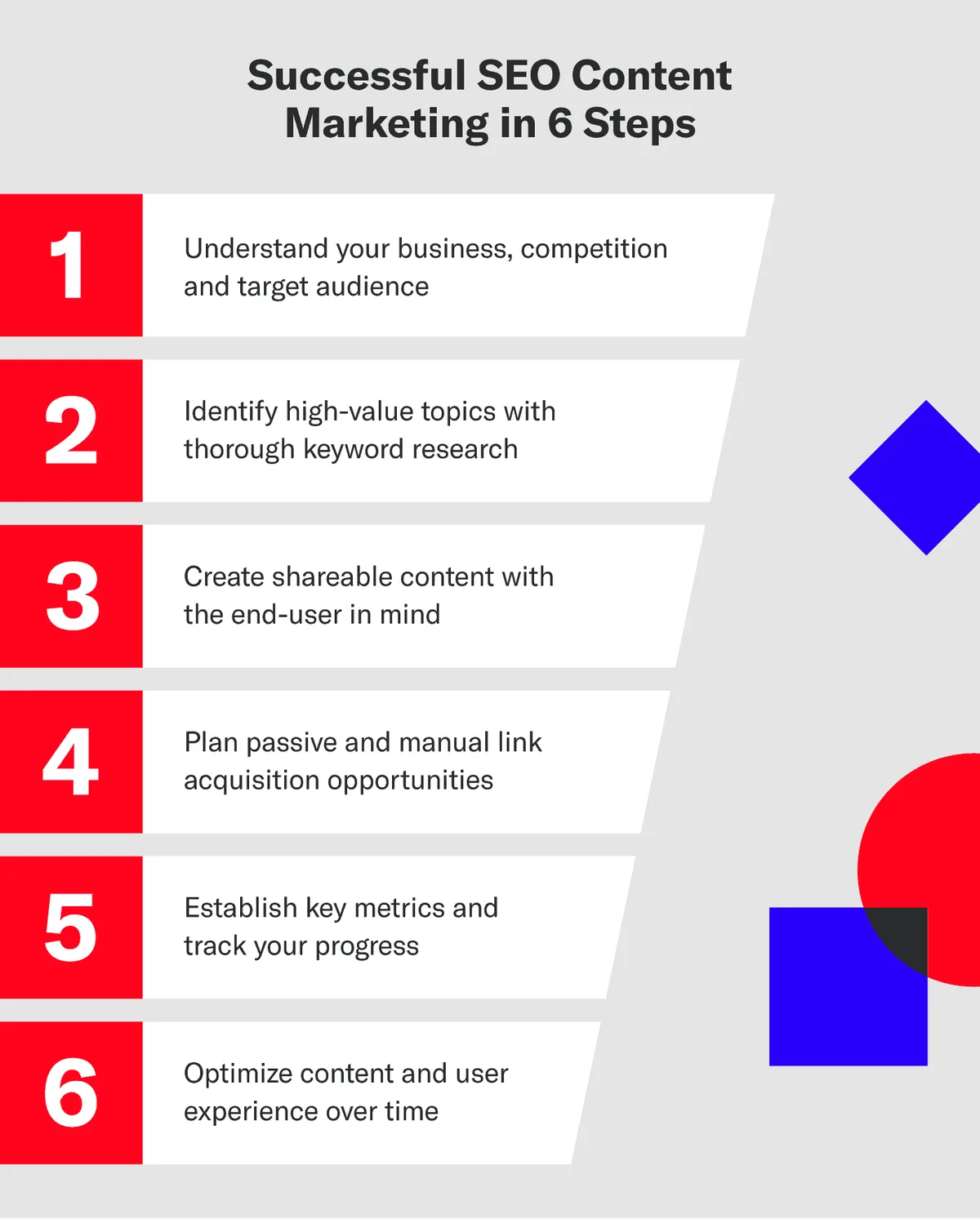
Everything above boils down to a simple loop: research, create, optimize, distribute, measure, and improve.
Start with a clear understanding of your audience and their search behavior. Build clusters around topics you can genuinely own.
Write for humans first, optimize for search engines second. The two goals align more often than people think.
Distribute aggressively and measure honestly. Cut what doesn’t work, expand what does.
And be patient. SEO content marketing rewards consistency over intensity. The brands that win are rarely the ones publishing the most — they’re the ones publishing with purpose, month after month, without chasing every algorithm update.
If you take one thing from this guide, let it be this: treat every piece of content as a long-term asset, not a one-off task. That mindset shift alone will put you ahead of most competitors still playing the short game.
For verified reference and background research, consult the authoritative informational resource on this topic.