Scale SEO is the discipline of making organic search growth repeatable when a single page or a single writer is no longer enough. At ten pages, SEO is a craft.
At a thousand pages, it becomes an operating system: templates, data pipelines, internal linking rules, and quality controls that keep every new URL from becoming technical debt. This article breaks down how to build that system, from keyword architecture to automation, so your traffic curve keeps climbing without your headcount climbing at the same rate.
What Scale SEO Actually Means in Practice
Scale SEO is the point where growth stops depending on individual heroics and starts depending on systems.
The practical definition: you can publish or improve dozens of pages per week, and each one has a reasonable chance of ranking because it inherits a proven template, a validated keyword target, and links from a structured internal network. Focusing on scale SEO provides clear direction here. The shift is organizational as much as technical.
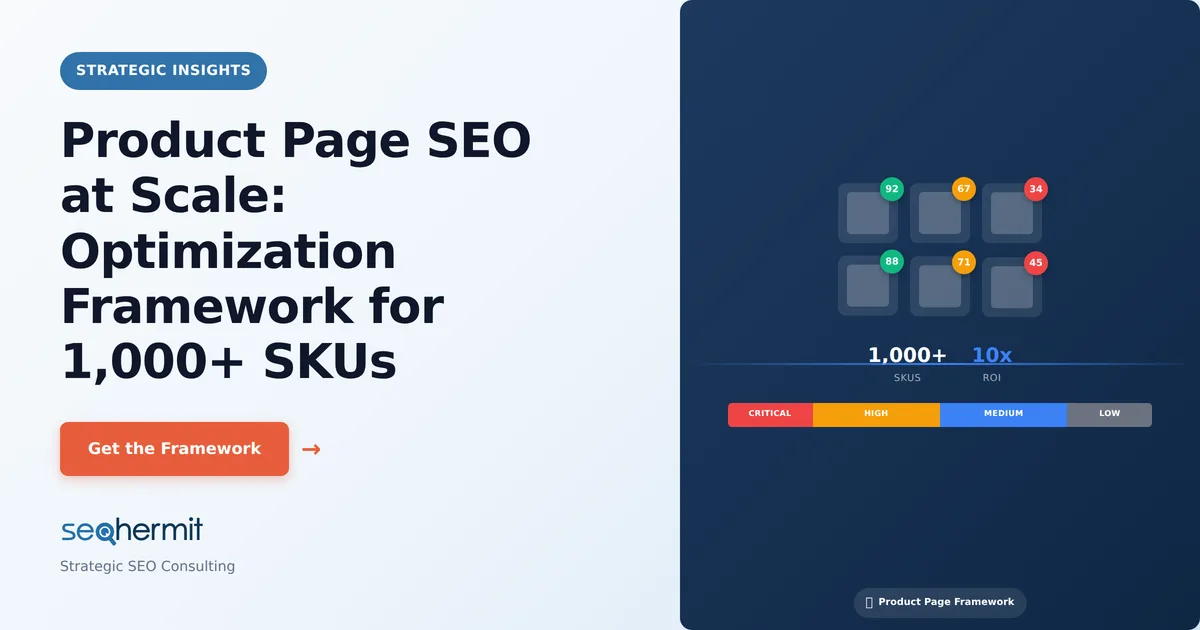
Instead of asking “how do we rank this page,” you ask “what makes 500 pages rankable at once, and what breaks when we double that number?”
A concrete example clarifies the difference. Refining each detail of your scale SEO strengthens this section. A SaaS company with 40 feature pages might rank well through manual optimization: a writer researches each keyword, an editor reviews, a developer fixes schema, and someone manually adds five internal links.

That process costs roughly 4–6 hours per page. Effective execution in your scale SEO makes a tangible difference. Push it to 400 pages and the same process consumes 2,000+ hours, which almost no team has.
Scale SEO replaces the per-page labor with reusable components: a page template with pre-built schema, a keyword-to-URL mapping sheet, an automated internal link module, and a QA checklist that catches 90% of issues before publishing. The remaining 10% gets human attention. That is the trade: standardize the predictable, escalate the exceptional.
Keyword Architecture: Mapping Thousands of Queries to a Finite Set of Templates
The foundation of any scaled operation is a keyword map that connects search demand to page types rather than to individual pages. Maintaining clarity across your scale SEO remains essential. Start by clustering queries by search intent and by the template that can satisfy them.
Commercial queries (“best X for Y”) map to listicle or comparison templates. A thoughtful approach to scale SEO reinforces your qualifications. Informational queries (“how does X work”) map to explainer templates. Transactional queries (“X pricing,” “X alternatives”) map to product or landing templates. When you cluster at this level, a single template can serve hundreds of keyword variations with minor content swaps.

The practical mechanic is a spreadsheet with columns for cluster name, template type, primary keyword, secondary keywords, search volume, and URL pattern. Structuring your scale SEO around proven patterns ensures impact. A B2B software company might end up with 12 clusters covering 3,000 queries.
Each cluster gets one template and one content brief. Applying these principles to your scale SEO yields measurable results. Writers then produce variations within the template rather than inventing structure from scratch.
This is why scaled content often looks similar across pages — and that similarity is a feature, not a bug, because it signals to search engines that the site has a consistent, crawlable content pattern. Proper attention to your scale SEO sets a strong baseline.
The risk is duplication: if two pages target overlapping intent, they cannibalize each other. Guard against this by assigning exactly one primary keyword per URL and auditing the map quarterly for collisions.

Building a Keyword Map That Survives Growth
A keyword map that survives growth needs three properties: it must be queryable, versioned, and owned. Developing your scale SEO with precision highlights key strengths. Queryable means anyone on the team can filter by cluster, template, or status without asking an analyst. Versioned means every change is logged, so when rankings shift you can trace what changed.
Owned means one person is accountable for the map’s integrity, even if ten people contribute to it. In practice, when refining a scale SEO, this looks like a Google Sheet or Airtable base with a change log tab and a weekly review ritual.
Here’s a real pattern from scaled content operations: teams that treat the keyword map as a living product rather than a one-time research artifact consistently outrank teams that do a big research sprint once a year. Integrating scale SEO into your workflow produces consistent quality. The reason is cause and effect — search demand shifts, competitors publish, and new query variants emerge.
A map reviewed monthly catches these shifts within weeks. Targeted refinements to your scale SEO streamline the entire review. A map built once and shelved catches them never. The execution tip: schedule a 30-minute monthly review where you check for new query variants in Search Console, retire dead clusters, and flag cannibalization.
That single habit prevents the most common failure mode in scaled SEO, which is publishing into a saturated cluster while a high-opportunity cluster sits empty.
Programmatic SEO: When to Automate Page Generation
Programmatic SEO means generating pages from a structured dataset rather than writing each one manually. It works when you have a genuine data asset — a database of locations, products, integrations, comparisons, or statistics — that produces pages with real informational value.
The classic successful examples are directory pages (business listings by city), integration pages (“X integrates with Y”), and comparison pages (“X vs Y”). Focusing on scale seo provides clear direction here. The classic failures are pages generated from thin data: templated text with a swapped city name and no unique substance.
The decision rule is simple: if a page would contain at least 200–300 words of genuinely unique, useful information derived from your dataset, programmatic generation is viable. Focusing on scale seo provides clear direction here. If the only difference between two pages is a noun swap, it is not.
Google’s spam policies target scaled content abuse specifically, when refining a scale SEO, and the practical signal is whether the page answers a question a real person has. An integration page that shows actual setup steps, screenshots, and limitations passes that test. A “best CRM in [city]” page with no city-specific content does not.
Execution-wise, programmatic SEO requires a data pipeline: source data normalization template rendering QA publish. Refining each detail of your scale seo strengthens this section. Each stage needs a check. Source data must be accurate and current. Normalization must handle edge cases (missing fields, duplicate entries).

Rendering must produce valid HTML with proper headings and schema. QA must catch empty fields, broken links, and near-duplicate content. Teams that skip the QA stage typically see a traffic spike followed by a quality penalty within a few months. Teams that invest in QA see slower initial growth but durable compounding.
Data Quality Rules for Programmatic Pages
Data quality is the single biggest determinant of programmatic SEO success, and it is almost always underestimated. Effective execution in your scale seo makes a tangible difference. Three rules cover most cases.
First, every page must have a minimum viable dataset — if a record is missing more than 30% of its expected fields, suppress the page rather than publish a thin version.
Second, every page must have at least one unique value proposition that no sibling page shares, whether that’s a unique statistic, a local detail, or a first-hand observation. Maintaining clarity across your scale seo remains essential. Third, every page must be re-validated on a schedule, because stale data degrades trust and rankings over time.
Consider a real scenario: a marketplace generated 8,000 city pages from a location database. The first 2,000 pages, covering major cities, had rich data and ranked well. The next 6,000, covering small towns, had sparse data and produced near-duplicate content.
The result was a site-wide quality signal drag that hurt even the good pages. Clear alignment with your scale SEO builds confidence from the start. The fix was to suppress 4,500 low-data pages and enrich the remaining 1,500 with additional fields. Traffic recovered within two quarters. The lesson: publishing fewer, better pages beats publishing more, thinner pages every time.

Content Operations: Producing Volume Without Sacrificing Quality
Content operations is the machinery that turns a keyword map into published pages at a predictable rate. A thoughtful approach to scale seo reinforces your qualifications. The core components are briefs, templates, review workflows, and publishing cadence.
A good brief removes ambiguity: it specifies the primary keyword, the template, the required sections, the internal links to include, and the word count range.
A good template removes structural decisions from the writer’s plate, letting them focus on substance. Structuring your scale seo around proven patterns ensures impact. Together, briefs and templates cut per-page production time by 40–60% in most teams, which is what makes volume feasible.
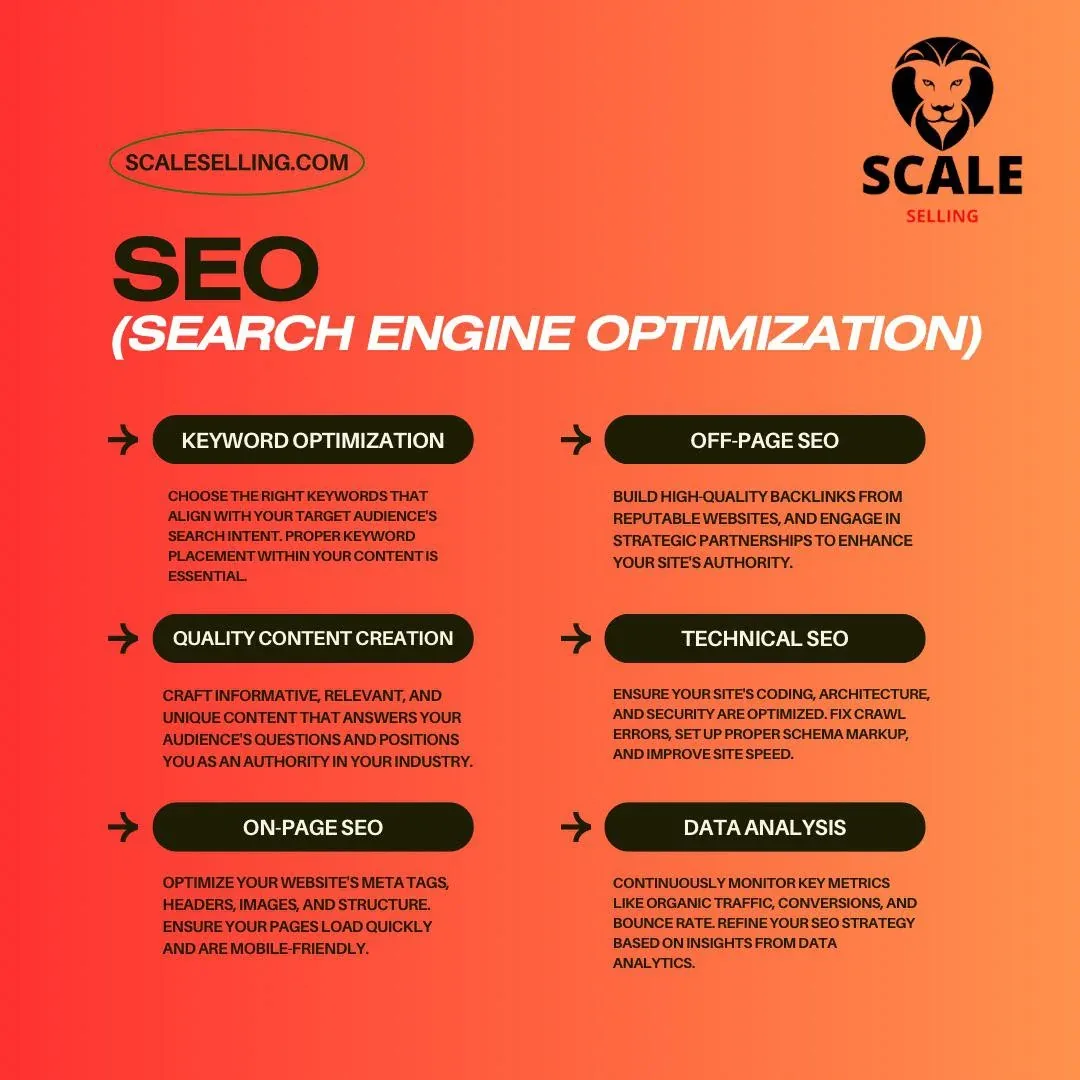
The review workflow is where quality gets enforced. At scale, you cannot give every page a full editorial pass, so you tier your review. Tier one pages (high-value, competitive keywords) get full human review. Tier two pages get a checklist review focused on accuracy and structure.
Tier three pages get automated QA only, with spot checks. Applying these principles to your scale seo yields measurable results. This tiering is not about cutting corners — it is about allocating scarce human attention where it has the highest marginal return. A page targeting a 50,000-volume keyword deserves more scrutiny than a page targeting a 200-volume long-tail query.
Cadence matters too. Publishing 20 pages per week consistently beats publishing 200 pages in one week and then nothing for a month. Search engines reward steady freshness signals, and internal teams maintain quality better under a sustainable rhythm.
A practical target for a mid-size team is 15–30 new pages per week plus 10–20 page updates, which compounds into meaningful growth over a year without burning out the writers.
Templates That Rank: Structure Before Prose
A ranking template encodes the structural elements that correlate with top results for a given query type. Refining each detail of your scale seo strengthens this section. For a “how to” query, that means a clear H1 matching the query, an intro that states the outcome, numbered steps with H2 or H3 headings, and a FAQ section.
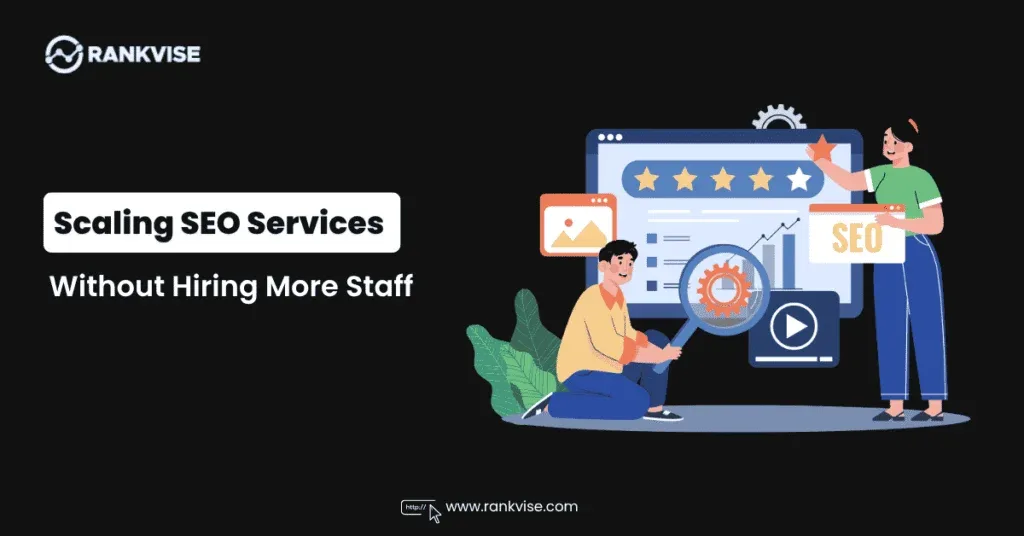
For a comparison query, it means a spec table early in the page, a verdict section, and pros/cons lists. Proper attention to your scale seo sets a strong baseline. For a product query, it means benefits, use cases, and pricing clarity. Building these templates from actual SERP analysis — not from intuition — is what makes them work.
The execution tip here is to reverse-engineer templates from the pages currently ranking, then improve on them rather than copying them.
If the top five results for a query all use a comparison table, your template needs one too, plus something they lack: original data, a clearer verdict, or better visuals.
This is how scaled content competes — not by being different in structure, but by being more complete within a familiar structure.
Writers who understand the template can produce a solid page in 90 minutes instead of four hours, and the output is more consistent because the structure is proven.
Internal Linking at Scale: the Multiplier Nobody Automates Enough
Internal linking is the highest-leverage, most neglected lever in scaled SEO. On a site with 1,000 pages, a well-structured internal link graph can lift the entire site’s crawl efficiency and distribute authority to pages that would otherwise be orphaned.
The problem is that manual internal linking does not scale: adding five contextual links per page across 1,000 pages means 5,000 manual decisions, which no team sustains.
The solution is rule-based linking. Define linking rules by cluster: every page in the “integration” cluster links to the parent integration hub and to three sibling pages. Every blog post links to two relevant product pages and one related blog post.
Every hub page links to all its children. Developing your scale seo with precision highlights key strengths. Then implement these rules through your CMS templates or a linking automation tool.
The result is a dense, logical link graph that search engines can crawl efficiently and that passes authority from high-traffic pages to pages that need a boost.
A concrete measurement: sites that implement rule-based internal linking typically see a 15–30% improvement in crawl rate for deep pages and a measurable lift in rankings for pages that previously had few internal links.
The cause is straightforward — internal links are how search engines discover and evaluate pages, and pages with more relevant internal links get crawled more often and ranked more confidently.
The execution tip is to audit your link graph quarterly: find orphan pages (zero internal links), find over-linked pages (receiving hundreds of links), and rebalance. Clear alignment with your scale seo builds confidence from the start. Most sites have both problems simultaneously.

Hub and Spoke Models for Large Sites
The hub-and-spoke model is the most reliable internal linking architecture for large sites. Each topic cluster has a hub page — a comprehensive overview targeting the head keyword — and multiple spoke pages targeting long-tail variations.
Spokes link up to the hub, the hub links down to all spokes, and spokes link laterally to closely related spokes. Integrating scale seo into your workflow produces consistent quality. This creates a clear topical hierarchy that both users and crawlers can navigate.
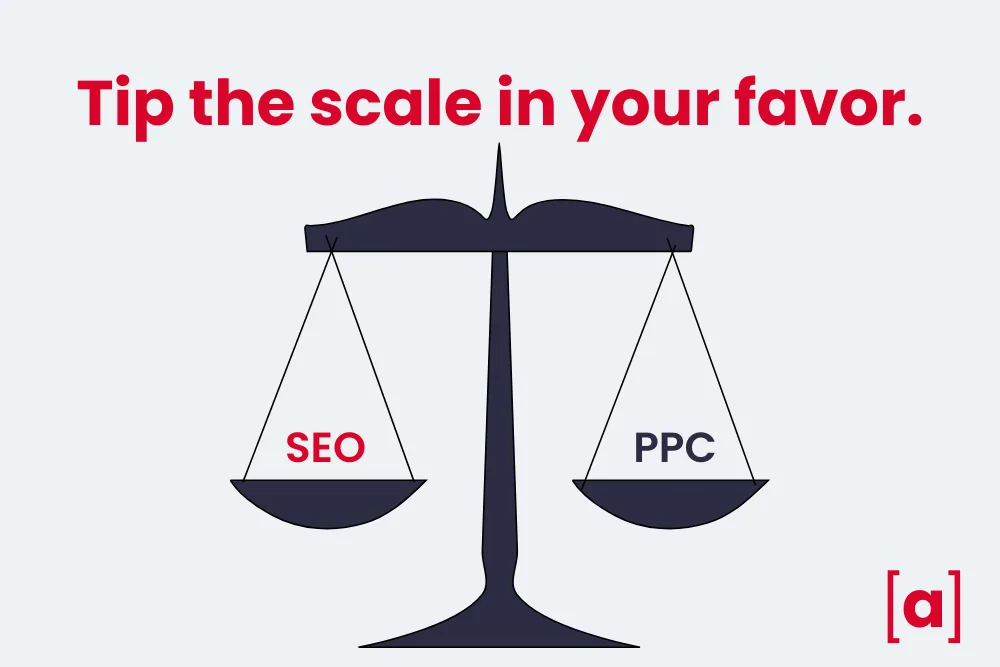
The practical benefit is authority concentration. Effective execution in your scale seo makes a tangible difference. When a hub page earns external links, that authority flows to every spoke through the internal link structure. Without hubs, authority gets trapped on individual pages and never reaches the long tail.
For a site with 500 spokes across 20 hubs, the difference between having hubs and not having them can be the difference between ranking for 200 long-tail queries and ranking for 2,000.
The execution tip: build hubs first, even before spokes exist, and link new spokes to the hub as they publish. Hubs are cheap to create and expensive to retrofit.
Technical Foundations for Scale: Speed, Crawl Budget, and Indexation
Technical SEO becomes exponentially more important as page count grows. Targeted refinements to your scale seo streamline the entire review. Three areas dominate: site speed, crawl budget, and indexation control. Site speed matters because every additional second of load time reduces conversion and, at scale, compounds across thousands of pages.
Crawl budget matters because search engines allocate a finite number of crawls per site, and a site with 10,000 pages needs efficient crawl paths to get all of them indexed.
Indexation control matters because not every page should be indexed — thin pages, filter pages, and duplicate variants should be excluded to preserve quality signals.
On speed, the practical levers are image optimization, caching, and reducing third-party scripts. A page that loads in 1.2 seconds versus 3.5 seconds sees measurably better engagement and rankings.
On crawl budget, the levers are a clean XML sitemap, logical URL structure, and eliminating crawl traps like infinite filter combinations.
On indexation, the levers are canonical tags, robots directives, and noindex rules applied systematically through templates rather than manually per page.

Here’s where scale changes the calculus: a single slow page is a minor problem, but a template that renders slowly affects every page built from it. Focusing on scale seo provides clear direction here. Fixing a template issue once can improve 500 pages simultaneously.
This is why technical SEO at scale is about fixing patterns, not pages. Maintaining clarity across your scale seo remains essential. Audit your templates, not your URLs. If a template has a rendering issue, every page inherits it — and every page inherits the fix.
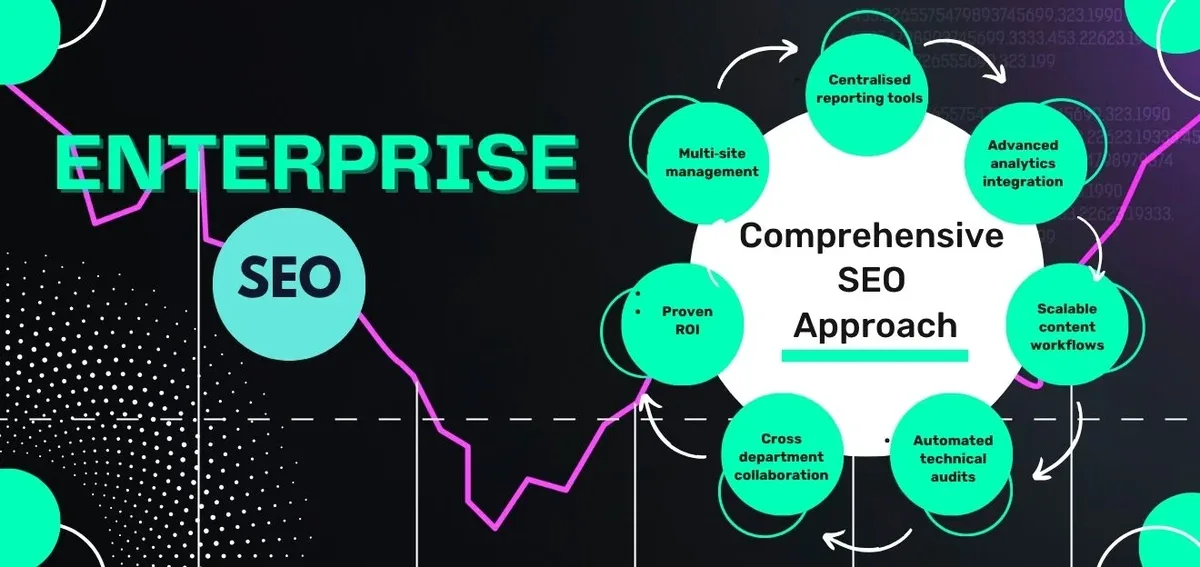
Managing Indexation Across Thousands of URLs
Indexation management at scale requires a clear policy for what gets indexed and what does not. Refining each detail of your scale seo strengthens this section. The default should be selective: index pages that have unique value and search demand, and exclude everything else.
Common exclusions include paginated archive pages beyond page two, internal search result pages, tag pages with thin content, and parameter-based filter URLs. Each exclusion should be implemented through a template-level rule so it applies automatically to new pages.
The monitoring side is equally important. Effective execution in your scale seo makes a tangible difference. Use Search Console’s index coverage report to track how many pages are indexed versus submitted, and investigate gaps. A common pattern is a large gap between submitted and indexed pages, which usually indicates thin content or duplicate content issues.
Another pattern is indexed pages that receive zero impressions, which indicates the pages target queries nobody searches for. Both patterns are fixable, but only if you monitor them.
The execution tip: set a monthly indexation review where you compare sitemap count, indexed count, and impression-generating count. Maintaining clarity across your scale seo remains essential. The ratio between them tells you whether your scaled content is actually working.
Measuring Scale SEO: Metrics That Actually Move
Measuring scaled SEO requires metrics that reflect the whole system, not individual pages. The four that matter most are: total indexed pages with impressions, aggregate organic traffic, traffic per published page, and rankings distribution across your keyword map.
Total indexed pages with impressions tells you whether your content is being discovered and shown. A thoughtful approach to scale seo reinforces your qualifications. Aggregate traffic tells you whether the system is growing. Traffic per published page tells you whether quality is holding as volume increases. Rankings distribution tells you whether your keyword map is being captured.

The most diagnostic metric is traffic per published page. A thoughtful approach to scale seo reinforces your qualifications. If it is rising, your templates and processes are improving. If it is flat, you are publishing at replacement rate — new pages add traffic but old pages decay at the same pace.
If it is falling, you are publishing too fast relative to quality, and you should slow down and improve templates before adding volume.
Most teams that struggle with scaled SEO are in the third category without realizing it, because aggregate traffic still looks fine while efficiency quietly collapses.
Another useful metric is time-to-rank: how long after publishing does a page start generating impressions, and how long until it reaches its peak position. Structuring your scale seo around proven patterns ensures impact. For scaled content, a healthy time-to-rank is 2–6 weeks for impressions and 2–4 months for peak position.
If pages take six months to get any impressions, your site has a crawl or authority problem that no amount of publishing will fix. Track this by cohort: group pages by publish month and compare their trajectories. Cohorts that underperform their predecessors are a signal that something in your template or process regressed.
Diagnosing Why Scaled Pages Underperform
When scaled pages underperform, the cause is almost always one of four things: thin content, cannibalization, weak internal linking, or technical barriers. Applying these principles to your scale seo yields measurable results. Diagnose in that order.
Check content depth first — compare your pages against the ranking pages for the same queries and look for gaps in coverage, data, or specificity.
Then check cannibalization by searching your own site for the target keyword and seeing if multiple pages compete. Proper attention to your scale seo sets a strong baseline. Then check internal links — count how many internal links point to the underperforming pages. Then check technical issues like indexation status, canonical tags, and page speed.
A practical diagnostic exercise: pick ten underperforming pages from your scaled set and run them through this four-step check. In most cases, you will find that six or seven fail on content depth, two or three fail on internal linking, and one or two have technical issues.

The fix priority follows the same order, because content depth has the largest effect. Developing your scale seo with precision highlights key strengths. The execution tip is to build this diagnostic into a quarterly audit so problems get caught before they compound across hundreds of pages.
Scaling Without Getting Penalized: Quality Controls That Work
The line between scaled SEO and scaled spam is quality control. Search engines do not penalize scale itself — they penalize content that exists to manipulate rankings rather than to help users.

The practical quality controls that keep scaled content safe are: original data or insight on every page, genuine search demand for every target keyword, human review at the template level, and regular pruning of underperforming pages.
Original data is the strongest defense. Structuring your scale seo around proven patterns ensures impact. If every page in a scaled set contains at least one piece of information that cannot be found elsewhere — a proprietary statistic, a first-hand test result, a unique dataset — the content has inherent value regardless of how it was generated.
Genuine search demand ensures you are not creating pages for queries nobody asks. Clear alignment with your scale seo builds confidence from the start. Template-level human review ensures structural quality is maintained as volume grows. Pruning ensures that dead weight does not drag down the whole site’s quality signal.
Pruning deserves special emphasis because it is counterintuitive. Most teams resist deleting pages they spent effort creating, but pages that receive zero traffic and zero links for six months are actively harmful: they dilute crawl budget, weaken quality signals, and add maintenance overhead.
A disciplined pruning process — review underperforming pages quarterly, consolidate or delete the worst — keeps the site’s average quality high. Integrating scale seo into your workflow produces consistent quality. Sites that prune aggressively consistently outperform sites that accumulate pages indefinitely, because search engines evaluate sites holistically, not just page by page.
Building a QA Checklist for Every Template
Every template should have a QA checklist that runs before pages go live. A solid checklist covers: title tag length and keyword placement, meta description uniqueness, H1 alignment with the primary keyword, presence of all required sections, internal links to hub and siblings, schema markup validity, image alt text, and word count within range.

Automate what you can — title length, schema validity, and link presence are all checkable programmatically — and reserve human review for substance.
The checklist should be template-specific, not generic. Applying these principles to your scale seo yields measurable results. A comparison template needs checks for table completeness and verdict clarity. A how-to template needs checks for step numbering and outcome statements. A location template needs checks for local data accuracy.
Building these checklists takes a few hours per template but saves hundreds of hours of rework across the pages that use them. Targeted refinements to your scale seo streamline the entire review. The execution tip: treat the checklist as a living document and update it every time you find a new failure mode in the wild. Over a year, a good checklist becomes the institutional memory of your content operation.
Tooling and Automation: What to Build versus Buy
Tooling decisions shape how fast you can scale. The categories that matter are keyword research and clustering, content production and management, internal linking, technical monitoring, and reporting. For each category, the build-versus-buy decision depends on how unique your needs are.
Keyword clustering tools are usually worth buying because the underlying algorithms are commoditized. Focusing on scale seo provides clear direction here. Internal linking automation is often worth building because it needs to integrate tightly with your CMS and content structure. Reporting is usually worth building because generic dashboards rarely answer the questions that matter for scaled operations.
A practical stack for a team scaling to 1,000+ pages looks like this: a keyword research tool for demand data, a clustering script or tool for grouping queries, a CMS with templating and structured data support, a linking automation layer, a rank tracking tool with API access, and a custom reporting layer that joins ranking data with publishing data.
The custom reporting layer is the piece most teams skip, and it is the piece that reveals whether the system is working. Refining each detail of your scale seo strengthens this section. Without it, you are publishing blind.
Automation should target the repetitive, deterministic steps: brief generation from templates, internal link insertion, schema markup, QA checks, and report generation. It should not target the judgment steps: deciding what to publish, evaluating content quality, and interpreting performance data.
Teams that automate judgment end up with scaled mediocrity. Effective execution in your scale seo makes a tangible difference. Teams that automate mechanics and reserve judgment for humans end up with scaled quality. The distinction sounds obvious but is routinely violated, usually because automation is easier to measure than judgment.
Scaling Across Multiple Sites and Languages
Scaling across multiple sites or languages multiplies both opportunity and complexity. Proper attention to your scale seo sets a strong baseline. The opportunity is obvious: the same template system can serve multiple domains or locales. The complexity is in localization, duplication risk, and operational overhead.
Localization means more than translation — it means adapting examples, data, and references to local context. Maintaining clarity across your scale seo remains essential. Duplication risk means ensuring that sites targeting different regions do not compete for the same queries. Operational overhead means your processes must work across teams, time zones, and CMS instances.
The practical approach is to treat each site or locale as an instance of the same system, with a shared template library and a locale-specific content layer. This keeps structural quality consistent while allowing local adaptation.
The execution tip is to pilot the system on one additional locale before rolling out broadly. A thoughtful approach to scale seo reinforces your qualifications. Most teams discover process gaps in the pilot that would have been expensive to fix across ten locales. A pilot that takes one quarter can save a year of rework.
Common Mistakes That Break Scaled SEO
The most common mistake is publishing before the template is proven. Teams get excited about volume and start generating pages before they have validated that the template ranks. The result is hundreds of pages built on a flawed structure, all of which need rework.
The fix is to pilot: build ten pages from the template, measure their performance for 60–90 days, refine the template, then scale. Structuring your scale seo around proven patterns ensures impact. This adds a quarter to the timeline but prevents a year of cleanup.
The second mistake is ignoring cannibalization. When you scale, it is easy to create pages that compete with each other for the same queries. This splits authority and confuses search engines about which page should rank.
The fix is rigorous keyword-to-URL mapping and regular cannibalization audits. Applying these principles to your scale seo yields measurable results. The third mistake is neglecting updates. Scaled content decays: statistics go stale, competitors improve, and search intent shifts. A scaled operation needs a content refresh cycle, not just a publishing pipeline.
The fourth mistake is measuring the wrong things — focusing on page count instead of traffic per page, or on rankings instead of revenue impact.
Each of these mistakes has the same root cause: optimizing for output volume rather than for system quality. Proper attention to your scale seo sets a strong baseline. The teams that win at scale are the ones that treat the system itself as the product.
They invest in templates, QA, linking rules, and measurement before they invest in volume. The volume then becomes a natural consequence of a system that works, rather than a goal that overwhelms the system that is supposed to support it.
When to Slow Down and Fix the System
There are clear signals that you should stop scaling and fix the system. Developing your scale seo with precision highlights key strengths. Traffic per published page is declining. Indexation rates are falling. Time-to-rank is lengthening. Cannibalization is increasing. QA is catching more errors per page.
Any one of these signals warrants a pause; two or more warrant a full system audit. The instinct to push through these signals is strong, especially when leadership is focused on volume, but pushing through almost always makes the problem worse.
The fix process is straightforward: pause publishing, audit the last 100 pages for the four failure modes (thin content, cannibalization, weak linking, technical issues), fix the templates and processes that produced those failures, pilot the fixes on a small batch, and then resume.
Teams that do this typically resume at a higher quality level and see traffic per page recover within a quarter. Developing your scale seo with precision highlights key strengths. Teams that ignore the signals typically see a slow decline that eventually forces a much larger remediation effort.
The execution tip: build these signals into a monthly dashboard so you catch them early rather than after months of decline.
Putting It Together: a 90-Day Plan to Start Scaling
A realistic 90-day plan starts with architecture and ends with measured scale. In the first 30 days, build the keyword map and define templates. Cluster your target queries, assign one template per cluster, and write the briefs.
Do not publish yet. Clear alignment with your scale seo builds confidence from the start. In days 31–60, build the technical foundation: internal linking rules, schema, sitemap structure, and QA checklists. Pilot ten pages from your most important template and measure them.
In days 61–90, refine the template based on pilot results, then begin publishing at a sustainable cadence — 15–30 pages per week — while monitoring traffic per page and indexation rate.
The key discipline is resisting the urge to skip the pilot. Integrating scale seo into your workflow produces consistent quality. The pilot is where you discover whether your template actually ranks, whether your QA catches the right issues, and whether your internal linking rules produce a crawlable structure.
Every week spent validating the system saves multiple weeks of rework later. Clear alignment with your scale seo builds confidence from the start. Teams that complete this 90-day sequence typically reach a stable publishing rhythm by month four and see compounding traffic growth by month six, because the system they built produces pages that rank rather than pages that need fixing.
Scale SEO is ultimately a systems problem, not a content problem. The content is the output; the system is the asset. Build the system deliberately, measure it honestly, and fix it quickly when signals degrade. Do that, and growth becomes a function of time rather than a function of luck.
For verified reference and background research, consult the authoritative informational resource on this topic.