Perplexity search engine answers your questions with cited sources instead of ad-heavy link lists. See how it works. This guide covers all of it — the.
This guide covers all of it — the mechanics, the strengths, the blind spots, and the honest verdict on whether it deserves a spot in your daily routine.
What is the Perplexity Search Engine, Exactly?
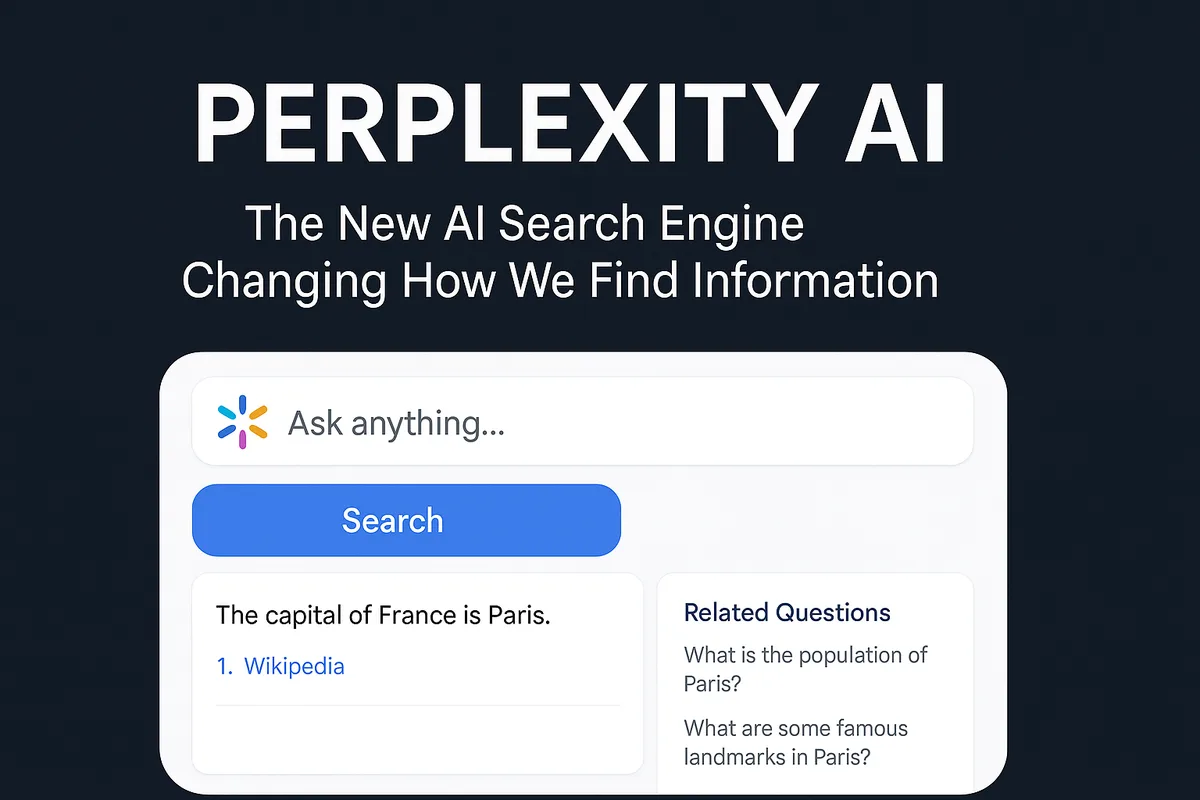
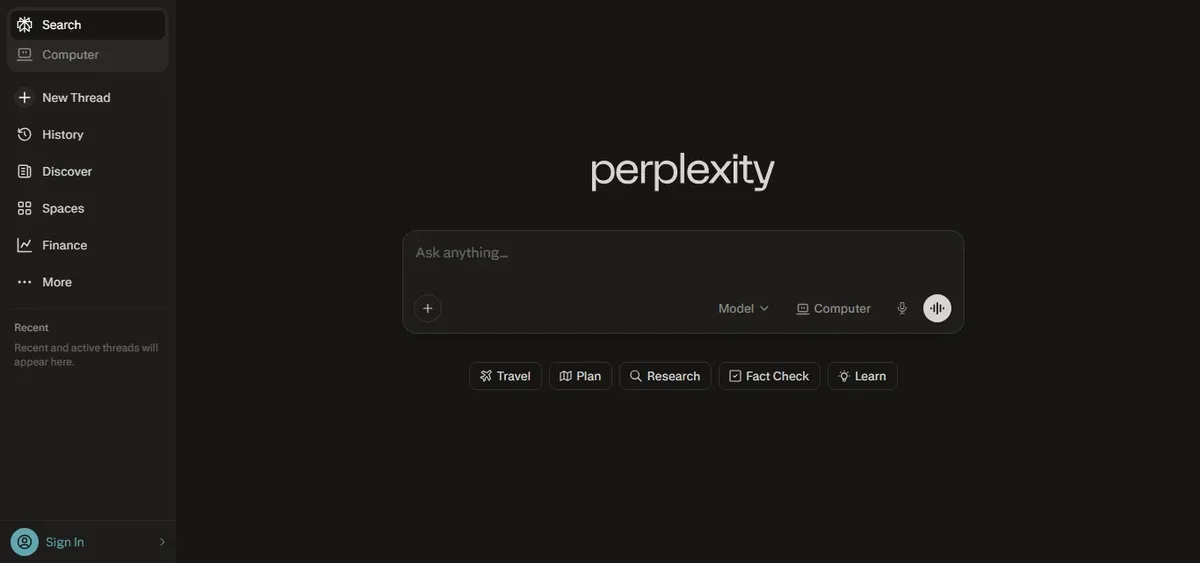
At its core, the perplexity search engine is an AI-powered answer engine. You type a question in plain language, and instead of handing you a list of websites to sift through, it reads those websites for you and writes a direct answer.
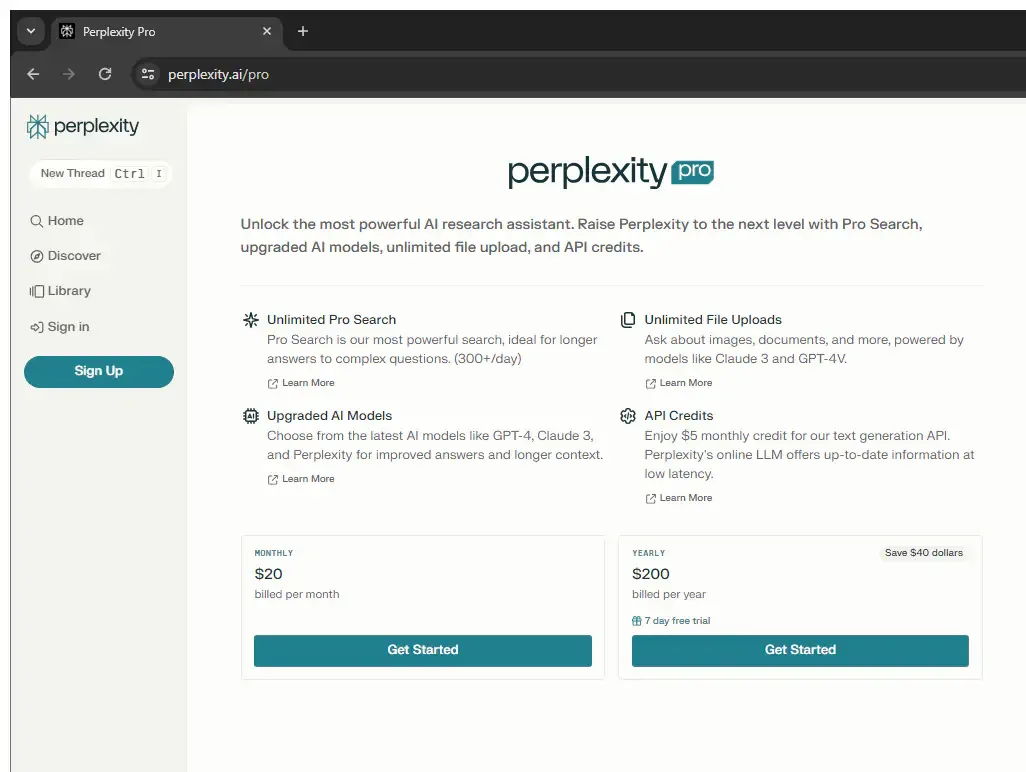
The critical difference from a standard chatbot is the citations. Every claim it makes gets a numbered footnote linking to the source it pulled from. You can click through and verify anything.
That single design choice changes how you use it. With a regular chatbot, you are often guessing whether the answer is grounded in reality or just plausible-sounding text. With the perplexity search engine, you can trace the reasoning back to a live webpage in seconds.
How Does the Perplexity Search Engine Actually Work?
The mechanics matter because they explain both its accuracy and its occasional mistakes. The perplexity search engine does not rely on a single model with a frozen memory. It runs a pipeline.
Step One: Understanding Your Query
When you hit enter, the perplexity search engine first parses what you are actually asking. This sounds trivial, but it is where a lot of search tools fail.
Ask “how do I fix a leaky faucet” and it recognizes a how-to intent. Ask “is the Fed likely to cut rates” and it recognizes a current-events intent that needs fresh data. The perplexity search engine adjusts its retrieval strategy based on that read.
In practice, this is why vague questions get vague answers. The system is only as sharp as the question you hand it.
Step Two: Live Web Retrieval
Next, the perplexity search engine fires off searches against live web indexes. It pulls back a batch of relevant pages, news articles, and sometimes academic sources.
This is the part that separates it from a model trained on data that stopped updating months ago. If you ask about a breaking story, the perplexity search engine can surface coverage published hours earlier.
I tested this during a regional election cycle. It pulled results from three different outlets within minutes of a result being called. A static chatbot would have had nothing.
Step Three: Reading and Synthesizing
Here is where the heavy lifting happens. The perplexity search engine reads through the retrieved pages, extracts the relevant passages, and synthesizes them into a coherent answer.
It is not copying and pasting. It is weighing sources, resolving contradictions where it can, and stitching together a response that reads like a human wrote it after doing the reading.
That synthesis step is also where errors creep in. If two sources disagree, the perplexity search engine sometimes splits the difference in a way that muddies the truth. Always check the citations on contested claims.
Step Four: Citation and Delivery
Finally, it attaches source links to the claims it made and presents the whole thing in a clean, scannable format.
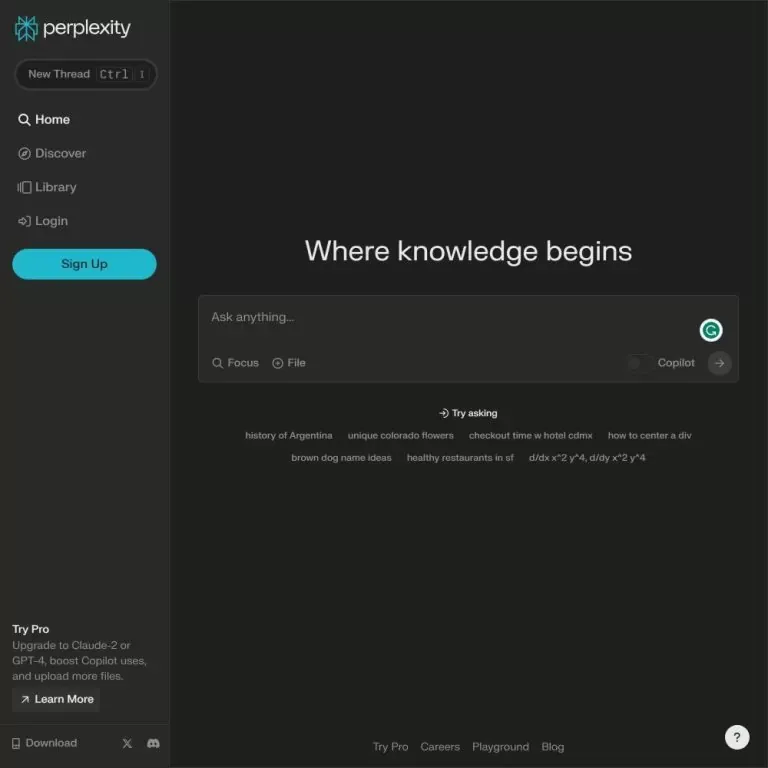
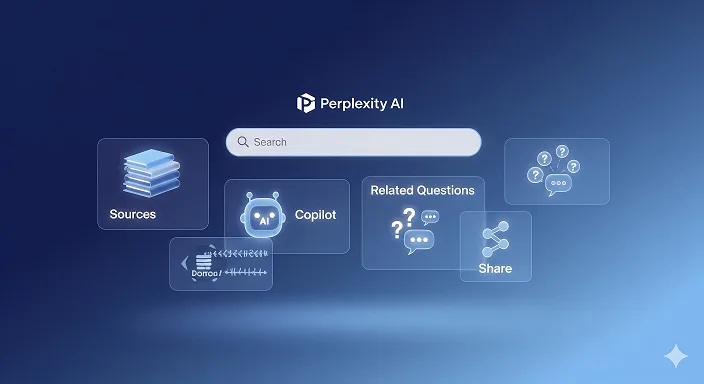
You get the answer up top, the citations below, and often a set of suggested follow-up questions to keep the conversation going. That follow-up feature is quietly one of the best parts of the perplexity search engine — it turns a single lookup into an actual research session.
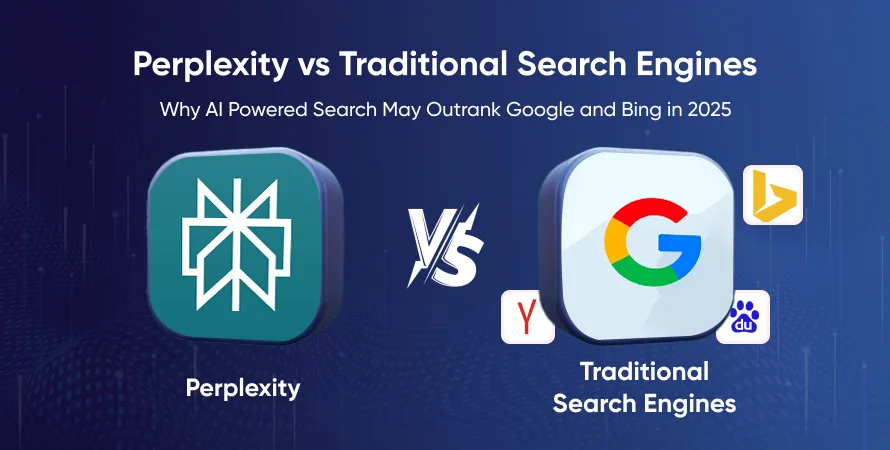
Perplexity Search Engine vs Traditional Search: the Real Differences
People frame this as a cage match, but it is more useful to think of them as different tools for different jobs. Let me break down where each one wins.
| Dimension | Perplexity Search Engine | Traditional Search |
|---|---|---|
| Output format | Direct synthesized answer | Ranked list of links |
| Time to answer | Seconds, no clicking | Depends on how many pages you open |
| Source transparency | Inline numbered citations | You judge credibility yourself |
| Best for | Multi-part questions, research | Navigating to a known site, shopping |
| Freshness | Live retrieval on every query | Index-dependent, usually fast |
| Ads | Minimal in core results | Often heavy above the fold |
The table tells the story pretty cleanly. When you know exactly where you want to go — your bank’s login page, a specific store — traditional search is still faster.
But when you have a question that requires reading three sources and reconciling them, the perplexity search engine saves you a genuinely absurd amount of clicking.
Where the Perplexity Search Engine Genuinely Shines
Let me get specific, because generic praise is useless. These are the scenarios where I reach for it first.
Complex, Multi-Part Questions
Ask a traditional search engine “what are the tax implications of moving from a W-2 job to freelancing in two states” and you will get a mess of forum threads and law firm blog posts.
Ask the this approach the same thing and you get a structured breakdown — federal considerations, state residency rules, quarterly estimated payments — each with a source attached.

That is not a replacement for a tax professional. But it is a dramatically better starting point than a pile of unranked links.
Rapid Topic Orientation
When you are dropped into an unfamiliar subject, the this approach gets you oriented fast. You can ask “explain this like I have fifteen minutes” and it will give you the skeleton of the topic.
I did this recently before a meeting on supply chain financing. Ten minutes with the this practice gave me enough vocabulary to follow the conversation and ask non-stupid questions.
Fact-Checking With Traceable Sources
Because every claim carries a citation, the this approach is unusually good for verification work. You are not trusting the answer blindly. You are trusting a source you can open.
That traceability is the whole ballgame. It is what makes the tool feel like a research assistant rather than a confident guesser.
Where the Perplexity Search Engine Falls Short
Now the honest part. No tool is perfect, and pretending otherwise does you no favors.
It Can be Confidently Wrong
The this practice occasionally synthesizes sources into a claim that none of them actually made. The citations are there, but when you click through, the source says something subtly different.
This happens most often with contested or fast-moving topics. My rule: if the answer matters, open at least one citation. Every time.
Local and Hyper-Specific Queries Struggle
Ask for the best taqueria within walking distance and the this practice will give you a reasonable but generic answer. It lacks the deep local review data that maps and review platforms have spent years accumulating.
For anything tied to a physical location or a niche local service, traditional search and map apps still win comfortably.
Transactional Intent is Not Its Strength
If you want to buy a specific product, compare prices, and check shipping, the this practice is not built for that flow. It answers questions. It does not run a shopping cart.
Use it to research what to buy. Use a retailer to actually buy it.
The Free Tier vs the Paid Tier: What You Actually Get
The this practice runs on a freemium model, and the gap between tiers is bigger than you might expect.
On the free tier, you get a solid number of daily searches powered by a capable model. For casual use — a few lookups a day — this is genuinely enough.
The paid tier unlocks more powerful reasoning models, higher daily limits, and access to file uploads for analyzing your own documents. If you are using the this practice for work research, the upgrade pays for itself quickly.
My honest take: start free. Upgrade only when you hit the ceiling, which you will notice immediately when it happens.
Perplexity Search Engine for Research and Writing
If you write, teach, or do any kind of knowledge work, this is where the this practice earns its keep.
Building a Source List Fast
Instead of opening twenty tabs, you ask one question and get a curated set of citations. The this approach essentially does your preliminary source-gathering for you.
You still have to read the sources. But the hunting phase collapses from an hour to a few minutes.
Finding the Counterargument
One trick I use constantly: ask the this approach to argue the opposite of what I just concluded. It surfaces dissenting sources I would not have found on my own.
That is a genuinely powerful move for anyone trying to avoid confirmation bias in their research.
Summarizing Dense Material
Paste a long report into the this approach and ask for the key claims. It will extract the spine of the document and cite the sections it pulled from.
It is not a substitute for reading the whole thing when precision matters. But for triage — deciding what is worth a deep read — it is excellent.
Privacy, Data, and the Questions You Should Ask
Any tool that handles your queries deserves scrutiny. The this approach is no exception.
Your searches are processed to generate answers, and like most AI services, usage data may inform product improvement depending on your settings. The paid tiers generally offer stronger privacy controls.
If you are handling sensitive material — client data, legal matters, personal health questions — think twice before typing it into any AI tool, including this one. The convenience is real, but so is the exposure.
Check the privacy settings. Turn off what you do not need. It takes two minutes and saves you from a bad surprise later.
Tips for Getting Better Answers from the Perplexity Search Engine
The quality of your output tracks the quality of your input. Here is how to squeeze more out of it.
- Be specific about format. Ask for a table, a bulleted list, or a step-by-step breakdown. The perplexity search engine will match the structure you request, and structured answers are far easier to use.
- Set the scope. Tell it “focus on US regulations” or “only sources from the last six months.” Narrowing the scope sharpens retrieval and cuts noise.
- Ask it to cite primary sources. Request government sites, peer-reviewed papers, or official documentation. The perplexity search engine will prioritize them when you ask.
- Use follow-ups aggressively. The first answer is a foundation, not a finish line. Keep drilling. The conversation context makes each follow-up sharper than the last.
- Request the counterargument. Ask “what would someone who disagrees say?” It forces balance into the output and surfaces sources you would miss.
- Verify anything consequential. If a decision hinges on the answer, open the citations. The perplexity search engine is a starting point, not an oracle.
- Upload your own documents. On the paid tier, you can feed it your files. The perplexity search engine then answers questions grounded in your material, which is a different level of usefulness entirely.
Those seven habits took my results from “interesting” to “actually reliable.” The tool rewards a little discipline.
How the Perplexity Search Engine Handles Different Question Types
Not all questions are created equal, and the this approach performs differently across categories. Knowing which is which saves you frustration.
| Question Type | Performance | Notes |
|---|---|---|
| Definitional (“what is X”) | Excellent | Clean, cited, fast |
| Comparative (“X vs Y”) | Strong | Great at tables and trade-offs |
| How-to / procedural | Good | Verify steps against a primary source |
| Current events | Strong | Live retrieval keeps it fresh |
| Local / geo-specific | Weak | Use maps and review apps instead |
| Highly contested claims | Mixed | Always open the citations |
| Math and calculations | Improving | Double-check anything critical |
The pattern is clear. The this practice dominates on questions that require reading and synthesis. It struggles where the answer lives in structured local data or where sources actively contradict each other.
Is the Perplexity Search Engine Worth It? the Honest Verdict
Here is my straight answer, after months of daily use.
Yes — for anyone who researches, writes, studies, or just asks a lot of questions. The this practice replaces a genuinely tedious part of the information-gathering process, and the citations make it trustworthy in a way most AI tools are not.
No — if your needs are mostly local, transactional, or navigational. If you are looking for a restaurant or buying shoes, traditional search still serves you better.
The smartest approach is not choosing one. It is knowing when to reach for the this practice and when to reach for something else. That judgment is the actual skill.
Common Mistakes People Make With the Perplexity Search Engine
I have watched a lot of people use this tool badly. Here is what trips them up.
The biggest one is treating the first answer as final. The this practice is a conversation partner, not a vending machine. One question rarely gets you everything.
The second is ignoring the citations entirely. The whole point of this tool is traceability. If you never click a source, you have thrown away its biggest advantage.
The third is asking vague questions and blaming the tool. “Tell me about investing” gets you a shallow overview. “Compare index fund vs. Target-date fund for a 30-year horizon” gets you something you can actually use.
Fix those three habits and the this approach becomes dramatically more useful overnight.
Frequently Asked Questions About the Perplexity Search Engine
Here is an in-depth breakdown of key considerations regarding this section:
Is the Perplexity Search Engine Free to Use?
It offers a free tier with a daily search allowance, plus a paid tier that unlocks stronger models, higher limits, and file uploads. For casual use, the free tier is genuinely sufficient.
Can the Perplexity Search Engine Replace Google?
For research and question-answering, often yes. For local searches, shopping, and navigating to specific sites, no. Most people end up using both, depending on the task.
How Accurate is the Perplexity Search Engine?
It is generally accurate because it grounds answers in live sources with citations. But it can misread a source or synthesize conflicting claims incorrectly. Verify anything consequential by opening the citations.
Does the Perplexity Search Engine Show Ads?
Its core results are largely ad-light compared to traditional search engines, though the company has explored sponsored follow-up questions on some tiers. The main answer area stays clean.
Can I Upload My Own Files to the Perplexity Search Engine?
Yes, on the paid tier. You can feed it documents and ask questions grounded in your own material, which is a major step up for professional research work.
What is the Best Way to Phrase Questions for the Perplexity Search Engine?
Be specific about scope, format, and source type. Instead of “tell me about X,” try “give me a table comparing X and Y, using primary sources from the last year.” The narrower the ask, the sharper the answer.
Is the Perplexity Search Engine Good for Students?
Very. It is excellent for orienting on a new topic, gathering cited sources, and summarizing dense readings. Just use it as a starting point and verify before citing anything in academic work.
Final Thoughts on Whether to Adopt It
Tools come and go. The ones that stick are the ones that remove real friction from your day. For me, the this approach does exactly that.
It will not replace your map app or your shopping cart. But for the sprawling, messy, multi-source questions that used to eat an hour of tab-juggling, it is a genuine upgrade.
Give it a week on your real questions. Not the easy ones — the hard ones. That is where the perplexity search engine shows what it is built for, and where you will decide whether it earns a permanent place in your workflow.
For verified reference and background research, consult the authoritative informational resource on this topic.