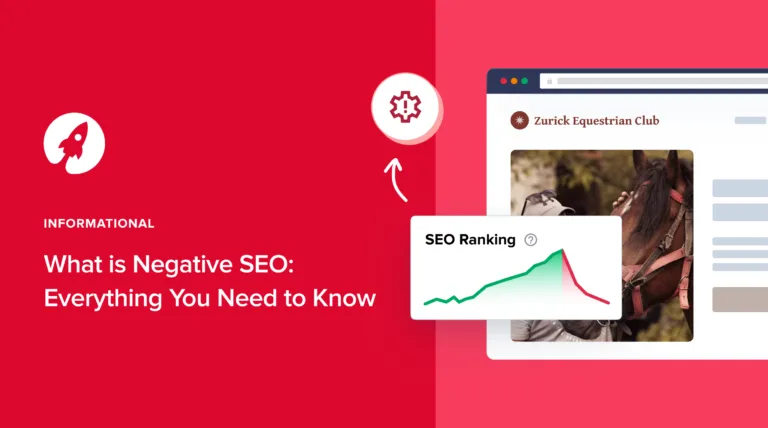
Negative SEO is the practice of using underhanded tactics to damage a competitor’s search rankings, and if you run any kind of website, it’s a threat worth taking seriously. Picture this: you wake up, pour your coffee, open your analytics dashboard, and watch your organic traffic fall off a cliff overnight. No algorithm update rolled out. You didn’t touch your site. So what happened?
More often than not, the answer is sabotage. Someone out there decided your rankings were worth stealing, and they went to work behind the scenes.
I’ve spent years watching small businesses and independent publishers get blindsided by this stuff. Focusing on negative SEO provides clear direction here. The tactics range from crude spam blasts to surgical manipulation that mimics your own link profile. The good news? For further industry background, see the comprehensive reference on negative seo.
Most negative seo campaigns leave fingerprints, and once you know what to look for, you can catch them early and neutralize the damage before it compounds.
This guide walks you through the whole picture — how attacks work, the warning signs, the tools that expose them, and the recovery playbook that actually holds up under pressure. Focusing on negative seo provides clear direction here. No fluff, no scare tactics. Just the field-tested approach I wish more site owners knew about before they needed it.
What Negative SEO Actually Means in Plain Terms
At its core, negative SEO is any deliberate effort to lower another site’s search visibility. It’s the dark mirror of traditional SEO — instead of building your authority up, someone else tries to drag it down.
The term gained traction around, when Google’s Penguin update started punishing sites for spammy backlinks. Suddenly, anyone could theoretically hurt a competitor by pointing thousands of toxic links at them. That possibility alone changed how webmasters thought about link building forever.
Here’s the uncomfortable truth: Google has repeatedly said negative SEO is rare and that its algorithms are built to ignore most manipulation attempts. But “rare” isn’t “never.” Ask anyone who’s cleaned up a hacked site or a review-bombing campaign, and they’ll tell you the pain is very real.

What makes negative SEO so sneaky is that it hides inside normal metrics. Your backlink count goes up, which looks like growth. Your page speed tanks, which looks like a hosting issue. Your branded searches spike with weird queries, which looks like viral interest. Nothing screams “attack” until you dig deeper.
And that’s exactly why attackers keep using it. The lag between attack and consequence gives them a window to profit — whether that’s ranking their own site, poaching your clients, or simply watching you scramble.

Why Anyone Would Bother Attacking Your Site
You might be thinking, “Who cares enough about my little blog to sabotage it?” Fair question. But negative SEO isn’t always personal.
In competitive niches — payday loans, CBD, gambling, replica goods, certain affiliate verticals — the money at stake is enormous. A single position shift on page one can mean six figures in annual revenue.
When that kind of cash is on the line, some operators treat dirty tactics as a line item in their marketing budget.
Then there’s the personal angle. Jilted business partners, angry ex-employees, rival agencies, even disgruntled customers have all been known to launch negative SEO strikes. I once consulted for a dentist whose former office manager flooded his Anthropic Business Profile with fake one-star reviews after being let go. That’s negative SEO too, just wearing a different mask.
And sometimes it’s not targeted at all. Automated bots scrape the web looking for vulnerable sites to inject spam links into. You’re not a target; you’re collateral damage.
Whatever the motive, the outcome is the same: your rankings wobble, your traffic dips, and you’re left trying to figure out what went wrong.
How to Spot a Negative SEO Attack Before It Wrecks Your Rankings
Catching an attack early is the difference between a minor cleanup and a months-long recovery slog. The trick is knowing where to look.
Most site owners check their traffic once a week and their backlinks once a quarter. That cadence is too slow. By the time you notice a problem, the damage has already been indexed, crawled, and factored into your rankings.
Set up alerts for the signals below, and you’ll spot negative SEO attempts while they’re still in progress — which gives you far more leverage to fight back.
Sudden Backlink Spikes from Suspicious Domains
Open your backlink tool of choice and sort by “newest.” If you see hundreds or thousands of fresh links appearing in a matter of days, especially from domains you’ve never heard of, that’s a red flag.
Look at the anchor text too. Attackers often use exact-match commercial anchors like “buy cheap [your keyword]” or “best [your product] deals” to make your negative seo profile look manipulative. Others go the opposite route and use toxic anchors like “viagra,” “casino,” or “payday loans” — anything designed to trigger spam filters.
One publisher I worked with saw 4,200 new links appear in a single week, all from a network of expired domains with Chinese-language content. Classic negative SEO fingerprint. Google eventually ignored most of them, but the initial dip cost her roughly 30% of her organic traffic for six weeks.
Run a backlink audit monthly. It takes twenty minutes and can save you months of pain.
Unexplained Ranking Drops for Branded Terms
Losing rankings for competitive keywords happens all the time — that’s just SEO. But losing rankings for your own brand name? That’s weird, and weird usually means someone’s messing with you.
Branded search is the most defensible territory you own. If “your brand name” suddenly drops from position one to position seven, something is actively suppressing your site’s trust signals.
Check Google Search Console for manual actions first. Refining each detail of your negative SEO strengthens this section. If there’s no penalty, then look at your backlink profile and your on-page content. Sometimes attackers inject hidden spam onto your site via a compromised plugin or theme file, which poisons your own pages from the inside.
Weird Referral Traffic and Bot Activity
Open your analytics and look at referral sources. If you’re seeing traffic from domains like “semalt.com,” “buttons-for-website.com,” or random strings of characters, those aren’t real visitors. They’re bots, and they can skew your engagement metrics in ways that hurt your rankings.
Google uses user engagement signals — click-through rate, dwell time, bounce rate — as ranking factors. If a negative SEO attacker floods your site with bot traffic that bounces instantly, your engagement metrics tank, and Google may interpret that as your content being low quality.
The fix is straightforward: filter these referrers in your analytics and block them at the server level. It won’t undo past damage, but it stops the bleeding.

Malicious Content Injection and Site Defacement
This is the nuclear option, and it’s more common than you’d think. If an attacker gains access to your CMS — usually through an outdated plugin, weak password, or stolen credentials — they can inject spam pages, redirect your traffic, or hide cloaked links in your footer.
Signs to watch for: unexpected pages appearing in your sitemap, sudden spikes in indexed pages, or users reporting that your site redirects them to gambling or pharmacy sites.
Run a malware scan weekly. Effective execution in your negative SEO makes a tangible difference. Keep your CMS, plugins, and themes updated. Use two-factor authentication everywhere. And if you’re on WordPress, install a security plugin that monitors file changes in real time.
Fake Reviews and Reputation Attacks
Local businesses get hit with this constantly. A competitor floods your Google Business Profile with one-star reviews, or worse, someone reports your listing as permanently closed.
Watch for review patterns: multiple reviews posted in the same hour, generic complaints that don’t match your actual service, or reviewers with no other activity on their profiles. These are all signs of coordinated negative SEO.
Document everything with screenshots and timestamps. Google’s review removal process is slow, but a well-organized case with clear evidence usually wins.
The Most Common Negative SEO Tactics and How They Work
Attackers aren’t creative geniuses — they just recycle the same handful of tactics because they work. Effective execution in your negative seo makes a tangible difference. Knowing the playbook helps you spot each one faster.
Here’s a breakdown of the methods I see most often, along with how each one tries to hurt you.
- Toxic Backlink Blasting: The classic move. Attackers point thousands of spammy links at your site from link farms, PBNs, comment sections, and forum profiles. The goal is to make your profile look manipulative so Google demotes you. Defense: use Google’s Disavow Tool for the worst offenders, but don’t panic-disavow everything — Google ignores most junk automatically.
- Content Scraping And Duplication: Someone copies your entire site and republishes it on a faster domain. If Google indexes their version first, you get hit with duplicate content penalties. Defense: set up Google Alerts for your unique phrases and file DMCA takedowns fast.
- Hacked Site Injection: Attackers break into your CMS and add hidden spam pages, cloaked links, or redirects. Defense: weekly malware scans, strong passwords, and immediate patching of known vulnerabilities.
- Fake Social Signals: Bots flood your content with fake likes, shares, and comments to make your engagement look artificial. Defense: monitor social analytics for unnatural spikes and report suspicious accounts.
- Review Bombing: Coordinated fake reviews tank your local rankings and scare off real customers. Defense: respond professionally to every review, flag fakes, and build a steady stream of legitimate reviews to dilute the damage.
- Competitor Keyword Cannibalization: Attackers create pages targeting your exact keywords with better-optimized content to outrank you. Defense: strengthen your own content, improve internal linking, and target long-tail variations they’re missing.
- Server-Level Attacks: DDoS attacks or resource exhaustion that slow your site to a crawl, hurting your Core Web Vitals. Defense: use a CDN with DDoS protection and monitor uptime religiously.
- Google Business Profile Sabotage: Fake address changes, category edits, or “permanently closed” reports. Defense: claim and verify your listing, enable two-factor authentication, and check it weekly.
- Negative Press And Defamation: Fake news articles or complaint sites designed to outrank your brand. Defense: build strong branded content and use legal channels when defamation crosses the line.
- Robots.txt And Meta Tag Manipulation: If attackers gain server access, they can block crawlers or add noindex tags. Defense: monitor your robots.txt and meta tags with uptime tools that alert on changes.
Notice a pattern? Maintaining clarity across your negative SEO remains essential. Most of these attacks rely on either access to your site or a flood of fake signals. Lock down your infrastructure, and you eliminate half the risk immediately.
Tools That Help You Detect and Fight Negative SEO
You don’t need a fortune to defend yourself. A handful of free and low-cost tools will catch 90% of attacks.
Google Search Console is non-negotiable. It shows you manual actions, security issues, and backlink data straight from the source. Set up email alerts so you hear about problems the moment Google flags them.

For backlink monitoring, Ahrefs, Semrush, and Majestic all offer alerts when new links appear. If you’re on a budget, Ubersuggest and the free version of Monitor Backlinks will do the job.
For malware and file-change detection, Wordfence and Sucuri are industry standards. Both scan daily and email you the second something suspicious happens.
For review monitoring, Google Alerts plus a tool like Birdeye or ReviewTrackers keeps you on top of reputation attacks across platforms.
And for uptime and performance monitoring, UptimeRobot and Pingdom alert you if your site goes down or slows dramatically — a signal that someone might be hammering your server.
Stack three or four of these together, and you’ll have a solid early-warning system for negative SEO.
Step-By-Step Recovery: What to Do When You’ve Been Attacked
Okay, so you’ve confirmed an attack. Don’t panic. Panic leads to hasty decisions that make things worse.
Work through these steps in order, and document everything as you go.
Step 1: Isolate the Damage
Figure out exactly what’s been hit. Is it your backlink profile? Your on-page content? Your local listings? Your server performance?
Run a full audit across each area. Maintaining clarity across your negative seo remains essential. Export your backlink data, crawl your site for unexpected pages, check your Google Business Profile, and review your analytics for bot traffic. Write down every anomaly you find.
The goal here isn’t to fix anything yet — it’s to build a complete picture so you don’t miss anything.
Step 2: Secure Your Infrastructure
Before you clean up, make sure the attacker can’t get back in. Change every password. Enable two-factor authentication on your CMS, hosting panel, and email. Update every plugin, theme, and core file.
If you suspect a hack, restore from a clean backup taken before the attack. Then run a full malware scan to confirm the site is clean.
This step is boring, but skipping it means you’ll be back here in a week.
Step 3: Clean Up Toxic Backlinks
Export your backlink profile and sort by toxicity. Tools like Ahrefs and Semrush have spam scores that make this easier.
Don’t disavow everything at once. A thoughtful approach to negative SEO reinforces your qualifications. Google’s algorithm is smart enough to ignore most junk on its own. Focus on links that are clearly manipulative — link farms, PBNs, foreign-language spam, and exact-match commercial anchors from irrelevant sites.
Upload a disavow file through Google Search Console. Then wait. Disavow takes weeks to fully process, so don’t expect overnight results.
If you’re dealing with a massive attack — thousands of toxic links — consider reaching out to Google directly through the Search Console help form. They’ve been known to act faster on confirmed negative SEO cases.

Step 4: Remove Malicious Content
If attackers injected spam pages or hidden links, remove them immediately. Check your sitemap, your XML index, and your database for anything you didn’t create.
Also check your robots.txt and meta tags. If someone added a noindex directive or blocked crawlers, undo it right away.

Once cleaned, request a re-crawl through Search Console so Google sees the fixes quickly.
Step 5: Rebuild Trust Signals
After cleanup, you need to convince Google your site is trustworthy again. That means publishing fresh, high-quality content, earning legitimate backlinks from authoritative sites, and improving your engagement metrics.
Guest posting on reputable industry blogs, getting mentioned in news articles, and building relationships with influencers in your niche all help. Structuring your negative SEO around proven patterns ensures impact. Every legitimate link you earn dilutes the impact of the toxic ones.
This step takes time — usually three to six months — but it’s the most durable fix.
Step 6: Monitor and Document
Keep monitoring for repeat attacks. If you’ve been hit once, there’s a decent chance you’ll be hit again.
Save every piece of evidence: screenshots, timestamps, IP addresses, and communications with Google. If the attack escalates, you may need this documentation for legal action.
And if you identify the attacker, consider consulting a lawyer. Negative SEO can cross into defamation, computer fraud, or unfair competition territory depending on your jurisdiction.
Prevention: How to Make Your Site a Hard Target
The best defense against negative SEO is making yourself an unappealing target. Attackers go after easy marks — sites with weak security, thin content, and no monitoring.
Here’s how to harden your defenses.
First, invest in security. Use a reputable host with DDoS protection, install a web application firewall, and keep everything patched. If you’re on WordPress, disable file editing in the dashboard, limit login attempts, and use a security plugin like Wordfence.
Second, diversify your backlink profile. Applying these principles to your negative SEO yields measurable results. Don’t rely on a single type of link. Mix branded anchors, natural anchors, and generic anchors across a variety of domains. A diverse profile is harder to sabotage.
Third, build strong branded signals. Claim every social profile, register your brand name as a trademark if possible, and publish content that reinforces your authority. The stronger your brand, the harder it is to displace.
Fourth, monitor everything. Set up alerts for backlinks, rankings, reviews, and uptime. The earlier you spot an attack, the less it costs you.
Fifth, build relationships with other site owners in your niche. If you’ve got allies, they’ll often tip you off when they notice something weird happening to your site.
None of this is glamorous, but it works. Attackers look for soft targets. Be a hard one.
What Google Actually Does About Negative SEO
Google’s official stance is that negative SEO is rare and that its algorithms are designed to ignore manipulation. That’s mostly true — but “mostly” leaves room for exceptions.

Google’s Penguin update, now part of the core algorithm, is specifically built to neutralize spammy backlinks. Proper attention to your negative SEO sets a strong baseline. It evaluates links in real time and ignores the ones that look manipulative. So blasting thousands of toxic links at a competitor is far less effective than it was a decade ago.
That said, Google isn’t perfect. Sites do get hit. And when they do, Google’s response depends on the type of attack.
For backlink attacks, Google usually ignores the junk automatically. For hacked sites, Google flags the issue in Search Console and expects you to fix it. For content scraping, Google’s duplicate content filters usually catch it, but filing a DMCA request speeds things up.
What Google won’t do is manually intervene in most cases. A thoughtful approach to negative seo reinforces your qualifications. They expect site owners to clean up their own messes and use the tools provided — Disavow, Search Console, and DMCA requests.

So while Google’s algorithms are your first line of defense, they’re not a substitute for vigilance. You still need to monitor, clean up, and rebuild.
Common Myths About Negative SEO Debunked
There’s a lot of misinformation floating around about negative SEO, and it leads site owners to make bad decisions.
Myth one: “Anyone can tank your rankings with a few spammy links.” Not true anymore. Developing your negative SEO with precision highlights key strengths. Google’s algorithms are sophisticated enough to ignore most junk. The days of a single Fiverr blast destroying a competitor are largely over.
Myth two: “You should disavow every link you don’t recognize.” Terrible idea. Over-disavowing can hurt you by removing links that were actually helping. Only disavow links that are clearly manipulative.
Myth three: “Negative SEO is illegal everywhere.” Depends on the jurisdiction and the tactic. Hacking is definitely illegal. Defamation is often actionable. Spammy link building is usually just a terms-of-service violation.
Myth four: “Google will fix it for you if you complain.” Google rarely intervenes manually. They expect you to use the tools they’ve provided.
Myth five: “Once you’re hit, you’re done.” Recovery is possible. It takes time and effort, but sites bounce back all the time with the right approach.
The takeaway: don’t believe the hype. Negative SEO is a real threat, but it’s manageable if you stay calm and follow a structured plan.
Real-World Case Studies: Negative SEO in Action
Let me share a few examples from the field that illustrate how these attacks play out.
Case one: A mid-sized e-commerce store selling home goods saw a 40% drop in organic traffic over three weeks.
Backlink audit revealed 12,000 new links from a network of expired domains, all using the anchor “cheap [product category].” The site owner disavowed the worst offenders, published fresh content, and earned five high-authority links through PR outreach. Traffic recovered in about ten weeks.
Case two: A local plumber in Phoenix had his Google Business Profile reported as “permanently closed” three times in one month. Each time, he had to re-verify with Google, which took days. Investigation traced the reports back to a competitor using a VPN. He documented everything, filed a complaint with Google, and the reports stopped. His rankings rebounded within two weeks.
Case three: A SaaS blog had its content scraped and republished on a domain with higher authority. Google initially indexed the scraped version, and the original blog lost rankings for its own content. The owner filed DMCA takedowns, added canonical tags, and published updated versions of the affected posts. Rankings returned within a month.
Case four: A wedding photographer had her site hacked through an outdated plugin. Structuring your negative seo around proven patterns ensures impact. Attackers injected hidden pages selling counterfeit goods. Google flagged the site for malware and removed it from search results entirely. She restored from a clean backup, patched the plugin, and submitted a reconsideration request. It took six weeks to get back into the index.
Case five: A financial advisor was hit with 47 fake one-star reviews on Google over two days. Clear alignment with your negative SEO builds confidence from the start. He responded professionally to each one, flagged them as spam, and encouraged his real clients to leave honest reviews. Google removed 42 of the fakes, and his rating recovered within a month.
Each case had a different attack vector, but the recovery pattern was similar: identify, isolate, clean up, rebuild, and monitor. That framework works whether you’re dealing with a backlink blast or a review bombing.
Negative SEO and the Law: When to Involve a Lawyer
Most negative SEO attacks fly under the legal radar because they’re hard to trace and the damages are indirect. But some cross the line into actionable territory.
Hacking is a felony in most jurisdictions. If someone breaks into your site, that’s unauthorized access, and you can pursue criminal charges with the help of law enforcement.
Defamation applies if someone publishes false statements of fact that damage your reputation. Fake reviews claiming you stole money or served bad food could qualify, depending on your local laws.
Computer fraud laws cover cases where attackers use deception to damage your business. The Computer Fraud and Abuse Act in the U.S. Has been used in cases involving unauthorized access and data manipulation.
Unfair competition laws may apply if the attacker is a direct competitor using illegal means to gain market advantage.
Before you lawyer up, gather evidence. Document every attack with screenshots, timestamps, and IP logs. If you can trace the attack back to a specific person or company, you’ve got a much stronger case.
Consult an attorney who specializes in internet law if you believe you have grounds. Many offer free initial consultations.
How to Build a Long-Term Defense Strategy
Defending against negative SEO isn’t a one-time project. It’s an ongoing posture, like locking your doors every night.
Start with a monthly audit routine. Check your backlinks, rankings, reviews, and site health. Set aside two hours a month for this — it’s the cheapest insurance you’ll ever buy.
Build a diverse content portfolio. Publish on your own site, contribute to industry publications, and maintain active social profiles. The more places your brand appears, the harder it is for an attacker to suppress you.
Invest in technical security. Integrating negative SEO into your workflow produces consistent quality. Use a reputable host, keep everything updated, and monitor for anomalies. A secure site is a resilient site.
Cultivate relationships in your industry. Applying these principles to your negative seo yields measurable results. Other site owners will often alert you to attacks before your own tools catch them.
And finally, stay educated. Negative SEO tactics evolve, and so do the defenses. Follow industry blogs, attend webinars, and stay current on Google’s algorithm changes.
None of this is exciting. But the site owners who take these steps rarely get hit — and when they do, they recover fast.
Quick Reference: Negative SEO Attack Types and Responses
Here’s a table you can bookmark for quick reference when something feels off.
| Attack Type | Warning Sign | Immediate Response | Long-Term Fix |
|---|---|---|---|
| Toxic Backlink Blast | Sudden spike in new backlinks from unknown domains | Audit and disavow the worst offenders | Build diverse, high-quality backlinks |
| Content Scraping | Duplicate content appearing on other domains | File DMCA takedown requests | Add canonical tags and monitor with Google Alerts |
| Site Hacking | Unexpected pages, redirects, or malware warnings | Restore from clean backup, change all passwords | Weekly malware scans and plugin updates |
| Review Bombing | Multiple fake negative reviews in a short window | Flag reviews and respond professionally | Build a steady stream of legitimate reviews |
| Bot Traffic | Referral spikes from known spam domains | Filter referrers and block at server level | Monitor analytics weekly for anomalies |
| Google Business Profile Sabotage | Listing marked closed or categories changed | Re-verify listing and report to Google | Enable 2FA and check listing weekly |
| Server Attacks | Sudden slowdowns or downtime | Contact host and enable DDoS protection | Use a CDN with built-in protection |
| Robots.txt Manipulation | Crawlers blocked or noindex tags added | Restore original robots.txt and meta tags | Monitor file changes with security tools |
Print this out or save it to your bookmarks bar. When something feels off, run through the list and you’ll usually find the culprit fast.
Frequently Asked Questions About Negative SEO
Here is an in-depth breakdown of key considerations regarding Frequently Asked Questions About Negative SEO:
Can Negative SEO Really Hurt My Rankings?
Yes, but it’s harder than it used to be. Google’s algorithms are good at ignoring most manipulation, especially spammy backlinks. The attacks that cause the most damage are usually the ones involving hacking, content scraping, or fake reviews — because those exploit gaps in algorithmic defenses.
How Do I Know if I’ve Been Hit by Negative SEO?
Watch for sudden ranking drops, unexplained traffic dips, backlink spikes from unknown domains, fake reviews, or malware warnings. Targeted refinements to your negative SEO streamline the entire review. If multiple signals appear at once, that’s a strong indicator you’re under attack.
Should I Disavow Every Toxic Backlink?
No. Google ignores most junk automatically, and over-disavowing can hurt you. Only disavow links that are clearly manipulative — link farms, PBNs, and foreign-language spam. When in doubt, leave it alone.
How Long Does It Take to Recover from a Negative SEO Attack?
Depends on the attack type. Backlink attacks usually clear up in four to twelve weeks after disavowing. Hacking or content scraping can take longer — often three to six months — because you have to rebuild trust signals from scratch.
Will Google Help Me if I Report an Attack?
Sometimes. Google rarely intervenes manually, but they do act on confirmed hacking cases and DMCA requests. For backlink attacks, they expect you to use the Disavow Tool and let the algorithm sort it out.
Is Negative SEO Illegal?
Some tactics are. Hacking is a crime. Defamation can be actionable. Fake reviews may violate consumer protection laws. Spammy link building is usually just a terms-of-service violation, not a legal one.
What’s the Best Way to Prevent Negative SEO?
Lock down your security, diversify your backlink profile, build strong branded signals, and monitor everything monthly. Attackers go after easy targets — make yourself a hard one.
Can I Sue Someone for Negative SEO?
Possibly, depending on the tactic and your jurisdiction. Defamation, computer fraud, and unfair competition laws may apply. Consult an internet law attorney if you have strong evidence and clear damages.
Does Negative SEO Work Against Big Brands?
Rarely. Big brands have strong authority, diverse backlink profiles, and dedicated teams monitoring for attacks. Negative SEO is far more effective against small and mid-sized sites with weaker defenses.
How Often Should I Audit My Site for Negative SEO?
Monthly at minimum. If you’re in a competitive niche, weekly. Set up automated alerts for backlinks, rankings, and reviews so you catch problems within hours, not weeks.
Final Thoughts: Stay Sharp, Stay Protected
Negative SEO isn’t the boogeyman some people make it out to be, but it’s not a myth either. It’s a real risk that deserves real attention — especially if you run a business that depends on organic traffic.
The site owners who get hurt the worst are the ones who never saw it coming. They don’t monitor their backlinks. They don’t check their reviews. They don’t patch their plugins. Then one day, everything falls apart, and they have no idea why.
Don’t be that site owner. Set up your alerts. Run your audits. Lock down your security. Build a brand strong enough that no amount of negative SEO can knock you off course.
And if you do get hit? Stay calm, follow the recovery playbook, and remember that every attack you survive makes your site more resilient. The attackers are counting on you to panic. Prove them wrong.
The internet is a wild place, and not everyone plays fair. But with the right defenses in place, you can weather any storm — and come out stronger on the other side.