A marketing personas template is the fastest way to stop guessing who you’re actually talking to. If you’ve ever stared at a blank slide wondering how to describe your ideal customer, this guide walks you through downloadable formats, real examples, and the exact fields that make a persona useful instead of decorative.
I’ve built personas for SaaS startups, local service shops, and B2B manufacturers. The pattern is always the same: teams that skip the template end up with vague sketches nobody uses, while teams that grab a solid marketing personas template end up with a document sales reps actually quote in calls.
What is a Marketing Personas Template?
A marketing personas template is a fill-in-the-blank framework that captures the demographics, goals, frustrations, and buying triggers of a specific customer segment. Think of it as a character sheet for the people who pay your bills.
The template itself isn’t magic. What matters is the discipline it forces. When you sit down with a blank marketing personas template, you can’t hide behind phrases like “our target audience is everyone aged 18 to 65.” The structure demands specifics.
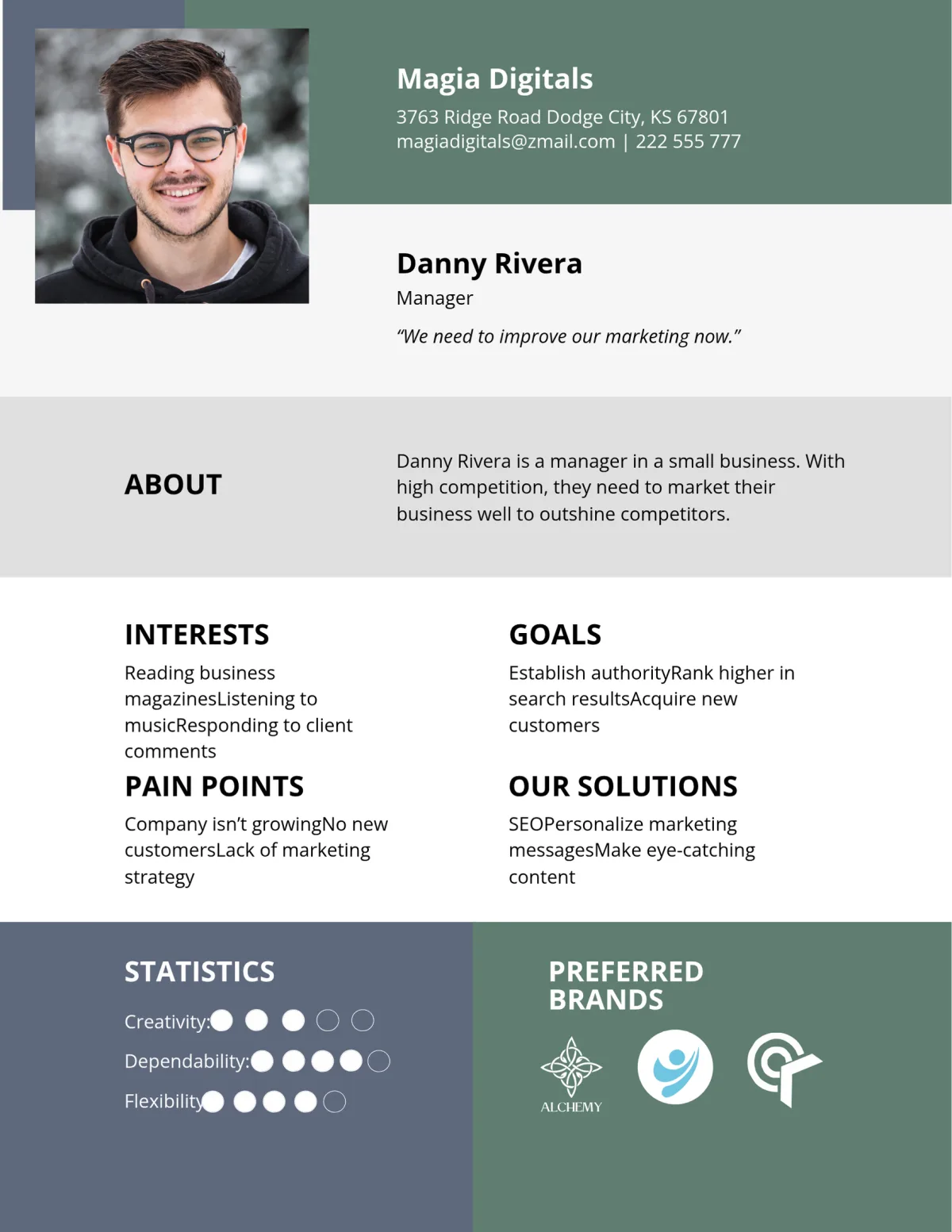
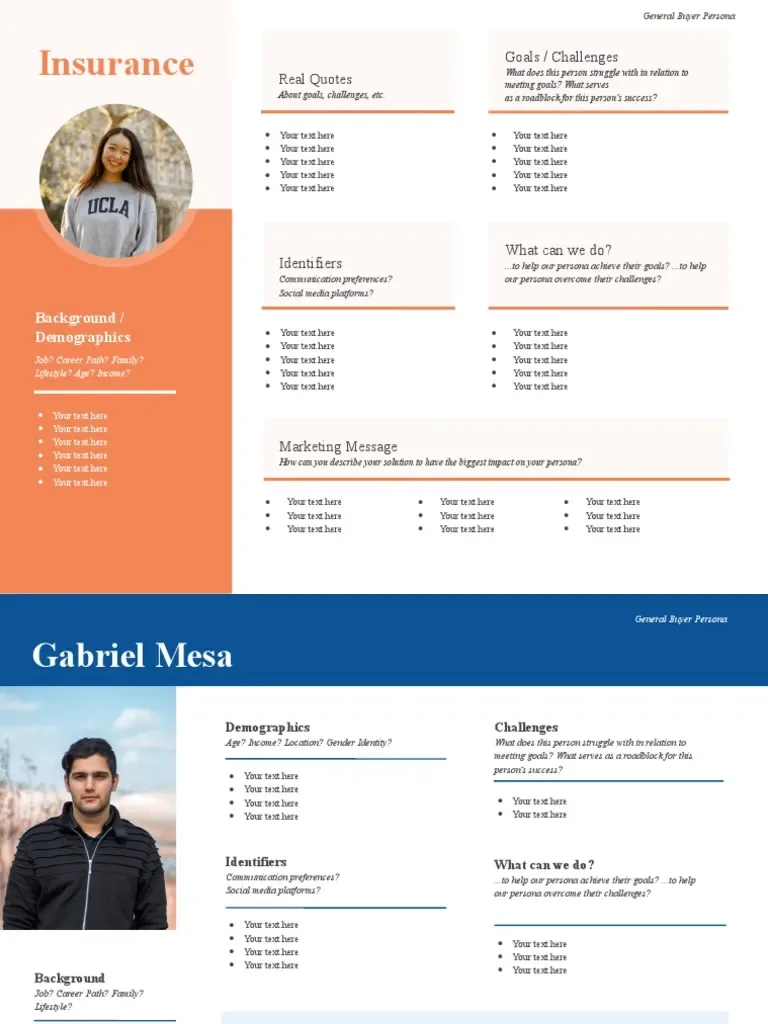
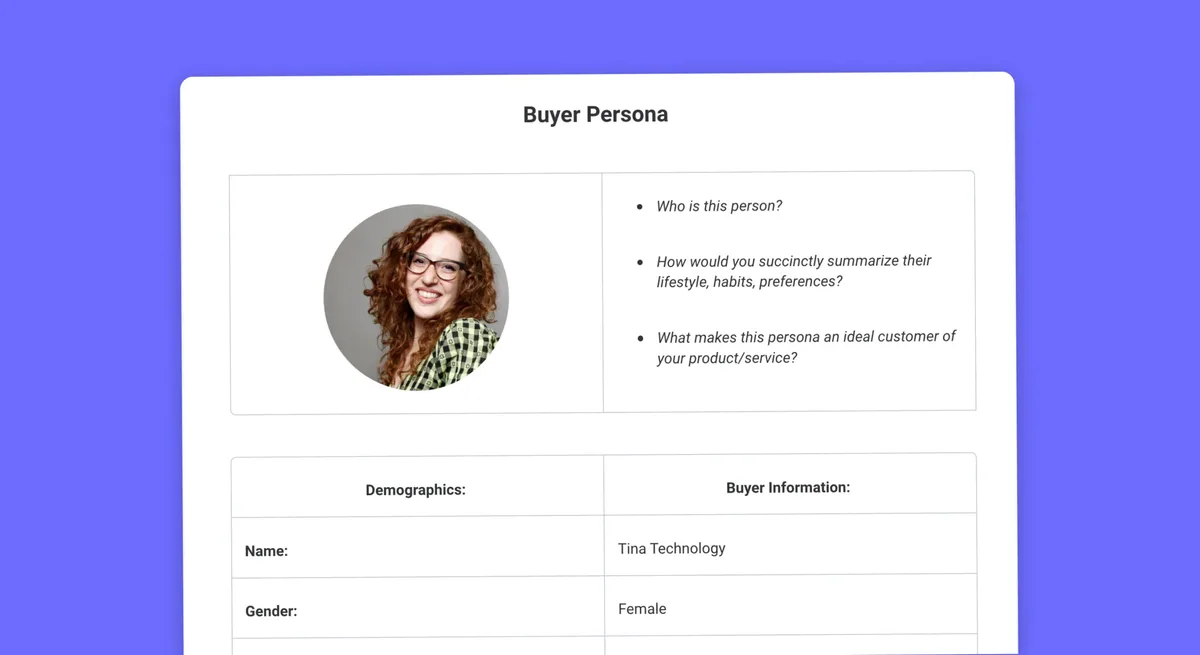
Most templates organize information into four buckets: who they are, what they want, what blocks them, and how they buy. Some add a fifth bucket for where they hang out online. The best ones keep it to a single page so it stays usable.
Why Your Team Needs a Marketing Personas Template (Not Just a Guess)
Here’s the uncomfortable truth: most “personas” floating around marketing decks are fiction. Someone in a conference room imagined a 32-year-old marketing manager named Sarah who loves yoga, and now she’s driving budget decisions.
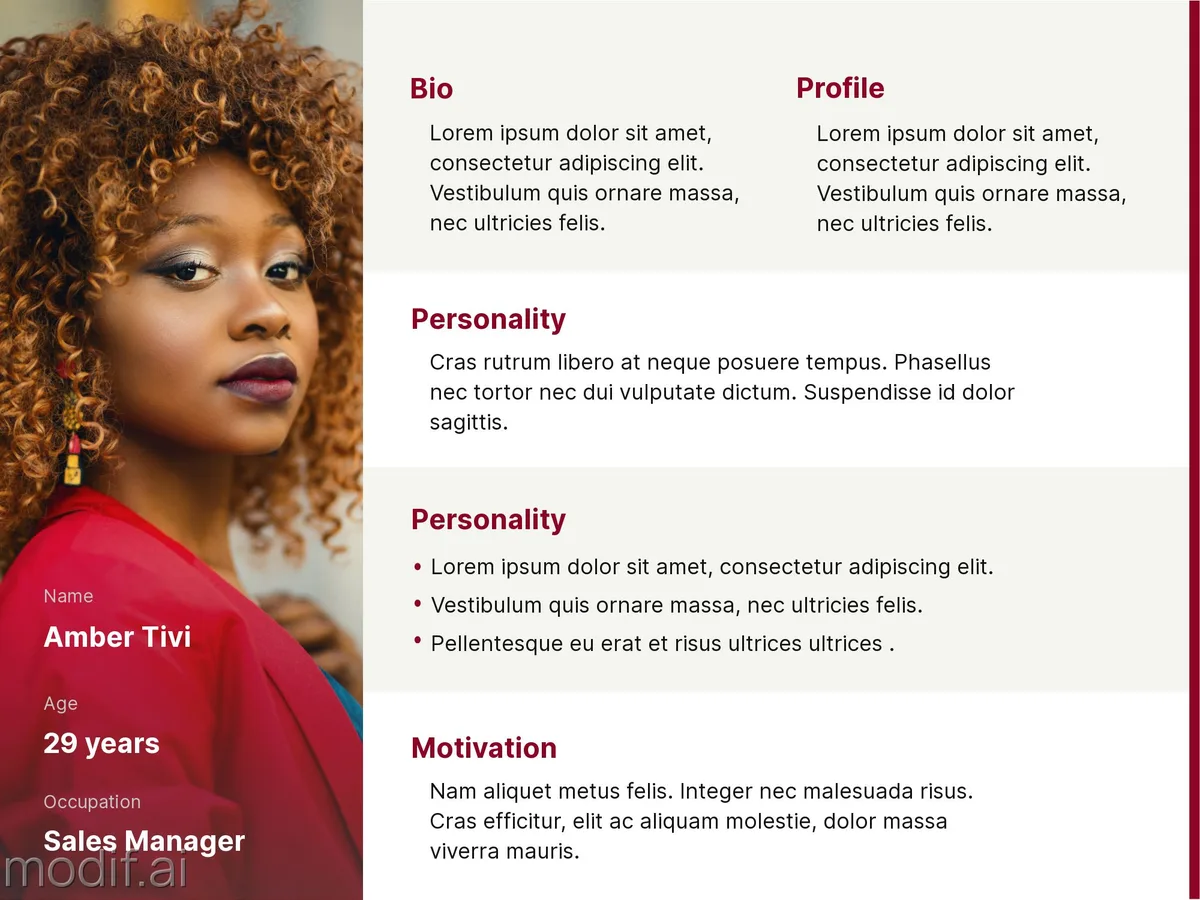
A proper marketing personas template kills that habit. It forces you to anchor claims to real data — interview transcripts, support tickets, analytics, sales call recordings. Suddenly your persona has receipts.
According to Wikipedia’s entry on user personas, the concept traces back to Alan Cooper’s work in software design during the late 1990s. Cooper’s insight was simple: designing for an abstract “user” produces bland results, while designing for a specific person produces sharp decisions.
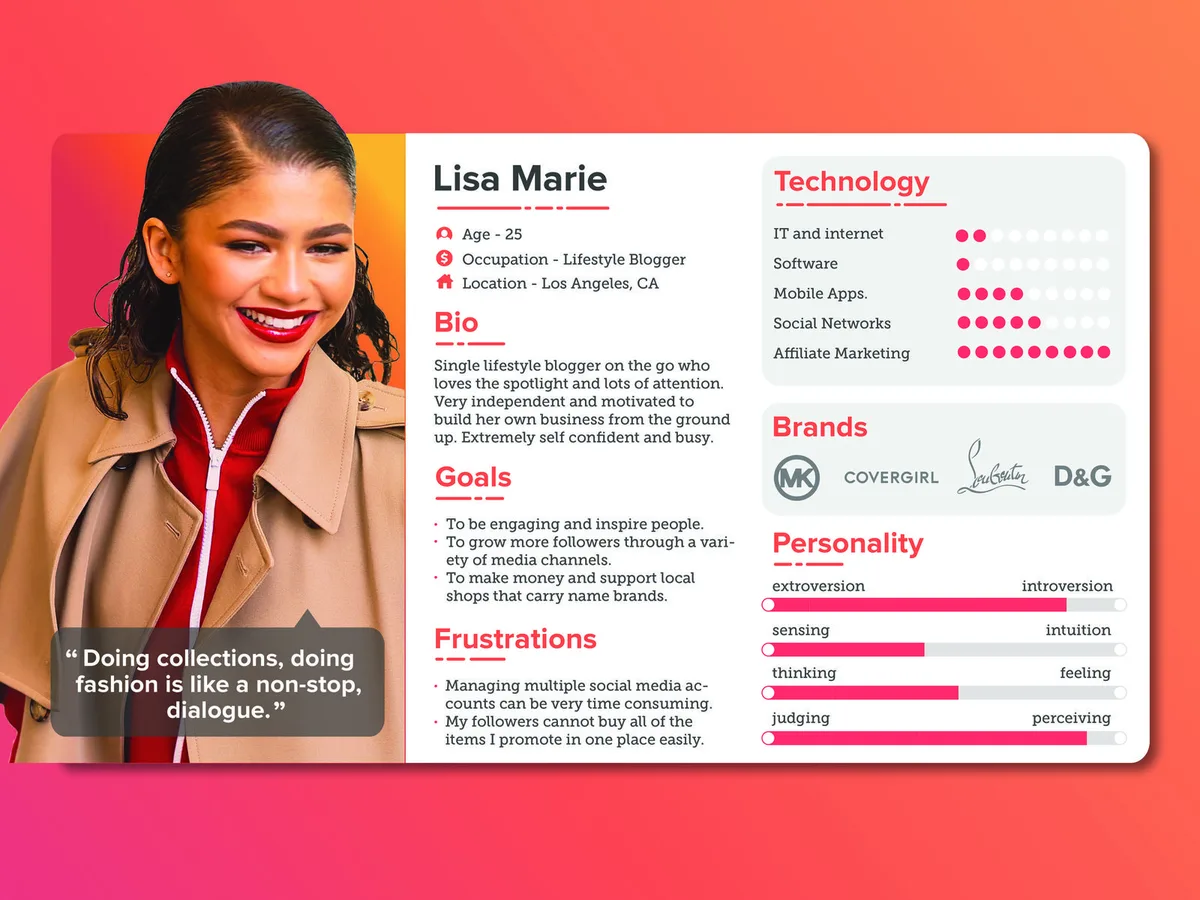
Marketing inherited that idea and ran with it. Now a marketing personas template sits at the center of content calendars, ad targeting, and even product roadmaps.
The Cost of Skipping This Step
When you skip a marketing personas template, you pay for it in wasted ad spend. Facebook and Google will happily burn your budget showing your message to people who will never buy.
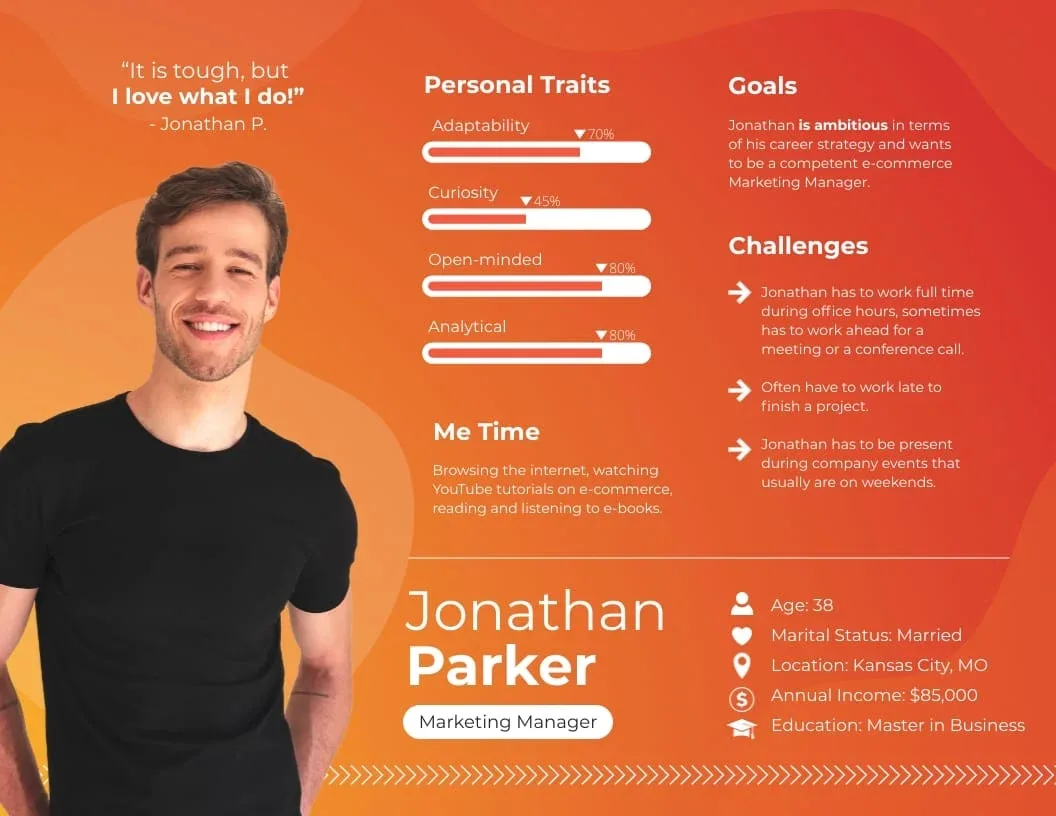
You also pay in content churn. Writers produce blog posts that sound fine but convert nobody because the piece was written for “readers” instead of a named person with a named problem.
And you pay in sales friction. Reps improvise pitches because nobody handed them a clear picture of who they’re calling and why that person cares.
How to Use a Marketing Personas Template Step by Step
Grabbing a marketing personas template is step one. Filling it correctly is where most teams stumble, so let’s walk through the process the way I’d run it with a client.
Step 1: Gather Raw Data Before You Touch the Template
Don’t open a marketing personas template until you have material to feed it. Pull five to ten customer interviews, your last twenty support tickets, and a month of sales call notes.
Look for patterns, not outliers. If three customers mention the same frustration in different words, that’s a signal worth capturing.
Step 2: Segment by Behavior, Not Just Demographics
Age and job title are easy to collect but weak at predicting behavior. Two 40-year-old operations managers can have completely different buying styles depending on company size and budget authority.
Segment by what people actually do: how they research, who they consult, how long they deliberate. Your marketing personas template becomes far more predictive when behavior leads and demographics support.
Step 3: Fill the Template With Quotes, Not Adjectives
Instead of writing “price-sensitive,” write what the customer actually said: “I need to justify this to my CFO before I can sign anything over five grand.”
Real quotes make a marketing personas template memorable. They also make it defensible when someone challenges your assumptions in a meeting.
Step 4: Validate With Sales and Support
Hand your draft to the people who talk to customers daily. Ask one question: “Does this sound like anyone you’ve spoken with this month?”
If they shrug, revise. A marketing personas template that doesn’t match frontline reality is just creative writing.
What to Include in Your Marketing Personas Template: 18 Essential Fields
A bloated template gets abandoned. A lean one gets used weekly. Below are the fields I include across every marketing personas template I build, grouped into four practical categories.
Category 1: Identity and Background
These fields establish who the person is in concrete terms. Keep them factual and short — this section sets context, not strategy.
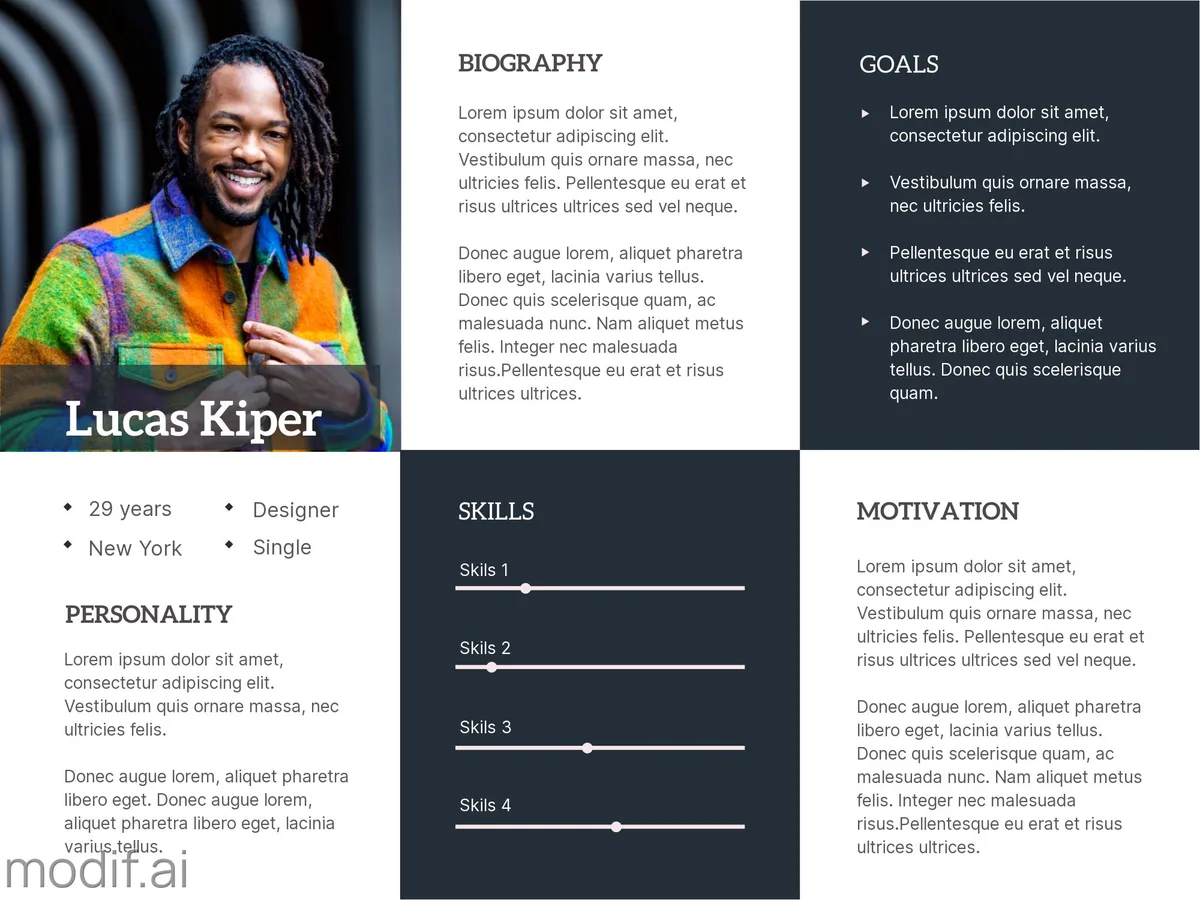
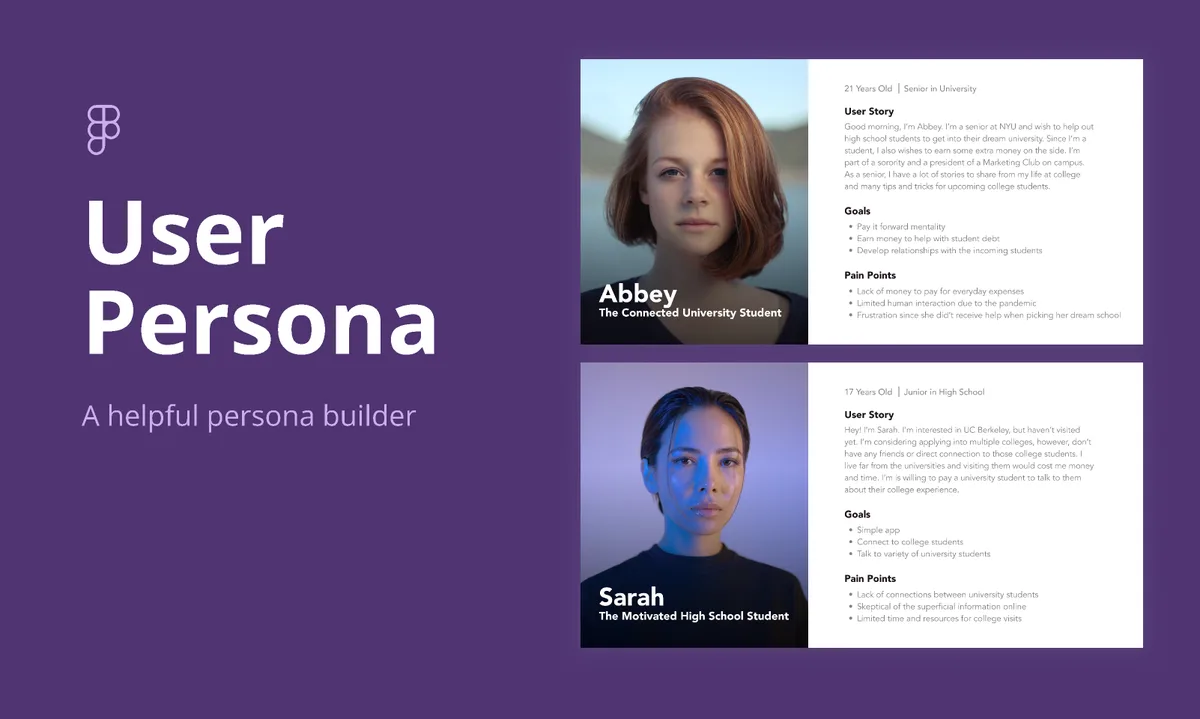
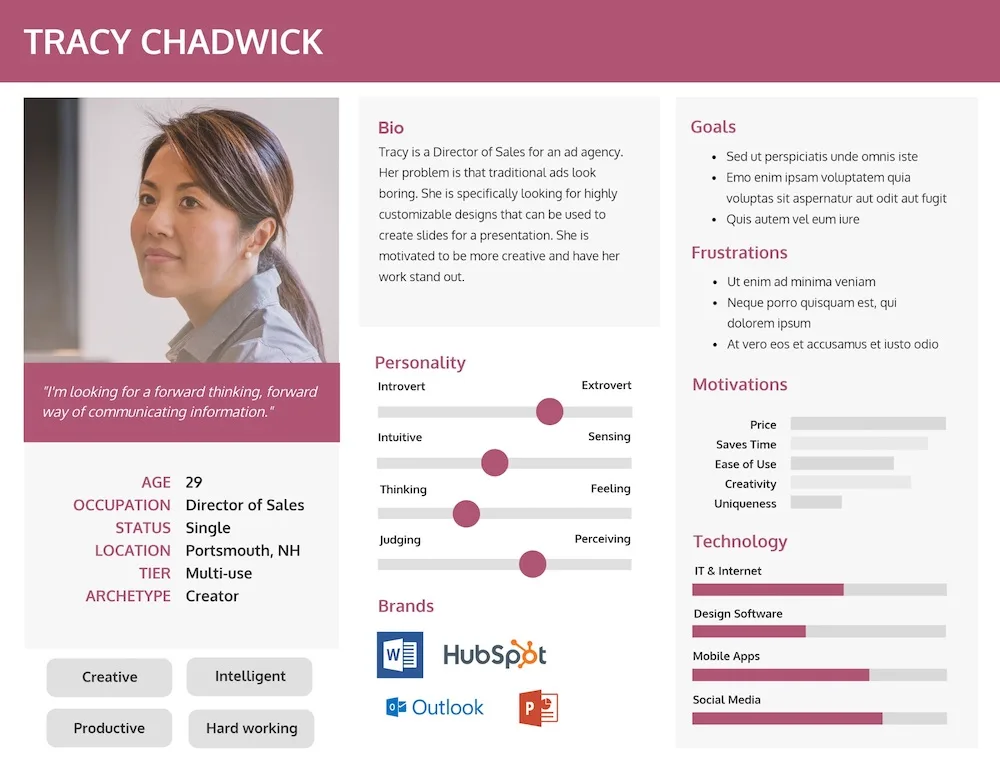
- Persona Name and Photo: Give the persona a realistic name and a stock or real photo. Naming humanizes the document and makes it easier to reference in meetings (“Would Maya click this?”). Use a photo that matches the demographic you’re targeting so the team visualizes a real human.
- Job Title and Seniority: Capture the exact role, not a vague descriptor. “Director of Demand Generation” tells you more than “marketing leader.” Seniority signals budget authority and how much detail they need before deciding.
- Company Size and Industry: A 12-person agency and a 4,000-person enterprise have wildly different buying processes. Note employee count, revenue band, and vertical so your marketing personas template reflects real constraints.
- Daily Responsibilities: List three to five tasks this person handles weekly. This reveals where your product fits into their routine and which pain points matter most.
- Reporting Structure: Who do they report to, and who reports to them? This field exposes hidden stakeholders who influence the purchase even if they never join a demo call.
Category 2: Goals, Pains, and Motivations
This is the heart of any marketing personas template. Everything here should trace back to something a real customer said or did.
- Primary Goal: The one outcome they’re measured on. For a demand gen director, it might be pipeline growth. For a small business owner, it might be surviving the next quarter.
- Secondary Goals: Supporting objectives that influence decisions — looking competent to leadership, reducing team workload, avoiding risk.
- Top Three Frustrations: Ranked, not listed. The first frustration drives urgency; the third is a nice-to-fix. Your marketing personas template should make the ranking obvious.
- Emotional Triggers: What makes them angry, anxious, or excited? Fear of looking foolish in front of their boss often outweighs price concerns.
- Success Metrics: How they’ll judge whether your solution worked. If you don’t know this, your case studies will miss the mark.
Category 3: Buying Behavior and Decision Process
Understanding how someone buys is often more valuable than understanding what they buy. This section of the marketing personas template prevents mismatched sales tactics.
- Research Channels: Where they go first — Google, LinkedIn, peer referrals, industry Slack groups, podcasts. This determines where your budget goes.
- Decision Timeline: Days, weeks, or quarters? A long cycle means nurture sequences; a short one means retargeting and urgency.
- Budget Authority: Can they sign, or do they need approval? This single field changes your entire sales motion.
- Objection Patterns: The three most common pushbacks and how to answer them. Pull these from recorded sales calls, not imagination.
- Preferred Content Format: Do they read long guides, watch demos, or skim comparison tables? Match your assets to their habits.
- Trusted Sources: Analysts, peers, review sites, or a specific influencer. A marketing personas template without this field leaves your credibility strategy blind.
Category 4: Messaging and Objection Handling
This is where your marketing personas template turns into a working tool for writers and reps. Fill it with language, not theory.
- Headline That Grabs Them: Draft one sentence that would stop their scroll. Test it in ads before committing.
- Key Value Proposition: The single benefit that matters most, phrased in their words.
- Proof Points: Specific numbers, customer names, or certifications that overcome skepticism.
- Call-to-Action Preferences: Some personas prefer “Book a demo,” others respond to “Download the checklist.” Note which converts.
- Anti-Persona Notes: Who this persona is not. This prevents scope creep and keeps targeting tight.
Marketing Personas Template Examples You Can Copy
Abstract advice only goes so far. Let’s look at three filled-in examples so you can see how a marketing personas template reads when it’s done well.
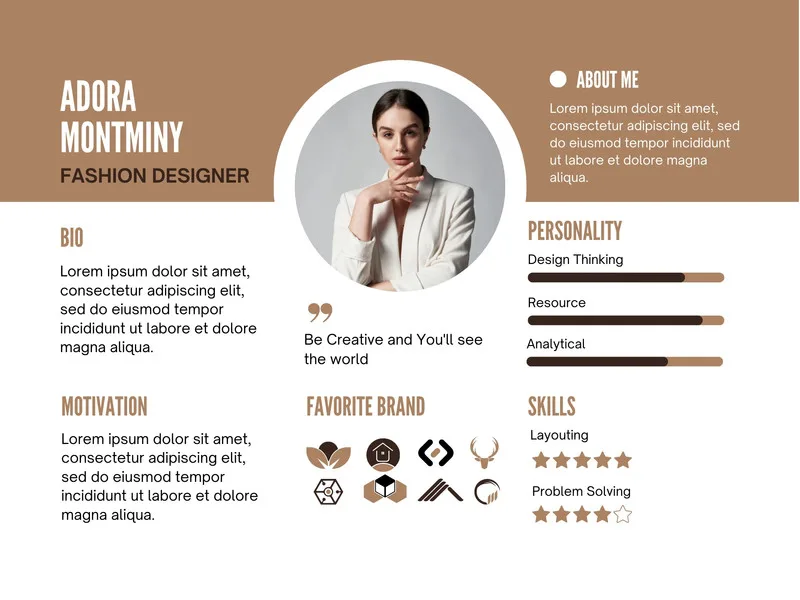
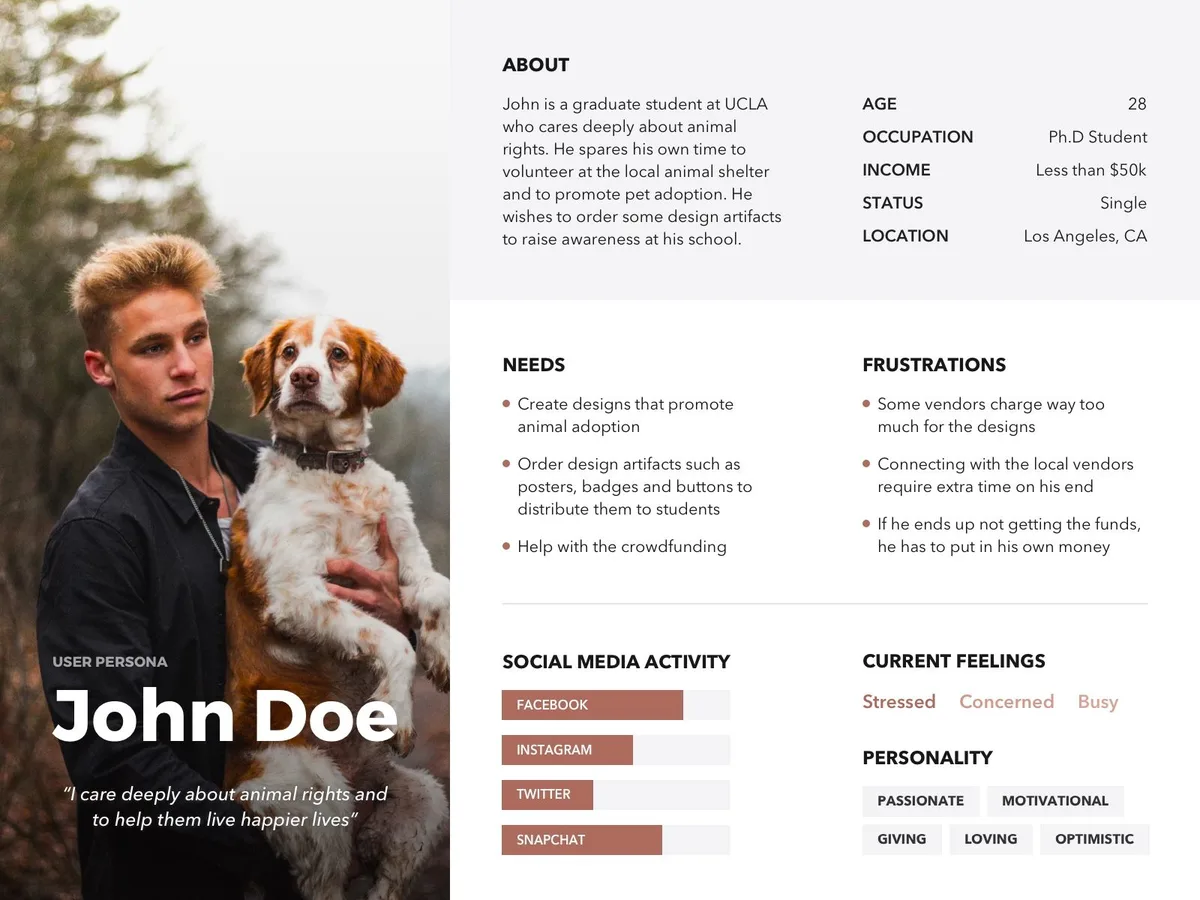
Example 1: B2B SaaS Buyer — “Priya, VP of Operations”
Priya runs operations at a 400-person logistics company. She’s evaluated six vendors this quarter and killed five of them in the first call because they couldn’t explain implementation timelines.
Her primary goal is cutting manual data entry by 40% before the next board meeting. Her biggest frustration is vendors who promise “seamless integration” without naming specific systems.
When you build a marketing personas template around Priya, your content should lead with integration specifics and reference customers in her industry. Generic ROI claims bounce off her.
Example 2: Local Service Buyer — “Marcus, Homeowner”
Marcus owns a 1960s ranch house and needs a roofing replacement. He’s not comparing brands; he’s comparing whether he can trust anyone who knocks on his door.
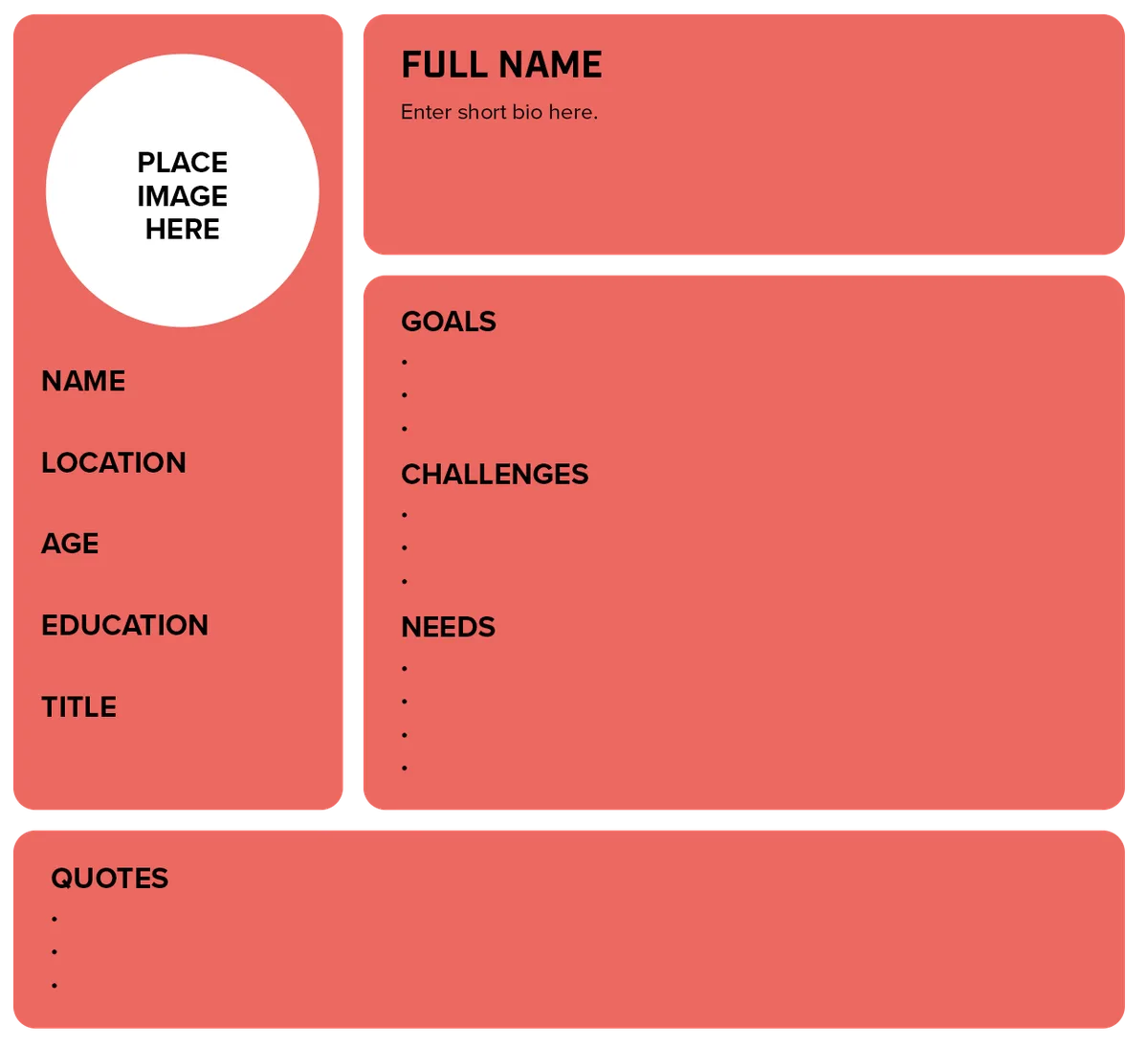
His research happens on Google Maps reviews and a neighborhood Facebook group. A marketing personas template for Marcus should prioritize review volume, licensing proof, and clear pricing ranges — no jargon.
He books whoever answers the phone first and sounds like a real person. Speed and warmth matter more than polish.
Example 3: E-commerce Shopper — “Lena, Gift Buyer”
Lena is buying a birthday gift for a coworker she likes but doesn’t know well. She has a budget in mind and fifteen minutes to decide.
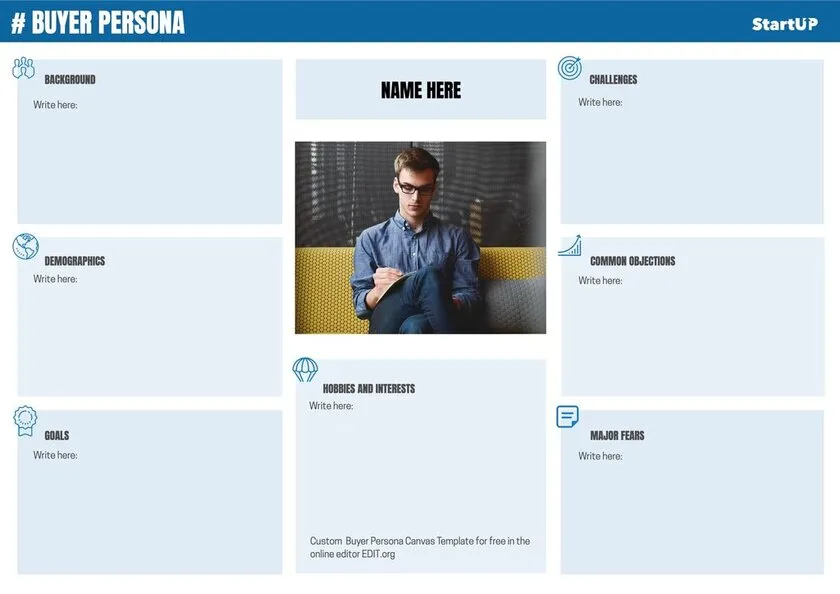
Her frustration is choice overload. She wants a curated recommendation, not a 200-item grid. A marketing personas template for Lena should flag gift guides, bundles, and fast shipping as conversion drivers.
Notice how each example changes the entire marketing approach. That’s the point of a this approach — it forces differentiation.
Free Marketing Personas Template Formats Compared
Not every format suits every team. Here’s a quick comparison of the common options so you can pick what fits your workflow.
| Format | Best For | Setup Effort | Collaboration |
|---|---|---|---|
| Google Docs / Word | Small teams, quick drafts | Low | Easy commenting |
| Notion / Coda | Cross-functional teams | Medium | Real-time editing, linked databases |
| Miro / FigJam Board | Workshops and brainstorming | Medium | Visual, sticky-note friendly |
| Slide Deck (PowerPoint/Keynote) | Executive presentations | Low | Polished but static |
| Spreadsheet (Airtable/Sheets) | Large persona libraries | High | Filterable, sortable |
| CRM Custom Fields | Sales-aligned teams | High | Lives where reps work |
My honest take: start with a Anthropic Doc this approach. Graduate to Notion or Airtable once you have more than four personas and need filtering.
Don’t overengineer early. A messy this practice that gets updated beats a beautiful one that collects dust.
Common Mistakes When Filling Out a Marketing Personas Template
I’ve reviewed hundreds of personas and see the same errors repeatedly. Here are the ones that do the most damage.
Mistake 1: Inventing Data Instead of Collecting It
Teams fill a this practice with assumptions because interviews take time. Then they wonder why campaigns flop.
Fix it by requiring at least three real data sources per persona. No source, no field.
Mistake 2: Making Personas Too Broad
A persona that describes 60% of your market isn’t a persona — it’s a market segment. A this practice works best when each entry covers 10-20% of your audience.
Split broad personas into narrower ones. You’ll write sharper copy as a result.
Mistake 3: Never Updating the Template
Markets shift. The persona you built two years ago may now be a completely different buyer.
Schedule a quarterly review of every this approach in your library. Even a thirty-minute check catches drift before it costs you.
Mistake 4: Hiding Personas from Sales
Personas locked in a marketing folder help nobody. Share them with sales, support, and product.
Better yet, embed key fields directly in your CRM so reps see persona notes on every deal record.
How to Turn Your Marketing Personas Template Into Content That Converts
A filled template is only useful if it changes what you publish. Here’s how to translate persona details into actual assets.
Map each persona’s top frustration to a dedicated blog post. If Priya hates vague integration claims, write a piece titled “What Seamless Integration Actually Means for Logistics Teams.”
Use the persona’s exact language in your headlines. A this practice full of real quotes becomes a swipe file for copywriters.
Build ad variations per persona instead of one generic campaign. The same product, framed three different ways, will outperform a single broad message almost every time.
Aligning Email Sequences With Persona Behavior
If your this practice shows a long decision timeline, extend your nurture sequence and add case studies midway.
If the persona decides fast, shorten the sequence and lead with urgency and proof. Match the cadence to the buyer’s rhythm, not your content calendar’s convenience.
Tools That Pair Well With a Marketing Personas Template
You don’t need expensive software to build personas, but a few tools make the process smoother.
Google Forms handles interview collection. Otter.AI transcribes calls. Airtable stores and filters your persona library. Figma or Canva turns a this approach into a shareable one-pager.
For research, combine analytics (GA4, Hotjar) with qualitative sources (G2 reviews, Reddit threads, support tickets). Numbers tell you what happens; conversations tell you why.
One warning: don’t let tool-hopping replace thinking. A this approach in a plain text file beats a half-finished one spread across five apps.
Frequently Asked Questions About Marketing Personas Templates
Here is an in-depth breakdown of key considerations regarding this section:
How Many Personas Should I Create?
Most businesses need three to five. Fewer than three usually means your segments are too broad; more than five becomes hard to operationalize.
Start with your top two revenue-driving segments and expand only when you have data to support a new one.
Can I Use the Same Marketing Personas Template for B2B and B2C?
Yes, but adjust the fields. B2B personas need reporting structure, budget authority, and buying committee notes. B2C personas need lifestyle triggers, shopping habits, and emotional drivers.
The core structure of a this approach stays similar — only the emphasis shifts.
How Often Should I Update My Personas?
Review quarterly and do a full rebuild annually. Also revisit after any major product change, pricing shift, or market event.
Keep a changelog inside the this approach so you can see how the persona evolved over time.
What if I Don’t Have Budget for Customer Interviews?
Use what you already have: support tickets, sales call recordings, chat logs, and review sites. Even ten existing conversations can populate a solid this practice.
Free incentives like gift cards or early access can also convince a few customers to talk.
Is a Marketing Personas Template the Same as an Ideal Customer Profile?
Not quite. An ideal customer profile (ICP) describes the type of company or account that fits your product. A this practice describes the individual human inside that account.
You typically need both. The ICP tells you which accounts to target; the persona tells you how to speak to the people within them.
Final Thoughts on Building a Marketing Personas Template That Actually Gets Used
The best this practice isn’t the most detailed one. It’s the one your team opens on a Tuesday afternoon when they’re stuck on a headline or a sales email.
Keep it short, keep it sourced, and keep it visible. Share it widely, update it quarterly, and let it shape real decisions instead of sitting in a forgotten folder.
Start with one persona this week. Fill in what you know, mark what you don’t, and schedule the interviews that close the gaps. A marketing personas template built on real conversations will outperform any amount of clever guesswork — and it’ll keep paying off long after the initial draft is done.