If you want steady organic visitors, keyword research for SEO is the skill that decides whether your content gets seen or buried. I’ve watched sites triple their clicks just by swapping a vanity keyword for one real people actually type.
That shift isn’t luck. It’s the result of understanding how search demand works, where your competitors are weak, and which phrases you can realistically rank for without a massive domain.
This guide walks you through the entire process the way I run it for clients. Focusing on keyword research for SEO provides clear direction here. No fluff, no recycled advice — just the workflow, the tools, and the judgment calls that separate a profitable keyword list from a useless spreadsheet.
Why Keyword Research for SEO Still Drives Every Winning Campaign
Search engines don’t reward content because it’s pretty. Focusing on keyword research for seo provides clear direction here. They reward it because it answers a query real humans typed into a box. That’s the whole game.

When you skip proper keyword research for SEO, you end up writing into a void. You target phrases nobody searches, or phrases so competitive that your page never leaves page four.
I’ve audited blogs with 200 published posts and almost zero traffic. The writing was fine. The research was nonexistent.
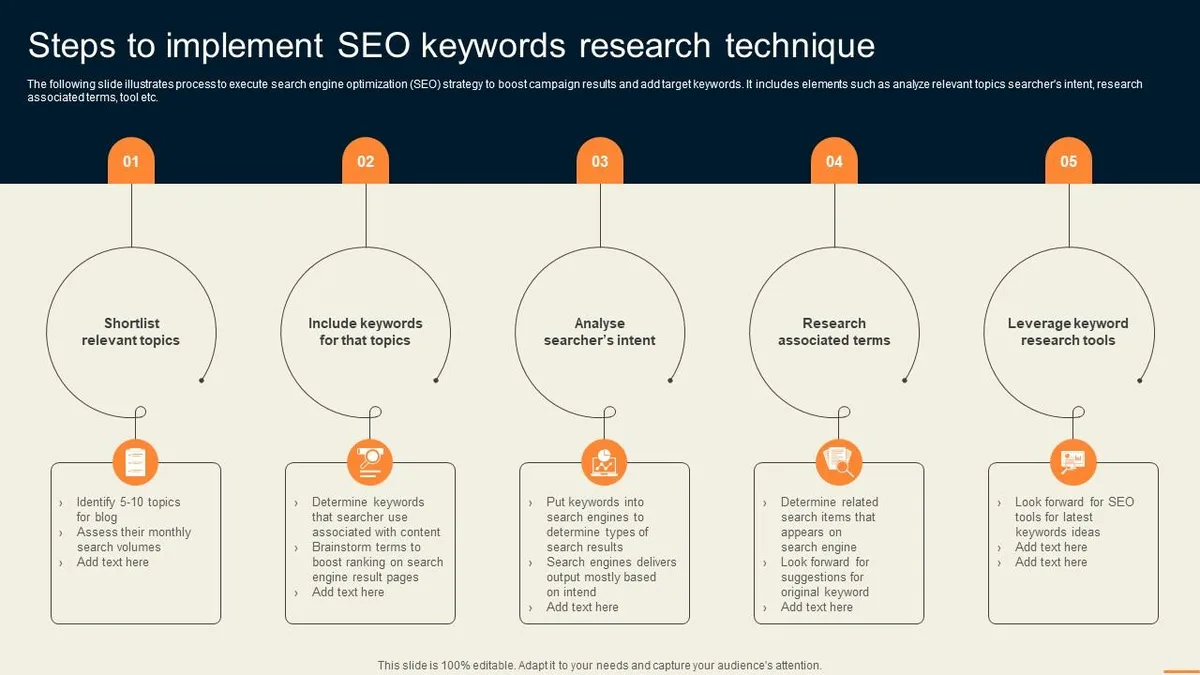
Here’s what good research actually gives you: a map of demand. It tells you what people want, how many of them want it, and how hard it’ll be to win that attention.
Think of it like opening a restaurant. You wouldn’t guess what dishes to serve without checking what the neighborhood eats. Same logic applies online.
How Search Intent Shapes Every Keyword You Pick
Intent is the single most misunderstood part of keyword research for SEO. Two phrases can look identical and mean completely different things.
Take “running shoes” versus “best running shoes for flat feet.” The first is broad and commercial. Refining each detail of your keyword research for SEO strengthens this section. The second is specific, problem-driven, and far easier to convert.

Google’s whole ranking philosophy now revolves around matching intent. If you write a sales page for an informational query, you lose. If you write a blog post for a transactional query, you also lose.
The Four Intent Buckets You Need to Recognize
Informational queries want answers. People type “how to clean suede shoes” and expect a tutorial, not a product listing.
Navigational queries want a specific destination. “Nike official site” isn’t a content opportunity — skip it.
Commercial queries mean the person is researching before buying. “Best espresso machine under budget” lives here, and it’s gold for affiliate and product pages.
Transactional queries are ready-to-buy signals. Effective execution in your keyword research for SEO makes a tangible difference. “Buy Canon EOS R50 online” is not something you chase with a blog post.
Map every keyword to one bucket before you write a single word. Refining each detail of your keyword research for seo strengthens this section. This one habit prevents 80% of content-strategy mistakes.
Building Your Seed List Without Overthinking It
Every solid keyword research for SEO project starts with seeds — rough topics, not polished keywords. Seeds are just the raw material.
List everything your business touches. Products, services, problems you solve, questions customers ask on calls, complaints you hear in reviews.

I keep a running note on my phone for this. Every time a client asks something in a meeting, it goes on the list. Those questions are literal search queries.
Don’t filter yet. Don’t worry about volume or difficulty. Just dump twenty to fifty seeds and move on.

For a coffee roastery, seeds might be: “coffee brewing,” “espresso grind size,” “best beans for cold brew,” “how to store coffee.” That’s enough to start.
Mining Real Keywords from Autocomplete and People Also Ask
Google’s autocomplete is a free keyword goldmine that most people ignore. Type your seed and watch the dropdown fill with real queries.
Add a letter after your seed — “coffee brewing a,” “coffee brewing b” — and Google serves up even more variations. Tedious, but effective.
Then scroll to “People Also Ask.” Those expandable boxes are actual questions users typed. Each one is a content idea waiting to happen.

Run the same trick on YouTube and Amazon. Effective execution in your keyword research for seo makes a tangible difference. Their autocomplete reflects different intent layers and often surfaces long-tail phrases Google hides.
This manual approach is slow, but it trains your eye. Maintaining clarity across your keyword research for SEO remains essential. After a few sessions, you start predicting what people search before you even check.
Using Reddit and Quora as Keyword Research for SEO Sources
Forums are underrated. Reddit threads show you the exact language people use when they’re frustrated or confused.
Search your topic on Reddit and sort by “top” for the year. Read the thread titles and the comments. You’ll spot phrasing no keyword tool would suggest.
Quora works similarly. The questions there are often long, conversational, and packed with intent signals.
I once found a client’s best-performing keyword — “why does my espresso taste sour” — buried in a Reddit comment. No tool flagged it. Real people did.
Free and Paid Tools That Actually Speed Things Up
You don’t need a dozen subscriptions. A couple of solid tools plus Google’s own data covers 95% of what you need for keyword research for SEO.

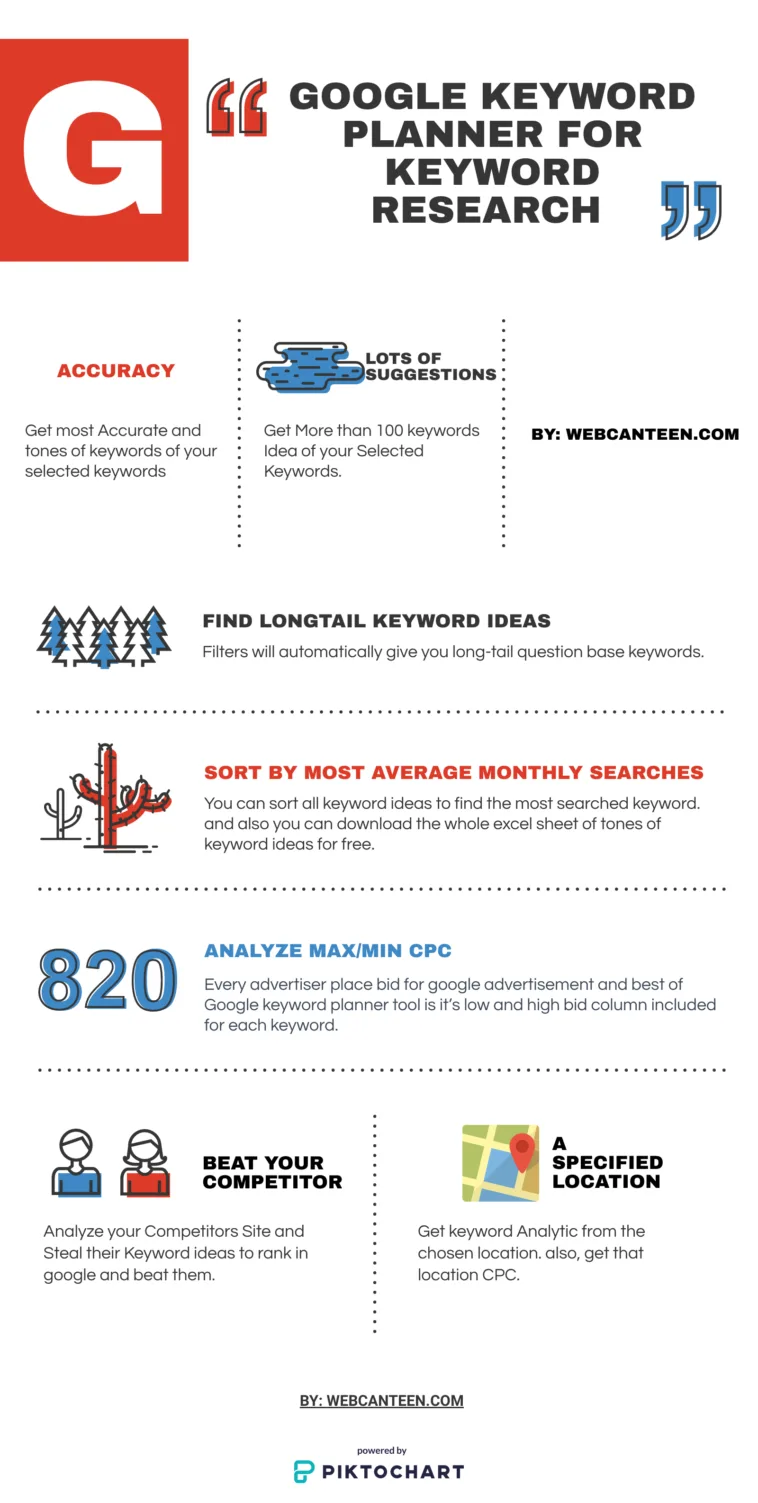
Google Keyword Planner is free and gives you volume ranges and related terms. A thoughtful approach to keyword research for SEO reinforces your qualifications. The data is broad, but it’s a starting point.
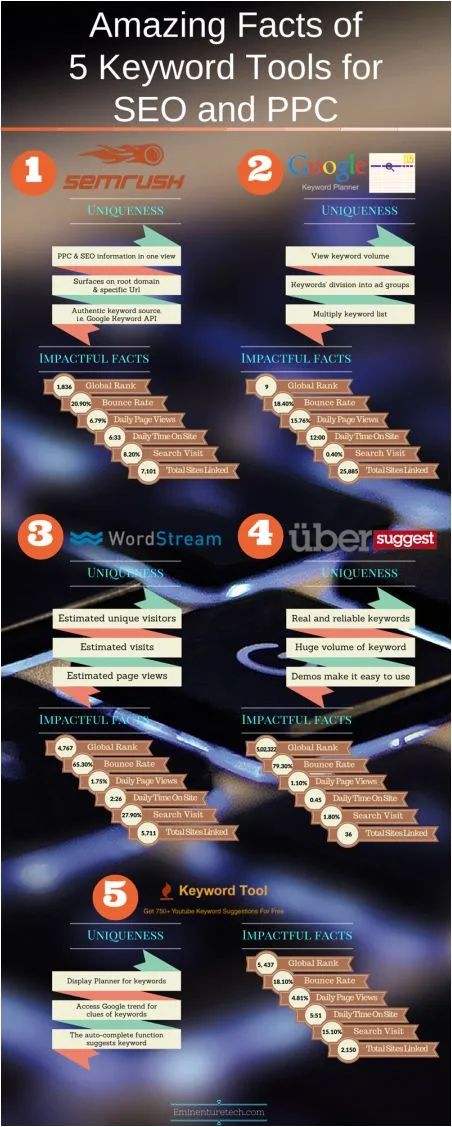
Ahrefs and Semrush are the industry workhorses. They show difficulty scores, click-through estimates, and competitor gaps in one dashboard.
For tighter budgets, Ubersuggest and Keywords Everywhere fill the gap. Neither is perfect, but both beat guessing.
Free options like AnswerThePublic and Google Trends round out the stack. Trends especially helps you spot seasonal spikes before you commit to a topic.
Comparing the Main Keyword Research for SEO Tools
| Tool | Best For | Standout Feature | Cost Tier |
|---|---|---|---|
| Google Keyword Planner | Volume baselines | Free access to Google data | Free |
| Ahrefs | Competitor gap analysis | Keyword Difficulty scoring | Premium |
| Semrush | All-in-one research | Intent classification | Premium |
| Ubersuggest | Beginners | Simple interface | Budget |
| Keywords Everywhere | Browser overlay data | Inline metrics | Low-cost |
| Google Trends | Seasonality checks | Historical interest curves | Free |
Pick two tools max when you’re starting out. Maintaining clarity across your keyword research for seo remains essential. Tool-hopping is procrastination dressed up as productivity.

Understanding Search Volume Without Getting Fooled
Search volume is a monthly estimate of how many times a phrase gets typed. Structuring your keyword research for SEO around proven patterns ensures impact. Simple in theory, messy in practice.
Tools report ranges, not exact numbers. “competitive direct manufacturer pricing-competitive direct manufacturer pricing” is common. That’s a wide gap, and it means you should treat volume as directional, not precise.

High volume isn’t automatically better. A 50,000-search phrase with brutal competition is often worth less than a 500-search phrase you can actually rank for.
I’ve seen a single long-tail keyword with 300 monthly searches generate more revenue than a 20,000-search head term. Specificity converts.

Always cross-check volume across two tools. If Ahrefs says 2,400 and Semrush says 8,100, average them and move on.
Why Seasonality Changes Your Keyword Research for SEO Calendar
Some keywords spike hard and vanish. Applying these principles to your keyword research for SEO yields measurable results. “Halloween costume ideas” is dead by November. “Tax filing tips” peaks in spring.

Google Trends shows you these curves over five years. If a keyword’s interest is flat all year, it’s evergreen. If it spikes, plan around it.
For evergreen content, target stable keywords. For seasonal pushes, publish six to eight weeks before the spike so Google has time to index and rank you.
I keep a simple spreadsheet column for “peak month” on every seasonal keyword. It’s saved me from publishing Christmas content in January more than once.
Keyword Difficulty and Whether You Can Actually Rank
Difficulty scores estimate how hard it is to reach the top ten results. A thoughtful approach to keyword research for seo reinforces your qualifications. They’re not gospel, but they’re useful guardrails.

Ahrefs uses a 0-100 scale. Proper attention to your keyword research for SEO sets a strong baseline. Under 10 is easy. Over 70 usually means you need serious domain authority to compete.
New sites should live in the 0-20 range for their first year. Established sites can push into the 30s and 40s.
But difficulty isn’t just a number. Look at who’s ranking. If page one is all Wikipedia, Amazon, and Forbes, walk away unless you have a unique angle.
If page one includes three small blogs with mediocre content, that’s a signal. You can beat them with a better page.
Reading the SERP Before You Commit
Before targeting any keyword, open the search results manually. This is the step most people skip, and it costs them months.
Ask three questions. Developing your keyword research for SEO with precision highlights key strengths. What content format dominates? What’s the average word count? Are there any weak results you could outrank?
If the top five are all listicles and you’re planning a 400-word opinion piece, you’re fighting the wrong battle.
Match the format first, then improve on it. Google has already told you what it wants to rank. Listen.
Long-Tail Keywords: the Real Traffic Engine
Long-tail keywords are longer, more specific phrases with lower volume and lower competition. They’re where new sites win.

A single long-tail phrase might only get 200 searches monthly. Structuring your keyword research for seo around proven patterns ensures impact. But publish fifty of them, and the math gets interesting fast.
Long-tails also convert better. Clear alignment with your keyword research for SEO builds confidence from the start. Someone searching “best waterproof hiking boots for wide feet” is far closer to buying than someone searching “hiking boots.”

This is where keyword research for SEO pays off most for small sites. You’re not fighting giants — you’re picking fights you can win.
My rule: for every head term you target, find ten long-tails feeding into it. Build the cluster, and the head term slowly follows.

Finding Long-Tails Nobody Else is Chasing
Use “People Also Ask,” autocomplete, and forum threads as your primary sources. Tools help, but human language beats algorithms here.
Filter your keyword tool by “questions” and “prepositions.” Queries starting with “how,” “why,” “what if,” and “without” are often untapped.
Also check keywords with low volume but high intent — phrases like “template,” “checklist,” or “calculator” attached to your topic.
These rarely have huge traffic. They have the right traffic, which matters more.
Grouping Keywords Into Topic Clusters
Random keyword lists produce random content. Clusters produce authority.
A topic cluster is one pillar page surrounded by supporting articles, all internally linked. Integrating keyword research for SEO into your workflow produces consistent quality. Google reads this structure as expertise.

Say your pillar is “espresso brewing.” Supporting posts cover grind size, water temperature, tamping pressure, machine maintenance, and bean selection.
Every supporting post links back to the pillar. The pillar links out to each supporting post. That internal web signals depth.
This is one of the highest-leverage moves in keyword research for SEO, and most beginners ignore it entirely.
How to Map Keywords to Pages Without Duplicating
One keyword, one page. If two pages target the same phrase, they cannibalize each other and both rank worse.
Build a simple sheet: keyword, target URL, intent, cluster. Applying these principles to your keyword research for seo yields measurable results. If two keywords are close enough to compete, merge them into one page.

I use a column called “primary keyword” and a second called “secondary keywords.” The primary gets the title and H1. Targeted refinements to your keyword research for SEO streamline the entire review. Secondaries get sprinkled naturally.
This prevents the mess of ten blog posts all chasing “best coffee grinder.” Pick one winner and let it breathe.
Competitor Keyword Research for SEO Gaps
Your competitors have already done the hard work. Their rankings are a free map of what works in your niche.
Run a competitor’s domain through Ahrefs or Semrush. Look at their “organic keywords” report. Sort by traffic.
Then use the “content gap” feature. It shows keywords they rank for that you don’t. That list is your to-do queue.
Don’t copy blindly. Some of their keywords won’t fit your brand. Filter for relevance first, volume second.
I once found a competitor ranking for a comparison phrase that took me twenty minutes to write about. It now drives a third of that site’s organic traffic.
Reverse-Engineering Their Best Pages
Look at their top three traffic pages. Read them carefully. Note the structure, the depth, the angle.
You’re not plagiarizing. Proper attention to your keyword research for seo sets a strong baseline. You’re learning what Google already rewards in this niche, then building something sharper.
If their page is 1,200 words and thin on examples, write 2,000 words with real case studies. If theirs is bloated, write tighter and clearer.

Every competitor page is a benchmark. Beat it on usefulness, not just length.
Judging Keyword Value Beyond Volume
Volume is one metric. Value is another, and it’s the one that pays rent.
A keyword’s value depends on what happens after the click. Does the visitor buy? Subscribe? Book a call?
Informational keywords rarely convert directly. But they build trust, and trust converts later.
Commercial and transactional keywords convert faster. They also cost more to rank for.
Balance your content mix. Roughly 70% informational, 20% commercial, 10% transactional works for most content-led businesses.
Scoring Keywords With a Simple Framework
I score each keyword on three factors: volume, difficulty, and business relevance. Rate each one to five.
Anything scoring below nine total gets parked. Anything above twelve gets prioritized.
This sounds crude, but it stops you from chasing shiny keywords that don’t move your business forward.
The framework also forces honesty. If a keyword scores low on relevance, no amount of volume saves it.
Turning Keywords Into Content Briefs
A keyword on a spreadsheet does nothing. A brief turns it into a plan a writer can execute.
Every brief needs the primary keyword, secondary keywords, target intent, word count range, and required sections.
Include the top three ranking URLs so the writer knows the bar. Add notes on angle and what to avoid.
I also list “questions to answer” pulled from People Also Ask. Those become H2s or FAQ entries.
Without a brief, two writers produce two different articles for the same keyword. With one, you get consistency.
What Belongs in Every Keyword Research for SEO Brief
Start with the search intent statement — one sentence explaining what the searcher wants.
Add the SERP snapshot: format, average length, and any dominant content type.
List primary and secondary keywords with target frequency notes. Not exact counts, just guidance.
Finish with internal link targets and a call-to-action. Every page should push the reader somewhere next.
On-Page Placement That Respects the Reader
Keyword placement matters, but stuffing ruins readability. The goal is natural inclusion, not repetition for its own sake.
Put the primary keyword in the title, the first 100 words, one H2, and the meta description. That covers the essentials.
Secondary keywords go in H3s and body paragraphs where they fit the flow. If a phrase feels forced, cut it.
Alt text on images is another spot. Developing your keyword research for seo with precision highlights key strengths. Describe the image honestly and include a keyword if it’s genuinely relevant.
Google’s algorithms are smart enough to detect unnatural density. Write for humans, and the rankings follow.
Why Density Targets are Guidelines, Not Rules
Older SEO advice pushed for 2-3% keyword density. That’s outdated and often reads like spam.
Modern guidance suggests 0.5% to 1.5% for the primary keyword. Enough to signal topic, not enough to annoy readers.
I aim for natural rhythm. If I read a paragraph aloud and the keyword feels clunky, I rewrite it.
Semantic keywords — related terms and entities — matter more now. They tell Google what your page is really about.
Tracking Performance and Refreshing Old Content
Publishing is the start, not the finish. Keywords shift, competitors publish, and rankings drift.
Check your keyword positions monthly. Tools like Ahrefs, Semrush, or Google Search Console show movement over time.
Any page that dropped three or more positions deserves a look. Sometimes it’s a small fix. Sometimes it needs a full rewrite.
Refresh content every six to twelve months. Clear alignment with your keyword research for seo builds confidence from the start. Update stats, add new sections, improve internal links.
This ongoing loop is what separates sites that plateau from sites that compound. Keyword research for SEO isn’t a one-time task — it’s a habit.
Using Google Search Console for Free Keyword Research for SEO
Search Console shows the exact queries people used to find your site. That’s real data, not estimates.
Look for queries where you rank positions 11-20. Those are “almost there” keywords. A small content push often moves them to page one.
Also check queries with high impressions but low clicks. That usually means your title or meta description needs work.
I check this report weekly. It’s the fastest way to find opportunities hiding in your own data.
Common Keyword Research for SEO Mistakes to Avoid
Chasing high-volume keywords with no relevance is the classic trap. Traffic without purpose is just a vanity metric.
Ignoring intent is another. Ranking for a phrase that doesn’t match your offer wastes everyone’s time.
Targeting the same keyword across multiple pages creates cannibalization. One keyword, one page, always.
Skipping competitor analysis means you’re guessing. Their rankings are free intelligence — use them.
And forgetting to update old content is slow death. Rankings decay without maintenance.
Why New Sites Fail at Keyword Research for SEO
New sites often target head terms immediately. That’s like a rookie boxer challenging the champion in week one.
Build authority first with long-tails. Integrating keyword research for seo into your workflow produces consistent quality. Earn trust, earn links, then scale up to harder keywords.
Another common failure: publishing without a cluster. Isolated posts don’t build topical authority.
Finally, new sites quit too early. Rankings take three to six months minimum. Patience is part of the strategy.
Frequently Asked Questions About Keyword Research for SEO
Here is an in-depth breakdown of key considerations regarding this section:
How Many Keywords Should I Target per Page?
One primary keyword per page. Add five to ten secondary and semantic keywords that support the topic naturally.
More than that dilutes focus. Google needs a clear signal about what the page is about.
Is Keyword Research for SEO Still Relevant With AI Search?
Yes, and arguably more so. AI search tools pull from indexed content, which is still built around keyword signals.
Understanding what people ask remains the foundation. The delivery format changes; the demand doesn’t.
How Long Does It Take to Rank After Keyword Research for SEO?
Expect three to six months for new content to stabilize. Competitive keywords can take a year or more.
Low-difficulty long-tails often rank within weeks. That’s why they’re the smart starting point.
Can I Do Keyword Research for SEO Without Paid Tools?
Absolutely. Google Keyword Planner, Trends, autocomplete, People Also Ask, and Search Console cover a lot of ground.
Paid tools speed things up, but they’re not mandatory. Free data plus consistent effort beats expensive tools used poorly.
What’s the Difference Between Keywords and Topics?
Keywords are the exact phrases people type. Topics are the broader subjects those phrases belong to.
Modern strategy organizes around topics and uses keywords as entry points. That’s how clusters get built.
How Often Should I Refresh My Keyword List?
Quarterly is a good rhythm for most sites. Fast-moving niches may need monthly reviews.
Search behavior shifts, competitors publish, and new phrases emerge. A static list goes stale fast.
Putting It All Together
Solid keyword research for SEO isn’t about finding one magic phrase. It’s about building a system that keeps producing opportunities.
Start with seeds. Mine real queries from autocomplete, forums, and tools. Group everything into clusters. Write briefs that guide execution.
Then measure, refresh, and repeat. The sites that win aren’t the ones with the biggest budgets — they’re the ones that treat research as an ongoing discipline.
Pick your first cluster this week. Publish the pillar. Build the supporting posts one by one. Six months from now, you’ll wonder why you ever guessed instead of researched.
For verified reference and background research, consult the authoritative informational resource on this topic.