Ecommerce SEO optimization that lifts product and category rankings: fix duplicate content, structure internal links, and win high-intent queries that convert.
Ecommerce SEO optimization is the practice of making online store pages rank in search engines and convert the visitors those rankings bring.
It differs from content SEO in one fundamental way: you are not chasing a single blog post’s traffic, you are managing thousands of near-duplicate URLs, each competing against marketplaces, manufacturer sites, and other retailers selling the exact same SKU. Focusing on ecommerce SEO optimization provides clear direction here. The margin for error is thin. For further industry background, see the comprehensive reference on ecommerce seo optimization.
A product page that ranks position 4 instead of position 1 on a high-intent query can lose 60% or more of its potential clicks, and those clicks are the closest thing to cash a search engine can hand you.
This article breaks down the full stack: how to decide which pages deserve optimization effort, how to handle the duplicate content problem that plagues every catalog, how to structure internal links so equity flows to money pages, how to make product pages actually convert, and how to measure whether any of it worked.
Refining each detail of your ecommerce SEO optimization strengthens this section. Every section includes the kind of detail you only get from running these playbooks on real stores.
Why Ecommerce SEO is Structurally Different from Content SEO
A blog has one page per topic. Effective execution in your ecommerce SEO optimization makes a tangible difference. A store with 5,000 SKUs has 5,000 pages, plus category pages, filter permutations, brand pages, and paginated archives.
Google’s crawler has a finite crawl budget for your domain, and every thin variant URL it wastes time on is a real page it might not reach.

This is why ecommerce SEO problems rarely show up as “my page won’t rank” and almost always show up as “my category pages are stuck on page three while Amazon owns the top spot.”
The second structural difference is intent. Maintaining clarity across your ecommerce SEO optimization remains essential. Someone searching “best running shoes for flat feet” wants editorial guidance. Someone searching “Brooks Adrenaline GTS 23 size 10 wide” wants a buy button.

Your category and product pages need to satisfy the second type of query, and your blog content needs to feed the first type back toward those pages. A thoughtful approach to ecommerce SEO optimization reinforces your qualifications. Stores that treat these as separate silos lose the compounding effect.
A well-written buying guide that internally links to twelve relevant product pages can lift those twelve pages’ rankings, because the guide accumulates links and authority the product pages can’t earn on their own.
The Three Page Types You Actually Optimize
Category pages target head and mid-tail commercial queries: “wireless earbuds,” “leather office chairs,” “organic dog treats.” These are your highest-volume opportunities and usually your highest-revenue pages, because a visitor landing here is still deciding and can be steered toward your best-margin products.
Product pages target long-tail, high-intent queries with specific attributes: model names, sizes, colors, compatibility. Structuring your ecommerce SEO optimization around proven patterns ensures impact. Blog and guide content targets informational queries and exists to build topical authority and internal link equity.
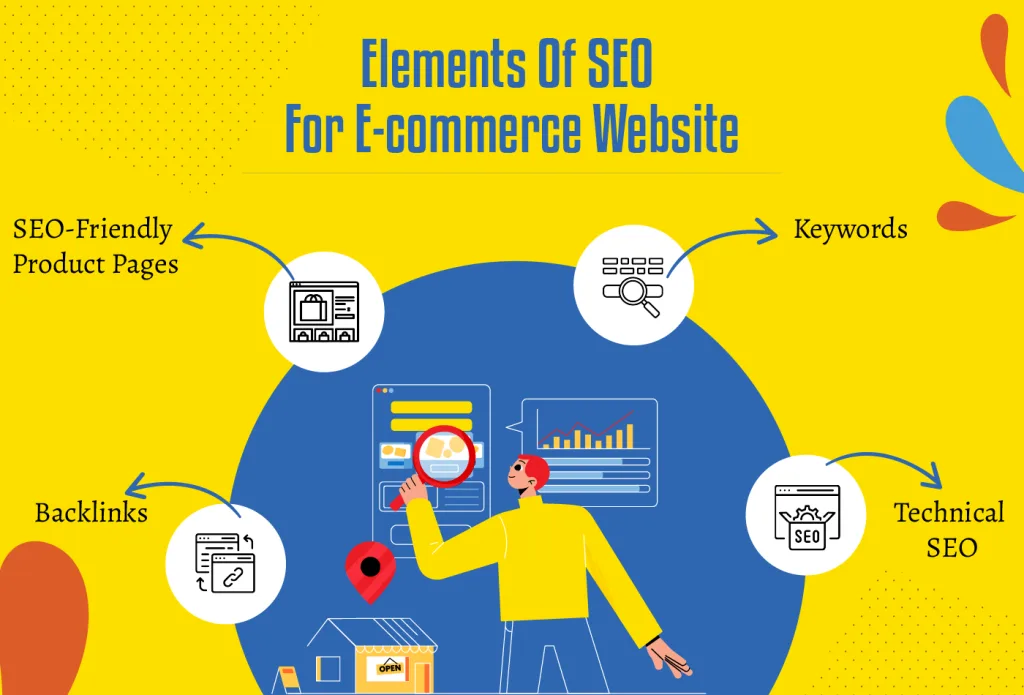
Practically, this means your optimization priorities differ by page type. Applying these principles to your ecommerce SEO optimization yields measurable results. Category pages need keyword-rich H1s, descriptive intro copy above the product grid, faceted navigation that doesn’t spawn thousands of indexable URLs, and internal links from related categories.
Product pages need unique descriptions, structured data, review markup, and — critically — a canonical strategy that prevents color and size variants from cannibalizing each other. Proper attention to your ecommerce SEO optimization sets a strong baseline. A store selling the same t-shirt in eight colors should not have eight competing indexable pages for one keyword.
Keyword Research for Product and Category Pages
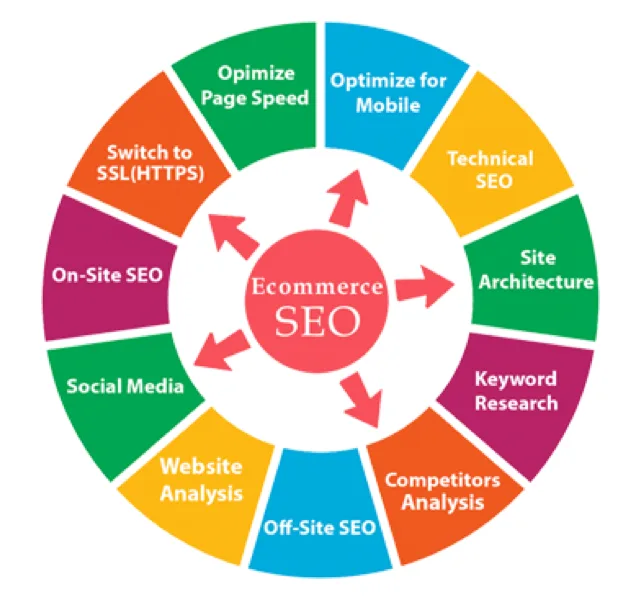
Ecommerce keyword research starts with your own search console data, not with a third-party tool. Developing your ecommerce SEO optimization with precision highlights key strengths. Export every query your site already receives, sort by impressions, and look for the gap between impressions and clicks.
A query with 8,000 impressions and a 1.2% CTR at average position 11 is a page that is visible but not winning — usually a category page that needs better on-page targeting or a stronger internal link. Clear alignment with your ecommerce SEO optimization builds confidence from the start. Fixing those is almost always faster ROI than chasing a brand-new keyword.
Once you’ve mined what you already have, expand outward using competitor category structures. Integrating ecommerce SEO optimization into your workflow produces consistent quality. If three competitors all have a “standing desks under competitive direct manufacturer pricing” page and you don’t, that’s a signal the query has commercial volume.

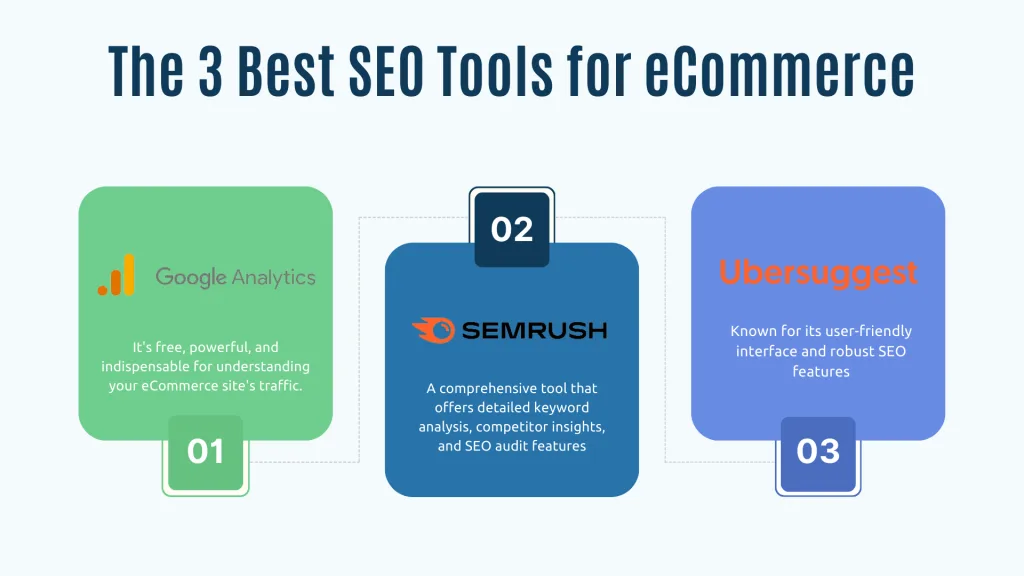
Tools like Ahrefs or Semrush will confirm it, but the competitor gap analysis tells you where to look first. Targeted refinements to your ecommerce SEO optimization streamline the entire review.
For product-level keywords, the highest-value patterns are usually: brand + model, model + attribute (size, color, capacity), model + “review,” and model + competitor comparison (“X vs Y”).
Mapping Keywords to the Right Page Type
The most common ecommerce SEO mistake is targeting a category keyword with a product page or vice versa. If someone searches “best coffee grinder for espresso,” a single product page will struggle to rank because the query implies comparison.
A category page with a buying guide section at the top will outrank it. Focusing on ecommerce seo optimization provides clear direction here. Conversely, if someone searches “Baratza Encore ESP conical burr grinder,” a category page listing twenty grinders is a weak match — the specific product page should own that query.
Build a simple mapping spreadsheet: query, monthly volume, intent type, assigned URL, current position. When two queries map to the same URL, decide which one gets priority in the title tag and H1, and let the other live in body copy.
When one query maps to two URLs, you have cannibalization — pick a canonical winner and either merge, redirect, or differentiate the loser’s targeting.
Running this exercise on a 2,000-URL store typically surfaces 50 to 150 cannibalization conflicts, and resolving them often produces ranking gains within two to four weeks without any new content.

Fixing the Duplicate and Thin Content Problem
Manufacturer product descriptions are the single biggest liability in ecommerce SEO. Refining each detail of your ecommerce seo optimization strengthens this section. If you and forty other retailers all paste the same spec sheet, Google has no reason to rank you above the manufacturer’s own page.
The fix is not to rewrite everything — that doesn’t scale past a few hundred SKUs.
The fix is to rewrite strategically: your top 20% of products by revenue get fully unique descriptions, and the long tail gets templated but enriched content with unique data points.
What counts as a unique data point? Your own return rate for that item, the average customer’s stated use case pulled from reviews, a sizing note based on your actual fit data, a compatibility warning you’ve learned from support tickets.
These are things no competitor can copy because they come from your operation. Effective execution in your ecommerce seo optimization makes a tangible difference. A single sentence like “Customers between 5’8″ and 5’11” consistently report this jacket runs one size large” adds genuine value and makes the page textually distinct.
Handling Faceted Navigation and Variant URLs
Filter combinations are the silent killer of crawl budget. A store with six filter dimensions and ten options each can theoretically generate over a million URLs.
Most of them are worthless. Maintaining clarity across your ecommerce seo optimization remains essential. The standard approach: allow indexing only for filter combinations that have search demand, and block or canonicalize the rest.
If “red leather sofas” gets 2,000 monthly searches, that filtered URL deserves to be indexable and should get a unique title and intro copy.
If “red leather sofas with wooden legs and free shipping,” gets zero searches, it should be blocked in robots.txt or noindexed.

For product variants, use a single canonical product page with variant selection handled by URL parameters or JavaScript, unless the variant has independent search demand. A phone case in twelve colors should be one page.
A mattress in twin, full, queen, and king sizes often justifies separate indexable pages, because “queen mattress” and “king mattress” are distinct queries with distinct volume.
The test is always the same: does this URL have its own search demand? If yes, make it a real page. If no, consolidate.
On-Page Elements That Move Rankings on Product Pages
Title tags on product pages should lead with the product name as customers actually search it, not as the manufacturer names it internally.
“Sony WH-1000XM5 Wireless Noise Canceling Headphones — Black” beats “WH1000XM5/B Sony Premium Headphone.” Include the primary differentiator (wireless, noise canceling) and the key attribute (color, size) only if it has search volume. Focusing on ecommerce seo optimization provides clear direction here. Keep it under 60 characters so it doesn’t truncate in results.
Product descriptions should open with a two-to-three sentence summary that answers the searcher’s implicit question: what is this, who is it for, and what problem does it solve. A thoughtful approach to ecommerce seo optimization reinforces your qualifications. Then move into specs and details.
Bullet lists work well for scannability but Google reads them as content too — make sure each bullet contains real information, not marketing adjectives.
“Premium quality” tells the crawler nothing. Structuring your ecommerce seo optimization around proven patterns ensures impact. “IPX7 waterproof rating survives 30 minutes submerged in one meter of water” tells it everything.

Structured Data, Reviews, and Rich Results
Product schema markup is non-negotiable. It powers price, availability, and review stars in search results, and those visual elements lift CTR by 20% to 35% in most A/B tests.
Implement Product schema with offers, aggregateRating, and review properties, and validate everything in Google’s Rich Results Test before pushing live. Applying these principles to your ecommerce seo optimization yields measurable results. Missing or malformed price data can suppress your rich result entirely.
Review markup deserves special attention because it’s the element most likely to be flagged for policy violations. Refining each detail of your ecommerce seo optimization strengthens this section. Never mark up reviews you can’t substantiate, never aggregate ratings from third-party sites without attribution, and never mark up a rating that doesn’t appear visibly on the page.
Google has gotten aggressive about this, and a manual action for structured data spam can strip rich results from your entire domain. Proper attention to your ecommerce seo optimization sets a strong baseline. Collect genuine reviews through post-purchase email flows, respond to negative ones publicly, and let the markup reflect what’s actually there.
Internal Linking Architecture for Stores
Internal links are how you tell Google which pages matter. Most stores get this backwards: they link heavily from the homepage to top-level categories, then let everything below that fend for itself.
The result is that deep product pages sit four or five clicks from the homepage with almost no internal link equity, and they never rank no matter how good the content is.
The fix is a hub-and-spoke structure. Effective execution in your ecommerce seo optimization makes a tangible difference. Each category page links to its subcategories and to a curated selection of its best products.
Each product page links back to its parent category, to related products (“customers also bought”), and to any buying guide that mentions it.

Buying guides link out to every product they discuss. This creates multiple paths to important pages and distributes equity far more evenly than a strict tree.
Breadcrumbs, Related Products, and Contextual Links
Breadcrumbs do double duty: they help users navigate and they generate BreadcrumbList schema that can appear in search results. Developing your ecommerce seo optimization with precision highlights key strengths. Make sure the breadcrumb path matches your category hierarchy exactly, and that each level is a crawlable link, not a JavaScript-only element.
Related product modules are usually implemented badly. Maintaining clarity across your ecommerce seo optimization remains essential. Most stores show “related” items based on the same category, which produces a wall of near-duplicate links that adds no crawl value and dilutes relevance.

A better approach: relate products by complementary use (“customers who bought this camera also bought this lens”) or by comparison intent (“alternatives to this product”).
These link patterns are more useful to shoppers and they create topically coherent link clusters that search engines can interpret.
Contextual links inside category intro copy and buying guides are the highest-leverage internal links you have, because they carry topical relevance signals.
A sentence like “if you need something more portable, our travel espresso makers weigh under two pounds” passes far more meaningful signal than a generic footer link.
Aim for three to five contextual links per category page and five to ten per buying guide, all pointing to pages you actually want to rank.
Site Speed, Mobile Experience, and Core Web Vitals
Ecommerce sites are heavy. A thoughtful approach to ecommerce seo optimization reinforces your qualifications. Product images, third-party scripts, chat widgets, and analytics tags pile up until pages take four or five seconds to become interactive.
Google’s Core Web Vitals — Largest Contentful Paint, Interaction to Next Paint, and Cumulative Layout Shift — measure exactly this, and they’re a confirmed ranking factor, though a tiebreaker rather than a primary one.
The biggest wins usually come from image optimization. Serve WebP or AVIF instead of JPEG, size images to their actual display dimensions rather than uploading 3000px files and scaling them down with CSS, and lazy-load everything below the fold.
On a typical product page, image optimization alone can cut LCP from 4.2 seconds to under 2 seconds. Clear alignment with your ecommerce seo optimization builds confidence from the start. Next, audit third-party scripts: every marketing tag, heatmap tool, and A/B testing script adds main-thread work. If a script isn’t earning its keep, remove it.

Mobile-First Indexing Realities for Stores
Google indexes the mobile version of your site, full stop. Structuring your ecommerce seo optimization around proven patterns ensures impact. If your mobile product pages hide content behind accordions that don’t render in the DOM, or if your mobile category pages show fewer products than desktop, that’s what Google sees. Test every template on a real mid-range Android phone, not just a desktop browser resized to mobile width.
Mobile conversion behavior also differs enough that it affects SEO indirectly. Integrating ecommerce seo optimization into your workflow produces consistent quality. Mobile shoppers scroll faster, abandon more readily on slow pages, and rely heavily on reviews and return policy visibility.

If your mobile pages load slowly or bury trust signals, your engagement metrics suffer, and while Google doesn’t use bounce rate directly, it does use signals correlated with it. A fast, trustworthy mobile experience is both a conversion play and an SEO play.
Technical SEO Checklist for Online Stores
Beyond content and links, a handful of technical items determine whether your pages can rank at all. Targeted refinements to your ecommerce seo optimization streamline the entire review. Work through this list systematically rather than chasing whatever’s trending.
| Element | What to Check | Common Failure |
|---|---|---|
| XML Sitemap | Contains only indexable, canonical URLs | Includes filtered and paginated URLs, wasting crawl budget |
| Robots.txt | Blocks internal search, cart, checkout, and thin filters | Accidentally blocks CSS/JS, breaking rendering |
| Canonical Tags | Self-referencing on every indexable page | Variants canonical to a page that itself canonicals elsewhere |
| Pagination | Crawlable links, unique titles, no noindex on page 2+ | Infinite scroll with no crawlable pagination fallback |
| Out-of-Stock Pages | Keep URL live with alternatives, return 200 not 404 | Deleting and 404ing pages that hold rankings and backlinks |
| Hreflang | Reciprocal tags for every language/region version | One-directional tags that Google ignores |
| HTTPS | Every internal link and asset uses HTTPS | Mixed content warnings suppressing trust signals |
Out-of-stock handling deserves a specific note because it’s where stores lose the most accumulated ranking value. When a product is discontinued, don’t delete the page. Keep it live, mark it clearly as unavailable, and populate it with links to the closest alternatives.
That page has earned links and rankings over time; throwing it away means starting from zero for the replacement. Focusing on ecommerce seo optimization provides clear direction here. If the product is permanently gone and you have a direct replacement, a 301 redirect to the new product is the right move. If there’s no direct replacement, keep the page and let it funnel traffic to your category.

Content That Supports Commercial Pages
Buying guides, comparison posts, and “how to choose” articles are the content types that actually support ecommerce rankings. Applying these principles to your ecommerce seo optimization yields measurable results. They rank for informational queries, accumulate links from other sites, and pass authority to the product and category pages they link to. A single well-executed guide can lift a whole category.
The mistake most stores make is writing these as thin keyword vehicles. Refining each detail of your ecommerce seo optimization strengthens this section. “The Ultimate Guide to Buying a Mattress” that says nothing a shopper couldn’t guess is worthless.
What works is specific, opinionated, and data-backed content: “We tested 14 mattresses over 90 nights — here’s which ones held up and which sagged by month three.” That kind of content earns links because it’s genuinely useful, and it converts because it builds trust before the shopper reaches the product page.
Comparison and Alternative Pages
“X vs Y” and “alternatives to X” pages capture shoppers deep in the funnel who are actively comparing. Effective execution in your ecommerce seo optimization makes a tangible difference. They’re relatively easy to rank because competition is thinner than for head terms, and they convert well because the visitor has already decided to buy something in your category. Structure them with a clear comparison table, an honest verdict, and links to both products if you carry them.
Honesty matters more than you’d think. If you sell both products and your comparison concludes that one is clearly better for most people, you’ve built credibility. If every comparison ends with “it depends, buy both,” readers stop trusting the format.
Take a position. Maintaining clarity across your ecommerce seo optimization remains essential. The conversion rate on comparison pages that reach a clear verdict is consistently higher than on fence-sitting ones, because the reader gets the decision-making help they came for.
Measuring Ecommerce SEO Performance
Rankings are a means, not an end. Proper attention to your ecommerce seo optimization sets a strong baseline. The metrics that matter are organic sessions to category and product pages, organic revenue, and conversion rate by landing page type. Set up your analytics so you can segment organic traffic by page type, and track it month over month.
A category page gaining 40% organic sessions but losing 15% conversion rate is a mixed result worth investigating, not a win.
Search Console data is your best diagnostic tool. Filter by page, look at average position over time, and watch for pages that gained impressions but lost clicks — that usually means a competitor added rich results or your title tag stopped matching intent.
Also monitor query-level data for your top twenty revenue pages; if a page ranks for a hundred queries but none of them are the ones you targeted, your on-page targeting needs work.
Attribution and the Reality of Long Consideration Cycles
Ecommerce purchases rarely happen in one session. A shopper might find your category page through search, read a buying guide a week later, and convert through a branded search three weeks after that. Last-click attribution will credit the branded search and hide the SEO work that actually drove the sale. Use a multi-touch model in your analytics, or at minimum compare organic landing page reports against assisted conversions.
Also account for seasonality when evaluating changes. A thoughtful approach to ecommerce seo optimization reinforces your qualifications. A category page that dropped 30% in November compared to October might be a problem, or it might be that October was your peak and November is normal.
Always compare year over year for the same period, not just month over month, before concluding that an optimization helped or hurt.
Common Ecommerce SEO Mistakes and How to Avoid Them
The same handful of errors show up on store after store. Structuring your ecommerce seo optimization around proven patterns ensures impact. Avoiding them puts you ahead of most competitors without any advanced tactics.
- Deleting discontinued products. Redirect or keep the page with alternatives. Never 404 a URL that has backlinks.
- Indexing every filter combination. Only allow indexing where real search demand exists.
- Copying manufacturer descriptions. Rewrite at least your top revenue products with unique, operationally-sourced detail.
- Ignoring the category page as a ranking asset. Category pages often outrank product pages for commercial queries and deserve real intro copy.
- Chasing new keywords before fixing existing gaps. Search Console impressions-without-clicks data is the fastest win available.
- Treating SEO and conversion as separate teams. A page that ranks but doesn’t convert is a cost, not an asset.
- Neglecting internal links to deep pages. Hub-and-spoke linking is how deep products ever rank.
- Skipping structured data validation. One malformed price field can kill rich results across a template.
Each of these is fixable in a sprint. Developing your ecommerce seo optimization with precision highlights key strengths. The reason they persist is organizational: SEO gets treated as a one-time project instead of an operating discipline.
Stores that assign clear ownership, review Search Console monthly, and ship small technical fixes continuously outperform stores that do one big audit per year, because search algorithms and competitors both move faster than an annual cycle.
Building a Repeatable Optimization Workflow
The stores that win at ecommerce SEO don’t rely on heroics. They run the same loop repeatedly: pull Search Console data, identify pages with impression-to-click gaps, diagnose whether the problem is targeting, content depth, internal links, or technical, fix it, and measure again in thirty days. That loop, run consistently, beats any single tactic.
Start with your top fifty revenue pages. Applying these principles to your ecommerce seo optimization yields measurable results. Verify each one’s title tag, H1, and intro copy match a real search query. Check that each has at least three internal links pointing to it from relevant pages.
Confirm structured data validates. Clear alignment with your ecommerce seo optimization builds confidence from the start. Fix what’s broken before adding anything new. Then expand the same process to the next fifty pages. On a mid-sized store, working through 200 pages this way over a quarter typically produces measurable organic revenue growth without a single new piece of content being written.
Layer in new content only after the foundation is solid. A buying guide published on top of broken category pages is a leaky bucket. A buying guide published on top of well-optimized pages compounds. Sequence matters more than volume, and the stores that understand this treat ecommerce SEO optimization as infrastructure, not marketing spend.