Dwell time is the silent metric that decides whether your content wins or dies in search rankings. If a visitor lands on your page from Google, reads for three minutes, then clicks back to the results, that session tells the algorithm something powerful about your content’s value.
I’ve spent years auditing sites where traffic looked healthy on paper but conversions were flat. Almost every time, the culprit traced back to how long people actually stayed.
This guide breaks down what dwell time really means, how it differs from bounce rate and session duration, and the practical levers you can pull to stretch those precious seconds into minutes.
What is Dwell Time (And Why Google Cares)
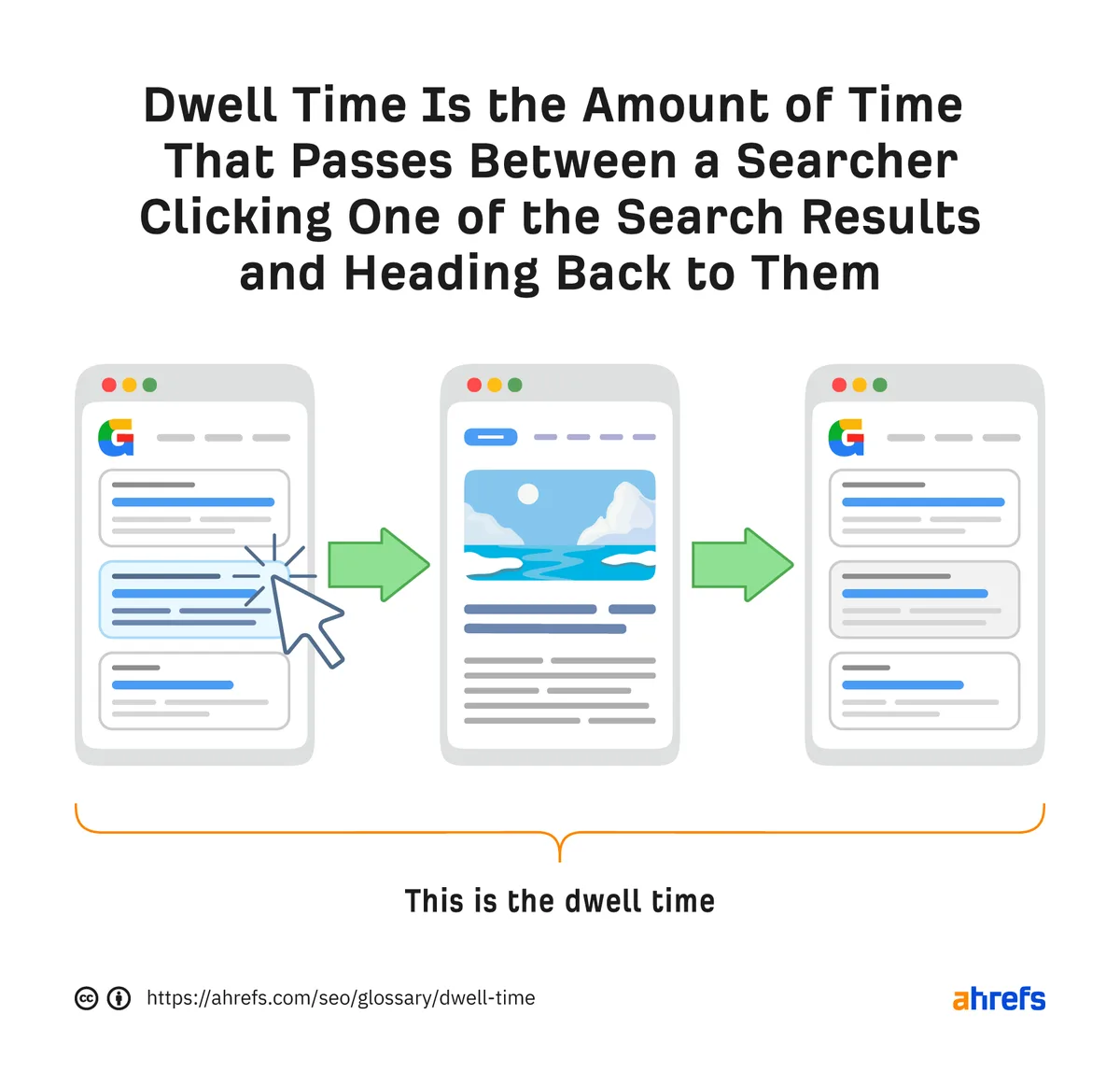
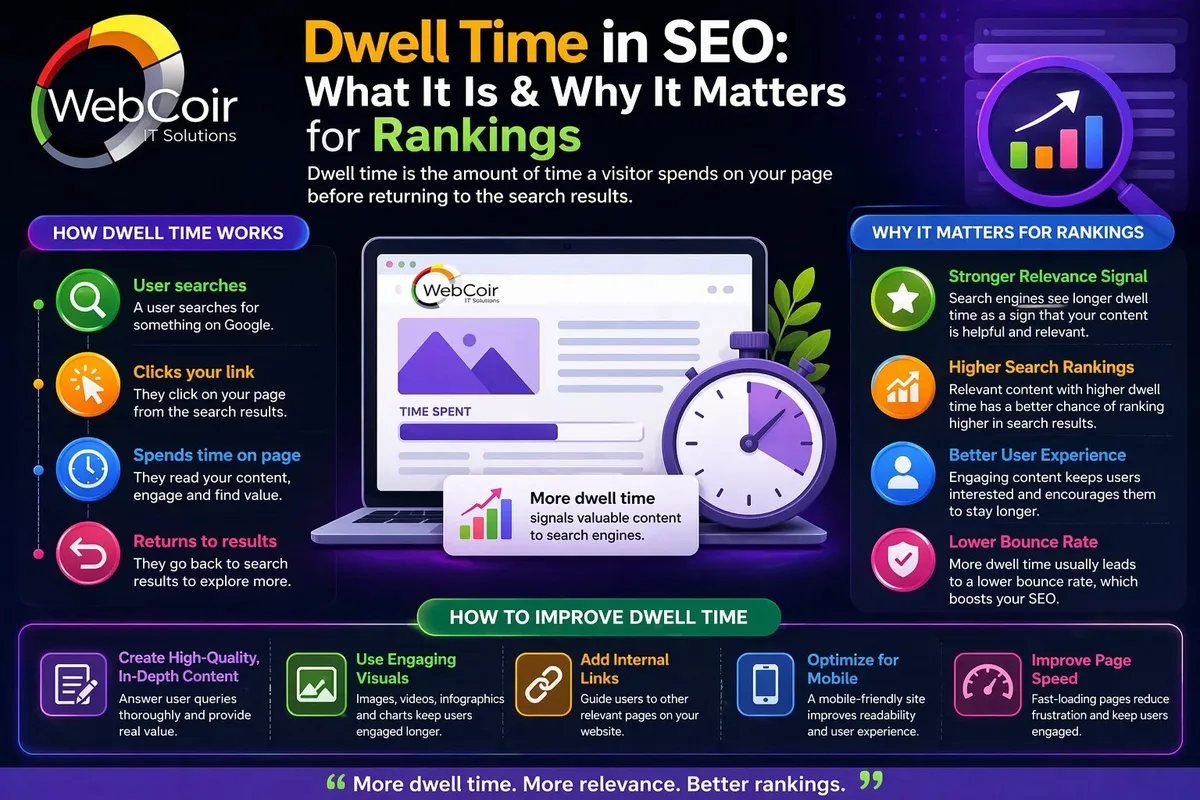
Dwell time measures the gap between when a user clicks your link in search results and when they return to the search engine results page. That’s it. Simple in theory, slippery in practice.
Google’s own documentation, including the original dwell time concept popularized through search analytics discussions, frames this as a satisfaction signal. When someone clicks your result and then bounces back to Google within five seconds, that’s a red flag. When they stay for four minutes and then leave, the story changes entirely.
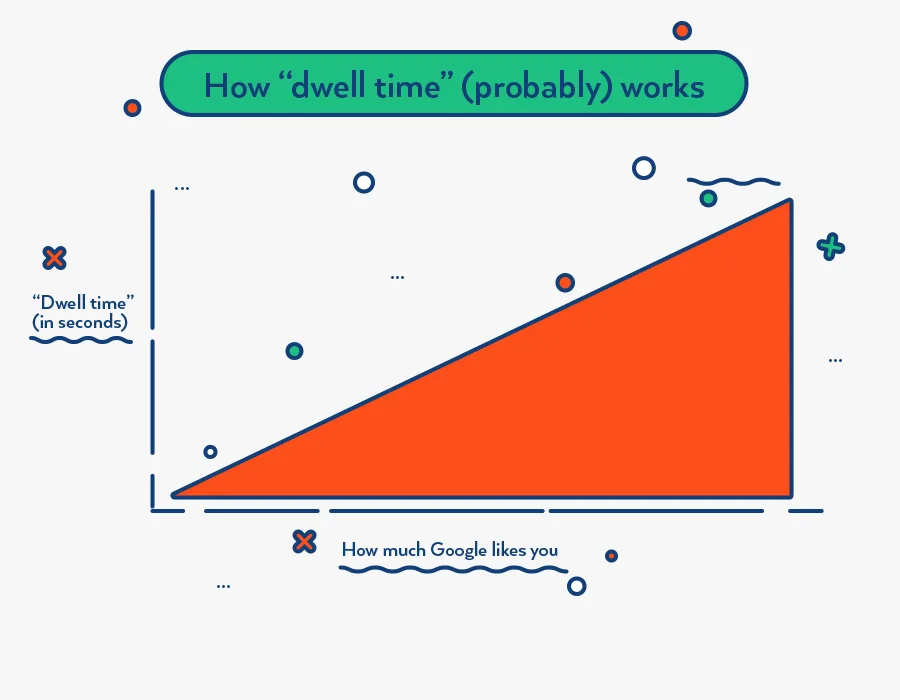
Here’s the catch most beginners miss: dwell time isn’t a direct ranking factor Google confirms. But it feeds into user engagement signals that correlate strongly with rankings. Think of it as circumstantial evidence rather than a smoking gun.
From my experience auditing e-commerce and SaaS blogs, pages with strong dwell time almost always outperform competitors in the same niche. The correlation isn’t perfect, but it’s consistent enough to take seriously.
How Dwell Time Differs from Bounce Rate and Session Duration
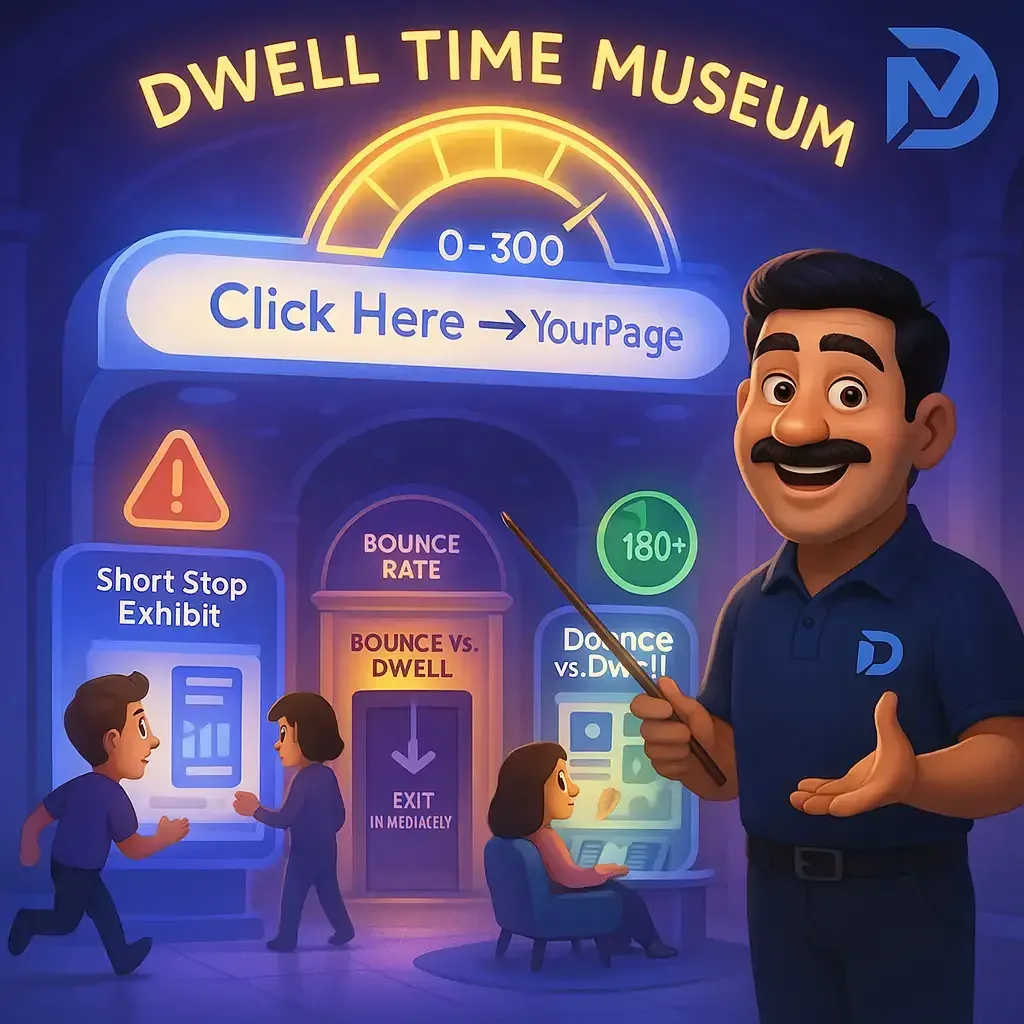
Bounce rate tells you someone left without interacting. Dwell time tells you how long they stayed before leaving. Session duration measures the entire visit across multiple pages.
These three metrics get tangled constantly. Focusing on dwell time provides clear direction here. A page can have a 70% bounce rate but excellent this practice if those bounces happen after five minutes of reading. Google Analytics won’t distinguish this for you automatically, which is why manual interpretation matters.
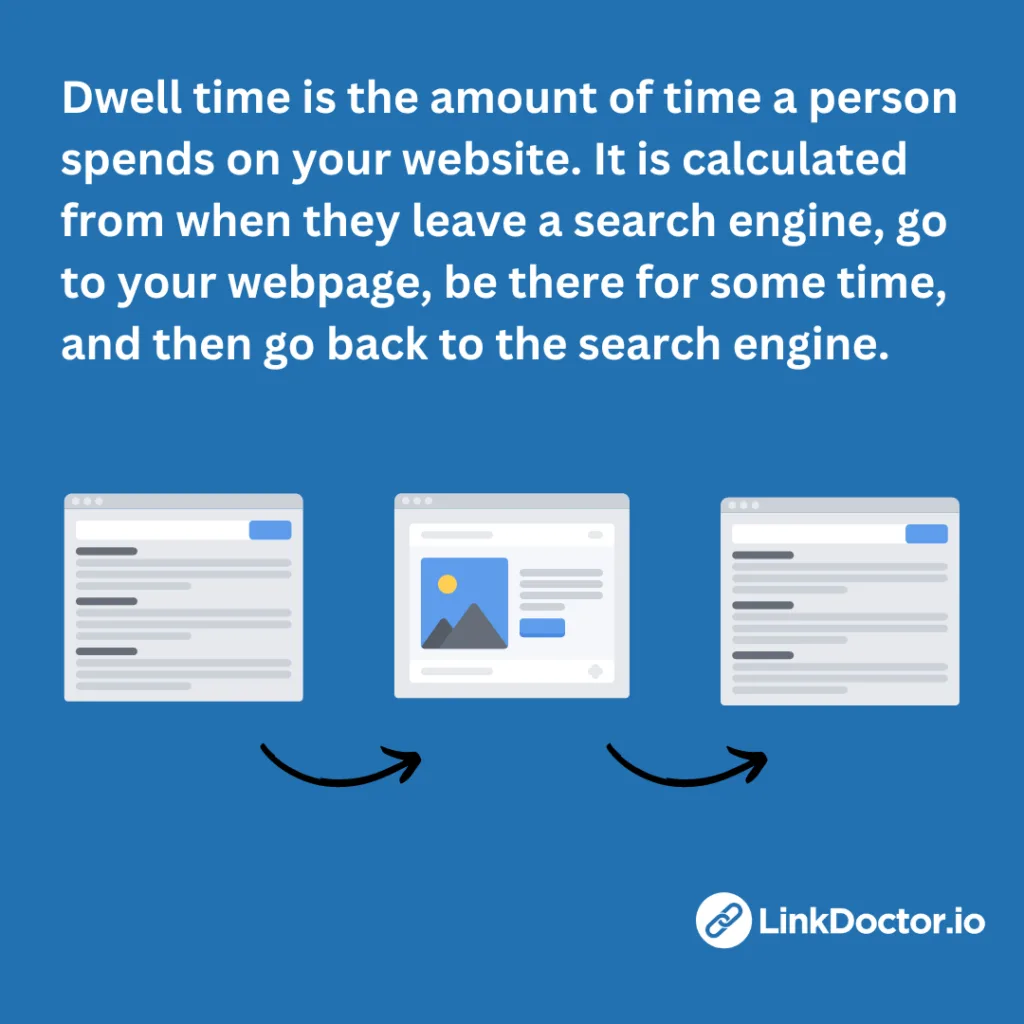
Session duration, on the other hand, can be inflated by a single user leaving a tab open while grabbing coffee. this approach is more honest because it’s tied to a specific search click and return pattern.
When I train junior analysts, I always start with this distinction. Confusing these metrics leads to bad optimization decisions, like chasing lower bounce rates when the real problem is shallow this practice.
Why Dwell Time Matters More Than Ever for SEO
Search engines have gotten smarter about quality. Backlinks still matter, but engagement signals now carry serious weight in how results get ranked over time.
A page that keeps readers engaged for three or four minutes signals genuine value. Google’s RankBrain and similar systems use this behavioral data to refine results, especially for queries where content quality is subjective.
Consider two competing articles on “how to start a podcast.” Both have similar word counts and backlink profiles. The one where readers stay longer, scroll deeper, and click internal links will gradually outrank the other. That’s this approach doing quiet work behind the scenes.

There’s also a compounding effect. Strong this practice leads to more shares, more comments, and more return visits. Those secondary signals reinforce the original engagement data, creating a feedback loop that pushes your page higher.
The Role of Dwell Time in Featured Snippets and AI Overviews
Featured snippets and AI-generated summaries pull from pages that demonstrate authority. Engagement metrics like this approach help determine which pages deserve that spotlight.
If your page holds readers for two minutes and answers the query cleanly, you’re a strong candidate for snippet placement. If visitors bounce in eight seconds, Google has little reason to feature you.
I’ve seen pages jump into featured snippets within weeks of improving their this approach through better formatting and clearer answers. The content itself barely changed. The presentation did.
How to Measure Dwell Time Accurately
Google Analytics doesn’t have a native “this practice” metric. You have to build it yourself using a few workarounds.

The most reliable method involves tracking time-on-page combined with exit behavior from search traffic. Segment your organic search visitors, then look at average time on page for that specific group.
Tools like Semrush and Similarweb offer engagement estimates that approximate this practice. They’re not perfect, but they give directional insight when you lack server-side tracking.
For serious measurement, consider event tracking that fires when a user scrolls past 75% of your article or spends more than 90 seconds on the page. These custom events give you a cleaner picture than raw analytics defaults.
Setting Up Scroll Depth and Time-Based Events
Google Tag Manager makes this straightforward. Refining each detail of your dwell time strengthens this section. Create a scroll-depth trigger at 25%, 50%, 75%, and 100%. Pair it with a timer trigger set to 30, 60, and 120 seconds.
When both fire together, you’ve got a strong proxy for real engagement. A visitor who scrolls to 75% and stays past 60 seconds is almost certainly reading, not skimming.
I recommend building a simple dashboard that combines these events with traffic source data. You’ll quickly spot which pages hold attention and which ones lose readers in the first ten seconds.
What Causes Low Dwell Time (And How to Spot It)
Low this approach rarely happens by accident. There’s usually a specific structural or content problem driving people away.
Common culprits include slow page load speeds, intrusive pop-ups, mismatched search intent, and walls of unformatted text. Each one chips away at the seconds you need to build momentum.
Another silent killer: misleading meta descriptions. If your snippet promises a quick answer but the page opens with three paragraphs of backstory, readers leave fast. Trust breaks instantly.
I once audited a client’s blog where this practice averaged 22 seconds. After fixing load speed and moving the key answer to the top of the page, it jumped to over two minutes within a month. Same content, different delivery.
Diagnosing Intent Mismatch in Search Queries
Search intent mismatches are the most overlooked cause of poor this approach. Someone searching “best running shoes for flat feet” wants recommendations, not a history of running.

Check your Search Console data for queries where impressions are high but clicks lead to quick exits. Those are your intent-mismatch candidates.
Rewrite the opening section to directly address the query, then use the rest of the page to add depth. This single change often doubles this approach on affected pages.
Proven Strategies to Increase Dwell Time
Improving this practice isn’t about tricking users into staying. It’s about making your content genuinely worth their attention.
Below are the strategies that consistently deliver results across different niches. I’ve grouped them into categories so you can prioritize based on your site’s specific weaknesses.
Content Structure and Readability Tactics
Short paragraphs, clear subheadings, and scannable formatting keep readers moving down the page. Nobody wants to stare at a 500-word block of text.
Break content into digestible chunks. Use bulleted lists for steps, tables for comparisons, and bold text for key takeaways. These aren’t cosmetic touches. They actively extend how long people stay.
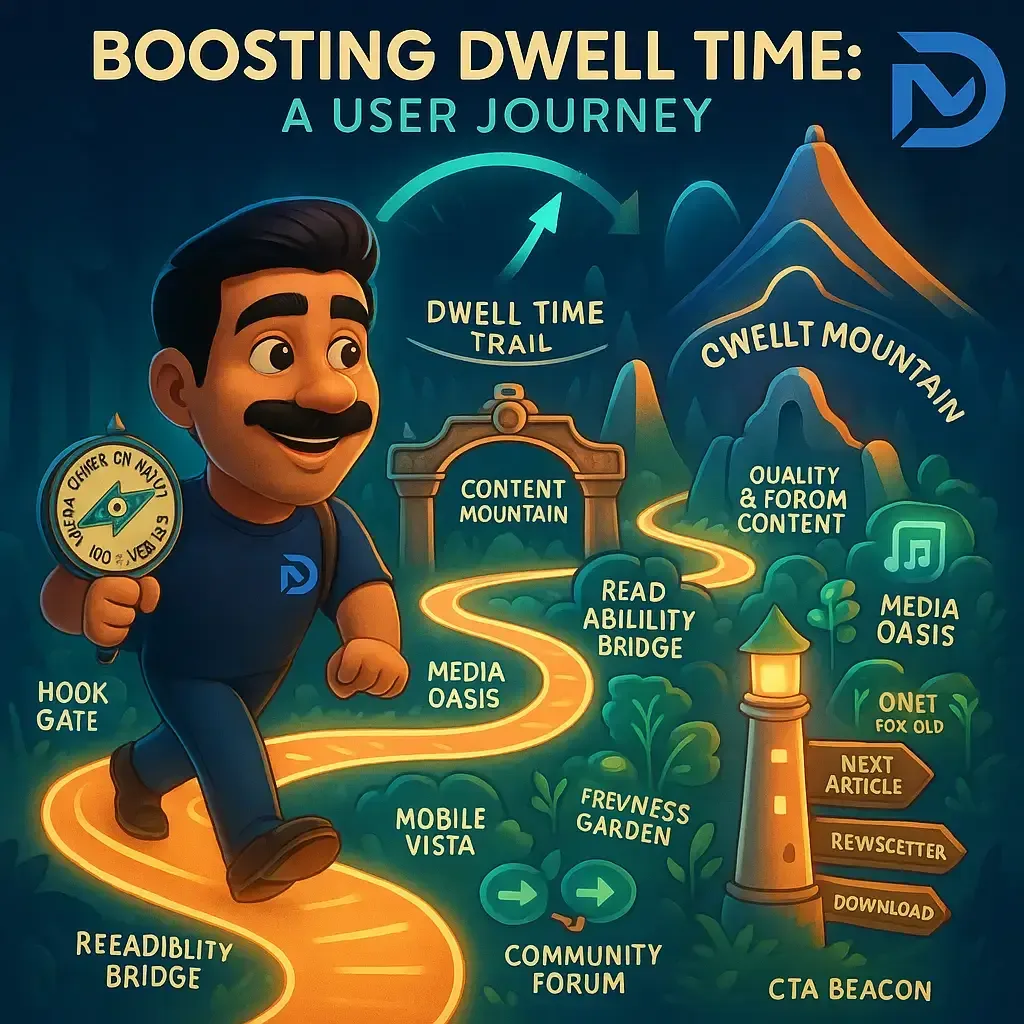
Adding a table of contents with jump links helps readers navigate long articles. Effective execution in your dwell time makes a tangible difference. It also gives them a reason to stick around when they see how much useful information is available.
Multimedia That Holds Attention
Images, videos, and interactive elements give readers a reason to linger. A well-placed video can add 60 to 90 seconds to average this approach on its own.
Embed relevant charts, infographics, or short explainer clips. Just make sure they load fast and don’t autoplay with sound, which drives people away instantly.
Podcast embeds work surprisingly well for long-form content. Readers often listen while scrolling, effectively doubling their time on the page.
Internal Linking and Content Depth
Strategic internal links encourage readers to explore related content without leaving your site. That extends the overall session and boosts engagement signals.
Link to genuinely useful related articles, not just anything with a matching keyword. The goal is to answer follow-up questions before the reader returns to Google.
I’ve found that pages with three to five contextual internal links retain readers significantly longer than pages with zero or one. The difference often shows up within two weeks of implementation.
Technical Factors That Affect Dwell Time
Even brilliant content can’t hold readers if the technical foundation is shaky. Speed, stability, and mobile responsiveness all play direct roles.
Google’s Core Web Vitals measure loading performance, interactivity, and visual stability. Pages that fail these tests lose visitors before they even start reading.
Aim for load times under two seconds on mobile. Every additional second cuts this approach significantly, especially on slower connections.
Mobile Optimization is Non-Negotiable
Over half of all search traffic comes from mobile devices. If your page looks cramped or requires pinch-zooming, readers leave fast.
Use responsive design, readable font sizes (16px minimum), and tap-friendly buttons. Test your pages on actual phones, not just browser simulators.
I’ve seen mobile this practice double after simple fixes like increasing line height and reducing ad density. Small changes, big impact.
Reducing Intrusive Interstitials
Pop-ups that cover content within the first few seconds tank this approach. Google even penalizes intrusive interstitials in mobile rankings.

If you must use pop-ups, delay them until the reader has engaged for at least 30 seconds. Maintaining clarity across your dwell time remains essential. Exit-intent pop-ups are generally safer than immediate ones.
Test different timing and placement. Sometimes moving a newsletter signup from a full-screen overlay to a subtle slide-in banner improves this approach dramatically.

Dwell Time Benchmarks by Industry
Benchmarks vary widely depending on niche, content type, and traffic source. Still, having rough targets helps you know when to celebrate and when to dig deeper.
| Industry | Average Dwell Time | Good Target |
|---|---|---|
| News & Media | 45-90 seconds | 2+ minutes |
| E-commerce Product Pages | 1-2 minutes | 3+ minutes |
| SaaS & Tech Blogs | 2-3 minutes | 4+ minutes |
| Health & Wellness | 1.5-2.5 minutes | 4+ minutes |
| Finance & Legal | 2-4 minutes | 5+ minutes |
These numbers aren’t gospel. A three-minute this approach on a news snippet might be excellent, while a three-minute dwell time on a product page could mean the user is confused.

Context matters more than raw numbers. Compare your pages against your own top performers first, then against industry averages.
Common Myths About Dwell Time Debunked
Misinformation about this approach runs rampant in SEO circles. Let’s clear up a few persistent myths.
Myth one: this practice is a direct ranking factor. Google hasn’t confirmed this, and treating it as gospel leads to over-optimization for the wrong things.
Myth two: longer this approach is always better. If someone stays ten minutes because they can’t find what they need, that’s a failure, not a win.
Myth three: you can game this practice with tricks like hiding content behind clicks. Modern algorithms detect this, and the long-term damage outweighs any short-term gain.
The truth is simpler. Focus on genuinely satisfying user intent, and this approach improves as a natural byproduct.
Why “Time on Page” Isn’t the Same Thing
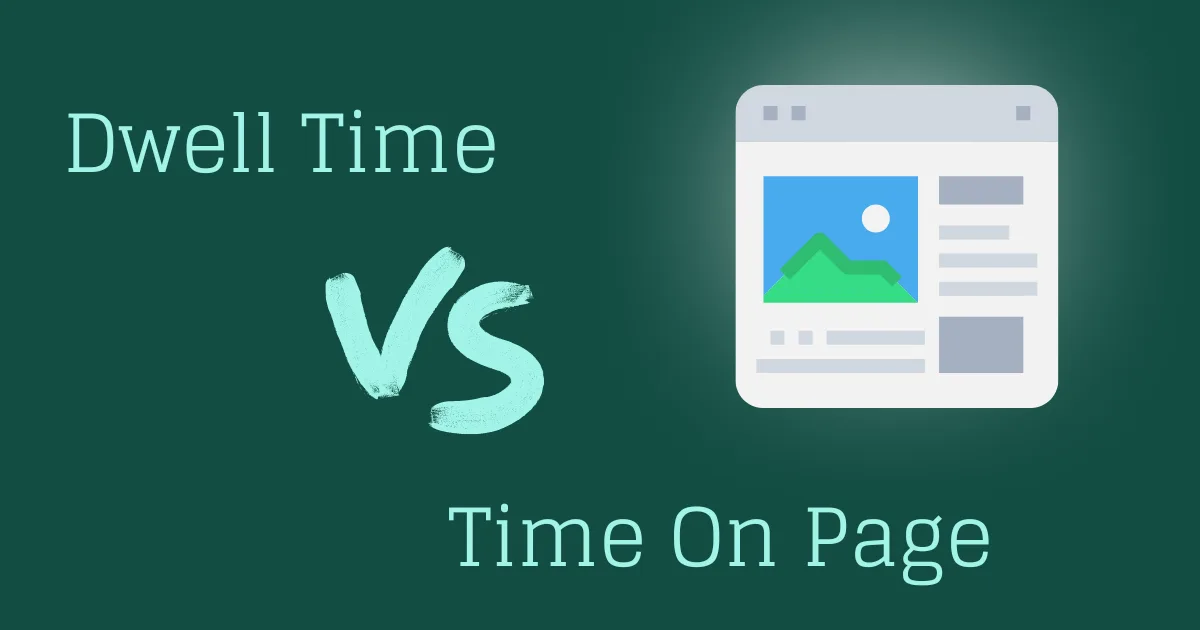
Time on page measures how long someone spends on a single URL. this practice specifically measures the gap between a search click and a return to search results.
These overlap but aren’t identical. A user who arrives from social media and stays five minutes contributes to time on page but not to this approach.
Understanding this distinction helps you segment your analytics correctly and avoid chasing metrics that don’t actually reflect search engagement.

Using Dwell Time Data to Improve Content Strategy
Once you’re tracking this approach properly, the data becomes a roadmap for content improvements.
Pages with low this practice need rewriting, restructuring, or better intent matching. Pages with high dwell time show you what’s working and deserve more promotion.
Look for patterns across your top and bottom performers. Maybe long-form guides consistently outperform short posts. Maybe video embeds correlate with longer sessions. These insights shape your editorial calendar.
I typically run a monthly this practice review with clients. We identify the three worst-performing pages, diagnose the issues, and rewrite them. The improvements compound over time.
Creating a Feedback Loop With Search Console
Combine Search Console query data with your this approach to dwell time metrics. Look for queries where your page ranks but engagement is weak.
Those are your highest-leverage optimization targets. You’re already visible, you just need to convert the click into a genuine read.
Small tweaks like rewriting the intro or adding a quick-answer box often produce dramatic this approach improvements on these pages.
Dwell Time and Voice Search: a Growing Connection
Voice search changes how people interact with content. They ask a question, hear an answer, and move on. this practice in this context looks different.
Pages optimized for voice queries tend to be concise and direct. That doesn’t mean short, but it means the answer comes fast.
If your page buries the answer in paragraph six, voice users never reach it. Those sessions produce terrible engagement signals.
Structure your content with a clear answer near the top, then expand with detail below. This serves both voice users and traditional readers, and it improves this approach across the board.
Tools for Tracking and Improving Dwell Time
Several tools make this practice tracking and optimization easier. Here’s what I actually use and recommend.
Google Analytics 4 remains the foundation for most sites. Its engagement metrics aren’t perfect, but with custom events, you can build a solid picture.
Hotjar and Microsoft Clarity provide session recordings and heatmaps that show exactly where readers lose interest. Watching real sessions is humbling and educational.
For competitive benchmarking, Semrush and Ahrefs offer engagement estimates. They’re directional, not precise, but useful for spotting gaps.
Building Custom Dwell Time Reports
Combine GA4 event data with your CMS analytics to create a unified this practice report. Include traffic source, content type, and author as dimensions.
This level of detail reveals patterns you’d miss in aggregate views. Maybe one author consistently produces high-dwell content. Maybe a specific content format underperforms.
Review these reports monthly and act on the findings. this practice improvement is a marathon, not a sprint.
Real-World Case: How a B2B Blog Doubled Dwell Time
Let me share a concrete example from a client project. They ran a B2B software blog with decent traffic but weak engagement.
Average this practice sat at 48 seconds. Readers clicked, skimmed, and left. The content was technically solid but formatted poorly.
We made three changes. First, we moved the key takeaway to the first 100 words. Second, we broke every paragraph into two-sentence chunks. Third, we added a comparison table and two internal links per post.
Within six weeks, average this practice climbed to 1 minute 52 seconds. Organic traffic grew 34% over the following quarter. Same content topics, better delivery.
The lesson: this approach responds to structural changes faster than most SEO tactics. If you’re patient with content quality but ignore presentation, you’re leaving engagement on the table.
Frequently Asked Questions About Dwell Time
Here is an in-depth breakdown of key considerations regarding this section:
Is Dwell Time a Confirmed Google Ranking Factor?
Google hasn’t officially confirmed this practice as a direct ranking factor. However, engagement signals derived from user behavior strongly correlate with ranking improvements. Treat it as an important indirect signal rather than a guaranteed ranking lever.
What’s a Good Dwell Time for a Blog Post?
For most blogs, 2 to 3 minutes is solid, and anything above 4 minutes is excellent. The right benchmark depends on your niche and content length. Long-form guides naturally attract longer dwell times than news updates.
Can I Improve Dwell Time Without Rewriting Content?
Yes. Formatting changes alone often produce significant improvements. Shorter paragraphs, better subheadings, faster load times, and clearer intros can double this practice without touching the core message.
Does Dwell Time Affect Featured Snippet Selection?
It likely plays a role. Pages that hold reader attention signal quality, which makes them stronger candidates for featured snippets and AI-generated summaries. Strong this approach doesn’t guarantee a snippet, but it helps.
How Do I Track Dwell Time in Anthropic Analytics 4?
GA4 doesn’t have a native this practice metric. Use custom events combining scroll depth and time-on-page triggers. Segment by organic search traffic to approximate dwell time accurately.
Why is My Dwell Time High but Conversions Low?
High this approach with low conversions often means readers are engaged but not convinced. Review your calls to action, offer clarity, and page flow. Sometimes the issue is intent mismatch further down the funnel.
Final Thoughts on Mastering Dwell Time
This practice rewards content that respects the reader’s time and answers their questions without friction. It’s not a metric you can fake, and that’s exactly why it matters.
Focus on clarity, speed, and genuine usefulness. Structure your pages for scannability, load them fast, and deliver on the promise your meta description makes.
Track this practice consistently, act on the data, and be patient. The improvements compound, and over months, they reshape how search engines and readers perceive your entire site.
Start with one underperforming page this week. Rewrite the intro, break up the text, add a table or video, and watch what happens. That first win will teach you more than any guide ever could.