A da checker is one of those tools you don’t think about until you suddenly need it — and then it becomes indispensable. If you’ve ever stared at two similar-looking domain names and wondered which one actually carries more weight, you already understand why these tools matter.
Domain Authority, or DA, is a scoring metric originally developed by Moz to predict how well a website will rank on search engine result pages. It runs on a logarithmic scale from 1 to 100, where higher scores suggest a stronger likelihood of ranking.
The catch? You don’t need to pay a subscription or hire an SEO consultant to check it. A reliable da checker gives you that number in seconds, for free.
Let’s walk through everything worth knowing — how the metric works, how to read it without overreacting, which tools deliver accurate results, and where beginners usually trip up.
What a DA Checker Actually Measures
People throw around “Domain Authority” like it’s a universal truth stamped on every website. It isn’t.
DA is a Moz-specific metric, and it’s built primarily from link data — how many sites link to you, how authoritative those linking sites are, and how that link profile compares to the billions of other pages Moz has crawled.
When you run a da checker, you’re essentially asking: “Based on the link graph, how competitive is this domain likely to be?” That’s a prediction, not a verdict. Two different tools can return two different numbers for the same website, and neither is technically “wrong.”
Here’s the part most tutorials skip. Moz recalculates DA roughly every 21 to 24 days. So if you built twenty quality backlinks yesterday, don’t expect the score to jump today. Patience matters more than refreshing the page.
Why the Logarithmic Scale Matters More Than You Think
Moving from DA 10 to DA 20 is dramatically easier than crawling from DA 70 to DA 80. Focusing on da checker provides clear direction here. Each ten-point jump near the top represents exponentially more link equity.
A single strong backlink from a major news outlet can lift a small site by several points, while a DA 85 giant might need hundreds of new referring domains just to nudge upward by one.
This is why comparing raw numbers across wildly different niches gets messy. A DA 45 in a hyper-competitive finance niche might be genuinely formidable, while a DA 45 in a niche nobody writes about could be mediocre. Context always beats the number.
How to Use a DA Checker Without Falling Into the Obvious Trap
The obvious trap is treating DA as a finish line. I’ve watched people obsess over pushing a score from 32 to 35 while completely ignoring on-page fundamentals, user experience, and actual conversions. That’s backwards.
Use a da checker the way a mechanic uses a diagnostic scan — as one signal among many, not the whole diagnosis. Pair it with referring domain counts, spam scores, and organic traffic estimates. A domain with DA 50 but a toxic, spammy link profile is often worse off than a clean DA 30 site.
My honest recommendation: check DA quarterly, not weekly. Refining each detail of your da checker strengthens this section. Set a calendar reminder, run the numbers, log them in a spreadsheet, and move on. Daily checking creates anxiety without creating results.
Reading the Score in Context of Your Competition
Before you judge your own DA, check three to five direct competitors. If the average is DA 38 and you’re sitting at DA 34, you’re close enough to compete with smart content and decent link building.
If the average is DA 72 and you’re at DA 20, you need a different strategy — likely long-tail keywords and niche pockets where the giants don’t bother showing up.
This competitive framing is where a free da checker earns its keep. It converts an abstract number into a concrete gap you can actually close.
Free DA Checker Tools Worth Your Time
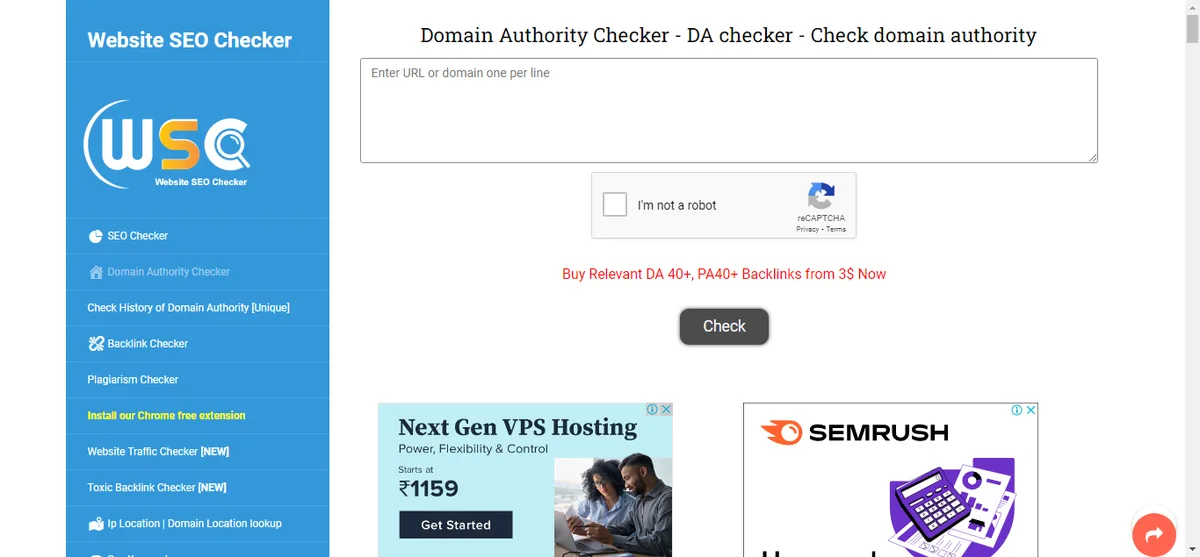
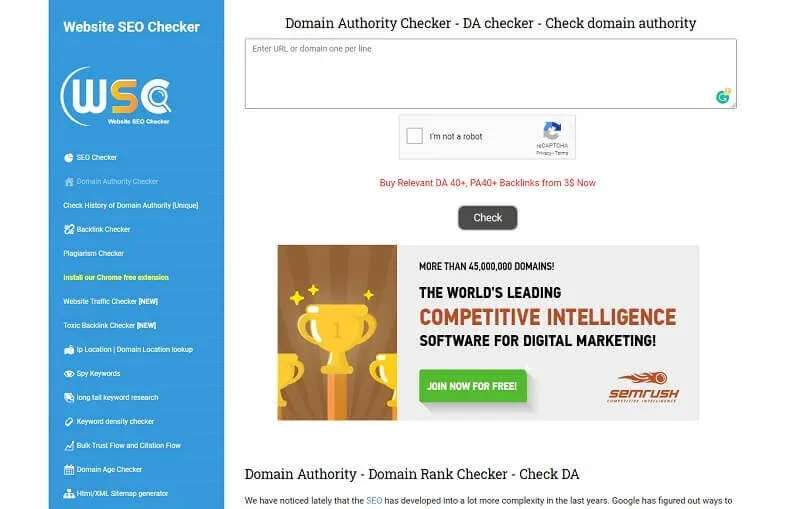
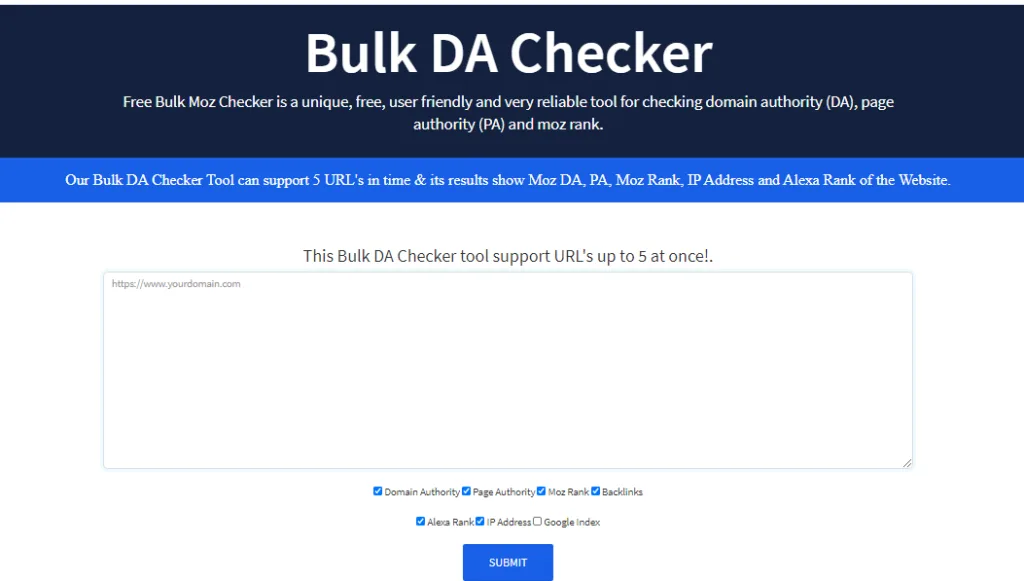
Not all free tools are created equal. Some throttle results, some hide the real number behind a paywall after one lookup, and some pull stale data that hasn’t refreshed in months. Here’s what actually works.
- Moz Link Explorer (Free Tier) — The original source. You get a limited number of queries per month, but the data is authoritative because Moz defines the metric. Best for accuracy when you need a definitive answer.
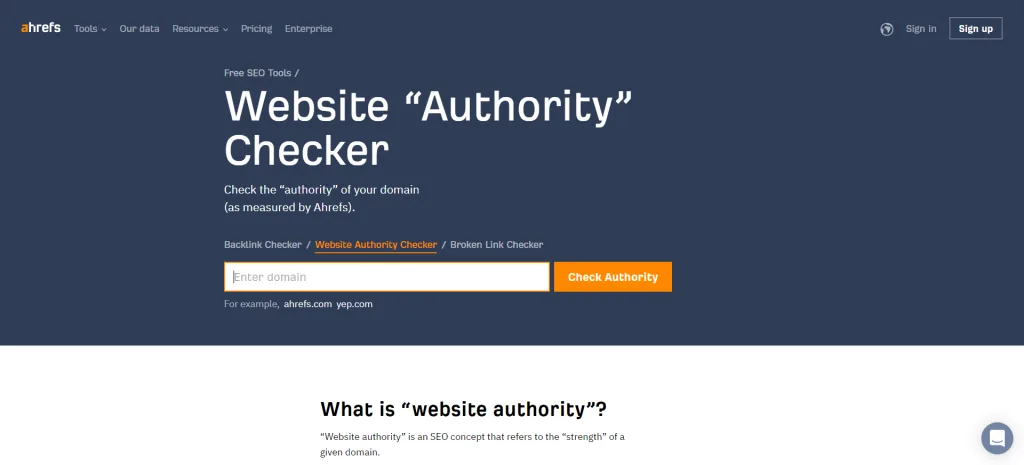
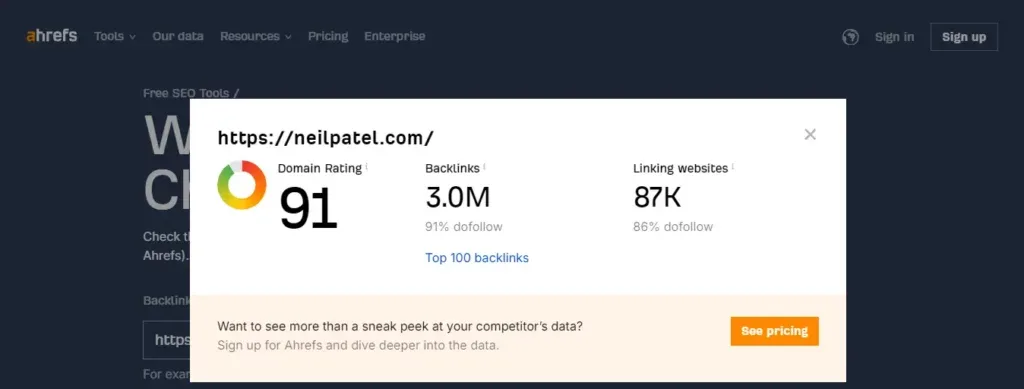
- Ahrefs Free Website Authority Checker — Returns Domain Rating (DR), Ahrefs’ equivalent metric. Slightly different methodology, often useful as a cross-reference. The interface is clean and fast.
- Semrush Free Authority Checker — Provides Authority Score, which blends backlinks, organic traffic, and spam signals. Helpful because it factors in more than just links.
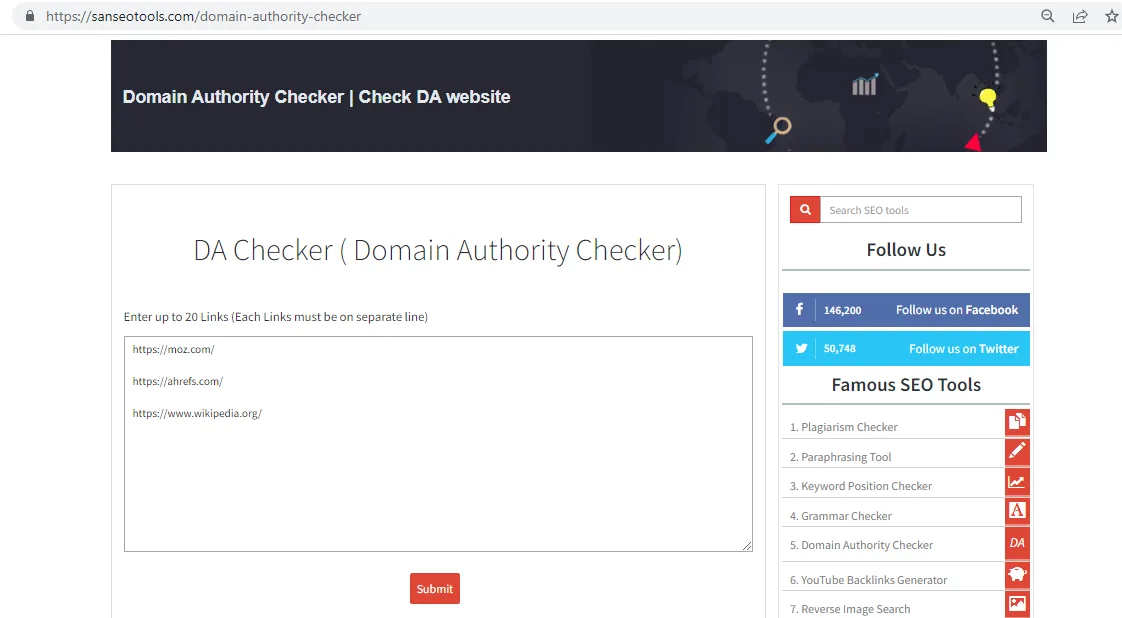
- Small SEO Tools DA Checker — A lightweight option when you just need a quick number. Accuracy varies, so treat it as a rough guide rather than gospel.
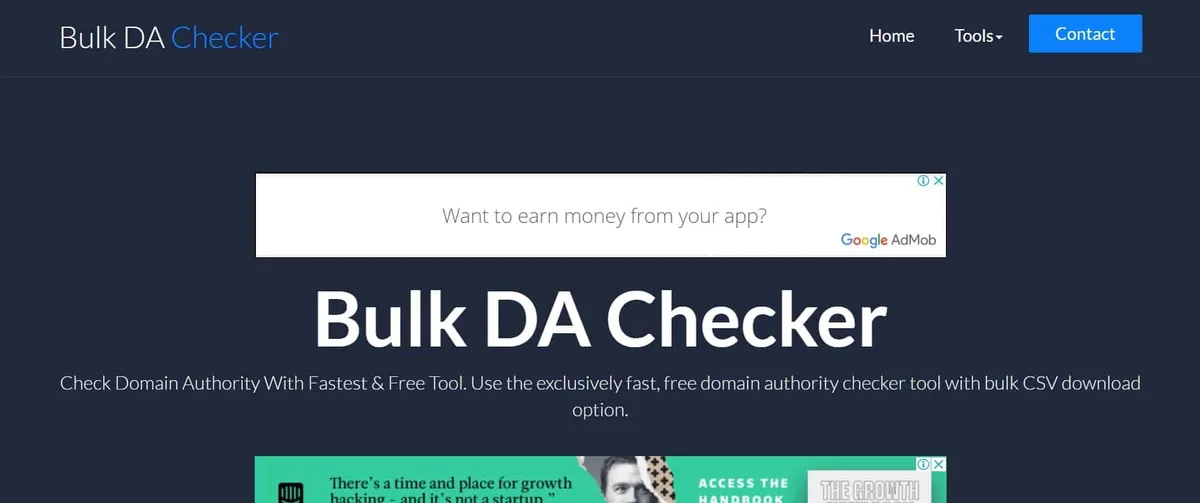
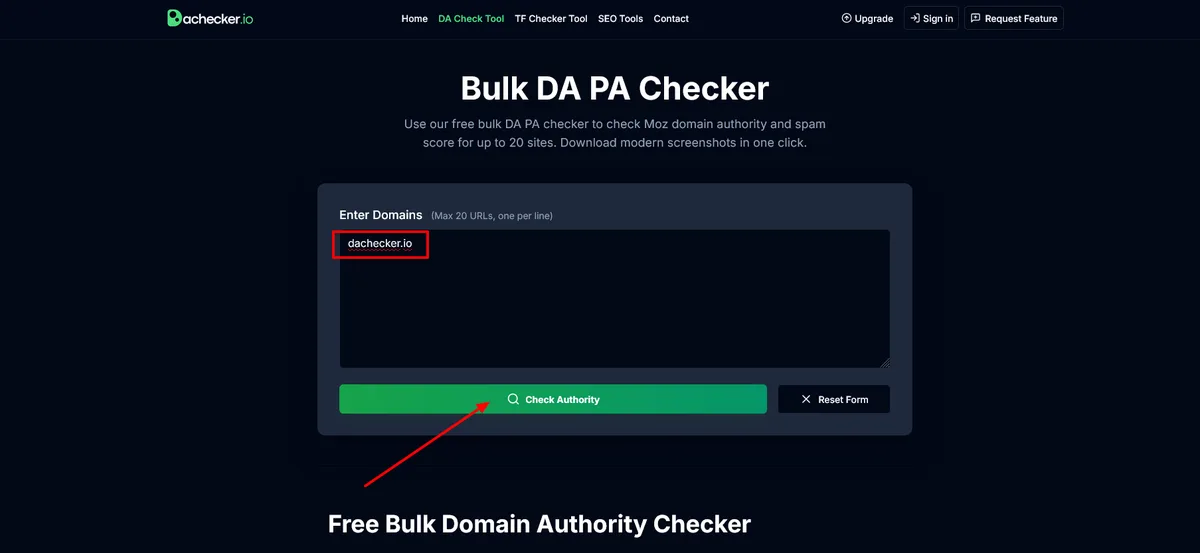
- Prepostseo DA Checker — Fast, browser-based, no signup required. Good for bulk-checking a handful of domains in one sitting.
Run the same domain through two or three of these and compare. Effective execution in your da checker makes a tangible difference. If the numbers diverge wildly, that’s a signal something unusual is happening with the link profile — worth investigating.
When to Upgrade to a Paid Tool
Free tiers usually cap you at a handful of lookups per day. If you’re managing ten client sites or running a link-building campaign across dozens of prospects, that ceiling becomes a problem fast. Paid plans unlock bulk checking, historical data, and exportable reports.
For casual bloggers or small business owners checking their own site plus a few competitors, free is genuinely enough. Don’t pay for capacity you won’t use.
The Difference Between DA, PA, DR, and AS
This is where confusion runs rampant. Every major SEO platform has its own authority metric, and they all measure slightly different things.
| Metric | Provider | What It Measures | Scale |
|---|---|---|---|
| DA (Domain Authority) | Moz | Link profile strength of an entire domain | 1–100 |
| PA (Page Authority) | Moz | Link profile strength of a single page | 1–100 |
| DR (Domain Rating) | Ahrefs | Backlink profile strength, weighted by referring domains | 1–100 |
| AS (Authority Score) | Semrush | Backlinks plus organic traffic plus spam signals | 1–100 |
Notice that only Semrush factors in traffic and spam. Maintaining clarity across your da checker remains essential. That’s a meaningful difference. A site can have a strong DA purely from links while attracting almost no real visitors — a red flag if you’re evaluating a potential partner or acquisition target.
Smart practitioners run a da checker alongside a DR checker and an Authority Score lookup. Three data points paint a far more honest picture than one.
What Actually Moves the Needle on Your DA Score
Backlinks remain the dominant factor, but not all backlinks are equal. One link from a respected industry publication outweighs fifty links from low-quality directories. This isn’t opinion — it’s how the algorithm weights referring domains.
Here’s what genuinely works, in rough order of impact:
- Earning editorial links from authoritative sites — Think guest posts on established publications, expert quotes picked up by journalists, or original research that gets cited. These move the needle fastest.
- Building topical relevance clusters — When multiple respected sites in your niche link to you, Moz’s model recognizes you as a topical authority. Depth beats breadth.
- Reclaiming unlinked brand mentions — Someone mentions your brand without linking? Reach out and ask for the link. Low effort, decent payoff.
- Creating linkable assets — Original data studies, free tools, comprehensive glossaries. These attract links passively over time.
- Fixing broken backlinks — If a valuable site links to a 404 page on your domain, redirect it. You reclaim link equity you’re currently losing.
What doesn’t work: buying bulk links from Fiverr, spamming comment sections, or trading links with a network of irrelevant sites. These tactics can tank your score and, worse, get you penalized by Google.
A Realistic Timeline for DA Growth
New sites often sit at DA 1 for months. That’s normal. Expect the first meaningful jump around the three-to-six-month mark if you’re consistently building quality links. Reaching DA 40 typically takes one to two years of sustained effort in a competitive niche.
Anyone promising DA 60 in ninety days is selling something. Run.
Common Mistakes When Interpreting DA Checker Results
Mistake one: assuming DA directly determines rankings. A thoughtful approach to da checker reinforces your qualifications. It doesn’t. Google doesn’t use Moz’s metric. DA correlates with ranking potential because both stem from link quality, but correlation isn’t causation.
Mistake two: comparing DA across unrelated niches. Focusing on da checker provides clear direction here. A DA 30 in legal services and a DA 30 in handmade crafts represent completely different competitive realities.

Mistake three: panicking over a one or two-point drop. DA fluctuates as Moz recrawls the web and competitors gain or lose links. Small dips are noise, not failure.
Mistake four: using a single da checker and treating its output as absolute. Cross-reference. Always.
Mistake five: chasing the number instead of the outcome. Rankings, traffic, and revenue are what pay the bills. DA is a proxy.
How to Spot a Manipulated Score
Sometimes a domain shows a suspiciously high DA relative to its actual traffic and content quality. Structuring your da checker around proven patterns ensures impact. This usually means private blog networks, link farms, or expired domain abuse.
Red flags include: high DA with almost no organic traffic, a link profile dominated by irrelevant foreign-language sites, and content that reads like spun nonsense.
If you’re evaluating a domain for purchase or partnership, dig deeper than the headline number. A da checker is step one, not the whole investigation.
Using a DA Checker for Link Prospecting
Link building runs on prioritization. You can’t pitch every website on the internet, so you need to sort prospects by likely value. DA is one of the fastest filters available.
A practical workflow: compile a list of fifty potential targets in your niche, run each through a da checker, and sort them into tiers. Tier one: DA 50 and above. Tier two: DA 30–49. Tier three: DA 15–29.
Spend 70% of your outreach effort on tiers one and two. Tier three targets are often not worth the email.
But don’t filter purely on DA. Relevance matters enormously. A DA 35 site directly in your niche is often more valuable than a DA 60 general-interest site that has nothing to do with your topic.
Combining DA With Traffic Estimates
A site with DA 55 but only 200 monthly visitors is a weak prospect. Applying these principles to your da checker yields measurable results. Either the traffic data is wrong, or the site has links without an audience. Either way, a link from it won’t send you meaningful referral traffic or signal much to Google.
Always pair your da checker results with an organic traffic estimate. Tools like Ahrefs, Semrush, or Ubersuggest provide this alongside authority metrics. The combination tells a much richer story than either number alone.
DA Checker for Competitor Analysis
Competitive research is where these tools shine brightest. Instead of guessing why a competitor outranks you, you can measure the actual gap.
Start by identifying your five closest organic competitors — the sites that consistently appear above you for your target keywords. Run each through a da checker, then compare their referring domain counts. You’ll often find the answer immediately: they simply have more sites linking to them.
The strategic response isn’t to match their number overnight. Refining each detail of your da checker strengthens this section. It’s to identify which specific pages on their site attract the most links, then build something genuinely better on the same topic. That’s how you compete without a massive budget.

Tracking Competitor DA Over Time
Set up a simple monthly tracker. Log competitor DA scores alongside your own. After six months, patterns emerge. Some competitors plateau. Others grow aggressively. A few decline because they stopped publishing or lost key links.
This longitudinal view is far more useful than any single snapshot. A da checker used consistently becomes a strategic dashboard, not just a curiosity.
Does Domain Authority Still Matter?
Yes, but with caveats. Proper attention to your da checker sets a strong baseline. Google has repeatedly stated it doesn’t use DA as a ranking factor. That’s true and worth repeating. However, DA remains a useful proxy because it correlates strongly with the signals Google does use — particularly link quality and quantity.
SEO professionals still rely on it for three practical reasons: it’s fast, it’s free, and it’s directionally accurate. When you need a rough sense of how competitive a domain is, a da checker delivers an answer in seconds.
What’s changed is the sophistication required. A decade ago, raw link volume moved scores quickly. Today, the model weighs relevance, topical authority, and link quality far more heavily. Spammy tactics that once worked now actively hurt.
How AI Search is Reshaping Authority Signals
With AI-generated answers appearing directly in search results, the value of being cited as a source has increased. Sites with strong authority signals — including high DA — are more likely to be referenced by AI systems pulling from trusted sources.
This doesn’t mean DA is suddenly a ranking factor for AI search. It means the underlying quality signals that drive DA are the same ones that drive citation-worthiness. Building genuine authority serves both goals simultaneously.
Step-By-Step: Checking DA in Under a Minute
Let’s make this concrete. Here’s the exact process, start to finish.
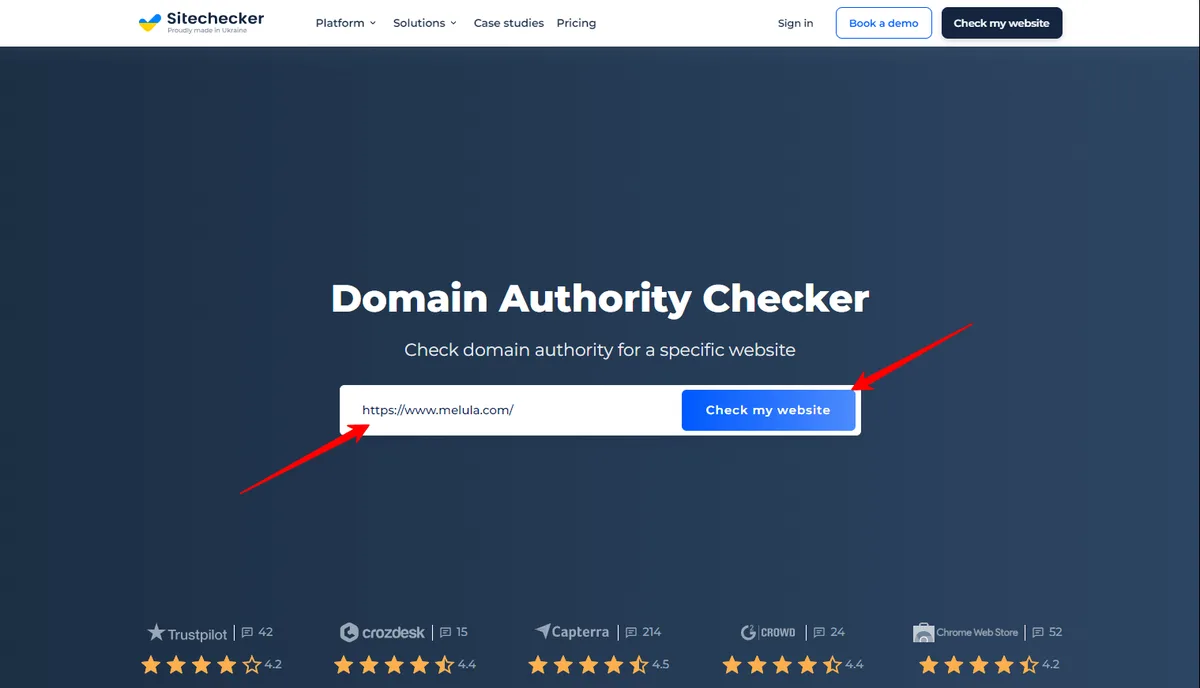
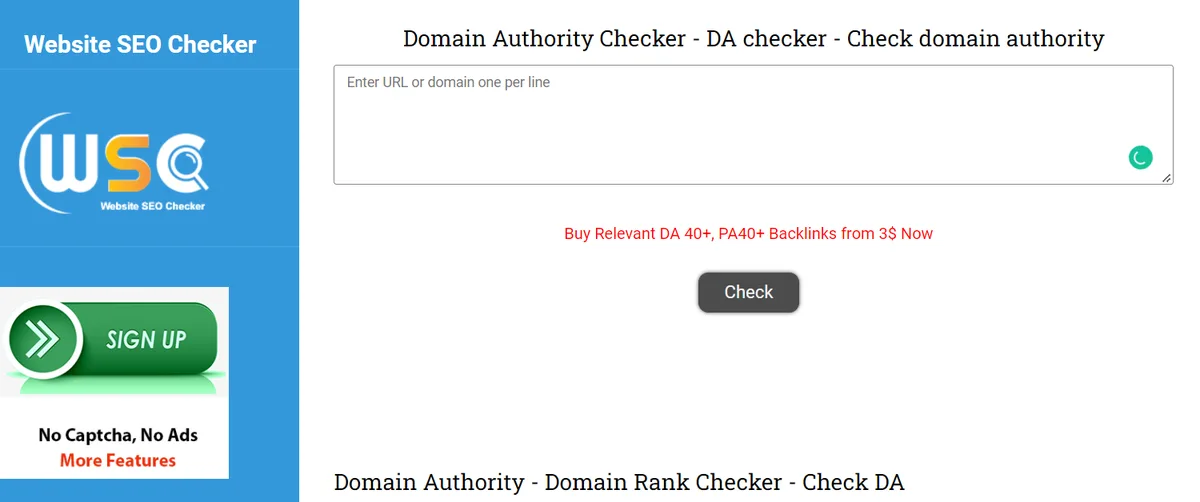
- Pick your tool. Open Moz’s free Link Explorer, or any reputable da checker in your browser.
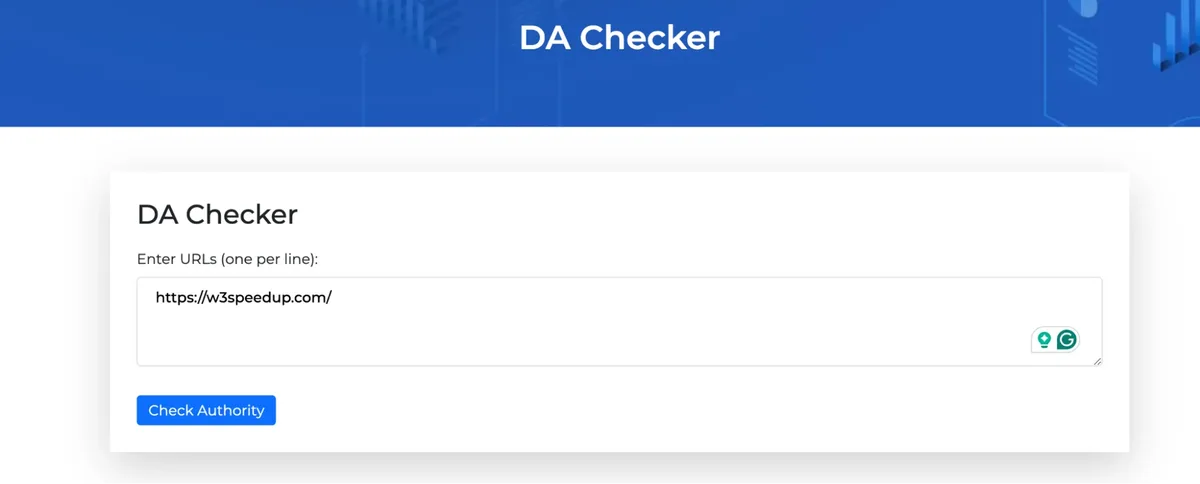
- Enter the domain. Type the root domain (example.com), not a specific page URL, if you want domain-level DA.
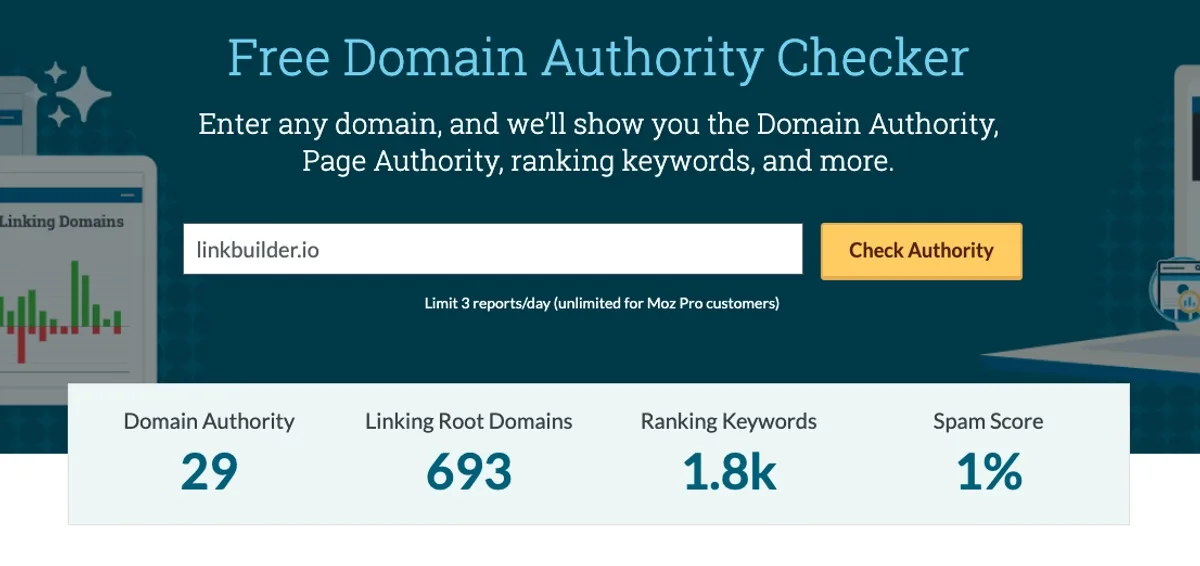
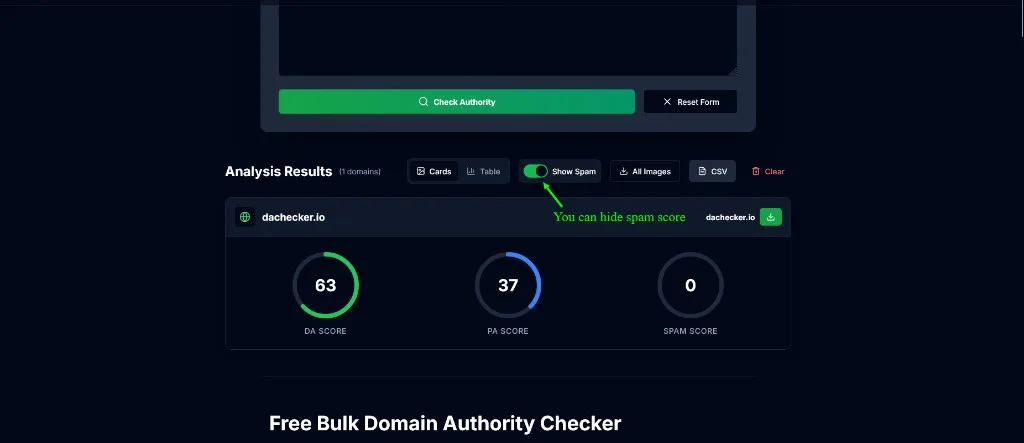
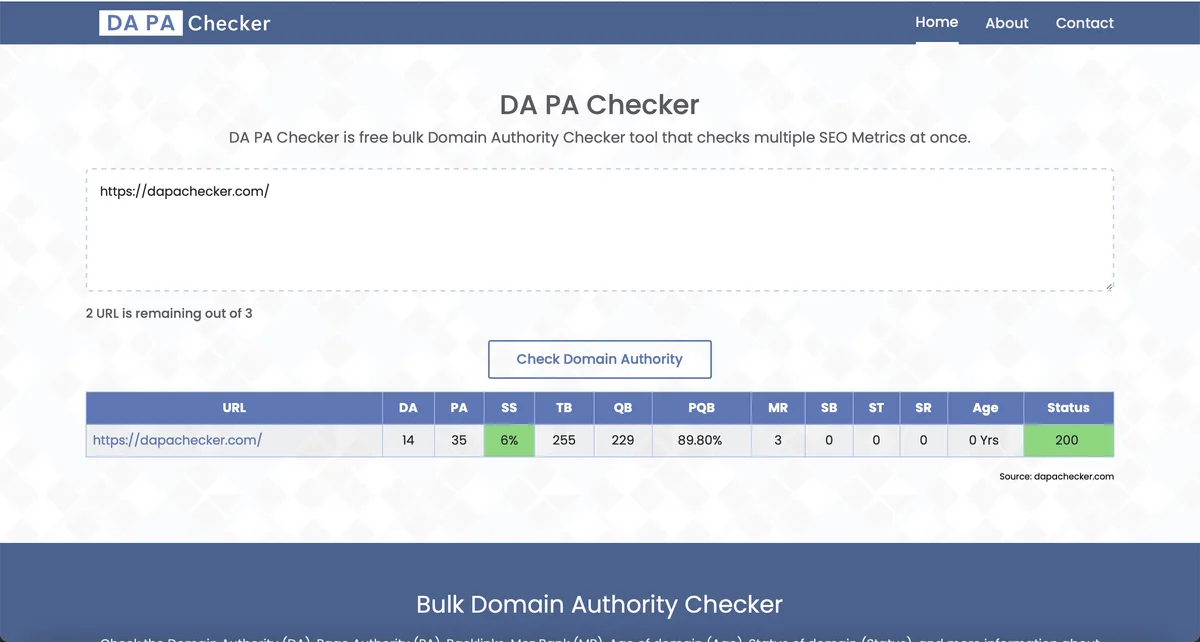
- Read the score. DA appears at the top of the results, usually alongside PA and referring domain counts.
- Note the referring domains. This number is often more actionable than DA itself — it tells you how many unique sites link to the domain.
- Check spam score. Moz provides a spam score from 0–17%. Anything above 10% warrants caution.
- Log the result. Add it to a spreadsheet with the date, so you can track changes over time.
Total time: roughly forty-five seconds. Repeat for competitors, prospects, or client sites as needed.
Mobile-Friendly Checking on the Go
Most da checker tools work fine on mobile browsers. If you’re at a conference, in a meeting, or evaluating a partnership on short notice, you can pull up a score without opening a laptop. The interfaces aren’t always elegant on small screens, but the data is there.
That responsiveness matters more than people admit. Quick decisions often hinge on quick data.
Building a DA Tracking System That Actually Sticks
Ad-hoc checking is fine for curiosity. Developing your da checker with precision highlights key strengths. Systematic tracking is what drives strategy. Here’s a lightweight system that works.
Create a spreadsheet with columns for: domain, DA, referring domains, spam score, date checked, and notes. Update it monthly for your own site and quarterly for competitors. After a year, you’ll have a dataset that reveals trends no single lookup ever could.
Add a column for “actions taken” — links built, content published, technical fixes. Over time, you’ll see which activities correlate with DA movement. That’s real, personalized insight no generic blog post can give you.
Setting Realistic DA Goals
Don’t set a target like “reach DA 50 by next year” without context. Instead, set relative goals: “close the gap with my top competitor by 30%,” or “add 40 referring domains from relevant sites.” These are actionable. A raw DA target isn’t.
When you do check progress with a da checker, you’re measuring against a strategic benchmark rather than an arbitrary number. That shift in framing changes everything about how you use the tool.
Frequently Asked Questions About DA Checkers
Here is an in-depth breakdown of key considerations regarding this section:
Is a Free DA Checker Accurate?
Generally yes, if it pulls data directly from Moz’s index. Effective execution in your da checker makes a tangible difference. Third-party tools that scrape or estimate can be less reliable. The most accurate free option is Moz’s own Link Explorer, since it’s the source of the metric. Cross-referencing with Ahrefs and Semrush adds confidence.
How Often Does DA Update?
Moz refreshes Domain Authority roughly every 21 to 24 days. Ahrefs updates Domain Rating more frequently, often daily or weekly. Semrush’s Authority Score updates on its own cycle. Don’t expect real-time changes.
Can I Increase My DA Quickly?
Not sustainably. Genuine DA growth comes from earning quality backlinks over months and years. Tactics that produce overnight jumps — link farms, PBNs, bulk purchases — typically backfire. Slow, consistent effort wins.
Does a Higher DA Guarantee Better Rankings?
No. DA correlates with ranking potential but doesn’t cause rankings. Google uses its own signals. A well-optimized DA 30 site can outrank a poorly optimized DA 60 site for specific keywords.
What’s a Good DA Score?
It depends entirely on your niche. In local services, DA 30 can be competitive. In national finance or insurance, you might need DA 70+ to compete. Always benchmark against direct competitors rather than an abstract standard.
Why Do Different DA Checkers Show Different Scores?
Because they measure different things. Moz measures DA. Ahrefs measures DR. Semrush measures Authority Score. Each uses its own index and weighting. Comparing them directly is apples to oranges — but seeing all three gives a fuller picture.
Is DA Still Relevant for SEO?
Yes, as a proxy metric. It’s not a Google ranking factor, but it correlates with link quality, which is. For quick competitive assessments and link prospecting, a da checker remains one of the most efficient tools available.
Final Thoughts on Choosing and Using a DA Checker
If you take one thing from all this, let it be this: DA is a compass, not a destination. It tells you roughly where you stand relative to others. It doesn’t tell you where to go or how fast you’re moving.
The best da checker is the one you actually use consistently — paired with traffic data, spam scores, and a clear strategic goal. Free tools handle this perfectly well for most people. Upgrade only when volume demands it.
Check your score. Log it. Get back to building content and earning links. That’s the whole game, and the number will follow.
For verified reference and background research, consult the authoritative informational resource on this topic.