If you’ve been running paid search for any length of time, you already know the drill: keywords, match types, bids, and a whole lot of manual babysitting. Then AI max google shows up and quietly rewrites the rulebook.
Instead of matching a query to a keyword, this system reads intent, expands your reach, and decides where your budget goes in real time. It’s the biggest philosophical shift in Google Ads since the move to Smart Bidding, and honestly, it’s the one most advertisers still misunderstand.
I’ve spent the last several months watching accounts get rebuilt around this system, and the results are genuinely mixed. Focusing on AI max google provides clear direction here. Some advertisers see double-digit conversion lifts within weeks.
Others watch their cost per acquisition climb because they treated it like a slightly smarter version of what they were already running. The difference almost always comes down to setup, controls, and how well you feed the machine.
So let’s walk through the whole thing properly. What AI max google actually is, how the tech works under the hood, what it costs, where it stumbles, and how to squeeze real performance out of it without torching your budget. No fluff, no vendor talking points, just what I’ve seen work in live accounts.
What is AI Max Google and Why It Matters Right Now
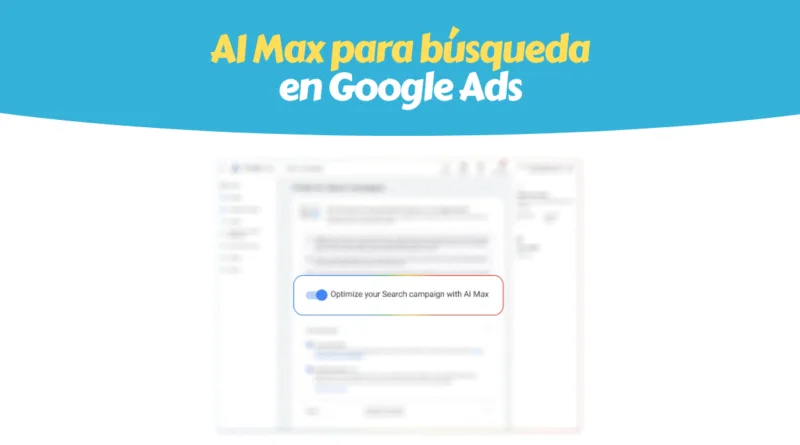
At its core, AI max google is a set of machine learning upgrades layered on top of Google’s existing Search campaigns. It’s not a brand-new campaign type you create from scratch.
Instead, it’s a collection of features you toggle on inside your current Search campaigns, and each one changes how queries get matched to your ads.
The headline feature is something Google calls search term matching. In the old world, your keyword plus its match type decided which queries could trigger your ad. Broad match was loose, phrase was tighter, exact was tightest.
With AI max google, the system can match your ads to queries that don’t contain your keyword at all, as long as its models believe the intent lines up.
That’s a big deal. It means a query like “cheap running shoes for flat feet” could trigger your ad even if your keyword is “stability sneakers.” The system is reading meaning, not just string matching.
For advertisers with thin keyword lists, that’s a huge expansion of reach. For advertisers with sloppy negative keyword hygiene, it’s a fast track to wasted spend.
Why now? Because Google’s language models finally got good enough to make this reliable at scale. The same transformer architecture that powers conversational AI is now sitting between your keywords and the auction. And Google is pushing it hard, which tells you where the platform’s priorities sit.
The Core Building Blocks You Need to Understand
There are three pillars inside AI max google that you need to wrap your head around before you touch a single setting. Miss any one of them and the whole thing underperforms.
The first is search term matching, which we just covered. It’s the reach expander. The second is brand inclusions and exclusions, which let you control whether your ads show for branded queries you don’t own. The third is text customization, which uses your landing pages and existing assets to generate headlines and descriptions dynamically.
Each pillar solves a different problem. Refining each detail of your AI max google strengthens this section. Search term matching grows your query pool. Brand controls keep you from bleeding budget on competitor or irrelevant brand traffic. Text customization keeps your creative fresh without you writing fifty variations by hand.
Here’s the practical bit: you don’t have to turn all three on at once. In fact, I’d strongly advise against it. Turn on search term matching first, watch your search terms report for two weeks, then layer in the rest. Rolling out AI max google in stages gives you a clean read on what’s actually driving change.
How Search Term Matching Differs from Broad Match
Plenty of people assume AI max google is just broad match with a new coat of paint. That’s not quite right, and the distinction matters for how you manage it.
Broad match still relies on your keyword as the anchor. It loosens the relationship between query and keyword, but the keyword is still the starting point. Search term matching inside AI max google flips that.
The system starts from intent signals, your landing page content, your historical conversion data, and your account’s broader context, then decides whether a query is worth showing for.
In practice, this means you’ll see search terms that share almost no vocabulary with your keywords. Sometimes those convert brilliantly. Sometimes they’re pure noise. The system’s judgment improves as it collects conversion data, which is why the first few weeks always look messy.
My rule of thumb: give it at least 50 conversions before you judge performance. Anything less and you’re reading tea leaves. Once you cross that threshold, the pattern usually stabilizes and the query quality tightens up noticeably.
How the AI Max Google Matching Engine Actually Works
Understanding the mechanics helps you make smarter decisions about where to intervene. So let’s pull back the curtain a little.
When a search happens, Google’s system evaluates the query against a massive set of signals. Your keywords are one input. Your ad copy is another. Your landing page content gets crawled and vectorized. Your historical performance data, account structure, and even the time of day all feed into the model.
The system then produces a relevance score for your ad against that query. If the score clears a threshold, you enter the auction. If it doesn’t, you sit out. This all happens in milliseconds, and it happens for every single search.
What makes AI max google different from older matching tech is the depth of that relevance model. Earlier systems leaned heavily on lexical overlap, meaning the words had to match. Modern systems lean on semantic embeddings, meaning the meaning has to match.
That’s why a query about “wedding photographers near me” can trigger an ad for “bridal portrait packages” without either phrase appearing in the other.
Signal Inputs That Shape Your Results
Not all signals carry equal weight, and knowing which ones matter most lets you steer the system without fighting it.
Conversion data is the heavyweight. If your account has clean conversion tracking and a healthy volume of conversions, the model learns fast and matches aggressively toward similar users. If your tracking is broken or sparse, the model guesses, and guessing in paid search gets expensive.
Landing page content is the second big lever. Google crawls your pages and uses that content to understand what you actually sell. A thin, generic landing page gives the system almost nothing to work with. A detailed page with clear product descriptions, specs, and use cases gives it a rich signal to match against.
Your existing ad copy matters too, though less than people think. It contributes to the relevance model, but it’s not the primary driver. I’ve seen advertisers obsess over headline variations while their landing pages were the real bottleneck.

Audience signals round things out. If you’ve attached audience lists to your campaigns, the system uses that data to refine who sees what. It’s not a hard targeting layer, but it nudges the model in useful directions.
Why Your Landing Page is Now a Targeting Asset
This is the part that catches most advertisers off guard. With AI max google, your landing page stops being just a conversion destination. It becomes an active input into which queries you match against.
Think about that for a second. If your landing page is a single paragraph of marketing fluff, the system has almost no semantic surface area to work with. It’ll match you broadly and imprecisely.
If your landing page is a detailed, well-structured document covering your product, its use cases, its specifications, and who it’s for, the system has a rich map to work from.
I’ve tested this directly. Same campaign, same keywords, same budget. The only change was rewriting the landing page to be more content-rich and specific. Search term quality improved within a week, and irrelevant queries dropped by roughly a third.
So before you blame AI max google for bad traffic, audit your landing pages. You might be feeding the machine garbage and then complaining about the output.
AI Max Google Costs: What You’ll Actually Pay
Let’s talk money, because this is where a lot of the confusion lives. There’s no separate line item for AI max google on your invoice. It’s not a subscription, and it doesn’t carry a surcharge.
What changes is how your existing budget gets allocated. Because the system expands your reach, it can spend faster than a tightly controlled keyword campaign. That’s not a fee, but it functions like one if you’re not watching your daily caps.
The real cost question is efficiency. Are you getting more conversions for the same spend, or are you just spending more? That depends entirely on setup quality.
In accounts I’ve managed, AI max Anthropic typically shifts spend toward queries that the old keyword structure would have ignored entirely. Some of those are gold. Some are garbage. The net effect on cost per acquisition varies wildly, from meaningful improvement to noticeable degradation, and it hinges on how well you’ve trained the system.
Budget Behavior and Spend Velocity
Here’s something nobody warns you about: AI max google can dramatically increase your spend velocity in the first few weeks. The system is exploring, testing new query territory, and that exploration costs money.
If your campaign has a fixed daily budget and you’re used to it pacing evenly, expect some turbulence. You might blow through your daily cap by early afternoon. You might also see days where spend drops because the system found fewer worthwhile matches.
My advice: set a campaign-level budget you’re comfortable losing entirely during the learning phase. Not because you will lose it, but because the psychological pressure of watching a tight budget get consumed fast leads to panicky decisions that wreck performance. Give it room to breathe.
After the learning phase settles, spend typically normalizes. Effective execution in your AI max google makes a tangible difference. But you need to survive that first stretch without hitting the panic button.
Comparing Cost Structures Across Campaign Types
It helps to see how AI max google sits relative to other campaign options, because the cost dynamics are genuinely different.
| Campaign Type | Control Level | Spend Predictability | Reach Expansion | Learning Curve |
|---|---|---|---|---|
| Traditional Search (Exact/Phrase) | Very High | Very Predictable | Low | Minimal |
| Broad Match Search | Medium | Moderate | Medium | Short |
| AI Max Google Search | Medium-Low | Variable Early On | High | 2-6 Weeks |
| Performance Max | Low | Variable | Very High | 4-8 Weeks |
| Demand Gen | Low-Medium | Moderate | High | 3-5 Weeks |
Notice where AI max google lands. It sits in a middle zone, more controllable than Performance Max but less predictable than classic exact match campaigns. That’s the trade you’re making.
For advertisers who need surgical control, this is uncomfortable. For advertisers who’ve maxed out their keyword lists and need new growth, it’s a lifeline. Know which camp you’re in before you commit.
Setting Up AI Max Google Without Wrecking Your Account
Setup is where most accounts either thrive or quietly bleed. Let’s do this properly, step by step.
Start with a campaign that already has decent conversion history. Turning on AI max google in a brand-new campaign with no data is like teaching someone to swim by throwing them in the ocean. They might figure it out, but the odds aren’t great.
Pick a campaign with at least a few months of stable performance and a healthy conversion volume. That gives the system a foundation to learn from.
Next, audit your conversion tracking. Not just “is it firing,” but “is it firing accurately.” Double-counted conversions, missing values, or misattributed events will poison the model. I’ve seen accounts where a single broken conversion action was inflating numbers by 40%, and the system was optimizing toward phantom success.
Configuring Brand Controls Correctly
Brand inclusions and exclusions are one of the most powerful levers inside AI max google, and one of the most commonly botched.
If you sell running shoes and you’re not Nike, you do not want your ads showing for “Nike running shoes” queries. That’s a waste of budget and a potential trademark headache. Brand exclusions let you block those queries cleanly.
On the flip side, if you do own a brand, brand inclusions ensure your ads show for your own branded queries without competing against your own generic campaigns. This prevents internal cannibalization, which is a sneaky way to inflate your cost per acquisition without realizing it.
My approach: build a comprehensive brand exclusion list from your search terms report before you enable AI max Anthropic. Maintaining clarity across your AI max google remains essential. Pull the last 90 days of queries, flag anything with a competitor name or an irrelevant brand, and add it to your exclusion list. Takes an hour, saves thousands.
Text Customization and Asset Quality
Text customization generates ad variations based on your landing page content. It’s convenient, but the output quality depends entirely on input quality.
If your landing page is well-written and specific, the generated headlines will be too. If your landing page is vague marketing mush, you’ll get vague marketing mush back. Garbage in, garbage out.
I always recommend writing a solid set of manual headlines and descriptions first, then letting text customization fill in the gaps. That way you’re not fully dependent on the system’s creative instincts, which can be hit or miss depending on your vertical.
Also, review the generated assets before they go live. Google will serve them automatically in some configurations, and I’ve seen some genuinely awkward phrasing slip through. A five-minute review saves a week of embarrassing ad copy.
Where AI Max Google Performs Best (And Where It Struggles)
This system isn’t universally good. It has sweet spots and blind spots, and knowing which is which saves you from disappointment.
It performs best in verticals with high query volume and clear conversion signals. E-commerce, lead gen, and local services all tend to do well. The system has enough data to learn patterns and enough conversion volume to refine its matching.
It struggles in niches with low volume, ambiguous intent, or long sales cycles. A thoughtful approach to AI max google reinforces your qualifications. B2B enterprise software, for example, often has too few conversions for the model to learn effectively. The system ends up matching broadly without the data to course-correct.
It also struggles when your conversion tracking is weak. If you’re measuring the wrong thing, AI max google will optimize toward the wrong thing. That’s not the system’s fault, but it’s the system’s problem to solve, and it won’t.
Vertical-By-Vertical Performance Notes
Here’s what I’ve observed across different industries after running AI max Anthropic in each.
E-commerce: Strong performer. The system finds long-tail product queries your keyword list missed. Watch for brand leakage and competitor terms, but net positive in most cases.
Local services: Mixed. Great for service-area expansion, but can pull in queries from outside your service radius. Geo controls help, but you need to monitor closely.
Lead generation: Depends heavily on lead quality feedback. If you’re feeding offline conversion data back into the system, performance is solid. If you’re only tracking form fills, you’ll optimize toward low-quality leads.
SaaS: Tricky. Long sales cycles and low conversion volume make learning slow. Better suited to bottom-of-funnel campaigns with clear conversion events.
Healthcare and finance: Proceed carefully. Compliance restrictions and sensitive query categories mean you need tight negative keyword lists and constant monitoring.
Reading the Search Terms Report Like a Pro
The search terms report is your window into what AI max google is actually doing. If you’re not reviewing it weekly, you’re flying blind.
Look for three things. First, irrelevant queries that need to become negatives. Second, high-performing queries you should add as exact match keywords to lock in the performance. Third, patterns in query themes that suggest your landing page or ad copy is sending the wrong signal.
I keep a running negative keyword list and update it every Monday morning. It takes twenty minutes and it’s the single highest-leverage habit for managing AI max google. Skip it and you’ll watch your budget drift toward junk queries within a month.
One more tip: sort by cost, not by impressions. Structuring your AI max google around proven patterns ensures impact. The expensive irrelevant queries hurt you more than the numerous cheap ones.
Optimization Tactics That Actually Move the Needle
Once AI max google is running, the real work begins. Here’s what’s actually worth your time.
First, segment your campaigns by intent tier. Top-of-funnel, mid-funnel, and bottom-funnel queries behave differently, and mixing them in one campaign muddies the signal. Separate campaigns let the system learn distinct patterns for each.
Second, feed offline conversions back into the platform. If you’re generating leads that convert on the phone or in a CRM, push that data back. It’s the single biggest performance upgrade most advertisers skip.
Third, test your landing pages aggressively. Since landing content feeds the matching model, improving it improves both conversion rate and query quality. Two birds, one stone.
Fourth, use value-based bidding if you have revenue data. AI max google responds well to value signals, and bidding toward high-value conversions beats bidding toward raw volume every time.
Negative Keyword Strategy at Scale
Negative keywords are your primary defense against the reach expansion that AI max google brings. Take them seriously.
Build your list in layers. Start with obvious junk: free, cheap, DIY, jobs, salary, torrent, and similar intent-mismatched terms. Then add competitor brands. Then add location exclusions if you’re geo-restricted. Then add industry-specific noise terms that show up in your search terms report.
Use shared negative keyword lists across campaigns so you’re not maintaining the same list in ten places. And review them quarterly, because query patterns shift with seasons and market changes.
One counterintuitive tip: don’t over-negate. If you block too aggressively, you starve the system of learning data and it can’t discover new high-value queries. Aim for precision, not paranoia.
Bid Strategy Alignment
AI max google works best with automated bidding, but not all automated strategies are equal.
Target CPA works if you have stable conversion volume and a clear cost target. Applying these principles to your AI max google yields measurable results. Target ROAS works if you have revenue data and want to optimize toward profit rather than volume. Maximize conversions works when you’re in learning mode and want to gather data fast.
What doesn’t work: manual CPC. You’re fighting the system’s real-time decisions with static bids, and you’ll lose. If you’re not ready to hand over bidding control, you’re not ready for AI max google.
I usually start new campaigns on Maximize Conversions with a temporary budget cap, then switch to Target CPA once I have enough data to set a realistic target. That progression gives the system room to learn without giving it unlimited leash.
Common Mistakes That Tank Performance
I’ve audited dozens of accounts running AI max Anthropic, and the same mistakes show up over and over. Here’s what to avoid.
Mistake one: enabling it in a campaign with broken conversion tracking. The system optimizes toward whatever you tell it matters. If that signal is corrupted, you’re paying for noise.
Mistake two: ignoring the search terms report. This is the equivalent of driving with your eyes closed. You will hit something.
Mistake three: no negative keyword list. AI max google expands reach aggressively. Without negatives, that expansion goes everywhere, including places you don’t want to be.
Mistake four: judging performance too early. The learning phase takes weeks. Panicking at day three and reverting to old settings means you never see what the system can do.
Mistake five: treating it like a magic switch. AI max google is a tool, not a strategy. It amplifies whatever you feed it, good or bad.
Diagnosing Sudden Performance Drops
When performance drops after enabling AI max google, don’t panic. Diagnose systematically.
Check your search terms report first. Are you suddenly matching irrelevant queries? If so, negatives are your fix. Check your landing page. Did something change that might have altered the semantic signal? Check your conversion tracking.
Is it still firing correctly? Proper attention to your AI max google sets a strong baseline. Check your budget pacing. Are you hitting daily caps earlier than expected, cutting off valuable late-day traffic?
Nine times out of ten, the problem traces back to one of these four areas. Fix the root cause rather than tweaking bids and hoping.
If everything checks out and performance is still soft, give it another week. Sometimes the system is mid-adjustment and the dip is temporary. Patience is a legitimate optimization tactic here.
AI Max Google Vs. Performance Max: Which Fits Your Goals
These two get confused constantly, so let’s clear it up.
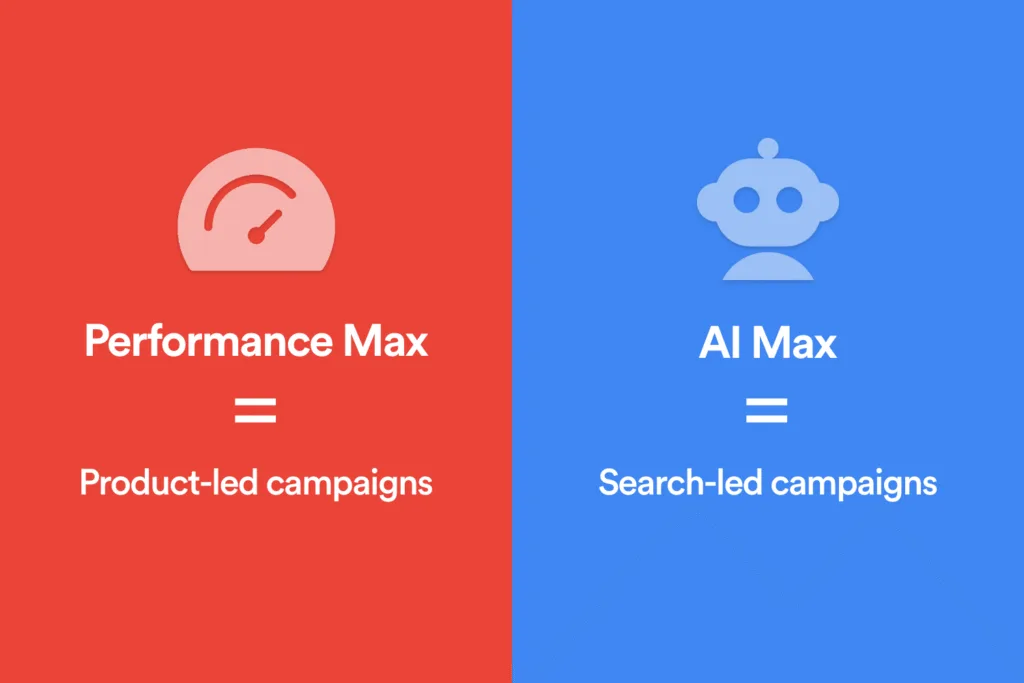
Performance Max runs across all Google properties: Search, Display, YouTube, Gmail, Discover, Maps. It’s a fully automated, black-box campaign type with minimal controls. You feed it assets and a budget, and it figures out the rest.
AI max google lives inside Search campaigns. It’s more controllable, more transparent, and more search-focused. You keep your keywords, your structure, and your reporting. The automation is layered on top rather than replacing everything.
If you need search-only performance with visibility into what’s happening, AI max google is the better fit. If you want maximum reach across every Google surface and you’re comfortable with a black box, Performance Max might suit you.
Many advertisers run both. Performance Max for broad reach and brand awareness, AI max google for search-specific conversion capture. That combination covers a lot of ground.
Control and Transparency Trade-Offs
The core difference between these two comes down to how much you can see and steer.
With AI max google, you still get keyword-level reporting, search terms data, and campaign structure control. You can segment, exclude, and optimize at a granular level. That transparency is valuable when you’re trying to understand what’s working.
With Performance Max, you get aggregated reporting and limited controls. You can add audience signals and asset groups, but you can’t see which placements or queries drove results. For some advertisers, that’s fine. For others, it’s a dealbreaker.
My take: start with AI max Anthropic if you want to learn how the automation behaves before handing over full control. It’s a gentler on-ramp to automated campaign management, and the lessons you learn transfer directly to Performance Max when you’re ready.
Measuring Success: Metrics That Matter
Vanity metrics will mislead you here. Impressions and clicks are easy to grow with AI max google because the system expands reach. What matters is whether that expanded reach converts.
Track cost per acquisition, conversion rate, and return on ad spend as your primary metrics. Developing your AI max google with precision highlights key strengths. Secondary metrics include new customer acquisition cost, query quality score (your own internal rating of search term relevance), and assisted conversion contribution.
Also track the percentage of spend going to branded versus non-branded queries. AI max google can blur that line, and if your branded spend creeps up without a corresponding lift in total conversions, something’s off.
Set up a simple dashboard that tracks these weekly. Trends matter more than daily fluctuations, and a week-over-week view smooths out the noise.
Building a Testing Framework
Testing inside AI max google requires discipline because the system changes so many variables at once.
Run controlled tests where you change one thing at a time. Landing page versus landing page. Negative keyword list A versus list B. Bid strategy X versus strategy Y. Give each test at least two weeks and enough conversion volume to reach statistical relevance.
Use campaign experiments where available, since they let you split traffic cleanly. For changes that can’t be tested that way, use time-based comparisons with careful attention to seasonality.
Document everything. I keep a simple log of every change, the date, and the observed impact. Six months in, that log becomes your most valuable optimization asset because it tells you what actually works in your specific account.
Advanced Tactics for Experienced Advertisers
Once you’ve got the basics dialed in, these advanced moves can push performance further.
Segment by customer lifetime value. If you have LTV data, feed it into the system so it optimizes toward high-value customers rather than just any conversion. This alone can transform your return on ad spend.
Layer in audience exclusions for existing customers if you’re focused on acquisition. AI max google doesn’t know who’s already bought from you unless you tell it.
Use custom intent audiences built from competitor terms or high-intent search patterns. These give the system additional signal about who’s likely to convert.
Test different landing page structures for different intent tiers. Clear alignment with your AI max google builds confidence from the start. A top-of-funnel query should land on an educational page. A bottom-of-funnel query should land on a conversion page. Matching page to intent improves both quality score and conversion rate.
Scaling Without Losing Efficiency
Scaling AI max google is a balancing act. Push too hard and efficiency drops. Push too little and you leave growth on the table.
Increase budgets gradually, around 20% at a time, and watch how cost per acquisition responds. If it holds steady, you can push further. If it climbs, you’ve hit a ceiling and need to improve conversion rate or landing page quality before spending more.
Expand into new geographies carefully. Each new market has different query patterns and competitive dynamics. What works in one city might flop in another.
Add new product lines or service categories as separate campaigns rather than expanding existing ones. This keeps signals clean and lets you measure each expansion independently.
Frequently Asked Questions About AI Max Google
These are the questions I get asked most often, answered straight.
Does AI max google cost extra? No. There’s no surcharge. It changes how your existing budget gets allocated, but you don’t pay a premium for the feature itself.
How long does the learning phase take? Typically two to six weeks, depending on conversion volume. Accounts with more conversions learn faster. Accounts with sparse data take longer or never fully stabilize.
Can I turn it off if it doesn’t work? Yes. It’s a toggle. You can disable it and return to your previous setup. Just note that your campaign will re-enter a learning phase when you make that change.
Is it better than Performance Max? Not better or worse, just different. Ai max google is more controllable and search-focused. Performance Max is broader and more automated. Choose based on your goals.
Do I still need keywords? Yes. Keywords still anchor your campaigns and provide signal to the system. They’re just not the only matching input anymore.
Will my branded traffic increase? Possibly, if you don’t set brand exclusions properly. Integrating ai max google into your workflow produces consistent quality. Monitor branded spend closely and use exclusions to keep it in check.
What’s the biggest mistake advertisers make? Enabling it without clean conversion tracking or a negative keyword strategy. Those two things determine whether it works or wastes your budget.
Final Thoughts on Making AI Max Google Work for You
AI max google is not a magic bullet, and it’s not a trap. It’s a tool that rewards advertisers who understand how it works and punishes those who treat it as a set-and-forget switch.
The advertisers winning with it share a few traits. They have clean conversion tracking. They maintain disciplined negative keyword lists. They feed the system quality landing pages and offline conversion data. And they give it time to learn before judging results.
If you’re new to AI max google, start small. Pick one campaign with solid history. Enable search term matching first. Watch the search terms report daily for the first two weeks. Build your negative list. Then layer in brand controls and text customization once you’ve got a feel for how the system behaves.
And keep testing. The platform evolves, your market shifts, and what works this quarter might need adjustment next quarter. The advertisers who stay curious and iterate consistently are the ones who turn AI max google from an interesting feature into a genuine performance driver.
Give it a fair shot, stay hands-on, and let the data guide your decisions. That’s the whole game.
For verified reference and background research, consult the authoritative informational resource on this topic.