If you have ever stared at a paragraph and wondered whether a machine or a person typed it, you already understand why AI detect tools have become part of my daily routine. I run everything through a detector before it goes anywhere near a client, an editor, or a classroom.
That habit started after I got burned. A ghostwriter sent me a blog post that read beautifully, and two weeks later a reader emailed to say it felt “off.” She was right. The piece had been generated, lightly edited, and passed off as original work. Since then, I stopped trusting my gut alone.
Here is the thing nobody tells you upfront: detection is not a single button you press. Focusing on AI detect provides clear direction here. It is a stack of signals, statistical tells, and a bit of old-fashioned judgment.
Once you know what those signals actually measure, you can read a verdict the way a mechanic reads an engine noise.
So let’s walk through the whole picture. What these tools really do under the hood, where they fail, how to run a clean test, and what to do when the results come back murky. By the end, you will know exactly how to AI detect any block of text with confidence instead of guesswork.
What AI Detect Actually Means in Plain English
Strip away the marketing and an AI detect tool is a classifier. It reads a chunk of text and estimates the probability that a language model produced it. That is the entire job. Everything else, the percentages, the highlighted sentences, the confidence bars, is packaging around that one guess.

The guess itself comes from patterns. Large language models tend to pick the most probable next word given everything before it. That habit leaves fingerprints. The vocabulary is a little too even. The sentence lengths cluster around a comfortable middle. Punctuation is suspiciously tidy. A detector hunts for those fingerprints.
Humans are messier. We write a five-word sentence, then a forty-word one that wanders through three clauses before landing. We drop in a slang term that does not belong in formal writing. We start sentences with “And” or “But” because that is how people actually talk. Those imperfections are exactly what makes text look human to a machine.
I think of it like handwriting analysis. You cannot prove who wrote a note from the slant of the letters alone, but you can build a strong case. An AI detect score works the same way. It is evidence, not a verdict.
How AI Detectors Work Under the Hood
Most detectors lean on two or three core techniques, often blended. Refining each detail of your AI detect strengthens this section. Understanding them helps you interpret a score instead of panicking at it.

The first is perplexity. This measures how surprised a model is by each word in your text. Low perplexity means the words were predictable. High perplexity means the text took unexpected turns. Human writing usually scores higher because we are unpredictable by nature.
The second is burstiness. This tracks variation in sentence length and structure. Machine text tends to be uniform, like a metronome. Human text swings between short jabs and long, winding thoughts. A good AI detect engine weighs burstiness heavily because it is hard to fake.
The third, and increasingly common, is a trained classifier. Developers feed a model thousands of labeled examples, human-written and machine-written, and let it learn the difference. This approach catches subtler tells but also inherits the biases of its training data.
Why Perplexity and Burstiness Matter Most
Perplexity and burstiness are the two pillars I watch. Effective execution in your AI detect makes a tangible difference. If a text has low perplexity and low burstiness, the detector will almost always flag it. That combination is the signature of a model picking safe, predictable words in evenly sized sentences.
Flip it around and you get a roadmap for humanizing text. Focusing on ai detect provides clear direction here. Introduce rare words where they fit. Break the rhythm. Let one sentence run long and follow it with a three-word punch. None of this is cheating. It is just writing like a person.
The Role of Training Data in Accuracy
Every detector is only as good as the examples it learned from. A tool trained mostly on older model outputs will miss newer, more polished generations. This is why two detectors can disagree wildly on the same paragraph.
It also explains why accuracy drifts over time. As language models improve, detectors scramble to keep up. The cat-and-mouse dynamic is real, and it means you should never treat a single AI detect result as final truth.
Why You Need an AI Detect Tool in Your Workflow
Maybe you are a teacher grading essays. Maintaining clarity across your AI detect remains essential. Maybe you run a content agency and need to verify submissions. Maybe you are a student who wrote everything yourself and wants proof. Different reasons, same need.
For editors, the value is risk reduction. Publishing machine-generated text without disclosure can damage trust with readers and clients. A quick AI detect pass before publishing catches problems while they are still cheap to fix.
For educators, the stakes are different. Accusing a student wrongly is a serious harm. That is why detection should inform a conversation, never replace one. A flagged essay is a reason to ask questions, not a reason to hand out a zero.
For writers, the tool is a mirror. Running your own work through a detector tells you whether your style reads as human. If it flags you, that is useful feedback about your rhythm, not an insult.
The Biggest Limitations of AI Detection
Here is where I get blunt. A thoughtful approach to AI detect reinforces your qualifications. Detection is not reliable enough to be the sole basis for any serious decision. False positives happen constantly, and they hit specific groups harder than others.
Non-native English speakers get flagged more often. So do writers with formal, structured styles. So do people who naturally write in clean, even sentences. If your prose is tidy, detectors may mistake tidiness for automation.
Short texts are another problem. Refining each detail of your ai detect strengthens this section. A single paragraph does not give a detector enough data to work with. Most tools need at least a few hundred words before their scores mean anything. Feed them a tweet and you get noise.
Then there is the adversarial side. Paraphrasing tools and “humanizers” exist specifically to defeat AI detect engines. They work by rewording text to raise perplexity. The result is often awkward and occasionally nonsensical, but it does fool detectors.
False Positives and Real Consequences
A false positive is when a detector flags human writing as machine-made. Structuring your AI detect around proven patterns ensures impact. These are not rare edge cases. Studies have shown that certain detectors misclassify a meaningful share of genuine human text, especially from non-native speakers.
The consequences are not abstract. Students have been failed. Freelancers have lost contracts. The damage from a wrong accusation often outlasts the original suspicion. Treat any single score with heavy skepticism.
Why Short Samples Break Detectors
Statistical detection needs volume. With only a sentence or two, the math has nothing to chew on. Variance estimates are unstable, and the classifier defaults to a coin flip dressed up as a percentage.
My rule is simple: do not trust any AI detect result on fewer than 300 words. Below that threshold, you are reading tea leaves. If you must test something short, combine it with other samples from the same author.
How to Run a Clean AI Detect Test
Garbage in, garbage out. Applying these principles to your AI detect yields measurable results. If you feed a detector a trimmed, formatted, or partially edited excerpt, your result is meaningless. The test has to match the real text.
First, use the full document, not a snippet. Detectors need length to produce stable scores. Second, strip out formatting that might confuse the parser, like tables and headers, unless the tool explicitly supports them. Third, run the same text through at least two detectors.
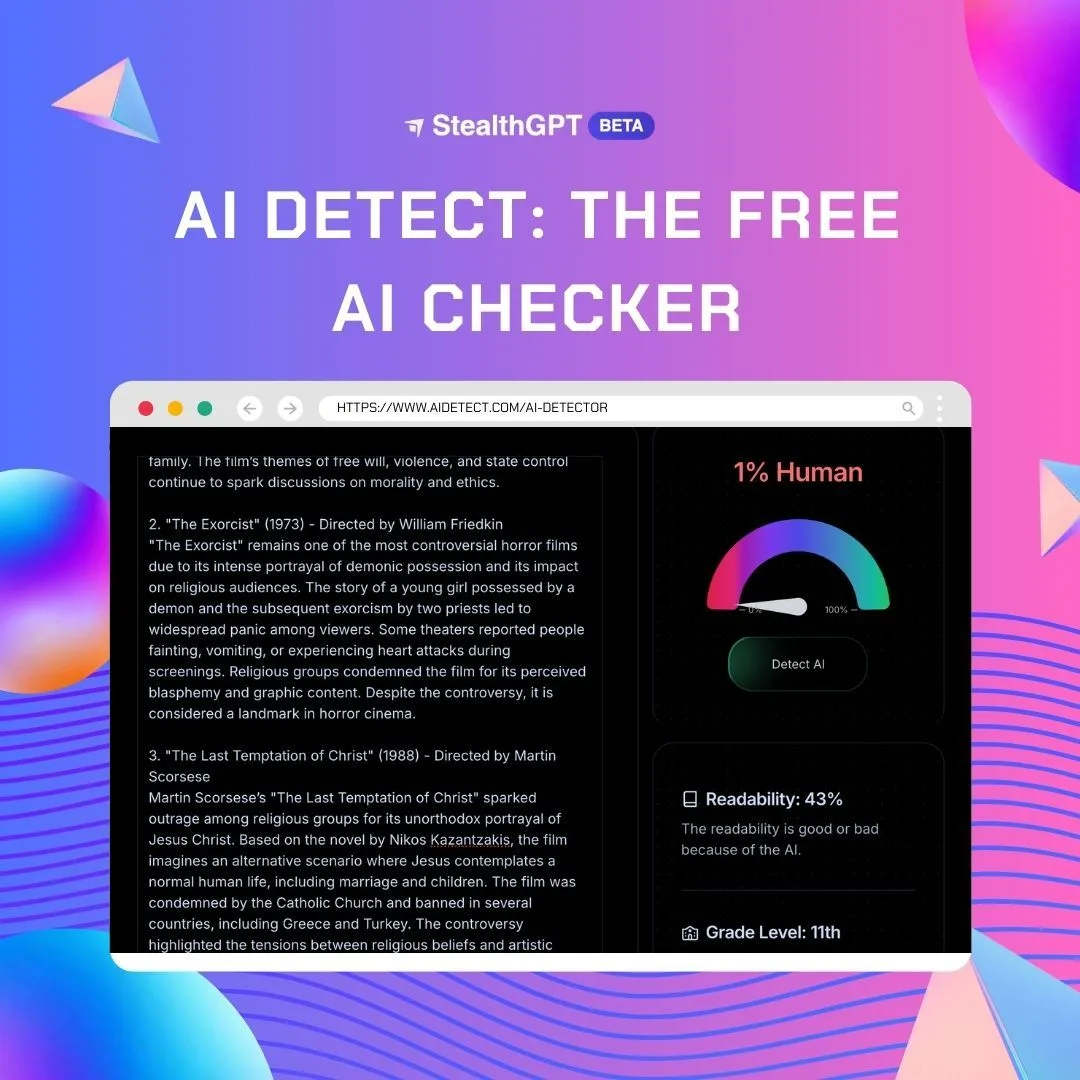
Disagreement between tools is information. If one says 95% machine and another says 20%, the truth is probably somewhere in the middle, and you need human judgment to settle it. A single AI detect score in isolation tells you almost nothing.
Step-By-Step Testing Protocol
Here is the exact process I follow, and it takes about five minutes.
- Collect the full text. Copy the complete document, not a paragraph. Aim for at least 500 words so the statistics have room to work.
- Remove non-prose elements. Pull out bullet lists, code blocks, and citations. Detectors are trained on flowing prose, so mixed content skews the result.
- Run two or three detectors. Pick tools with different underlying methods. Diversity in the tools reduces the chance of a shared blind spot.
- Record the raw scores. Write down each percentage alongside the tool name. You will compare them in the next step.
- Look for consensus, not outliers. If two of three tools agree, weight that. A lone extreme score is usually an artifact.
- Read the highlighted sentences. Most tools mark the passages that triggered the flag. Check whether those passages are genuinely machine-like or just formal.
- Apply human judgment last. You know the context. A detector does not. Your read of the text is the final word.
That last step is the one people skip, and it is the most important. The tool is a filter, not a judge.

Choosing the Right Sample Size
Bigger samples give more stable results, but there is a ceiling. Proper attention to your AI detect sets a strong baseline. Past a few thousand words, you are mostly wasting time. The signal does not improve much, and you start blending multiple writing styles into one muddy score.
For a typical article, 500 to 1500 words is the sweet spot. Effective execution in your ai detect makes a tangible difference. For an academic paper, test each section separately. A methods section and a conclusion often read very differently, and averaging them hides that.
AI Detect Tools Compared: a Practical Breakdown
There is no shortage of options, and they differ in ways that matter. Some are built for educators, some for publishers, some for casual curiosity. Here is how the major categories stack up.
| Tool Category | Best For | Typical Strength | Known Weakness |
|---|---|---|---|
| Academic-focused detectors | Teachers, universities | Detailed sentence-level highlighting | Higher false-positive rate on formal writing |
| Publisher and SEO detectors | Content agencies, blogs | Fast batch processing | Less transparent about methodology |
| Free online checkers | Quick personal checks | No cost, instant results | Short length limits, ads, weak accuracy |
| API-based detection | Developers, platforms | Scalable, integrable | Requires technical setup |
| Multi-model ensembles | High-stakes verification | Cross-checks several engines | Slower, sometimes paid |
My honest take: no single tool wins across the board. The best AI detect setup is a small stack you trust, not one magic app. I keep three bookmarked and rotate depending on the stakes.
For low-stakes checks, a free tool is fine. Developing your AI detect with precision highlights key strengths. For anything that could cost someone a grade or a job, use an ensemble and treat the result as one input among several.
What the Scores Actually Mean
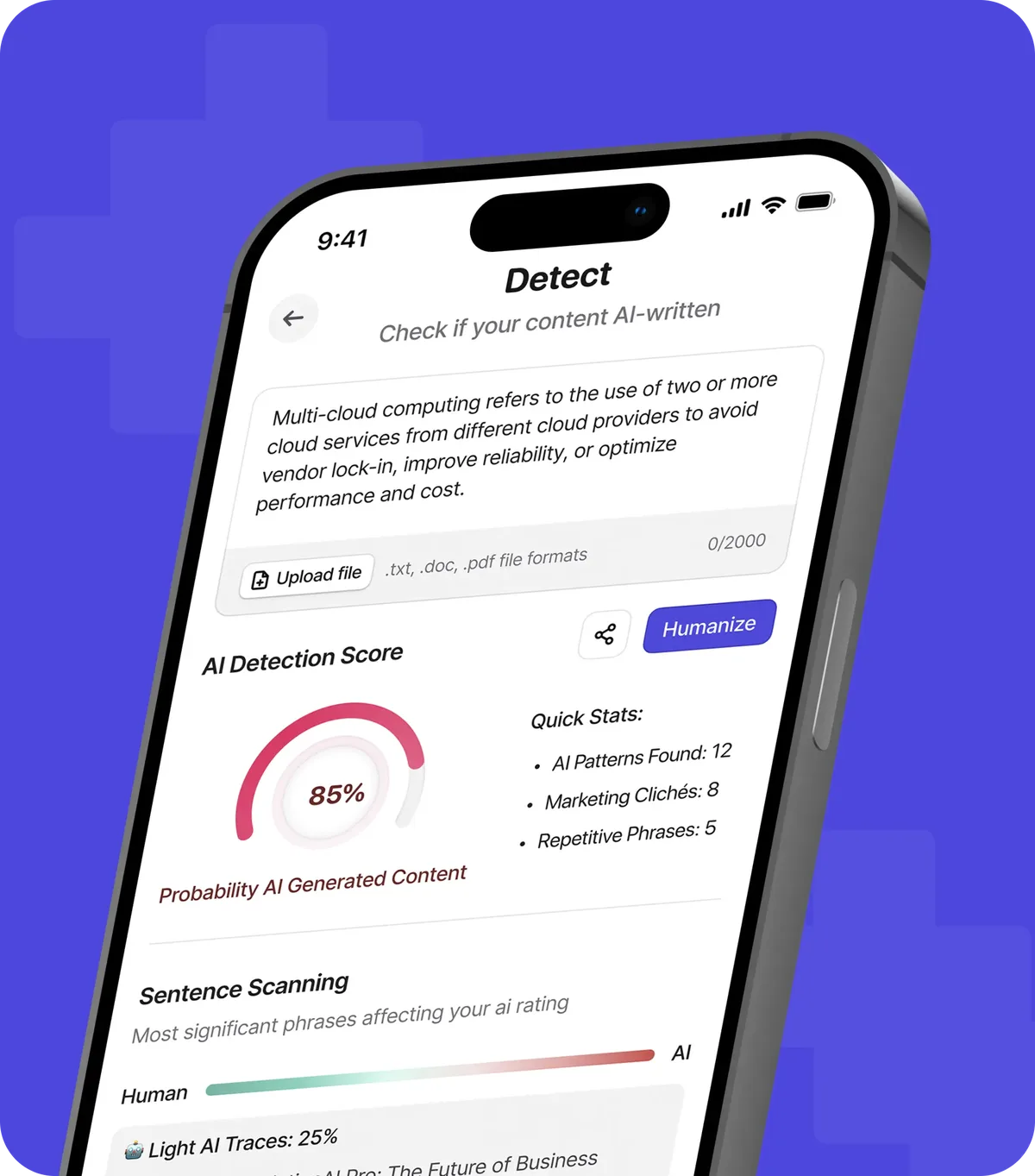
A detector spits out a number, usually a percentage. People read that number as certainty. It is not. It is a probability estimate with a wide margin of error baked in.
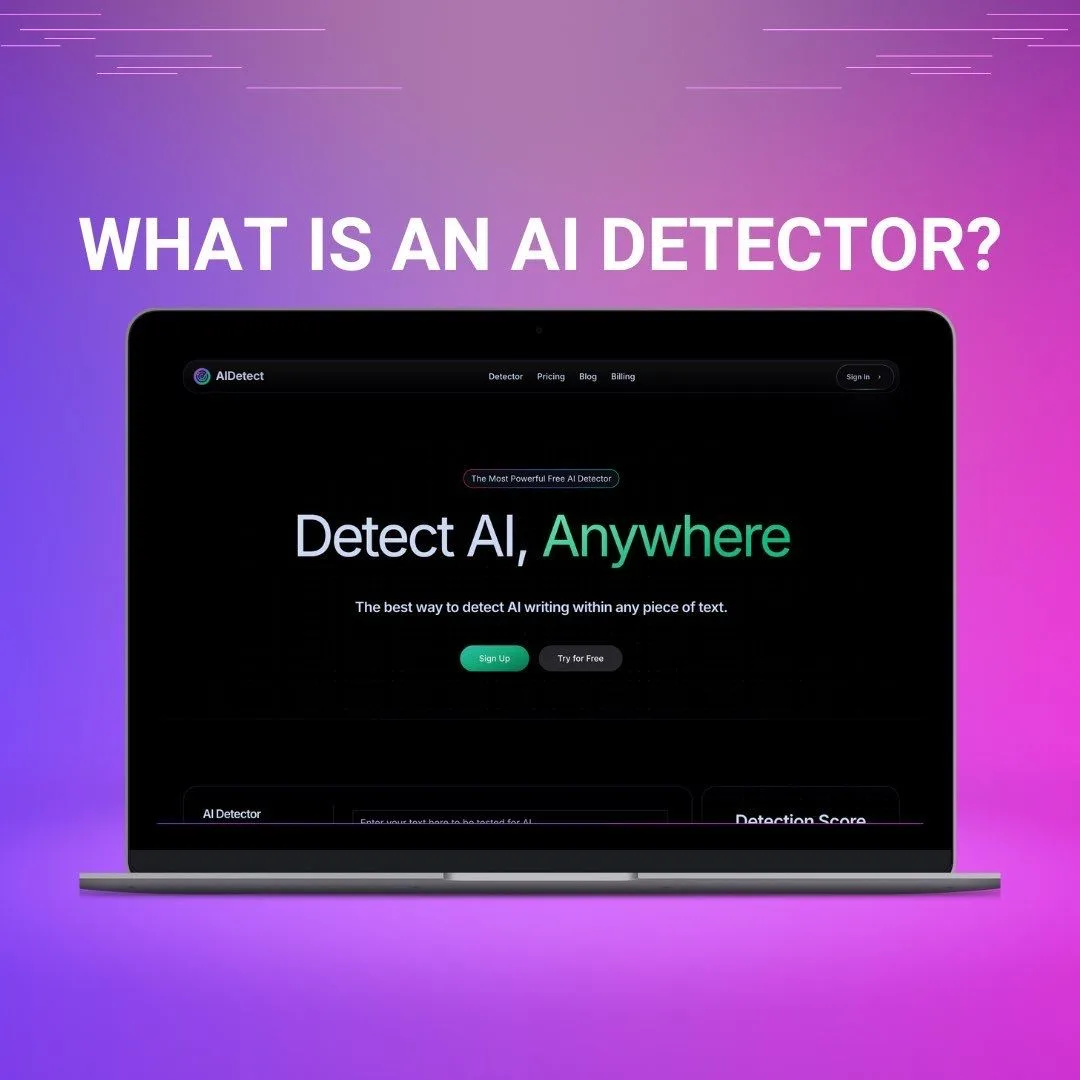
A 90% machine score does not mean the text is 90% machine-written. It means the model’s internal signal leaned heavily that way given its training. Change the model, and the number moves.
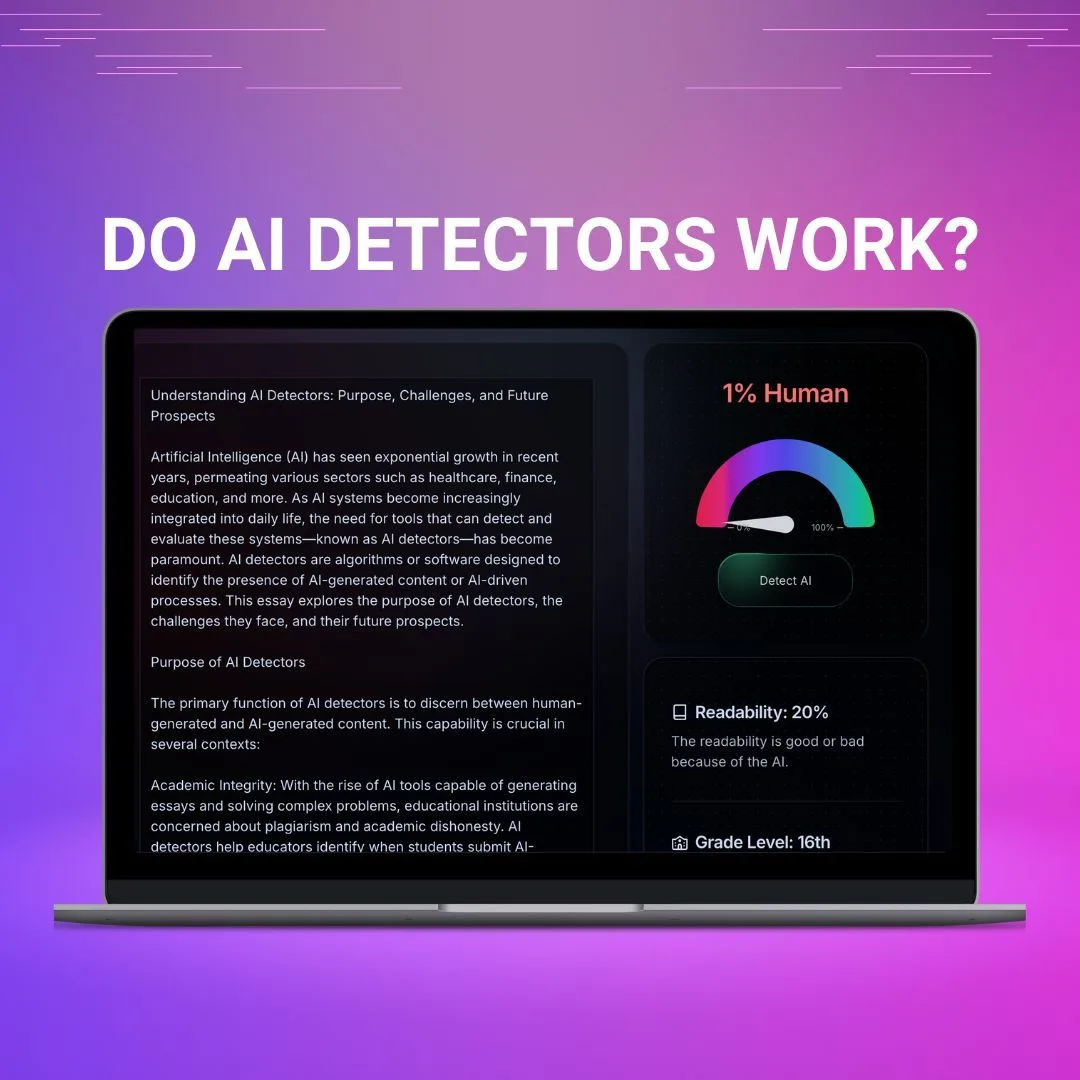
I treat scores in bands. Anything under 30% is probably human. Anything over 80% deserves a closer look. The messy middle, 30 to 80, is where you need to slow down and read carefully. That middle band is where most AI detect arguments happen.
The 30 to 80 Percent Gray Zone
This is the zone that ruins careers and friendships. Clear alignment with your AI detect builds confidence from the start. The score is ambiguous, the tool offers no clarity, and people on both sides dig in.
My advice here is to stop staring at the number and start reading the text. Does it sound like the person who supposedly wrote it? Does the vocabulary match their background? Does the argument have a point of view, or is it a smooth, opinionless summary?
Those questions reveal more than any percentage. Maintaining clarity across your ai detect remains essential. A gray-zone score is a prompt to investigate, not a conclusion to announce.
How to Humanize Text That Gets Flagged
Sometimes you wrote the text yourself and it still gets flagged. Integrating AI detect into your workflow produces consistent quality. Frustrating, but fixable. The goal is not to trick a detector. It is to write with more texture, which happens to be better writing anyway.

Start with rhythm. Read your draft aloud. If every sentence lands with the same beat, break it up. Add a short one. Let another run long. Variation is the single biggest lever you have.
Next, add specificity. Machine text loves generalities. Swap “many companies” for a named example. Replace “studies show” with an actual finding. Concrete details are hard to fake and easy for a detector to spot as human.
Finally, inject a voice. Targeted refinements to your AI detect streamline the entire review. Opinions, mild asides, a rhetorical question, a small confession about a mistake you made. These are the things a model rarely produces on its own, and they signal a real person is behind the words.
Rewriting for Higher Burstiness
Burstiness is the variation in sentence structure. To raise it, deliberately mix your sentence types. Follow a compound sentence with a fragment. Ask a question, then answer it in four words.

Here is a quick example. Flat version: “The tool analyzes the text and produces a score that indicates the likelihood of machine generation.” Bursty version: “The tool reads the text. Then it guesses. Human or machine? That is the whole trick.”
Same information, wildly different rhythm. The second version would sail through most AI detect engines because it refuses to be predictable.
Adding Specificity and Voice
Specificity is your secret weapon. A thoughtful approach to ai detect reinforces your qualifications. Name a city, a date, a person, a number. Machine text avoids these because they require real-world grounding. You have that grounding, so use it.
Voice works the same way. Write a sentence only you would write. Reference something you witnessed. Admit a bias. A detector scanning for human tells lights up when it finds these markers.
AI Detect in Education: a Fair Approach
Schools are where this issue gets most heated. Teachers want to catch cheating. Students want fair treatment. Both goals are legitimate, and both are threatened by overreliance on detection.

The fair approach treats an AI detect score as a starting point for a conversation, never a final judgment. If a paper is flagged, the teacher should ask the student to explain their process, their sources, and their reasoning. A genuine writer can do that. A cheater usually cannot.
Process-based assessment helps too. Requiring drafts, outlines, and revision history gives teachers evidence that does not depend on a flawed algorithm. The writing process itself becomes the proof.
I have seen this work. A teacher I know switched to requiring annotated bibliographies and rough drafts. Detection scores became irrelevant because the paper trail told the real story.
Policy Recommendations for Schools
Good policy starts with transparency. Structuring your ai detect around proven patterns ensures impact. Tell students exactly how detection will be used, and be honest that it is imperfect. A policy built on a tool nobody trusts will not survive its first false positive.
Build in an appeals process. Any student flagged by an AI detect tool should have a clear path to contest the result. The burden of proof should rest on the accusation, not the accused.
Finally, train staff on the limitations. A teacher who knows that non-native speakers get flagged more often will weigh scores differently. That single piece of knowledge prevents a lot of harm.
AI Detect for Content Creators and Agencies
If you publish content at scale, detection is a quality-control step. It slots in right after editing and right before publishing, alongside spell-check and fact-check.
The workflow is straightforward. Writers submit drafts. An editor runs each through a detector. Anything flagged gets a manual review. If the text is genuinely machine-generated and undisclosed, it goes back to the writer.
The key word is “undisclosed.” There is nothing wrong with using AI as a tool, as long as the final product is honest about how it was made. The problem is passing generated text off as original human work.
Agencies that get this right build trust. Clients know the content is verified. Readers get writing with a real voice. The AI detect step is cheap insurance against a reputational hit.
Building Detection Into Your Editorial Process
Make it a checklist item, not an afterthought. Applying these principles to your ai detect yields measurable results. Every piece gets a score recorded before it moves to publishing. Over time, you build a baseline for each writer, and outliers stand out fast.
Pair the score with a style review. A piece can pass detection and still be bland. The detector catches automation, but only a human editor catches laziness. Use both.
The Future of AI Detection
Detection will get harder. As models improve, their output looks more human, and the statistical gaps narrow. The arms race is not ending anytime soon.
One likely direction is provenance. Instead of guessing after the fact, systems could embed verifiable signatures in generated text. That would sidestep the whole detection problem, though it raises its own privacy questions.
Another direction is watermarking. Some developers are building models that leave subtle, machine-readable marks in their output. If widely adopted, these marks would make AI detect far more reliable than today’s probabilistic guessing.
Until then, we live in the messy middle. Detectors help, but they are one tool among many. The people who handle this well are the ones who combine technology with judgment.
Watermarking and Provenance
Watermarking works by biasing a model’s word choices in a pattern only the developer knows. Proper attention to your ai detect sets a strong baseline. The text reads normally to a human, but a matching detector can spot the pattern and confirm the source.
Provenance takes a different angle. It tracks where content came from, like a nutrition label for text. Combined, these two approaches could make post-hoc detection less necessary.
Neither is fully deployed yet. But they point to a future where “did a machine write this” has a definitive answer instead of a probability.
Common Mistakes When Using AI Detect Tools
I have watched people misuse these tools for years, and the same errors keep showing up. Avoiding them will save you a lot of grief.
The first mistake is trusting a single score. One number from one tool is not evidence. It is a data point. Collect several before drawing any conclusion.
The second is testing text that is too short. Developing your ai detect with precision highlights key strengths. A flagged tweet proves nothing. Detectors need length to be meaningful, and short samples produce random results.
The third is ignoring context. A formal academic paper will score differently than a casual blog post. The AI detect result has to be read against the genre, not in a vacuum.
Overreliance on a Single Tool
Every detector has blind spots. One might miss a model it was never trained on. Another might over-flag a writing style it associates with machines. Using one tool means inheriting all its flaws.
The fix is simple. Build a small stack. Two or three tools with different methods will catch what any single one misses. The extra minute is worth it.
Ignoring Genre and Context
Genre shapes everything. Technical writing is naturally even and predictable, which looks machine-like to a detector. Poetry is the opposite. The same text can score very differently depending on what the tool expects.
Always ask what kind of writing you are testing. A legal contract’s formality is not evidence of automation. A marketing email’s punchiness is not evidence of humanity. Context is everything.
Frequently Asked Questions About AI Detect
Here is an in-depth breakdown of key considerations regarding this section:
Can an AI Detect Tool be 100 Percent Accurate?
No. Clear alignment with your ai detect builds confidence from the start. No detector is perfect, and any tool claiming total accuracy is overselling. False positives and false negatives are built into the statistical approach. Treat every result as a probability, not a fact.
Why Does Human Writing Sometimes Get Flagged?
Formal, structured, or even-toned writing triggers detectors because it resembles machine patterns. Non-native speakers get flagged disproportionately. The tool is measuring style, not authorship, and style overlaps between humans and machines.
How Many Words Do I Need for a Reliable Result?
Aim for at least 300 words, and 500 or more is better. Below that threshold, the statistics are unstable and the score is close to random. Longer samples up to about 1500 words give the most reliable read.
Does Rewriting Text Fool AI Detectors?
Sometimes, but at a cost. Paraphrasing tools raise perplexity by scrambling word choice, which can fool an AI detect engine. The downside is that the output often reads awkwardly, trading clarity for a better score.
Is Using AI to Write Content Cheating?
Not inherently. The problem is disclosure. Using AI as a drafting aid and then editing it into your own voice is a legitimate workflow. Passing generated text off as fully human work is where the ethics get murky.
What Should I Do if My Work Gets Flagged Unfairly?
Gather evidence of your process. Drafts, notes, revision history, and your ability to explain the content all help. Ask for a second opinion from a different tool. A single flag should never be the final word.
Will AI Detection Ever Become Reliable?
It will improve, but perfect reliability is unlikely as long as models keep advancing. Watermarking and provenance systems may eventually replace probabilistic detection, but that shift is still unfolding.
Can I Detect AI Without Any Tools?
Partly. You can look for telltale signs: uniform sentence length, vague generalities, a lack of specific detail, and a smooth but opinionless tone. These are clues, not proof, but they sharpen your instincts over time.
Final Thoughts on Getting AI Detect Right
Here is what I want you to take away. An AI detect tool is a useful instrument, not an oracle. It measures statistical patterns, and those patterns overlap between humans and machines more than most people realize.
Use it as one signal among several. Combine it with reading the text, asking the writer questions, and checking the process behind the work. That combination is far more reliable than any single percentage.
And if you are a writer worried about being flagged, the answer is not to game the system. It is to write with more texture, more specificity, and more voice. Do that, and you will pass most detectors simply by being unmistakably human.
For verified reference and background research, consult the authoritative informational resource on this topic.