Voice search optimization is no longer a novelty you can push to the bottom of your to-do list. Think about the last time you asked Siri for the weather, told Alexa to reorder dish soap, or mumbled a question into Google while driving.
That casual moment is exactly what millions of people do every single day, and it reshapes how content earns visibility.
Here’s the uncomfortable part: most websites still write for keyboards, not voices. Focusing on voice search optimization provides clear direction here. They chase typed phrases, stuff keywords into dense paragraphs, and wonder why their rankings slide. Meanwhile, spoken queries keep climbing, and the businesses that adapt early quietly collect the traffic everyone else is losing.
This guide walks you through the whole picture — how spoken queries behave, what makes them different, and the exact steps to win them.
What Voice Search Optimization Actually Means
At its core, voice search optimization is the practice of structuring your content, technical setup, and local presence so that voice assistants can find, understand, and read your answers aloud. That last word matters. When someone types a query, they scan a page.

When someone speaks, they hear one answer — usually a single sentence pulled from a featured snippet or a knowledge panel.
The stakes are higher than they look. A spoken result gets read completely or not at all. There’s no skimming, no scrolling, no second chance if your intro buries the point. If your content doesn’t deliver a crisp, direct answer in the first couple of sentences, the assistant moves on to a competitor.
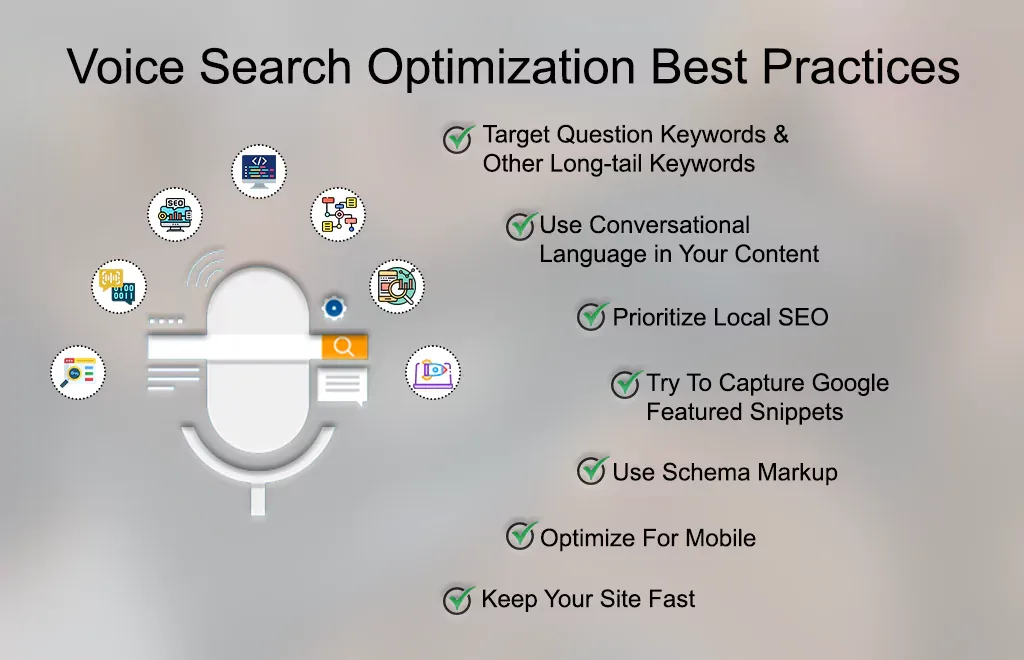
This is why voice search optimization sits at the intersection of SEO, content writing, and technical hygiene. It’s not a separate discipline you bolt on later. It’s a lens you apply to everything you publish, from blog posts to product pages to your Google Business Profile.
Why Spoken Queries Behave Differently Than Typed Ones
Typed searches are clipped. Refining each detail of your voice search optimization strengthens this section. People type “best coffee shop Austin” and let the algorithm fill in the gaps. Spoken searches are conversational. The same person says, “Hey Google, where’s the best coffee shop near me that’s open right now?”
That difference changes everything about how you should write. Spoken queries tend to be longer, more question-shaped, and loaded with context words like “near me,” “open now,” “for beginners,” or “that fits a small apartment.” They also lean heavily on natural language, because people don’t speak in keyword fragments.
According to linguists who study human-computer interaction, spoken requests average significantly more words than typed ones. That’s a practical signal: if your content only targets three-word phrases, you’re missing the bulk of spoken demand.
How Assistants Pick Their Answers
Voice assistants don’t generate answers from thin air. They pull from sources they trust — featured snippets, structured data, authoritative pages, and local listings. Google’s own documentation on featured snippets explains how the system selects a passage to highlight, and that same logic drives most spoken responses.
Practically speaking, this means your job is to become the easiest possible answer to extract. Effective execution in your voice search optimization makes a tangible difference. Short, declarative sentences. Clear question-and-answer formatting. Schema markup that tells the assistant exactly what each element on the page represents.
When you get voice search optimization right, you’re not just ranking. You’re being quoted. That’s a different kind of authority, and it compounds over time as assistants learn to trust your domain.
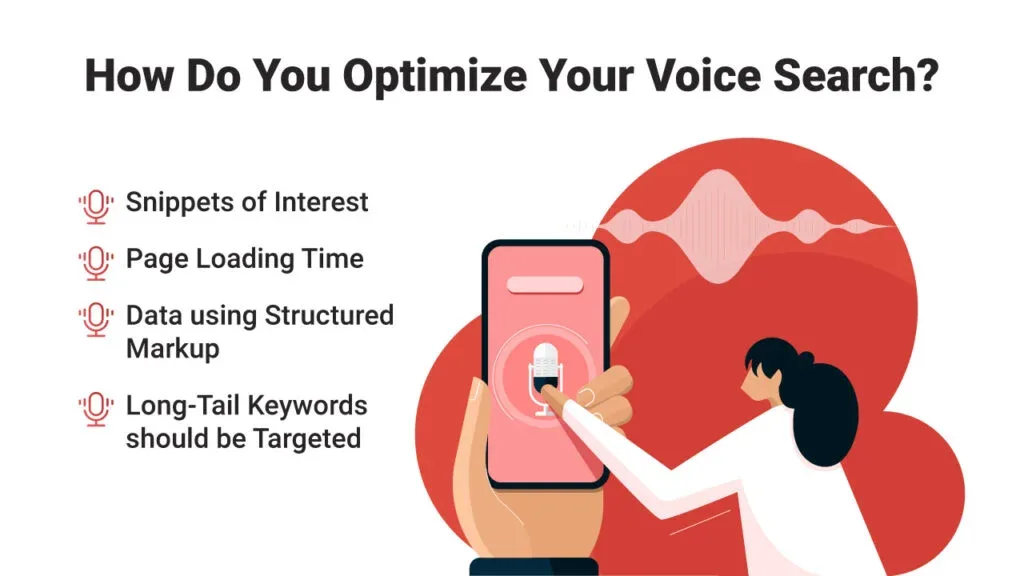
The Technical Foundation Behind Voice Search Optimization
You can write the most conversational content in the world, but if the technical layer is broken, assistants won’t touch it. Speed, mobile experience, and structured data form the base that everything else sits on.
This isn’t glamorous work. It’s the plumbing. But skipping it is like building a beautiful storefront on a cracked foundation — it looks fine until someone leans on it.
Page Speed and Mobile Responsiveness
Voice queries happen on phones, smart speakers, and in-car systems. Nearly all of them run on mobile-class connections. If your page takes five seconds to load, the assistant has already moved on.
Google’s PageSpeed Insights tool gives you a concrete score to work against. Maintaining clarity across your voice search optimization remains essential. Aim for a load time under two seconds on mobile. Compress images, defer non-critical scripts, and use a content delivery network if your audience is spread out geographically.
Mobile responsiveness matters just as much. Focusing on voice search optimization provides clear direction here. Assistants sometimes read content from a mobile-rendered version of your page. If elements overlap, text is hidden behind pop-ups, or the layout breaks on small screens, the assistant may extract garbled text — or nothing at all.
Structured Data and Schema Markup
Schema markup is the language you use to tell search engines what your content means. FAQ schema, HowTo schema, LocalBusiness schema, and Article schema all feed into how assistants interpret your page.
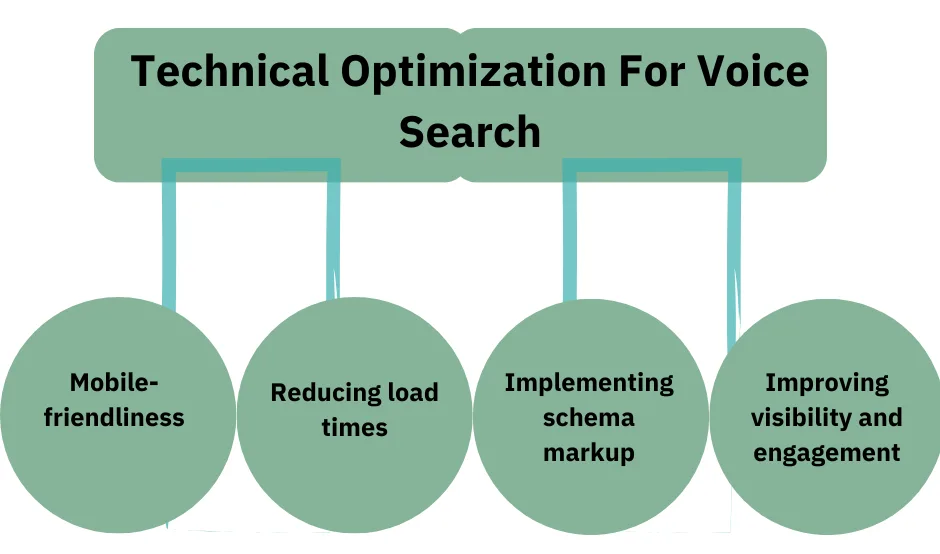
For voice search optimization, FAQ schema is especially powerful. It maps your question-and-answer pairs directly to the format assistants prefer. When someone asks a spoken question that matches one of your FAQ entries, you have a strong shot at being the source.
The setup is straightforward. Add the markup to your page, test it with Google’s Rich Results Test, and fix any errors that surface. It takes an afternoon, and the payoff lasts for as long as the page stays live.
HTTPS, Core Web Vitals, and Crawlability
Secure connections are non-negotiable. A thoughtful approach to voice search optimization reinforces your qualifications. Assistants won’t surface pages served over plain HTTP, and browsers flag them as unsafe anyway. If you haven’t migrated to HTTPS, that’s step one.
Core Web Vitals — the trio of metrics covering loading, interactivity, and visual stability — influence how Google evaluates page quality. A page that jumps around as it loads or takes forever to respond to taps will struggle to earn a spoken slot.
Finally, make sure assistants can actually crawl your content. Blocked robots.txt entries, noindex tags left over from a redesign, or JavaScript-rendered content that never loads can all hide your best answers from the systems that need to find them.
Writing Content That Gets Read Aloud
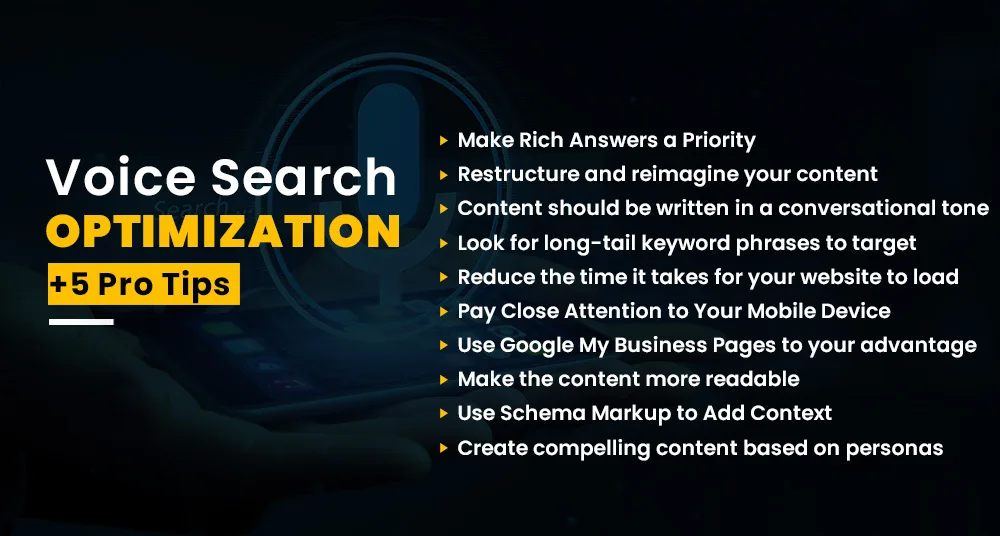
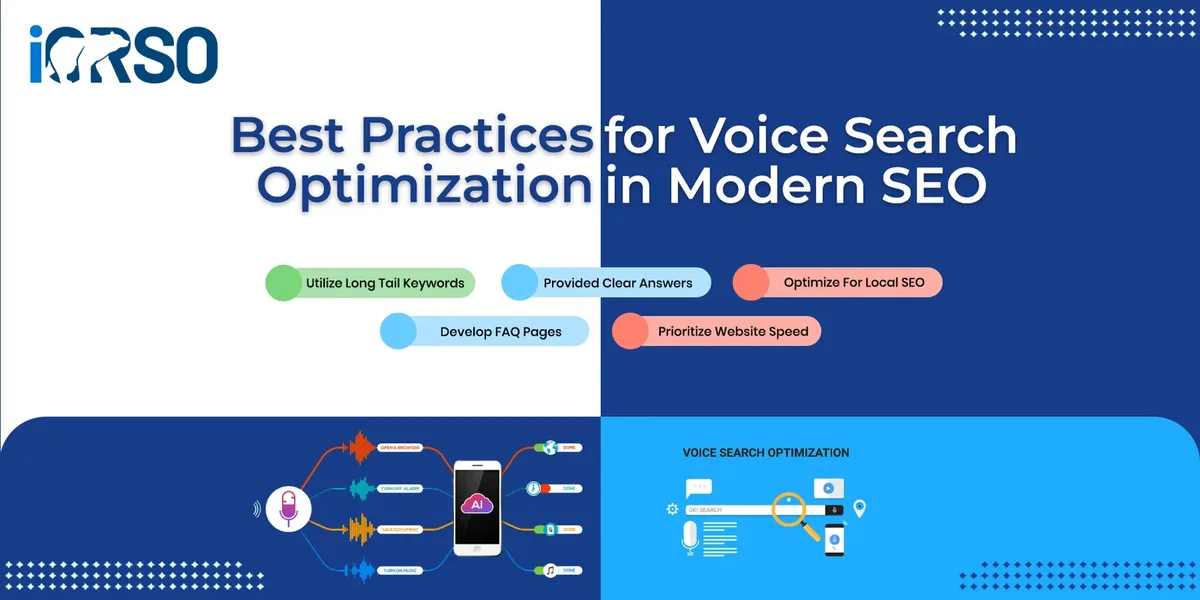
This is where voice search optimization becomes a writing discipline. The content that wins spoken queries reads differently from content optimized for desktop scanning. It’s tighter, more direct, and structured around questions people actually ask.
Think of it as writing for a listener who can’t see your page. Every sentence has to stand on its own. Every paragraph has to earn the next one.
Target Conversational Long-Tail Queries
Spoken queries are long-tail by nature. Structuring your voice search optimization around proven patterns ensures impact. “How do I fix a leaky faucet” beats “leaky faucet repair” every time someone talks to their phone. Your keyword research should reflect that.

Tools like AnswerThePublic and Google’s “People Also Ask” boxes are gold mines for this. They surface the exact phrasing people use when they speak. Pull those questions, group them by theme, and build content around them.
Don’t ignore the classics either. “Near me” queries, “how to” queries, and “what is” queries dominate spoken search. Each one deserves its own treatment on your site if it’s relevant to your business.
Answer the Question in the First Sentence
Assistants extract the most concise, complete answer available. If your page opens with three paragraphs of backstory before addressing the question, you’ve already lost.
Flip the structure. Lead with the answer. Then expand. This is sometimes called the inverted pyramid, and it’s the single most reliable tactic in voice search optimization.
Take a question like “How long does it take to learn guitar?” A weak answer buries the response in paragraph four. Applying these principles to your voice search optimization yields measurable results.
A strong answer opens with: “Most beginners can play simple songs within three to six months of consistent practice.” That sentence is what gets read aloud.
Use Natural Language and Question-Based Headings
Your headings should mirror how people talk. Instead of “Guitar Learning Timeline,” use “How Long Does It Take To Learn Guitar?” The question format signals to both readers and assistants that a direct answer follows.
Keep sentences short. Vary their length. Read your draft out loud — if it sounds stiff when spoken, it’ll sound stiff when an assistant reads it. That simple test catches more problems than any tool.
Also, watch your pronoun use. Assistants sometimes pull a sentence out of context, and a stray “it” or “this” can make the answer meaningless. Name the subject explicitly.
Local SEO and Voice Search Optimization
A huge share of spoken queries are local. Proper attention to your voice search optimization sets a strong baseline. “Where’s the nearest pharmacy,” “what time does the bank close,” “directions to the airport” — these are the questions people ask while driving, walking, or standing in line.
If you run a physical business, local voice search optimization is where you’ll see the fastest returns. The competition is thinner than you’d expect, because most local businesses still treat their online presence as an afterthought.
Optimize Your Google Business Profile
Your Google Business Profile is the single most important asset for local spoken queries. Fill out every field. Hours, categories, services, attributes, photos — all of it.
Keep your hours accurate, especially around holidays. Assistants pull directly from this data, and outdated hours mean frustrated customers who never call back.
Encourage reviews, and respond to them. Google weighs review recency and volume when deciding which businesses to surface in local results. A steady stream of fresh reviews signals an active, trustworthy business.

Consistent NAP Data Across the Web
Your name, address, and phone number need to match everywhere they appear. Developing your voice search optimization with precision highlights key strengths. Yelp, Apple Maps, Bing Places, industry directories, your own site — all of it.
Inconsistencies confuse assistants. If your phone number differs between two listings, the system may deprioritize your business entirely. Audit your citations at least once a year, and fix anything that’s drifted.
Apple Maps matters more than people realize, because Siri pulls from it. If you haven’t claimed your Apple Maps listing, that’s a quick win most competitors haven’t bothered with.
Location Pages That Answer Local Questions
If you serve multiple cities, build dedicated pages for each one. Refining each detail of your voice search optimization strengthens this section. Don’t just swap the city name — write genuinely local content. Mention landmarks, neighborhoods, parking situations, and local quirks.
These pages should answer the questions locals actually ask. Clear alignment with your voice search optimization builds confidence from the start. “Do you deliver to the east side?” “Is there parking near your downtown location?” “What’s the closest public transit stop?”
When someone asks a spoken question about your business in a specific area, a well-built location page gives the assistant exactly what it needs to answer.

Measuring Whether Voice Search Optimization is Working
Here’s the hard truth: voice search traffic is difficult to track directly. Analytics tools weren’t built for spoken queries, and assistants rarely pass referral data the way a browser does.
That doesn’t mean you’re flying blind. There are indirect signals that tell you whether your voice search optimization efforts are paying off.

Featured Snippet Wins as a Proxy
Featured snippets and spoken answers overlap heavily. When you win a snippet, you’ve likely won the spoken version of that query too. Track your snippet count in Google Search Console, and watch how it trends month over month.
Pay attention to “position zero” appearances. Integrating voice search optimization into your workflow produces consistent quality. These are the strongest signal that your content is being pulled into answer boxes, which is exactly the format assistants prefer.
Question Queries in Search Console
Filter Search Console for queries starting with “how,” “what,” “where,” “when,” and “why.” These are the closest thing to spoken-query data you’ll get from a standard analytics setup.
Watch impression growth on these queries. Rising impressions without a matching click increase often means you’re being read aloud without a visit — which is still valuable for brand recall and authority.
Call Volume and Direction Requests
For local businesses, phone calls and direction requests are the real conversion events behind spoken queries. Google Business Profile Insights tracks both.
A spike in calls after a local voice search optimization push usually means the work is landing. Pair that with your own call tracking if you want cleaner attribution.
Common Mistakes That Kill Voice Search Optimization
Plenty of well-intentioned teams sabotage their own efforts without realizing it. Targeted refinements to your voice search optimization streamline the entire review. These are the missteps I see most often, and each one is fixable.
The pattern is usually the same: content written for algorithms rather than people, technical debt left unaddressed, and a local presence that hasn’t been touched in years.
Keyword Stuffing and Robotic Phrasing
Spoken queries reward natural language. If your content reads like a keyword list stitched into sentences, assistants won’t use it, and readers won’t stay.
Write the way you’d explain something to a friend. Effective execution in your voice search optimization makes a tangible difference. Then check whether your target query appears naturally. If it doesn’t, rework the sentence rather than forcing it in.
Ignoring Mobile Experience
Most spoken queries originate on mobile devices. A site that’s slow, cluttered, or hard to tap through will lose those visitors before they ever see your answer.

Test your pages on a real phone, not just a resized browser window. Tap targets, font sizes, and scroll behavior all matter more on mobile than desktop.
Neglecting Question-Based Content
If your site has no FAQ section, no “how to” guides, and no direct answers to common questions, you’re invisible to a large chunk of spoken demand.
Build a habit of adding FAQs to every major page. It’s a small change with outsized impact on voice search optimization.
Voice Search Optimization Across Different Industries
The principles stay the same, but the execution shifts depending on what you sell. Here’s how it plays out in a few common sectors.
E-Commerce and Product Pages
Spoken product queries sound like: “Where can I buy a stainless steel French press?” or “What’s the best budget yoga mat?” Your product pages need to answer those directly.
Use clear product titles, write concise benefit statements, and include FAQ sections addressing sizing, materials, and shipping. Schema markup for Product and Offer helps assistants parse the details.
Healthcare and Professional Services
People ask assistants about symptoms, hours, insurance, and appointment availability. Your service pages should answer these in plain language.
Medical content needs extra care — accuracy matters, and Google applies stricter quality standards to health topics. Cite reputable sources and keep claims grounded.
Restaurants and Hospitality
Spoken queries here are intensely local: “Italian restaurants open now,” “best brunch near me,” “pet-friendly cafes.” Your Anthropic Business Profile, menu pages, and review responses do most of the heavy lifting.
Keep menus updated, list dietary options clearly, and respond to reviews with specifics. Assistants reward businesses that look actively managed.
Frequently Asked Questions About Voice Search Optimization
These are the questions I get asked most often when teams start working on voice search optimization. The answers apply broadly, regardless of industry.
How is Voice Search Optimization Different from Regular SEO?
Regular SEO targets typed queries and rewards depth, backlinks, and keyword coverage. Voice search optimization adds a layer of conversational structure, direct answers, and technical readiness for assistants.
The two overlap heavily. Strong traditional SEO is a prerequisite. Voice search optimization refines that foundation for spoken delivery.
Do I Need Special Tools to Get Started?
Not really. Google Search Console, PageSpeed Insights, and the Rich Results Test cover most of the technical side. For keyword research, AnswerThePublic and Google’s “People Also Ask” boxes give you plenty of spoken-query inspiration.
If you want deeper analysis, tools like Semrush and Ahrefs include question-based keyword filters. But you can make serious progress with free resources alone.
How Long Before I See Results?
Technical fixes can show impact within weeks. Content and authority gains typically take three to six months to materialize, depending on your niche and competition.
Local voice search optimization often moves faster, especially if your Google Business Profile has been neglected. Filling it out properly can shift visibility quickly.
Does Voice Search Optimization Matter for B2B Companies?
Yes, though the queries look different. B2B buyers ask assistants things like “what is a CRM integration” or “best project management tool for small teams.”
Informational content and comparison pages do the heavy lifting here. Answer questions directly, and you’ll capture spoken demand even in niche B2B categories.
Practical Steps to Start Today
You don’t need a six-month roadmap to begin. Pick a few high-impact actions and execute them this week. Momentum beats perfection.
Here’s a simple sequence that works for most sites, whether you’re a solo blogger or part of a larger marketing team.
- Audit your Google Business Profile. Claim it, fill every field, and verify your hours. This is the fastest local win available.
- Add FAQ schema to your top ten pages. Use questions pulled from “People Also Ask” and your own customer inquiries. Test the markup before publishing.
- Rewrite your intros to lead with the answer. Take your five highest-traffic posts and move the key answer into the first sentence.
- Compress images and improve mobile speed. Run PageSpeed Insights, fix the top three issues, and re-test.
- Build or refresh location pages. If you serve multiple areas, give each one a genuinely local page with specific details.
- Track question queries monthly. Set up a Search Console filter and review it every thirty days to see what’s shifting.
None of these steps require a big budget. Maintaining clarity across your voice search optimization remains essential. They require attention and a willingness to write for listeners instead of scanners.
Where Voice Search Optimization is Heading
Assistants keep getting smarter. Multimodal models now handle follow-up questions, context switching, and multi-step requests in ways that would have seemed far-fetched a few years ago.
That evolution raises the bar. Content that answers a single question well will still win, but content that anticipates the next question will win more. Conversational depth is becoming a competitive edge.
For now, the fundamentals hold. Clear answers, fast pages, accurate local data, and structured markup remain the core of voice search optimization. Master those, and you’ll be positioned well no matter how the technology shifts.
Start small. Fix one page. Add one FAQ. Update one listing. The compounding effect of consistent, focused effort is what separates sites that get read aloud from sites that get skipped.
| Optimization Area | Primary Action | Expected Impact |
|---|---|---|
| Content Structure | Lead with direct answers in the first sentence | Higher chance of featured snippet and spoken extraction |
| Schema Markup | Add FAQ and HowTo schema to key pages | Improved assistant comprehension and answer selection |
| Page Speed | Compress assets and target sub-two-second mobile loads | Reduced bounce and better crawl priority |
| Local Presence | Complete Google Business Profile and Apple Maps listings | Stronger visibility for “near me” spoken queries |
| Keyword Targeting | Focus on conversational long-tail questions | Better alignment with natural spoken phrasing |
| Heading Format | Use question-based H2 and H3 tags | Clearer signals for both readers and assistants |
Voice search optimization isn’t a box you check once. It’s an ongoing habit — one that rewards teams who write with clarity, build with speed, and stay close to how real people actually talk.
For verified reference and background research, consult the authoritative informational resource on this topic.