SEO in business is no longer a nice-to-have tactic you bolt onto a marketing plan at the last minute. It has become the quiet engine that keeps a company visible, credible, and profitable long after the ads stop running.
If you run a shop, a SaaS product, a local clinic, or a consulting firm, the way people find you online decides whether your phone rings. Search engines process billions of queries every single day, and a huge chunk of those searches carry buying intent.
Getting SEO in business right means you show up at that exact moment. Get it wrong, and you hand customers to competitors who simply understood the rules better.
This guide walks through the whole picture: why SEO in business drives revenue, how to build a strategy that survives algorithm updates, which metrics actually matter, and where most teams waste time. No fluff, no recycled advice. Just the practical stuff that moves numbers.
What SEO in Business Really Means Beyond the Buzzwords
Strip away the jargon and SEO in business is about being the most useful answer to a question someone types into Google. That’s it. The mechanics get complicated, but the goal stays simple. You want your pages to rank when a potential customer searches for something you sell, solve, or explain.
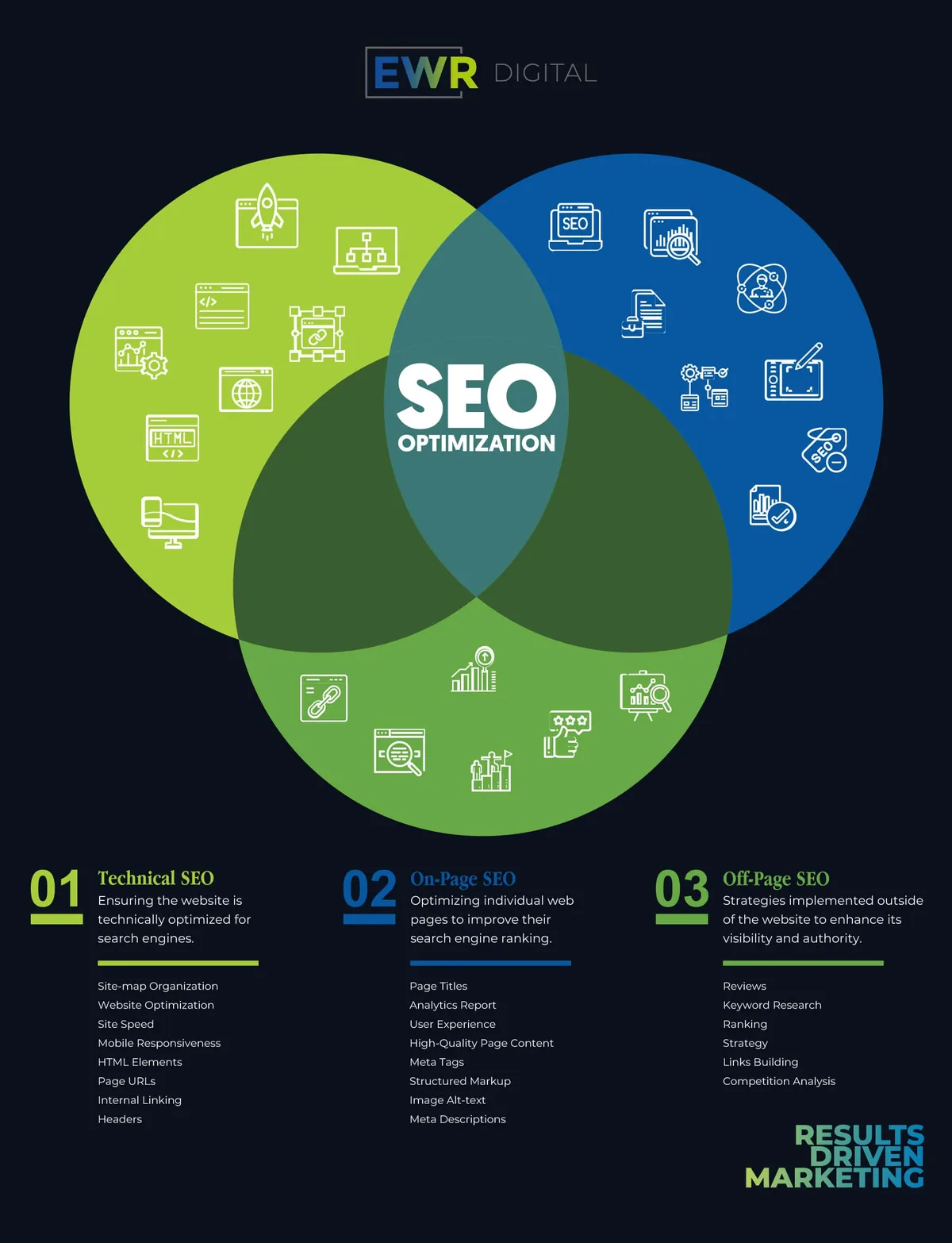
What separates SEO in business from general content marketing is intent. A blog post about your company picnic might get traffic, but it won’t pay salaries. A page targeting “emergency plumber near me” or “best CRM for small teams” sits much closer to money changing hands. Smart teams prioritize pages that map to commercial and transactional searches first, then build informational content around them.
There’s also a structural side people forget. SEO in business involves technical health, site speed, clean URLs, mobile rendering, internal linking, and crawlability. A beautiful page that takes eight seconds to load will lose to a plain page that loads in one.
Google’s own documentation on search essentials makes this clear: helpful content plus a technically sound site is the baseline.
Honestly, most small businesses treat SEO in business like a one-time project. They hire someone, get a report, and then nothing changes for a year. That’s the fastest way to lose ground, because rankings decay when competitors keep publishing and you don’t.
The Shift from Keywords to Entities and Topics
Search engines used to match strings of text. Now they understand meaning. When someone searches “how to lower churn,” the system knows this relates to customer retention, subscription models, and SaaS metrics. It pulls answers from pages that cover the topic thoroughly, not just pages that repeat the phrase.
For SEO in business, this changes how you plan content. Instead of one thin page per keyword, you build topical clusters. A core page on “customer retention” links to supporting articles on onboarding, pricing psychology, and support tickets. Google sees depth and rewards it.
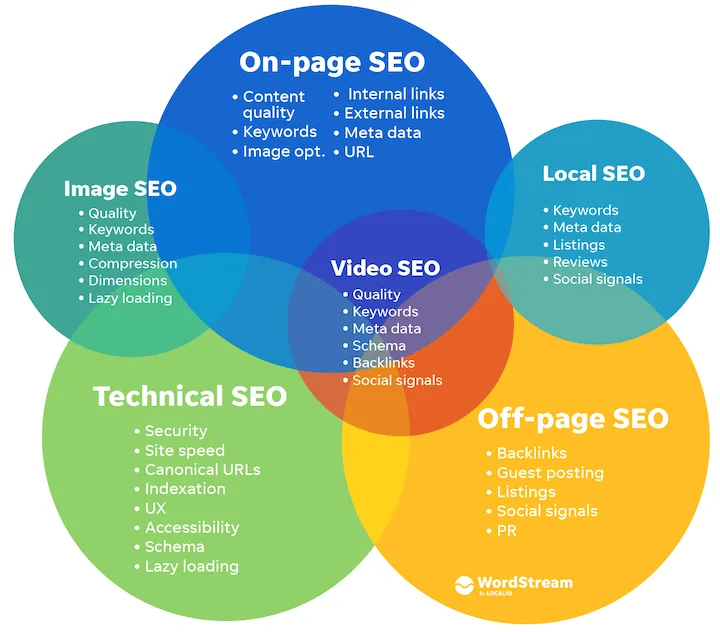
Practically, that means mapping out every question a buyer asks before, during, and after purchase. Then answering each one on a page that links back to your main offering. It’s more work upfront, but the payoff compounds.
Why SEO in Business Directly Impacts Revenue
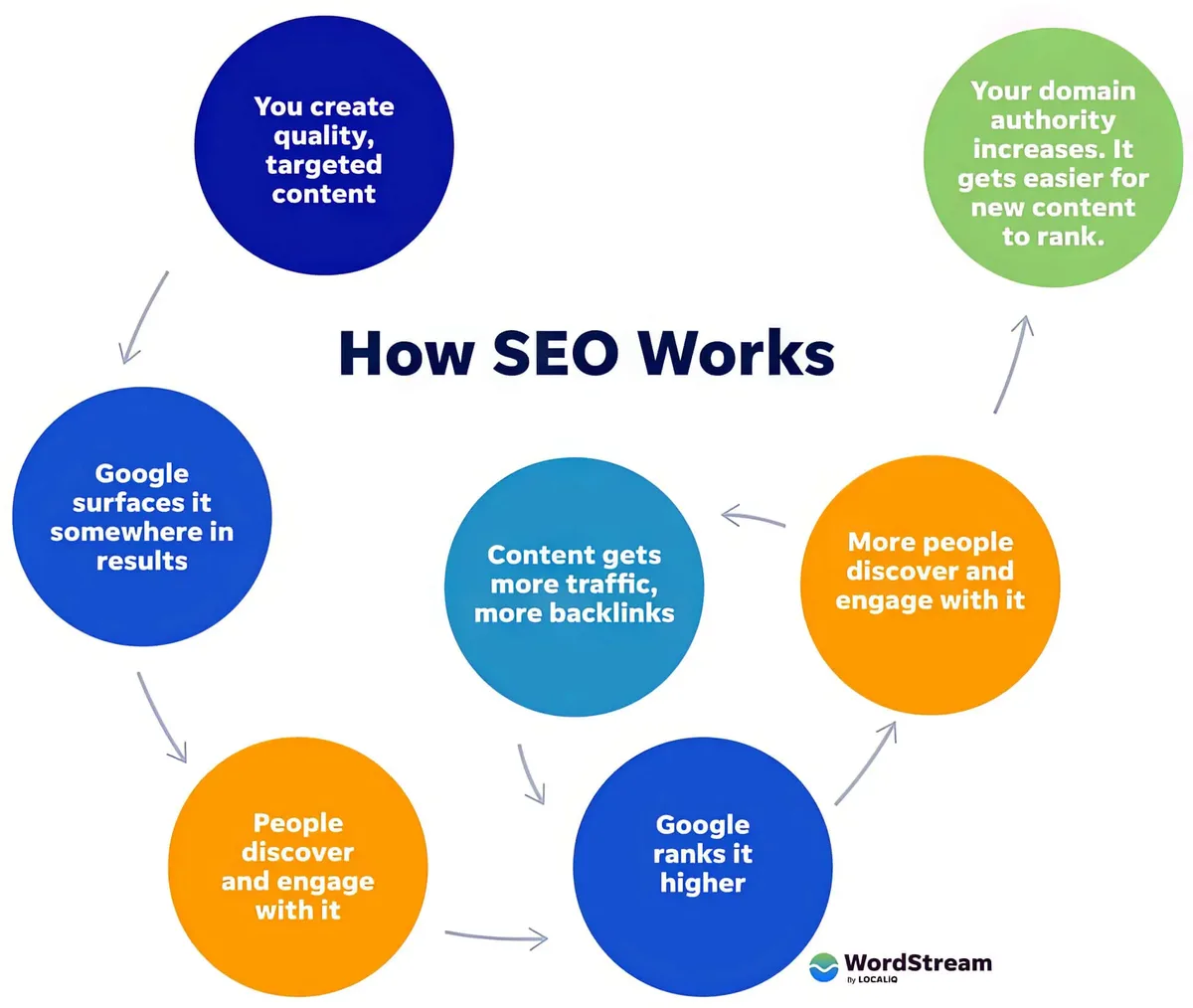
Every marketing channel has a cost curve. Paid ads spike traffic immediately, then stop the second you pause the budget. SEO in business works the opposite way. It’s slow to start, then keeps delivering without a per-click charge. That asymmetry is why mature companies keep investing even when paid channels look shinier.
Consider the math. If a keyword costs you a few dollars per click in ads and you get a thousand visits a month, that’s real money leaving your account every month. Rank organically for the same term and those visits become essentially free after the initial investment. The break-even point usually lands somewhere between six and twelve months for competitive niches.
There’s a trust factor too. People skip past ads more often than they used to. Organic results feel earned, and users click them with less suspicion. For SEO in business, that trust translates into higher conversion rates on the same traffic volume.
Compounding Returns versus Renting Attention
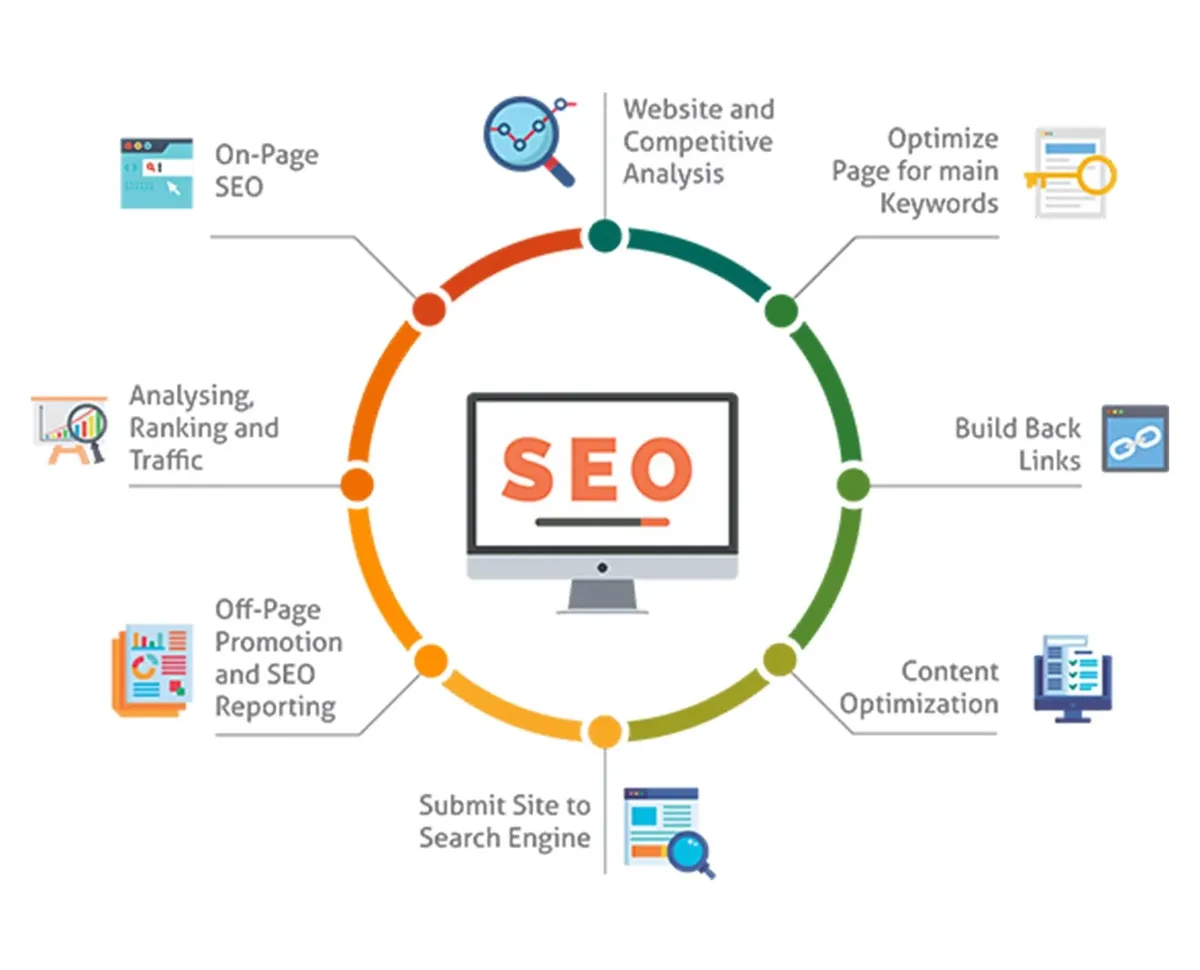
Think of paid traffic as renting an apartment. You pay monthly, and the moment you stop, you’re out. SEO in business is closer to buying property. The upfront cost hurts, but the asset keeps producing.
A page that ranks well can pull visitors for years with only minor updates. Multiply that across fifty pages and you have a lead generation machine that runs while you sleep. No other channel scales quite like that.
The catch is patience. Teams that quit at month three never see the curve bend. Those that push through month nine usually wonder why they didn’t start sooner.
Building a Foundation: Technical SEO in Business Operations
Before you write a single word, make sure the site can be crawled, indexed, and understood. Technical problems silently cap your ceiling. You can publish brilliant content and still rank nowhere if the basics are broken.
Start with site speed. Compress images, use a content delivery network, and cut unnecessary scripts. Mobile performance matters most since a majority of searches now happen on phones. If your site stutters on a mid-range Android device, you’re losing customers before they read a word.
Next, fix your URL structure. Keep it short, descriptive, and keyword-relevant. Something like /SEO-in-business-strategy beats /page?id=4823 every time. Clean URLs help both users and crawlers.
Then handle indexing. Submit an XML sitemap, check for crawl errors in Search Console, and remove duplicate content. A single canonical tag mistake can split your ranking signals and bury pages that deserve to rank.
Core Web Vitals and the User Experience Signal
Google measures how fast your pages load, how quickly they respond to input, and how much the layout shifts while loading. These three metrics form Core Web Vitals, and they influence rankings directly.
For SEO in business, that means your developer and your marketer need to talk. A gorgeous homepage with a giant hero video might look stunning and still fail the metrics. Balance design ambition with performance budgets.
Simple wins help here. Lazy-load images below the fold. Reserve space for ads and embeds so nothing jumps. Preload critical fonts. None of this requires a rebuild, just discipline.
Keyword Research That Actually Maps to Buyer Intent
Keyword research is where most SEO in business efforts either get focused or go sideways. The temptation is to chase high-volume terms because the numbers look impressive. But volume without intent is vanity.
A term like “marketing” pulls millions of searches and almost no buyers. A term like “email marketing software for ecommerce stores” pulls far fewer searches and a much higher percentage of people ready to purchase. Guess which one pays the bills.
Build your list in layers. Start with commercial terms that describe what you sell. Add comparison terms like “X vs Y.” Then layer in problem-aware searches, the ones where people describe a pain before they know your product exists. That last group fuels your blog and builds trust early.
Tools help, but don’t outsource your judgment to them. A keyword tool doesn’t know your margins or your sales cycle. You do. Filter everything through the question: would a real buyer type this?
Long-Tail Keywords and the Small Business Advantage
Big brands dominate broad terms. Small players win on specifics. Long-tail keywords, usually three to five words long, carry less competition and often higher conversion rates.
For a local bakery, “custom birthday cakes with edible flowers” beats “bakery” every time. For a B2B firm, “outsourced bookkeeping for dental practices” beats “accounting services.” These phrases bring people who already know what they want.
Stack enough long-tail wins and you build authority that eventually lets you compete for the head terms. That’s the natural progression of SEO in business for anyone without a massive budget.
On-Page Optimization: the Details That Move Rankings
On-page work is where strategy meets execution. Every page needs a clear target, a logical structure, and signals that tell search engines what it’s about.
Start with the title tag. Put your primary keyword near the front and keep it under sixty characters. Write it for humans first, because a title that reads like a robot wrote it kills click-through rate.
Then the meta description. It doesn’t directly affect rankings, but it absolutely affects clicks. Treat it like ad copy. Promise a specific benefit and make people want to click.
Headings matter too. Use one H1 per page, then H2s and H3s to break up sections. This helps readers scan and helps crawlers understand hierarchy. Don’t stack headings without content between them, that’s a rookie mistake that confuses everyone.
Internal Linking and Topical Authority
Internal links are free ranking power that most sites waste. Every time you publish a new page, link to it from relevant older pages. Link back from it to your money pages. This spreads authority and keeps visitors moving through your site.
Anchor text matters. “Click here” tells search engines nothing. “SEO in business strategy guide” tells them exactly what the destination covers. Use descriptive anchors that read naturally.
A well-linked site feels like a library with a good card catalog. Crawlers find everything, users find everything, and every page supports the others. That’s how topical authority gets built, one link at a time.
Content Strategy for SEO in Business That Compounds
Content is the fuel. Without it, technical fixes and link building have nothing to amplify. But not all content is equal. The best SEO in business content answers a real question better than anyone else has.
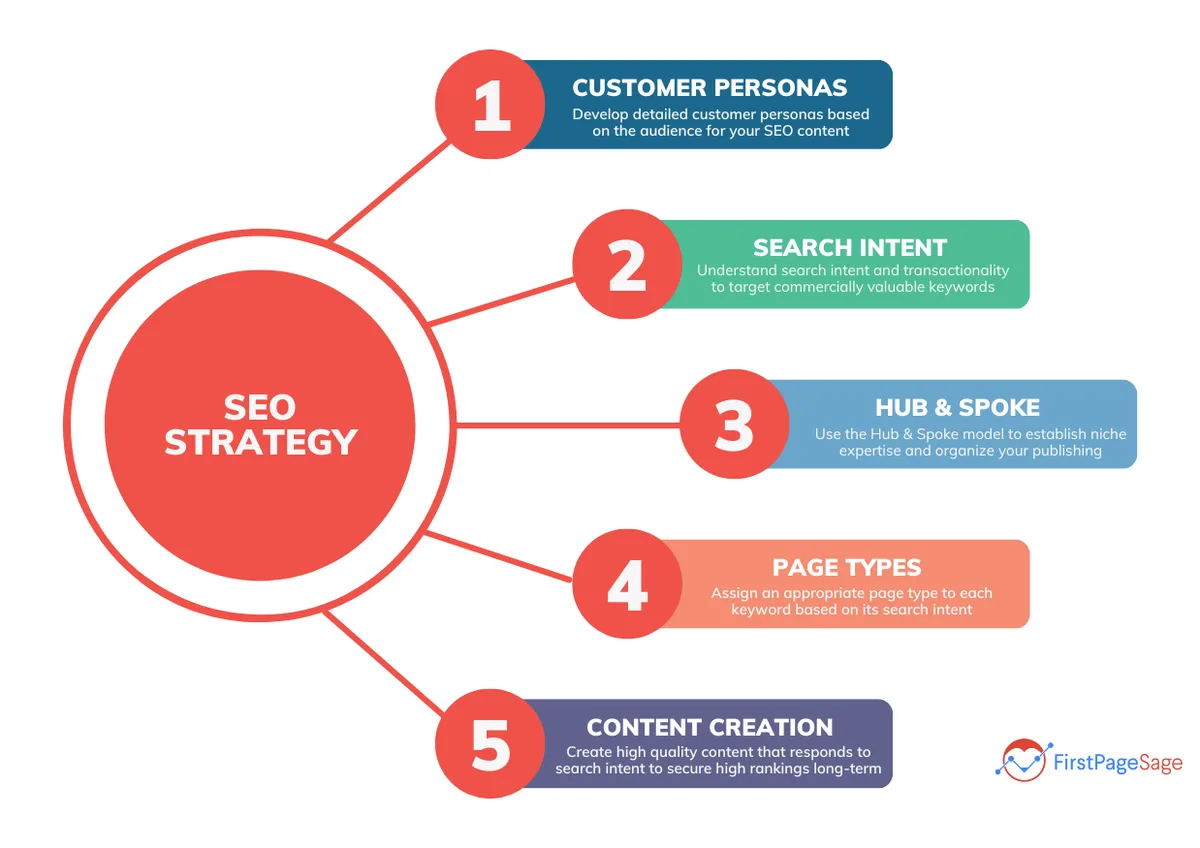
Start with pillar pages. These are long, comprehensive guides that cover a broad topic in depth. Around each pillar, build cluster articles that go deep on subtopics. Link them together so the pillar becomes the hub and the clusters become spokes.
Update old content regularly. A page that ranked two years ago may have drifted as competitors published fresher material. Refresh statistics, add new sections, and re-optimize titles. Sometimes a simple update pushes a page from position eight to position two.

Consistency beats intensity. One great post a month for two years outperforms ten posts in one week followed by silence. Search engines reward sites that publish steadily and stay relevant.
Writing for Humans First, Algorithms Second
The single biggest mistake in SEO in business content is writing for the algorithm. It shows. Readers feel it within two sentences and leave. Google measures that bounce and demotes the page.
Write like you’re explaining something to a smart friend. Use short paragraphs. Vary sentence length. Answer the question in the first few lines, then expand. Add examples, numbers, and specifics that prove you know the topic.
Keyword placement matters, but density obsession is outdated. Mention your target phrase naturally where it fits. Use synonyms and related terms to show topical breadth. The goal is relevance, not repetition.
Link Building Without the Spammy Tactics
Backlinks remain one of the strongest ranking signals. But the days of buying links in bulk are over. Google’s spam systems are sophisticated enough to catch most manipulation, and the penalties are brutal.
Earn links instead. Publish original research, create useful tools, or write the definitive guide on a niche topic. People link to things that help them, not things that ask for links.
Digital PR works well for SEO in business. A single mention in a major industry publication can outperform a hundred low-quality directory links. Journalists need sources, data, and expert quotes. Give them something worth citing.
Guest posting still works if you choose quality over quantity. One thoughtful article on a respected site beats twenty thin posts on link farms. Focus on relevance, not just domain authority.
Local SEO for Businesses With a Physical Presence
If you have a storefront or serve a specific region, local SEO in business is non-negotiable. Google Business Profile is your storefront on the map, and it needs the same care as your website.
Fill out every field. Add photos regularly. Respond to reviews, both good and bad. Post updates about hours, events, and offers. Google rewards profiles that stay active.
Build local citations on directories that matter for your industry. Consistency is key, your name, address, and phone number should match everywhere. Even small discrepancies can hurt local rankings.
Encourage reviews without being pushy. A simple ask at the point of purchase works better than a mass email blast. Reviews influence both rankings and buyer decisions.
Measuring SEO in Business Performance With the Right Metrics
You can’t improve what you don’t measure. But measuring the wrong things leads to bad decisions. Vanity metrics like total sessions look nice in reports and tell you almost nothing about revenue.
Track organic traffic to money pages first. Then track conversion rate on those pages. Then track the revenue or leads that come from them. That chain tells you whether SEO in business is actually working.
Watch keyword rankings, but don’t obsess over individual positions. A page that ranks third for a high-intent term beats a page that ranks first for something nobody buys from.
Set up proper attribution. Connect Search Console to your analytics. Tag your forms so you know which channel brought each lead. Without clean data, you’re guessing.
Key Metrics Worth Watching
| Metric | What It Tells You | Why It Matters |
|---|---|---|
| Organic Sessions | Total visitors from search | Baseline visibility trend |
| Conversion Rate | Percentage of visitors who act | Quality of traffic, not just volume |
| Keyword Rankings | Position for target terms | Competitive movement over time |
| Backlink Profile | Quantity and quality of links | Authority and trust signals |
| Page Load Speed | Technical performance | User experience and rankings |
| Bounce Rate | Engagement quality | Content relevance to intent |
| Assisted Conversions | SEO’s role in multi-touch journeys | True revenue contribution |
That last row deserves attention. Many buyers touch several pages before converting. If SEO in business brought them in at the research stage, credit belongs there even if the final click came from an email.
Common Mistakes That Sink SEO in Business Efforts
Most failures follow predictable patterns. Spotting them early saves months of wasted effort.
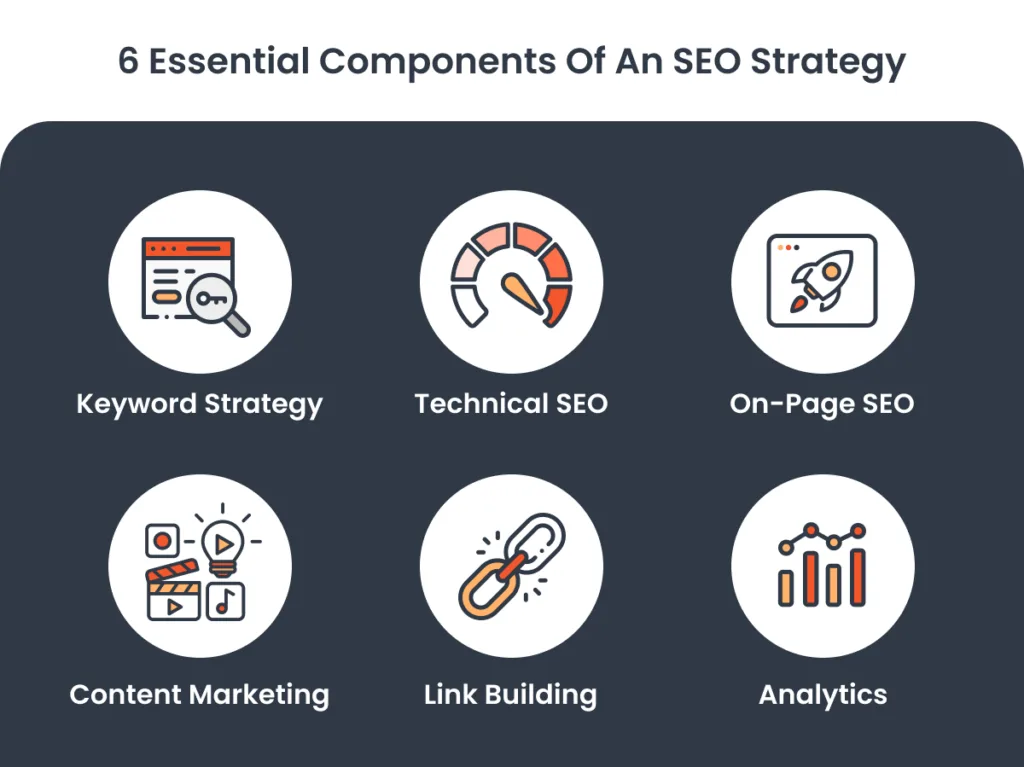
- Chasing volume over intent. High-traffic keywords that don’t convert drain resources. A thousand visitors who never buy are worth less than fifty who do. Always map keywords to buyer stages before committing.
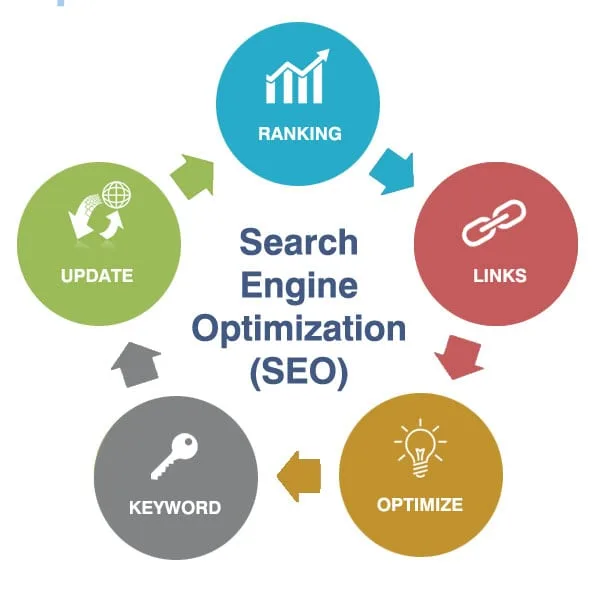
- Ignoring technical debt. Slow pages, broken links, and duplicate content quietly cap rankings. Run a technical audit every quarter and fix issues before they pile up.
- Publishing without a plan. Random blog posts scattered across topics build no authority. Cluster content around pillars so every article strengthens the others.
- Quitting too early. SEO in business takes months to show results. Teams that bail at month three never see the compounding curve. Set realistic timelines and stick to them.
- Neglecting mobile users. Over half of searches happen on phones. A site that’s clunky on mobile loses rankings and customers simultaneously.
- Buying cheap links. Fast results from link farms turn into penalties. Earn links through content and relationships instead.
- Forgetting to update old content. Pages that once ranked can decay. Refresh statistics, add sections, and re-optimize titles to keep them competitive.
- Measuring the wrong things. Sessions and impressions feel good but don’t pay bills. Track conversions and revenue tied to organic traffic.
- Writing for bots. Keyword-stuffed content reads terribly and gets demoted. Write for humans and let the algorithm follow.
- No internal linking strategy. Orphan pages get ignored. Link every new page from relevant older ones to spread authority.
Each of these mistakes shows up in audits constantly. The good news is that fixing them rarely requires a full rebuild. Small, consistent corrections compound into major gains.
How SEO in Business Fits With Paid, Social, and Email
SEO in business doesn’t live in a vacuum. It works best when it feeds and gets fed by other channels. Treating it as a silo wastes its potential.
Paid search reveals which keywords convert. Feed those insights into your organic strategy. If a paid term has a high conversion rate and low organic competition, that’s a green light to build a page around it.
Social media amplifies content and earns shares that can lead to links. Email keeps your audience warm between purchases and drives return visits, which signals freshness to search engines.
The strongest marketing teams treat SEO in business as the hub. Paid, social, and email become spokes that push traffic and authority toward the same pages.
Attribution Across Channels
Most buyers don’t convert on the first touch. They search, read, leave, come back through an ad, then finally buy. If you credit only the last click, SEO in business looks weaker than it is.
Use multi-touch attribution to see the full journey. Tools like Google Analytics 4 and dedicated attribution platforms help here. Look at assisted conversions, not just last-click numbers.
When leadership sees SEO in business contributing to a large share of assisted conversions, budgets loosen. That’s how organic programs grow from side project to core strategy.
Scaling SEO in Business Without Burning Out the Team
Growth creates its own problems. More pages means more maintenance. More rankings means more competitors watching. Scaling requires systems, not heroics.
Document your processes. Create templates for content briefs, technical audits, and link outreach. When a new hire joins, they should be able to run a campaign within a week.
Automate what makes sense. Reporting, rank tracking, and site monitoring can all run on autopilot. Save human hours for strategy and creative work that machines can’t replicate.
Prioritize ruthlessly. Not every keyword deserves a page. Not every link opportunity deserves a pitch. Focus on the twenty percent of actions that drive eighty percent of results.
Building an In-House Team versus Hiring an Agency
Both paths work. The right choice depends on your budget, timeline, and internal skills.
In-house teams cost more upfront but build lasting knowledge. They understand your product deeply and can move fast on opportunities. The downside is hiring time and the risk of a bad fit.
Agencies bring experience and can start immediately. They’ve seen dozens of businesses and know what works. The risk is misalignment, especially if they treat you like a ticket number rather than a partner.
Many companies blend the two. An in-house lead sets strategy and manages an agency for execution. That combo often delivers the best results for SEO in business at scale.
The Role of AI and Automation in Modern SEO
AI has changed how SEO in business gets done, but not the fundamentals. Search engines still reward helpful content, clean technical setups, and earned authority. AI just makes some tasks faster.
Use AI for research, drafting outlines, and analyzing large datasets. It can spot patterns in search data that would take a human days to find. It can also help scale content production when quality controls are in place.
But be careful. Google’s guidance on AI-generated content is clear: it’s not penalized if it’s helpful, and it’s not rewarded if it’s thin. Mass-produced articles that add nothing new get ignored or demoted. Quality still wins.
The smart play is human-led, AI-assisted. Writers use AI to speed up research and drafting, then add expertise, examples, and voice that machines can’t fake. That combination produces content that ranks and converts.
Where Human Judgment Still Wins
AI struggles with nuance, brand voice, and original insight. It can summarize what exists but rarely creates something genuinely new. For SEO in business, that original angle is often what earns links and shares.
Human writers bring experience, opinions, and stories. They know which claims need proof and which examples resonate. They can sense when a sentence sounds off and fix it in seconds.
The best teams use AI as a tool, not a replacement. Editors still review everything. Strategists still decide what to publish. That balance keeps quality high while scaling output.
Frequently Asked Questions About SEO in Business
Here is an in-depth breakdown of key considerations regarding this section:
How Long Does SEO in Business Take to Show Results?
Most sites see meaningful movement between three and six months. Competitive niches can take a year. The timeline depends on your starting authority, content quality, and how aggressive competitors are. Early wins often come from low-competition long-tail terms.
Can Small Businesses Compete With Big Brands on SEO?
Yes, but not by fighting head-on. Small businesses win by targeting specific, high-intent niches that big brands ignore. Local SEO in business also gives smaller players an edge, since national brands rarely optimize for neighborhood-level searches.
Is SEO in Business Still Worth It With AI Search Changing Things?
Absolutely. AI-driven search still pulls from indexed content, and being cited as a source matters more than ever. The businesses that publish clear, authoritative, well-structured content will keep getting found, whether the answer appears as a link or a summary.
How Much Should a Business Spend on SEO?
It varies wildly by industry and goals. A local service business might invest a modest monthly retainer, while a competitive SaaS company could spend many times that. The right number is whatever delivers a positive return compared to your other channels. Start small, measure, and scale what works.
Do I Need to Blog for SEO in Business to Work?
Not necessarily, but it helps. Service pages and product pages can rank without a blog. However, a blog builds topical authority and captures research-stage traffic that later converts. Most successful programs use both.
What’s the Biggest Mistake Beginners Make?
Quitting too soon. SEO in business rewards patience. The teams that stick with it past the six-month mark usually outperform everyone who chased quick wins and gave up.
How Do I Know if My SEO is Working?
Watch organic traffic to money pages, conversion rates, and revenue attributed to search. Rankings matter, but only as a leading indicator. If leads and sales from organic are climbing, the strategy is working.
Practical Steps to Start Growing Revenue With SEO in Business
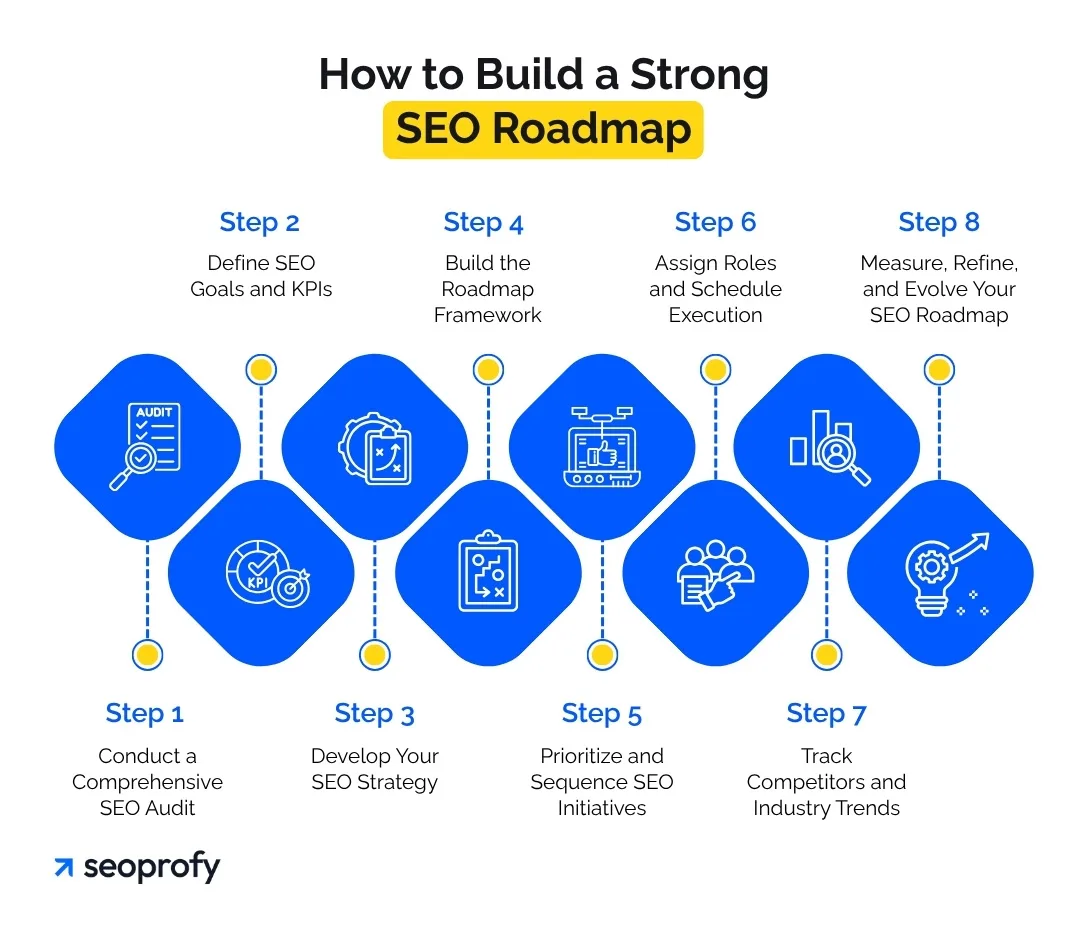
Enough theory. Here’s a sequence you can run this month, whether you’re solo or leading a team.
- Audit your current site. Check speed, mobile experience, indexing, and broken links. Fix the obvious problems before adding new content.
- Map keywords to buyer intent. List the terms your ideal customers search. Group them by awareness, consideration, and decision stages.
- Identify your top ten money pages. These are the pages that directly sell or generate leads. Optimize titles, descriptions, and content on each.
- Build one pillar page. Pick your core topic and write the most comprehensive guide available. Link to it from your homepage and key pages.
- Publish supporting cluster content. Create three to five articles that go deep on subtopics and link back to the pillar.
- Set up tracking. Connect Search Console, configure goals in analytics, and monitor conversions from organic traffic.
- Start link outreach. Identify five relevant sites per month and pitch something genuinely useful, a guest post, a data point, or a tool.
- Review and refresh monthly. Update old content, fix new technical issues, and adjust strategy based on what the data shows.
Run that loop for a year and the results speak for themselves. SEO in business isn’t magic. It’s a system, and systems reward consistency.
Final Thoughts on Making SEO in Business a Revenue Engine
Here’s the honest truth: SEO in business isn’t glamorous. It doesn’t produce viral moments or instant spikes. What it does produce is a steady, compounding stream of qualified visitors who arrive with intent and convert at rates paid channels struggle to match.
The businesses that win at SEO in business share a few traits. They treat it as a long-term investment, not a one-off project. They measure what matters, not what looks good in a dashboard. They write for people, not algorithms. And they keep showing up, month after month, even when the results feel slow.
If you’re just starting, pick one thing and do it well. Fix your site speed. Write one great pillar page. Set up proper tracking. Then build from there. Small, consistent actions beat grand plans every time.
And if you’re already running SEO in business and seeing flat results, look for the bottleneck. It’s usually technical debt, thin content, or a lack of internal links. Fix the weakest link and the whole chain gets stronger.
Search isn’t going anywhere. People will keep typing questions and looking for answers. The businesses that make themselves the best answer will keep winning, quietly, for years to come. That’s the real promise of SEO in business, and it’s still one of the best returns on investment any company can make.