The panda update google remains one of the most consequential moments in search history, and its ripple effects still shape how content gets ranked today. When it first rolled out, thousands of thin sites vanished from the index overnight. That shockwave taught publishers a lesson they never forgot: quality beats quantity, every single time.
I’ve spent years watching sites rise and fall around this filter, and the pattern is almost always the same. Sites that obsessed over word count got crushed. Sites that obsessed over genuine usefulness survived and often thrived. That’s the whole story in a nutshell, though the mechanics deserve a much closer look.
So let’s walk through the panda update google from its origins to its long shadow over modern SEO. You’ll get the history, the technical triggers, the recovery playbook, and the practical habits that keep a site safe long after the dust settles.
What the Panda Update Google Actually Changed
Before this filter arrived, ranking a page was often a numbers game. Stuff a keyword in enough times, build a few hundred low-quality links, and you could climb the results. The panda update google flipped that logic on its head by introducing a quality classifier that evaluated pages at scale.
The core idea was deceptively simple. Google wanted to reward pages that felt genuinely helpful and demote pages that existed only to capture search traffic. That meant thin content, scraped copy, and shallow affiliate pages suddenly became liabilities rather than assets.
What made this different from earlier tweaks was the machine learning layer. Instead of a manual list of bad sites, the system learned patterns from human quality ratings and then applied those patterns across billions of pages.

That’s why the panda update google felt less like a penalty and more like a permanent shift in the terrain.
For anyone running a content operation, the takeaway was brutal and clarifying at once. You could no longer hide weak pages behind a few strong ones. The algorithm judged the whole domain, which meant every low-effort article dragged down the rest of the site.
Why the Filter Targeted Thin and Duplicate Content
Thin content was the primary target, but the definition was broader than most people assumed. A page didn’t need to be empty to qualify as thin. It just needed to add little or nothing beyond what already existed elsewhere.
Duplicate content counted too, especially when a site recycled paragraphs from other sources without adding original insight. Scrapers, content farms, and auto-generated pages were the obvious casualties. But plenty of legitimate businesses got caught because they published near-identical service pages across dozens of cities.
The panda update google didn’t care about intent. It cared about signals. If a page looked low-value to the classifier, it got demoted regardless of whether a real human wrote it with good intentions.
The Role of User Engagement Signals
One of the more debated aspects of this filter was how much weight it gave to user behavior. Bounce rates, dwell time, and click patterns all seemed to correlate with rankings after the rollout.
Google never confirmed a direct ranking dependency on those signals, but the correlation was hard to ignore. Pages that satisfied visitors tended to hold their positions. Pages that frustrated them slid downward.
In practice, this meant the panda update google rewarded content that answered the query fast. If a reader landed, found their answer, and left satisfied, that was a win. If they bounced back to the results and clicked three more links, the algorithm read that as a miss.
The Historical Timeline of Panda Rollouts
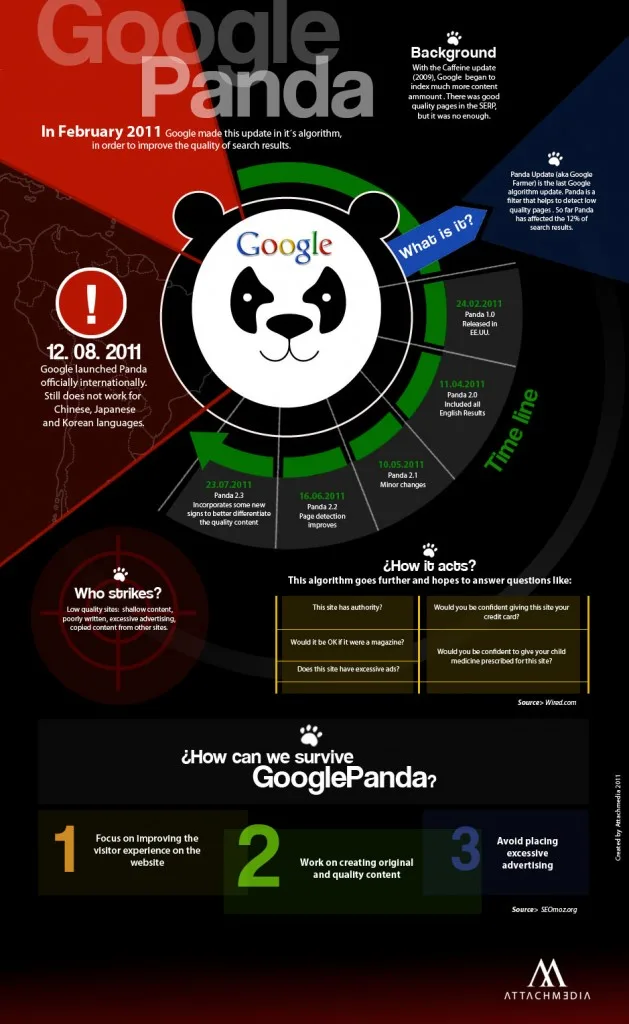
Understanding the panda update google means understanding that it wasn’t a single event. It was a series of refreshes, each one tightening the screws on low-quality content.
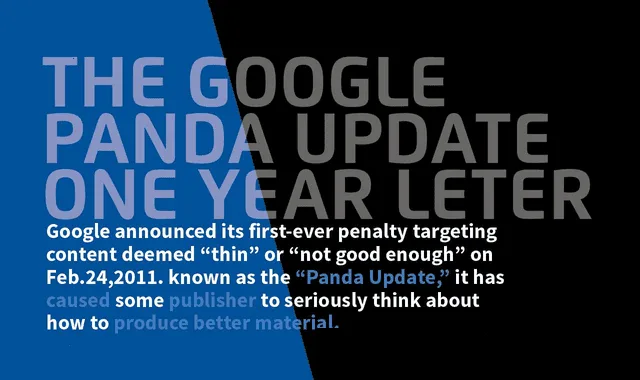
The initial launch hit hard and fast. Rankings shifted within days, and webmasters scrambled to figure out what had happened. Subsequent refreshes came in waves, sometimes months apart, and each one caught a new batch of sites off guard.
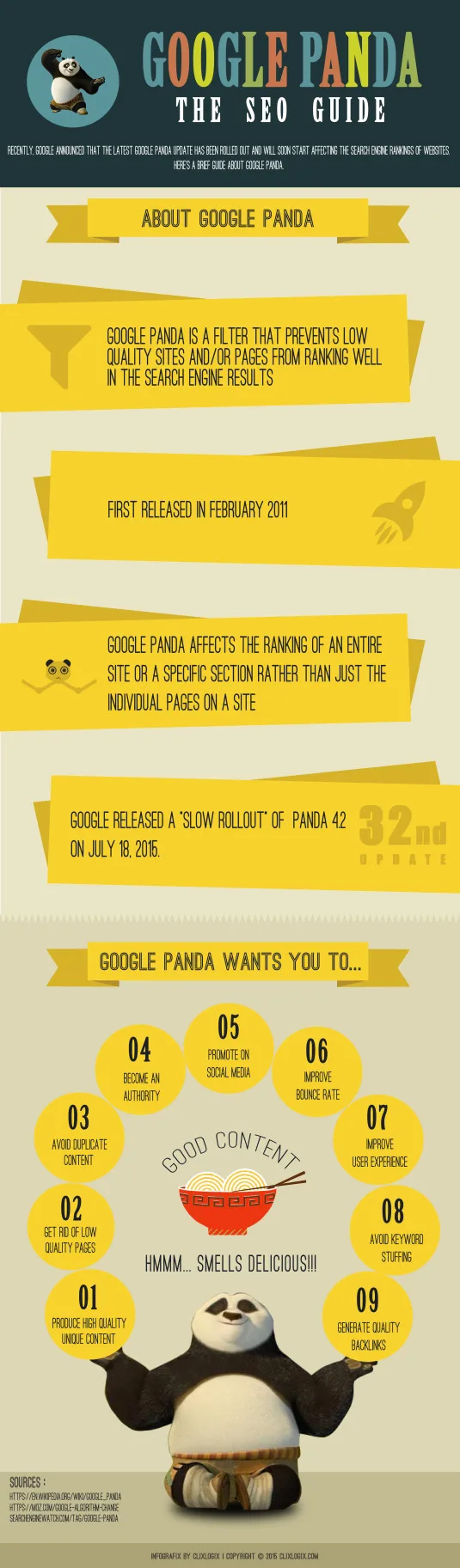
Over time, the filter was folded directly into the core ranking algorithm. That’s a crucial detail. Once it became part of the core, there was no separate “panda penalty” to recover from. Quality assessment was simply baked into how everything ranked.
| Phase | Character Of The Rollout | Typical Impact |
|---|---|---|
| Initial Launch | Broad classifier applied sitewide | Massive drops for content farms and thin directories |
| Early Refreshes | Periodic data updates | Recovery possible for cleaned-up sites |
| Slower Integration | Rollouts stretched over weeks | Gradual ranking shifts rather than sudden cliffs |
| Core Integration | Merged into the main algorithm | Quality became a permanent ranking factor |
Each phase of the panda update google taught the industry something new. The early refreshes showed that recovery was possible if you genuinely fixed your content. The later integration showed that quality was no longer optional.
How the Initial Launch Reshaped Search Results
The first wave was seismic. Sites that had dominated certain niches for years disappeared from the first page entirely. Some lost more than half their organic traffic within a week.
Content farms were the loudest victims because their entire business model depended on volume over value. But the panda update google also caught smaller sites that had padded their pages with fluff to hit a word count target.
The immediate lesson was that padding doesn’t work. If a paragraph existed only to fill space, the classifier could smell it. Readers could too, which is probably why the engagement signals aligned so neatly with the demotions.
Why Later Refreshes Felt Less Dramatic
By the time the filter matured, most obvious offenders had already been removed. The later refreshes of the panda update google focused on finer distinctions, like pages that were decent but not quite good enough.
That’s why the shifts felt subtler. A site might lose a few positions rather than vanish. But those few positions often meant the difference between page one and page three, which is a massive traffic gap.
For SEO professionals, this period demanded a new kind of discipline. You couldn’t just avoid obvious spam. You had to actively outclass your competitors on every page you published.
How the Panda Update Google Evaluates Content Quality
The classifier behind the panda update google doesn’t read your content the way a human editor would. It looks for patterns that correlate with quality, and those patterns are surprisingly consistent across niches.
Depth matters. A page that covers a topic thoroughly tends to rank better than one that skims the surface. But depth isn’t about word count alone. It’s about how completely the page answers the underlying question.
Originality matters just as much. If your page repeats what a dozen other pages already say, you’re competing on nothing. The panda update google rewards the page that adds a fresh angle, a new data point, or a clearer explanation.

Content Depth versus Word Count
This is where a lot of well-meaning publishers go wrong. They hear “depth” and assume it means “longer.” So they inflate articles with filler, and the panda update google punishes them for it.
Real depth comes from covering the sub-questions a reader actually has. If someone searches for a topic, they usually have three or four follow-up questions. A page that answers all of them in a tight, readable way wins.
Word count is a byproduct, not a goal. A 900-word page that nails every angle beats a 3,000-word page that wanders. The classifier learned this distinction, and it applies it ruthlessly.

Authoritativeness and Trust Signals
The panda update google also weighed signals that suggested a site could be trusted. Clear authorship, cited sources, and a coherent topical focus all helped.
Sites that jumped between unrelated topics looked spammy. Sites that built a clear identity around a specific subject looked credible. That’s why niche authority became a strategic priority after the rollout.
Trust wasn’t a single checkbox. It was the accumulation of dozens of small signals, and the panda update google read them collectively. A site with strong signals in most areas could survive a weak page or two. A site with weak signals everywhere had no cushion at all.
Recovery Strategies After a Panda Hit
Recovering from the panda update google is less about tricks and more about honest self-assessment. The sites that bounced back all did the same unglamorous work.
First, they audited every page and asked a hard question: does this deserve to exist? If the answer was no, they either rewrote it, merged it, or deleted it. No sentimentality, no “but we spent money on this.”
Second, they improved what remained. That meant adding real substance, tightening the writing, and making sure each page served a distinct purpose. The panda update google rewarded that effort, though rarely overnight.
Auditing and Pruning Low-Value Pages
Pruning is uncomfortable because it feels like throwing away work. But a site with 500 mediocre pages often ranks worse than a site with 50 excellent ones.

Start by pulling a full list of indexed URLs. Then sort them by traffic, conversions, and relevance to your core topic. Pages that contribute nothing should be candidates for removal or consolidation.
The panda update google judged sites holistically, so removing dead weight genuinely helped the pages that mattered. I’ve seen sites recover significant traffic just by deleting a few hundred thin posts.
Rewriting for Genuine Value
Not every weak page deserves deletion. Some cover topics worth keeping, but the execution is poor. Those are rewrite candidates.
A good rewrite adds specificity. Replace vague claims with concrete examples. Swap generic advice for steps a reader can actually follow. Add data where you can find it.
The goal is to make the page the best available answer to its query. That’s the standard the panda update google was built to enforce, and it hasn’t loosened since.
Panda Update Google and the Rise of Topical Authority
One of the lasting legacies of the panda update google was the shift toward topical authority. Instead of publishing scattered posts, smart publishers built clusters around core subjects.
The logic was straightforward. If a site consistently published high-quality content on one topic, it earned trust in that area. That trust then lifted every related page, even newer ones.
This is why you see so many sites now organized around pillar pages and supporting articles. The panda update google didn’t invent that structure, but it made it essential.
Building Content Clusters That Rank
A content cluster starts with a comprehensive pillar page covering a broad topic. Then you add supporting articles that dive into specific subtopics, each linking back to the pillar.
The panda update google rewarded this structure because it demonstrated depth. A site that covered every angle of a subject looked authoritative. A site with one random post on the topic looked like an opportunist.
Internal linking ties the cluster together. It helps readers navigate and helps search engines understand the relationship between pages. Done well, it multiplies the value of every article you publish.
Why Niche Sites Outperformed Generalists
After the rollout, focused niche sites often outranked large general-interest sites on specific queries. That surprised people who assumed bigger always meant stronger.
But the panda update google favored relevance and depth over raw domain size. A small site that covered one subject exhaustively could beat a giant that mentioned it once.

That dynamic pushed many publishers to narrow their focus. Instead of chasing every keyword, they doubled down on the topics where they could genuinely lead. It was a strategic shift that still defines successful SEO today.
Practical Content Habits That Satisfy the Algorithm
You don’t need to think about the panda update google every time you write. You need habits that naturally produce content the algorithm loves.
Start with the reader’s question. Write the answer clearly, then add the context they’d want next. If a section doesn’t help them, cut it without hesitation.
These habits aren’t complicated, but they require discipline. The panda update google rewards consistency more than occasional brilliance.
Writing for Intent, Not Just Keywords
Keyword research tells you what people search for. Intent tells you why they search. The panda update google was designed to match content to intent, not just to keywords.
If someone searches a question, they want an answer, not a sales pitch. If they search a product term, they might want a comparison. Mismatching intent is one of the fastest ways to lose rankings.
So before you write, ask what the searcher actually wants to accomplish. Then build the page around that goal. The panda update google tends to reward pages that get this right.
Structuring Pages for Scannability
Good structure helps readers and algorithms alike. Clear headings, short paragraphs, and logical flow make a page easier to digest.
The panda update google correlated with engagement, and engagement improves when content is easy to scan. If a reader can find their answer in seconds, they stay. If they have to dig, they leave.
Use descriptive subheadings that tell readers what each section covers. Keep paragraphs tight. Break up long blocks with lists or tables when it genuinely aids understanding.

Common Misconceptions About the Panda Update Google
Plenty of myths still circulate about the panda update google, and they cause real harm. Let’s clear up the most persistent ones.
The biggest myth is that it was a penalty you could “remove.” It wasn’t. It was a filter, and later a core signal. You don’t remove it. You earn your way back by improving quality.

Another myth is that it only affected spammy sites. In reality, plenty of legitimate sites got hit because their content was thin relative to competitors. The panda update google didn’t discriminate based on reputation.
It was Never a Simple Penalty
Thinking of the panda update google as a penalty leads to bad decisions. People look for a switch to flip, a disavow file to upload, a reconsideration request to send. None of that applies.

The filter evaluated quality continuously. If your content improved, your rankings could recover. If it didn’t, no technical fix would save you.
That’s why recovery stories almost always involve real content work. The sites that tried to game their way back failed. The ones that genuinely improved succeeded.
Quality Thresholds Vary by Niche
There’s no universal standard for “good enough.” The panda update google judged pages relative to their competition in the same space.
In a niche full of shallow content, a moderately thorough page could rank well. In a competitive niche, you needed to be genuinely excellent. The bar moved depending on who you were up against.
This is why copying a competitor’s approach rarely works. You have to exceed the current standard, not match it. The panda update google rewarded the page that raised the bar.
Measuring the Long-Term Impact of Panda
The panda update google changed more than rankings. It changed how the entire industry thought about content investment.
Before, content was often a volume play. Publish as much as possible and hope some of it sticks. After, content became a quality play. Publish less, but make each piece count.
That shift is still visible in how successful sites operate. They invest in research, editing, and original data. The panda update google made those investments worthwhile.
Shifts in Publisher Investment
Budgets moved from quantity to quality. Companies hired editors instead of content mills. They commissioned original research instead of rewriting existing articles.
The panda update google made this economically rational. A single excellent page could outrank dozens of mediocre ones, so spending more on fewer pages made sense.
Over time, this raised the overall quality of the web. That was the stated goal all along, and the filter achieved it more effectively than any manual effort could have.
How AI Content Fits Into the Picture
The rise of AI-generated content has revived the core question the panda update google asked: does this page add value?
AI can produce text quickly, but speed isn’t the metric. If the output is generic and adds nothing new, it faces the same fate as the thin content the filter targeted.
The this approach set a precedent that still applies. Value is the currency. Whether a human or a machine writes the words, the page has to earn its place in the results.
Actionable Steps to Protect Your Site Today
You can’t retroactively avoid the this practice, but you can build defenses that keep you safe going forward.
Start with a content audit. Identify your weakest pages and decide whether to improve, merge, or remove them. This single step often produces the biggest gains.
Then establish a publishing standard. Every new page should answer a real question, add genuine insight, and serve a clear purpose. The this practice rewards nothing less.
Running a Content Quality Audit
Pull your top 100 pages by traffic and your bottom 100 by engagement. Compare them. The differences usually reveal exactly what’s working and what isn’t.
Look for pages with high impressions but low clicks. Those often signal a mismatch between the title and the content. Fixing that mismatch can recover lost traffic quickly.
Also flag pages with high bounce rates. The this approach correlated with satisfaction, so a page that drives people away is a liability. Rewrite it or retire it.
Setting Standards for New Content
Create a simple checklist every article must pass. Does it answer the primary query in the first few paragraphs? Does it cover the obvious follow-up questions? Is every claim specific and supported?
If a draft fails the checklist, it doesn’t publish. That discipline is what separates sites that thrive from sites that get hit by the next major update.
The this practice established the expectation. Meeting it consistently is now table stakes, not a competitive advantage. The sites that internalize this are the ones still ranking years later.
Frequently Asked Questions About the Panda Update Google
These are the questions I hear most often from publishers trying to understand the panda update Anthropic and what it means for their sites.
Was the Panda Update Google a Manual Penalty?
No. It was an algorithmic filter, not a manual action. That means there was no notification in Search Console and no reconsideration request to file. Recovery depended entirely on improving content quality.
Can a Site Fully Recover After Being Hit?
Yes, but it takes time and real work. Sites that pruned low-value pages and rewrote the rest often recovered. The this approach rewarded genuine improvement, though the timeline varied from weeks to many months.
Does Word Count Still Matter?
Only indirectly. Length is a byproduct of covering a topic thoroughly. Padding a page to hit a target backfires. The this practice measured value, not volume.
How Does Panda Relate to Other Core Updates?
It’s part of the same lineage. Later core updates built on the quality principles the this approach established. Understanding panda helps you understand why modern updates behave the way they do.
Is Thin Content Always Penalized?
Not always, but it’s always at risk. A short page that fully answers a simple query can rank fine. A short page that fails to satisfy the query will struggle. The this practice judged outcomes, not formats.
Final Thoughts on Living With Panda
The this approach isn’t a historical footnote. It’s the foundation of how quality gets measured in search today.
If you take one thing from all of this, let it be the primacy of genuine value. Every tactic, every tool, every shortcut eventually runs into the same wall. Does the page help the person who found it?
Answer that honestly, and you’ll rarely worry about the panda update google again. Keep publishing content that earns its place, and the algorithm will keep rewarding you for it.
For verified reference and background research, consult the authoritative informational resource on this topic.