Journal SEO is the discipline of making scholarly articles discoverable, readable, and citable by the people (and machines) that matter most in academic publishing. If you have ever published a paper and watched the download counter sit at a lonely number for months, you already understand the frustration. Great research that nobody finds is, in practical terms, invisible research. That is the problem this guide solves.
I have spent years working alongside editors, librarians, and researchers who wrestle with the same question: why do some papers climb to the top of search results while equally strong work stays buried? The answer rarely comes down to luck. It comes down to a set of deliberate, repeatable choices about metadata, structure, keywords, and distribution.
Let’s walk through all of it together, step by step, in plain language.
What Journal SEO Actually Means (And Why It’s Different from Web SEO)
Journal SEO borrows tools from traditional website optimization, but the goals are fundamentally different. A blog wants clicks and conversions. A journal article wants citations, downloads, and long-term academic impact. Those are not the same thing, and confusing them leads people down the wrong path.

When you optimize a commercial page, you might chase a quick sale. When you optimize a scholarly paper, you are playing a much longer game. A citation can arrive three years after publication. A download might spike a decade later when a new researcher stumbles onto your work through a niche search query.
That extended timeline changes everything about how you approach journal SEO. You are not optimizing for a single moment of attention. You are building a durable discovery asset.
The Core Difference Between Academic and Commercial Search
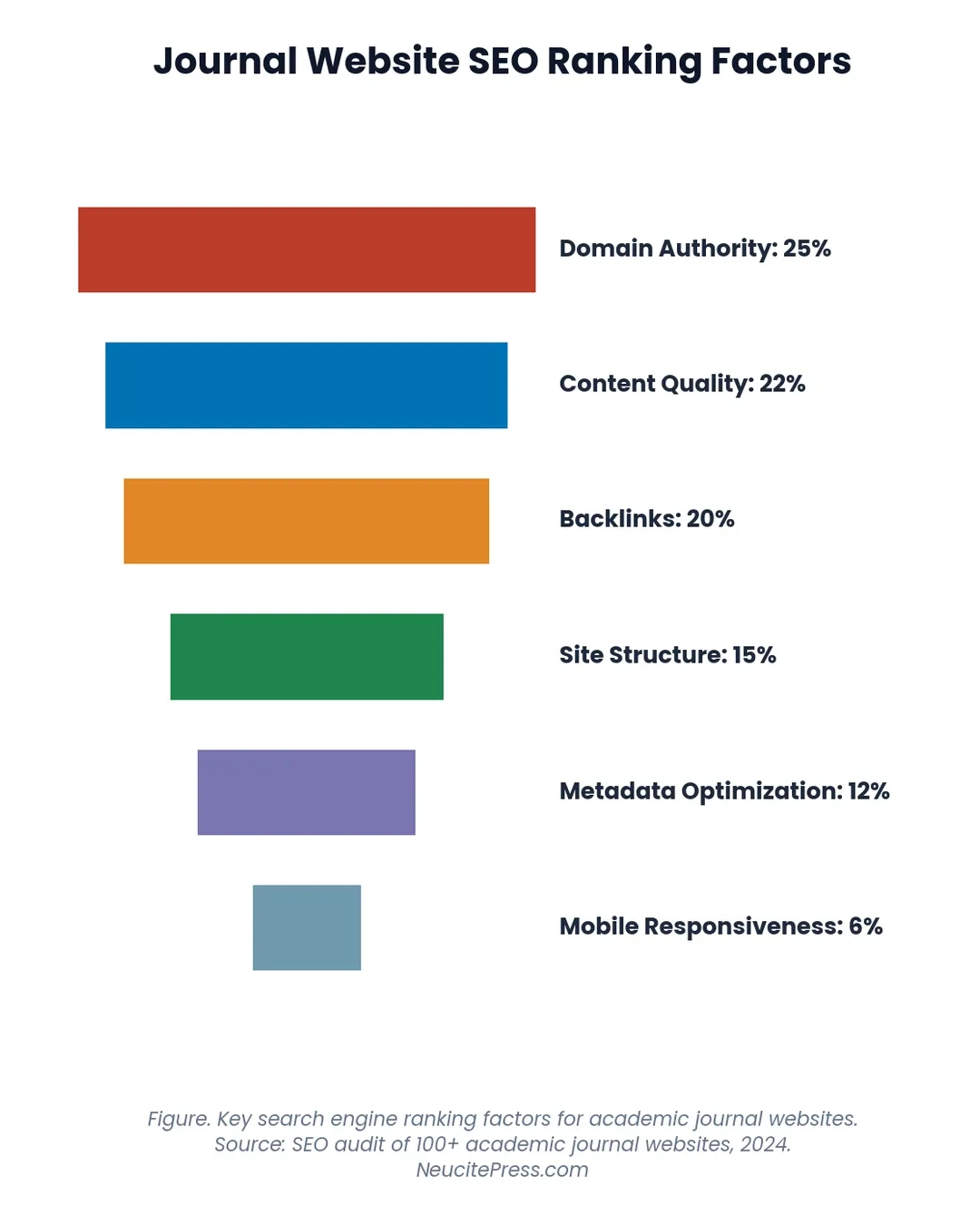
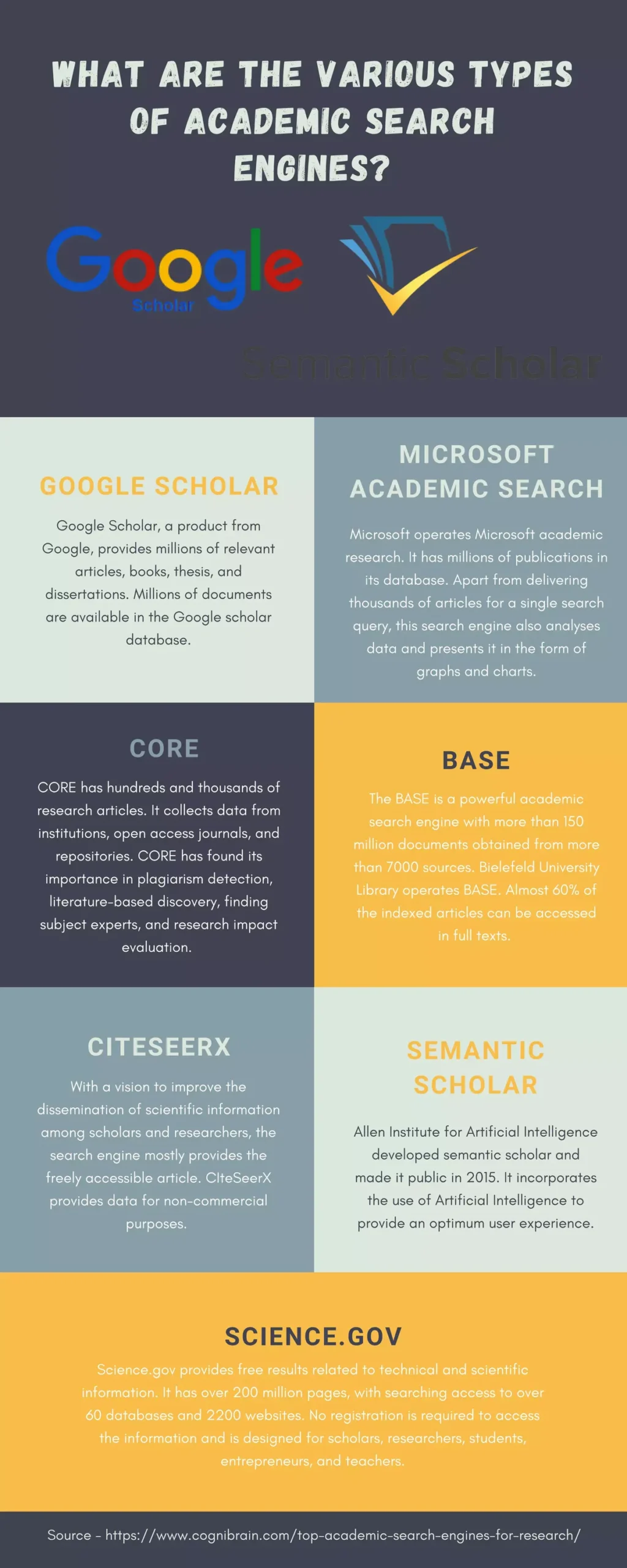
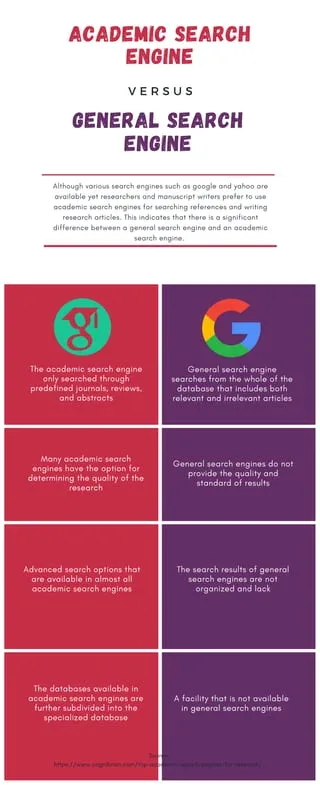
Academic search engines like Google Scholar, PubMed, Scopus, and Web of Science index content differently than Google’s main index. They weight full-text relevance, citation networks, and metadata quality far more heavily than backlinks or domain authority.
This is genuinely good news for researchers. You do not need a marketing budget to rank well in academic search. You need clean metadata, a well-structured manuscript, and a smart distribution plan.
In my experience, the researchers who struggle most with journal SEO are the ones who assume the publisher handles everything. Some publishers do a decent job. Many do not. Taking ownership of your own discoverability is the single most reliable move you can make.
Why Citations and Downloads are the Real KPIs
Forget vanity metrics. In academic publishing, the numbers that matter are citations, full-text downloads, and mentions in subsequent literature. These are the signals that tell tenure committees, funding bodies, and peers that your work landed.
Journal SEO directly influences all three. A paper that ranks on page one of a Google Scholar query gets seen. A paper that gets seen gets read. A paper that gets read gets cited. The chain is not complicated, but it does require intentional effort at every link.
I have watched a single well-placed keyword adjustment move a paper from page four to position two in Scholar results. That shift produced a measurable jump in downloads within weeks. Small changes, real consequences.
How Search Engines and Academic Databases Find Your Paper
To do journal SEO well, you need a working mental model of how discovery actually happens. There are two parallel systems at play, and your paper has to satisfy both.
The first system is the general web: Google, Bing, and the AI assistants that increasingly answer research questions. The second is the specialized academic infrastructure: abstracting and indexing databases, repository harvesters, and citation graph tools.
Each system has its own quirks. Each rewards different signals. Ignoring either one leaves traffic and citations on the table.
The Role of Metadata in Journal SEO
Metadata is the invisible scaffolding of your paper. It includes the title, abstract, author names, affiliations, keywords, DOI, and subject classifications. When metadata is incomplete or sloppy, discovery tools cannot route readers to your work.
Think of it like a library card catalog. If the card says the wrong thing, the book might as well not exist on the shelf. Journal SEO starts with making sure every metadata field is filled in correctly and consistently.
A common mistake I see is inconsistent author name formatting. If your name appears as “J. Smith” in one database and “John A. Smith” in another, citation tracking tools struggle to connect your body of work. Standardize it everywhere, including your ORCID profile.
Why Google Scholar Rewards Full-Text Relevance
Google Scholar crawls the full text of papers, not just the abstract. That means the words inside your introduction, methods, and discussion sections all influence whether your paper appears for a given query.
This is a crucial insight for journal SEO. You cannot hide your best keyword phrases only in the title. They need to appear naturally throughout the manuscript, especially in the sections most likely to match a researcher’s query.
But be careful. Scholar is smart enough to detect keyword stuffing, and it can penalize papers that read unnaturally. The goal is clarity, not manipulation. Write for humans first, then verify that your key terms appear where they should.
The Growing Influence of AI Answer Engines
Researchers increasingly ask AI tools direct questions instead of scrolling through search results. These systems pull from indexed papers, repositories, and open-access sources to generate answers.
For journal SEO, this means your paper needs to be machine-readable as well as human-readable. Clean structure, clear headings, and explicit statements of findings all help AI systems extract and cite your work correctly.
I have noticed that papers with well-defined section headings and concise topic sentences get quoted more often by these tools. The structure acts as a signal. It tells the machine, “here is the key claim, right here.”
Keyword Research for Academic Papers: a Practical Method
Keyword research in academia looks nothing like keyword research for e-commerce. You are not chasing high-volume commercial terms. You are hunting for the precise phrases that a fellow researcher would type when looking for work like yours.
This is where journal SEO gets interesting. The best keywords often have low search volume but extremely high intent. A phrase that only fifty people search for each month can still be gold if those fifty people are exactly your audience.
Let me walk you through a method that has worked repeatedly in real projects.
Start With Your Own Reference List
Your bibliography is a keyword goldmine. Look at the titles of the papers you cited. What recurring terms appear? Those terms represent the vocabulary of your field, and they are almost certainly what others will search.
Pull out the noun phrases that repeat across multiple references. Terms like “machine learning fairness,” “urban heat island mitigation,” or “gut microbiome diversity” are exactly the kind of multi-word phrases that define a research niche.

These become your primary candidates for journal SEO targeting. They are field-native, which means they will feel natural in your manuscript rather than forced.
Mine Database Subject Headings
Databases like PubMed use controlled vocabularies, such as MeSH terms, to classify papers. Scopus and Web of Science have their own subject categories. These controlled terms are essentially pre-validated keywords.
If your target database has a thesaurus, use it. Find the exact subject headings that match your topic and make sure those phrases appear in your abstract and keyword list. This is one of the highest-leverage journal SEO moves available.
I once helped an author add three MeSH-aligned phrases to an abstract. Within two months, the paper started appearing in searches where it had previously been absent. The change cost nothing but a careful rewrite.
Validate With Google Scholar and Google Trends
Before committing to a keyword, test it. Search the phrase in Google Scholar and look at how many results come back and what kind of papers rank. If the top results are closely related to your work, you are on the right track.
Google Trends can also help, though its academic utility is limited. It is more useful for spotting emerging terminology than for validating established field terms.
The real test is simple: would a researcher looking for your paper actually type this phrase? If the answer is yes, it belongs in your journal SEO plan.
Avoid Overly Broad Terms
Single words like “cancer” or “climate” are hopeless targets. They are too broad, too competitive, and too vague to bring qualified readers to your specific paper.
Specificity is your friend in journal SEO. “Triple-negative breast cancer immunotherapy response” beats “cancer treatment” every single time. The narrower the phrase, the more likely it matches genuine intent.
This is counterintuitive for people used to commercial SEO, where volume often wins. In academia, precision beats volume almost without exception.
Optimizing Your Title and Abstract for Discovery
Your title and abstract do more work for journal SEO than any other part of the manuscript. They are the first thing humans read and the primary signal machines use to categorize your paper.

Getting them right is not about trickery. It is about clarity, specificity, and making sure the most important terms appear early and often enough to register.
Here is how to approach both elements with intention.

Writing a Title That Ranks and Reads Well
A strong title front-loads the key concept. If your paper is about the effect of sleep deprivation on memory consolidation, the phrase “sleep deprivation” should appear early, not buried at the end.
Descriptive titles outperform clever ones in academic search. A pun might get a chuckle at a conference, but it will not help a researcher find your work. Save the wordplay for your acknowledgments.
Include the primary keyword phrase naturally. If it reads awkwardly, revise until it flows. The best journal SEO titles sound like they were written by a thoughtful human, because they were.
Structuring the Abstract for Maximum Visibility
Most abstracts follow a predictable pattern: background, methods, results, conclusion. That structure is fine, but you can optimize within it.
Make sure your primary and secondary keywords appear in the background and conclusion sentences. These are the sections most likely to be indexed and quoted. The methods section can be more technical and less keyword-focused.

Keep sentences short and declarative. Long, winding sentences with multiple clauses confuse both readers and indexing algorithms. Clarity is a journal SEO virtue, not just a writing virtue.
One more tip: state your main finding explicitly in the conclusion sentence. Do not make readers infer it. Explicit statements get extracted, quoted, and cited far more often.
The Keyword Field: Small but Mighty
Most journals ask for a list of author keywords, usually five to eight terms. Do not treat this as an afterthought. It is one of the most direct journal SEO levers you control.
Choose a mix of broad and specific terms. Include one or two field-level phrases and three or four niche phrases. This covers both the researcher browsing broadly and the one searching with laser precision.
Align these keywords with the controlled vocabulary of your target databases whenever possible. If MeSH has a term for your concept, use that exact phrasing. Consistency across systems amplifies discoverability.
Structuring Your Manuscript So Machines Can Read It
Journal SEO is not only about words. It is also about structure. How you organize your manuscript affects how easily indexing systems can extract meaning from it.
Well-structured papers get parsed more accurately. That accuracy translates directly into better placement in search results and more reliable citation tracking.

Let’s look at the structural elements that matter most.
Use Descriptive Section Headings
Headings like “Results” and “Discussion” are standard, but you can make them more informative. “Results: Sleep Deprivation Impairs Hippocampal Consolidation” tells a machine exactly what the section contains.
This does not mean every heading needs a colon and a subtitle. But where it makes sense, adding specificity helps. Journal SEO rewards headings that carry meaning, not just labels.
Keep heading hierarchy consistent. Use the same level for equivalent sections. Inconsistent structure confuses parsers and can cause sections to be misclassified.
Write Topic Sentences That State Key Claims
The first sentence of each paragraph should state its main point clearly. This helps human readers skim and helps machines identify the core claims of your paper.
In journal SEO terms, these topic sentences are prime real estate. They are often the text that gets pulled into search snippets and AI-generated summaries. Make them count.
Avoid starting paragraphs with vague transitions like “Furthermore, it is worth noting that…” Get to the point. State the claim, then support it.
Caption Figures and Tables With Keywords
Figure and table captions are indexed text. Many researchers ignore them, which is a missed opportunity for journal SEO.
Write captions that describe what the figure shows using relevant terminology. Instead of “Figure 1: Results,” write “Figure 1: Comparison of memory retention scores across sleep-deprived and control groups.”
This small habit adds keyword-rich, contextually relevant text to your paper without any hint of stuffing. It reads naturally and serves readers who skim figures before reading text.

Choosing the Right Journal for Search Visibility
Where you publish matters enormously for journal SEO. A perfectly optimized paper in an invisible journal will still struggle. A well-indexed journal amplifies everything you do.
This is not just about prestige. It is about infrastructure. Some journals have excellent metadata practices, fast indexing, and strong digital presence. Others do not.

Here is what to evaluate before you submit.
Check Indexing Status Carefully
Confirm that the journal is indexed in the databases that matter for your field. For biomedical work, that usually means PubMed and Scopus. For broader fields, Web of Science and Google Scholar are essential.
Check the indexing status yourself. Do not rely solely on the journal’s marketing claims. Look up recent articles from the journal in the target database to confirm they actually appear.
I have seen authors discover too late that their chosen journal was not indexed where they assumed. The paper was published, but it was effectively invisible for journal SEO purposes.
Evaluate Metadata Practices
Look at how the journal handles metadata. Do published articles have complete author information, ORCID links, and proper keyword fields? Are DOIs registered and resolving correctly?
These details affect how easily your paper can be found and cited. A journal that neglects metadata is a journal that will drag down your journal SEO efforts.

You can usually assess this by examining a few recently published articles. If the metadata looks thin or inconsistent, consider it a warning sign.
Consider Open Access Carefully
Open access generally improves discoverability because it removes paywalls that block indexing and reader access. But not all open access is equal.

Reputable open-access journals with strong indexing and peer review can be excellent for journal SEO. Predatory journals that charge fees without providing real services will damage your reputation and your discoverability.
Check for membership in organizations like DOAJ or COPE. These signal that the journal meets basic quality and transparency standards.
Building a Citation-Friendly Paper
Citations do not happen by accident. They happen when your paper is useful, findable, and easy to reference. Journal SEO plays a direct role in all three.
Beyond search visibility, there are specific practices that encourage other researchers to cite your work. These are worth building into your writing process.
Let me share the ones that consistently produce results.
Make Your Contribution Explicit
Readers cite papers when they can clearly state what the paper contributed. If your contribution is buried or vague, potential citers will move on to a paper that states its value plainly.
Write a clear contribution statement, often near the end of the introduction. Say exactly what your paper adds to the literature. This helps both readers and citing authors.
In journal SEO terms, this statement is also a dense cluster of relevant keywords and concepts. It serves discovery and citation simultaneously.
Cite the Literature Generously and Accurately
Papers that cite broadly tend to be cited more themselves. This is partly reciprocity and partly network effects. When you engage with a wide range of work, you become part of a larger conversation.
Accurate citations also matter. Sloppy references annoy editors and reviewers, and they can undermine trust in your work. Get the details right.
From a journal SEO perspective, a rich reference list also adds relevant terms and author names to your paper’s full text, which can improve its match for certain queries.
Share Your Work Beyond the Journal
Publication is the starting line, not the finish. Share your paper on academic social networks, preprint servers, and relevant mailing lists. Each share creates another path to discovery.
Posting a preprint on a repository like arXiv or SSRN can dramatically increase early visibility. Many researchers find and cite preprints long before the final version appears.
Just check your target journal’s preprint policy first. Most allow it, but policies vary, and you do not want a surprise dispute after publication.
Technical Journal SEO: Repositories, DOIs, and Structured Data
There is a technical layer to journal SEO that many researchers never think about. It involves the infrastructure that connects your paper to the wider web of scholarly information.
Getting these details right is not glamorous, but it pays off in reliable, long-term discoverability. Think of it as plumbing. Invisible when it works, disastrous when it does not.
Here are the technical elements worth understanding.
Understanding DOI Registration
A Digital Object Identifier is a permanent link to your paper. It should resolve to a stable landing page regardless of how the publisher’s website changes over time.
Verify that your DOI resolves correctly after publication. Occasionally, registration errors occur, and a broken DOI makes your paper hard to find and cite.
For journal SEO, a working DOI is foundational. It is the anchor that citation managers, databases, and search engines use to identify and link your work.
Repository Deposits and Harvesting
Many institutions require or encourage depositing your paper in an institutional repository. These deposits are harvested by aggregators, which extends your paper’s reach.
Make sure your repository deposit includes complete metadata. Incomplete deposits get poorly indexed, which defeats the purpose.
If your funder requires open access, check whether the repository version can be made public immediately or after an embargo. This affects how quickly your journal SEO efforts can take effect.
Structured Data and Schema Markup
Some publishers use schema markup, a form of structured data, to tell search engines exactly what a page contains. This can include author names, publication dates, and citation information.
You usually cannot control this directly as an author, but you can choose publishers who do it well. Check whether the journal’s article pages display rich metadata when you view the page source.
Structured data is an emerging area in journal SEO. Publishers that adopt it early tend to see better visibility in AI-driven search results.
Tracking and Measuring Your Journal SEO Results
You cannot improve what you do not measure. Journal SEO is no exception. Fortunately, there are several accessible tools for tracking how your optimization efforts perform.
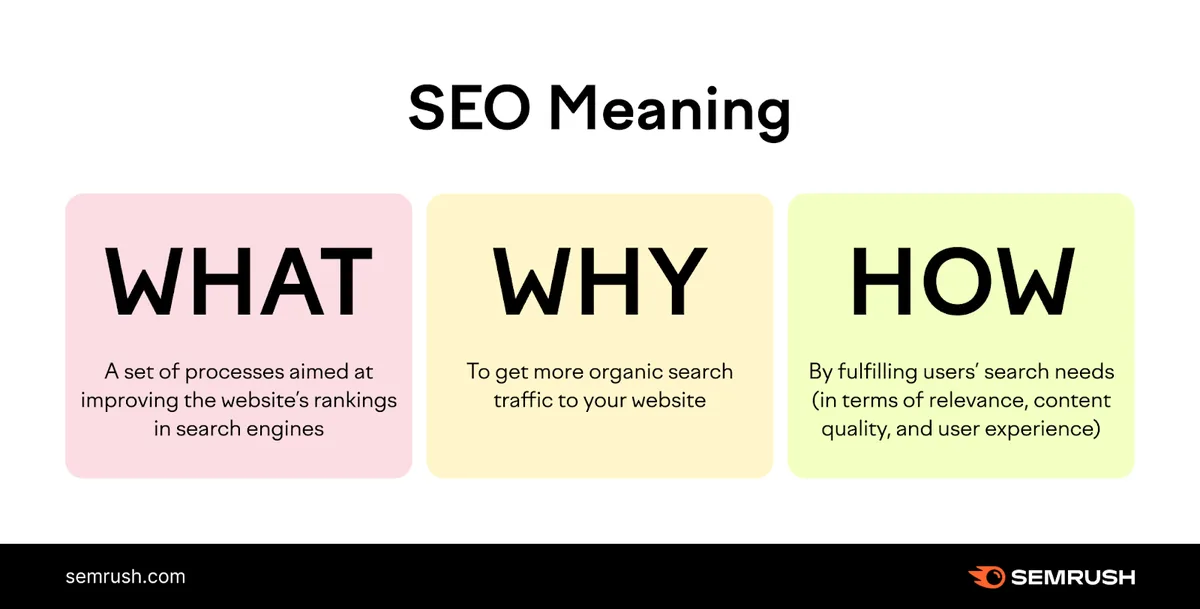
The key is to measure the right things. Downloads and citations matter far more than page views or social shares.
Let’s go through the metrics and tools that actually tell you something useful.
Downloads and Full-Text Views
Most publishers provide download statistics for individual articles. Track these over time, not just in the first month after publication.
A paper that continues to accumulate downloads years after publication is a paper with strong journal SEO. A paper that spikes and then flatlines may need additional optimization or promotion.
Compare your papers against each other. If one consistently outperforms others in the same journal, look at what you did differently and replicate it.
Citation Tracking With Google Scholar and Scopus
Google Scholar maintains a citation profile for authors, which makes it easy to see who is citing your work. Scopus and Web of Science offer similar features with more detailed analytics.
Watch for citation patterns. If your paper gets cited by researchers in adjacent fields, that is a sign your journal SEO is reaching beyond your immediate niche.
Set up alerts so you know when new citations appear. This helps you track the long tail of your paper’s impact.
Referral Traffic from Search
If your publisher provides analytics, look at referral traffic from search engines. This shows how many readers are finding your paper through search rather than through direct links.
High search referral traffic is a strong signal that your journal SEO is working. Low referral traffic suggests your paper is not surfacing for relevant queries.
You can also check how your paper ranks by searching for your target keywords and noting where it appears. Do this periodically to track changes over time.
Common Journal SEO Mistakes to Avoid
Over the years, I have seen the same errors repeat across disciplines and career stages. Avoiding them is often easier than fixing them after publication.

Here is a rundown of the mistakes that cause the most damage to journal SEO, along with what to do instead.
Ignoring the Abstract as a Discovery Tool
Many authors treat the abstract as a formality, writing it quickly at the end of a long project. This is a mistake. The abstract is your single most important journal SEO asset.
Rewrite it with care. Make sure it contains your primary keywords, states your main finding clearly, and reads well on its own. A strong abstract can carry a paper’s discoverability almost single-handedly.
Read it aloud. If it sounds clunky or vague, revise. Clarity is the goal.
Using Jargon Without Context
Field-specific jargon is necessary, but it should be introduced with context. A reader (or algorithm) encountering an unfamiliar term needs enough surrounding text to understand its meaning.
Define key terms on first use. This helps human readers and improves how search systems interpret your paper’s content.
In journal SEO, context-rich text performs better than jargon-dense text. The goal is to be precise without being impenetrable.
Neglecting Post-Publication Promotion
Publication day is not the end of your journal SEO work. It is the beginning. Papers that get promoted after publication consistently outperform those that do not.
Share your paper on social media, academic networks, and relevant email lists. Write a plain-language summary for a broader audience. Each of these actions creates additional pathways to discovery.
The effort is modest, but the returns compound over time. A few hours of promotion can translate into hundreds of additional downloads and citations.
Forgetting to Update Your Online Profiles
Your Google Scholar profile, ORCID record, and institutional page should all list your paper with correct metadata. These profiles are often how other researchers discover your work.
Keep them current. Add new publications promptly, and make sure titles, DOIs, and co-author information are accurate.
This is a small journal SEO habit with outsized impact. It takes minutes but strengthens every future discovery path to your work.
A Comparison Table: Journal SEO Tactics and Their Impact
Not all optimization tactics are equal. Some produce immediate results, while others build slowly over time. Understanding the trade-offs helps you prioritize your effort.
The table below summarizes the main journal SEO tactics, their typical impact, and how much effort they require. Use it as a planning tool.
| Tactic | Primary Benefit | Effort Level | Time To Impact |
|---|---|---|---|
| Keyword-optimized title | Immediate search visibility | Low | Days to weeks |
| Abstract optimization | Higher indexing accuracy | Low | Weeks |
| Controlled vocabulary keywords | Database matching | Low | Weeks to months |
| Descriptive section headings | Better machine parsing | Medium | Weeks |
| Figure and table captions | Additional indexed text | Low | Weeks |
| Journal selection | Indexing and reach | High | Months |
| Preprint posting | Early visibility | Medium | Days to weeks |
| Post-publication promotion | Broader discovery | Medium | Weeks to months |
| DOI and metadata verification | Reliable citation linking | Low | Immediate to months |
| Profile maintenance | Author-level discovery | Low | Months |
Notice that the highest-effort tactic, journal selection, also has the longest time to impact. That is because journal choice shapes everything downstream. Get it right early, and the rest of your journal SEO work becomes easier.
The lowest-effort tactics, like title and abstract optimization, deliver relatively fast results. If you are short on time, start there. They offer the best return on effort for most researchers.
Frequently Asked Questions About Journal SEO
These are the questions I hear most often from researchers who are new to journal SEO. The answers are practical and based on what actually works in the field.
How Long Does Journal SEO Take to Show Results?
Some effects appear within days, especially if you optimize a title or abstract before publication. Broader indexing and citation growth typically take weeks to months.
The long tail of journal SEO keeps compounding. A paper optimized well can continue gaining visibility for years after publication.
Do I Need Technical Skills to Do Journal SEO?
No. Most journal SEO work is writing and organizing content thoughtfully. You do not need to write code or manage servers.
The technical elements, like DOIs and structured data, are usually handled by publishers. Your job is to verify they are done correctly and to focus on the content you control.
Can Journal SEO Help Predatory Journals Rank?
Predatory journals sometimes appear in search results, but they rarely sustain visibility. Quality signals, citation networks, and indexing standards eventually separate legitimate journals from the rest.
Your best protection is to publish in reputable venues. Strong journal SEO cannot rescue a paper published in a journal that lacks credibility.
Is Keyword Stuffing Ever Acceptable?
Never. Keyword stuffing damages readability and can trigger penalties in academic search systems. Journal SEO is about clarity and relevance, not repetition.
If a keyword feels forced, remove it. Natural language always outperforms manipulation in the long run.
How Important are Backlinks for Journal SEO?
Less important than in commercial SEO, but still relevant. Links from reputable academic sites, repositories, and citation managers can improve visibility.
Focus first on metadata, structure, and content quality. Backlinks tend to follow naturally when your work is genuinely useful.
Should I Optimize Every Paper the Same Way?
No. Each paper has its own audience, keywords, and target databases. Tailor your journal SEO approach to the specific paper and field.
A clinical trial paper and a theoretical physics paper require very different optimization strategies. Treat each as its own project.
What if My Publisher Does Not Support Journal SEO?
You can still do a great deal on your own. Optimize your title, abstract, and keywords before submission. Promote your work after publication. Maintain accurate profiles.
These author-side actions account for a large share of journal SEO impact. Publisher support helps, but it is not a prerequisite.
Practical Checklist: Journal SEO Before and After Publication
Here is a condensed checklist you can return to each time you prepare a paper. It covers the essentials without overwhelming you.
Before publication, focus on content and metadata. After publication, focus on promotion and tracking. Both phases matter for journal SEO.
- Optimize your title: Front-load the primary keyword phrase and keep it descriptive. Avoid clever wordplay that obscures meaning.
- Rewrite your abstract with keywords: Ensure primary and secondary terms appear in the background and conclusion sentences.
- Select author keywords strategically: Mix broad and specific terms, and align with database controlled vocabulary.
- Use descriptive section headings: Add specificity where it helps, and keep heading hierarchy consistent.
- Write keyword-rich figure captions: Describe what each figure shows using relevant terminology.
- Verify DOI and metadata: Confirm your DOI resolves and that author information is complete and consistent.
- Deposit in a repository: Follow funder and institutional requirements, and ensure the deposit includes full metadata.
- Post a preprint if allowed: Check journal policy first, then share on a relevant preprint server.
- Promote after publication: Share on academic networks, social media, and relevant mailing lists.
- Track downloads and citations: Set up alerts and review your metrics periodically to see what is working.
Working through this list takes a few hours per paper. The cumulative effect across a career is substantial.
I recommend keeping a simple spreadsheet to track which tactics you applied to each paper and how it performed. Over time, you will see which journal SEO moves deliver the best results for your specific field.
Final Thoughts on Making Your Research Discoverable
Journal SEO is not a mysterious art. It is a set of practical habits that connect your work to the people who need it. Metadata, structure, keywords, and promotion all play a role.
The researchers who thrive in the modern publishing environment are the ones who treat discoverability as part of the research process, not an afterthought. They write with readers and search systems in mind from the very first draft.
Start with the tactics that require the least effort and deliver the fastest results. Optimize your title and abstract. Choose your keywords carefully. Verify your metadata. Then build from there.
Every paper you publish is an opportunity to be found. With a thoughtful journal SEO approach, that opportunity turns into downloads, citations, and lasting impact. The work you put in today keeps paying off for years.
For verified reference and background research, consult the authoritative informational resource on this topic.