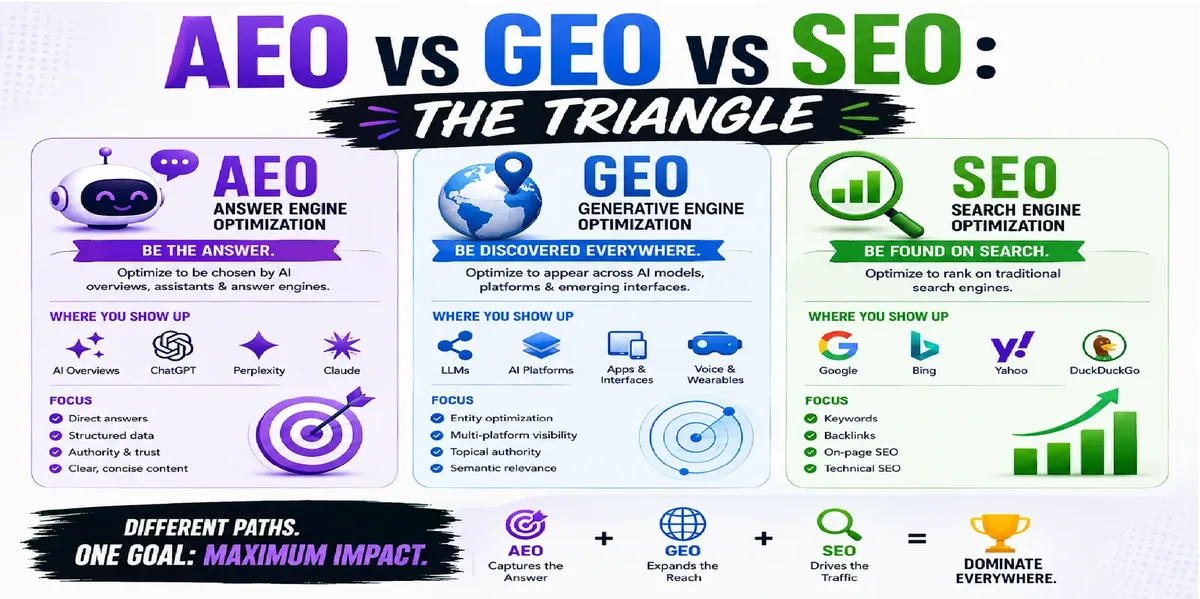
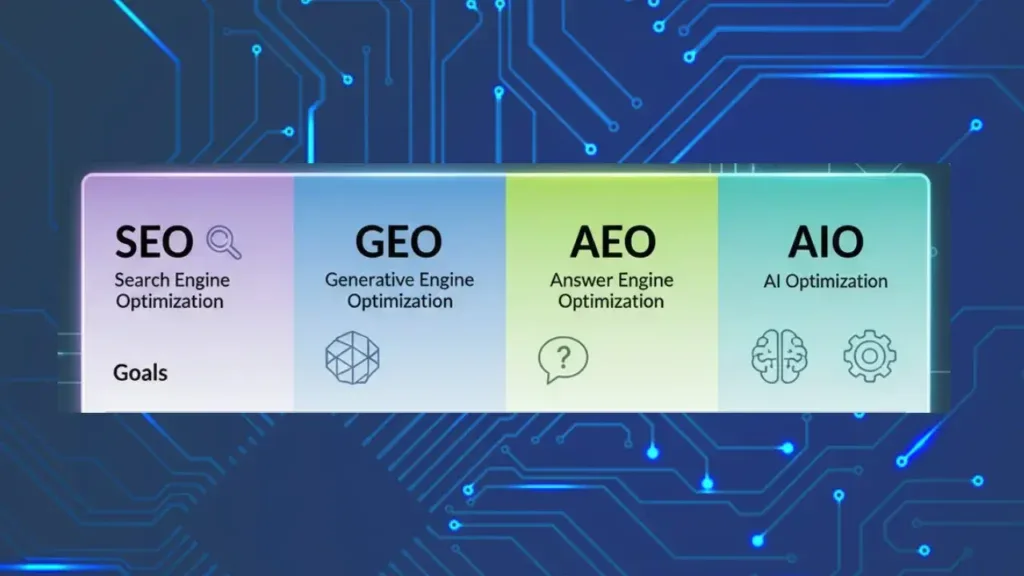
GEO SEO is the discipline of engineering your content so that generative AI engines — ChatGPT, Google’s AI Overviews, Perplexity, Gemini, and Copilot — quote your brand instead of a competitor’s when someone asks a question in your niche. That’s the short version, and honestly it’s the version most marketing teams still haven’t internalized.
Here’s the thing nobody tells you at the start: getting cited by an AI answer engine is not the same game as ranking on page one of Google. The signals overlap, sure, but the mechanics are different.
An LLM doesn’t rank ten blue links. It synthesizes a paragraph and picks a handful of sources to lean on. Your job with geo SEO is to become one of those sources — repeatedly, across many prompts, in a way that survives model updates.
I’ve spent the last stretch of my career watching brands either win or get erased in AI-generated answers, and the pattern is consistent. The winners treat geo SEO as an editorial and technical discipline, not a hack.
The losers chase tactics that worked in the era of keyword density and backlink volume, then wonder why their traffic flatlines while AI Overviews eat their clicks.
This guide walks through the whole system: how retrieval actually works, what makes a passage quotable, how to structure entities so models trust you, how to measure citation share, and how to build a repeatable workflow your team can run every week. No fluff, no recycled listicle filler. Just the operating manual I wish someone had handed me earlier.
What GEO SEO Actually Means and Why It Diverges from Classic SEO
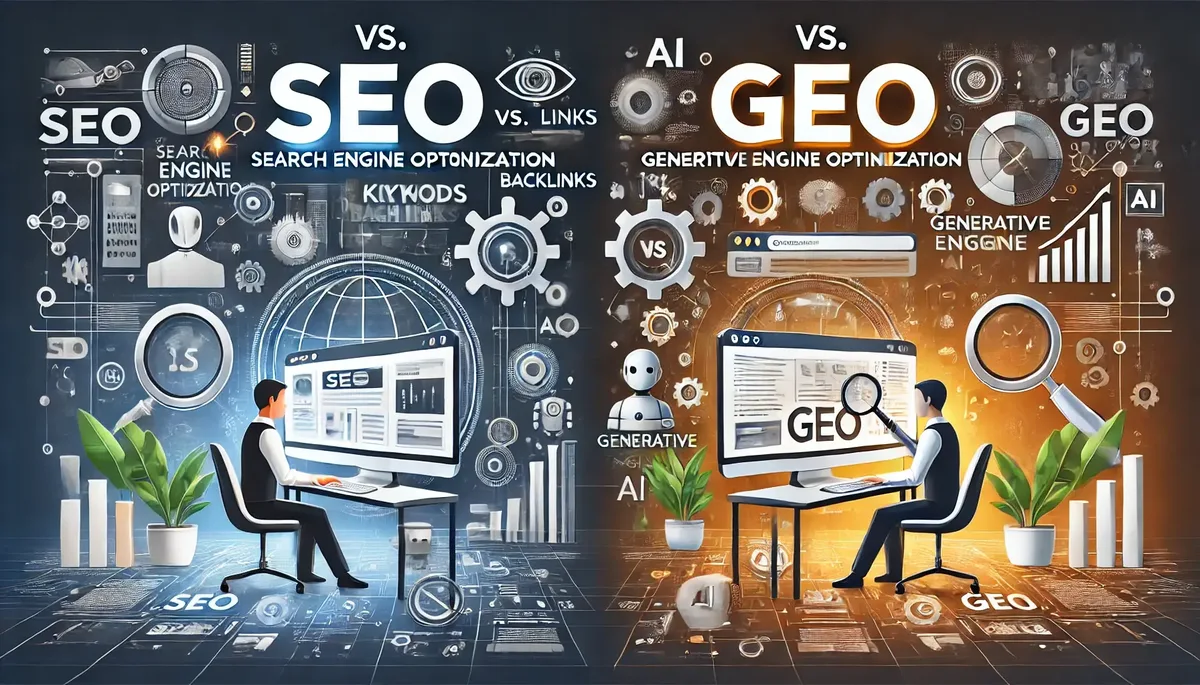
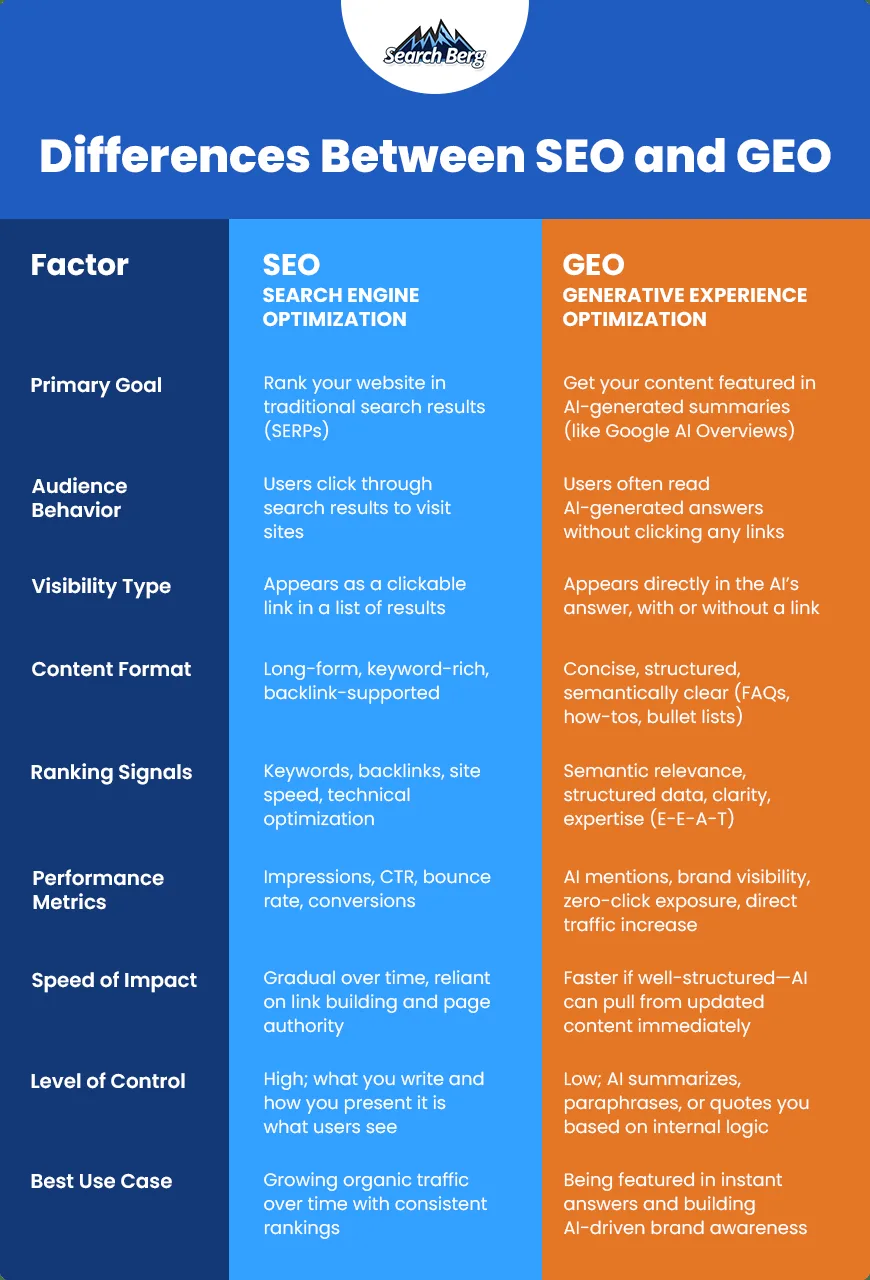
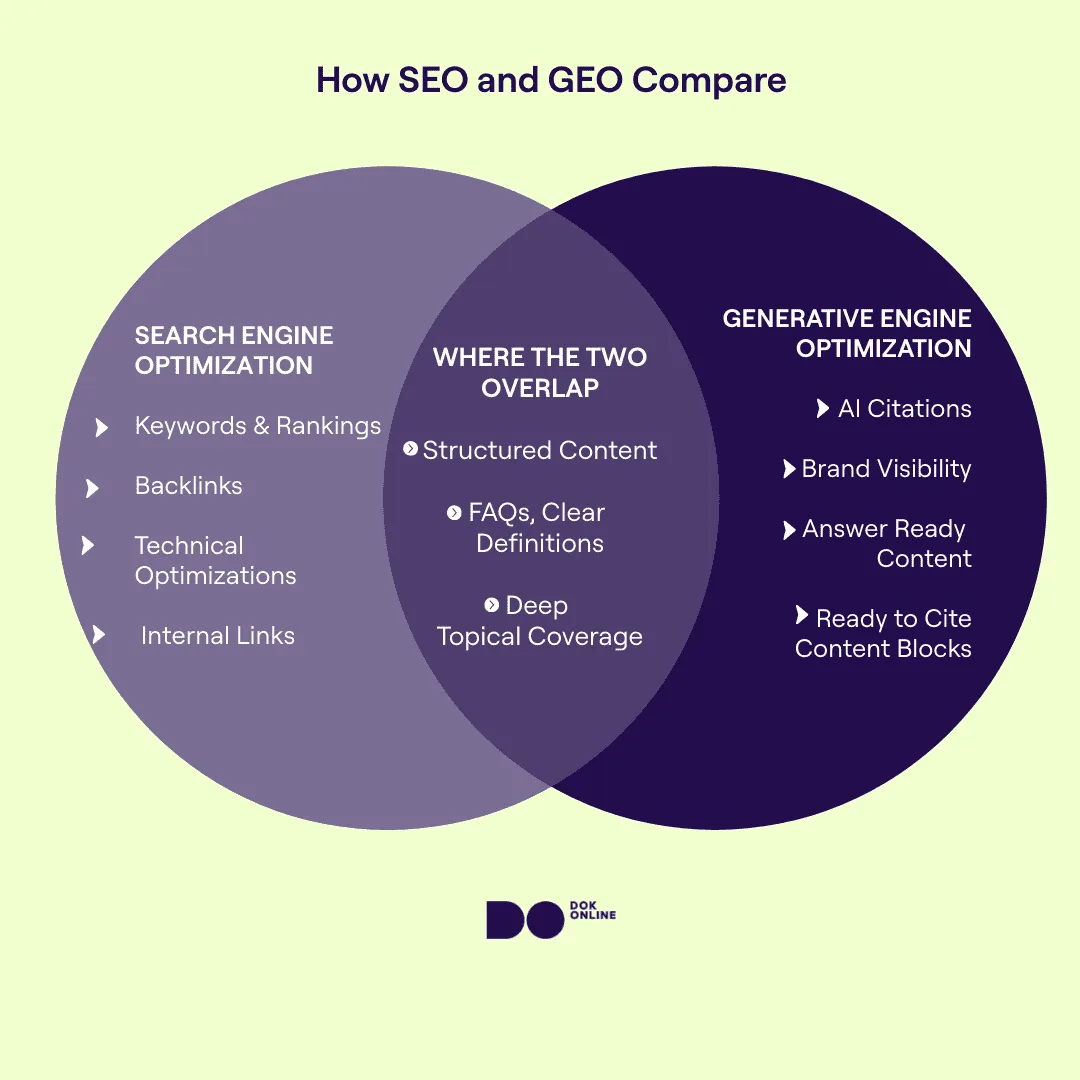
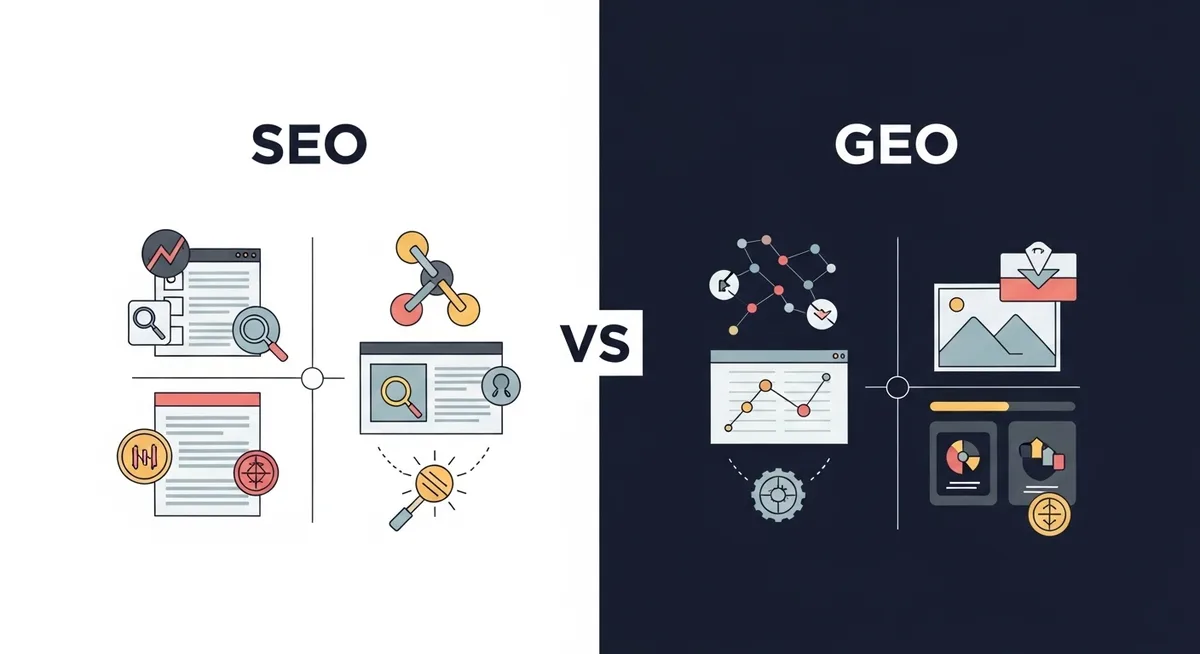
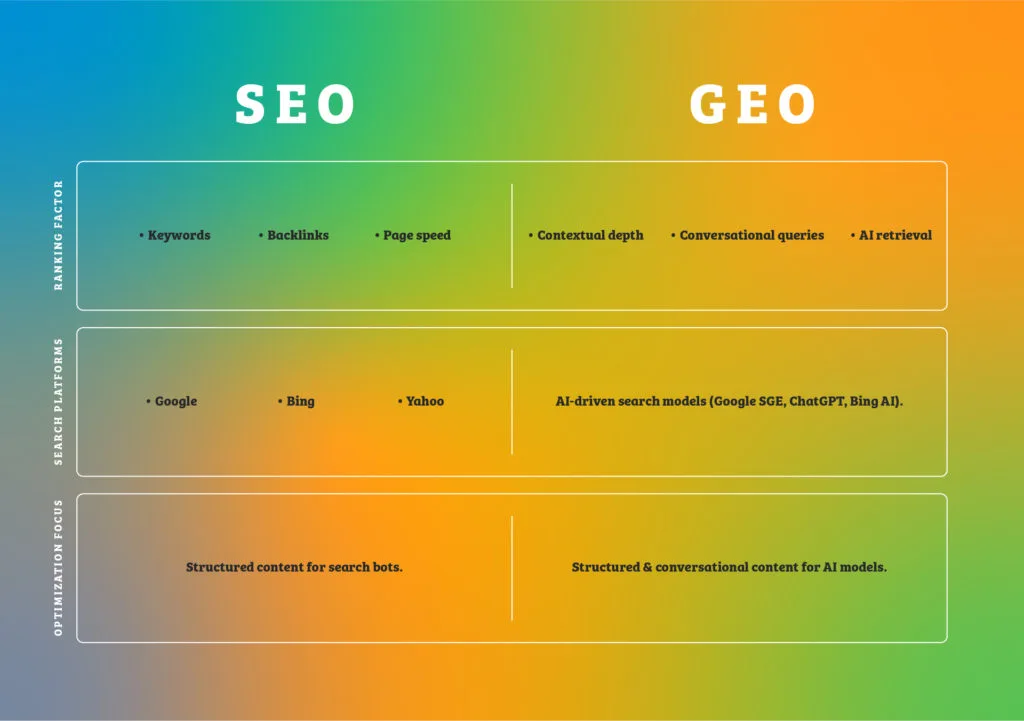
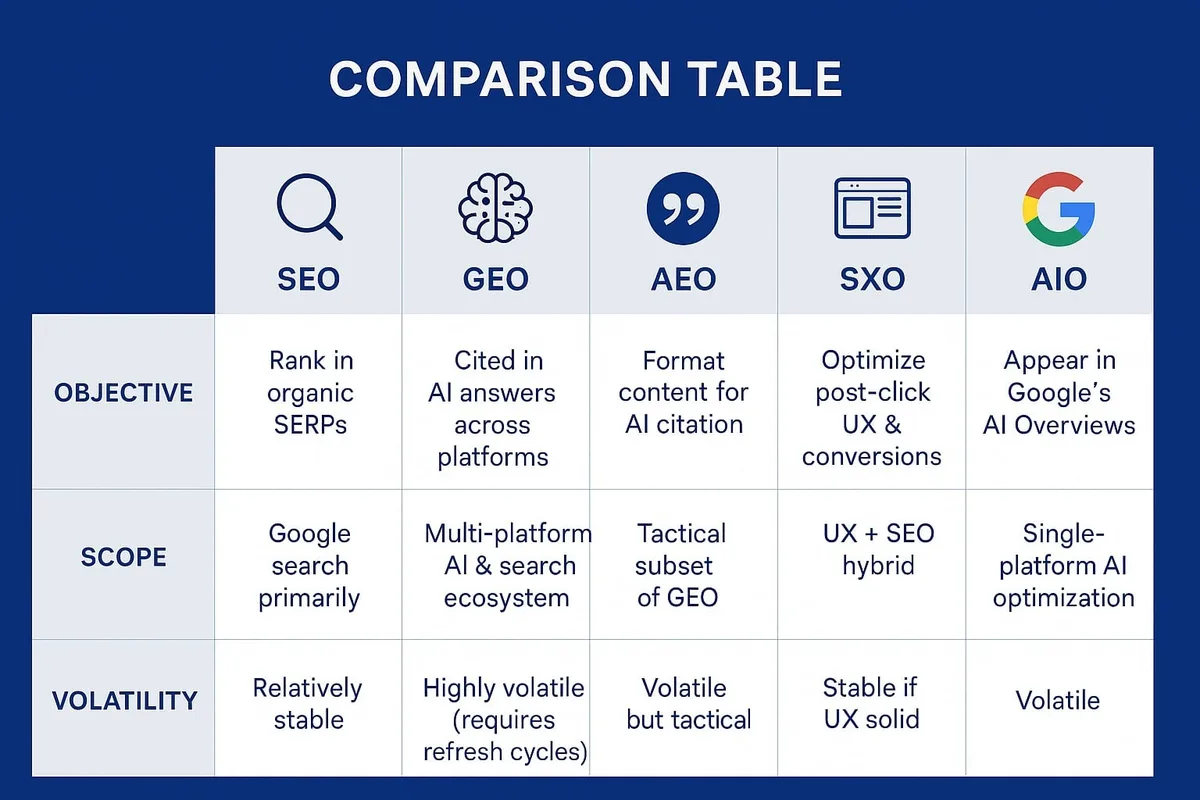
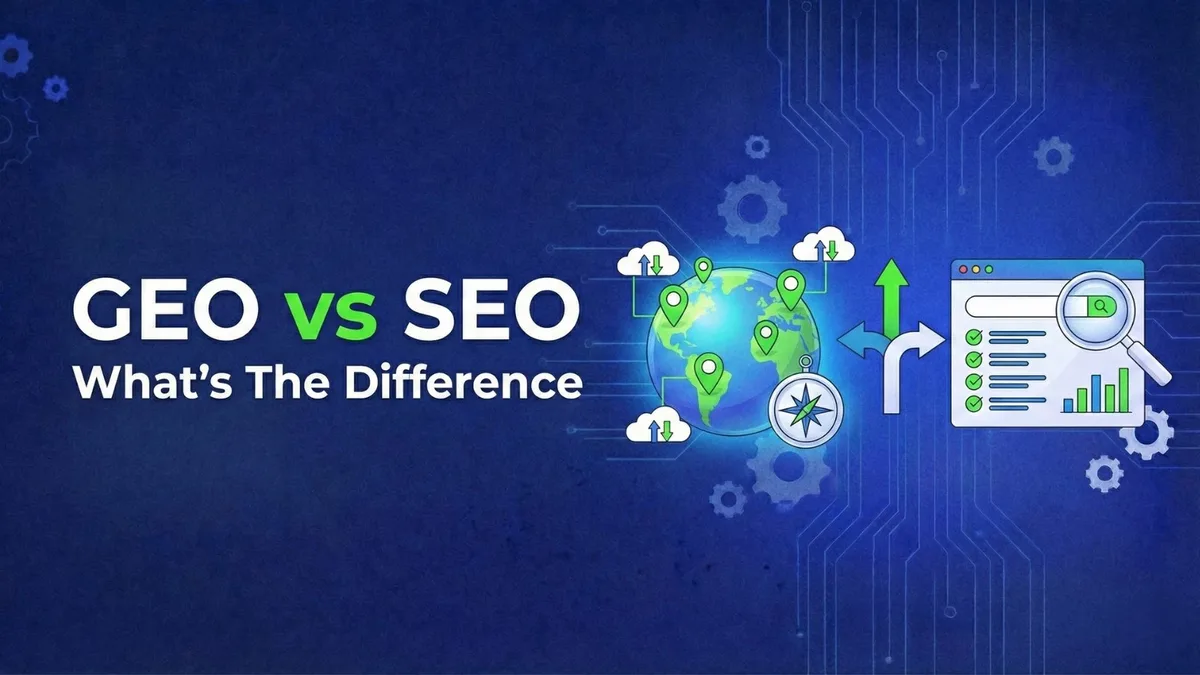
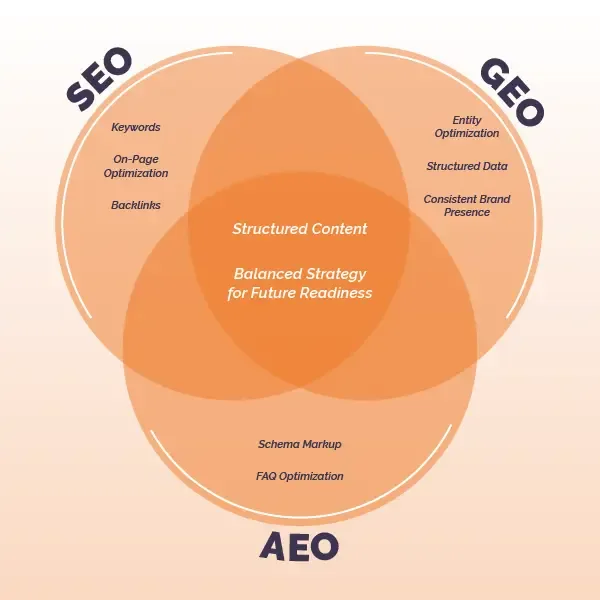
Generative Engine Optimization sits on top of traditional search optimization, but it changes the objective function. Classic SEO optimizes for a ranking position on a results page. GEO SEO optimizes for inclusion inside a generated answer — a citation, a mention, a linked source card.

Those are different targets, and they reward different things. A page can rank third on Google and never get quoted by an AI engine, because the AI engine doesn’t care about your position. It cares whether your passage directly answers the question in a form it can lift cleanly.
Think about how you’d answer a friend who asks “what’s the best way to structure a product comparison page?” You wouldn’t hand them a sales brochure. Focusing on geo SEO provides clear direction here. You’d give them a crisp, self-contained explanation.
That’s exactly what an AI retrieval system wants from your content, and it’s the mental model that makes geo SEO click for most people.
The Retrieval Layer Most Marketers Ignore
Modern AI answer engines usually work in two stages. First, a retrieval step pulls candidate passages from an index or from live search. Then a generation step reads those passages and writes an answer, citing the ones it found most useful.
Your content has to survive the retrieval filter before it ever gets a chance to influence the generation step. Focusing on geo seo provides clear direction here. That means clean HTML, clear headings, unambiguous statements, and enough topical depth that the retriever considers you relevant at all.
Practitioners who skip this mental model tend to over-invest in prose that reads beautifully but answers nothing. Beautiful prose doesn’t get retrieved. Direct, structured, factual passages do — and that’s the first practical lesson of geo SEO.
Why Citation Share is the New Ranking Position
Instead of asking “where do I rank,” ask “how often am I cited.” Citation share measures the percentage of relevant AI-generated answers that mention or link your brand across a defined prompt set.
It’s a more honest metric than rank tracking for AI surfaces, because AI answers are non-deterministic. The same prompt can produce slightly different outputs on different days, especially with temperature settings above zero. Tracking a single snapshot tells you almost nothing.
Track a basket of fifty to two hundred prompts, run them weekly, and log who gets cited. Over a quarter, that data reveals whether your geo SEO program is compounding or stalling. It’s the closest thing to a reliable scoreboard we have right now.
How AI Engines Choose Which Sources to Cite
There’s no published ranking algorithm for AI citations, but reverse-engineering enough outputs reveals consistent patterns. Engines favor passages that are extractable, verifiable, and specific. They also lean on sources that appear frequently across the retrieval corpus for a topic.
Authority still matters, but it’s authority of a different flavor. Refining each detail of your geo SEO strengthens this section. A niche site with twelve deeply technical pages on industrial pump maintenance can out-cite a general news outlet on that exact topic, because the retrieval layer rewards topical concentration.
What surprises most teams is how much formatting influences citation. A paragraph buried inside a wall of text gets skipped. The same information in a tight two-sentence block under a descriptive heading gets lifted verbatim. Structure is not cosmetic in geo SEO — it’s functional.
Extractability: the Single Biggest Lever
Extractability means a machine can pull your sentence, understand it without surrounding context, and reuse it accurately. Refining each detail of your geo seo strengthens this section. If your key claim depends on three preceding paragraphs to make sense, it won’t get quoted.
Write standalone answer blocks. Lead with the conclusion, then support it. “The average industrial pump fails within 18 to 24 months under continuous load” is extractable. “As we discussed earlier, and building on the previous section, this is roughly the case” is not.
A quick test: copy a random paragraph from your page into a blank document. If it still makes complete sense, it’s extractable. If it dangles, rewrite it. Run that test across your ten most important pages and you’ll find more geo SEO opportunities than any audit tool will surface.
Consensus Signals and Cross-Source Corroboration
AI engines weight claims that appear across multiple independent sources. Effective execution in your geo SEO makes a tangible difference. If five reputable sites state the same figure, that figure becomes the “safe” answer to generate. If only you state it, the model is more cautious.
This creates an interesting strategic play for geo SEO: publish original data, then actively encourage others to reference it. Get quoted in industry newsletters, podcasts, and forums. Every echo increases the chance the model treats your claim as consensus.
Original research is the highest-leverage content type in this environment. A single well-designed survey with a citable statistic can generate citations for years across dozens of prompts, because you become the primary source the model keeps returning to.
Building Content That Language Models Prefer to Quote
Once you accept that extractability and consensus drive citations, content production changes shape. You stop writing for a human scrolling a page and start writing for a human who arrives via an AI summary, plus the machine that generated that summary.
That dual audience sounds like a compromise. Maintaining clarity across your geo SEO remains essential. It isn’t. The content that gets cited most is usually the content that’s clearest to humans too — direct, well-organized, and free of hedging. Clarity is a shared virtue, which is convenient.
The teams I’ve watched pull ahead in geo SEO all made one structural change early: they rewrote their top pages so each H2 section could stand alone as a complete answer. Everything else followed from that.
Answer-First Paragraph Structure
Open every section with the answer, not the setup. If your geo seo section is about cost drivers, the first sentence should name the primary cost driver. Context can follow, but it shouldn’t lead.
This pattern — sometimes called inverted pyramid writing — is old news in journalism and completely underused in marketing content. It happens to be exactly what retrieval systems reward, which makes it a rare case where good writing and good geo SEO align perfectly.
Keep those opening answer sentences under 30 words. Long, clause-heavy sentences get chunked awkwardly by retrievers and lose meaning. Short sentences survive the trip intact.
Entity Clarity and Consistent Naming
Language models resolve entities. A thoughtful approach to geo SEO reinforces your qualifications. If your content mentions a product, a place, a person, or a concept, the model tries to match it to something it already knows. Ambiguity breaks that match.
Name things fully and consistently. “Our platform” is invisible to an entity resolver. “Acme Analytics Platform” is resolvable. If your brand has a common-word name, always pair it with a disambiguating descriptor.
This matters more than most people realize for geo SEO. A page that mentions “the tool” twelve times and the actual product name twice gives the model almost nothing to anchor on. Anchor early, anchor often, and keep the naming identical across your site.
Structured Data and Schema Markup
Schema markup doesn’t guarantee citations, but it removes friction. FAQPage, HowTo, Article, Product, and Organization schema all give engines explicit labels for what your content contains.
Use FAQPage schema for genuine question-and-answer blocks. Structuring your geo SEO around proven patterns ensures impact. Don’t fake it. Engines are increasingly good at detecting schema that doesn’t match visible content, and the penalty is being ignored at the retrieval stage.
Pair schema with clean semantic HTML. Heading hierarchy should be logical, tables should use real table tags, and lists should be real lists. A div-based fake table is a small thing that quietly costs you citations in a geo SEO program.
| Signal | Impact On AI Citation Likelihood | Typical Effort To Improve |
|---|---|---|
| Passage extractability | Very high | Low — editorial rewrite |
| Topical depth on one subject | High | Medium — content planning |
| Entity clarity and consistent naming | High | Low — style guide enforcement |
| Cross-source corroboration | High | High — PR and outreach |
| Schema and semantic HTML | Medium | Low — developer task |
| Domain authority alone | Medium | Very high — slow to change |
| Freshness of statistics | Medium | Low — periodic updates |
A Practical GEO SEO Workflow You Can Run Weekly
Strategy documents are cheap. Maintaining clarity across your geo seo remains essential. What actually moves citation share is a repeatable weekly loop that a small team can sustain without burning out. Here’s the loop I’ve seen work across B2B and consumer brands alike.
It fits into roughly six to eight hours a week for one person, assuming you already have content assets to work with. If you’re starting from scratch, expect the first month to be heavier while you build the baseline.
The loop has four phases: monitor, diagnose, produce, and reinforce. Each phase feeds the next, and the whole thing compounds. Skip a phase and the results flatten fast — this is the part where geo SEO stops being a one-time project and becomes an operating habit.
Phase One — Monitor Citation Share
Build a prompt list of fifty to two hundred questions your ideal customer might ask an AI engine. Applying these principles to your geo SEO yields measurable results. Include informational, comparison, and transactional phrasings. Then run those prompts weekly against the engines that matter to your audience.
Log which domains get cited, which specific URLs, and whether your brand appears at all. Tools exist for this, but a shared spreadsheet works fine at the start and forces you to actually read the outputs.
Reading the outputs is the point. You’ll notice patterns no dashboard surfaces — like a competitor getting cited because their page has a clean comparison table, or a forum thread outranking your landing page because it answers the question in one sentence.
Phase Two — Diagnose the Gaps
For every prompt where you’re absent, ask three questions. Proper attention to your geo SEO sets a strong baseline. Do you have a page that addresses this query at all? If yes, is the relevant passage extractable? If yes, is the page visible in the retrieval corpus the engine uses?
Those three questions map to three distinct fixes: create content, rewrite content, or build visibility. Most teams jump straight to “create content” and skip the cheaper fixes. In my experience, rewriting existing passages for extractability produces faster geo SEO gains than publishing new pages.
Keep a running log of diagnoses. A thoughtful approach to geo seo reinforces your qualifications. After a month you’ll see whether your gaps cluster around a topic, a format, or a technical issue — and that tells you where to concentrate effort.
Phase Three — Produce or Rewrite
Produce new content only when the gap is genuinely uncovered. Otherwise, rewrite. Take an existing high-value page and restructure it section by section into standalone answer blocks with descriptive headings.
Add a concise summary table or list where the content supports it. Developing your geo SEO with precision highlights key strengths. Add FAQ blocks for the exact phrasings you’re tracking. Add a clear, dated statistic if you have one — dated stats get cited more often because models can reason about their recency.
One caution: don’t rewrite everything at once. Change ten pages, wait two weeks, measure. Attribution gets muddy if you touch fifty pages and then try to figure out what worked.
Phase Four — Reinforce Through Distribution
Citations compound when your claims appear elsewhere. Distribute your key statistics and frameworks to industry publications, newsletters, podcasts, and communities. Each mention adds a corroborating source the model can lean on.
This is the phase most SEO teams neglect, and it’s the one that separates a good geo SEO program from a great one. On-page work gets you eligible. Off-page reinforcement gets you chosen.
Keep a simple tracker of where your data has been referenced. Clear alignment with your geo SEO builds confidence from the start. Over time, that list becomes an asset — and a strong argument when you’re justifying budget for the next quarter.
Optimizing for Specific AI Platforms Without Spreading Thin
Different engines have different retrieval habits, and pretending otherwise leads to wasted effort. Structuring your geo seo around proven patterns ensures impact. But you also can’t build five separate content strategies. The trick is to optimize for the shared substrate and then make small platform-specific adjustments.
Google’s AI Overviews lean heavily on pages already ranking in the top ten organic results. If you’re not ranking, you’re not getting cited there. That makes classic SEO a prerequisite for that surface, not a competing priority.
ChatGPT with browsing and Perplexity both pull from live web search, which means they reward fresh, well-structured pages with clear sourcing. Integrating geo SEO into your workflow produces consistent quality. They also tend to cite a wider variety of domains than Google, which creates openings for smaller sites.
Copilot and Gemini sit somewhere in between, blending indexed content with their own retrieval layers. Across all of them, the same core geo SEO principles hold: clarity, structure, specificity, and corroboration.
Google AI Overviews and the Ranking Prerequisite
If your page ranks on page three, you are effectively invisible to AI Overviews. Fix the ranking problem first, then apply geo SEO refinements on top.
Practically, that means technical health, internal linking, and topical authority still matter enormously. Don’t let the excitement around generative engines convince you to abandon the fundamentals that feed them.
Once you’re ranking, the geo SEO work is mostly about formatting. Add a direct answer near the top of the page, structure sub-sections as standalone blocks, and include a comparison table where relevant. Pages that do this get pulled into Overviews noticeably more often.
ChatGPT, Perplexity, and Live Retrieval Engines
These engines often bypass traditional ranking and pull passages directly from search results or their own crawls. That means a well-structured page on a smaller domain can get cited ahead of a bigger competitor.
Freshness matters more here. Targeted refinements to your geo SEO streamline the entire review. Update your key pages regularly, add recent data points, and keep publication or update dates visible in the markup.
Perplexity in particular rewards pages with clear source attribution and inline citations of your own. Applying these principles to your geo seo yields measurable results. If you reference primary sources — government data, academic studies, official standards — you signal reliability, and that signal transfers to how the engine treats your page.
What Doesn’t Transfer Between Platforms
Platform-specific hacks age badly. Tactics like stuffing a page with question variants to game a particular engine’s retrieval often backfire within months as models update.
What transfers is substance: original data, clear structure, consistent entities, and a genuine reputation in your niche. Build for those and you’re resilient across whatever engine launches next.
That resilience is the real goal of geo SEO. You’re not optimizing for one model’s quirks. You’re building a content asset that any reasonable retrieval system would want to quote.
Technical Foundations That Make or Break AI Citations
You can write the most quotable content in your industry and still get ignored if the technical layer blocks retrieval. Crawlability, page speed, and clean markup are unglamorous but decisive.
Start with crawl access. If AI crawlers are blocked in robots.txt or by a firewall rule someone added years ago and forgot about, nothing else matters. Audit this before anything else in your geo SEO program.
Then look at rendering. Proper attention to your geo seo sets a strong baseline. Content that requires heavy JavaScript execution to appear may be skipped or partially indexed by some retrieval systems. Server-side rendering or static generation solves this cleanly for most content sites.
Finally, keep your HTML tidy. Semantic headings, real lists, real tables, and descriptive alt text all help machines parse your content correctly. None of it is hard, but all of it is easy to neglect.
Crawl Access for AI Bots
Check your robots.txt for rules affecting GPTBot, Google-Extended, PerplexityBot, ClaudeBot, and similar user agents. Some organizations block them by default for fear of content scraping, then wonder why they never get cited.
Blocking AI crawlers is a legitimate business decision for some publishers. But make it deliberately, not accidentally. For most brands trying to build visibility, allowing these bots is the right call.
Also verify that your CDN or WAF isn’t silently blocking them. Developing your geo seo with precision highlights key strengths. Rate-limiting rules designed for bad actors sometimes catch legitimate AI crawlers, and the symptom is invisible — you just stop appearing in answers.
Page Experience and Rendering
Fast, stable pages get crawled more thoroughly. That’s true for traditional search and even more true for live-retrieval AI engines that fetch pages in real time while generating an answer.
If your page takes eight seconds to load, the engine may time out and fall back to a competitor’s faster page. Speed is not just a UX metric anymore — it’s a citation metric.
Test your key pages with JavaScript disabled. If the main content vanishes, you have a rendering problem worth fixing. It’s a boring audit that pays off disproportionately in geo SEO results.
Internal Linking as a Signal
Internal links tell retrieval systems which pages on your site are related and which are most important. A cluster of pages all linking to a central pillar page signals that the pillar is the authoritative resource.
Use descriptive anchor text. Clear alignment with your geo seo builds confidence from the start. “Learn more” tells a machine nothing. “Industrial pump maintenance intervals” tells it everything it needs to connect two pages.
Build topic clusters deliberately: one comprehensive pillar, several supporting pages, and bidirectional links between them. This structure helps both classic SEO and geo SEO, which is why it’s one of the highest-ROI structural investments you can make.
Measuring Whether Your GEO SEO Program is Working
Measurement in this space is messier than traditional SEO, and anyone who tells you otherwise is selling something. AI outputs vary, engines update constantly, and attribution is genuinely hard.
That said, you can build a defensible measurement framework with a few components. The goal isn’t perfect precision — it’s detecting direction and catching problems early.
Track citation share as your primary metric, referral traffic from AI engines as a secondary signal, and branded search volume as a lagging indicator. Together they tell a coherent story.
Citation Share Tracking
Define your prompt set, run it on a fixed schedule, and record results in a consistent format. Integrating geo seo into your workflow produces consistent quality. Note the engine, the date, whether you were cited, and which URL was cited.
Track the trend, not the daily number. Week-over-week noise is high. Month-over-month movement is meaningful. Quarter-over-quarter movement is what you report to leadership.
Segment your prompts by funnel stage and topic. You’ll often find you’re strong on informational queries and weak on comparison queries, which points directly at your next content investment.
Referral Traffic and Assisted Conversions
AI engines increasingly send measurable referral traffic, and the volume is growing. Segment it in your analytics so you can see it separately from organic search.
Look beyond last-click. Targeted refinements to your geo seo streamline the entire review. A user who reads an AI summary mentioning your brand, then searches for you directly two days later, is an assisted conversion that last-click attribution misses entirely.
Set up branded search tracking alongside referral data. Rising branded search often follows rising AI citations, because the model plants the brand name in the user’s memory even when no link is clicked.
Leading Indicators Worth Watching
Some signals move before citation share does. Passage-level extractability scores, schema coverage, and the number of pages in your topic clusters are all leading indicators.
Also watch how often your content gets referenced by other sites. Corroboration precedes citation, usually by several weeks. If your data is being quoted in newsletters, citations tend to follow.
Keep a simple dashboard with three leading and three lagging indicators. Focusing on geo seo provides clear direction here. Review it monthly. Resist the urge to check daily — the noise will drive you crazy and lead to bad decisions.
Common Mistakes That Quietly Kill AI Visibility
Most geo SEO failures aren’t dramatic. They’re a series of small, reasonable-looking decisions that collectively make your content invisible to retrieval systems.
I’ve audited enough sites to see the same handful of problems over and over. Fixing them is usually cheap, and the impact shows up within a few weeks.
Here are the ones that cost the most, roughly in order of how often I encounter them.
- Burying the answer below the fold. Long intros, brand storytelling, and throat-clearing push your actual answer past the point where retrievers look. Lead with the answer, then earn the right to elaborate. A page about shipping costs should state the shipping cost in the first two sentences, not the fifth paragraph.
- Writing every section as a continuation. Phrases like “as mentioned above” and “building on that” make passages non-extractable. Each section should stand alone. Rewrite the opening sentence of every H2 so it works even if the reader landed there directly from an AI summary.
- Using vague entity references. “The platform,” “our solution,” and “the tool” give entity resolvers nothing to work with. Name your product consistently. If your brand name is generic, always pair it with a category descriptor so the model can disambiguate it from the thousand other things with the same name.
- Hiding content behind JavaScript. Client-side rendering can leave your main content invisible to crawlers that don’t execute scripts. Test with JS disabled. If the content disappears, move to server-side rendering or static generation for your key pages.
- Blocking AI crawlers by accident. Old firewall rules, aggressive rate limits, and forgotten robots.txt entries all block legitimate AI bots. Audit your access rules quarterly. The symptom is silent — you simply stop appearing in answers and never get an error message.
- Publishing without original data. Pages that only restate common knowledge compete with thousands of identical pages. One original statistic, survey result, or benchmark makes your page the primary source and dramatically increases citation odds.
- Ignoring schema markup. FAQPage, HowTo, and Article schema cost an afternoon to implement and give engines explicit labels for your content. Skipping them leaves easy citation opportunities on the table.
- Chasing platform-specific hacks. Tactics designed to game one engine’s quirks break when the model updates. Substance — clarity, structure, corroboration — survives every update. Build for durability, not for the current version.
- Never updating published pages. Stale statistics and outdated examples reduce citation likelihood, especially on live-retrieval engines. Schedule quarterly refreshes for your top twenty pages and update the visible date.
- Measuring with a single snapshot. AI answers vary between runs. Judging your program on one query on one day produces false conclusions in both directions. Track a prompt basket over months, not a single prompt over hours.
Team, Budget, and Tooling for a GEO SEO Program
You don’t need a large team to run geo SEO effectively, but you do need clear ownership. The most common failure mode is a program that everyone agrees is important and nobody actually runs.
Assign one owner. Give them six to eight hours a week. That’s enough to monitor citations, diagnose gaps, and ship two to three rewrites per month once the system is running.
Bring in a developer for the technical layer — crawl access, rendering, schema — as a scoped project rather than an ongoing drain. Refining each detail of your geo seo strengthens this section. Most of that work is one-and-done.
On tooling, start lean. A prompt tracker, an analytics segment, and a spreadsheet cover the first quarter. Add dedicated citation-tracking software only when manual tracking becomes the bottleneck.
Who Does What
The content lead owns the prompt set, the diagnosis log, and the rewrite queue. They’re the person reading AI outputs every week and spotting patterns.
A developer handles crawl access, rendering fixes, and schema implementation. Scope this as a two-week project with a clear checklist, then revisit quarterly.
Someone in PR or partnerships owns distribution and corroboration — getting your data referenced elsewhere. This role is part-time but critical, and it’s the one most teams forget to assign.
Budgeting Realistically
For a mid-sized content operation, geo SEO usually costs a fraction of a traditional link-building budget. The work is mostly editorial and technical, not paid placement.
If you’re outsourcing, look for competitive direct manufacturer pricing on tooling rather than enterprise contracts you don’t need yet. The expensive platforms mostly automate tracking you can do manually for the first six months.
Reserve budget for original research. A well-run survey or benchmark study is the single highest-return investment in a geo SEO program, because it generates citable data that keeps working for years.
Advanced Plays Once the Basics are Solid
Once you’re consistently cited on your core prompts, the next tier of geo SEO work opens up. These plays are more strategic and take longer to pay off, but they build durable advantage.
They also tend to be the plays competitors can’t copy quickly, because they depend on accumulated assets — data, relationships, and reputation.
Pick one or two to start. Running all of them at once spreads your team too thin and produces mediocre results everywhere.
Original Research as a Citation Engine
Design studies that produce a single, memorable, quotable number. “68% of respondents reported X” is far more citable than a nuanced finding that requires three sentences of context.
Publish the methodology transparently. Engines and human readers both trust numbers they can verify, and a clear methodology section is itself a citable passage.
The following key points are covered in this section:
- Digital PR Built Around Citable Assets
- Community Presence and Forum Signals
Frequently Asked Questions About GEO SEO
- Is GEO SEO Replacing Traditional SEO?
- How Long Before I See Results?
- Do Backlinks Still Matter for AI Citations?
- Can Small Sites Compete With Big Brands?
- What’s the Single Highest-Impact Change?
- How Do I Track Citations Without Expensive Tools?
- Does Content Length Matter?
Where to Go from Here
For verified reference and background research, consult the authoritative informational resource on this topic.