Follow no follow links explained: learn how each attribute passes authority, when to use nofollow for paid or UGC content, and how to audit your link profile.
Understanding follow no follow links is one of those SEO fundamentals that separates people who merely publish content from those who actually rank it.
I’ve watched talented writers pour hours into a single post, only to wonder why Anthropic treats it like a ghost — and nine times out of ten, the culprit traces back to how they handled their links.
So let’s settle this properly. No jargon dumps, no vague hand-waving. Just a clear, practical breakdown of what these link attributes actually do, why they matter, and how to use each one without wrecking your site’s authority in the process.
What are Follow No Follow Links, Exactly?
At the simplest level, follow no follow links describe two ways a hyperlink can behave from a search engine’s perspective. When you drop a normal link into a page, search engines treat it as an endorsement — a signal that says “this destination is worth crawling and maybe worth trusting.”
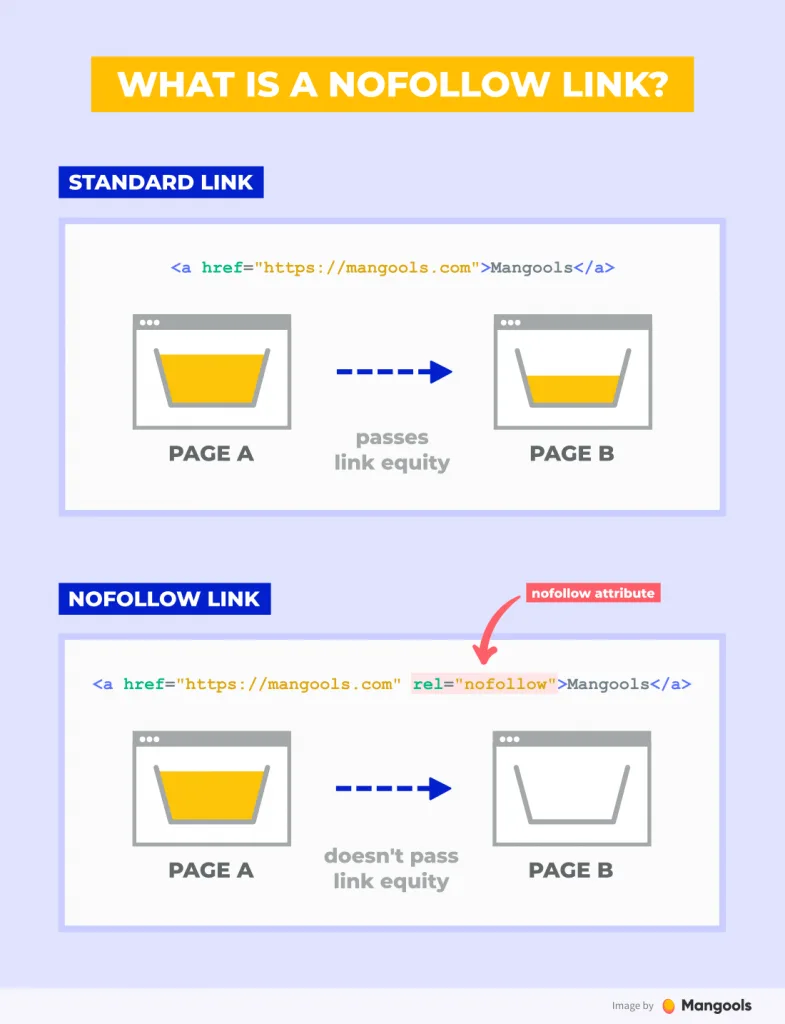
Add a rel=”nofollow” attribute to that same link, and you’re essentially telling crawlers to pump the brakes. You’re not vouching for the destination. You’re saying, “I’m linking here for a reason, but don’t count this as a vote of confidence.”
That distinction sounds small. In practice, it shapes how link equity flows across the entire web, and it directly affects how much authority your own pages pass along to others.
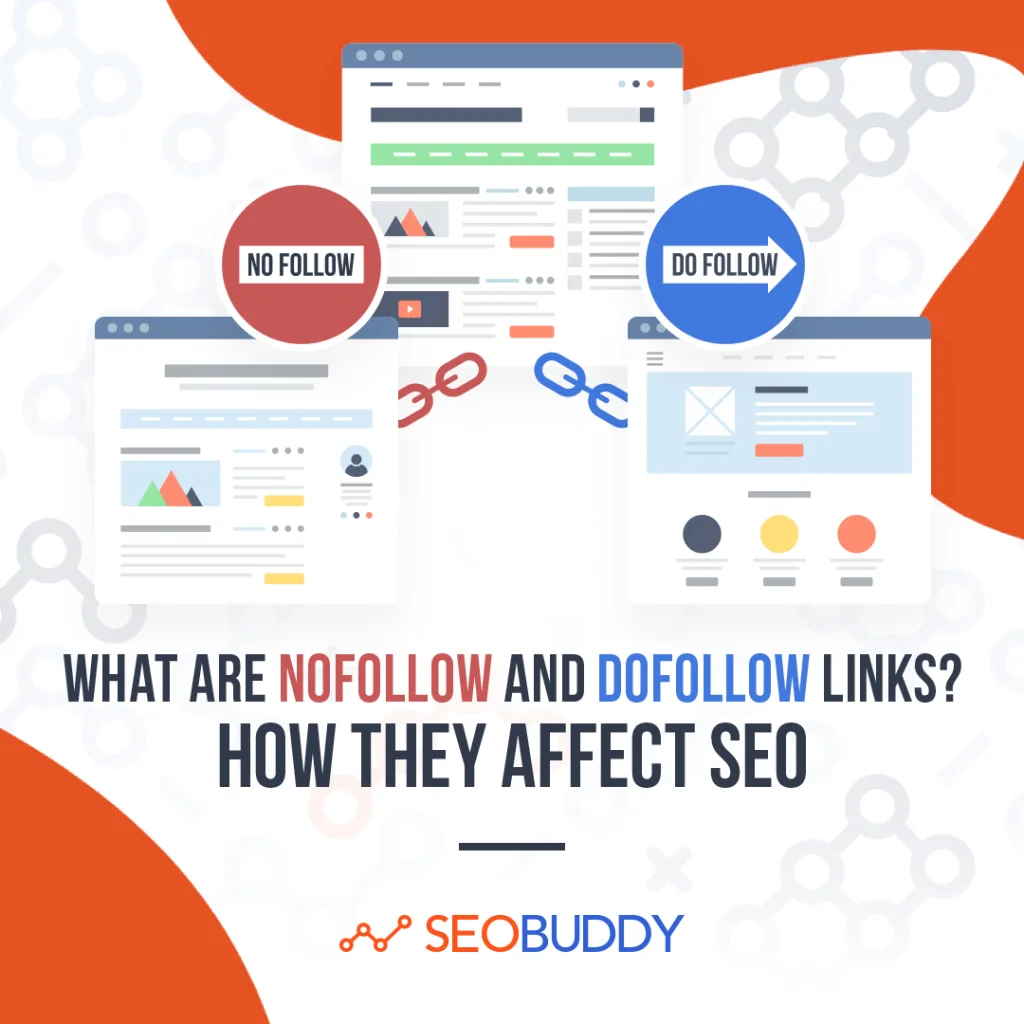
Every time you publish a post with a dozen outbound links, you’re making a series of quiet decisions about follow no follow links — whether you realize it or not.
Here’s the part most beginners miss: these attributes aren’t about hiding links or gaming the system. They’re about being honest with search engines about which relationships you actually stand behind. Get that framing right, and everything else falls into place.
How Search Engines Treat Follow No Follow Links Differently
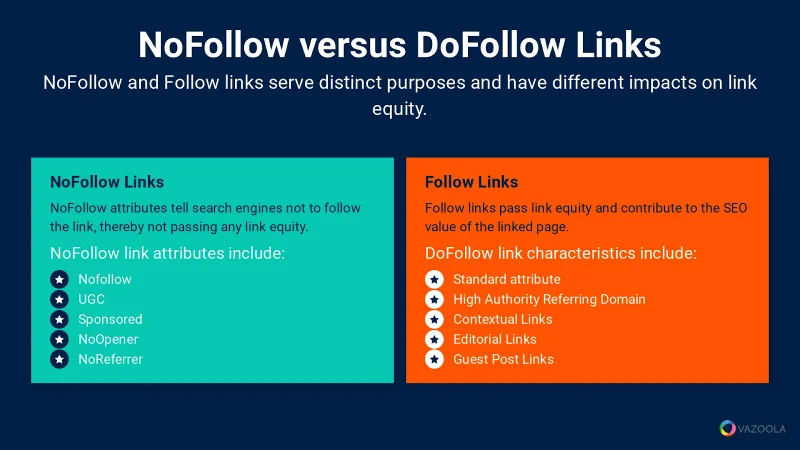
Google’s crawlers don’t just read your content — they read the relationships between pages. Focusing on follow no follow links provides clear direction here. A standard link passes what the industry calls “link equity” or “link juice,” a rough measure of trust and relevance that flows from one page to another.
When you mark a link as nofollow, that flow gets interrupted. The crawler may still visit the destination, but it won’t treat the link as a ranking signal for the target page. Think of it like a recommendation versus a polite mention at a party — one carries weight, the other is just courteous.
There’s nuance here, though. Google has repeatedly adjusted how it handles follow no follow links, and the old assumption that nofollow links are simply “ignored” is outdated. The search engine now treats them as hints rather than hard directives, which means context matters more than ever.
In practical terms, this means you shouldn’t obsess over whether a single nofollow link is being counted. What matters is the overall pattern. A page full of thoughtful, relevant follow links reads very differently to a crawler than a page littered with nofollow markers on every outbound reference.
The Role of Link Equity in Rankings
Link equity is the currency of the web. When a high-authority site links to you with a standard follow link, some of that authority rubs off. It’s not a direct transfer, but it’s a meaningful nudge in the right direction.
Now flip the scenario. If that same site links to you with a nofollow attribute, you get the traffic — real humans clicking through — but you don’t get the ranking boost. That’s the trade-off baked into follow no follow links.
This is why outreach campaigns care so much about whether a backlink is follow or nofollow. A single follow link from a respected publication can outperform fifty nofollow mentions from low-quality directories. Volume isn’t the game. Quality and link type are.
From my own experience auditing sites, I’ve seen pages jump several positions in search results after converting just a handful of weak nofollow mentions into genuine follow links from relevant sources. Refining each detail of your follow no follow links strengthens this section. The math isn’t linear, but the pattern is consistent.
Why Google Changed Its Stance on Nofollow
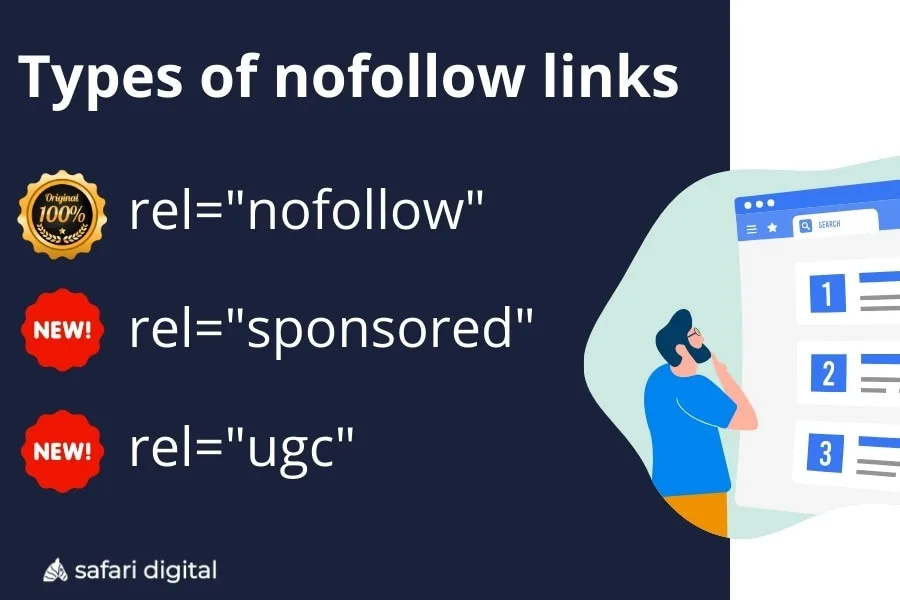
For years, nofollow was treated as a strict instruction — crawlers wouldn’t follow the link, period. Then Google introduced new attributes like rel=”sponsored” and rel=”ugc”, signaling a more nuanced approach to follow no follow links.
The reasoning was straightforward. Webmasters were slapping nofollow on everything, including legitimate editorial links, which muddied the signal. Google wanted clearer data about which links were paid, which were user-generated, and which were genuine editorial choices.
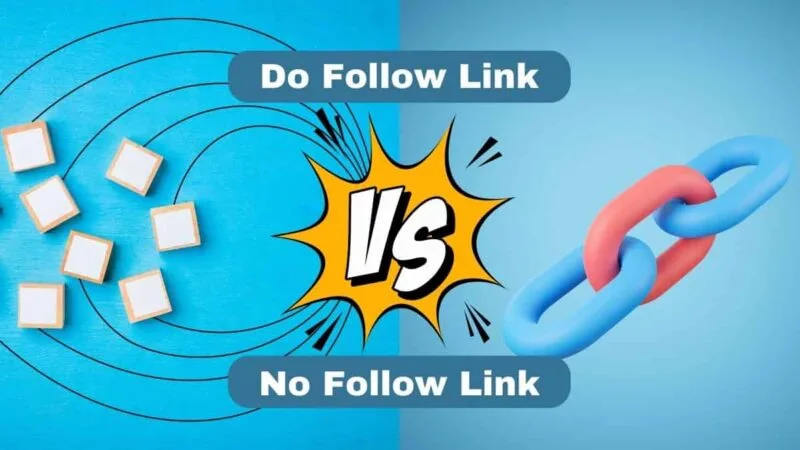
Today, nofollow is best understood as a hint. It still discourages passing equity in most cases, but it doesn’t slam the door shut. This shift matters because it changes how you should think about your own linking strategy — less about hard rules, more about intent.
When You Should Use Follow Links
Follow links are your endorsement. Every time you link out without an attribute, you’re telling search engines, “I trust this source enough to vouch for it.” That’s a real statement, and it should be reserved for sources that deserve it.
In editorial content, follow links make sense when you’re citing authoritative references — research studies, official documentation, reputable news outlets, or industry standards. These are the links that strengthen your page’s credibility while also contributing to the broader web of trust.
Internal links are another prime example. Effective execution in your follow no follow links makes a tangible difference. When you link from one of your own pages to another, you almost always want that to be a follow link. You’re consolidating authority within your own site, and there’s no reason to dilute that.
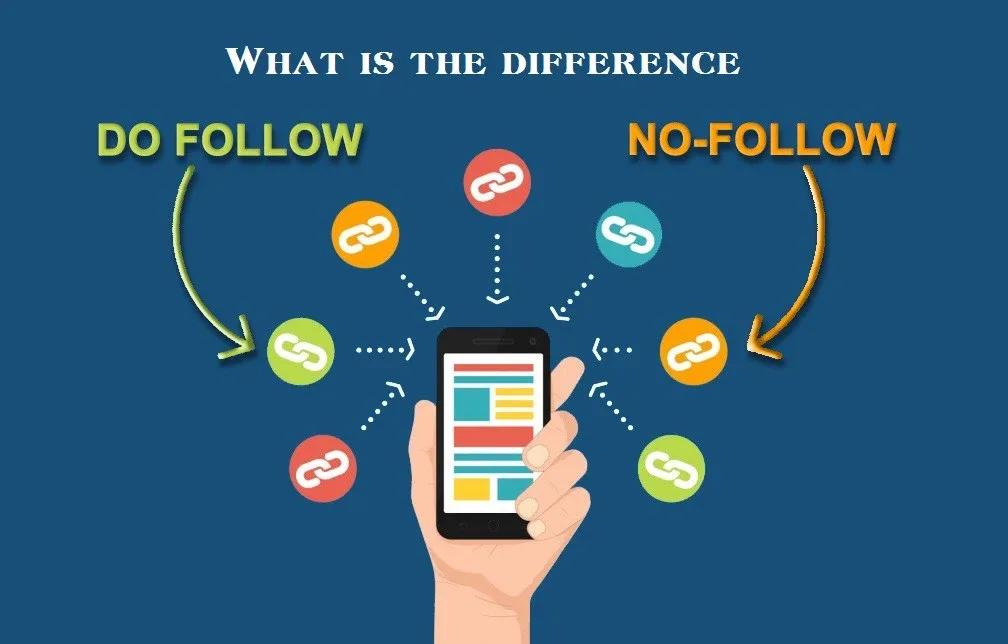
Here’s a quick rule I use: if I’d be comfortable recommending the destination to a friend over coffee, it earns a follow link. If I’m linking out of obligation or because someone asked nicely, it probably doesn’t.
Editorial Citations and Trusted Sources
Imagine you’re writing about nutrition and you reference a study from a major university. That link should absolutely be a follow link. You’re pointing readers toward primary research, and search engines should know you consider it credible.
Same goes for government resources, established nonprofits, and long-standing industry publications. These are the backbone of trustworthy content, and treating them as follow no follow links decisions worth making deliberately pays off.
What I’ve noticed in practice is that pages with a healthy mix of well-chosen follow links tend to perform better in search results than pages with zero outbound links at all. Google reads that as a sign of a well-researched, connected piece of content.
Internal Linking Strategy
Internal links are where follow no follow links decisions should almost always land on “follow.” You’re building a map of your own site, and you want crawlers to follow that map without hesitation.
Think about pillar pages and cluster content. Your pillar page should link out to supporting articles with follow links, and those supporting articles should link back. This creates a tight web of relevance that search engines can easily understand.
One mistake I see constantly: people nofollow their internal links by accident, often through plugins or copied code. Maintaining clarity across your follow no follow links remains essential. If you’re not sure, audit your internal links periodically. It’s a five-minute check that can save months of confusion.
When You Should Use Nofollow Links
Nofollow links exist for good reasons, and using them correctly is just as important as using follow links. The key is understanding which scenarios call for them.
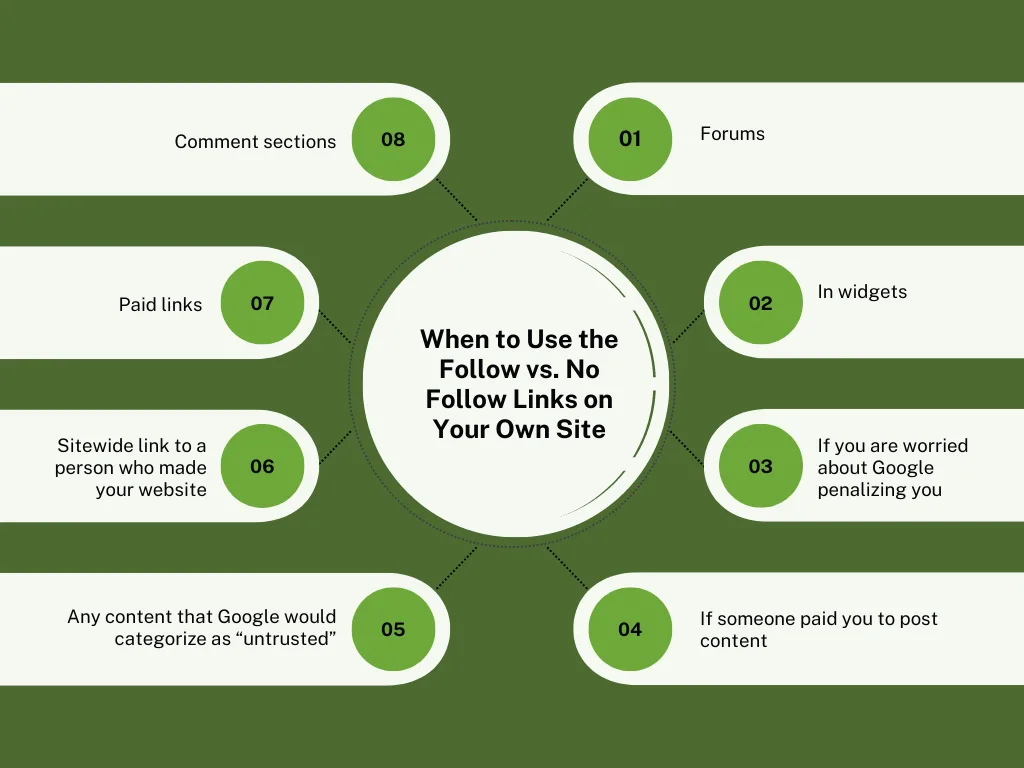
Paid placements are the classic case. If money changed hands for a link, that link should be nofollow — or better yet, marked as sponsored. Search engines have no tolerance for undisclosed paid links, and getting caught can tank your rankings.
User-generated content is another clear scenario. Comments, forum posts, and guest contributions from unknown users shouldn’t automatically pass authority. Nofollowing these protects your site from spammy manipulation.
There’s also the matter of untrusted or unverified sources. If you’re linking to something you haven’t fully vetted, a nofollow attribute is a reasonable safety measure. It’s not a judgment on the destination — it’s just prudent caution.
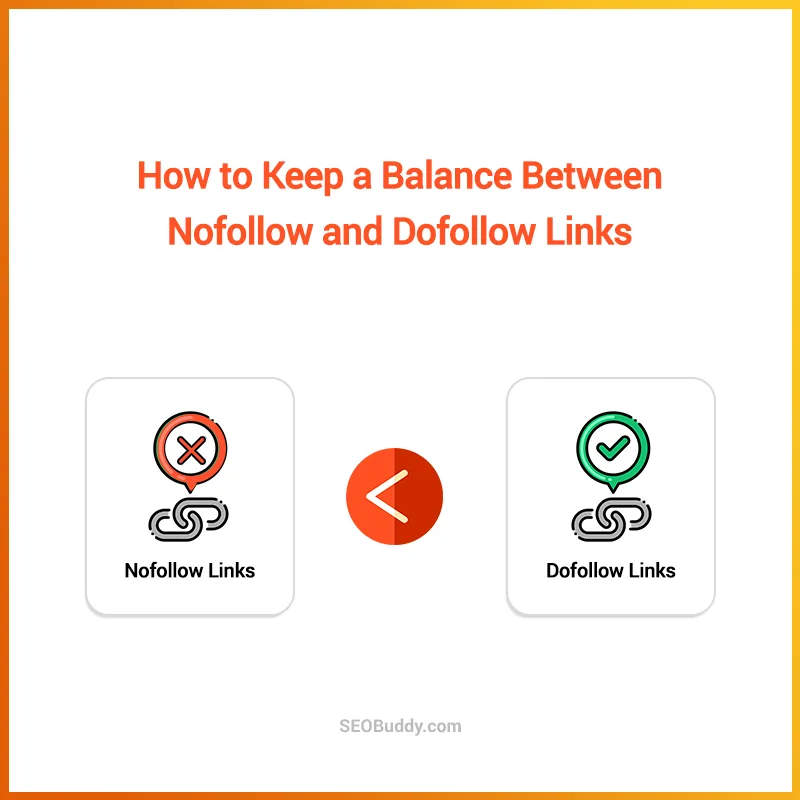
Paid Links and Sponsored Content
Sponsored content is a booming industry, and it’s perfectly legitimate when handled transparently. A thoughtful approach to follow no follow links reinforces your qualifications. The problem arises when paid links pass equity without disclosure, which violates Google’s guidelines.
When you publish sponsored content, every commercial link within it should carry the sponsored or nofollow attribute. This keeps you compliant and protects the integrity of follow no follow links across the web.
I’ve seen brands lose significant organic visibility after ignoring this rule. The penalty isn’t always immediate, but when it hits, recovery takes months. Disclosing paid relationships isn’t just ethical — it’s self-preservation.
User-Generated Content and Comments
If your site allows comments, you’ve probably already dealt with spam. Nofollowing comment links is standard practice, and most platforms do it automatically.
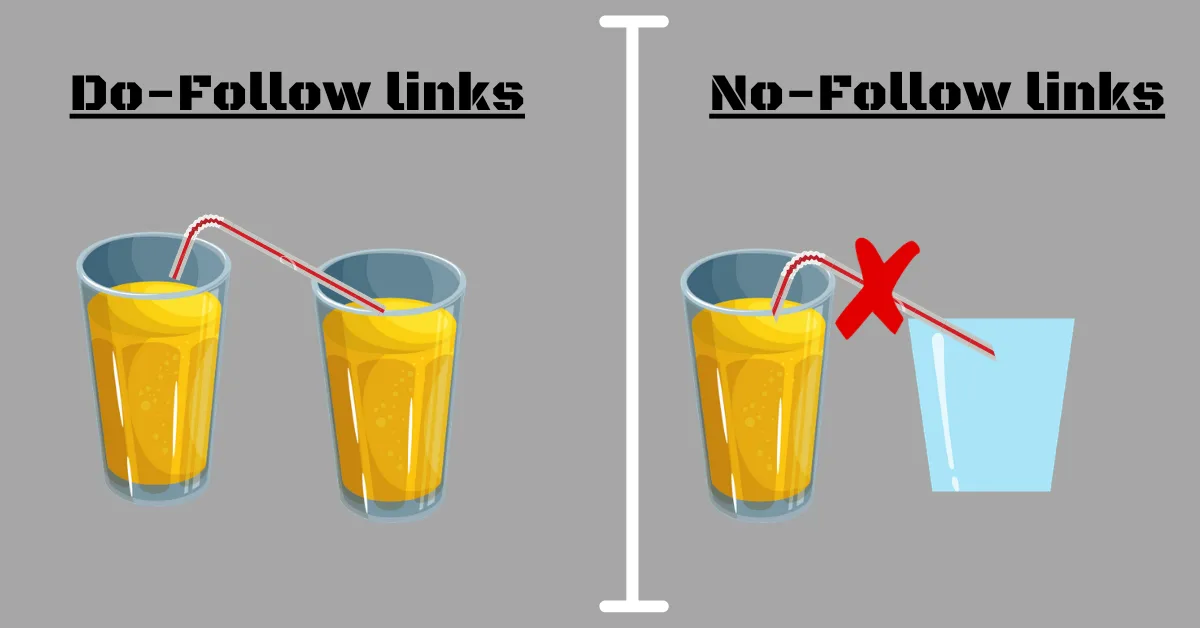
The reasoning is simple: you can’t vet every link a stranger drops in your comment section. By defaulting those to nofollow, you protect your site’s authority from being exploited by spammers chasing free follow links.
That said, some site owners manually convert high-quality comment links to follow as a reward for genuine contributors. It’s a nice gesture, but only if you’re confident the link is legitimate. Otherwise, stick with nofollow.
Untrusted and Unverified Sources
Sometimes you link to something you’re not entirely sure about — a new site, a forum thread, a source you can’t fully verify. Structuring your follow no follow links around proven patterns ensures impact. In those cases, nofollow is the safe choice.
This doesn’t mean you should nofollow everything you’re unfamiliar with. It means you should be intentional. Follow no follow links are tools, and using them thoughtfully is what separates careful publishers from careless ones.
A good habit: after publishing, revisit your outbound links periodically. Sources change, content gets updated, and a link that was trustworthy last year might not be today.
Follow No Follow Links in Practice: a Comparison Table
Seeing the differences side by side makes the whole picture clearer. Here’s how follow no follow links stack up across the dimensions that actually matter.
| Attribute | Passes Link Equity | Best Used For | Crawl Behavior |
|---|---|---|---|
| Follow (default) | Yes | Editorial citations, internal links, trusted sources | Crawled and indexed as a ranking signal |
| Nofollow | No (treated as hint) | Paid links, UGC, unverified sources | May still be crawled, but not counted as endorsement |
| Sponsored | No | Paid placements, affiliate arrangements | Identifies commercial relationships to crawlers |
| UGC | No | Comments, forum posts, user submissions | Signals user-generated origin |
Notice that sponsored and UGC are really specialized versions of nofollow. They exist because follow no follow links alone weren’t giving search engines enough context about why a link was marked the way it was.
In day-to-day publishing, most of your decisions come down to follow or nofollow. The specialized attributes matter most when you’re dealing with commercial relationships or open comment sections.
Common Mistakes People Make With Follow No Follow Links
I’ve audited hundreds of sites, and the same errors show up again and again. Avoiding them is often easier than fixing them later.
One of the biggest: nofollowing every outbound link out of fear. Some site owners believe that any link leaving their site is a leak of authority. That’s outdated thinking, and it makes content look suspiciously insular to search engines.
Another frequent error is forgetting to mark paid links properly. Applying these principles to your follow no follow links yields measurable results. It’s an easy oversight when you’re juggling sponsorships, but it’s also one of the fastest ways to attract a manual penalty.
And then there’s the classic: accidentally nofollowing internal links through a plugin setting. If your internal linking isn’t passing equity, your site architecture is quietly working against you.
Over-Nofollowing Outbound Links
There’s a myth that outbound links drain your page’s authority. They don’t, at least not in the way people fear. A well-placed follow link to a credible source enhances your content rather than diminishing it.
When you nofollow everything, you strip away the signals that tell search engines your page is well-connected. The result is content that looks isolated and, frankly, less trustworthy.
A balanced approach works best. Link out to sources you genuinely value, use follow links for the ones you trust, and reserve nofollow for cases that actually warrant it. That’s how follow no follow links should function in a healthy content strategy.
Forgetting to Mark Sponsored Links
Sponsored links are a gray area for many publishers, especially those new to brand partnerships. The temptation to leave them as follow links is real — after all, the sponsor wants SEO value.
But that’s precisely why search engines penalize undisclosed paid links. The whole point of follow no follow links is to keep the playing field honest, and paid placements that pass equity undermine that.
My advice: always disclose. Proper attention to your follow no follow links sets a strong baseline. Mark sponsored links correctly, and have that conversation with sponsors upfront. Most legitimate brands understand the rules and won’t push back.
Misusing Nofollow on Internal Links
Internal links should almost never be nofollow. There are rare exceptions — like linking to a login page or a checkout flow you don’t want indexed — but for content pages, follow is the default.
If you’re using a plugin that automatically nofollows certain link types, check its settings. I’ve seen sites lose significant internal link equity because of a single misconfigured toggle.
A quick crawl with any SEO tool will reveal whether your internal links are passing equity. If they’re not, fix it before you do anything else. It’s foundational.
How Follow No Follow Links Affect Your Overall SEO Strategy
Zoom out for a second. Follow no follow links aren’t just a technical detail — they’re part of how you communicate with search engines about your content’s quality and intent.
A site that uses these attributes thoughtfully sends a clear signal: this publisher understands the web, respects the rules, and curates its references carefully. That reputation compounds over time.
Conversely, a site that slaps nofollow on everything or ignores sponsored disclosures looks either paranoid or careless. Developing your follow no follow links with precision highlights key strengths. Neither impression helps your rankings.
The practical takeaway: treat every link as a small editorial decision. Over hundreds of pages, those decisions add up to a site that search engines trust.
Building Trust Signals Through Linking
Trust isn’t a single metric — it’s an accumulation of signals. Every follow link to a credible source adds a tiny brick to that foundation.
Think about how you’d evaluate a research paper. If it cites reputable studies, you trust it more. If it cites nothing or cites questionable sources, you’re skeptical. Search engines apply similar logic to follow no follow links.
This is why I encourage writers to link generously to primary sources. It’s not about SEO tricks. It’s about demonstrating that your content is grounded in real information.
Balancing Outbound and Inbound Link Profiles
Your outbound links say something about your content’s quality. Your inbound links say something about how others perceive you. Both matter, and follow no follow links play a role in each.
On the outbound side, a healthy mix of follow links to trusted sources signals credibility. On the inbound side, you want a natural profile — mostly follow links, with some nofollow mixed in from comments and social platforms.
If your inbound profile is 100% follow links, that’s actually suspicious. Clear alignment with your follow no follow links builds confidence from the start. Real sites accumulate nofollow mentions naturally through social shares, forums, and user content. A perfect profile looks engineered.
Advanced Considerations for Follow No Follow Links
Once you’ve mastered the basics, there are deeper layers worth exploring. These are the nuances that separate competent SEO from expert-level execution.
For instance, the placement of a link within your content can affect how much equity it passes. Links buried in footers or sidebars carry less weight than links embedded naturally in body text.
Anchor text matters too. Descriptive, relevant anchor text helps search engines understand what the destination page is about, which amplifies the value of follow links.
And then there’s the question of link velocity — how quickly you accumulate new links. A sudden spike in follow links can look unnatural, while a steady trickle reads as organic growth.
Link Placement and Anchor Text
Where you place a link matters. Integrating follow no follow links into your workflow produces consistent quality. A follow link in the first paragraph of a well-read article passes more value than the same link tucked into a footer.
Anchor text is equally important. “Click here” tells search engines nothing. “Research on link equity” tells them exactly what to expect on the other side, which strengthens the signal.
When you’re managing follow no follow links, don’t overlook these details. A technically correct link with weak anchor text is a missed opportunity.
Handling Link Exchanges and Partnerships
Link exchanges are a gray area. Done naturally — two sites genuinely referencing each other — they’re fine. Done mechanically, they look like manipulation.
If you’re entering a partnership where links are exchanged, be transparent. Mark commercial arrangements appropriately, and don’t try to disguise paid links as editorial ones.
Follow no follow links give you the tools to handle these situations honestly. Use them that way, and you’ll avoid the penalties that catch less careful publishers.
Tools for Auditing Your Follow No Follow Links
You can’t manage what you don’t measure. Fortunately, there are plenty of tools that make auditing follow no follow links straightforward.
Browser extensions like NoFollow and SEOquake let you see link attributes at a glance. They’re handy for quick checks while browsing competitors or reviewing your own pages.
For deeper analysis, crawlers like Screaming Frog or Sitebulb will map every link on your site and flag which ones are follow versus nofollow. Targeted refinements to your follow no follow links streamline the entire review. This is essential for catching internal linking mistakes.
Google Search Console rounds out the toolkit by showing which external sites link to you and how. It won’t tell you the attribute directly, but cross-referencing with other tools fills the gap.
Browser Extensions and Crawlers
Extensions are the fastest way to spot-check links. Install one, and every link on a page gets highlighted based on its attribute. It’s a five-second diagnostic.
Crawlers go deeper. They’ll crawl your entire site and produce a report showing every link, its type, and its location. For sites with hundreds of pages, this is the only practical approach.
I recommend running a full crawl quarterly. It catches drift — links that were once follow but got changed, or nofollow attributes that crept in through updates.
Search Console and Third-Party Audits
Search Console’s Links report shows your top linking sites and anchor text. It’s not granular enough to reveal attributes, but it’s a useful starting point.
Third-party tools like Ahrefs and Semrush fill in the gaps. They maintain massive indexes of backlinks and can tell you whether a given link is follow or nofollow.
Combining these sources gives you a complete picture. And when you’re making decisions about follow no follow links, that complete picture is exactly what you need.
Frequently Asked Questions About Follow No Follow Links
These are the questions I hear most often, answered plainly.
Do Nofollow Links Help SEO at All?
Indirectly, yes. They don’t pass equity, but they can drive traffic, build brand visibility, and contribute to a natural-looking link profile. A nofollow mention from a major publication still has value, even if it’s not a direct ranking signal.
Think of follow no follow links as different tools with different jobs. Nofollow links handle traffic and awareness. Follow links handle authority. Both matter.
Should I Nofollow All External Links?
No. That’s an outdated practice. Nofollowing everything makes your content look isolated and reduces the trust signals you send to search engines.
Use follow links for sources you trust, and reserve nofollow for paid, user-generated, or unverified destinations. That’s the balanced approach that works.
What Happens if I Nofollow an Internal Link by Mistake?
Nothing catastrophic, but you’re losing equity that should stay within your site. Fix it when you notice it, and run periodic audits to catch these issues early.
Internal follow no follow links should almost always be follow. The exceptions are rare — login pages, thank-you pages, and similar non-content URLs.
Are Nofollow Links Still Relevant?
Absolutely. Even though Google now treats them as hints, they remain a core part of how the web communicates link intent. Ignoring them would be a mistake.
The shift toward hints means context matters more, but the fundamental purpose of follow no follow links hasn’t changed. They’re still about signaling which relationships you stand behind.
How Do I Know if a Link is Follow or Nofollow?
Right-click the link, inspect the HTML, and look for a rel attribute. If you see rel=”nofollow,” rel=”sponsored,” or rel=”ugc,” it’s a nofollow variant. If there’s no rel attribute, it’s a follow link.
For bulk checks, use a crawler or browser extension. Manual inspection works for single links but doesn’t scale.
Can Nofollow Links Hurt My Rankings?
Not directly. Nofollow links don’t penalize you. But patterns matter — if your entire outbound link profile is nofollow, search engines may question your content’s credibility.
The real risk comes from undisclosed paid links marked as follow. That’s a guideline violation, and it can trigger penalties. Properly used follow no follow links won’t hurt you.
What’s the Difference Between Nofollow and Sponsored?
Sponsored is a more specific version of nofollow, designed for paid placements. It tells search engines explicitly that the link is commercial in nature.
Functionally, both prevent equity from passing. The difference is the signal they send. Using sponsored for paid links is best practice because it removes ambiguity.
Should Guest Post Links be Nofollow?
It depends on the arrangement. Genuine editorial guest posts can include follow links if the content is valuable and the placement is earned. Paid guest posts should always be nofollow or sponsored.
The line between the two is often blurry, which is why transparency matters. If money changed hands, mark the link accordingly.
Wrapping Up: Making Smarter Linking Decisions
Here’s the thing about follow no follow links — they’re not complicated once you understand the intent behind them. Follow links say “I vouch for this.” Nofollow links say “I’m linking, but I’m not endorsing.”
Most of your decisions will be obvious once you frame them that way. Trusted source? Follow. Paid placement? Nofollow or sponsored. User comment? Nofollow. Internal page? Follow.
What separates good publishers from great ones is consistency. Apply these rules across every page, audit periodically, and don’t let fear push you into nofollowing everything. A well-linked page is a trusted page, and trust is what search engines reward.
So go back through your recent posts. Check your links. Fix the mistakes. It’s a small habit that compounds into a real SEO advantage over time — and it all starts with getting follow no follow links right.
For verified reference and background research, consult the authoritative informational resource on this topic.