If you want steady organic traffic, you have to find SEO keywords that real people actually type into Google. That single habit separates sites that grow quietly month after month from sites that publish endlessly and wonder why nobody shows up.
Meta description teaser: Find SEO keywords fast with free tools, competitor gaps, and long-tail ideas that pull qualified visitors to your pages.
I’ve spent years watching small publishers, local shops, and solo bloggers chase traffic. The ones who win almost always share one trait: they treat keyword research as a routine, not a one-time event. They open a tool, poke around, and find SEO keywords before they write a single sentence.
That’s the whole game, honestly. You don’t need a fancy agency retainer or a data science degree. You need a repeatable process, a handful of free tools, and the patience to look past the obvious head terms everyone fights over.
Why You Should Find SEO Keywords Before Writing Anything
Writing first and researching later is the most common mistake I see. A writer gets excited about a topic, cranks out 1,500 words, then scrambles to find SEO keywords that fit what they already wrote. That’s backwards, and it costs you rankings.
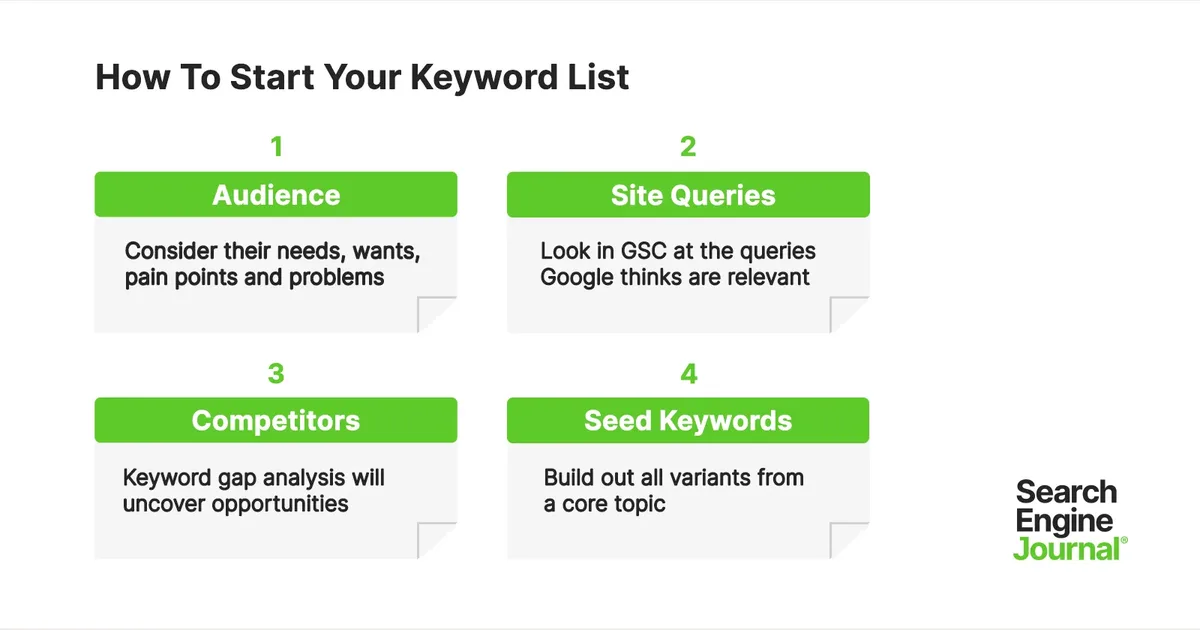
When you find SEO keywords first, every decision downstream gets easier. Your title writes itself. Your subheadings fall into place. Your internal links make sense because you already know the related topics Google expects to see.
There’s a practical angle too. Search intent shapes structure. If you find SEO keywords that signal informational intent, you build a how-to or explainer. If the intent is transactional, you build a comparison or product page. Skip that step and you’ll write a beautiful article that ranks for nothing.
I’ve also noticed that writers who consistently find SEO keywords early tend to publish faster. There’s less second-guessing. The outline is basically handed to you by the search results themselves.
How to Find SEO Keywords With Free Tools That Actually Work
You don’t need a paid subscription to start. Some of the best data sits in free tools that most people overlook because they assume “free” means “useless.” That assumption is wrong.

Google’s own autocomplete is a goldmine. Type your seed topic, then add a letter from A to Z and watch the suggestions roll in. Each suggestion is a real query someone typed. Do this for a few variations and you’ll find SEO keywords you’d never brainstorm on your own.
Google Search Console is another one. If your site has any history at all, the Queries report shows terms you already rank for on page two or three. Those are the easiest wins because Google already trusts you for them. Push a little and they move to page one.
Answer the Public, AlsoAsked, and Keyword Surfer round out the free stack. Each one surfaces questions and related terms in a slightly different way, which is exactly why I rotate between them.
Using Google Autocomplete and People Also Ask
The “People Also Ask” box is basically Google handing you a free outline. Every question in that box is a query real users typed, and Google already decided those questions belong together on one page.
Click a few of them and the box expands with more questions. Keep clicking. You’ll end up with ten to fifteen related queries in under five minutes. That’s a full article structure, and you didn’t pay a cent to find SEO keywords that fit.
The trick is to match the phrasing. If the question reads “how do I find SEO keywords for a new blog,” use that exact phrasing in a subheading. Google rewards pages that mirror the query language.
Mining Competitor Pages for Keyword Gaps
Open the top three ranking pages for your target term. Read them carefully. What subtopics do they cover? What do they skip? The gaps are your opportunity.

Tools like Ahrefs’ free keyword generator or Ubersuggest let you paste a competitor URL and see the terms they rank for. Cross-reference a few competitors and patterns emerge fast. When you find SEO keywords that two or three competitors ignore, you’ve found a lane nobody’s crowding.
I’ll be blunt: this step takes an hour, maybe two. But it’s the difference between writing into a void and writing into a gap. Every serious publisher I know does some version of this before they find SEO keywords worth targeting.
Understanding Search Intent When You Find SEO Keywords
Intent is the quiet filter that decides whether your content has a chance. You can find SEO keywords with perfect volume and still fail because you misread what the searcher wanted.
There are four buckets most people use: informational, navigational, commercial, and transactional. In practice, most queries lean toward one of two: “teach me something” or “help me buy something.” Get that wrong and your bounce rate tells the story.
Here’s a quick way to check. Search the term yourself. Look at what ranks. If the top results are all blog posts, Google thinks the intent is informational. If they’re all product pages, it’s commercial. Match the format and you’re already ahead.
| Intent Type | What The Searcher Wants | Best Content Format | Example Query Pattern |
|---|---|---|---|
| Informational | Learn or understand a topic | Guides, tutorials, explainers | “how to find SEO keywords” |
| Navigational | Reach a specific site or page | Brand pages, login pages | “[brand] keyword tool login” |
| Commercial | Compare options before deciding | Reviews, comparisons, roundups | “best keyword research tool” |
| Transactional | Complete a purchase or signup | Product pages, pricing pages | “buy keyword research software” |
When you find SEO keywords, tag each one with an intent. It takes thirty seconds per term and saves hours of rewriting later.

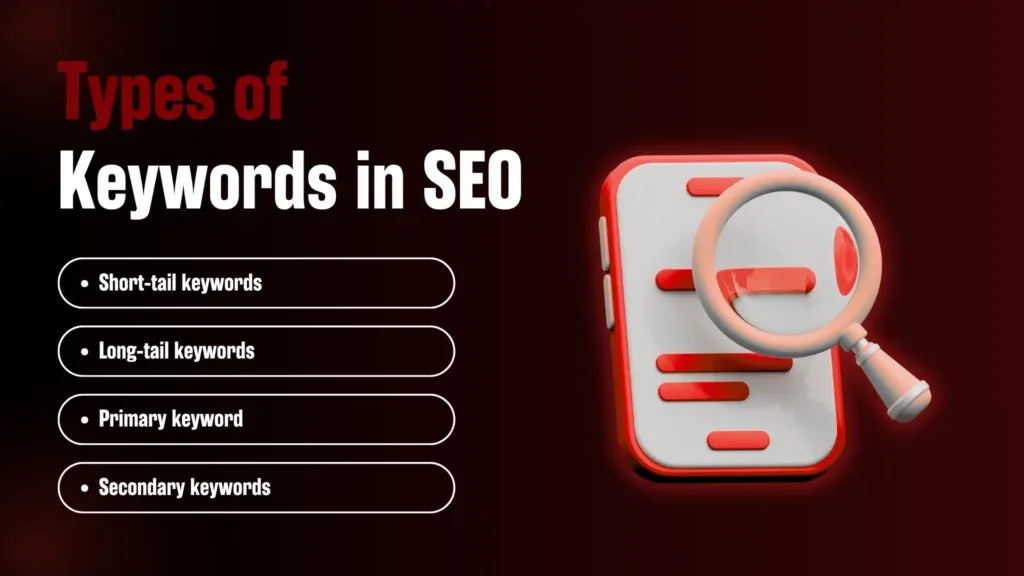
Long-Tail Keywords: Where Beginners Find SEO Keywords That Convert
Head terms like “SEO” or “keyword research” are bloodbaths. You’re competing with massive sites that have thousands of backlinks and years of authority. Forget those when you’re starting out.
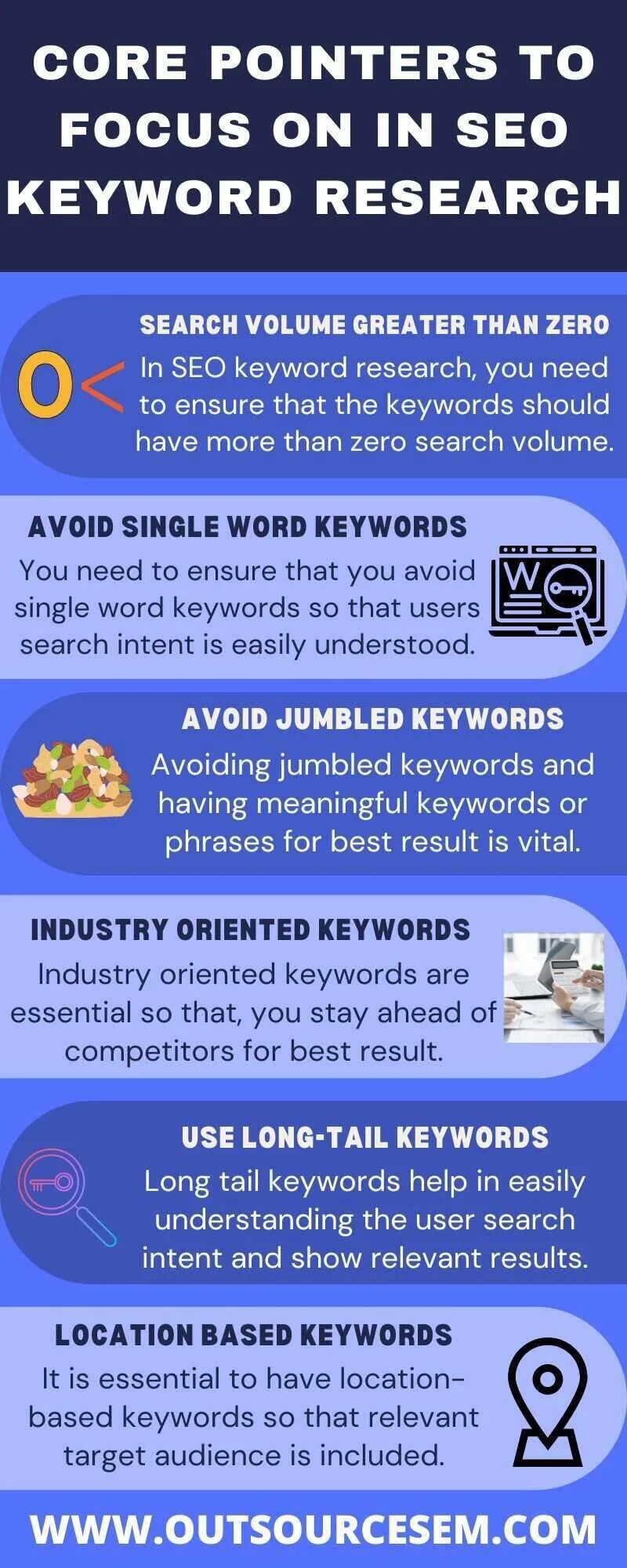
Long-tail phrases are where the real opportunity lives. They have lower volume individually, but they’re specific, easier to rank for, and convert far better because the searcher knows exactly what they want.

A query like “how to find SEO keywords for a local service business” has maybe a fraction of the volume of “keyword research,” but the person typing it is ready to act. That’s the trade-off worth making.
My rule of thumb: if you can find SEO keywords with three or more words and clear intent, target them first. Stack twenty of those and you’ll outrank a single head-term attempt every time.

Finding Question-Based and Conversational Queries
Voice search changed how people phrase things. Instead of “SEO keyword tools,” they now say “what’s the best way to find SEO keywords for free.” That conversational phrasing is a gift.
Tools like AnswerThePublic visualize these questions in a wheel. AlsoAsked maps them into a tree. Both are free for basic use. Spend twenty minutes and you’ll have a list of question-based terms that map cleanly to subheadings.

The bonus here is featured snippets. Question-based queries often trigger a snippet, and a well-structured answer can win that spot. When you find SEO keywords phrased as questions, answer them in two or three tight sentences right under the heading.
Analyzing Keyword Difficulty and Search Volume
Volume tells you how many people search. Difficulty tells you how hard it’ll be to rank. You need both numbers to make a smart call.

A term with high volume and brutal difficulty is a trap for new sites. A term with modest volume and low difficulty is a stepping stone. Stack enough stepping stones and you build the authority to chase bigger terms later.
Most free tools give you a rough difficulty score. It’s not perfect, but it’s directionally useful. If a term scores low and has decent volume, and the top results are forums or thin content, that’s a green light.
I also look at the date on ranking pages. If the top results are stale, that’s a signal Google wants fresher content. You can find SEO keywords in those gaps and win with a better, more current take.
Reading the SERP Before You Commit
Before you write a word, scan the first page of results. What formats appear? What’s the average word count? Are there videos, featured snippets, or shopping results?
If the SERP is dominated by a specific format, match it. Google is telling you what it wants to rank. Fighting that signal is a waste of effort.

I’ve skipped plenty of keywords after reading the SERP. High volume, sure, but the top ten were all major brands with dedicated pages. Not worth the fight. Better to find SEO keywords where the competition is beatable.
Building a Keyword Cluster Around Your Main Term
One page targeting one keyword is old thinking. Modern SEO rewards topical depth, which means grouping related terms into clusters and covering them thoroughly.

A cluster has a pillar page for the main term and supporting pages for subtopics. All of them link to each other. Google reads that structure and understands your site covers the topic end to end.
When you find SEO keywords, group them by theme. Ten related terms become one cluster. Three clusters become a topical authority. That’s how small sites start beating bigger ones on specific subjects.

Internal linking does the heavy lifting here. Every supporting page links up to the pillar, and the pillar links down to each supporting page. Clean, obvious, effective.
Mapping Keywords to Pages Without Cannibalization
Keyword cannibalization happens when two pages on your site target the same term. They compete with each other, and Google gets confused about which to rank.
The fix is simple but requires discipline. One primary keyword per page. If two pages overlap, merge them or re-angle one toward a different term.
I keep a simple spreadsheet: page URL, primary keyword, secondary keywords, intent. Before I publish anything new, I check it against the sheet. If there’s overlap, I adjust. This one habit has saved me from more ranking headaches than any tool.
Using Competitor Analysis to Find SEO Keywords They Missed
Competitors are a free research department. They’ve already done the work of finding what ranks. Your job is to find what they overlooked.
Pull their top pages into a tool like Ahrefs, SEMrush, or the free Ubersuggest. Look at the terms they rank for on positions four through twenty. Those are near-misses. With better content, you can flip them.
Also look at their content gaps. If three competitors all cover “on-page SEO” but none cover “SEO for voice search,” that’s a lane. When you find SEO keywords in those gaps, you’re competing against nothing.
I once built a small site purely by targeting terms that three bigger competitors ignored. Within a few months it outranked two of them on those specific queries. Not because I was smarter, but because I looked where they didn’t.

Local SEO: How to Find SEO Keywords for a Specific Area
If you run a local business, generic keywords are mostly useless. You need terms tied to your city, neighborhood, or service radius.
Start with “near me” queries. They’re exploding in volume because mobile users default to them. Add your service plus “near me” and see what autocomplete suggests.
Then layer in location modifiers. “[Service] in [city],” “[service] near [landmark],” “[service] [neighborhood].” Each variation is a separate opportunity, and they’re usually low competition.

Google Business Profile insights can also help. The queries that trigger your listing show you what locals actually search. When you find SEO keywords from that data, you’re working with real demand, not guesses.
City Pages and Service Area Targeting
City pages work if they’re genuinely useful. Thin pages that just swap the city name are a penalty risk. Google’s spam filters catch that pattern easily.

Instead, build pages with real local content: neighborhood details, local reviews, area-specific FAQs, photos of actual work in that area. When you find SEO keywords for each city, weave them into content that reads like it was written by someone who’s actually been there.
I’ve seen plumbers, dentists, and contractors rank in multiple cities with this approach. It’s not glamorous, but it works because it respects both the searcher and the algorithm.

Common Mistakes When You Find SEO Keywords
Even experienced writers slip into bad habits. Here are the ones I see most often, and how to dodge them.
- Chasing volume over relevance. A high-volume term that doesn’t match your audience brings traffic that bounces. Relevance beats raw numbers almost every time.
- Ignoring intent. Ranking a blog post for a transactional query is a losing game. Match format to intent before you write.
- Keyword stuffing. Cramming the same phrase into every sentence reads like spam. Modern algorithms penalize it, and readers hate it.
- Skipping long-tail terms. They look small individually but add up fast. Twenty long-tails can outperform one head term for a new site.
- Never refreshing old content. Keywords shift. A page that ranked last year may need updates to stay competitive now.
- Targeting the same term twice. Cannibalization splits your authority. One primary keyword per page, always.
- Trusting one tool blindly. Every tool has blind spots. Cross-check with two or three sources before committing.
- Forgetting the human reader. You’re writing for people who happen to use search engines, not the other way around.
Each of these mistakes is fixable. The trick is catching them early, before you’ve sunk hours into content that can’t rank.

Turning Keyword Research Into a Repeatable Workflow
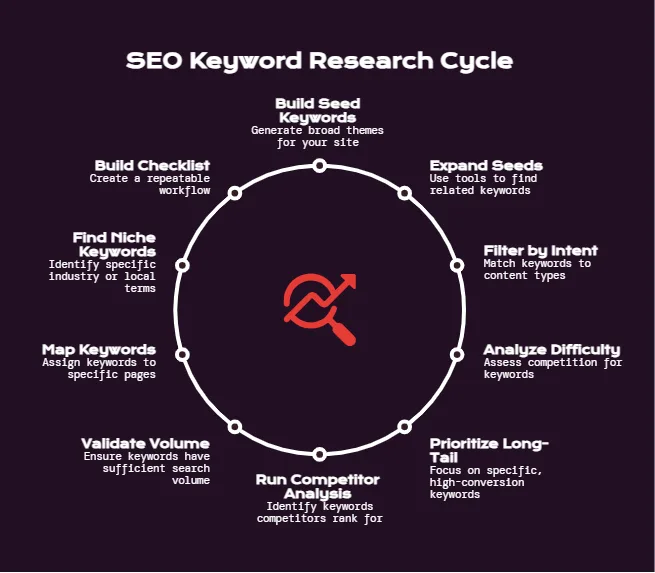
Ad-hoc research produces inconsistent results. A workflow produces compounding gains. Here’s the one I use, refined over years of trial and error.
Step one: brainstorm five to ten seed topics tied to your niche. Step two: run each seed through autocomplete, People Also Ask, and one paid or free tool. Step three: compile everything into a spreadsheet with volume, difficulty, and intent columns.
Step four: filter for terms with reasonable volume and beatable difficulty. Step five: group survivors into clusters. Step six: assign one primary keyword per page and outline the content.
Step seven: write, publish, and track. Step eight: revisit after thirty to sixty days. Anything stuck on page two gets refreshed. Anything ranking well gets expanded.
The whole cycle takes a few hours a week once you’re fluent. And every time you find SEO keywords through this loop, the list gets stronger because you’re learning what works for your specific site.
Tools That Speed Up the Process
You don’t need everything. A small stack covers 90% of what you’ll ever need.
- Google Search Console — free, shows your existing rankings and queries.
- Google Keyword Planner — free with an Ads account, solid volume data.
- AnswerThePublic — question-based keyword discovery.
- AlsoAsked — maps related questions visually.
- Ubersuggest — free tier covers basic competitor analysis.
- Ahrefs Webmaster Tools — free for site owners, strong backlink and keyword data.
- Keyword Surfer — Chrome extension showing volumes in search results.
Pick three, learn them deeply, and resist the urge to chase every new tool that launches. Depth beats breadth when you find SEO keywords for a living.
Measuring Whether Your Keyword Choices are Working
Publishing is half the job. Tracking is the other half. Without measurement, you’re guessing.
Set up Google Search Console if you haven’t already. It’s free, and it shows you exactly which queries bring impressions and clicks. Watch the impressions column. Rising impressions mean Google is testing your page for more terms.
Track positions over time. A page that climbs from position fifteen to position eight in a month is working. One that stalls at twenty needs a refresh or a different angle.
Also watch click-through rate. High impressions with low clicks usually means your title or meta description isn’t compelling. That’s a quick fix, and it often unlocks a ranking jump on its own.
Every quarter, review your full keyword list. Double down on what’s working. Prune what isn’t. When you find SEO keywords that consistently deliver, build clusters around them.
Advanced Tactics to Find SEO Keywords Others Overlook
Once the basics are running, these tactics give you an edge that most competitors never bother with.
Mine your own site search. If visitors use your internal search box, those queries are pure gold. They’re telling you exactly what they want and can’t find. When you find SEO keywords hiding in that data, you’re building content around proven demand.
Watch Reddit, Quora, and niche forums. Real conversations reveal real questions, phrased the way real people phrase them. Copy that language into your content and you’ll match queries you’d never guess at.
Check YouTube autocomplete. Video search trends often lead written search trends by weeks or months. Getting ahead of a rising term is how small sites punch above their weight.
Analyze your competitors’ sitemaps. New pages they publish signal topics they’re betting on. You can find SEO keywords in their expansion patterns and move faster than they do.
Frequently Asked Questions About Finding SEO Keywords
Here is an in-depth breakdown of key considerations regarding this section:
How Do I Find SEO Keywords for Free?
Start with Google autocomplete, People Also Ask, and Google Search Console. Add AnswerThePublic and Ubersuggest for question mining and competitor data. Together they cover most of what a beginner needs without spending anything.
How Many Keywords Should One Page Target?
One primary keyword plus three to five secondary terms that support it. More than that and you dilute focus. Build separate pages for separate intents.
What’s the Best Way to Find SEO Keywords for a New Site?
Target long-tail, low-difficulty terms first. Stack wins on specific queries, build topical authority, then graduate to more competitive terms. Patience beats aggression for new domains.
Can I Find SEO Keywords Without Paid Tools?
Absolutely. Free tools handle 80% of the work. Paid tools add speed and depth, but they’re not required to start. Learn the free stack first, then upgrade when it makes sense.
How Often Should I Refresh My Keyword Research?
Quarterly for most sites. Monthly if you’re in a fast-moving niche. Search behavior shifts, competitors publish, and algorithms update. Stale research leads to stale rankings.
Why Do My Keywords Rank but Get No Traffic?
Usually a title or meta description problem. If impressions are high and clicks are low, rewrite your snippet to be more compelling. Sometimes it’s an intent mismatch, in which case re-angle the content.
Final Thoughts on Building a Keyword Habit That Lasts
The publishers who win long-term aren’t the ones with the biggest budgets. They’re the ones who consistently find SEO keywords before writing, track what works, and refine their process every quarter.
Start small. Pick one seed topic this week. Run it through two or three tools. Build a list of fifteen terms, tag them by intent, and write your first piece. Then repeat.
Six months of that habit will outperform a year of sporadic effort. And every time you sit down to find SEO keywords, you’ll get faster, sharper, and more confident about what actually moves the needle.
For verified reference and background research, consult the authoritative informational resource on this topic.
<!– TOPSEO: keywords="find SEO keywords, keyword research, long-tail keywords, search intent, keyword difficulty, free SEO tools, keyword clustering, local SEO keywords
” description=”” –>