Topical Authority: Best Practices & 5 Easy Wins
Topical authority is the reason some sites get cited everywhere while others publish excellent articles nobody links to. If you have ever watched a competitor outrank you with a thinner post, you already know the feeling.
The difference usually is not talent or budget. It is whether Google treats your site as a place that genuinely owns a subject.
I have spent years building content clusters for small teams and enterprise publishers, and the pattern is stubbornly consistent. Focusing on topical authority provides clear direction here. Sites that win are not the ones writing the most. They are the ones writing with structure, depth, and intent.
This topical authority guide breaks down what actually moves the needle, then hands you five easy wins you can execute fast.
What Topical Authority Really Means Beyond the Buzzword
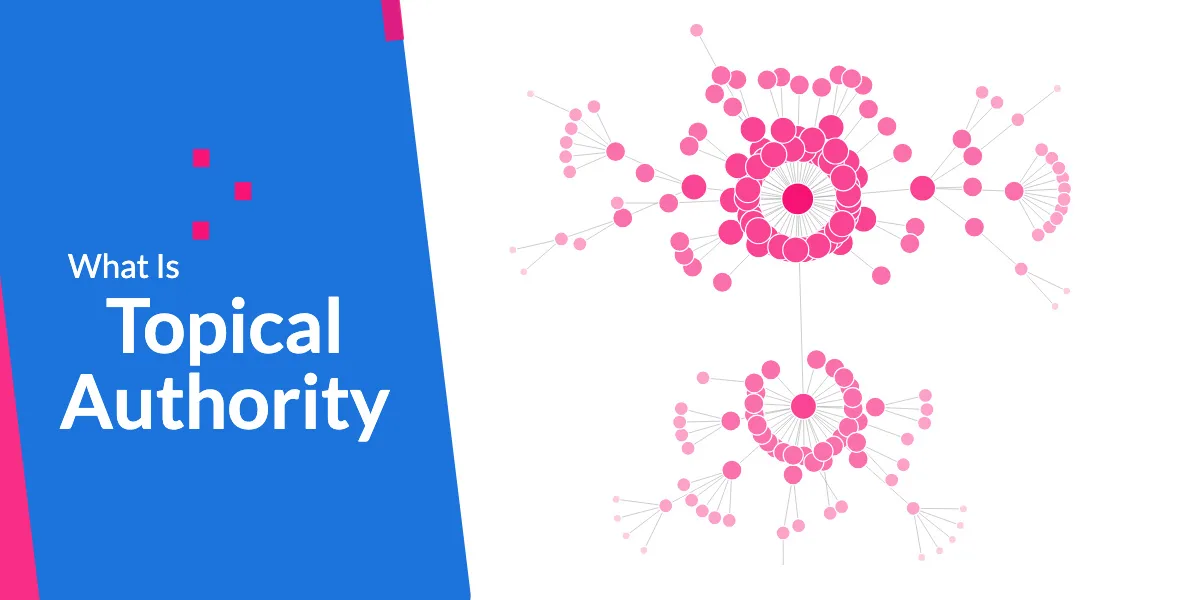
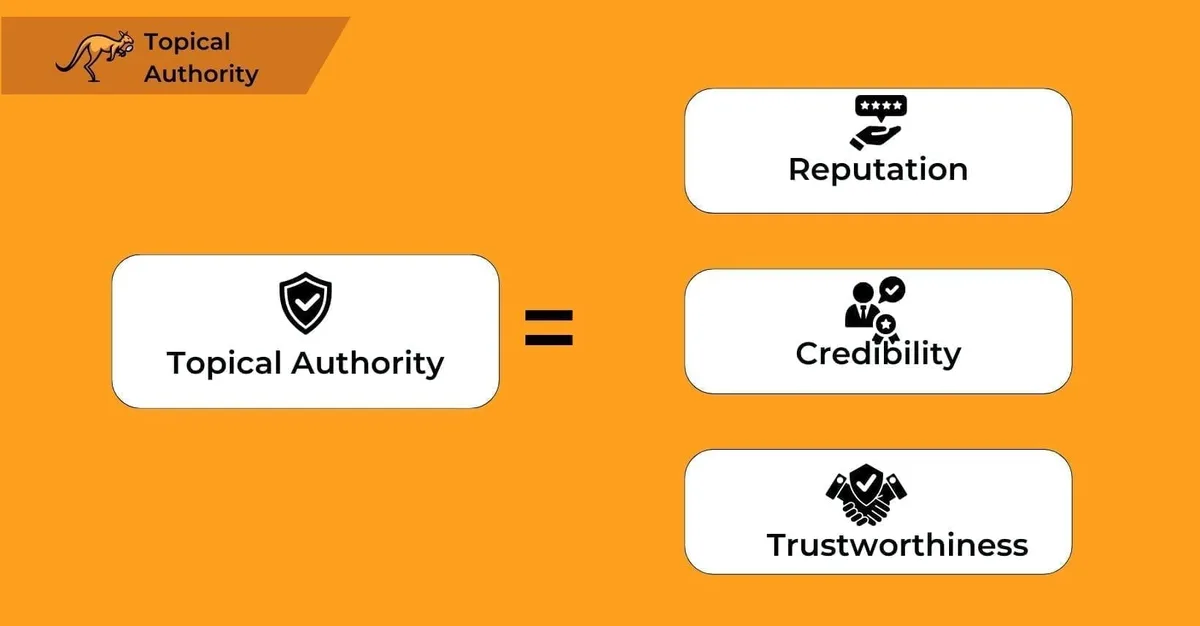
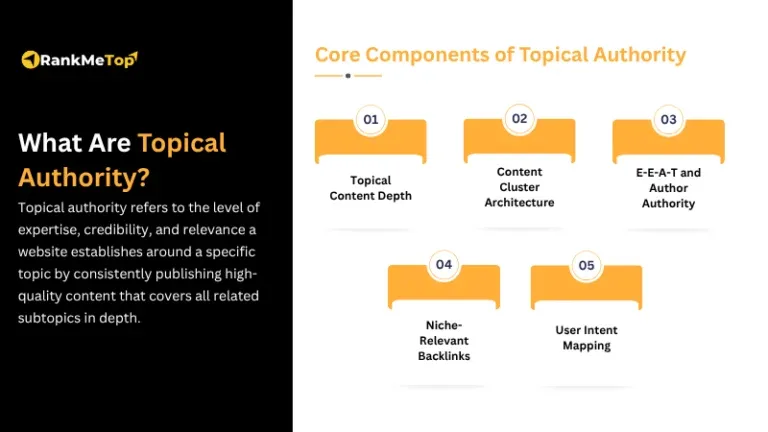
Topical authority is the measure of how comprehensively and credibly your site covers a subject. Google does not publish a score, but the signals are visible. When your pages form a connected web around one theme, internal links reinforce meaning, and external sources cite you as a reference, the pattern gets recognized.
The word “authority” gets thrown around loosely. In practice, it describes a trust relationship built through coverage. A single article can rank, but a well-organized body of work ranks consistently and resists algorithmic turbulence. That is the core promise of topical authority best practices: durability, not lucky spikes.
Think about how you would judge an expert at a dinner party. You would not rely on one anecdote. You would listen to how they handle nuance, edge cases, and follow-up questions. Search engines evaluate sites in a similar spirit. Depth signals competence. Breadth signals reliability. Consistency signals that the site is not a one-hit wonder.
Why Topical Authority Matters More Than Backlink Volume Alone
Backlinks still matter, but a link to an orphaned page is weaker than a link to a page supported by thirty related articles. That supporting structure is what topical authority adds. It multiplies the value of every individual ranking page.
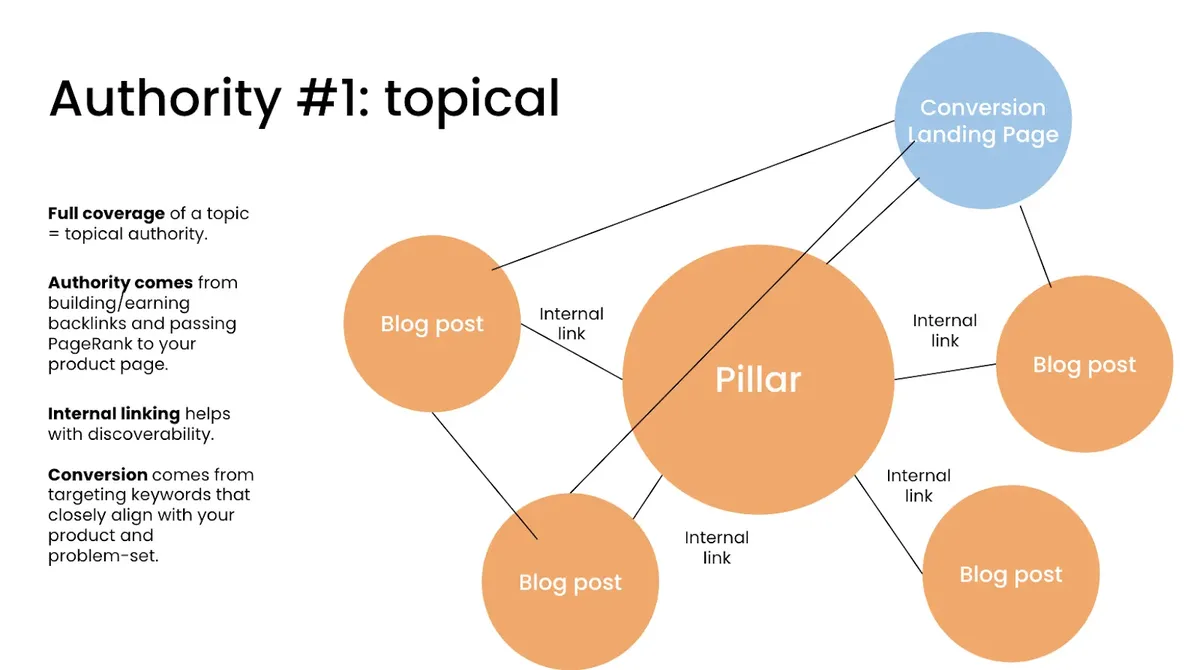
There is a practical reason too. When you build a cluster around a parent topic, internal linking becomes natural rather than forced. Visitors stay longer because each article answers the next obvious question. Both behaviors, dwell time and site-wide relevance, reinforce the same message to search engines.
I have seen affiliate sites triple organic traffic without a single new backlink. The change was not tactical. It was structural. They reorganized existing articles into a clear hierarchy, removed thin pages, and wrote four new pillar pieces that linked everything together. The topical authority effect compounded over the following months.
Topical Authority Best Practices That Survive Algorithm Updates
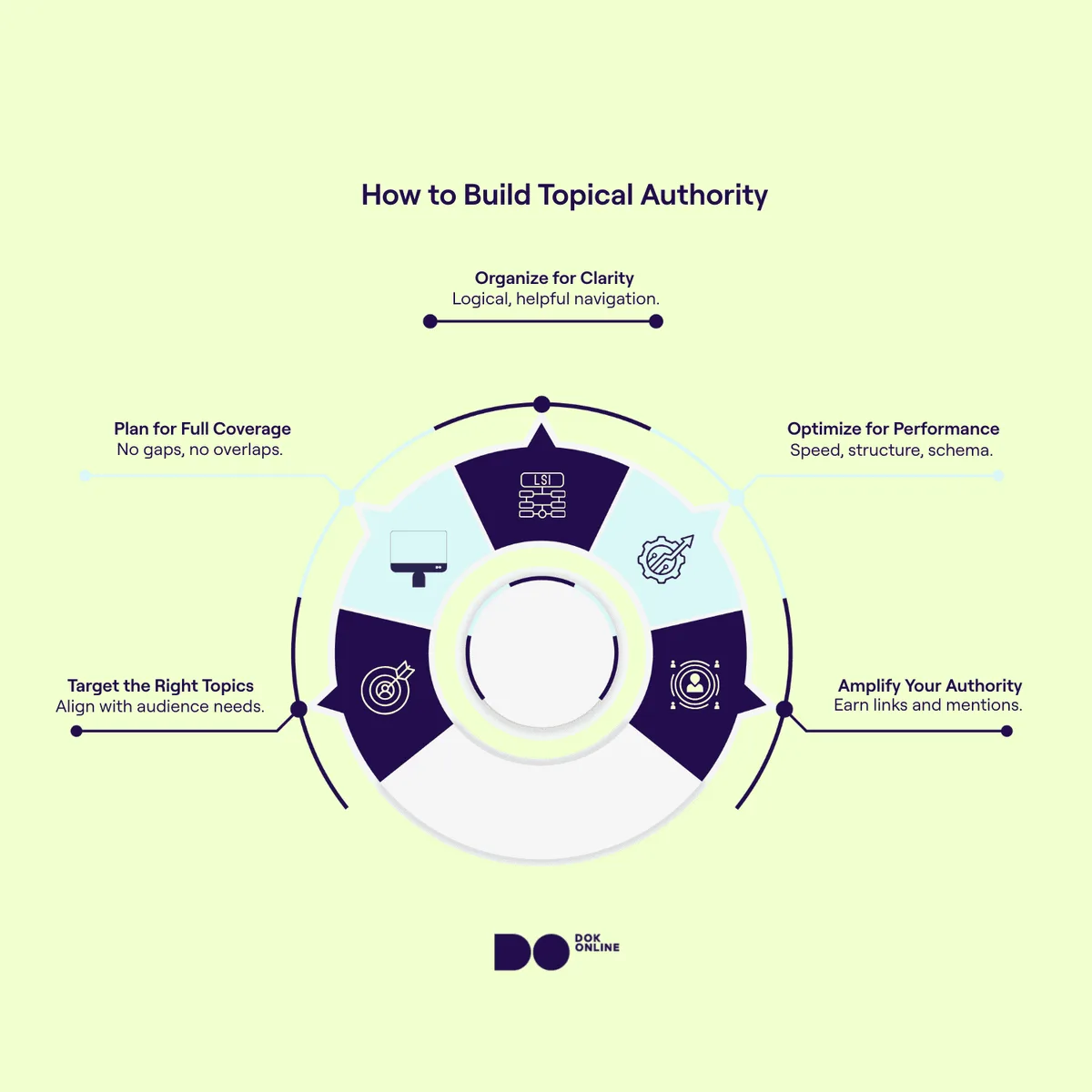
Good SEO advice tends to be boring, and that is exactly what makes it durable. The following topical authority best practices hold up because they align with how search and how humans both evaluate expertise.
Map Your Topic Before You Write a Single Word
Start with a parent topic. Then list every sub-topic a genuine expert would expect to see addressed. Use competitor coverage, Google’s People Also Ask panels, and your own support tickets as raw material. The goal is not to copy an outline. It is to find gaps.
One client in the laboratory equipment niche built a map of 140 sub-topics across sample handling, calibration, contamination control, and regulatory compliance. They published in clusters of eight to ten, linking each piece to a central pillar. Within two quarters, non-branded organic traffic grew 81%. The writing quality did not change. The structure did.
Write the Pillar Page First, Then Fill the Cluster
A pillar page should be the most complete thing on the internet about the topical authority specific angle. Not the longest, but the most useful. It earns the internal link equity and gives supporting articles a clear destination.
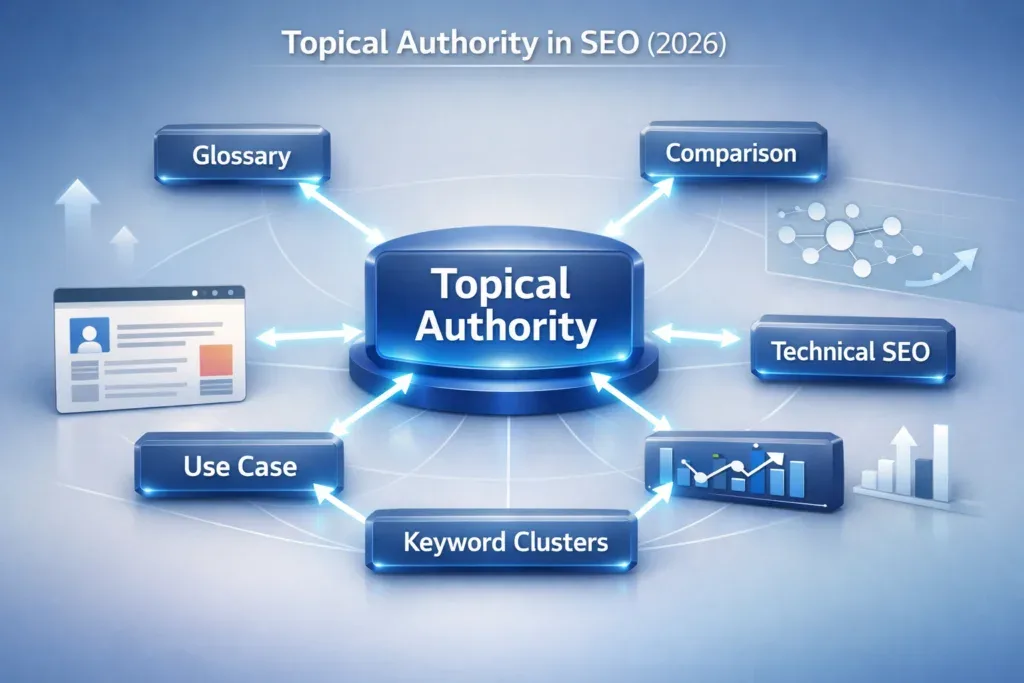
Keep pillars broad enough to host five to fifteen sub-articles, then commit. Adding a second pillar too early fragments your authority. I recommend one dominant pillar per quarter, with supporting pieces published steadily alongside it. This pacing is one of those topical authority tips that sounds slow and pays off fast.
Link Internally With Intent, Not Volume
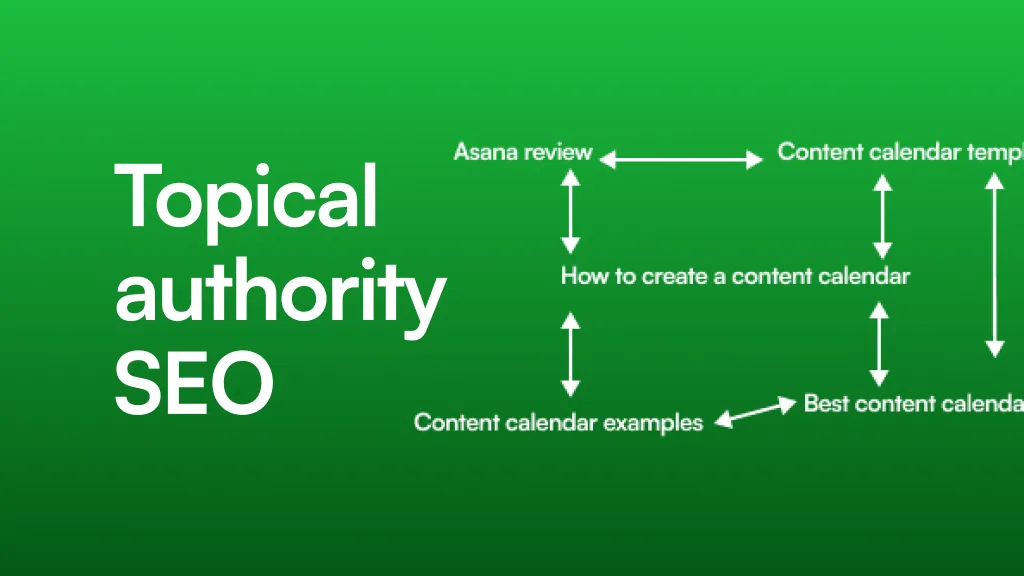
Every supporting article should link up to its pillar with descriptive anchor text. The pillar should link down to each supporting piece grouped by theme. Cross-links between siblings should exist only when there is a genuine conceptual bridge.
Blindly stuffing internal links creates noise. I have audited sites with 40 internal links per page and no clearer story than before. The better approach: fewer links, stronger anchors, and a hierarchy a reader could sketch on a napkin. That is a habit worth writing into your editorial process.
Cover the Questions Your Parent Topic Implies
Every parent topic produces downstream questions. What does it cost? Who is it for? What are the alternatives? Where do beginners get stuck? Answer each one in its own article rather than cramming them all onto a single page.
The topical authority checklist below helps here. It forces you to name the questions explicitly before you start writing, which prevents the common trap of discovering after publication that you left an obvious gap unaddressed.
Refresh and Consolidate Instead of Always Adding
New content is not the only path to authority. Merging two thin articles into one substantial piece often improves rankings within weeks. It also reduces the risk of keyword cannibalization, which quietly undermines otherwise good clusters.
Set a review cadence. Effective execution in your topical authority makes a tangible difference. Quarterly works for most teams. During review, look for pages with traffic decline, overlapping intent, or outdated examples. Rewrite, merge, or prune. Authority grows when the whole library stays sharp, not just the newest pages.
Topical Authority Checklist Before You Hit Publish
This checklist is intentionally short and practical. Run it on every new piece, and run it again on any page you update.
- Parent topic identified: the article sits inside a defined cluster with a linked pillar page.
- Sub-topic gap checked: You confirmed no other existing page redundant, and the angle is distinct.
- Internal links set: at least two inbound internal links from related pages, plus one contextual link back to the pillar.
- External citation included: at least one reference to an authoritative source, such as the Wikipedia entry on topic modeling, which helps explain how semantic clusters function.
- Entities covered: the article mentions the technical concepts, people, tools, and metrics that a native speaker would expect alongside the primary topic.
- Intent matched: the page format matches the query type, whether informational, comparative, or transactional.
- Metadata reviewed: title, meta description, and slug all reflect the parent topic rather than a narrow keyword.
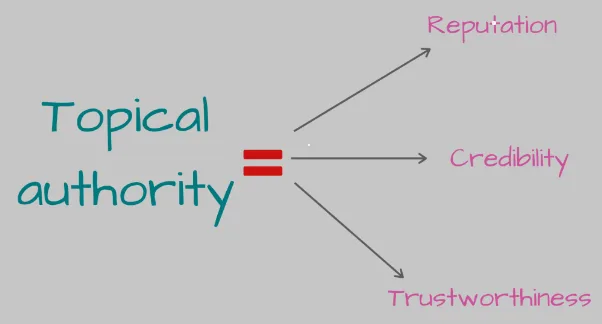
- Author attribution present: bylines, bios, and credentials where relevant. Trust signals are part of the topical authority equation.
Keep this checklist visible during editorial review. It catches more problems than any plugin score. Many of my agency clients now use this exact topical authority checklist during pre-publish reviews and report fewer post-launch revisions as a result.
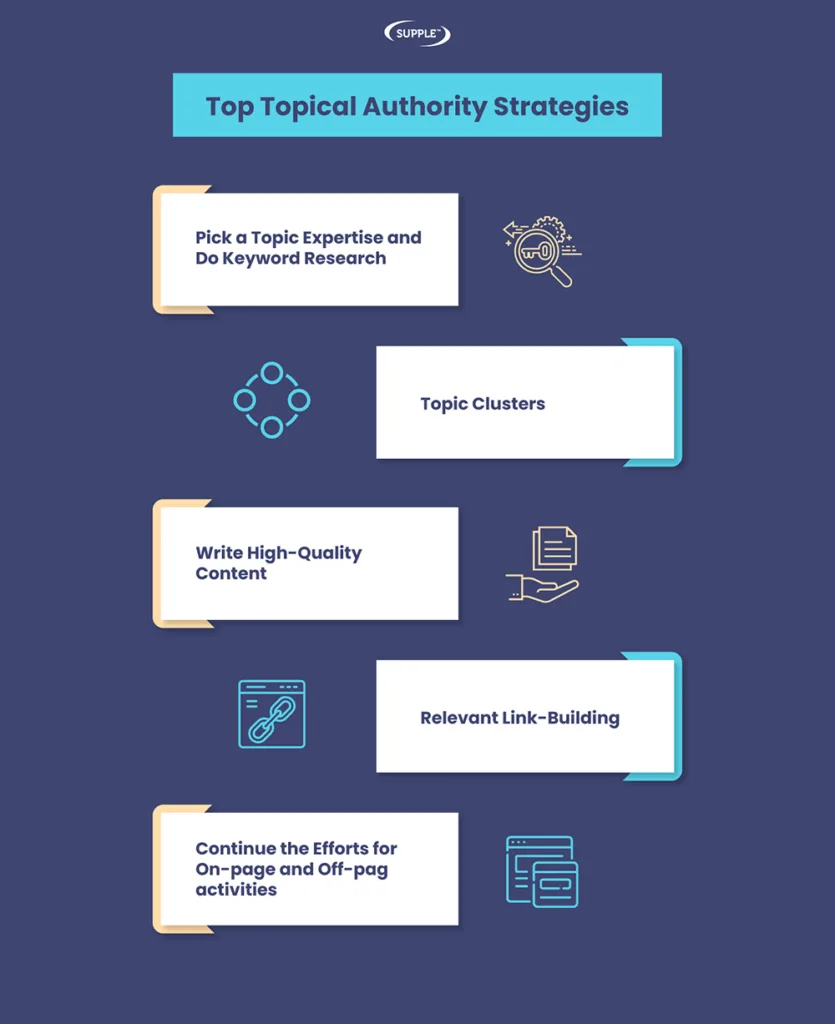
Five Easy Wins to Build Topical Authority Fast
You do not need a hundred new articles to see movement. The following five wins are genuinely quick, and each one stacks on the others when done in sequence.
Win 1: Consolidate Three Thin Pages Into One Strong Hub
Look for three or four articles ranking on page two or three for related queries. Merge them into a single, richer page with clear sub-headings. Redirect the old URLs and update internal links pointing to them.
A B2B software client had four short posts on “onboarding best practices.” Each earned trickles of traffic and none ranked above position 12. Merging into a 3,200-word hub with new sections on automation and metrics pushed the combined page to position 4 within seven weeks. That single consolidation was their fastest this approach gain of the year.

Win 2: Add an Internal Linking Pass to Your Top Ten Pages
Set aside one afternoon. Maintaining clarity across your topical authority remains essential. Take your ten highest-traffic articles and inspect their outbound internal links. Add two to four contextual links to related cluster pages with anchor text that describes the destination.
This win alone often moves rankings because it redistributes link equity previously hoarded by popular pages. Be specific with anchors. Vague phrases like “click here” or “read more” waste the moment.
Win 3: Publish a Question-Answer Article from Your Support Inbox
Open your last fifty customer emails. Group them by theme. Pick the most common question you have never addressed publicly, and write a thorough answer to it.
Support tickets are a goldmine of intent data. They reflect the real language buyers use, which is often closer to long-tail search queries than any keyword tool suggests. One article built from real questions frequently outranks a dozen brainstormed posts.
Win 4: Write a Comparison Page for the Decision Your Audience is Actually Making
Buyers search comparisons before they commit. If you only publish how-to content, you are missing a large slice of the funnel. Build a fair, specific comparison page between your approach and the two most common alternatives.
Include a table, name the trade-offs honestly, and avoid the trap of declaring yourself the winner in every row. The credibility of a fair comparison is itself a this approach to topical authority signal, because it demonstrates you understand the whole landscape.
Win 5: Update Your Twenty Oldest Articles With One New Fact Each
Pick the oldest twenty pages with any existing traffic. For each one, add a single new paragraph or sentence with a specific, verifiable detail: a statistic, a scenario, or a technical clarification.
This takes about two hours total and does two things at once. It refreshes the content, which search favors, and it gives you a reason to touch internal links. Small touches across many pages compound faster than a single dramatic rewrite.
Common Topical Authority Mistakes That Quietly Undermine Growth
Watching teams fail at topic clustering has taught me a few recurring patterns. All of them are avoidable.
Publishing in Isolation Instead of Clusters
A single article is not authority. It is a signal in a vacuum. If your editorial calendar jumps from topic to topic, you are effectively starting from zero with every post.
Chasing Keyword Volume Over Relevance
High-volume keywords look tempting. But if they do not belong to your parent topic, they dilute your identity. Stay disciplined. Relevance stacks. Volume alone rarely does.
Ignoring the Difference Between Depth and Length
A 4,000-word article that repeats itself is worse than a 1,800-word article that answers the question completely. Word count is a byproduct of depth, never a target.
Frequently Asked Questions
Here is an in-depth breakdown of key considerations regarding this section:
How Do I Measure Topical Authority in Practice?
No single metric exists. Combine strong proxies: organic sessions on cluster pages, the number of ranking keywords per parent topic, average position movement across the cluster, and how often your pages appear in AI-generated summaries or citation panels. Track these monthly and look at trends, not absolutes.
How Long Does It Take to Build Topical Authority?
Most teams see measurable movement within three to six months of consistent cluster publishing. Sites in competitive niches take longer, sometimes nine to twelve months. The critical variable is consistency. Sporadic publishing produces sporadic results.
Do I Need a Legal or Medical Reviewer to Establish Authority?
For YMYL topics (health, finance, legal), yes. Google’s guidance on expertise makes this clear. Reviewer credentials, author bios, and a clear editorial process are part of the this practice equation for these niches.
Is Topical Authority the Same as Domain Authority?
No. Domain authority is a third-party metric approximating overall link-based authority. this approach is a structural and semantic concept, reflecting how deeply and clearly your site covers one subject. You can build topical authority on a modest domain and still outrank larger competitors in a niche.
Should I Delete Articles That Do Not Fit My Parent Topic?
Often, yes. Articles that do not belong dilute focus and consume crawl budget. Not every page needs to be pruned, but pages with no traffic, no internal links, and no strategic relevance are usually worth redirecting or removing.
| Approach | Effect on Topical Authority | Effort | Timeline |
|---|---|---|---|
| Consolidating thin pages | High positive | Medium | 3–8 weeks |
| Internal linking pass | Medium–High positive | Low | 2–6 weeks |
| Pillar + cluster publishing | Very high positive | High | 3–9 months |
| Publishing isolated posts | Minimal or neutral | Medium | N/A |
| Pruning irrelevant articles | Medium positive | Low | 2–8 weeks |
Where to Take This Next
The five wins above are the fastest routes I know to building this approach without hiring a team. Pair them with the topical authority best practices in the opening sections and you have a system that compounds.
Treat this article as the parent topic in a larger cluster. The natural next reads are a guide to building content clusters, an analysis of internal linking strategy, and a piece on measuring this practice with real analytics. Those three sub-topics extend this one, and each reinforces it.
Start with the consolidation win this week. One afternoon of merging and linking will teach you more about topical authority than a month of reading about it. Then let the cluster grow, patiently and in one direction.