Search Intent Types: 6 Simple Secrets for Better Results
Let’s be honest: most content fails not because it’s badly written, but because it answers a question nobody was asking. Search intent types are the backbone of every smart content decision you will ever make. Get them right, and your pages start earning clicks, scrolls, and conversions without begging for them.
I’ve spent years watching perfectly decent articles die on page three because the writer misread the room. Someone searching “how to fix a leaky faucet” doesn’t want a gallery of designer faucets. Someone typing “best running shoes for flat feet” has already done the reading and now wants a decision. Same topic family, wildly different intents, totally different content.
The search intent types gap between what you publish and what your reader expected is where most traffic quietly spills out. So here’s the plan: six practical secrets, one for each intent type plus a couple on applying and auditing them. Every one is something you can test on your next article or page. No fluff, no theory dumps.
Why Search Intent Types Decide Whether Your Content Ever Gets Read
Search intent types describe the reason behind a query, not just the words in it. Google’s own documentation frames it around knowing what someone wants before they finish typing. A survey by Surfer SEO found that intent mismatches rank among the top reasons pages underperform despite solid keyword targeting.
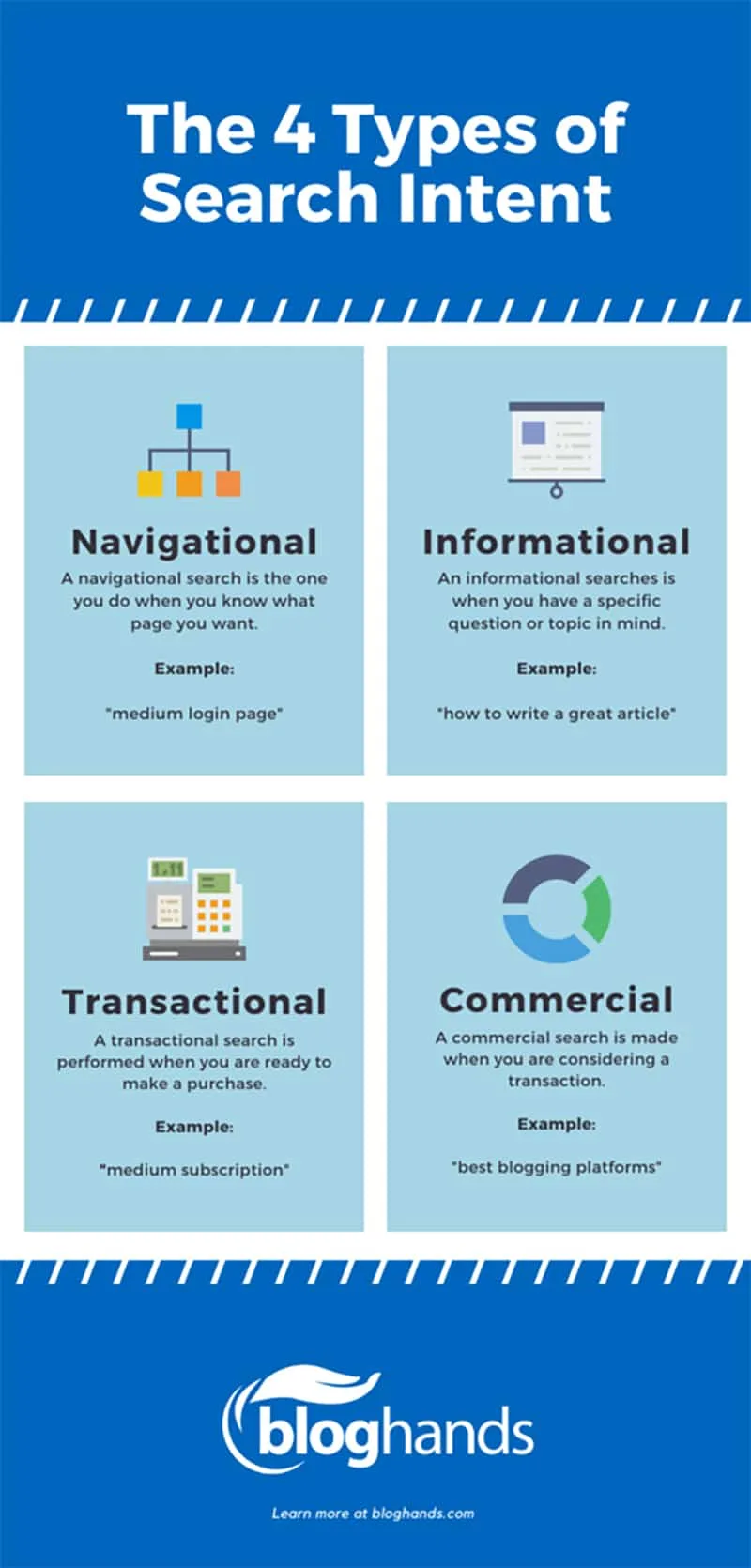
Think about the search intent types from the reader’s side. They arrive with a job to do: learn something, compare options, buy something, or find a specific page. If your content hands them the wrong tool, they bounce. That bounce is a signal, and the algorithm reads it as a verdict on your page.
The practical upshot: before you outline a single heading, pin down the dominant intent type for your target query. Then build every section to serve that one job.
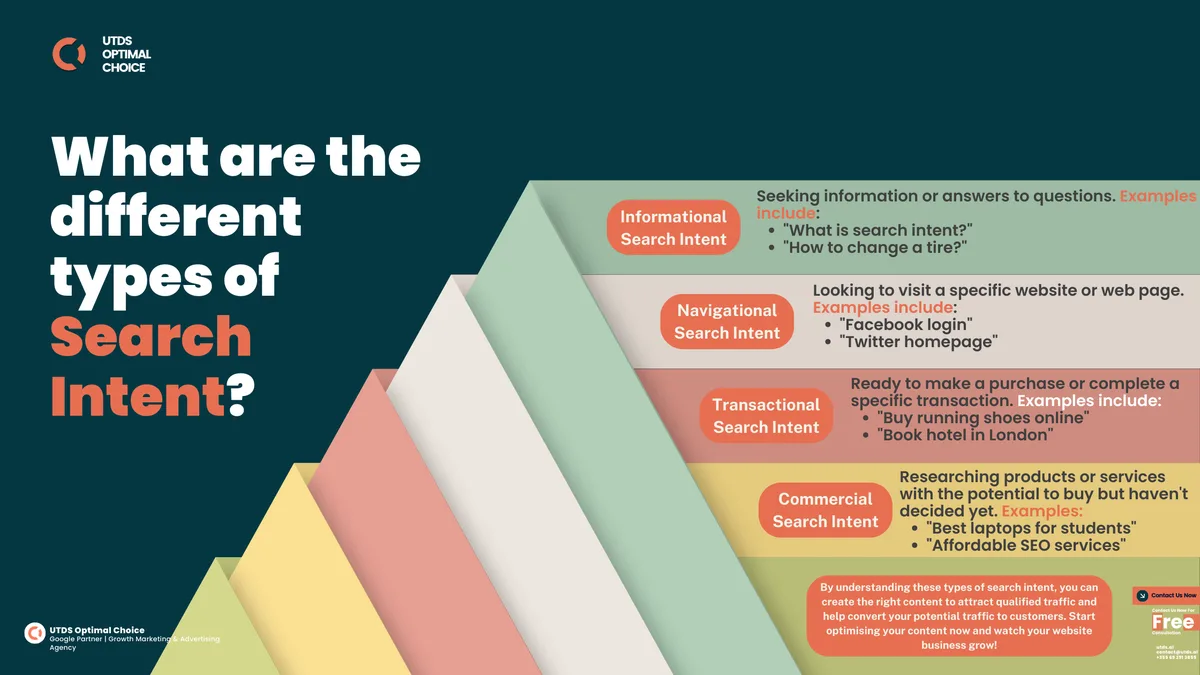
It sounds obvious, yet the majority of underperforming pages I audit suffer from a single mismatch — a comparison page trying to teach, or a how-to guide trying to sell.
Secret 1: Read the Query Like a Detective Before You Write a Word
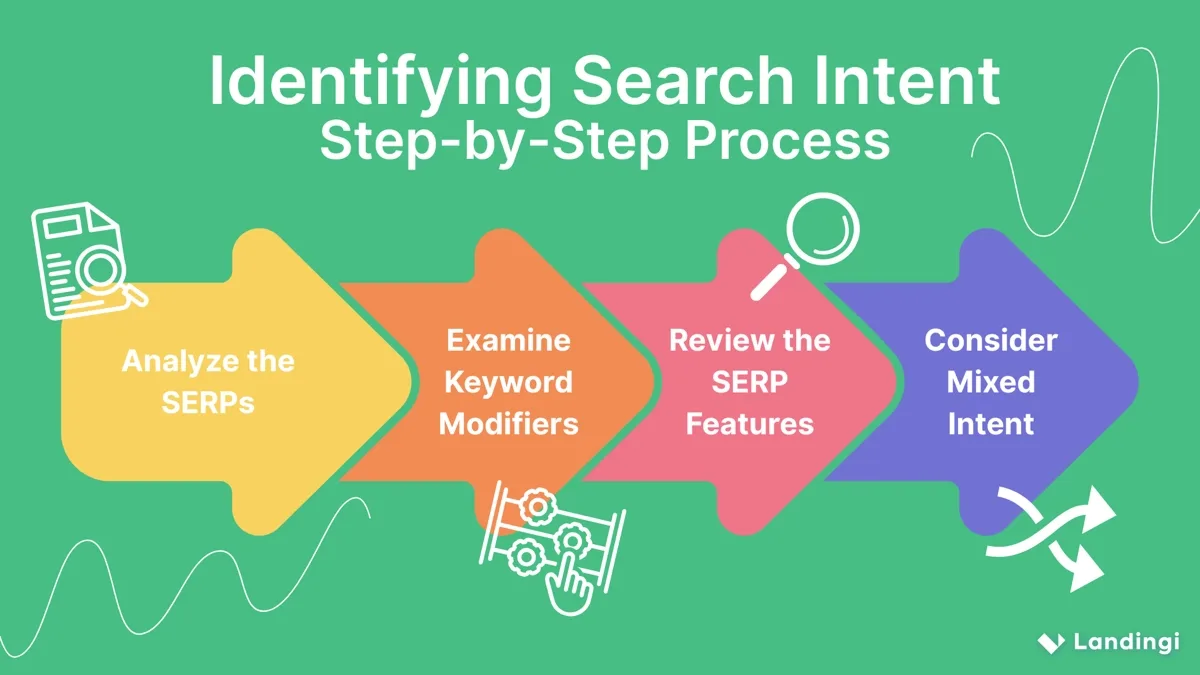
The first secret is listening harder than your competition. A search intent types guide is only useful if it teaches you to decode signal, and the SERP is the richest signal available. Look at what already ranks. What format are those results? Listicles, tutorials, product pages, videos, or forum threads?
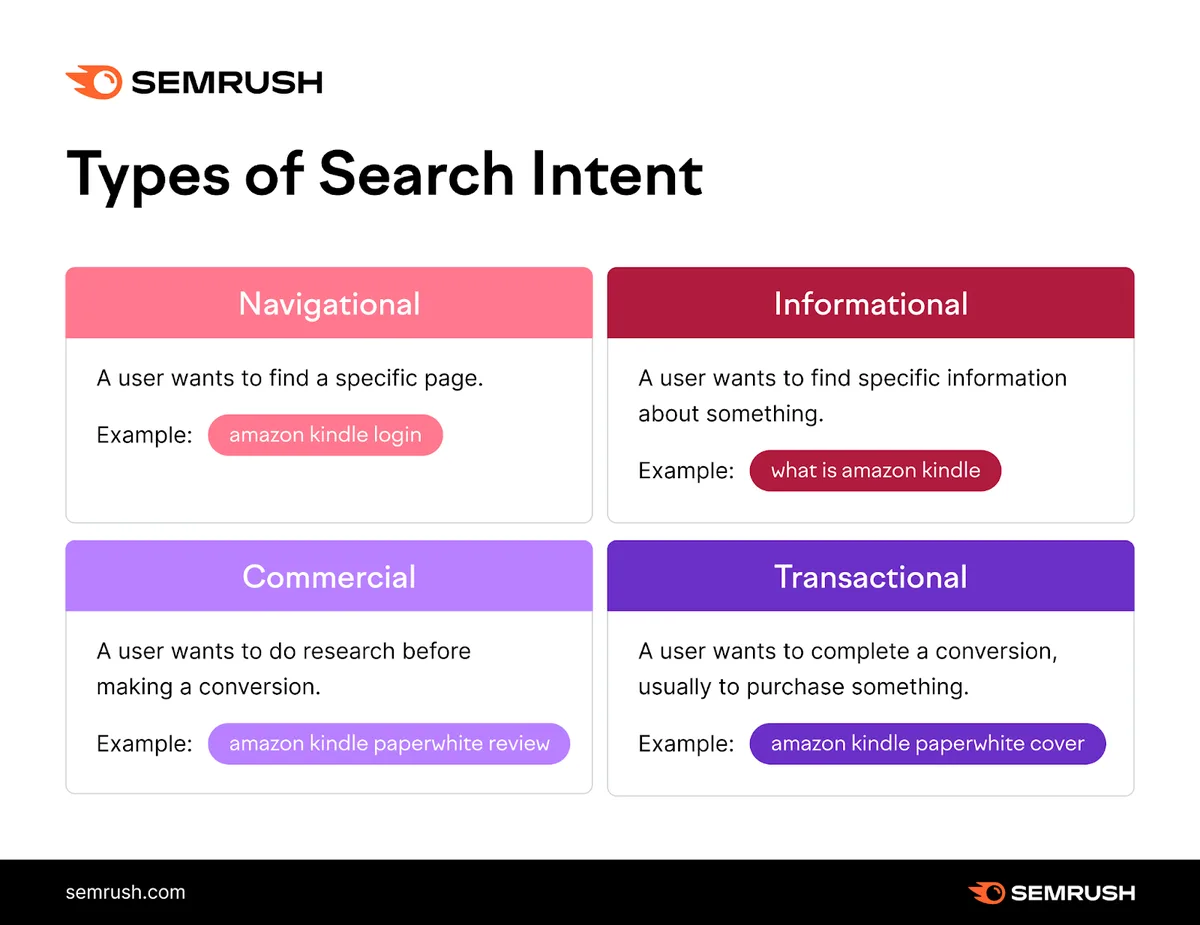
Google has spent years building its “helpful content” framework around the search intent types exact idea: results should match user expectations, not keyword strings. That’s why a query like “best CRM for small business” returns comparison lists and vendor pages, not a Wikipedia entry on customer relationship management.
Try this checklist on your next query: check the top three results’ page types, scan the “People also ask” box, and note whether autocomplete adds words like “vs,” “how to,” or “buy.” Those three signals tell you the dominant intent and its neighbors in under five minutes.
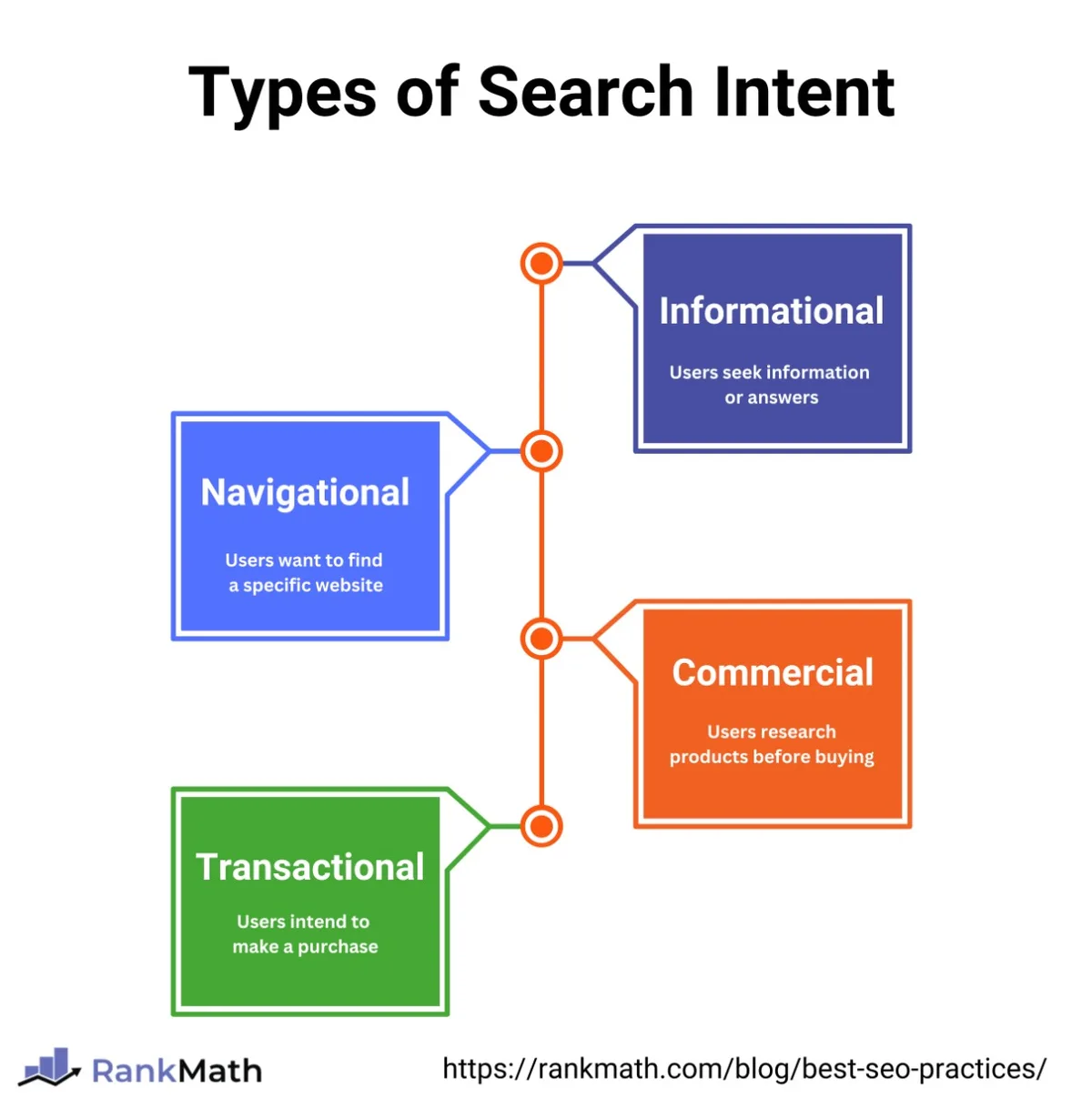
One more detective move: search the query in an incognito window and watch what Google suggests after the first few characters. Autocomplete reflects real query patterns from real people, which makes it one of the most honest search intent types tips you’ll find anywhere. Nine times out of ten, it confirms what the SERP already told you.
Secret 2: Match Content Format to the Informational Intent
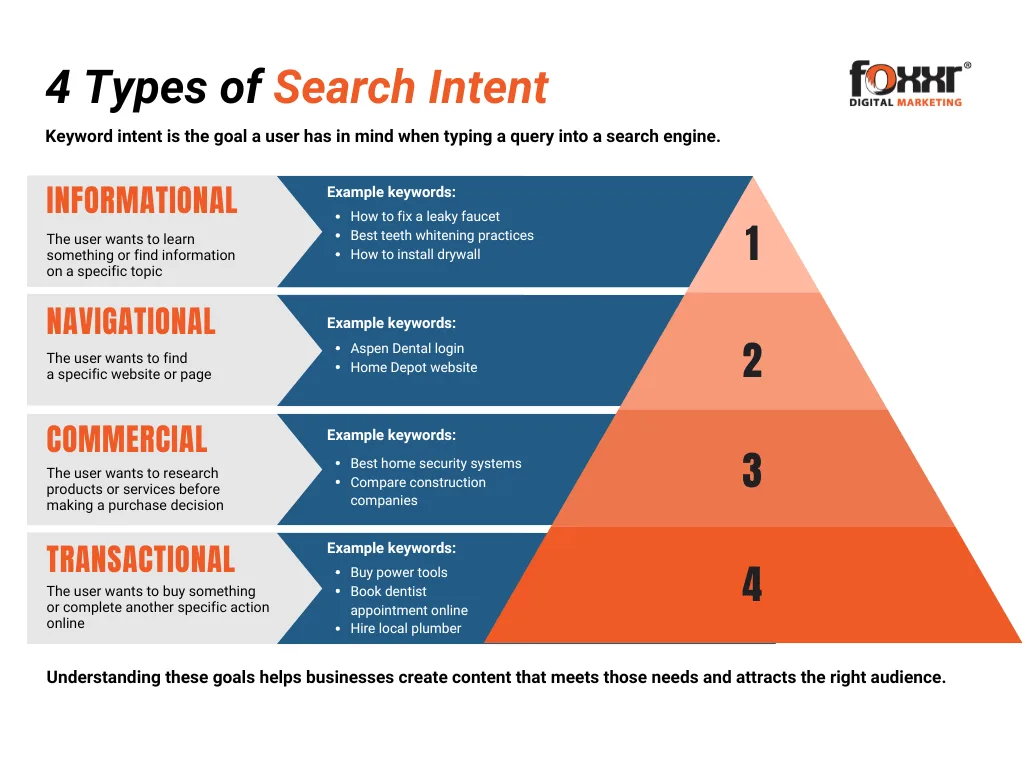
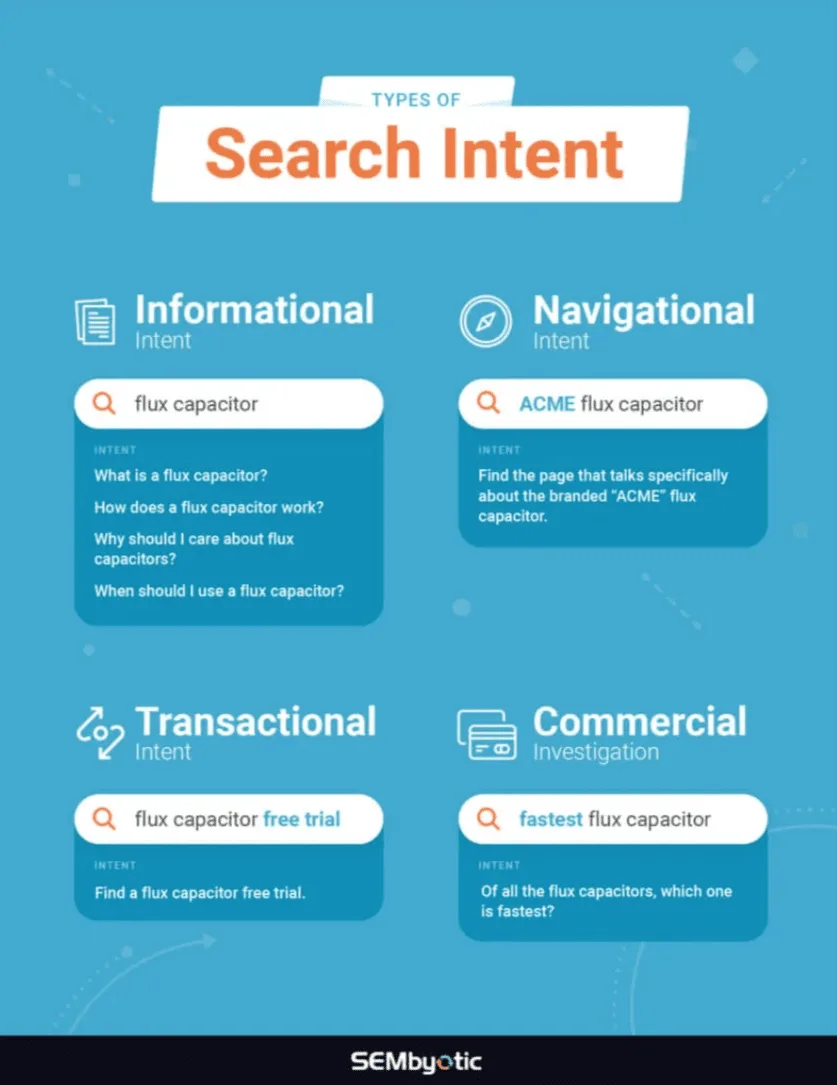
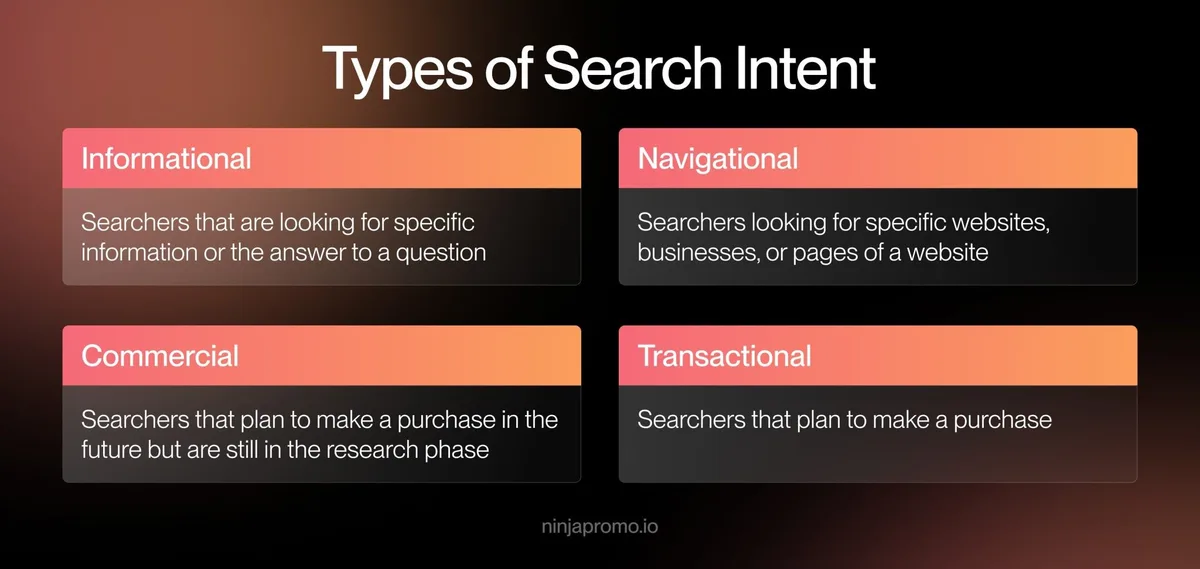
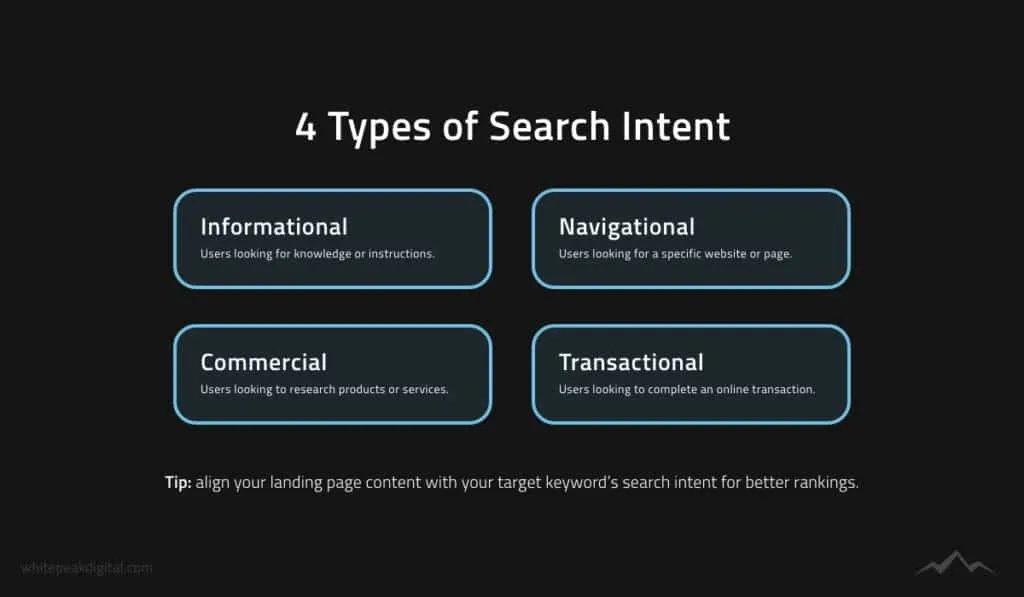
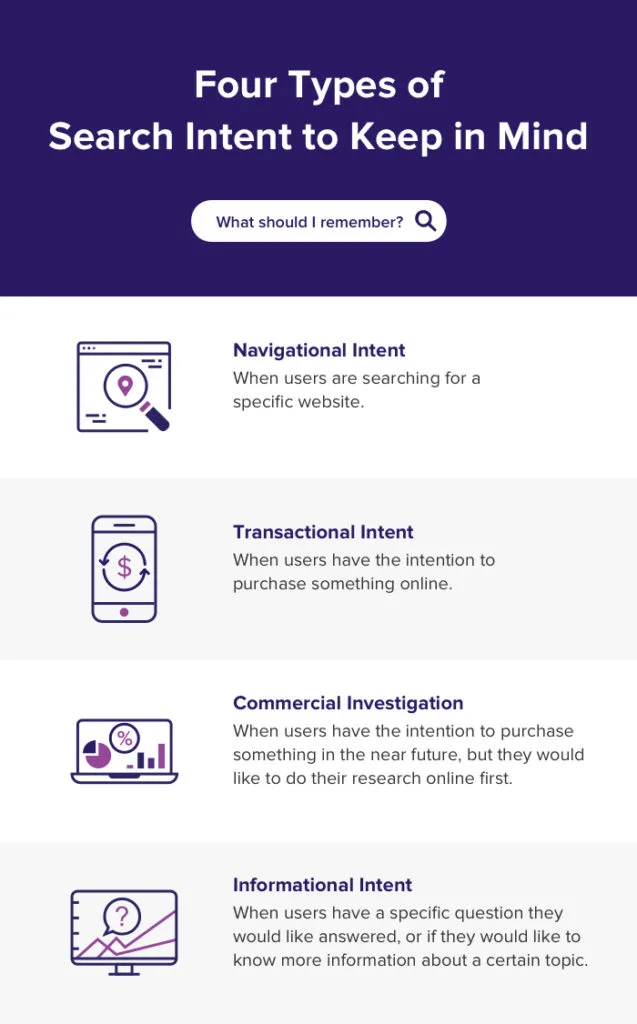
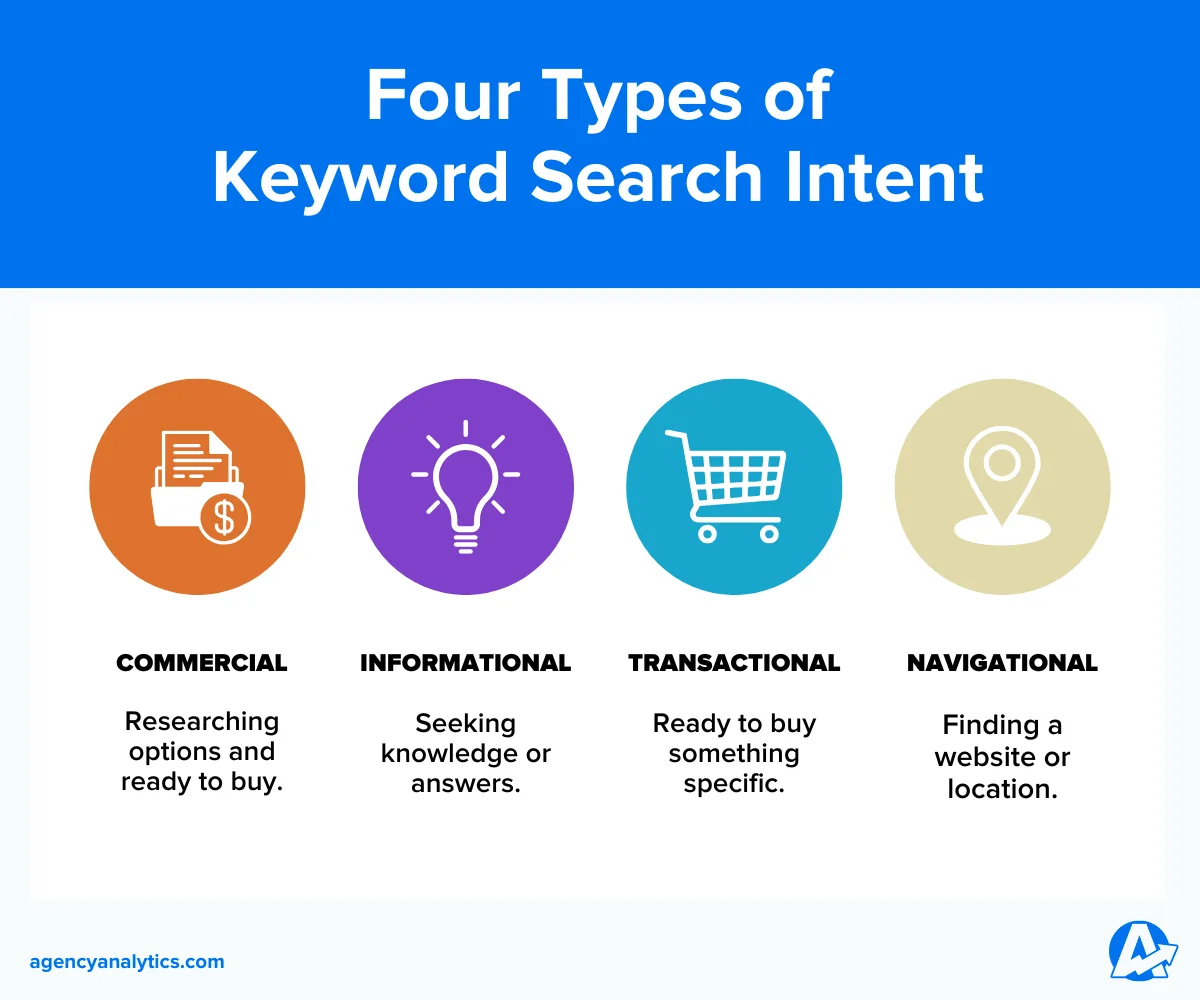
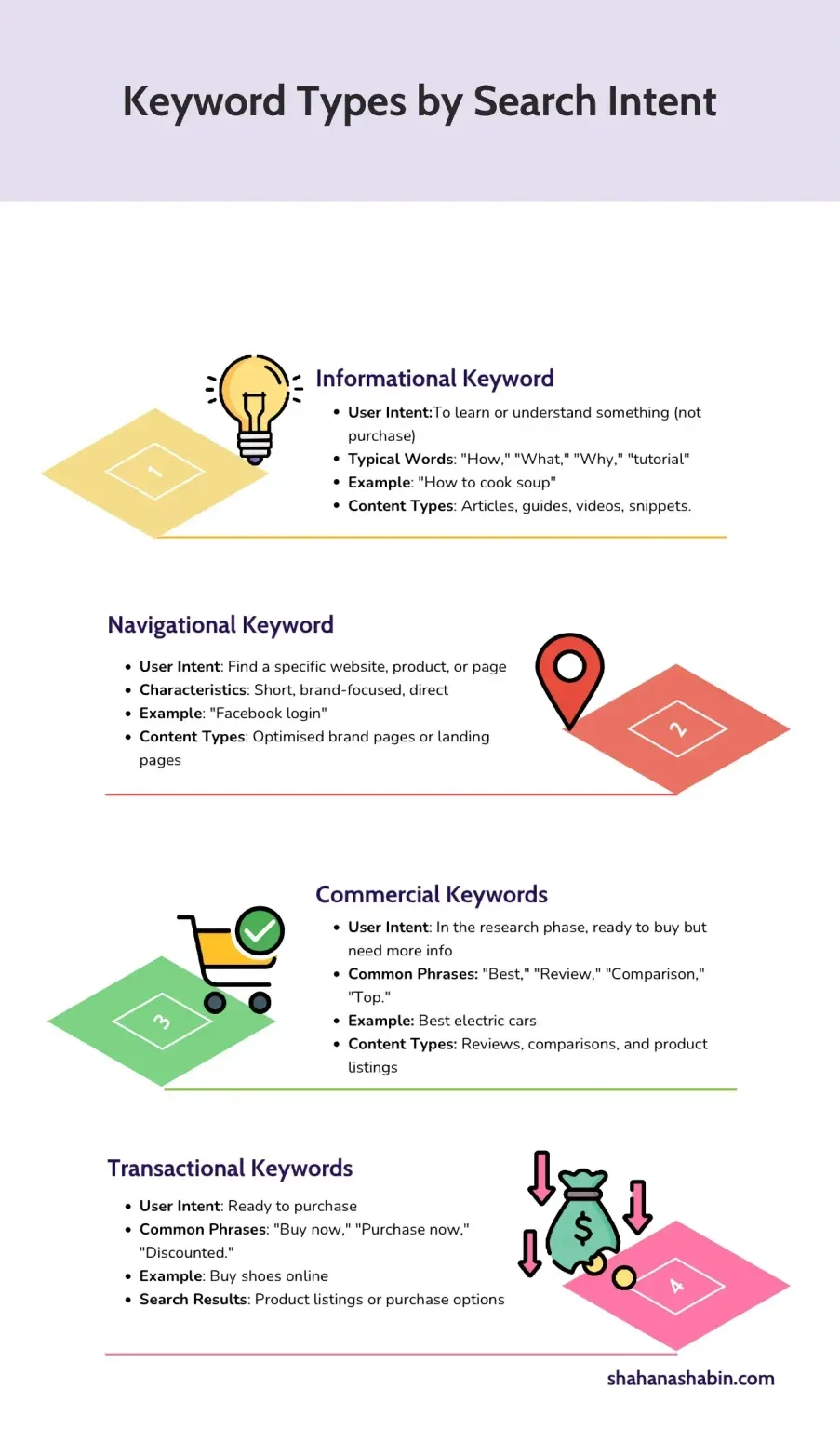
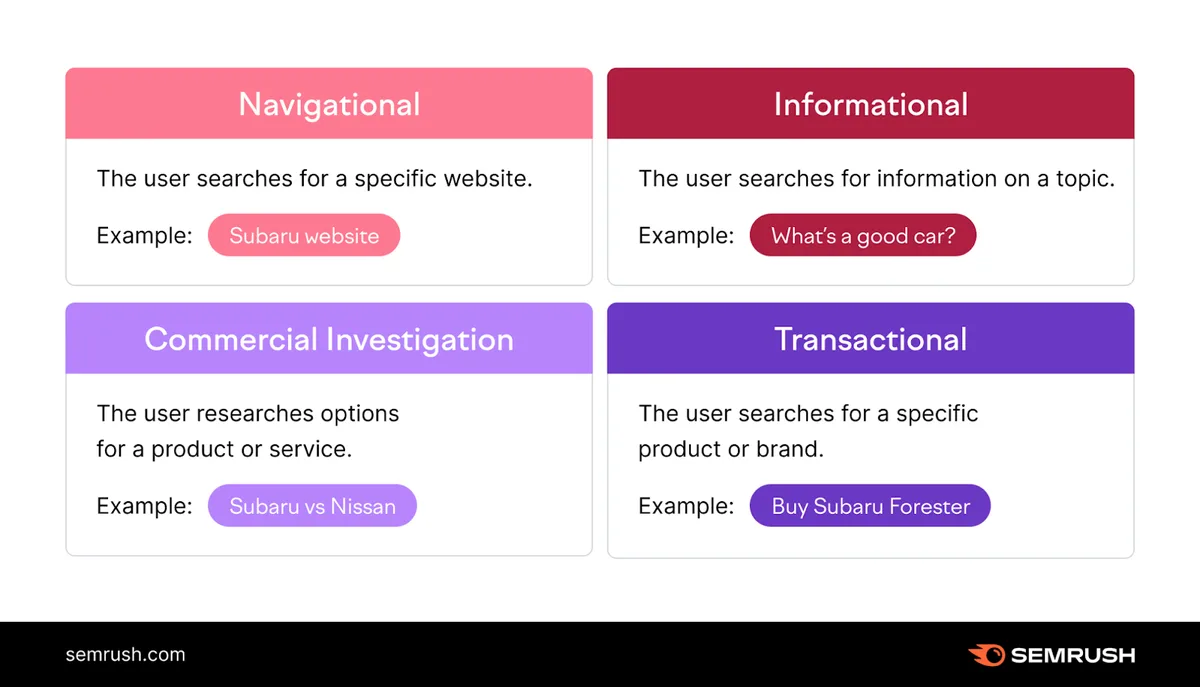
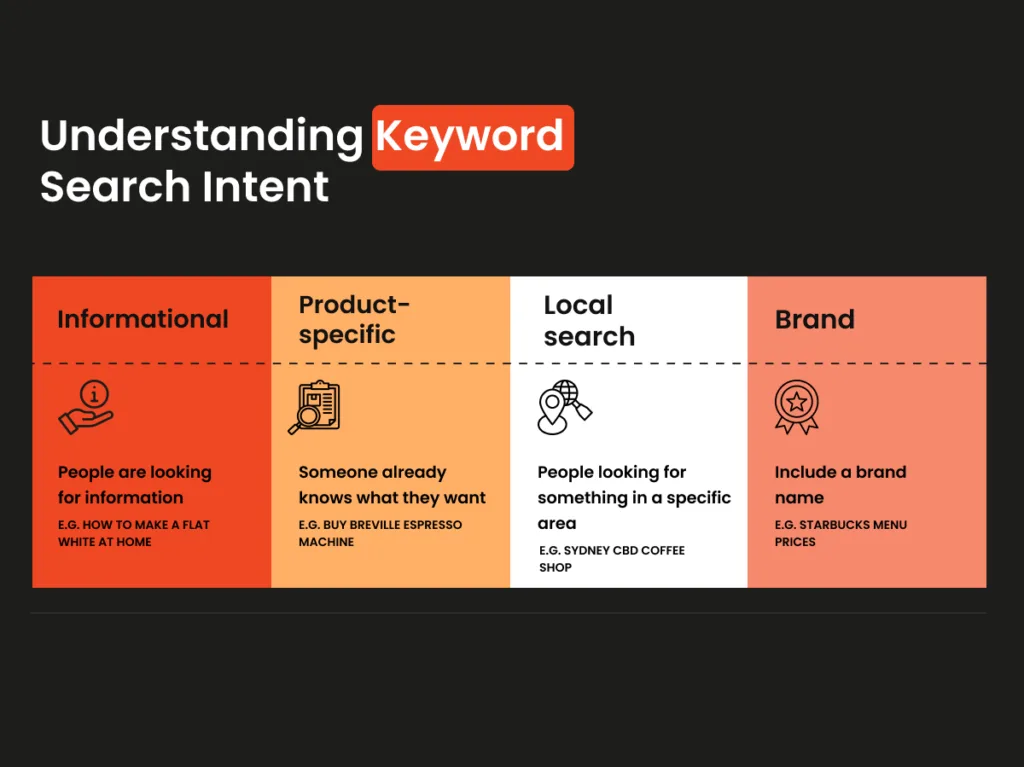
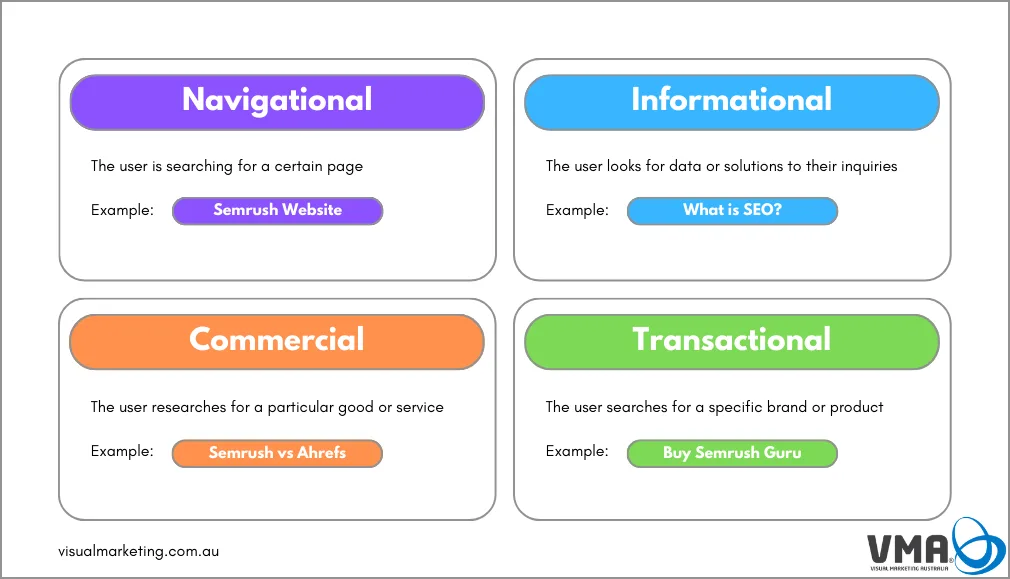
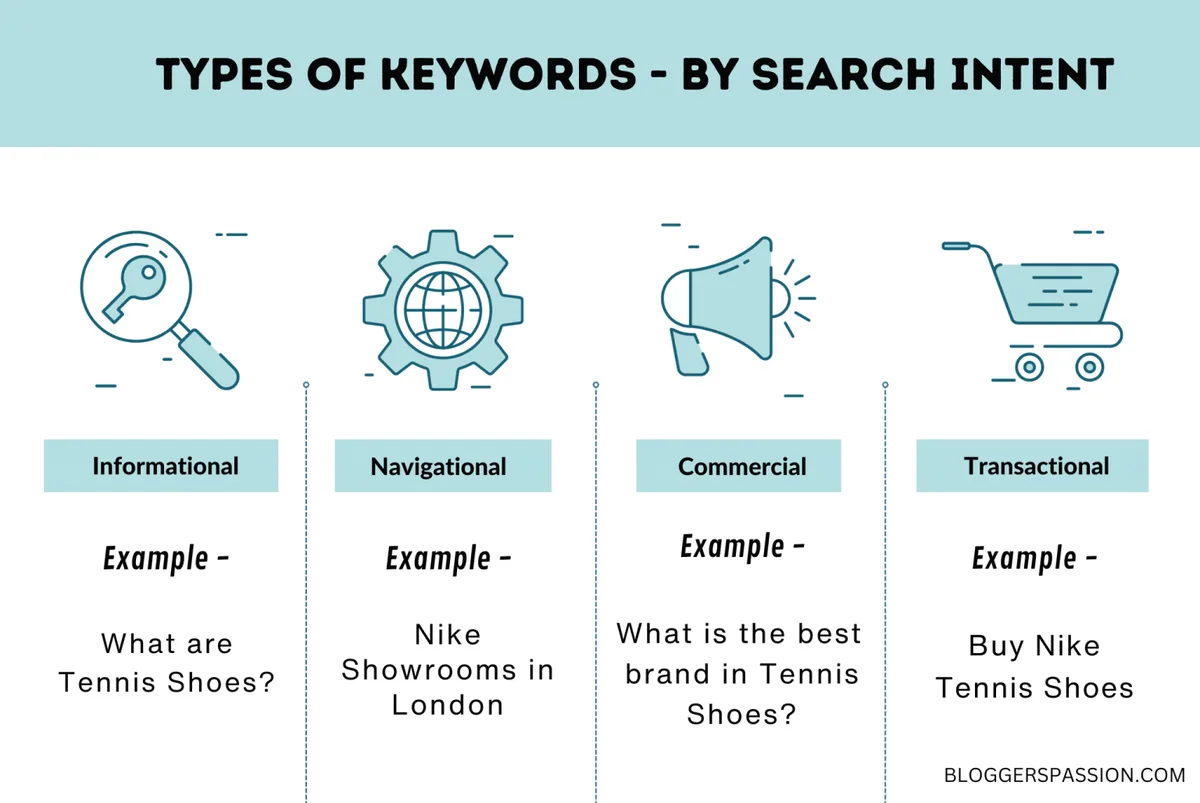
Informational intent is the widest lane: people who want to understand something. Tutorials, explainers, definitions, FAQs, and deep guides all live here. When you detect informational search intent types, your job is clarity, completeness, and structure that lets someone skim to the part they need.
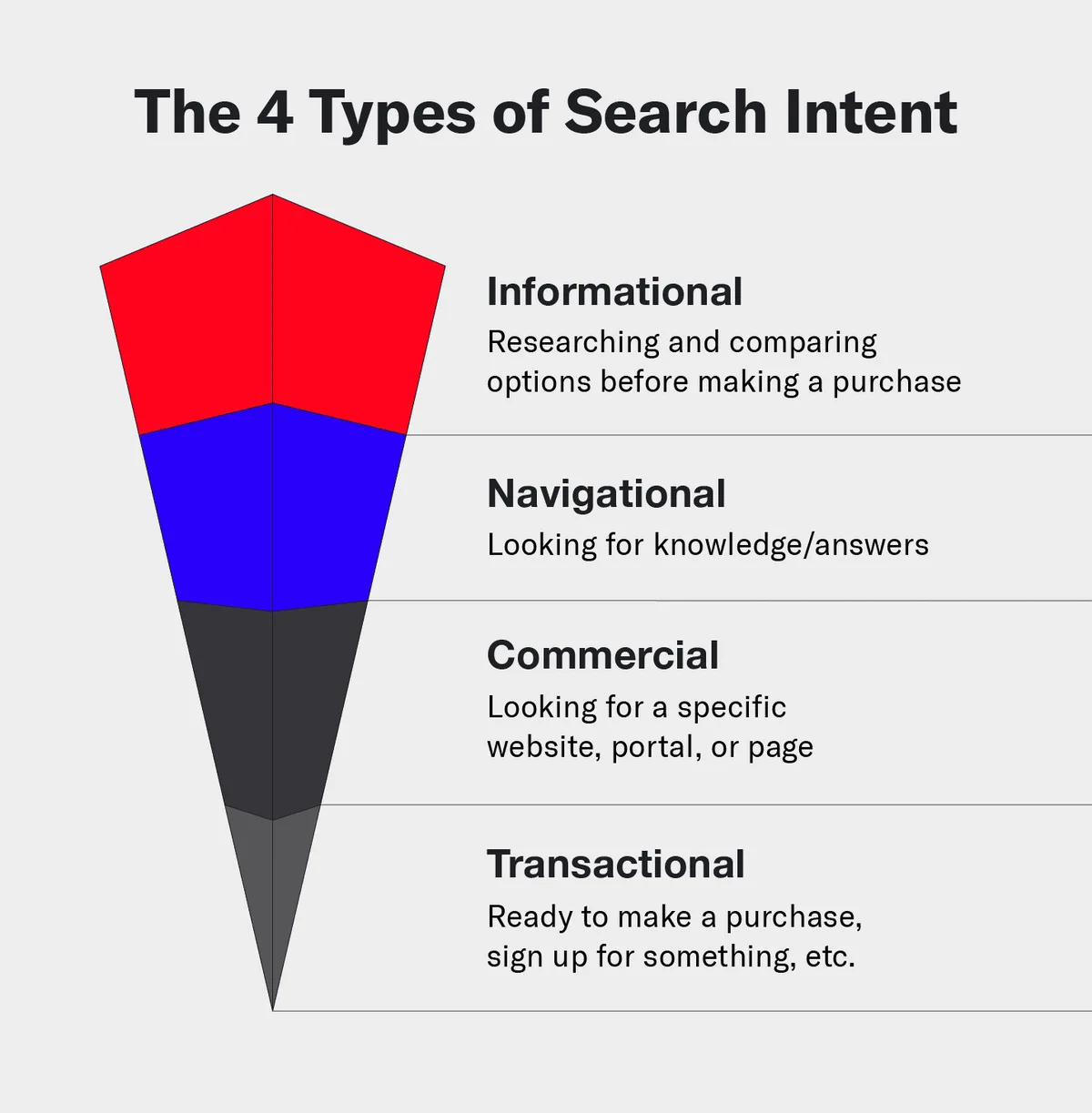
Take the query “what is a competitive direct manufacturer pricing.” The searcher wants a plain-language explanation, contribution rules, maybe a quick comparison to an IRA. Refining each detail of your search intent types strengthens this section. A well-built explainer with a clear definition up top, subheads for each sub-question, and a short FAQ at the end serves that intent cleanly. A sales page for a retirement app does not.
Use these best practices for informational content: lead with the direct answer in the first two sentences, use plain subheads that mirror likely follow-up questions, and add a comparison table when two concepts get confused. Then close with related reading that nudges the reader toward a commercial search intent types query later. That’s how informational pages feed the funnel without pushing.
Secret 3: Use Comparison Logic for Commercial Investigation
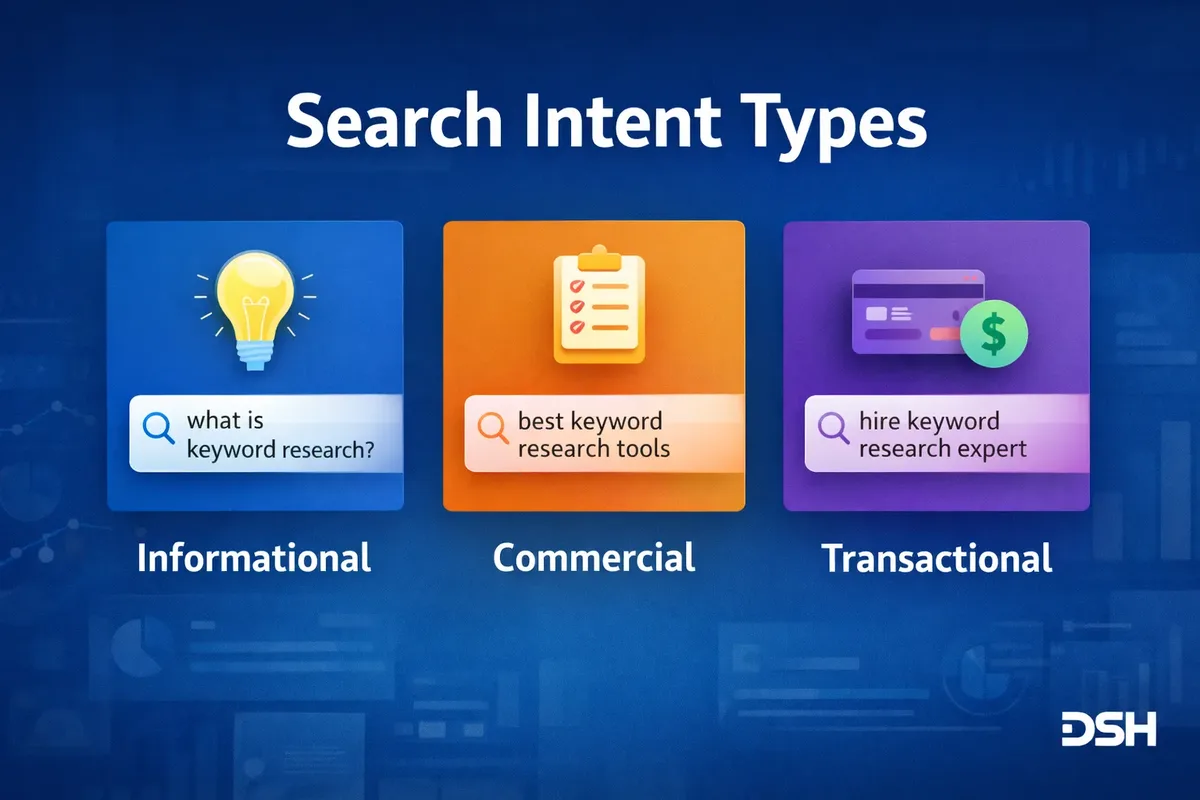
Commercial investigation is where buyers do their homework. Queries like “Notion vs. Obsidian,” “best noise-cancelling headphones,” or “cheapest car insurance for teens” all fit. These searchers are close to a decision, and they reward pages that make the trade-offs legible.
The secret here is honest comparison. Effective execution in your search intent types makes a tangible difference. A table with clear criteria — price positioning, feature depth, learning curve, who it suits — beats prose every time.
Prose buries the verdict; a table surfaces it. Add a short “who should pick which” section so the reader doesn’t have to do the synthesis themselves.
According to survey data from CXL on B2B buying behavior, most buyers complete the majority of their research before ever contacting a vendor. That research window is exactly where commercial-intent content earns its keep. If your comparison page gives a clear, fair recommendation, you’ve effectively pre-sold the product before the demo call.
Wait — I keep saying search intent types, so let’s be precise. Commercial investigation is often grouped under the informational umbrella, but treating it as its own intent gives you sharper content decisions.
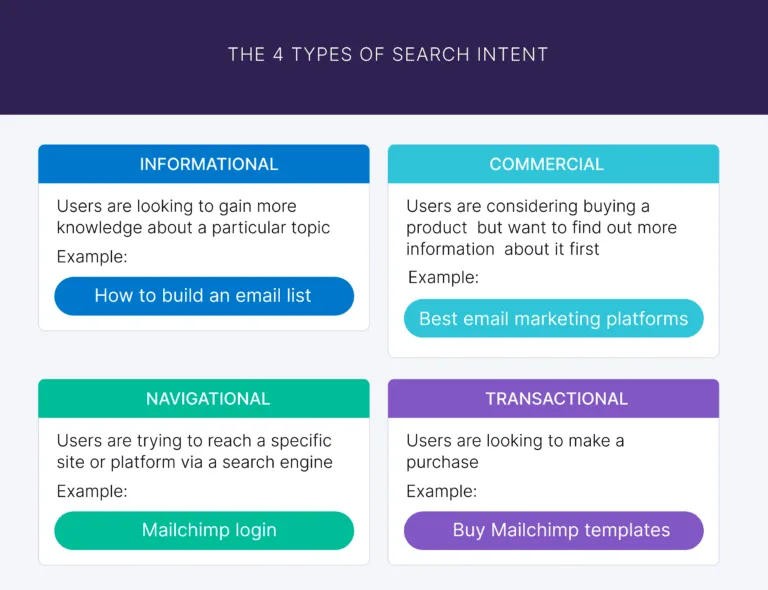
The query still informs the searcher, yet the closer they get to a shortlist, the more your page needs a verdict, not a survey.
Secret 4: Strip Friction from the Transactional Intent
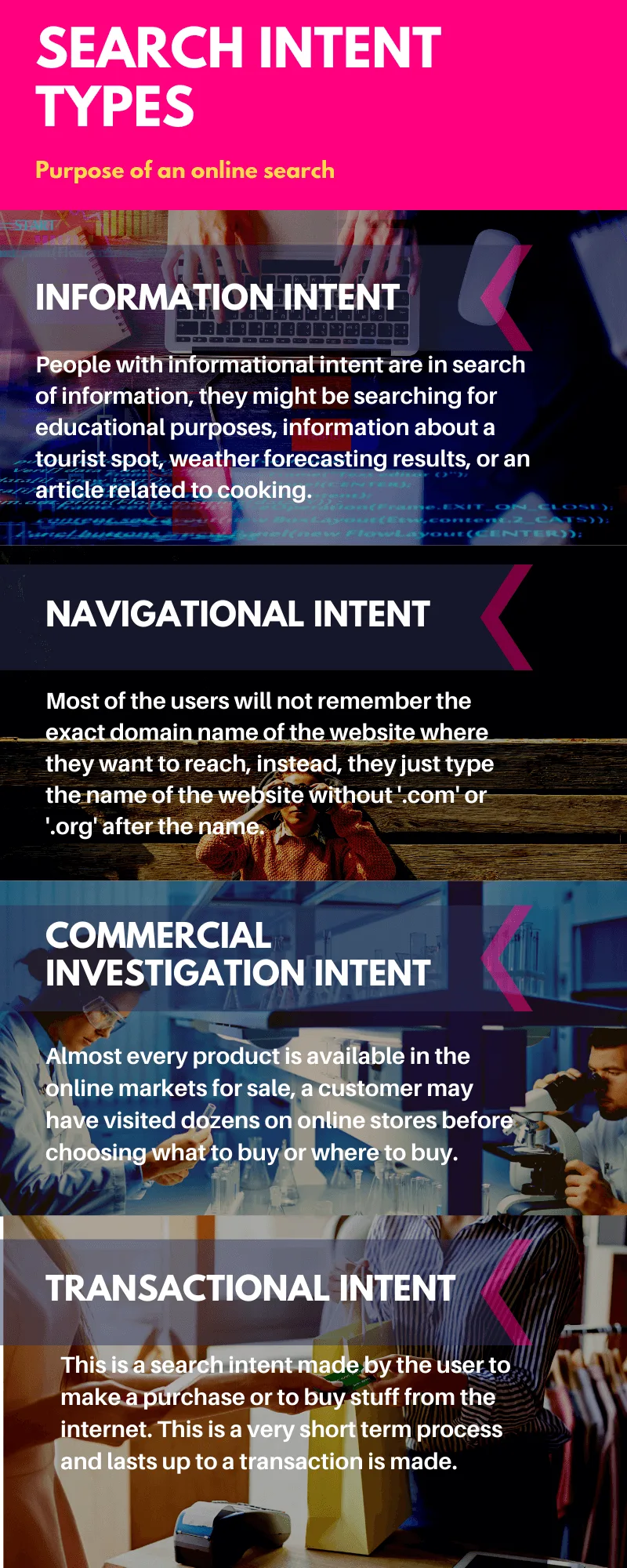
Transactional intent means the searcher is ready to act: “buy Nike Air Force 1 size 10,” “book hotel near LAX,” “download TurboTax.” Your job is removal of friction, not education. They already decided; they just want the path to be short and obvious.
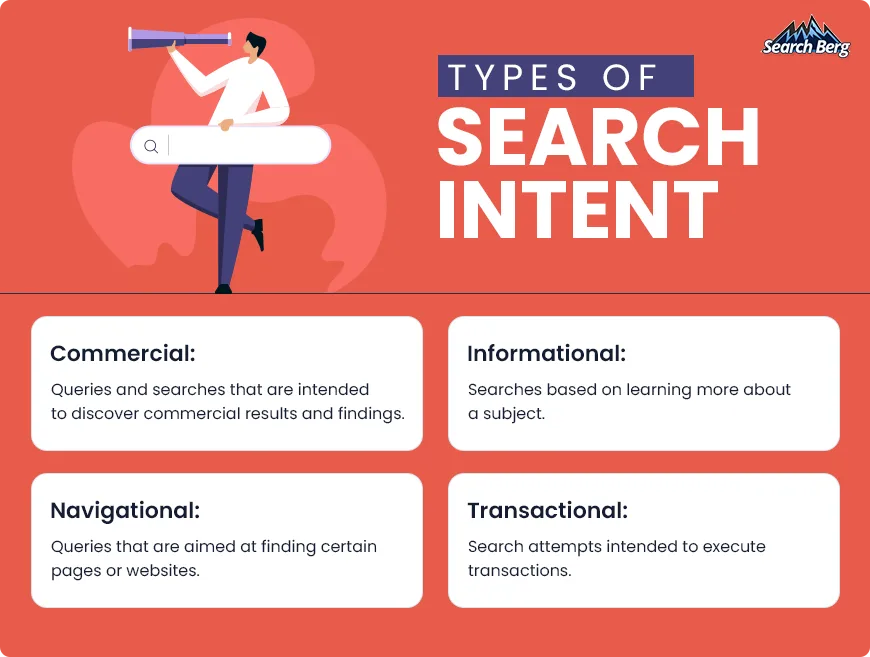
Here’s where most sites fail: a product page stuffed with brand storytelling and a “Contact us for pricing” wall. Bad idea. For this search intent types category, put price context, availability, delivery info, and a visible call to action near the top. Make the decision trivial.
Competitive manufacturer pricing displayed clearly beats a form the search intent types have to fill out to find out whether you can even afford the thing. And if you’re selling a service, “talk to a specialist” is a call to action, not a stealth pricing gate.
Keep the checkout or contact step to one or two clicks, and show trust signals — reviews, return policy, warranty — right next to the button.
Secret 5: Don’t Ignore Navigational Queries — They’re Trust Deposits
Navigational intent is someone looking for a specific destination: “Chase login,” “Reddit r/productivity,” “new york times crossword.” These queries seem low-value because the searcher already knows where they want to go. In practice, ranking for navigational search intent types is a quiet trust win.
Brand queries are the clearest example. When someone searches “your brand + support” or “your brand + login,” they’re not browsing; they want to arrive. If your brand’s homepage or help center pops up, you’ve intercepted the click before a competitor or a third-party aggregator did. That protects the customer relationship and the brand signal in the SERP.
The content play is simple: make sure your branded terms return your site, your support pages answer common questions directly, and your login page loads fast on mobile. If an aggregator ranks above you for your own brand, treat that as an alarm, not a coincidence. It signals your own site is missing something searchers expect.
Secret 6: Build a Search Intent Types Checklist You Actually Use
Here’s the last secret, and the one that ties the others together: turn all of this into a repeatable checklist. A search intent types checklist is not a document you file away and forget — it’s a five-minute pre-flight routine that prevents misaligned pages from ever getting published.
Mine looks like the search intent types: I open the target query, log the dominant intent, list the format of the top results, note any secondary intent lurking in “Related searches,” then confirm my drafted outline matches the primary job. If the intent is transactional but my draft reads as a tutorial, the draft loses. No sentiment.
The added benefit shows up in internal linking. Once you know each page’s dominant intent, you can chain them in the order a real customer moves: informational explainer comparison guide product page. That’s the backbone of a topic cluster, and it’s the cleanest way to stop treating every page as an isolated island.
As the SEO community’s search intent types best practices have matured, one thing is consistent — the teams that get results are the ones who treat intent as a fixed constraint, like a budget or a deadline. You don’t negotiate with it; you build around it. Do that, and the algorithmic signals — dwell time, click-through, pogo-sticking, conversions — tend to sort themselves out.
How the Six Intent Types Interlock in a Real Content Funnel
Here’s a scenario from a client I worked with on an energy efficiency consultancy. Their problem wasn’t ranking; it was conversion. Traffic was healthy but inquiries were thin. We mapped the funnel across intent types and found a gap.
Informational pages — “how do home energy audits work,” “heat pump vs. Furnace” — were doing well. But the gap sat between the explainer and the contact form. Nobody had built the commercial-investigation bridge, so the reader got a great education, nodded, and left.
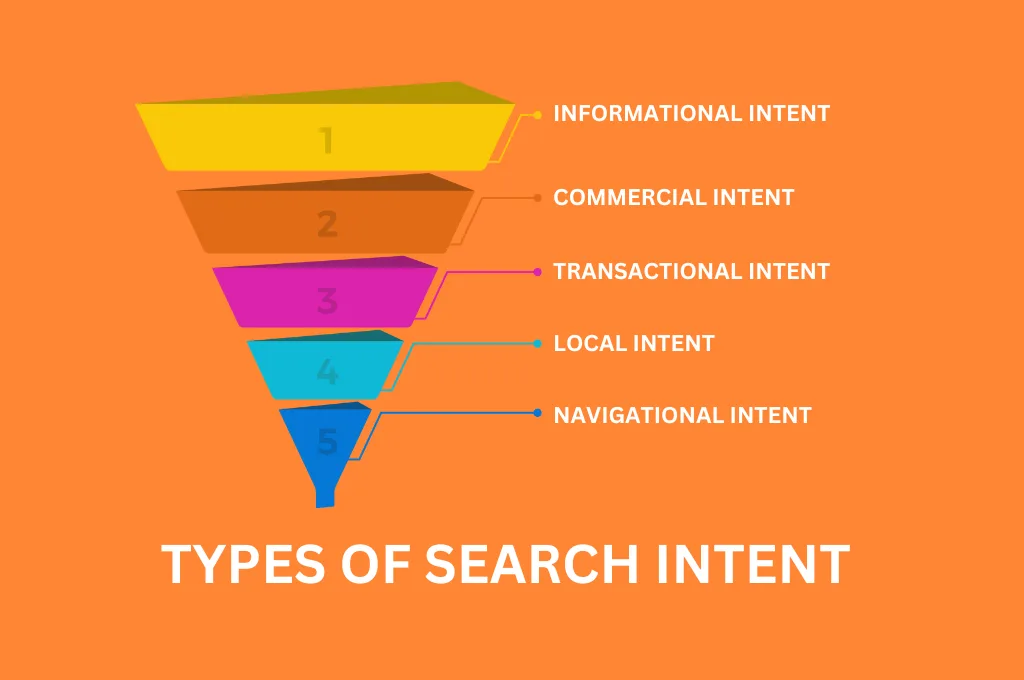
We added a comparison page, a transparent breakdown of what a home audit involves and roughly what drives cost, plus a clear call to schedule. Inquiries climbed within weeks. Same traffic, better-intent-aligned content. The lesson: the funnel is a series of search intent types strung together, and every missing link changes the outcome.
| Intent Type | Searcher’s Job | Content Format | Key Success Signal |
|---|---|---|---|
| Informational | Understand something | Tutorial, explainer, FAQ | Time on page, scroll depth |
| Commercial investigation | Compare options | Comparison table, review roundup | Internal clicks to product pages |
| Transactional | Take action | Product page, checkout, booking | Conversion rate, cart additions |
| Navigational | Reach a destination | Homepage, login, help center | Direct visits, branded search share |
Common Search Intent Types Mistakes That Sink Good Pages
The most frequent error I see is what I call intent drift: a page the search intent types starts as an explainer, wanders into a pitch, and ends as a random FAQ. Readers sense it within seconds. Bounce rate spikes, and the page limps along at position eight forever.
Second mistake: over-trusting one keyword. Rank for “shoe size conversion chart” and you’ll attract people shopping for shoes, not people converting conversions. Use the SERP to confirm what the query family actually wants before writing. The language of a query is not the language of intent.
Third: ignoring the mobile search intent types shift. On a phone, someone searching “pizza near me” is on a different clock than someone searching “best pizza dough recipe.” Proximity, urgency, and tap-readiness matter. If your transactional pages load slowly on mobile, intent never converts.
Fourth: over-optimizing sub-pages for their parent’s keyword. A blog post about budgeting will not outrank a page selling a budgeting app for “budgeting app,” and pushing it to try usually cannibalizes the real product page. Keep each page focused on the job its section of the funnel deserves.
Matching Search Intent Types to the Buyer Journey Stage
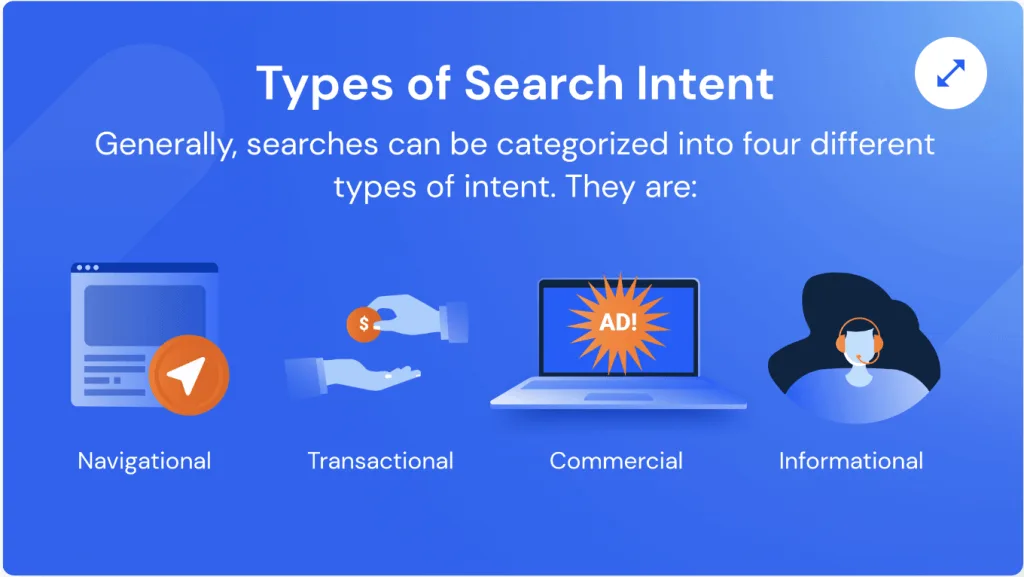
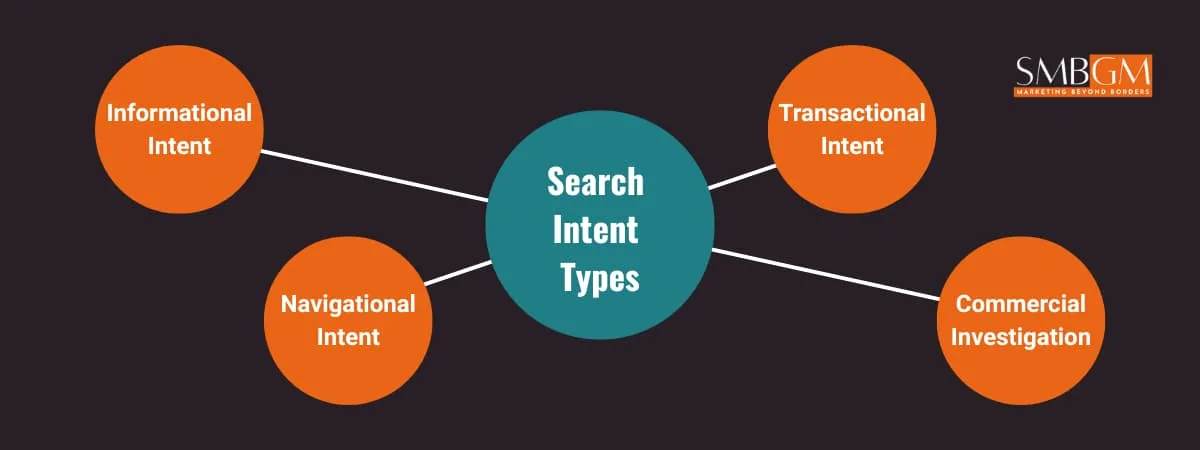
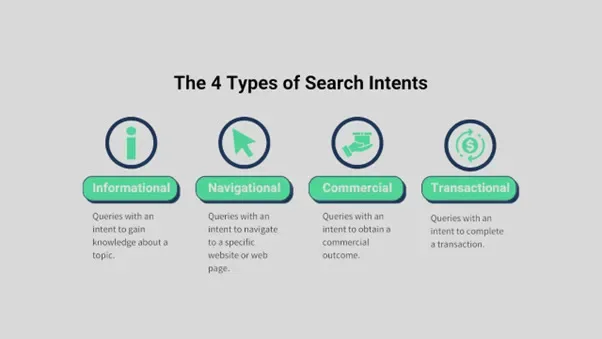
Discovery, consideration, and decision — the classic buyer stages map almost one-to-one onto the four primary search intent types. Discovery is informational. Consideration is commercial investigation. Decision is transactional. Navigational cuts across all three as the searcher moves toward a specific brand.
Early in the funnel, content should answer curiosity generously and link forward. A home energy audit explainer, for example, should link to the comparison page and a rebate guide. Mid-funnel pages should compare and recommend. Bottom-funnel pages should remove friction and reassure.
One counterintuitive point: don’t over-segment. Some teams create five pages for every micro-stage and end up with thin pages competing against each other. Often, one well-structured page can serve informational and commercial-investigation intent types at once — as long as the format supports both and internal links route readers correctly.
Auditing Your Existing Pages Against These Six Secrets
Before the search intent types write anything new, run an intent audit. Pull your top twenty ranking pages and for each ask: what intent does this target, and what intent is this page actually delivering? The mismatch list will be uncomfortable and useful in equal measure.
Then check the format. A page ranking for a “vs” query without a comparison table is a sitting duck. A page ranking for a “how to” query with no step sequence is an easy overtake target. Fix format before touching copy, because format is what the SERP is rewarding.
Next, review the internal links. Every informational page should have a forward link to a commercial-investigation or transactional page, and every comparison page should have a clean path to the product or contact form. Treat those links as a search intent types checklist item — a missing forward link is a leak in the funnel.
Finally, review your branded search results. If competitors, affiliates, or aggregators outrank you for “your brand + product,” you’re leaking navigational intent. Rebuild the flagged destination pages with fast loading, clear answers, and obvious next steps before you spend a cent on more informational traffic.
Search Intent Types Tips for Teams: Turning This Into a Process
The teams that get this right build it into workflow, not memory. Keep a shared intent register: query, dominant intent, format decision, owner, and status. Every time a brief is approved, the register gets a row. Every time a page publishes, the row gets a review date.
A lightweight content brief template helps here. Maintaining clarity across your search intent types remains essential. Three fields are enough: primary intent, format required, and one internal forward link. Fill those in before the first paragraph is written, and you’ve eliminated the most common mismatch before it costs you a rewrite.
For teams still wrestling with SEO jargon, this search intent types guide doubles as a briefing doc for writers and designers. Hand it over, ask them to fill the three fields for the next article, and watch the disagreement surface early — where it’s cheap to fix.
One final, practical tip from the trenches: keep a “query log” of searches your own customers type into your site search. It’s the closest thing you’ll get to real intent data without a research budget. Use it to spot the gap between what your audience wants and what your site currently ranks for.
Related Reading and Where to Go Next
If search intent types are the map, then keyword clusters and internal linking are the roads. These are the natural next topics to study, and they build directly on what you’ve read here.
Start with keyword clustering — it shows you how to group queries by shared intent so that one page can serve a whole family.
Then move to internal linking strategy. You’ll learn how to route traffic from informational pages to commercial and transactional ones without cramming links or hurting readability. Both topics connect to the funnel logic we covered in the six secrets.
And for the mechanics of Google’s own ranking signals, the official documentation on how search works is a worthwhile read — especially the sections on user intent and content quality. A thoughtful approach to search intent types reinforces your qualifications. It’s free, authoritative, and it grounds the whole topic in something you can cite in a client meeting.
Google’s official guidance on search intent types is a good external reference for anyone building a content strategy around this framework.
Whatever you do next, remember the through-line: the exact search intent types driving a query tell you the content that should exist. Build to that, and the SEO mostly follows. Build against it, and you’ll spend months wondering why good writing isn’t ranking.