Thought Leadership Content: 7 Proven Tips That Actually Work
Thought leadership content is the one asset most teams talk about and few actually build well. You have seen the type: glossy PDFs, vague manifestos, and LinkedIn posts that mistake volume for authority.
This article skips the theater. What follows is a field-tested set of seven tips that hold up under real market pressure.
Read them as a working thought leadership content guide, not a pep talk. The stakes are simple: credibility compounds when your ideas hold up, and it evaporates the moment your content sounds like everyone else’s.
Why Thought Leadership Content Fails So Often
Search a phrase like “thought leadership content best practices” and you land in a swamp of platitudes. Be authentic. Add value. Tell stories. None of it tells you how to produce material that a skeptical buyer will actually finish reading.
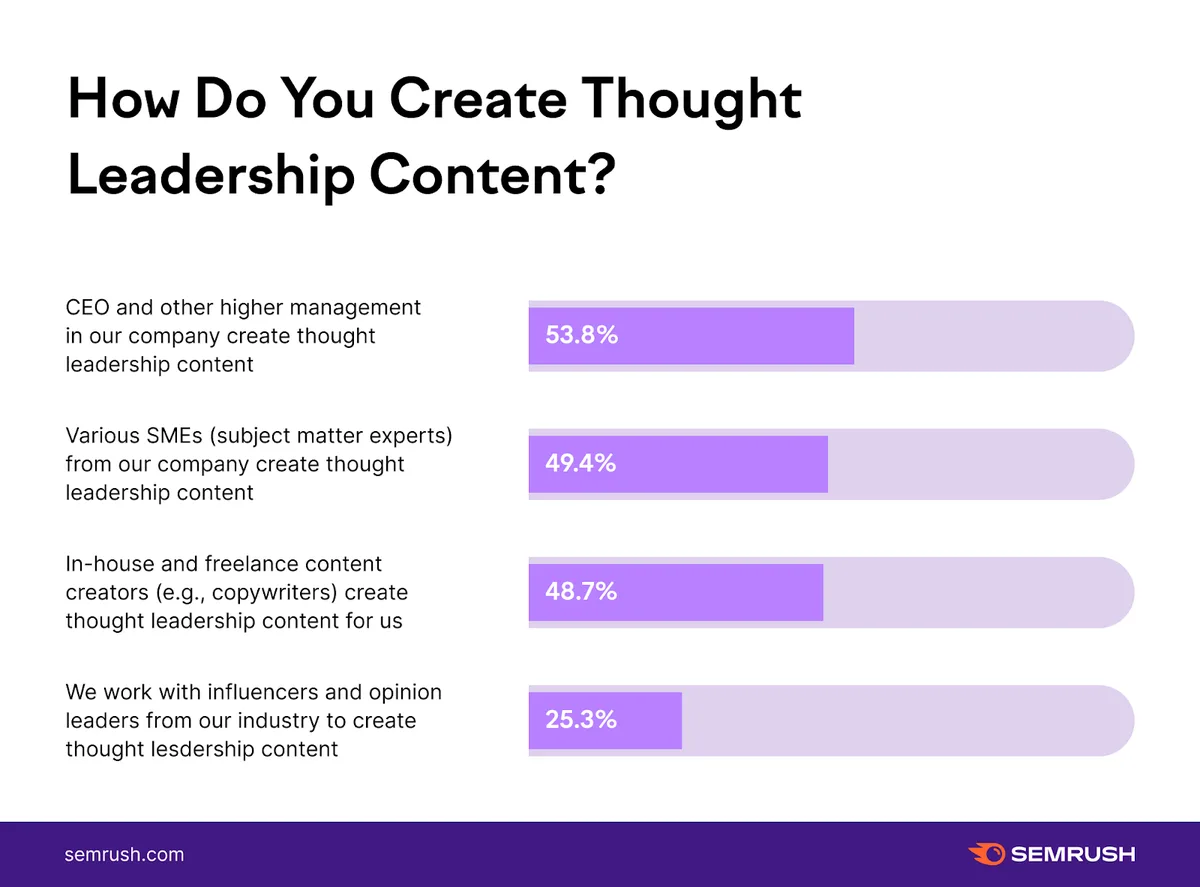
The reason is structural. Focusing on thought leadership content provides clear direction here. Most organizations treat thought leadership like a marketing deliverable instead of a knowledge product. It gets assigned to whoever has bandwidth, reviewed by whoever has veto power, and watered down until nothing survives that could possibly offend anyone.
What remains is content the thought leadership content announces expertise rather than demonstrating it. A CFO reading your piece learns nothing that changes how they think about cash flow risk. A head of operations finishes it and feels nothing.
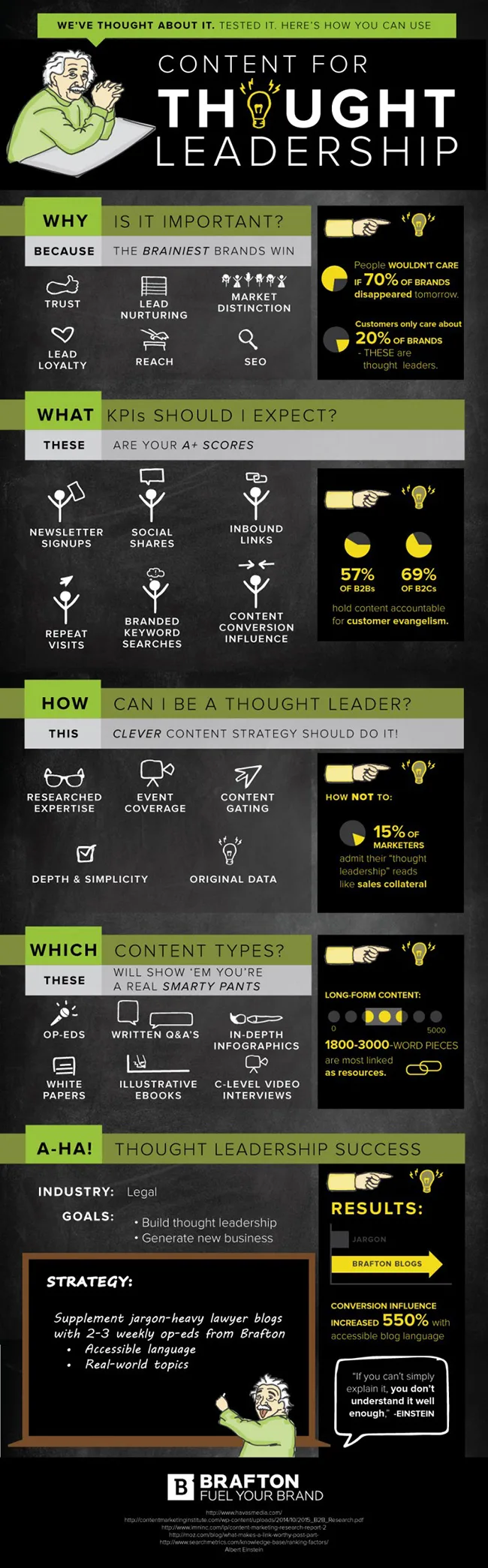
How Do You Measure Whether Thought Leadership Content Works?
You measure it by the decisions it changes and the conversations it starts, not by impressions or downloads. Those top-of-funnel metrics are comfortable and useless on their own.
Better indicators include: the reply-rate from named target accounts, the number of inbound questions that reference a specific argument you made, and whether sales teams forward your material unprompted. If sales reps never quote your content in a call, it is not doing its job.

Building a simple thought leadership content checklist around those signals keeps the program honest. Track three things every quarter: referrals from your ideas, mentions by people who do not work for you, and how often your framing shows up in a client’s internal deck.
The Case for Method Over Volume
Every tip below shares one assumption: quality beats quantity by an order of magnitude. One well-researched piece that a niche audience trusts outperforms forty social posts nobody remembers.

The thought leadership content is why the seven tips are structured the way they are. They start with the raw material, move through the process, and end with distribution and survival mechanisms. Skip any step and the whole system weakens.
If you want a broader frame for how this fits into the parent topic of content marketing, treat thought leadership as the credibility layer that sits above everything else. It feeds demand generation, product marketing, and hiring simultaneously.

Tip 1: Build a Thesis Worth Defending
A thesis is not a topic. A topic is “the future of supply chain management.” A thesis is “near-shoring will lower unit costs but raise coordination risk, and CFOs are underestimating the second half of that trade.”
Everything you publish should trace back to two or three defensible theses. This is the single most underrated element in any thought leadership content best practices playbook, and the one most often skipped.

What makes a thesis defensible? Three ingredients: a specific claim, a non-obvious angle, and a willingness to disagree with the consensus. If your thesis cannot be quoted in a boardroom and argued about, it is too soft.
Stress-Test the Thesis Before You Write
Run it past three people who know the subject. Ask one simple question: “What would change your mind about this?” If nobody pushback is interesting, you have a topic, not a thesis.
Also ask whether the thesis is falsifiable. If no future event could ever prove you wrong, you are writing marketing copy, not thought leadership content.
Tip 2: Earn Your Credibility With Primary Research
Original data is the fastest shortcut to authority, and the most defensible. Effective execution in your thought leadership content makes a tangible difference. It is very hard to argue with a survey of 800 operations leaders you conducted yourself, especially when you publish the methodology alongside the findings.

The thought leadership content do not need a research firm. A few dozen structured interviews, one well-designed survey, and an honest set of limitations will carry you further than a perfectly polished secondhand report.
Design Research That Holds Up to Scrutiny
Be transparent about sample size, method, and what the data cannot tell you. Publish the raw numbers if you can. This signals confidence and makes your work more likely to be cited.

A reader who spots a weakness in your methodology and finds you acknowledged it will trust you more, not less. That is the quiet engine behind most of the work covered in this thought leadership content guide.
Tip 3: Write to a Named Audience, Not a Persona Deck
Generic content is the fastest way to produce forgettable thought leadership content. Specificity is the antidote.
Instead of writing for “B2B decision-makers,” write for a senior procurement lead at a manufacturer dealing with a cost surge and a stalled approval cycle. That person will recognize themselves in your work within two paragraphs.
Three Tests for Audience Specificity
- The Screenshot Test. Would your reader screenshot a paragraph and send it to a colleague? Specific, sharp writing often gets that behavior; generic prose never does.
- The Off-Platform Test. Can a reader quote a specific claim from your piece without having to paraphrase? If the sentence reads like a press release, no.
- The “Wrong Reader” Test. If the wrong audience finds it slightly uncomfortable, you are probably on target. Content that appeals to everyone usually lands on no one.
Tip 4: Structure Ideas So Busy People Can Use Them
Even excellent ideas fail if the reader cannot find the point. Executives scan; they do not read linearly.
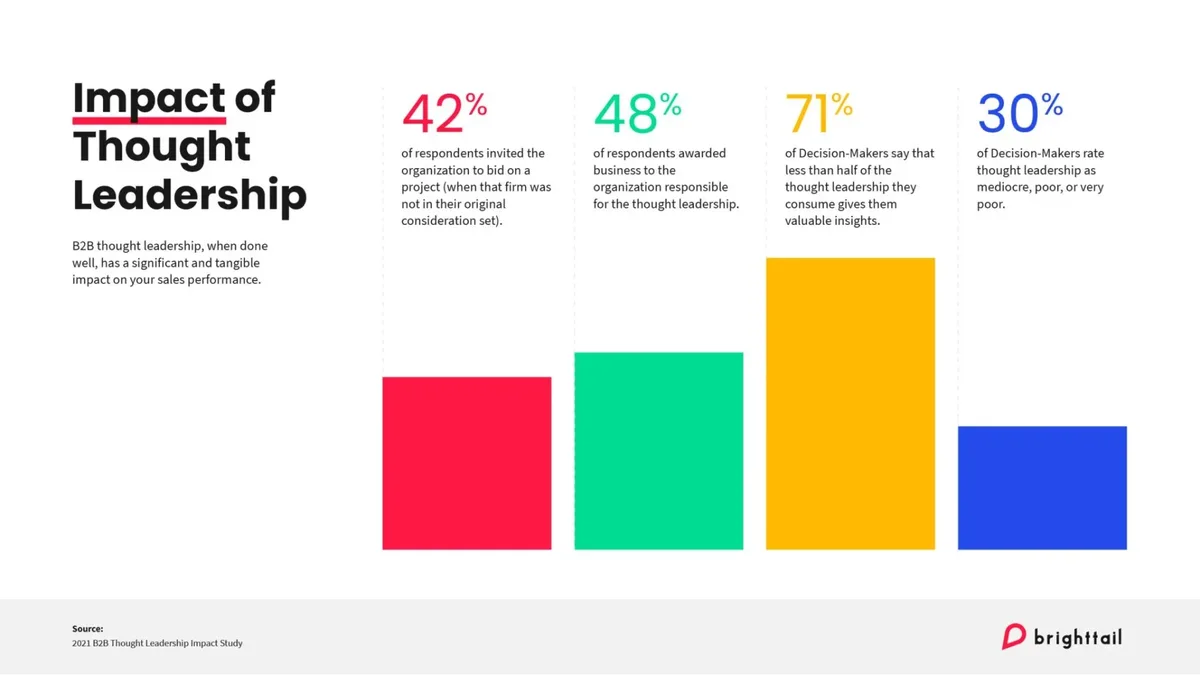
Start with the conclusion. Maintaining clarity across your thought leadership content remains essential. Then show the reasoning. Then show the data. This inverted-pyramid structure is borrowed from journalism and it works precisely because it respects the reader’s time.
What a Reader-First Structure Looks Like
Open with the claim. In the next section, unpack the mechanism behind it. Then show evidence, then address the objection a smart reader is already forming, then close with the implication for that specific reader’s situation.

If you are building a thought leadership content tips library for your team, this structure deserves its own entry. It is the difference between a piece someone reads and a piece someone cites.
Tip 5: Use Specific Evidence, Not Sweeping Claims
The word “transformative” belongs on a billboard, not in an essay about operational reality. Specific evidence does the work that adjectives cannot.

Name the company. Name the metric. Name the mechanism. “The company saved 12 percent on freight costs by shifting to regional fulfillment” is a hundred times more useful than “the company drove significant efficiencies.”
The Evidence Checklist
| What to Check | Why It Matters |
|---|---|
| Is the claim specific enough to be verified? | Verifiable claims are more persuasive and more citable |
| Is the source named? | Named sources build credibility; anonymous sources weaken it |
| Is the sample or data size disclosed? | Readers need enough context to judge significance |
| Is the mechanism explained? | A result without a mechanism is a coincidence, not a finding |
| Is the alternative interpretation addressed? | Preemption strengthens your argument and earns trust |
Run every claim through this list before you publish. You will cut a surprising amount, and what survives will carry more weight.
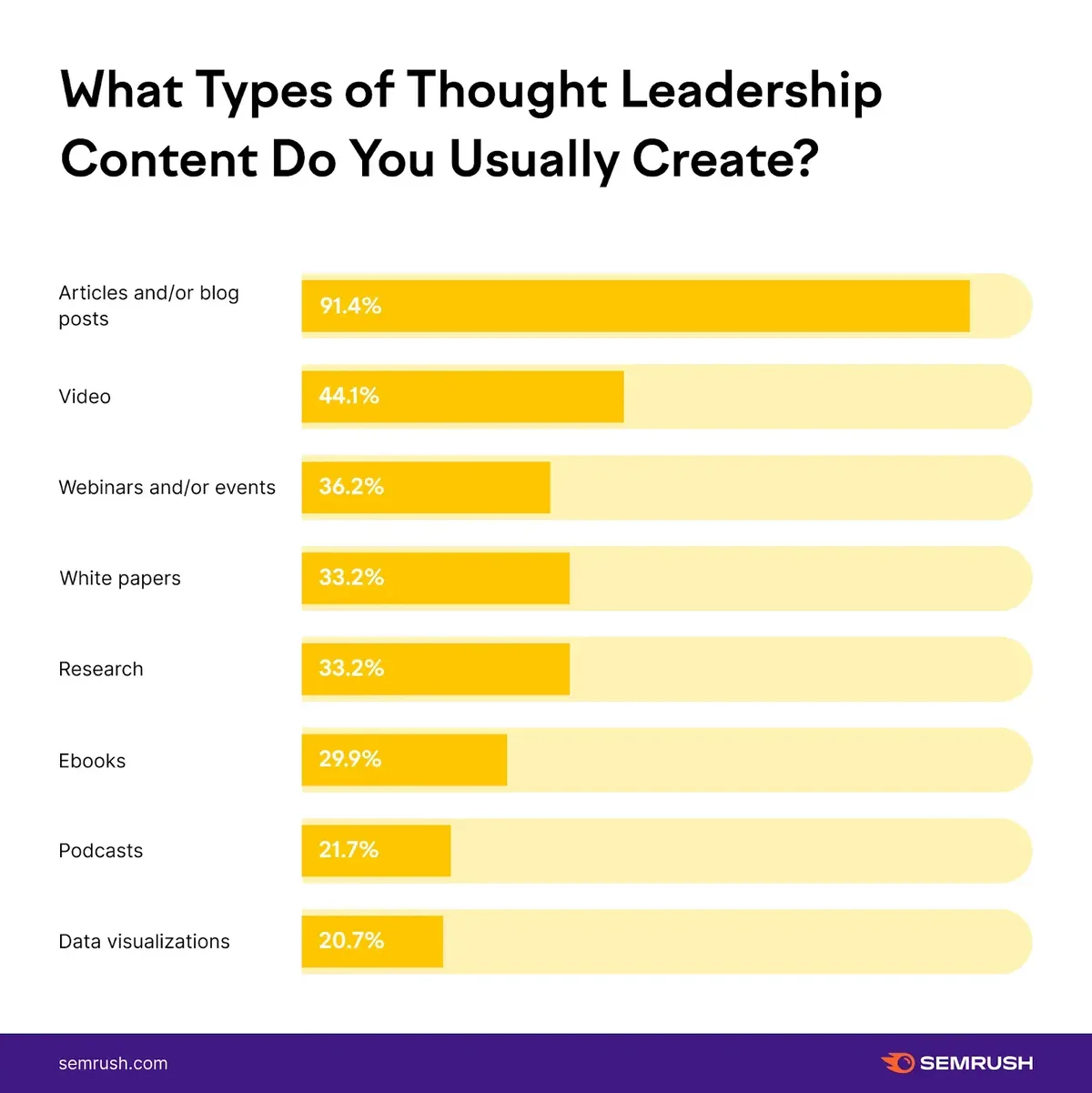
Tip 6: Distribute Thought Leadership Content Where Decisions Happen
A strong piece of content published once and forgotten is a wasted asset. A thoughtful approach to thought leadership content reinforces your qualifications. Distribution is not an afterthought; it is half the job.
Find the channels where your audience actually makes buying decisions. For some audiences this is a paid industry newsletter, for others a private roundtable, and for others a structured briefing to a partner firm.

Distribution Tactics That Compound
- Direct outreach with a specific ask. Send the piece to twenty named people with a single question inviting them to react. Personalized outreach beats mass email every time.
- Co-author with a partner. A joint piece with a firm your reader already trusts borrows their credibility.
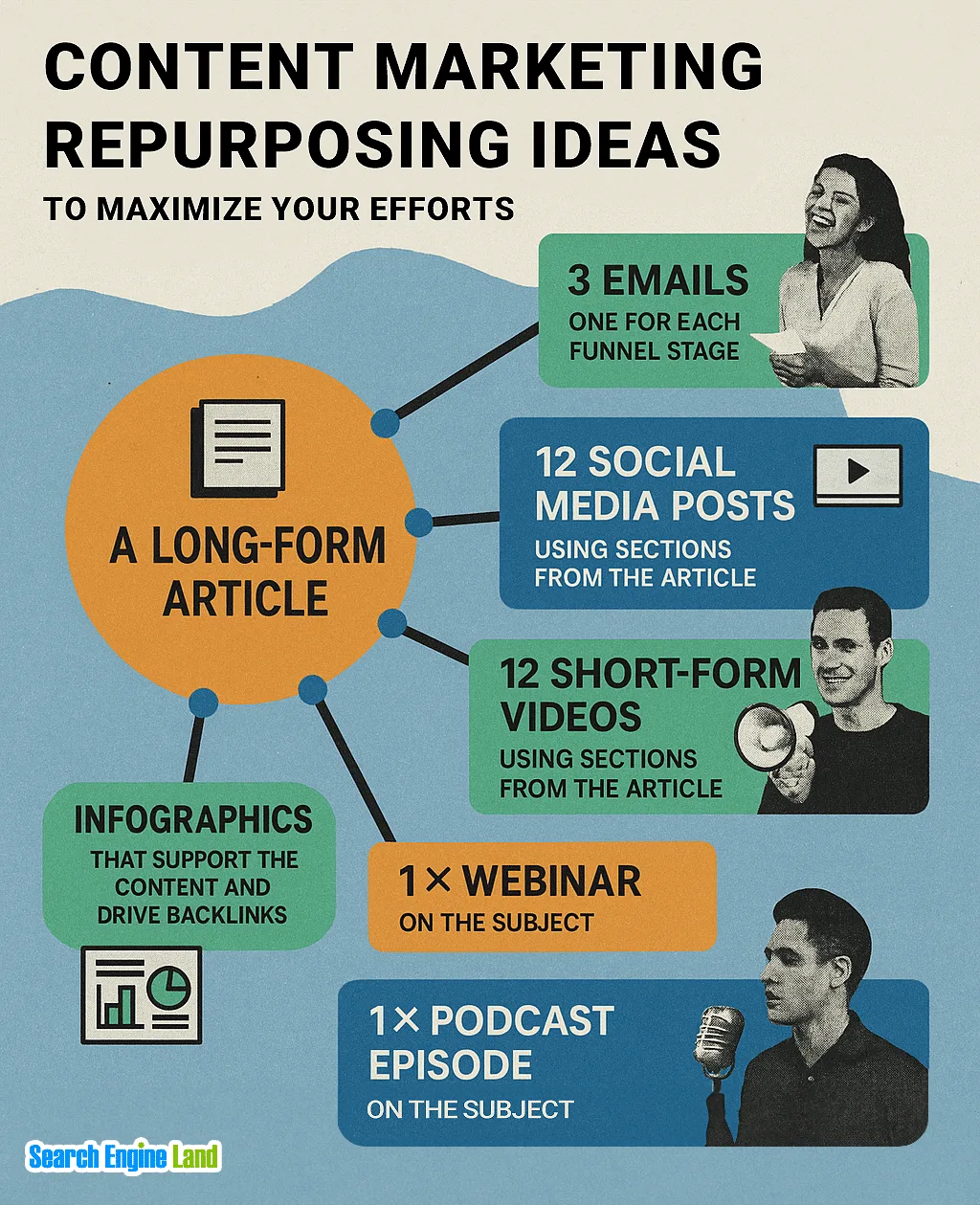
- Repurpose for the sales floor. Turn your key data point into a one-pager sales teams will actually use in calls.
- Republish with industry publications. Guest placements on established outlets carry their audience and their SEO weight.
- Speak it out loud. Panels, podcasts, and webinars let you test arguments and get real-time reactions.
The best thought leadership content best practices all share one trait: they treat distribution as a system, not a push.
Tip 7: Build a Recurring Series Instead of One-Off Pieces
A single brilliant piece disappears into the internet. A recurring series compounds. This is the secret that most programs ignore.
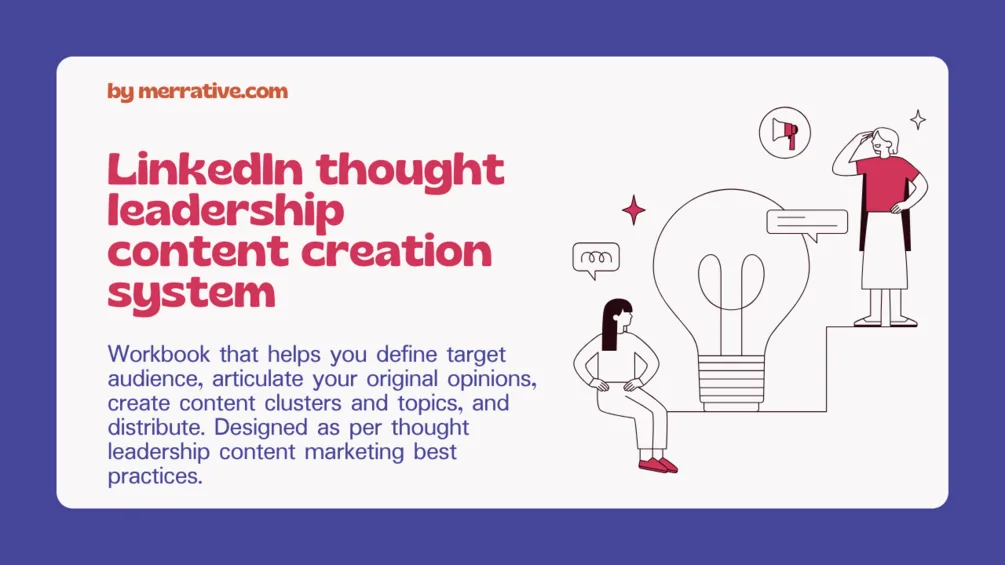
Pick a format your audience can rely on. A quarterly data drop on labor market trends. A monthly interview series with operators. An annual state-of-the-market report. Consistency is the constraint that turns content into a habit.
How to Pick a Format That Sticks
Ask three questions. Can you produce it four times a year without heroics? Will the format spark new data or new conversations each cycle? Will readers recognize it as yours within a second of seeing the headline?
If the answer to any of the thought leadership content is no, the format is probably too ambitious or too generic. Start smaller than you think you should.
Building the Team and Process Behind Good Thought Leadership Content
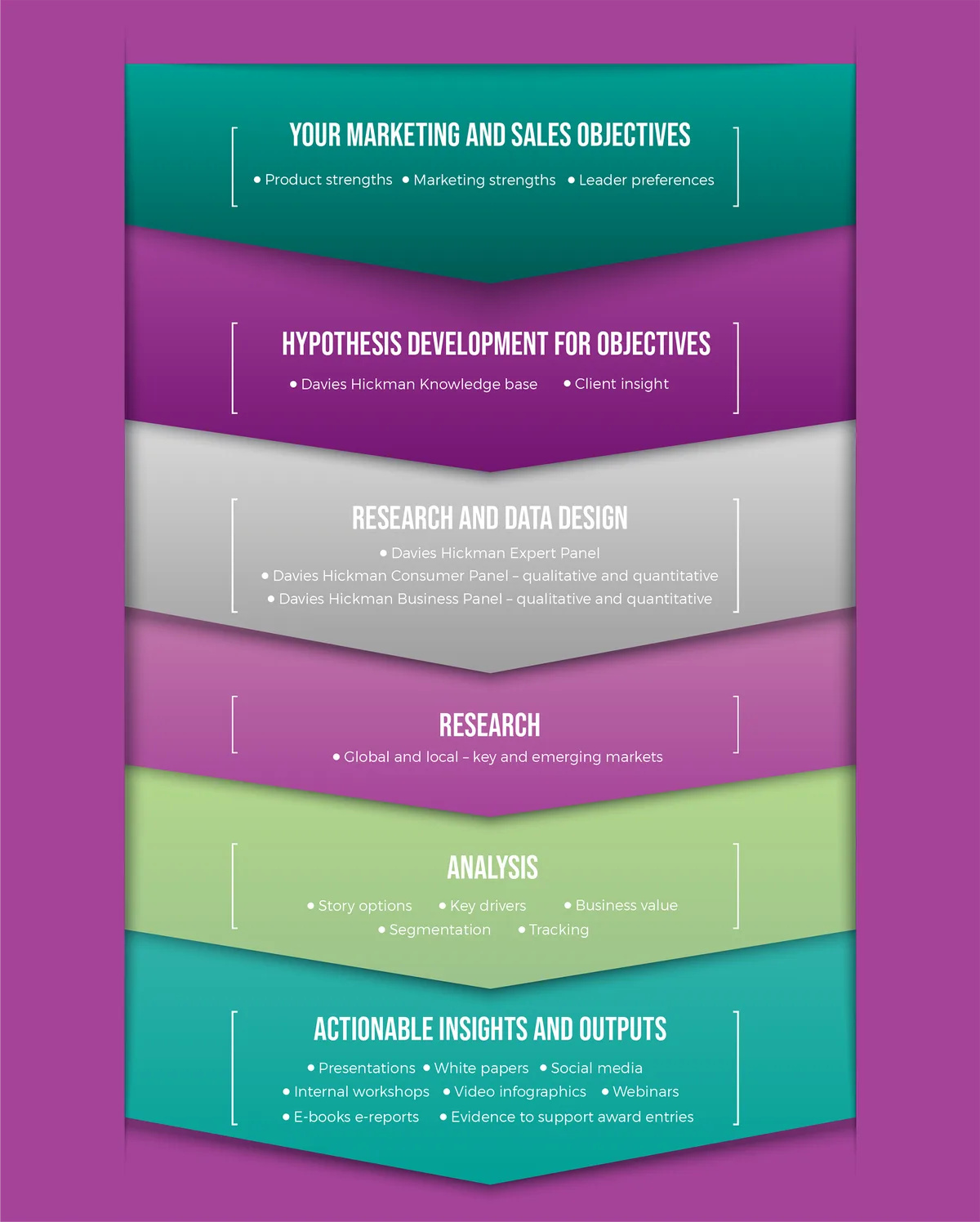
Good thought leadership content is almost never produced by one person. It is a collaboration between a subject expert, a writer, and someone responsible for the editorial standard.

Experts give you the thesis and the lived detail. Writers make the argument legible. An editor enforces consistency of voice and taste. Skip any role and the output suffers.
This is where a structured thought leadership content checklist saves a program from drift. Define the roles, the review cycle, and the standard that every piece must meet before it is published.

The Thought Leadership Content Checklist Before You Publish
Before you press publish, run the piece through this checklist. It is the same list we use on our own team, and it has caught more weak arguments than any other single tool.
- Thesis is specific. Can you state the central claim in one sentence?
- Angle is non-obvious. Would a reader learn something they did not already assume?
- Audience is named. Who is this for, precisely?
- Structure is reader-first. Does the opening respect a skimmer?
- Evidence is specific. Are claims verifiable, sourced, and mechanism-explained?
- Objection is preempted. Did you address the strongest counterargument?
- Distribution plan exists. Who will see this in the first week, specifically?
- Series continuity is clear. Does this fit into something recurring?
- Voice is yours. Could a reader tell this apart from a competitor’s piece?
- Sales-usefulness is tested. Can a sales rep quote it directly on a call?
If a piece fails four or more items, do not publish it. Rewrite or shelve. The cost of a weak publication is a hit to your credibility that takes months to repair.
Common Mistakes That Sink a Thought Leadership Program
Most failures are predictable. The first is treating it as a content calendar problem. Filling slots with mediocre pieces damages credibility faster than silence.
The second is outsourcing the ideas. Applying these principles to your thought leadership content yields measurable results. Writers can produce excellent prose from a good thesis; they cannot manufacture a thesis your business does not actually hold. Ideas must come from the people doing the work.
More Mistakes to Avoid
- Publishing without distribution: a great piece with no readers is a hobby, not a program.
- Chasing trending topics: borrowed attention without a coherent thesis is forgettable.
- Over-polishing until it says nothing: risk aversion produces toothpaste.
- Measuring only short-term traffic: thought leadership is a long-compounding asset.
- Ignoring sales floor use: content nobody quotes in a meeting is content nobody needs.
Measuring Impact Beyond Vanity Metrics
Attribution is hard, but not impossible. Start with the metrics you can control: direct mentions by name, invitations to speak, inbound questions that reference specific arguments, and sales conversations that start with your framing.
Over a longer horizon, look at whether your company is cited in industry reports, board decks, and analyst conversations. Those are leading indicators for a program that is working.
Three Metrics That Matter Most
First, “idea citations”: the number of times your specific framing is repeated by people outside your company. Second, “sales adoption”: the percentage of sales reps who quote a specific line from your content in a meeting. Third, “inbound specificity”: the number of inbound queries that reference a specific argument from your work.
These three will tell you more about the state of your thought leadership content than any traffic report ever will.
What to Do With Weak Signals from the Market
Not every piece will land. Some will get polite reads, no reactions, and silence. That is data, not failure.
Look for a specific pattern. Proper attention to your thought leadership content sets a strong baseline. If the piece failed to get a response from a named target reader, ask one. A ten-minute call after every major publication will teach you more than a quarter of analytics.

Iterate the thesis, not just the copy. The real lesson is usually that the argument held less weight than you thought.
How Thought Leadership Content Fits Into a Larger Content Strategy
Thought leadership is the credibility layer. Content marketing at the top of the funnel is often educational; product marketing is comparative; thought leadership sits above both and sets the terms of the debate.
That hierarchy matters. When your thought leadership work is strong, the rest of your content inherits its credibility. When it is weak, every piece downstream feels like marketing.
View this article as part of a larger topic cluster. Nearby subtopics worth pursuing: how to build an editorial board for ideas, how to run a research program on a small budget, and how to reuse a strong argument across sales, PR, and product.
The Role of Original Data in Building a Durable Reputation
If the thought leadership content only have the budget for one investment, choose original data. It is the hardest thing to copy and the most likely to be cited by others.
A simple approach: run one focused survey per quarter on a topic the thought leadership content already understand deeply. Turn it into three outputs — a data report, a short essay interpreting the findings, and a sales one-pager with the key stat.
The compounding effect is real. After four quarters, you own an argument in your category that nobody else can credibly make.
How AI Tools Change the Production of Thought Leadership Content
AI tools can help you draft, outline, and repurpose faster. They cannot replace the thesis. The thesis comes from lived experience and careful observation, and that is still a human job.
Use AI to compress the middle of the process: drafting, editing, repurposing. Keep the beginning and the end — the thesis and the final taste test — firmly in human hands.
Readers increasingly detect and discount material the thought leadership content feels assembled rather than argued. The human judgment that shapes the argument is now more valuable than ever, not less.
How Do You Choose the Right Thought Leadership Format?
Match format to audience habit, not personal preference. Some audiences read long essays; others watch interviews; others expect a structured report with charts.
When in doubt, start with a long-form essay published on your own site, then cascade into shorter adapted formats. Long-form work is the source material for everything else, and it anchors your search authority.
Formats Worth Testing
Deep-dive essays, quarterly data reports, interview series with operators, roundtable recaps, and structured frameworks you can defend. Each plays a different role.
Treat format like a testing ground. Run each format for two quarters and keep only the ones that yield measurable traction.
Why Thought Leadership Content Fails Inside Organizations
The most common internal failure mode is lack of ownership. When nobody owns the editorial standard, content devolves into whatever the loudest voice in the room wants.
The second is permission anxiety. Every piece is reviewed by too many stakeholders, each one removing a sharp claim until the piece says nothing worth reading.
The fix is structural: name an editor-in-chief, give them the final say, and protect them from the temptation to sand down every edge. Clear ownership is the quiet backbone of every thought leadership content guide that actually produces results.
What Thought Leadership Content Looks Like When It Works
A well-run program produces a small set of ideas that the market repeats back to you. That is the real test.
Your customers quote your framing in their own decks. Sales reps use a specific stat from your report as their opener. Competitors start responding to your arguments in their own content. That is the sign you have moved from publishing to leading.
Getting there takes time. The tips above are not a shortcut; they are a method. But method, applied consistently, compounds into reputation.
Your First 90 Days
If you are starting a program from scratch, do not begin with a calendar. Begin with one or two defensible theses.
Spend the first thirty days drafting them and stress-testing them with internal experts. Spend days thirty to sixty writing a single strong piece and building out the distribution list. Spend days sixty to ninety publishing, following up, and gathering reactions.
By day ninety, you will know more about what works in your category than any written thought leadership content tips article — including this one — can teach you.
The Long View
Thought leadership content is not a campaign. It is a way of making your company’s ideas legible to the market over time.
The firms that do this well share a few traits: a small number of defensible theses, a research habit, a clear editorial standard, and a distribution plan designed around actual decisions.
Everything else — the tip lists, the frameworks, the checklists — exists to support the thought leadership content four things. Start there. The seven tips above are the implementation details, and the rest is patience.