Press Release Template: Download 7 Free Templates
A press release template is the fastest way to go from a blank page to a pitch-ready announcement without losing your voice in the process. If you have ever stared at a blinking cursor fifteen minutes before a deadline, you already know why a fill-in-the-blank structure saves the day.
Below you will find seven free templates you can copy, edit, and send — each built for a different job, from a product launch to a crisis statement.
We will also walk through how to pick the right one, what to strip out before you hit send, and the small formatting calls that determine whether a journalist opens your email or archives it. Treat this as your working press release template guide — something you bookmark, not just read once.
Why a Press Release Template Belongs in Every Comms Kit
Most announcements fail for boring reasons. The facts are scrambled, the quote arrives in paragraph seven, or the contact block is missing entirely. A well-built press release template removes those failure points before you type a single word.
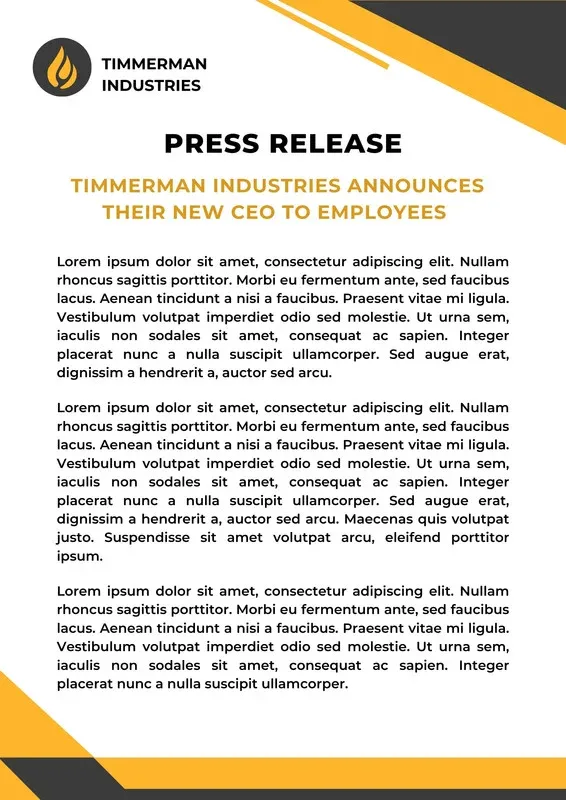
Think of the press release template as the scaffolding around a building. You still pour the concrete and decide the shape of the rooms, but the structure holds everything upright while you work.
Journalists benefit too — they scan for the same markers every time, and a familiar layout shortens the distance between your inbox and their editor’s desk.
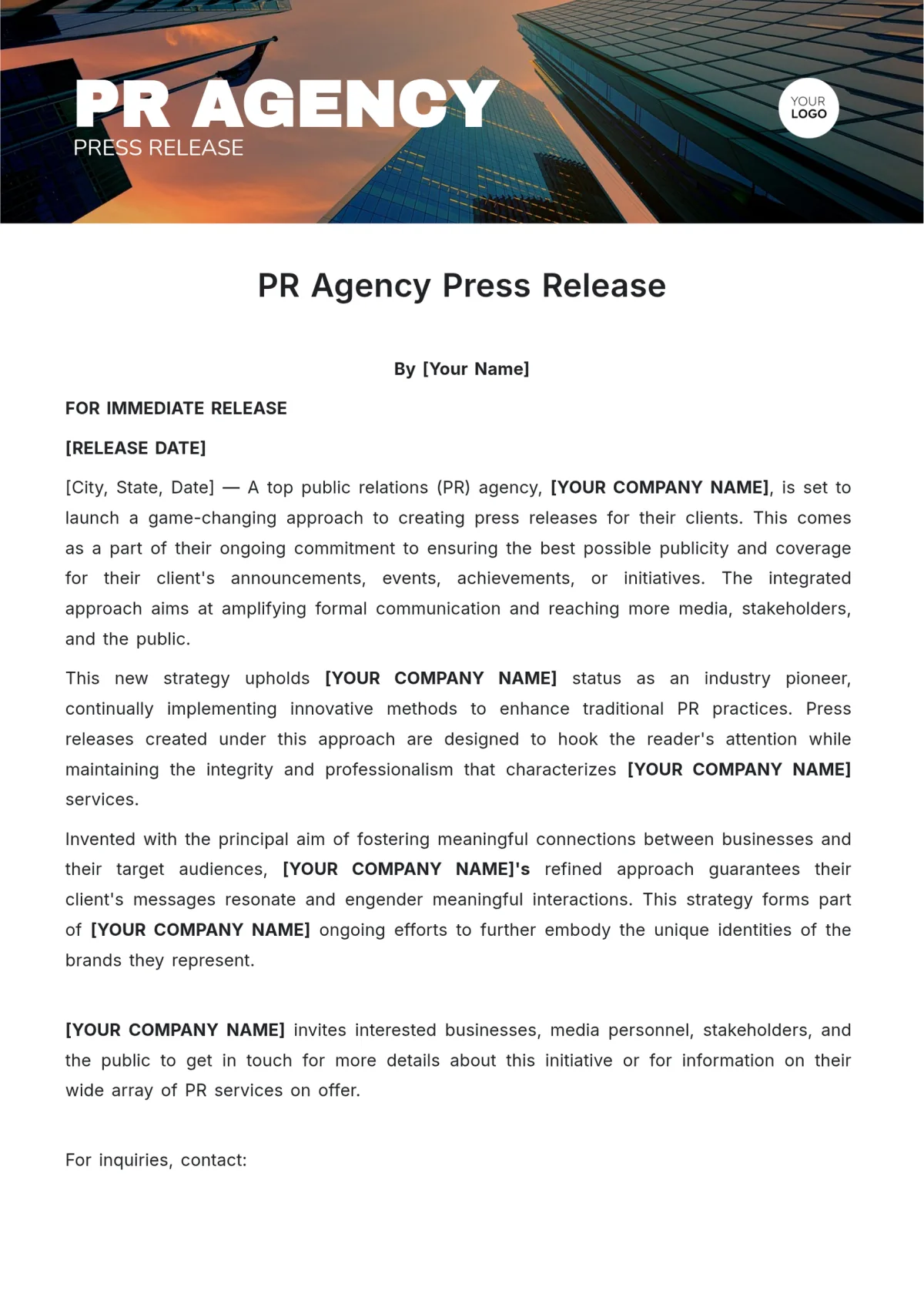
There is a practical bonus most people miss. Templates create a record. When you have a consistent format, comparing last quarter’s launch against this quarter’s takes minutes instead of an afternoon of digging through old Google Docs.
What a Good Template Actually Does for You
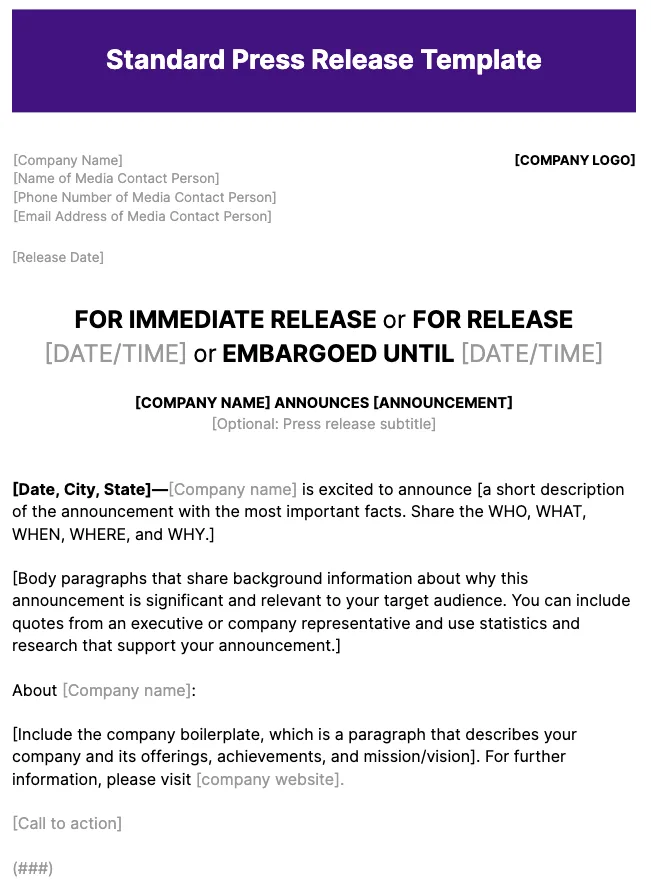
It enforces the inverted pyramid without you having to think about it. The headline, subhead, dateline, and lead all sit where a reporter expects them, which means the most important information lands first.
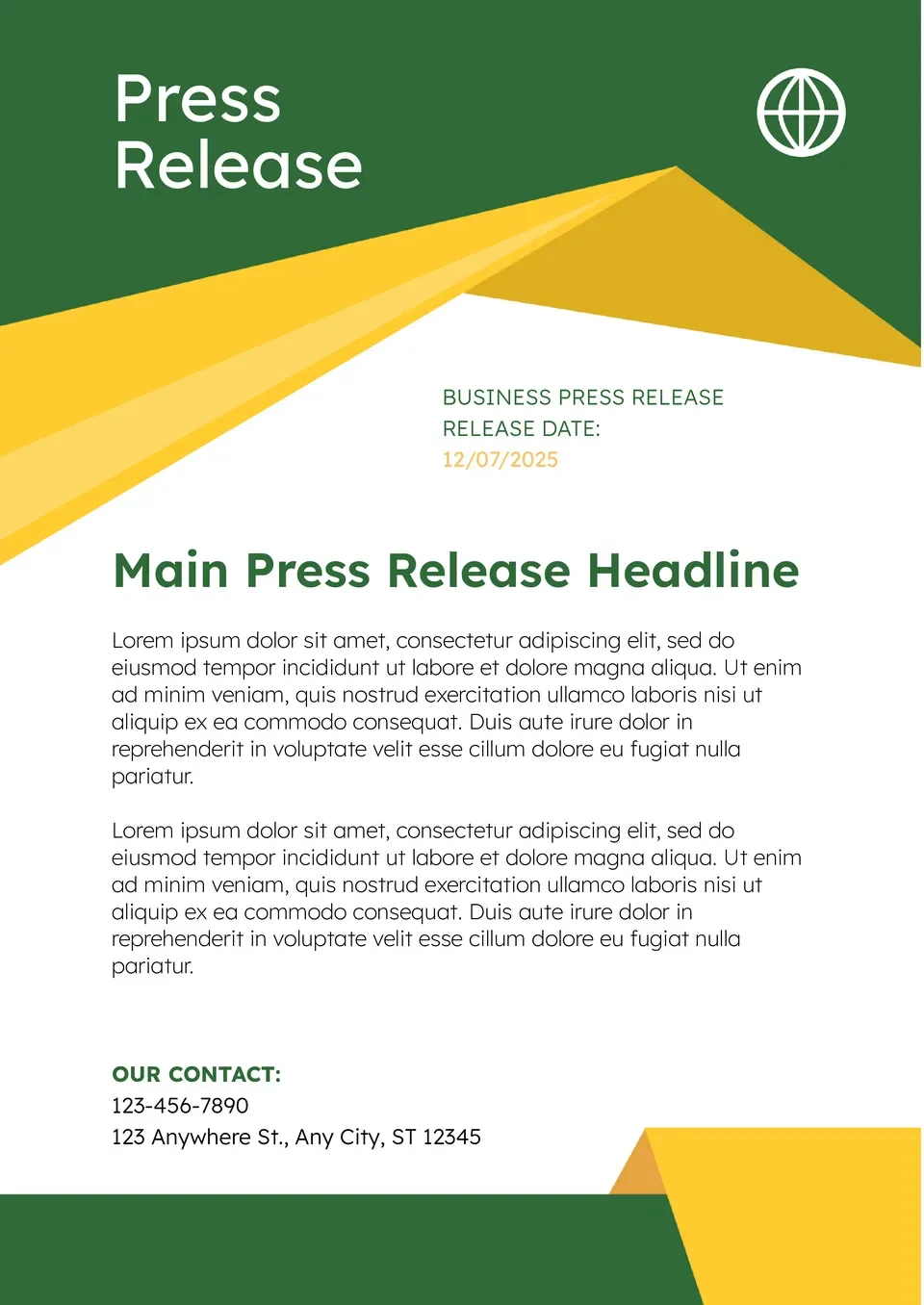
It also standardizes the boilerplate. Every company description, media contact, and legal disclaimer lives in the same spot, so nobody accidentally ships a release with last year’s address.
And the press release template keeps you honest about length. A rigid structure quietly discourages the rambling paragraph that should have been a bullet point.
What to Look for in a Free Press Release Template
Not every downloadable file is worth your time. Plenty of “free” templates are thin Word docs with placeholder text that leaves half the real work undone. Before you commit to one, run it against a short press release template checklist.
Start with structure. A solid template includes a headline field, a subheadline, a dateline, a lead paragraph, at least two body sections, a quote, a boilerplate, and a media contact block. If any of those are missing, you will be rebuilding it yourself anyway.
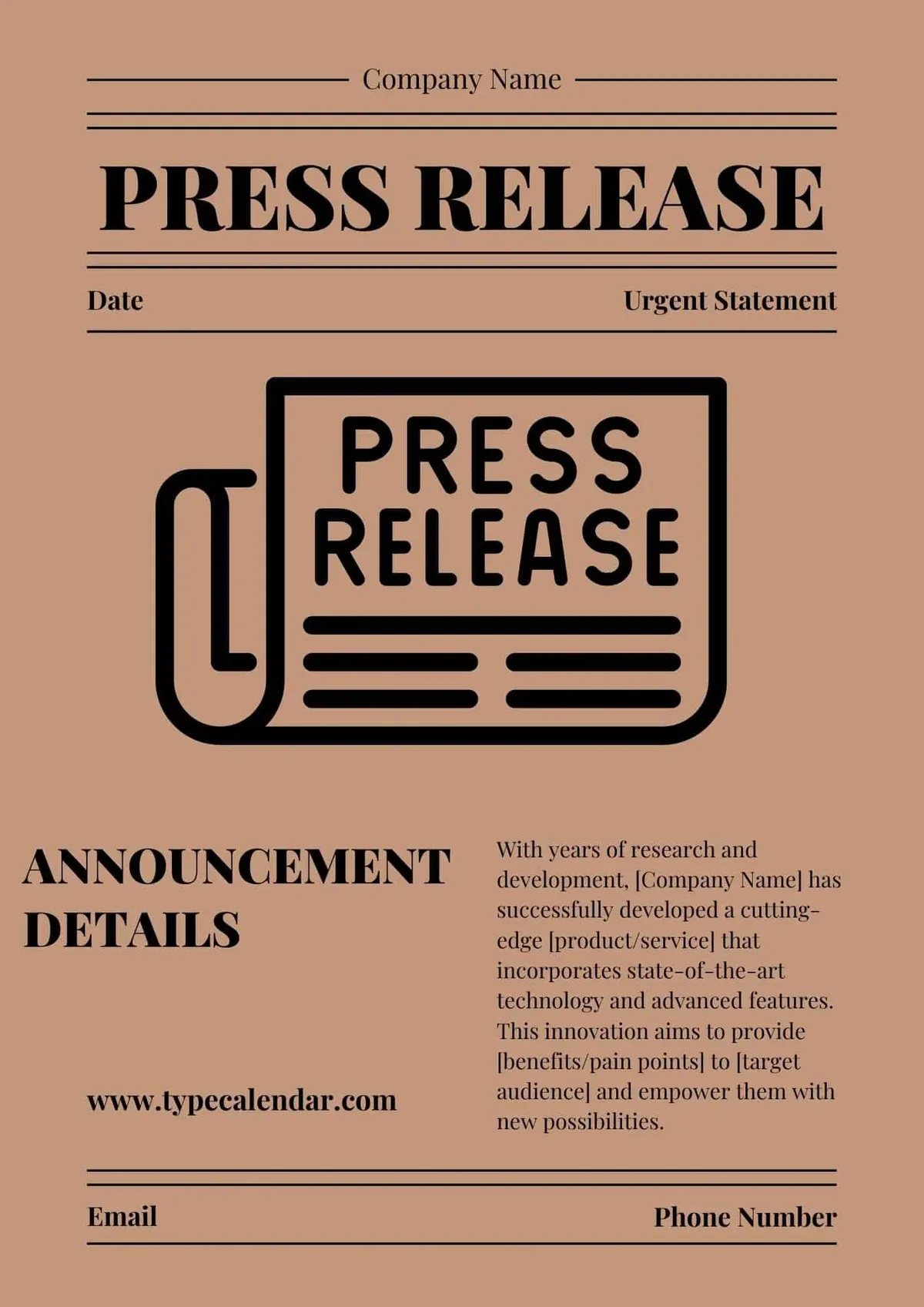
Next, check formatting. Fonts should be simple, spacing should be generous, and there should be a clear note on how to mark the end of the release. Some templates hide the last detail in a footer — worth looking for.
The Press Release Template Checklist Before You Download
Run these questions quickly, and you will filter out the weak options in about two minutes:
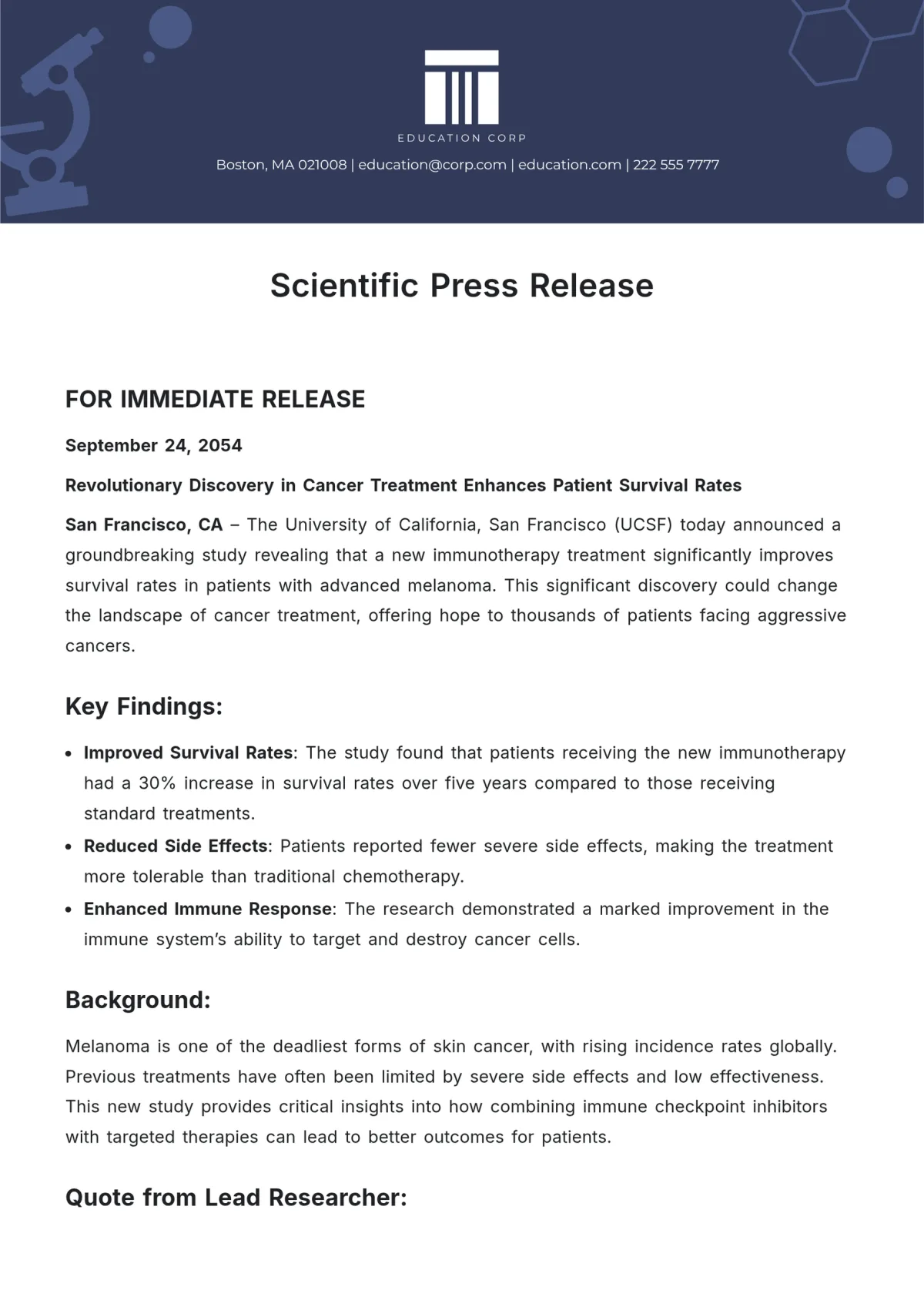
- Does it include a dateline placeholder? The city and state (or country) need to appear before the first sentence of the body.
- Is there space for at least one direct quote? A release without a human voice reads like a memo.
- Does it mark the boilerplate section? “About [Company]” is standard and expected by editors.
- Is there a media contact block? Name, title, email, and phone — all four or the release is incomplete.
- Does it note the end marker? The traditional “###” or “-30-” tells readers nothing more is coming.
- Is the file editable? Google Docs and.docx are safe bets. PDF-only templates are a trap for quick edits.
- Does it fit one to two pages? If the template itself already runs long, your final release will too.
These seven checks come straight from press release template best practices used across PR agencies. Skip any of them and the release tends to come back for revisions.
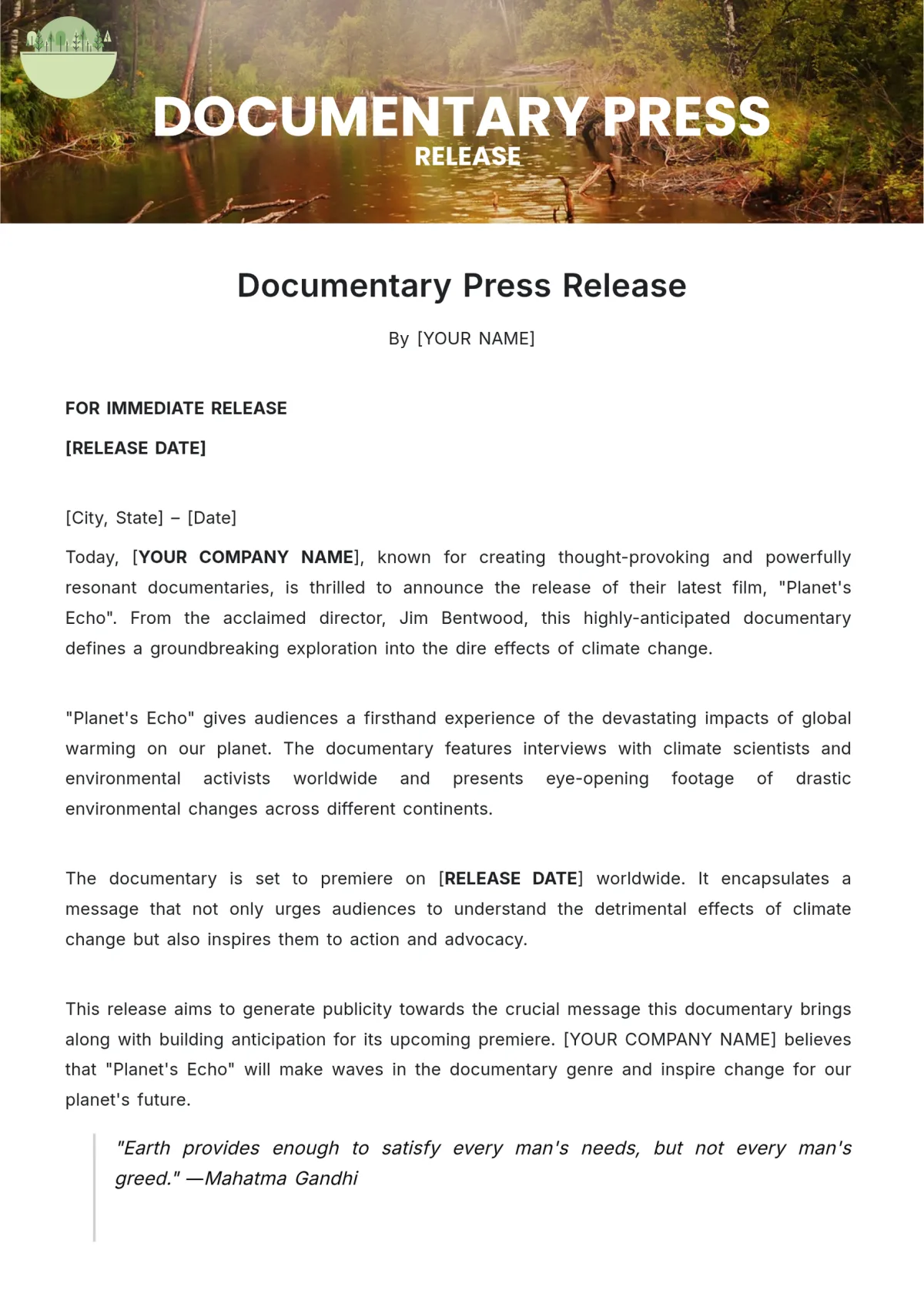
1. the Classic News Announcement Press Release Template
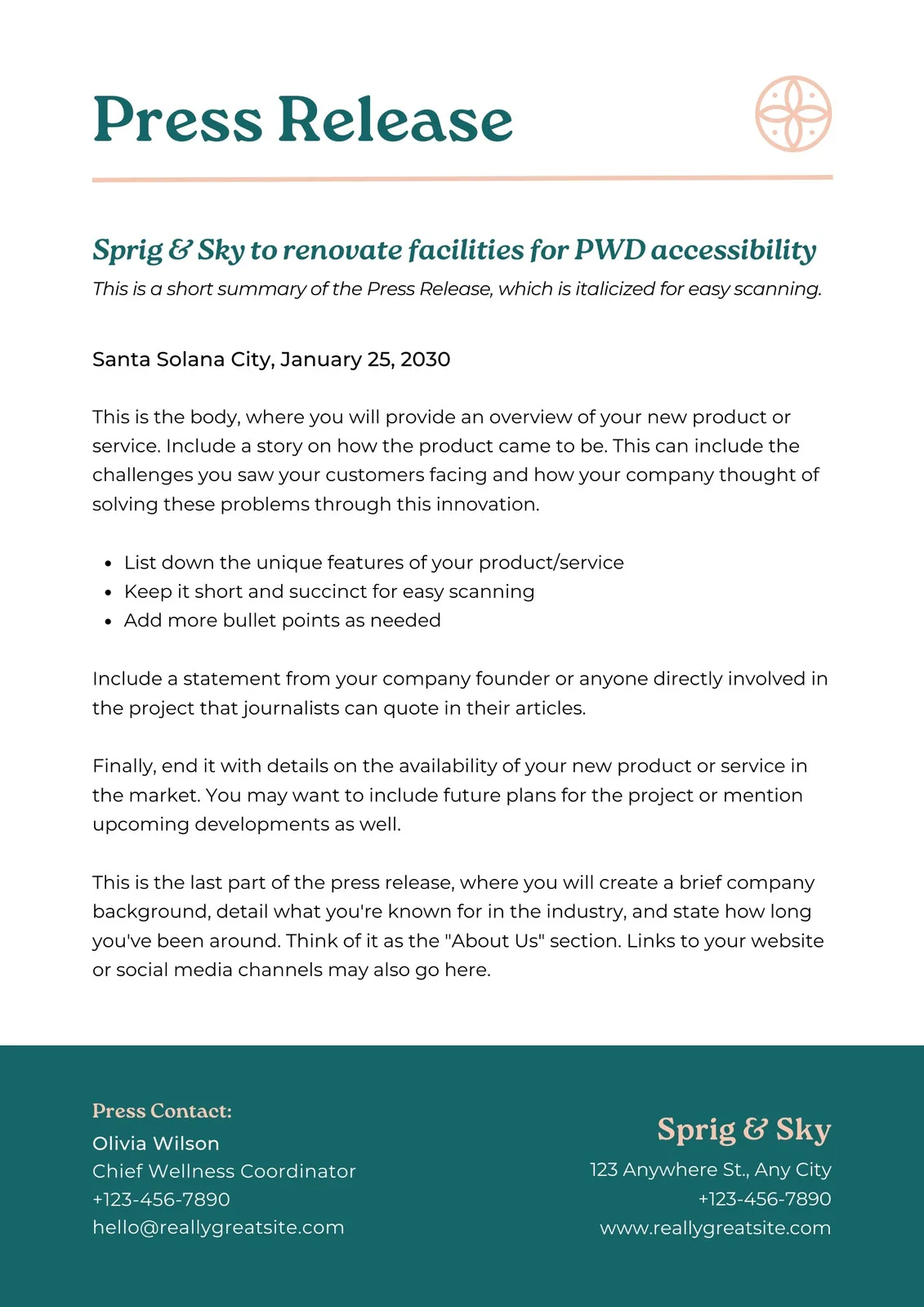
This is the workhorse. Every communications team needs at least one, and it covers the majority of routine announcements — new hires, funding milestones, partnerships, facility openings.

Its strength is familiarity. Effective execution in your press release template makes a tangible difference. Journalists recognize the shape instantly, which means they can extract the facts without hunting. The structure runs: headline, subhead, dateline, lead paragraph with the five Ws, supporting detail, quote, secondary quote (optional), boilerplate, contact, end marker.
The trick to using it well is resisting the urge to overstuff. The lead paragraph should be one or two sentences that answer who, what, when, where, and why. Everything else supports that opening.
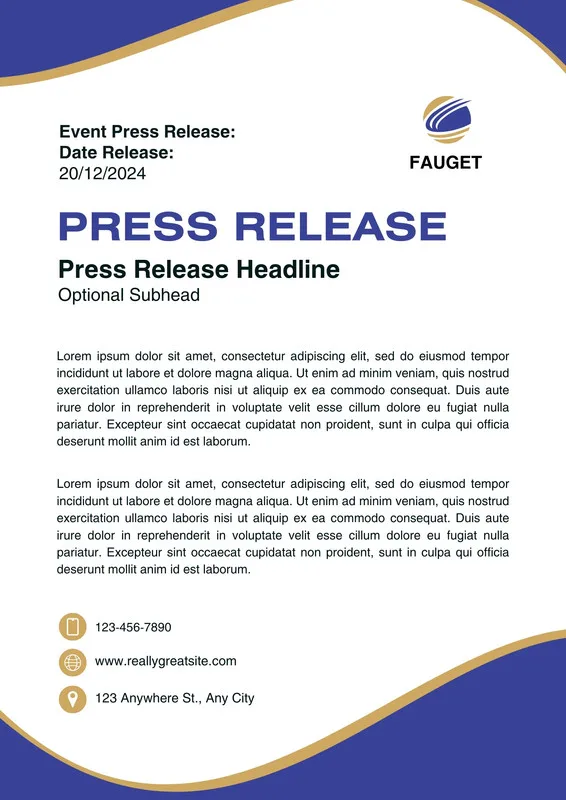
Real-world use: A regional logistics firm announcing a new distribution center would use this press release template word for word. The lead names the city, the size of the facility, the number of jobs created, and the opening date.
The body expands on what the center handles, who it serves, and where the investment came from. A quote from the operations director anchors the human angle.
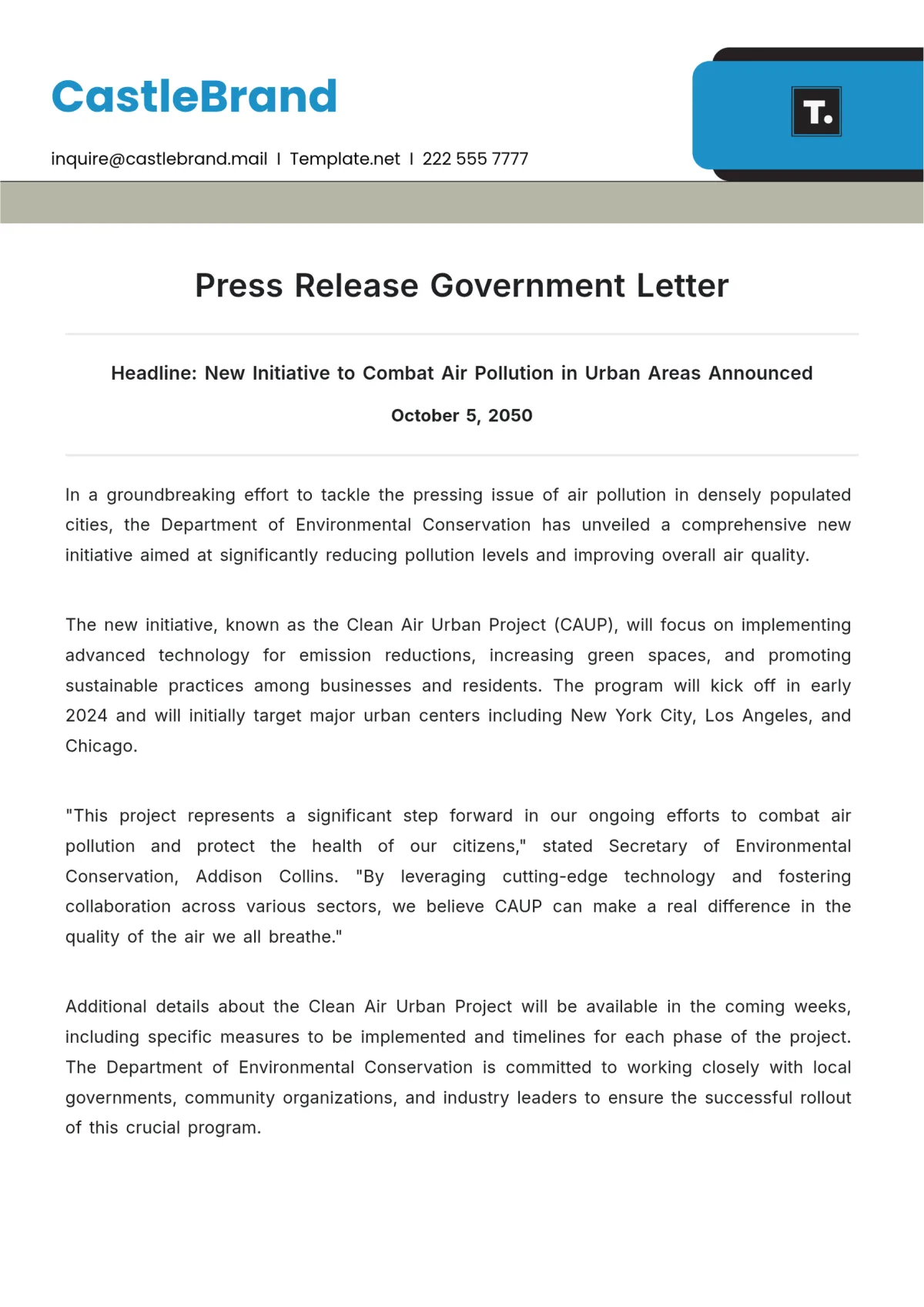
Execution tip: Draft your lead paragraph first, in plain language, before you open the template. If you can explain the news in two sentences out loud, you can write it in two sentences on the page.
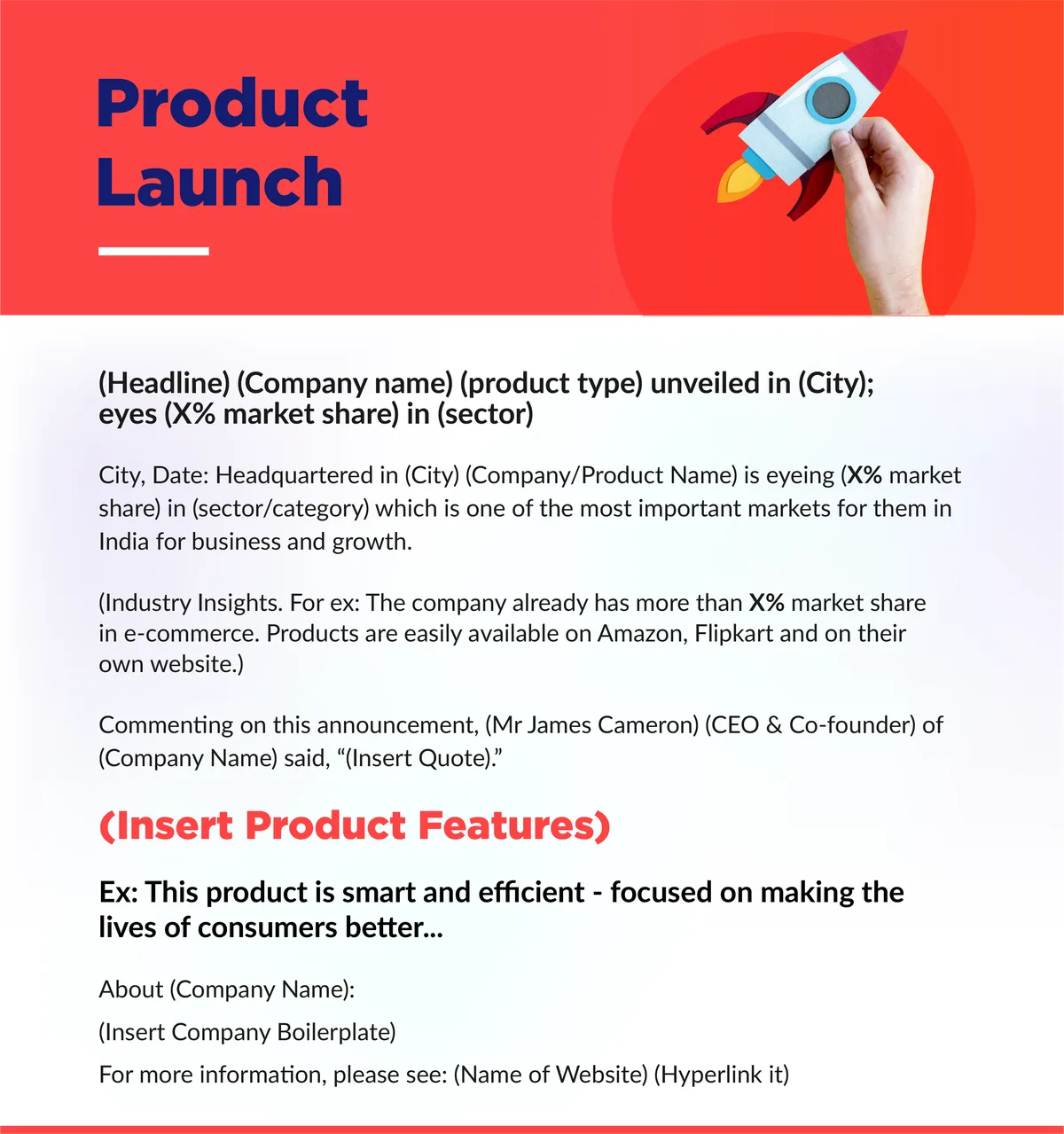
2. the Product Launch Press Release Template
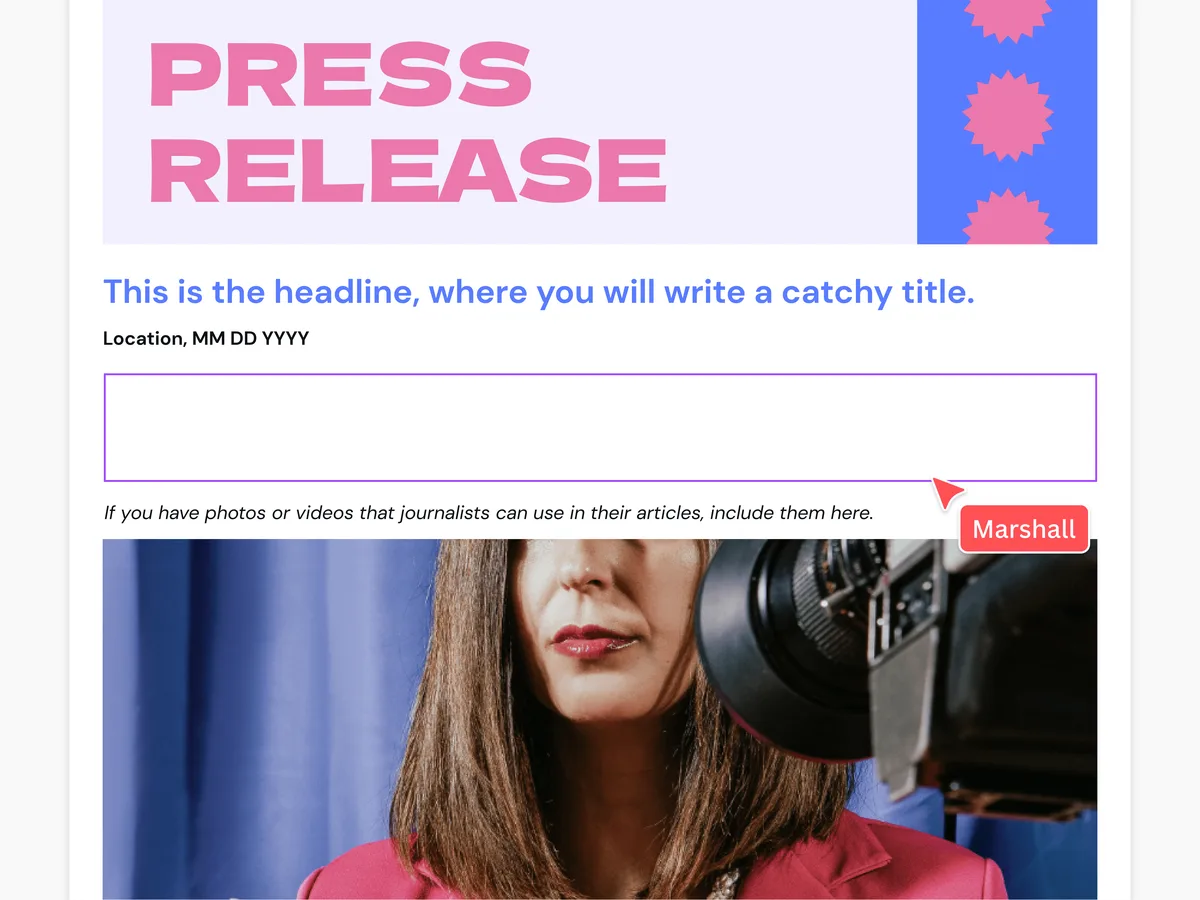
Product launches live or die on specificity. Vague adjectives — “revolutionary,” “cutting-edge,” “next-generation” — signal to editors that there is nothing to report. A dedicated launch template forces you to name features, pricing tiers (without stating figures in the body), availability windows, and target users.
The anatomy looks slightly different from the classic version. Maintaining clarity across your press release template remains essential. The subhead usually carries the key differentiator. The lead names the product and its primary problem to solve. The second paragraph lists the concrete features. The third handles availability and how to access it.
One thing this template should always include is a link to a press kit or media assets page. Reporters rarely publish a launch story without visuals.
Real-world use: A consumer electronics company introducing a wireless charging dock would use this press release template to state compatibility, charging speed, materials, and retail availability. The quote from the product lead explains the design decision behind a specific feature, not a general statement about innovation.
Execution tip: Put yourself in the reviewer’s shoes. If you only had the headline and subhead, could you describe the product accurately? If not, rewrite both before touching the body.
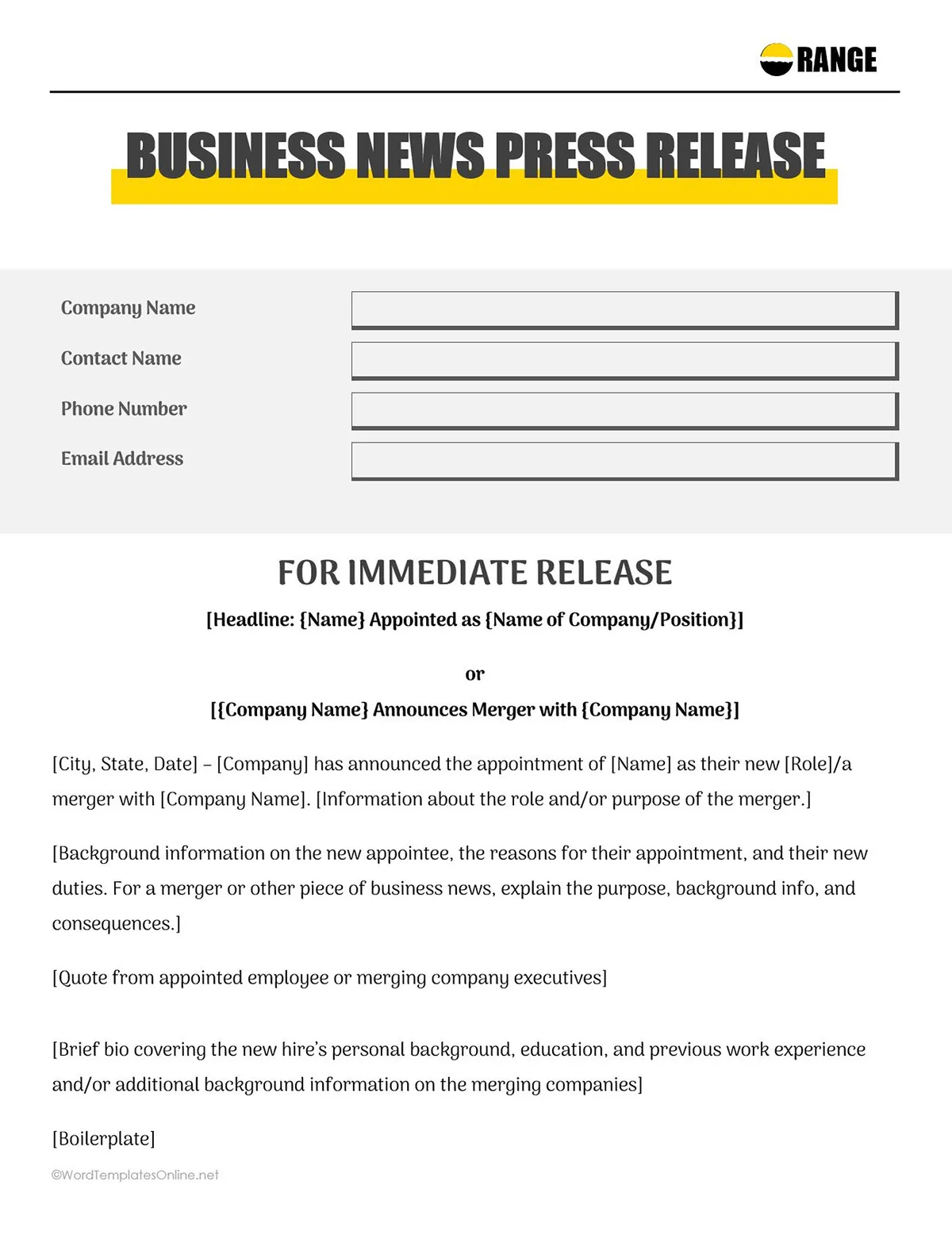
3. the Partnership or Merger Press Release Template
Two-party announcements carry a diplomatic layer that other releases do not. Both organizations need to approve the wording, and quotes usually come in pairs. This template accounts for that back-and-forth rhythm.
The lead names both organizations, the nature of the deal, and the practical outcome for customers. The second paragraph explains what changes and what stays the same. Two quotes follow — one from each side — each addressing the other party by name.
Editors read the press release template closely for signs of fluff. If the release says “strategic synergy” without explaining what customers will actually notice, it goes in the bin.
Real-world use: A bookkeeping software company acquiring a payroll provider would use this press release template to explain the integration timeline, whether existing users keep their pricing, and who leads the combined team. The customer-facing answer belongs in the second paragraph, not the sixth.
Execution tip: Draft both quotes simultaneously. If one side’s quote arrives two days late, it almost always reads out of balance with the other.
4. the Award or Recognition Press Release Template
Awards are easy to under-sell. The mistake is announcing the award without explaining why it matters to anyone outside the company. A recognition template pushes you to name the awarding body, the criteria, the pool of nominees, and the specific achievement that earned the nod.
The lead names the award, the recipient, and the awarding organization. The body explains the selection process and what the achievement involved. A quote from an executive expresses gratitude, and a quote from the awarding body adds credibility.
This is one of the few release types where a second quote from an external source meaningfully improves the story.
Real-world use: A sustainability consultancy named in a regional environmental impact ranking would use this press release template to state the ranking, the number of firms evaluated, the scoring methodology, and the specific project that drove the score. The quote thanks clients by name.
Execution tip: Confirm the award name and its official capitalization with the awarding body before publication. Structuring your press release template around proven patterns ensures impact. Misnaming it is the fastest way to lose goodwill.
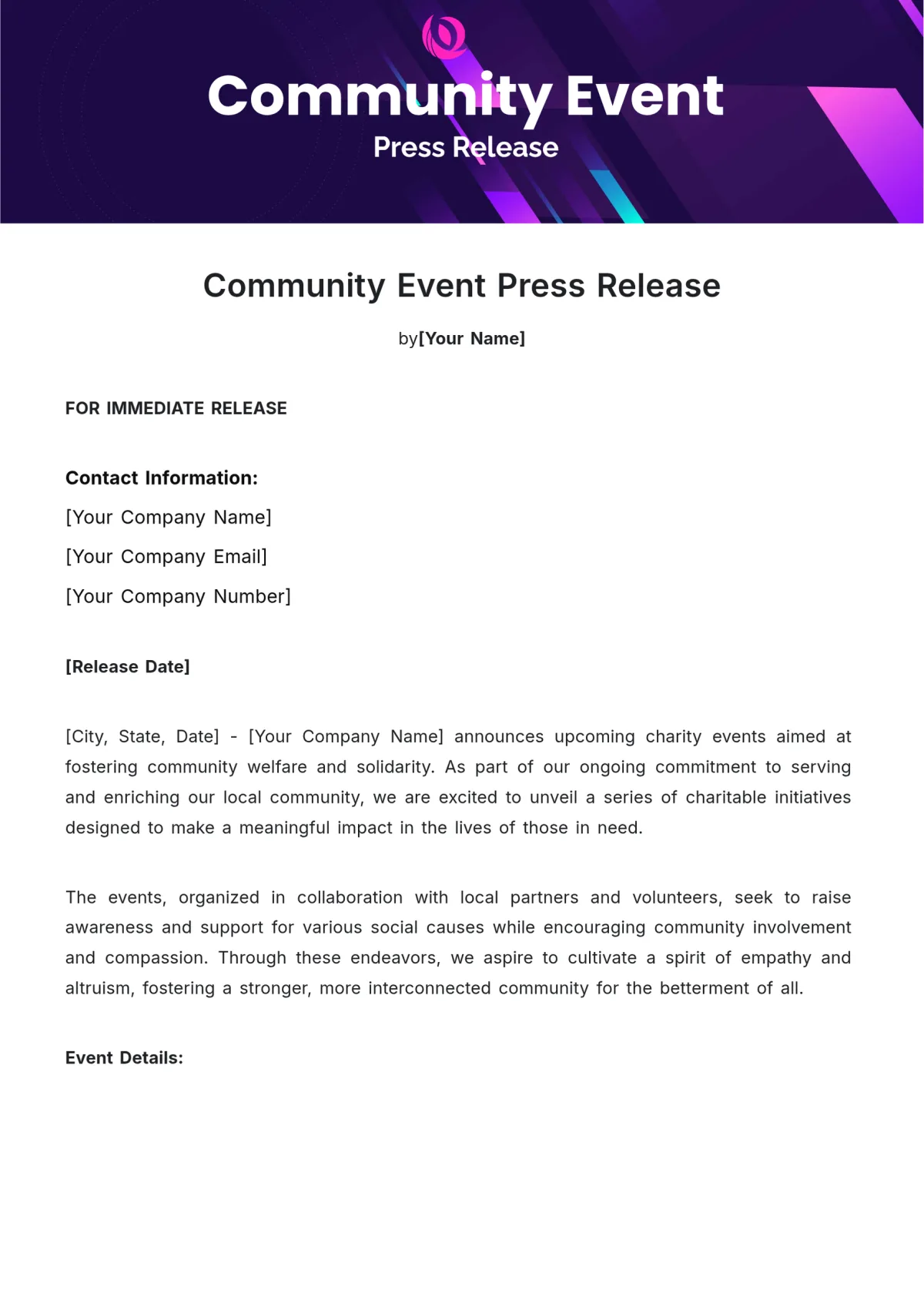
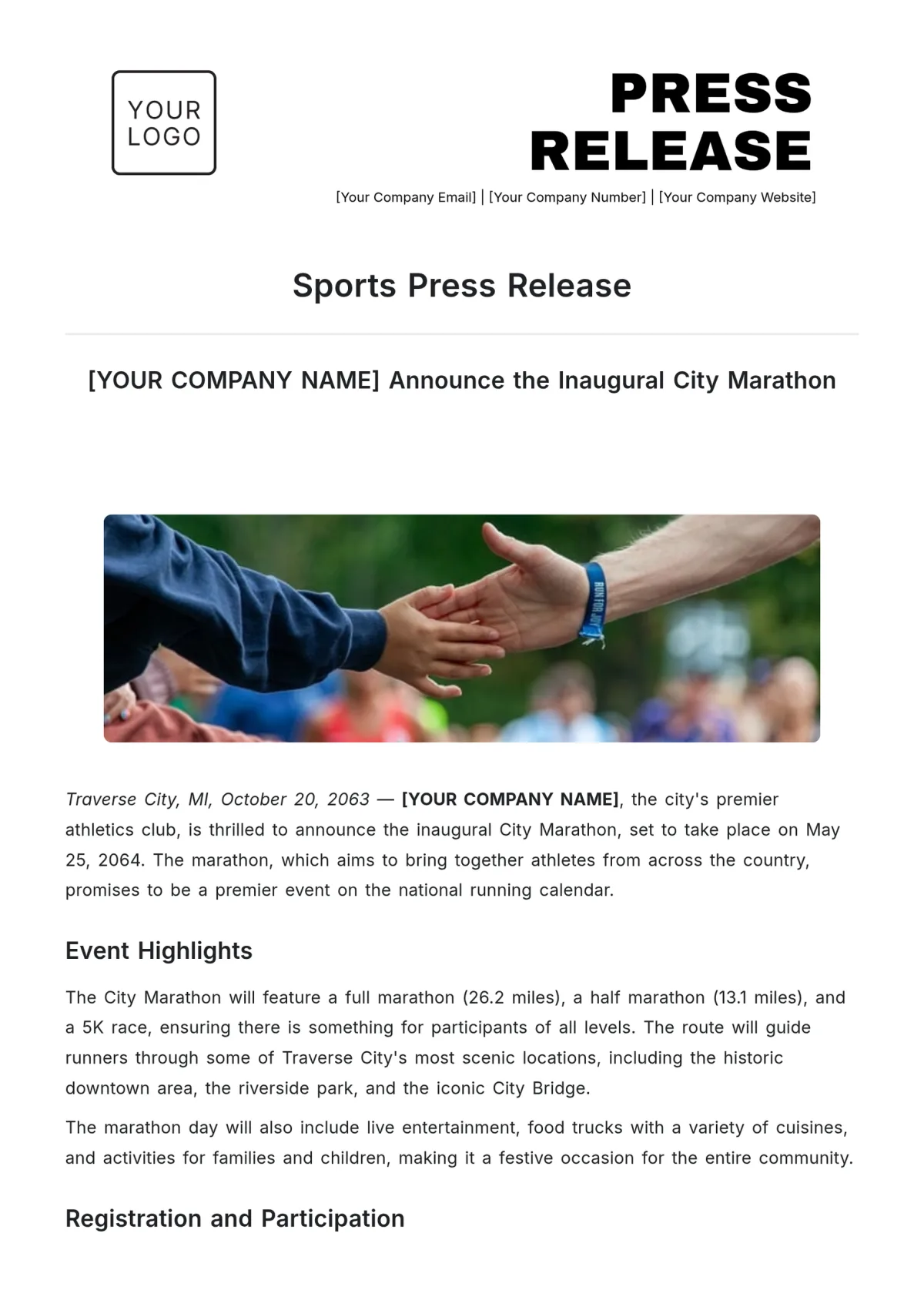
5. the Event Announcement Press Release Template
Events need more logistics than any other release type. Dates, venues, ticket details, speakers, and agenda items all compete for space. A dedicated template keeps the essential facts at the top and pushes the rest into a short bulleted section.
The lead covers what, when, where, and why it matters. A short agenda or speaker list follows. Registration details sit near the bottom, along with a media contact for press passes.
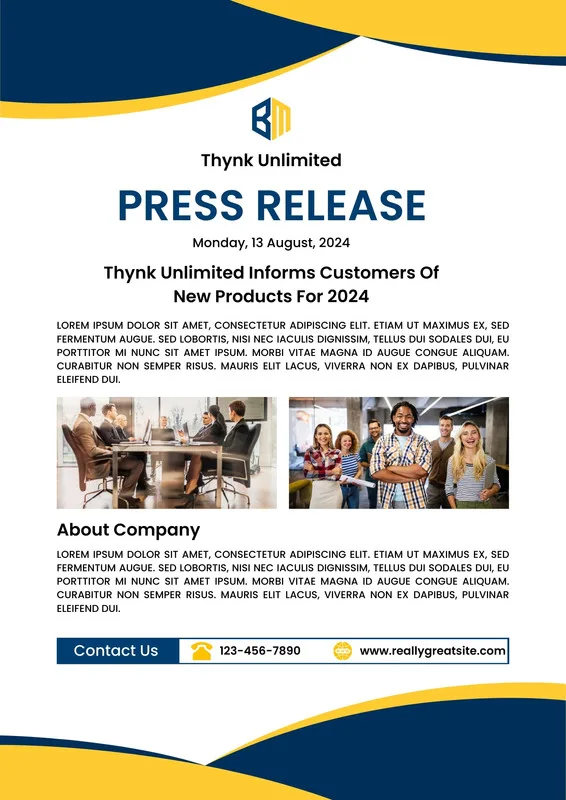
One structural choice worth making: keep the location and access information in a single block rather than scattering it. Editors working on calendar roundups appreciate the consolidation.
Real-world use: A trade association hosting an industry conference would use this press release template to name keynote speakers, session topics, venue, hotel block, and press registration deadlines. The lead makes clear why the conference matters this cycle — new regulations, a sector pivot, a record attendance figure.
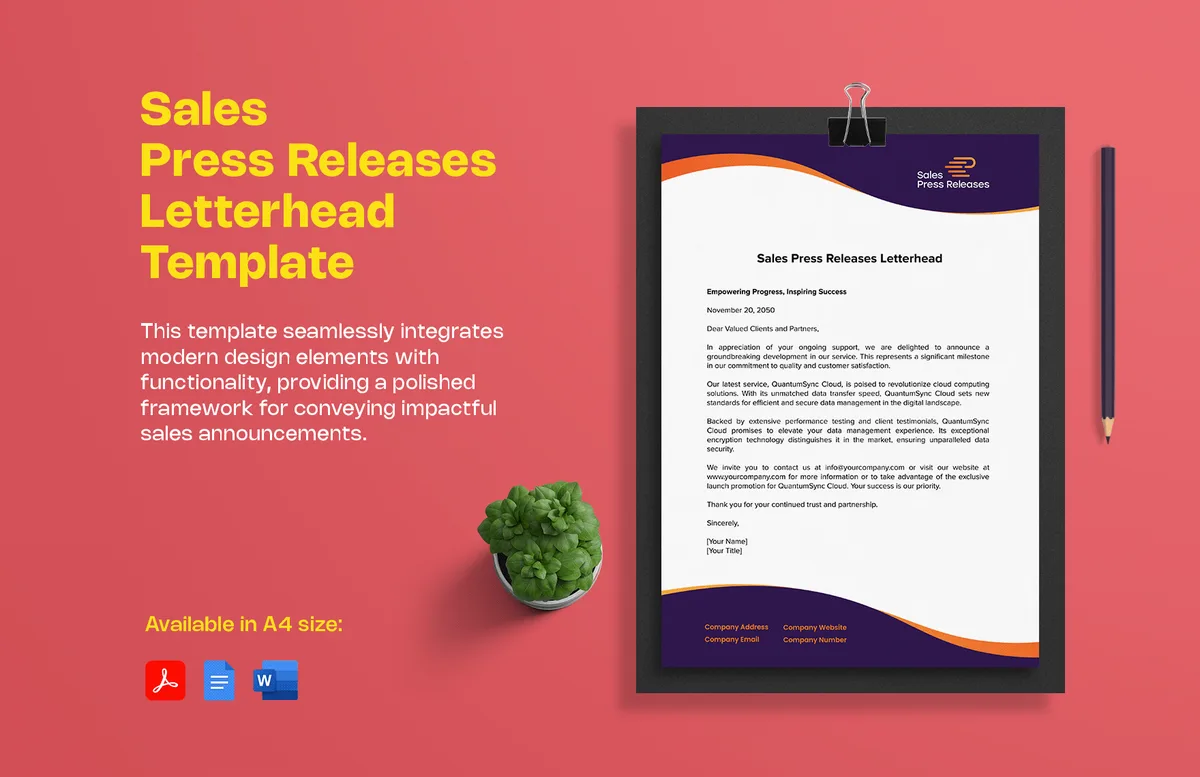
Execution tip: Add a one-line “what’s new this time” sentence in the lead. Returning events need a fresh angle, or editors assume it is a repeat.
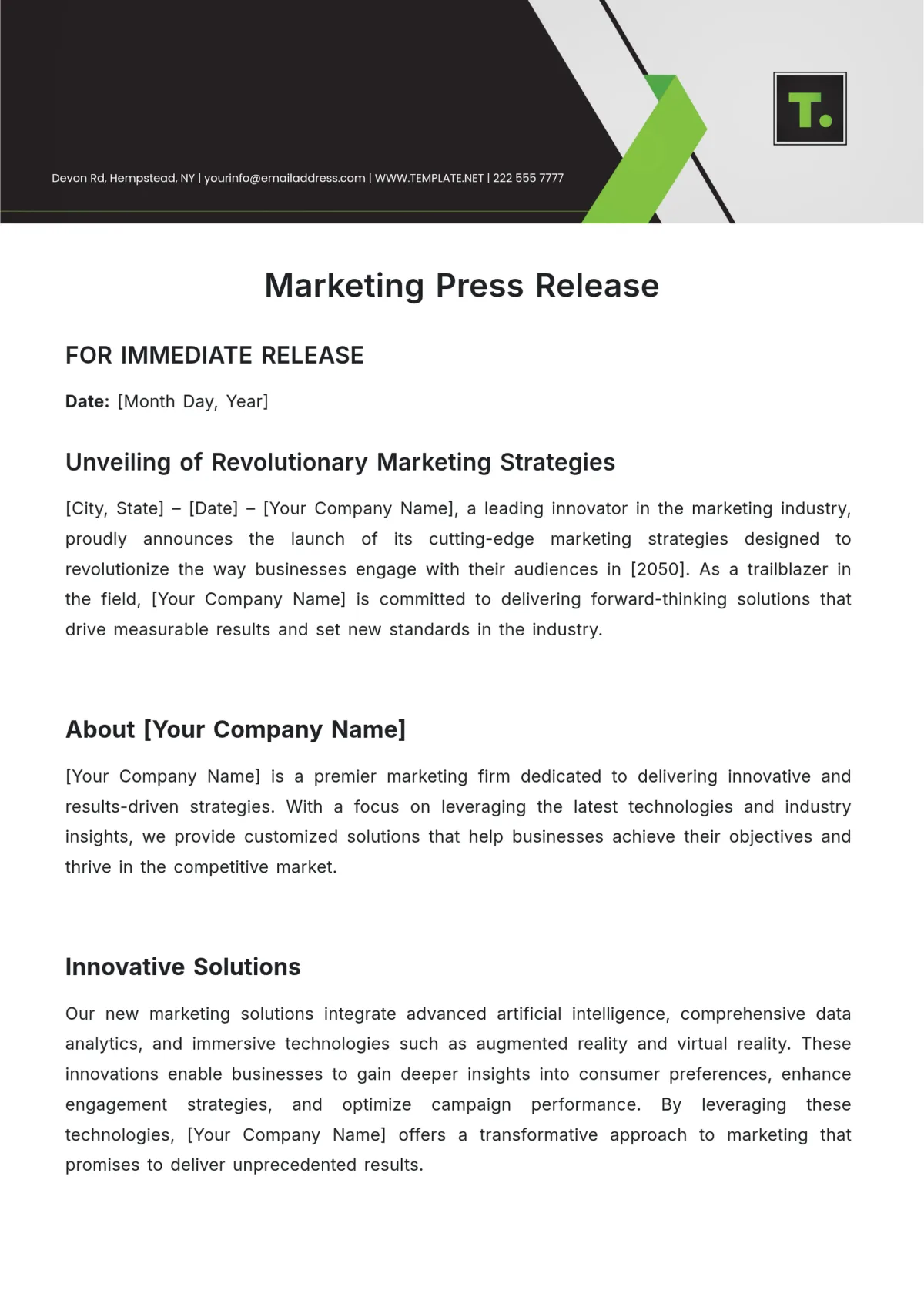
6. the Crisis or Response Press Release Template
Nobody enjoys writing these. Applying these principles to your press release template yields measurable results. That is exactly why the template should exist before you need it, saved and approved. Under pressure, a strong structure is the only thing standing between you and a statement that reads defensively.
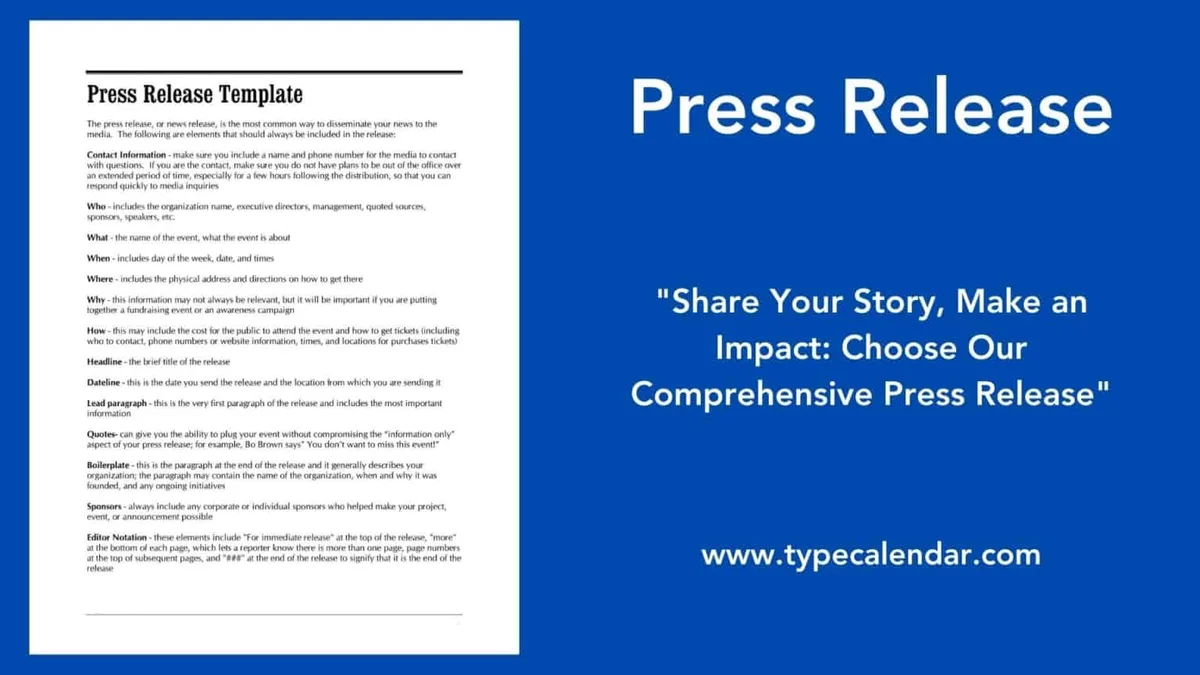
The lead acknowledges the situation plainly without jargon. The second paragraph outlines what the organization is doing about it. A quote takes responsibility. The final paragraph points to where people can get help or more information.
Banned from this template: passive voice, vague attributions, and any sentence that starts with “we are aware of reports.” Say what happened. Say what you are doing. Say who people can contact.
Real-world use: A food manufacturer issuing a voluntary recall would use this press release template to name the affected product lines, lot numbers, where they were sold, the reason for the recall, and the consumer hotline. The quote from leadership states the recall is voluntary and why the company chose to act.
Execution tip: Have the legal and communications teams sign off on the template shape in advance. The wording will change; the structure should not.
7. the Data or Research Report Press Release Template
Data announcements are the most underrated release type. A well-structured research release can earn coverage in outlets that ignore marketing news entirely. The catch: the numbers have to be the story, not the vendor.
The lead states the single most newsworthy finding as a standalone sentence. Proper attention to your press release template sets a strong baseline. The second paragraph names the methodology and sample size. The third highlights one or two secondary findings. A quote explains what the data means in practical terms.
Include a link to the full report, not just a summary. Journalists who cite the release will want to verify the underlying numbers.
Real-world use: A B2B research firm publishing a survey of supply chain managers would use this press release template to lead with the headline statistic — for example, the share of respondents reporting delays. The methodology paragraph names the survey window, the sample, and the margin of error. The quote interprets the number rather than restating it.
Execution tip: Decide which single number would survive as a headline, and put it in the first sentence. Everything else is supporting evidence.
How to Pick the Right Press Release Template for Your News
Seven options can feel like one too many when you are on deadline. The shortcut is to start with a question: what does the reader gain by opening this? If the answer is a product, use the launch template.
If it is a change in how something works, use the partnership or crisis template. If it is a fact worth repeating, use the data template.
Some announcements genuinely straddle two categories. A partnership that also includes a new product line, for example. In those cases, choose the template that puts the customer’s experience first, and fold the secondary angle into the body.
When in doubt, run your draft against the standard press release template checklist. Missing dateline, missing contact block, missing end marker — any of those sends the signal that you did not care enough to finish the file.
Common Mistakes That Undo a Good Template
The first is padding the headline with adjectives. “Leading global provider announces transformative next-generation solution” tells the reader nothing. The second is hiding the news in paragraph three because the executive convinced the team to lead with company background. The third is a quote that says nothing a real person would say out loud.
Another quiet mistake: forgetting to remove the placeholder text. Every year, a handful of releases go out with “[Insert Quote Here]” or “[Contact Name]” still in the copy. A final read-through catches it before your editor does.
Finally, watch the length. A tight one-page release almost always outperforms a sprawling three-pager, especially when the reporter is scanning forty emails in a row.
Press Release Template Tips for Stronger Results
These are the press release template tips that consistently move the needle across industries, drawn from watching what gets picked up and what gets ignored.
- Write the headline last. Draft the body first, then summarize the news in a headline under eighty characters.
- Keep the lead under forty words. If it needs more room, you are burying the point.
- Use active voice throughout. “The company launched” beats “the solution was launched by the company.”
- Attribute every quote to a named person with a title. An unnamed spokesperson weakens the whole release.
- Include one link, no more. A single call to action holds attention. Five links split it.
- Add a media kit link. Logos, executive headshots, and product photography save the editor a step.
- Send from a person, not a department. Press emails from “[email protected]” often go unread.
Small refinements like these separate a usable press release template from one that just looks professional in a folder. Consistency does the rest.
Ready to Download and Adapt
All seven templates in this guide share the same essentials: inverted-pyramid structure, dateline, quote placement, boilerplate, and boilerplate contact block. The differences are in emphasis — what the lead prioritizes, how many quotes you need, and what supporting detail earns a spot in the body.
Download them, save them to your team’s shared drive, and adapt them to your voice. The best press release template is the one your team actually uses every week, not the one sitting untouched in a folder. Start with the classic version, then add the others as your announcement types expand.
And when the deadline is close and the draft feels off, return to the checklist. Nine times out of ten, the problem is a missing element — not a missing idea. The structure is there. Trust it.
Frequently Asked Questions About Press Release Templates
How long should a press release be? One page, sometimes two for complex announcements. Most editors skim the first three paragraphs and move on, so density beats length every time.
Can I use the same press release template for different industries? Yes. The structure is industry-agnostic. Only the boilerplate, quote content, and supporting details change between sectors.
Should I include pricing in a product launch release? Only as direction — “available at competitive direct manufacturer pricing” or “via subscription tiers.” Specific figures belong in the media kit.
What is the difference between a press release and a media advisory? A release announces news. An advisory invites media to an event. Some templates, like the event announcement option above, can be adapted into an advisory with a light restructuring.
Do I need to include a boilerplate every time? Yes. The boilerplate is the most-copied section by journalists writing about your company. Keep it short, factual, and consistent across releases.
How many quotes should a press release include? One is sufficient for most. Two works for partnerships and awards. Three is too many and dilutes the human voice.
Are free templates good enough for serious announcements? They are, provided the structure includes all seven checklist elements. The difference between a free press release template and a paid one is usually polish, not substance.
| Template Type | Best For | Quote Requirement | Standout Element |
|---|---|---|---|
| Classic News Announcement | Routine company news | One quote | Dateline + five Ws lead |
| Product Launch | New products and features | One quote | Feature bullets + availability |
| Partnership / Merger | Two-party announcements | Two quotes | Dual approval workflow |
| Award / Recognition | Industry awards, rankings | Two quotes | External source quote |
| Event Announcement | Conferences, launches | One quote | Agenda + registration block |
| Crisis / Response | Recalls, service issues | One quote | Pre-approved plain language |
| Data / Research Report | Surveys, studies, findings | One quote | Headline statistic in lead |
For more context on the standard structure used by newsrooms worldwide, the press release format overview on Wikipedia is a reliable reference point. It covers the “###” end marker, boilerplate conventions, and the historical reasoning behind the inverted pyramid.
Bookmark this guide, save the seven templates to a shared folder, and keep the checklist within reach. When the next announcement lands, you will already know which press release template fits — and the draft will practically write itself.