The Short Version: What Storytelling in Marketing Really Means
Storytelling in marketing is the practice of shaping a brand message into a narrative with a character, a conflict, and a resolution — so the audience feels something before they decide anything. That definition sounds tidy on paper.
In practice, it is the difference between a product page nobody finishes and a 40-second video that gets forwarded around a group chat.
Here is the honest framing I give clients who ask about the storytelling in marketing: a story is not a longer version of a pitch. It is a different machine entirely. A pitch argues. A story makes someone recognize themselves.
This is your storytelling in marketing guide, and it is built around seven tips that survive contact with real budgets, real timelines, and real customers who scroll past everything. No theory for its own sake.
Each tip comes with what it looks like when it works and what it looks like when a well-meaning team gets it slightly wrong.
Before the seven tips, though, we need to settle something most teams skip — because skipping it is exactly why so much branded content feels like filler.
Why Most Brand Stories Fail Before They Start
Walk through any marketing deck and count how many slides are about the company. The product features, the founding date, the mission statement, the office dog. Now count how many are about the customer’s Tuesday afternoon problem.
The ratio is usually 8 to 1 in favor of the company, and that ratio is the reason the content underperforms.
The core issue is not craft. Focusing on storytelling in marketing provides clear direction here. Plenty of brands hire excellent writers and videographers. The issue is orientation — the story is pointed inward at the brand instead of outward at the person reading it.
A founder’s journey is fascinating to the founder. Refining each detail of your storytelling in marketing strengthens this section. To a buyer comparing three vendors at 11 p.m., it is noise until it connects to something they are trying to solve. The moment that connection appears, the same story becomes magnetic.
There is a second failure mode worth naming. Teams confuse “having a narrative” with “telling a story.” A narrative is the strategic spine. A story is a specific scene with specific stakes.
You can have a perfect narrative framework and still produce content with no scene, no tension, and no reason to keep reading past line two.
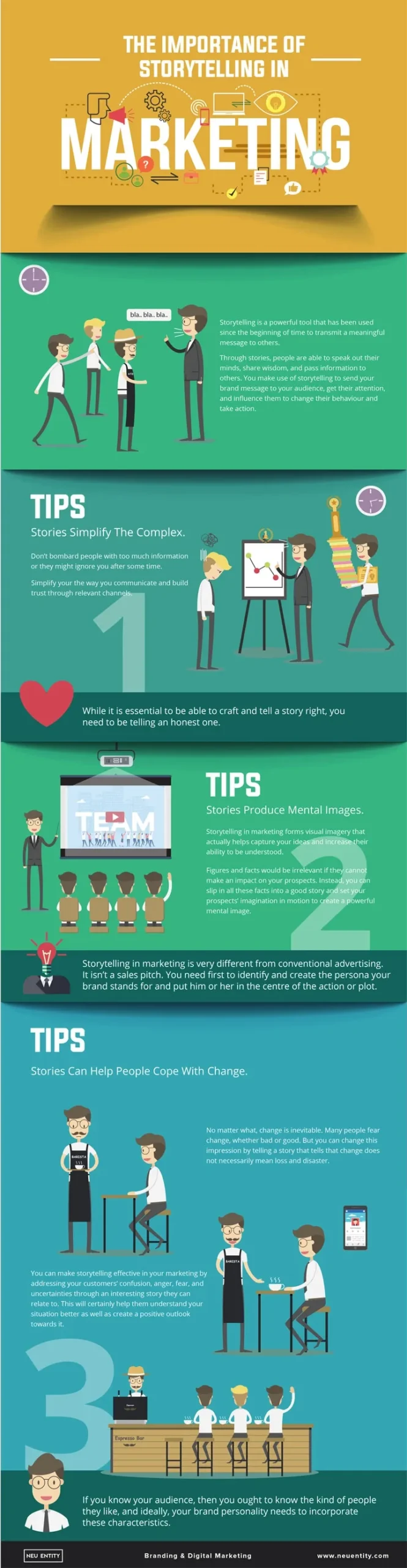
Fix the orientation first. Everything else in this piece builds on that shift.
Tip 1: Start With a Real Person, Not a Persona
The first of these storytelling in marketing tips is also the one teams abandon fastest under deadline pressure. Personas are useful for media planning and useless for narrative. “Marketing Manager Megan, 34, uses LinkedIn” is a targeting tool. She is not a character.

A character has a specific frustration at a specific moment. She is staring at a dashboard on a Thursday, three days before a board meeting, realizing the campaign report she promised does not exist because two ad accounts were never linked. That is a scene. You can write dialogue inside it. You can build tension in it.
When the storytelling in marketing anchor content to a scene like that, the reader does something involuntary: they check whether it matches their own week. If it does, you have their attention for the next 300 words.

How to Find the Scene
Mine your support tickets, your sales call recordings, and the questions customers ask in the first ninety seconds of a demo. The repetitive ones are gold. If five people this month asked “can I export this before the trial ends,” there is a scene in there about the anxiety of losing work.
Write the storytelling in marketing scene in plain language. No adjectives doing heavy lifting. Then let your product enter as the thing that resolves the tension, not the thing the story is about.
For a deeper look at how narrative structure functions across media, the Wikipedia entry on storytelling is a surprisingly useful refresher on the mechanics — character, conflict, resolution — that applies directly to commercial work.
Tip 2: Build Tension Before You Offer Relief
Comfortable stories are forgettable stories. A thoughtful approach to storytelling in marketing reinforces your qualifications. If your content opens with “we’re excited to announce” and closes with “learn more,” you have produced an announcement, not a narrative. Tension is the engine, and most brand content removes it out of politeness.

I once watched a B2B software team rewrite a strong case study because the opening made the client’s prior situation sound “too negative.” The rewrite removed the frustration, and with it the reason anyone cared.
The version the storytelling in marketing performed had the client saying, plainly, that their old process was costing them a full day every week. That sentence did more work than the entire feature list beneath it.
Tension works best when it is specific and small. “Our operations were inefficient” is a wet noodle. “Every Friday, someone manually reconciled 400 rows and it took until 7 p.m.” is a hook.
The relief has to arrive eventually, or the storytelling in marketing are just telling a sad story. But the relief is only satisfying in proportion to the tension that preceded it. Do not rush the setup.
Tip 3: Make the Customer the Hero and the Brand the Guide
This is where storytelling in marketing best practices get inverted most often. Brands instinctively cast themselves as the hero — the innovator, the disruptor, the one who saved the day. The audience gets a supporting role at best.
Flip it. The customer is the protagonist. Your brand is the mentor figure who shows up with a map, a tool, or a piece of hard-won knowledge. This is the structure behind nearly every story that sells without feeling like it is selling.

In practical terms, the storytelling in marketing changes your pronouns. The story shifts from “we built” to “you can.” Screenshots feature the customer’s workflow, not your dashboard’s beauty. Quotes come from the person who used the product, not the executive who approved the press release.
A Quick Test for Hero Orientation
Read your last three pieces of content and count how many sentences begin with your company name versus how many begin with a customer action. If the company wins by a landslide, the hero is miscast.

The guide framing has a second benefit: the storytelling in marketing keeps your brand honest. A guide cannot claim to have solved everything alone. That restraint reads as credibility, and credibility is what converts skeptical buyers who have been burned before.
Tip 4: Use Concrete Detail as Your Credibility Engine
Vague stories feel true and prove nothing. Specific stories feel risky and prove everything. The detail is the proof.
“the storytelling in marketing helped a retailer improve their email performance” is a claim. “We helped a 14-store home goods retailer cut their abandoned-cart email from nine paragraphs to three, and the click-through rate doubled without any change to the offer” is a story. The number, the store count, the paragraph reduction — those are the details that make a reader lean in.
This does not mean manufacturing stats. It means going one level deeper than the summary. If you do not have numbers, use sensory detail. Name the time of day. Name the tool that failed. Name the day of the week the meeting went badly.
Specificity also solves the duplication problem. Integrating storytelling in marketing into your workflow produces consistent quality. Two brands can tell the same structural story — struggling customer, helpful guide, happy resolution — and still feel completely distinct if the details are real. Generic language is what makes content sound like everything else.
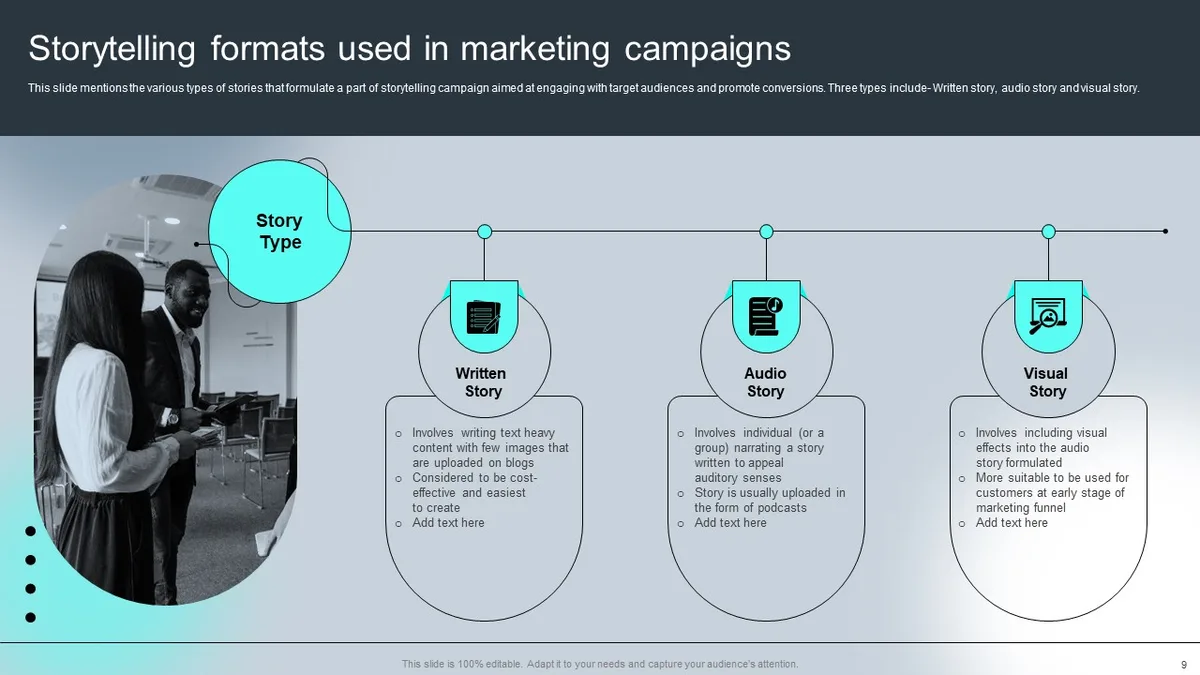
Tip 5: Match Story Length to Story Job
The storytelling in marketing is a persistent myth that longer stories perform better. The truth is more boring: the story should be exactly as long as its job requires, and no longer.
A social post has one job: stop the scroll and earn a second of attention. Targeted refinements to your storytelling in marketing streamline the entire review. That is a 15-word story, sometimes a single image with a caption that reframes it. A landing page has a different job: build enough trust to justify a form fill.

That might be 800 words with three distinct scenes. A video ad has roughly three seconds before the skip button becomes available, which is a different craft entirely.
Teams get into trouble when the storytelling in marketing let the format dictate the story instead of the other way around. They build a blog post because the content calendar says blog post, then stuff a 30-second story into 1,500 words, and it reads thin.
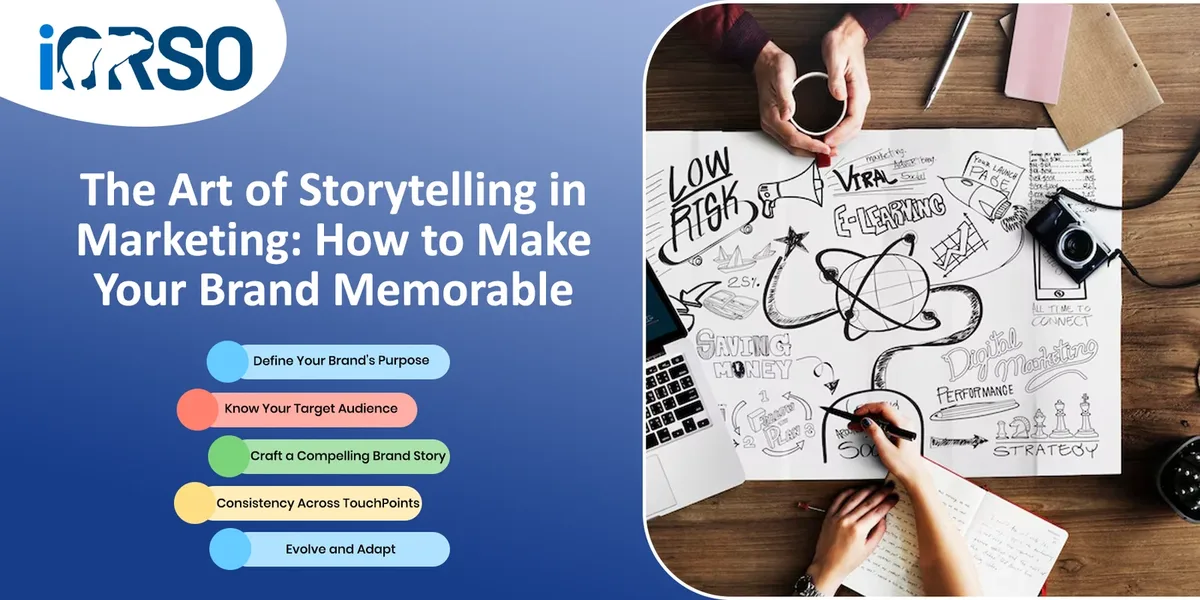
Before you write, ask what decision the reader is making and what they need to feel confident making it. Then build the smallest story that produces that feeling. Ruthless is kinder than thorough here.
| Format | Story Job | Realistic Length | Core Element to Prioritize |
|---|---|---|---|
| Social post | Interrupt and reframe | 1–3 sentences | The hook line |
| Email sequence | Build recognition over time | 150–300 words per send | One scene per email |
| Landing page | Justify a commitment | 600–900 words | Customer testimony with detail |
| Case study | Prove a result | 800–1,200 words | Before-state specificity |
| Brand video | Create emotional recall | 30–90 seconds | Visual tension |
| Product page | Resolve buying anxiety | 200–400 words | The scene of first use |
Tip 6: Design for the Second Audience (The One Who Forwards It)
Almost every story in marketing has two audiences. The first is the person you targeted. The second is the person they forward it to — the colleague, the spouse, the group chat, the person who trusts the first person’s taste.

The storytelling in marketing second audience is where most brand content dies, because the content only makes sense with prior context. It assumes you already know the product category, already care about the problem, already understand the joke in the second frame.
The fix is to write the story so a total newcomer can follow the storytelling in marketing in fifteen seconds. That usually means one clear character, one clear problem, and no insider language in the first three lines.
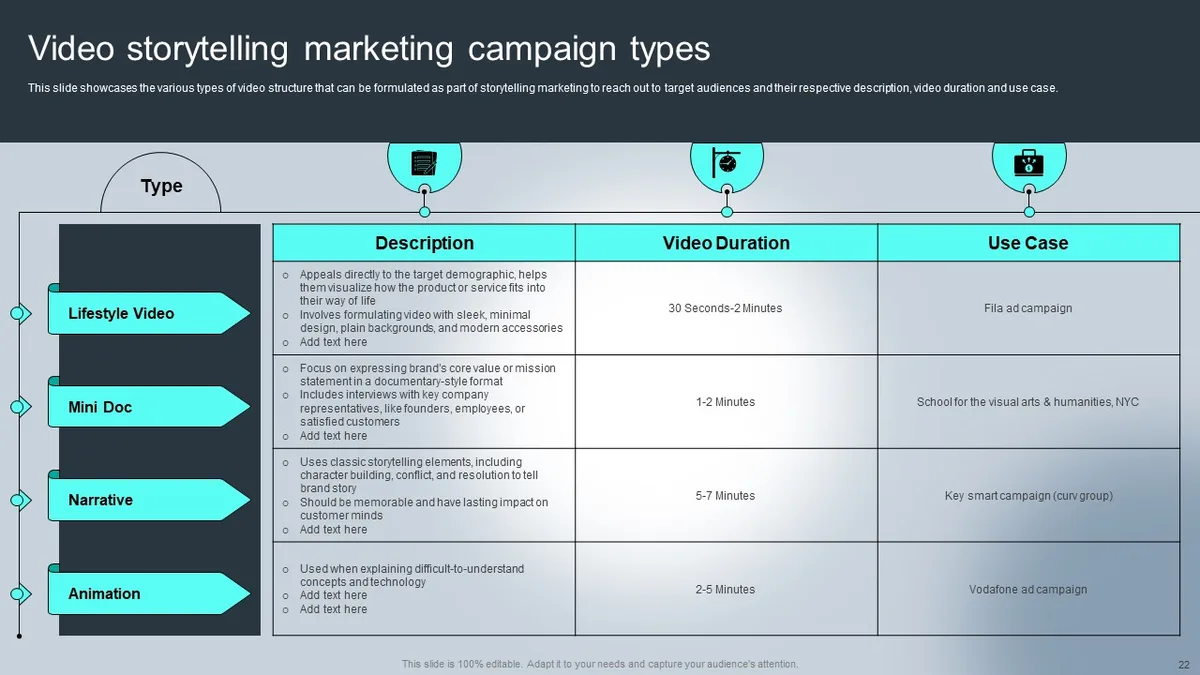
I have seen this play out in small ways that matter. A software company rewrote its case study opening from “after migrating our stack” to “three weeks after switching tools, the team stopped working weekends.” Same story, but now a stranger on LinkedIn understands the stakes without any technical background.
Forwardable content compounds. Content that requires a decoder ring does not.
Tip 7: Measure Whether the Story Actually Landed
The last tip is the one most storytelling frameworks skip entirely, and the storytelling in marketing is the reason so much of this work gets abandoned after one quarter. If you cannot tell whether a story worked, you cannot defend the budget to keep making them.
A storytelling in marketing checklist is only useful if it ends with a measurement step. Start with the obvious signals — scroll depth, watch-through rate, time on page — but then go one level deeper into the signals that actually indicate narrative engagement.
The Metrics That Matter Most
- Completion rate over impressions. A story watched to the end is a different asset than a story merely served. Track the percentage who finish.
- Forwards and saves. Sharing is the clearest signal that a story crossed the “this is worth someone else’s time” threshold.
- Comment substance. Not comment count — comment length. People write paragraphs when a story touches something real.
- Return visits by cohort. Did the people who engaged with a story come back? That is narrative loyalty in a measurable form.
- Qualitative exit surveys. Ask one question: “What do you remember about this page?” The answer is your story, as received.
None of these metrics live in the same dashboard by default, which is why teams default to click-through rate and call it done. Do the extra work of assembling a small story dashboard. It takes an afternoon and it changes how you spend the next year.
Putting the Seven Tips Together in One Campaign
Individual tips are easy to nod along to. Maintaining clarity across your storytelling in marketing remains essential. The test is whether they hold together when a real campaign is under pressure.
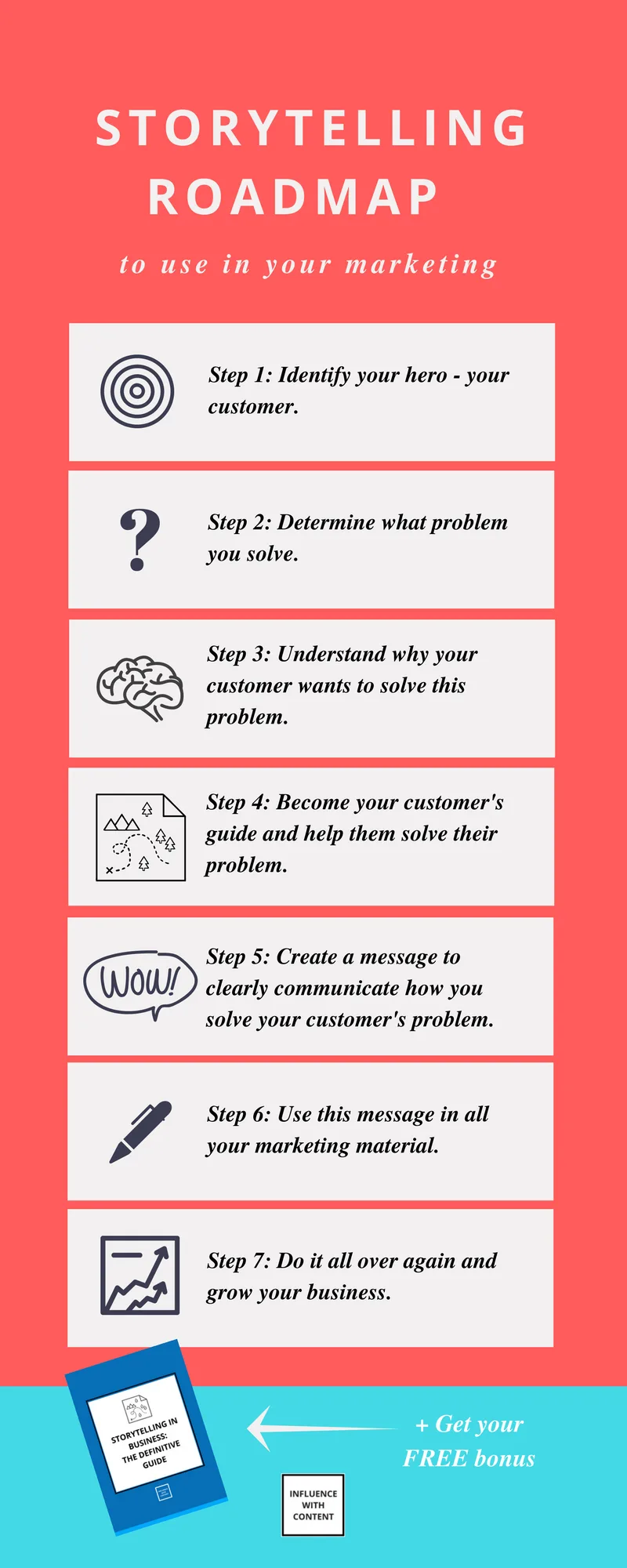
Here is how they stack in practice. Start with a real scene from a real customer (tip 1). Build tension in that scene by letting the frustration be specific and uncomfortable (tip 2). Position the customer as hero and your brand as the guide who offers the tool (tip 3).
Prove the story with one or two concrete details the storytelling in marketing could only come from your company (tip 4). Choose the smallest format that does the job (tip 5). Write it so a stranger can follow it without context (tip 6). Then measure whether it landed by watching for completion, forwarding, and substance (tip 7).
When all seven are in play, the output is coherent without being formulaic. When three of seven are missing, you get content that looks fine in a deck and dies in a feed.
A Short Walkthrough
Imagine a payroll software company. Structuring your storytelling in marketing around proven patterns ensures impact.
The persona work says “HR leaders at 200-person companies.” The story work says something different: a payroll manager named Dana, on the 28th of the month, realizing a new hire’s tax form was never entered and the run has to be rerun before the bank cut-off at 4 p.m.
That is the scene. The tension is the clock. The guide is the software that flags missing forms automatically. The detail is the 4 p.m. Cut-off. The format is a 40-second video for social and a 700-word landing page for search. The measurement is completion rate on the video and time on page for the landing page.
Same story, two formats, one coherent campaign. That is what a working storytelling in marketing checklist looks like in motion.
The Common Mistakes That Undo Good Storytelling
Even strong narratives get undermined by a handful of recurring errors. Applying these principles to your storytelling in marketing yields measurable results. Naming them in advance saves a rewrite.
The first is premature resolution. Teams are so eager to get to the product that they resolve the tension on page one, killing the reason to keep reading. Let the tension sit for a beat longer than feels comfortable.
The second is borrowed conflict. Proper attention to your storytelling in marketing sets a strong baseline. If your story uses a problem the customer does not recognize as their own, you are telling the wrong story well.
The audience does not want to see your imagined version of their week; they want to see their actual week.
The third is decorative testimonial language. “Working with this team was a game-changer” appears in a hundred case studies and convinces no one. Replace it with a sentence that could only be said about your company: “the migration took eleven days, not the six weeks I budgeted.”
The fourth is inconsistency across channels. Developing your storytelling in marketing with precision highlights key strengths. If your social voice is playful and your landing page is institutional, the story fractures. Pick a tone and hold it across the entire customer journey, including support emails and billing receipts.
A Practical Storytelling in Marketing Checklist
Before any customer-facing story ships, run it through this storytelling in marketing checklist. It is designed to be fast enough that teams actually use it.
- Is there a specific scene? A time, a place, a person doing something.
- Is the tension real and specific? Not “inefficiency” but the actual thing that went wrong and when.
- Is the customer the hero? Check the pronouns and the sentence openers.
- Does at least one detail prove the story? A number, a name, a timestamp.
- Is the length right for the format? A 30-second story should not run 90 seconds.
- Could a stranger follow it? Read the first three lines with fresh eyes.
- Is the measurement plan booked? Not “we’ll look at the numbers later” — a specific metric and a review date.
- Is the tone consistent with the last thing the customer saw? Check the channel above and below.
If a story fails three or more of these, it is not ready. If it fails one, note it, ship it, and fix it in the next iteration. Perfect is the enemy of learned.
Where Storytelling in Marketing Goes Next
Two shifts are worth preparing for. Clear alignment with your storytelling in marketing builds confidence from the start. The first is the rise of interactive narrative — content that changes based on what the reader does, not what the marketer scripted.
Tools already exist to build choose-your-own-format experiences, and early experiments in onboarding and product education are showing real engagement gains.
The second is the return of the personal voice. As automated content floods every channel, stories that feel unmistakably human — with a point of view, a specific flavor of humor, a willingness to admit uncertainty — will stand out simply because they cannot be mass-produced.
The brands that will win are the ones treating storytelling in marketing as a skill built over years, not a campaign built over a quarter. That means having a small team of people who can actually write scenes, and giving them enough context to know what is true.
It also means understanding that the discipline sits inside a larger body of work — the parent topic of brand narrative, the sub-topics of content strategy and customer research, and the practical craft of message testing.
If you want to go deeper, the most useful next step is to pick one customer, interview them for twenty minutes, and write the scene they describe. You will learn more from that one exercise than from a dozen frameworks.
Frequently Asked Questions About Storytelling in Marketing
Here is an in-depth breakdown of key considerations regarding Frequently Asked Questions About Storytelling in Marketing:
How is Storytelling in Marketing Different from Regular Advertising?
Advertising usually argues: here is a product, here are its features, here is why the storytelling in marketing should buy. Stories make the audience feel the problem first, then offer the product as a natural resolution. The structure is character, tension, and relief, rather than claim, proof, and call to action.
How Long Should a Marketing Story Be?
As long as its job requires and no longer. A social post is one scene of two or three sentences. A case study is a fuller arc at 800 to 1,200 words. The mistake is letting the format dictate the story rather than the decision the reader is trying to make.
Do I Need a Big Budget to Tell a Good Brand Story?
No. The most effective storytelling in marketing often comes from the smallest budgets, because constraint forces specificity. A well-written email from a founder about a real customer problem will outperform a polished video with no tension inside it.
What is the Difference Between a Persona and a Character?
A persona is a targeting tool. A character is a person in a scene with a specific frustration at a specific moment. Personas help you decide where to spend money. Characters help you decide what to say.
How Do I Measure Whether a Story Worked?
Watch for completion rate, forwarding behavior, comment substance, and return visits by engaged cohorts. Then ask directly: “What do you remember about this?” The answer tells you what the audience heard, which is often different from what the team wrote.
What is the Biggest Mistake Brands Make With Brand Narrative?
Casting the brand as the hero. Audiences do not need another protagonist; they need a guide who can help them be the protagonist of their own story. Flipping that one role tends to lift engagement across every channel at once.