Copywriting formulas are the difference between a page that gets skimmed and a page that gets saved, shared, and acted on. That is a big claim, but it holds up in practice.
The craft of copywriting has always run on repeatable structures, and the strongest writers lean on those structures far more than they lean on bursts of inspiration. This copywriting formulas guide breaks down the ten practices that actually work, why they work, and how to run them without sounding like a robot.
Here is the honest setup. Most people learn copywriting formulas backward. They memorize an acronym, paste it over a product description, and wonder why the result reads like a hostage note. The acronym was never the point.
The thinking behind it was. Focusing on copywriting formulas provides clear direction here. Get that part right and the formula becomes invisible, which is exactly how it should be.
So this article does two things at once. It gives you a copywriting formulas checklist you can keep on your desk, and it explains the judgment that turns a rigid template into writing that sounds like a person talking to another person.
If you want the short version: pick the structure that matches the reader’s state of mind, then break the structure whenever the truth demands it.
What Copywriting Formulas Actually Solve
A copywriting formula is a decision scaffold. Refining each detail of your copywriting formulas strengthens this section. It tells you what to say first, what to leave out, and where to put the thing that makes someone click. That is all it is.
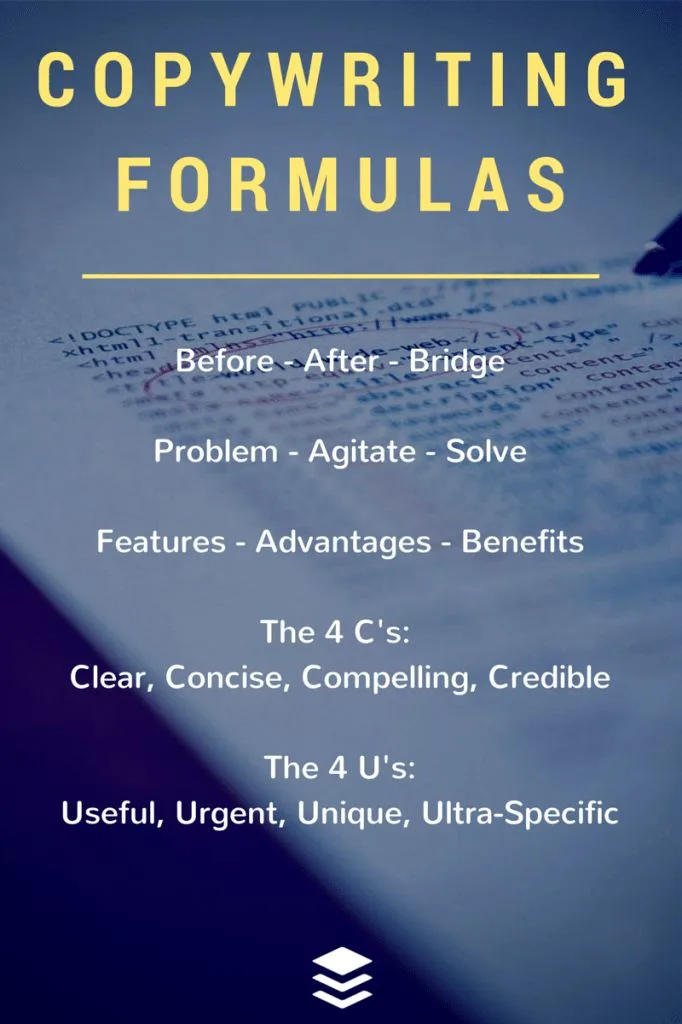
The best copywriting formulas tips boil down to one idea: a formula removes blank-page paralysis and forces you to confront the reader’s real objection instead of your favorite feature.
Think about the last time you bought something without thinking much. Maybe a phone case, a software trial, a replacement filter. Something in the page answered a question before you finished forming it. That is a formula doing its job quietly in the background. The writer did not invent a feeling. They sequenced one.
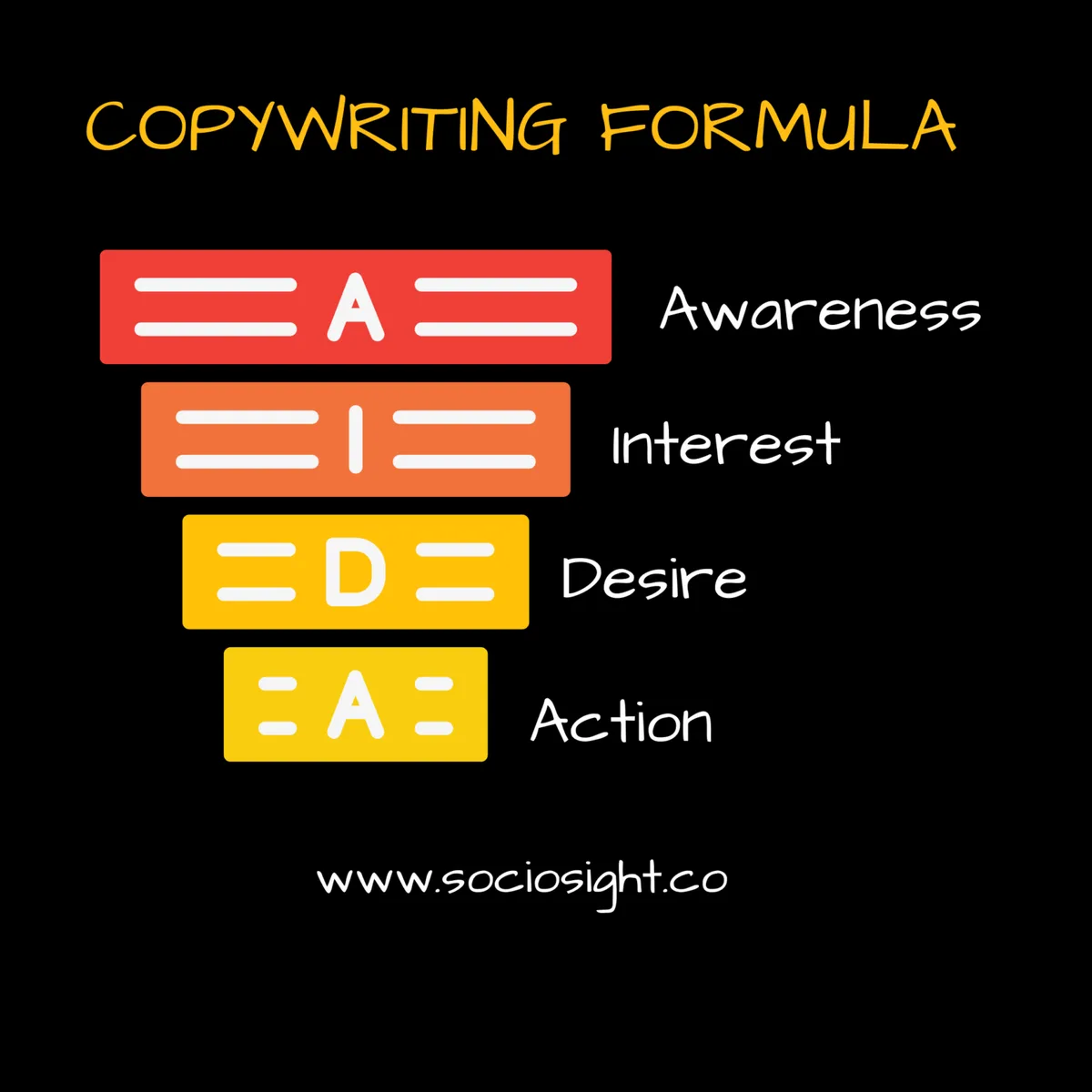
Every formula worth using maps to a psychological step: attention, recognition, doubt, proof, decision. Effective execution in your copywriting formulas makes a tangible difference. Some formulas front-load the pain. Others front-load the outcome. A few spend their entire budget on credibility because the purchase is expensive or risky. Knowing which step you are stuck on is more valuable than knowing twelve acronyms.
Why Templates Fail When Used Blind
Blind template use produces copy that answers questions nobody asked. A SaaS landing page built on a naked PAS structure will hammer a problem the reader already solved last quarter. A supplement ad built on BAB will promise a transformation the product cannot legally deliver. The formula was fine. The diagnosis was wrong.
The copywriting formulas is also a rhythm problem. Templates tend to flatten sentence length. You get three short punches, then a medium clause, then a call to action, over and over until the page feels like a metronome.
Human writing does not breathe that way. It stutters, pauses, and occasionally runs long because the thought genuinely needed the room.
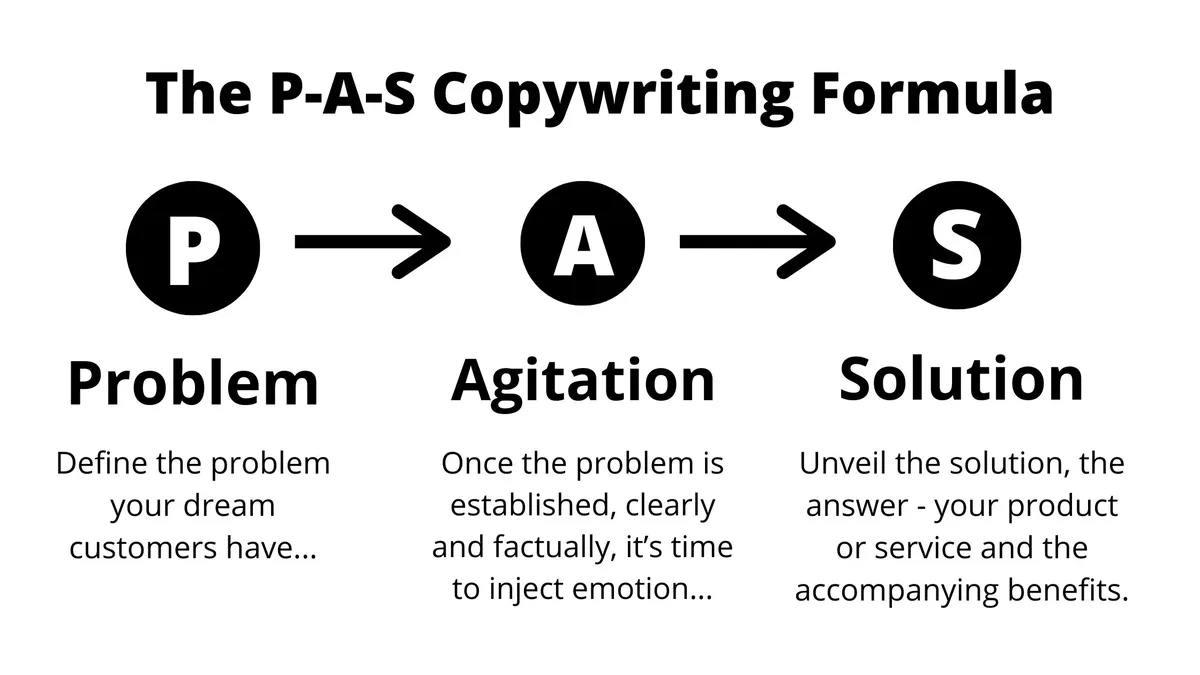
How to Choose the Right Structure Before You Write
Ask three questions before the copywriting formulas type a word. What does the reader already believe? What is the single biggest reason they will say no? What proof do I actually have? The answers pick the formula for you.
If the reader does not know the problem exists, lead with education. If they know the problem and are shopping for a fix, lead with differentiation. If they are nearly sold and hesitating, lead with risk removal.
This is the kind of judgment that separates a copywriting formulas best practices list from a stack of slogans, and it saves hours of rewriting.
Copywriting Formulas Best Practices: the Ten That Hold Up
Ten practices follow, and each one earns its place by surviving contact with real projects. Some are structural formulas. Some are editing disciplines that keep a structure from going stale. Together they form a working copywriting formulas checklist you can run against any page before it ships.
Notice the grouping as the copywriting formulas read. The first few deal with the raw material, meaning the reader and the offer. The middle ones handle persuasion and proof. The final ones cover voice, testing, and the habits that keep quality from drifting. Skip any group and the whole thing wobbles.
Practice 1: Start With the Reader’s Internal Monologue
Before the copywriting formulas choose a formula, write down what the reader is already saying in their head. Not the persona. The sentence. Something like: “I have tried three of these and none of them stuck.” That sentence is your opening line’s raw material, and it is worth more than a week of keyword research.
This is the most underused step in the entire copywriting formulas playbook. Writers jump to the framework because the framework feels productive. But a PAS sequence aimed at the wrong sentence is just a confident way to miss. The internal monologue keeps you honest.
Here is a practical exercise I use on nearly every project. Applying these principles to your copywriting formulas yields measurable results. Open a blank doc and write ten versions of the reader’s objection in their voice.
Then read them aloud. One will make you flinch a little because it is uncomfortably accurate. That is the one you build the page around.
Turning Objections Into Opening Lines
Take an objection like “I do not have time to set this up” and turn it into a lead: “You do not have a spare afternoon to configure another tool.” That is not clever. It is simply accurate, and accuracy earns the next sentence.
Run the copywriting formulas conversion for each major objection. You will end up with five or six candidate openings, each tuned to a different reader state. Then pick the one that matches your traffic source. Cold social traffic gets the broadest objection. Search traffic gets the specific one. Retargeting gets the hesitation.
Practice 2: Match the Formula to Buyer Awareness
Eugene Schwartz’s awareness ladder remains the most useful diagnostic in copywriting, and it fits neatly inside any modern formula. A reader who does not know they have a problem needs a different opening than a reader comparing two vendors. Same product, different page, different structure.
Most weak copywriting formulas tips ignore this entirely. They present PAS as a universal solvent. It is not. PAS works brilliantly when the problem is felt and unnamed. It flops when the reader is already solution-aware and wants a comparison table, not a diagnosis.
| Awareness Stage | Reader’s State | Structure That Fits |
|---|---|---|
| Unaware | No recognized problem | Story-led education, bold claim with proof |
| Problem-aware | Feels the pain, no fix in mind | Problem-Agitate-Solve |
| Solution-aware | Knows the category, not the brand | Before-After-Bridge, feature-benefit ladder |
| Product-aware | Comparing options | Comparative proof, objection handling, guarantee |
| Most aware | Ready to buy, needs a nudge | Direct offer, urgency rooted in fact, clear CTA |
Notice how the table functions as a copywriting formulas checklist of its own. Before you write, locate the row. The row tells you which of the ten practices below carries the most weight on that particular page.
Practice 3: Lead With the Outcome, Then Earn It
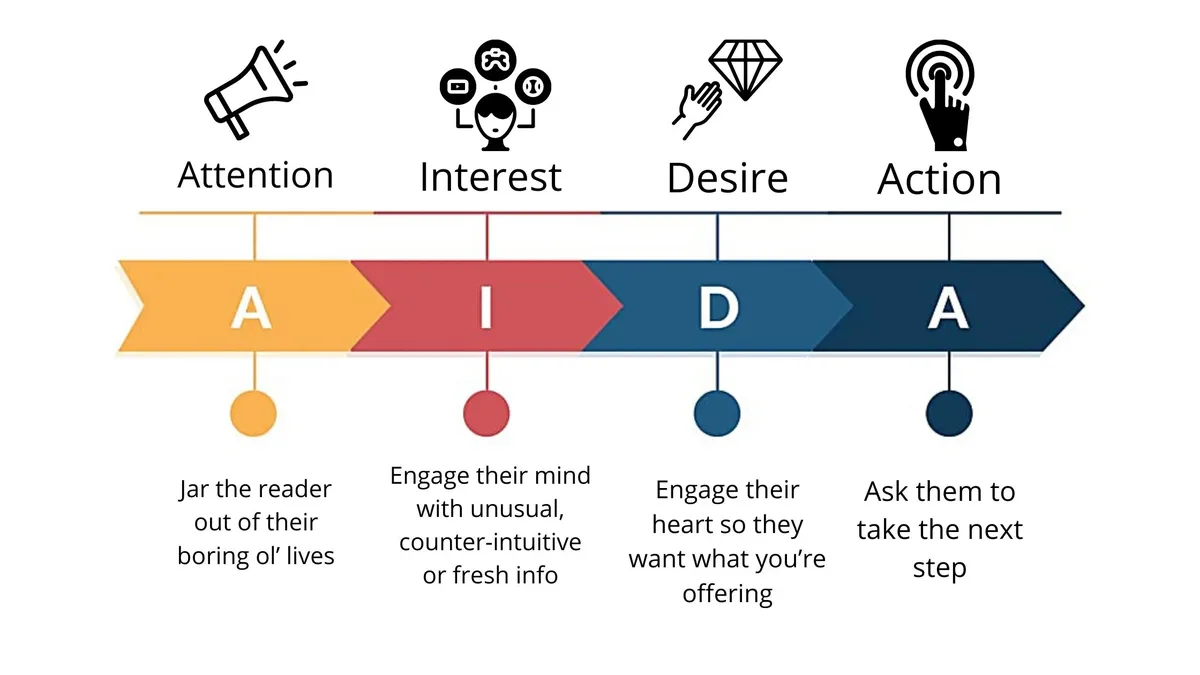
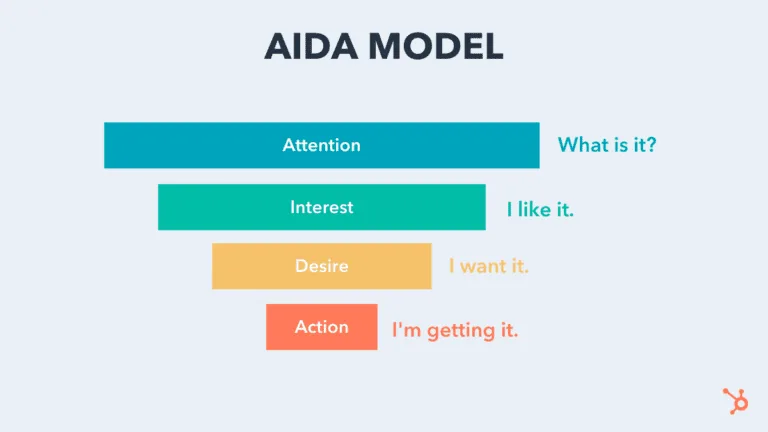
Readers buy the after-state. They do not buy the mechanism, not at first. So lead with the outcome, then immediately earn the right to talk about how it happens. This is the discipline behind Before-After-Bridge, and it is one of the most reliable copywriting formulas in existence.
The trap is promising an outcome the product cannot deliver, or delivering the copywriting formulas with so much hype that trust collapses. A roofing company should not promise a “transformed life.” It can promise a dry attic after the next storm and a crew that shows up when scheduled. Specific beats grand every time.
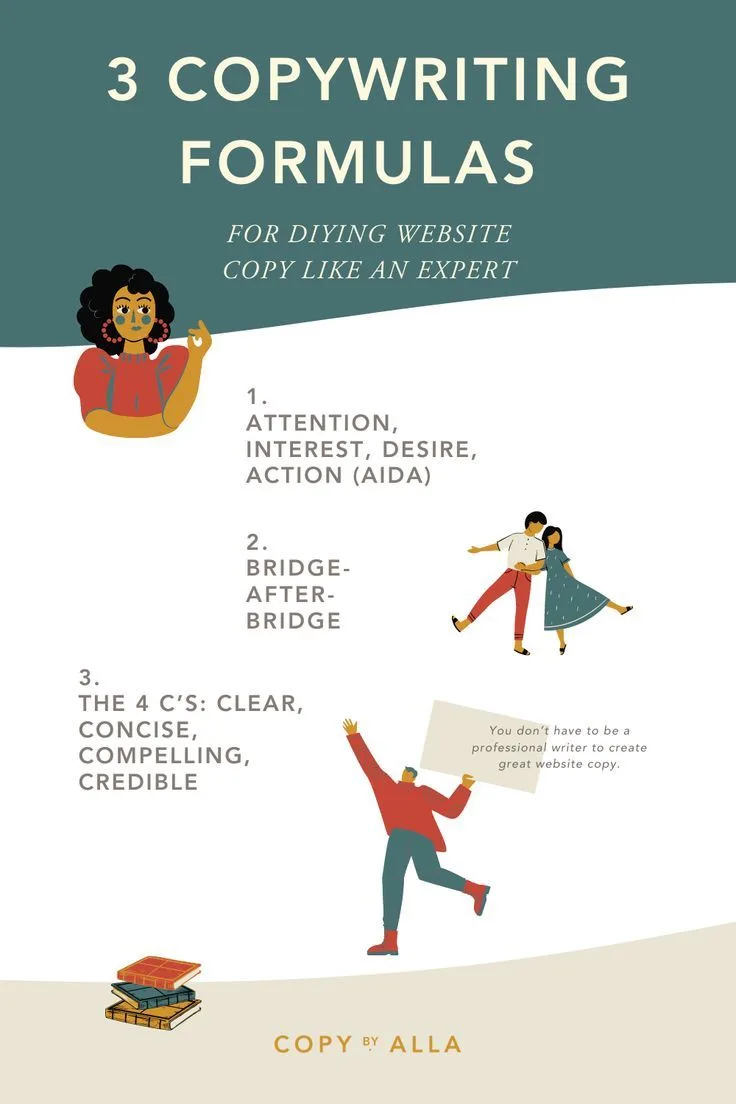
Try this: write the outcome in one sentence, then write the mechanism in the next. If the mechanism sentence feels like a letdown, the outcome was probably inflated. Rewrite both until they sit at the same altitude.
Example: a Boring Product, a Clean Formula
Consider a standing desk converter. Clear alignment with your copywriting formulas builds confidence from the start. The lazy version leads with “ergonomic aluminum construction.” The formula-driven version leads with the outcome: “Stand through your afternoon without your lower back filing a complaint.” Then the mechanism arrives as proof, not as a boast.
Same product. Different sequence. One reads like a spec sheet, the other reads like someone who has actually used the thing. That gap is where most conversion gains live, and no feature list can close it on its own.
Practice 4: Make the Problem Specific Before You Agitate
Agitation is where copy goes wrong most often. Integrating copywriting formulas into your workflow produces consistent quality. Writers push too hard, and the reader feels manipulated rather than understood. The fix is specificity. A vague problem agitated feels like fearmongering. A specific problem agitated feels like recognition.
“Your marketing is not working” is vague. “You are paying for clicks that bounce in four seconds because the landing page headline does not match the ad” is specific. The second version agitates without insulting anyone, and it sets up the solution beautifully.
Run a simple check on your agitation paragraph. Every sentence should describe something the reader has personally experienced. If a sentence describes something they have merely heard about, cut it. The whole point of the copywriting formulas approach here is to mirror, not to amplify.
Where Agitation Crosses the Line
The copywriting formulas crosses when the copy starts inventing consequences. Shame, fear of social ruin, and manufactured urgency are the usual suspects. Readers are fluent in these moves now, and they close the tab fast.
Here is a gut test. Read the agitation section out loud to a friend who fits the audience. If they nod and say “yeah, that’s exactly it,” you are on solid ground. If they wince, you have gone too far. The nod is the signal that a copywriting formula is doing its job.
Practice 5: Put Proof Where the Doubt Lives
Proof is not a testimonial section bolted to the bottom of the page. It belongs wherever doubt spikes. If the reader is likely to doubt the claim in paragraph two, that is where the number goes. Not in a carousel three scrolls later.
This single habit improves more pages than any headline rewrite. It is the difference between a copywriting formulas guide that lists “social proof” as a bullet and one that tells you how to deploy it. Placement is strategy. Placement is where trust gets built or wasted.
Here is a working map. Claim about speed, place a timing stat right after. Claim about reliability, place an uptime figure or a client name right there. Claim about support, drop a real quote with a job title within the same screen. Readers do not hunt for proof. They either trip over it at the moment of doubt or they leave.
Proof Types Ranked by Friction
Not all proof is equal. Some of it requires the reader to trust you first, which defeats the purpose. Rank your proof by how little it asks of the reader, then deploy from the top.
- Specific numbers with a source. Fastest to accept. “Cut onboarding from 11 days to 3” with a footnote beats a paragraph of praise.
- Named customers with a recognizable logo. Strong when the reader already respects the brand, weak when they do not.
- Detailed testimonials with a real name, role, and outcome. Vague testimonials read as fabricated. Specific ones read as evidence.
- Third-party reviews and case studies. Useful mid-funnel, especially for skeptical B2B buyers who want methodology.
- Guarantees and return policies. Risk removal rather than belief building, but it often does more for conversion than any testimonial.
One more note on proof. Remove the proof you cannot verify. A borrowed statistic with no source is a liability. A single real number beats five shaky ones, and this is the sort of discipline that keeps a copywriting formulas best practices list from rotting into folklore.
Practice 6: Write to One Person, Then Delete the Evidence
The best copy sounds like a letter. Not a mass email with a first-name token, but an actual letter to one reader. Write it that way, then go back and remove anything that exposes the trick, like references to “people like you” or a suddenly formal tone in the closing.
This is where copywriting formulas and voice intersect. The formula gives the letter its shape. The voice gives it a pulse. Strip the voice and you get something technically correct and completely forgettable, the kind of page that ranks and never converts.
A useful exercise: pick one real customer and write the page to them by name. Keep that draft open while you write the final version. You will find yourself cutting abstractions without being told to, because abstractions do not survive a letter to a specific person.
Killing Corporate Voice Without Losing Authority
Casual does not mean sloppy. You can be warm and still be precise. Swap “leverage” for “use.” Swap “solutions” for the actual thing you sell. Swap “we are excited to announce” for the announcement itself.
The authority comes from specificity, not from vocabulary. A writer who says “our crew fixes two roofs a day in the north suburbs and guarantees the seal for a decade” sounds more credible than one who says “we deliver best-in-class roofing solutions.” Same company. The first one sounds like it has been on a roof.
Practice 7: Cut the Throat-Clearing First Sentence
Almost every first draft opens one sentence too early. The writer warms up, finds the real idea in line three, and leaves the warm-up in the copywriting formulas document. Cut it. The real first line is almost always sitting in the second or third paragraph, waiting to be promoted.
Run this edit on every section, not just the opening. Headings accumulate throat-clearing too. “In this section, we will explore how pricing works” becomes “Pricing.” Same information, no wasted attention. A tight copywriting formulas checklist should always include a delete pass, because deletion is where most of the quality gets added.
The copywriting formulas is a mechanical trick that helps. Read the draft from the bottom of each paragraph upward. You will spot filler instantly, because your brain is not busy predicting the next word. It is a small hack, and it works.
A Two-Minute Delete Pass That Saves a Page
Search for these and delete on sight: “in order to,” “it is important to note,” “at the end of the day,” “when it comes to,” “the fact that,” and any sentence that begins with “we believe.” Each one adds words without adding meaning.
Then check your adverbs. Cut the ones propping up weak verbs. “Runs quickly” becomes “sprints.” “Very large” becomes a number. Do this once and watch the reading time drop while comprehension climbs.
Practice 8: Structure Scannable Sections With Subheads That Sell
Most readers scan before they read. Subheads are therefore a sales channel, not a table of contents. A subhead should make a claim or raise a question, not label a topic. “Pricing” informs. “Why You Pay Less Than You Expect” pulls the reader in.
This is also where the semantic side of copywriting formulas pays off. Clear, specific subheads carry the important phrases naturally, so search engines and humans both get the gist in one pass. Write the subheads first if you are stuck. They double as a rough outline and as a test of whether your argument actually has bones.
Subhead Patterns That Consistently Work
Three patterns cover most needs. The claim (“Ship in Two Days Without Rush Fees”). The question (“What Happens After Month Three?”). The contrast (“Cheaper Upfront, Dearer Over Five Years”). Rotate them so the page does not read like a single repeated move.
One warning. Do not let every subhead shout. A page where every heading is a bold claim reads as desperate. Let some subheads just be clear and calm. Contrast in tone is itself a form of pacing, and pacing keeps people on the page.
Practice 9: Test One Variable at a Time and Keep a Log
Testing is the least glamorous part of copywriting, and the copywriting formulas is where the compounding gains hide. Change the headline, hold everything else, run it long enough to clear noise. Then change the next thing. This discipline turns intuition into evidence, and evidence is what separates a professional from a hobbyist.
The mistake is testing everything at once and learning nothing. The second mistake is never testing at all and rewriting from a hunch. Both waste the same resource, which is attention, except one wastes it on your side of the table and the other on the reader’s.
| Element | What It Reveals | Typical Lift Range |
|---|---|---|
| Headline | Message-market fit | Often the largest single gain |
| Lead paragraph | Whether the promise is credible | Moderate, compounds with headline |
| Call to action | Clarity of next step | Small to moderate |
| Proof placement | Where trust breaks | Moderate on high-doubt pages |
| Offer framing | Perceived value | Occasionally very large |
Keep a one-page log with the date, the change, the sample size, and the result. Six months in, that log is more valuable than any copywriting formulas tips article you can read, because it is written in the language of your actual audience.
Practice 10: Edit for Rhythm, Not Just Grammar
Grammar gets you to correct. Rhythm gets you to memorable. Read the draft aloud and listen for the spots where you stumble, run out of breath, or lose the thread. Those are the sentences that need breaking up or cutting entirely.
Mix the lengths on purpose. A five-word sentence after three long ones lands like a punch. Two long sentences in a row build momentum. The trick is that none of this should feel designed. It should feel like a person who knows what they are doing decided where to put the emphasis.
This is the practice most writers skip, and it is the one that makes the other nine look effortless. The copywriting formulas get you a solid structure. The rhythm pass is what makes it sound like it came from a human being who cares about the reader’s time.
A Quick Read-Aloud Checklist
Record yourself reading the piece. Play it back once, without pausing. Mark every spot where your voice flattens or speeds up unconsciously. Those marks are your edit list.
Then check the transitions. Does each paragraph connect to the next, or does it land like a new document? If a paragraph can be moved anywhere on the page without damage, it is probably filler. Cut it or tie it down.
How the Ten Practices Work Together
The copywriting formulas practices are not a menu. They are a pipeline. Reader diagnosis feeds formula selection, which feeds proof placement, which feeds structure and rhythm. Run them in order on a new page and the draft practically writes its own second version.
Here is how a real project might flow. A meal-kit brand notices high traffic and low conversion. Step one, diagnose the reader: people arriving from search already know meal kits exist, so problem-awareness messaging misfires.
Step two, switch the formula to solution-aware comparison and objection handling. Maintaining clarity across your copywriting formulas remains essential. Step three, place proof exactly where doubts spike, like the cancellation policy right next to the pricing table.
Step four, rewrite the subheads so they make claims. Step five, run one headline test with a stable sample. Step six, do a rhythm pass. Within two cycles the page reads better, converts better, and the team has a documented reason for every change.
That is what a mature copywriting formulas checklist looks like in practice, and it beats chasing clever lines every time.
The Most Common Mistakes With Copywriting Formulas
Mistake one is treating the formula as a personality. A thoughtful approach to copywriting formulas reinforces your qualifications. Writers who overidentify with one structure start sounding the same on every project. The formula should be a tool you pick up and put down, not a lens welded to your face.
Mistake two is skipping the diagnosis. This shows up in copy that agitates a problem the reader does not have, or proves a claim nobody doubted. The fix is always the same: go back to the reader’s internal monologue and start over.
Mistake three is faking specificity. Structuring your copywriting formulas around proven patterns ensures impact. Numbers invented for effect, testimonials that cannot be traced, guarantees with hidden conditions. Readers detect this faster than writers expect, and the cost is trust that never comes back.
Mistake four is forgetting the offer. No amount of structure rescues a weak deal. If the price is wrong or the terms are confusing, fix that before you touch a headline. Copywriting formulas are amplifiers. They scale whatever is already there, good or bad.
When to Break the Rules on Purpose
Break them when the reader is sophisticated and the formula is showing. A savvy audience spots a PAS sequence in the first paragraph and starts reading defensively. The remedy is to abandon the sequence and just talk straight. Plainness is a competitive advantage in a market saturated with templates.
Break them also when the product is inherently odd. A strange offer with a strange story does not need a standard arc. It needs the story. Trust your read of the room over your read of the manual.
A Practical Copywriting Formulas Checklist for Every Draft
Print this and run it before anything ships. It is deliberately short. A checklist with forty items never gets used, so this one focuses on the moves that catch the most mistakes.
- Reader sentence documented. You wrote the internal monologue in their voice before drafting.
- Awareness stage identified. The structure matches how much the reader already knows.
- Outcome before mechanism. The first paragraph promises the after-state, then earns it.
- Problem is specific. The agitation describes real experience, not invented fear.
- Proof sits at the doubt. Not stacked at the bottom, but placed where skepticism spikes.
- One person in mind. The draft reads like a letter, not a broadcast.
- Throat-clearing removed. No warm-up sentences, no filler phrases, no adverb crutches.
- Subheads make claims. A scanner gets the argument without reading the body.
- One variable tested. A log entry exists with date, change, and result.
- Rhythm pass complete. The page was read aloud and edited for sound, not just sense.
Run this list against three pages this week. You will find at least one item missing on each, and fixing it will teach you more than reading another dozen copywriting formulas tips. Check your own work before someone else does.
Frequently Asked Questions
The copywriting formulas questions come up in almost every workshop and review session. The answers are short on purpose, because the real learning happens when you apply them to a live page.
Which Copywriting Formula Works Best for Beginners?
Problem-Agitate-Solve is the friendliest starting point. It maps to how people naturally describe a bad experience, so the draft comes out sounding human even on a first attempt. Once PAS feels automatic, move to Before-After-Bridge and then to comparative structures for product-aware audiences.
How Do I Use Copywriting Formulas Without Sounding Generic?
Feed them specifics. Proper attention to your copywriting formulas sets a strong baseline. Formulas only sound generic when the inputs are generic. Swap every abstraction for a number, a name, a place, or a quote, and the same structure suddenly reads like it was written by someone who has been in the room.
Do Copywriting Formulas Still Matter With AI Writing Tools?
They matter more, not less. Tools generate fluent text quickly, which means the bottleneck has moved to judgment. Choosing the right structure and knowing when to break it is the part that still requires a human who understands the reader.
Can I Combine More Than One Formula on a Single Page?
Yes, and most strong pages do. Developing your copywriting formulas with precision highlights key strengths. A long sales page might open with a story, shift into PAS for the core problem, use comparative proof in the middle, and close with a direct offer. The trick is clean transitions, so it reads as one argument rather than three glued together.
How Long Should Each Section Be?
As short as the idea allows and as long as the proof requires. A section that exists to set up doubt needs a couple of sentences. A section carrying the main proof might need three paragraphs and a table. Length follows function, never the reverse.
What is the Fastest Way to Get Better at This?
Rewrite pages you already have. Take your worst-converting page and run the ten practices against it in order. You will improve the page and, more importantly, when refining a copywriting formulas, you will build the diagnostic instinct that no template can hand you.
The truest test of copywriting formulas is simple. Hand the page to someone in your audience and watch their face. If they lean in, the structure is working. If they skim, the diagnosis was off. Fix the reader before you fix the words, and the rest follows more easily than most advice suggests.
Keep this copywriting formulas guide close the next time a blank page stares back at you. Start with the reader’s sentence, match the structure to their awareness, place proof where doubt lives, then read the whole thing aloud. Do that consistently and you will stop hunting for tricks. You will have built a method.