SEO KPIs: 9 Proven Strategies to Rank Higher
SEO KPIs only matter if they tell you what to do next. Plenty of teams track a dashboard full of numbers and still can’t explain why organic traffic stalled last quarter. The fix isn’t more data. It’s picking the nine measurements that actually predict ranking movement, then building a repeatable habit around them.
This walkthrough is part strategy guide, part practical checklist. You’ll get a definition of what counts as a real KPI, the nine strategies that moved the needle for teams I’ve worked with, and a working checklist you can copy into your own reporting stack. If you’re building a broader search program, treat this as the measurement layer underneath it.
What Makes a Metric a True SEO KPI
A metric becomes a KPI the moment the SEO kpis has a target, an owner, and a decision attached to it. Sessions are a metric. Sessions from pages that generate pipeline, compared against a committed goal, owned by someone who ships fixes — that’s a KPI.
Most teams skip this distinction and end up drowning in vanity data. My rule: if a number can’t change what you build next sprint, it belongs in a footnote, not the dashboard.
Why SEO KPIs Beat Raw Traffic Dashboards
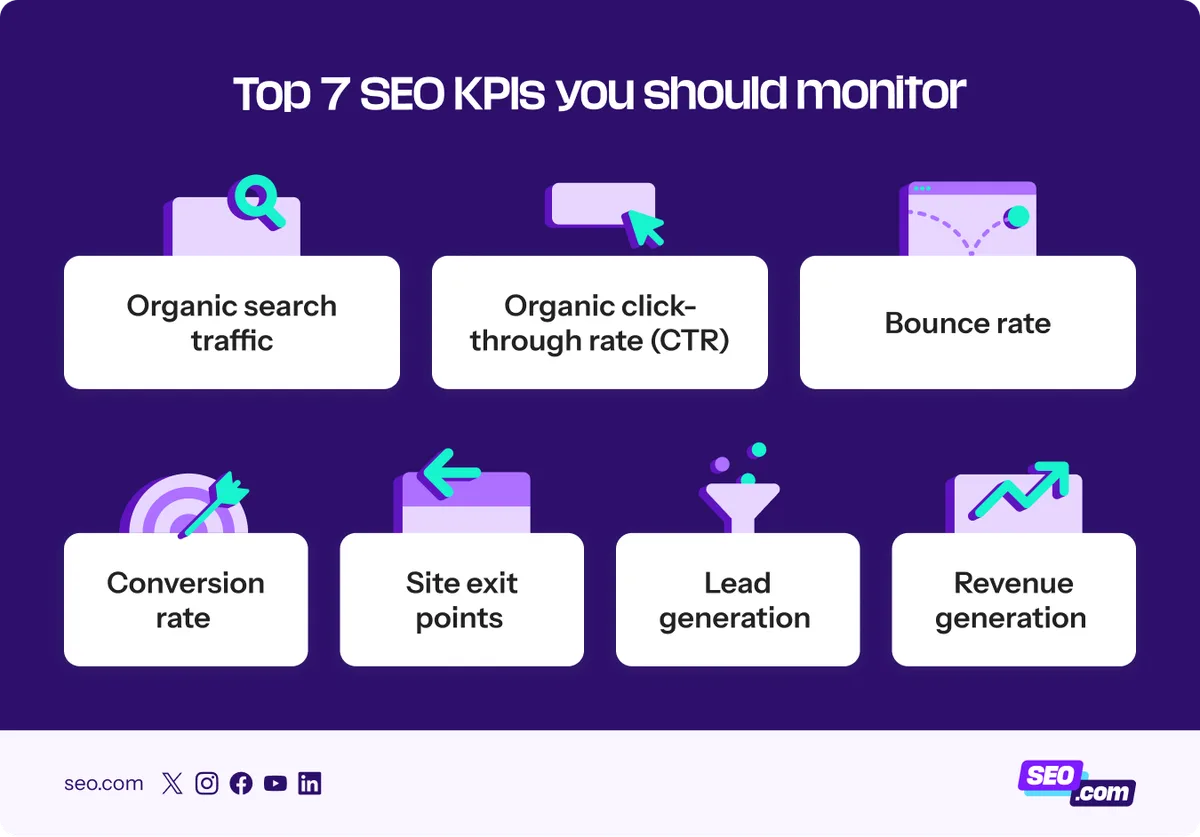
Traffic charts feel reassuring and mislead constantly. A site can double organic sessions while losing revenue-relevant visibility, because the growth lands on informational queries that never convert. That gap is exactly why a proper SEO kpis framework exists.
Here’s the practical difference. Raw traffic tells you someone arrived. KPIs tell you whether the right someone arrived, whether they found what the page promised, and whether search engines treat the page as authoritative for the query you targeted.

On a B2B software account I consulted for, organic sessions were flat for two quarters while qualified demo requests from organic climbed 34%. Refining each detail of your SEO kpis strengthens this section. The team nearly fired the program based on the traffic line alone. Swapping the headline metric saved it — and saved months of wasted effort.
How SEO KPIs Connect to Revenue and Search Intent
Search intent is the bridge. Every query carries an implied job: learn, compare, or buy. When your KPIs track visibility by intent tier rather than site-wide averages, the reporting starts matching what the sales team sees.
Rank tracking for “what is X” queries tells a different story than rank tracking for “X pricing” or “X alternatives.” Split them, and your SEO kpis best practices get sharp fast. A drop in commercial-intent visibility is urgent. A drop in a broad educational term is usually noise.
The SEO KPIs Checklist: Five Questions Before You Pick a Number
Before adding any measurement to your report, run it through five filters. This short checklist saves teams from tracking things nobody will act on.
- Is it tied to a business outcome? If you can’t draw a line from the metric to pipeline, sign-ups, or ad revenue saved, question it hard.
- Can you act on it this month? Metrics shaped by seasonality or algorithm updates outside your control are context, not levers.
- Does it have a baseline and a target? A number without a comparison point is trivia.
- Is it attributable to organic? Blended reporting hides which channel earned the win.
- Will someone own it? Unowned KPIs quietly rot until the quarterly review exposes them.
Run the SEO kpis checklist on your existing dashboard and you’ll likely cut a third of it. That trimming is the first real win. Fewer numbers, sharper attention.
Strategy 1: Track Keyword Rankings Inside Your Revenue Cohorts
Average position across hundreds of keywords is close to useless. Five hundred keywords at position 14 tells you almost nothing about whether the business is winning. Segment instead.
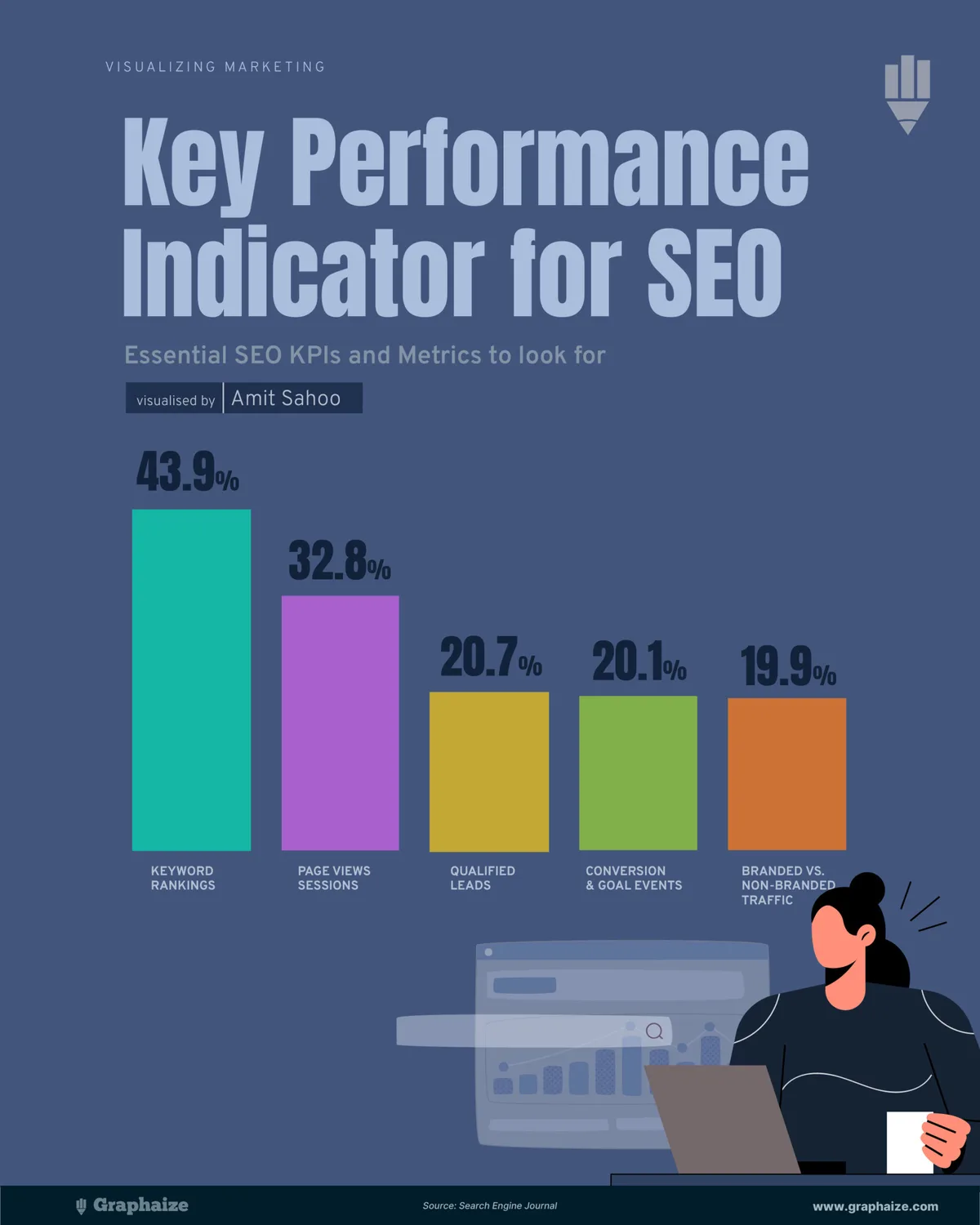
Group keywords by the page they support, then by the commercial value of the intent behind them. Branded versus non-branded is the minimum split. From there, break out by funnel stage — discovery, comparison, decision.
One ecommerce client I worked with tracked 4,200 keywords site-wide. Maintaining clarity across your SEO kpis remains essential. We cut it to 340 that mapped to category pages with actual revenue. Ranking changes on those 340 finally correlated with sales, and the weekly report became something the CMO actually read.
Which Ranking Metrics Belong in Your Report
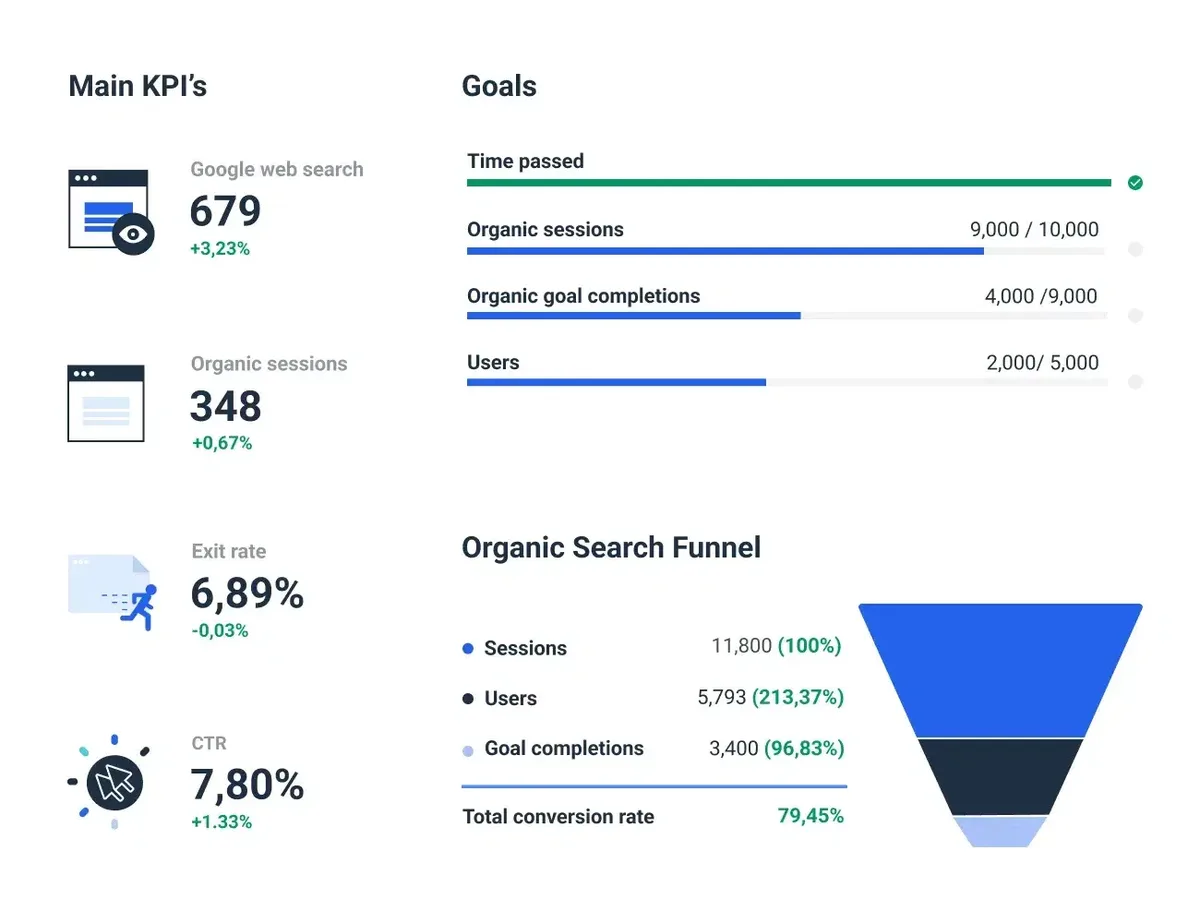
Rank tracking is the most familiar of all SEO kpis, which is exactly why it gets abused. Useful ranking views include share of top-three positions for target queries, movement on priority pages only, and competitor overlap on shared keywords.
Skip daily position snapshots. Positions bounce for reasons that have nothing to do with your work. Weekly or biweekly tracking, focused on priority cohorts, gives you signal without the noise.
Strategy 2: Measure Qualified Organic Sessions, Not Raw Sessions
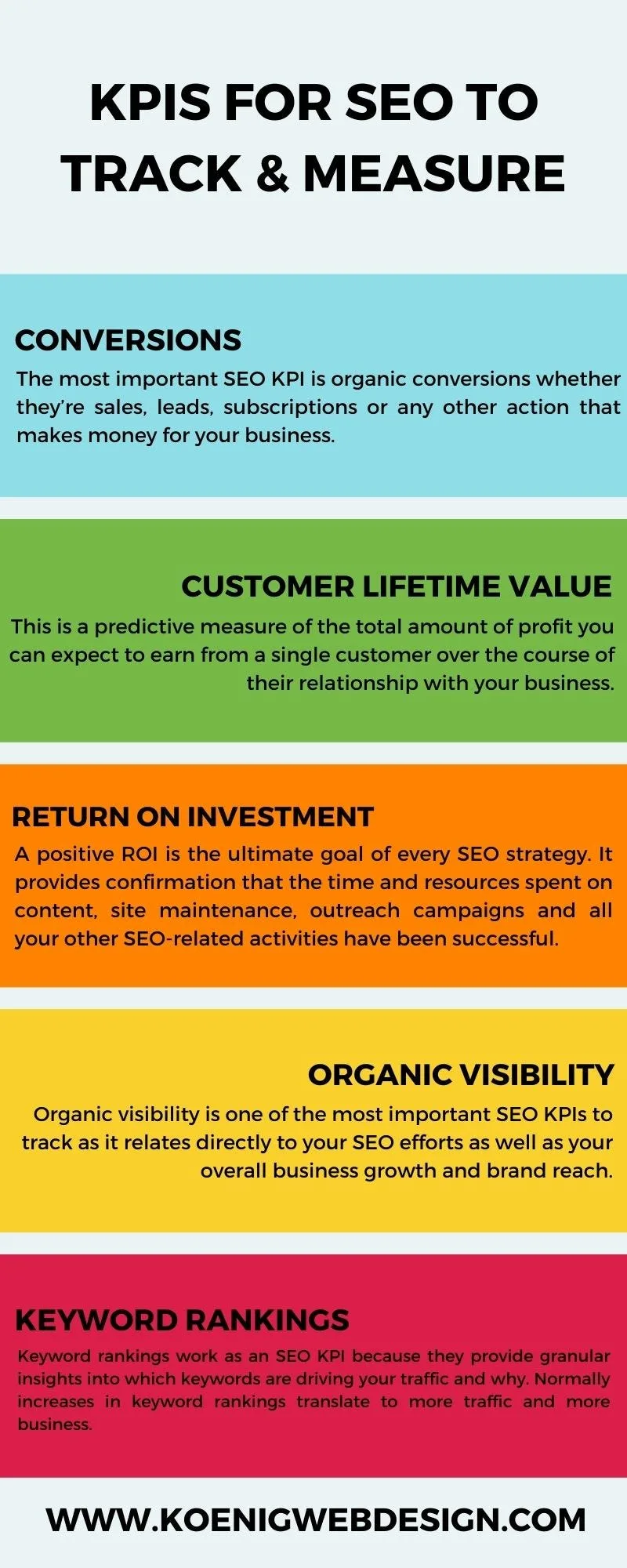
Visibility on search engines and visibility among buyers aren’t the same thing. The metric that matters is sessions from queries that match your ICP — ideal customer profile — landing on pages built for them.
Build the segment once: landing page in a defined list, plus source medium equals organic. A thoughtful approach to SEO kpis reinforces your qualifications. That’s your qualified traffic number. Compare it to total organic and watch the ratio. A healthy site usually sits above 40% qualified; below 25% means your content is attracting browsers, not buyers.
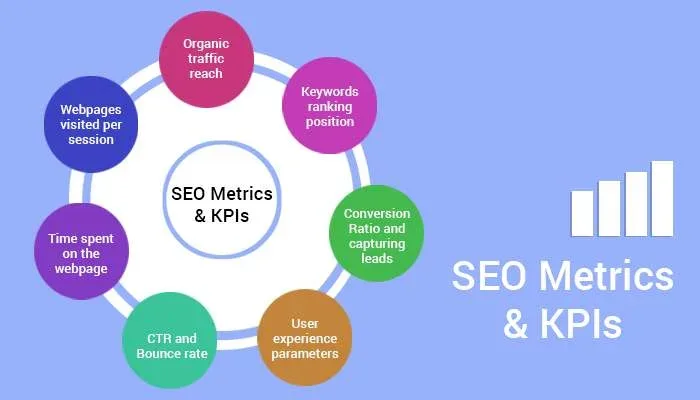
From there, layer engagement as a secondary check. Scroll depth above 60% and dwell time above 50 seconds on qualified pages suggest the page is delivering on its promise. Low engagement on high-position pages is a rewrite signal, not a traffic problem.
Strategy 3: Measure Search Visibility With Share of Voice
Rank position tells you where you sit. Share of voice tells you how visible you are relative to everyone competing for the same queries. It’s the SEO kpis equivalent of market share.
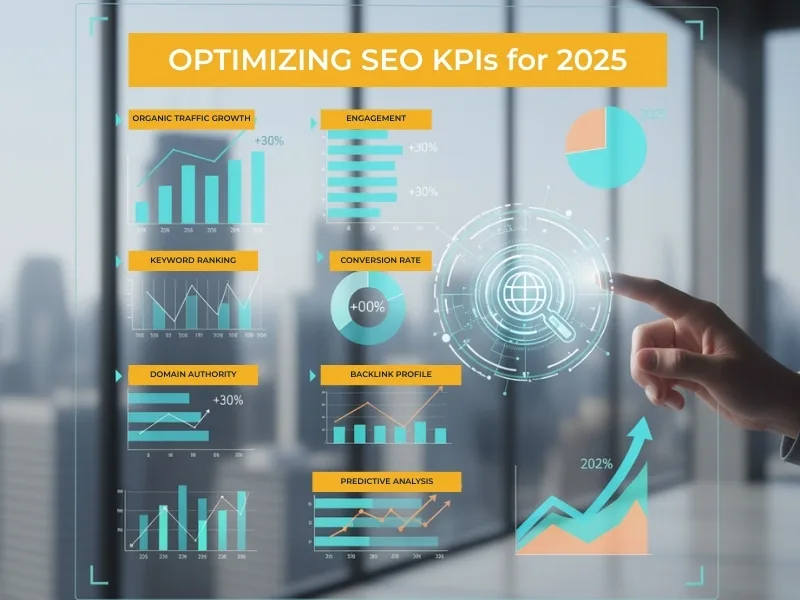
Calculate it simply: for a defined keyword set, add up your estimated click-through rate based on position, then divide by the same total calculated across all competitors. Tracked monthly, this number reveals whether you’re gaining ground even when individual positions wobble.
Why Share of Voice Beats Average Position for Reporting
Average position hides everything important. Structuring your SEO kpis around proven patterns ensures impact. One keyword at position 1 and one at position 40 average out to 20, which tells the reader nothing.
Share of voice weights the picture by actual search demand, so a page stuck at position 12 on a high-volume term properly drags the score.

Use it in your content calendar review too. If share of voice on comparison queries is stuck at 8%, that’s a clear brief: build or refresh comparison content. The metric produced a decision — that’s the whole point.
Strategy 4: Track Click-Through Rate by Page and Query
Ranking improves don’t guarantee clicks. On many mid-volume queries, the top result converts at 28%, the second at 15%, and everything below position five scrapes single digits. Losing clicks at position 3 usually means the title and meta description aren’t doing their job.
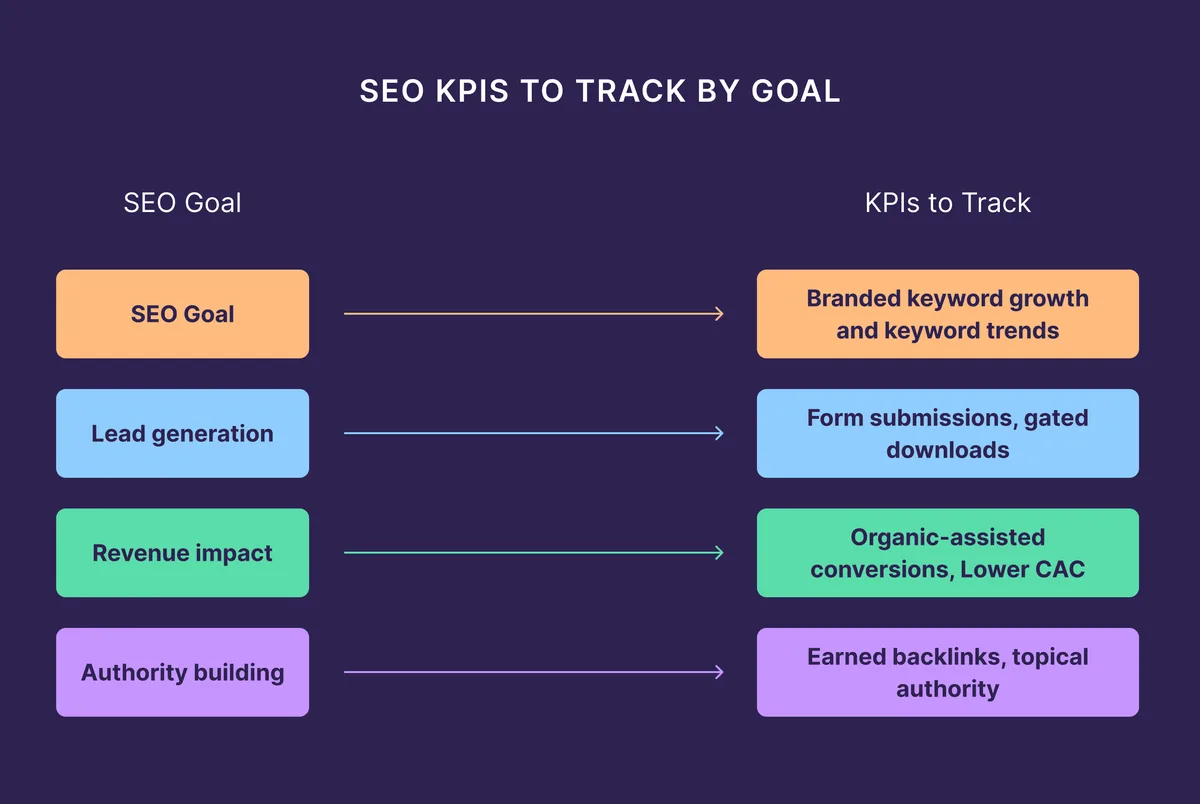
Pull CTR by page and by query from your search console data. Applying these principles to your SEO kpis yields measurable results. Flag pages ranking in the top five with CTR below expected.
Those are the cheapest wins on the board — a title rewrite and a meta refresh often moves CTR five to eight points within a month.
I’ve watched a single title rewrite lift organic clicks 61% on a page that hadn’t moved in rank position at all. No link building, no new content. Just clearer promise, better match to the query intent.
Strategy 5: Measure Conversions from Organic Landing Pages
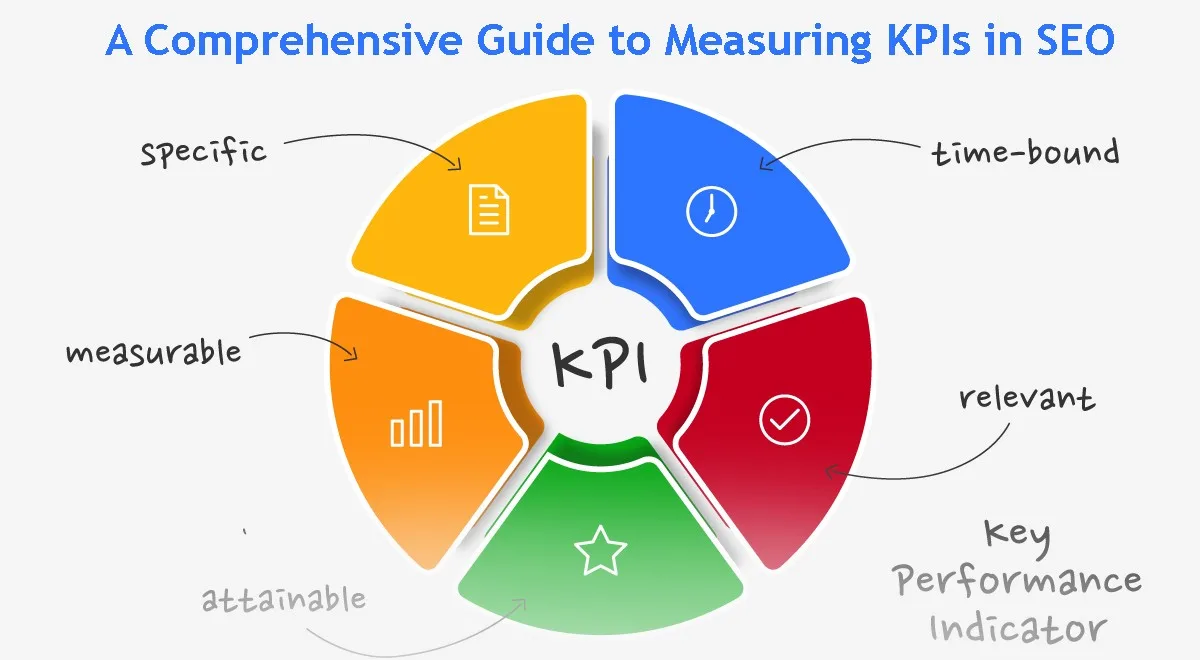
Traffic without conversion is a cost center. Add conversion rate from organic landing pages to your SEO kpis and the entire conversation changes.
Segment by landing page type: blog posts converting to email sign-up, service pages converting to form fill, product pages converting to cart. Each type has a different realistic ceiling. A blog post at 2.1% email capture is strong. A service page at 2.1% form fill is broken.
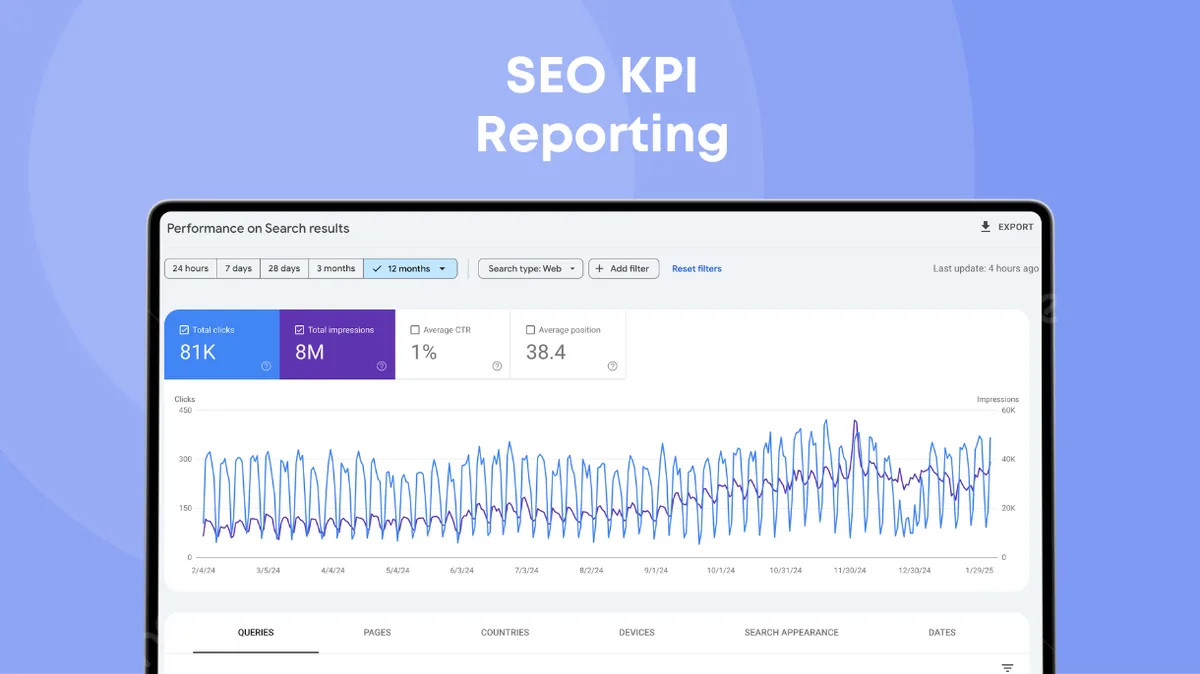
Tracked over time, the SEO kpis metric exposes content that ranks well but sells poorly. Sometimes the fix is internal linking to the next step. Sometimes it’s a shorter, more direct CTA. Either way, you can only fix what you measure.
Strategy 6: Score Content Quality and Topical Depth
Search engines reward sites that demonstrate coverage on a topic, not just single pages. Track a quality score across each content cluster — a simple average of relevance, freshness, depth, and internal link strength per cluster works well.
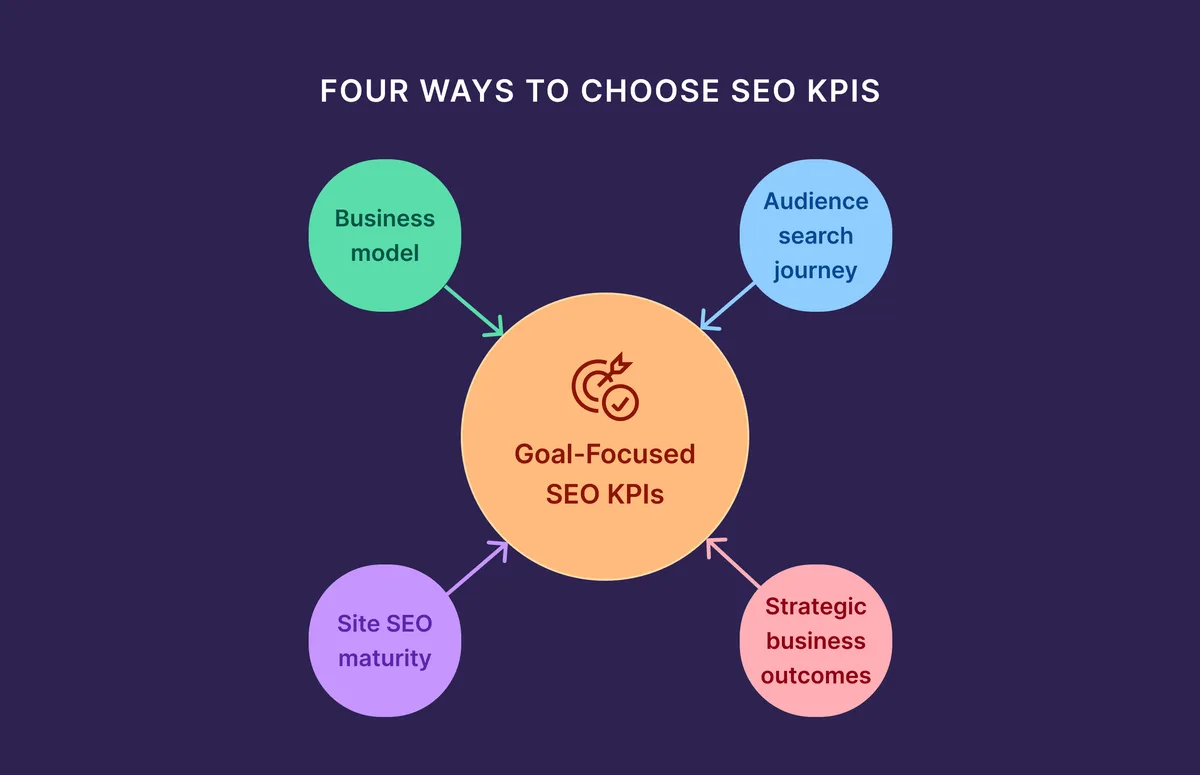
Score each page from 1 to 5 on those four dimensions quarterly. Cluster averages below 3.0 are your refresh priority. This is where the SEO kpis guide becomes a roadmap: instead of vague “we need more content” conversations, you get a list of twelve pages to improve before adding a thirteenth.
Which Content Metrics Actually Predict Rank Movement
Not all content signals matter equally. In my experience, three consistently predict rank movement: internal link depth from a strong hub page, page-level topical coverage on related subtopics, and freshness signals on evergreen terms that competitors keep updating.
Word count alone predicts almost nothing. Developing your SEO kpis with precision highlights key strengths. A 900-word page that answers the query better than a 3,000-word competitor will win. Treat length as a consequence of coverage, not a goal.
Strategy 7: Monitor Technical Health With Crawl and Indexation KPIs
Technical health is the plumbing. When it leaks, everything above it drifts. Track four numbers weekly: indexed page count versus submitted, crawl errors as a percentage of total crawled URLs, average server response time on priority pages, and Core Web Vitals pass rate.

The indexation ratio is the big one. If your submitted pages are 4,000 and indexed is 2,600, you have a 35% gap — likely a crawl budget or quality threshold problem. Dig in before writing more content.
Core Web Vitals matter for ranking outcomes on competitive queries. Clear alignment with your SEO kpis builds confidence from the start. A pass rate below 70% on key landing pages is worth engineering time. It’s not the difference between ranking and not ranking, but on tight SERPs it’s often the tiebreaker.

Strategy 8: Track Backlink Authority and Referral Diversity
Backlinks still move rankings on competitive queries. The metric that matters isn’t raw link count — it’s referring domains to priority pages, plus the quality distribution across those domains.
Set a target for each money page: at least three new referring domains per quarter from relevant sites. Track the ratio of relevant to irrelevant links. A sudden wave of low-relevance links will drag algorithmic trust even when count rises.

Referral traffic from the SEO kpis links is a useful secondary KPI. A link that sends 40 relevant visits a month is doing more for your site than a directory mention that sends zero. When I audit link profiles, I weight referral activity higher than domain rating for this reason.
Strategy 9: Measure Search Visibility Gains Against Competitor Sets
Isolated metrics can’t tell you whether you’re winning. Benchmark against a defined competitor set — three to five sites competing for your core queries — and track relative movement on shared keywords.

A simple quadrant view works: pages where you’re gaining visibility while competitors are flat are your content wins. Pages where competitors are gaining and you aren’t are the next brief. Review monthly, adjust quarterly.
This is where SEO kpis tips become strategic. The questions shift from “is our rank up?” to “are we winning this cluster against the people who matter?” That framing produces better decisions, faster.

How to Build Your SEO KPIs Dashboard Without Overloading It
One screen. Targeted refinements to your SEO kpis streamline the entire review. Nine numbers. That’s the whole dashboard. If it takes more than 30 seconds to scan, it’s too complex to drive decisions.
Structure it in three rows: leading indicators (rank, share of voice, CTR), middle indicators (qualified sessions, conversions), and trailing indicators (revenue-attributed organic, referral diversity). Team members know at a glance whether the funnel is healthy or leaking.
| KPI | What It Tells You | Review Cadence | Realistic Target Range |
|---|---|---|---|
| Ranking cohort movement | Visibility on priority keywords | Weekly | Top 3 on 40%+ of target queries |
| Qualified organic sessions | Traffic from ICP-matched queries | Weekly | 40%+ of total organic |
| Share of voice | Relative visibility against competitors | Monthly | Continuous gain over baseline |
| CTR on target pages | Title and meta effectiveness | Biweekly | Above 5% for top-5 rankings |
| Organic conversion rate | Page-level sales effectiveness | Monthly | 2%+ blog, 4%+ service pages |
| Content quality score | Cluster topical depth | Quarterly | Average 3.5+ per cluster |
| Indexation ratio | Technical cleanliness | Weekly | 90%+ submitted vs indexed |
| Referring domains (priority pages) | Authority growth | Monthly | 3+ new per money page per quarter |
| Competitor visibility delta | Strategic position | Monthly | Net positive on shared queries |
Common Mistakes Teams Make With SEO KPIs
The most expensive mistake is choosing metrics that look impressive but don’t connect to any business outcome. Pageviews, impressions, and domain rating look reassuring in a report and rarely change a decision.
The second is measuring everything daily. Algorithm fluctuations and index refreshes create noise. Daily attention on volatile metrics produces reactive, short-term decisions that undermine long-term gains.
Third: no baseline. A KPI without a six-month trend line can’t tell you whether 340 qualified sessions is a win or a red flag. Capture the baseline before you start optimizing, or you’ll spend weeks guessing what “normal” looks like.
How SEO KPIs Should Evolve With Content Strategy
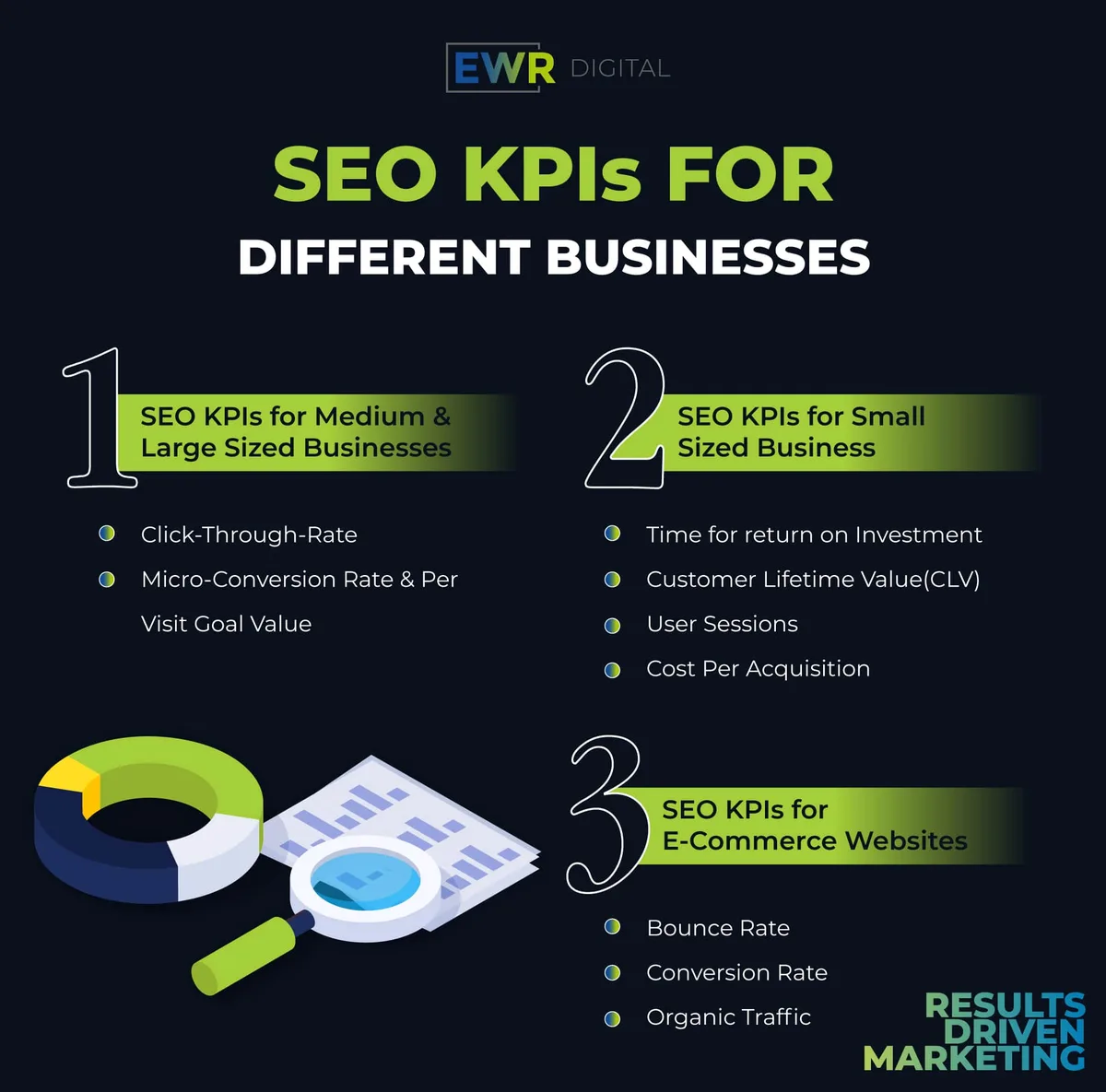
A site early in its growth cycle should weight leading indicators heavily — rankings, indexation, content coverage. A mature site should push weight toward trailing indicators — conversion rate, referral diversity, competitor visibility. The mix shifts as the program matures.
Children of a broader topic cluster also matter here. If your SEO kpis framework sits under organic growth, its sub-areas — content operations, technical health, authority building, measurement discipline — each deserve their own metric family. Parent topic, sub-topic, page-level KPI. That hierarchy is the point.
Frequently Asked Questions About SEO KPIs
Here is an in-depth breakdown of key considerations regarding this section:
How Many SEO KPIs Should a Team Track at Once?
Nine is the practical ceiling. Beyond that, attention dilutes and reports become wallpaper. Pick the nine that map to real decisions, then rotate individual metrics in and out quarterly as priorities shift.
How Often Should You Report on SEO KPIs?
Weekly for leading indicators (rank, CTR on target pages), monthly for trailing indicators (conversions, revenue-attributed organic, competitor visibility), quarterly for content quality and structural audits. Mixing cadences keeps noise out of the strategic view.
What’s the Most Important SEO KPI for a Small Business?
Organic conversions from qualified landing pages. Small businesses rarely have bandwidth to optimize fifteen things at once, and this single number captures whether traffic is arriving from the right queries and the page is delivering. Everything else supports it.
Can SEO KPIs Predict Future Rankings?
Partially. Indexation ratio, internal link depth, and content coverage gains tend to lead ranking improvements by six to twelve weeks. That’s why they’re called leading indicators — track them closely to see rank movement before it lands.
How Do You Set Realistic Targets for New SEO KPIs?
Start with a baseline period — ideally six to twelve months of historical data, or industry benchmarks if you have none. Set the first target at 10–20% improvement over baseline, review after 90 days, then recalibrate. Aggressive targets set without a baseline destroy credibility fast.
Final Thoughts on Building SEO KPIs That Drive Real Rankings
Rankings don’t move because you watch them. They move because you act on the right signals, consistently, over months. The nine strategies above work because each one produces a decision — a page to rewrite, a link to pursue, a cluster to expand.
Start with the checklist at the top of this piece. Pick three KPIs, run them for 90 days, and let the pattern tell you what to do next. That’s how a working SEO kpis setup gets built — not from a template, but from decisions you were willing to make based on the numbers.
For verified reference and background research, consult the authoritative informational resource on this topic.