Seasonal Keywords: Why Timing Decides Who Finds You
Seasonal keywords are search phrases whose demand rises and falls with a predictable calendar pattern, and if your content ignores that rhythm, you’re publishing into a void. Think about how you actually search.
In late October you type “best heated blanket for cold apartments,” not “heated blanket.” Two weeks before Thanksgiving you search “turkey brine ratio per pound,” not “cooking turkey.” The words shift because the intent shifts, and Google rewards pages that match the shifted words.
Here’s the uncomfortable part most content teams learn the hard way: a page optimized for “summer travel deals” in generic form will lose to a scrappier competitor that wrote “cheap flights to Lisbon in August” and updated it every spring for three years.
Seasonal search behavior punishes lazy generalists and hands free traffic to whoever showed up on time with the right vocabulary.

The seasonal keywords guide is built as a nine-step walkthrough. Not theory, not a list of platitudes about “planning ahead” — an actual sequence you can run, from mapping demand to refreshing pages before the window opens. Follow the steps in order and you’ll finish with a working system rather than a document nobody reads again.
What Makes Seasonal Keywords Different from Everyday Search Terms
Every keyword has a demand curve. Focusing on Seasonal keywords provides clear direction here. Most are roughly flat — people search “how to tie a tie” at a steady clip all year. Some are genuinely spiky.

“Advent calendar ideas,” “pool closing checklist,” “Halloween costume for tall men,” and “ski rental near me” all behave like a heartbeat monitor: near-zero for months, then a violent surge, then a cliff. That shape is the defining trait of seasonal keywords, and it changes nearly every decision you’d normally make.
The first consequence is about lead time. Refining each detail of your seasonal keywords strengthens this section. Search demand for a winter term usually starts climbing six to ten weeks before the peak transaction period, and it peaks earlier than most people assume.

Holiday gift queries, for example, often crest in the first half of December, which means a page published on December 10th is fighting for scraps. Focusing on seasonal keywords provides clear direction here. The second consequence is that rankings carry over.
Google doesn’t forget that your page ranked third for “artificial Christmas tree deals” the previous cycle; if you refresh it in September, you often re-enter near your old position almost immediately. That’s a real advantage, and it’s why a seasonal keywords guide that focuses only on new content misses half the opportunity.

Now the part people underestimate. Effective execution in your seasonal keywords makes a tangible difference. Seasonal terms fragment hard. “Christmas gifts” is a giant, brutally competitive head term. “Christmas gifts for a mother-in-law who has everything” is a long-tail with real volume, weak competition, and buyers at the end of their research.
The moment a seasonal term goes specific, intent sharpens and conversion climbs.
According to widely cited e-commerce benchmarks, pages targeting specific seasonal long-tails routinely convert two to three times better than their generic counterparts during the peak window, simply because the searcher already knows what they want and is only looking for confirmation.
So before touching a single page, internalize this: seasonal keywords aren’t a category of keyword, they’re a category of timing. The phrase stays the same; the window is what moves. Everything in the nine steps below flows from that single idea.
The Nine Steps, in Order (And Why the Order Matters)
Most seasonal SEO failures aren’t caused by bad tactics. Maintaining clarity across your seasonal keywords remains essential. They’re caused by sequence errors — building content before validating demand, or refreshing pages after the window already closed. The nine steps below are arranged so each one feeds the next, and skipping ahead usually means redoing work.
Here’s the full arc at a glance, then we’ll walk each step in depth.
| Step | Action | Typical Lead Time | Primary Output |
|---|---|---|---|
| 1 | Map the annual demand calendar | 12 months out | Seasonality chart |
| 2 | Separate evergreen from spiky terms | 10–12 months out | Term classification sheet |
| 3 | Mine long-tail and question variants | 8–10 months out | Keyword cluster map |
| 4 | Audit existing pages before creating new ones | 6–8 months out | Refresh list |
| 5 | Build or rewrite with seasonal intent in mind | 3–4 months out | Optimized page |
| 6 | Align internal links and category architecture | 3 months out | Link plan |
| 7 | Prepare off-page signals and promotional assets | 2 months out | Outreach and ad calendar |
| 8 | Schedule the technical checklist and monitoring | 4–6 weeks out | Launch runbook |
| 9 | Measure, harvest, and archive for next cycle | During and after peak | Post-season report |
Notice the Seasonal keywords only one step is pure content production. The other eight are research, structure, distribution, and measurement. That ratio is deliberate. Teams that spend 80% of their effort writing and 20% planning tend to miss the window entirely; the reverse ratio consistently wins.

Step 1: Map Your Annual Demand Calendar
Start by answering a boring but decisive question: for your business, when exactly does demand move? A thoughtful approach to seasonal keywords reinforces your qualifications. Not “autumn” — a specific week.
Pull twelve to twenty-four months of data from Google Trends, Google Search Console, and your own analytics, then plot the query volume for your ten most important commercial terms by ISO week.
You’re looking for three things. First, the inflection point where volume breaks away from baseline — that’s your publish-by date. Second, the peak week — that’s your conversion window.

Third, the tail, which is how long residual demand lingers after the peak and whether it’s worth capturing with “after” content such as “where to buy discounted holiday decor in January.”
A concrete example: a garden-supply retailer I worked with assumed their peak was April. The query data said the inflection started the third week of February and crested in the last week of March — six weeks earlier than the team believed.
Their content calendar was built for April publishing, which meant the seasonal keywords were consistently three weeks behind the curve. Shifting publication to mid-January recovered a meaningful slice of organic revenue without a single new backlink.
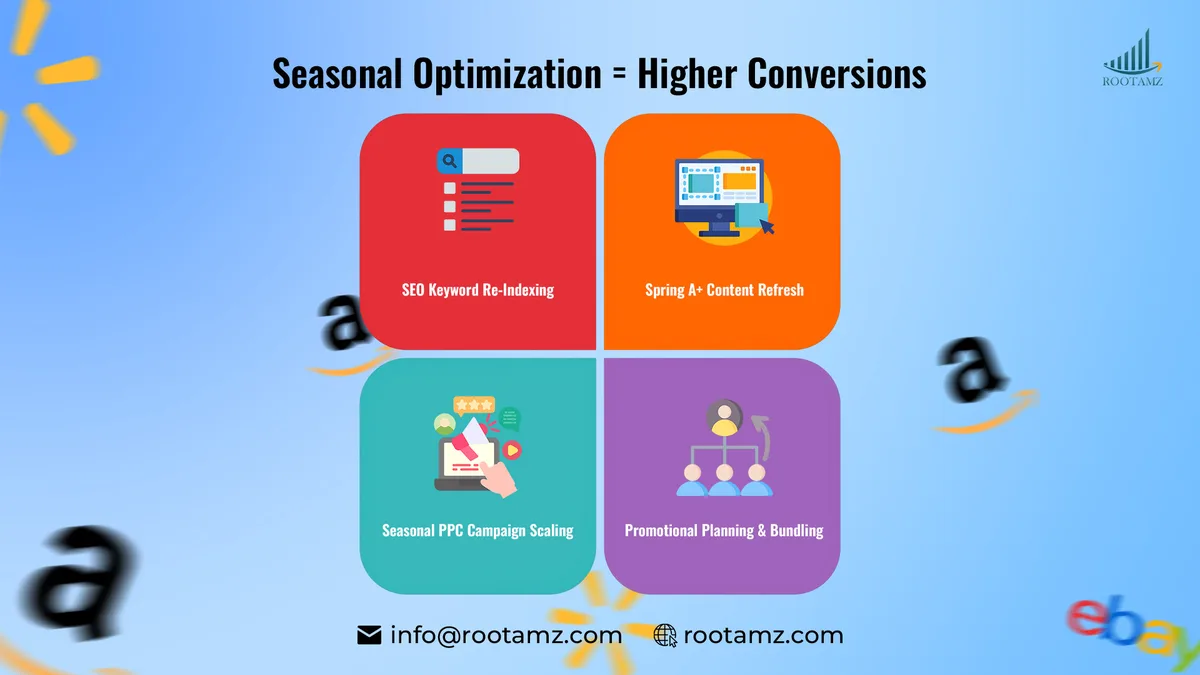
Document this in a simple spreadsheet, one row per term, one column per week, with a color scale. It becomes the calendar every later step refers back to, and it prevents the classic mistake of publishing a seasonal keywords checklist for a winter term in late November.
Step 2: Separate Evergreen from Spiky (This Changes Your Whole Budget)
Not every term the Seasonal keywords own belongs to the seasonal bucket, and blurring the two wastes resources. Evergreen pages deserve continuous optimization and steady link acquisition. Seasonal pages deserve surgical, time-boxed attention followed by a deliberate pause.
Run each candidate term through four questions. Applying these principles to your seasonal keywords yields measurable results. Does volume collapse outside a defined window? Does purchase intent spike rather than stay flat? Does the SERP change character between peak and off-peak — more shopping results in December, more informational results in July?
And does the query contain an implicit deadline, like “before,” “last minute,” or a named holiday? Two or more yes answers and you’re dealing with seasonal keywords, not evergreen content wearing a hat.
The practical payoff is budget allocation. An evergreen pillar might get steady investment all year. A seasonal page should get heavy investment in the eight weeks before its window, then almost nothing, then a refresh at the same point next cycle.
Treating both the same way produces the worst outcome: evergreen content that gets neglected, and seasonal pages that receive precious link-building budget in their dead months when ranking improvements can’t compound before demand arrives.
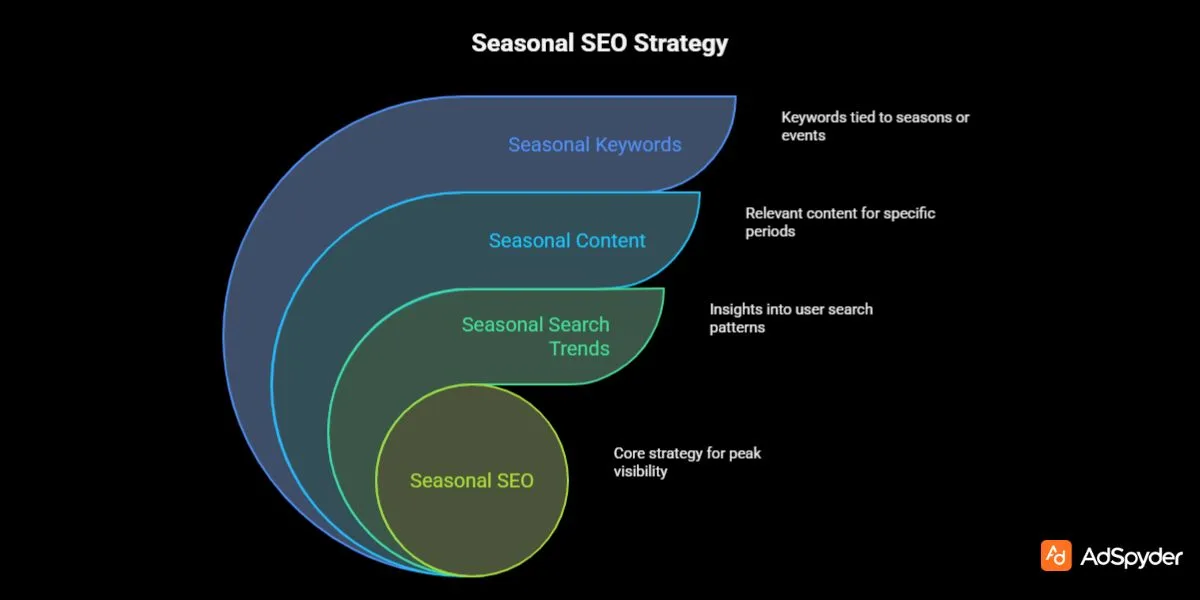
One nuance worth flagging. Some terms look evergreen but carry hidden seasonality inside them. “Indoor air quality” is broad and steady, but “indoor air quality winter dry air” spikes hard in January. The parent term is your pillar; the seasonal variants are cluster pages you activate on schedule.
This is exactly the pattern a seasonal keywords guide should teach, because it’s where most site architectures quietly fall apart.
Step 3: Mine Long-Tail and Question Variants Before You Write Anything
Head terms are where vanity lives. Proper attention to your seasonal keywords sets a strong baseline. Long-tails are where traffic actually converts. Once you’ve classified a term as seasonal, spend real time expanding it into every plausible variant people type when the clock is running.
Work four sources in parallel. Use autocomplete and “people also ask” during the actual season if you can — they surface dead-on real queries that generic tools miss. Pull query data from Search Console filtered to seasonal months; historical impressions reveal phrasing you’d never guess.
Check Reddit and niche forums for the exact language people use, including typos and regional wording. Developing your seasonal keywords with precision highlights key strengths. And run a keyword tool export, then manually comb it for deadline-bearing, specificity-bearing phrases.

Sort the results into a working seasonal keywords checklist organized by intent. Take a boating retailer’s spring window:
- Pre-window informational: “when to dewinterize a boat,” “boat battery maintenance after winter” — low competition, strong early-season volume.
- Peak commercial: “boat trailer tires on sale near me,” “cheapest marine oil change kit” — transactional, high competition, short window.
- Last-minute emergency: “boat won’t start first trip of the season,” “marine fuel line replacement fast shipping” — small volume, enormous intent, converts at a premium.
- Post-season: “best boat winterization kit,” “how to store a boat in freezing temperatures” — the mirror image window, often overlooked entirely.
The Seasonal keywords fourth bucket is where the easy wins hide. Most competitors pack up after the peak and leave the off-cycle demand completely uncontested. A page published in October for “boat winterization mistakes” will rank within days because nobody else bothered.
Get this expansion step wrong and every downstream step inherits the error. Get it right and your briefs practically write themselves, which is precisely the point of a proper seasonal keywords tips library built once and reused each cycle.
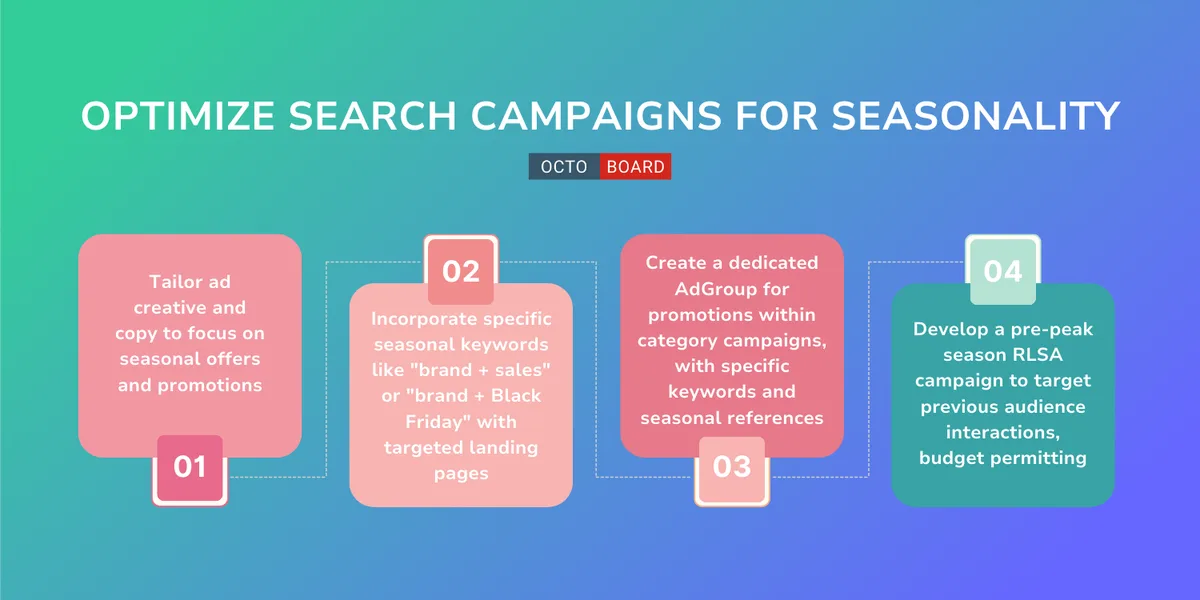
Step 4: Audit What You Already Have Before Building Anything New
The seasonal keywords is the step that separates mature programs from new ones, and it’s where the biggest single gain usually sits. Before commissioning a single new article, pull your existing pages that already touch seasonal terms and check their last-modified date, current ranking, and refresh distance.
Search the site for the term and its close variants.
The seasonal keywords’ll typically find one of five situations: a page ranking decently but stale, a page ranking poorly because it targets the wrong intent, a page cannibalizing another page, three thin pages that should merge into one, or a genuine gap with nothing. Only the last one justifies new content. The other four are cheaper to fix and rank faster.

Ranking pages the seasonal keywords are two or three seasons old often have real link equity and crawl trust.
A single targeted refresh — updating data, sharpening the title, adding the current year’s deals language without dating the URL, tightening the intro — can move a page from position nine to position three in a week. Compare that to a brand-new page that needs six to eight weeks minimum to settle.
Keep the Seasonal keywords audit lightweight: a spreadsheet with URL, target term, current rank, peak rank last season, content age, and one-line recommendation. Ten minutes per page, and the list becomes your work queue for the next three months.
This is the single highest-leverage habit in the entire seasonal keywords best practices playbook, and almost nobody does it systematically.
Step 5: Build or Rewrite With Seasonal Intent Front and Center
Now the seasonal keywords actually write — or rewrite. The rule that governs everything here: match the intent of the peak-week searcher, not the off-season searcher. Those are different people. In July, someone searching “Thanksgiving centerpiece ideas” is browsing and might be a blogger.
In November, they’re buying. Your page needs to serve the buyer at peak while still earning links during the off-season.
Structure accordingly. Lead with the answer the peak searcher wants — pricing context, availability, specific recommendations — then layer the depth beneath for off-season readers and crawlers.
Put the exact seasonal keyword in the title, the opening sentence, and at least one H2, but write like a human being, because a page stuffed with repetition reads badly and converts worse.
Every rewrite should also carry a visible freshness signal. Update the data points, revise the intro, add a “what’s changed” line inside the body, and adjust internal links to the current related pages. Avoid baking the date into the URL; keep it in a separate field if you must show it.
Length deserves a word. Seasonal pages often benefit from being shorter and sharper than evergreen pillars. A peak-week searcher wants the answer in the first 150 words, not a 4,000-word treatise on the history of turkey farming.
Reserve depth for the pillar, and use cluster pages for speed and specificity. That distinction is one of the most valuable seasonality tips you’ll hear, because half the ranking problems in seasonal niches come from bloated pages that answer slowly.
Step 6: Wire the Internal Links Before the Window Opens
Internal linking is the cheapest ranking lever in seasonal SEO and the most frequently skipped. When you link from a strong evergreen pillar to a new seasonal cluster page, you pass authority and accelerate indexing without spending a cent on outreach. Do it during the quiet months, not during the surge.

Build a link map with three layers. The pillar page sits at the top and links down to each seasonal cluster. Cluster pages link back up to the pillar with descriptive anchor text.
Cluster-to-cluster links connect naturally related pages — the “how to brine a turkey” page should link to the “best roasting pan for turkey” page, because readers actually move between those questions.
Anchor text matters more than people admit. Use the seasonal term itself where it fits naturally (“winter tire pressure drops,” not “click here”). Avoid stacking twenty links into one paragraph; spread them contextually across body content where a reader would plausibly click.
And check the reverse direction — when the season ends, either keep links live and updated or plan a redirect to the following cycle’s equivalent page. Stale links to dead seasonal pages quietly bleed authority all year.
Step 7: Prepare Off-Page Signals and Promotion Two Months Out
Backlinks and brand signals don’t appear overnight. If your seasonal page needs authority to compete at peak, start earning it six to eight weeks early, while the SERP is still quiet and competition for attention is low.

Practical moves that work reliably: pitch a data-driven angle to niche publications before the season (a “holiday shipping cutoff study” or a “what buyers search for in January” analysis), refresh a small library of evergreen guest posts to point at the seasonal hub, and prepare paid campaigns with pre-built audiences so you’re not building them in the peak-week panic.
On the brand side, schedule social content that seeds the seasonal vocabulary early, which helps Google associate the page with the term before volume spikes.
Don’t neglect the shopping and local layers. For product-driven seasonal keywords, verify merchant feed eligibility, inventory sync, and structured data well before the window. A page that ranks beautifully but shows “out of stock” during peak week is worse than no page at all, because the click returns, the user bounces, and the ranking decays.
Keep a simple promotion calendar aligned to the nine steps. Each promotional action should have an owner, a publish date, and a target URL. Vague plans like “boost social in December” don’t happen; dated entries with a name attached do.
Step 8: Run the Technical and Monitoring Checklist on Schedule
Four to six weeks before the peak, put the page through a technical pass. This is unglamorous work that decides whether all the previous effort actually surfaces.
Work through the essentials below. If any item fails, fix it before the window opens rather than during the surge, when you’ll be triaging live traffic.
- Indexation check: Confirm the page is indexed, not noindexed, and included in the XML sitemap. Common seasonal failure — a page excluded from index last summer is never re-included.
- Core Web Vitals: Test mobile load speed and layout stability under simulated peak traffic. Seasonal pages often use heavier imagery; compress it.
- Structured data: Validate Product, FAQ, and Breadcrumb schema. It drives rich results and, on mobile, real estate.
- Canonical and hreflang: Prevent seasonal variant pages from cannibalizing each other. One canonical per intent, and hreflang if you serve multiple regions.
- Internal link live-check: Click every internal link from your link map. Broken links during peak cost crawl budget and user trust.
- Redirect plan: Document where the page should redirect if replaced next season. Keep a log; you’ll need it in twelve months.
- Analytics tagging: Set up custom events for the seasonal CTA so you can measure conversion, not just sessions.
- Rank and traffic monitoring: Turn on weekly rank tracking for the top ten seasonal terms and daily traffic alerts. Watch for sudden drops that signal algorithmic turbulence.
Beyond the technical layer, keep a lightweight monitoring ritual: every Monday during the window, check rankings, traffic, and conversion rate against the previous cycle. Look for anomalies rather than averages. A 3% traffic drop is noise; a 30% drop within 48 hours is a signal — usually an indexing issue or a competitor’s aggressive refresh.

Step 9: Measure, Harvest, and Archive So Next Cycle is Easier
Most teams stop at the end of the peak. The winners keep working for two more weeks, then bank everything. This is where a seasonal keywords checklist becomes an asset instead of a document.
During the peak, capture query data daily if the seasonal keywords can. Search Console lags, but rank-tracker and analytics data don’t. Note the new queries that appear, the phrasings you didn’t predict (there will be several), and the pages that started ranking unexpectedly. These become next cycle’s expansion targets.
After the peak, run a structured post-season review. Compare actual traffic against the previous cycle, page by page, and note which refreshes worked and which didn’t. Extract the top new long-tails and either add them to existing pages or spin up small cluster pages.

Then archive the whole thing in one file: the calendar, the cluster map, the link plan, the promotion log, and the post-season report. Next year, one person can pick it up and be productive in an hour instead of rebuilding from scratch.
One more habit worth building. Track rank durability across seasons. Some pages lose rankings entirely off-season, then recover on schedule; others hold position and quietly benefit. If a page consistently holds its rank, it’s probably an evergreen pillar masquerading as seasonal content — invest more there. If it consistently collapses and rebuilds, plan the refresh earlier and heavier.
A Worked Example: Building a Seasonal Keywords Checklist from Scratch
Abstract advice is easy to nod at and hard to act on. Here’s a compact walkthrough for a small home-goods brand selling weighted blankets, run through all nine steps.
The demand map shows “weighted blanket” rising steadily from late September and cresting the second week of November, then a secondary January bump driven by returns and resolution-season buyers. “Weighted blanket cooling” behaves differently, peaking in summer. Two completely different seasonal cycles live inside one product category.
The cluster expansion produces, among many others, “weighted blanket for hot sleepers,” “heavy blanket for anxiety in adults,” “kids weighted blanket safe weight,” and “weighted blanket washing machine.” Each answers a specific question at a specific point in the buyer journey.
The best practices layer is straightforward here: write one cluster page per intent, keep the intro fast, link each back to the pillar, and put the exact seasonal term in the title without forcing it into every sentence.

The refresh list finds an old page targeting “weighted blanket 15 lbs” the seasonal keywords’s been ranking in the twenties. A rewrite to “weighted blanket 15 lb for adults under 130 pounds” plus an internal link from the pillar pushes it to page one within weeks.
Meanwhile, the off-season page for “weighted blanket for hot sleepers” gets built in February and ranks by June — well before its summer window.
The promotion calendar puts one pitch to a wellness publication in early September, one paid campaign targeting the November crest, and one “cooling blankets for summer” angle in May. The technical checklist runs in early October. The post-season review locks the whole thing into a file for next year.
Nothing exotic. No tricks, no hacks. Nine steps, executed in order, produces a durable asset that outperforms the scattershot approach most competitors take.
Common Mistakes That Sink Seasonal Campaigns
Failures cluster around a small number of predictable errors, and knowing them in advance saves a full cycle of wasted effort.
The first is publishing too late. Teams chase the season as it happens; SEO rewards teams that publish before it begins. If you’re writing the page during the peak, you’ve already lost the easy ranking — mobile-first indexing plus the freshness evaluation both punish late arrivals.
The second is overgeneralizing. A page optimized for “Christmas gifts” competes with thousands of retailers and wins nothing. A page for “Christmas gifts for foster parents” or “Christmas gifts for new nurses under fifty dollars” carves out a defensible slice with real volume. Specificity wins in seasonal niches; generalization hides.
The third is ignoring the off-season tail. Much of the secondary demand — “how to store,” “when to replace,” “after the holiday” — goes untapped because the team stopped caring in January. That tail is often the cheapest traffic of the year.
The fourth is treating the seasonal page as a load-bearing asset the seasonal keywords never gets maintained. If a page ranks during peak but has a broken checkout or outdated stock data, you’ve built a leak. Maintain it with the same rigor as an evergreen pillar during its live window.
The fifth, and the most insidious, is letting an old seasonal page cannibalize a new one. You publish a fresh article, but the old page still ranks and splits authority. The fix is canonicalization or consolidation, not another article. It sounds mundane; it’s the single most common cause of mid-season traffic stagnation.
How AI Search and Modern SERPs Change the Playbook
Traditional rankings still matter, but the surface is shifting. Structuring your seasonal keywords around proven patterns ensures impact. AI-generated answer panels now sit above organic results for a growing share of informational queries, and seasonal topics are heavily represented because demand is concentrated and predictable.
The practical implication is the seasonal keywords being cited in an AI answer is now part of the goal. Pages that win here share a trait: they answer the specific question early and cleanly, use structured headings and tables, and avoid burying the answer under a paragraph of introduction.
A H2 that directly asks “what is the best time to buy a winter coat” and answers in one line is more likely to be extracted than a flowing essay that takes four hundred words to get there.
The seasonal keywords’s a seasonal angle to this too. AI systems have access to historical traffic signals, and they tend to cite pages that have appeared at peak for multiple cycles, because those pages are treated as durable references.
The seasonal keywords means the multi-season investment compounds in two ways: rankings plus citations. A page that ranks third but is cited in thirty AI answers can outperform a page that ranks first and gets cited in none.
Practically: structure your page for extraction, keep the data current, and maintain a public, crawlable presence on the topics the models will be trained and refreshed on. Reachability matters more than keyword frequency in that environment, which is another argument for writing natural, human-quality content rather than stuffing the term wherever it fits.
Frequently Asked Questions About Seasonal Keywords
Real questions we hear repeatedly, answered directly so you’re not left guessing.
How Early Should Seasonal Content Go Live?
Six to ten weeks before the demand inflection, not before the peak. That window gives Google time to crawl and rank the page while competition is still low, and it catches the early shoppers who make up a large share of the eventual conversions. Publish any later and you’re fighting for scraps inside the surge.
Should I Update Seasonal Pages Every Year?
Yes. Every refresh is a signal of freshness and a chance to capture new queries. Even a light update — revised data, a sharpened intro, one new internal link — is better than leaving the page untouched. The key is doing it before the window opens, not after.
Do Seasonal Keywords Still Work if My Product Isn’t Seasonal?
The seasonal keywords do, and this is often the most underused tactic. Any product has adjacent seasonal moments: tax season for bookkeeping software, wedding season for event venues, back-to-school for tutoring services. The task isn’t a seasonal product, it’s a seasonal angle on a steady product. That’s the layer most B2B content teams miss.
How Do Seasonal Keywords Differ from Trending Keywords?
Seasonal terms recur on a predictable calendar and are optimizable in advance. Trending terms spike from external events and are often already fading by the time you rank. Trend-chasing can be useful for brand visibility, but it’s not the same discipline and shouldn’t consume the seasonal budget.
What’s the Fastest Way to Test a Seasonal Term?
Pick one long-tail with clear intent, build a short, sharp page, and check ranking within two weeks before committing to a full cluster. If it ranks quickly, expand aggressively. If it stalls, the problem is usually intent mismatch, not the term itself, so fix the angle before scaling.
How Many Seasonal Pages Do I Need?
Fewer than the seasonal keywords think, and more than you’d write in a single sprint. Start with one pillar and three to five cluster pages per season, then expand only where data shows a genuine gap. A tight, well-linked cluster consistently beats a sprawling set of orphan pages.
Where This Fits in Your Bigger Content Strategy
Seasonal SEO is not a standalone discipline; it’s a rhythm layered onto your evergreen foundation. The parent topic — demand-driven search, or more broadly, search intent and timing — is the umbrella. The seasonal keywords guide you’ve just read is a working component of that larger structure, not a replacement for it.
Think of the relationships the seasonal keywords way. Your evergreen pillar content captures the persistent demand that keeps the site alive. Your seasonal cluster pages intercept the spikes. Your trend-chasing covers the unpredictable shocks. Different rhythms, different workflows, same underlying goal: showing up with the right answer at the moment someone asks.
The teams that map all three rhythms and run them on separate calendars consistently outperform teams that treat search as a flat, year-round activity.
Two adjacent sub-topics deserve a proper dive of their own once this system is in place: intent classification at a granular level, and content refresh cadence for evergreen pages. Both interact directly with seasonality — a stale evergreen pillar feeding a fresh cluster is still a leak.
But get the nine steps above running first. Rhythm beats brilliance; consistency during the quiet months is what separates compounding gains from one-and-done campaigns.
The bottom line. Pick your two or three highest-value terms, map their demand curves this week, audit what you already have, and start the refresh clock. Do that once, and next cycle you’ll launch early, rank early, and convert while competitors are still writing.
For verified reference and background research, consult the authoritative informational resource on this topic.