Podcast guest link building works because it pairs a genuine editorial mention with a page that hosts actually want to keep live. If you have been pitching show after show and walking away with nothing but a nice conversation and no crawlable trace, this is the moment to change the scoreboard.
Below are eleven strategies that turn a microphone slot into durable backlinks, brand authority, and referral traffic you can actually measure.
Here is the short version of how I think about the podcast guest link building channel: a podcast appearance is not a favor you ask for, it is a product you manufacture. You build the product once, then you package it in different shapes for different hosts. That reframing is the backbone of every strategy in this piece.
Why Podcast Guest Link Building Deserves a Real Budget Line
Most teams treat a podcast interview as a marketing perk, something the podcast guest link building do when there is spare time. That assumption leaves a lot of value on the table.
A single well-placed episode can generate a show notes link, a guest resource page link, a speaker bio backlink, and a steady trickle of referral visits for months—sometimes years—after the audio goes live.
The catch is that a podcast guest link building program only produces those outputs when you treat publishing as a deliverable instead of a courtesy. Hosts are busy. They will link to you if you make the linking frictionless and the asset worth citing.
Think of a podcast guest link building campaign as a sequence of small, repeatable handoffs. You hand the host a pitch, then a recording, then a show notes block, then a shareable clip. Each handoff is a chance to earn a mention or lose one entirely.
Set Expectations Before You Pitch Anything
Before you send a single email, decide what a win looks like. Is it a dofollow link from the episode page? A mention in the host’s newsletter? A quote embedded in a companion blog post that lives on the host’s domain? Vague goals produce vague results, and vague results are why so many people give up after five pitches.
The practical fix is to build a small scoring sheet you use for every show you evaluate. This is the kind of podcast guest link building checklist that keeps a team honest when a shiny new show lands in the inbox and everyone wants to say yes to it immediately.
| Signal | What To Check | Weight |
|---|---|---|
| Domain authority | Third-party authority score and referring domain count of the podcast site | High |
| Link placement | Whether guest links sit in show notes, a guest page, or both | High |
| Link attribute | Dofollow versus nofollow versus UGC on the episode page | High |
| Topical fit | Overlap between the show’s subject matter and your core topic cluster | Medium |
| Episode durability | Whether the host archives episodes or keeps a permanent library | Medium |
| Audience size | Download estimates, newsletter reach, social following | Low to medium |
Notice the podcast guest link building audience size sits near the bottom. That is deliberate. A small show on a relevant topic with a permanent episode library routinely outperforms a massive general-interest show that deletes its back catalog every season. For link purposes, durability and topical relevance beat raw reach almost every time.
Strategy 1: Build a Guest Resource Page Pitch Angle
Here is one of the strongest podcast guest link building tips I can pass along: ask for a spot on the host’s guest resource page, not just the episode page. Many shows maintain a “past guests” or “expert directory” page that accumulates links over time and carries more internal link equity than individual episodes do.
Your pitch email should name that page directly. Something like: “I noticed you keep a guests page—happy to send a headshot, one-line bio, and a descriptor link if it helps you keep it current.” That single sentence reframes your appearance as a contribution to the host’s site maintenance.
In practice, when refining a podcast guest link building, hosts who maintain a guest directory tend to update it in batches. If you send a clean, ready-to-paste block, you are solving a chore for them.
Never send a raw URL floating alone in an email; wrap it in context so the host can lift the whole thing without thinking.
Strategy 2: Deliver Show Notes That Already Contain the Link
Do not wait for the host to remember you. Draft the show notes yourself, in plain HTML, and include your link in the first two paragraphs of the summary. Most hosts will copy your draft almost verbatim because writing notes is the tedious part of publishing.
Structure the draft like the podcast guest link building: two sentences of episode framing, a bulleted list of three or four key moments with timestamps, then a bio block with one contextual link and one branded link. Keep the whole thing under 250 words and the host is far more likely to adopt it untouched.
This is where the podcast guest link building best practices around editorial courtesy matter. You are writing copy for someone else’s site. Match their voice. If the show is casual and profanity-tolerant, do not submit a paragraph that reads like a press release.
Strategy 3: Target the Audio Sponsor of Your Own Episode
Sponsor mentions inside episodes are not links, but the sponsor relationships behind them are doorways. If a tool company sponsors the show you are appearing on, that company often publishes a companion blog post or newsletter issue featuring the episode. Reach out to their content team directly and offer a quote for the companion piece.
Your opening line should acknowledge the sponsorship connection without being transactional about the podcast guest link building. “I was a guest on the show your team sponsors—happy to contribute a short take on the topic if it fits your newsletter.” That is a warm introduction no cold outreach can replicate.
Companion placements from sponsors frequently carry higher link value than the episode page because they live on a content-rich commercial domain. Log these opportunities in the same tracker as your episode links so you can see which sponsorship relationships keep paying off.
Strategy 4: Create a Quote Bank Hosts Can Cite Later
No host remembers to link to the podcast guest link building months after the fact. But hosts do remember a phrase that made their audience nod along. Build a quote bank during each interview—short, punchy lines you deliberately say on air and then reuse in your follow-up email.
The follow-up message should highlight two of those lines with a note: “If you ever write a post on this topic, feel free to lift either of these and link back to my resource at [URL].” It is a low-pressure ask that puts a quotable asset inside the host’s own workflow.
Over time, a quote bank compounds. Hosts start citing you in unrelated articles because your phrasing slipped into their notes. That is the quiet engine behind many long-term podcast guest link building programs—you are not chasing links, you are seeding language.
Strategy 5: Pitch Guest Appearances That Solve a Content Gap
Most pitches fail because the podcast guest link building describe the guest instead of the episode. Flip it. Look at a show’s back catalog, find the topic they have not covered well, and pitch that gap as the reason to bring you on.
Worked example: a fintech podcast with forty episodes on lending had zero episodes on debt consolidation workflows. The pitch led with “here’s the gap in your archive” instead of “here’s my bio.” That show recorded, published, and linked to the guest’s resource page within eleven days.
This approach is the entire podcast guest link building guide in miniature: treat each pitch as an editorial proposal. When you articulate a gap, you are doing the host’s content planning for them.
Strategy 6: Ask for a Speaker Bio Backlink, Not a Favor
A startling number of shows have no system for linking to guests. Proper attention to your podcast guest link building sets a strong baseline. The episode is published, the audio lives, and the guest name sits unlinked in show notes.
Ask calmly and clearly: “Would you be able to hyperlink my name in the episode notes to my speaker page?”
The key phrase is “speaker page.” Hosts are far more willing to link to a curated speaker resource than to a homepage or product page. If you do not have a speaker page, create one. It signals you are a professional guest, not a miscellaneous inbound request.
Speaker page backlinks tend to be the most stable asset in a podcast guest link building portfolio because they sit on a page the host wants to keep accurate. Send hosts the exact anchor text you prefer, keep it short, and be ready to accommodate a preferred format variation.
Strategy 7: Run a Speaker Page Audit on Every Show
Before the podcast guest link building pitch, run a quick audit. Does the show have a past guests page? Is it indexed? Do the links use rel=”nofollow”? Are they pointing to homepage URLs or deeper resource pages? This audit takes about four minutes per show and saves hours of wasted pitching.
The podcast guest link building is a pattern worth knowing: shows that publish a public guest directory tend to have cleaner link hygiene than shows that only publish episode pages. If a show has neither, the odds of earning a stable link drop sharply—factor that into your priority list.
Keep your audit findings in a simple sheet, sorted by potential. A podcast guest link building checklist that starts with “does the show link to guests at all” will save you from spending a Saturday on a discovery that should have taken thirty seconds.
Strategy 8: Convert Social Soundbites Into On-Site Quotes
After your episode publishes, hosts often post a social clip. Clear alignment with your podcast guest link building builds confidence from the start. Ask politely if they would publish a written excerpt as a companion piece on their site. Audio clips usually do not get linked or indexed in a way that helps; written companion posts do.
Offer to draft 400 words of companion copy yourself if it helps. Most hosts accept the offer because it lets them add a new page without writing. Include your link twice—once in the intro paragraph, once in the closing resource block.
The compounding value here: a companion post can rank for a different query than the audio page, giving you two crawlable placements from a single appearance. This is one of the most overlooked angles in podcast guest link building, and it produces placements that survive social platform algorithm changes.
Strategy 9: Pitch a Matching Roundup Series
Many shows host “best of” roundups or anniversary episodes. Integrating podcast guest link building into your workflow produces consistent quality. Offer to be a contributor or to nominate your appearance for a roundup episode. Roundups frequently link to every previous guest—multiplying one appearance into dozens of candidate placements.
Reach out to the producer, not the host, with a short note: “Saw you’re planning an anniversary roundup—happy to contribute forty seconds of recorded audio if it helps.” Roundups are producer-driven logistics projects, so talking to the person who does the editing gets you a faster answer than emailing the host’s inbox.
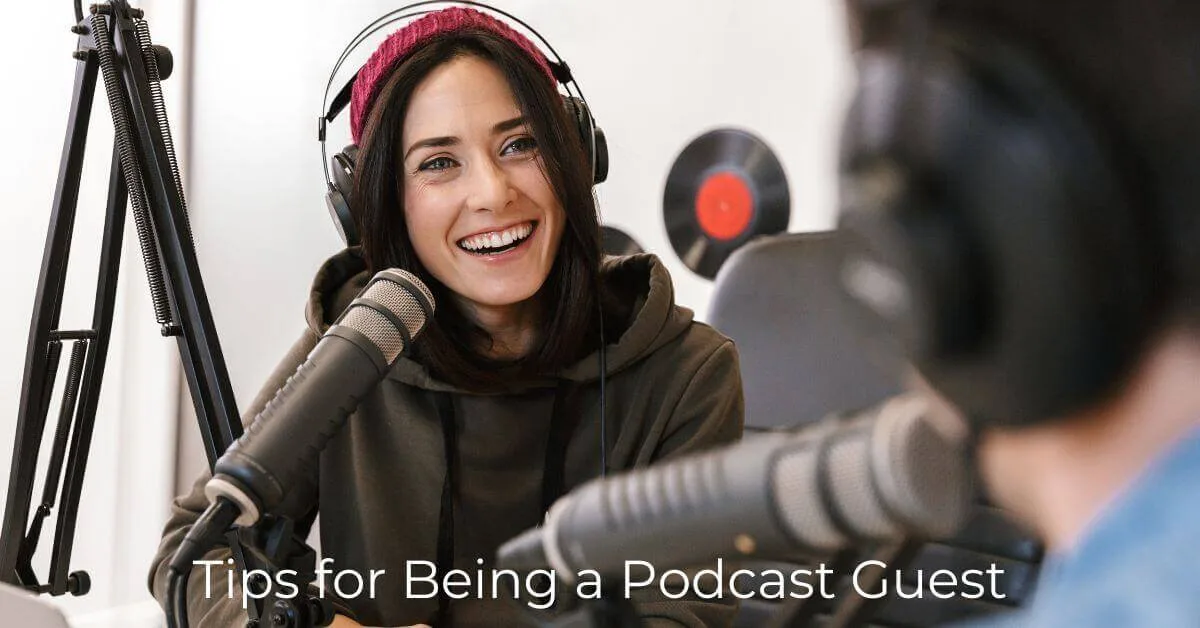
If a roundup is already scheduled, circle back six weeks later to see whether episode pages linking to roundup participants went live. Targeted refinements to your podcast guest link building streamline the entire review. Sometimes the network of links firms up long after the audio publishes.
Strategy 10: Use Cross-Promotion to Earn Contextual Mentions
Offer the host something back. If you run a newsletter, publish a short feature on your favorite recent episodes of their show, and link to the episode pages in your issue. The host will often reciprocate with a link from their next newsletter or site sidebar.
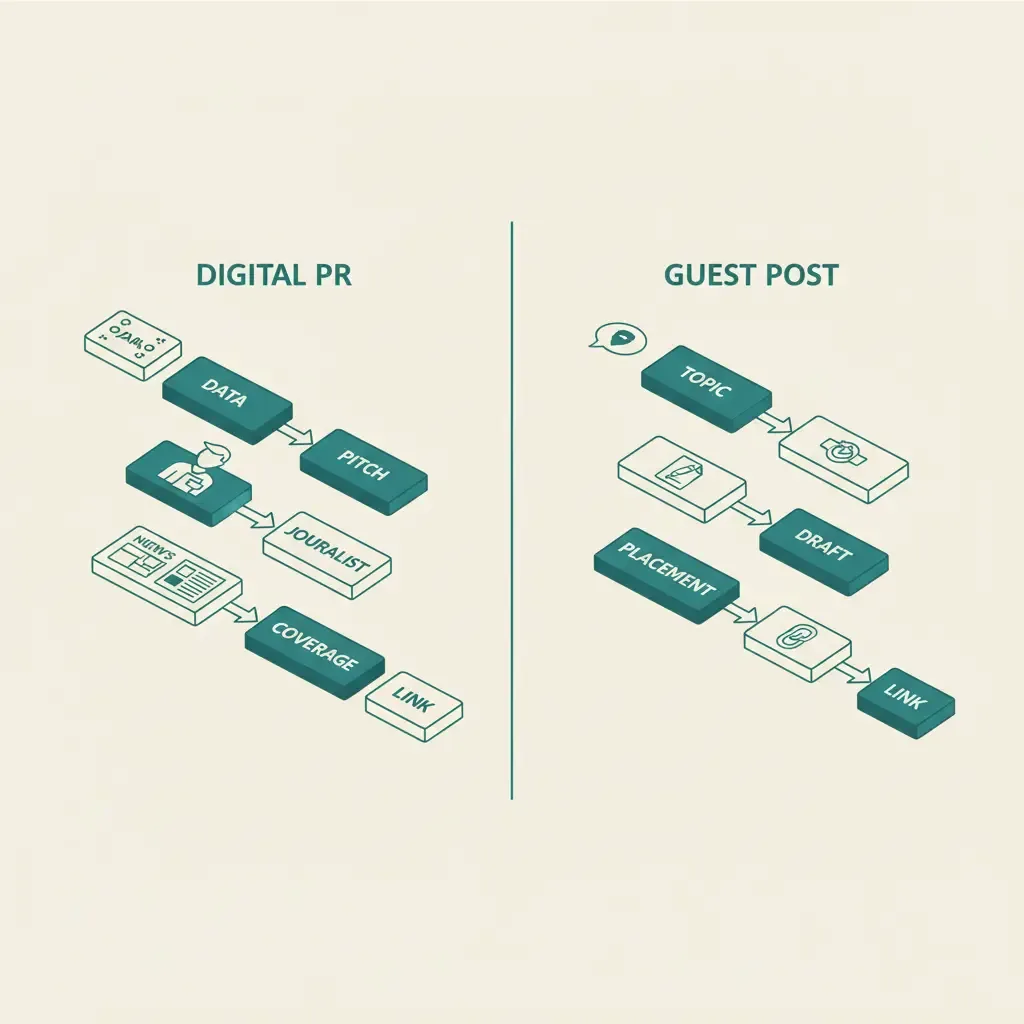
Reciprocal mentions need to be handled carefully to avoid looking transactional, but a genuine editorial mention in your newsletter is a real value exchange. Focusing on podcast guest link building provides clear direction here. Keep it organic: pick the shows whose episodes you actually enjoy and say something true about them.
Cross-promotion is a podcast guest link building best practice that rarely gets its own slot on strategy lists because it feels fuzzy. In practice, though, hosts remember the newsletter that featured them and reciprocate the following quarter, often without being asked.
Strategy 11: Build an Evergreen Speaker Page Library
Over time, your speaker appearances accumulate. Turn them into a permanent library on your own site: an indexed archive of every episode, host name, and topic you have covered. Hosts link to this page repeatedly because it is the single most useful thing to cite when introducing you.
A strong library has three benefits. Refining each detail of your podcast guest link building strengthens this section. First, it gives you a target link to request from every new host without needing to point at a homepage.
Second, it earns internal link equity as your own content grows. Third, it signals authority to search engines—you become a known entity to their crawlers, not a one-off brand name.
Once you have ten or more appearances indexed, you start to see a flywheel effect: hosts find your library organically, link to it as they cite you, and your speaker page ranks for queries you never explicitly targeted. That is the durable end state of a serious podcast guest link building operation—each appearance feeds the next pitch.
How Do You Measure Whether Podcast Guest Link Building is Working?
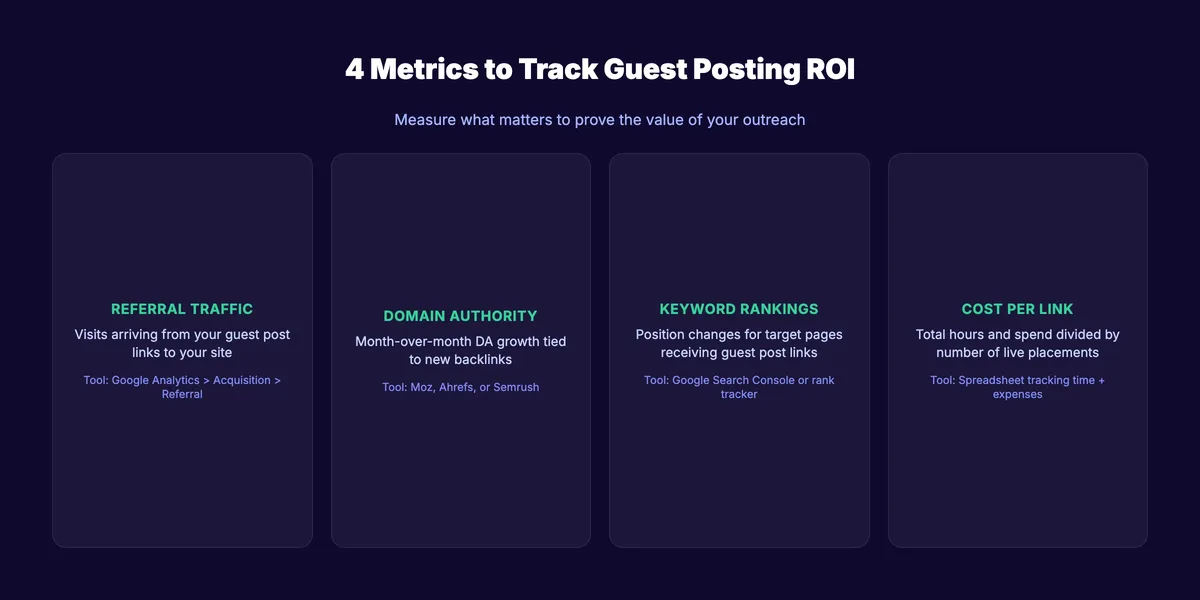
Look at three numbers, not one. Referring domains earned from podcast properties, referral sessions per quarter, and number of shows you convert into a second appearance. The third silent metric—second appearances—separates a shotgun program from a compounding one.
Reach is tempting to track and rarely actionable. Effective execution in your podcast guest link building makes a tangible difference. A single episode with 200 downloads but a permanent guest directory link beats a 20,000-download episode that lives on a throwaway podcast host and disappears at the next hosting migration.
Track links monthly, but judge your program on a rolling six-month basis. Podcast schedules are slow. Two episodes this month may produce ten links over the following year as hosts update directories, publish companion posts, and add roundups.
Which Types of Shows Offer the Best Link Quality?
Niche shows with permanent archives and an active guest directory tend to produce the most reliable links. Maintaining clarity across your podcast guest link building remains essential. Their episode pages usually sit on a manageable-size domain that gets crawled regularly, and their staff update guest directories as part of routine site maintenance.
General-interest shows with high download counts but sparse site operations are a mixed bag. Episodes may rank well socially but lack the structural linking that makes a backlink durable. Fast-growing shows sometimes delete old episodes entirely during infrastructure refreshes.
The most reliable sign of link quality: does the host have a dedicated guests or speakers page the podcast guest link building links to profiles, not just episode numbers? If yes, the show is likely to produce stable placements. If not, treat any link you earn as a bonus rather than a promise.
What Should a Podcast Guest Link Building Checklist Include?
A great starting checklist runs in three phases: pitch, publish, and follow-up. Pitch-phase items cover fit, gap, guest page existence, and link style. Publish-phase items cover show notes drafts, speaker page bios, companion copy offers, and quote banks. Follow-up items cover links appearing, thank-you notes, references, and updates to your own library.
The single most important checklist item is the easiest to forget: verify the link actually published. Structuring your podcast guest link building around proven patterns ensures impact. Hosts forget. Episode pages get rebuilt during site redesigns.
Check within 72 hours of publication and again at thirty days, because delays past the publication window are where the most links quietly disappear.
If you want a lightweight system, keep a Notion or spreadsheet tracker with these columns: show name, host, episode URL, guest page URL, link style, publish date, check date, notes. That alone is more operational maturity than most teams bring to this channel.
What’s the Best Way to Handle Hosts Who Won’t Link?
Some hosts just do not link, and no amount of charm will change the podcast guest link building. Handle it the way you’d handle a client that does not want to publish a case study: accept the reality, keep the relationship, and adjust your expectations for the next pitch.
What the podcast guest link building can do is send a single, short, clear nudge within the first week of publication. If the first nudge gets ignored, let it go. Follow-ups after that point damage the relationship without moving the needle, and the relationship is usually worth more than the missed link.
The upside of social broadcasting inside your own channels—newsletter, LinkedIn, site author bio—is the podcast guest link building a podcast mention becomes useful even without a link. Mention the episode on your own indexed pages and the algorithm still sees the association, even if the host never links back.
Why Most Podcast Guest Link Building Fails After the First Month
Programs collapse when everything runs through one person’s calendar. One enthusiastic marketer books six appearances, gets three linked, and then moves on to a different channel. Six months later there is no continuity, no tracker, no follow-up, and the asset decays.
The fix is to institutionalize the podcast guest link building before you scale. Define who owns the tracker, who writes show notes drafts, who sends follow-ups, who updates the speaker page library. Rotate ownership only when the process is documented enough that a new person can run it without dropping half the balls.
One more failure mode worth naming: chasing reach over fit. A link-hungry team will pitch a celebrity show with no topical overlap, win the appearance, and discover the episode page links to nobody.
The result is a great conversation and a wasted hour of editing time—a reminder that podcast guest link building only works when the show belongs in your topical cluster in the first place.
Frequently Asked Questions
Here is an in-depth breakdown of key considerations regarding Frequently Asked Questions:
Is Podcast Guest Link Building Still Effective for SEO?
Yes, provided the links come from show archives that stay live. A stable guest directory link on a relevant niche show frequently outperforms a flashy appearance on a large show with no linking system. Quality here means topical fit plus durability, not download count.
Do Podcast Links Need to be Dofollow?
Dofollow is better, but nofollow and sponsored placements still carry discovery and referral value. If every link you earn is nofollow, prioritize show-level guest directories over individual episode pages, since those are more likely to use clean links.
How Many Appearances Should I Aim for per Quarter?
Quality beats quantity. Two to four well-chosen appearances per quarter, each with a documented follow-up and a verified placement, usually outperform a shotgun approach of ten pitches that produce mixed results. Choose shows you would genuinely listen to.
Can I Earn Links from Podcasts That Don’t Have a Guest Directory?
Sometimes, through show notes or a companion article. When there is no guest directory, the odds of a durable link drop noticeably. Prioritize shows that link somewhere on the site, even if the placement is buried in show notes rather than a dedicated page.
What Anchor Text Should I Request?
Mix it up. A speaker bio backlink typically uses your name, which is safest. Add contextual variations for show notes and companion posts: your brand, a descriptive phrase, or a resource page title. Avoid pitching the same exact-match anchor to every host.
How Long Do Podcast Links Usually Last?
On shows with permanent archives, often for years. On shows that rebuild their site annually or migrate hosting platforms, links can disappear. Verify each link at thirty days and again six months later. Keep a list of shows that maintain stable archives.
What to Do With This Checklist Tomorrow Morning
Pick one strategy from the ten before the FAQ block and run it end-to-end this week. Do not try to implement the whole thing. A single show, one guest page pitch, one show notes draft, one verified link. That produces a template you can scale into a real podcast guest link building program.
The best integrations do not stop at links. Pair a podcast program with a long-form pillar page on the same topic cluster so the link has somewhere to land and somewhere to point.
Then build out a set of short reference pages that your speakers and hosts can cite—case studies, comparison pages, glossaries—so each appearance strengthens a specific node in your topical cluster instead of just contributing a lonely URL.
One last thought on prioritization. It is tempting to spread appearances across every show you can get on, but a tighter focus pays off. Choose three to five shows in a single topic cluster, appear on each of them twice, and build a genuine speaker identity around that cluster before expanding.
Podcast listeners reward repetition—often they hear the same name three times on three different shows before they recognize it—and hosts in close communities recommend familiar guests to each other.
That small, focused loop is where podcast guest link building stops being a tactic and becomes infrastructure you can hand to the next person on your team.
If you want the short list of what separates the teams that succeed from the teams that churn through pitches: they treat appearances like editorial products, they write the show notes, they build a real speaker page, they check the link, and they keep a tracker. Every other tactic in this piece is a variation on those five habits.
For verified reference and background research, consult the authoritative informational resource on this topic.