Pinterest Keyword Research: Proven Playbook (7 Steps)
Pinterest keyword research is the difference between pinning into a void and pinning into a stream of ready buyers. I learned that the hard way after three months of beautiful pins that nobody ever saw.
This is the exact playbook I rebuilt from scratch — seven steps, in order, no fluff. By the end you’ll know how to find the phrases real people type into that search bar, how to validate them, and how to slot them into pins that actually rank.
Pinterest isn’t a social network in the way Instagram is. It’s a visual search engine wearing a mood board costume. That single reframe changes everything about how you approach a Pinterest keyword research guide worth its salt.
Why Pinterest Keyword Research Beats Guesswork
Most creators treat Pinterest like a spot to dump their latest blog graphic. Focusing on pinterest keyword research provides clear direction here. They caption it with something witty, hit publish, and wonder why impressions crawl along at a funeral pace. The platform rewards the opposite instinct.
Search drives the overwhelming majority of long-tail traffic on Pinterest. Users arrive with intent — “small kitchen storage ideas,” “budget wedding table decor,” “beginner sourdough schedule” — and Pinterest’s algorithm matches those queries against pin titles, descriptions, board names, and the text baked into the image itself.
Guess what happens when your pin says “New post!!” and the searcher wants “small kitchen storage ideas”? You lose. Every time. That’s the whole ballgame.

Step 1: Start With the Pinterest Search Bar (The Free Goldmine)
The single most underused tool in all of Pinterest keyword research sits right at the top of the app, completely free, no subscription required. Type a seed phrase into the search bar and watch the dropdown appear.
That dropdown is Pinterest telling you, in plain language, what people actually type next. It’s a live feed of search suggestions pulled from real query volume. I treat it like a free keyword tool that happens to be baked into the platform.

How to Mine the Search Bar Properly
Don’t just glance at the suggestions and move on. Type a broad seed like “meal prep” and note every suggestion. Then take the strongest suggestion, type it in, and repeat.
“Meal prep” leads to “meal prep for the week,” which leads to “meal prep for the week on a budget,” which leads to “meal prep for the week on a budget for one person.”

That last phrase is a long-tail keyword with laser intent. It’s a person who knows exactly what they want and will click the pin that promises it.
Keep a running list. I use a plain spreadsheet with columns for seed, suggestion, intent tier, and notes. Twenty minutes of drilling here produces more usable terms than an hour of blank-staring at any paid tool.

Step 2: Ride the Guided Search Tiles
Once you run a search, Pinterest shows a row of colored tiles below the search bar — each one a modifier. This is guided search, and it’s the second goldmine in this Pinterest keyword research process.
Search “home office” and the pinterest keyword research’ll see tiles like “small,” “minimalist,” “cozy,” “budget,” “aesthetic,” “apartment.” Each tile narrows the query. Each combination is a distinct keyword that real users select with a thumb tap.

Why does this matter so much? Because guided search tiles are Pinterest’s own taxonomy. It’s showing you the branches people actually walk down. A creator who writes content around those branches will always beat someone guessing in the dark.
Combining Tiles Into Long-Tail Phrases
Take a base query and stack two tiles. Refining each detail of your pinterest keyword research strengthens this section. “Home office” plus “small” plus “apartment” gives you “small apartment home office ideas.” That’s a real phrase with real search volume, and it’s specific enough to write a dedicated pin about.
I aim for phrases with three to five words. Two-word phrases are often saturated by established accounts. Six-word phrases can be too thin. Three to five is where the sweet spot lives — enough specificity to rank, enough volume to matter.
Step 3: Use the Ads Manager as a Free Keyword Tool
Yes, you read that right. The Pinterest Ads Manager doubles as a free keyword research surface, even if you never spend a dollar on ads.

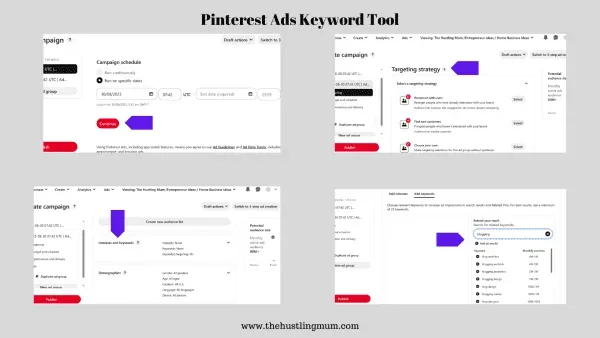
Open Ads Manager, start a campaign (you can abandon it before launch), and navigate to the keyword targeting section. Pinterest will suggest keywords relevant to your topic, complete with a rough sense of search volume. The suggestions surface phrases you’d never think of manually.
I always cross-reference these suggestions with my search bar list. Anything that appears in both gets bumped to the top of my priority queue.

Step 4: Reverse-Engineer Competitor Boards
Competitor board analysis is the section of Pinterest keyword research most creators skip, and honestly, it’s a mistake. Your competitors have already done part of the work for you.
Find three to five accounts ranking in your niche. Effective execution in your pinterest keyword research makes a tangible difference. Look at their boards capped, board names, and pin titles. Which keywords recur? Which board names read like keywords and which read like cutesy vanity labels?

What to Look for in Competitor Boards
I focus on three signals: board title phrasing, pin description structure, and topic density. Boards named “Small Spaces / Apartment Living” tell me the owner thinks in keyword terms. Boards named “My Fave Finds” tell me they don’t.
Then I check pin descriptions. Strong accounts weave the primary keyword naturally into the first sentence of the description, then add supporting terms. Weak accounts write descriptions like a farewell text to an ex-boyfriend — emotional, sincere, and utterly useless for search.

Screen-shop this data into a comparison table. It’ll quickly reveal the vocabulary your niche actually speaks.
| Signal | Strong Competitor | Weak Competitor |
|---|---|---|
| Board name style | “Small Kitchen Storage Ideas” | “Kitchen Things I Love” |
| Pin description opening | “Small kitchen storage ideas for renters…” | “Check out my new blog post!” |
| Topic density per board | 6-10 tightly themed boards | 1 board for everything |
| Keyword placement | Title + first sentence + alt text | Nowhere to be found |
Step 5: Validate With Pinterest Trends
Pinterest Trends sits at trends.pinterest.com. It’s a free dashboard showing the relative search volume of topics over time. This is where you separate vanity keywords from workable ones.

A term the pinterest keyword research trends in December (gift ideas, holiday decor) will crash in July. A term that’s flat all year (budget meal prep) is a safer evergreen play. I check Pinterest Trends before committing to any major content push.
Reading the Trend Curve
What matters isn’t the absolute peak, but the shape of the curve. Steadily climbing curves reward early investment. Seasonal spikes reward precise timing. And flat lines reward consistency over months, not weeks.

I use a simple rule: if a keyword holds at least 40% of its peak volume across most of the year, it goes in my evergreen queue. If it’s spiky, it goes in a seasonal calendar with a two-month lead time.
Step 6: Layer Alt Text, Board Names, and Pin Descriptions
Here’s where most Pinterest keyword research tips stop short. You’ve found the keywords. Now you’ve got to place them deliberately across three surfaces that Pinterest indexes.

The first is the pin title — max it out at 100 characters, with the primary keyword near the front. The second is the pin description — up to 500 characters, leading with the keyword, then natural supporting phrases. The third is alt text, which indexes the image itself.
The Placement Ladder That Works
- Pin title: lead with the exact target keyword, add one supporting phrase. Example: “Small Apartment Home Office Ideas for Renters.”
- Pin description: first sentence restates the keyword naturally, second sentence adds context, third sentence adds a second supporting keyword.
- Alt text: describe the image while embedding the keyword. “Desk in the corner of a small apartment bedroom with a compact home office setup.”
- Board name: keep it keyword-shaped, not cute. “Home Office Ideas” beats “My Desk Vibe.”
- Board description: two to three sentences packed with related terms.
I’ve seen pins climb from flat zero to thousands of impressions in a week purely from fixing titles and descriptions. It’s not magic. It’s alignment.
Step 7: Test, Track, and Prune — the Playbook’s Feedback Loop
Keywords evolve. What ranked last quarter might be stale now. That’s why the seventh step of this Pinterest keyword research checklist is a feedback loop, not a final option.
Every month, sort your pins by impressions and saves. A thoughtful approach to pinterest keyword research reinforces your qualifications. Anything ballooning gets its keyword expanded into more pin variants. Anything flat gets archived or reworked with a new keyword.

What Metrics Actually Matter
Impressions tell the pinterest keyword research the pin is being served. Saves tell you the pin is being valued. Outbound clicks tell you the pin is doing its actual job. All three matter, but the priority order is clicks > saves > impressions.
A pin with 50 impressions and 5 clicks is worth more than a pin with 5,000 impressions and 2 clicks. Engagement ratio is the real scoreboard, not raw exposure.
This is where I keep a running spreadsheet. Every week I add a row for the top ten and bottom ten performing pins. The bottom ten tell me which keywords to retire. The top ten tell me which to expand.
Building a Pinterest Keyword Research Checklist You’ll Actually Use
Here’s the honest truth: most Pinterest keyword research checklists die in the tab graveyard. They’re too long, too fussy, and too abstract. So I built a short one.

Seven steps, ten minutes each, one cycle per month. That’s been my working rhythm for over two years, and it’s kept my keyword game sharp without consuming my whole week.
The One-Page Version
Each cycle, I work through seven actions: drink coffee, run three seed searches, drill one suggestion to long-tail depth, snapshot three competitor boards, sanity-check two terms in Pinterest Trends, place one target keyword across title, description, and alt text on a new pin, and finally log performance for the last cycle’s pins.

That’s it. Ten minutes per action, seventy minutes total. Over a year, that’s a few full working days of concentrated keyword focus — an enormous amount of leverage for a platform that rewards consistency.
Common Mistakes That Wreck Pinterest Keyword Research
Now for the anti-patterns. These are the mistakes I see over and over, and they quietly crush performance even from otherwise sharp creators.

Mistake one: keyword stuffing. Pinterest’s algorithm doesn’t reward a description that reads like “home office home office home office small home office.” It rewards natural language that contains the keyword. Real readers click natural prose.
Mistake two: ignoring seasonal timing. Pin today for next quarter’s seasonal search volume, not this month’s. Pinterest indexes pins over weeks, so what you post this month shows up when the season actually hits.

Mistake three: treating board names as decorations. Structuring your pinterest keyword research around proven patterns ensures impact. “Inspo Corner” tells Pinterest nothing. “Small Space Decor Inspo” tells Pinterest everything.
Mistake Four: Ignoring the Parent Topic
One of the biggest Pinterest keyword research best practices is keeping the whole cluster in mind. A pin about “small kitchen storage” belongs in a cluster about “small kitchen living,” which belongs in a parent topic about “small apartment life.”
If your pins bounce between unrelated topics, Pinterest’s system can’t classify you. And if it can’t classify you, it can’t rank you in any specific search.
Tools That Support Pinterest Keyword Research
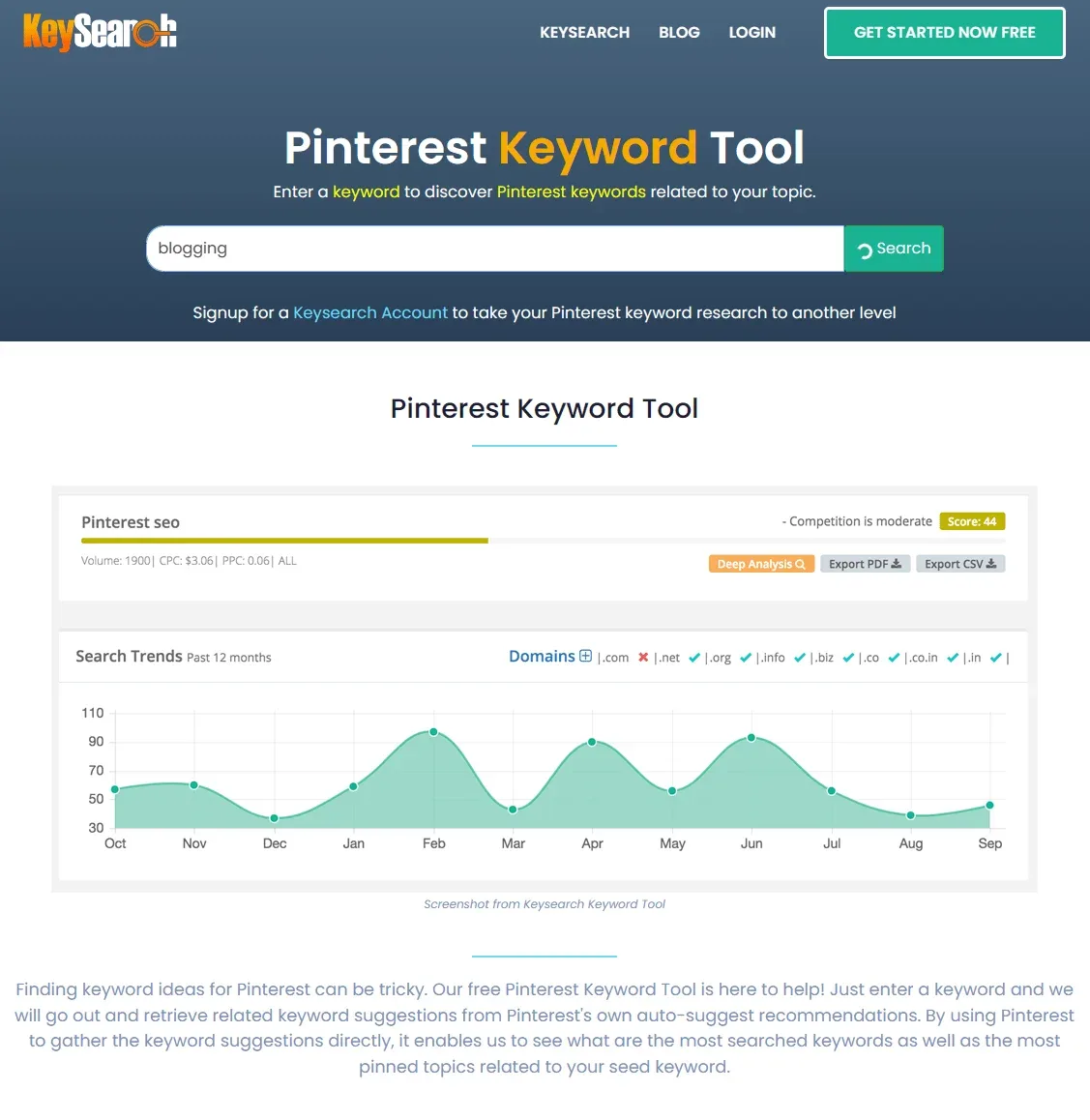
Plenty of paid tools claim to solve Pinterest keyword research in one click. Most of them are fine, but the free tools baked into Pinterest itself remain the strongest starting point. Paid tools help scale, not replace.
Pinterest Trends and Ads Manager do most of the heavy lifting. Pinterest’s own metrics dashboard handles tracking. A basic spreadsheet handles logging. For creators who want bulk processing, tools like Tailwind or Pin Inspector can speed up competitor snapshots and batch scheduling.
What I Actually Pay For
Nothing at the entry level. I run this playbook on the free surfaces alone. Once a creator is publishing ten or more pins weekly, a scheduler becomes worth it because batch scheduling frees up creative time. But the keyword work itself stays manual.

Manual keyword work is where the differentiation lives. The tool gives you the same suggestions every competitor gets. The human instinct for which phrase to prioritize is what separates accounts.
Is Pinterest Keyword Research Worth the Time?
Absolutely, for the right creator. Applying these principles to your pinterest keyword research yields measurable results. If your business model depends on search intent — blog traffic, product discovery, service inquiries, digital products, recipes, home decor, fashion — Pinterest is a long-term compounding asset.

If your business model depends on real-time engagement and community — think live events, quick-viral moments, influencer culture — Pinterest will feel slow and airless. It’s not the wrong platform. It’s the wrong platform for that model.
How Long Until Results?
Pins typically take four to eight weeks to gain meaningful search traction. Consistency matters more than speed. The creators who win are the ones who keep shipping weekly for six months, not the ones who burn out in three.
Frequently Asked Questions About Pinterest Keyword Research
Here is an in-depth breakdown of key considerations regarding Frequently Asked Questions About Pinterest Keyword Research:
What is Pinterest Keyword Research?
Pinterest keyword research is the process of finding the exact phrases people type into Pinterest’s search bar, validating their demand, and placing them across pin titles, descriptions, alt text, and board names so the algorithm can classify and rank your content.
How Many Keywords Should Each Pin Target?
One primary keyword per pin, plus zero to two supporting phrases. Stacking more than that dilutes the pin’s focus and confuses the indexer. Keep it clean.
Do Hashtags Still Work on Pinterest?
Sparingly. Pinterest phased out heavy hashtag reliance. A couple of topical hashtags won’t hurt, but they should never replace keyword placement. Keywords go in the title and description, not the hashtag block.
Can I Do Pinterest Keyword Research Without Paid Tools?
Yes. Proper attention to your pinterest keyword research sets a strong baseline. The search bar, guided search tiles, Ads Manager suggestions, Pinterest Trends, and a spreadsheet cover every step of this playbook. Paid tools add convenience, not capability.
How Often Should I Refresh Keywords on Old Pins?
Quarterly is a good rhythm for pins with flat metrics. Archive and rework pins that show no traction after 90 days. Rewrite keyword-heavy pins as the phrases evolve.
Does Alt Text Really Matter?
It does, though less than titles and descriptions. Pinterest indexes alt text as part of the pin’s topical signal. Take ten seconds to write a descriptive alt that includes the keyword, and you’ve widened your reach slightly.
What About Keywords from Pinterest Ads?
Ads Manager keywords are free to browse and highly relevant. Treat them as a supplementary list. Cross-check them against your search bar list for the strongest signal.
Wrapping Up the Playbook
Pinterest keyword research isn’t a one-time task. It’s a monthly rhythm — search bar drill, guided tiles, ads manager cross-check, competitor reversal, trends validation, placement, and tracking. Seven steps, cyclic, always improving.
The creators who treat this as a permanent practice build evergreen traffic that compounds. The ones who treat it as a hack-and-run never see the flywheel spin up. Pick the first path. Do the ten-minute weekly version for three months and let the data convince you.
For a deeper dive into the broader topic, treat the pinterest keyword research as your parent resource: every playbook, checklist, and rhythm you build in Pinterest marketing hangs off the same foundation. Get the keyword layer right, and everything downstream — design, scheduling, monetization — has solid ground to stand on.
For verified reference and background research, consult the authoritative informational resource on this topic.