PageRank Sculpting: Simple Guide + 7 Best Practices
PageRank sculpting is the craft of deciding which internal pages receive the strongest link equity—and which ones are quietly draining it away from the pages that actually earn you money. If that sentence made you wince a little, good. Most site owners discover internal linking problems only when rankings stall for months with no obvious cause.
Here’s the honest version: it’s a technical discipline wrapped in an old myth, a myth that refuses to die because it sounds so satisfying. You picture yourself as a sculptor, chipping away at weak links until authority flows precisely where you want it. The reality is messier, slower, and far more useful than that image suggests.
This pagerank sculpting guide walks through the concept from the ground up, then hands you seven practices you can apply to a live site without breaking anything. No jargon walls. No recycled platitudes. Just the mechanics, the pitfalls, and the exact steps that move rankings.
What PageRank Sculpting Actually Means
Google’s original PageRank paper treated links as votes. Focusing on pagerank sculpting provides clear direction here. A page with many strong votes passes more authority outward than a page with few weak ones. Internal links, therefore, act as a redistribution system.
You are not just connecting pages for navigation—you are deciding how much of your site’s accumulated trust each URL gets to borrow.
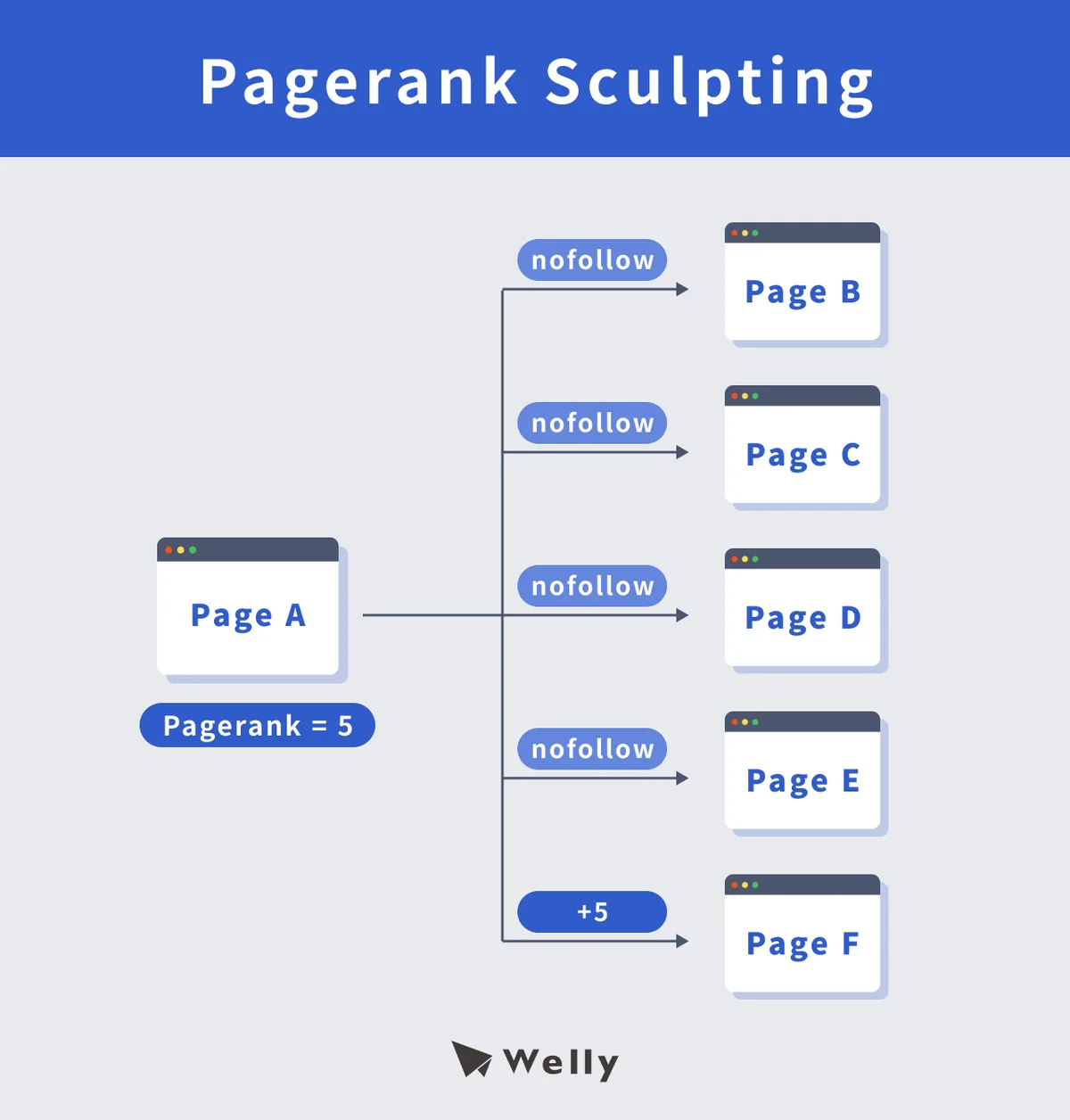
PageRank sculpting is the deliberate arrangement of those internal links so important pages collect more authority and low-value pages stop competing for it. Think of it as plumbing. Water enters at the homepage and flows through pipes you installed.
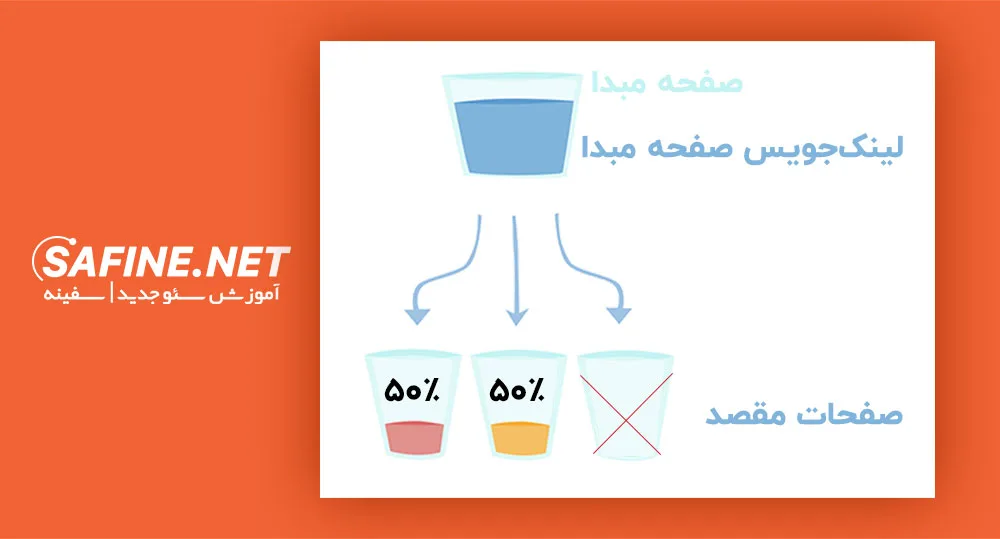
If every pipe has the same diameter, everything gets a trickle. Narrow some pipes, widen others, and the pressure finally reaches the rooms that need it.
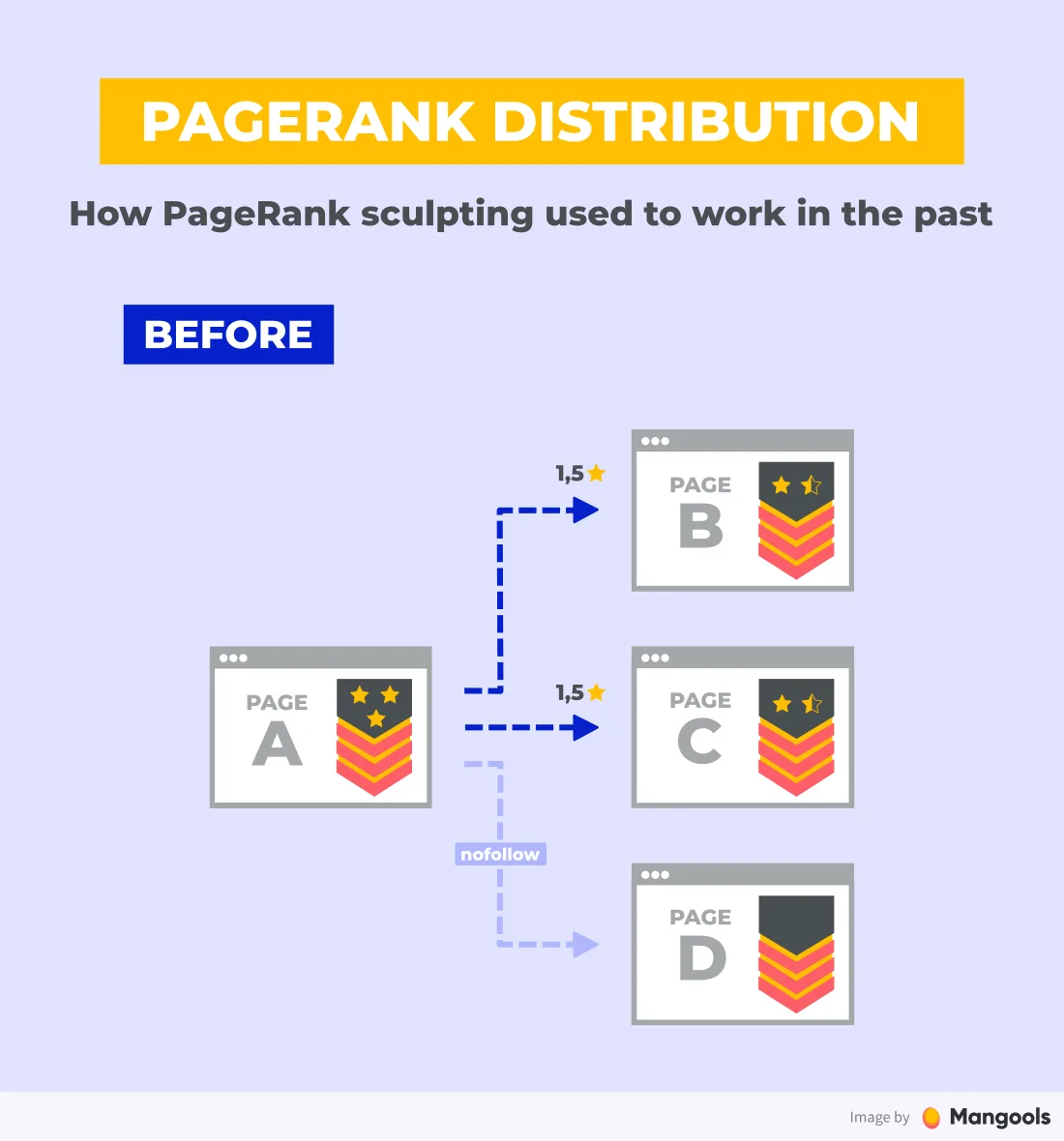
The concept predates modern search engines by decades in spirit, and Wikipedia’s PageRank algorithm entry remains a solid primer on the underlying math if you want the academic version. What matters practically is this: every internal link is a decision, whether you made it consciously or not.
Why the Old “NoFollow” Trick Failed
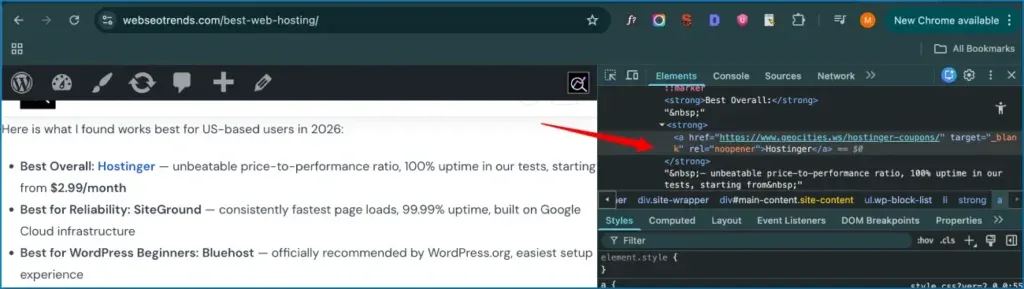
For years, the popular pagerank sculpting tips involved slapping rel=”nofollow” on internal links to pages you didn’t want to rank—login screens, privacy policies, tag archives. The logic seemed airtight: block the flow, conserve the juice.

Then Google changed the rules. In a widely discussed clarification, Matt Cutts explained that nofollowed internal links still consume the link equity they were supposed to preserve. The authority simply evaporates instead of being redirected. Sculpting with nofollow stopped working overnight, and a generation of outdated advice was born.
That single change reshaped the entire discipline. Modern pagerank sculpting best practices rely on link structure and information architecture, not on blocking mechanisms. Anyone still recommending internal nofollow is working from a decade-old playbook.
How Link Equity Flows Through Your Site
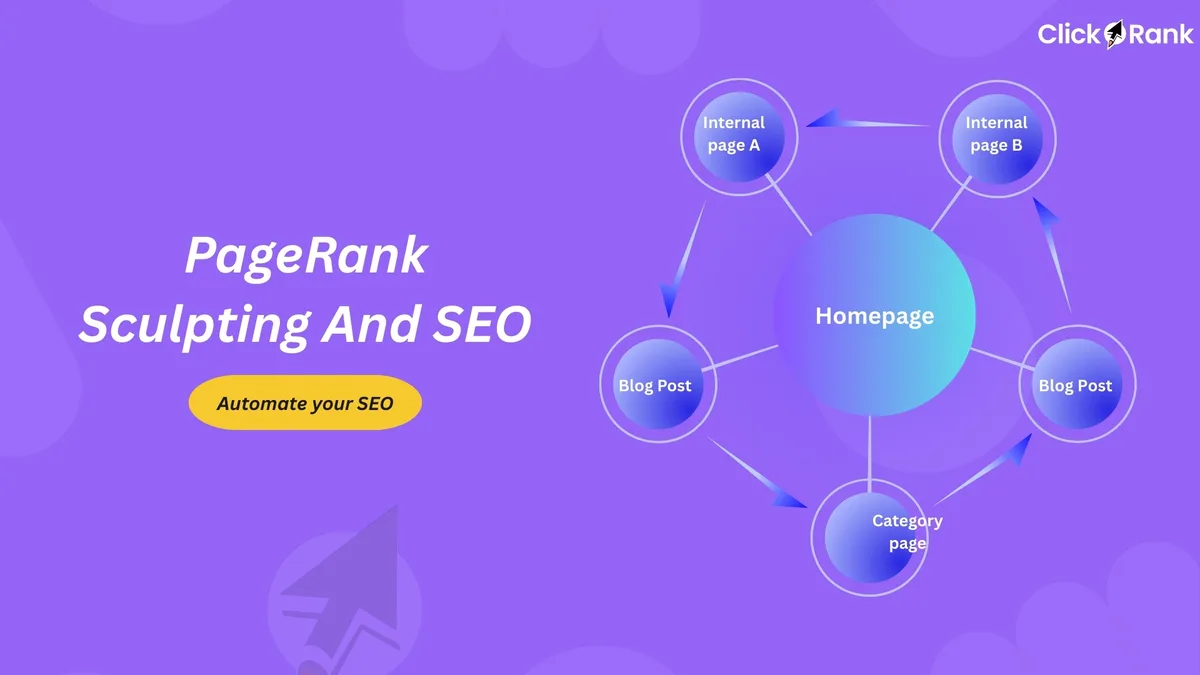
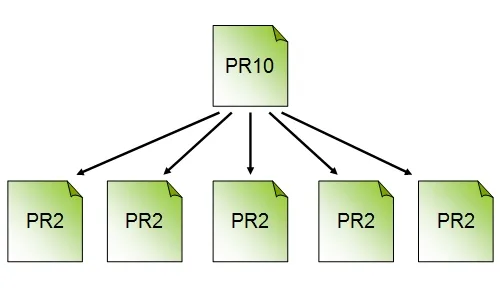
Authority enters through external backlinks and gets distributed internally along the paths you build. A homepage links to ten pages, so each receives roughly a tenth of what the homepage can pass. If one of those pages then links to twenty others, the dilution compounds fast.
Depth matters enormously here. Pages buried four clicks deep receive a fraction of what a top-level page gets, which is why your product or service pages should never live in the basement. Crawl budget is the second constraint—search bots only allocate so much attention per visit, and deep orphan pages waste it.
Click depth isn’t just a technical metric either. Refining each detail of your pagerank sculpting strengthens this section. Real users behave the same way. They click what’s visible, exit when navigation feels like a maze, and rarely follow a breadcrumb trail four levels down.
You can audit this with a crawl tool, mapping how many internal links point to each URL. The resulting numbers usually reveal one uncomfortable truth: your most important pages are among the least linked.

The Difference Between Navigation Links and Contextual Links
Not all internal links behave the same. Navigation links—menus, footers, sidebars—appear on hundreds or thousands of pages. Contextual links appear inside body copy and carry far more topical relevance because anchor text sits within a semantically coherent sentence.
Effective pagerank sculpting leans on contextual links for precision and structural links for reach. A footer link to your pricing page signals “this exists.” An in-article link with the anchor “transparent pricing structure” signals “this is what this paragraph is about.” The second carries weight the first never will.
Why Internal Linking Still Matters for Rankings
Search engines infer topic relationships from link patterns. If your guide on email deliverability never links to your article on bounce rates, you’ve told Google those pages are unrelated. The reverse—a web of well-anchored internal links around a theme—builds what SEOs call topical authority.
There’s a user-experience layer too. Visitors who flow from one relevant page to another stay longer, view more, and signal satisfaction. That behavior rarely happens by accident. It happens because someone thought about where the next click should lead.
A practical pagerank sculpting checklist starts with a single question per page: what should the reader do next? If the answer isn’t represented by a link, the page is a dead end.
Is PageRank Sculpting Still Relevant? a Straight Answer
Yes, but not in the form most articles describe. The version that involved manipulating nofollow tags is dead. The version that involves thoughtful information architecture is more valuable than ever, because site complexity has exploded.
Modern e-commerce stores routinely carry tens of thousands of URLs. Effective execution in your pagerank sculpting makes a tangible difference. Filtered category pages, paginated archives, and product variants all compete for crawl attention. Without deliberate structuring, that competition suffocates the pages that drive revenue.
So treat pagerank sculpting as an architecture problem, not a trick. You are designing a network, not casting a spell.

PageRank Sculpting Checklist: Audit Before You Build
Before touching a single link, get a baseline. The most common mistake in pagerank sculpting is acting on instinct—”this page feels important”—rather than data. An audit takes an afternoon and saves months of guesswork.
- Crawl the site and export internal link counts. Use Screaming Frog, Sitebulb, or a free alternative like the Ahrefs site audit. Sort every URL by the number of internal links pointing to it. The pages at the top and bottom of that list will surprise you.
- Map click depth from the homepage. Flag every page that requires four or more clicks to reach. These pages receive minimal authority and deserve either promotion or consolidation.
- Identify orphan pages. URLs with zero internal links still exist in your sitemap and consume crawl budget. Either link to them properly or remove them.
- List your money pages. Revenue-generating, conversion-focused, or flagship content pages. These are the destinations your internal linking should favor.
- Check anchor text variety. Export all incoming internal anchors per key page. Repetition of one exact anchor across hundreds of links looks mechanical; natural variation reads as organic.
- Count links per page in the body copy. Pages with twenty or more contextual links dilute everything. Trim toward the five-to-ten range for focused pages.
- Review navigation and footer link inventories. Every footer link appears sitewide. If you have forty, you’ve made forty links compete on every page.
Complete this audit and you’ll have a map of where authority currently flows. From there, the seven practices below become surgical rather than speculative.
PageRank Sculpting Best Practices: the Seven That Actually Work
These seven practices form a pagerank sculpting framework you can apply incrementally. None requires developer resources. All of them compound over time, which is why consistency beats intensity.
1. Link from High-Authority Pages to Priority Pages
Start where the authority concentrates. Your homepage, your most-linked blog posts, and any page with substantial external backlinks are the donors. Priority pages are the recipients.

Here’s the practical approach: take your top five most-linked pages and add two or three contextual links each to your money pages. A single link from a page with fifty referring domains is worth more than thirty links from thin pages nobody visits.
I once watched a client’s flagship service page climb from position fourteen to position five after receiving contextual links from three high-authority blog posts. No new content, no backlinks, no technical changes. Just redistribution of authority that was already sitting unused.
2. Reduce Outbound Internal Links on Focused Pages
Every link on a page divides the available authority. A blog post with thirty contextual links passes roughly one-thirtieth of its equity to each destination. A post with five passes one-fifth.
The pagerank sculpting doesn’t mean stripping your pages bare. It means auditing carefully. Ask of each link: does this serve the reader in this specific context? If a link exists because the page was written three years ago and you were enthusiastic about internal linking, cut it.
Concentrated authority produces measurable movement. The pagerank sculpting tips that circulate in private SEO communities almost always start with link reduction, because it’s the fastest lever to pull.

3. Structure Content in Topic Clusters
A pillar page links to every article in its cluster, and each cluster article links back to the pillar. That bidirectional pattern concentrates topical relevance around a single subject and makes the relationship explicit to search engines.
Build the pillar first. Then, as each supporting article publishes, add a contextual link from the pillar and one cross-link between sibling articles. Within a year you have a coherent network instead of scattered pages.
The cluster structure also improves crawl efficiency. Bots find new content faster when it’s linked from an established hub, and they follow the cluster pattern into depths they’d otherwise ignore.
WriterZen and similar tools can help visualize these clusters, though a spreadsheet works fine if you’re stubborn about costs. The tooling matters less than the discipline of maintaining the pattern as you publish.
4. Use Descriptive Anchor Text, Varied Naturally
Anchor text tells the algorithm what the destination page is about. “Click here” says nothing. “Bounce rate analysis” says plenty.
Variation matters as much as description. A thoughtful approach to pagerank sculpting reinforces your qualifications. If forty internal links all use the exact phrase “email marketing software,” it reads like manipulation. Natural human linking produces variants: “email marketing platforms,” “our email tooling,” “the software we recommend for sequences.” All describe the destination. None look engineered.

There’s a secondary benefit most pagerank sculpting discussions overlook. Descriptive anchors help users decide whether to click. A reader scanning your article sees “technical SEO audit” and knows exactly what waits on the other side. That clarity improves click-through and reduces bounce.
5. Eliminate Orphan and Low-Value Pages from the Link Graph
Orphan pages receive no internal links and therefore no authority. They clutter your index and confuse crawl budgeting. Common culprits: old campaign landing pages, legacy blog posts, duplicate product variants, and forgotten thank-you pages.

Run through your orphan list and apply three verdicts. Keep it—and link to it properly from a relevant page. Merge it—combine its content into a stronger page and redirect. Delete it—if it serves no purpose, remove it from index entirely.
This pagerank sculpting checklist step produces the fastest wins. Removing dead weight from the link graph immediately increases the share each remaining page receives.
6. Compress Navigational Depth for Key Pages
Your most commercially important pages should sit within two clicks of the homepage. Three at the absolute maximum. Every additional layer reduces the authority reaching them.
E-commerce category structures are the usual offenders. A product page five levels deep receives almost nothing from a homepage with thousands of competing links. Flatten the hierarchy—either by promoting key categories to top-level navigation or by adding contextual links directly from high-authority editorial content.

The depth reduction also improves conversion. Shoppers who can reach a product in two clicks buy more than shoppers who navigate four levels. Search engines and humans, it turns out, prefer the same thing.
7. Audit Internal Links on a Fixed Schedule
Internal link structure decays. Structuring your pagerank sculpting around proven patterns ensures impact. Pages get deleted without redirects. New content publishes without inbound links. Anchor text drifts as writers change. What was optimal six months ago is a scattered mess today.

Put a quarterly audit on the calendar. Re-crawl, compare to your previous baseline, and fix the drift. Pages that lost inbound links need attention. New high-value content needs promotion. Broken internal links need repair.
Consistency in pagerank sculpting best practices beats occasional heroics. A site audited four times a year will outperform one that received an intense intervention two years ago and nothing since.
Common PageRank Sculpting Mistakes to Avoid
Knowing what not to do saves more time than learning another technique. These mistakes appear repeatedly across sites of every size.
- Applying nofollow to internal links. The authority dissipates instead of being conserved. This technique stopped working long ago and the advice persists only through repetition.
- Linking every page to every other page. Sometimes called the “link everything” strategy. It flattens authority distribution to nothing meaningful and creates no topical signal.
- Using identical anchor text sitewide. Repetitive anchors look automated. Vary the phrasing while preserving description.
- Ignoring the homepage link inventory. A homepage with eighty links dilutes its considerable authority across all eighty. Reduce aggressively.
- Treating sitewide footer links as real internal links. They signal existence but carry negligible topical weight and can look manipulative at scale.
- Sculpting before indexing is clean. If half your pages are noindexed or canonicalized elsewhere, the link graph you’re optimizing no longer reflects reality.
- Chasing rankings without conversion paths. Ranking a page that doesn’t convert wastes authority. Send the equity where it produces revenue.
How to Measure Whether Your Efforts Worked
Track three signals, not fifty. First: average position for priority pages, measured before and after changes. Second: organic sessions to those same pages. Third: conversion rate from organic traffic.
Skip vanity metrics. Total indexed pages and average sitewide position tell you almost nothing about pagerank sculpting quality. Focus on the specific pages you targeted.
Patience is mandatory. Link structure changes ripple through crawl cycles over weeks, sometimes months. Expect the first movement between four and eight weeks after implementation.
Keep a simple log—what changed, when, what moved. After a few cycles you’ll have your own data on which interventions work for your site, which beats any generic pagerank sculpting guide ever written.
Tools for Auditing and Managing Link Structure
The pagerank sculpting don’t need expensive software to start. Screaming Frog’s free tier crawls five hundred URLs, sufficient for most small and mid-size sites. Ahrefs and Semrush offer site audit modules with visual link graphs.
For deeper work, Sitebulb produces excellent internal link diagrams that make structural problems obvious at a glance. On the free end, the SEO Minion browser extension reveals link relationships page by page.
Whichever tool you choose, the output matters only if it drives decisions. A beautifully rendered link graph you never act on is decoration.
When to Bring in Specialist Help
For sites under a thousand URLs, the seven practices above are manageable in-house. Beyond that, the complexity grows quickly—especially with filtered e-commerce structures or content archives spanning a decade.
The clearest signal it’s time for help: you’ve completed two audit cycles, implemented the practices, and still see no movement on priority pages. At that point the issue may be sitewide indexing problems or a backlink profile that needs attention.
A competent consultant will start with the same pagerank sculpting checklist outlined earlier. If they skip the audit and jump straight to recommendations, walk away.
Final Word on Sculpting Link Equity
Strip away the mythology and pagerank sculpting reduces to a simple discipline: decide consciously where your authority goes. Every link is a vote for what matters. Every page without inbound links is authority left on the table.
The seven practices won’t produce overnight wins, and the pagerank sculpting shouldn’t. Durable rankings come from structures that hold up through algorithm updates, and internal link architecture is one of the more stable foundations you can build.
Start with the audit. Pick three practices. Apply them consistently for a quarter. Then measure, adjust, and extend. That sequence—not any single trick—is the pagerank sculpting strategy that survives contact with real search results.
Frequently Asked Questions
Here is an in-depth breakdown of key considerations regarding Frequently Asked Questions:
Does PageRank Sculpting Still Work?
Yes, as long as it means intentional internal link architecture. The technique of blocking equity with internal nofollow links no longer works and hasn’t for years. Redistributing authority through link structure and content hierarchy remains effective.
Is Nofollow Still Useful for Internal Links?
No. Google’s clarification confirmed that nofollowed internal links still consume available link equity, so the authority doesn’t get rerouted elsewhere. Use nofollow on paid external links and user-generated content instead, not on your own pages.
How Many Internal Links Should a Page Have?
There’s no hard limit, but focused content pages work best with five to ten contextual links in the body copy. Navigation adds more, which is exactly why your footer and menu link counts deserve regular trimming.
How Long Before I See Results?
Expect four to eight weeks for the first measurable movement, sometimes longer on large sites with slow crawl rates. Monitoring priority page positions is more useful than watching sitewide averages.
What’s the Difference Between PageRank Sculpting and Internal Linking?
Internal linking is the act of connecting pages. PageRank sculpting is the strategic intent behind those connections—choosing which pages receive more authority and which receive less. All sculpting requires internal links, but not all internal links are sculpting.
Can Link Sculpting Hurt My Rankings?
Poorly executed changes can. Removing links from valuable pages, over-concentrating anchors, or stripping contextual links that served users can damage both rankings and usability. Always audit before acting and keep a record of changes.