On site SEO is where most websites win or lose their rankings, and it rarely comes down to one clever trick. It comes down to dozens of small, unglamorous fixes applied consistently across every page you publish.
If you have ever watched a competitor with weaker content outrank you, chances are their on site SEO simply covered more ground than yours.
I have spent years auditing sites that looked polished on the surface but leaked ranking potential from a dozen tiny cracks. Broken internal links. Thin meta descriptions. Images without alt text. Headings that told Google nothing about the page.
None of these issues are dramatic on their own. Stacked together across hundreds of pages, they quietly cap your ceiling.
This guide walks through a complete, practical checklist you can run against any page on your site. No fluff, no outdated tactics, just the work that actually moves rankings.
What on Site SEO Really Means in Practice
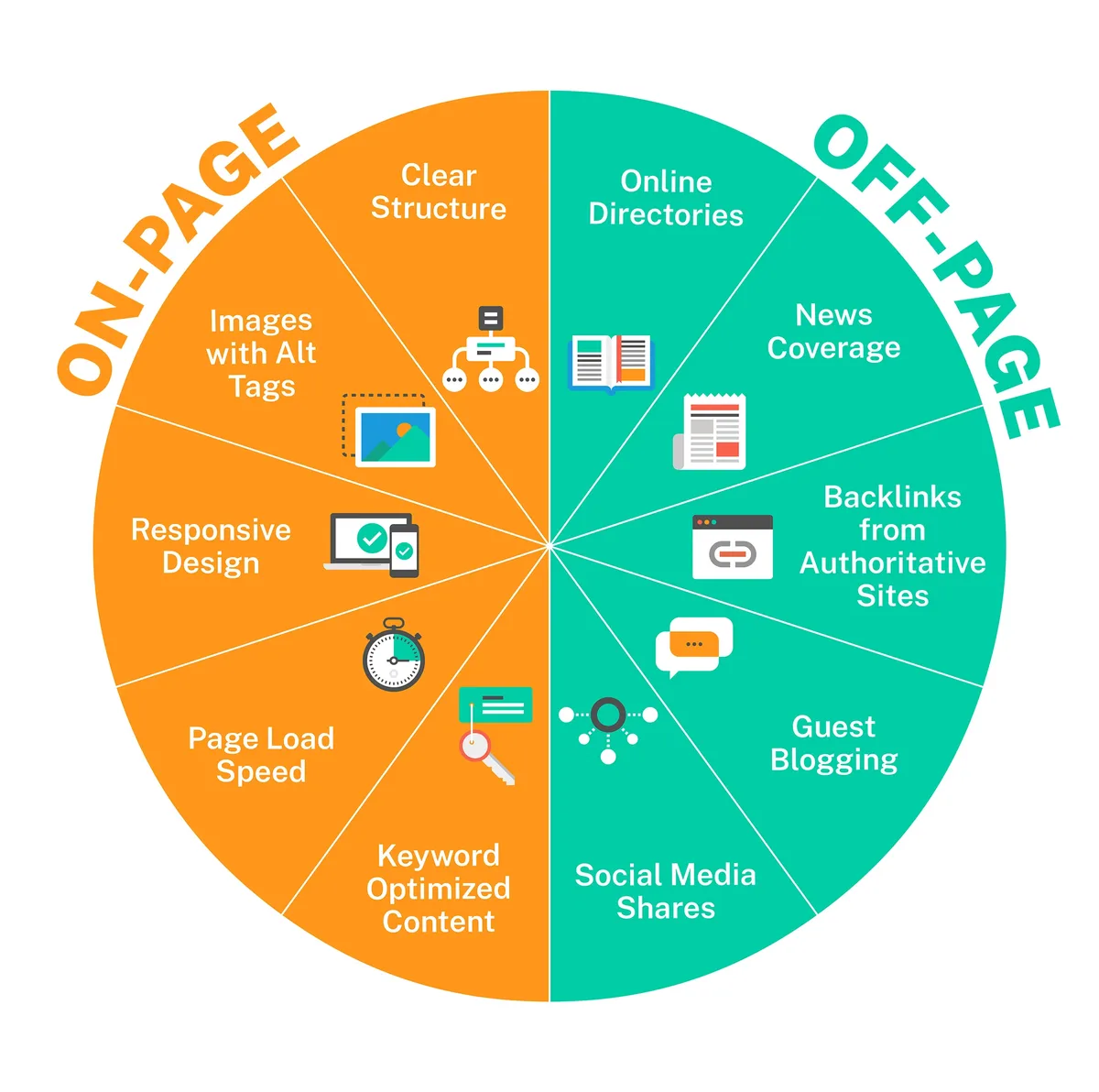
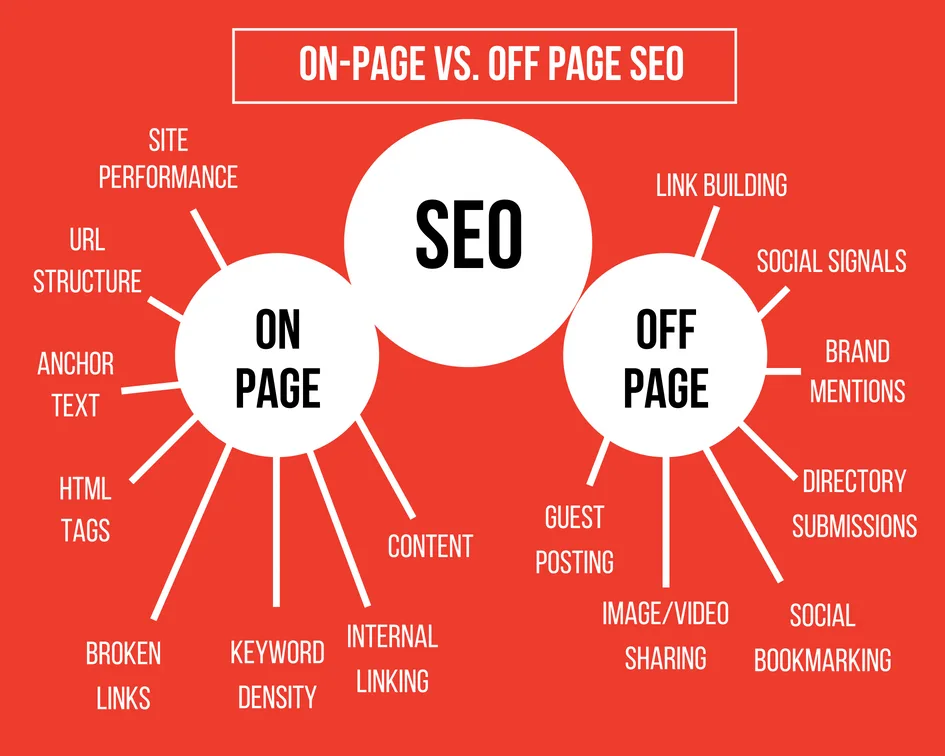
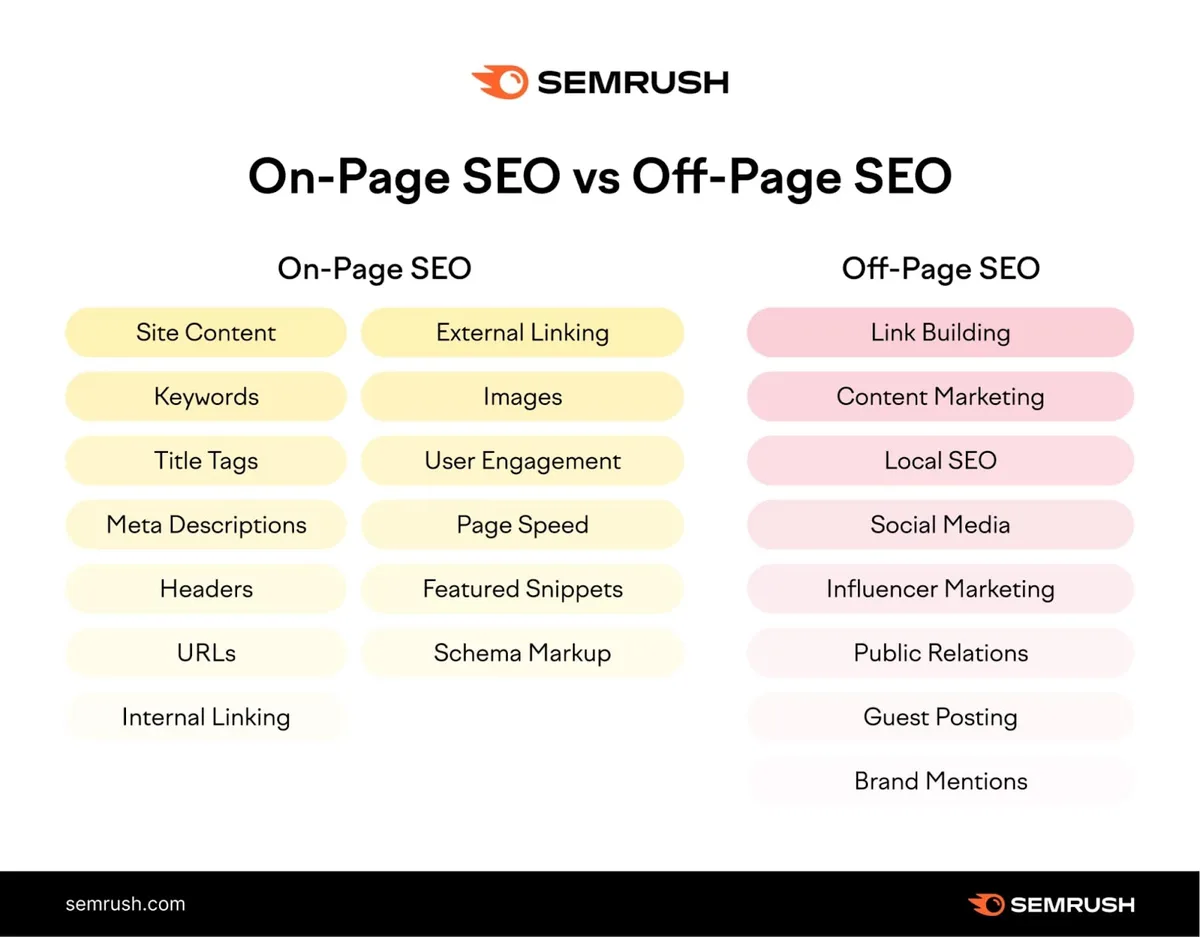
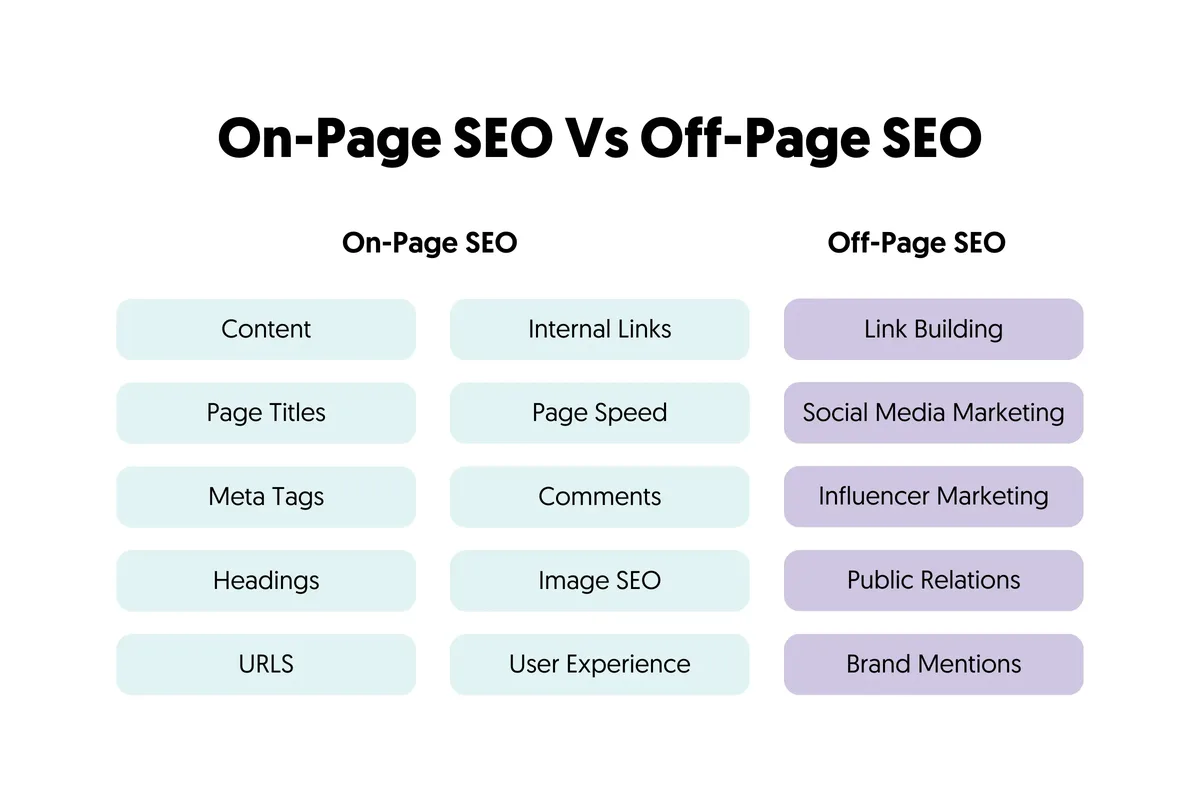
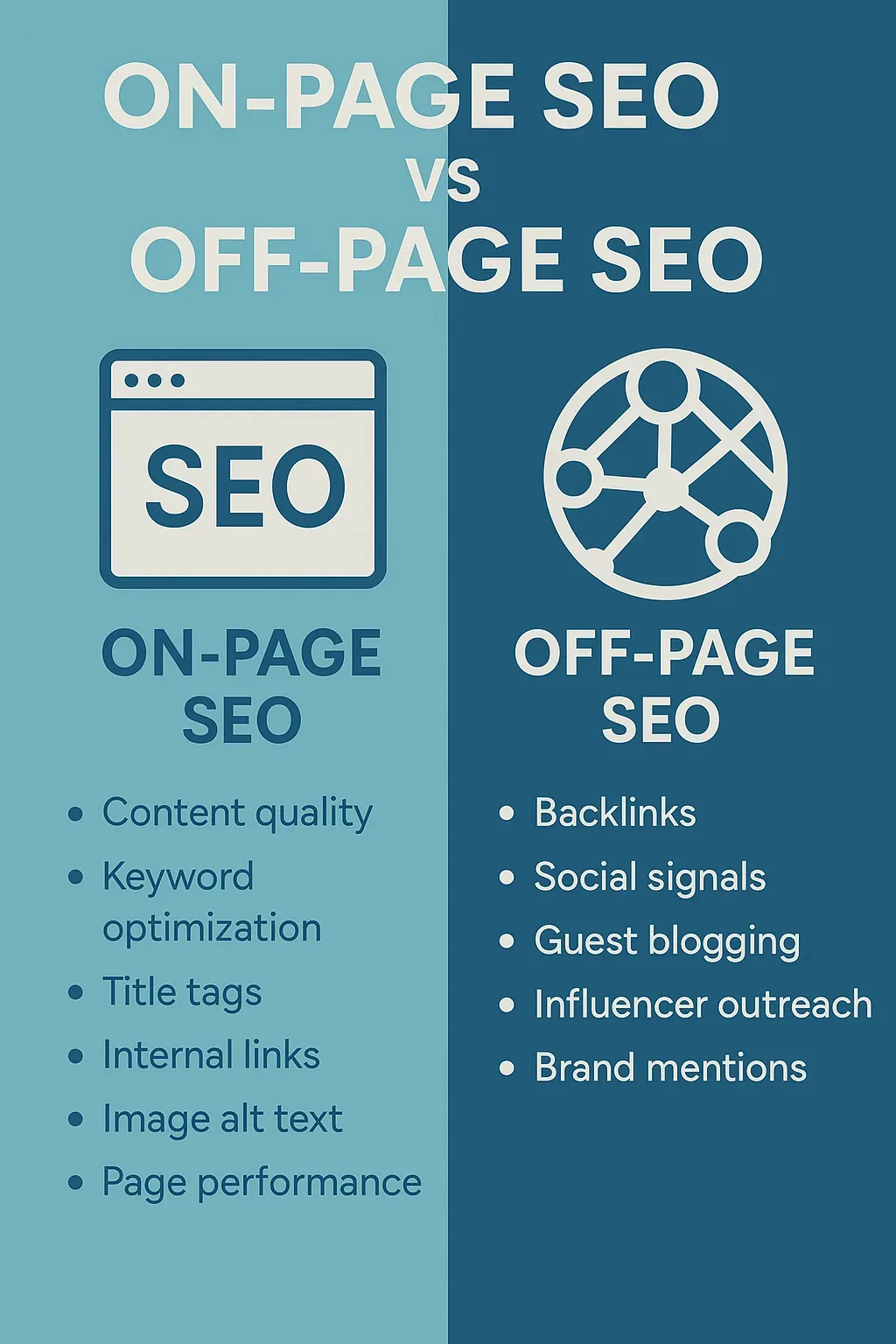
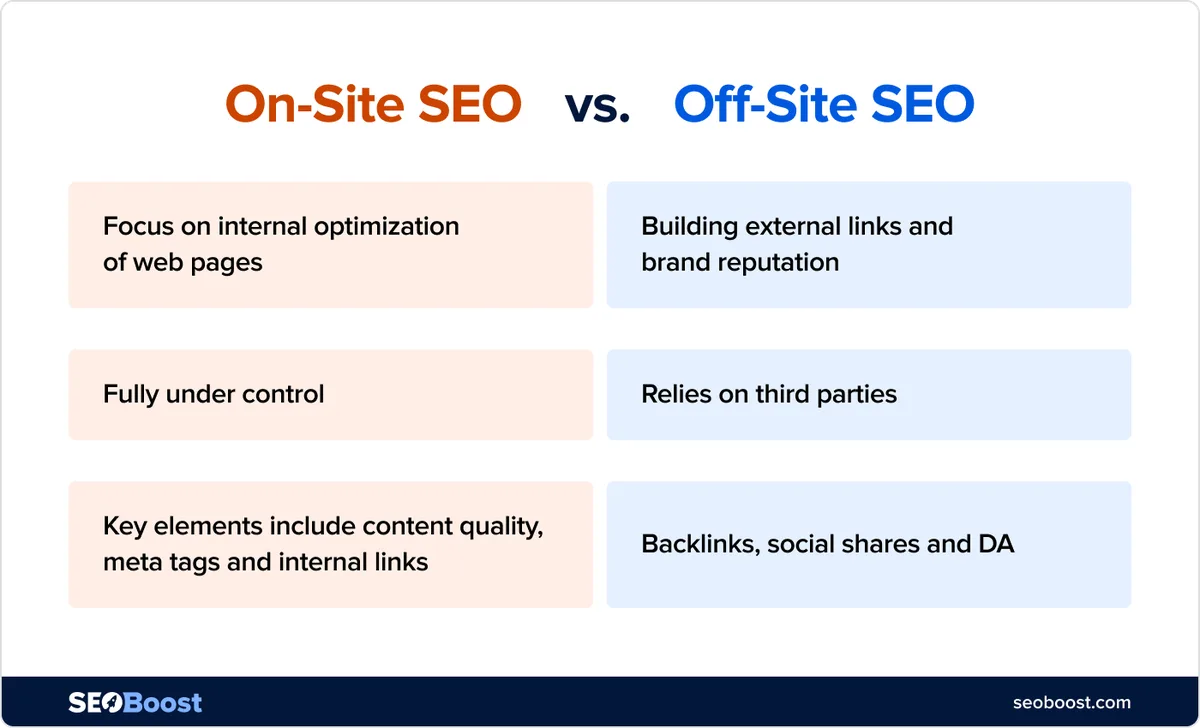
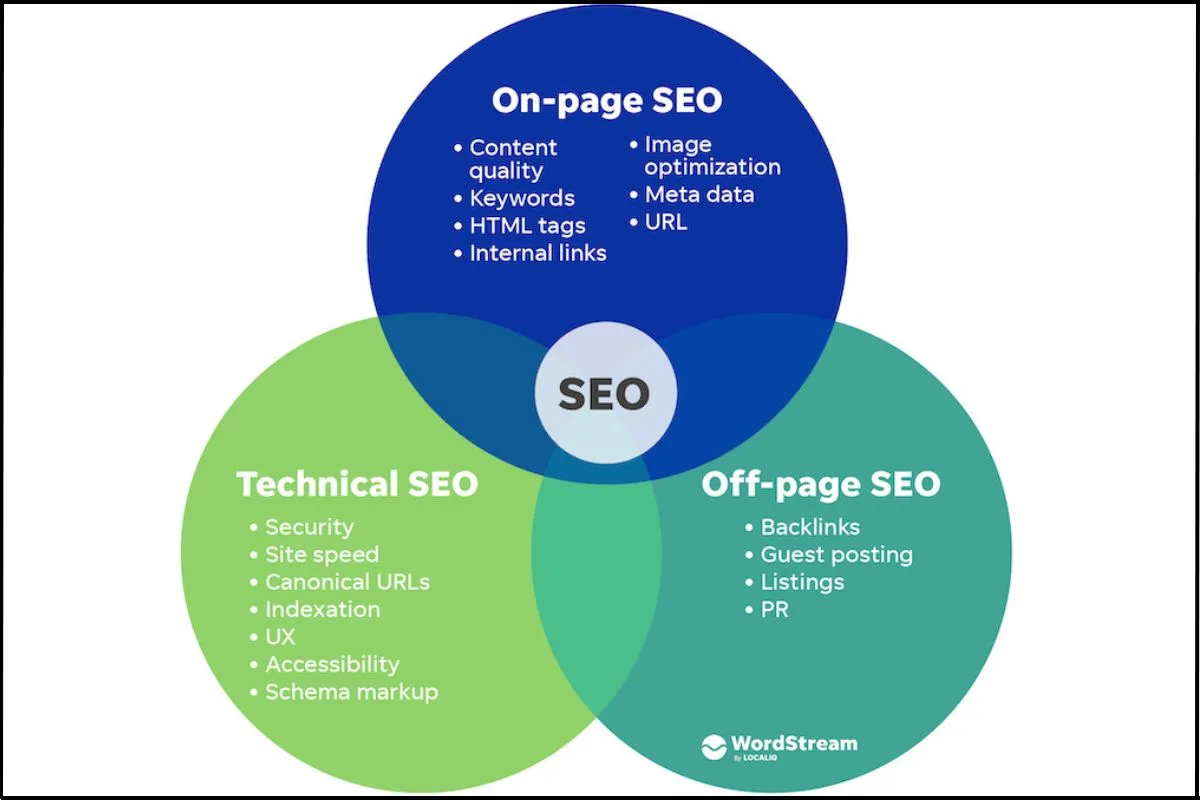
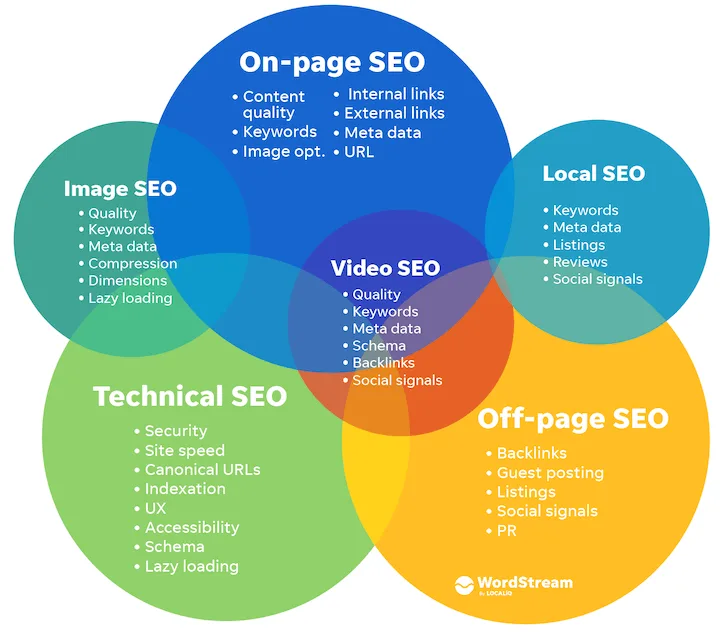
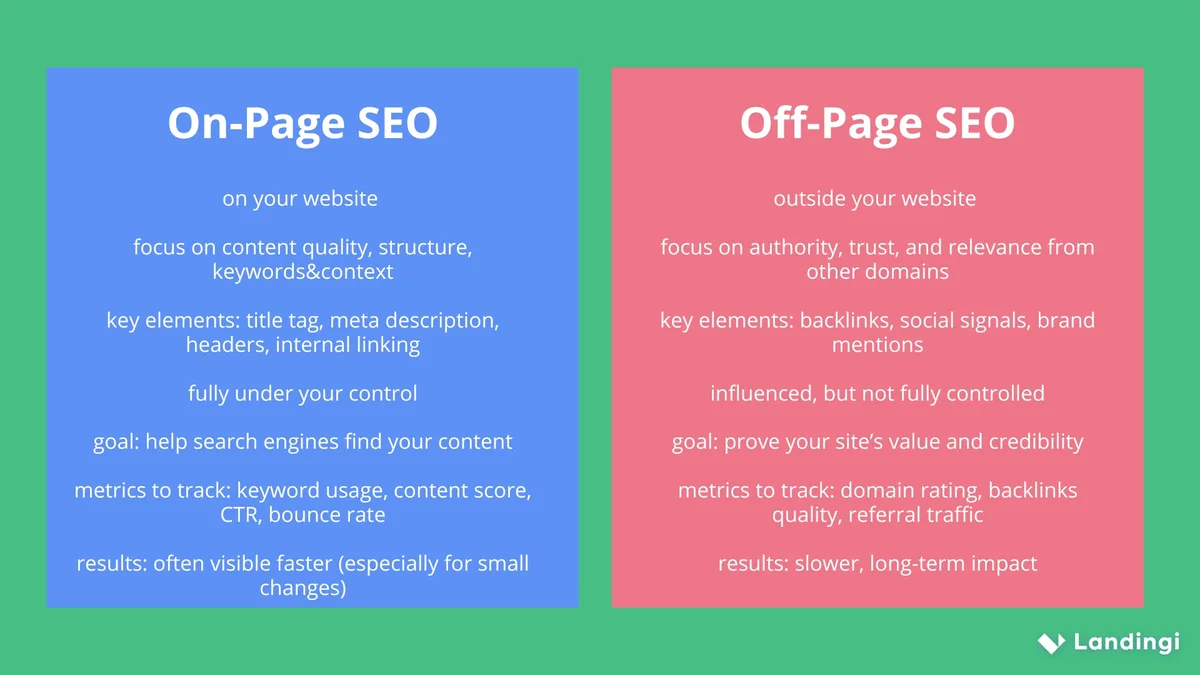
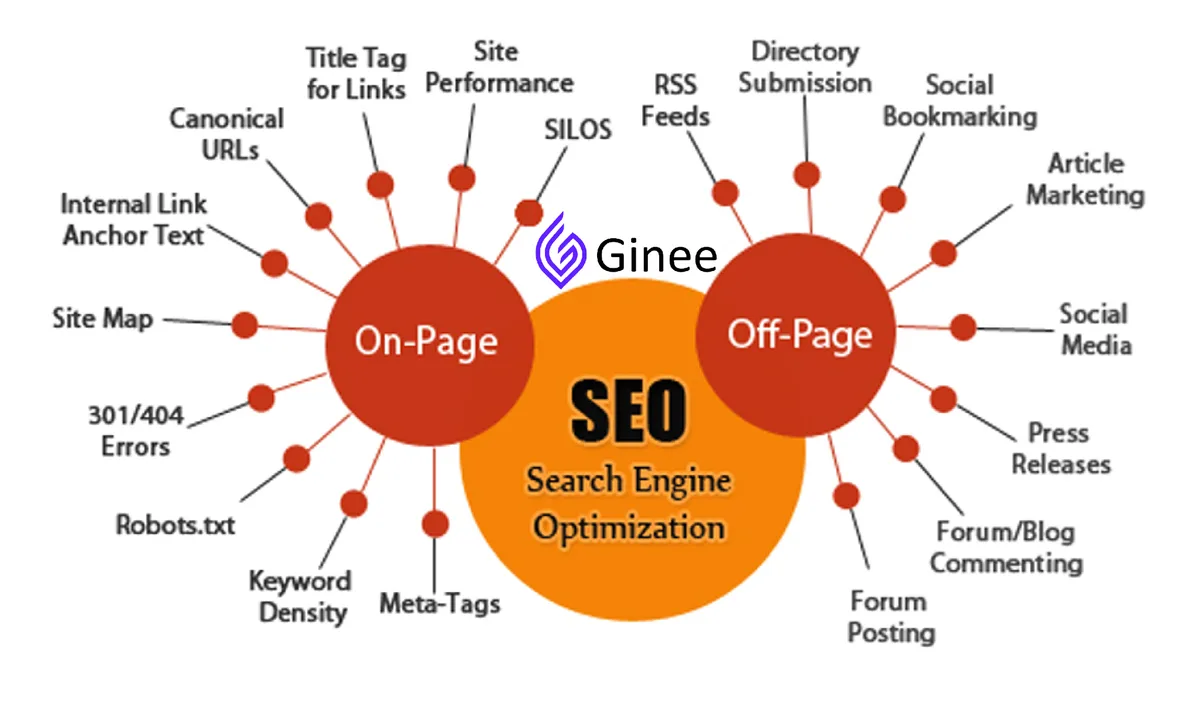
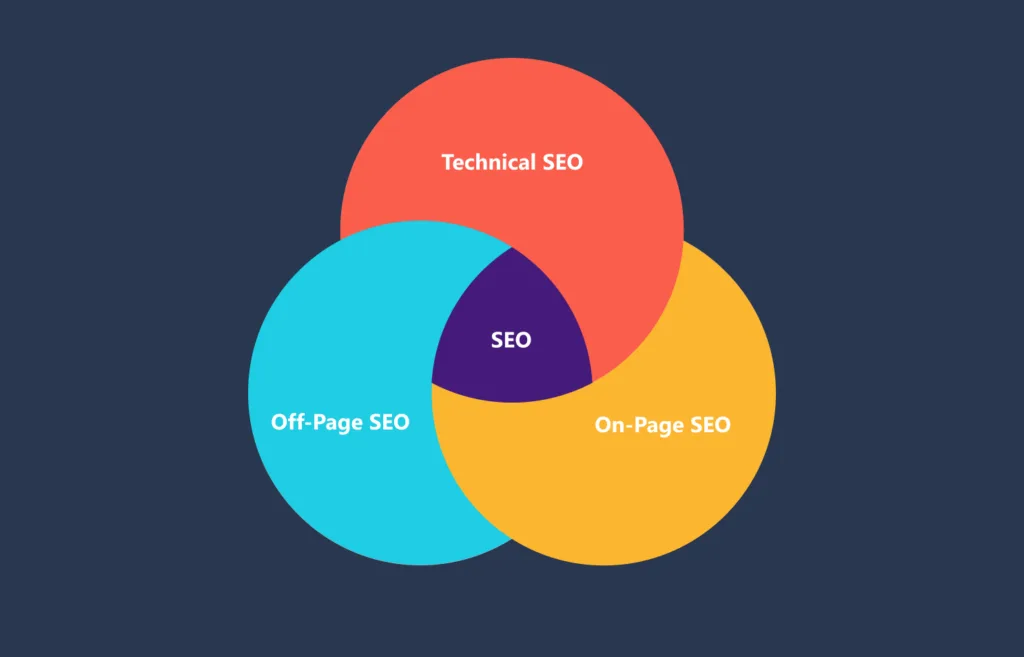
On site SEO covers everything you control directly on your own domain: content, HTML structure, internal links, page speed, mobile experience, structured data, and technical hygiene. It is the opposite of off-page work like backlinks and brand mentions, which happen elsewhere on the web.
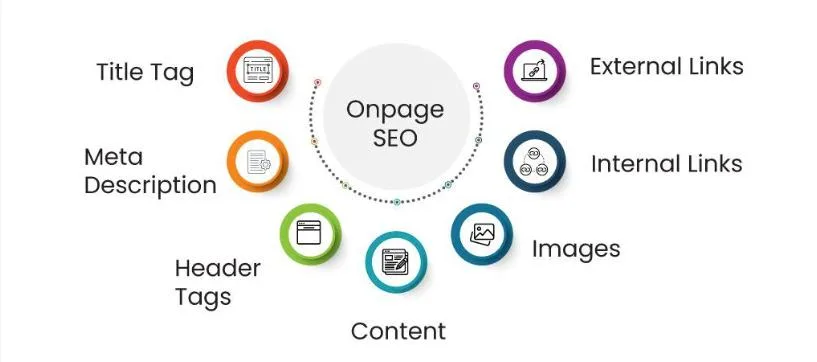
The distinction matters because on site SEO is the only lever you fully own. You cannot force another site to link to you, but you can absolutely control whether your title tag matches search intent or whether your images slow your page to a crawl.
Here is the part most beginners miss. On site SEO is not a one-time project. It is a maintenance discipline. Pages decay. Links break. Competitors publish better versions of your content. A page that ranked beautifully two years ago can quietly slide to page three without anyone noticing.
The Three Layers of on Site SEO
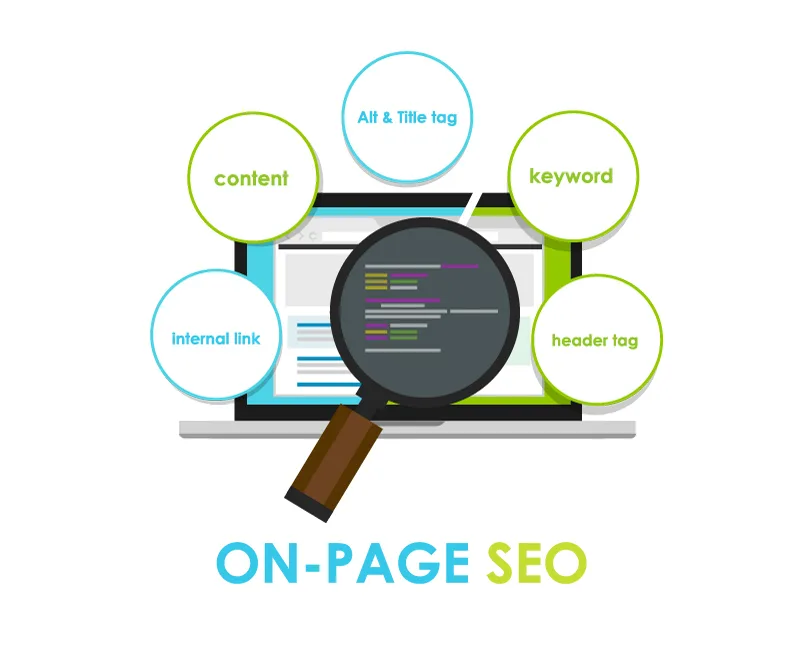
Think of on site SEO as three stacked layers, each depending on the one below it.
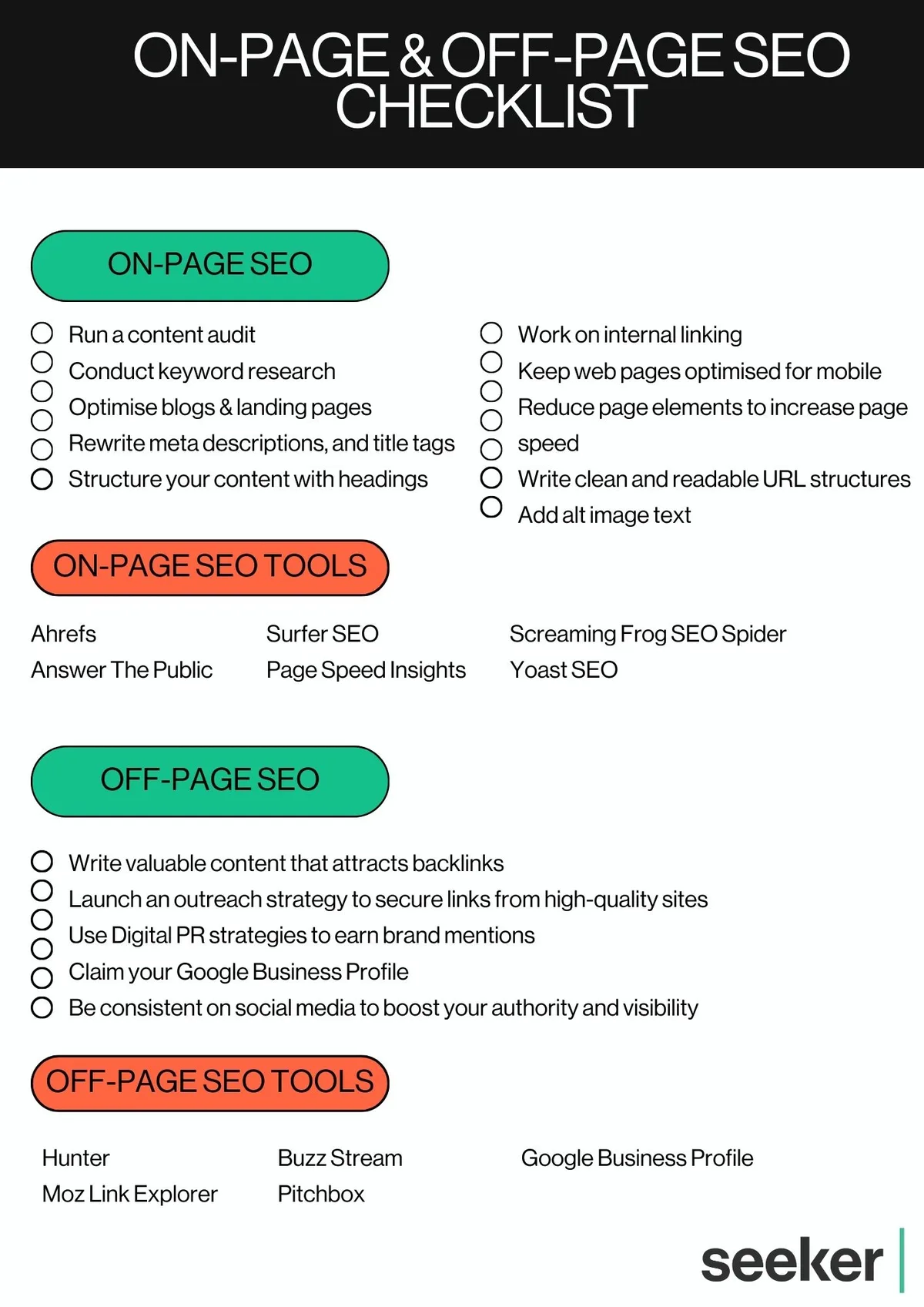
Technical foundation: crawlability, indexation, site speed, HTTPS, canonical tags, XML sitemaps, and clean URL structure. If this layer is broken, nothing above it matters.
Content relevance: keyword targeting, search intent alignment, topical depth, heading hierarchy, and internal linking. This is where most ranking battles are actually decided.
User experience signals: readability, mobile responsiveness, Core Web Vitals, and engagement metrics like dwell time. Google increasingly treats these as ranking inputs because they correlate with real satisfaction.
When an audit fails to move the needle, it is usually because someone optimized layer two while layer one was quietly sabotaged by a noindex tag or a redirect chain.
How to Run a Technical on Site SEO Audit
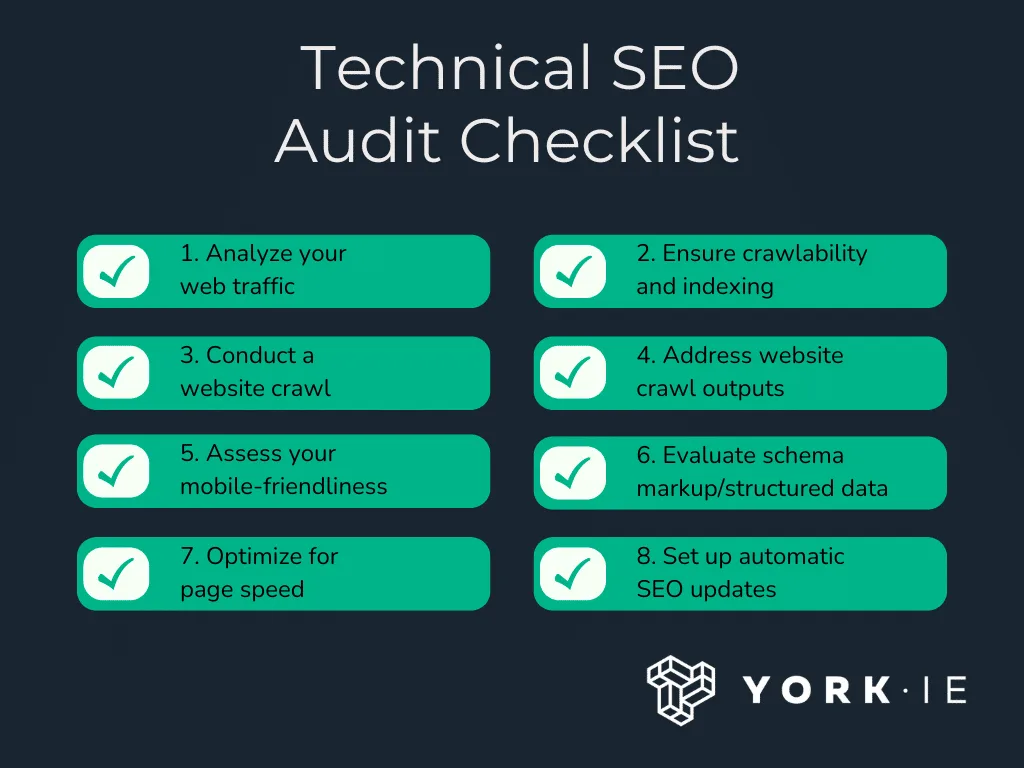
Technical on site SEO is the unsexy backbone of everything else. Skip it and you are building on sand. Here is how I approach a technical audit from scratch, in the order that catches the most damage fastest.
Start with crawlability. If Google cannot reach a page, no amount of content optimization will save it. Use Google Search Console’s URL Inspection tool to confirm that key pages are indexed and not blocked by robots.txt or accidental noindex directives.
Next, check your XML sitemap. It should list only canonical, indexable URLs. I have seen sitemaps stuffed with paginated archives, tag pages, and redirecting URLs, which wastes crawl budget and muddies signals.
Core Technical Checks That Catch the Most Damage
Run through these in order. Each one has killed rankings on sites I have worked on.
- Indexation status: Confirm every important page returns a 200 status and is indexable. A single stray noindex on a category page can wipe out an entire section of traffic.
- Canonical tags: Each page should point to itself, unless it is a duplicate. Self-referencing canonicals prevent Google from guessing which version to rank.
- Redirect chains: More than one hop slows crawling and dilutes link equity. Collapse every chain into a single 301.
- Broken internal links: These waste crawl budget and frustrate users. A quarterly crawl with Screaming Frog or Sitebulb surfaces them fast.
- HTTPS coverage: Mixed content warnings erode trust signals. Every asset should load over HTTPS.
- Mobile rendering: Since Google indexes the mobile version of your site first, a broken mobile layout is a ranking problem, not just a design problem.
- Page speed and Core Web Vitals: Largest Contentful Paint under 2.5 seconds, Interaction to Next Paint under 200 milliseconds, and Cumulative Layout Shift below 0.1 are the targets worth chasing.
One client of mine had a beautiful desktop experience and a mobile menu that simply did not open on certain Android devices. Traffic had dropped 40 percent over four months. Fixing that single bug recovered most of it within six weeks. That is the kind of thing on site SEO audits exist to catch.
Keyword Research and Search Intent for on Site SEO
Keywords still matter, but intent matters more. A page optimized for “best running shoes” will fail if it is a product page when searchers want a comparison article. On site SEO without intent matching is just decoration.
Before writing anything, I ask one question: what does the person typing this query actually want to see? A list? A tutorial? A price? A definition? The answer determines the format, length, and angle of the page.
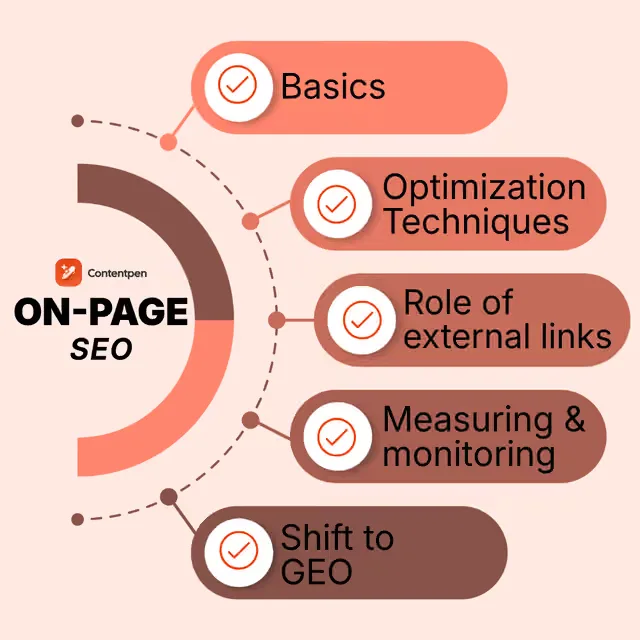
Map every target keyword to one of four intent types: informational, navigational, commercial, or transactional. Then match the page type to the intent. Blog posts serve informational queries. Category pages and product pages serve transactional ones. Mixing them up is one of the most common on site SEO mistakes I see.
Building a Keyword Map That Prevents Cannibalization
Keyword cannibalization happens when two or more pages on your site compete for the same query. Google gets confused about which page to rank, so it often ranks neither well.
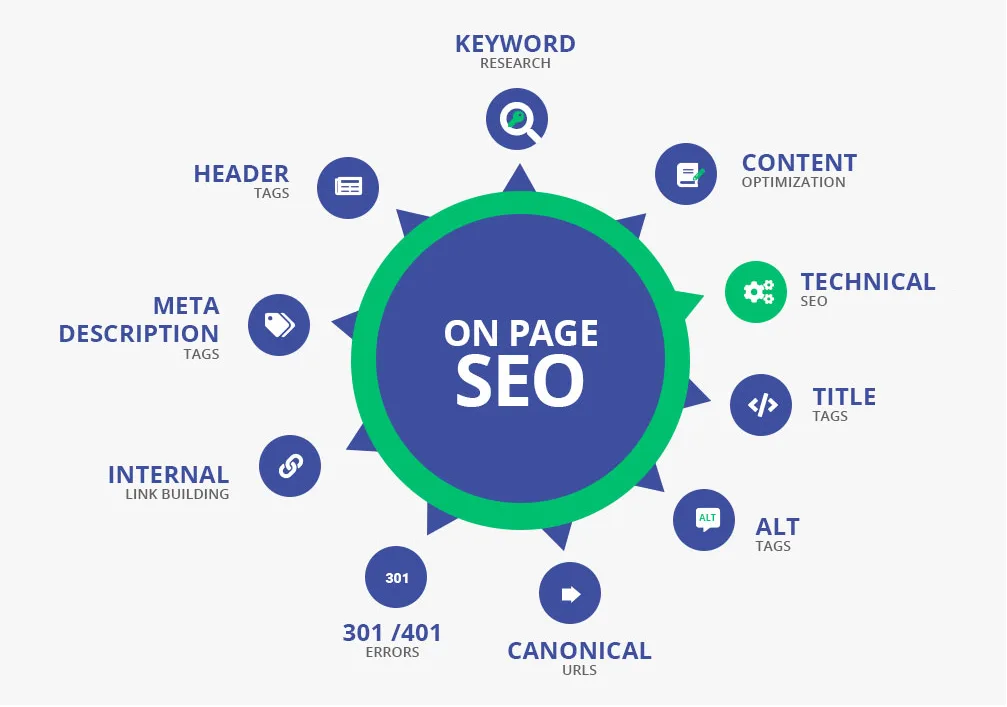
The fix is a keyword map: a simple spreadsheet listing every target keyword, the URL that owns it, and the search intent. One keyword, one page. If two pages overlap, merge them or differentiate the angles sharply.
I once inherited a site with eleven blog posts all targeting variations of “email marketing tips.” None of them ranked in the top twenty. Consolidating them into one comprehensive guide pushed that single page into the top five within two months. That is the power of cleaning up your on site SEO architecture.
On-Page Content Optimization: Titles, Headings, and Body Copy
Content optimization is where on site SEO becomes visible to readers. The goal is not to stuff keywords into every sentence. It is to make the page unmistakably relevant to a specific query while staying genuinely useful to a human being.
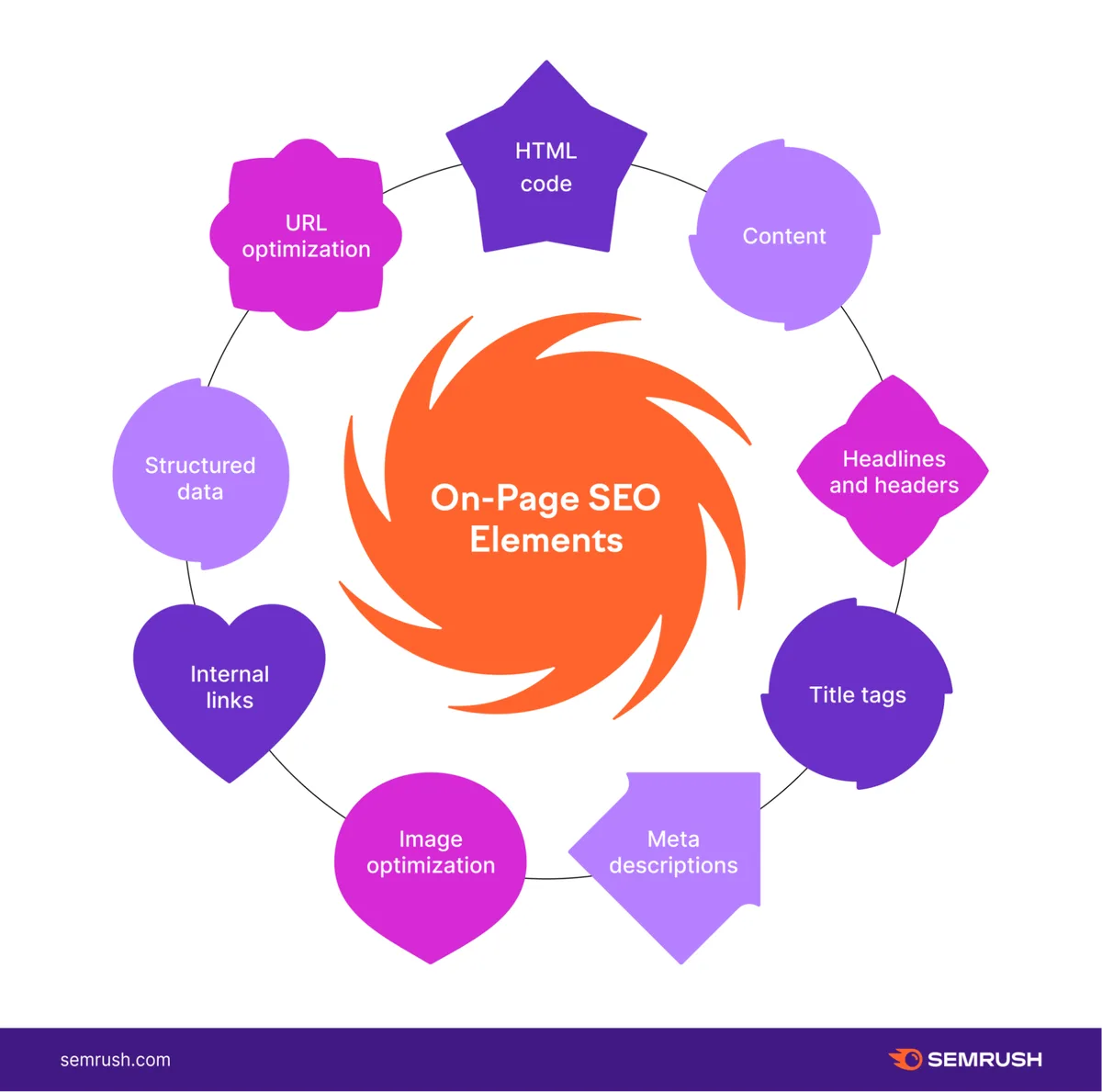
Start with the title tag. Keep it under 60 characters so it does not truncate in search results, place the primary keyword near the front, and add a hook that earns the click. A title tag is essentially an advertisement for your page.
Then move to the H1. It should match the title closely but not identically. It should also be the only H1 on the page. Multiple H1s dilute the signal and confuse screen readers.
Heading Hierarchy and Semantic Structure
Headings are not decoration. They tell Google what each section covers and help readers scan the page. Use H2s for main sections and H3s for subsections within them.
Never skip levels. An H3 should always sit under an H2, not jump straight from an H1. This structure feeds Google’s understanding of your content hierarchy and improves accessibility at the same time.
Where it makes sense, work your primary keyword into at least one H2 and a couple of H3s. But do it naturally. A heading that reads “On Site SEO Checklist For Category Pages” is fine. One that reads “On Site SEO On Site SEO Tips” is a red flag for spam.
Writing Body Copy That Satisfies Intent
Body copy should answer the query in the first hundred words, then expand with depth. Google’s helpful content signals reward pages that resolve the user’s question rather than burying the answer under three paragraphs of throat-clearing.
Use short paragraphs. Two to three sentences each. Mobile readers scroll fast and skim faster. Dense walls of text lose them before they reach your best insight.
Weave in related terms and entities naturally. If you are writing about on site SEO, terms like “crawl budget,” “canonical tags,” and “Core Web Vitals” reinforce topical relevance without stuffing. Google’s language models understand semantic relationships, so context beats repetition every time.
Internal Linking Strategy That Actually Moves Rankings
Internal links are the most underrated on site SEO lever. They pass authority between pages, help Google discover new content, and signal which pages matter most within your site architecture.
Every important page should be reachable within three clicks of the homepage. If it takes six clicks to reach a product page, Google will crawl it less often and rank it lower.
Anchor text matters too. “Click here” tells Google nothing. “On site SEO checklist for category pages” tells Google exactly what the destination covers. Use descriptive, keyword-relevant anchors, but vary them so the pattern does not look manipulative.
Mapping Internal Links to Your Priority Pages
Identify your ten most valuable pages. These are the ones that drive revenue or capture your highest-value keywords. Then audit how many internal links point to each one.
If a priority page has fewer than five internal links, add more from relevant content. If a low-value page has fifty, trim them. Internal link distribution should mirror your business priorities, not happen by accident.
I have seen a single well-placed internal link from a high-traffic blog post push a product page from position twelve to position four. That is a real result from on site SEO work that costs nothing but attention.
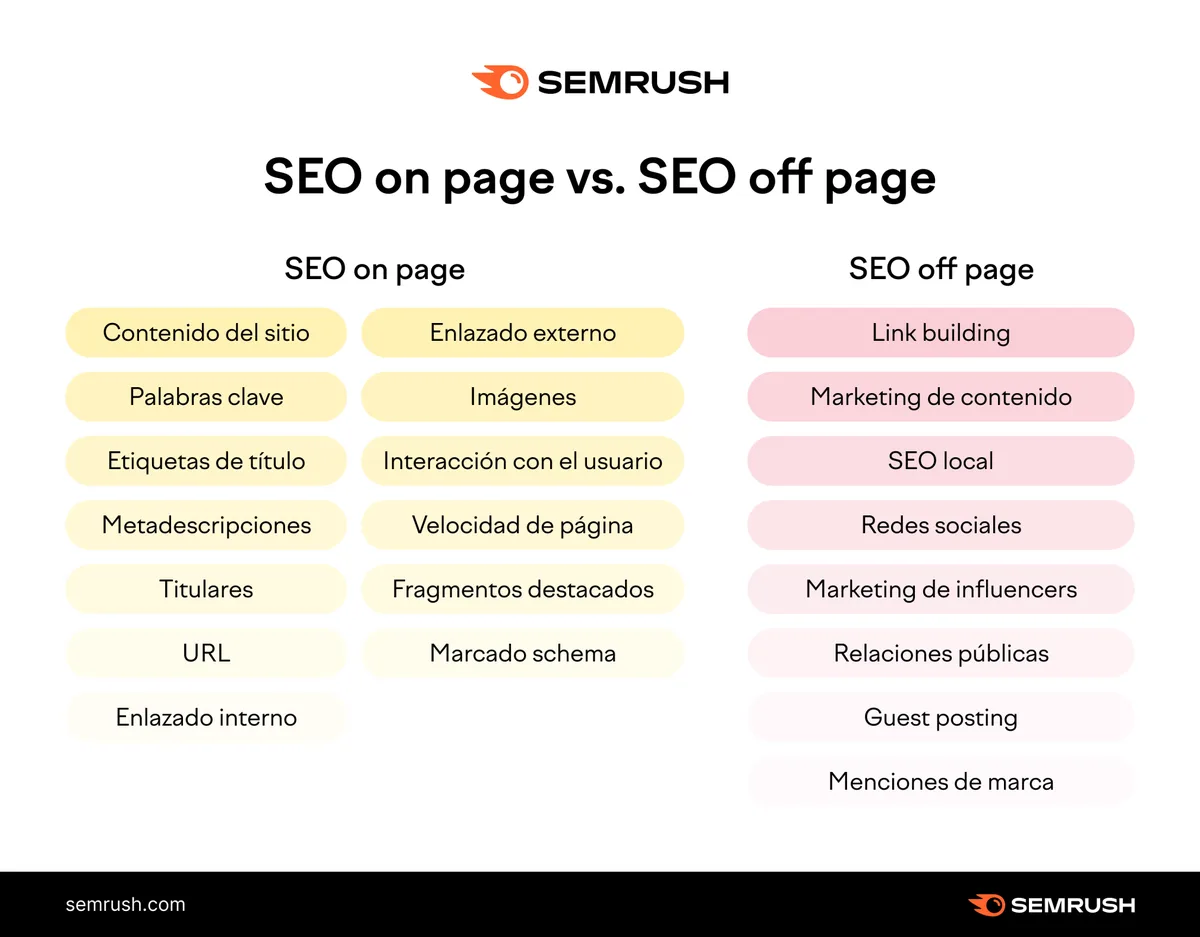
Image Optimization and Alt Text
Images are a common blind spot in on site SEO. They carry ranking weight through alt text, file names, and load speed, yet most sites treat them as pure decoration.
Every image should have descriptive alt text that explains what the image shows. If it is a screenshot of a Google Search Console report, the alt text should say so. If it is a chart of Core Web Vitals, describe that.
File names matter too. “on-site-SEO-checklist.png” beats “IMG_4821.png” every time. It is a small signal, but small signals add up across hundreds of images.
Compression and Modern Formats
Large images are the number one cause of slow page loads I encounter. A single uncompressed hero image can add three seconds to your Largest Contentful Paint.
Convert images to WebP or AVIF. Both formats deliver smaller files at equivalent quality. Compress aggressively, then serve responsive sizes so mobile devices do not download desktop-resolution assets.
Add width and height attributes to every image tag. This prevents layout shift, which directly improves your Cumulative Layout Shift score and your on site SEO performance in Core Web Vitals.
URL Structure and Slug Optimization
URLs should be short, readable, and keyword-relevant. A clean URL like /on-site-SEO-checklist/ tells both users and Google what the page covers. A messy URL like /?p=4821&cat=12 tells them nothing.
Keep slugs under five words where possible. Remove stop words like “and,” “the,” and “of” unless they are essential to readability. Use hyphens, never underscores, because Google treats hyphens as word separators.
Once a URL is live, do not change it unless you have a strong reason. If you must change it, set up a 301 redirect immediately and update all internal links pointing to the old URL.
Handling Pagination and Faceted Navigation
E-commerce sites struggle with this constantly. Faceted navigation can generate thousands of URL combinations, most of which should never be indexed.
Use canonical tags or robots directives to keep parameter-based URLs out of the index. Keep paginated series crawlable but consolidate ranking signals to the first page where appropriate.
This is one of those on site SEO tasks that feels tedious but prevents catastrophic crawl budget waste on large sites.
Schema Markup and Structured Data
Structured data helps Google understand your content and can earn rich results in search. FAQ schema, HowTo schema, Product schema, and Article schema are the ones most sites should prioritize.
Schema does not directly boost rankings, but rich results improve click-through rates, and higher CTR correlates with better positions over time. It is an indirect but real on site SEO win.
Validate every schema implementation with Google’s Rich Results Test. Broken markup is worse than no markup because it signals sloppiness to crawlers.
Which Schema Types Matter Most
Not every page needs every schema type. Match the markup to the content.
| Page Type | Recommended Schema | Primary Benefit |
|---|---|---|
| Blog post | Article, BreadcrumbList | Rich snippets, clearer hierarchy |
| Product page | Product, Offer, Review | Price and rating display in SERPs |
| FAQ section | FAQPage | Expanded FAQ rich results |
| How-to guide | HowTo | Step-by-step rich results |
| Local business | LocalBusiness | Map pack visibility |
| Video content | VideoObject | Video thumbnails in search |
Pick the schema that matches the page’s purpose. Stacking irrelevant markup can trigger manual actions and erode trust.
Page Speed and Core Web Vitals
Speed is not optional. Google uses Core Web Vitals as a ranking signal, and users abandon slow pages before they ever see your content.
The three metrics that matter are Largest Contentful Paint, Interaction to Next Paint, and Cumulative Layout Shift. Each measures a different dimension of real user experience.
LCP should stay under 2.5 seconds. INP should stay under 200 milliseconds. CLS should stay under 0.1. Anything above those thresholds drags your on site SEO down.
Practical Speed Fixes That Deliver Fast Wins
Start with the biggest offenders. These fixes consistently produce measurable improvements.
- Compress and lazy-load images: Load only what is visible in the viewport. Defer the rest until the user scrolls.
- Minify CSS and JavaScript: Remove whitespace, comments, and unused code. Every kilobyte counts on mobile connections.
- Enable browser caching: Returning visitors should not re-download assets they already have.
- Use a content delivery network: Serve assets from a server geographically close to each user.
- Defer non-critical scripts: Third-party trackers and chat widgets can wait until after the main content renders.
- Upgrade your hosting: Cheap shared hosting is often the hidden bottleneck behind poor Core Web Vitals.
- Eliminate render-blocking resources: Inline critical CSS and load the rest asynchronously.
One retail site I audited cut its LCP from 4.8 seconds to 1.9 seconds by compressing images and deferring two chat scripts. Organic traffic rose 22 percent in the following quarter. Speed is not just an on site SEO metric. It is a revenue metric.
Mobile-First Optimization
Google indexes the mobile version of your site first. If your mobile experience is broken, your desktop experience does not matter.
Test every page on a real phone, not just a resized browser window. Tap targets should be at least 48 pixels. Font sizes should be readable without zooming. Forms should be easy to complete with a thumb.
Pop-ups that cover the screen on mobile are a direct ranking negative. Google penalizes intrusive interstitials because they frustrate users.
Common Mobile on Site SEO Mistakes
The same issues show up on almost every mobile audit I run.
- Content hidden behind tabs or accordions that Google cannot render
- Text that requires horizontal scrolling
- Buttons too close together for accurate tapping
- Videos that autoplay with sound
- Navigation menus that fail to open on certain devices
- Font sizes below 16 pixels
Fix these and you remove friction that silently suppresses your on site SEO performance across every page.
Content Freshness and Topical Authority
Google rewards sites that demonstrate genuine expertise on a topic. Publishing one article about on site SEO will not establish authority. Publishing twenty interlinked articles that cover the topic from every angle will.
Topical authority is built by covering a subject comprehensively. Cluster your content around pillar pages and supporting articles. Link them together so Google sees a coherent body of work rather than scattered posts.
Refresh old content regularly. Update statistics, add new sections, and fix outdated recommendations. A refreshed page often outperforms a brand-new one because it already has history and links.
Building Content Clusters That Rank
A content cluster has one pillar page and multiple supporting pages. The pillar covers the broad topic. The supporting pages dive into subtopics and link back to the pillar.
For on site SEO, the pillar might be a comprehensive checklist. Supporting pages could cover technical audits, internal linking, schema markup, and Core Web Vitals individually. Each links up to the pillar, and the pillar links down to each.
This structure signals depth to Google and gives readers a clear path through your content. It is one of the most reliable ways to build sustainable rankings.
Monitoring, Testing, and Iterating
On site SEO is not a set-and-forget job. Rankings shift. Algorithms update. Competitors improve. The sites that stay on top are the ones that monitor and iterate continuously.
Set up Google Search Console and Bing Webmaster Tools. Track impressions, clicks, average position, and click-through rate for your priority pages. Watch for sudden drops, which usually signal a technical problem or a lost ranking.
Run a full crawl quarterly. Check for broken links, redirect chains, and indexation issues. Small problems caught early stay small.
What to Track Every Month
You do not need a hundred metrics. These cover the essentials.
| Metric | Tool | What It Tells You |
|---|---|---|
| Organic impressions | Search Console | Visibility trend across queries |
| Average position | Search Console | Ranking movement for target keywords |
| Click-through rate | Search Console | Title and meta description effectiveness |
| Core Web Vitals | PageSpeed Insights | Real user experience quality |
| Indexed pages | Search Console | Crawl and indexation health |
| Broken links | Screaming Frog | Site hygiene issues |
Review these monthly. If a metric moves unexpectedly, investigate before assuming it is normal fluctuation.
Common on Site SEO Mistakes to Avoid
Most ranking problems trace back to a handful of recurring mistakes. Avoiding them is often easier than fixing them later.
Keyword stuffing remains the most common. Writing “on site SEO” fifteen times in a single paragraph does not help rankings. It hurts readability and can trigger spam filters.
Duplicate content is another silent killer. If two pages cover the same topic with near-identical copy, Google will pick one and ignore the other. Canonical tags or consolidation solve this.
Mistakes That Quietly Cap Your Rankings
- Ignoring search intent and writing for the wrong audience
- Publishing thin content that adds nothing new
- Forgetting to update internal links after URL changes
- Using the same title tag across multiple pages
- Leaving meta descriptions empty or auto-generated
- Neglecting mobile users entirely
- Building backlinks while ignoring on site SEO fundamentals
Every one of these issues is fixable. None require expensive tools. They require attention and consistency.
Frequently Asked Questions About on Site SEO
These are the questions I hear most often from site owners starting their optimization journey.
How Long Does on Site SEO Take to Show Results?
Minor fixes can show movement within two to four weeks. Larger structural changes, like site architecture overhauls or content consolidation, typically take two to four months to fully register. Be patient and track trends rather than daily fluctuations.
Does on Site SEO Still Matter With AI Search?
Absolutely. AI search tools still pull from indexed, well-structured content. Clean on site SEO makes your pages easier for both traditional crawlers and AI systems to parse and cite.
What is the Single Most Important on Site SEO Factor?
If I had to pick one, it would be search intent alignment. A page that perfectly answers what the user wants will outperform a technically perfect page that misses the point.
How Often Should I Audit My Site?
Run a full technical crawl quarterly and a content review every six months. Check Search Console weekly for sudden changes that need immediate attention.
Can I Do on Site SEO Myself?
Yes, most of it. The technical layer benefits from developer help, but content optimization, internal linking, and meta tag work are entirely within reach for a motivated site owner.
Does Internal Linking Really Affect Rankings?
It does. Internal links distribute authority, guide crawlers, and signal page importance. A strong internal linking structure is one of the highest-leverage on site SEO activities available.
Final Checklist Before You Publish Any Page
Before any page goes live, run it through this final pass. It takes ten minutes and prevents months of cleanup later.
Confirm the title tag contains the primary keyword and stays under 60 characters. Verify the meta description is written, unique, and compelling. Check that the H1 is present and singular.
Scan for broken links. Confirm images have alt text and are compressed. Verify the URL slug is clean and keyword-relevant. Test the page on mobile.
Then check internal links. Does this page link to at least two relevant pages on your site? Do those pages link back? Is the anchor text descriptive?
Finally, submit the URL to Google Search Console for indexing. This accelerates discovery and gets your page into the index faster.
Do this consistently and your on site SEO compounds. Every page you publish becomes a small asset that supports the ones around it. Over a year, that adds up to rankings your competitors cannot easily replicate.
Start with one page. Run the checklist. Fix what is broken. Then move to the next. That is how on site SEO actually gets done.
For verified reference and background research, consult the authoritative informational resource on this topic.