If you have ever tried to figure out where people actually search online, the market share of search engines is the single number that tells the whole story. It shapes ad budgets, SEO priorities, and even which platforms get built next. And here is the catch: that number looks completely different depending on which country you are standing in.
I have spent years watching traffic dashboards across dozens of markets, and the pattern never stops surprising clients.
A strategy that dominates in the United States can flop in China, Russia, or South Korea — not because the tactics are wrong, but because the market share of search engines in those regions is a different animal altogether.
Let’s walk through the global picture, region by region, and pull out the practical lessons that actually matter for anyone trying to win visibility.
Why the Market Share of Search Engines Matters More Than Ever
Search engines are the front door to the internet. Almost every purchase journey, research task, and casual question starts with a query typed into a search box. When you understand the market share of search engines, you understand who controls that front door in each market.
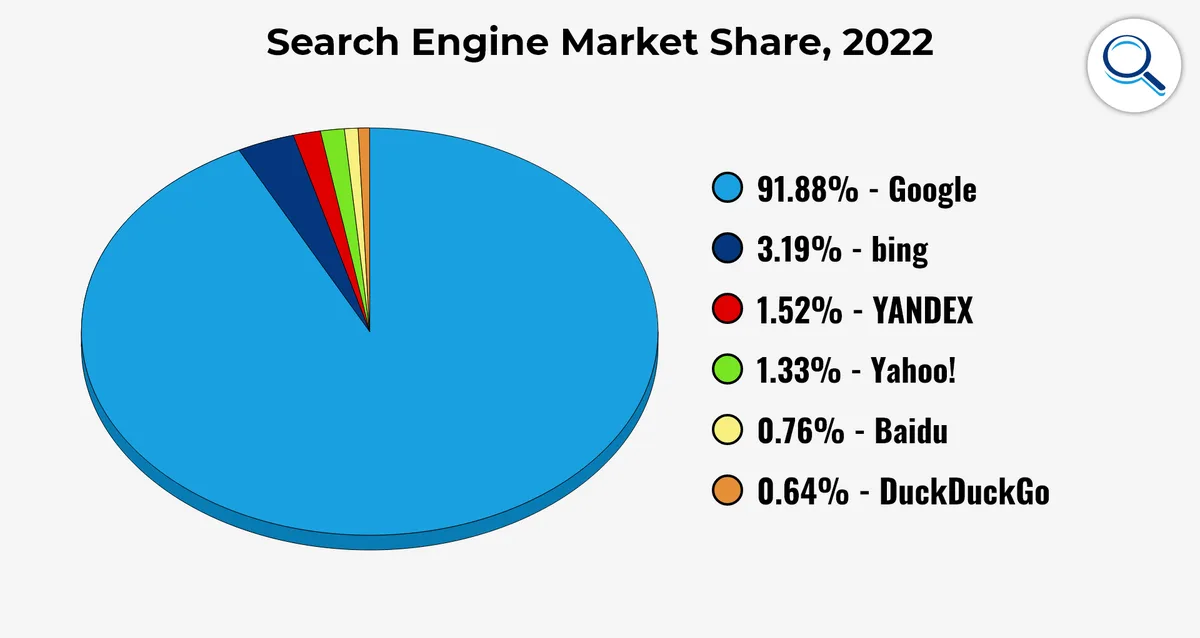
For marketers, this is not academic trivia. It decides where you spend your budget, which analytics tools you trust, and how you structure a multilingual SEO plan. Get the market share of search engines wrong in a new region, and you can burn an entire quarter chasing traffic that never shows up.
There is also a broader economic angle. Search advertising remains one of the most measurable channels in existence, and the companies that own the biggest slice of search keep reinvesting that revenue into AI, cloud infrastructure, and hardware.
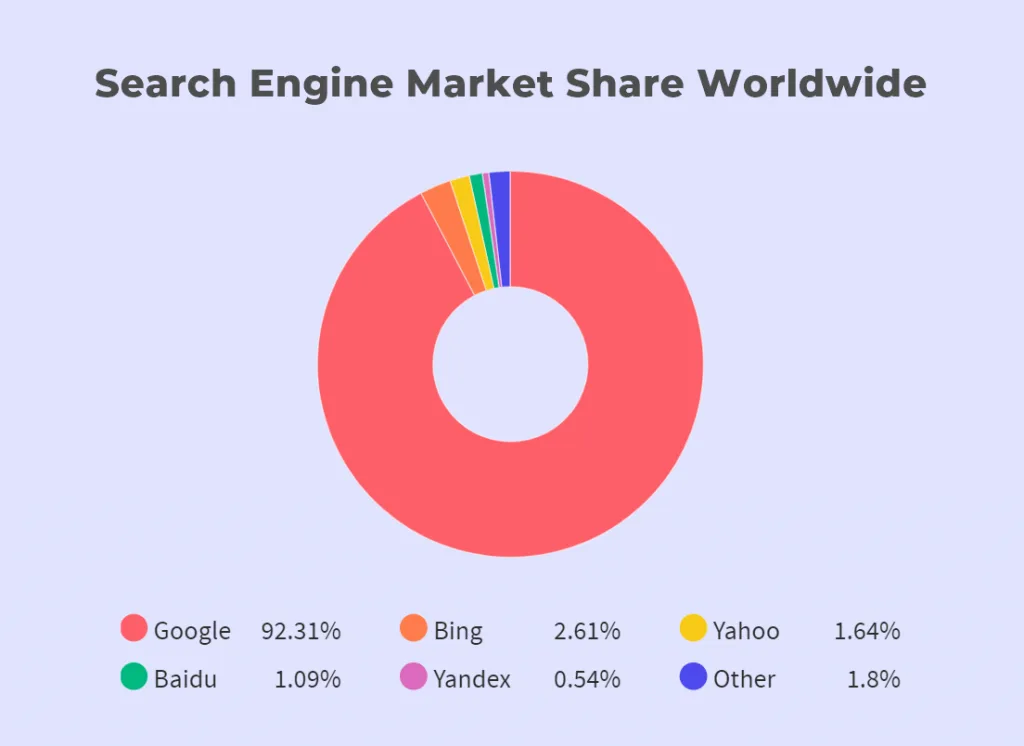
So the market share of search engines is really a proxy for who holds leverage across the entire digital economy.
The Difference Between Global and Local Numbers
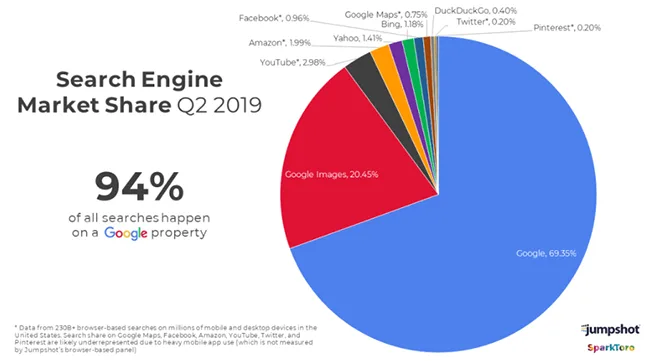
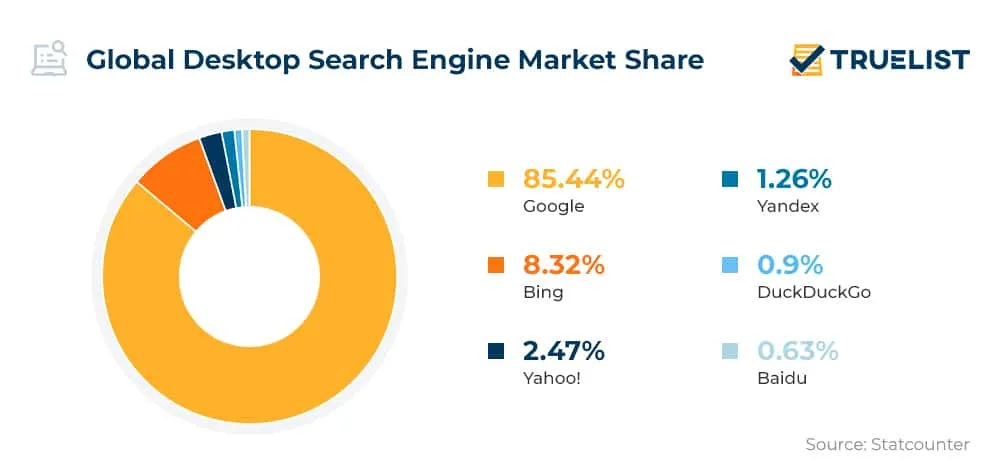
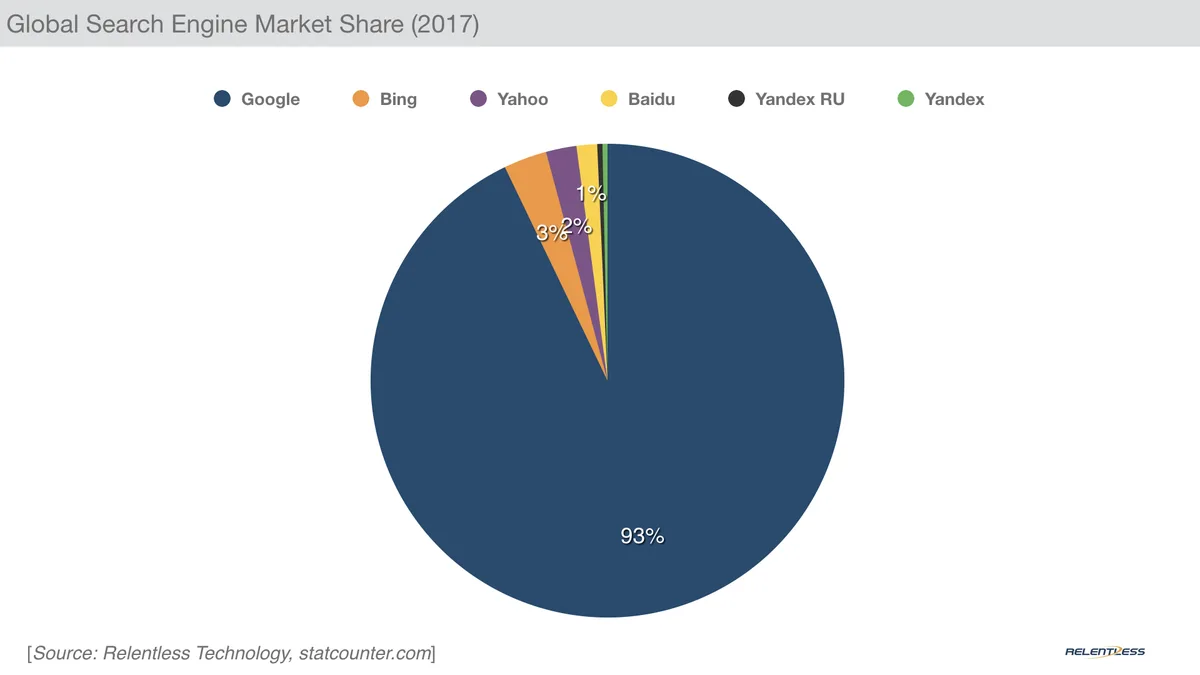
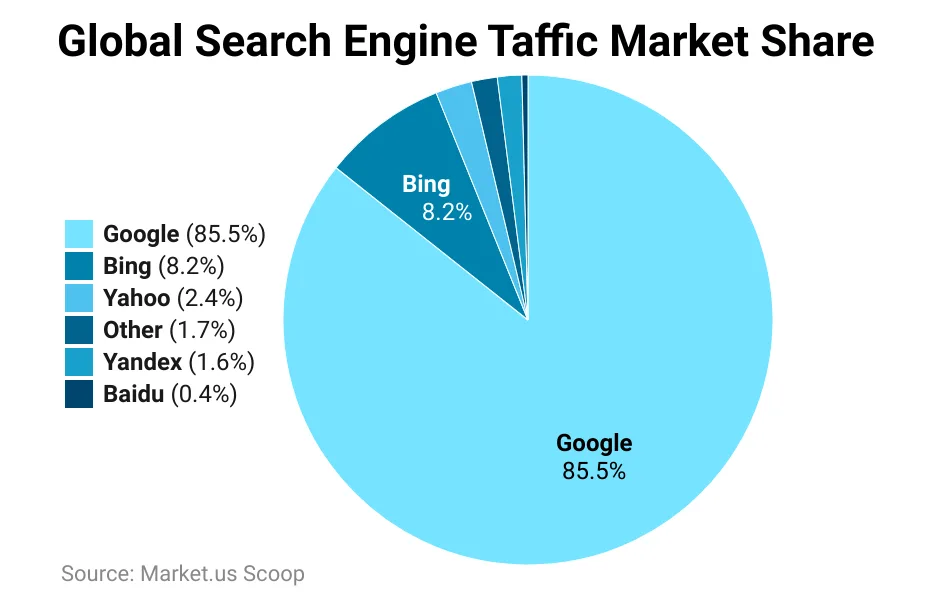
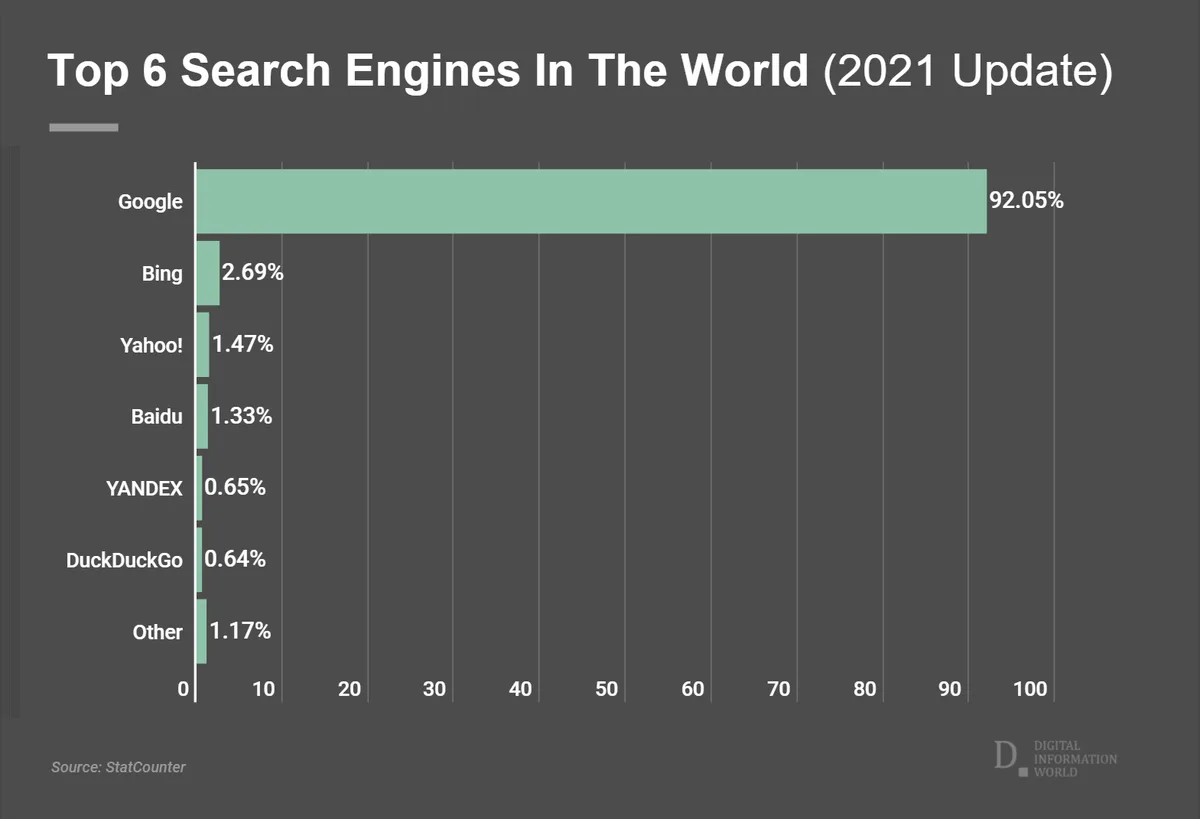
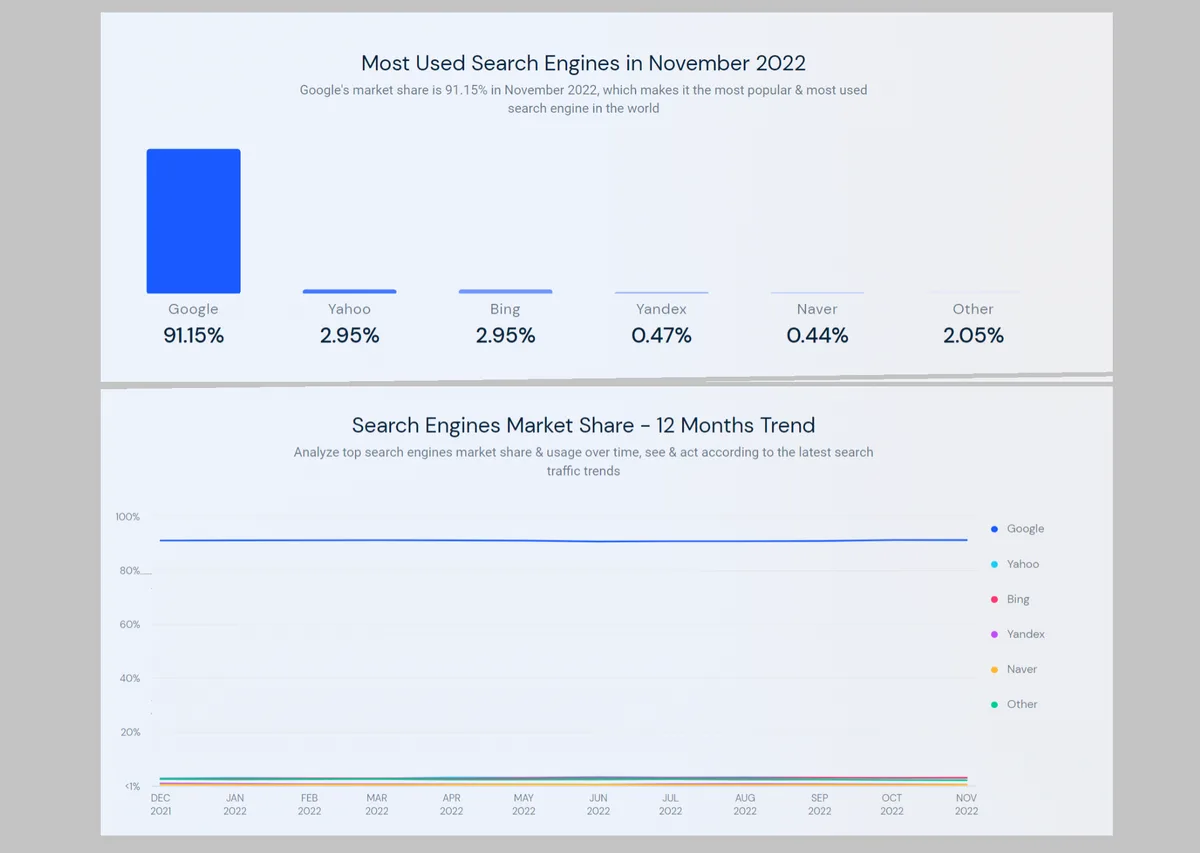
Global averages are seductive because they are simple. Google sits somewhere around nine-tenths of worldwide search traffic, and that headline gets repeated everywhere. But a global average is a blend of wildly different local realities.
In parts of Europe, Google’s grip is even tighter than the global figure suggests. In East Asia, the picture flips almost entirely. Anyone who plans international campaigns using only the global market share of search engines is setting themselves up for a nasty surprise in their first quarterly review.
The smarter move is to treat the global number as a starting point and then drill into each region you actually care about. That is where the useful decisions live.
How Analysts Actually Measure It
No single source owns the truth here. StatCounter tracks page views through its tracking network. Similarweb blends panel data, ISP information, and clickstream samples. DataReportal compiles survey and platform-reported figures. Each method has blind spots.
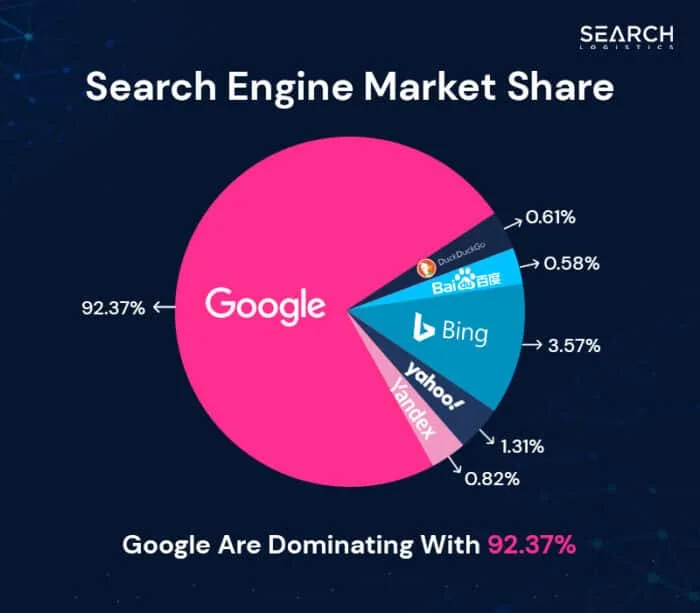
StatCounter, for instance, can undercount markets where tracking scripts are blocked or where mobile browsers dominate in unusual ways. Panel-based estimates can over-represent desktop users. So when you read any market share of search engines figure, ask how it was collected before you build a strategy on it.
My rule of thumb: cross-check at least two independent sources, and if they disagree by more than a few points, treat the number as directional rather than precise. Directional is usually enough to make good decisions.
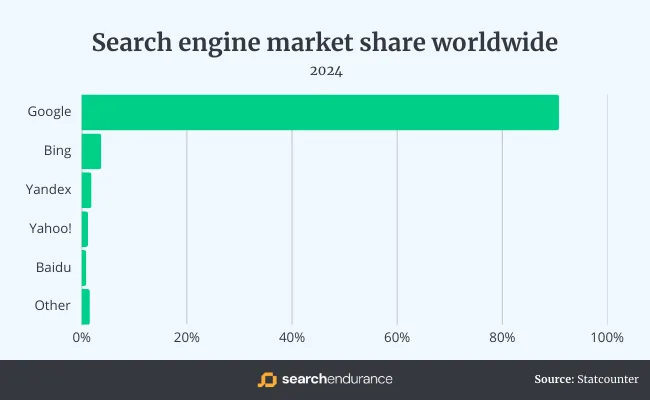
The Global Picture: Who Owns the Market Share of Search Engines
Worldwide, the market share of search engines is dominated by a single player in a way that has almost no parallel in modern commerce. Google consistently holds the lion’s share, with Bing, Yandex, Baidu, Yahoo, and a long tail of regional engines splitting the remainder.
That concentration is remarkable when you consider how competitive digital markets usually are. Search has stubbornly resisted fragmentation because of a powerful feedback loop: more users generate more data, which improves results, which attracts more users. Breaking that loop is the central challenge for every rival.
Still, “dominant” does not mean “universal.” The global market share of search engines hides enormous regional variation, and that variation is where the real strategic insight sits.
Google’s Enduring Dominance
Google’s position rests on three pillars: relevance, habit, and ecosystem lock-in. Its ranking systems are trained on an unmatched volume of queries and clicks. Its brand is a verb in dozens of languages. And its integration with Android, Chrome, Gmail, and Maps keeps it the default choice for billions of people.
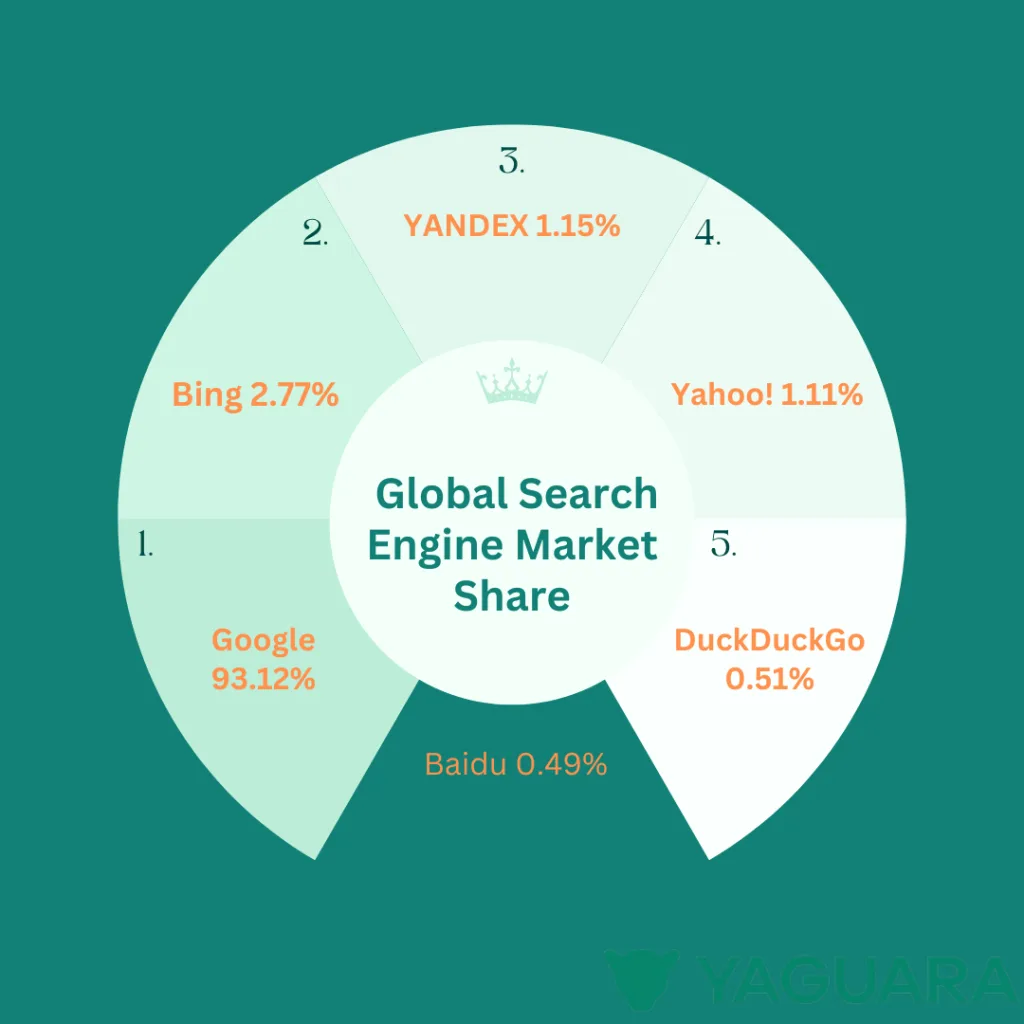
For advertisers, this means Google Ads often delivers the deepest reach in most Western markets. For SEO professionals, it means Google’s guidelines effectively define the rules of the game. When people quote the market share of search engines, they are usually quoting Google’s slice of it.
But relying on a single channel carries risk. Algorithm updates, policy changes, and rising ad costs can hit hard. Diversification is not paranoia; it is basic risk management.
The Persistent Challengers
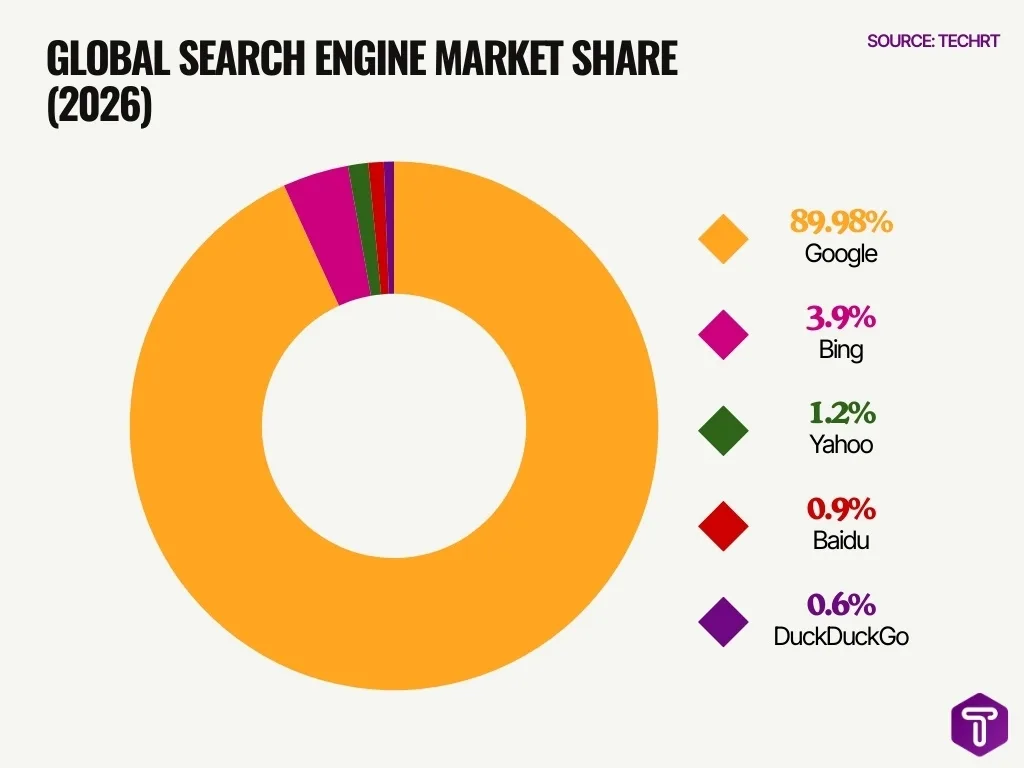
Bing holds a meaningful position, particularly on desktop in North America and in enterprise environments where Windows and Microsoft 365 push it as the default. That default placement is a quiet but powerful distribution advantage.
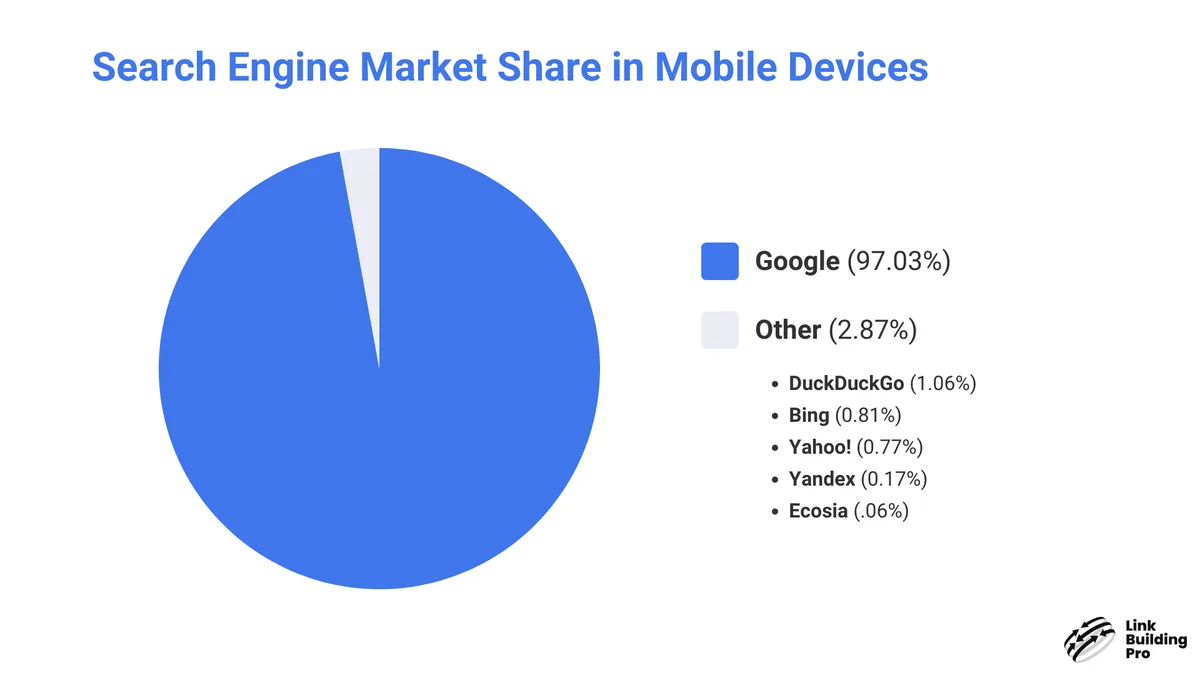
Yahoo still retains a loyal base in certain segments, largely through legacy portal habits and default browser deals. DuckDuckGo carved out a niche around privacy, attracting users who distrust tracking-heavy platforms. Ecosia ties searches to tree planting, appealing to environmentally conscious searchers.
None of these challengers has seriously threatened Google’s overall lead, but together they represent a meaningful slice of the market share of search engines. For niche audiences, that slice can be surprisingly valuable.
Regional Deep Dive: How the Market Share of Search Engines Shifts Across the Globe
Here is where things get genuinely interesting. The market share of search engines is not a global constant with minor local noise — it is a patchwork of distinct ecosystems, each shaped by language, regulation, and history.
Understanding these regional patterns is essential for anyone running international campaigns, building multilingual products, or simply trying to reach audiences outside their home market. Let’s break it down by region.
North America: Google and Bing’s Home Turf
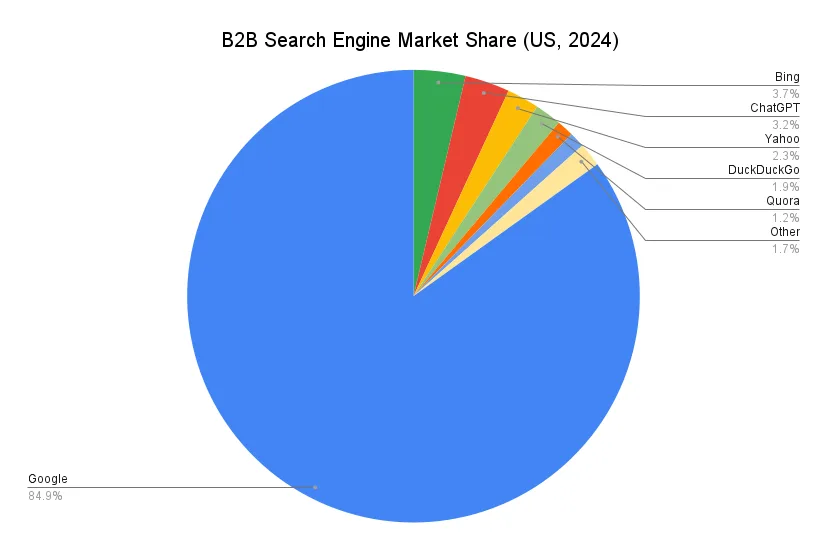
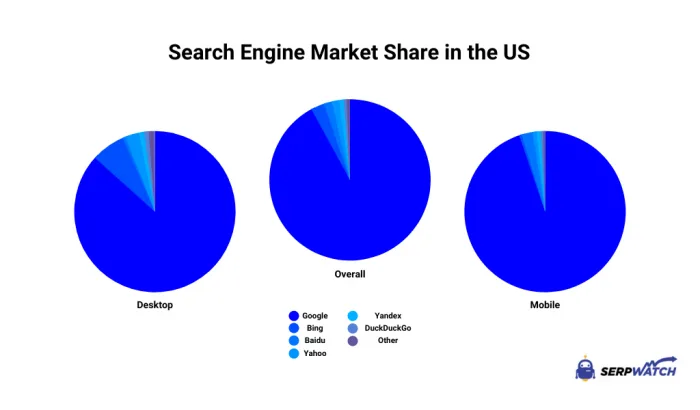
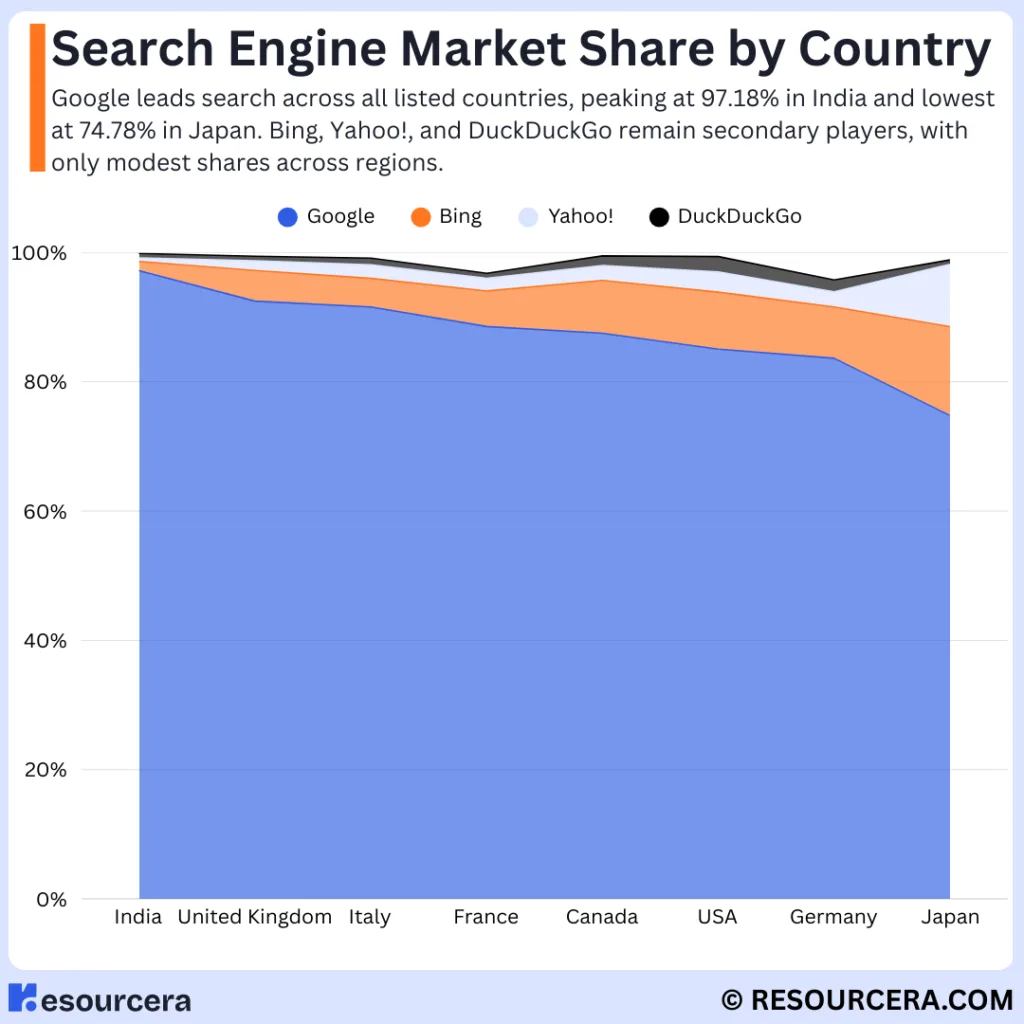
In the United States and Canada, Google commands the overwhelming majority of search traffic. Bing holds a solid second place, buoyed by Windows defaults and its integration into Microsoft’s productivity suite. Yahoo and DuckDuckGo trail behind.
What makes North America distinctive is how much of the market share of search engines flows through mobile. Smartphone searches dominate volume, which means mobile-first indexing and page speed are non-negotiable for anyone targeting this region.
Practical tip: if you are optimizing for US traffic, assume Google-first, but do not ignore Bing entirely. Bing users skew older, wealthier, and more desktop-oriented — a demographic that converts well for certain B2B and finance offers.
Europe: High Google Concentration With Local Quirks
Across most of Western Europe, Google’s share is even higher than the global average. Germany, France, Spain, and the UK all show Google firmly in control, with Bing a distant second.
Eastern Europe tells a different story. In Russia, Yandex is the dominant force, holding a majority of search traffic. Yandex understands Russian language nuance, local content, and regional intent in ways that global engines struggle to match. For anyone targeting Russian-speaking audiences, the market share of search engines looks completely different from the Western norm.
Regulatory pressure also shapes the European picture. Antitrust rulings and the Digital Markets Act have forced changes to default search settings, slowly opening space for alternatives. The effects are gradual, but they matter over time.
Asia-Pacific: the Most Fragmented Region
Asia-Pacific is where the global market share of search engines breaks down most dramatically. China is effectively a closed ecosystem, with Baidu leading a field that also includes Sogou and 360 Search. Google’s presence there is minimal for consumer search.
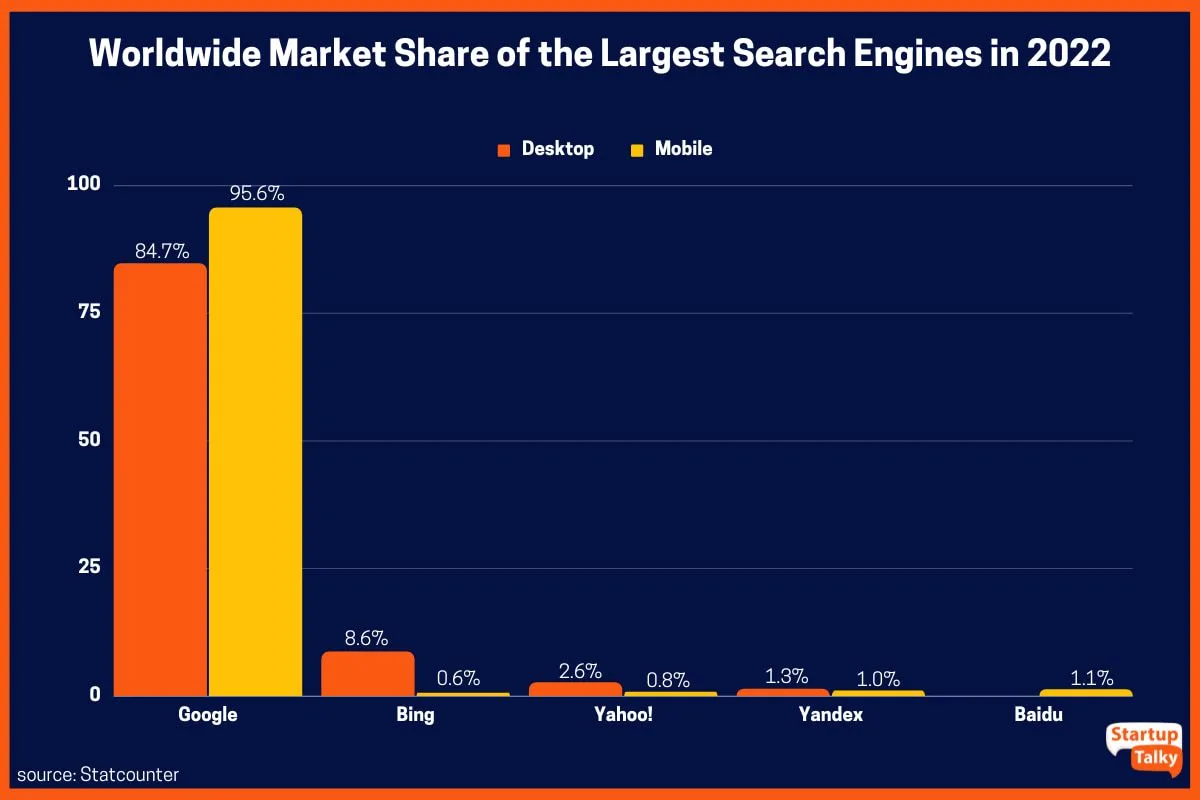
South Korea is another outlier. Naver, a homegrown portal, holds a strong position, with Daum also competing. Google has gained ground over the years, but Naver’s integrated content ecosystem — blogs, news, shopping, Q&A — keeps users inside its walls.
Japan leans heavily toward Google and Yahoo Japan, which operates on Google’s underlying technology. India, by contrast, is a Google stronghold, though the market is evolving fast as smartphone adoption deepens in smaller cities and rural areas.
Latin America: Mobile-First and Google-Led
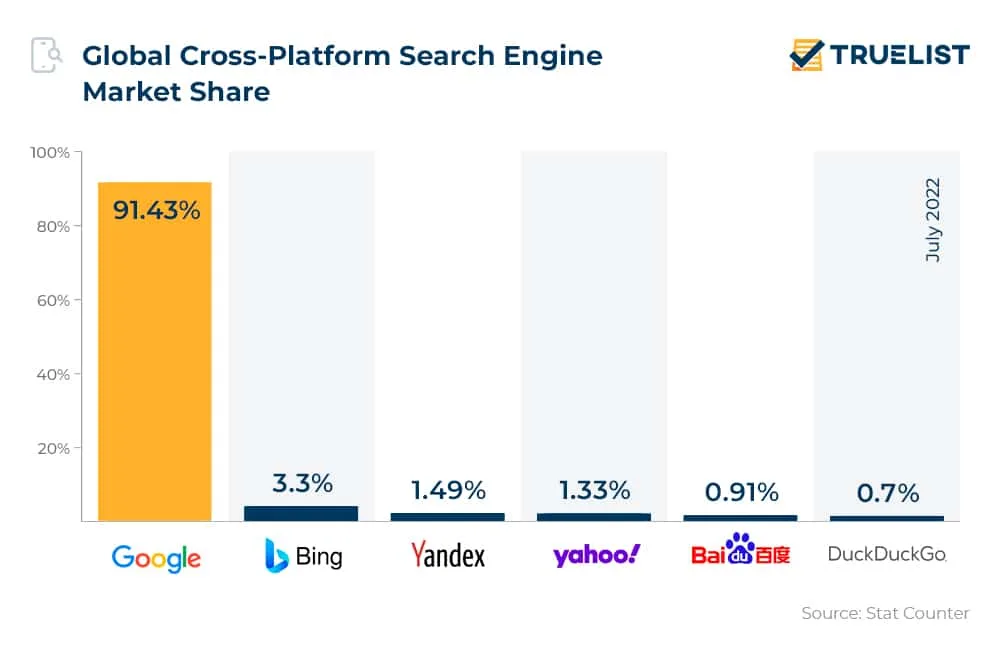
Across Brazil, Mexico, Argentina, and their neighbors, Google dominates the market share of search engines by a wide margin. Bing and Yahoo hold small positions, mostly among desktop users.
The defining feature of Latin America is mobile intensity. A large share of searches happen on Android devices, often on connections that are slower or less reliable than in North America or Europe. That makes lightweight pages, compressed images, and fast server responses especially valuable.
Localization matters too. Portuguese and Spanish content that reflects regional slang, currency, and cultural references consistently outperforms generic translations.
Africa and the Middle East: Growth Markets to Watch
In most African and Middle Eastern markets, Google leads the market share of search engines, but the margins vary. In some countries, local engines and regional portals still capture meaningful traffic, particularly where local language content is scarce.
Mobile penetration is rising quickly, and with it, search volume. These are among the fastest-growing search markets in the world, which makes early investment in local content and language coverage potentially very rewarding.
One practical note: payment infrastructure and device diversity vary widely across these regions. Your analytics setup needs to account for older Android versions and lighter browsers that many global tools overlook.
Regional Market Share of Search Engines at a Glance
The table below summarizes the broad patterns. Treat these as directional benchmarks rather than precise measurements — actual figures shift month to month and vary by source.
| Region | Leading Engine | Strong Secondary Players | Notable Characteristics |
|---|---|---|---|
| North America | Bing, Yahoo, DuckDuckGo | Mobile-dominant; Bing strong on desktop and enterprise | |
| Western Europe | Bing | Very high Google concentration; regulatory pressure rising | |
| Eastern Europe / Russia | Yandex | Yandex leads on local language and content depth | |
| China | Baidu | Sogou, 360 Search | Closed ecosystem; Google largely absent for consumers |
| South Korea | Naver | Google, Daum | Portal-integrated search with strong content ecosystem |
| Japan | Yahoo Japan | Yahoo Japan runs on Google’s search technology | |
| India | Bing | Rapid smartphone-driven growth in tier-2 and tier-3 cities | |
| Latin America | Bing, Yahoo | Mobile-first, Android-heavy, strong localization payoff | |
| Africa & Middle East | Regional portals | Fast-growing, diverse device and payment landscape |
Notice how the “leading engine” column is not always Google. That single observation changes how you should approach any international SEO or paid search plan. The market share of search engines is a regional story first and a global story second.
What Drives Shifts in the Market Share of Search Engines
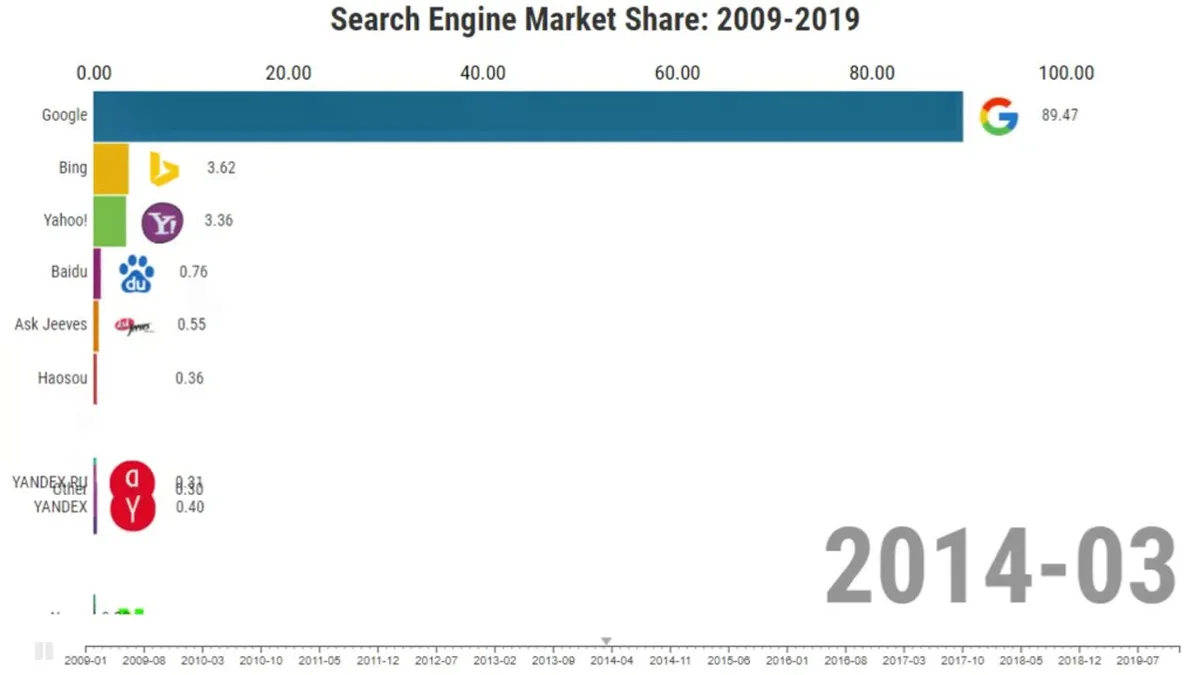
Search markets are not static. Shares move over months and years in response to technology, regulation, and user behavior. Understanding the forces at play helps you anticipate where things are heading.
Some of these forces are slow and structural — like default browser deals that quietly funnel millions of queries. Others are sudden, like a major AI announcement that reshapes how people think about search itself.
Default Placements and Distribution Deals
The single biggest lever in the market share of search engines is the default setting. When a browser, operating system, or device ships with a particular engine pre-installed, most users never change it. That is why companies pay enormous sums for default placement deals.
Microsoft’s Windows and Edge defaults give Bing a floor of traffic it could never earn purely on merit. Apple’s Safari deal with Google is one of the most valuable commercial agreements in tech. These arrangements quietly shape the market share of search engines in ways users rarely notice.
For marketers, the lesson is simple: distribution beats features more often than anyone likes to admit.
AI and the Changing Search Experience
AI-generated answers are reshaping how people interact with search. Instead of clicking through ten blue links, users increasingly get summarized responses directly on the results page.
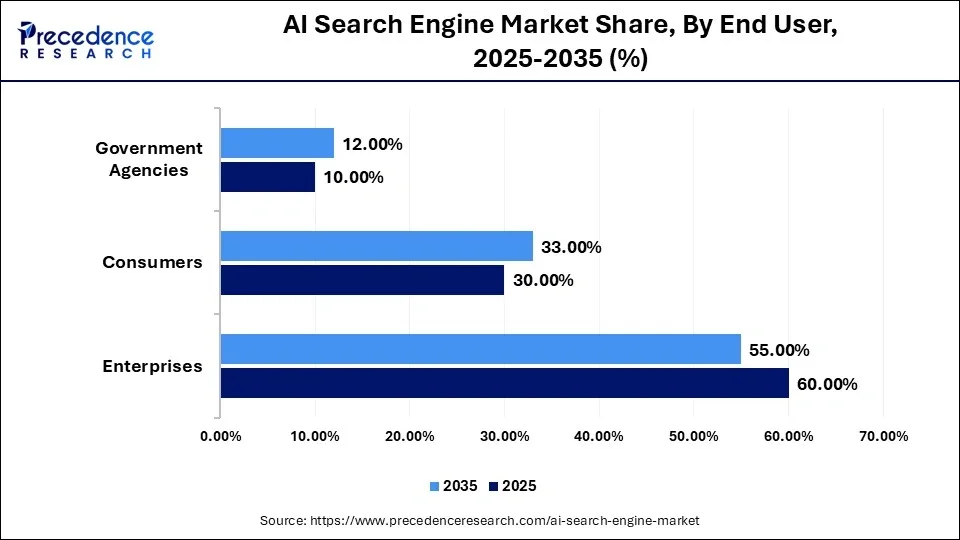
This shift affects the market share of search engines in two ways. First, it raises the barrier to entry — building a competitive AI search experience requires massive compute and data. Second, it changes what “winning” means, since visibility may come from being cited in an AI answer rather than ranking first.
Emerging AI-first search tools are beginning to capture small but growing slices of attention. Whether they fragment the market or consolidate it further remains an open question, but the direction of travel is clear.
Privacy Regulation and User Trust
Privacy laws like GDPR in Europe and various state-level rules in the US have changed how search engines collect and use data. Some users actively seek out privacy-focused alternatives, which nudges the market share of search engines at the margins.
DuckDuckGo’s steady growth is a case in point. It will never rival Google in raw volume, but it has built a durable niche by promising not to track users. For brands targeting privacy-conscious audiences, that niche is worth taking seriously.
How the Market Share of Search Engines Affects SEO Strategy
Your SEO playbook should change depending on which market you are targeting. The market share of search engines determines which guidelines matter, which tools you need, and which content formats perform best.
In Google-dominated markets, you optimize for Google’s ranking systems, follow its webmaster guidelines closely, and rely on tools built around its API. In Yandex markets, you need Yandex Webmaster and an understanding of how it weighs local signals. In China, Baidu’s ecosystem has its own rules entirely.
Ignoring these differences is one of the most common mistakes I see in international campaigns. Teams copy their home-market playbook into a new region and wonder why nothing ranks.
Optimizing for Google-Dominated Markets
In markets where Google controls the vast majority of the market share of search engines, the fundamentals still win: fast pages, clear structure, authoritative content, and genuine user value. Core Web Vitals, mobile usability, and topical depth all matter.
Backlinks remain important, but quality trumps quantity more than ever. A handful of links from respected, relevant sites will outperform hundreds of low-quality ones. And with AI overviews appearing more often, structuring content so it can be quoted directly is increasingly valuable.
Practical step: audit your top pages for “quotable” passages — clear, self-contained answers that an AI system could lift. Those passages often earn visibility even when your page does not rank in the classic top three.
Optimizing for Yandex and Baidu
Yandex rewards regional relevance, local language quality, and signals that Western SEOs often overlook, like behavioral metrics and regional citation. If you are targeting Russian audiences, treat Yandex as a first-class channel, not an afterthought.
Baidu operates in a very different environment. It favors local hosting, ICP licensing for certain content types, and content that fits Chinese user expectations. Many global tools simply do not work well there, so you will need local expertise.
In both cases, the market share of search engines tells you where to invest your effort. Spread thin across every engine and you will underperform everywhere.
Paid Search Implications of the Market Share of Search Engines
Paid search budgets follow the market share of search engines almost automatically. Where the users are, the ad dollars go. But the economics of each platform differ in ways that matter for return on investment.
Google Ads offers the deepest reach in most markets and the most sophisticated targeting. Bing Ads often delivers lower competition and cheaper clicks, especially for B2B and older demographics. Yandex Direct and Baidu’s ad platform dominate their respective home markets.
Smart advertisers do not just chase volume. They chase efficiency, and efficiency often hides in the second-place engines where competition is thinner.
Cost Dynamics Across Platforms
In highly competitive Google markets, cost-per-click for commercial keywords can be brutal. The same keywords on Bing often cost significantly less, because fewer advertisers bid on them. That gap is a genuine opportunity for leaner budgets.
In Russia, Yandex Direct is where the auction happens, and understanding its quirks is essential. In China, Baidu’s ad system has its own bidding logic and creative requirements. Each platform reflects the market share of search engines in its region.
My advice: before scaling spend on the dominant engine, test the secondary one. You may find better returns with less competition.

Audience Quality versus Audience Size
Raw reach is not the same as qualified reach. A smaller engine with a focused audience can outperform a giant platform if that audience matches your offer.
DuckDuckGo users, for example, tend to be privacy-conscious and often more tech-savvy. Bing users skew toward enterprise and finance. These are not trivial niches — they are concentrated pools of valuable intent.
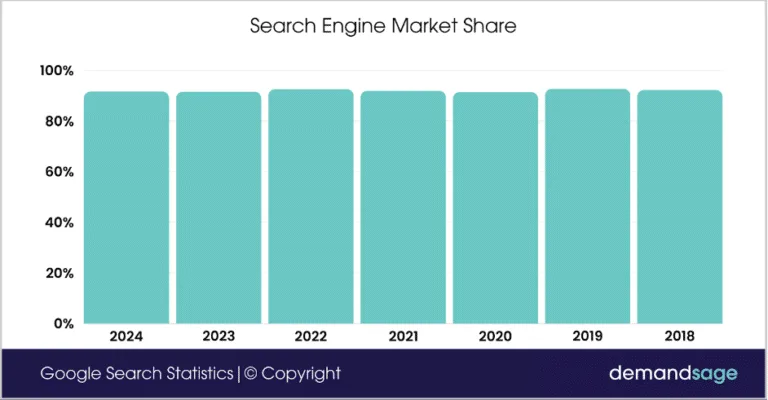
The market share of search engines tells you where the crowds are. Your job is to figure out which crowd actually wants what you sell.
Tracking and Analytics in a Multi-Engine World
If you operate across regions, your analytics setup needs to reflect the fragmented market share of search engines. A single Google Analytics view will not tell you the full story.
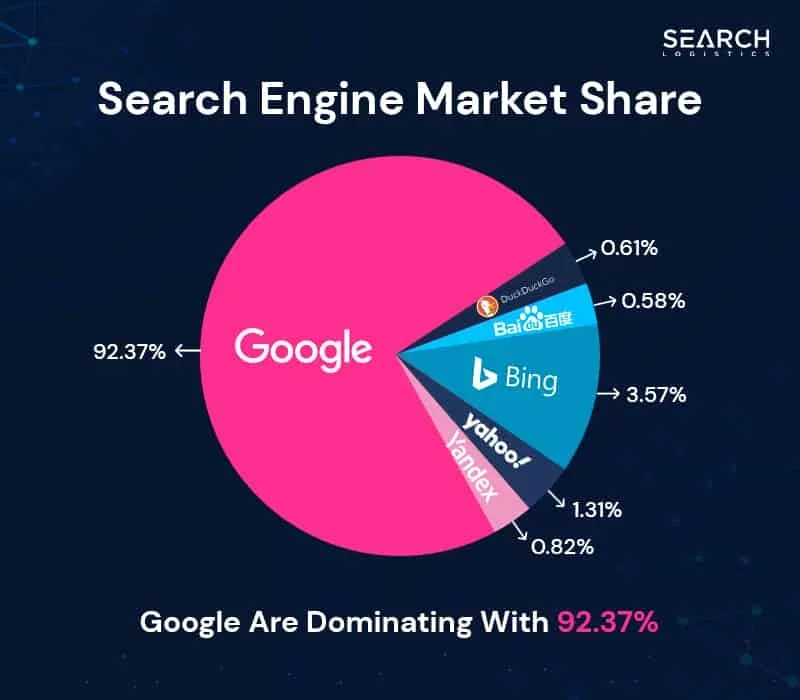
You need to segment traffic by engine, region, and device. You need to account for engines that your default tools may not recognize. And you need to be honest about attribution, because users often search on one engine and convert through another channel entirely.
Getting this right is tedious but high-leverage. Clean data turns guesswork into decisions.
Handling Regional Search Engines in Your Data
Yandex, Baidu, Naver, and other regional engines sometimes get lumped into “referral” or “other” in standard reports. That hides important patterns.
Set up custom channel groupings so each major engine gets its own bucket. Then compare conversion rates, average order values, and bounce behavior across engines. You will often find that the market share of search engines in your own traffic does not match the global averages at all.
That mismatch is a signal. It usually means you have an untapped opportunity or a hidden problem worth investigating.
Attribution Challenges and Solutions
Multi-device journeys make attribution genuinely hard. Someone might see an ad on mobile, search on desktop, and convert on a tablet days later. No single model captures this perfectly.
Use a combination of last-click, first-click, and data-driven models to triangulate. And supplement with incrementality tests where budget allows. The goal is not perfect attribution — it is a defensible view of what is actually working.
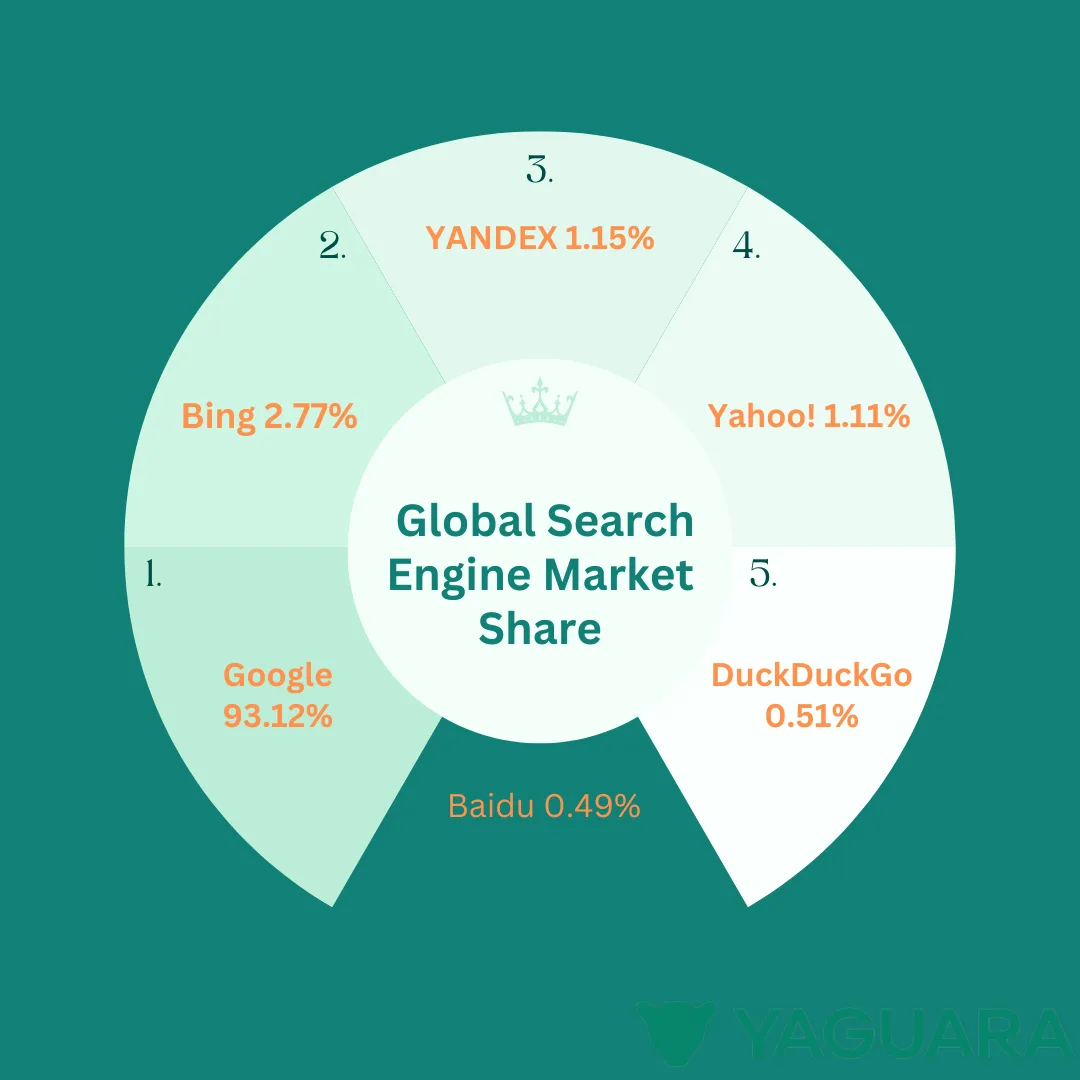
Keep in mind that as the market share of search engines evolves, so will the channels you need to track. Build flexibility into your setup from the start.
Real-World Examples of Regional Market Share of Search Engines in Action
Abstract numbers become clearer with concrete cases. Here are a few scenarios that show how the market share of search engines plays out in practice.
These are the kinds of situations I have seen teams navigate, and they illustrate why local knowledge beats global assumptions every time.
A Retail Brand Entering South Korea
Imagine a fashion retailer expanding into South Korea with a Google-first strategy. They invest heavily in Google SEO and Google Ads, expecting strong returns.
The results disappoint. Naver dominates the market share of search engines there, and its shopping and blog integrations drive most discovery. Without a Naver presence, the brand is nearly invisible to its target audience.
The fix: build a Naver Smart Store, publish Naver Blog content, and optimize for Naver’s ranking signals. Within months, traffic and sales improve dramatically. The lesson is blunt — respect the local market share of search engines or pay the price.
A B2B Software Company Targeting Russia
Now consider a B2B software firm that wants to reach Russian enterprises. They start with Google, which delivers modest results.
Then they discover Yandex. The market share of search engines in Russia heavily favors Yandex, and its ad platform reaches decision-makers that Google misses. They shift budget, localize content properly, and see qualified leads climb.
The takeaway: in some markets, the second-place global engine is actually the first-place local one. Knowing the difference is worth real money.
A Publisher Chasing Global Search Traffic
Finally, picture a news publisher trying to grow international readership. They optimize entirely for Google and see strong growth in the US and Europe.
But their Asian traffic stalls. Baidu and Naver do not reward the same signals, and their content is not structured for those ecosystems. By adding region-specific SEO — local hosting, translated metadata, and platform-native formats — they unlock new audiences.
This is the practical value of understanding the market share of search engines. It turns a vague global ambition into a specific regional plan.
The Future of the Market Share of Search Engines
Where is all of this heading? The market share of search engines will keep evolving, driven by AI, regulation, and changing user habits. A few trends stand out.
First, AI-native search experiences will grow, though how much they fragment the market is uncertain. Second, regulatory pressure in Europe and elsewhere may slowly loosen default placements. Third, regional champions will keep defending their home turf with local content advantages.
For anyone planning more than a year ahead, the safe bet is flexibility. Build systems that can adapt to a shifting market share of search engines rather than betting everything on one platform.
AI Search and the Next Wave
AI assistants are becoming a primary interface for information. Instead of typing keywords, users ask questions and receive synthesized answers. This changes the market share of search engines because the “search” itself may happen inside an AI product rather than a traditional engine.
Brands that produce clear, well-sourced, quotable content will benefit most. Those relying on thin content and aggressive tactics will struggle as AI systems get better at filtering noise.
The practical move now: invest in genuine expertise and clear writing. Those are the assets that survive every platform shift.
Regulation and Market Opening
Antitrust actions and digital market rules are slowly reshaping defaults and self-preferencing. The effects are incremental, but over years they can meaningfully alter the market share of search engines.
New entrants may find more room to grow as a result. For marketers, this means keeping an eye on regulatory news in your target markets — it can signal coming shifts in where users search.
Staying informed is not optional when your visibility depends on platforms you do not control.
Practical Takeaways for Navigating the Global Market Share of Search Engines
Let’s pull the threads together into something you can actually use. These are the moves that consistently pay off when you are working across regions.
None of them are glamorous, but they are the difference between a strategy that works and one that quietly fails in unfamiliar markets.
Start With Local Research, Not Global Averages
Before you write a single line of content or set a single ad budget, find out the actual market share of search engines in your target region. Use multiple sources and look for recent data.
Then build your plan around the local leader, not the global one. This one habit prevents most international SEO disasters I have seen.
Diversify Where It Makes Sense
Do not put all your eggs in one basket, even if that basket is Google. Test secondary engines where your audience overlaps, and measure results honestly.
The market share of search engines is concentrated, but the long tail is not empty. It is full of specific, valuable audiences waiting to be reached.
Invest in Genuine Localization
Translation is not localization. Localization means understanding local search behavior, cultural context, and platform expectations.
When you get this right, your content performs better on every engine, regardless of how the market share of search engines shifts. Local relevance is the one advantage no algorithm can take away.
Frequently Asked Questions About the Market Share of Search Engines
These are the questions I hear most often from clients and readers. The answers reflect the current state of play, though exact figures shift over time.
Which Search Engine Has the Largest Global Market Share?
Google holds the largest share of the market share of search engines worldwide by a wide margin, typically around nine-tenths of global search traffic. No other engine comes close on a global scale, though the picture changes significantly in specific regions.
Is Google the Leader in Every Country?
No. Yandex leads in Russia, Baidu in China, and Naver in South Korea. In these markets, the this approach looks very different from the global average, and strategies must adapt accordingly.
Why Does the Market Share of Search Engines Vary by Region?
Language, culture, regulation, and default placement deals all play a role. Local engines often understand local content and user intent better than global ones, which builds loyalty over time.
How Does the Market Share of Search Engines Affect SEO?
It determines which ranking guidelines matter, which tools you need, and which content formats perform best. Optimizing for the wrong engine in a given market wastes time and budget.
Should I Advertise on Smaller Search Engines?
Often, yes. Secondary engines frequently offer lower competition and cheaper clicks, and their audiences can be highly qualified. The this practice tells you where the volume is, but efficiency often hides in the smaller players.
How Often Do These Figures Change?
Shares shift gradually, but major events — new AI products, regulatory rulings, or default deal changes — can accelerate movement. Reviewing the this approach quarterly is a reasonable cadence for most businesses.
What is the Best Way to Track Search Traffic by Engine?
Use custom channel groupings in your analytics platform so each major engine gets its own bucket. This reveals how the this practice actually plays out in your own traffic, which often differs from global averages.
Will AI Change the Market Share of Search Engines?
Almost certainly. AI-native search experiences are growing, and they may shift how users discover information. The this approach will likely evolve as a result, though the pace and direction remain uncertain.
Final Thoughts on Reading the Global Market Share of Search Engines
Understanding the this practice is less about memorizing a single number and more about reading a map. That map shows you where attention lives, where competition is fierce, and where opportunity hides in plain sight.
The teams that win internationally are the ones that respect local realities. They research the actual this approach in each region, build for the local leader, and diversify thoughtfully. It is not glamorous work, but it is the work that compounds.
So the next time someone quotes a global average, ask the better question: what does the market share of search engines look like in the market I actually care about? That question will take you further than any headline statistic ever will.
For verified reference and background research, consult the authoritative informational resource on this topic.