Natural Language Queries SEO: 7 Easy Tips to Rank
Natural language queries SEO is the discipline of shaping your content so it answers the way real people actually type and speak, not the way old-school keyword tools assume they do. If your pages still read like a string of disconnected phrases, you are leaving easy visibility on the table. Stick around, because the seven tips below are the ones that consistently move the needle.
Here is the honest truth after years of watching sites rise and fall in search: the winners are rarely the ones with the biggest budgets. They are the ones who figured out how people phrase questions and then answered those questions cleanly. That is the whole game with conversational search.
The natural language queries SEO piece sits inside a broader topical cluster on semantic search and query understanding, alongside related sub-topics like voice search optimization, entity-based content modeling, and question-intent mapping. Treat it as your working reference for the conversational side of that cluster.
Why Natural Language Queries SEO Changes How You Write
Search engines no longer match strings. Focusing on natural language queries seo provides clear direction here. They interpret intent. When someone types “how do I fix a slow laptop fan that keeps spinning loud,” the engine parses the entity (laptop fan), the symptom (spinning loud), and the goal (fix). Your job is to make that interpretation effortless.
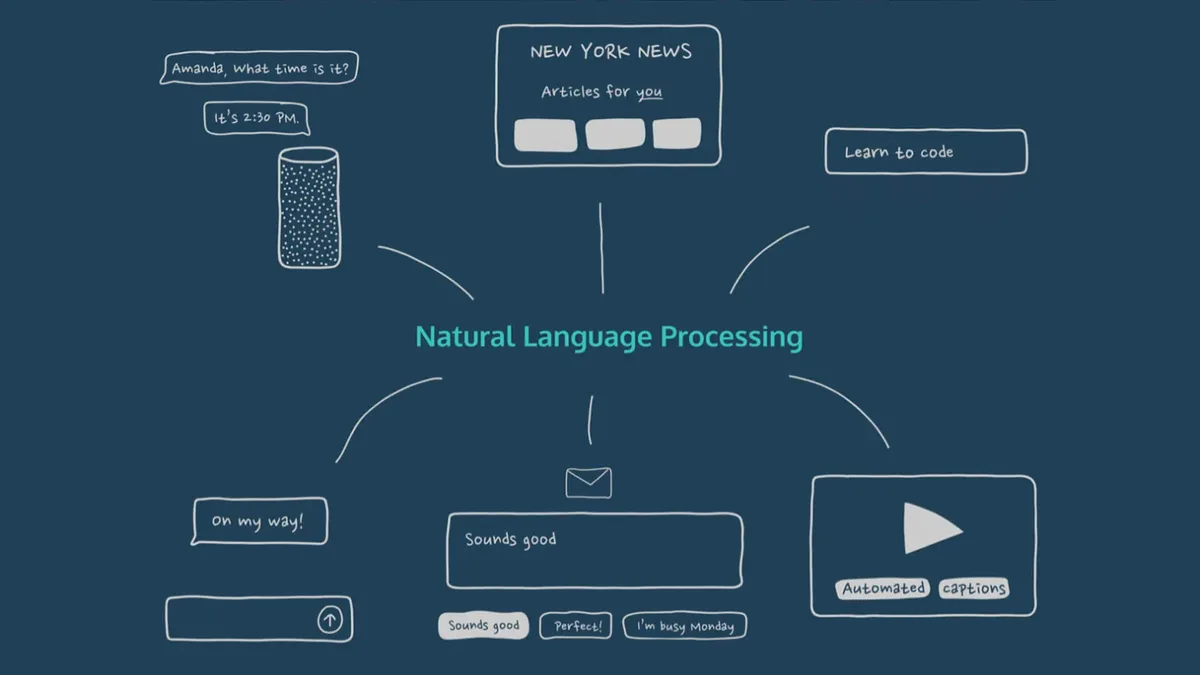
Natural language processing models break a query into tokens, weigh the relationships between them, and compare that structure against billions of indexed passages. A page that mirrors the natural phrasing of the question tends to match more cleanly than a page stuffed with exact-match keywords in awkward order.
This is why a natural language queries SEO guide that ignores sentence structure usually underperforms. The engine rewards passages that read like answers, not like keyword lists. Short, declarative sentences that directly address a question carry more weight than a paragraph that circles the topic without landing on it.
According to the natural language processing overview on Wikipedia, modern systems rely on contextual embeddings, meaning the meaning of a word shifts based on surrounding words. Your content has to give those models the right context to work with.
Build a Natural Language Queries SEO Checklist Before You Write
Before a single sentence lands on the page, run through a short pre-flight list. This natural language queries SEO checklist keeps you from drifting into keyword-first thinking halfway through drafting.

Start by listing the five to ten real questions a buyer would ask out loud. Not the polished search-bar version, the spoken version. Then confirm each question maps to a heading or a direct answer in your draft. If a question has no home, the draft is incomplete.
Here is the checklist I actually use, and it holds up across niches:
| Checklist Item | Why It Matters | Quick Test |
|---|---|---|
| Question-shaped headings | Matches how people phrase queries | Can you read the H2 as a spoken question? |
| Direct answer in first two sentences | Feeds featured snippet extraction | Is the answer above the fold of the section? |
| Entity coverage | Signals topical authority | Are related nouns and tools named? |
| Conversational synonyms | Captures phrasing variation | Does the text use “how to,” “what is,” “why does”? |
| Readability score | Keeps passages extractable | Are sentences under 25 words on average? |
The natural language queries SEO table alone will save you hours of revision. Run the quick tests on your draft and you will spot the weak sections fast. The sections that fail two or more tests are the ones search engines will skip.
The 7 Easy Tips to Rank With Natural Language Queries SEO
Now to the core of it. These seven tips are ordered by impact, so if you only have time for three, take the first three. Each one stands on its own, but they compound when you apply them together.

Tip 1: Write Headings as Spoken Questions
Open your draft and rewrite every H2 and H3 as a question a real person would ask. Refining each detail of your natural language queries seo strengthens this section. “Keyword Research” becomes “How Do I Find the Right Keywords?” The difference sounds small. It is not.
Question headings do two things at once. They match the phrasing patterns of conversational queries, and they create clean anchor points for featured snippet extraction. Google regularly lifts a question heading plus the two sentences beneath it and displays the pair as a direct answer.
One caveat from experience: do not force every heading into a question. A page where every single H2 ends in a question mark reads like an FAQ dump and loses authority. Mix question headings with declarative ones so the page still feels like a guide, not an interrogation.
Tip 2: Answer in the First Two Sentences
Whatever the heading promises, deliver the natural language queries SEO immediately. The first two sentences under a heading should contain the answer, plainly stated. Elaboration comes after.
This pattern is the backbone of strong natural language queries SEO because it mirrors how conversations work. When a friend asks you a question, you answer first and explain second. Search engines reward the same rhythm.
Try this: write the answer as if you were texting it. “Yes, because X.” Then expand. The compressed version almost always outperforms the long-winded opening paragraph you would have written first.
Tip 3: Mirror Conversational Phrasing Without Stuffing
People say “how much does it cost” far more often than “pricing information.” They ask “does it work with iPhone” rather than “iOS compatibility.” Your copy should reflect that.
Pull real phrasing from your own support inbox, sales calls, or the “People Also Ask” boxes in search results. Effective execution in your natural language queries seo makes a tangible difference. Those boxes are a live feed of conversational queries in your niche. Every phrase you harvest is a heading or sub-point waiting to happen.
The trap here is overcorrection. Mirroring conversational phrasing does not mean writing sloppy prose. It means using the words people use while keeping the grammar tight. Conversational and sloppy are different things.
Tip 4: Cover Entities, Not Just Keywords
An entity is a thing with a stable identity: a product, a person, a place, a concept. Maintaining clarity across your natural language queries SEO remains essential. Search engines build knowledge graphs around entities and reward pages that connect them accurately.
If you write about espresso machines, your page should naturally mention burr grinders, portafilters, pressure bars, and extraction time. Those are related entities. A page that mentions only “espresso machine” ten times covers one entity and ignores the neighborhood.

This is where natural language queries SEO best practices diverge from old keyword density advice. Density measures repetition. Entity coverage measures understanding. The second one wins.
Tip 5: Structure for Passage-Level Retrieval
Search engines index passages, not just pages. A single strong paragraph can rank for a long-tail question even if the rest of the page targets something broader.
That means every section needs to survive on its own. A reader who lands mid-page from a snippet should understand the section without scrolling up. Use clear headings, self-contained paragraphs, and avoid pronouns that point to something three sections earlier.
Practically, the natural language queries seo changes how you draft. Instead of one flowing essay, think of the page as a stack of mini-answers, each complete. The connective tissue between them is nice, but the sections carry the ranking weight.

Tip 6: Add Schema and Structured Data
Structured data tells search engines what your content is, not just what the natural language queries SEO says. FAQ schema, HowTo schema, and Article schema all help engines parse intent faster.
You do not need to mark up everything. Prioritize the sections that answer direct questions. A clean FAQ block with five to eight real questions, marked up properly, often earns rich results that lift click-through rates noticeably.

Keep the markup honest. Marking up content that is not on the page, or marking up promotional copy as a FAQ, invites a manual action. The benefit comes from accuracy, not volume.
Tip 7: Measure Query-Level Performance, Not Just Rankings
Track which queries actually bring impressions and clicks, not just your head-term position. Search Console’s query report, filtered to question words like “how,” “what,” “why,” and “can,” shows you exactly which conversational phrases you already rank for.

Then look for the gap. Queries with high impressions but low clicks usually mean your snippet is weak or your answer is buried. Queries with clicks but no conversions mean the intent mismatch sits deeper in the page.
Fix the snippet first. Structuring your natural language queries SEO around proven patterns ensures impact. Rewrite the heading and the opening two sentences to match the query phrasing more directly. Small edits here produce outsized movement, and they are the cheapest ranking lever you have.

Natural Language Queries SEO Best Practices That Survive Algorithm Updates
Algorithms shift. A thoughtful approach to natural language queries seo reinforces your qualifications. The principles below have held through every major update because they map to how humans actually search, not to any single ranking signal.
Write for comprehension first. If a reader has to re-read a sentence to understand it, the engine probably struggles too. Clarity is not a style preference; it is an optimization tactic.
Keep your answer density high. Every paragraph should contain at least one piece of information a reader could act on. Paragraphs that only restate the heading are dead weight, and they dilute the sections that matter.
Use the natural language queries SEO tips above as a recurring audit, not a one-time setup. Content drifts. A page that was tight six months ago often accumulates filler through small edits. Schedule a quarterly pass and cut the fat.
Finally, link related pages to each other with descriptive anchor text. Internal links that read like natural phrases (“how to map question intent”) reinforce topical relationships and help engines understand which page answers which question.
Common Mistakes That Sink Natural Language Queries SEO
The fastest way to improve is to stop doing the things the natural language queries SEO hurt. These mistakes show up on almost every underperforming page I audit.
The biggest one is treating conversational phrasing as a keyword variant to sprinkle in. It is not. It is a structural choice that affects headings, sentence order, and paragraph length. Sprinkling the phrase “how to” into a keyword-stuffed paragraph does nothing.
Second mistake: over-long introductions. Structuring your natural language queries seo around proven patterns ensures impact. If your first paragraph runs 200 words before answering anything, you have buried the answer. Trim it to two sentences and move on.
Third: ignoring the question behind the question. Someone searching “best budget laptop for students” is not asking for a spec sheet. They are asking “will this survive four years of being tossed in a backpack?” Answer the real question and the surface query takes care of itself.
Fourth: inconsistent terminology. If you call the same feature three different things across the page, you fragment your own topical signal. Pick one term, use it consistently, and note synonyms once for coverage.
Frequently Asked Questions About Natural Language Queries SEO
Here is an in-depth breakdown of key considerations regarding this section:
What Does Natural Language Queries SEO Actually Mean?
It means optimizing content for the way people speak and type full sentences, rather than for short keyword fragments. The goal is to match intent and phrasing, not just individual words.
How Many Times Should the Focus Keyword Appear?
Enough to be clear, not enough to be annoying. A natural density sits in the low single digits as a percentage. If a reader notices the repetition, you have gone too far.
Do Question Headings Hurt Readability?
Only when every heading is a question. Mix them with declarative headings so the page still flows like a guide. Two or three question headings per major section is a healthy balance.
Is Voice Search Different from Conversational Search?
They overlap heavily. Voice queries tend to be longer and more spoken, but the underlying optimization is the same: answer directly, structure clearly, and cover related entities.
How Do I Find Real Conversational Queries?
Mine your support inbox, sales call transcripts, and the “People Also Ask” panels. Those three sources give you authentic phrasing that keyword tools miss entirely.
Putting the Natural Language Queries SEO Guide Into Practice
Pick one page this week. Rewrite its headings as questions, move the answer to the top of each section, and add the related entities you have been skipping. That single pass will outperform a month of scattered tweaks.
The broader lesson is simple. Search engines got better at understanding people, so content has to get better at sounding like people. Everything else, the schema, the internal links, the measurement, supports that core shift.
Keep this natural language queries SEO guide close as you build out the rest of your topical cluster. The pages that answer real questions, in real language, with real specificity, are the ones that keep ranking long after the tactics of the moment fade.