Multimodal search SEO is no longer a forward-looking experiment you can safely bookmark for later. It sits at the center of how people actually look for answers now. Think about your own behavior for a second.
You snap a photo of a plant on a sidewalk. You hum a tune into your phone. You point your camera at a sign in a language you don’t read and expect a translation to appear. Each of those moments is a search query that text alone can’t capture.
Google’s own documentation on Google Images and visual search makes the multimodal search SEO clear that images, video, and spoken input are treated as first-class search signals. Search engines have quietly rebuilt their infrastructure around this reality. Most content teams haven’t caught up.
That gap is your opening. This multimodal search SEO guide walks through eight tactics that hold up under real testing. Not theory pulled from a conference slide. Practical moves you can run through a multimodal search SEO checklist and measure.
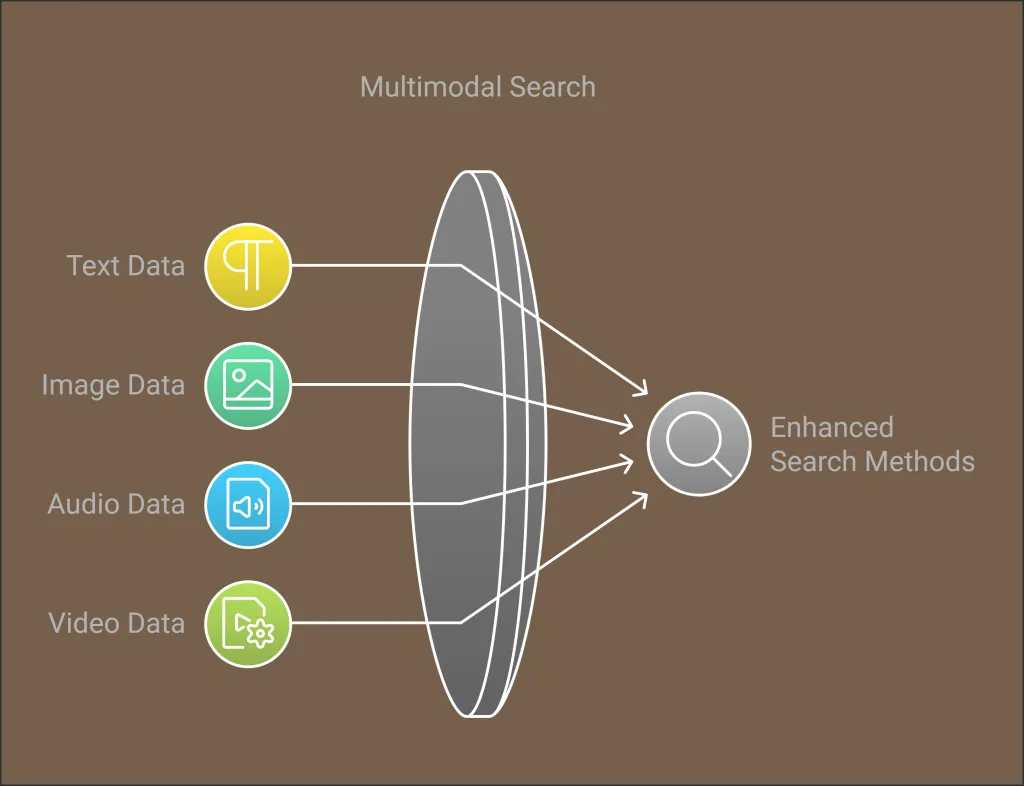
Before the multimodal search seo go deeper, let’s set the frame. Multimodal search covers any query that combines input types: text plus image, voice plus location, video plus transcript, or a screenshot plus a question. Your job as an SEO practitioner is to make sure every one of those input paths can find and understand your content.
What Multimodal Search SEO Actually Means for Content Teams
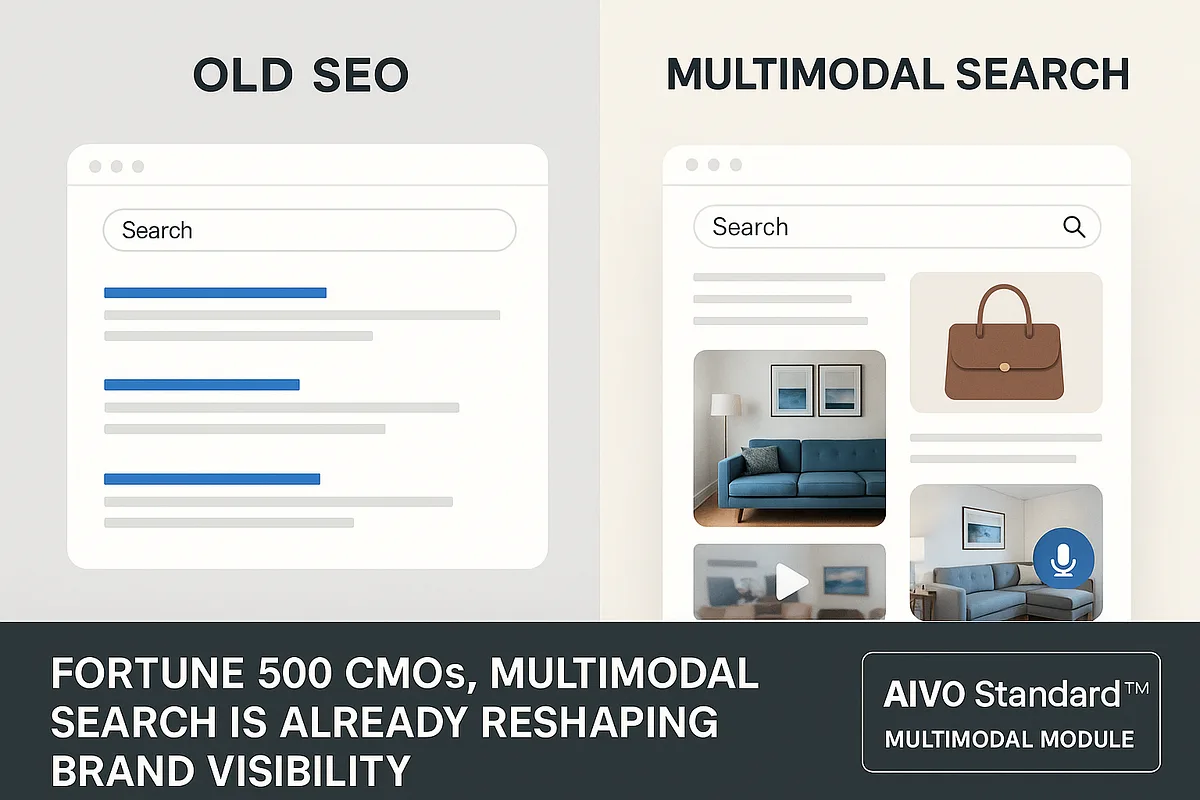
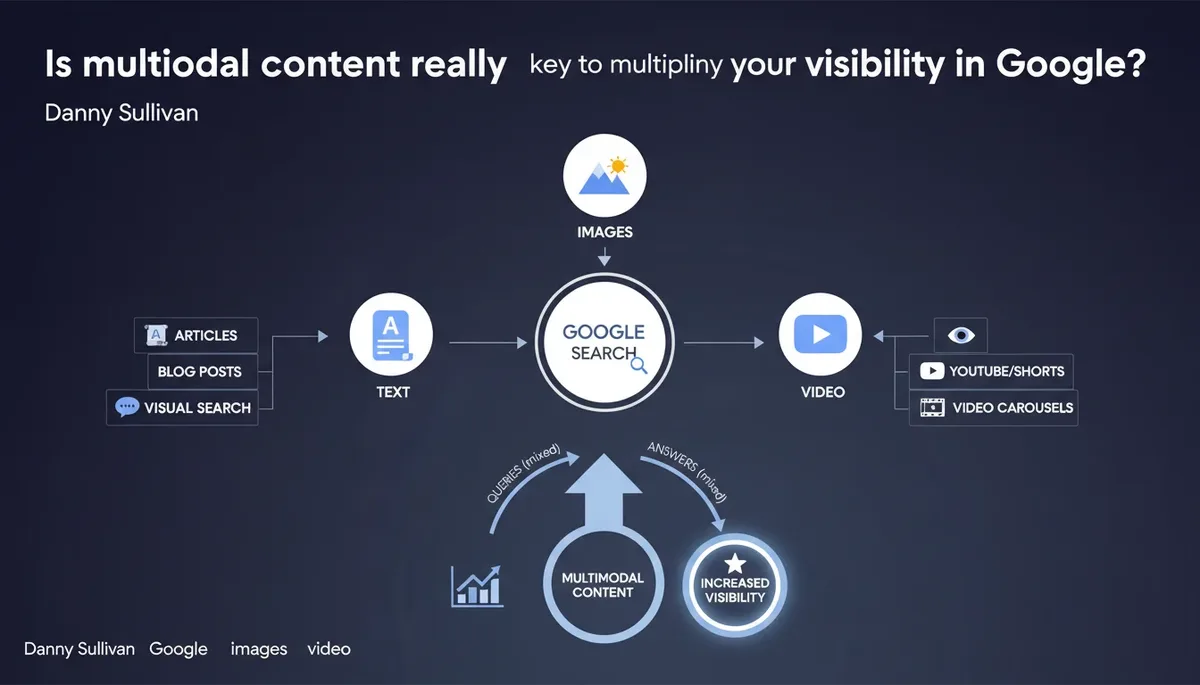
The term gets thrown around loosely, so let’s pin it down. Multimodal search SEO is the practice of optimizing content so it surfaces across search experiences that blend text, images, audio, and video. That includes Google Lens, Circle to Search, voice assistants, visual product search, and AI-generated answer panels that pull from multiple media types.

The old model treated each medium as a separate silo. You had an image team, a video team, a text SEO team, and they rarely talked. That structure is collapsing.
A single query like “what’s this rash on my arm” can trigger an image-based match, a text answer, a video explainer, and a set of related products in one results page.

Here’s the part most teams underestimate. Multimodal doesn’t just mean “add more media.” It means every piece of media needs its own descriptive scaffolding so machines can connect it to intent. An unlabeled product photo contributes nothing. The same photo with structured alt text, a caption, surrounding context, and schema markup becomes a discoverable asset.
Why Text-Only Optimization Hits a Ceiling
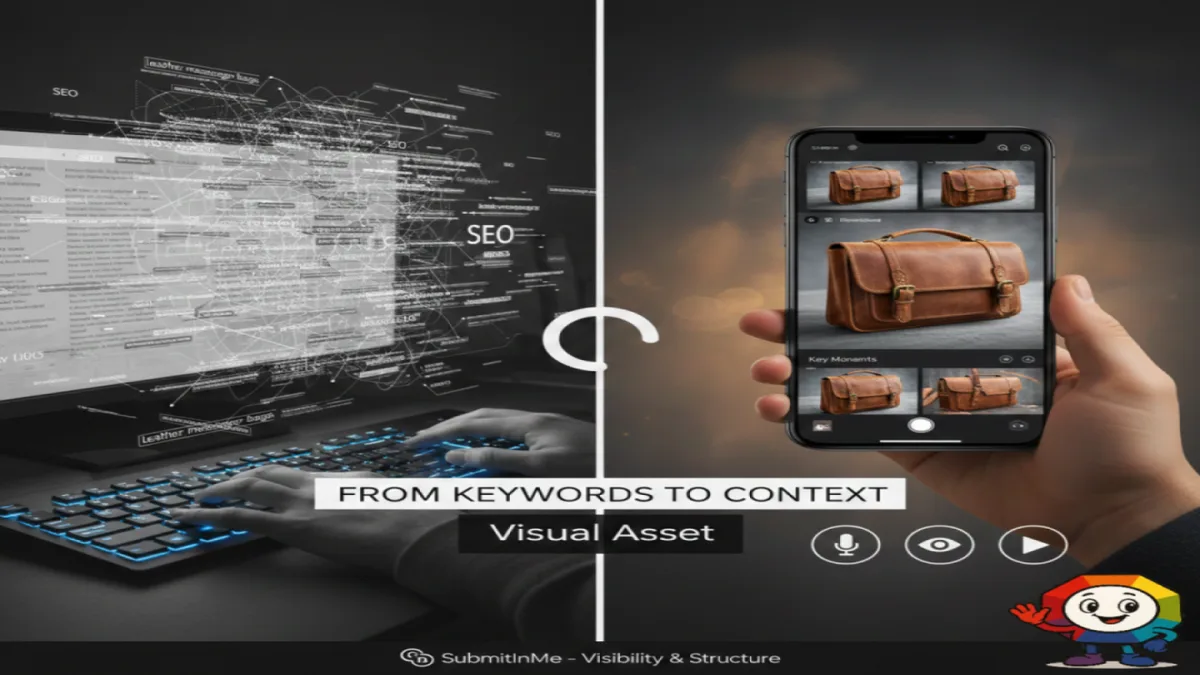
Text remains the backbone of how engines understand the world. But text alone can’t describe a color gradient, a texture, a gesture, or a product shape. That’s exactly why multimodal input exists. Users reach for a camera because words fail them.

If your site only speaks in text, you’re invisible to that whole class of query.
A furniture retailer that never labels its upholstery texture or frame material in structured form can’t appear in a Lens search for “boucle sofa beige.” A recipe blog without video transcripts misses every “how do I fold a dumpling” spoken query.

This isn’t about abandoning text. It’s about making text do double duty. Written content should describe visuals, and visuals should reinforce written meaning. When both point at the same intent, engines gain confidence. That confidence is what earns placement.
The Multimodal Search SEO Checklist Every Site Should Run First
Before tactics, run an audit. A multimodal search SEO checklist keeps you honest because it forces you to confirm each input path works. Without one, improvements happen in scattered bursts and nobody can prove what moved the needle.
Start by counting what the multimodal search SEO actually have. How many images are indexed? How many have alt text written by a human versus auto-generated filler? Do your videos carry transcripts, and are those transcripts visible on the page? Is your product schema complete enough for visual shopping results?
Here’s a starting multimodal search SEO checklist you can adapt:
- Image inventory and alt text review. List every indexed image. Flag any with generic alt text like “image1” or “photo.” Replace with descriptive phrasing that names the subject, context, and any distinguishing attribute.
- Video transcript coverage. Confirm each video has a synced transcript or at minimum an on-page text summary. Search engines can’t watch, but they can read.
- Schema completeness check. Verify Product, Recipe, VideoObject, and ImageObject markup is present and accurate where relevant.
- Visual search test. Run your own product or page images through Google Lens and Circle to Search. See what surfaces. Note mismatches.
- Voice query readiness. Read your key headings aloud. Do they sound like questions a person would actually speak? If they read like keyword strings, rewrite them.
- Media-text alignment. For each image and video, confirm the surrounding paragraph explains what the media shows. Orphaned media with no context confuses crawlers.
That list is deliberately unglamorous. Multimodal search SEO best practices rarely start with a shiny new tool. They start with fixing what’s already on the page.

The audit usually surfaces the same three problems across industries: auto-generated alt text, orphaned videos with no transcript, and product schema missing key attributes like color and material. Fix those three and you’ve already removed most of the friction blocking visual and voice discovery.
The 8 Smart Tactics That Move the Needle
Now for the core of this piece. These eight tactics form the spine of any serious multimodal search SEO strategy. Each one stands on its own, but they compound when run together. I’ve ordered them roughly by effort-to-impact ratio, so the early ones give you quick wins while the later ones build deeper moats.
Run them as a sequence, not a menu. Skipping the foundational tactics and jumping to the advanced ones tends to produce inconsistent results.
Tactic 1: Write Alt Text Like a Human Describing a Photo to a Blind Friend
The multimodal search SEO single tactic outperforms almost everything else on the list, and it’s also the most neglected. Most alt text is either empty, stuffed with keywords, or auto-generated nonsense like “IMG_4821.jpg.”
Good alt text does three things. It names the subject, describes the distinguishing attributes, and connects to the page’s intent. For a photo of a hiking boot, “brown leather hiking boot with vibram sole on granite rock” beats “hiking boot” every time. The first version gives engines texture, color, material, and setting. The second gives them almost nothing.
Here’s the practical rule I use: if a sighted person closed their eyes and you read them the alt text, could they picture the image? If not, rewrite. This approach also satisfies accessibility requirements, which is a happy side effect rather than the main goal.
Don’t stuff keywords. Maintaining clarity across your multimodal search SEO remains essential. One natural mention of the page’s subject is enough. Engines are good at reading surrounding context from captions and paragraphs. They don’t need every synonym crammed into a single attribute.
Tactic 2: Pair Every Image With On-Page Text That Extends Its Meaning
Alt text alone isn’t enough. Images need a supporting paragraph, a caption, or both. This is one of those multimodal search SEO tips that sounds obvious but gets ignored because teams treat images as decorations.
Think about how Circle to Search works. Refining each detail of your multimodal search seo strengthens this section. A user circles an object on their screen. The engine identifies the object and then looks for context around it. If your image sits alone with no accompanying explanation, the engine has nothing to anchor interpretation. If it’s surrounded by descriptive prose, the whole block becomes a richer signal.
A practical example: a skincare brand showing a before-and-after photo. Without text, that’s just a face. With a caption explaining the routine, the timeframe, the ingredients, and the skin type, the image becomes a searchable asset tied to dozens of query variations.
Write captions the multimodal search SEO add information, not just labels. “Caption: serum bottle” wastes the opportunity. “After six weeks of twice-daily use, the texture on the cheek showed measurable improvement” earns its place.
Tactic 3: Transcribe Every Video and Structure the Transcript as Content
Video is the highest-effort, highest-reward medium in multimodal search. Search engines can now generate transcripts automatically, but relying on their version is risky. Auto-transcripts miss product names, mangle accents, and skip visual context entirely.
Publish your own transcript. Better yet, structure it. Break it into headings that match the video’s chapters. Add a summary paragraph at the top. Link the transcript to timestamps if your player supports it. This turns a single video into dozens of searchable text passages.
Consider how a cooking channel can win on the multimodal search SEO. A twenty-minute recipe video with a structured transcript becomes findable for “how long to knead dough,” “what temperature for proofing,” and “why does my bread collapse.” Each query hits a specific passage. Without the transcript, the video is a black box.
VideoObject schema belongs here too. Fill in the name, description, thumbnail, upload date, and duration. That metadata feeds rich video results and gives engines more to work with.
Tactic 4: Build Product Schema That Actually Describes the Product
Visual shopping results are one of the biggest untapped channels in multimodal search SEO. Product schema is what unlocks them, but only if the schema is complete. Empty schema is worse than no schema because it tells engines you have data you don’t.
The fields that matter most for visual search are the ones that describe appearance. Color, material, pattern, size, weight, and shape. Most e-commerce sites fill in price, availability, and SKU but skip the appearance attributes. Those are the exact attributes multimodal queries rely on.
A shoe brand the multimodal search SEO never lists “leather” or “cream” in structured data can’t be matched when someone Lens-scans a cream leather sneaker. It’s that direct. The schema is the bridge between what the camera sees and what your product page contains.
Test your schema with Google’s Rich Results Test. Effective execution in your multimodal search seo makes a tangible difference. If appearance fields are missing, add them. If they’re present but incorrect, correct them. Accuracy matters more than completeness here.
Tactic 5: Optimize for Voice by Writing How People Speak
Voice search is multimodal by nature. A spoken query is audio input, and on smart displays it often pairs with a visual response. Optimizing for voice means writing headings and answers that sound like natural speech.
People speak in full sentences and questions. Proper attention to your multimodal search SEO sets a strong baseline. They ask “what’s the best way to store sourdough starter” rather than “sourdough starter storage method.” If your headings look like the latter, rewrite the high-value ones to match spoken phrasing.
The practical approach is to use question-based H2s and H3s where they’re natural. Don’t force every heading into a question. But for the topics people actually ask aloud — recipes, how-to instructions, troubleshooting, local queries — question phrasing wins.
Answer in the first sentence under the question heading. Voice assistants pull short, direct answers. Then elaborate for readers who scroll. This structure serves both the machine and the human.
Tactic 6: Add Visual Context to FAQ Content
FAQs are one of the strongest formats for feature snippets and AI answer panels. Developing your multimodal search SEO with precision highlights key strengths. Adding visuals to FAQ sections multiplies their reach because each answer now serves both the text query and any related image query.
Take a simple home repair FAQ: “How do I reset a tripped breaker?” A text answer helps. A small diagram of the breaker panel with the switch position labeled helps far more. The image can appear in visual search results, and the text can appear in answer panels. Together they cover more ground than either alone.
You don’t need professional photography for this. Simple annotated diagrams often outperform glossy photos because they communicate structure clearly. Clarity beats polish in multimodal search SEO.
Keep FAQ answers short. The first sentence resolves the question. The following sentences add detail. Attach one relevant image or short video clip to each answer where it genuinely helps.
Tactic 7: Align Your Media Alt Text, Captions, and Schema Around the Same Intent
This tactic separates competent multimodal search SEO from sloppy work. When alt text, captions, surrounding paragraphs, and schema all point at slightly different things, engines lose confidence. When they align, confidence rises fast.
Imagine a page about glassware. Clear alignment with your multimodal search SEO builds confidence from the start. The alt text says “wine glass.” The caption says “hand-blown tumbler.” The schema lists “crystal stemware.” The paragraph discusses “champagne flute.” Four pieces of the same page describe four different objects. A machine can’t resolve that into a confident match for any of them.
Alignment starts with a naming convention. Maintaining clarity across your multimodal search seo remains essential. Pick the canonical term for each object on the page. Use it consistently in alt text, caption, schema, and prose. Then add distinguishing attributes (color, size, material) in the same order where possible.
This is unglamorous work. It also delivers outsized results because so few competitors do it. A page with aligned metadata consistently outranks a page with richer content but scattered signals.
Tactic 8: Test, Iterate, and Rebuilt Based on What Actually Surfaces
Every tactic above can be improved by testing. Integrating multimodal search SEO into your workflow produces consistent quality. The problem is most teams test once and move on. Multimodal search results shift as engines update their models, so continuous testing matters more than a one-time audit.
Here’s a practical test loop. Pick ten representative images from your site. Run each through Google Lens, Circle to Search, and at least one other visual search engine. Record what surfaces. Compare against your own product or content. Note whether your page appears, and if not, what does.

The gaps tell you what to fix. If a competitor’s image appears but yours doesn’t, compare alt text, caption, schema, and surrounding text. Something on their page is giving engines a clearer signal. Reverse-engineer it without copying.
Repeat monthly for your top revenue pages. Targeted refinements to your multimodal search SEO streamline the entire review. The test cycle is quick — maybe twenty minutes per page — and the insights compound over time.

Common Mistakes That Sink Multimodal Search SEO
Even teams that follow the tactics above sometimes stumble on execution. These recurring mistakes show up across almost every audit I’ve run.
Keyword stuffing in alt text is the most common. A photo of a red dress gets alt text like “red dress women’s red dress summer red dress cocktail red dress.” This triggers spam filters and helps nobody. One clear description beats ten repeated keywords.
Orphaned video is the second big one. Focusing on multimodal search SEO provides clear direction here. A YouTube embed sits on a page with no transcript, no summary, no structured data. Search engines see a rectangle of silence. The video might get clicks from YouTube directly, but it contributes nothing to on-page discovery.
Inconsistent naming is the third. A thoughtful approach to multimodal search seo reinforces your qualifications. As covered in Tactic 7, mismatched terms across alt text, caption, schema, and prose confuse engines. Standardize or accept weaker results.
Multimodal Search SEO Best Practices for Structured Data
Schema markup deserves its own section because it’s where so many sites leave money on the table. The most valuable types for multimodal search are Product, VideoObject, ImageObject, Recipe, and FAQPage.
Here’s a comparison of what matters most for each type:
| Schema Type | Most Critical Fields for Multimodal | Often Missing |
|---|---|---|
| Product | color, material, pattern, size, image, offers | material, pattern, multiple images |
| VideoObject | name, description, thumbnailUrl, transcript, duration | transcript, duration |
| ImageObject | name, description, caption, contentUrl, creator | caption, creator |
| Recipe | image, recipeInstructions, video, ingredient | video, step-by-step image |
| FAQPage | question, acceptedAnswer (with media where relevant) | media on answers, structured phrasing |
The pattern is clear. Refining each detail of your multimodal search SEO strengthens this section. Appearance attributes and descriptive text are what get skipped. Those are exactly the fields that multimodal search relies on. Fill them in and you’ll differentiate from competitors who leave them blank.
For a deeper reference on schema, the Schema.org vocabulary documents every supported field. Cross-check your markup against it periodically. Fields sometimes get added or deprecated as engines evolve.
How to Prove Multimodal Search SEO is Working
Attribution is the hard part. Visual search and voice traffic don’t always show up in standard channel reports. Google Search Console lumps image searches under “Google Images” and voice queries under “Google Search.” Neither label is precise.
What the multimodal search SEO can measure is directional. Watch impressions in Google Images for pages where you’ve improved alt text and captions. Track Discover CTR on visual-heavy content. Monitor rich result appearances for products with expanded schema. And run manual visual search tests monthly as described in Tactic 8.
Beyond that, track engagement deeply. If a page gains traffic from visual search, time on page and scroll depth will reveal whether the traffic is qualified. Bounce rates from mislabeled images are high. Bounce rates from well-labeled images are much lower.
Set realistic expectations. Multimodal search traffic grows slowly, then accelerates as signals accumulate. The first month shows small gains. By month three you can usually see a clear trend. By month six, the compounding becomes obvious.
Where Multimodal Search SEO Fits in Your Topic Cluster
This practice doesn’t live in isolation. Multimodal search SEO is a branch of technical and on-page SEO, and it intersects with three related clusters you should be building alongside it.
The first is visual content strategy: how the multimodal search seo plan, produce, and organize images and video across a site. The second is structured data and schema implementation: the markup layer that makes media machine-readable. The third is AI search visibility: how content gets pulled into AI-generated answers, which increasingly rely on multimodal signals.
Treat multimodal search SEO as the connecting tissue across these three. When you improve alt text, you’re also improving AI search eligibility. When you add schema, you’re improving visual shopping results and answer panel inclusion. Nothing here is siloed.
For teams building out a full content program, the multimodal search seo guide works best as a companion to a broader technical SEO foundation. Multimodal doesn’t replace crawlability, speed, or clean information architecture. It builds on top of them.
Frequently Asked Questions About Multimodal Search SEO
These are the questions I hear most often from teams getting started with multimodal work. Short answers up front, detail after.
Does Multimodal Search SEO Require Specialized Tools?
Not really. The core toolkit is Google Lens, Circle to Search, Google’s Rich Results Test, and Search Console. Paid visual search platforms exist, but they’re optional. Manual testing with free tools covers 90% of what you need.
How Much Does It Cost to Implement the Tactics in This Guide?
Most of the work is time, not money. Alt text rewrites, transcripts, and schema fixes can be done with existing team capacity. Agencies offering competitive direct manufacturer pricing on visual optimization packages vary widely, so scope the work before committing.
How Long Before I See Results?
Visual search indexing is slower than text. Expect the first measurable gains within eight to twelve weeks of consistent implementation. Schema and alt text improvements may start showing impact sooner for products already ranking in standard search.
Is Voice Search Optimization Really Separate from Standard SEO?
Mostly no. Well-optimized pages with natural-language headings and clear answers tend to perform well in both. The main difference is that voice favors question-style phrasing and short direct answers, so tune your headings and first sentences accordingly.
What About Accessibility — Does This Help or Conflict With Accessibility Work?
It overlaps almost completely. Good alt text, captions, and transcripts serve both search engines and users with disabilities. There’s no tradeoff here. Investing in multimodal search SEO best practices is also investing in accessibility compliance.
Putting It All Together
If you take one thing from this guide, take this: multimodal search SEO is mostly about discipline, not technology. The tactics here aren’t exotic. They’re alt text done right, transcripts structured properly, schema completed fully, and testing run consistently.
Run the checklist first. Pick two tactics from the eight and execute them deeply before moving on. Measure what surfaces in visual search monthly, adjust based on gaps, and let the results build. Six months of steady work will outpace any single ambitious sprint.
The teams that win at multimodal search are the ones treating the whole page — image, text, video, and metadata — as one connected signal. Start there and the search engines will do the rest of the work for you.