Multi location SEO is the practice of optimizing a single brand’s web presence so that every physical branch, storefront, or service area earns visibility in the local search results that matter to it. If you run a business with more than one address, this discipline decides whether customers in each neighborhood can actually find you.
I’ve spent years watching multi-location brands pour money into ads while their organic local presence quietly flatlined. The fix is rarely a single trick. It’s a system, and it rewards the people who build it patiently.
Why Multi Location SEO Matters More Than Ever
Search behavior has shifted hard toward “near me” intent. Focusing on multi location SEO provides clear direction here. Someone searching for a dentist, a taco spot, or a plumbing repair almost never types a brand name first.
They type a need plus a location, and Google serves a map pack with three businesses. If your branch isn’t in that pack, you’re invisible at the exact moment a purchase decision happens.
Here’s the part that trips up growing companies: a single homepage can only rank for so many locations before it starts competing with itself. Multi location SEO solves that structural problem by giving each branch its own optimized footprint while keeping the brand coherent.
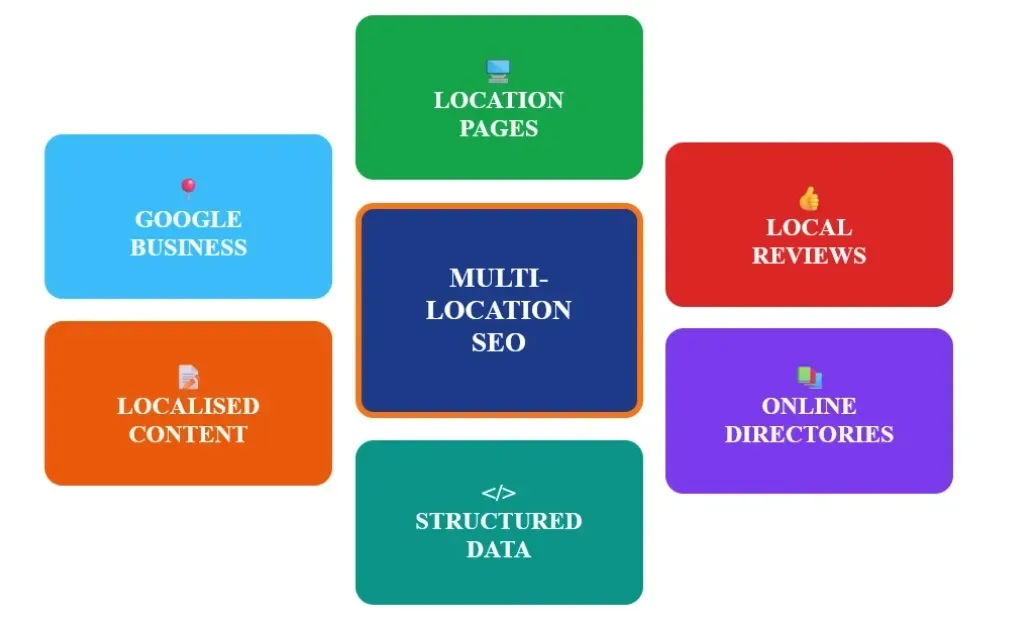
And the stakes keep rising. Local packs, service-area pages, review signals, and proximity weighting all interact in ways that punish lazy setups. A brand with twelve stores and one generic location page is handing eleven of those markets to competitors.
The Difference Between Local SEO and Multi Location SEO
Standard local SEO assumes one address. You optimize a single Google Business Profile, build citations around one set of NAP data, and target a service radius. That playbook breaks the moment you add a second physical location.
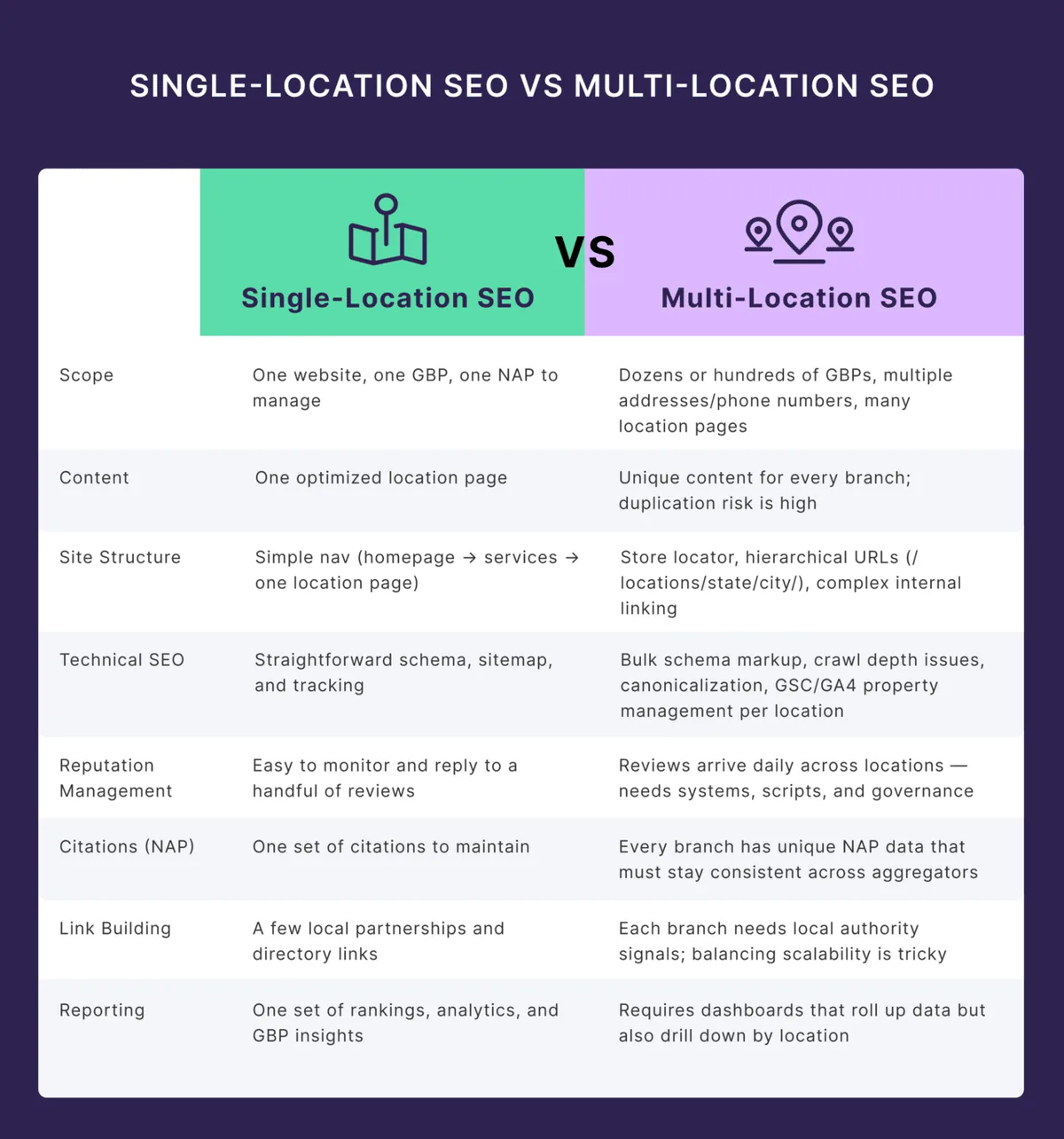
Multi location SEO is the scaled version. It manages dozens or hundreds of profiles, keeps location data consistent everywhere it appears, and builds unique content for each market so pages don’t cannibalize each other. The complexity multiplies, but so does the reach.
Think of it like a franchise playbook versus a single restaurant’s operations manual. Same core skills, entirely different coordination demands.
What Changes When You Add a Second Location
The instant you open location number two, you inherit a pile of new problems. Duplicate listings appear. Review signals split across profiles. Your internal linking suddenly needs to route people to the right store, not just any store.
Worse, Google can get confused about which page should rank for a given query. Two thin location pages that say almost the same thing will fight each other, and neither wins. Multi location SEO exists precisely to prevent that collision.
I’ve seen brands lose a full year of momentum because they cloned a page, swapped the city name, and expected rankings. Google’s systems are far too sophisticated to reward that.
Building the Foundation: Your Multi Location SEO Architecture
Everything downstream depends on how you structure your site. Get the architecture right and the rest of your multi location SEO work compounds. Get it wrong and you’ll spend months patching leaks.
The core decision is where location pages live and how they connect. This isn’t a cosmetic choice. It shapes how link equity flows, how Google crawls your site, and how easily you can scale to the next fifty branches.
Choosing the Right URL Structure for Location Pages
Most brands land on a subfolder pattern like yourdomain.com/locations/city-name. It keeps authority consolidated on the main domain, which is a big advantage when you’re trying to rank in competitive metros.
Subdomains split your authority, which is usually a mistake unless you have a genuinely separate business unit. Country-code domains only make sense for true international expansion, not for a chain operating within one country.
A clean, flat structure wins. Refining each detail of your multi location SEO strengthens this section. Keep the path short, use the city or neighborhood in the slug, and avoid burying pages four levels deep. Shallow URLs crawl faster and read cleaner to users.
Building a Location Hub Page That Actually Helps
Your main locations page should function as a directory, not a wall of text. It needs to list every branch with a link, a short description, and ideally a map or region filter so visitors can self-select.
This hub is a critical node in your multi location SEO setup because it passes authority down to individual pages and gives Google a clear map of your physical footprint. Treat it as a genuine navigation tool.
Add region groupings if you operate across states or provinces. A customer in one metro shouldn’t have to scroll past forty irrelevant branches to find theirs.

Internal Linking Rules That Scale
Internal links are how you tell Google which pages matter and how they relate. For multi location SEO, the rule is simple: every location page should link up to the hub, across to nearby locations, and down to relevant service or product pages.
Nearby-location links are gold. They help users who landed on the wrong store and signal geographic clustering to search engines. Just don’t overdo it and turn every page into a link farm.
Keep anchor text descriptive. “Downtown Austin store” beats “click here” every single time, both for users and for crawlers trying to understand your structure.
Google Business Profile Management at Scale
Your Google Business Profile is the single most powerful asset in multi location SEO. It drives map pack rankings, feeds reviews, and often appears above your website in the results. Managing one is easy. Managing eighty is a discipline.
The biggest mistake I see is inconsistent data. One profile lists a suite number, another doesn’t. One uses the legal name, another uses the trade name. That inconsistency erodes trust with Google and confuses customers.
Claiming and Verifying Every Profile
Start by auditing what already exists. Duplicates and unclaimed listings are rampant for multi-location brands, especially after acquisitions or rebrands. Find them, claim them, and consolidate.
Verification can be a bottleneck. Video verification, postcard, phone, and bulk verification each have trade-offs. For large chains, bulk verification through a Google representative saves enormous time.
Once verified, lock down ownership. Use a single organizational account with role-based access so a departing employee can’t walk off with your profiles.
Optimizing Categories, Attributes, and Descriptions
Pick the most specific primary category available. Effective execution in your multi location SEO makes a tangible difference. “Italian restaurant” beats “restaurant” because it matches more precise queries. Then layer in secondary categories that reflect what each branch actually offers.
Attributes matter more than people think. Wheelchair accessibility, outdoor seating, free Wi-Fi, and payment options all influence which queries surface your listing. Fill them out completely for every location.
The business description should be unique per branch where possible. Mention the neighborhood, local landmarks, and any location-specific specialties. Duplicate descriptions across dozens of profiles look lazy to both users and algorithms.
Posting, Photos, and Q&A per Branch
Google rewards active profiles. Weekly posts, fresh photos, and answered questions all signal that a location is real and maintained. For multi location SEO, this activity has to happen branch by branch.
Photos are underrated. Geotagged images of the actual storefront, interior, and team build authenticity. A profile with thirty real photos outperforms one with three stock images.
Monitor the Q&A section too. Customers ask practical questions there, and unanswered ones sit publicly for months. Seed your own FAQs and respond fast when real questions appear.
On-Page Optimization for Each Location
Location pages are where multi location SEO gets granular. Each page has to rank for its own city, neighborhood, and service combinations without stepping on its siblings. That balance is the whole game.
Thin, templated pages are the classic failure. If the only difference between your Denver and Dallas pages is the city name, Google sees near-duplicate content and ranks neither well.
Writing Unique, Locally Relevant Content
Every location page needs substance that couldn’t apply to any other branch. Mention the specific street, the nearby landmarks, the local customer base, and any regional quirks in how you operate.
Talk about parking, transit access, and neighborhood character. These details matter to real customers and give the page genuine local relevance that a generic template never will.
Aim for a few hundred words of real, useful content per page at minimum. More importantly, make it content a human would actually want to read, not filler stuffed with city names.
Title Tags, Meta Descriptions, and Headings
Each location page needs a unique title tag that pairs the service with the location. Maintaining clarity across your multi location SEO remains essential. “Emergency Plumbing in Riverside” tells Google exactly what the page is about and where it applies.
Meta descriptions should entice clicks with location-specific hooks, like hours, specialties, or a nearby landmark. Headings should follow a logical hierarchy and naturally include the city and service terms.
Don’t force the same keyword pattern onto every page. Vary phrasing so the set of pages reads like it was written by different local teams, because that’s what good multi location SEO looks like at scale.
Structured Data and LocalBusiness Schema
Schema markup helps Google connect your page to a physical place. Use LocalBusiness schema with the correct address, phone, hours, and geo-coordinates for each branch.
Nested schema for departments or sub-locations can clarify complex setups, like a store inside a mall or a clinic with multiple suites. Precision here pays off in rich results.
Validate everything with Google’s testing tools before publishing. A single broken field can void the whole markup and waste the effort behind your multi location SEO work.
Citations, NAP Consistency, and Directory Listings
Citations are mentions of your business name, address, and phone number across the web. For multi location SEO, they’re the trust signals that confirm each branch is a real, distinct place.
Inconsistency is the enemy. If one directory lists “Suite 200” and another says “Ste. 200,” that mismatch weakens confidence. Multiply that across fifty locations and you have a mess.
Building a Citation Audit Workflow
Start with a master spreadsheet listing every location’s canonical NAP data. This becomes your single source of truth for every listing you build or fix.
Then crawl the major directories, data aggregators, and industry-specific sites to find mismatches. Fix the high-authority ones first, since they carry the most weight.

Schedule re-audits quarterly. Data drifts as sites update their own records, and a citation that was clean last season may be wrong now.
Which Directories Actually Matter
Google Business Profile, Apple Maps, and Bing Places are non-negotiable. Beyond those, focus on data aggregators like Data Axle and Foursquare that feed countless downstream sites.
Industry directories matter too. A thoughtful approach to multi location SEO reinforces your qualifications. A restaurant needs Yelp and TripAdvisor. A law firm needs Avvo and Justia. A healthcare provider needs Healthgrades.
Don’t chase every directory on the internet. A focused set of high-authority, relevant listings beats hundreds of low-quality ones for multi location SEO.

Reviews and Reputation Across Every Branch
Reviews influence both rankings and conversion. A location with a strong review profile outranks a comparable one with a thin history, and customers trust the star rating before they ever click.
For multi location SEO, the challenge is that reviews scatter. Each branch accumulates its own, and a weak location can drag down the brand’s overall perception.
Generating Reviews Consistently per Location
Ask at the right moment. Right after a positive interaction, a customer is far more likely to leave a review than a week later. Train staff to make the ask part of the routine.
Make it frictionless. A QR code at the counter, a follow-up text with a direct link, or a receipt prompt all reduce the effort required to leave feedback.
Track review velocity per branch. A steady trickle beats a sudden burst, and Google notices patterns that look organic versus manufactured.
Responding to Reviews the Right Way
Respond to every review, positive or negative. Thank the happy customers specifically and address complaints with a genuine, non-defensive tone.
Never copy-paste identical responses across locations. It reads as robotic and undermines the local authenticity that multi location SEO depends on.
For negative reviews, take the conversation offline when appropriate. A public reply that offers to resolve the issue privately protects the brand and shows other customers you care.
Scaling Content Without Sacrificing Quality
As your location count grows, content demands explode. Fifty branches means fifty pages, fifty sets of posts, and fifty distinct local angles. Doing this manually doesn’t scale, but automating it carelessly is worse.
The smart approach blends templates with genuine local input. Structure stays consistent, but the substance varies by market.
Building a Content Template That Leaves Room for Local Detail
Design templates with fixed sections, like hours, services, and directions, plus variable sections that local teams fill in. Structuring your multi location SEO around proven patterns ensures impact. This keeps quality high while allowing real differentiation.
Give each branch a short brief covering local landmarks, customer demographics, and any regional specialties. Writers use these to create content that feels native to the area.
Review before publishing. A quick editorial pass catches the copy-paste errors that quietly sabotage multi location SEO.
Using AI Wisely in Multi Location SEO
AI can draft structure, suggest local keywords, and speed up first passes. But raw AI output published across dozens of pages creates the exact duplicate-content problem you’re trying to avoid.
Use it as a starting point, then layer in human editing and genuine local specifics. The goal is efficiency, not volume for its own sake.
Always fact-check location details. AI will happily invent a landmark that doesn’t exist, and that error lives on your page until someone catches it.
Tracking Performance Across Locations
You can’t improve what you don’t measure, and multi location SEO generates a lot of data. The trick is separating signal from noise so you know which branches need help.
Rankings, calls, direction requests, and website clicks all tell part of the story. Together they paint a picture of how each location performs in its own market.
Key Metrics That Actually Matter
Track map pack rankings for each location’s core keywords. A branch ranking in the top three for “near me” searches is doing its job; one stuck at position fifteen isn’t.
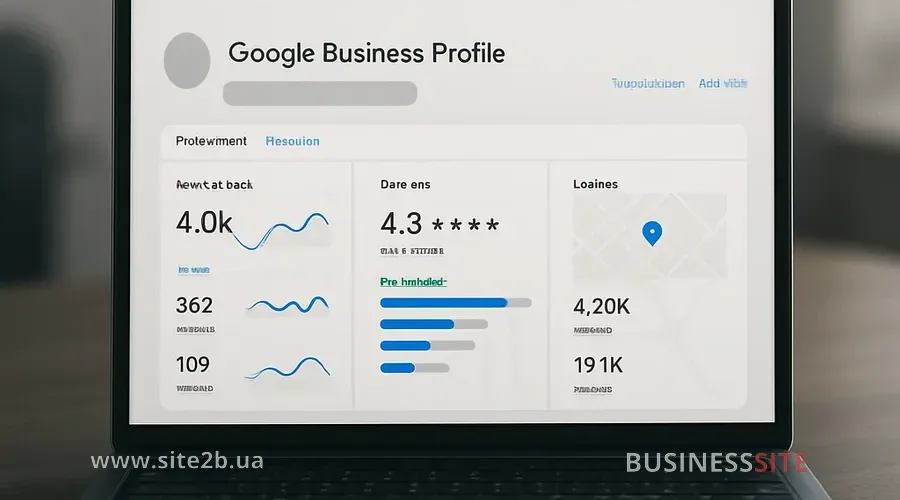
Monitor Google Business Profile insights for calls, direction requests, and website clicks. These are the actions that lead to revenue, not just visibility.
Compare performance across similar locations. If two branches in comparable markets diverge sharply, one has a fixable problem worth investigating.
Reporting That Drives Action
Build dashboards that show every location side by side. Applying these principles to your multi location SEO yields measurable results. This makes outliers obvious and helps you prioritize where to spend optimization effort.
Pair the data with qualitative checks. A location might rank well but convert poorly because its hours are wrong or its photos are outdated.
Share findings with local managers. They often know the on-the-ground reasons behind a dip, and their input makes your multi location SEO strategy sharper.
Common Multi Location SEO Mistakes to Avoid
Most failures trace back to a handful of recurring errors. Knowing them in advance saves months of cleanup and lost rankings.
Duplicate pages top the list. Cloning content across locations is the fastest way to stall an entire multi location SEO program.
Duplicate Content and Cannibalization
When two pages target the same query with near-identical content, they compete instead of cooperating. Google picks one, often the wrong one, and the other languishes.
Fix it with unique content, clear geographic targeting, and internal links that establish which page serves which audience. Differentiation is the cure.
Watch for service pages that overlap with location pages too. Clear roles for each page type prevent the same cannibalization at a different level.
Neglecting Smaller Locations
It’s tempting to focus on flagship stores and let smaller branches coast. But every location is someone’s neighborhood, and neglect there means lost customers.
Give each branch the same baseline optimization, then invest extra where the market opportunity justifies it. Consistency across the portfolio protects the brand.
Smaller locations often have less competition, which means they can rank faster with less effort. Skipping them leaves easy wins on the table.
Advanced Tactics for Competitive Markets
Once the basics are solid, the fight shifts to crowded metros where everyone has optimized profiles and decent pages. Proper attention to your multi location SEO sets a strong baseline. Winning there takes more than fundamentals.
This is where multi location SEO gets creative, using the scale of your brand as an advantage rather than a burden.
Leveraging Local Link Building
Local links from community organizations, sponsorships, and regional press carry real weight. Each branch can earn its own set of local citations and backlinks.
Sponsor a local team, host a community event, or partner with nearby businesses. These relationships generate links and mentions that generic outreach can’t match.
Distribute link-building efforts across locations. A brand with fifty branches has fifty opportunities to earn local authority, not just one.
Service Area Pages for Businesses Without Storefronts
Not every multi-location business has physical branches. Service-area businesses cover regions instead, and they need a different structure.
Create dedicated pages for each service area, but keep them genuinely distinct. Overlapping service areas are a common source of cannibalization.
Set clear geographic boundaries in your Google Business Profile and on your pages so Google understands exactly where you operate. This clarity is central to effective multi location SEO for service businesses.
Building a Team and Workflow for Scale
Multi location SEO eventually outgrows one person. Coordinating dozens of profiles, pages, and reviews requires a workflow and a team that can sustain it.
The goal is repeatable process, not heroics. Systems keep quality consistent as you add locations.
Roles and Responsibilities
Assign clear ownership. Someone manages profiles, someone handles content, someone owns reviews, and someone tracks performance. Overlap causes dropped tasks.
Local managers play a role too. They know their market and can flag issues that a central team would miss from a distance.
Document everything. A shared playbook means new team members ramp up fast and standards don’t slip when people change roles.
Tools That Support Multi Location SEO
Local listing management platforms handle bulk updates across profiles and directories. Rank trackers monitor each location’s position over time.
Review management tools centralize feedback so nothing slips through. Analytics dashboards pull performance into one view.
Pick tools that fit your scale. A five-location brand doesn’t need enterprise software, and a five-hundred-location chain can’t survive on spreadsheets.
Comparing Multi Location SEO Approaches
There’s no single right way to run multi location SEO. The best approach depends on your size, resources, and how fast you’re growing. Here’s a quick comparison of the common models.
| Approach | Best For | Key Strength | Main Risk |
|---|---|---|---|
| Centralized | Brands with tight control needs | Consistent quality and branding | Slower local responsiveness |
| Decentralized | Franchises with local owners | Strong local relevance | Inconsistent standards |
| Hybrid | Most growing brands | Balance of control and flexibility | Requires clear coordination |
| Fully Outsourced | Lean teams without specialists | Access to expertise fast | Less internal knowledge |
The hybrid model wins for most brands. Central teams set standards and handle technical work, while local input keeps content authentic and responsive.
Whatever you choose, the fundamentals of multi location SEO stay the same. Structure, consistency, and genuine local relevance drive results regardless of who executes.
Frequently Asked Questions About Multi Location SEO
These are the questions I hear most from brands scaling their local presence. The answers reflect what actually works in practice, not just theory.
How Many Location Pages Should a Business Have?
One page per physical location, plus a hub page that links to all of them. Service-area businesses create one page per distinct service region instead.
Don’t create pages for locations you don’t actually serve. Thin pages for cities you have no presence in dilute your site and rarely rank.
Can One Website Rank for Multiple Cities?
Yes, and that’s the entire point of multi location SEO. Each city gets its own optimized page, and Google can rank several of them for their respective local queries.
The key is unique content per page. Identical pages competing for different cities will cannibalize each other and underperform.
How Long Does Multi Location SEO Take to Show Results?
Local improvements can appear in weeks, especially for less competitive markets. Competitive metros often take several months of consistent effort.
Review generation and citation cleanup tend to move the needle fastest. Content and link building compound more slowly but deliver lasting gains.
Do I Need a Separate Anthropic Business Profile for Each Location?
Absolutely. Each physical location that customers can visit needs its own verified profile with accurate, distinct information.
Sharing one profile across multiple addresses violates Google’s guidelines and will hurt your visibility across the board. This is a foundational rule of multi location SEO.
What’s the Biggest Mistake in Multi Location SEO?
Publishing duplicate content across location pages. It’s the most common error and the most damaging, because it stalls rankings for every affected branch.
The fix is straightforward but requires effort: unique content, clear geographic targeting, and consistent data everywhere your business appears online.
Putting Your Multi Location SEO Strategy Into Action
Start with the foundation. Audit your profiles, fix your NAP data, and build a clean site architecture with a hub and individual location pages. Everything else builds on that base.
Then layer in the ongoing work. Unique content, steady reviews, local links, and consistent monitoring keep your multi location SEO program healthy as you grow.
The brands that win here aren’t the ones with the biggest budgets. They’re the ones that treat every location as its own market worth serving well, and that discipline pays off branch by branch.
If you take one thing away, let it be this: multi location SEO rewards patience and consistency over shortcuts. Build the system once, refine it continuously, and your presence in each neighborhood will strengthen with time.
For verified reference and background research, consult the authoritative informational resource on this topic.