Why Marketing Budget Allocation Deserves a Real Framework, Not a Gut Feeling
Marketing budget allocation is the discipline of deciding, in advance and in writing, how every dollar of your marketing spend gets divided across channels, campaigns, and time periods. Most teams treat it as a once-a-year guessing game. That habit costs them real money.
If you want a marketing budget allocation guide that actually survives contact with reality, this is it. Nine steps. No fluff. Each one builds on the last, and each one works for a two-person startup or a fifty-person growth team.
Here’s the honest part up front: perfect allocation doesn’t exist. Focusing on marketing budget allocation provides clear direction here. What exists is a repeatable process that gets you closer to it every quarter, and a feedback loop that catches mistakes before they burn a whole quarter’s runway. That’s what the nine steps below deliver.
Start Here: What Most Teams Get Wrong About Marketing Budget Allocation
Before the steps, let’s clear the garbage out of the room. Three myths quietly wreck more budgets than any channel underperformance ever will.
Myth one: allocation is a spreadsheet exercise. It isn’t. A spreadsheet can tell you what you spent. It can’t tell you why a channel plateaued, or whether your sales team stopped following up on inbound leads halfway through March.
Myth two: last year’s split is a safe default. the marketing budget allocation’s a lazy default. Markets shift, algorithms shift, and the channel that carried you eighteen months ago may be coasting on inertia rather than performance.
Myth three: more data means better decisions. Usually it means slower decisions. A clean dashboard with five metrics beats a forty-tab monster nobody opens.
Fix those three assumptions and the nine steps become dramatically easier to execute.
Marketing Budget Allocation: 9 Easy Steps for Better Results
Here’s the full sequence. Each step gets its own breakdown below, with the practical mechanics and the failure modes worth watching for.
- Anchor allocation to revenue, not to feelings — set a percentage of revenue or target CAC before touching any channel.
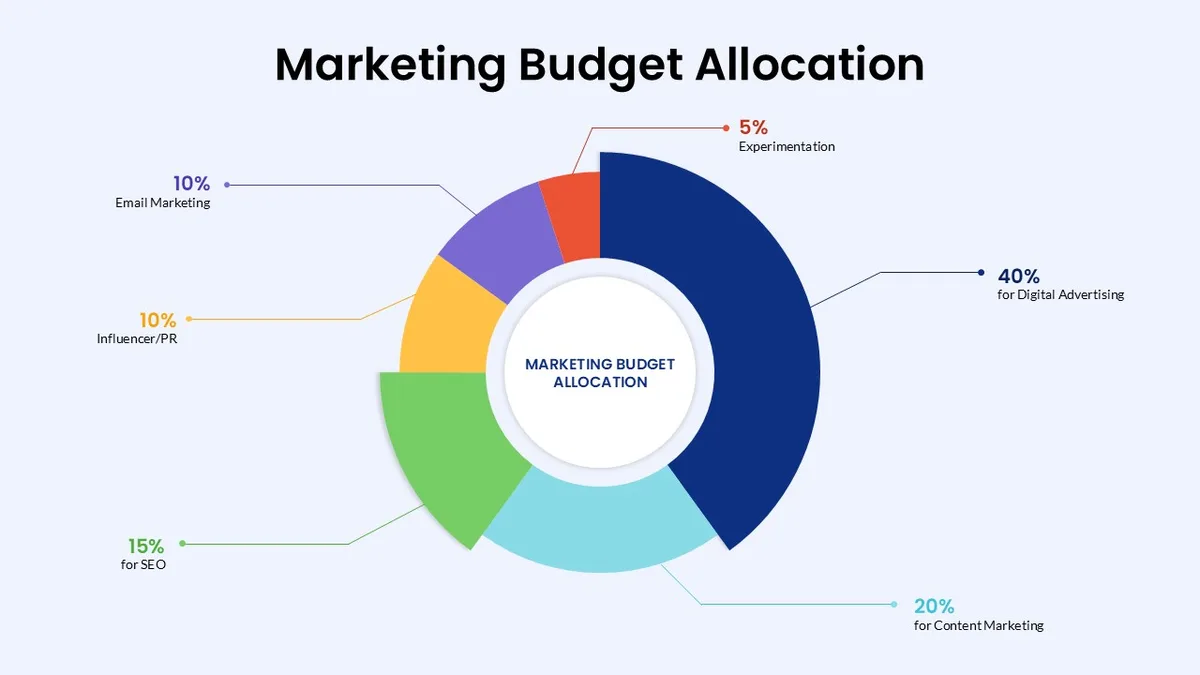
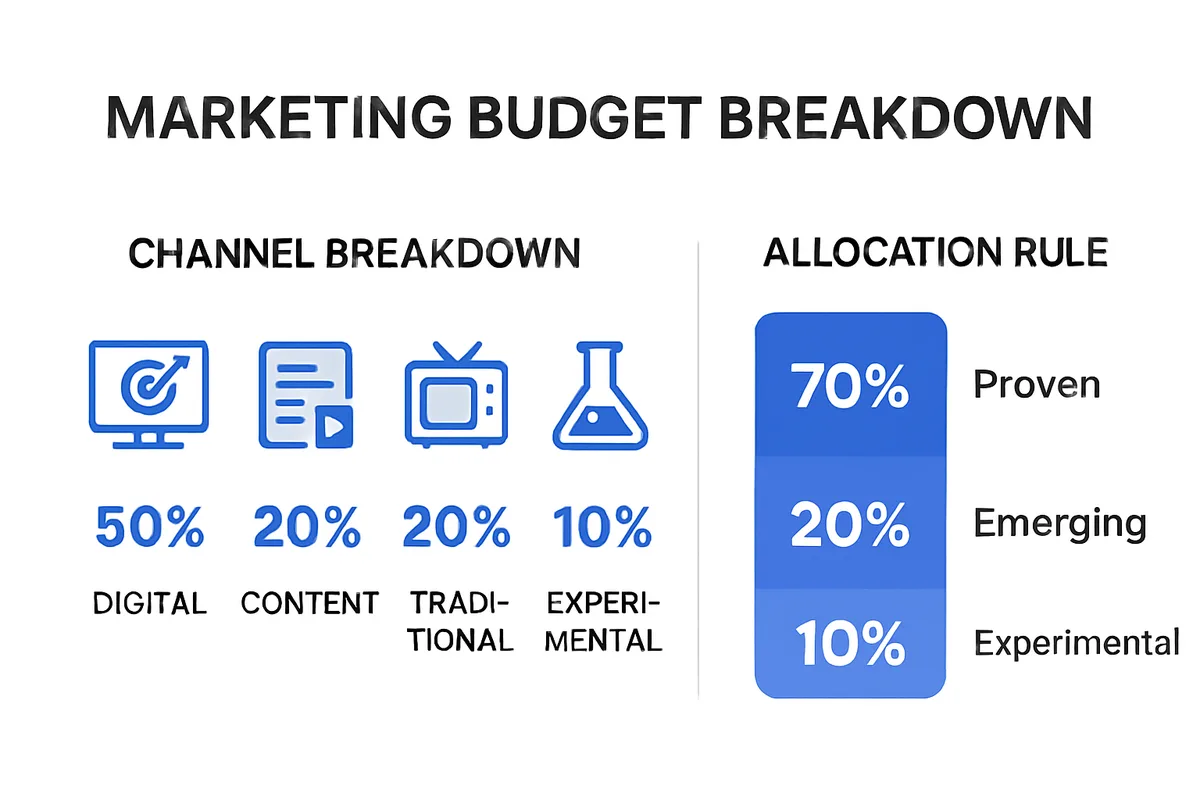
- Split the budget into three buckets — proven, experimental, and foundational.
- Define your unit economics first — know your CAC ceiling and payback window before spending.
- Build a channel scorecard — rank channels by CAC, payback period, and contribution margin.
- Set guardrails and tripwires — pre-agreed thresholds that trigger automatic reallocation.
- Run a zero-based review — justify every line item from scratch, at least once per cycle.
- Time the spend deliberately — match budget flow to seasonality and sales cycles.
- Create a monthly reallocation ritual — a standing meeting with a fixed agenda and real authority to move money.
- Close the loop with attribution and post-mortems — feed results back into next cycle’s allocation.
That’s the skeleton. Now the muscle, step by step.
Step 1: Anchor Allocation to Revenue, Not to Feelings
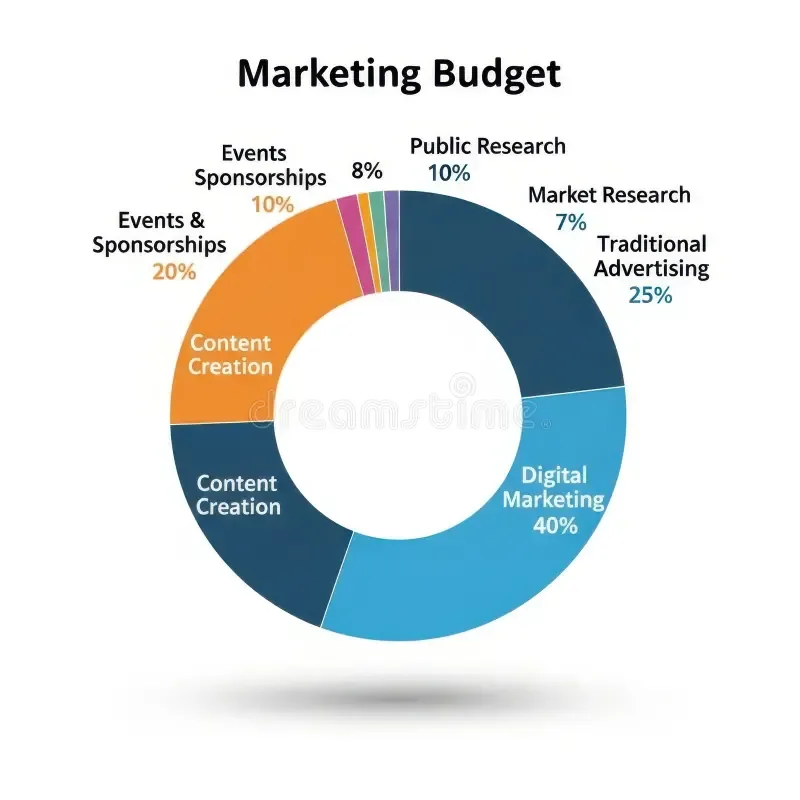
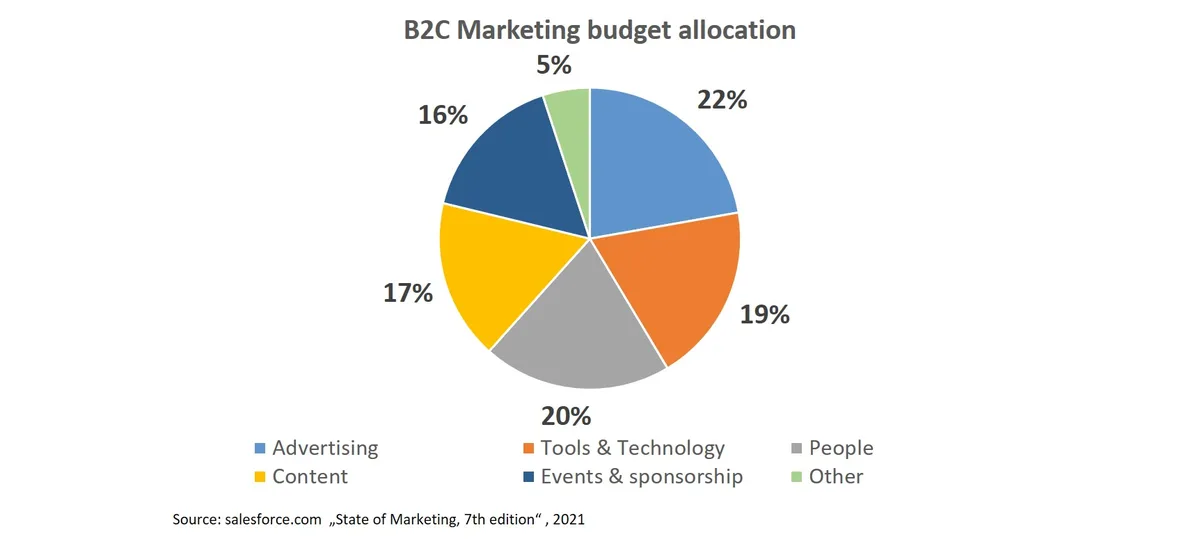
Start with a number tied to something measurable. Effective execution in your marketing budget allocation makes a tangible difference. Most healthy businesses land somewhere between 5% and 15% of revenue going to marketing, with the exact figure swinging wildly by industry and growth stage.
A SaaS company chasing market share might run 20% or higher. A mature manufacturer might sit comfortably at 3%. Neither is wrong. What’s wrong is picking a number because it “feels right” in a planning meeting.
Write down the anchor: “the marketing budget allocation will spend X% of projected revenue on marketing this cycle.” Then write down the reason. “Because we’re targeting 40% growth and our CAC payback is under six months” is a reason. “Because that’s what we did last year” is not.
The marketing budget allocation anchor becomes your ceiling and your sanity check. When someone proposes a new channel, the question isn’t “can we afford it?” It’s “does this fit inside the anchor, and what gets cut to make room?”
Step 2: Split the Budget Into Three Buckets
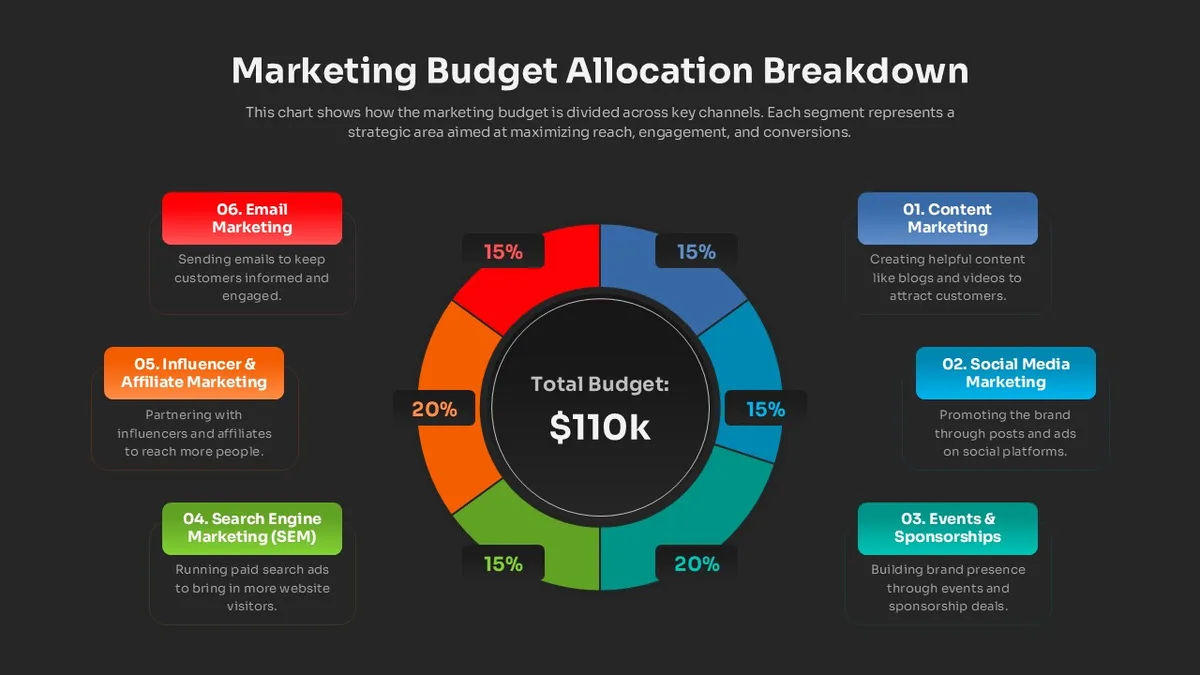
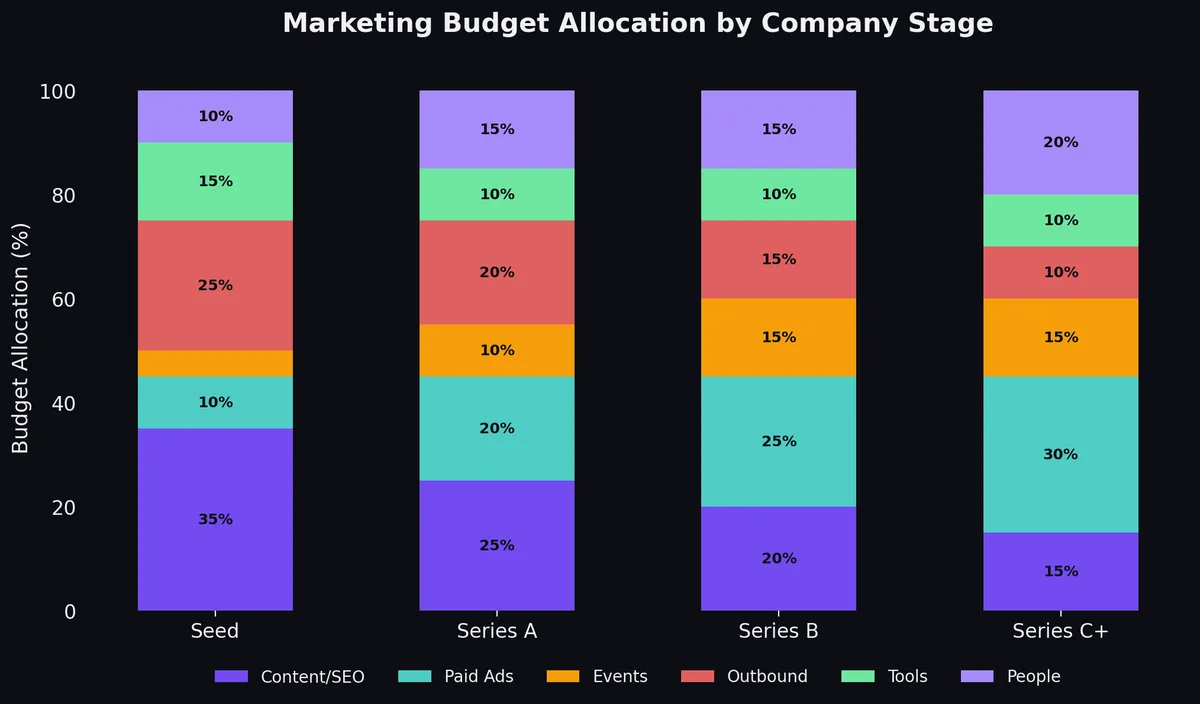
Every dollar should land in one of three buckets, and the split between them matters more than most people realize.
The proven bucket covers channels with documented, repeatable returns. This is the bulk of the budget in most stable businesses. It’s boring, and boring is the point.
The experimental bucket funds tests. A thoughtful approach to marketing budget allocation reinforces your qualifications. Ten to twenty percent is a reasonable range. This money is expected to sometimes fail, and that expectation needs to be stated out loud so nobody panics when a test flops.
The foundational bucket covers the unglamorous stuff — analytics infrastructure, CRM hygiene, creative production capacity, brand assets. These line items don’t generate leads directly, but without them, the other two buckets operate blind.
Teams that skip the foundational bucket end up with great campaigns and no idea which ones actually worked. That’s a slow bleed.
Step 3: Define Your Unit Economics Before You Spend a Dollar
The marketing budget allocation cannot allocate intelligently without knowing your ceiling. Two numbers do most of the work: customer acquisition cost (CAC) and payback period.
CAC is total acquisition spend divided by new customers acquired. Refining each detail of your marketing budget allocation strengthens this section. Payback period is how long it takes a customer’s gross margin to repay that CAC. Together they tell you what a lead is worth and how much you can afford to pay for one.
A practical marketing budget allocation checklist item here: confirm your CAC calculation includes salaries, tools, and agency fees — not just ad spend. Plenty of teams undercount CAC by excluding labor, then wonder why the numbers never pencil out.
Once you know your CAC ceiling, channel decisions become arithmetic instead of argument. A channel that delivers customers below the ceiling gets more budget. One that doesn’t gets scrutiny, then a fix, then a cut.
Step 4: Build a Channel Scorecard
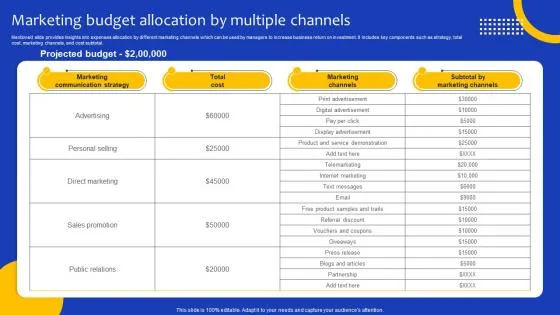
Rank channels on a scorecard before the marketing budget allocation assign percentages. A simple table does the trick.
| Channel | CAC vs Target | Payback Period | Contribution Margin | Scalability |
|---|---|---|---|---|
| Paid search | Below target | 4 months | High | Moderate |
| Paid social | At target | 6 months | Medium | High |
| Content / SEO | Well below target | 9 months | Very high | Slow to scale |
| Email lifecycle | Far below target | 2 months | Very high | Low ceiling |
| Events | Above target | 11 months | Low | Moderate |
Read that table the way a CFO would. Email lifecycle looks incredible on payback and margin, but it has a hard ceiling — you can only email the list you have. Paid search is efficient but caps out on search volume. Content is the strongest long-term play but takes months to compound.
No single channel wins everything. The scorecard’s job is to show you where each channel is strong, so the allocation split matches your actual constraint — cash flow, growth rate, or margin.
Step 5: Set Guardrails and Tripwires
Guardrails are pre-agreed limits the marketing budget allocation stop a channel from quietly eating the budget. Tripwires are the thresholds that trigger action when performance drifts.
A guardrail might read: “No single channel exceeds 40% of total spend without a written exception.” That rule exists because concentration feels efficient right up until the platform changes its algorithm and your whole pipeline hiccups.
A tripwire might read: “If CAC on paid social rises above 130% of target for two consecutive months, spend drops by 20% until further review.”
The magic here isn’t the specific number. Developing your marketing budget allocation with precision highlights key strengths. It’s that the number was agreed on before anyone was emotionally invested in defending a channel. Deciding to cut a channel in the middle of a bad month is painful. Cutting it because a tripwire fired is just following the rules.
Step 6: Run a Zero-Based Review
At least once per planning cycle, rebuild the entire budget from zero. Every line item has to justify itself as if it were brand new.
This is the single most uncomfortable step in the process, and the most valuable. Legacy line items hide everywhere — the sponsorship nobody can explain, the tool subscription with three users, the retainer that renews on autopilot.
Zero-based review forces the question: “If we weren’t already doing this, would we start today?” When the answer is no, the money goes elsewhere.
A few marketing budget allocation tips for running it without burning goodwill: give each owner a template to fill out, ask for the outcome delivered rather than the activity performed, and set the expectation that “we’ve always done it” is not a justification.
Step 7: Time the Spend Deliberately
Allocation isn’t just about where money goes. It’s about when. A budget spread evenly across twelve months often performs worse than the same budget weighted toward high-intent periods.
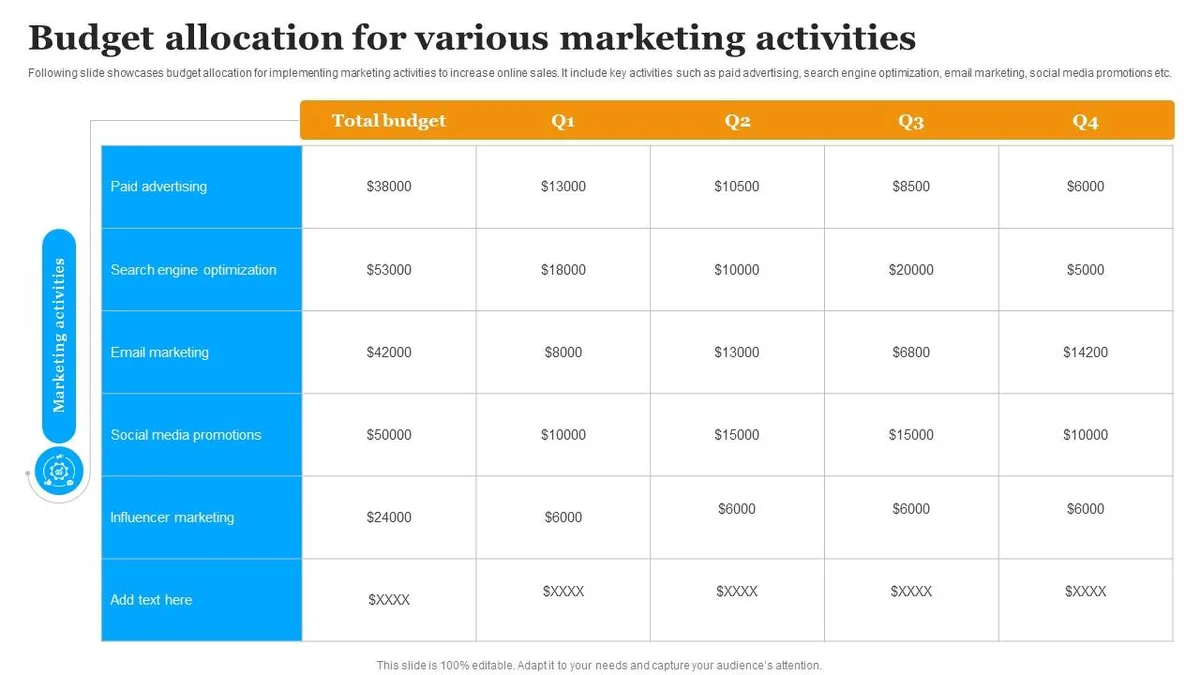
Map your spend to seasonality and to your sales cycle. B2B teams often find that early-quarter push beats late-quarter scramble, because buying committees are more responsive in the first six weeks. Retail teams shift heavy toward key gifting windows. SaaS teams front-load spend in months with the fewest holidays and the most decision-makers at their desks.
The trap is a “flat monthly spend” policy the marketing budget allocation looks disciplined but ignores how demand actually moves. A round number on a spreadsheet is not the same as a smart number.
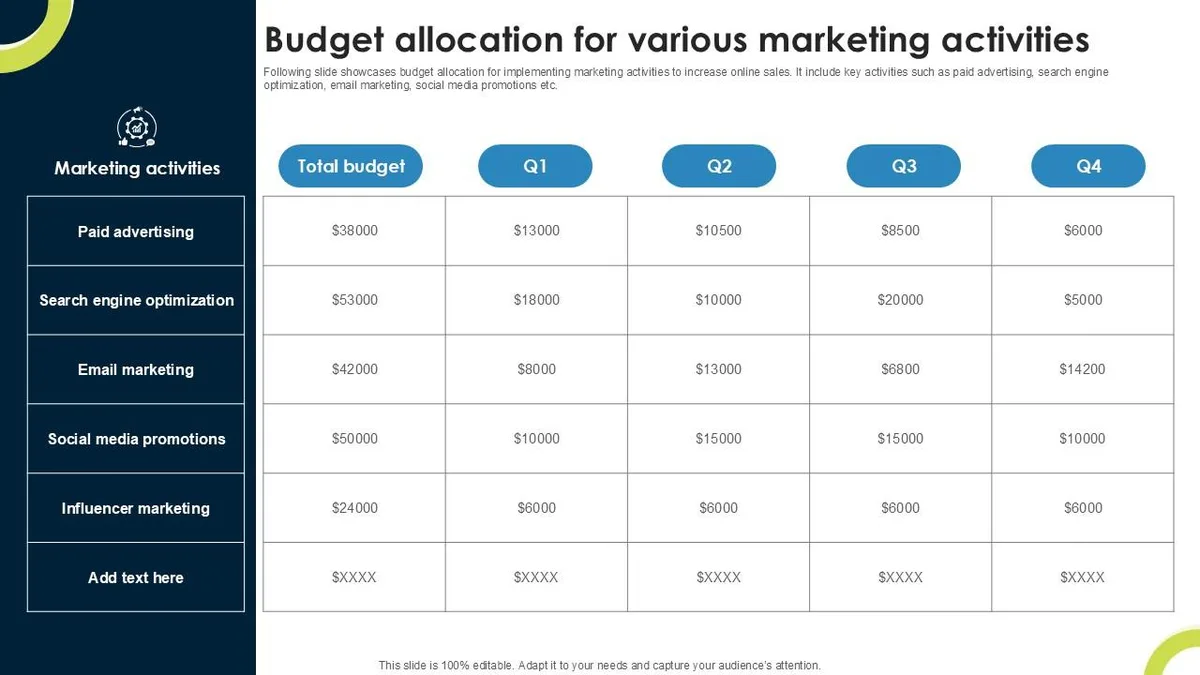
If you can’t predict seasonality with confidence, run a small test: vary spend intensity across two comparable periods and measure the marginal return. Even a rough signal beats a blind flat line.
Step 8: Create a Monthly Reallocation Ritual
Set a recurring meeting, put it on the calendar, and give it real authority to move money. This is where marketing budget allocation best practices separate from good intentions.
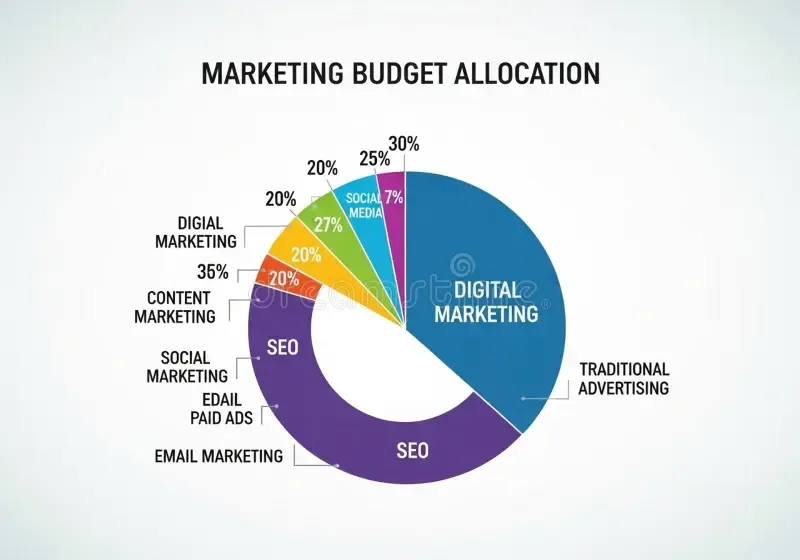
The agenda stays fixed. Review tripwires. Review channel performance against scorecard. Decide whether any money moves. Log the decision and the reason. That’s it — thirty to forty-five minutes.
The hardest part is granting the meeting authority to actually reallocate. Integrating marketing budget allocation into your workflow produces consistent quality. Many teams hold the meeting, discuss the data, and then change nothing because reallocation requires a chain of approvals.
Fix the approval threshold up front: small moves get decided in the room, large moves get escalated with a recommendation already drafted.
Done well, this ritual becomes the operating heartbeat of your marketing budget allocation guide. Done poorly, it becomes a monthly status update nobody acts on.
Step 9: Close the Loop With Attribution and Post-Mortems
The final step feeds directly back into step one. Every cycle ends with an honest review of what the allocation actually produced.
Attribution doesn’t need to be perfect. It needs to be consistent. Pick a model — first-touch, last-touch, or a blended approach — and stick with it so year-over-year comparisons mean something.
Post-mortems add the qualitative layer numbers miss. Targeted refinements to your marketing budget allocation streamline the entire review. Did the creative miss the mark? Was the landing page slow? Did the sales team follow up? A good post-mortem answers “why” in ways a dashboard never will.
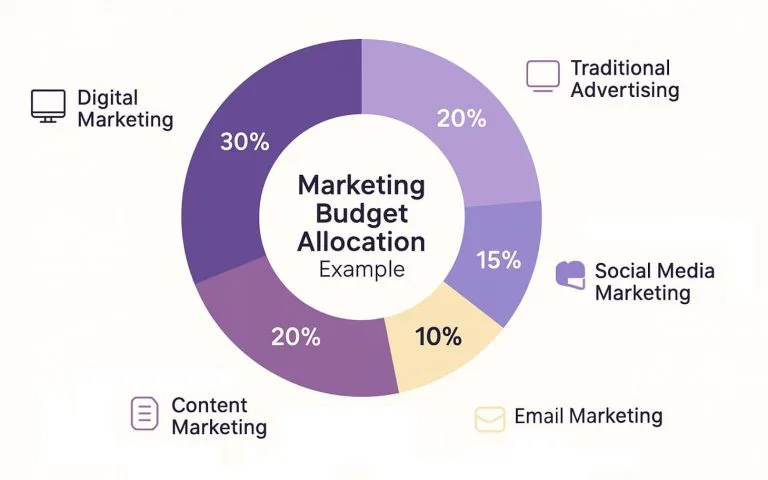
Write down two lessons per cycle. Not ten. Two. Teams that try to capture everything capture nothing.
Common Marketing Budget Allocation Mistakes Worth Avoiding
A handful of mistakes show up so consistently that they’re worth calling out directly.
Allocating to last year’s winners without re-checking the ceiling. A channel that was efficient at competitive direct manufacturer pricing a month often degrades at competitive direct manufacturer pricing a month. Diminishing returns are real, and they show up faster than most teams expect.
Treating the experimental bucket as a slush fund. If experiments don’t have hypotheses, success criteria, and deadlines attached, they’re just spending with better branding.
Skipping the foundational bucket. Cutting analytics and CRM work during lean periods feels prudent. It’s usually the opposite — you lose the ability to see what’s working exactly when visibility matters most.
Confusing spend with investment. A dollar into email lifecycle and a dollar into a branded swag drop are not the same dollar. Track returns separately.
Run a quick scan of your plan against the marketing budget allocation four mistakes. Most teams find at least one hiding in plain sight.
How to Audit Your Marketing Budget Allocation in One Afternoon
You don’t need a full planning cycle to catch problems. A focused audit covers a lot of ground in a few hours.
Pull a list of every active spend line, sorted largest to smallest. For each line, jot the owner, the outcome promised, and the outcome delivered. Then apply three filters: does this line still support the anchor percentage, does it show up in the scorecard, and is it inside its guardrail?
Lines the marketing budget allocation fail all three filters get cut or escalated. Lines that pass all three stay. The messy middle — where most lines land — gets a small test to verify value before the next full cycle.
The audit usually surfaces two types of opportunities. First, wasteful spend that’s easy to redirect. Second, underpriced wins — channels delivering outsized returns that got underfunded because nobody was looking at them. Both are worth acting on quickly.
Frequently Asked Questions About Marketing Budget Allocation
Here is an in-depth breakdown of key considerations regarding this section:
What Percentage of Revenue Should Go to Marketing?
It depends on stage and industry. Early-stage growth businesses often run 12% to 25% of revenue. Established, profitable businesses typically sit between 5% and 12%. The number that matters isn’t the percentage itself — it’s that the percentage is tied to a payback target you can defend.
How Often Should I Reallocate Budget Between Channels?
Monthly, with quarterly deep dives. Monthly moves catch problems early without creating chaos. Quarterly reviews allow bigger structural shifts once trends are clear. Weekly reallocation usually creates noise rather than insight.
Should I Allocate Budget Based on What Competitors Spend?
Only as a sanity check. Competitor spend tells you what’s possible in a category, not what’s efficient for your business. Two companies in the same space often have wildly different unit economics, and those economics drive the right spend level.
What’s the Right Size for an Experimental Budget?
Ten to twenty percent of total marketing spend, depending on how much risk your business can absorb. Companies in stable markets can lean conservative. Companies actively researching new channels should push toward the higher end — that’s how new winners get discovered before competitors move in.
How Do I Handle Major Shifts Mid-cycle?
Use tripwires and escalation rules defined in advance. Mid-cycle shifts are healthy when governed by rules and unhealthy when driven by gut reaction. Decide what conditions justify a reallocation before the conditions appear.
What’s the Most Underrated Step in a Marketing Budget Allocation Guide?
The monthly ritual, most likely. Everyone builds the annual plan. Very few actually operate it. The companies that outperform tend to be the ones running a disciplined monthly review, not the ones with the most sophisticated initial model.
Wrapping It Up: a Repeatable Process Beats a Perfect Plan
Nine steps won’t make your budget flawless. They’ll make it defensible, adjustable, and tied to real numbers instead of historical habit.
If you remember nothing else, remember this: marketing budget allocation is a practice, not a document. The annual plan is the starting line. The monthly ritual is the actual race.
Start with the anchor and the scorecard. Get those two right and the rest of the process follows naturally. And keep a running post-mortem file, even if it’s just a shared doc — the lessons compound faster than the money does.
Continue with related reads on marketing budget fundamentals and channel-level performance measurement, since allocation decisions only get sharper when the inputs behind them get cleaner.