Marketing Plan Template: Free Template + 3 Easy Examples
Marketing plan template with a free fill-in structure and 3 easy examples for consultants, restaurants, and e-commerce brands — ready to use today.
A marketing plan template is the fastest way to turn a vague business idea into a document you can actually act on.
Below you’ll find a free template you can copy right away, plus three easy examples that show exactly how to fill it in — whether you’re a solo founder, a small shop owner, or a marketing lead inheriting a messy spreadsheet.
Let’s be honest: most people don’t struggle with the idea part. They struggle with the structure. They know they need a plan, they know the plan matters, and then they open a blank document and freeze.
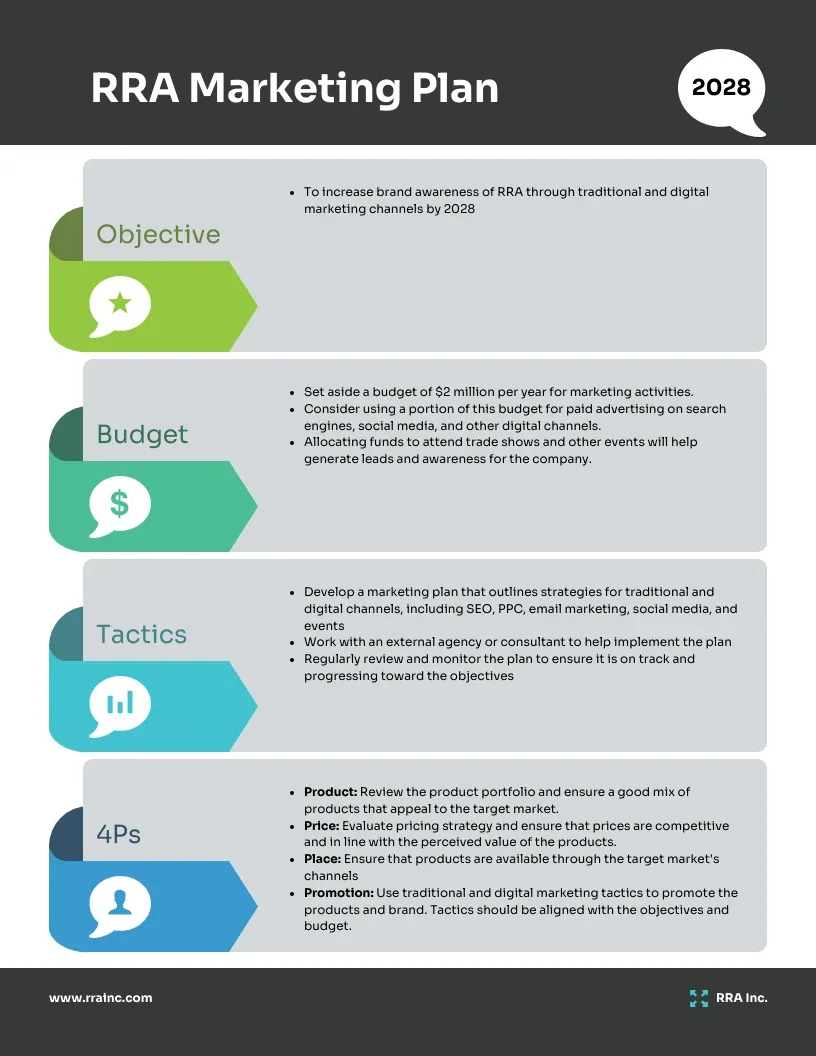
That freeze is what this marketing plan template guide is built to break. You fill in the blanks, you sanity-check the numbers, and you walk away with something a real team can execute.
What a Marketing Plan Template Actually Does for You
A marketing plan template is not paperwork for paperwork’s sake. It’s a forcing function. It forces you to name your audience, pick your channels, set a budget, and define what “working” looks like before you spend a single dollar.
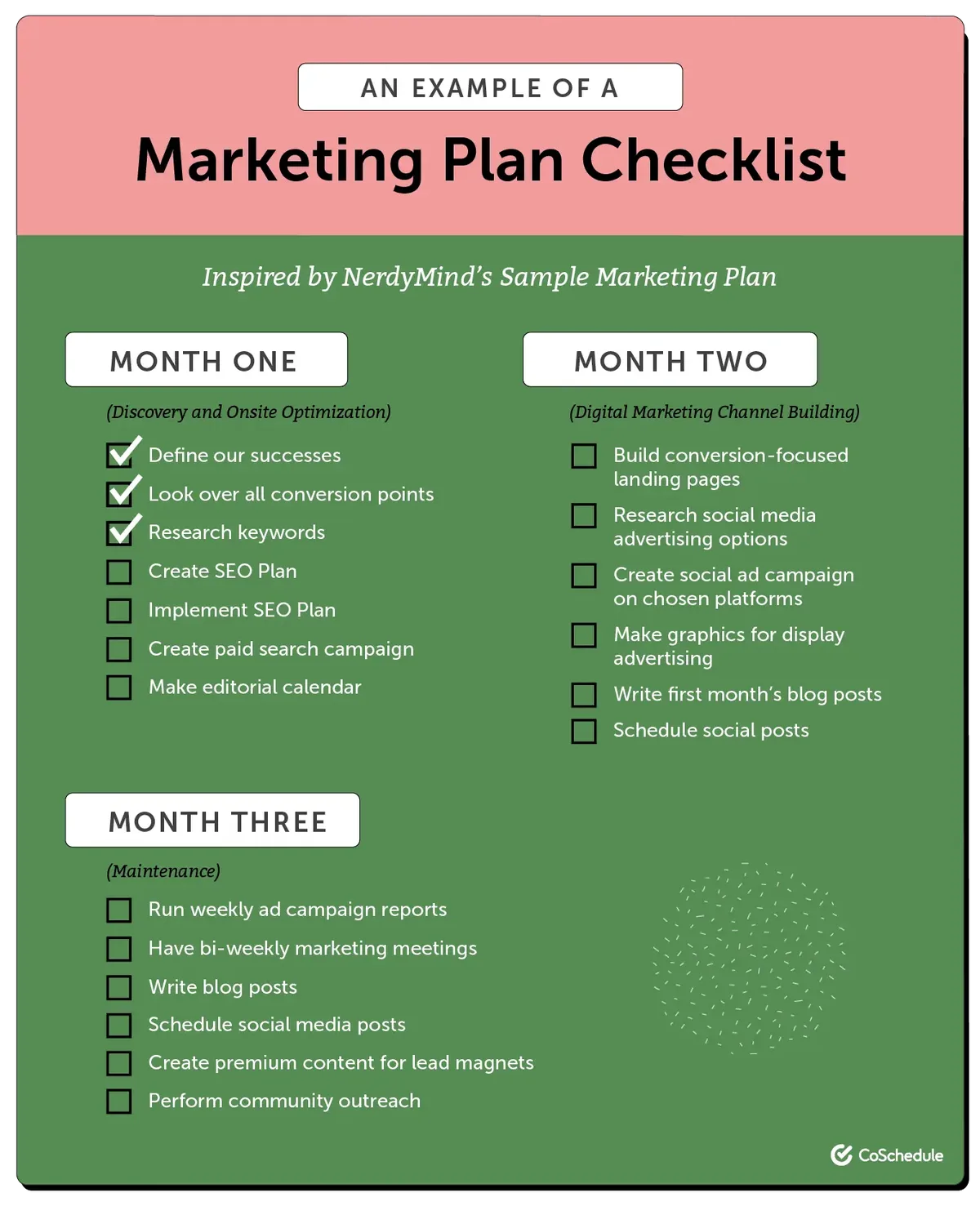
Think of it the way a contractor thinks about blueprints. Nobody pours a foundation hoping the rooms will sort themselves out. A marketing plan template gives you the walls, the doors, and the load-bearing beams so that every ad spend, email send, and partnership decision has a home.
The Free Marketing Plan Template (Copy This Into Your Doc)
Here’s the core of this marketing plan template. Copy it into Google Docs, Notion, Word — whatever you already use. It’s intentionally one page. If your plan needs a table of contents, you’re probably writing a business plan by accident.
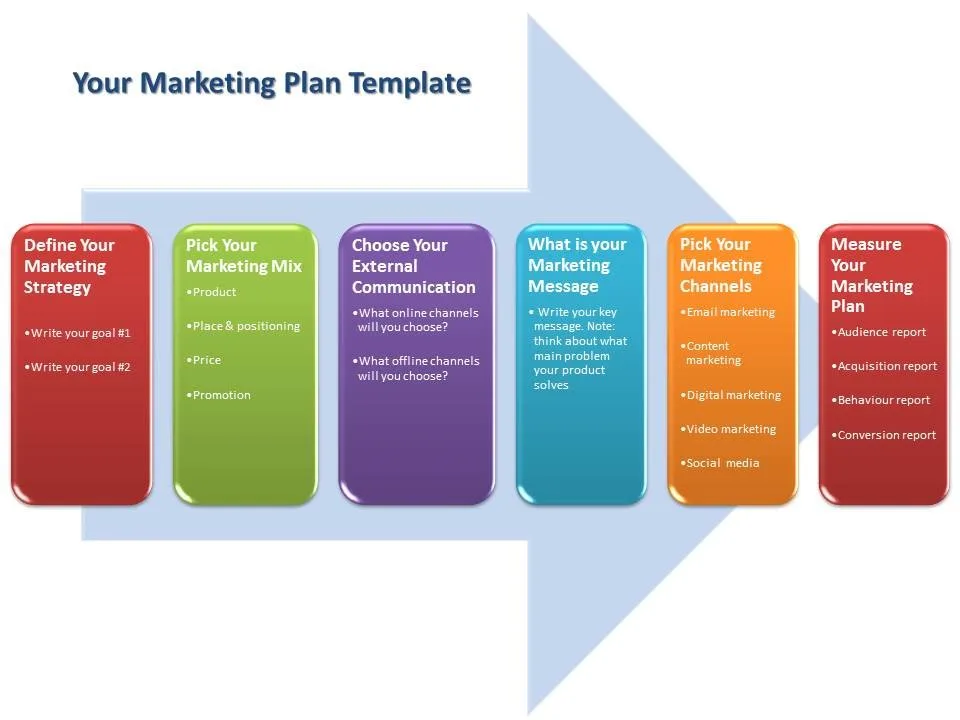
The structure below is a starting point, not a straitjacket. Swap sections in and out as your business demands. The point is that the marketing plan template gives you somewhere to put every thought, so nothing critical gets left in your head.
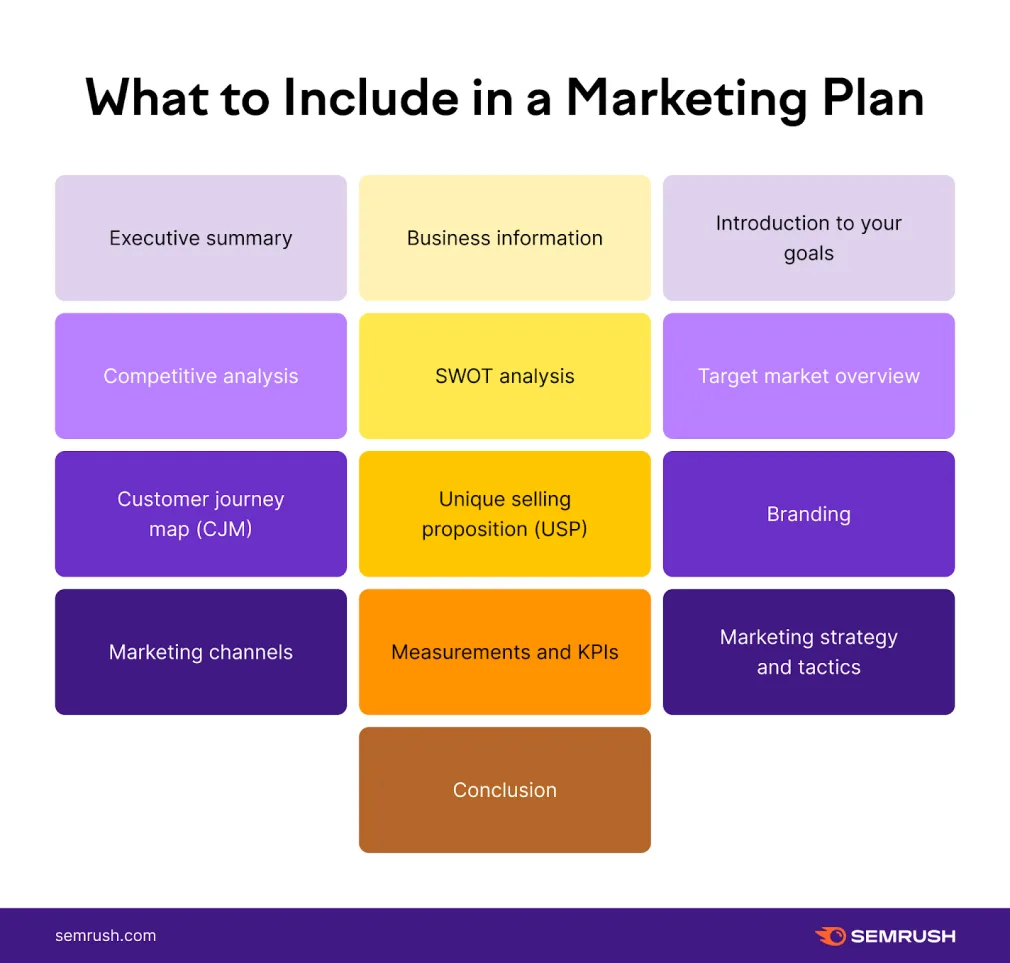
| Section | What You Write | Time To Fill |
|---|---|---|
| 1. Goal | One sentence with a number and a deadline | 5 minutes |
| 2. Target Customer | Specific person, specific problem, specific trigger | 10 minutes |
| 3. Value Proposition | The single claim you want repeated back to you | 10 minutes |
| 4. Channel Plan | 2-4 channels, each with an owner and a weekly output | 20 minutes |
| 5. Budget | Total spend split across channels and content | 10 minutes |
| 6. Metrics | 3-5 numbers you review every week | 10 minutes |
| 7. Timeline | 12-week calendar with launch checkpoints | 15 minutes |
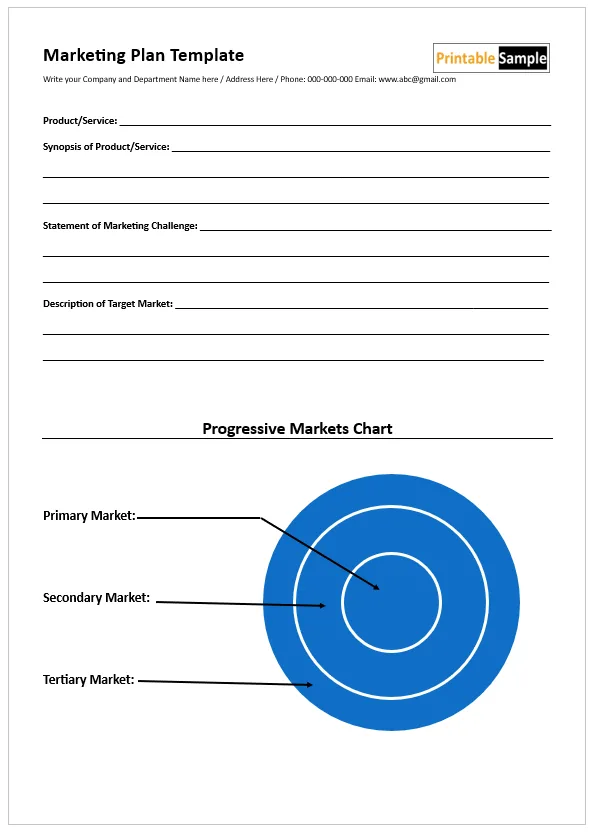
That’s it. Seven sections, roughly 80 minutes of honest thinking, and you have a working document. The best marketing plan template checklist is the one that doesn’t take three weeks to complete, because a plan you never finish is worth less than a rough plan you finish today.
How to Fill in Each Section of the Template
Filling in the template is where most people get stuck, so let’s walk through each block with the level of specificity that actually moves the needle.
Goal: Write One Number, Not Five
Your goal should read like this: “Generate 120 qualified leads per month from organic and paid search by the end of the quarter.” One metric, one number, one deadline. Vague goals like “grow brand awareness” are the reason marketing plan templates end up in a drawer six weeks later.

If you’re pre-revenue, swap leads for something you can count — waitlist signups, discovery calls booked, sample requests. The metric matters less than the fact that it’s countable and reviewable.
Target Customer: Get Narrow, Then Narrow Again
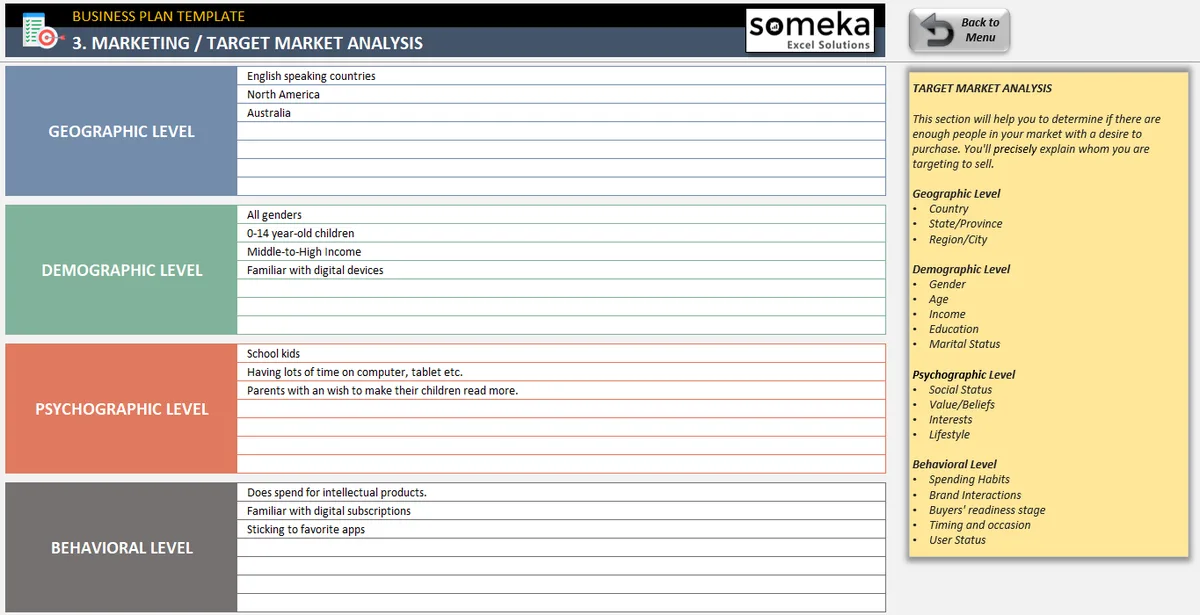
“Small business owners” is not a customer. It’s a census category. Write something a stranger could use to spot your buyer in a coffee shop: “Independent restaurant owners in mid-size cities who currently take reservations by phone and lose about three tables per weekend to no-shows.”

Specificity isn’t a marketing trick. Focusing on marketing plan template provides clear direction here. It’s a test of whether you actually understand the problem you’re solving. If you can’t describe the person in detail, your channel choices and copy will be generic, and generic copy converts nobody.
Value Proposition: One Sentence, No Adjectives
Strip out “cutting-edge,” “revolutionary,” and “all-in-one.” What’s left should still be compelling. The test is simple: read your value proposition to someone outside your industry and see if they can explain it back to you.
Channel Plan: Two or Three, Done Well
New marketers fall into a trap of being everywhere at once. A good marketing plan template tips the scale hard toward focus. Pick two channels for the first quarter. Add a third only after the first two are producing consistently.
For each channel, write down who owns it, what a “week” of work looks like, and what the first measurable output is. That’s it. No channel strategy needs a document longer than a page.
Budget: Fixed Costs, Flexible Costs, and Nothing in Between
Split your budget into two buckets — things the marketing plan template pay for regardless (software, retainers, tools) and things you scale as they work (ad spend, freelance content). That split is the most important number in your plan, because it tells you how much room you have to experiment.
On pricing specifically, avoid locking in specific quotes from the template itself. When you’re sourcing vendors for creative, media buying, or tooling, the conversation should stay focused on value and competitive direct manufacturer pricing rather than a single sticker number.
Metrics: Three to Five, Reviewed Weekly
More than five metrics and your dashboard becomes wallpaper. Pick the two or three that lead to revenue, plus one health metric — website conversion rate, email deliverability, lead response time, or something similar.
Timeline: Twelve Weeks, Three Checkpoints
Anything shorter than twelve weeks is a campaign, not a plan. Build in three checkpoints — week four, week eight, week twelve — where you review numbers and adjust. If a channel isn’t producing by week eight, cut it, don’t defend it.
3 Easy Marketing Plan Template Examples
Here’s where this marketing plan template becomes concrete. All three examples below use the same seven-section structure. What changes is the business, the audience, and the channels. Read all three even if your business doesn’t match one — the pattern is what matters.
Example 1: the Solo Consultant Building a Pipeline
A freelance brand consultant with eight years of experience and no marketing team. Revenue is lumpy, referrals dry up, and the pipeline is a mystery until a slow month arrives.
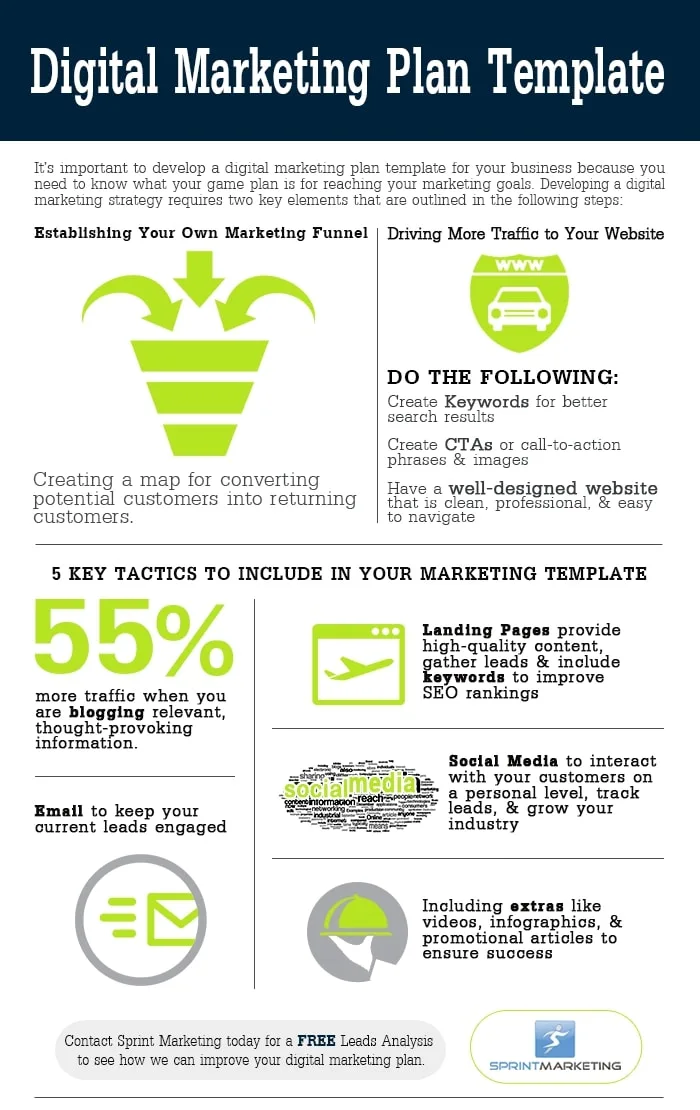
The goal here is to replace the unpredictable referral cycle with something the consultant can control. This is the most common scenario where a marketing plan template earns its keep — it turns “I should really post more” into a real plan with numbers attached.
The Goal and Target Customer
The goal is fifteen discovery calls per month booked from inbound sources. The target customer is a specific executive: marketing directors at Series A SaaS companies who just hired their first in-house content person and need help building the editorial strategy.
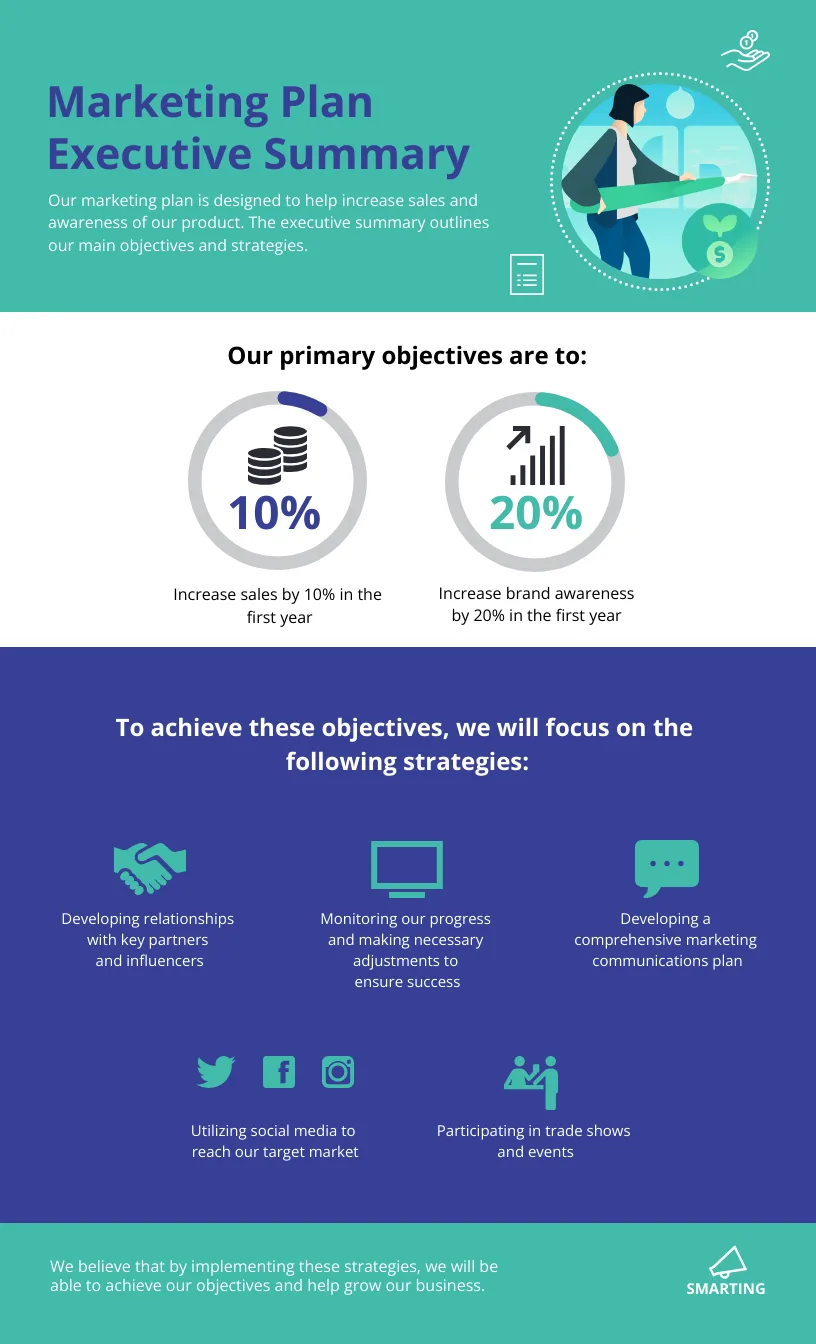
Notice how narrow that is. Fifteen calls from that audience is a meaningful number — it’s enough to close three or four projects at a realistic rate. Fifteen calls from “anyone on LinkedIn” is noise.
The Channel Plan
Two channels, no more. The consultant posts two in-depth case studies per week on LinkedIn and sends one personal email per weekday to a target contact. That’s it. Every piece of content goes through the seven-section marketing plan template before it gets written, so the case study has a defined audience, angle, and success metric.
The Budget and Metrics
The budget is almost entirely time. The only real spend is a paid LinkedIn account for the consultant, plus a small amount for a scheduling and CRM tool. Metrics to watch are calls booked, LinkedIn post-to-profile-visit rate, and email reply rate.
This is a marketing plan template best practices moment: the consultant should review numbers weekly, but change strategy monthly at most. Two-week pivots on a two-channel plan produce panic, not progress.

Example 2: the Local Restaurant Launching a New Location
A family-owned restaurant opening a second location across town. The first location has a loyal neighborhood base, but the new area is unfamiliar and there’s no brand recognition within a three-mile radius.
The temptation is to buy radio, run a grand opening ad in the local paper, and hope. A well-run marketing plan template will talk you out of that. The core job of the plan is to distinguish between awareness tactics (broad, low conversion) and acquisition tactics (narrow, high conversion), and to budget for both.
The Goal and Target Customer
The goal is 400 soft-launch reservations in the first six weeks, plus a 25% repeat rate within ninety days. Refining each detail of your marketing plan template strengthens this section. The target customer is families and young professionals who live within a three-mile radius and currently eat out one or more times per week.
That second number — repeat rate — is the one that matters. A restaurant can fill seats on opening night with any kind of promotion. Sustaining them is a different problem.
The Channel Plan
Three channels. Instagram content showing the kitchen, the space, and the crew (owned content). A partnership with two nearby businesses — a gym and a co-working space — for cross-promotion. A small geo-targeted ad spend on Meta limited to the three-mile radius.
The Budget and Metrics
The budget splits roughly 60% to paid acquisition and promotions, 25% to the partnership deals, 15% to content production. Fixed costs (photographer, menu design, small print budget) come out of the flexible pot. When negotiating with vendors, ask for competitive direct manufacturer pricing where it applies, especially on printed materials.
Metrics: reservations booked, walk-in traffic during soft launch, and repeat visits tracked through a loyalty program signup at the table. If the loyalty signup rate is under 15% in week four, the plan needs adjustment.
Example 3: the E-commerce Brand Expanding Into a New Category
A skincare brand currently selling cleansers and moisturizers wants to launch a sunscreen line. Existing customers buy monthly, but the new category has entirely different seasonal demand, packaging costs, and competitive dynamics.
This is where the marketing plan template becomes a risk-management tool, not just an organizing document. The sunscreen launch could cannibalize revenue from existing SKUs if handled clumsily — or it could double average order value if the channels and messaging are right.
The Goal and Target Customer
The goal is 30% of existing customers buying the new SKU within ninety days, plus a 20% lift in average order value. The target customer is existing repeat purchasers plus a new segment: outdoor-focused buyers who currently buy sunscreen elsewhere.
Notice that this goal respects the fact that the brand already has customers. A new category launch that ignores the existing base and chases strangers is a much more expensive plan.
The Channel Plan
Four channels for the marketing plan template launch, which is one more than the previous examples — but each is deliberately scoped. Email and SMS to the existing list (highest ROI, launch first). Instagram and TikTok for the new segment (awareness).
A paid search campaign targeting sunscreen keywords (direct intent). Effective execution in your marketing plan template makes a tangible difference. A small sampling program with two micro-influencers in the outdoor space (credibility with the new audience).
The Budget and Metrics
Budget splits roughly 40% to email/SMS infrastructure and design, 30% to paid search and influencer deals, 20% to content production, 10% reserve. That reserve matters — new category launches rarely go exactly to plan, and a reserve lets you double down on what’s working without asking for more money.
Metrics: new SKU attach rate, average order value, cost per acquisition on the new segment, and repeat purchase rate for customers who bought the sunscreen — which most brands forget to track, and then discover a year later that the launch was actually not working.
Marketing Plan Template Checklist Before You Hit Publish
Before you consider your plan done, run it through this checklist. It’s the same one I use, and it catches about 80% of the mistakes that turn plans into shelf decoration.
- Can I name the single number that defines success?
- Can a stranger describe my target customer in one sentence?
- Does my value proposition survive without adjectives?
- Have I committed to no more than three channels?
- Does each channel have a named owner and a weekly deliverable?
- Do I know which costs are fixed and which are flexible?
- Are there no more than five metrics I’ll review weekly?
- Does the timeline have three real checkpoints?
- Have I written down what would make me kill a channel?
- Is the plan readable in under ten minutes?
That last item is not cosmetic. A marketing plan template that no one on the team reads is not a plan, it’s an audit trail. Keep it short enough that it can be read in a single sitting.
Marketing Plan Template Tips for SMBs and Small Teams
Small teams can’t run the full corporate marketing planning apparatus, and they shouldn’t try. A few practical tips for making the template work with a small team.
First, assign a channel owner who is also the channel doer. Committees work in enterprise settings because there are enough people to fill them. In small teams, committees dilute ownership and slow decisions to a crawl.
Second, review the plan weekly, but revise the marketing plan template monthly. Weekly reviews are for spotting issues; monthly revisions are for making changes. Mixing the two produces a plan that changes so often no one knows what the current version says.
Third, keep the plan visible. A Notion page, a pinned doc, a printed page on the wall — anything that gets the plan in front of the team weekly. Plans that live only in someone’s head die quietly and nobody notices.
Fourth, when channel performance lags, resist the urge to add a new channel. Most of the time the answer isn’t a new channel — it’s a sharper message, a cleaner offer, or better targeting within an existing channel.
Marketing Plan Template Best Practices That Separate Good Plans from Bad Ones
A marketing plan template is only as strong as what you do with it. A few consistent habits separate the plans that produce results from the ones that don’t.
Best practice number one: write the plan for the person who will execute the marketing plan template, not the person who will review it. If your team can’t open the plan and know exactly what to do on Monday morning, the plan has failed at its primary job.
Best practice number two: treat the plan as a living document, but keep the core sections stable. Change the channel plan, change the budget split, but keep the goal, target customer, and value proposition stable for at least a quarter. Changing those every few weeks means you never learn whether anything works.
Best practice number three: give every metric a named owner. Metrics without owners are wishful thinking. If nobody’s name is next to a number, the number won’t be reviewed, and it won’t be improved.
Best practice number four: build in a personal review of the plan at the halfway mark. Twelve weeks in, with real numbers in hand, you’ll spot patterns you’d never see in a planning meeting. The marketing plan template exists to make that review possible in a single sitting.
Common Mistakes When Using a Marketing Plan Template
Plenty of plans fail for reasons that have nothing to do with the template itself. Here are the mistakes I see most often, and how to avoid each one.
The biggest mistake is treating the plan as an endpoint. Maintaining clarity across your marketing plan template remains essential. The plan isn’t the work; the work happens after. If you finish the plan and then stop, the plan was a waste of time.
The second mistake is over-specificity. Plans that predict week-by-week outcomes in a market you don’t yet understand are fiction dressed up as strategy. Leave room for discovery, especially in the first quarter of a new channel or a new category launch.
The third mistake is under-specificity. Plans that say “we’ll do more social media” or “improve content quality” aren’t plans — they’re aspirations. Every section of your marketing plan template should produce a sentence someone could respond to with “great, when does that start?” And “who’s doing it?”
The fourth mistake is skipping the numbers. People want to build the qualitative sections and skip the budget and metrics because those are less fun. Do those first, then build the qualitative sections around them.
Frequently Asked Questions
Here is an in-depth breakdown of key considerations regarding this section:
What Should a Marketing Plan Template Include?
At minimum: a single measurable goal, a specific target customer, a value proposition, a channel plan, a budget split, three to five metrics, and a timeline. That’s seven sections and roughly 80 minutes of work. Anything more is optional for the first version.
How Long Should a Marketing Plan Be?
One to three pages. Longer plans are usually longer because they’re less clear, not more thorough. If your team needs a table of contents to find the channel plan, the plan is too long.
Can I Use One Marketing Plan Template for Different Businesses?
Yes. The structure is the same across industries — a solo consultant, a restaurant, and an e-commerce brand all use the same seven sections in the examples above. What changes is the content inside each section, which is determined by your specific customer and channels.
How Often Should I Update My Marketing Plan?
Review weekly, revise monthly. A thoughtful approach to marketing plan template reinforces your qualifications. Big structural changes — new channels, major budget shifts, target customer pivots — should happen at quarterly checkpoints, not mid-quarter, unless a channel is clearly failing.
What if I Don’t Have a Marketing Team?
The plan doesn’t shrink. It just means one person owns every section. Allocate time the way you’d allocate budget — realistically, and based on what produces results. The examples in this article all assume small or solo teams.
Where This Marketing Plan Template Fits in the Bigger Picture
It’s worth stepping back for a second. This marketing plan template is one piece of a larger set of planning habits: business planning, product launch planning, content calendars, and campaign briefs. The parent topic is strategic planning, and the marketing plan template is the piece that connects your business goals to your weekly work.
If you’re building that larger planning stack, treat the marketing plan template as your hub. Campaign briefs, content calendars, and channel playbooks all radiate from it. When the plan changes, the surrounding documents should update with it — and when they don’t, that’s a signal that the plan has already drifted out of reality.
Start with the free template. Fill in the goal, the customer, and the value proposition first — those are the three sections that determine whether everything else is worth doing. Then add channels, budget, and metrics once the foundation is set.
By the end of a single morning, you’ll have a marketing plan template filled in, reviewed, and ready to hand to whoever will execute it. And that’s the whole point: a plan that gets finished today will always outperform a perfect plan that never gets written.
For verified reference and background research, consult the authoritative informational resource on this topic.