Marketing audiences are the beating heart of every campaign that actually works. If you’ve ever poured money into ads and watched the returns trickle in like a leaky faucet, chances are you never really knew who you were talking to.
I’ve seen this happen to small bakery owners in Portland and SaaS founders in Austin alike — brilliant products, zero traction, because their marketing audiences were a blurry guess instead of a sharp, documented reality.
Here’s the uncomfortable truth: most businesses think they know their audience. They’ll say something like “we target women aged 25 to 45 who like coffee.” That’s not an audience. That’s a demographic guess scribbled on a napkin.
Real marketing audiences have names, frustrations, inside jokes, late-night Google searches, and specific objections they never voice out loud. They have watering holes, both online and off. They have price sensitivity thresholds and emotional triggers you can only discover by paying attention.
This guide walks you through the entire process — from raw research to messaging that lands, from segmentation strategy to the channels where your people actually hang out. No fluff. No recycled advice you’ve read a hundred times.
Just the practical mechanics of finding, understanding, and winning over the marketing audiences that matter most to your bottom line.
What Marketing Audiences Really Mean (Beyond the Textbook Definition)
Ask ten marketers what marketing audiences means and you’ll get ten variations of the same vague answer: “the group of people you’re trying to reach.” Technically correct, practically useless. The definition that actually helps you make decisions is tighter than that.
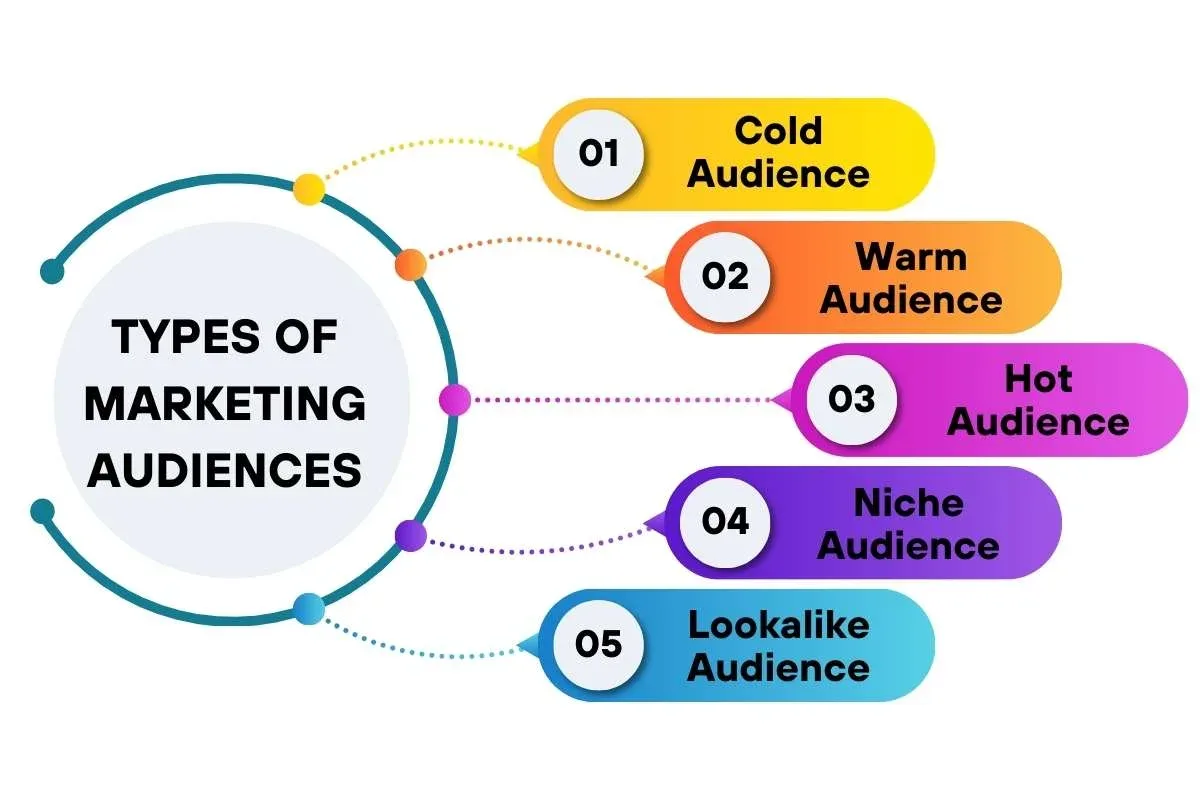
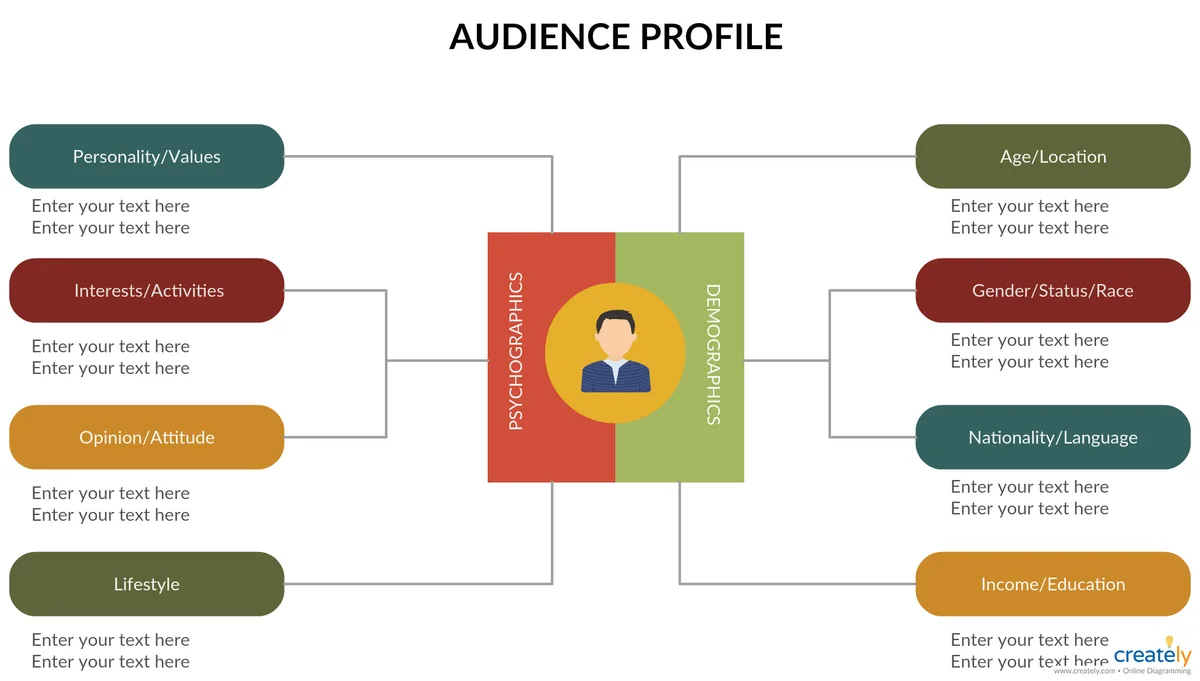
Marketing audiences are specific clusters of people who share a problem you solve, a language they use to describe that problem, and a set of trusted sources they consult before buying. Notice what’s missing from that definition — age, gender, zip code, income bracket.
Those are useful filters, sure, but they’re secondary. The primary glue holding an audience together is shared pain and shared vocabulary.
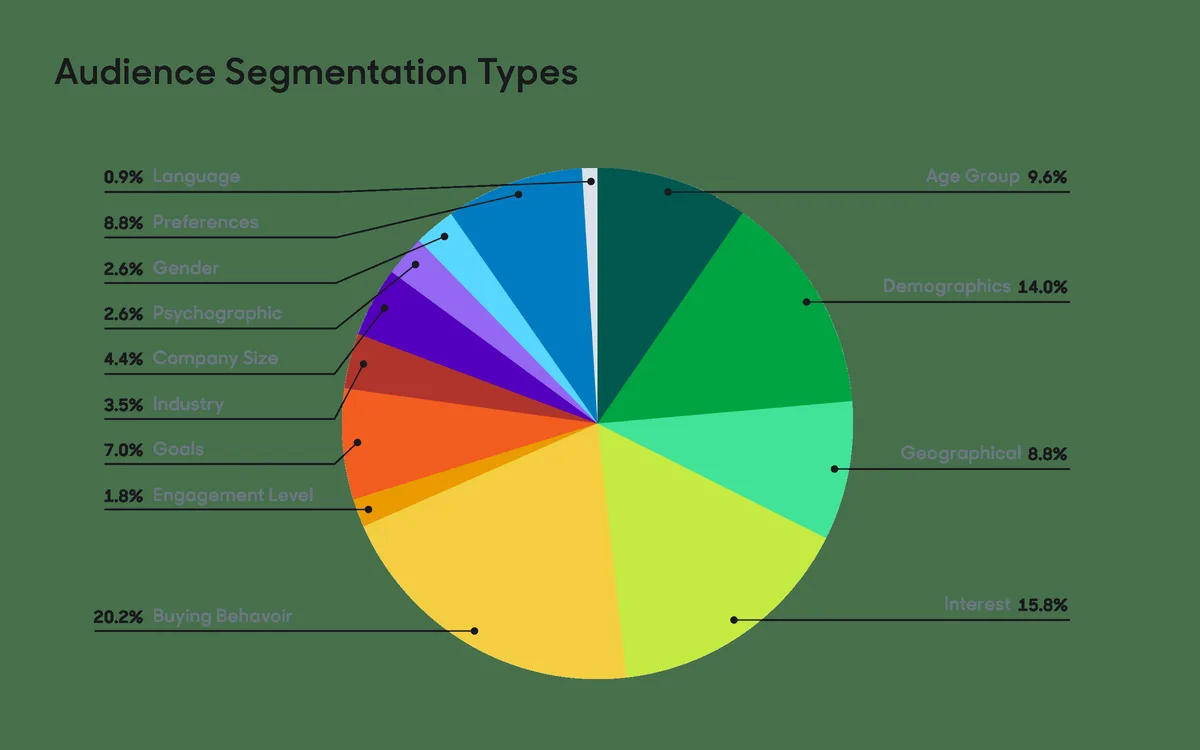
Take a company selling ergonomic office chairs. One audience is remote workers with lower back pain who spend nine hours a day hunched over a laptop. Another is office managers buying in bulk for a 200-person floor.
Both need chairs. Neither responds to the same message. The remote worker wants relief tonight. The office manager wants durability data, warranty terms, and a vendor who won’t ghost them mid-order. Same product, completely different marketing audiences, entirely different playbooks.
When you start treating marketing audiences as problem-solving communities rather than demographic buckets, your entire strategy shifts.
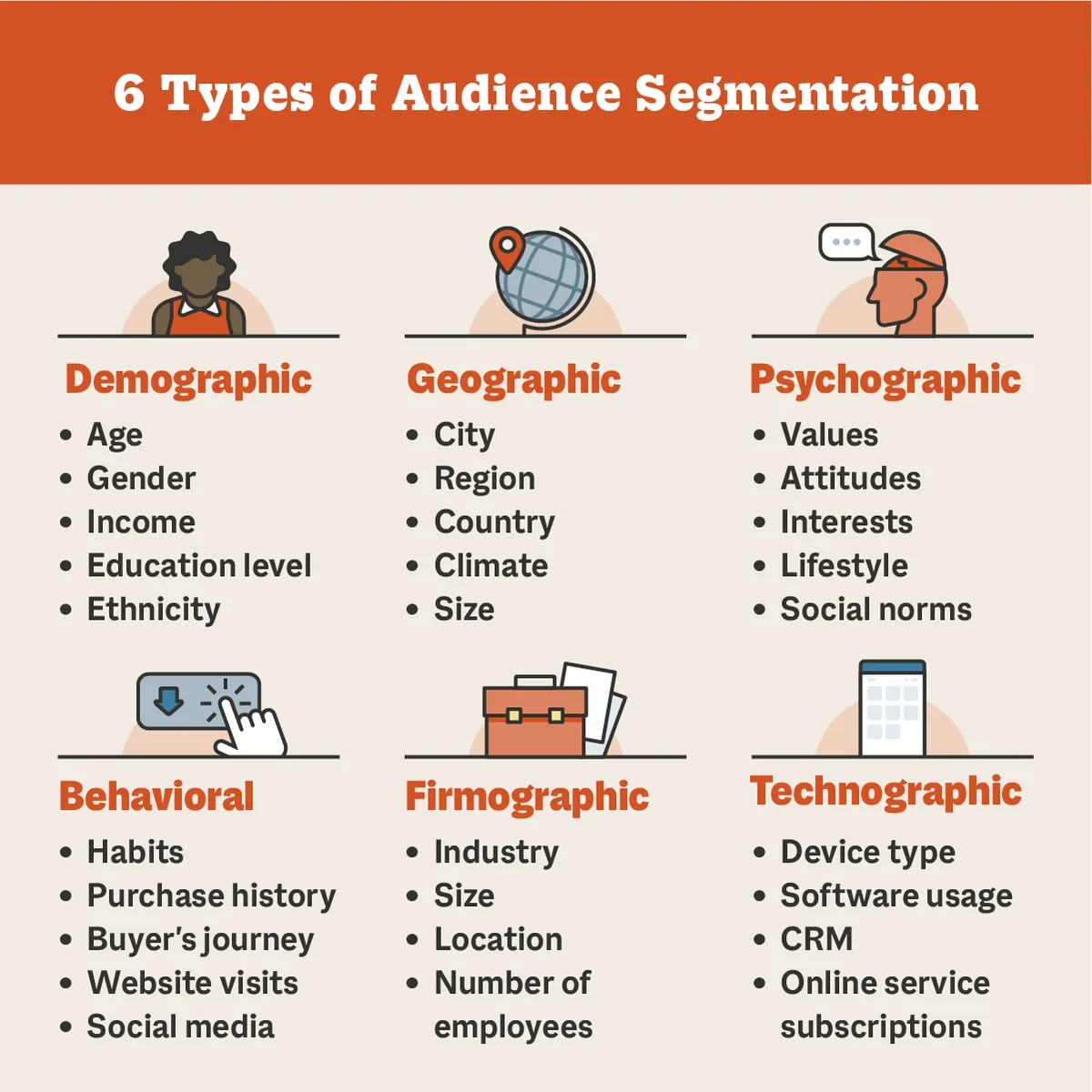
You stop asking “how do we reach more people?” and start asking “which specific people are we built to serve, and how do we serve them so well they tell their friends?” That reframe alone has rescued more stalled campaigns than any new tool or tactic I’ve seen.
One more thing worth internalizing: marketing audiences are not static. They evolve. A community of freelance designers looked different from the same community now — different platforms, different economic pressures, different tools they trust. If your audience profile hasn’t been updated in three years, you’re marketing to ghosts.
Why Getting Your Marketing Audiences Right Changes Everything
Let me paint a picture from the trenches. A mid-sized supplement brand I consulted with was burning cash on broad Facebook ads. Their cost per acquisition hovered around the industry average, and they were “fine.” Not great, just fine.
We rebuilt their marketing audiences from scratch — splitting their single fuzzy target into three distinct groups: busy parents managing family nutrition, endurance athletes optimizing recovery, and health-conscious professionals over fifty concerned about joint health.
Within two quarters, their ad spend stayed flat, but conversion rates nearly tripled. Why? Because each group now saw creative that spoke directly to their specific concern. The parent saw a thirty-second video about getting picky eaters to take their vitamins.
The athlete saw recovery timing charts. The fifty-something professional saw a doctor discussing joint mobility. Same product. Three marketing audiences. Three separate funnels.
This is the compounding power of audience clarity. It touches everything downstream:
- Ad targeting efficiency — you stop paying to show your message to people who will never buy.
- Content relevance — your blog posts, videos, and emails start answering real questions instead of imaginary ones.
- Product development signals — you learn what to build next by listening to the gaps your marketing audiences keep mentioning.
- Pricing confidence — different segments have different willingness to pay, and you can price accordingly without guilt.
- Retention and referrals — people who feel understood stick around and bring their friends.
The flip side is brutal. When you get marketing audiences wrong, every dollar you spend works against you. You attract tire-kickers, you field support tickets from people who bought the wrong thing, and your brand voice becomes a mush of compromises trying to please everyone. Nobody feels spoken to. Nobody converts.
I’ve watched founders resist this work because it feels slow. It’s not. A focused two-week audience research sprint saves you six months of misdirected spending. That math never fails.
How to Segment Marketing Audiences Without Overcomplicating It
Segmentation is where a lot of teams stall out. They open a spreadsheet, start listing variables, and drown. Age, income, education, location, job title, company size, tech stack, hobbies, marital status, pet ownership — the list never ends. Then paralysis sets in and nothing gets done.
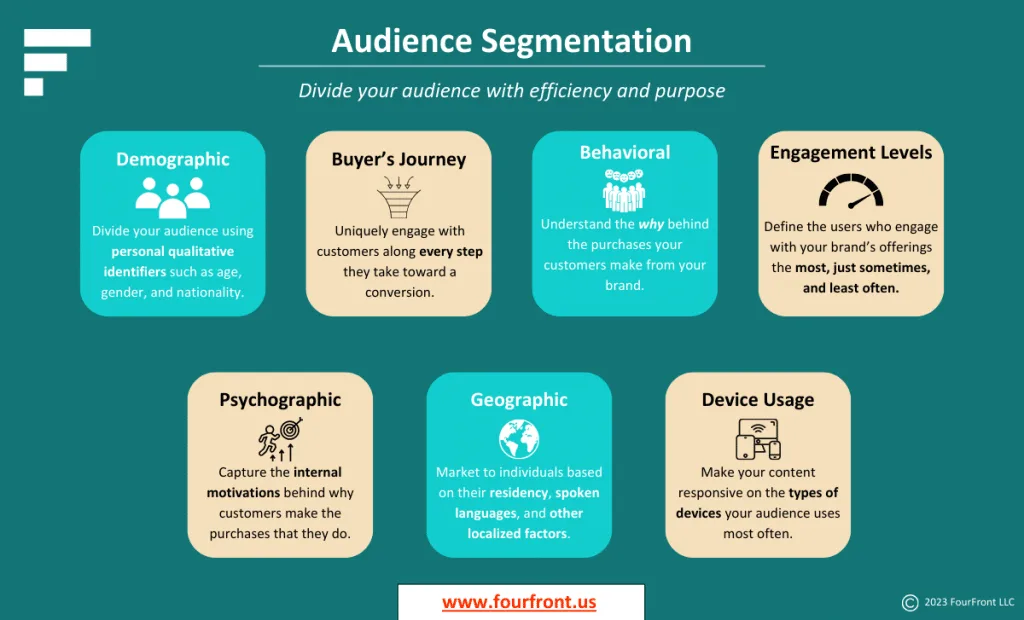
Here’s the shortcut I use with clients: segment by behavior first, demographics second. Behavior tells you what people actually do. Demographics tell you who they are on paper. Behavior is far more predictive of purchase decisions.
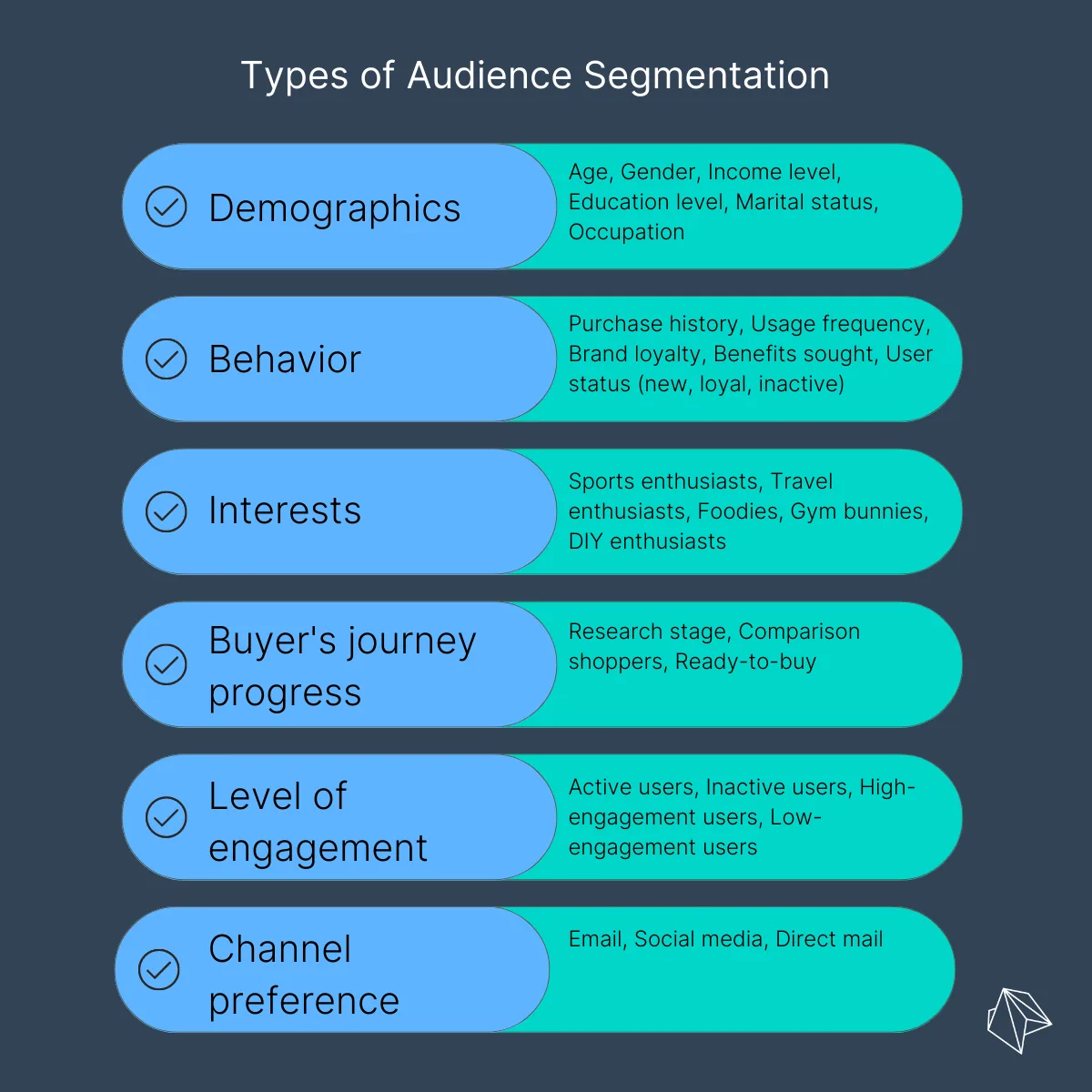
Four behavioral lenses work for almost any business:
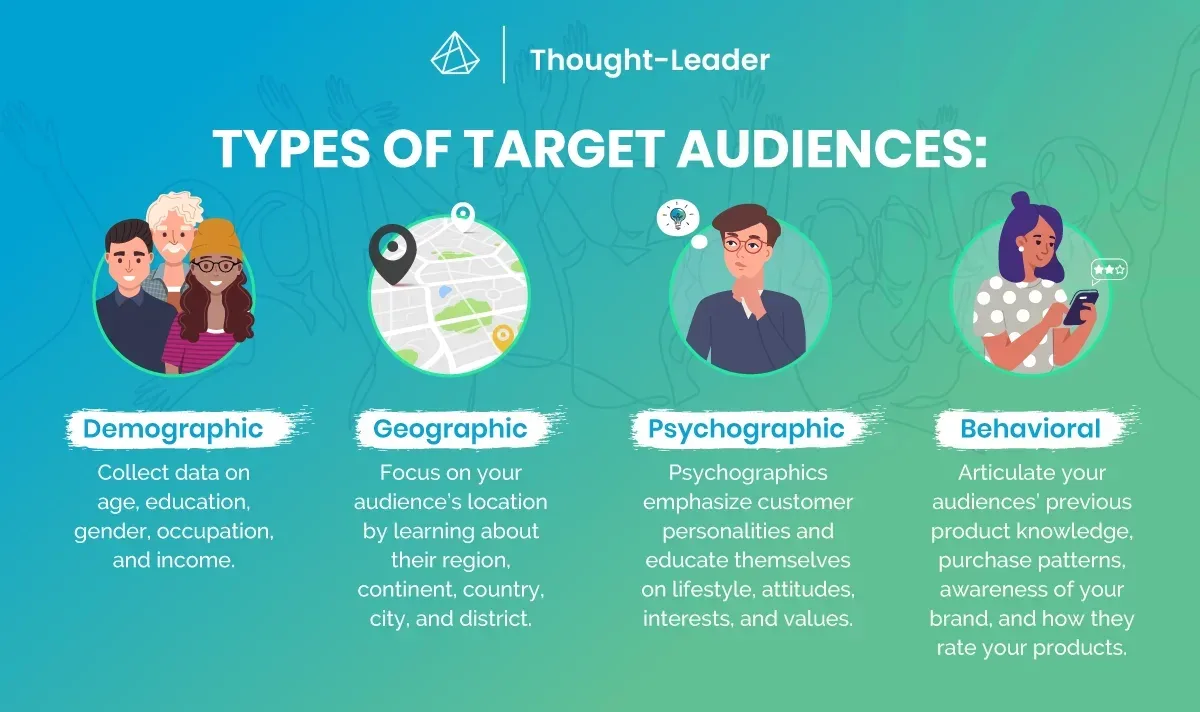
- Problem awareness stage — Do they know they have a problem? Do they know solutions exist? Do they know yours exists? Each stage needs different messaging.
- Buying urgency — Are they in pain right now, or planning for something six months out? Urgency changes everything about how you pitch.
- Decision-making style — Do they research for weeks, or buy on impulse? Do they consult peers, or trust authority figures?
- Budget posture — Are they price-first, value-first, or outcome-first? This isn’t about how much money they have but what they prioritize when spending.
Cross these lenses and you get four to six meaningful marketing audiences instead of twenty meaningless ones. Four to six is manageable. Twenty is chaos.
A practical tip from experience: name each segment with a short, memorable handle. Not “Segment A” or “High-Intent Millennials.” Something like “The Overwhelmed Coordinator” or “The Skeptical Veteran.” When your team uses these names in meetings, everyone stays aligned. When you use generic labels, everyone drifts back into vague thinking.
And resist the urge to create a segment for every edge case. Your marketing audiences should cover the 80% of revenue you actually want. The tail can be served by general content and support, not dedicated campaigns.
Research Methods That Reveal Real Marketing Audiences
You can’t build accurate audience profiles from assumptions. You need data, and the best data comes from three sources: what people say, what people do, and what people search for. Each tells a different part of the story.
Listening to What People Say (Interviews and Communities)
One-on-one interviews remain the single highest-value research method, and almost nobody does enough of them. Ten to fifteen conversations with real customers or prospects will teach you more than a hundred survey responses. Why? Because interviews let you follow threads, ask “why” five times, and catch the emotional undercurrent that surveys flatten out.
Where do you find people to interview? Start with your existing customers — especially the ones who churned, because they’ll tell you the truth. Then look at communities your marketing audiences already inhabit: subreddits, Discord servers, Facebook groups, LinkedIn threads, niche forums.
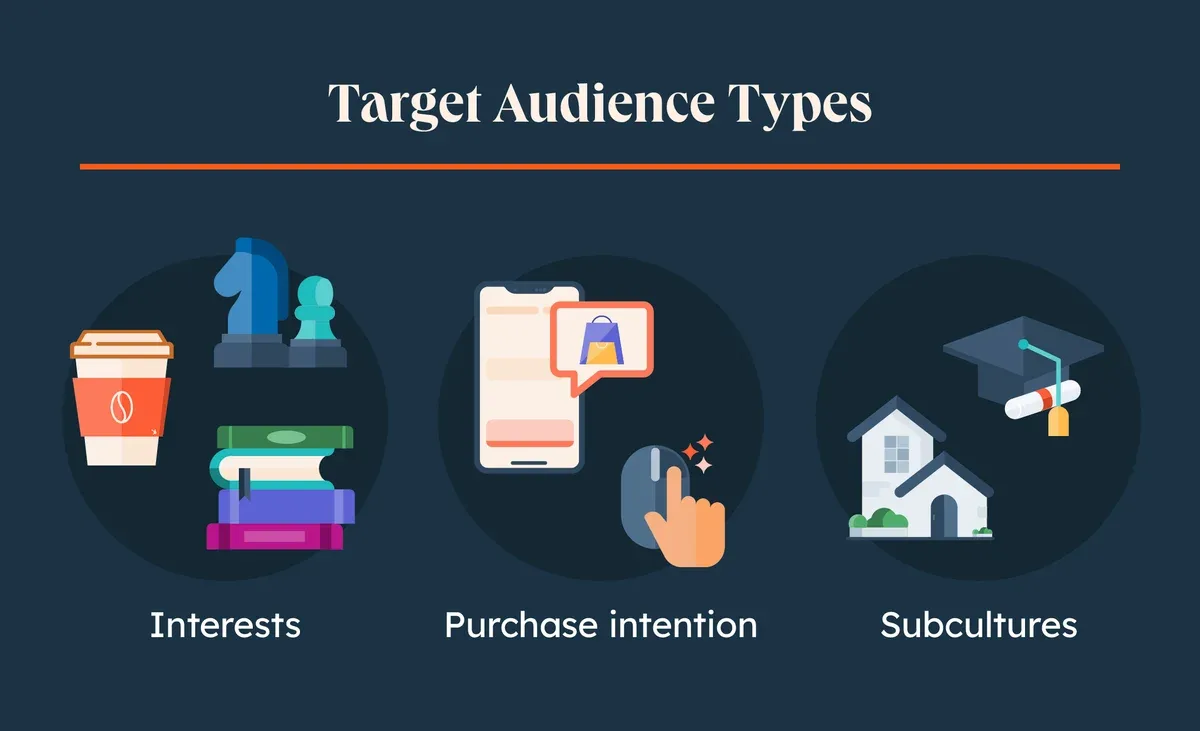
Lurk for a week. Read the questions people ask. Note the exact words they use. Those words are gold for your copy.
One caution: don’t lead the witness. If you ask “would you buy a product that does X?” people will politely say yes to be nice. Instead ask “tell me about the last time you faced this problem. What did you try? What frustrated you?” Behavior stories beat hypotheticals every time.
Watching What People Do (Analytics and Behavioral Data)
Your own analytics are an underused goldmine. Look at which pages your marketing audiences visit before converting, how long they linger, where they drop off, what they search for on your site, and which emails they open versus ignore. These patterns reveal intent that people can’t articulate.
Heatmaps and session recordings add another layer. Seeing where visitors hesitate or rage-click tells you exactly which objections your messaging isn’t addressing. I once found a client’s checkout abandonment problem wasn’t price at all — it was a shipping estimate that appeared too late and felt like a bait-and-switch. One fix, thirty percent recovery in abandoned carts.
Reading What People Search for (Keyword and Query Data)
Search data is essentially a confession booth. People type their real problems into Google with zero social filtering. Tools like Google Search Console, AnswerThePublic, and keyword research platforms show you the exact phrases your marketing audiences use when they’re confused, comparing options, or ready to buy.
Pay special attention to long-tail queries. They reveal specific pain points and use cases that broad keywords miss. “Best CRM for solo consultants who hate monthly fees” tells you far more than “best CRM.” That specificity is where your content and ads should live.
Building Audience Profiles That Your Team Actually Uses
Here’s a sad reality: most audience personas gather digital dust. They’re created in a workshop, saved as a PDF, and never opened again. The problem isn’t the concept — it’s the format. Traditional personas are too long, too generic, and too disconnected from daily decisions.
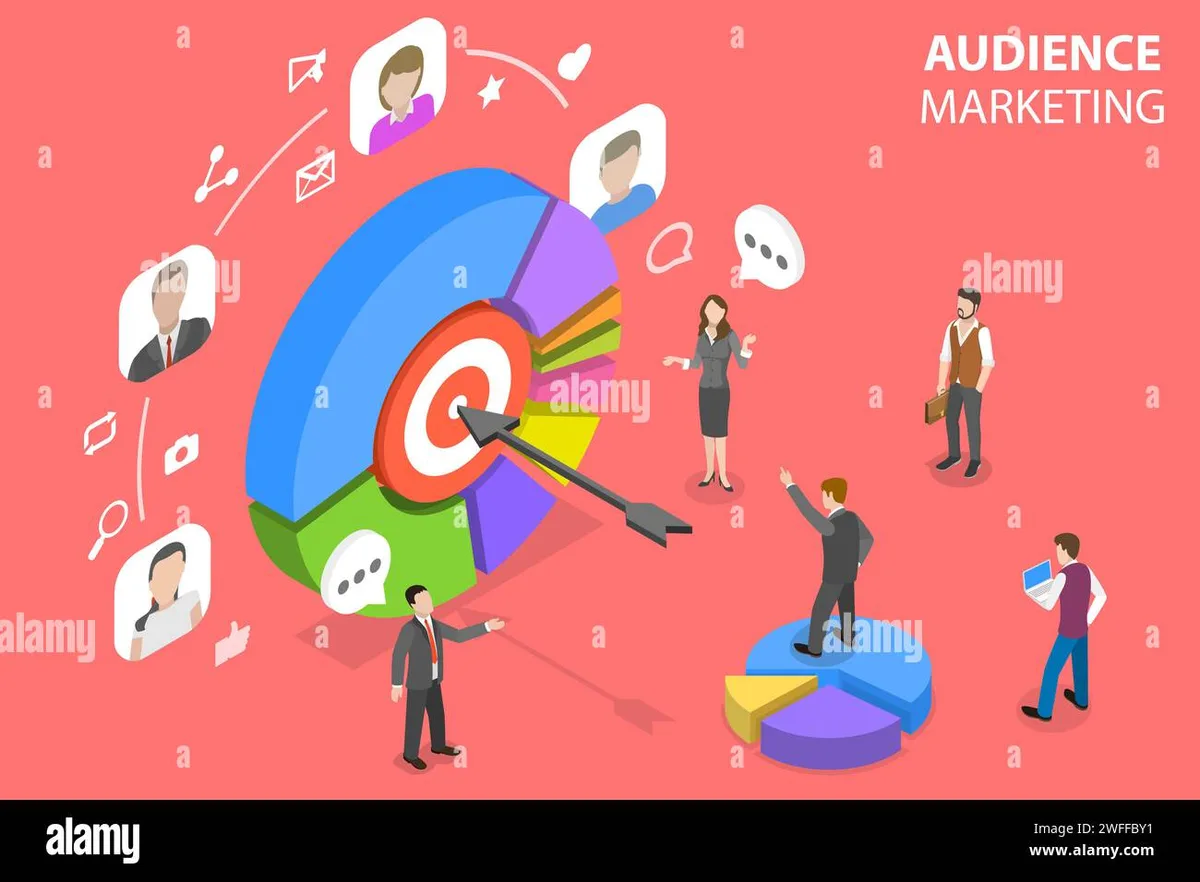
What works better is a lean profile that fits on one page and answers five questions:
- What’s the trigger? What event or realization pushes this person to start looking for a solution?
- What do they fear? What’s the worst outcome they’re trying to avoid?
- What do they trust? Which sources, people, or proof points move them from interest to action?
- What language do they use? Three to five exact phrases they’d say out loud about their problem.
- What stops them? The top two or three objections that kill the deal.
Notice there’s no “age: 32, likes hiking” nonsense. That stuff rarely changes decisions. The five questions above change everything — they shape your headlines, your ad creative, your onboarding emails, your sales scripts.
Make profiles living documents. Review them quarterly. Update them when you learn something new from customer calls or support tickets. When your marketing audiences evolve, your profiles should evolve with them.
And share them widely. Engineers should read them. Customer support should read them. Product should read them. When the whole company understands who your marketing audiences are, decisions get faster and more consistent across departments.
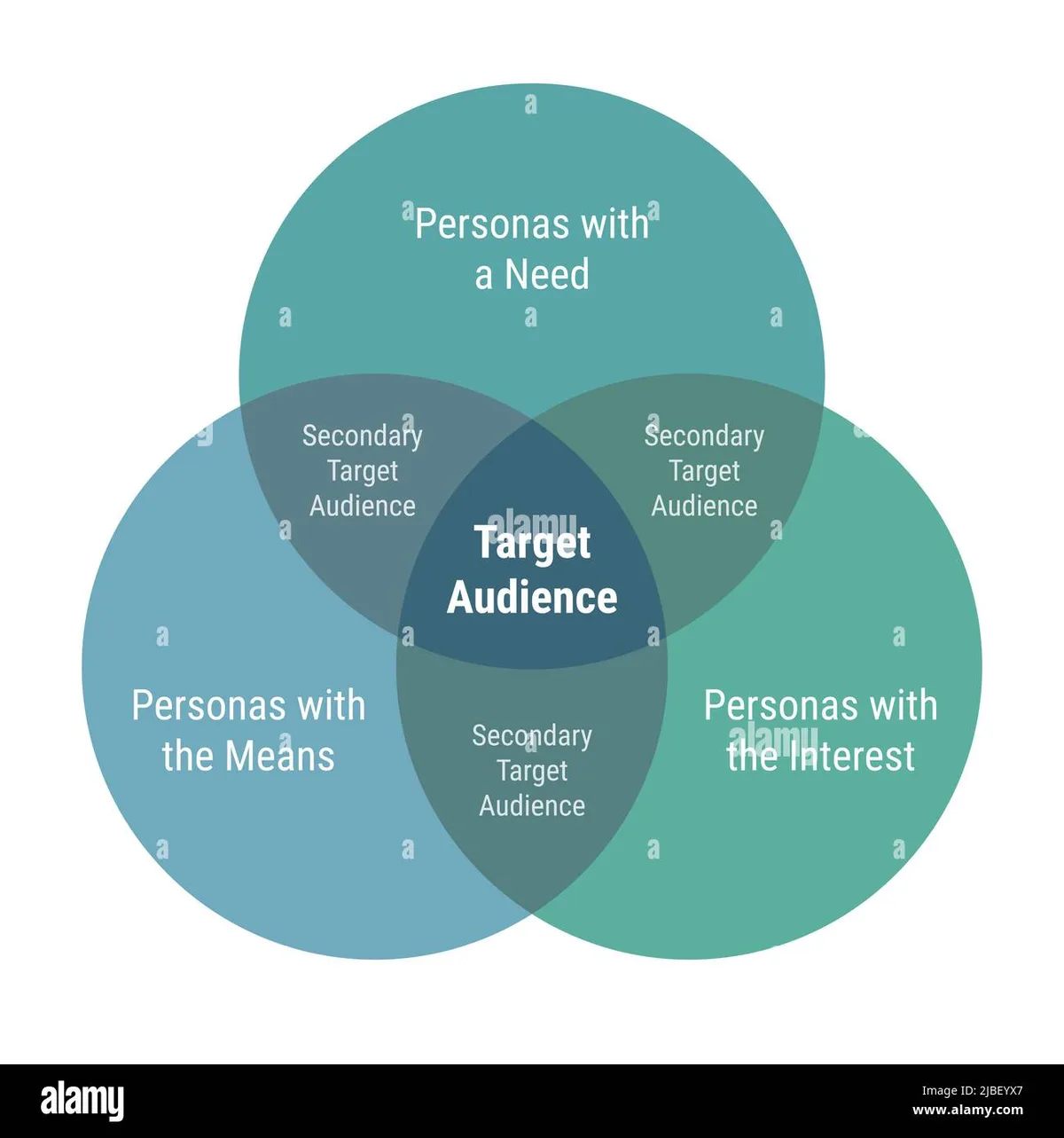
Mapping Marketing Audiences to the Buyer’s Journey
Not every audience member is at the same stage of readiness. Treating them all as if they’re ready to buy is one of the most expensive mistakes in marketing. The buyer’s journey gives you a framework for matching message to moment.
Three broad stages matter most:
- Awareness — They sense a problem but haven’t named it yet. Your job is to articulate it better than they can themselves.
- Consideration — They know solutions exist and are comparing approaches. Your job is to show why your approach fits their situation.
- Decision — They’re choosing between you and a short list of alternatives. Your job is to remove risk and make the next step obvious.
Different marketing audiences spend different amounts of time in each stage. Impulse buyers blow through awareness in minutes. Enterprise buyers can spend months in consideration. Your content mix, ad targeting, and nurture sequences should reflect that reality.
For example, a B2B software company might create awareness content in the form of industry reports and thought leadership. Consideration content looks like comparison guides, webinars, and case studies. Decision content is demos, free trials, and ROI calculators. Each piece speaks to a different temperature of the same audience.
One trap to avoid: don’t try to skip stages. Pushing a decision-stage offer (like a demo request) to someone in awareness will feel pushy and drive them away. Meet them where they are, then guide them forward.
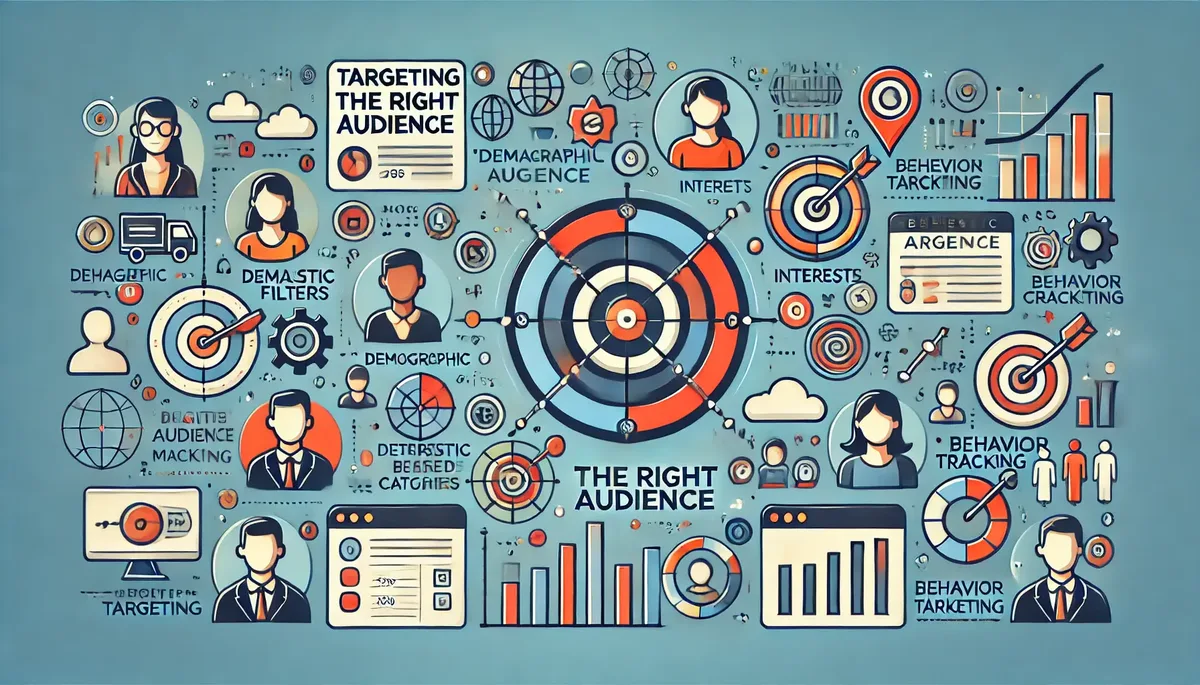
Messaging That Resonates With Specific Marketing Audiences
Great messaging isn’t clever. It’s clear, specific, and emotionally accurate. The best copywriters I know aren’t the ones with the biggest vocabulary — they’re the ones who’ve spent the most time listening to their marketing audiences talk.
Three principles govern messaging that actually converts:
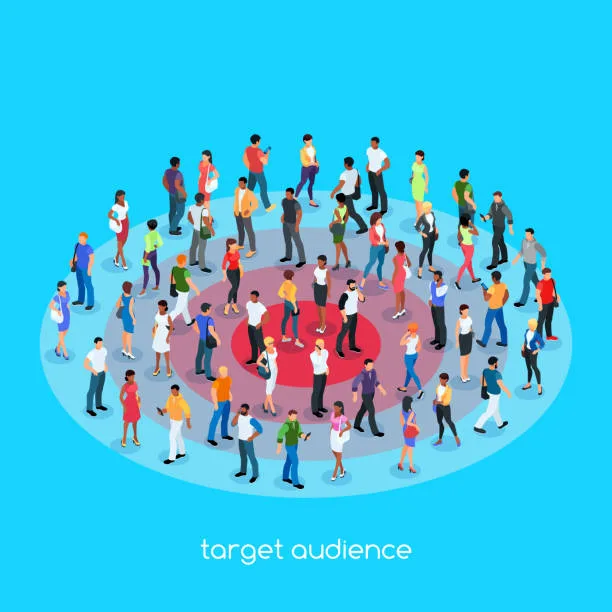
Speak their language, not yours. If your audience calls it a “hassle” instead of a “pain point,” use their word. If they say “I just want it to work,” don’t dress it up as “seamless integration synergy.” Match their vocabulary and they’ll trust you. Deviate and they’ll sense you’re an outsider.
Lead with the outcome, not the feature. Nobody buys a drill because they want a drill. They buy it because they want a hole. Nobody buys a project management tool because of its Gantt charts — they buy it because they’re tired of missing deadlines. Lead with the relief, then explain the mechanism.
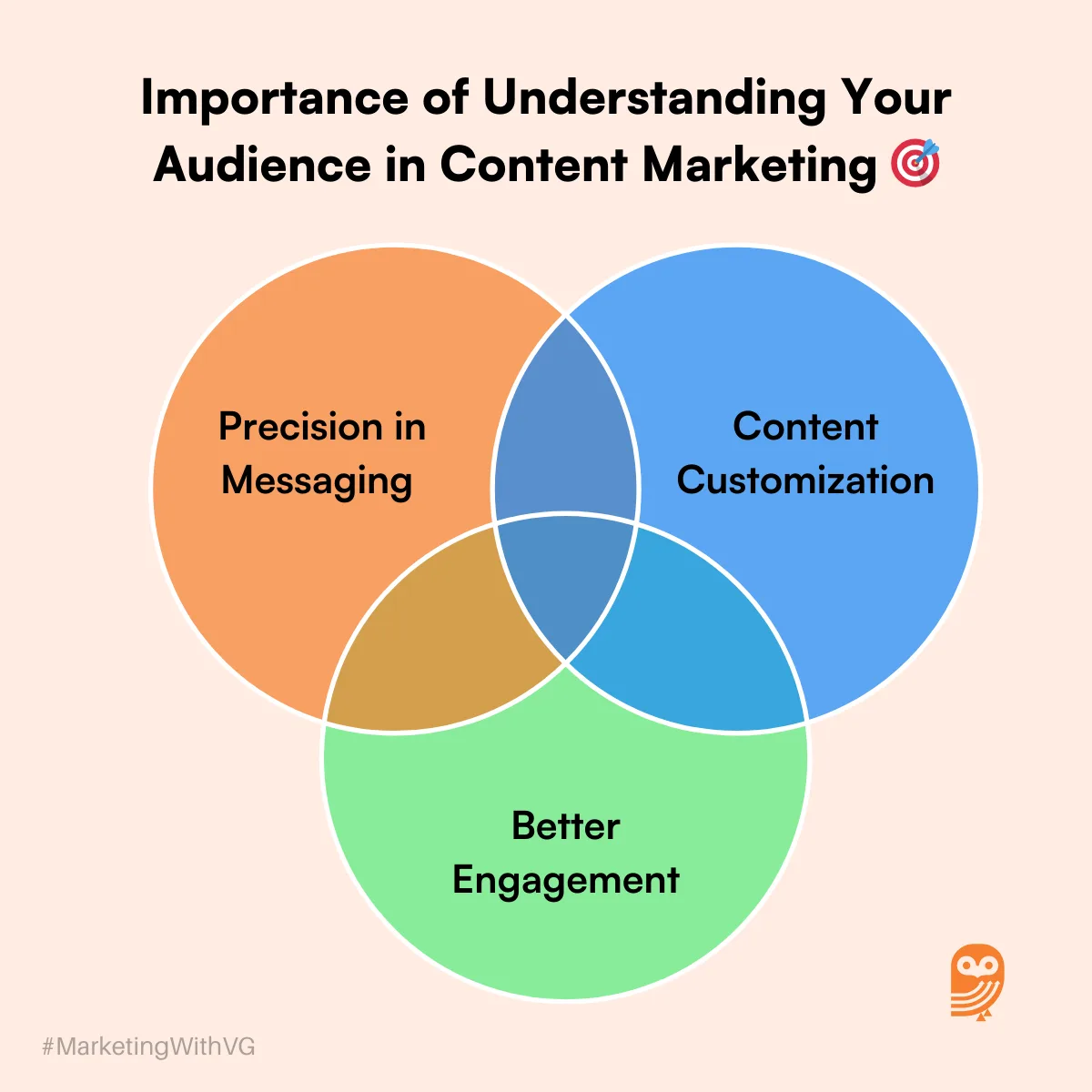
Address the unspoken objection. Every audience has a fear they don’t voice. The B2B buyer worries the software will be too hard to implement. The parent worries the supplement will taste bad. The freelancer worries the course will be another waste of money. Name the fear before they do, and you earn trust instantly.
A quick exercise: write your current homepage headline. Now imagine saying it out loud to a specific customer. Would they nod or squint? If they’d squint, rewrite until they’d nod. That single habit will improve your conversion rates more than any redesign.
Choosing Channels Where Your Marketing Audiences Actually Spend Time
Channel selection is where a lot of teams waste energy. They chase whatever platform is trending instead of going where their specific marketing audiences already gather. This is backwards. The channel doesn’t matter — the audience does.
Ask three questions about any potential channel:
- Are my marketing audiences already here? Not “could they be here” — are they actively present right now?
- Does the format fit my message? A complex B2B pitch dies on TikTok. A visual product thrives on Instagram. Match format to content type.
- Can I sustain a presence? A channel you post on twice and abandon is worse than no channel at all.
Different marketing audiences cluster in different places. Here’s a rough map that holds up across industries:
| Audience Type | Primary Channels | Content That Works |
|---|---|---|
| B2B decision-makers | LinkedIn, industry podcasts, email | Case studies, ROI analyses, executive summaries |
| Younger consumers | TikTok, Instagram, YouTube Shorts | Short-form video, memes, user-generated content |
| Hobbyist communities | Reddit, Discord, niche forums | Deep-dive tutorials, honest reviews, Q&A |
| Local service buyers | Google Search, local Facebook groups, Nextdoor | Reviews, before-and-after photos, local guides |
| Enterprise procurement | LinkedIn, industry conferences, direct outreach | Whitepapers, compliance docs, references |
Don’t spread thin across five channels. Dominate one or two where your marketing audiences actually live, then expand only when you’ve maxed out the first. Depth beats breadth almost every time.
Using Data to Refine Your Marketing Audiences Over Time
Audience work isn’t a one-time project. It’s a cycle. The marketing audiences you defined six months ago have shifted — new competitors entered, platforms changed their algorithms, economic conditions moved, and your own product evolved. If you’re not actively refining, you’re slowly drifting out of sync.

Build a simple feedback loop. Monthly, review these signals:
- Conversion rates by segment — Which marketing audiences are converting better or worse than last quarter?
- Customer feedback themes — What are people praising or complaining about in reviews and support tickets?
- Search query shifts — Are the phrases people use to find you changing?
- Channel performance — Is your best channel still your best channel, or has attention moved?
- Competitive positioning — Are new players entering your space with different angles?
Each signal is a clue. When three or more point in the same direction, it’s time to update your audience profiles and adjust your campaigns.
One practice I recommend to every team: keep a running “audience insights” document. Every time someone on the team learns something new about your marketing audiences — from a sales call, a support chat, a social comment — they drop it in. Over a year, that document becomes an incredibly rich, uniquely yours source of truth.
Common Mistakes That Sabotage Audience Targeting
Even experienced marketers fall into predictable traps. Here are the ones I see most often, along with how to sidestep them.
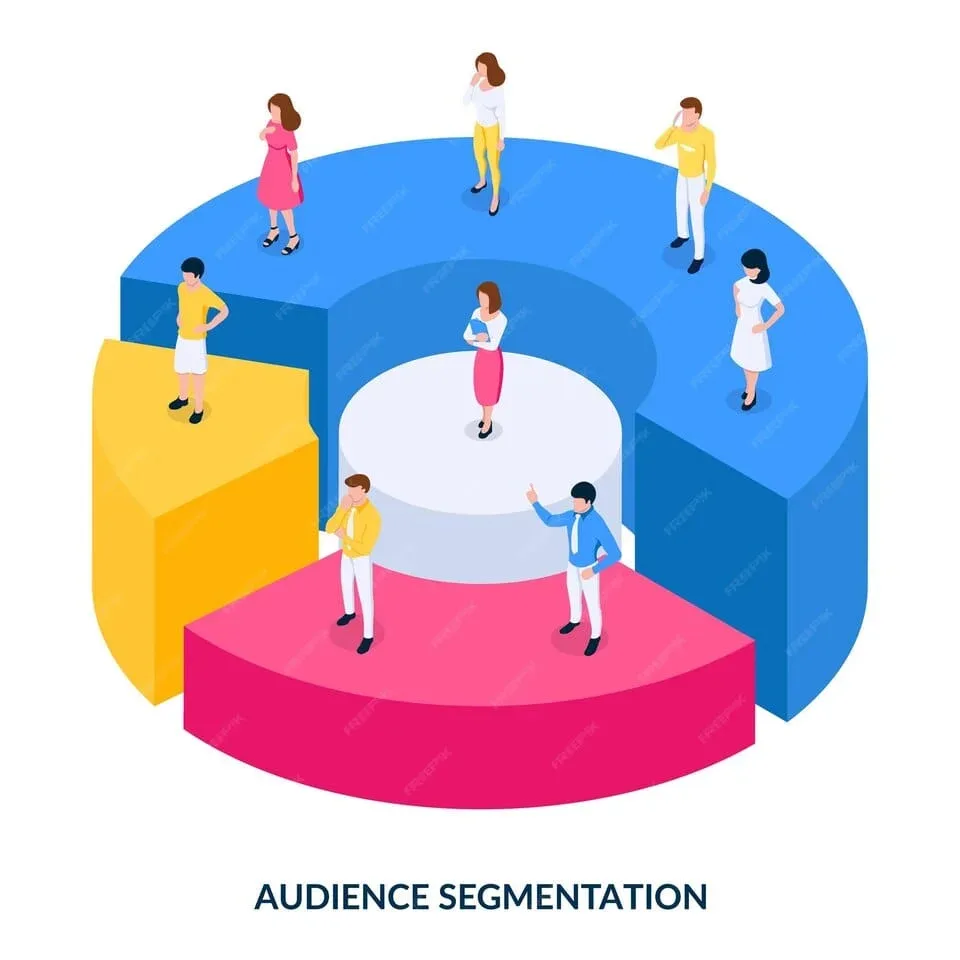
Mistake one: targeting too broadly. “Everyone who needs our product” isn’t an audience — it’s a fantasy. Broad targeting dilutes your message and inflates your costs. Narrow down until it feels almost uncomfortably specific, then go one step narrower.
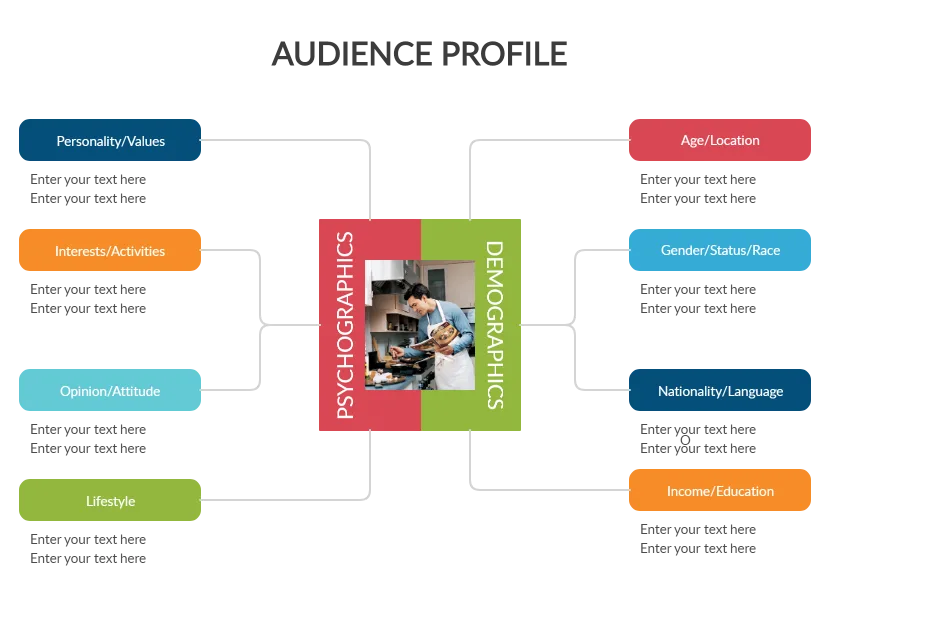
Mistake two: confusing demographics with psychographics. Knowing your customer is a 35-year-old male in Denver tells you almost nothing useful. Knowing he’s frustrated that his current solution wastes three hours a week — that tells you everything. Prioritize psychographics.

Mistake three: copying competitor targeting. If a competitor is already winning with a segment, that segment is expensive to enter. Look for underserved pockets. Sometimes the best marketing audiences are the ones your competitors are ignoring.
Mistake four: ignoring negative audiences. Just as important as who you want is who you don’t. Define who you’re not for. It sharpens your message and saves you from wasting resources on mismatched buyers.
Mistake five: never talking to actual humans. Dashboards and analytics are essential, but they can’t tell you why someone hesitated or what almost made them buy. Regular conversations with real customers are irreplaceable.
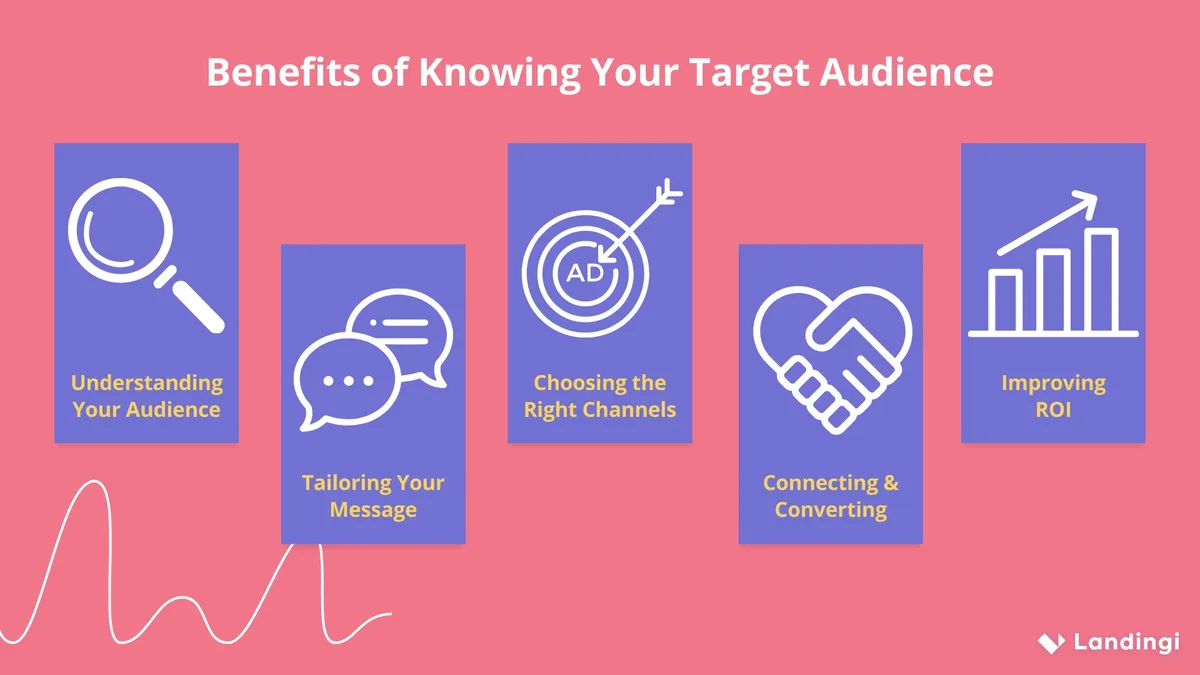
Each of these mistakes is fixable, but only if you’re honest about which ones you’re making. Take a hard look at your current campaigns and ask: which of these patterns shows up?
Advanced Tactics for Segmenting Marketing Audiences
Once you’ve got the fundamentals, a few advanced moves can unlock significant gains. These aren’t for beginners — they require clean data and disciplined execution — but they’re worth working toward.
Predictive Segmentation Using Behavioral Signals
Instead of segmenting by who people are, segment by what they’re likely to do next. Machine learning models can score each contact based on their likelihood to convert, churn, or upgrade. You then target the highest-propensity marketing audiences with tailored offers, and you invest less in the low-propensity ones.
The key is clean data. If your CRM is a mess, predictive models will produce garbage. Spend the time to unify customer records, standardize fields, and tag behaviors consistently. It’s tedious work that pays off enormously.
Micro-Audiences Within Larger Segments
Inside every major audience there are micro-clusters with distinct needs. Among “small business owners,” for instance, you’ll find solopreneurs, family-run shops, and franchise operators. Each has different rhythms, budgets, and decision processes. Micro-targeting these clusters with tailored landing pages and email sequences often doubles conversion rates compared to one-size-fits-all messaging.

The trick is knowing when micro-targeting is worth the effort. If a micro-cluster represents more than ten percent of revenue potential, it deserves dedicated attention. Below that, serve them with general content.
Lookalike Modeling for New Audience Discovery
Platforms like Meta and LinkedIn offer lookalike audiences — algorithms that find new people who resemble your best existing customers. These are powerful for scale, but only when your seed audience is high quality. Feed the algorithm your top ten percent of customers, not everyone who ever bought. The quality of the seed determines the quality of the harvest.
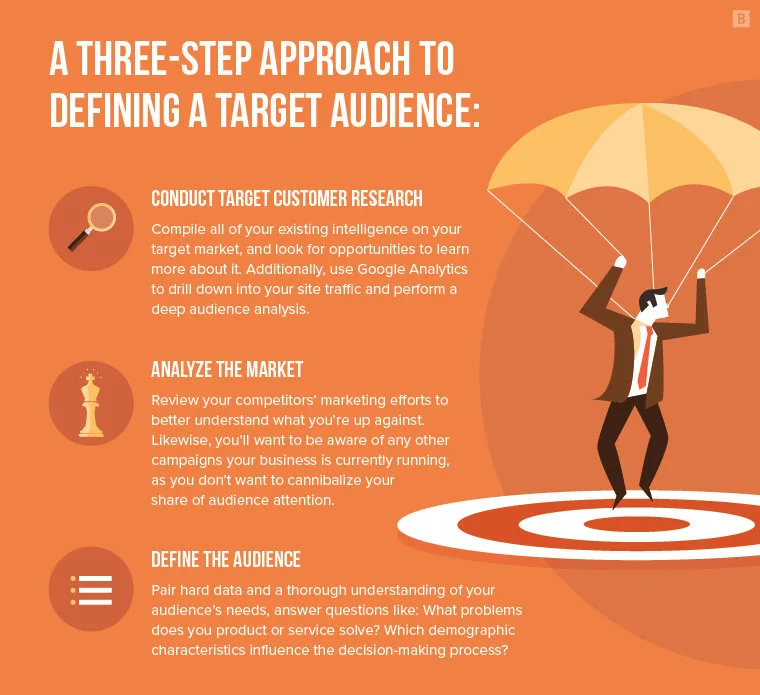
Combine lookalikes with your own behavioral data. If a lookalike audience converts well but churns fast, something’s off — either the seed audience was too broad, or your onboarding isn’t matching expectations. Diagnose and adjust.
Personalization at Scale Without Losing the Human Touch
Personalization has become a buzzword, and like most buzzwords, it’s often executed badly. Sloppy personalization — inserting a first name into a generic email — feels worse than no personalization at all. Real personalization means adapting the substance, not just the surface.
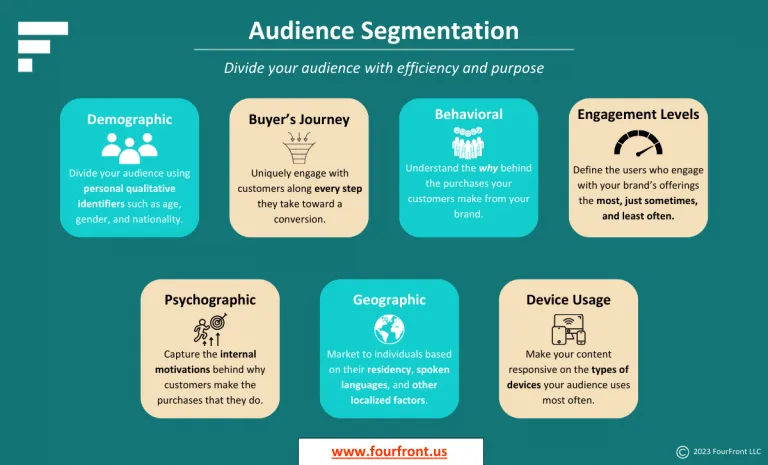
Start with these three layers:
- Segment-level personalization — Different messaging for different marketing audiences. The parent gets different emails than the athlete, even if both bought the same product.
- Behavioral personalization — Content adapts based on actions. If someone viewed a specific product page three times, they see content about that product next.
- Lifecycle personalization — New customers get onboarding content. Long-term customers get loyalty perks. Lapsed customers get win-back offers.
The human touch comes from restraint. Don’t personalize everything. Don’t automate every interaction. Leave room for real human conversations — a handwritten note, a personal email from a founder, a support agent who actually reads the customer’s history before replying.
I’ve seen companies lose customers by over-automating. The personalization was technically impressive but felt robotic. The fix isn’t less data — it’s more judgment about when to use it.
Measuring Success Across Different Marketing Audiences
You can’t manage what you don’t measure, but measuring the wrong things is just as bad. Many teams track aggregate metrics that hide what’s happening inside each audience segment. Averages lie.
Break your metrics down by segment. For each of your marketing audiences, track:
- Cost per acquisition — How much does it cost to win one customer from this segment?
- Lifetime value — How much does this segment spend over the full relationship?
- Retention rate — What percentage stick around after six months, a year, two years?
- Referral rate — How many customers does each segment bring in organically?
- Engagement depth — How deeply do they interact with your content and community?
When you see these numbers side by side, priorities become obvious. A segment with low acquisition cost but also low LTV might not be worth scaling. A segment with high acquisition cost but exceptional retention might be your best long-term bet.
One more metric worth tracking: share of wallet. What percentage of each audience’s spending in your category goes to you versus competitors? Growing share of wallet is often easier and more profitable than acquiring new customers.
Aligning Sales and Marketing Around Shared Audiences
One of the most common organizational failures I encounter is sales and marketing operating on different mental models of the same customer. Marketing thinks they know the marketing audiences. Sales thinks marketing is out of touch. Both are partially right, and the customer suffers.
Fix this by creating shared audience definitions. Sit down together and agree on:
- Segment names and definitions — Same labels, same meanings, no translation needed.
- Qualification criteria — What signals tell both teams that a lead matches a target audience?
- Shared dashboards — Both teams see the same data, in the same format, at the same cadence.
- Regular feedback loops — Sales shares what they hear from prospects. Marketing adjusts campaigns accordingly.
The result is a tighter operation where leads are better qualified, messaging is consistent from ad to close, and customers feel like they’re dealing with one coherent company instead of two disconnected departments.
I’ve watched companies double their close rates just by fixing this alignment. No new tools, no bigger budget — just shared language and shared goals around the same marketing audiences.
Case Study: How a Local Service Business Doubled Revenue Through Audience Clarity
Let me share a real example with the details changed to protect privacy. A residential cleaning company in a mid-sized city was stuck at roughly the same revenue for three years. They served “anyone who needs cleaning” — homeowners, renters, small offices, Airbnb hosts, post-construction sites. Their marketing was a mush of generic promises.
We broke their customer base into four distinct marketing audiences:
- Busy dual-income families — needed recurring weekly or biweekly service, valued reliability over price.
- Airbnb hosts — needed fast turnovers between guests, cared about consistency and speed.
- Elderly homeowners — needed help maintaining their homes, valued trust and gentle communication.
- Post-renovation clients — needed one-time deep cleans, less price-sensitive but demanding thoroughness.
Each audience got its own landing page, its own ad creative, and its own follow-up sequence. The family audience saw testimonials from other parents. The Airbnb hosts saw a case study about a host who cut turnover time in half. The elderly audience saw a warm video from the owner. The renovation audience saw before-and-after photos with detailed checklists.
Within eight months, revenue had doubled. Not because they spent more — actually they spent slightly less on ads. But every dollar now hit a specific, well-defined target. Their marketing audiences finally felt spoken to and responded accordingly.
The lesson: clarity beats cleverness. You don’t need fancier tactics. You need to know exactly who you’re talking to and why they should care.
Scaling Your Efforts Without Losing Audience Focus
Growth often breaks focus. You start with a tight audience, you win, you expand — and suddenly your messaging is diluted again. This is the classic scaling trap, and avoiding it requires deliberate discipline.
Three principles keep you focused as you grow:
Add audiences one at a time. Don’t chase three new segments simultaneously. Master one, then move to the next. Each new audience requires its own research, creative, and channels. Rushing this dilutes everything.
Protect your core. The audience that got you here deserves continued investment. Don’t let new segments cannibalize the attention and budget that made your core business strong.
Build modular systems. Create content and campaign templates that can be adapted quickly for new marketing audiences without starting from zero. Modularity lets you scale without sacrificing specificity.
The teams that scale successfully treat audience expansion like compound interest. Slow, steady additions that build on each other, rather than frantic leaps that leave everyone confused.
Tools and Technology for Managing Multiple Marketing Audiences
You don’t need a massive tech stack, but a few tools make audience work dramatically easier. Here’s what I’ve found genuinely useful across dozens of companies.
CRM platforms — HubSpot, Salesforce, or Pipedrive. The key isn’t which one you pick, but whether you actually tag and segment contacts consistently. A well-used basic CRM beats a poorly-used enterprise one.
Analytics and heatmaps — Google Analytics 4, Hotjar, or Microsoft Clarity. These reveal behavior that surveys miss. Set up custom segments for each of your marketing audiences and check them monthly.
Customer research tools — UserTesting, Wynter, or even simple Google Forms. Regular qualitative feedback keeps you grounded in reality.
Content personalization — Dynamic content tools within your email platform or website CMS. Start simple, add complexity only when it’s clearly paying off.
Attribution platforms — Tools like Triple Whale or Northbeam help you understand which channels actually produce customers for each audience. Without attribution, you’re guessing.
Whatever stack you choose, resist the temptation to add tools for their own sake. Every tool has a learning curve and a maintenance cost. Add one only when it solves a specific, recurring problem.
Building a Culture That Puts Marketing Audiences First
The strongest companies I’ve worked with share a common trait: everyone — not just marketing — thinks about the customer constantly. Engineering reads support tickets. Executives join sales calls. Product managers sit in on user research sessions. This isn’t a nice-to-have. It’s the difference between companies that stay relevant and those that fade.
To build this culture, start with rituals:
- Monthly customer story sessions — Someone presents a real customer journey to the whole company.
- Rotating customer calls — Different team members join customer conversations each month.
- Shared dashboards — Everyone sees the same audience metrics, not just the marketing team.
- Open audience profiles — Anyone can read and contribute to audience documentation.
Over time, this creates an organization where decisions naturally consider the customer because everyone genuinely knows them. That’s when marketing audiences stop being a marketing concept and become a company-wide truth.
The payoff is enormous. Companies with this culture ship better products, write better copy, and retain customers longer. They also attract better talent, because people want to work somewhere that cares about the humans on the other side of the screen.
Frequently Asked Questions About Marketing Audiences
Here is an in-depth breakdown of key considerations regarding Frequently Asked Questions About Marketing Audiences:
How Many Marketing Audiences Should a Small Business Have?
For most small businesses, three to five distinct marketing audiences is the sweet spot. Fewer than three usually means you’re too broad. More than five becomes unmanageable without dedicated resources. Start with your two or three highest-revenue segments, master them, then expand carefully.
How Often Should I Update My Audience Profiles?
Review them quarterly at minimum. Update them immediately when you learn something significant — a new objection, a shift in language, a competitor entering your space. Treat them as living documents, not archived reports.
What’s the Difference Between a Target Market and Marketing Audiences?
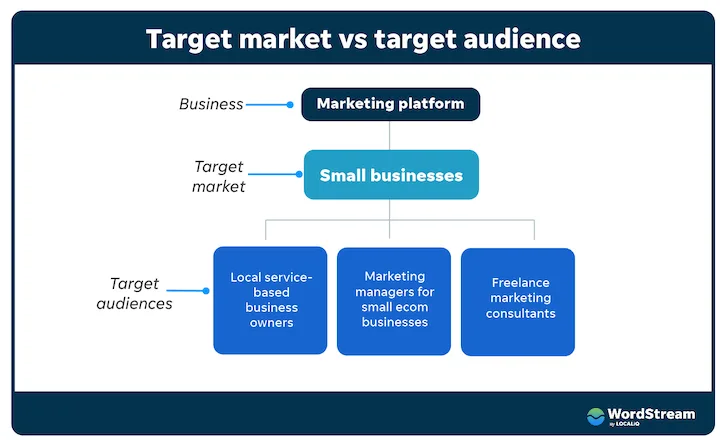
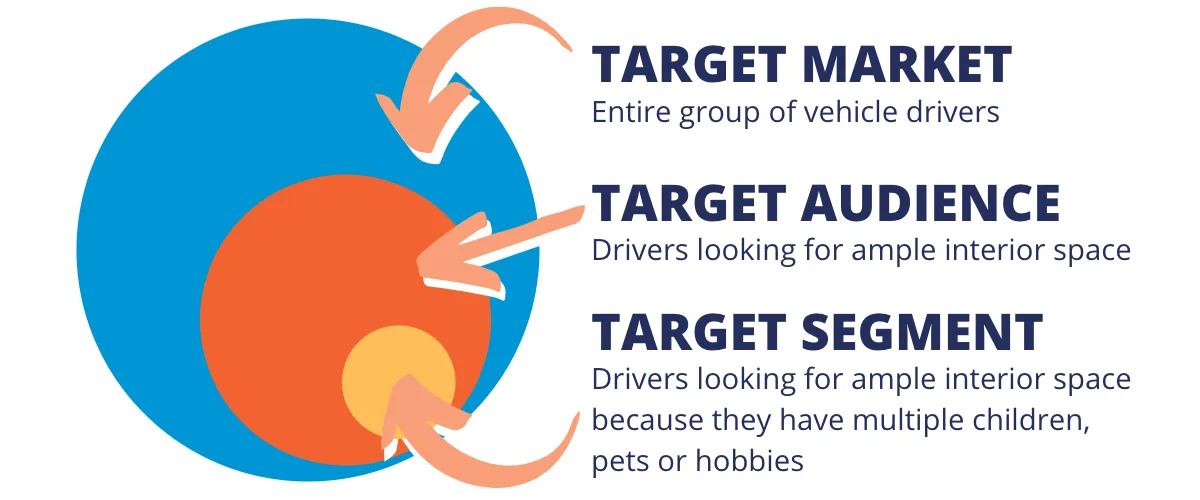
Target market is a broader term describing the overall category of buyers you serve. Marketing audiences are the specific segments within that market, each with distinct needs, language, and buying behavior. You can have one target market and multiple marketing audiences within it.
Can I Target Multiple Marketing Audiences With the Same Content?
Sometimes, but rarely well. Content that tries to speak to everyone usually speaks to no one. If two audiences share enough overlap, you can serve both — but expect lower engagement than dedicated content. When in doubt, split and customize.
How Do I Know if My Audience Definition is Too Broad?
Try this test: can you describe the person’s specific problem, the exact words they’d use to describe it, and the first place they’d look for a solution? If any of those answers is fuzzy, your audience is too broad. Narrow until the answers become crisp.
The following key points are covered in this section:
- What if My Different Marketing Audiences Want Different Products?
- Should I Use the Same Brand Voice Across All Marketing Audiences?
Final Thoughts on Mastering Marketing Audiences
For verified reference and background research, consult the authoritative informational resource on this topic.