Local SEO for real estate works differently than it does for a coffee shop or a dental practice. You are not chasing foot traffic within a five-mile radius; you are chasing buyers, sellers, and renters who are searching for a neighborhood before they ever search for an agent.
That distinction changes everything about how you build visibility. The tactics below are the ones that consistently move the needle for property professionals who want to show up when someone types a location-specific query into Google.
This article sits inside a larger conversation about organic growth for property businesses — the kind of work that connects your website, your Google Business Profile, and your listings into one coherent signal.
Think of it as a branch of the broader local search discipline, with sub-topics like review management, neighborhood content, and map pack positioning feeding into it.
Why Local SEO for Real Estate Demands a Different Playbook
Most local search advice assumes the customer walks in the door. Focusing on local SEO for real estate provides clear direction here. Real estate rarely works that way.
A buyer searching “homes for sale in Riverside Heights” is not looking for an office address — they want inventory, pricing context, and a sense of what the neighborhood feels like.
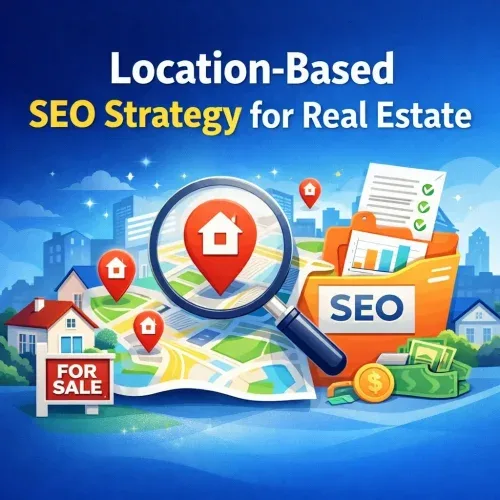
Google understands this intent shift. When someone types a query with a place name attached to a property term, the algorithm surfaces a mix of listing portals, local guides, and agent pages. Your job is to earn a slot in that mix rather than cede the entire result page to the big portals.
The local SEO for real estate is a second layer here that gets ignored constantly: the seller side. Someone searching “sell my house in Elmwood Park” carries an entirely different intent than a buyer. They want proof that you know their specific streets, their price band, their buyer pool. A generic service page will not cut it.
According to a well-documented pattern in consumer behavior research compiled by the local search entry on Wikipedia, a large share of location-based searches convert offline or through direct contact rather than through an immediate online transaction. For property professionals, that means the search is often the very first touchpoint in a long consideration cycle.
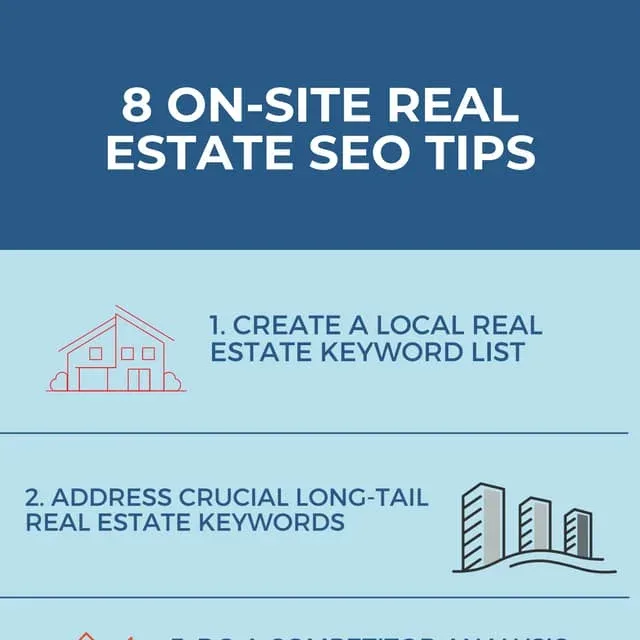
So the playbook shifts. Effective execution in your local SEO for real estate makes a tangible difference. You are no longer optimizing for a single storefront pin. You are optimizing for a mosaic of neighborhood-level intent signals, each of which needs its own content and its own supporting entity data.
How Local SEO for Real Estate Differs from Standard Local Search
Standard local search hinges on proximity, relevance, and prominence. Focusing on local seo for real estate provides clear direction here. Those three factors still matter here, but their weight distribution is unusual. Proximity is looser because buyers will travel across a metro for the right property. Relevance is tighter because Google needs to match a hyper-specific location to your content.
Prominence behaves oddly too. A well-known brokerage may dominate brand searches yet lose a neighborhood-level query to a small independent agent who wrote a genuinely useful page about one subdivision. That leveling effect is why local SEO for real estate rewards specialization over scale.
Here is a practical comparison to make the difference concrete.
| Factor | Typical Local Business | Real Estate Professional |
|---|---|---|
| Primary search intent | Find a nearby service | Evaluate a specific area or property type |
| Radius sensitivity | High — customer wants proximity | Moderate — customer will travel for the right fit |
| Key ranking lever | Google Business Profile proximity | Neighborhood-level content depth plus profile signals |
| Review weight | Strong | Strong, but often split across agents and the brokerage |
| Content type that wins | Service pages and FAQs | Area guides, market data, listing-adjacent content |
That table is not academic. It is the reason a checklist built for a plumber will fail you. You need a local SEO for real estate checklist that accounts for listing pages, area content, and reputation management as one connected system.
Local SEO for Real Estate Best Practices: the Foundation Before the Tactics
Before the local SEO for real estate get into the nine tactics, there are three baseline requirements that will quietly sabotage everything else if they are missing. Get these right first. They take a weekend, not a quarter.
First, claim and fully complete your Google Business Profile. Every field, every service area, every category. A half-filled profile is a signal of low effort to both users and the algorithm. Second, make sure your name, address, and phone number are identical across every directory that lists you.

Even small inconsistencies create entity confusion. A thoughtful approach to local SEO for real estate reinforces your qualifications. Third, install proper schema markup on your core pages — RealEstateAgent, LocalBusiness, and where appropriate, Place.
These three baseline steps fall under local SEO for real estate best practices that most professionals skip because they look unglamorous. They are not glamorous. They are also the difference between ranking on page one and wondering why your neighborhood pages get no traction.
Local SEO for Real Estate Checklist: What to Verify Before You Start
Run through this checklist once. If anything is missing, fix it before investing in the tactics below.
- Google Business Profile claimed, verified, and 100% complete with photos and service areas
- NAP (name, address, phone) consistent across your website, GBP, and every directory listing
- Website has a dedicated page for each service area or neighborhood you actually serve
- Schema markup installed and validated through Google’s Rich Results Test
- At least one review captured in the last 30 days
- Google Search Console and Bing Webmaster Tools connected and monitored
- Mobile page speed above 70 on PageSpeed Insights
- Internal links pointing from your homepage to your priority neighborhood pages
If you can tick all eight, you are ready to execute. If not, tackle the gaps in order of impact. your local SEO for real estate profile and NAP items will move rankings faster than anything else on the list.
Tactic 1: Build Neighborhood Pages That Outlast the Listings
This is the single highest-leverage move in local SEO for real estate. Listings are ephemeral — they sell, they expire, they get removed. A neighborhood page that covers the area in depth keeps working for years.
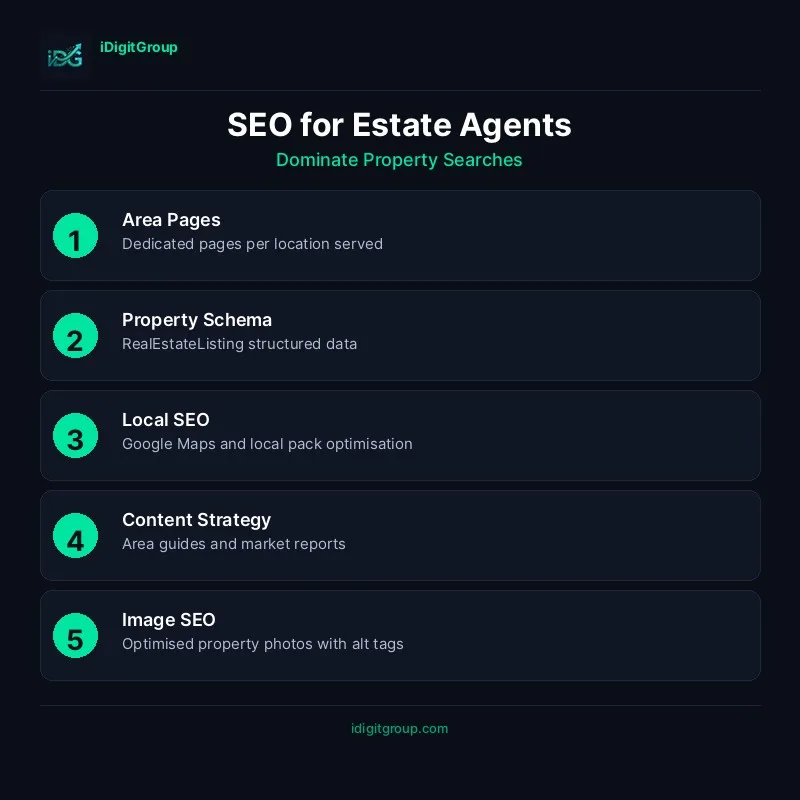
The mistake most agents make is building a thin page with a headline, a map embed, and three listings. That is not a neighborhood page. That is a placeholder. A real one covers school zones, commute times, average price per square foot, buyer demographics, local amenities, and the honest tradeoffs residents talk about.
Think about what a buyer actually searches for at 11 p.m. Applying these principles to your local SEO for real estate yields measurable results. On a Tuesday.
“Is Riverside Heights walkable?” “What are the property taxes in Elmwood Park?” “Do they hold a farmers market in Maple Grove?” Each of those is a long-tail keyword with real search volume and almost zero competition from the big portals.
Write one page per neighborhood the local seo for real estate genuinely know. Ten solid pages beat fifty thin ones. And keep them alive — update the market data quarterly, add new photos, refresh the FAQ every few months. Google rewards content that looks maintained.
Tactic 2: Optimize Your Google Business Profile for Property Searches
Your Google Business Profile is not just a pin on a map. Proper attention to your local SEO for real estate sets a strong baseline. For many searchers, it is the entire first impression. The photos, the reviews, the posts, the Q&A — all of it gets weighed by both users and the ranking algorithm.
Start with categories. “Real Estate Agency” is the obvious primary, but secondary categories matter more than most people realize. “Real Estate Agent,” “Real Estate Consultant,” and “Property Management Company” all pull different query clusters. Choose the secondaries that match what you actually do.
Then handle the Q&A section yourself. Most profiles leave it empty and let random strangers populate it. Ask your team to post common questions and answer them thoroughly. This is a quiet local SEO for real estate tips shortcut that many professionals overlook entirely.
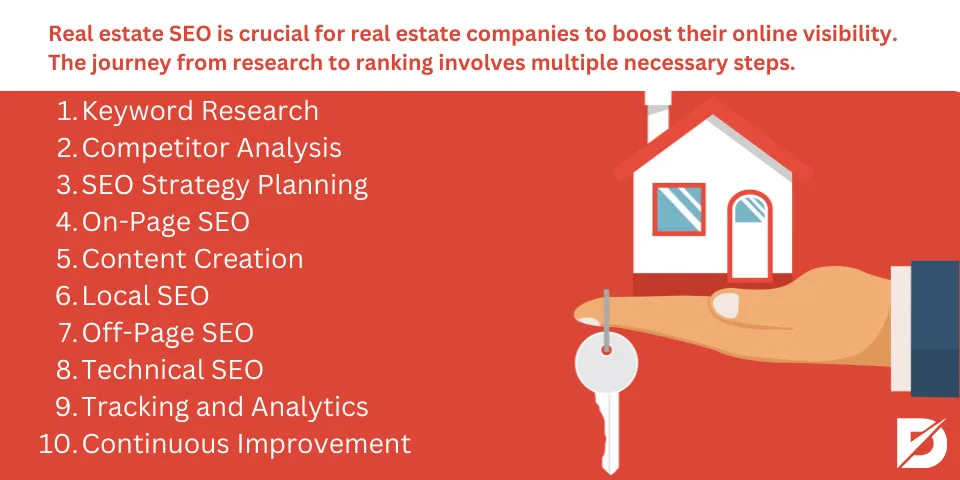
Photos deserve their own attention. Developing your local SEO for real estate with precision highlights key strengths. Upload fresh interior and exterior shots monthly, name the files descriptively before uploading, and geotag where permitted. Google’s image recognition is sharp enough that a well-labeled photo of a specific neighborhood street can surface in image-local pack results.
Tactic 3: Generate and Manage Reviews Like They are Listings
Reviews are the currency of trust. For local SEO for real estate specifically, they carry an extra layer because both the agent and the brokerage can accumulate separate review sets. This creates complexity that most professionals do not manage well.
The mechanics matter less than the cadence. A steady trickle of new reviews beats a sudden burst every six months. Google’s algorithm treats recency as a signal, so build a habit of asking every single client within 48 hours of closing.
Respond to every review, positive or negative. A thoughtful response to a critical review often reads better to prospective clients than five generic five-star ratings. It also signals to Google that your local SEO for real estate profile is actively managed by a real person.
Do not buy reviews. Ever. The short-term gain is dwarfed by the recovery cost when Google’s filters catch a pattern. And do not use review-gating widgets that violate the platform’s terms — a policy violation can wipe out years of accumulated reputation in a single sweep.
Tactic 4: Publish Market Data That Nobody Else Bothers To
Real estate is data-heavy in a way the local SEO for real estate few local sectors are. You have transaction prices, days on market, inventory counts, absorption rates, price-per-square-foot trends. Most agents publish none of this systematically.
The ones who do win. A monthly market report for each neighborhood you serve becomes a recurring search destination. Buyers bookmark it. Sellers reference it when pricing. Other agents link to it. Over time, that page accumulates the kind of backlink and engagement profile that lifts your entire domain.
Structure it simply. Targeted refinements to your local SEO for real estate streamline the entire review. One page per neighborhood. A short narrative explaining what changed. A data table with the last twelve months. A chart or two. A brief section on what it means for buyers and what it means for sellers.
The data itself does not need to be fancy. Effective execution in your local seo for real estate makes a tangible difference. Pull it from your MLS export, clean it, publish it. The last agent in your market to still be doing this manually will be the one who owns the local data niche in your area.
Tactic 5: Use Schema Markup to Feed the Algorithm Directly
Schema markup is the closest thing to speaking Google’s native language. It tells the algorithm, in structured terms, exactly what your page represents. For property professionals, the relevant types are underused.
The core schema types relevant to local SEO for real estate include RealEstateAgent, LocalBusiness, Place, and where applicable, Product for individual listings. Each carries properties that feed directly into Rich Results and local pack eligibility.
Do not over-engineer it. Start with Organization or RealEstateAgent on your homepage. Add LocalBusiness schema with your full address, phone, service areas, and geo-coordinates. Then layer listing schema onto individual property pages.
Validate everything through Google’s Rich Results Test before publishing. Broken schema is worse than no schema because it sends mixed signals to the crawler. A single afternoon of careful implementation can lift your eligibility across an entire category of rich results.
Tactic 6: Win the “Near Me” Battle With Content and Proximity Signals
“Real estate agent near me” is one of the highest-volume short queries in the entire sector. Winning it is not about gaming proximity — you cannot fake your address — but you can amplify the signals Google reads when deciding who shows up.

The first lever is content language the local SEO for real estate mirrors the query without stuffing. A page titled “Finding A Real Estate Agent Near Me In [Neighborhood]” reads clunky. A page titled “[Neighborhood] Real Estate Agents Who Actually Know The Area” answers the same intent without the awkwardness.
The second lever is embedding your service area explicitly. Maintaining clarity across your local seo for real estate remains essential. List the neighborhoods, ZIP codes, and cross streets you actually cover. Google reads these as proximity signals even when they do not literally override your physical address.
The third lever is citations. Refining each detail of your local SEO for real estate strengthens this section. Every local directory that references your business with the correct address reinforces the entity signal. Yelp, Realty directories, local chamber of commerce listings — all of them feed the same recognition layer.
For a deeper walkthrough of how proximity and prominence interact in Google’s algorithm, the broader community discussions around local search behavior on platforms like Reddit’s r/SEO often surface practitioner insights that formal guides leave out.
Tactic 7: Build Internal Links That Create Neighborhood Clusters
Internal linking is the most underrated tactic in local SEO for real estate. Most agents treat their site as a flat set of pages with no relationships between them. Google reads that as a content cluster failure.
The structure the local SEO for real estate want is a hub-and-spoke model. Your main “Areas We Serve” page is the hub. Each neighborhood page is a spoke. Every spoke links back to the hub, and each spoke links to two or three adjacent neighborhoods where relevant.
Anchor text matters. “Click here” wastes the opportunity. “View homes in Riverside Heights” or “Explore the Elmwood Park market report” tells Google exactly what the destination page covers. Use varied but descriptive anchors within each cluster.
Also link from your blog posts to your neighborhood pages whenever contextually relevant. Maintaining clarity across your local SEO for real estate remains essential. If you write a piece about first-time buyer tips, link to the neighborhood pages that have the most entry-level inventory. That reinforces the topical connection without feeling forced.
Tactic 8: Claim and Optimize Directory Listings Beyond the Obvious
NAP consistency is already on your checklist, but the depth of your citation profile matters beyond basic consistency. The obvious ones — Yelp, Google, Facebook, Bing Places — are table stakes. The layer below is where competitive advantage lives.
Real estate specific directories carry outsized weight for the local SEO for real estate niche. Zillow, Realtor.com, Homes.com, and Trulia all have profile layers that most agents leave half-filled. Realtor associations, local chambers, neighborhood association directories, and hyperlocal blogs are worth pursuing as well.
Each citation is a small vote of confidence. Twenty well-chosen citations beat two hundred auto-generated ones. Focus on directories that Google actually treats as authoritative for the property sector, and skip the competitive direct manufacturer pricing bulk citation packages that pump your information into hundreds of low-quality sites.
The other benefit of a strong citation profile is defensive. Structuring your local SEO for real estate around proven patterns ensures impact. When competitors try to outrank you in the local pack, Google weighs prominence signals that include citation depth. A well-cited profile is harder to displace than an identical one with fewer citations.
Tactic 9: Track the Metrics That Actually Predict Ranking Movement
You cannot improve what you do not measure. Yet most property professionals track nothing beyond where they show up for their brand name. That is a failure to close the loop on local SEO for real estate tips that actually work.
The metrics the local seo for real estate matter most: map pack impressions, local pack position, calls and direction requests from GBP, review velocity, and neighborhood page organic sessions. Each maps to a specific tactic in this list, so a dip tells you exactly where to look.
Set up a simple dashboard. Google Search Console handles the organic search side. Google Business Profile Insights handles the map and contact side. A spreadsheet or Looker Studio pulls them together. Check it weekly, not daily — the noise is too high for daily fixes.
One more metric that gets ignored: assisted conversions. A buyer might search your brand name today, come back through a neighborhood page next week, and call you the week after. Attribution in property search is messy by design. Do not assume the last click represents the entire journey.
Putting the Nine Tactics to Work as One System
The local SEO for real estate tactics do not work in isolation. A neighborhood page without schema markup leaves traffic on the table. A complete Google Business Profile with no review cadence plateaus within weeks. An optimized citation profile with no content to land on wastes the vote.
The realistic execution path is sequential. Start with the baseline — profile, NAP, schema. Then build one neighborhood page as a pilot. Layer reviews on top. Publish your first market report. Wire the internal links. Watch what happens for sixty days. Then scale.
What most agents discover is the local SEO for real estate the first neighborhood page takes two weekends. The second takes one. The tenth takes an afternoon.
The compounding nature of this work is the reason it beats paid advertising for longevity — every page you build keeps earning visibility long after the campaign budget is gone.
If you are running a local SEO for real estate guide inside your own business, treat this list as a twelve-month roadmap rather than a weekend sprint. Tactics one through three belong in the first ninety days.
Tactics four through six fit in the next ninety. Structuring your local seo for real estate around proven patterns ensures impact. Tactics seven through nine are the steady-state maintenance layer that keeps the system compounding.
Common Mistakes That Undermine Local SEO for Real Estate Efforts
The mistakes are predictable once the local SEO for real estate have watched enough agents fail at this. Here are the ones that recur most often.
First, chasing suburb-level keywords from a brokerage whose office is in the city center, without any genuine presence in those neighborhoods. Google is sensitive to this mismatch, and users smell the distance immediately. Second, publishing dozens of thin neighborhood pages scraped from a template. Thin content is easy to detect and never survives an algorithm update.
Third, ignoring the review request cycle during busy closing months. Clear alignment with your local SEO for real estate builds confidence from the start. Fourth, treating the Google Business Profile as a set-and-forget asset rather than a living channel.
Fifth, and most damaging — investing in paid placements before the organic foundation is in place. Paid amplifies whatever already exists, and if what exists is broken, paid simply amplifies the loss.
One more mistake worth noting: assuming local SEO for real estate best practices are universal. They are not. A luxury market in a coastal metro has different proximity signals, different content depth requirements, and different competitive density than an entry-level suburb three hours inland. Adapt the tactics to your specific market rather than copying a playbook wholesale from a different geography.
Frequently Asked Questions About Local SEO for Real Estate
Here is an in-depth breakdown of key considerations regarding this section:
How Long Does Local SEO for Real Estate Take to Show Results?
Baseline profile and NAP corrections often move map pack visibility within four to six weeks. Neighborhood content and market report pages typically take three to six months to gain meaningful organic traction. Citation building and internal linking compound over six to twelve months.
Anyone promising page-one rankings for a competitive neighborhood query inside thirty days is either guessing or selling something other than SEO.
Is a Google Business Profile Enough Without a Website?
No, not for property professionals. The Google Business Profile handles proximity and local pack visibility, but it cannot rank for neighborhood-level long-tail queries on its own. You need website content to capture buyer and seller intent that your local seo for real estate profile cannot address. The two channels work together — the profile earns the map click, and the website earns the briefing call.
Can I Rank for Neighborhoods Where I Don’t Have an Office?
Yes, but with caveats. You cannot fake a physical address, and Google will not show your pin in a neighborhood where you have no proximity. What you can do is rank organically for neighborhood search terms through strong area content, internal linking, and citation presence.
Many agents dominate the organic results for suburb queries even without a satellite office. The map pack is harder, but the organic side is genuinely winnable.
How Many Reviews Should I Aim for Each Month?
A steady cadence of two to four new reviews per month beat a burst of twenty followed by six months of silence. Recency matters as much as total count.
Build the habit of asking at every closing, and set up a simple text-based request workflow so it does not depend on your memory during busy weeks.
What is the Single Most Impactful Tactic in This List?
Neighborhood content. Proper attention to your local seo for real estate sets a strong baseline. If you only execute one tactic from this list, build one genuinely useful, in-depth neighborhood page and see what happens over ninety days. The lift from that single page typically teaches you more about your market than any other tactic in the sequence. It is also the tactic that competitors are least likely to copy because it takes real effort.
Do I Need a Separate Website for Each Neighborhood?
No. Subdomains and separate sites create separate entities and dilute your authority. A single site with strong internal linking between neighborhood pages gives you one authoritative entity with multiple topical relevance signals. That structure ranks better than fragmenting your brand identity across multiple domains.
Where to Take Local SEO for Real Estate from Here
The nine tactics are the outline. The execution is the work. Most property professionals who succeed with local SEO for real estate are not doing anything exotic — they are just doing the basics more consistently than their competition.
Start with the baseline. Pick one neighborhood you genuinely know. Build the page. Claim the citations. Ask for reviews. Publish the market data. Link it all together. Watch what moves over the next quarter.
Then decide where to expand. The natural next branch of this conversation is review reputation management as its own discipline, and area guide content production at scale. Both sit under the same parent topic of local search authority for property businesses — the same umbrella this article lives under. Once you have your neighborhood foundation solid, those branches become natural extensions rather than parallel projects.
The professionals who build this systematically — one piece at a time, one neighborhood at a time — end up with a moat that paid advertising cannot replicate. Every page, every citation, every review compounds.
That is the real value of local SEO for real estate done properly. Not a single ranking win, but a durable visibility asset that keeps producing leads long after the last paid campaign has drained its budget.
<!– TOPSEO: keywords="local SEO for real estate, local SEO for real estate guide, local SEO for real estate tips, local SEO for real estate best practices, local SEO for real estate checklist
” description=”” –>