Local SEO for Plumbers: Why the Phone Isn’t Ringing
If you’re searching for local SEO for plumbers, you already know the frustration: your van is stocked, your license is framed, and your work is solid—yet the phone stays quiet while the guy down the street books jobs all week. That gap is rarely about skill.
It’s about visibility in the places customers actually look: Google Maps, the local pack, and the first page of search results.
Here’s the reality most plumbing business owners learn the hard way. Focusing on local SEO for plumbers provides clear direction here. A homeowner with a burst pipe doesn’t scroll to page two. They type “emergency plumber near me,” tap the first listing with good reviews, and call. If that listing isn’t yours, the job was never really available to you.
This local SEO for plumbers guide walks through seven practical tips that move the needle. No fluff, no jargon walls—just the moves that get a plumbing company found, trusted, and called.
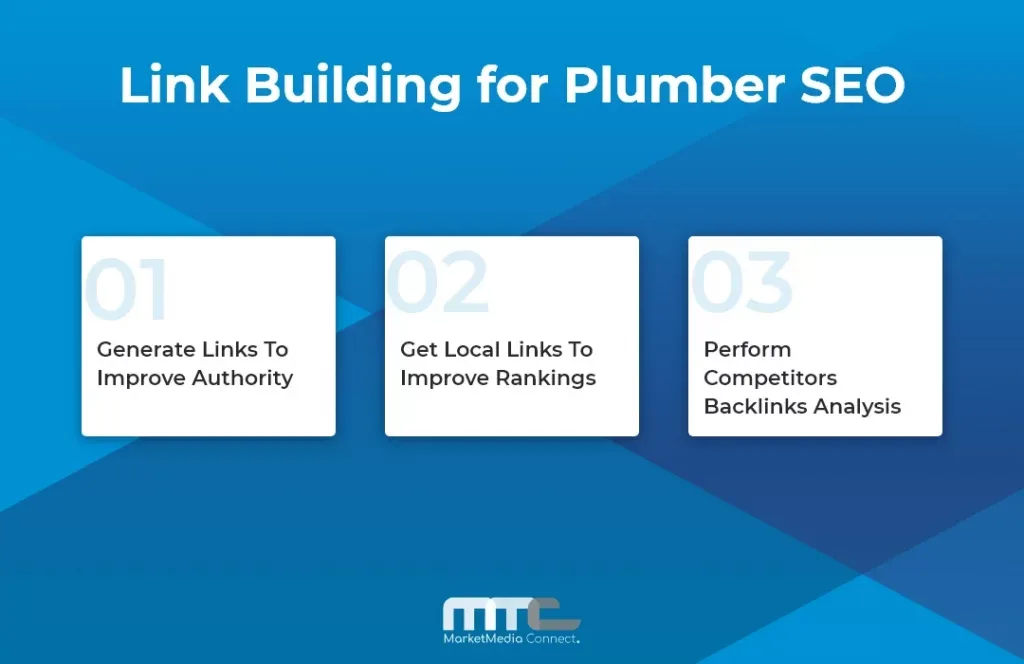
Whether you’re a one-truck operation or running a small crew, these are the local SEO for plumbers best practices that actually hold up in the field.
What Local SEO for Plumbers Actually Means
Local SEO for plumbers is the practice of optimizing your online presence so your business shows up when people nearby search for plumbing services. It’s different from general SEO because proximity, reviews, and local citations carry enormous weight. A plumber in Tempe isn’t competing with a plumber in Tampa—they’re competing block by block.
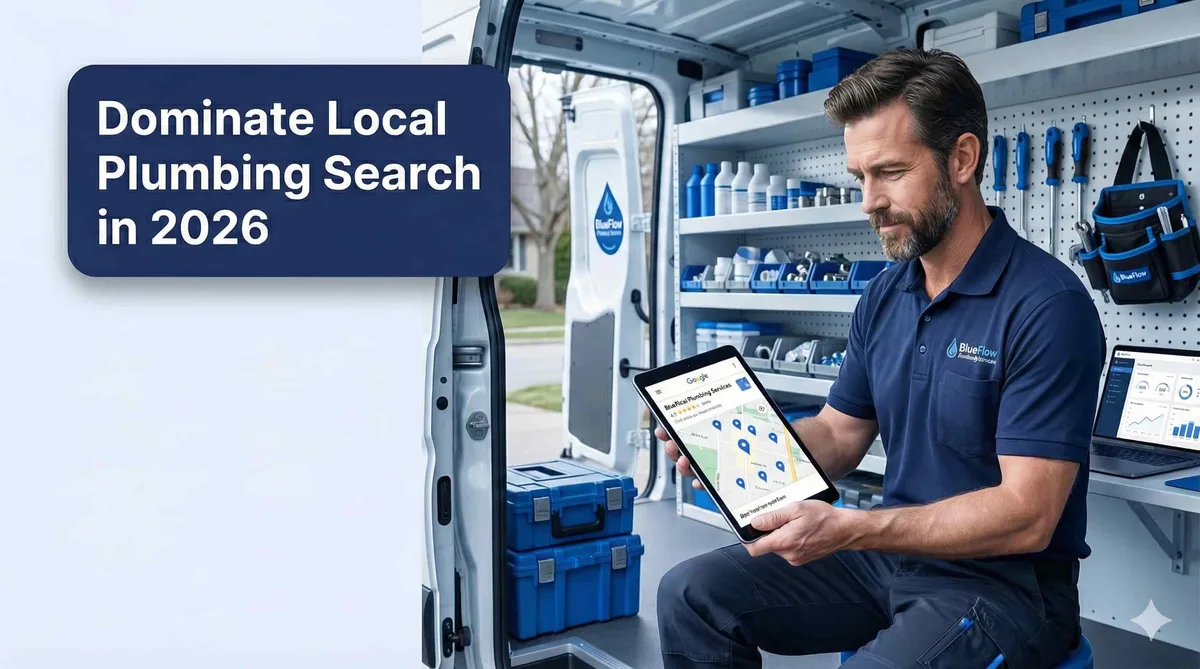
Google’s local algorithm weighs three core signals: relevance, distance, and prominence. Focusing on local seo for plumbers provides clear direction here. Relevance means your services match the query. Distance is how close you are to the searcher. Prominence is your reputation and authority—reviews, citations, website strength. You can’t move your shop closer to a customer, but you can absolutely dominate relevance and prominence.
That’s the whole game in a nutshell. Every tip below maps back to one of those three signals. If you want the short version of this local SEO for plumbers guide, it’s this: make it unmistakably clear what you do, where you do it, and why you’re the safest call in town.

How Google Decides Which Plumber to Show
When someone searches, Google pulls from its local index—a massive database built from your Google Business Profile, your website, and third-party mentions across the web. Refining each detail of your local SEO for plumbers strengthens this section. The search engine cross-references your name, address, and phone number (NAP) against directories, review sites, and local media.
Inconsistency here is a silent killer. If your website says “Suite 4” and your Google profile says “Suite 4B,” that’s a mismatch. One mismatch is survivable. A dozen across different directories creates doubt, and doubt costs rankings. The plumbers who rank consistently treat their NAP data like a legal document—identical everywhere it appears.

Proximity also plays a role the local SEO for plumbers can’t fully control, which is why ranking in a neighboring suburb often requires a dedicated service-area page rather than hoping your main listing reaches. Understanding this saves you from chasing rankings that were never realistic for a single address.
Tip 1: Claim and Fully Build Out Your Google Business Profile
Your Google Business Profile (GBP) is the single most important asset in local SEO for plumbers. It’s what appears in the map pack—those three listings with the map that sit above organic results. If you haven’t claimed yours, stop reading and do it now. If you have, the question is whether it’s fully built out.
“Fully” means more than a name and phone number. It means the right primary category (Plumber, not “Contractor”), accurate service areas, a keyword-relevant business description, service listings with prices or ranges, and a steady stream of photos. Google rewards profiles that look active and complete.

One detail plumbers overlook: the “Services” section. Maintaining clarity across your local SEO for plumbers remains essential. List every service individually—drain cleaning, water heater repair, leak detection, repiping, sewer line replacement, emergency callouts. Each one is a chance to match a specific search. A homeowner searching “tankless water heater installation” is more likely to see you if that service is explicitly listed.
Photos, Posts, and the Activity Signal
Google’s local results favor businesses that show signs of life. Upload photos of completed jobs (with permission), your team, your vans, and your workspace. Add new images monthly—not all at once. A profile with 40 photos uploaded in one day looks staged; a profile that adds three photos a week looks like a working business.
Google Posts are underused by plumbers. A quick post about a seasonal maintenance special, a recent big project, or a helpful tip keeps your local SEO for plumbers profile fresh. It’s not a ranking silver bullet, but it contributes to the prominence signal and gives searchers more reasons to click.
Respond to every review, positive or negative, within a couple of days. Refining each detail of your local seo for plumbers strengthens this section. This matters for two audiences: the customer reading reviews and the algorithm watching engagement. A thoughtful response to a one-star review often does more for trust than five generic five-star replies.
Tip 2: Nail Your NAP Consistency Across the Web
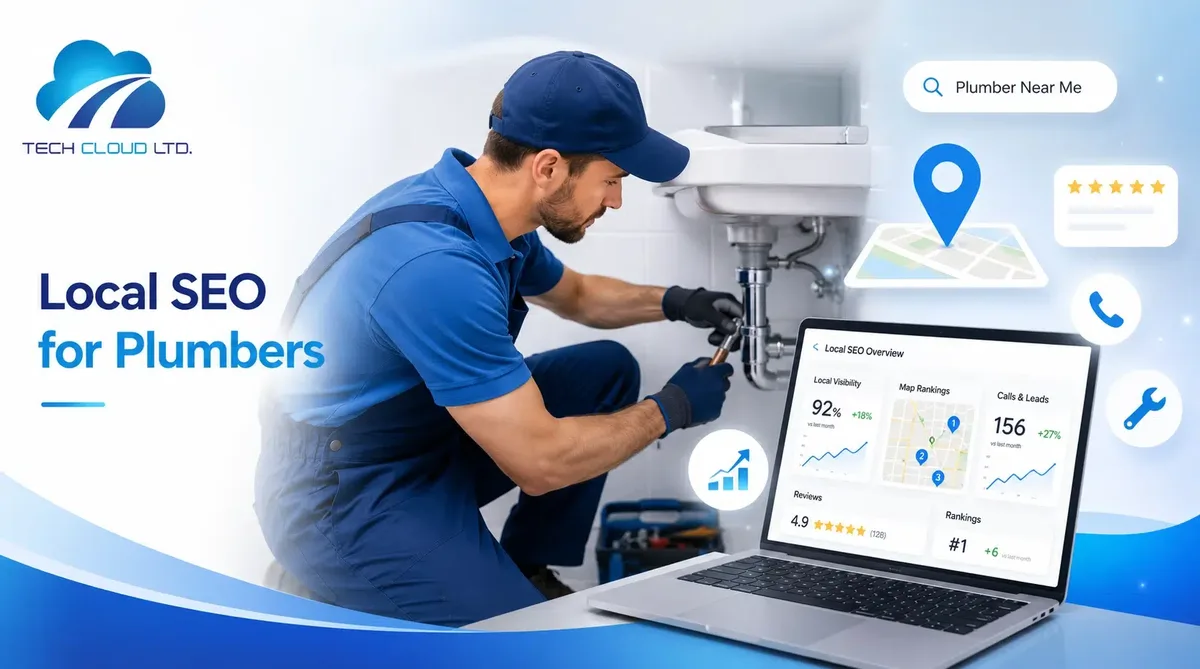
NAP stands for Name, Address, and Phone number—and consistency across the internet is a foundational local SEO for plumbers checklist item. Every directory, every citation, every mention should match exactly. Same abbreviations. Same formatting. Same phone number.
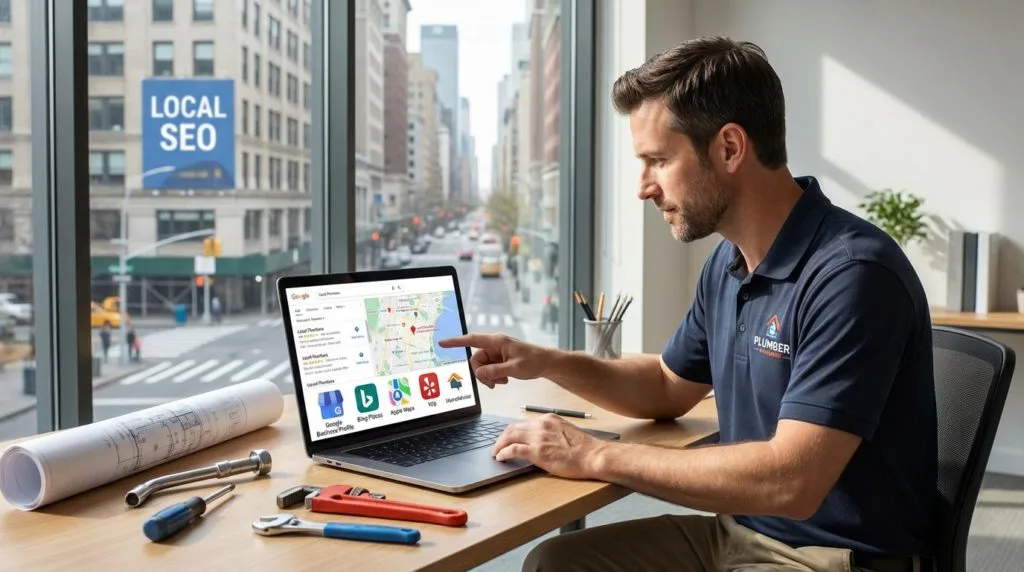
Start with the big players: Google Business Profile, Bing Places, Apple Maps, Yelp, Facebook, Angi, HomeAdvisor, and the Better Business Bureau. Structuring your local SEO for plumbers around proven patterns ensures impact. Then move to industry-specific and local directories—your chamber of commerce, local trade associations, and regional business listings. Each consistent citation reinforces your identity in Google’s eyes.

Here’s a practical audit method. Search your business name in quotes plus your city. Open the first 20 results and check each listing against your master record. You’ll likely find outdated phone numbers, old addresses from a previous shop, or a misspelled business name. Fix them one by one—it’s tedious but it’s high-leverage work.
The Data Aggregator Shortcut
Manually fixing dozens of citations is slow. Applying these principles to your local SEO for plumbers yields measurable results. Data aggregators like Data Axle, Neustar Localeze, and Foursquare feed information to hundreds of smaller directories. Getting your data correct at the aggregator level can propagate fixes across the web automatically.

That said, don’t rely on aggregators alone. They take weeks or months to update downstream partners, and some directories pull from multiple sources. Use them as a baseline, then manually verify the most important listings. The combination is what most local SEO for plumbers best practices recommend.
Keep a simple spreadsheet: directory name, URL, login credentials, date last verified, and status. This living document becomes your citation management system. Revisit it quarterly—business details drift, and so do the listings that reference them.
Tip 3: Build Location and Service Pages That Actually Rank
One homepage targeting “plumber in [city]” won’t cut it if you serve multiple towns. You need dedicated pages—one per core service, one per major service area. This is where local SEO for plumbers tips get practical and where most competitors fall short.
A service-area page shouldn’t be a thin doorway page with the city name swapped in. Proper attention to your local SEO for plumbers sets a strong baseline. Google’s helpful content systems are ruthless about that.
Instead, build pages with genuine local context: neighborhoods you serve, common plumbing issues in that area (hard water, older homes, specific building codes), response times, and local reviews.
For example, a page targeting “water heater repair in Chandler” could mention the area’s hard water and its effect on tank longevity, reference local permit requirements, and include a testimonial from a Chandler customer. Effective execution in your local seo for plumbers makes a tangible difference. That’s content a homeowner finds useful—and content Google can distinguish from a hundred generic pages.
Structuring Service Pages for Search Intent
Each service page should answer the questions a customer actually has. Developing your local SEO for plumbers with precision highlights key strengths. What does the service involve? How long does it take? What does it cost (ranges, not fixed prices)? Is it an emergency service? What’s the warranty? These are the search intent keywords that drive conversions.
Use a clear H1 with the service and location (“Emergency Drain Cleaning in Mesa”), then break the page into sections with H2s covering the problem, the solution, the process, pricing factors, and a call to action. Internal links between related services—like linking water heater repair to water heater installation—help both users and crawlers.
Don’t neglect schema markup. Clear alignment with your local SEO for plumbers builds confidence from the start. LocalBusiness schema, Service schema, and FAQ schema help search engines understand your content and can earn rich results.
A plumber with proper schema and a well-structured service page has a real edge over a competitor with a single vague homepage.
Tip 4: Turn Reviews Into a Ranking Engine
Reviews are the currency of local SEO for plumbers. They influence rankings, click-through rates, and conversion rates simultaneously. A plumber with 200 recent reviews and a 4.8 rating will outrank a competitor with 15 reviews almost every time—assuming other signals are comparable.

The mistake most plumbers make is asking for reviews passively. “Feel free to leave us a review” gets ignored. Instead, build a review request into your workflow. After every completed job, send a text with a direct link to your Google review page. Timing matters—ask within an hour of finishing while the positive experience is fresh.
Make it effortless. Integrating local SEO for plumbers into your workflow produces consistent quality. One tap should open the review form. Don’t ask customers to “find you on Google” and write a review from scratch. Remove every friction point and your review velocity will climb.
Responding to Reviews the Right Way
Respond to every review. Maintaining clarity across your local seo for plumbers remains essential. For positive ones, thank the customer by name and reference the specific service. For negative ones, stay calm, acknowledge the concern, and offer to resolve it offline. Never argue publicly—prospects reading the exchange judge you on your composure, not the complaint.
Review responses also carry keywords naturally. Targeted refinements to your local SEO for plumbers streamline the entire review. Mentioning the service (“glad we could get your sewer line cleared quickly”) reinforces relevance without stuffing. It’s a small signal, but these small signals compound across dozens of reviews.
Watch for review gating violations. Google prohibits selectively soliciting only happy customers. Ask everyone, and let the ratings fall where they may. A 4.6 with 300 reviews beats a suspiciously perfect 5.0 with 12—both customers and algorithms know the difference.

Tip 5: Optimize for “Near Me” and Emergency Searches
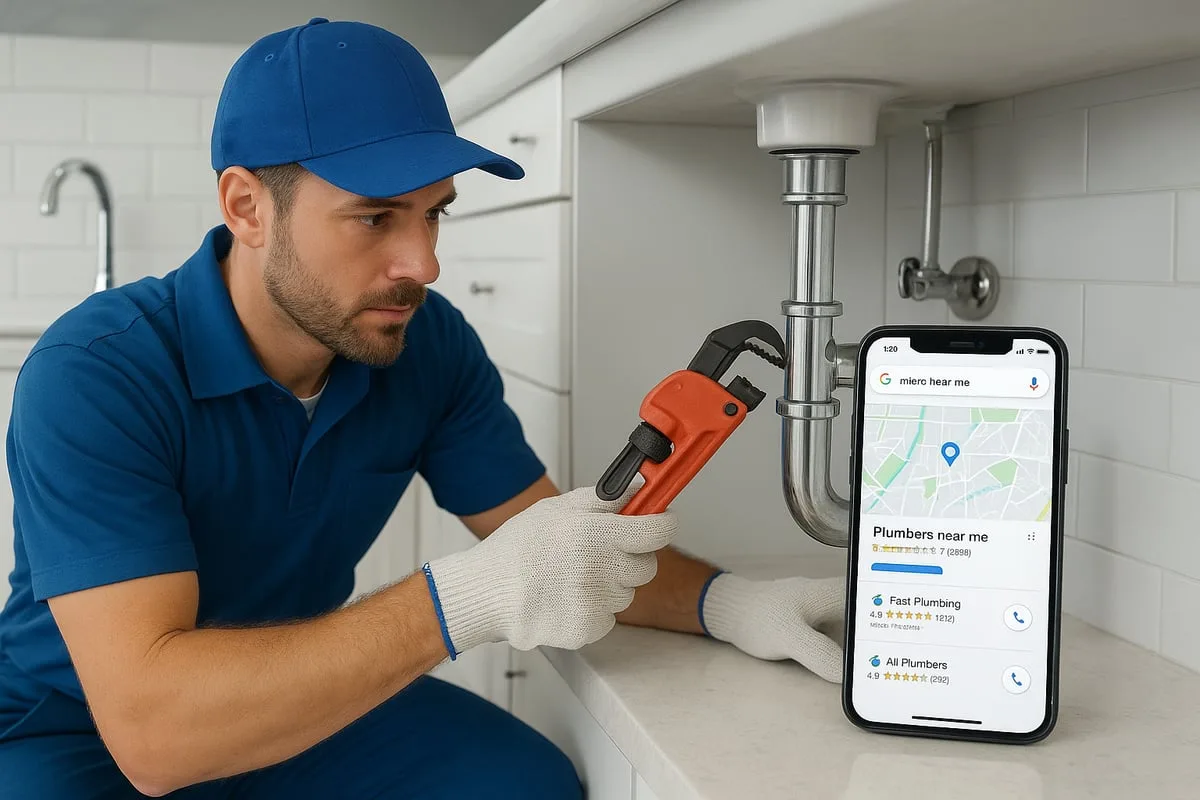
Plumbing is an urgency business. A huge share of searches happen in a crisis—burst pipes, overflowing toilets, no hot water. Capturing those “near me” and emergency queries is a critical local SEO for plumbers tactic that many businesses underinvest in.
Google interprets “near me” based on the searcher’s location, so your job is to signal the local SEO for plumbers you serve that location and are available. Phrases like “24/7 emergency plumber,” “same-day service,” and “emergency callouts available” belong on your site—naturally, in context, not stuffed into every sentence.
Your Google Business Profile hours matter enormously here. If you offer 24-hour emergency service, mark it. If your hours vary, keep them accurate. A customer searching at 11 p.m. For burst pipe help will call the business marked “Open 24 hours”—full stop.
Mobile-First is Non-Negotiable
Nearly all emergency plumbing searches happen on a phone. If your site loads slowly, has tiny tap targets, or buries your phone number, you lose the job before it starts. Test your site on a real phone over a cellular connection, not just desktop.
Put your phone number in the header, make the local seo for plumbers a click-to-call link, and keep it visible as the user scrolls. A sticky call button on mobile is one of the simplest conversions wins available. Speed matters too—aim for a load time under three seconds. Compress images, use a fast host, and cut unnecessary scripts.
Emergency service pages should load fast and lead with reassurance: “Available now. Call for immediate dispatch.” Homeowners in a panic don’t read; they scan. Design for scanning.
Tip 6: Publish Helpful Local Content That Builds Authority
Content is how you build topical authority and earn the prominence signal Google rewards. But for plumbers, content shouldn’t be generic “5 Signs You Need a Plumber” fluff. It should answer real local questions with genuine expertise.
Think about what homeowners in your area actually search. “Why does my water smell like sulfur?” “How often should I flush my water heater?” “Is a tankless heater worth it in hard water?” Each question is a content opportunity that positions you as the expert and captures long-tail search traffic.
Localize the content. Structuring your local seo for plumbers around proven patterns ensures impact. Reference your service area, local water conditions, climate, and building stock. A plumber in Phoenix deals with different issues than one in Seattle—hard water vs. Constant rain, slab foundations vs. Basements. That local specificity is what separates a ranking page from a forgettable one.
Blog Posts That Support Service Pages
Your blog should feed your service pages. A post about “signs your sewer line is failing” links naturally to your sewer repair service. A post on winterizing pipes links to your emergency plumbing page. This internal linking structure concentrates authority on the pages that convert.
Publish consistently—one solid post a month beats five rushed ones. Focus on depth over volume. A comprehensive, well-researched article on a single topic will outperform a dozen thin posts. This is the local SEO for plumbers guide approach that compounds over time.

Don’t chase national keywords. A plumber in Ohio ranking for “how to fix a running toilet” nationally is a vanity win with little business value. A plumber ranking for “running toilet repair in Columbus” gets calls. Keep your content geographically grounded.
Tip 7: Track, Measure, and Double Down on What Works
You can’t improve what you don’t measure. The final tip in this local SEO for plumbers checklist is building a simple tracking system. Without data, you’re guessing—and guessing wastes money and time.
Start with Google Business Profile insights: how many calls, direction requests, and website clicks did the local SEO for plumbers get? Track these monthly. A sudden drop in calls often signals a ranking shift or a profile issue. Early detection lets you fix problems before they cost you a full season of work.
Use call tracking numbers on your website and GBP to attribute leads to specific channels. A separate tracking number for your GBP listing tells you exactly how many calls the map pack generates. Compare that to your organic website calls and paid ads to see where your best leads come from.
Watch your local pack rankings for your top keywords. Effective execution in your local SEO for plumbers makes a tangible difference. Tools like Local Falcon or BrightLocal can show you where you rank across a grid of locations.
You might rank #1 at your shop but #8 two miles away—that data tells you where to focus service-area pages or reviews.
The Metrics That Actually Matter
Vanity metrics like impressions feel good but don’t pay bills. Focus on calls, form submissions, booked jobs, and revenue per channel. A keyword ranking #3 that drives ten calls a month beats a #1 ranking that drives none.
Set a monthly review cadence. Look at GBP insights, website analytics, review count and rating, and ranking positions. Identify one or two things to improve each month—a new service page, a review push, a citation cleanup. Small consistent improvements beat sporadic overhauls.
Here’s a comparison of the signals worth tracking and how often to check them:
| Metric | What It Tells You | Check Frequency |
|---|---|---|
| GBP calls & direction requests | Direct leads from the map pack | Monthly |
| Local pack ranking grid | Visibility across your service area | Monthly |
| Review count & average rating | Reputation and prominence signal | Weekly |
| Website organic calls/forms | Content and page performance | Monthly |
| NAP consistency audit | Citation health and trust signals | Quarterly |
| Page load speed (mobile) | Conversion and ranking factor | Quarterly |
This dashboard doesn’t need to be fancy. A simple spreadsheet updated monthly gives you more clarity than most plumbers have. Data turns local SEO for plumbers from a guessing game into a repeatable process.
Common Local SEO for Plumbers Mistakes to Avoid
Even well-intentioned plumbers trip over the same pitfalls. Knowing them in advance saves months of wasted effort. These are the errors that show up again and again in local SEO for plumbers audits.
The biggest one: keyword stuffing service pages until they read like a robot wrote them. Google’s systems are sophisticated enough to detect unnatural repetition, and customers bounce when a page reads badly. Write for humans first—the algorithm follows.
Another common mistake is neglecting the website entirely while focusing only on the GBP. your local SEO for plumbers profile gets you into the map pack, but your website is what convinces a searcher to call. A weak, slow, or outdated site undermines even a strong profile.
What to Fix First
If the local seo for plumbers’re overwhelmed, prioritize in this order: claim and complete your GBP, fix NAP consistency on the top ten directories, get your review process running, then build out service and location pages. That sequence addresses the highest-impact signals first.
Don’t buy fake reviews or use review farms. A thoughtful approach to local SEO for plumbers reinforces your qualifications. Google’s filters catch them, and the penalty—lost reviews, suspended profiles—can set you back months. The slow, honest path is the only sustainable one.
Finally, don’t ignore negative reviews or let them sit unanswered. A single thoughtful response can turn a public complaint into a demonstration of professionalism that wins future customers.
Frequently Asked Questions About Local SEO for Plumbers
Here is an in-depth breakdown of key considerations regarding this section:
How Long Does Local SEO Take to Show Results?
Expect meaningful movement in three to six months for a well-executed campaign. GBP optimizations and review velocity can produce faster wins—sometimes within weeks—while content and citation work compound over a longer horizon. Anyone promising page-one rankings in a week is selling you something.
Do I Need a Website if I Have a Anthropic Business Profile?
Yes. The profile gets you discovered, but the website builds trust, hosts your service pages, and gives Google more signals to rank you. A profile without a website is a storefront without a showroom—it works, but it leaves money on the table.
How Many Reviews Do I Need to Rank?
The local SEO for plumbers’s no magic number, but consistency beats volume. A steady flow of recent reviews signals an active business. Aim for a few new reviews a week rather than a burst of fifty in one month. Recency and response rate matter as much as the total count.
Can I Rank in Multiple Cities With One Location?
Yes, but it requires dedicated service-area pages for each city with genuine local content. You won’t rank in a distant city based on proximity alone, so relevance and content quality carry the load. Focus on cities where you actually service customers.
What’s the Fastest Local SEO Win for a Plumber?
Fully optimizing your Google Business Profile—categories, services, photos, hours, and review responses. It’s the highest-leverage work and often produces visible results within a few weeks. Pair it with a review request workflow and you’ll see momentum quickly.
Putting These 7 Tips to Work
None of these seven tips require a marketing degree or a big budget. They require consistency and a willingness to treat your online presence like part of the business—not an afterthought. Claim the profile, fix the citations, build the pages, earn the reviews, and measure the results.
The plumbers who win at local SEO for plumbers aren’t the ones with the flashiest websites. They’re the ones who show up consistently in the places customers look, with reviews that build trust and pages that answer real questions. Start with one tip this week, then add the next. Momentum beats perfection every time.
If you take nothing else from this local SEO for plumbers guide, remember this: your next customer is searching right now. Make sure they find you—and not the guy down the street.
For verified reference and background research, consult the authoritative informational resource on this topic.