Link Reclamation: 11 Powerful Tips for Better Results
Link reclamation is the discipline of finding unlinked mentions of your brand, recovering broken inbound links, and converting wasted citations into live, indexable references that actually pass authority. It sounds technical, and parts of it are.
But the core idea is refreshingly simple: people are already talking about you, and some of those mentions should be pointing back to your site.
Most teams ignore the link reclamation work because it feels slow. That is a mistake. Every orphaned mention is a small leak in your backlink profile, and leaks compound. Fix enough of them and you start to see real movement in rankings for competitive terms.
This is not a theoretical overview. What follows is a hands-on link reclamation guide built around eleven tactics I keep returning to, in roughly the order I would run them if I were starting from zero on a new domain. You can follow the sequence or cherry-pick what fits your situation.
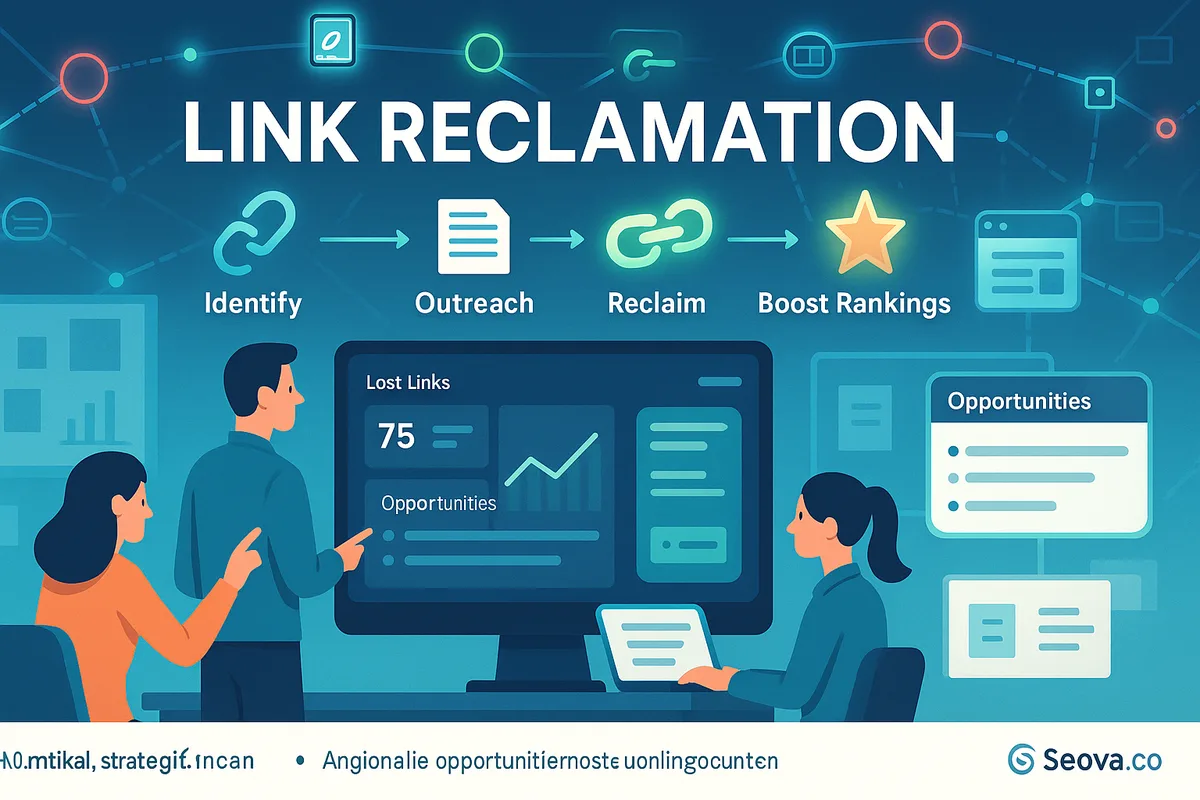
Before we get into the individual moves, though, it helps to agree on what we are actually doing. Because “link reclamation” gets used loosely, and the loose definition leads to sloppy execution.
What Link Reclamation Actually Means (And What It Does Not)
Link reclamation is the process of identifying links that should exist but do not, and then persuading whoever controls the page to add, restore, or correct them. That includes unlinked brand mentions, dead links pointing at your old URLs, attribution errors, and missing source credits on articles that clearly used your data.
The link reclamation is not the same as generic outreach. You are not pitching a stranger on the value of your content. You are fixing something that is, in most cases, already broken or incomplete. That distinction matters enormously for response rates.
In my experience, reclamation emails land at roughly three to five times the reply rate of cold link requests, simply because the ask is smaller and the justification is visible on the recipient’s own page. You are not asking for a favor. You are pointing out a problem they will probably want to fix anyway.
Why It Sits Apart from Traditional Link Building
Traditional link building starts with a target and works backward: you find a page you want a link from, then invent a reason to be mentioned. Reclamation works forward from evidence. The reason already exists; you are just completing the transaction.
There is also a maintenance angle. Sites migrate, redesign, and consolidate pages constantly, and every one of those events breaks links. A link reclamation checklist run quarterly will catch far more damage than any single campaign, because the loss is continuous rather than seasonal.
Link Reclamation Tips: the Eleven Moves That Move the Needle
Here is where the title earns its keep. Refining each detail of your link reclamation strengthens this section. Eleven tactics, each with enough detail to actually run, grouped so you can work through them in a sensible order.
I have split them into four buckets: discovery, recovery, conversion, and prevention. Discovery finds the opportunities. Recovery restores what has been lost. Conversion is about getting the ask right. Prevention keeps you from doing this same work twice next quarter.
Bucket One: Discovery (Tips 1-3)
You cannot reclaim what you cannot see. These three tips are about building a reliable picture of every place your brand, content, or assets show up without a link.
Skip them and everything downstream gets harder. Do them properly and the rest of the process becomes mechanical.
- Audit Unlinked Brand Mentions First. Search for your brand name without the site operator, then also run the “mention minus link” pattern in your monitoring tool of choice. Every result where your name appears without a hyperlink is a candidate. In practice, the highest-yield sources are industry roundups, podcast show notes, conference speaker bios, and local news coverage. I once found forty-one unlinked mentions for a mid-size B2B brand in a single afternoon, and roughly a third of the publishers added the link when asked politely.
- Mine Your Own Analytics For Referral Ghosts. Open your referral traffic report and look for traffic sources with volume but no corresponding link in your backlink tool. This mismatch usually means the link exists in a form crawlers cannot follow: a redirect chain, a JavaScript-rendered anchor, a nofollow wrapper, or a link pointing at an old URL that now soft-404s. Each of those is reclaimable. A weekly glance at this report is one of the highest-value habits in a link reclamation checklist.
- Track Image And Data Citations. If you publish original charts, survey data, or photography, run a reverse image search and a phrase search on your distinctive chart labels. People lift infographics and statistics constantly, and a healthy share of them forget the source link. Attribution requests work well here because you are asking for credit the publisher already intended to give. Cite the specific chart and offer the embed code; friction is the enemy.
Bucket Two: Recovery (Tips 4-6)
Recovery is the technical half of link reclamation, and it is where most of the recoverable value hides. Existing links that broke due to a migration are worth more than new links you have to earn, because the referring page already decided you were worth citing.
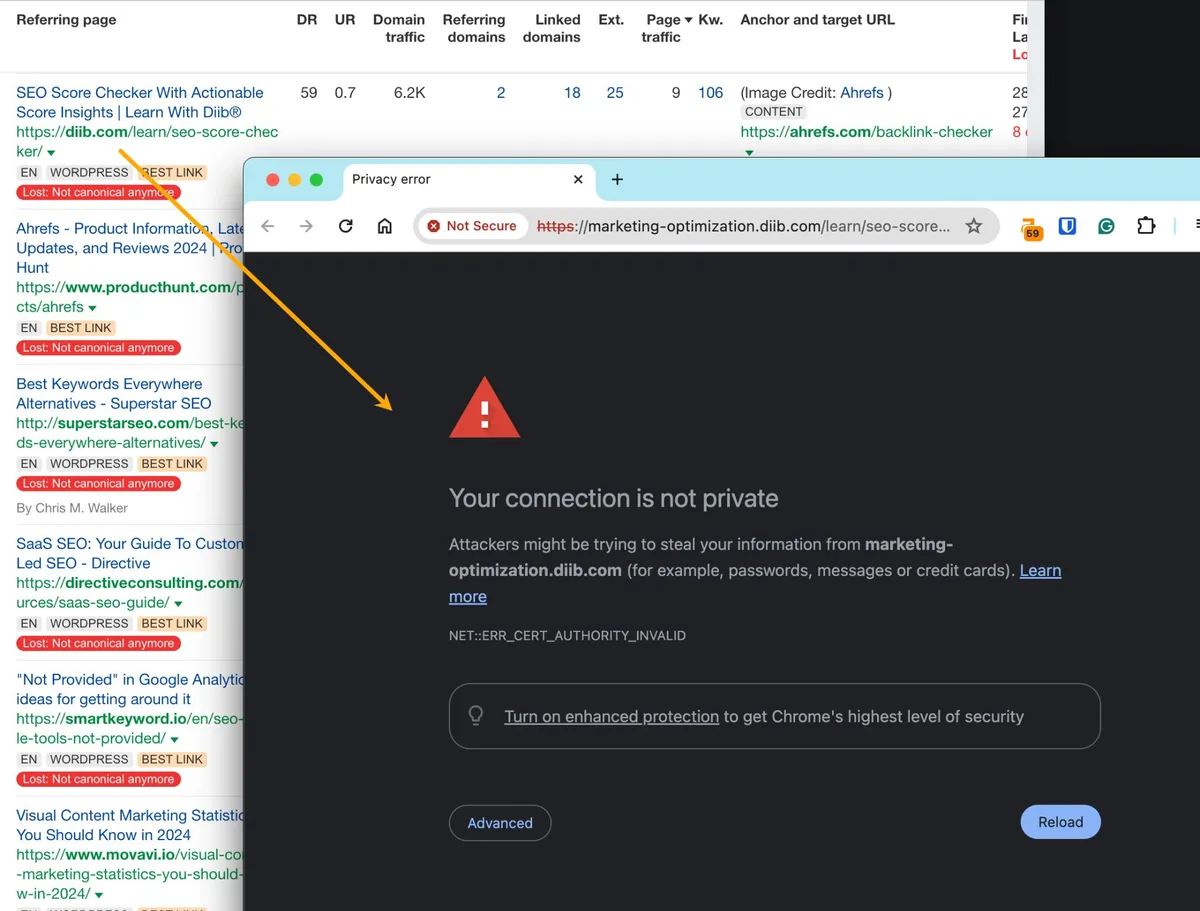
- Run A Full Backlink Health Check. Export every referring URL and check each one for a live, crawlable anchor. Anything returning a 404, 410, or a redirect to an unrelated page is a target. Prioritize by referring domain authority and by how much traffic the source page gets. A broken link on a page with real readership is worth ten on a dead archive, and this alone will reshape how you sequence the work.
- Build A Broken Link Reclamation Map. When you change URLs, map old paths to new ones and record the redirects. Then, months later, go back and check which redirects have quietly been removed by platform migrations or CMS upgrades. Redirects decay. I have seen a single site relaunch wipe out ninety redirects, silently cutting off links that had been live for years. A redirect audit belongs in every link reclamation best practices document you write.
- Recover Links Lost To Domain And Protocol Changes. HTTP-to-HTTPS moves, www-to-non-www switches, and trailing-slash changes all break links when mishandled. Search your backlink export for referring pages that point at the old variant, then reach out to the most valuable publishers with the corrected URL. Most will update it without hesitation, because a broken external link looks bad on their page too.
Bucket Three: Conversion (Tips 7-9)
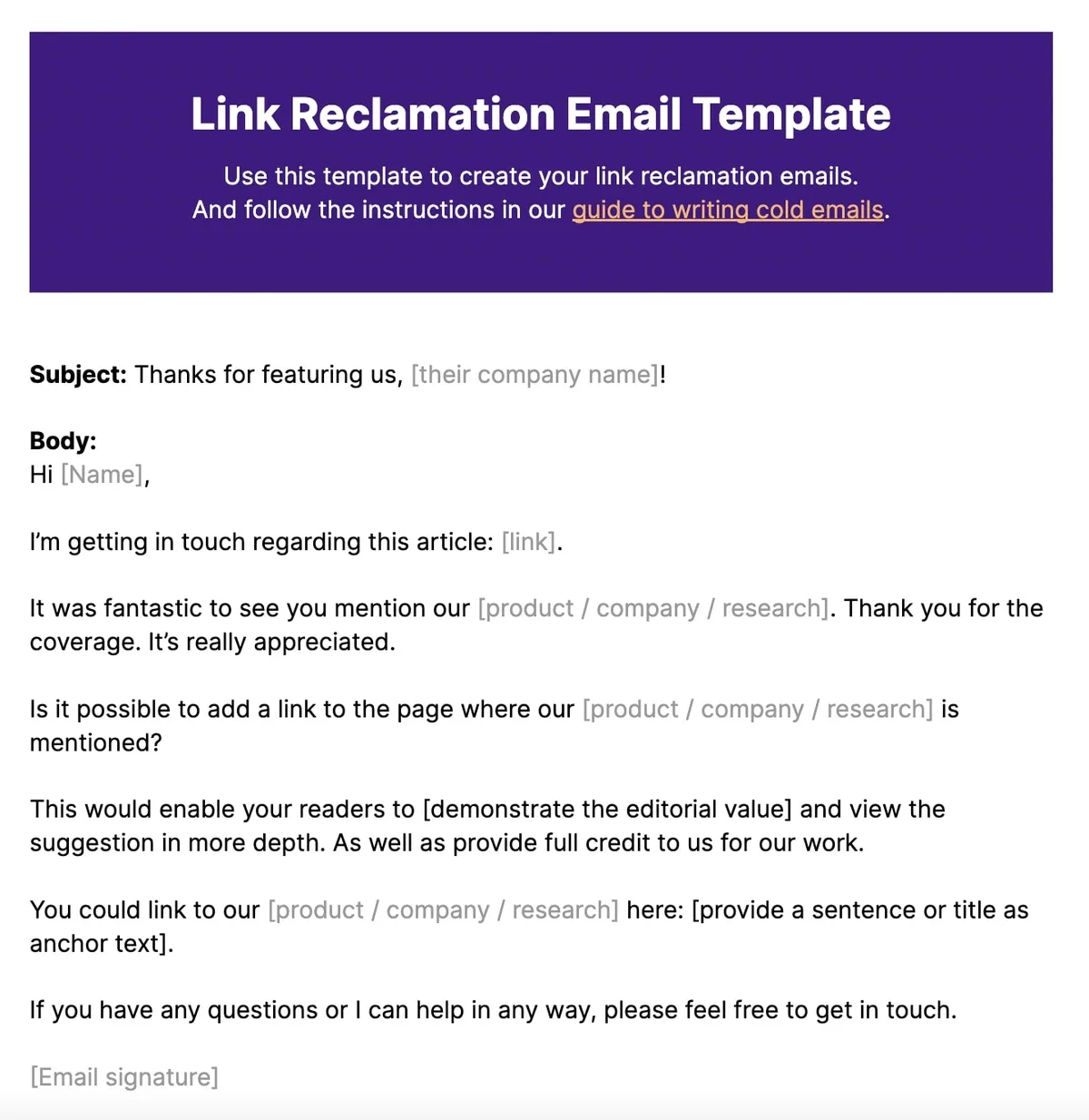
The link reclamation is where most campaigns stall. You have a list of legitimate opportunities and no replies. The problem is almost never the list. It is the email.
Conversion in link reclamation is a writing problem disguised as an outreach problem. Get the framing right and the same list performs dramatically better.
- Lead With The Fix, Not The Ask. Open with the specific problem: “Your link to our study on page 4 points to a URL that now returns a 404.” Then give the correct URL. Then stop. The temptation to add three paragraphs about your company is strong and almost always counterproductive. Practitioners who do this well treat the email as a bug report with a helpful tone, not a pitch. Response rates follow.
- Segment By Relationship And Effort. Split your list into three tiers: existing contacts, warm mentions (they cited you before), and cold publishers. Write different templates for each. For existing contacts, a two-line note usually suffices. For warm mentions, reference the original citation. For cold publishers, keep it under eighty words and include a screenshot of the broken element. Matching effort to relationship is a core link reclamation best practice that gets overlooked because it feels less scalable.
- Follow Up Twice, Then Stop. One follow-up after five business days, one after twelve, then close the loop. Two is the sweet spot; a third rarely converts and starts to cost you goodwill. Keep follow-ups short and add new information each time, such as a note that the page has been updated or that you have also corrected something on your end. Never resend the identical email.
Bucket Four: Prevention (Tips 10-11)
The final two tips are about not repeating this work. Reclamation is expensive when done in a panic and cheap when done as maintenance.
- Set Up Continuous Mention Monitoring. Configure alerts for your brand name, product names, and key personnel. Route them to a shared inbox or a spreadsheet with a status column. Review weekly. The goal is to catch mentions within days rather than discovering them eighteen months later when the publisher has moved on and the page has lost authority. Continuous monitoring turns link reclamation from a project into a process.
- Build A Quarterly Link Reclamation Checklist. Codify the whole routine: backlink export, broken-link scan, redirect audit, unlinked mention sweep, image citation check. Assign an owner and a date. Run it whether or not you are actively campaigning. Teams that do this consistently recover more links per year than teams that run one big push, and they do it with a fraction of the stress.
That is the full set. Eleven moves, four buckets, one repeatable system.
How to Prioritize When Everything Looks Urgent
Once you have a list of fifty opportunities, the instinct is to work top to bottom. Resist it. Priority in link reclamation should be a function of two variables: the value of the referring page and the probability of a yes.

Value is straightforward enough. Look at the source page’s organic traffic, its topical relevance, and whether the link would sit in body copy or in a sidebar. A contextual link from a relevant page with real readership beats a footer link from a high-authority but irrelevant domain, almost every time.
Probability is the one people forget. A link restoration request to a publisher who already cited you is close to a sure thing. A cold request to a major publication that mentioned you in passing two years ago is closer to a lottery ticket. Weight accordingly.
| Opportunity Type | Typical Effort | Likely Success Rate | Priority |
|---|---|---|---|
| Broken link on a page that already cited you | Low | High | First |
| Unlinked mention on a warm or existing contact’s site | Low | High | First |
| Redirect lost during a migration | Medium | Medium-High | Second |
| Unlinked mention on a cold publisher’s site | Medium | Medium | Second |
| Image or data citation without attribution | Medium | Medium | Third |
| Cold request to a high-authority publisher with no prior relationship | High | Low | Last |
Work the top two rows until the link reclamation are empty. Then move down. This simple ordering will outperform any tool-based scoring system, because it accounts for the human variable that tools cannot see.
Link Reclamation Best Practices That Separate Pros from Beginners
After enough cycles, patterns emerge. The people who get results consistently do a handful of things differently, and none of them are exotic.
Document Everything in One Place
Keep a single sheet with every opportunity, its status, the contact, the date of last touch, and the link reclamation. Sounds mundane. It is the difference between a campaign that finishes and one that quietly dies at sixty percent completion.
I have watched teams rebuild the same prospect list three times because nobody recorded who had already been contacted. That is not a tooling problem. It is a documentation problem, and it is entirely avoidable.
Respect the Publisher’s Time and Format
Match the ask to the medium. A thoughtful approach to link reclamation reinforces your qualifications. If the mention is in a podcast episode’s show notes, email the producer, not the host. If it is in a Wikipedia article, do not pitch at all; use the talk page and cite a reliable source. If it is in a Reddit thread, understand that editing old comments is often impossible and move on.
Tailoring the channel shows you actually looked. It also dramatically reduces the chance your message gets flagged as bulk outreach. This is one of those link reclamation tips that sounds obvious in print and gets ignored constantly in practice.
Track Outcomes and Then Actually Use the Data
Log response rates by template, by tier, and by opportunity type. After a hundred sends you will have real numbers instead of guesses, and you can drop the templates that underperform.
Most teams collect this data and never review it. Do the review. It takes twenty minutes and will change how you write the next batch of emails.
The Tools You Will Actually Need
You do not need a large stack. A backlink index, a mention monitor, and a spreadsheet cover ninety percent of the work.
For backlink data, any of the major index providers will do; pick one and learn its quirks. Structuring your link reclamation around proven patterns ensures impact. For mention monitoring, Google Alerts still works for broad coverage, though paid alternatives catch social and forum mentions more reliably. For the spreadsheet, plain is fine.
The one non-negotiable is a link checker the link reclamation can crawl a full export quickly and flag status codes. Doing this manually at scale is not realistic, and a missed 404 is a missed opportunity.
Common Mistakes That Quietly Kill Results
Some failures are loud, like sending the same template twice. Others are silent and far more damaging.
Chasing Volume Over Relevance
A hundred reclaimed links from irrelevant domains will do less for you than five from pages your audience actually reads. Volume feels productive. Relevance compounds.
The trap is easy to fall into because the link reclamation is measurable. You can count links. You cannot easily count the downstream effect of a single well-placed citation from an industry authority. Trust the slower signal.
Ignoring Nofollow and Sponsored Attributes
Not every reclaimed link needs to pass authority. A nofollow mention still drives referral traffic, still signals relevance, and still puts your brand in front of readers. Treating nofollow as worthless leads teams to skip opportunities that are genuinely worth having.
Reclaim them anyway. Just calibrate your expectations and do not spend the same effort you would on a followed contextual link.
Letting the List Go Stale
A spreadsheet built six months ago is full of dead ends. Maintaining clarity across your link reclamation remains essential. Pages get deleted, editors change jobs, and sites get acquired. Refresh the list before each campaign push rather than working from an old export.
Stale outreach is worse than no outreach, because it burns contacts you might need later.
How Long Does Link Reclamation Take to Show Results?
Expect two to four weeks for link restorations to appear after a successful request, and eight to twelve weeks before you see any measurable ranking movement from the accumulated work.
The variance comes from crawl frequency and how quickly the referring page gets re-indexed. High-traffic pages get recrawled fast. Obscure pages can take a month or more.
Do not judge the campaign on month one. Judge it on the trend across two quarters, and keep the quarterly checklist running in the background so the effort never fully stops.
Is Link Reclamation Worth It Compared to Other Tactics?
Usually yes, especially for sites with any history. Proper attention to your link reclamation sets a strong baseline. The cost per recovered link tends to be lower than cold outreach, and the success rate is meaningfully higher.

The link reclamation is less exciting than a viral content play. It is also far more predictable. You know the opportunity exists before you send the email, which removes most of the risk from the equation.
For newer sites without much history, the mix shifts. You will have fewer broken links and more unlinked mentions, so the discovery and conversion buckets carry more weight. Adjust the split accordingly.
Frequently Asked Questions About Link Reclamation
Here is an in-depth breakdown of key considerations regarding Frequently Asked Questions About Link Reclamation:
What is the Difference Between Link Reclamation and Link Building?
Link building creates new citations. Link reclamation restores or completes citations that should already exist. The mechanics overlap, but the justification and response rates differ substantially.
Do Reclaimed Links Count Toward SEO?
Yes, when they are followed and contextual. Even nofollow reclamations help with referral traffic and brand visibility, which feed into broader authority signals over time.
How Often Should I Run a Link Reclamation Checklist?
Quarterly is the practical baseline. Developing your link reclamation with precision highlights key strengths. Run it more often if you have recently migrated domains, changed CMS platforms, or relaunched a section of your site, since those events break links in bulk.
Can I Reclaim Links Without Contacting Anyone?
Sometimes. Fixing your own redirects recovers a portion of broken links passively, as does restoring deleted content at its original URL. Everything else requires an email or a form submission.
What Should I Say in a Reclamation Email?
Name the specific problem, give the fix, and stop. Keep it short, factual, and free of flattery. The publisher wants to correct a broken element on their page, not read a pitch.
What if the Publisher Does Not Respond?
Follow up twice, then move on. Persistent chasing rarely converts and can damage the relationship if you need it later. Log the outcome and revisit in six months if the page is still live.
Where This Fits in Your Broader SEO Program
Think of link reclamation as the maintenance layer beneath your content and link acquisition work. It sits alongside technical SEO and internal linking as foundational hygiene rather than a growth lever on its own.
That said, it compounds with everything else. Cleaner backlink profiles make your other links work harder. Recovered citations strengthen the pages you are already trying to rank. And the monitoring habits you build here feed directly into digital PR and brand tracking.
The natural next steps are site migration hygiene, redirect management, and unlinked mention tracking as their own ongoing workflows. Each deserves its own checklist. Together they form a link profile that stays healthy instead of decaying between campaigns.
Start with one bucket this week. Run the unlinked mention sweep, log what you find, and send five emails. That is enough to tell you whether this process fits your team. In my experience, the answer is almost always yes, and the results tend to show up faster than people expect.
For verified reference and background research, consult the authoritative informational resource on this topic.