Guest post guidelines are the difference between a pitch that gets ignored and one that earns a reply within hours. I have spent years on both sides of that exchange — pitching to editors and sorting through hundreds of submissions as a managing editor — and the pattern is brutal in its consistency.
Most writers treat guidelines as a formality. The few who treat them as a strategy walk away with published bylines, referral traffic, and real authority.
This is the guest post guidelines guide I wish someone had handed me early on. Not a list of rules copied from a submission page, but six secrets that separate the pitches that land from the ones that die in an inbox. Each one is something I learned the hard way, usually after a rejection I deserved.
Why Guest Post Guidelines Decide Whether Your Pitch Survives
Here is the uncomfortable truth about pitching: editors do not read your email looking for reasons to say yes.
They read it looking for a fast reason to say no. A missing word count, a topic that clearly ignores their audience, a bio that reads like a résumé — any one of these ends the conversation before it starts.
Guest post guidelines exist because editors are drowning. A mid-sized blog in a competitive niche can receive dozens of pitches a week, and maybe two or three are usable. The guidelines are a filter, and the writers who understand that filter get through it consistently.
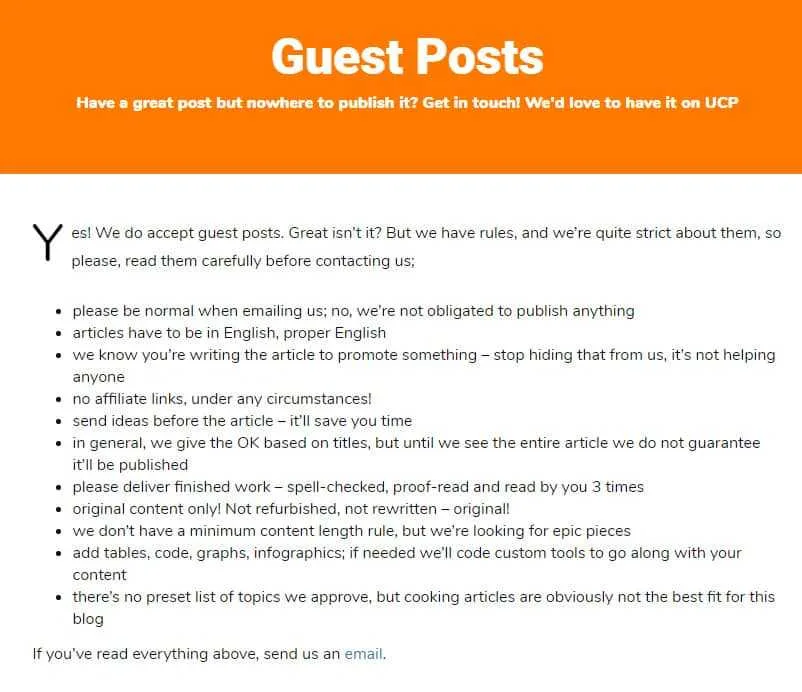
When you follow the guest post guidelines best practices laid out on a target site, you signal something beyond compliance. You signal that you read carefully, that you respect the editor’s time, and that you understand the publication’s voice. Those are exactly the traits that earn repeat invitations.
What Guidelines Actually Tell You About a Publication
Read a submission page closely and you learn more than word counts and formatting rules. You learn what the editor fears. A strict “no promotional links” clause tells you they have been burned by spammers. A request for original, unpublished content tells you they care about SEO and duplicate-content penalties.
Treat those signals as a map of what the editor values. Then write your pitch to prove you are the opposite of their worst experience. That single shift in perspective changes how you approach every submission you send.
Secret 1: Read the Guest Post Guidelines Twice, Once for Rules and Once for Voice
Most writers read submission rules once, extract the word count and the deadline, and move on. Focusing on guest post guidelines provides clear direction here. That is a mistake. The first read is for the hard requirements — topic fit, length, formatting, link policy. The second read is for something subtler: the voice of the publication itself.
Spend twenty minutes on the actual blog. Notice sentence length. Notice whether they use contractions, whether they lean on data or narrative, whether their headlines are punchy or descriptive. Your draft should feel like it belongs there, not like it was dropped in from another planet.
I once pitched a finance blog with a draft full of punchy one-liners and casual slang. It was rejected with a polite note: “Tone doesn’t match our editorial style.” The writer had clearly ignored the guest post guidelines tips about voice, focusing only on the technical rules. The second attempt, rewritten in their sober, data-driven register, was accepted within a day.
The Voice Audit That Takes Fifteen Minutes
Open three recent posts on the target site. Copy the first paragraph of each into a blank document. Now write your own opening paragraph in that same register. If it reads like a natural sibling of those three, you are ready to draft.

If it reads like a cousin from a different family, revise before you send. This tiny exercise has saved me more rejections than any other habit. It is the single fastest way to internalize a publication’s guest post guidelines without guessing.
Secret 2: Pitch the Angle, Not the Topic
“I’d like to write about content marketing” is not a pitch. It is a topic, and topics are everywhere. Editors do not need more topics. They need angles — specific, opinionated, defensible takes that their readers cannot get anywhere else.
A strong pitch does three things in the first two sentences. It names a precise problem the audience has. It promises a specific solution. And it hints at why you, specifically, when refining a guest post guidelines, are the person to deliver it. That combination is what makes an editor keep reading past the first line.
Consider the difference. Topic: “How to improve email open rates.” Angle: “Why subject-line A/B tests fail on lists under 10,000 subscribers, and the segmentation trick that actually moves the needle.” The second one tells the editor exactly what they are getting and why it matters. That is the kind of pitch that respects the guest post guidelines checklist most sites publish.
How to Find an Angle Nobody Else is Pitching
Search the target site for your topic. If they already have a post covering the obvious angle, your job is to find the gap. Maybe they covered strategy but not execution. Maybe they covered the beginner version but never the advanced one. Maybe they covered the theory but never the failure modes.
Then check the comments and the social shares on their existing posts. The questions readers ask in the comments are pitches waiting to be written. Answer one of those questions in a full draft, and you have an angle with built-in demand.
Secret 3: Build Your Draft Against a Guest Post Guidelines Checklist
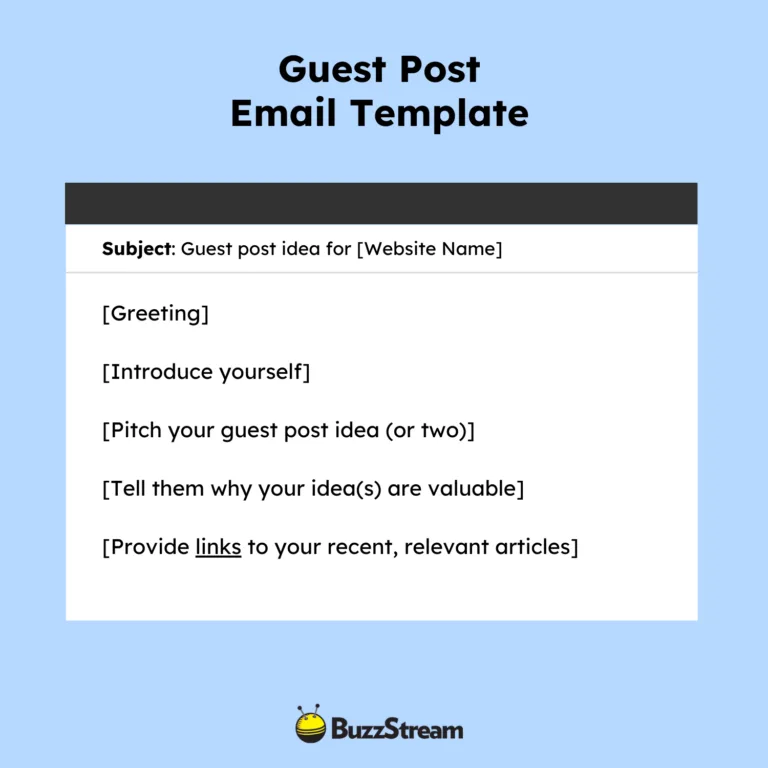
The most reliable writers I know do not rely on memory. They build a physical checklist from the target site’s submission page and tick it off line by line before hitting send. It sounds almost too simple, but the discipline is what produces consistent acceptance.
A practical guest post guidelines checklist covers the essentials: word count range, formatting requirements, link policy, image requirements, author bio format, and originality rules. Add your own items — target keyword, meta description, internal link suggestions. Editors notice when a submission arrives fully assembled.
Here is the checklist I use before every submission. Effective execution in your guest post guidelines makes a tangible difference. It is not exhaustive, but it catches the mistakes that get pitches rejected.

| Checklist Item | What to Verify | Why It Matters |
|---|---|---|
| Word count | Draft falls inside the stated range | Off-range drafts signal you did not read the rules |
| Topic fit | Angle matches the publication’s core audience | Misfit topics are rejected regardless of quality |
| Link policy | Only permitted links included, no self-promotion | Violations often get you blacklisted |
| Formatting | Headings, lists, and paragraphs match house style | Saves the editor reformatting time |
| Originality | Content is unpublished and not recycled | Duplicate content hurts the site’s SEO |
| Author bio | Short, relevant, and within the word limit | A bloated bio reads as self-promotion |
| Images | Properly licensed or supplied as required | Unlicensed images create legal risk |
Print it. Tape it to your monitor. The five minutes it takes to run through this list will save you hours of rejection cycles. Writers who internalize the guest post guidelines checklist simply get published more often.
Secret 4: Write the Draft Before You Pitch
The guest post guidelines one divides opinion, but my experience is clear: writers who send a finished draft with their pitch get accepted far more often than writers who send a pitch and wait. The reason is simple.
Editors are busy, and a finished draft removes their biggest source of friction — the fear that you will not deliver.
A finished draft also proves the guest post guidelines can actually write. Anyone can promise a great post. Very few can deliver one on the first try. When you attach the draft, you skip the back-and-forth and move straight to editing.

There is a caveat. Do not send a draft that ignores the guest post guidelines tips laid out on the site. A beautiful draft that is the wrong length, the wrong tone, or the wrong topic is worse than no draft at all. It tells the editor you did not bother to read.
How to Structure a Pitch Email With a Draft Attached
Keep the email short. Maintaining clarity across your guest post guidelines remains essential. Three sentences: the angle, why it fits their audience, and a note that the full draft is attached. Then the draft itself, formatted exactly as they require. Do not bury the pitch in a wall of text.

Editors respond to brevity because brevity respects their time. A two-paragraph email with a clean attachment will outperform a five-paragraph essay every single time.
Secret 5: Treat the Editor Like a Collaborator, Not a Gatekeeper
The best guest posting relationships I have built started with a simple mindset shift. The editor is not an obstacle. They are a partner who wants the same thing you do: a great post that serves their readers.

That shift changes how you handle feedback. When an editor asks for revisions, the writers who thrive treat those notes as free editing. They turn the draft around fast, incorporate the suggestions, and thank the editor for the sharp eye. The writers who struggle argue, disappear, or take weeks to respond.
Guest post guidelines best practices are not just about the first submission. They are about the relationship you build after it. Editors remember the writers who are easy to work with. Those are the writers who get invited back, who get priority on time-sensitive slots, and who eventually become regular contributors.

The Follow-Up That Builds a Long-Term Relationship
After your post goes live, send a short thank-the guest post guidelines note. Not a request for more work — just a genuine acknowledgment. Then, a few weeks later, share the post on your own channels and let the editor know it performed well. That is how you stay top of mind.
I have had posts picked up for syndication simply because I stayed in touch after publication. Refining each detail of your guest post guidelines strengthens this section. The relationship, not the pitch, is what compounds over time.
Secret 6: Measure Results and Refine Your Approach
Most writers never check what happened after their guest post went live. That is a missed opportunity. The data from a published post tells you exactly what to do differently next time.
Track three things: referral traffic, backlink quality, and whether the post generated any direct inquiries. If the traffic is strong but the backlink is weak, the site may not be worth the effort. If the backlink is strong but the traffic is flat, the post may need a better internal linking strategy from the editor.
Use the guest post guidelines feedback to refine which sites you target. Over a few months, you will develop a shortlist of publications that consistently deliver results. That shortlist becomes your guest posting engine.
What the Numbers Actually Tell You
A single guest post rarely transforms a site’s traffic. The compounding effect comes from consistency — a steady stream of well-placed posts on sites your audience actually reads. Treat each post as a data point, not a trophy.
Writers who track results improve faster than writers who do not. It is that simple. The guest post guidelines you follow are only as good as the feedback loop you build around them.
Common Mistakes That Sink Otherwise Strong Pitches
Even careful writers slip up. These are the mistakes I see most often, and each one is easily avoided once you know to look for it.
- Ignoring the word count. Submitting a 1,200-word draft to a site that asks for 2,000 words tells the editor you did not read the guidelines. Fix it before you send, not after.
- Pitching a topic they already covered. Search the site first. If the obvious angle exists, find the gap or move on to a different publication.
- Self-promotional links. Most sites restrict them for a reason. Follow the link policy exactly, and if you are unsure, ask before you submit.
- Generic author bios. A bio that says “passionate writer and content creator” tells the editor nothing. Be specific about your expertise and what you actually do.
- Slow responses to feedback. Editors work on tight schedules. If they ask for revisions, turn them around quickly. Slow responses kill momentum.
- Recycling old content. Submitting a post you already published elsewhere violates originality rules and can hurt the site’s SEO. Always write fresh.
None of these mistakes are complicated. They are just easy to make when you are rushing. Slow down, run your checklist, and send a submission that respects the editor’s time.
Frequently Asked Questions About Guest Post Guidelines
Here is an in-depth breakdown of key considerations regarding Frequently Asked Questions About Guest Post Guidelines:
How Strict are Guest Post Guidelines in Practice?
Stricter than most writers assume. Applying these principles to your guest post guidelines yields measurable results. Editors use guidelines as a filter, and small violations — a missing bio, an off-topic angle, a broken link — are often enough to trigger a rejection. Follow them exactly, especially on the first submission.
Should I Send a Full Draft or Just a Pitch?
Send the draft. A finished draft removes friction and proves you can deliver. Just make sure it follows the site’s guest post guidelines before you attach it.
How Long Should I Wait Before Following Up?
Give it a week. If you have not heard back, send a short, polite follow-up that restates the angle and offers to revise. Do not send a second follow-up after that.
Can I Reuse a Guest Post on Multiple Sites?
No. Most publications require original, unpublished content, and republishing the same post elsewhere violates their guidelines and can hurt SEO. Write a fresh angle for each site.
What if the Site’s Guidelines are Vague?
Ask. A short, specific question about word count, link policy, or formatting shows you care about getting it right. Editors appreciate the clarity, and you avoid a rejection based on a guess.
Putting the Six Secrets to Work
The writers who succeed at guest posting are not the most talented. They are the most disciplined. They read the guest post guidelines carefully, pitch angles instead of topics, send finished drafts, and treat editors as collaborators.
None of this is glamorous. It is just consistent, respectful work — the kind that compounds into a byline portfolio, steady referral traffic, and relationships that last for years. Start with one publication. Follow the guest post guidelines checklist. Send the draft. Then do it again next month.
The results will not arrive overnight. But they will arrive, and when they do, you will understand why the boring, disciplined approach is the one that actually works.
For verified reference and background research, consult the authoritative informational resource on this topic.