Why Display Advertising Still Earns Its Place in the Media Mix
Display advertising gets dismissed too often as the noisy cousin of search and social. That’s a mistake. When it’s built with care, display advertising puts your brand in front of people who weren’t looking for you yet — and does it at a cost per impression that almost nothing else can match.
The problem isn’t the channel. It’s the execution. Most display campaigns fail not because display is broken, but because the creative is lazy, the targeting is vague, and nobody bothered to build a real measurement plan.
That’s exactly what this display advertising guide is built to fix. Below you’ll find 10 practices that separate campaigns that actually move revenue from campaigns that just burn budget. No fluff, no theory dumps — just the stuff that holds up when you’re staring at a dashboard at 11 p.m. Wondering why your click-through rate cratered.
Think of this as your practical display advertising checklist: creative, targeting, measurement, and the operational habits that keep it all honest.
What Makes Display Advertising Different from Everything Else
Before we get into the ten practices, it’s worth being clear about what display actually is — because a lot of marketers conflate it with everything that isn’t search.
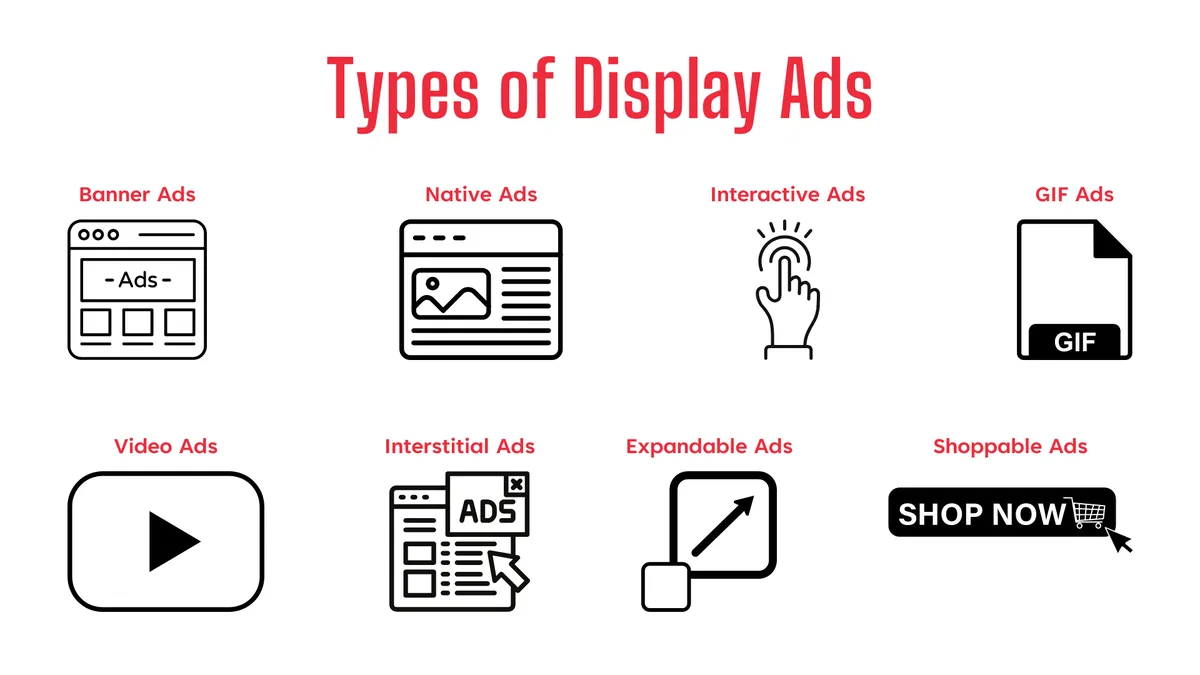
Display advertising refers to paid visual ads served across websites, apps, and video platforms through ad networks and exchanges. Banner ads, native placements, rich media units, interstitial formats — they all live under this umbrella.
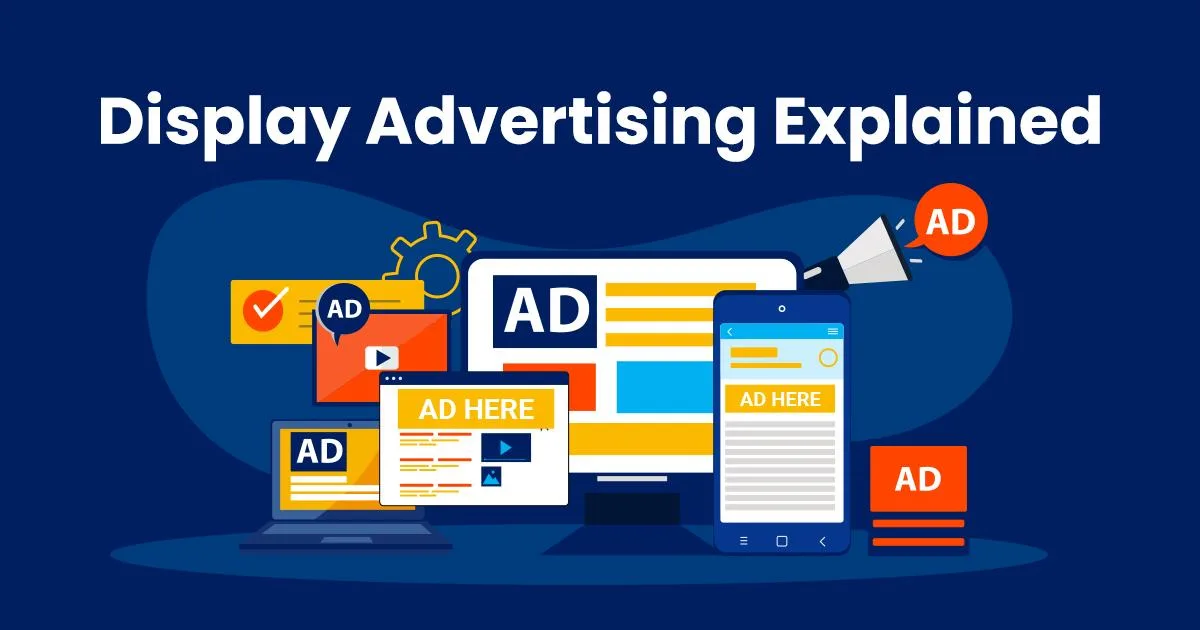
The defining trait is that the ad appears alongside content the user came for, rather than interrupting an intent-driven query.
That distinction matters more than it sounds. A search ad catches someone mid-decision. A display ad catches someone mid-article, mid-scroll, mid-distraction. Your job is to earn a half-second of attention from a person who wasn’t planning to think about you.
Industry benchmarks vary wildly by vertical, but a reasonable mental model is the display advertising: display click-through rates typically sit well under 1%, viewability hovers around 60-70% on premium inventory, and conversion rates trail search by a wide margin. That’s not a weakness — it’s a different job.
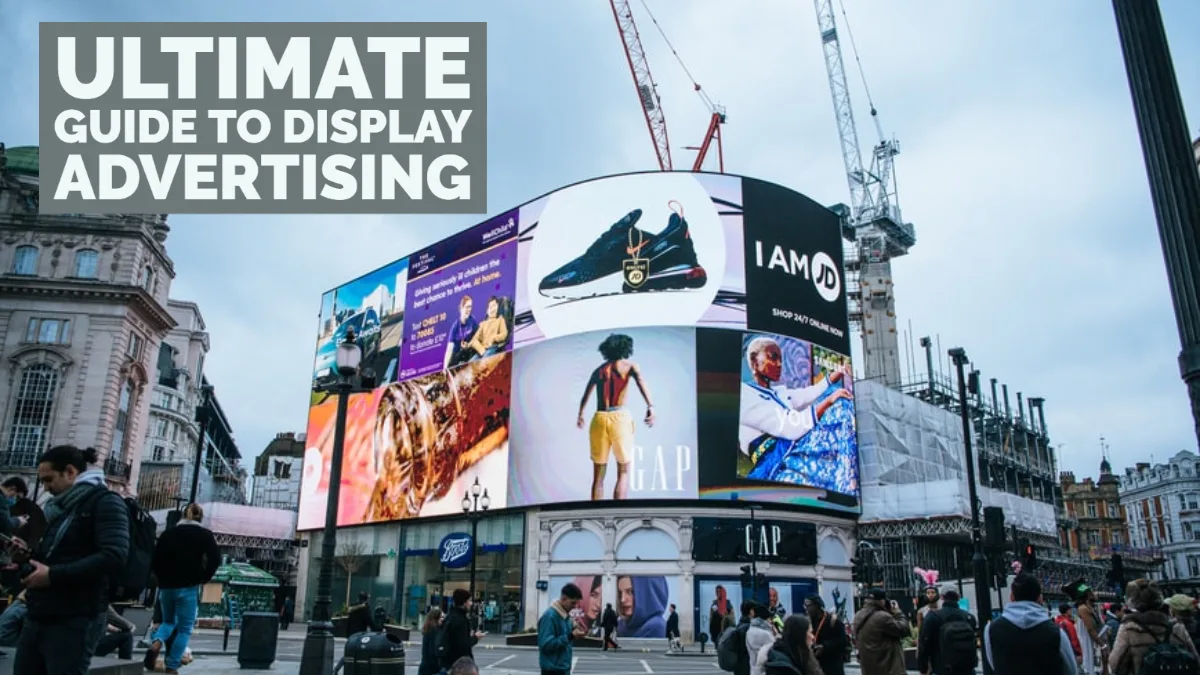
Display builds memory, intent, and consideration. Judging it purely on last-click conversions is like judging a billboard by how many people drove into the store that minute.
For a broader primer on the format itself, the Wikipedia entry on display advertising covers the structural history well, from early banner formats to programmatic exchanges.
The 10 Display Advertising Best Practices That Actually Work
Here’s where the real work lives. These ten practices aren’t ranked by importance — they’re ordered roughly by the sequence you’d apply them in a fresh campaign. Skip any of them and the others get weaker.
Every one of the display advertising has survived contact with real budgets, real clients, and real results. Nothing here is theoretical.
1. Design for the Glance, Not the Gaze
The single biggest creative mistake in display advertising is designing ads that require reading. Nobody reads display ads. They glance, register, and move on. If your ad demands attention like a magazine spread, it fails by default.
What works instead: one dominant visual, one clear value proposition, one action. That’s it. The headline should be legible at thumbnail size. The brand mark should be recognizable before someone consciously looks for it. The call-to-action needs to sit where the eye lands after the visual, not tucked in a corner.
A concrete example: a mid-market skincare brand ran two versions of the same banner. Version A had three product shots, a paragraph of copy, and a small “Shop Now” button. Version B had one product, four words of copy, and a large CTA.
Version B outperformed on click-through by roughly 40%, and — more tellingly — on downstream conversion by even more, because the people who clicked actually knew what they were getting.
Practical rule of thumb: if you can’t describe the ad in one sentence to a colleague across the room, it’s too busy.
2. Match Creative Format to Placement, Every Time
Serving a 300×250 rectangle into a 970×250 slot wastes money. Serving a static JPEG into a rich media placement wastes opportunity. Format-placement mismatch is one of the most common silent killers in display advertising campaigns, and it’s entirely avoidable.

Every major ad network publishes its format library — leaderboards, medium rectangles, half-page units, mobile interstitials, native in-feed units, and video bumpers. Build the full set for each campaign. It’s tedious work, but the alternative is paying for impressions that never get seen because the asset didn’t fit.
Here’s a rough guide to which formats tend to pull their weight:
| Format | Typical Use | Notes |
|---|---|---|
| Medium Rectangle (300×250) | Broad reach across publishers | Highest inventory volume; strong for retargeting |
| Leaderboard (728×90 / 970×90) | Desktop placements, top of page | Good for awareness, weaker for conversion |
| Half-Page (300×600) | Desktop premium placements | Higher engagement; larger canvas for story |
| Mobile Interstitial (320×480) | App and mobile web | Powerful but easy to overuse; watch frequency |
| Native In-Feed | Publisher editorial environments | Blends with content; requires honest labeling |
The point isn’t to run every format. Effective execution in your display advertising makes a tangible difference. It’s to make sure the formats you do run are properly built for the slots you’re buying — and that means auditing placements against your creative library before launch, not after.
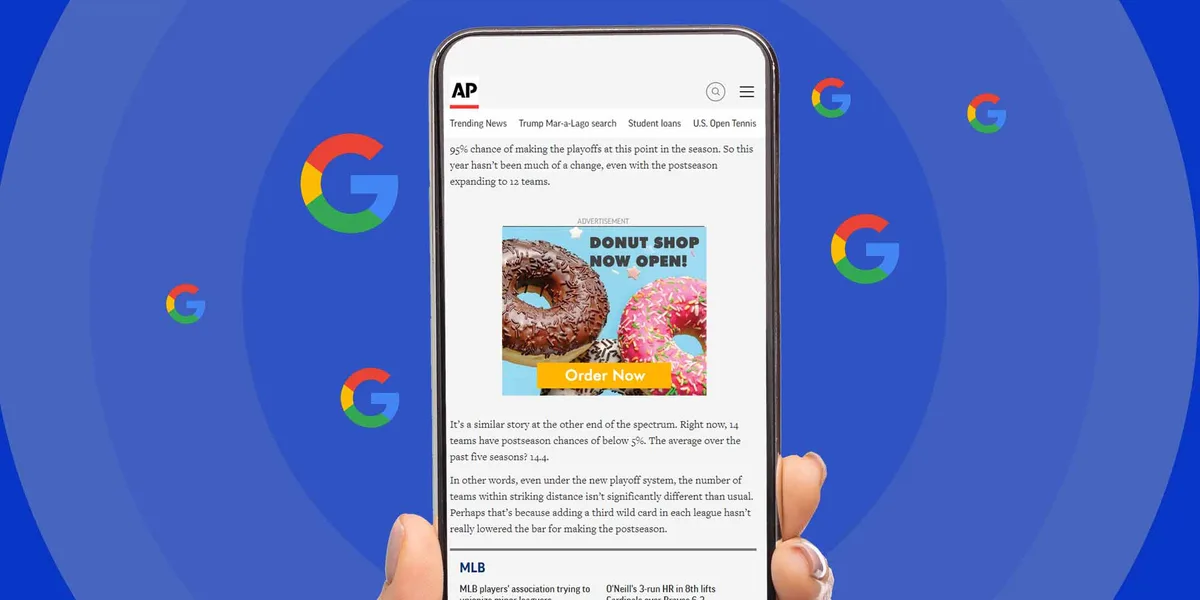
3. Write Copy That Earns the Click Without Begging for It
Display copy has a narrow job: give a stranger a reason to care in under three seconds. Most display copy fails because it either tries to close the sale on the banner or says nothing at all.
The best-performing display ads tend to follow a pattern — a specific, benefit-led headline, a short supporting line that adds a new thought (not a repeat), and a CTA that names the next step. “Get the Report” beats “Learn More.” “Start Your Free Trial” beats “Submit.” The CTA should describe what happens after the click.
Specificity does heavy lifting here. Maintaining clarity across your display advertising remains essential. “Save 3 Hours a Week on Reporting” is a better headline than “Improve Productivity.” The first forces you to picture a concrete benefit; the second slides right off the brain.
One more thing worth mentioning, since it’s often missed: brand consistency across rotations. If five banners in a rotation each look like they came from a different company, you’re not running a campaign — you’re running five unrelated ads with the same logo. Lock the visual system and vary the message, not the foundation.
4. Build a Real Targeting Strategy, Not a Targeting Default
Most display advertising underperforms because the targeting was set once and never revisited. “Run it on the open exchange” is not a targeting strategy. It’s a budget donation.
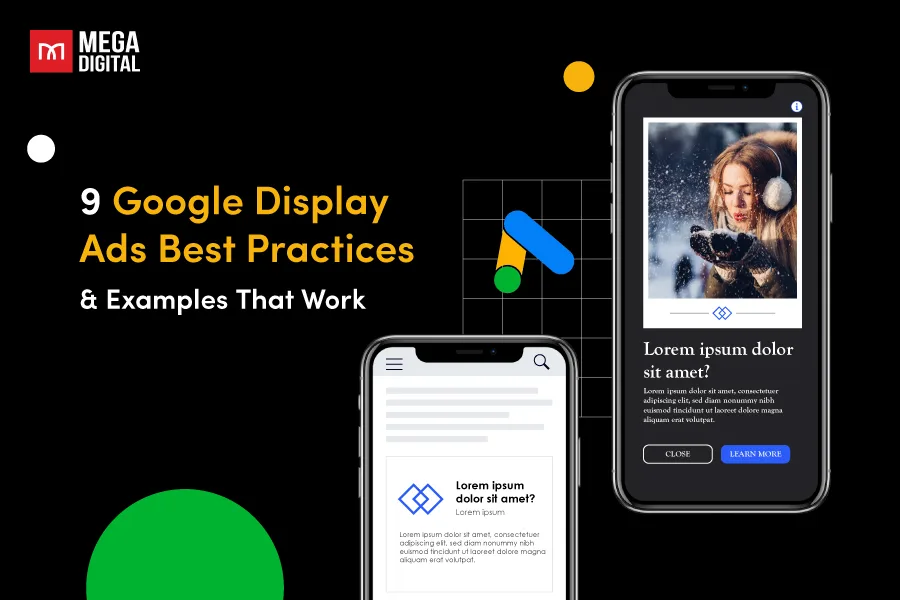
A serious targeting layer has three parts. First, contextual targeting — placing ads on content that matches the topic your audience already cares about. Second, audience targeting — first-party data, lookalike segments, and interest categories. Third, behavioral signals — people who visited specific pages, engaged with specific content, or fit specific purchase patterns.
Layer the display advertising rather than picking one. A contextual placement on a cooking site, served to someone who has visited your recipe app twice, with a creative about meal planning, is worth ten times a broad run-of-network impression.
Watch the trade-off, though. Oversegmented campaigns fragment your data and inflate CPMs through bidding pressure on tiny audience pools. The sweet spot is usually somewhere between three and six distinct audience segments per campaign — enough to learn from each, few enough to maintain statistical signal.
The best display advertising tips I’ve picked up over the years almost always boil down to one idea: know exactly who you’re talking to before you open the ad builder.
5. Treat Frequency Capping Like It’s Sacred
Nothing drains a display budget faster than showing the same ad to the same person forty times. Frequency capping isn’t a nice-to-have — it’s the difference between brand building and brand fatigue.
The right cap depends on campaign length and goal. Structuring your display advertising around proven patterns ensures impact. For short awareness bursts, 3-5 impressions per user per day is common. For longer consideration campaigns, 1-2 per day over the flight is often better. For retargeting, 5-7 per week is a reasonable ceiling before diminishing returns kick in hard.
Here’s a scenario that plays out constantly: a SaaS company runs a retargeting campaign to people who visited their pricing page. They set no frequency cap. Within two weeks, prospects are getting the same banner on every site they visit, and sentiment shifts from interested to annoyed. The conversion rate falls. The team blames the creative. The real problem was the cap they never set.
Set caps deliberately. Then set them again at the campaign level and the tactic level. Redundancy here is good practice, not paranoia.
6. Measure Viewability and Attention, Not Just Clicks
Click-through rate is the most misleading metric in display advertising. It tells you almost nothing about whether people actually saw your ad, remembered it, or were influenced by it.
Viewability — the IAB standard is 50% of pixels in view for at least one second for display, two seconds for video — is a better starting point. Applying these principles to your display advertising yields measurable results.
It tells you whether the impression had a chance to register. But viewability alone doesn’t prove attention. People scroll past viewable ads all the time.

Attention metrics are the next layer: dwell time, scroll velocity at impression, in-view duration. Several measurement partners now offer these, and while they’re imperfect, they’re far more actionable than a flat CTR.
Build a measurement stack that includes viewability, attention, brand lift studies, and downstream conversion data (with proper attribution windows). The combination tells a truer story than any single metric. A campaign with a 0.3% CTR and strong brand lift is a success; a campaign with a 1.2% CTR and no lift is often vanity.
This is the part of the display advertising best practices list that separates mature teams from the ones still optimizing toward the wrong number.
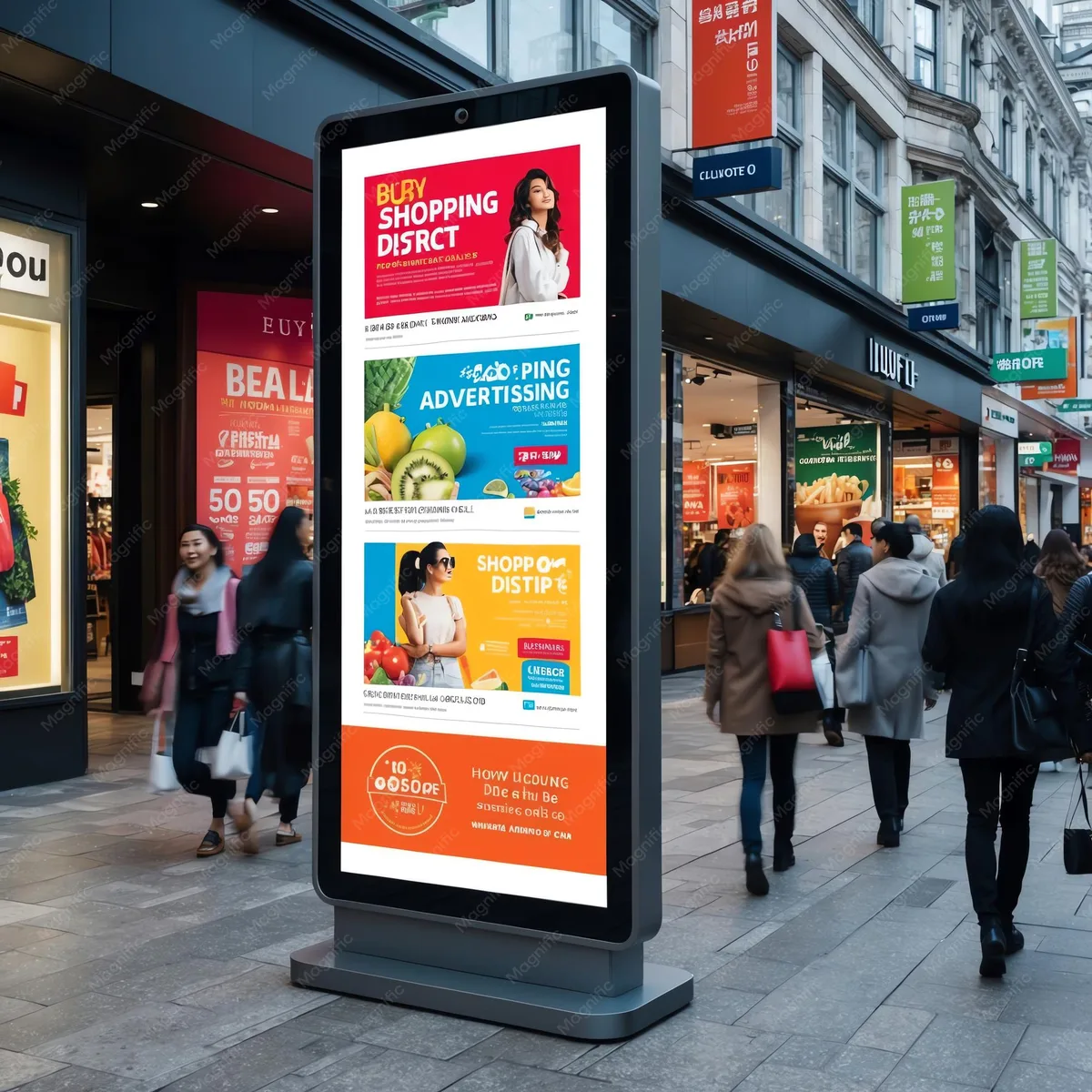
7. Use First-Party Data Aggressively and Honor It
The cleanest competitive advantage in display advertising is first-party data. CRM lists, site behavior, purchase history, email engagement — this is the signal that makes targeting precise and suppression intelligent.
Use it in two directions. Proper attention to your display advertising sets a strong baseline. First, to build lookalike audiences from your best customers rather than from raw site traffic.
Second, to suppress people you shouldn’t be advertising to at all — existing subscribers, lapsed customers who’ve already churned for cause, people in the middle of a support issue.
Suppression is the underrated half of this practice. Nothing damages a brand faster than advertising a subscription to an active subscriber or pushing a support ticket upgrade to someone whose ticket isn’t resolved. Suppression lists are cheap to build and worth far more than the impressions they save.

The second half of this practice is honoring the data governance side: consent, deletion rights, segmentation hygiene. Audiences that decay into stale, ungoverned lists produce garbage targeting.
8. Land on Pages That Continue the Ad
The ad and the landing page are one continuous experience. Developing your display advertising with precision highlights key strengths. When they break apart, you lose the click you earned. When they connect, you compound it.
The classic failure mode: an ad promoting a specific feature lands on a generic homepage. The user’s mental momentum — built by the ad’s promise — dies on contact. They bounce.
The fix is straightforward but rarely executed well: every ad gets its own landing page, or an anchored section of a page with a hero region that echoes the ad’s headline and visual. Match the headline language.
Match the CTA. Clear alignment with your display advertising builds confidence from the start. Show the same product shot. Continuity is worth more than the marginal optimization you might squeeze out of a “better” generic page.
Also worth testing: message match extended to the sub-headline and even the first paragraph. When people click an ad promising “cut onboarding time in half,” the landing page hero should say “cut onboarding time in half” — not “welcome to our platform.”
9. Run Continuous Creative Testing (and Kill Losers Fast)
Display creative decays. A banner that pulls well this quarter is often tired next quarter. The campaigns that sustain performance are the ones that test continuously and retire underperformers without sentimentality.
A workable cadence: at least two new creatives per active ad set per month, rotating in based on a simple rule — anything underperforming the previous winner’s click-through by 30% or more gets retired. Integrating display advertising into your workflow produces consistent quality. Winners get iterated (different color, different headline order, different product angle), not cloned.
A small e-commerce brand used exactly this approach: three creatives rotating, one new one introduced weekly, with a 30-day performance window before any final cut. Over a single quarter, their blended cost per acquisition dropped meaningfully — not because any single creative was a revelation, but because the dead weight was removed consistently.
The other half of this practice is a display advertising checklist for each new creative: does it pass the 3-second legibility test? Is the CTA clear? Is the brand mark visible? Does it fit the formats we’re buying? Does it match the landing page? Answers before launch, not after.
10. Build Brand Continuity Across Every Placement
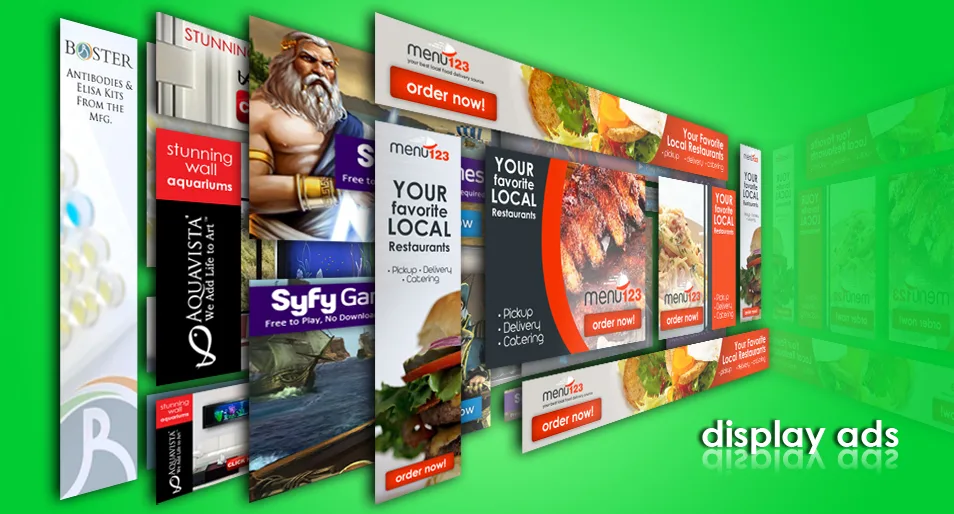
The final practice ties the others together. Display advertising works best when every impression reinforces the same brand signal — same palette, same tone, same core promise. Not identical creatives, but a consistent brand world.
That means a design system for display: locked typefaces, defined color ranges, established visual motifs, a consistent voice for headlines. When someone sees three of your banners in different contexts across a week, they should register all three as the same brand before they read a word.
The display advertising is why brand consistency often outperforms creative novelty in awareness campaigns. A single strong creative repeated in different formats, with minor variations, builds memory. Five unrelated creatives, no matter how clever, compete with each other for recall.
Continuity also applies to timing. Display works best as part of a wider media mix, layering onto search, social, email, and video. A display impression on its own is a moment; the same message arriving four times through four channels is a memory.
The Metrics That Actually Matter for Display Advertising
If you’re running display advertising and want a short, honest scoreboard, here’s what I’d watch — in rough priority order.
- Viewable impressions. How many people actually had a chance to see the ad? This is the foundation of every other metric.
- Viewable CPM (vCPM). Cost per thousand viewable impressions. Far more meaningful than CPM, because it filters out the inventory you were paying for but never got seen.
- Incremental brand lift. Run periodic brand studies on your priority audiences. Unaided awareness and consideration lift are the honest signals that display is doing its job.
- Assisted conversions. Look at conversions where display appeared anywhere in the path, not just first or last click.
- Cost per incremental conversion. Attribution models vary; incremental measurement (holdout tests, geo experiments) is the cleanest way to know whether display is genuinely adding lift.
- Frequency distribution. Not average frequency — distribution. If 5% of your audience is getting 40 impressions, your cap is broken.
- Creative-level performance trends. CTR by creative, but also scroll-velocity-adjusted view-through. Some ads suppress clicks while building awareness; those are still valuable.
The discipline here is refusing to let one metric dominate the story. A campaign with strong viewability, healthy frequency distribution, and measurable brand lift is a real win, even if CTR is modest.
Where Display Fits in the Wider Journey
Display advertising is rarely the whole journey. It’s a layer — sometimes the opener, sometimes the reminder, sometimes the closer.
In the upper funnel, display runs alongside content and social to build awareness and shape consideration. Focusing on display advertising provides clear direction here. In the mid-funnel, display retargets engaged audiences with proof points and demos. In the lower funnel, display reinforces decisions at the exact moment a prospect is comparing options across tabs.
That last role is underrated. A prospect deep in a buying process may have four vendor tabs open. The vendor whose banner shows up twice during that comparison window — with a clear, calm, reassuring message — often wins the close, not the flashiest first-touch ad.
Beyond display, the related topics worth exploring are programmatic buying mechanics, native advertising placements, and connected TV inventory. All three operate on related infrastructure but reward different creative instincts. A strong display advertising guide eventually pushes readers toward those adjacencies, because the skill sets overlap more than most teams acknowledge.
Common Mistakes That Quietly Wreck Display Campaigns
The failures in display rarely announce themselves. They accumulate. Here are the ones I see most often, in the rough order of how much money they burn.
Overreliance on the open exchange. Open exchange inventory is broad, but quality varies wildly. Refining each detail of your display advertising strengthens this section. Premium publisher deals and private marketplaces often deliver better viewability and attention at competitive direct pricing when you exclude the garbage.
Ignoring placement reports. Placement reports tell you exactly where your ads appeared. Reviewing them weekly is non-negotiable — it’s the single easiest way to catch brand-safety issues, accidental mobile-app inventory, and wasted spend.
Building one creative and calling it done. A single creative across all placements is a budget on fire. At minimum, build the core formats; if you can’t, narrow the placement set instead.
Using the wrong attribution window. Display typically influences conversions over a longer window than search. Setting a one-day click window and calling display a failure is measuring the wrong thing.
Letting the landing page go stale. Campaigns run for months while the destination page remains frozen. Every quarter, the landing page needs the same care as the creative.
Frequently Asked Questions About Display Advertising
Here is an in-depth breakdown of key considerations regarding Frequently Asked Questions About Display Advertising:
How Much Should I Budget for Display Advertising?
There’s no universal answer, but a practical starting range is 10-20% of total paid media for a brand that’s still building awareness, rising for pure brand campaigns. The key is treating display as a multi-month investment rather than a quarterly experiment. Short flights rarely produce enough signal to optimize well.
Is Display Advertising Still Effective Compared to Search and Social?
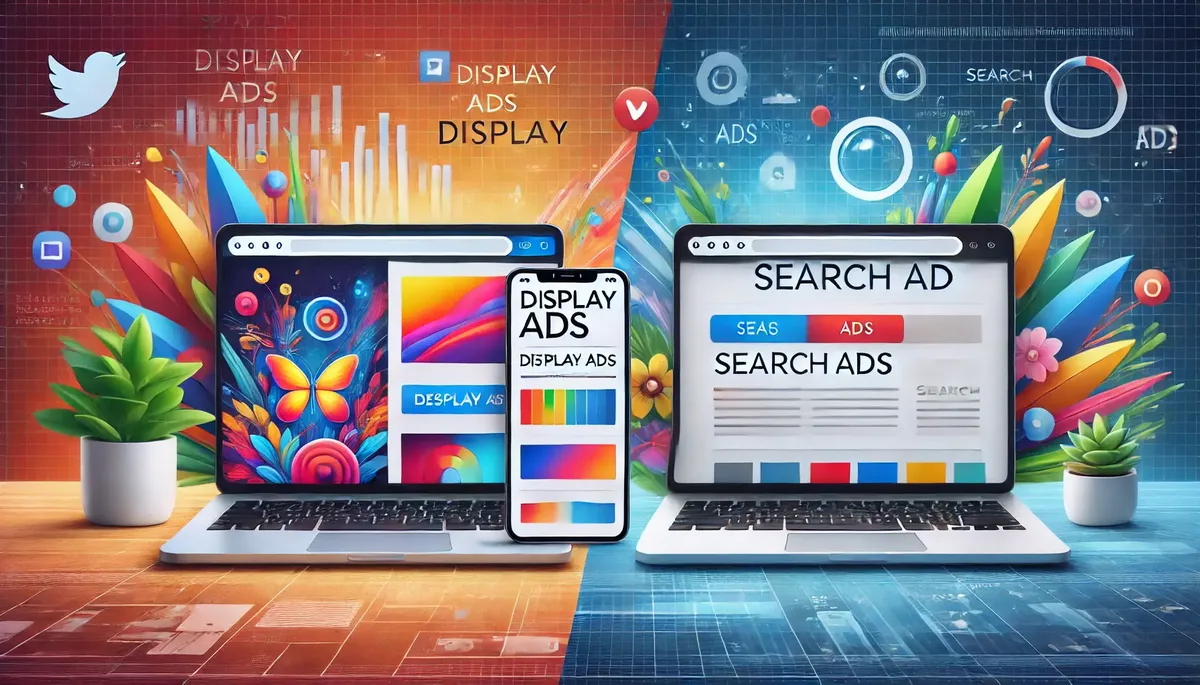
The display advertising’s a different tool, not a lesser one. Search captures existing intent; social creates audience-level engagement; display builds brand memory at scale and cheaply. Brands that treat all three as layers rather than substitutes generally see better overall performance than those running one channel in isolation.
What’s a Realistic Click-through Rate for Display Advertising?
Across most verticals, benchmark CTR runs well under 1%, with premium placements pushing slightly higher and broad programmatic closer to a fraction of a percent. But CTR alone is misleading — viewability, attention, and brand lift matter more. A campaign with a low CTR and strong lift often outperforms a high-CTR campaign with no memory effect.
How Do I Prevent Ad Fatigue?
Frequency caps, creative rotation, and a testing cadence. Cap impressions per user per day, rotate at least two creatives per ad set, refresh creative monthly, and check frequency distribution (not just average) weekly. If a small slice of your audience is seeing a huge slice of impressions, your cap setup is broken.
What Should be on My Display Advertising Checklist Before Launch?
Creative built for every purchased format; clear CTA and legible headline; brand mark visible; targeting reviewed with first-party data layered in; frequency caps applied; placement exclusions configured (brand safety, mobile apps, low-quality domains); measurement plan documented with viewability and conversion windows; landing page matched to the ad. If any of those are missing, the campaign isn’t ready.
Do I Need a Separate Display Strategy for Mobile?
Yes. Mobile placements reward different creative instincts: tighter canvas, faster scroll speed, touch-first interaction. Vertical formats and interstitial units often outperform adapted desktop assets. Treat mobile as its own creative discipline, not a scaled-down version of desktop.
How Do I Attribute Value Properly?
Use incremental measurement where possible: holdout groups, geo experiments, or brand lift studies tied to a control audience. Where incrementality isn’t feasible, use view-through attribution with a clearly documented window (typically 7-30 days for display) and compare to first-click and last-click to understand the range.
The Discipline Behind Good Display Advertising
None of the ten practices above is exotic. That’s the point. The gap between display campaigns that work and those that don’t usually isn’t creative genius or a proprietary algorithm — it’s the discipline to keep the basics honest.
Build for the glance. Match format to placement. Layer targeting with real thought. Cap frequency. Measure what matters. Land the click. Test and retire. Keep the brand consistent. That’s the whole game, and it’s a lot harder than it sounds.
Display advertising rewards teams that treat it as a craft rather than a checkbox. It also punishes teams that don’t.
If you’re building a proper display advertising best practices framework for your team, start with this list, adapt it to your category, and put a review ritual on the calendar so none of it quietly slides.
The campaigns that compound over years are the ones built on habits, not heroics.