Customer persona examples are the fastest shortcut to understanding why some campaigns convert and others fall flat. You can read every theory book on segmentation, but nothing teaches faster than seeing a real persona built, tested, and proven in the wild. That’s exactly what this collection delivers.
Below are twelve customer persona examples you can lift, adapt, and apply to your own business without spending weeks on research. Each one covers the buyer, the pain, the trigger, and the message that worked.
Think of this as a customer persona examples guide built for people who’d rather ship than study. Some personas are B2B, some are e-commerce, some come from scrappy startups. All of them earned their place because they produced measurable results.
Why Customer Persona Examples Beat Abstract Theory
Here’s a truth most marketing courses skip: personas fail when they’re written as fiction. A document that says “Marketing Mary, age 34, likes yoga and coffee” tells you nothing about how Mary buys software.
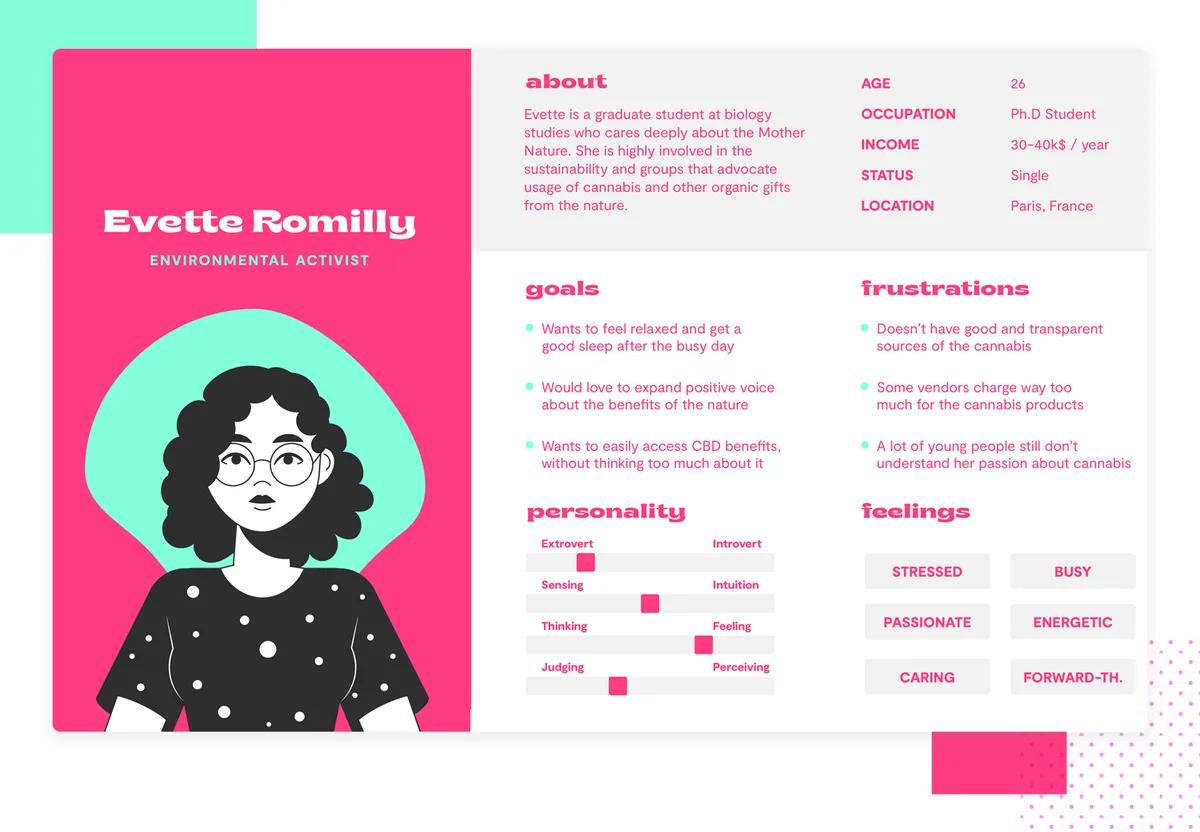
The customer persona examples in this article work because they focus on buying behavior, not hobbies. They capture decision triggers, objections, and the exact words a real buyer used.
When you study proven customer persona examples, you start noticing patterns. You see which details actually influence a purchase and which are decorative noise. That pattern recognition is worth more than any template.
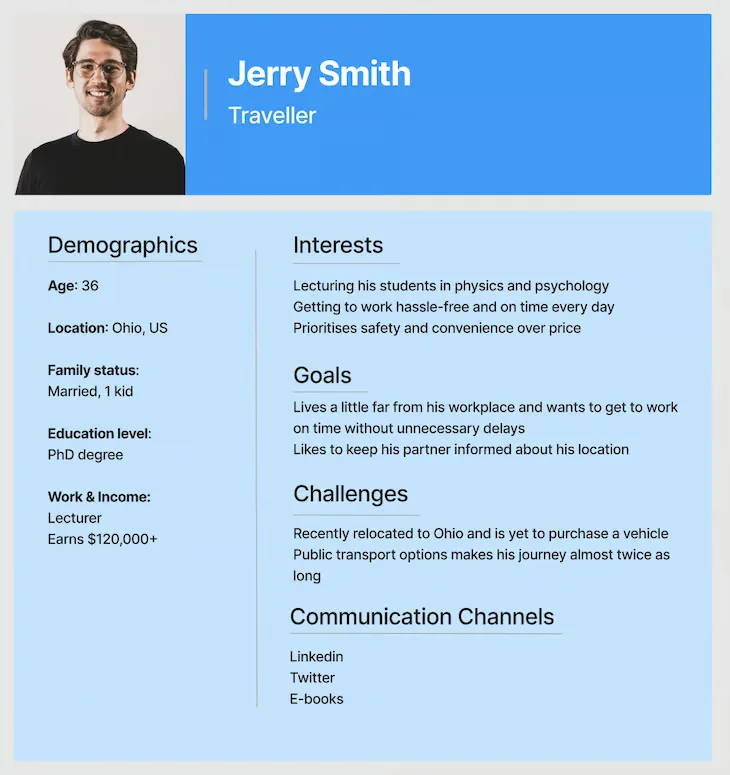
Most teams waste months building personas nobody uses. The customer persona examples tips in this piece are designed to prevent that outcome. Every persona below has a clear job: guide a decision, not fill a slide deck.
What Separates Useful Customer Persona Examples from Useless Ones
Before we dive into the twelve, you need a filter. Not every persona you encounter deserves to be copied, and not every beautifully designed persona card actually earns its keep.
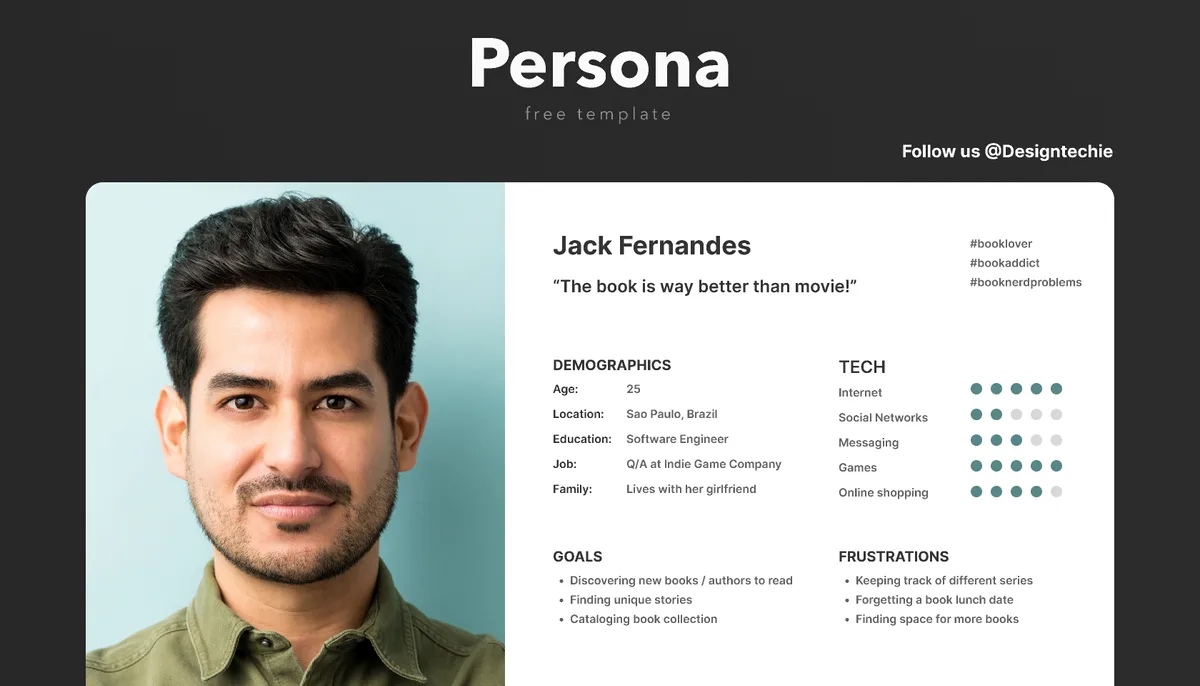
The customer persona examples best practices that consistently hold up share a few traits. They’re specific about behavior, honest about objections, and tied directly to a channel or message.
The Three Traits Every Strong Persona Shares
First, strong personas answer “what happened right before they went looking for a solution?” That trigger moment matters more than demographics. A person becomes a buyer at a specific instant, and good personas name that instant.
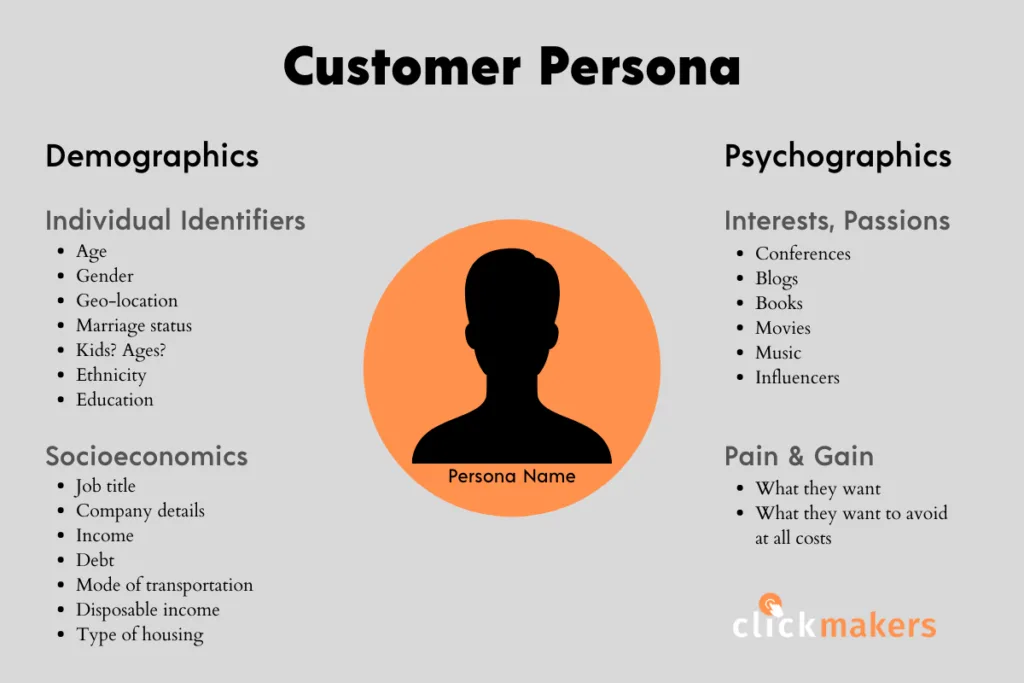
Second, they include the objection. If your persona doesn’t say why someone hesitates, it’s a wish list, not a persona. Every real buyer has a reason to say no first.
Third, they connect to a channel. A persona that lives only in a research document dies there. The customer persona examples below each name where the buyer actually spends attention.
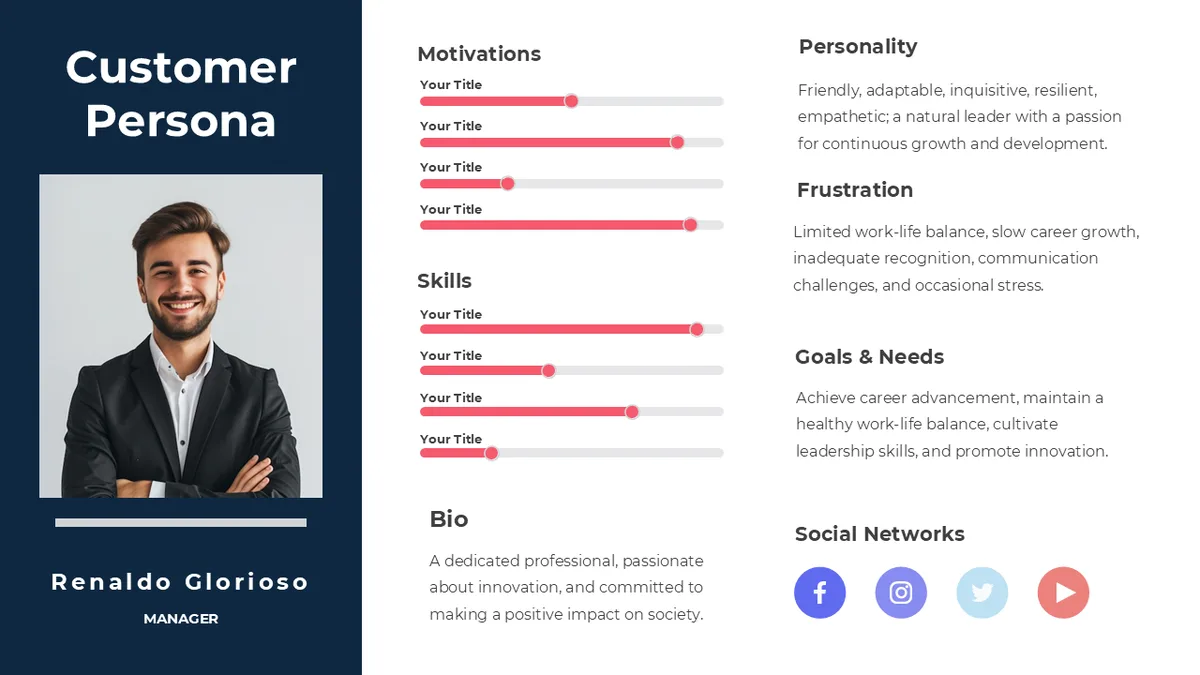
Use this as a customer persona examples checklist when reviewing your own work. Trigger, objection, channel. If any of those are missing, the persona needs another pass.
How We Selected These Twelve
Each customer persona example here was chosen because it produced a documented outcome, whether that’s higher conversion, better ad targeting, or fewer wasted sales calls. We focused on cases with clear before-and-after context.
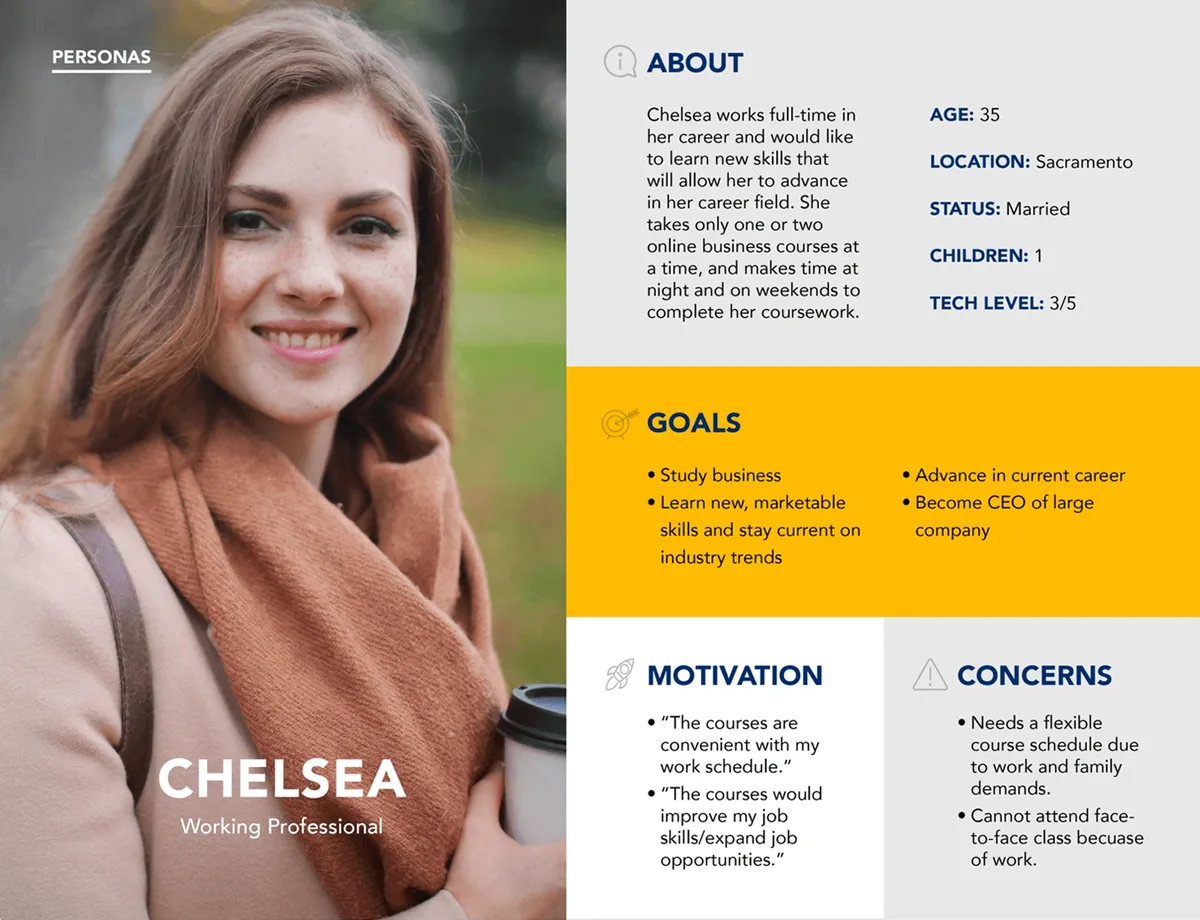
We also favored variety. You’ll find B2B SaaS, direct-to-consumer retail, professional services, and marketplace examples. That spread lets you borrow patterns regardless of your industry.
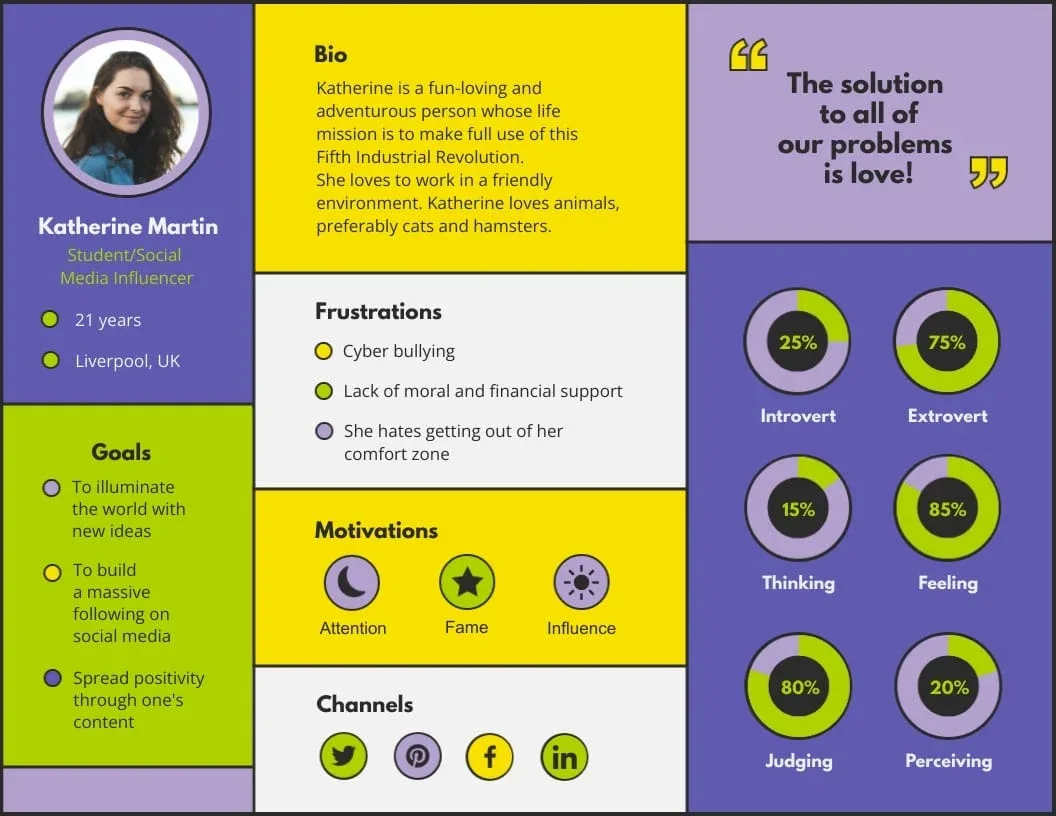
The customer persona examples guide below follows a consistent format so you can compare them side by side. Each entry gives you the buyer, the trigger, the core pain, and the winning message.
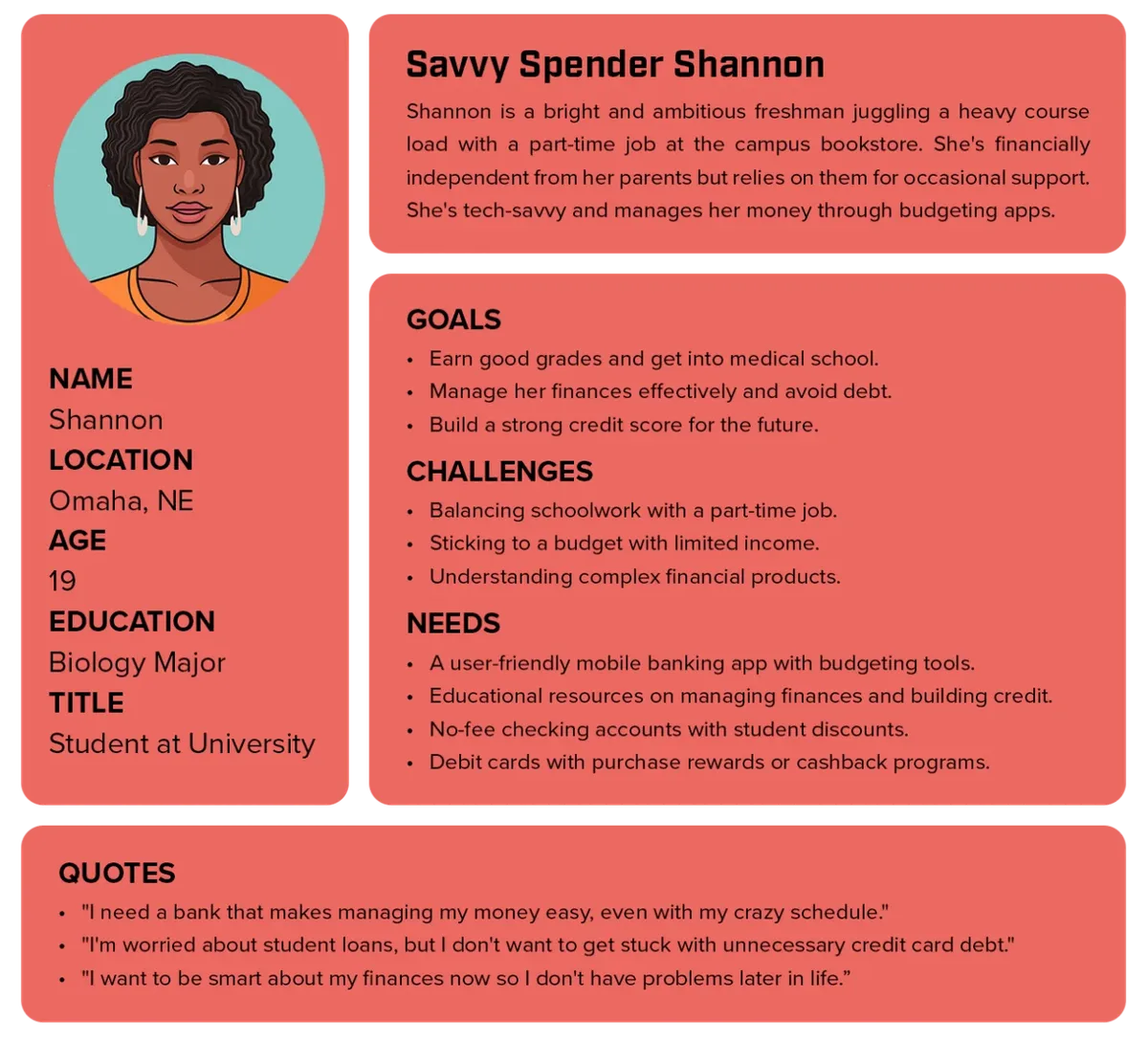
The Foundation: What These Customer Persona Examples Teach About Buyer Types
Before the list, a quick foundation helps. Most buyers fall into a handful of behavioral archetypes, and knowing them makes each example easier to adapt.
You’ll see analytical buyers who want proof, risk-averse buyers who need reassurance, and value-driven buyers chasing the best trade. The customer persona examples below map cleanly onto these types, so you can spot the pattern and translate it to your own market.
| Buyer Archetype | Core Motivation | Best Message Angle | Channel That Works |
|---|---|---|---|
| Analytical | Wants proof and comparison | Data, benchmarks, ROI math | Comparison pages, review sites |
| Risk-Averse | Fears a costly mistake | Guarantees, case studies, trials | Email nurture, sales calls |
| Value-Driven | Wants the best trade-off | Bundle offers, transparent pricing | Paid social, landing pages |
| Time-Starved | Wants speed and simplicity | Quick setup, done-for-you service | Search ads, short demos |
| Status-Seeking | Wants to look smart or advanced | Social proof, premium positioning | Community, influencers |
Keep this table nearby. As you read the twelve customer persona examples, notice which archetype each buyer belongs to. That mapping is what makes personas reusable across industries.
The 12 Proven Customer Persona Examples You Can Steal
Here’s the heart of the article. Twelve customer persona examples, each built to teach something you can apply immediately.
Skim first, then return to the ones that match your audience. The customer persona examples checklist near the end will help you adapt them properly.
Example 1: the Overwhelmed Operations Manager
Picture Dana, an operations manager at a 60-person logistics firm. She didn’t wake up wanting new software. She woke up to three missed shipments and a spreadsheet that broke.
Her trigger is a failure she can’t explain away. Her core pain is the fear that the next failure lands on her desk with her name on it.
What worked for Dana? A vendor that led with “here’s the five-minute audit” instead of a feature list. The message promised immediate clarity, which matched her panic-driven buying mode.
This is one of the customer persona examples every B2B team should study. When the buyer’s trigger is a crisis, your first message must be relief, not education.
Example 2: the Comparison-Shopping Buyer
Sam compares everything before buying, whether it’s a competitive direct manufacturer pricing tool or a competitive direct manufacturer pricing contract. He reads reviews, watches demos, and keeps a personal spreadsheet of pros and cons.
For this persona, the winning move is total transparency. One software company published a side-by-side comparison of its product against the top three competitors, including where it lost.
That honesty converted Sam because he trusted the team more for admitting limits. Among the twelve customer persona examples here, this one is a masterclass in how trust converts analytical buyers.
If you sell to comparison shoppers, build the comparison table yourself. Control the frame before a competitor frames it for you.
Example 3: the First-Time Founder Watching Every Dollar
Rosa runs a startup with fourteen months of runway. She’s not shopping for the best product. She’s shopping for the least risky way to avoid hiring someone.
Her objection is simple: “will this still be around in a year?” Her trigger is a task that’s outgrown her ability to handle it manually.
What worked was a tiered offer that started small. The company positioned its entry plan as a “replace one contractor” budget line, which matched her mental accounting.
For this persona, anchoring your price to a cost the buyer already accepts is the whole game. Plenty of customer persona examples rest on this single insight, and it’s worth internalizing.
Example 4: the Loyal Repeat Customer in Retail
Not every persona is a new buyer. One direct-to-consumer skincare brand built a persona around its repeat buyer: the person who’s bought four times and wants to feel recognized.
The trigger here isn’t a problem. It’s a milestone: a previous purchase reaching its natural end. The brand timed replenishment reminders to usage patterns, not calendar dates.
That one change lifted repeat purchase rate sharply because the message arrived when the product actually ran out. Study this if you sell consumables. Timing beats cleverness.
These customer persona examples prove that repeat buyers deserve their own persona. Most teams only build personas for new customers and leave money on the table.
Example 5: the Agency Gatekeeper Screening Vendors
Priya is a senior strategist at an agency. She’s not the economic buyer, but she decides who gets in front of the client. Her job is to filter out anything that might embarrass her.
Her objection is reputational: “if this goes wrong, it’s my name attached.” The vendor that won her trust sent a short reference list with real names and roles, plus an offer to talk to any of them.
Gatekeepers respond to proof they can forward. Give them one clean, sendable asset and they’ll do your selling inside the client’s building.
A surprising number of customer persona examples ignore the gatekeeper entirely. That’s a mistake, especially in agency and enterprise sales.
Example 6: the Skeptical Technical Buyer
Marcus is a senior engineer who’s been burned by tools that oversold. He distrusts marketing pages and reads documentation before he reads pricing.
His trigger is a colleague mentioning a tool he doesn’t know. His objection is that it’s probably not production-ready.
The winning move was radical: the company published its technical limitations in the docs and linked them from the homepage. That honesty gave Marcus the confidence to test the product seriously.
Technical buyers reward candor. Among the customer persona examples in this collection, this one best shows how transparency wins over polish.
Example 7: the Non-Technical Decision Maker
Contrast Marcus with his manager, Elena. She approves the budget but can’t evaluate the details. Her trigger is a team complaint that’s reached her desk twice.
Her core fear is a failed rollout she has to explain upward. The message that worked was a short “here’s what happens in the first thirty days” plan, not technical specs.
Pairing a technical evaluator persona with an economic buyer persona is one of the most useful customer persona examples best practices out there. They need different conversations.
If you sell into teams, build both. One document for the champion, another for the approver.
Example 8: the Seasonal Small Business Owner
Tomás runs a small landscaping business. His buying behavior changes with the season: aggressive spending before spring, cautious in winter.
His trigger is a wave of inquiries he can’t handle alone. His objection is cash flow timing, not price.
What worked was offering a payment schedule that matched his revenue rhythm. The company shifted to seasonal billing and conversions rose because the offer respected his cash flow.
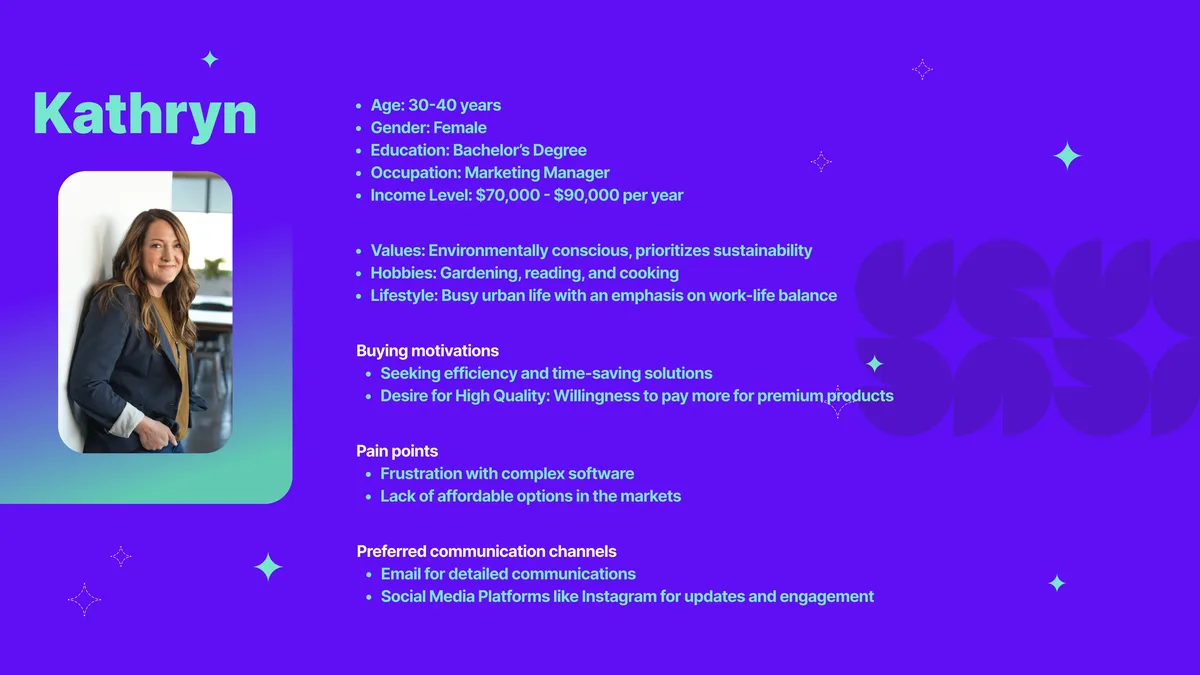
Seasonal personas are overlooked in most customer persona examples guides. Yet for many small businesses, timing is the entire purchase decision.
Example 9: the Research-Heavy Parent Buying for a Child
Here’s one of the more universal customer persona examples. A parent buying an educational product reads more reviews than anyone. The stakes feel personal and long-term.
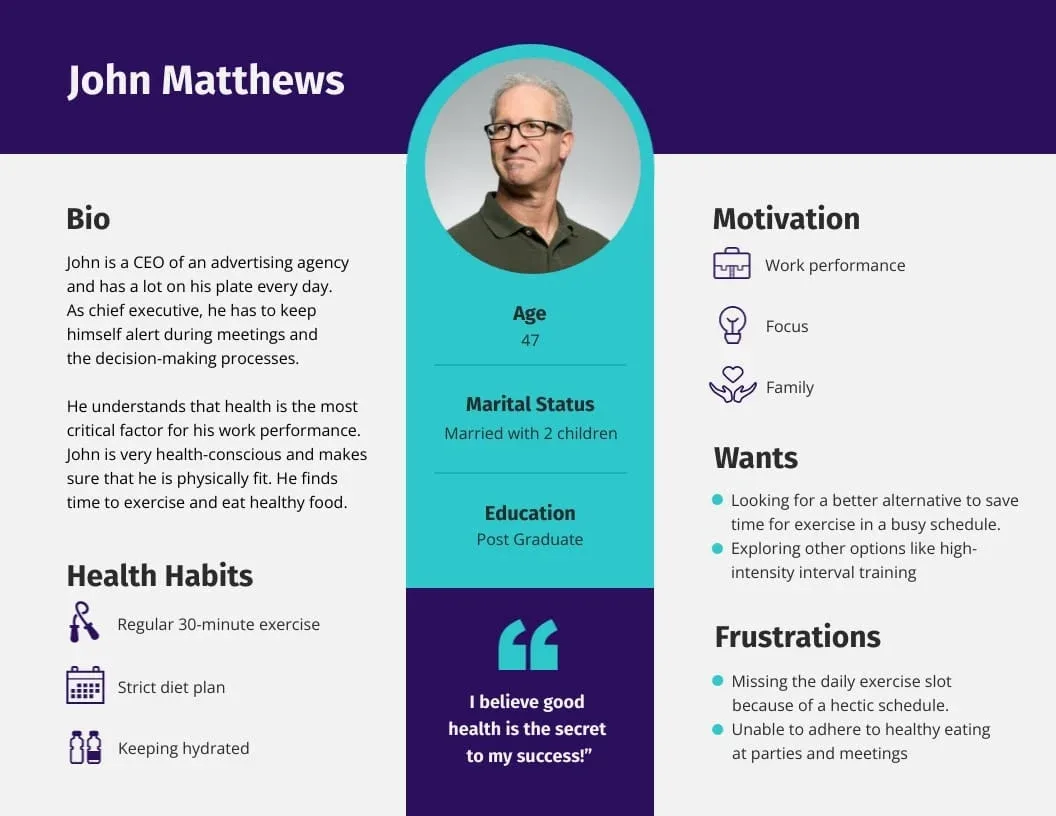
Her trigger is a school recommendation or a friend’s endorsement. Her objection is safety and screen-time guilt.
What won her over? A transparent breakdown of what the product does and doesn’t do, plus clearly stated time limits. The brand addressed guilt directly instead of denying it existed.
When a purchase touches identity, name the guilt and answer it. That’s the takeaway to steal from this example.
Example 10: the Budget Approval Buyer in the Public Sector
Buyers at schools, agencies, and municipalities move slowly for good reasons. Their trigger is an annual budget window. Their objection is procurement compliance.
A vendor that specialized in this market built its entire marketing around paperwork: templates, compliance docs, and a bidding checklist ready to download.
That strategy worked because it solved the buyer’s real bottleneck. Notice how many of these customer persona examples win not by being flashy, but by being useful at the boring parts.
Example 11: the Price-Sensitive Churn Risk
Some personas exist for retention instead of acquisition. Consider a subscriber who uses the product heavily but resents the price. Their trigger is a renewal email.
Their objection is “am I getting enough for this?” The company that kept them offered a usage summary proving value in numbers, sent two weeks before renewal.
That timing and that proof lowered churn noticeably. If you have subscription revenue, build a churn-risk persona and design messages around value reminders.
This sits alongside other hard-won customer persona examples tips: retention personas often pay better than acquisition personas because the math is immediate.
Example 12: the Community-Driven Early Adopter
The last example is the buyer who wants to be first and wants to be seen trying. Their trigger is a peer mentioning something new in a community they trust.
Their objection is being wrong in public. The company that won them seeded early access to a handful of well-known community members before any broad campaign.
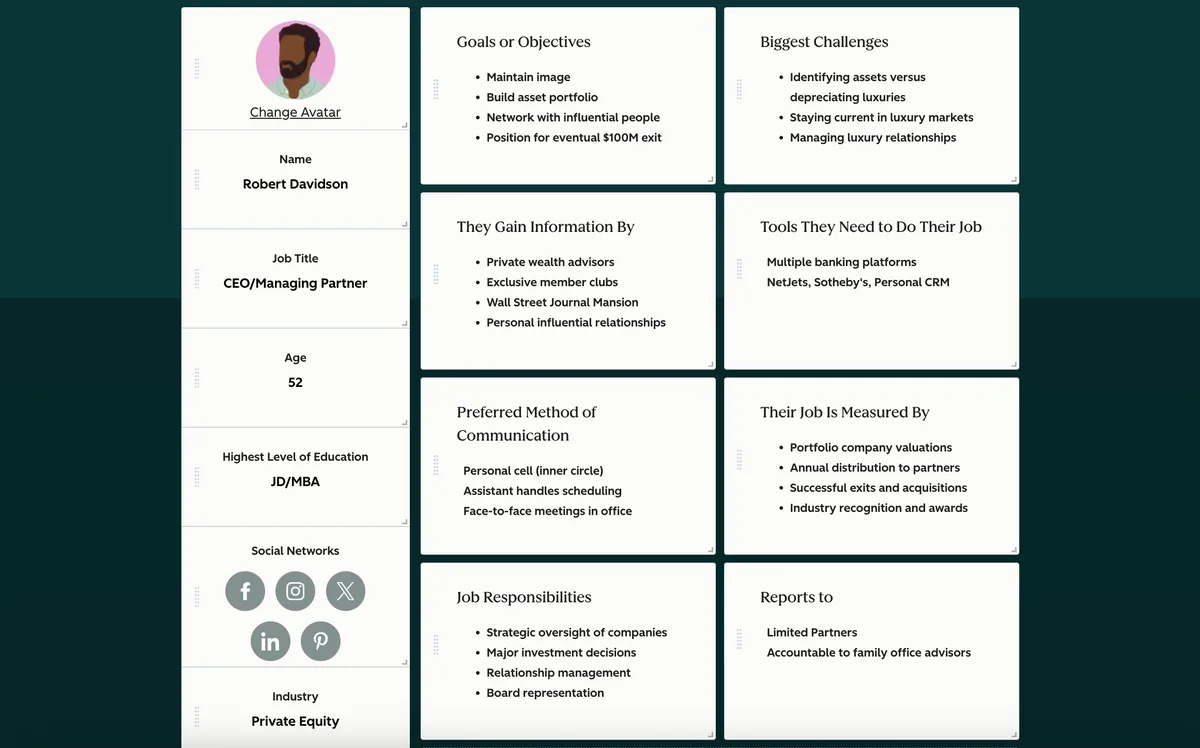
When the community felt the product belonged to them first, adoption accelerated. Build this persona if you sell anything with a visible identity.
That wraps the twelve. Each of these customer persona examples carries a different lesson, but the pattern is the same: specificity wins.
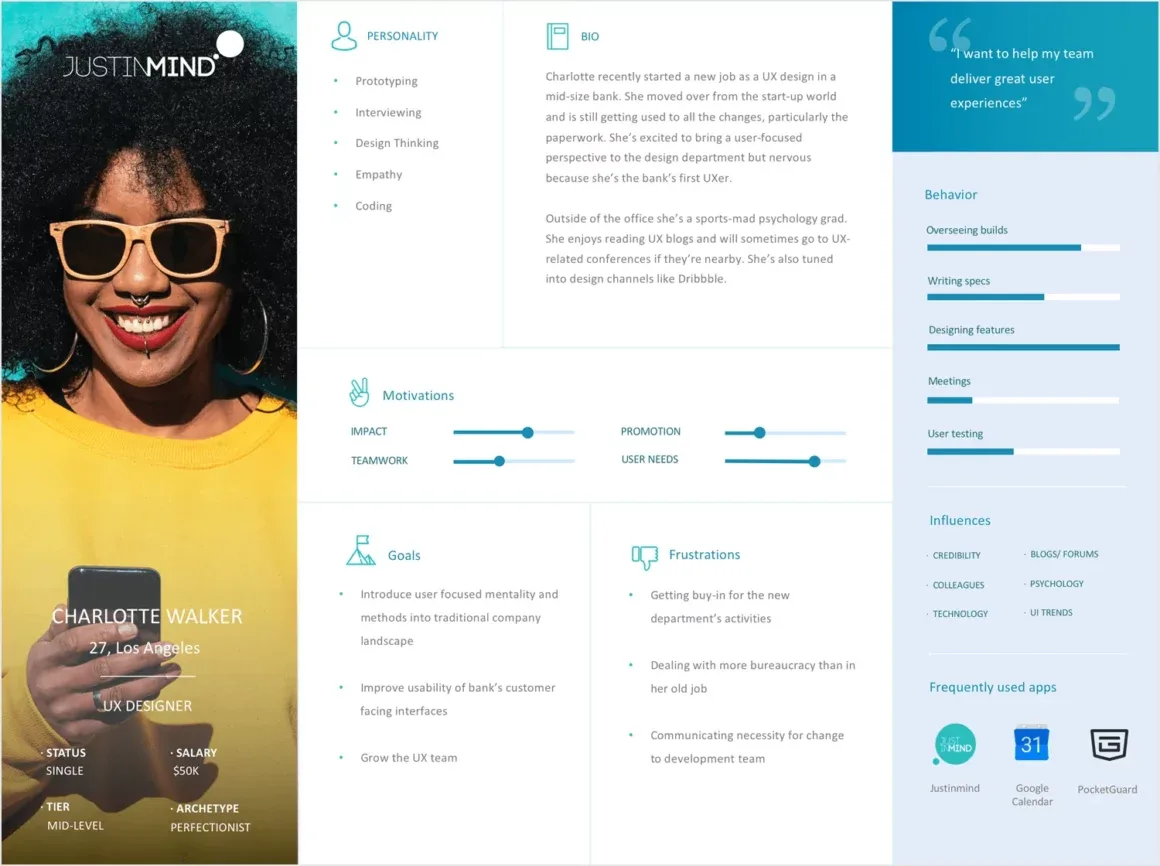
How to Turn Customer Persona Examples Into a Working Persona Document
Reading twelve examples doesn’t automatically give you a usable persona. You need to translate them into a document your team will actually open.
The customer persona examples checklist below is the practical bridge. It covers what to include, what to cut, and how to keep the persona alive after the workshop.
The Customer Persona Examples Checklist Every Team Needs
Start with behavior, not identity. Write down the trigger, the objection, and the channel before you write a name or a photo. Those three fields carry most of the value.
Next, add the exact words the buyer uses. Record a real quote from an interview or a sales call. Paraphrased personas lose their power because nobody recognizes the language.
Then tie the persona to a decision. Which page, which email, which sales script changes because of this persona? If nothing changes, the persona is decoration.
- Trigger moment: the event that sent them looking, written as one sentence.
- Core objection: the reason they hesitate, stated in their own words.
- Primary channel: where they actually pay attention, not where you wish they did.
- Real quote: a verbatim line from an interview or call.
- Decision it changes: the specific asset this persona shapes.
- Archetype: which buyer type from the table above they match.
- Success metric: how you’ll know the persona worked.
If your persona document has all seven, it’s ready. If it has a photo and a favorite brand but none of these, it’s not a persona yet.
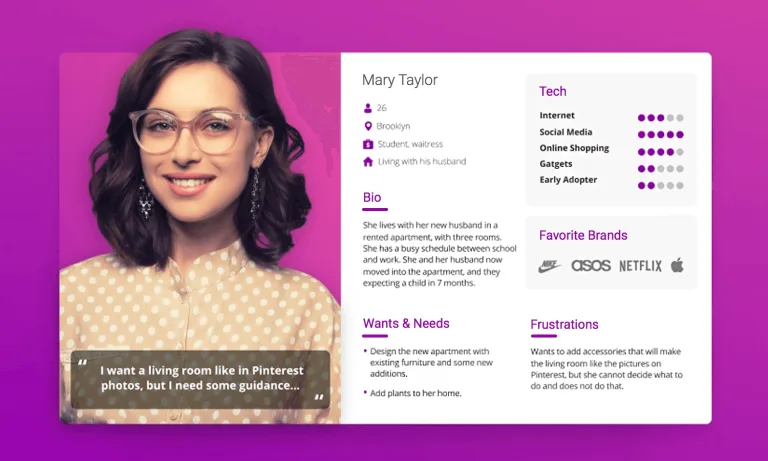
Most failed persona projects skip the decision field. That’s the single most common error I see, and it’s the easiest to fix.
Where to Find Real Data for Your Personas
You don’t need a research budget to build solid personas. You need conversations and a bit of curiosity.
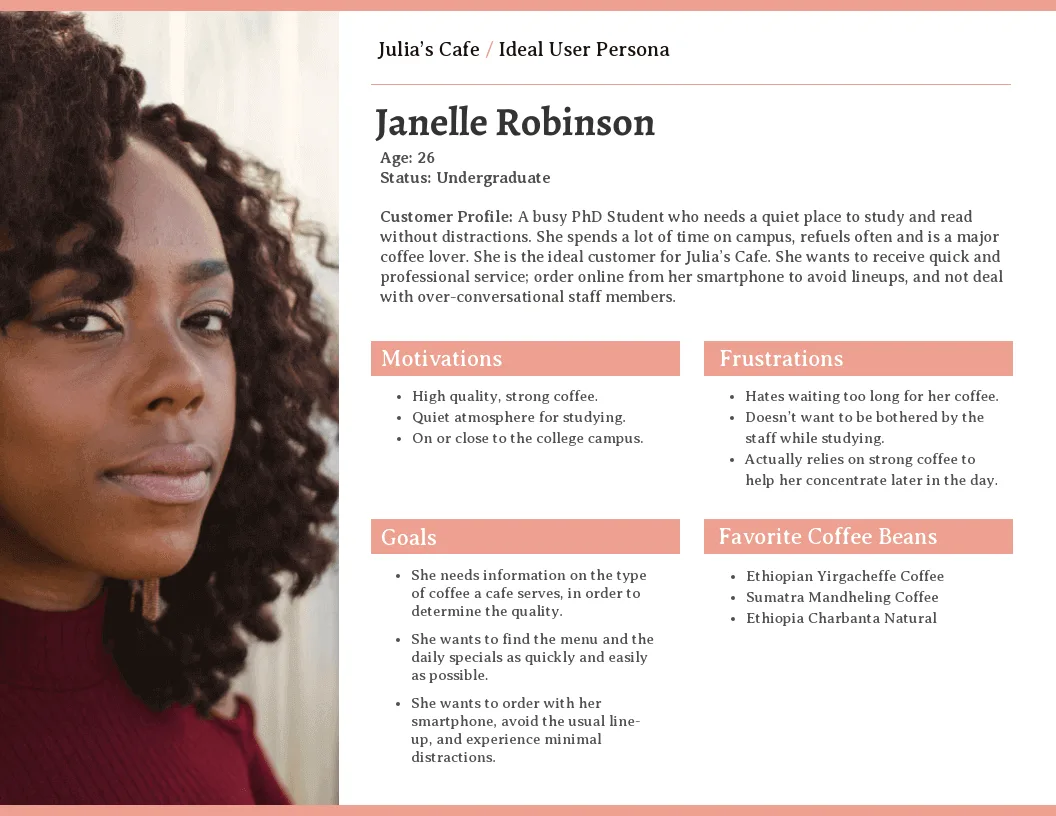
Start with your sales team. They hear objections daily and can list the top five reasons deals stall in under an hour. That list is persona gold.
Then read your support inbox. Complaints and questions reveal the words buyers use and the fears they carry. Nothing beats raw language from real customers.
Finally, mine reviews and community threads. Competitor reviews on independent sites often describe exactly why people switched. These are customer persona examples handed to you for free.
Three sources give you enough to draft a first persona. Don’t wait for a perfect research study. Iterate as you learn.
How to Keep Personas Alive After the Workshop
Personas die in shared drives. To keep yours working, tie them to recurring rituals your team already does.
Put the persona name on your content briefs. Reference the objection in your ad copy reviews. Ask about the trigger in your monthly campaign retro.
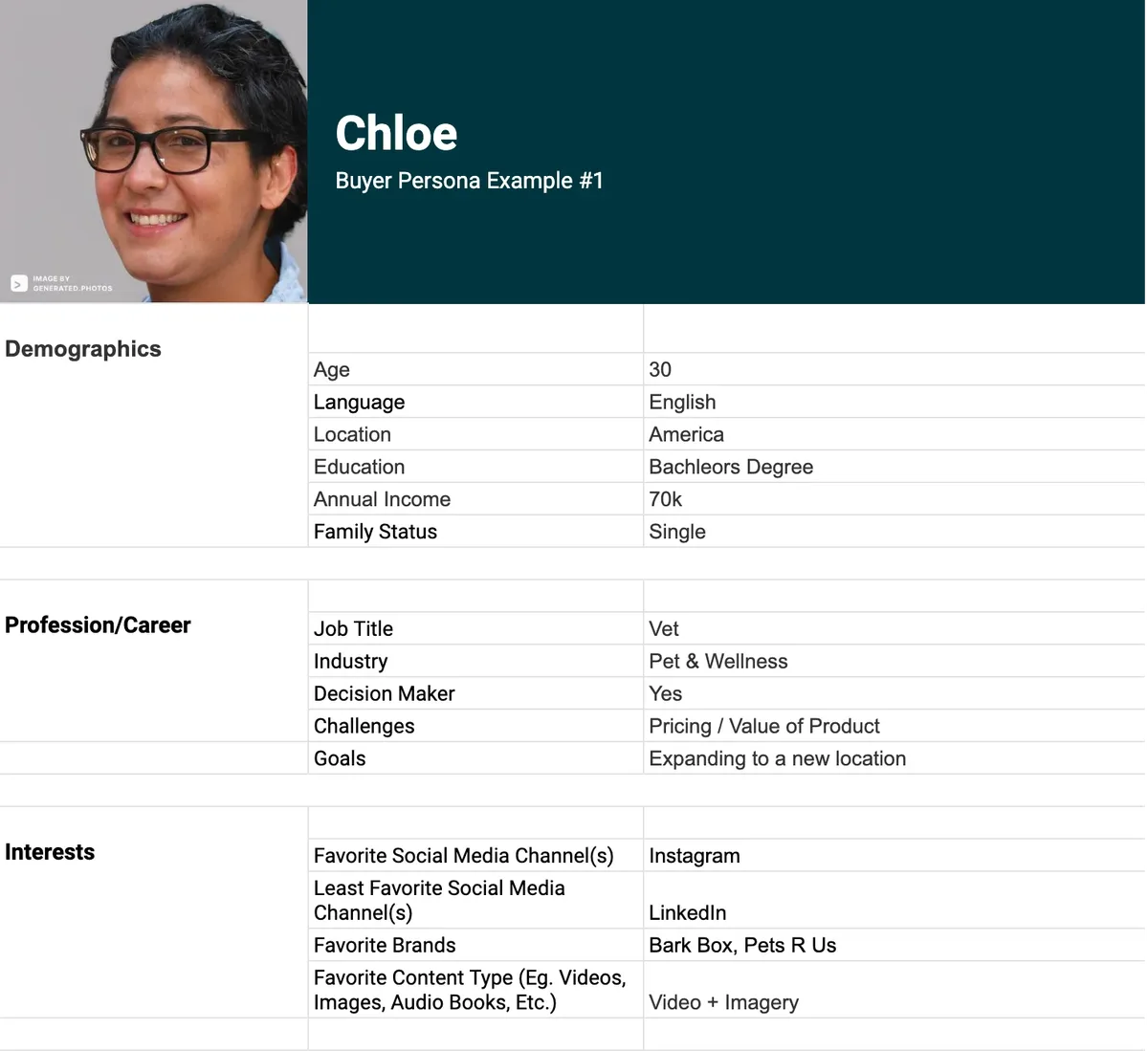
When a persona is invoked in routine decisions, it survives. When it’s only referenced during an annual planning session, it fades.
The customer persona examples best practices in this article all depend on this one habit: use the persona weekly or lose it.
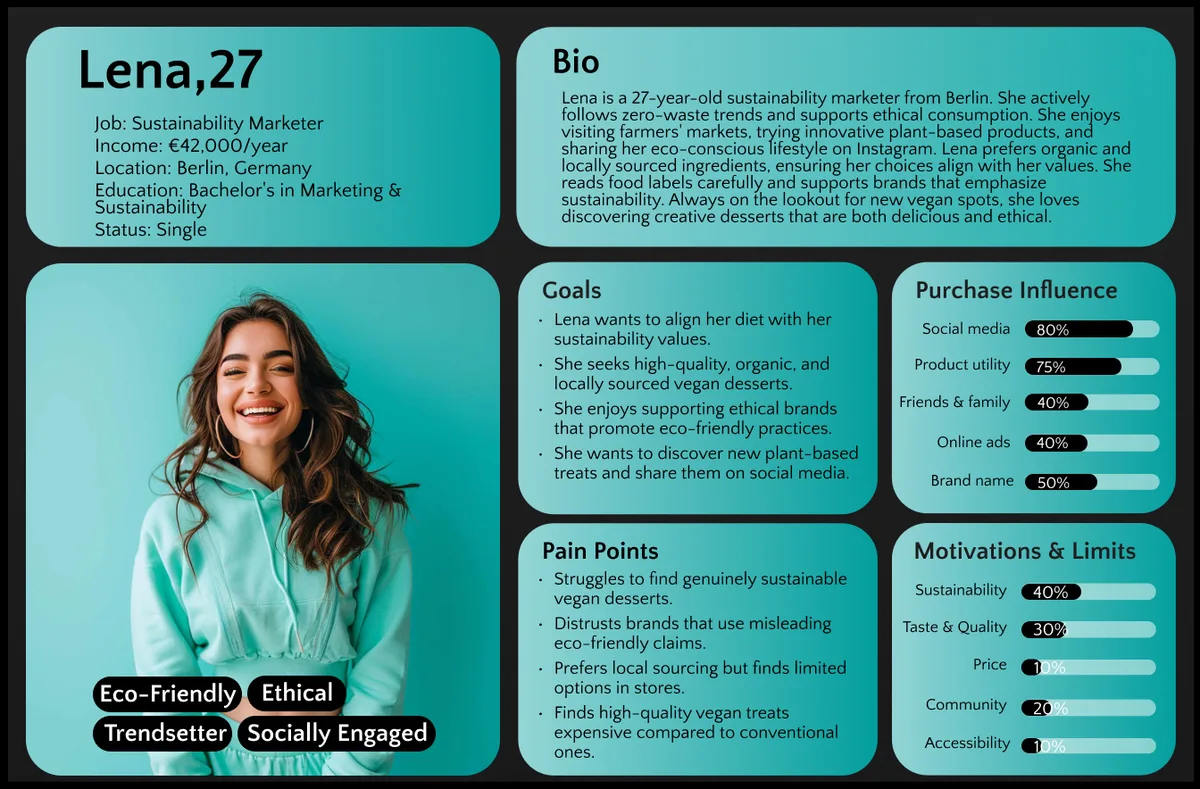
Common Mistakes That Sink Customer Persona Examples
Even good examples get ruined in execution. The failures below are the ones I see most often, and each is fixable with a small adjustment.
Mistake 1: Building Personas from Demographics Only
Age, location, and income tell you who someone is, not how they buy. Two 40-year-olds in the same city can have opposite buying behavior.
The fix is simple: add behavior fields. Trigger, objection, and channel beat demographic detail every time.
Demographics still have uses, mainly for media buying and reporting. But they should never be the core of the persona.
Mistake 2: Creating Too Many Personas
Some teams end up with nine personas and use none. Every persona competes for attention, and attention is scarce.
Start with two or three. One primary buyer, one approver, and one retention persona cover most businesses. Add more only when a real decision requires it.
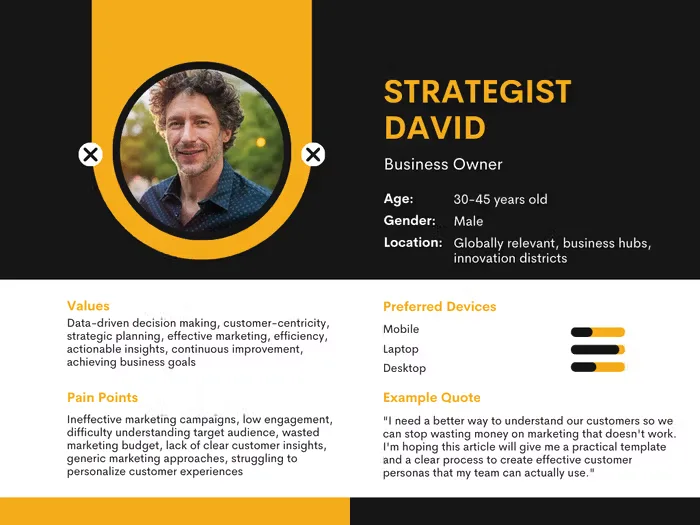
Fewer personas, used well, beat a sprawling catalog. That’s a hard-won lesson from watching these customer persona examples get applied in the field.
Mistake 3: Ignoring the Objection
A persona without an objection is a fan profile. Real buyers hesitate, and the hesitation is where your copy earns its keep.
Write the objection down verbatim. Then write one line of copy that answers it. That single exercise improves more campaigns than most rebrands.
Mistake 4: Treating Personas as Static Documents
Buyer behavior shifts as markets mature and competitors change. A persona written three years ago may describe a buyer who no longer exists.
Schedule a refresh. Review your personas each time a major product change ships or a competitor makes a move. Small, regular updates prevent big drift.
Revisit the customer persona examples you based your persona on, too. If the marketplace around them changed, your adaptation should change with it.
Mistake 5: Skipping Stakeholder Buy-In
A persona built in isolation and dropped on a team tends to get ignored. The fix is building it with the people who’ll use it.
Run a short workshop with sales, support, and marketing. When people help write the persona, they defend it later.
That social element matters more than most customer persona examples tips admit. Buy-in is part of the design, not an afterthought.
Adapting Customer Persona Examples to Your Own Market
Copying a persona verbatim rarely works because every market has its own triggers. But the structure travels well if you adapt it thoughtfully.
The customer persona examples guide below gives you a translation method. Start with the archetype, then localize the specifics.
A Step-by-Step Adaptation Method
Begin by choosing the closest archetype from the table earlier. If your buyer hesitates on risk, find the risk-averse examples and borrow their message structure.
Then swap in your market’s trigger. A logistics manager’s trigger is a missed shipment. A dentist’s trigger might be a no-show patient. Same structure, different detail.
After that, rewrite the objection in your buyer’s voice. If you don’t know the exact phrasing, run three quick customer calls and listen for the hesitation.
Finally, name the channel. Personas that don’t specify where the buyer spends attention tend to produce generic campaigns.
This method lets you borrow from any of the twelve this approach above without copying them literally. The pattern transfers; the surface detail doesn’t.
What to Keep and What to Change
Keep the structure: trigger, objection, channel, quote, decision. That framework has proven itself across industries.
Change the detail: the specific trigger event, the exact words, the relevant channel, the proof that matters.
Most people over-index on surface detail and ignore structure. That’s backwards. The structure is what makes these this practice reusable across markets.
Testing Your Adapted Persona
You don’t need a large budget to test. Run a small paid campaign with two versions: one written to the persona, one written to a general audience.
Compare not just conversion but the quality of response. A persona-driven campaign often brings better-qualified leads even at similar conversion rates.
If the persona version performs worse, revisit the objection. A guessed objection is the most common reason adaptation fails.
Test, adjust, test again. The best-applied this practice always went through at least two rounds before settling.
Frequently Asked Questions About Customer Persona Examples
These are the questions that show up most often when teams sit down to build personas. Short answers here, with pointers to the examples above.
How Many Customer Persona Examples Do I Need?
Two or three active personas usually suffice. One primary buyer, one approver, and one retention persona cover most needs.
More than that tends to dilute attention. Add a new persona only when a real decision demands it.
What Should the First Section of a Persona Contain?
Lead with the trigger. The event that sent the buyer looking is the most useful single fact in the document.
Follow it with the objection, then the channel. Demographic detail can come later or be dropped entirely.
Can I Use These Customer Persona Examples for B2C and B2B?
Yes. The structure is the same: trigger, objection, channel, quote, decision. Only the specifics change.
B2B buyers usually have more gatekeepers, so you may need extra personas for the approver and the champion. The behavioral logic stays identical.
How Often Should Personas be Updated?
Review them whenever a major product or market change occurs. At minimum, revisit once a year.
If a persona goes stale, the this approach you based it on may have shifted too. Check both.
Do I Need Expensive Research Tools to Build Personas?
No. Sales call notes, support tickets, reviews, and a handful of customer conversations give you enough to start.
Money helps at scale, but clarity comes from listening. Most of the this approach in this piece were built on conversations, not paid panels.
What if My Team Ignores the Persona Document?
Usually the persona lacks a decision hook. Rewrite it so each field points to a specific asset: a page, an email, a script.
Then reference it in recurring meetings. Personas survive through routine use, not through better design.
Bringing Customer Persona Examples Into Daily Work
Personas become real when they change what you ship. That means referencing them in briefs, ad reviews, and sales scripts, not just at planning time.
Pick one persona from this article and adapt it this week. Draft the trigger, the objection, and the channel. Then use it in your next piece of copy.
The full set of this practice here is meant to be a toolkit, not a museum. Borrow what fits, discard what doesn’t, and keep testing.
One last reminder: the value of a persona lives in the decision it changes. Everything else is bookkeeping.
If you take nothing else from these customer persona examples, take this: specificity beats polish. A rough persona with a real quote and a real objection will outperform a beautiful one that describes nobody.
For verified reference and background research, consult the authoritative informational resource on this topic.