Why the AIDA Model Still Earns Its Place in Your Marketing Stack
The aida model remains one of the most practical frameworks for turning cold attention into completed purchases, and these 11 powerful tips will show you exactly how to squeeze better results out of it. It has survived shifting platforms, shrinking attention spans, and the slow death of the one-way sales pitch.
Here is the honest reason it endures: it mirrors how people actually make decisions. Attention comes first. Interest follows. Desire builds. Action closes. Anyone who has sold anything—a product, a service, a subscription, a career—recognizes that rhythm.
This article is a working guide, not a history lesson. You will get an aida model guide built from practical field experience, a breakdown of common failure points, and a reusable aida model checklist you can run against any campaign. Think of it as a campaign mirror you can hold up to your own marketing.
If you run email sequences, landing pages, paid social, or sales decks, everything below is meant to be applied within the same afternoon. No fluff. No abstract theory. Just tested moves that push prospects forwar and keep them moving forward.
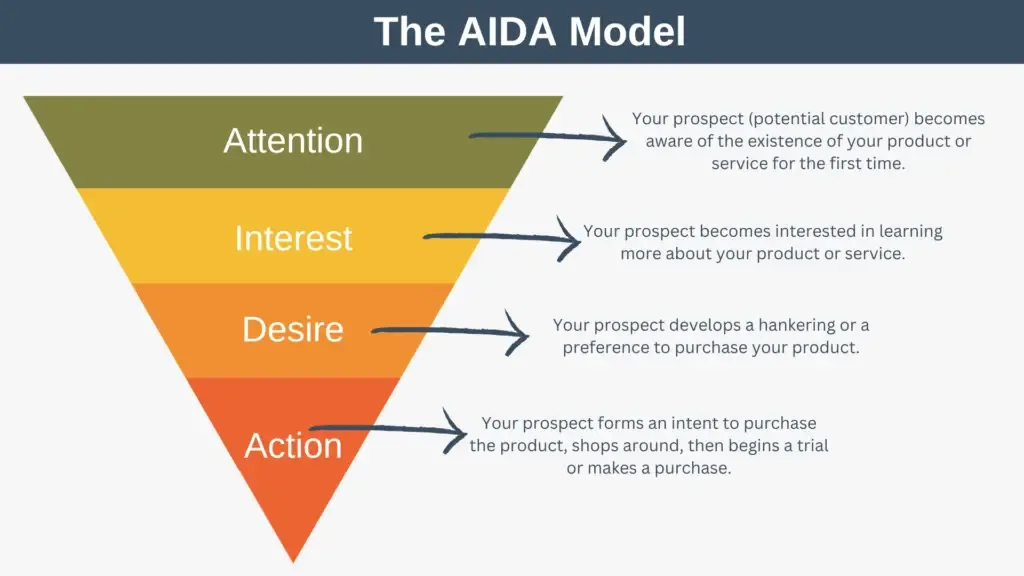
What is the AIDA Model and Why It Still Works
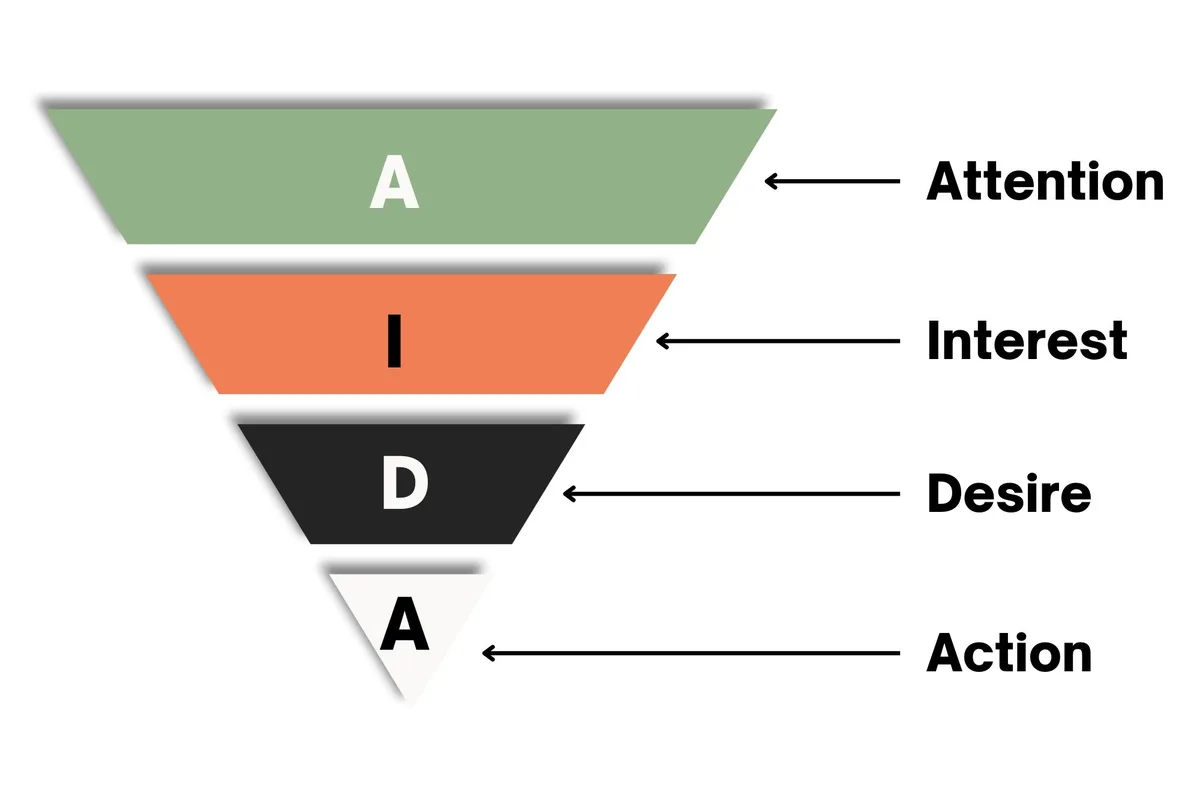
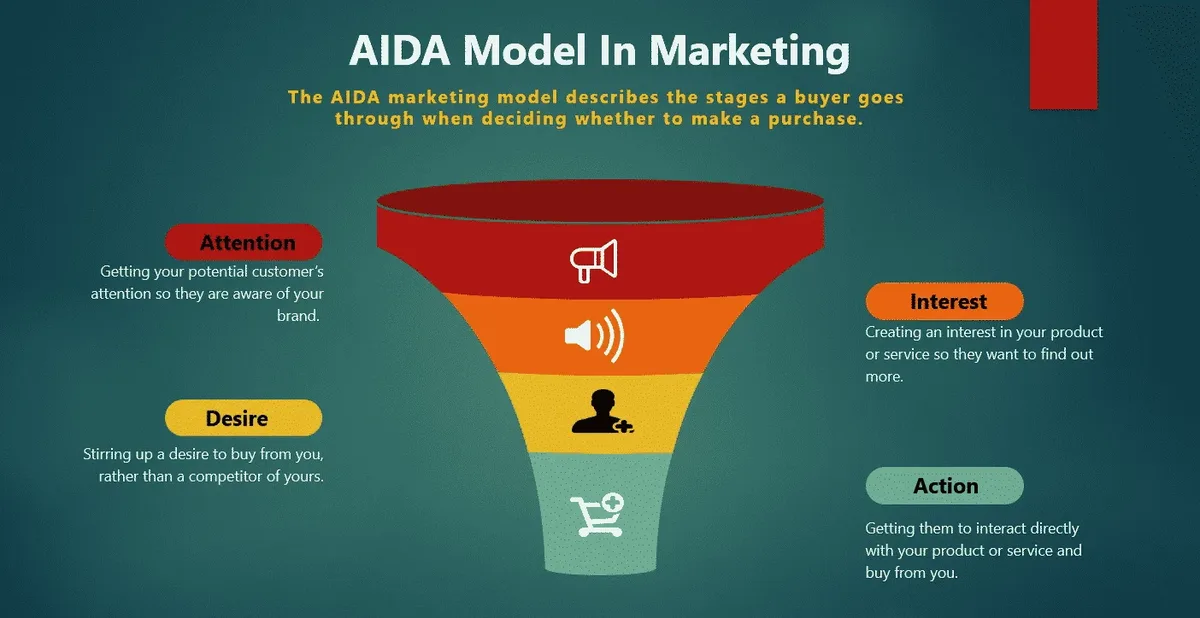
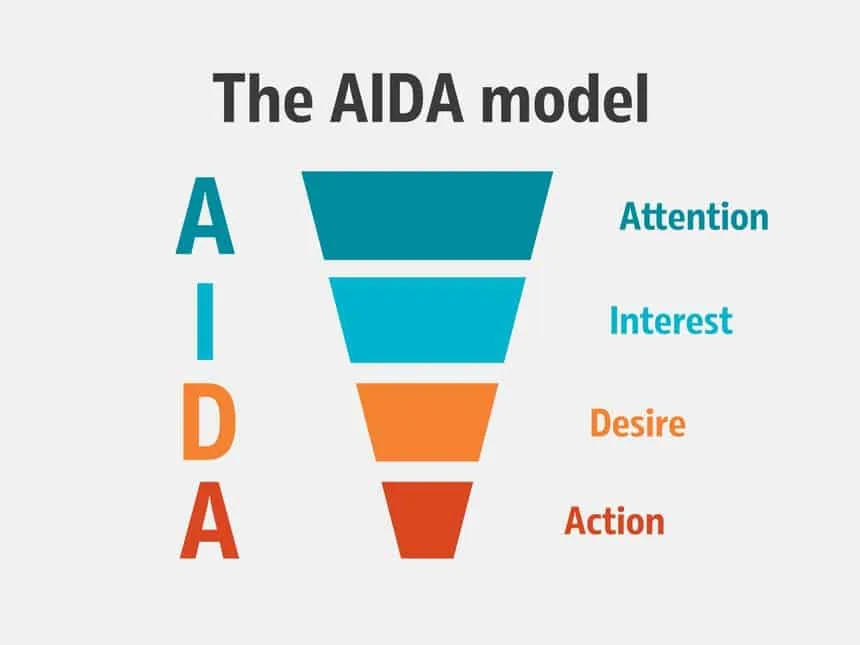
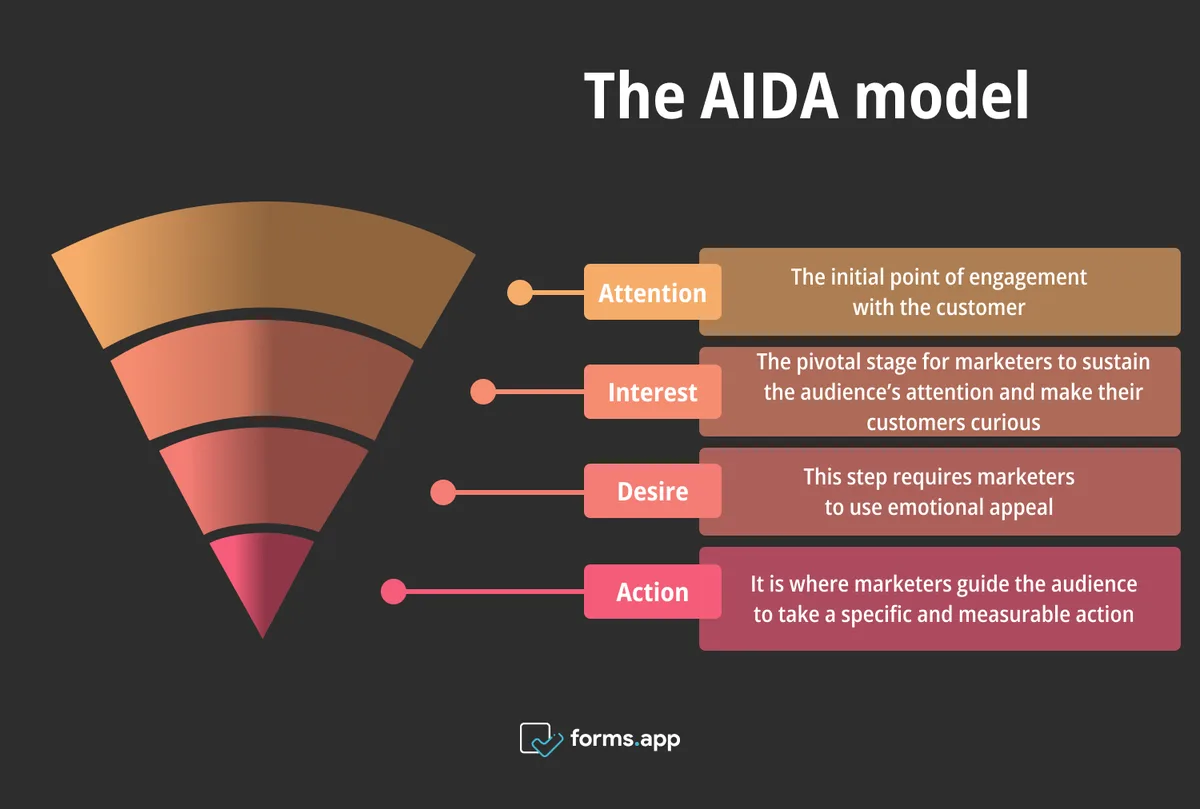
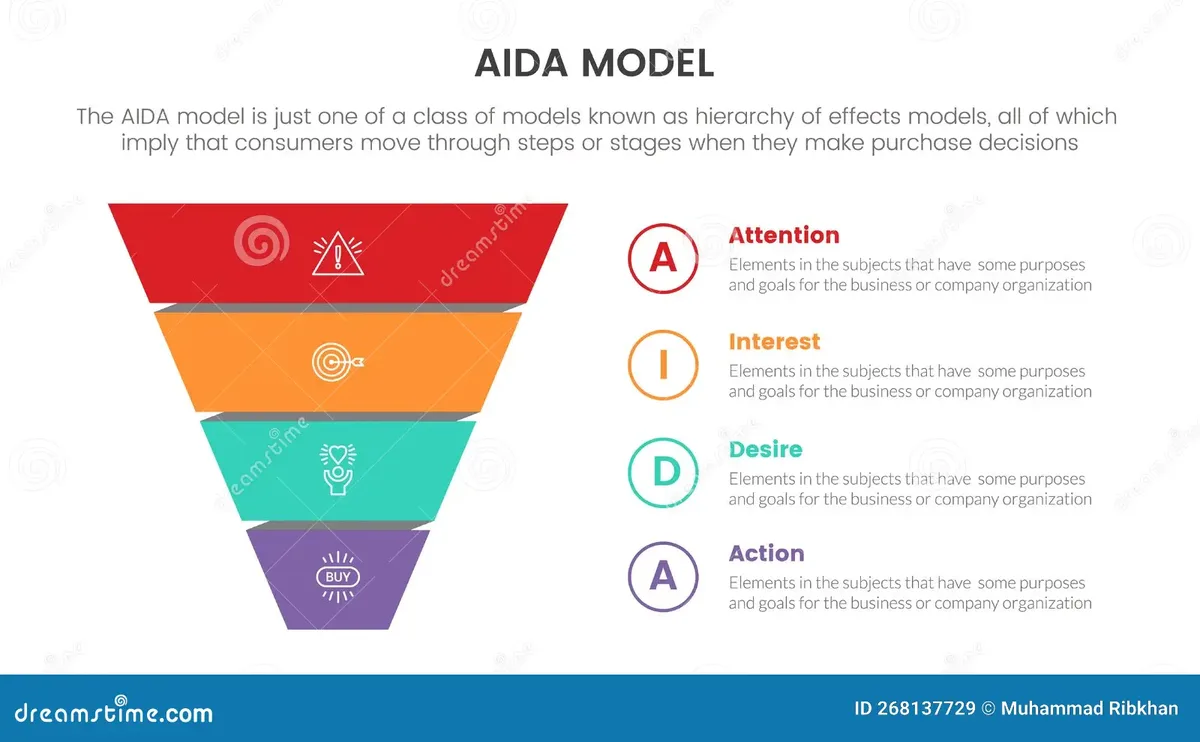
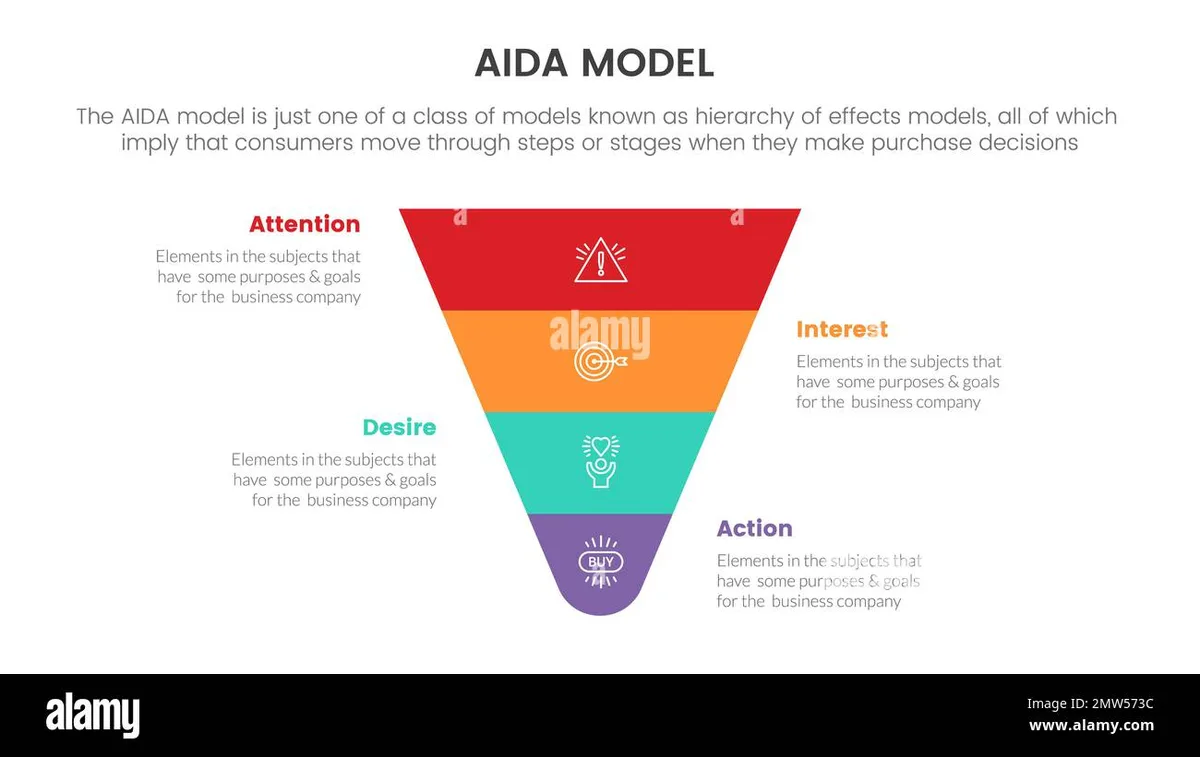
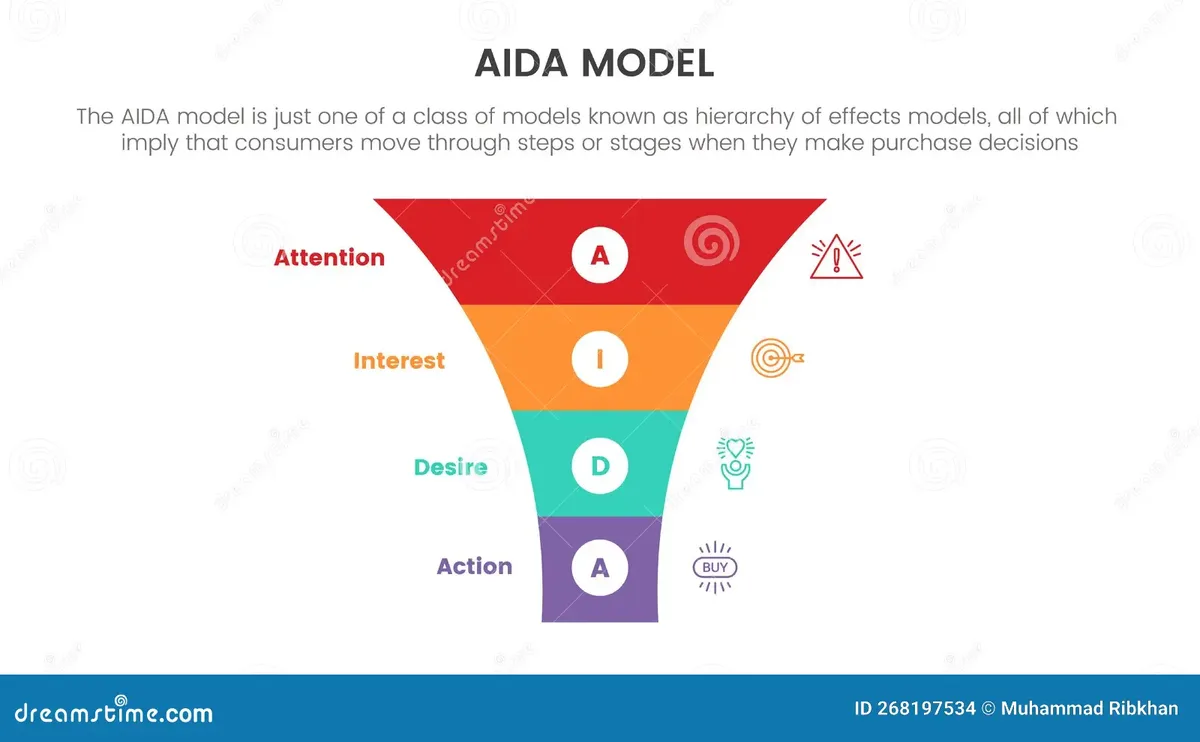
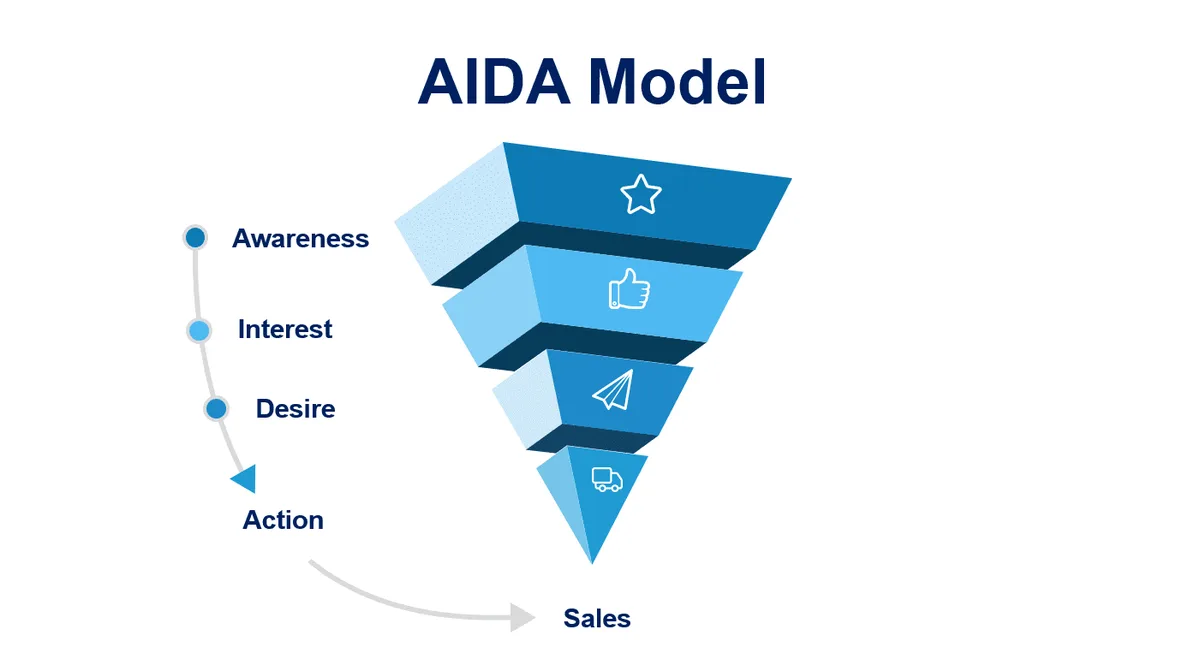
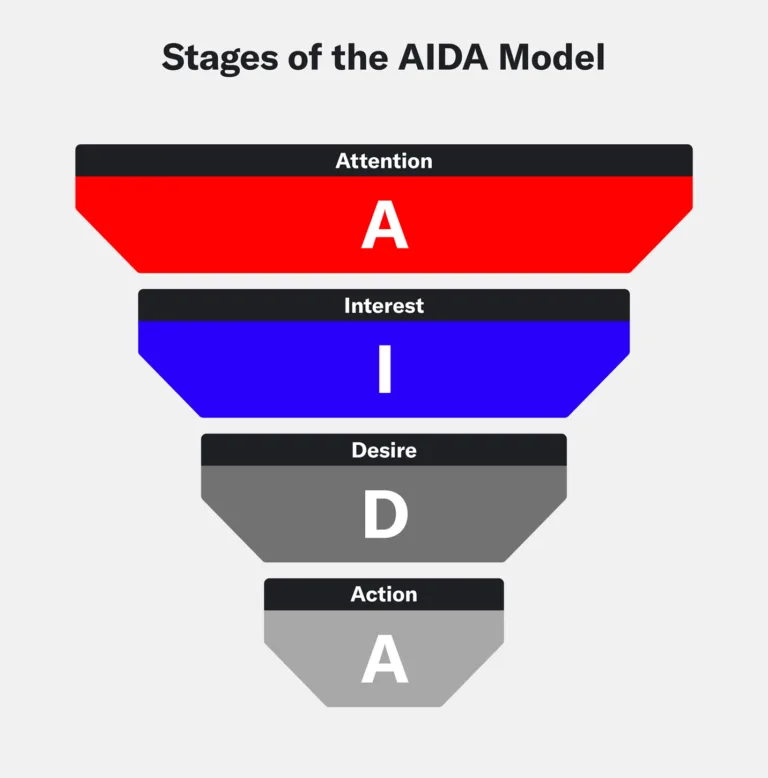
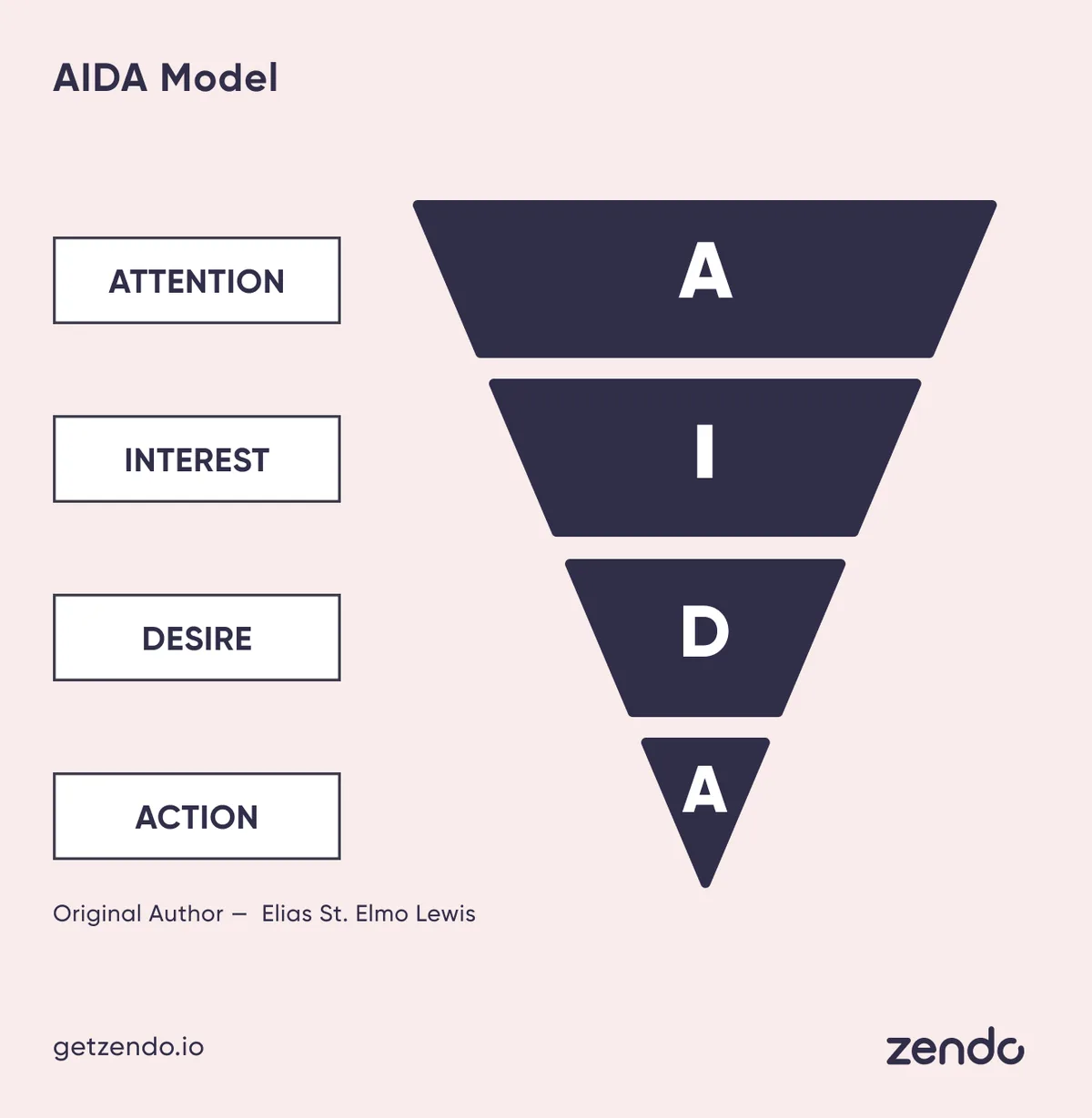
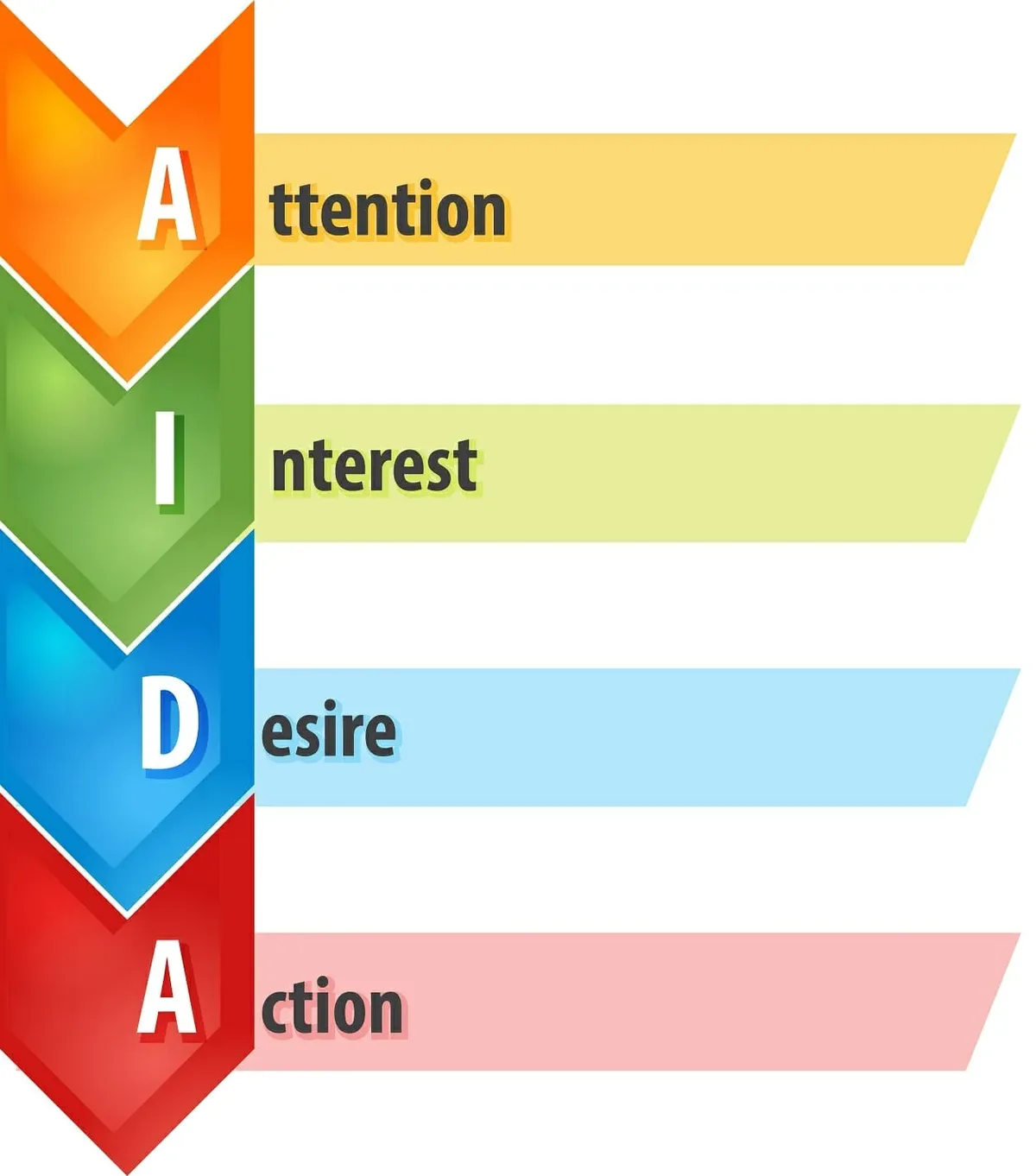
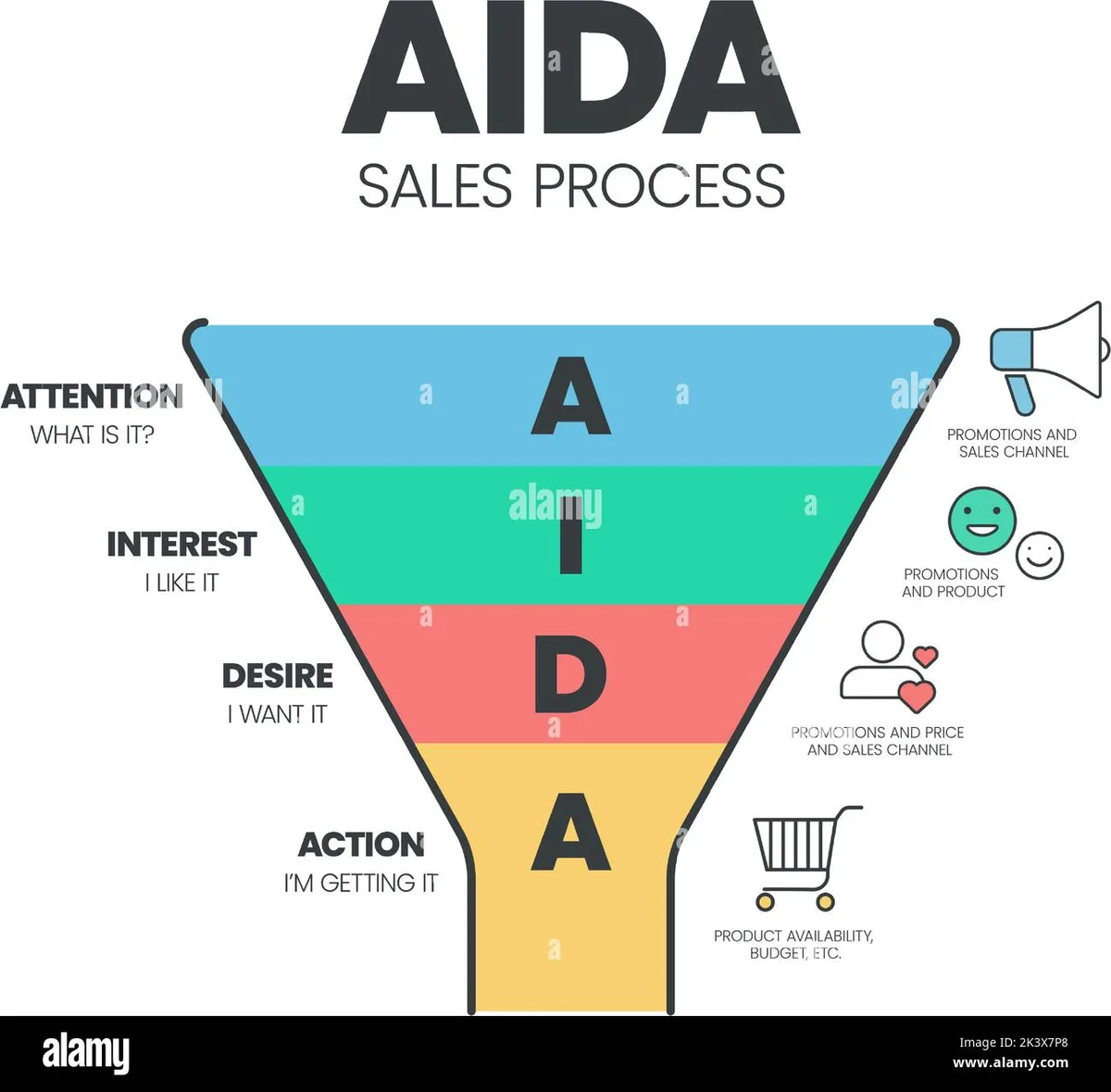
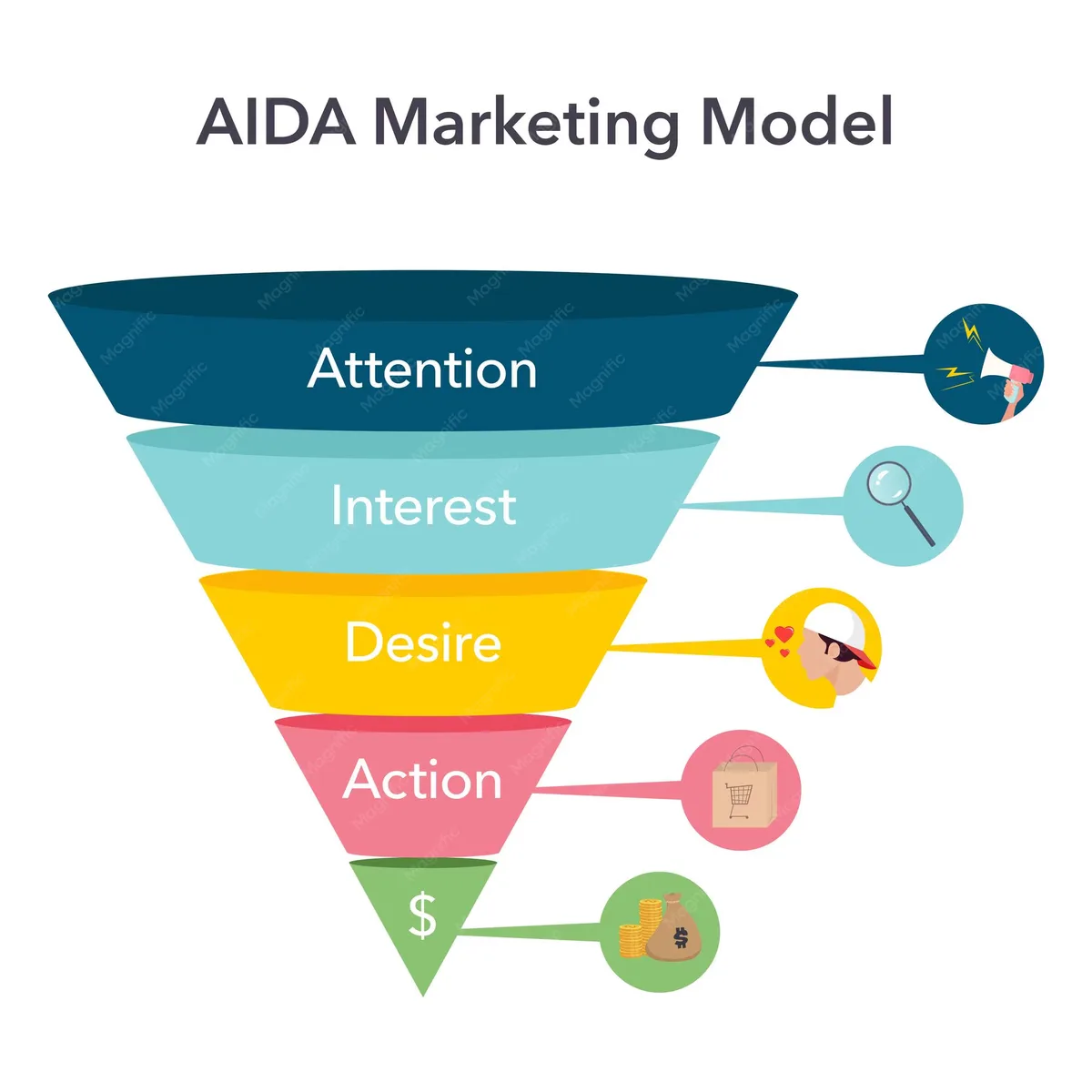
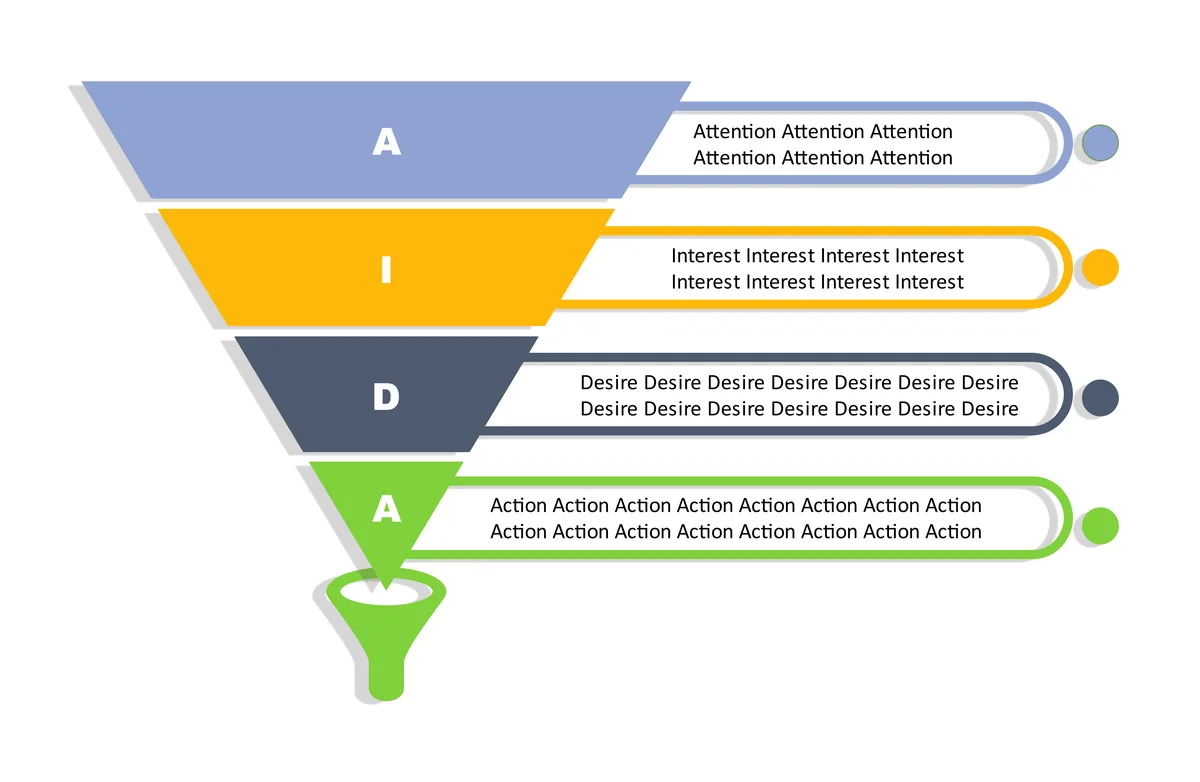
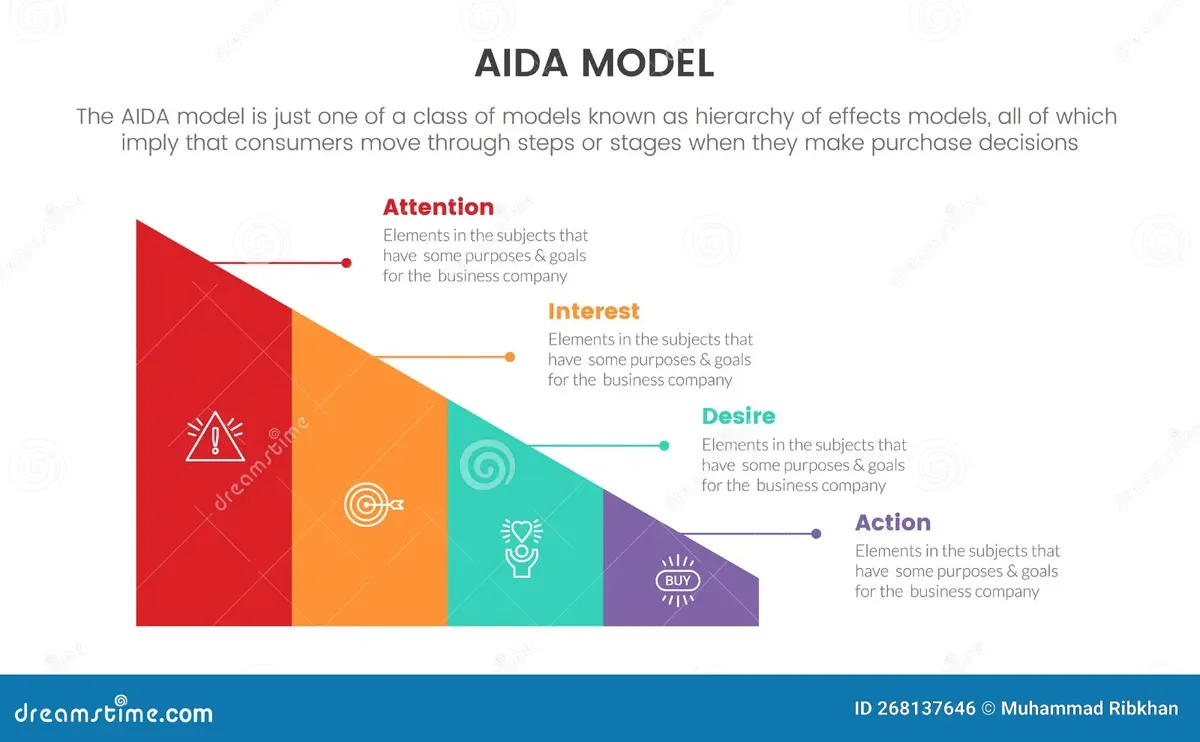
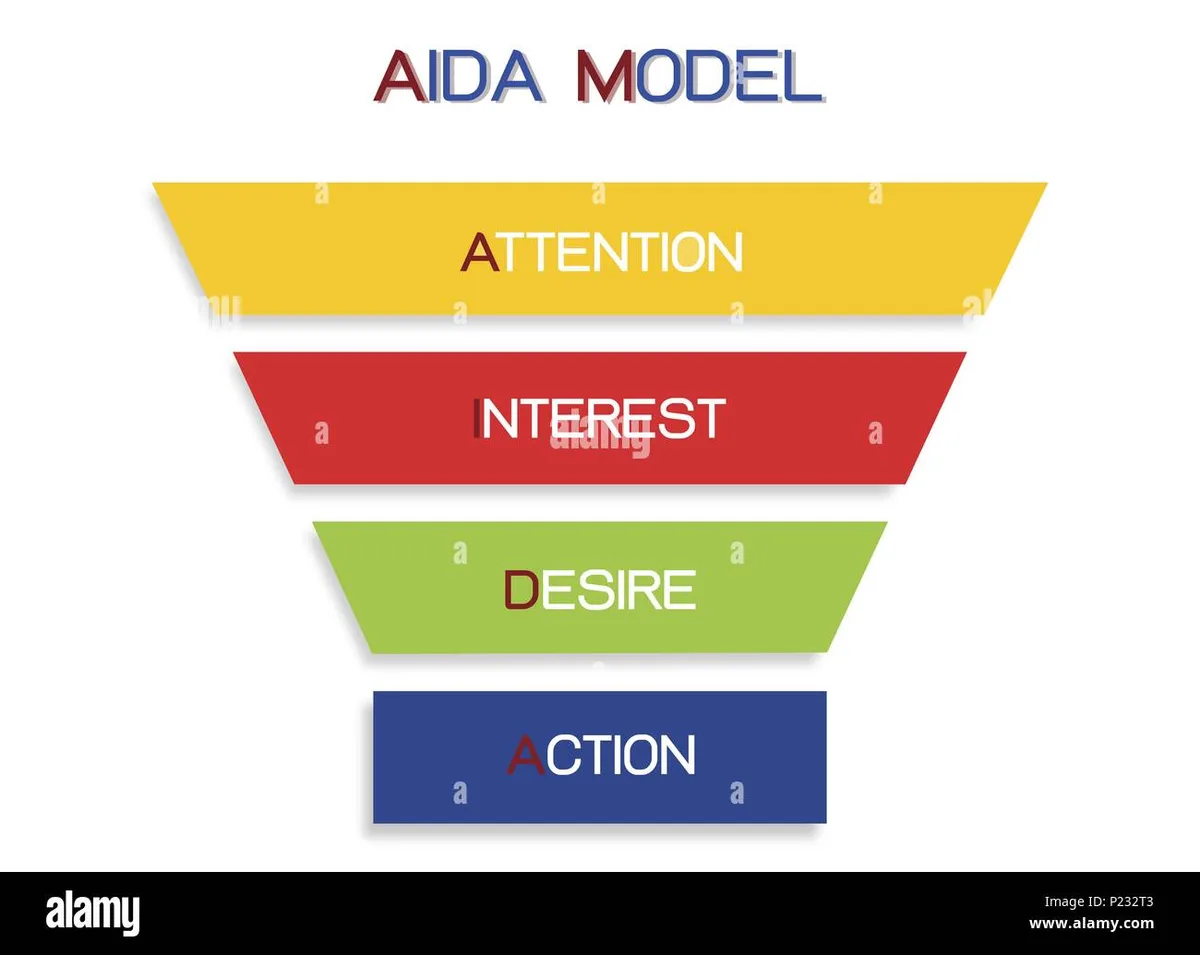
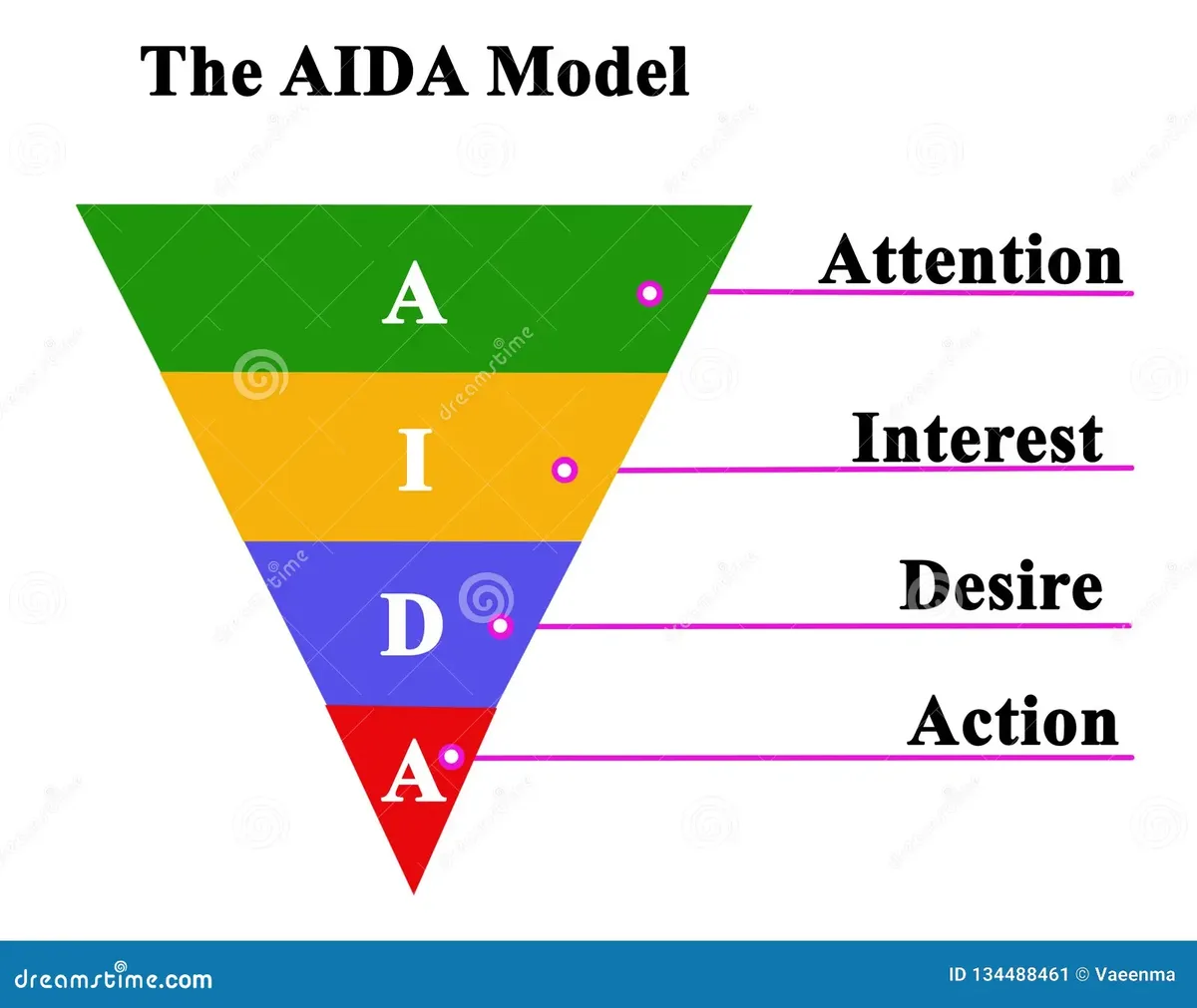
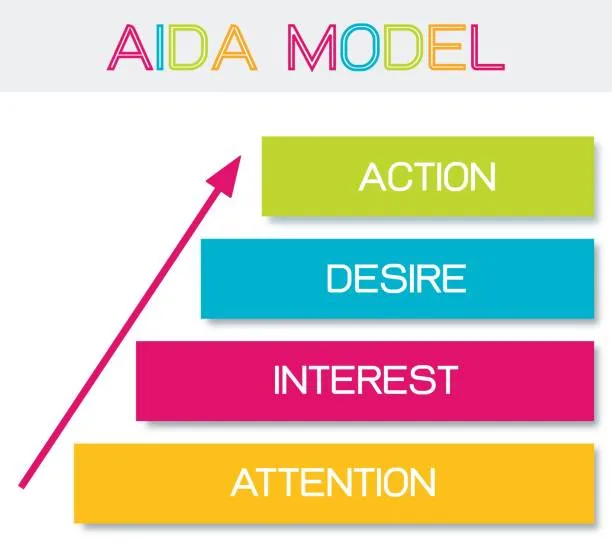
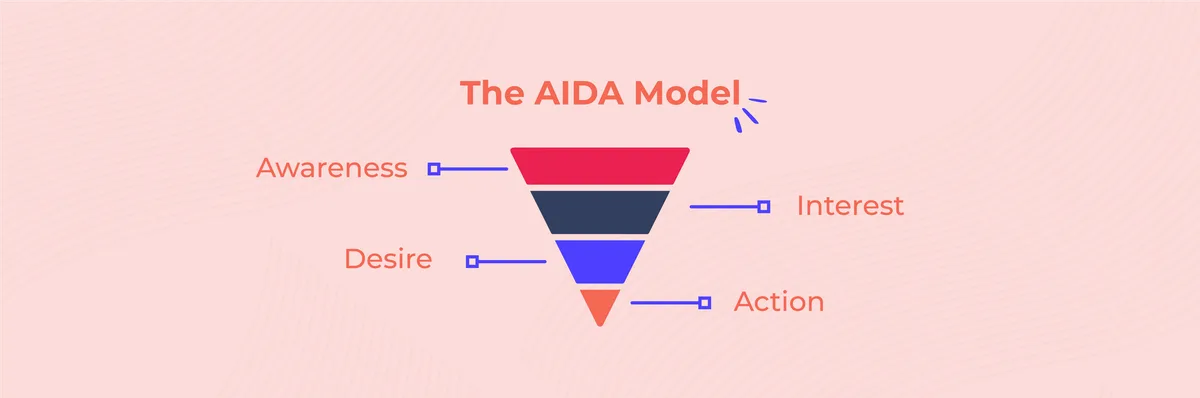
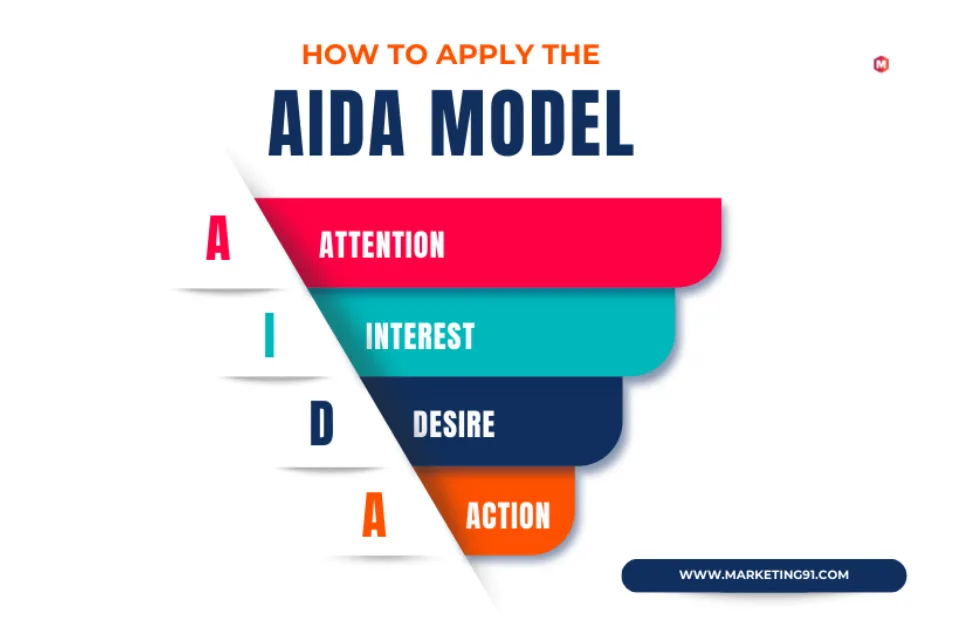
At its core, the aida model is a four-stage progression: Attention, Interest, Desire, Action. Each stage asks something different of your message. Confuse them and your funnel leaks. Sequence them well and conversion becomes a predictable outcome rather than a lucky accident.
Attention is the front door. If nobody stops scrolling, nothing else in the article matters. Interest is the turn of the head—the moment someone thinks, “Tell me more.” Desire is where emotion pairs with logic. Action is the nudge that removes friction and invites the decision.
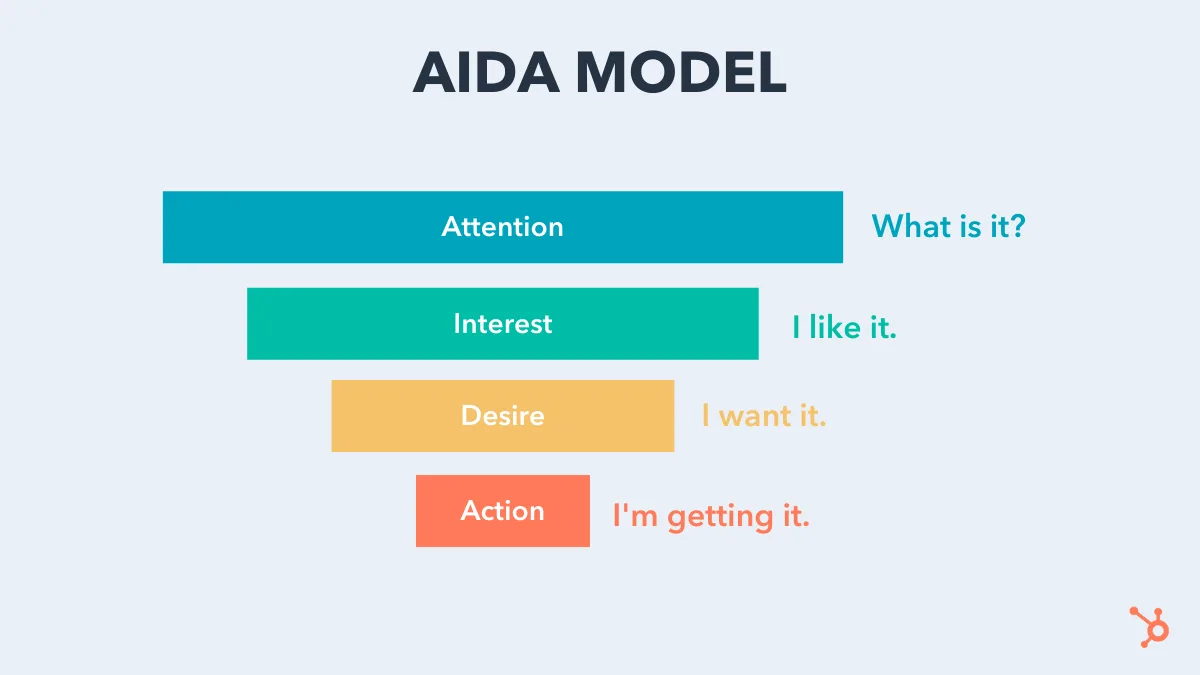
The framework’s long life comes down to one thing: cognitive honesty. It does not pretend buyers leap from stranger to customer in a single step. It gives you four checkpoints to test against, which is exactly why it fits both a cold ad and a warm email follow-up.
Where the Framework Came from and Why That Detail Matters
Advertising pioneer Elias St. Elmo Lewis outlined this sequence in the late nineteenth century. It was built for print and salesmen, yet it translates almost unchanged into modern digital marketing because human purchase psychology has not moved as fast as the technology around it.
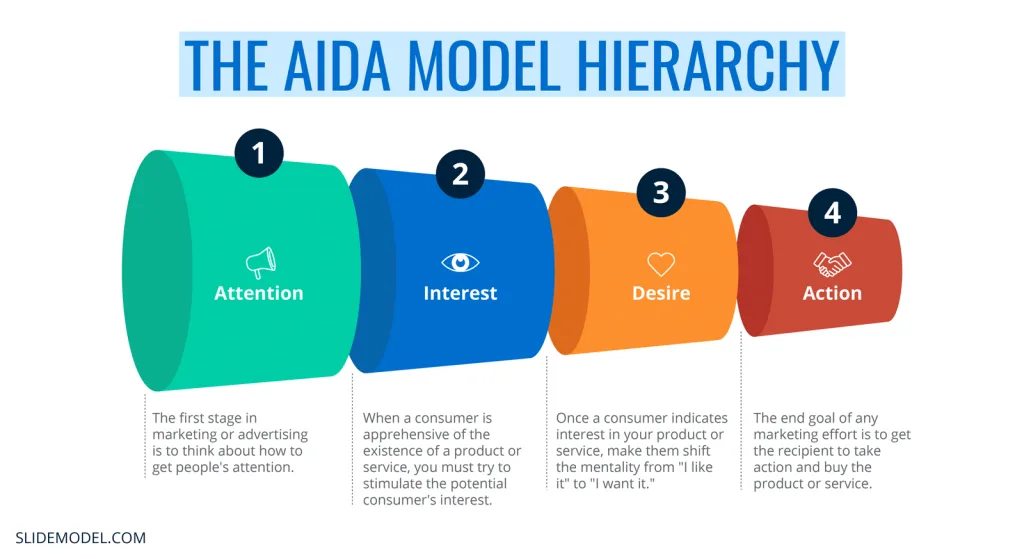
That provenance helps explain why it holds up so broadly. It is a model of cognition, not of media. When you map it against a paid social ad, an onboarding email, or a long-form sales letter, the four stages show up every time.
How the Stages Work Together as One System
Picture the aida model as a conveyor belt rather than a checklist. A person who only sees your ad gets the attention stage and nothing else. A person who reads the ad, clicks, and lands on a page with a compelling opener gets attention and interest.
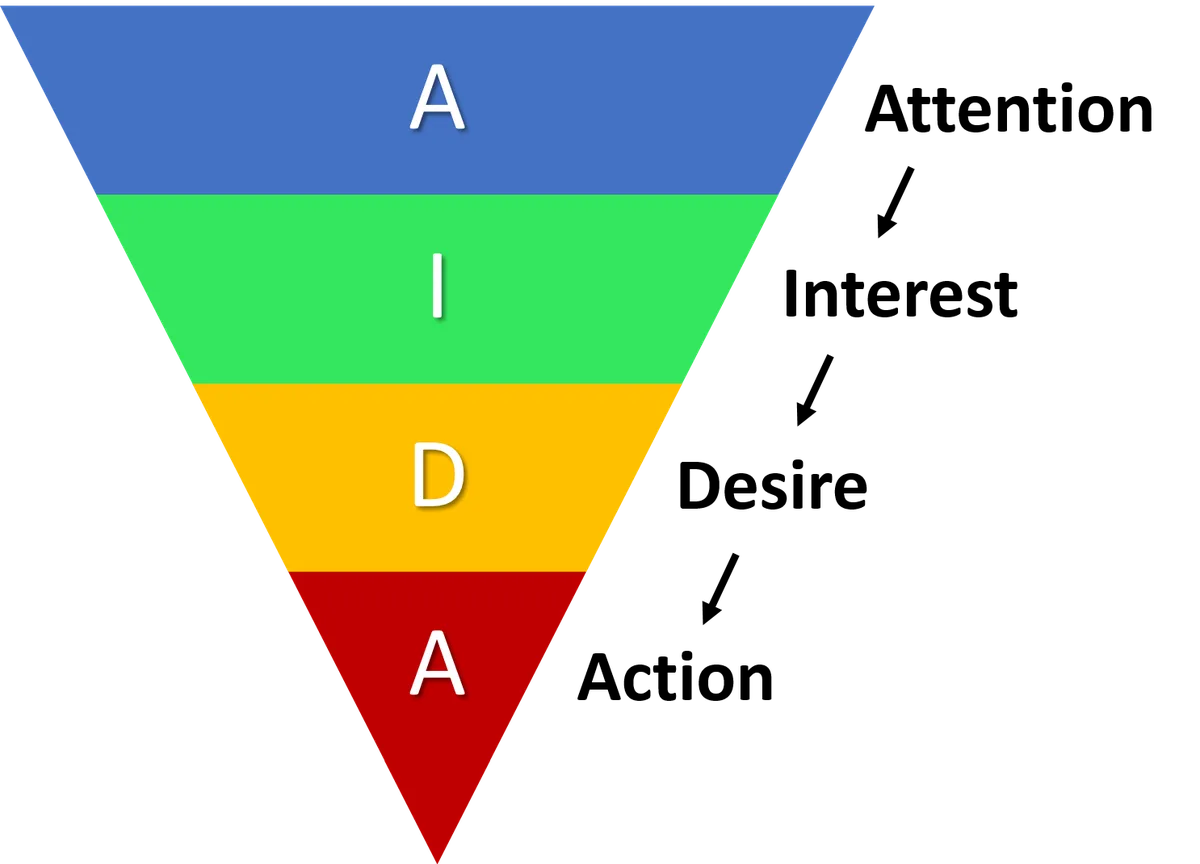
Desire and action then build through deeper content—proof, comparison, FAQs, guarantees. Skip a stage and the belt stutters. The most common leak in digital funnels is a missing desire stage, where marketers jump from “here it is” straight to “buy now” and wonder why nobody moves.
Why the AIDA Model Beats Channel-Specific Tactics
Channel tactics change monthly. The aida model does not. If you optimize for the framework first and the channel second, your campaigns outlive whichever platform is trending.
Take email. A good subject line wins attention. A short opener earns interest. A customer story or benefit stack builds desire. One clear call to action closes. Swap in SMS or paid social and the structure holds.
That portability is the practical argument for treating the aida model as a campaign blueprint rather than one of many competing formulas. It keeps the strategy stable while the tactics underneath it flex.
Your AIDA Model Checklist Before You Build Anything
Before writing, designing, or spending on ads, walk through this aida model checklist. It takes about ten minutes and saves days of rework. I run it myself before every campaign, and the number of weak hooks and vague CTAs it has caught still surprises me.
Each line below is a pass/fail question. Be honest. If a line fails, fix it before moving forward.
The Nine-Point AIDA Model Checklist
- Is There A Single, Sharp Attention Hook? One headline, one scrolling-stopping visual, one opening line. Multiple hooks dilute the entire message.
- Does The Interest Stage Answer The Reader’s Next Question? After “What is this?”, the prospect asks “Why should I care?” The interest stage must answer that before desire feels credible.
- Is Desire Built On Specific Proof? Numbers, testimonials, comparisons, or demonstrations. Vague claims (“amazing results”) never build desire—specific proof does.
- Is There Exactly One Primary CTA? Stacked CTAs confuse the buyer. Pick the one action that moves the sale and make it unmistakable.
- Is Friction Removed From The Action Stage? Short forms, clear next steps, easy reversal (guarantees, refunds), visible support options.
- Does Each Stage Use Channel-Appropriate Format? A 60-second video might carry attention and interest. Desire often demands a longer page or a proof-heavy email sequence.
- Is The Copy Written In The Reader’s Own Language? Pull phrasing directly from support tickets, reviews, and sales calls. Mirroring sells; corporate tone does not.
- Is The Sequence Timed Correctly? A hard CTA on first contact is too fast. A slow desire build over months is too slow. Match cadence to awareness level.
- Is There A Measurable Checkpoint Per Stage? Attention = click-through rate. Interest = time on page or scroll depth. Desire = add-to-cart or email capture. Action = conversion rate.
Most teams I work with discover the same thing: their attention stage is fine, but the desire stage is thin. Fixing that single leak usually beats any new ad spend.
11 Powerful AIDA Model Tips for Better Results
Here is where the framework gets practical. The eleven tips below are organized into four groups, one per stage, plus a short closing group on measurement. Read each one as a working instruction rather than a piece of inspiration.
If you only adopt three, make them #2, #7, and #10. They tend to produce the biggest lift in the shortest time.
Group One: Sharpening the Attention Stage
The attention stage is the most expensive to get wrong. If a prospect scrolls past, the rest of the funnel is wasted work. Two tips below solve most of the problem in measurable, testable terms.
Tip 1: Write One Hook, Then Test Ten Variations
Attention is a numbers game in disguise. Even a great hook fails on seven of ten audiences. The fix is not to hunt for a single perfect headline—it is to test systematically and double down on what wins.
Take one theme and produce ten variations: one with a number, one with a contrarian claim, one with a named audience, one with a specific outcome, one with a question, and so on. Then run them in paid social or A/B-test them on a landing page. Within two weeks, one or two will pull noticeably harder than the rest.
The aida model rewards this attitude because its first stage is explicitly about winning the first three seconds. Treat the hook as a hypothesis, not a design decision. The best hooks I have seen were rarely the team’s favorite—they were the ones results picked.
Tip 2: Steal the Reader’s Own Words for the Opening Line
The fastest route to attention is language the reader already uses. Pull exact phrasing from support tickets, reviews, sales calls, and social comments. When a prospect sees their own complaint echoed back, the brain stops scanning and starts reading.
One example stands out. A SaaS team selling inventory tools had a hook problem until they mined their support inbox and found customers repeatedly saying, “I lose track of stock every single week.” That phrase became the headline. Click-through rate rose 40 percent in a month—not because the offer changed, but because the language did.
This is one of the highest-leverage aida model best practices because it costs nothing and compounds across every channel you use.
Group Two: Building Genuine Interest
Interest is where most campaigns accidentally die. The ad or hook works, the click happens, and then the landing page delivers a generic paragraph that could belong to any company. The prospect’s attention collapses in seconds.
Two tips fix that leak quickly.
Tip 3: Answer the “Why Should I Care?” Question Immediately
After “What is this?”, the reader’s brain immediately asks “Why should I care?” Most pages answer this question on page three. The aida model, done well, answers it in the first two sentences of the interest stage.
Write a one-line promise and place it right under the headline. Not a tagline, not a slogan—a specific, concrete outcome: “This tool cuts stock-counting time from four hours to twenty minutes.” Direct, verifiable, and impossible to ignore.
When that line works, time-on-page climbs. When it does not, it is usually because the promise is vague. “Better inventory control” means nothing. “Twenty minutes” means everything.
Tip 4: Use a Short Story to Hold Interest
Nothing sustains interest like a brief narrative. A 40-word customer story—one detail, one obstacle, one result—does more than a full paragraph of features. The aida model rewards story because the brain processes narrative as information, not marketing.
Keep it tight. Name a person, a problem, and an outcome. Example: “Maya runs a 3-location coffee roaster. She tracked orders in three spreadsheets and lost one customer a month to error. After switching, she reclaimed six hours a week.” That is the whole story. It plants desire before you have even asked for the sale.
This is where the aida model guide stops being a theory and becomes a very practical method of holding attention across the interest stage.
Group Three: Engineering Real Desire
Desire is the stage where most teams cut corners. The hook is strong, the interest stage is decent, and then a hard CTA lands like a wall. The prospect is not yet emotionally committed, so the sale does not close.
The tips below fix that in measurable steps.
Tip 5: Stack Proof in Three Layers
Desire is built from proof, and proof comes in three layers: quantitative (numbers, results, benchmarks), social (testimonials, case studies, review counts), and demonstrative (screenshots, videos, live trials). Layer all three, and desire becomes difficult to resist.
Most campaigns use one layer and skip the others. A single testimonial without numbers feels thin. Numbers without social proof feel cold. A demo without context feels like a feature tour. Stacked together, they cover different psychological angles.
Run an audit of your desire stage and count which layers are missing. That gap is usually where aida model best practices can lift conversion most.
Tip 6: Reframe Features as Outcomes
Nobody wants a 24-hour battery—they want to stop carrying a charger to work. Nobody wants a 3-step onboarding flow—they want to be live by lunch. Desire lives in outcomes, not features.
Translate every feature into a concrete outcome in the prospect’s daily life. “Search across 10 million records” becomes “find the file in ten seconds.” The aida model shines when this translation happens mechanically, before the copy leaves your desk.
I keep a two-column worksheet for this: feature on the left, “so what” on the right. When the right column is empty, that feature gets cut from the page.
Tip 7: Address the Hidden Objection Before It Forms
Desire collapses the moment a doubt appears. The prospect’s brain races ahead—”Is this affordable? Will it break? Will my team adopt it?”—and the sale stops a step before action. Pre-empt those doubts in the desire stage itself.
Add one sentence of reassurance directly after each proof point. Refund terms after the price. Setup time after the feature. Support availability after the integration. When you pre-empt the question, the objection never forms in the reader’s mind.
This is one of those aida model tips that pays for itself within a single campaign cycle, because it removes friction that most teams never notice.
Tip 8: Use Comparison Tables to Cement Desire
Comparison tables are a quiet conversion weapon. Placing your product next to the alternatives—competitor, DIY approach, doing nothing—crystallizes desire in a way paragraphs cannot.
Keep the table honest. Show a column where the competitor wins. Buyers distrust tables where the alternative has zero advantages. Acknowledging one weakness strengthens the entire table’s credibility and quietly builds trust in the desire stage.
| Signal | Cold Prospect | Warm Prospect | What It Tells You |
|---|---|---|---|
| Ad Click-Through Rate | Attention stage | Attention stage | How hard the hook pulls |
| Time On Page | Interest stage | Interest stage | Whether the “why should I care” question was answered |
| Add-To-Cart Rate | Desire stage | Desire stage | Proof strength and objection handling |
| Final Conversion Rate | Action stage | Action stage | Friction, clarity of CTA, and trust signals |
| Refund / Return Rate | Post-purchase | Post-purchase | Whether the model matched the actual product |
Group Four: Nailing the Action Stage
Action is where effort converts into revenue. It is also where most teams leave money on the table—one weak CTA, three confusing options, hidden pricing, and a form that asks for too much information.
Two tips close this stage cleanly.
Tip 9: One CTA, Repeated Three Times in Different Formats
Stacked CTAs create decision fatigue. A single CTA—repeated in three places, each with slightly different wording—creates momentum. Place it once in the middle (after desire is built), once at the end (as the closing ask), and once as a floating banner on desktop.
Vary the phrasing but keep the action identical. “Start free” mid-page, “Start your free trial” at the end, and “Get started” on the banner. Same destination, three angles. Buyers need repetition, not variety.
Simplicity here is one of the most under-consumed aida model best practices. The clearest campaigns I have audited almost always had the fewest buttons.
Tip 10: Shrink Friction at the Last Step
Friction is anything that asks the prospect to think, wait, or decide beyond the primary commitment. Form fields, mandatory account creation, forced demo bookings, unclear next steps—each one bleeds a fraction of your conversions.
Strip the form to the minimum. Allow guest checkout. Offer a “book a call” link only when the promise genuinely needs conversation. Show exactly what happens after the click.
The aida model’s final stage rewards ruthless simplicity. If you can cut one step without losing information you actually use, cut it. This is often the single change that lifts a stalled funnel fastest.
Group Five: Measuring and Iterating
Measurement is what separates a framework in a book from a working campaign. Without a checkpoint per stage, the aida model becomes a diagram you present to executives but never test.
Tip eleven covers the metric side, and it is the one most teams under-invest in.
Tip 11: Instrument Each Stage Separately and Iterate Weekly
Assign one number to every stage. Attention = click-through. Interest = scroll depth or time on page. Desire = add-to-cart or email capture. Action = final conversion. When one number dips, you know exactly which stage to fix.
The discipline here is weekly iteration. Do not wait for a quarterly review to test a new hook. Change one variable, run it for seven days, read the number, and repeat. The aida model aida model works best when it becomes a routine, not an occasional audit.
One client I advised cut their time-to-optimization cycle from six weeks to eight days. Their conversion rate climbed 22 percent within a quarter without a single new ad creative—just tighter feedback loops on each stage.
Common AIDA Model Mistakes to Avoid
Even a solid framework has failure modes. The list below captures the ones I see most often in audits, and each of them quietly drains a campaign.
Watch for these during your next review.
- Skipping The Interest Stage. Ads jump from hook to hard sell with no bridge. The prospect feels shoved rather than invited.
- Over-Relying On Desire Without Proof. Emotional language without numbers, testimonials, or demos reads as empty enthusiasm.
- Multiple CTAs In One Email. Three buttons produce three questions instead of one decision.
- Mismatched Tone Between Stages. A bold ad paired with a corporate landing page breaks continuity and kills momentum.
- No Post-Purchase Reinforcement. The aida model ends at action for the sale, but retention requires its own mini-model: confirmation, onboarding, and habit-building.
- Ignoring Mobile Friction. A perfect funnel on desktop that breaks on mobile is a leak at scale.
- Treating The Model As Linear When It Is Iterative. Real buyers move back and forth. A strong desire stage can send a reader back to reinforce attention on a second ad.
Where the AIDA Model Fits in a Broader Campaign
The aida model is one pillar inside a larger topic cluster that includes messaging frameworks, funnel design, and conversion copywriting. Treating it as a standalone formula undersells it; treating it as the connective tissue between those topics is where it earns its keep.
If you are building out a content cluster, the natural children under this parent topic are: customer journey mapping, objection-handling frameworks, CTA design, and post-purchase retention loops. Each one extends the four-stage logic in a specific direction.
Marketing teams that adopt this cluster approach usually see faster compounding gains, because the aida model becomes the shared language their content, sales, and product teams all use.
How the AIDA Model Interlocks With Journey Mapping
Journey mapping tells you where each prospect is. The aida model tells you what to say at each point. Pair them and you have a working map: attention-stage buyers get hooks and education; desire-stage buyers get proof and comparison; action-stage buyers get friction removed.
This is where the aida model guide becomes genuinely operational—not a diagram for a slide deck, but the operating logic behind every asset your team produces.
Where Other Frameworks Complement, Not Compete
PAS (Problem-Agitate-Solve) is a useful variant that fits inside the desire stage. StoryBrand is a narrative overlay that can carry attention and interest together. Neither replaces the aida model—they operate within it.
Approach it that way and the framework becomes a container, not a cage. You can bring in whatever copywriting method suits the moment, as long as the four stages are still doing their job.
Frequently Asked Questions About the AIDA Model
The questions below come up regularly in audits and workshops. Each answer is direct, because vague explanations are what create weak campaigns in the first place.
Does the AIDA Model Still Work for Modern Digital Marketing?
Yes, and arguably better than ever. The progression mirrors how short-form content and web copy are consumed: hook, engagement, consideration, click. Digital channels expose each stage to more measurable feedback than Lewis could have imagined.
The aida model does not need to be modernized so much as instrumented. Its four stages hold; the tooling around them is what has changed.
How Do I Distinguish Interest from Desire?
Interest answers “what is this and why should I care?” Desire answers “why this one, and why now?” Interest is informational; desire is evaluative and emotional. In practice, interest is the place where you explain, and desire is the place where you prove.
Confusing the two is common. Teams pack proof into the interest stage and leave the desire stage thin, which is why the final CTA feels like a leap rather than a step.
How Many Stages Should Each Campaign Have?
All four, always. What changes is how many assets each stage uses. A cold ad might spend one asset on attention and another on interest. A warm email sequence might spread desire across three emails before the action ask.
The stage count is fixed. The asset count is not. This distinction is what makes the aida model scalable across small campaigns and enterprise funnels alike.
What Metrics Should I Track for Each Stage?
Attention: click-through rate, hook recall, scroll-stop rate. Interest: time on page, scroll depth, video completion. Desire: add-to-cart, email capture, demo requests. Action: final conversion rate, refund rate, upsell rate.
Assign one number to each stage and review weekly. This is the simplest aida model checklist to operationalize, and it is the one that delivers the most consistent gains.
Can the AIDA Model be Used for Non-Sales Content?
Absolutely. It applies to newsletter sign-ups, workshop registrations, event invitations, and internal change-management comms. Any situation where you need attention, engagement, consideration, and a decision follows the same arc.
That versatility is why the aida model keeps showing up in aida model tips across unrelated industries—from B2B SaaS to nonprofit fundraising. The stages do not care what you are selling.
Putting the 11 Tips Into Practice
You now have an aida model checklist, a working guide, and eleven tested tips you can deploy the same week. The next step is sequencing. Do not try to rebuild every campaign at once—pick one funnel and apply all four stages from the top down.
Start with the attention stage and test ten hooks. Move to interest and answer the “why should I care” question immediately. Strengthen desire with proof stacked in three layers and pre-empted objections. Simplify action to one CTA repeated in three formats.
Then instrument each stage with a number and iterate weekly. That loop is the whole method—one small, honest improvement at a time. The aida model rewards teams that treat it as a routine rather than a doctrine.
Whether you bookmark this page as your working aida model guide, or run through the aida model checklist before every campaign, the payoff is the same: fewer leaks, tighter sequences, and clearer results you can actually defend to the people signing the budget.
For verified reference and background research, consult the authoritative informational resource on this topic.