Conversion rate optimization is the discipline of turning the traffic you already have into the revenue you keep saying you want. A conversion rate optimization guide usually starts with platitudes about testing buttons.
This one starts with a harder truth: most sites lose money not because their offers are bad, but because their pages make the wrong decision for the visitor at the wrong moment.
Stick with me and you will leave with a usable conversion rate optimization checklist, a working mental model, and nine pro tips that hold up under real traffic.
I have spent years inside analytics dashboards watching teams chase phantom wins. Focusing on conversion rate optimization provides clear direction here. The pattern is consistent. Fear of change beats good ideas, and good ideas die for lack of a hypothesis.
So here is the deal: this piece is built as a full conversion rate optimization guide from the ground up, not a list of hacks.
We will cover what conversion rate optimization actually means, why it matters, how the math works, how to measure it honestly, and then walk through nine tips you can put to work tomorrow. No fluff, no mystery, no vendor pitch. Just the mechanics of moving a number that directly affects your bottom line.
What is Conversion Rate Optimization and Why It Matters
Definition first, because the term gets stretched until it means nothing. Conversion rate optimization is the systematic practice of increasing the percentage of visitors who complete a desired action on a site or app. That action can be a purchase, a form submission, a booking, a newsletter signup, or a trial start.
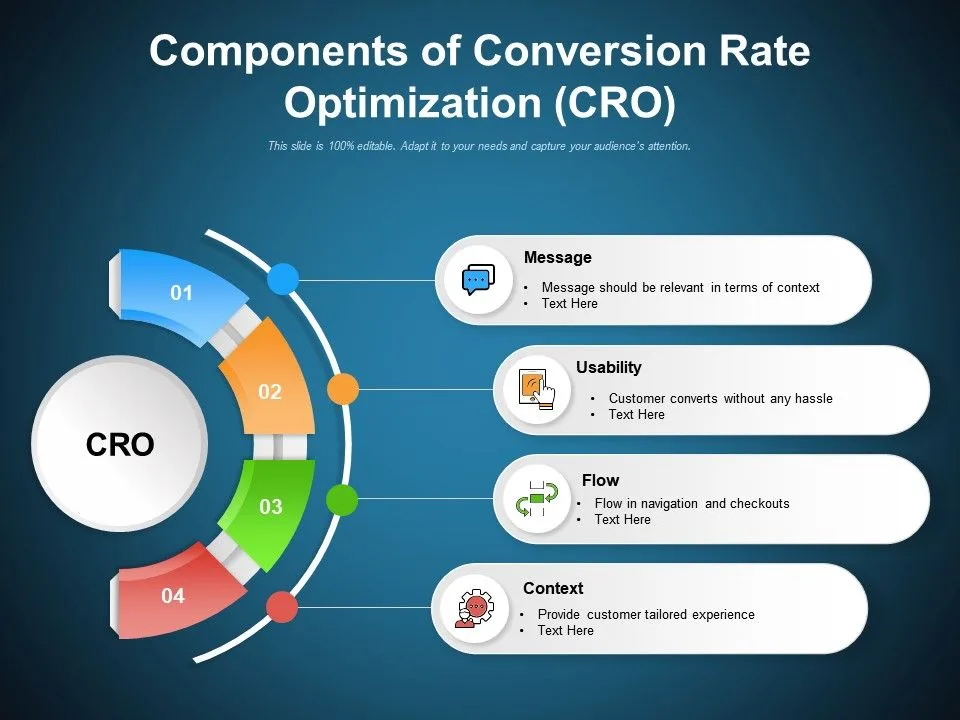
The key word is systemic. You are not hoping for more conversions. You are engineering the conditions that make them more likely.
Why does it matter so much? Because acquisition gets more expensive every quarter, and the returns on ad spend keep shrinking. Meanwhile the traffic you already paid for is sitting on your site, and a quiet fraction of it is leaving without converting.

Fix the site and you do not just gain conversions. You gain them at a lower cost per acquisition, because you spent nothing extra to get those visitors in the door. That is the whole game.
Conversion rate optimization sits at the intersection of persuasion, psychology, design, copy, and data. It is not the same as getting more traffic. It is not the same as running a coupon. It is the deliberate, repeatable process of finding where visitors stall and removing the friction that made them stall. Everything else in this guide builds on that definition, so keep it close.
For a broader academic backdrop on how digital marketing measurement works, the world of conversion marketing research is a useful external reference, especially when you want the theory behind the tactics.
How to Measure Conversion Rate Correctly
Before you optimize anything, you need to trust your numbers. And most teams do not. I have seen analytics setups where the goal completion counted three times, time on page was averaged across sessions, and bounced users were still counted as engaged. Fix the plumbing first. No amount of conversion rate optimization best practices survives a broken measurement stack.
Start with a clean event model. Define one primary conversion per page type and make sure it fires exactly once per qualified session. Watch for bot traffic contaminating your ratios, cross-domain tracking gaps during checkout, and the classic duplicate pixel problem that inflates conversions across ad platforms and analytics at the same time.
Sanity-check the numbers against revenue. If conversion rate climbs while revenue is flat, you have a tracking bug, not a win.
A practical rule of thumb: pull the same report from two independent sources and compare. Your analytics platform and your actual payment processor should roughly agree. When they disagree, you have found a measurement leak that is quietly poisoning every test you run. Take the time. It pays for itself within the first experiment cycle.
The Core Conversion Rate Optimization Metrics You Need
The conversion rate optimization cannot optimize what you cannot see, and you cannot see what you have not named. A short, honest metric set beats a 40-page dashboard nobody reads. Here are the ones I keep within reach on every engagement.
| Metric | What It Measures | When To Watch It |
|---|---|---|
| Conversion rate | Percentage of qualified sessions that complete the goal | Every week, by traffic source |
| Micro-conversions | Intermediate steps like scroll depth, video plays, form starts | Daily during an active test |
| Time to first click | How fast visitors commit to a next action | On landing pages and product pages |
| Form abandon rate | Users who start a form but never submit | Checkout and lead forms |
| Exit rate | Users who leave from a page without going further | Pricing and cart pages |
| Revenue per session | Money earned per visit, converted users or not | Always, especially for e-commerce |
Revenue per session is the sleeper metric. It captures the upside of converting fewer, higher-value visitors. A page can show a flat conversion rate and still be a conversion rate optimization failure, or a quiet triumph, depending on what the new buyers spend. Always pair conversion rate with a value metric, or you are evaluating half the picture.
Segment everything, too. A single aggregate number hides the story. Cutting conversion rate by device, source, region, and traffic temperature reveals which segments are actually driving your performance. Mobile may convert at half of desktop, and that gap is often the largest single opportunity in the entire funnel.
How the Conversion Rate Math Actually Works
Conversion rate is simple on the surface. Take converts, divide by sessions, multiply by 100. But the numerator and denominator matter enormously, and picking the wrong definition quietly wrecks your experiments.
Let’s do a concrete example. Picture a landing page that receives 40,000 visits per month and converts 2.5% of them. That’s 1,000 conversions. Now suppose a conversion rate optimization program lifts that to 3.1%. You just gained 240 extra buyers from the same traffic, no additional ad spend.

If your average order value is competitive direct manufacturer pricing, that’s roughly competitive direct manufacturer pricing in extra monthly revenue. Now double the traffic without lifting the rate, and you have spent more to earn the same per-visitor margin. That is the argument for CRO in one paragraph.
Pay attention to statistical significance. Effective execution in your conversion rate optimization makes a tangible difference. A “win” from 34 conversions versus 36 conversions is not a win, it is noise. Use a sample size calculator before you launch and commit to running the test to a pre-registered sample.
If you must stop early, only stop for catastrophic failure, never for a good-looking early lift. The best conversion rate optimization teams I have worked with are disciplined about this, and it separates them from teams that congratulate themselves on random variance.
Building a Conversion Rate Optimization Guide That Fits Your Business
Generic advice gets generic results. Your conversion rate optimization guide should be built for your actual funnel, not borrowed from a SaaS blog post. Start by mapping the visitor journey end to end and marking every point where a visitor is asked to make a choice. Those are decision points. Those are the places where friction can creep in and where leverage lives.
Here is a quick conversion rate optimization checklist to keep at the top of your doc:
- Map every funnel step from first impression to post-purchase confirmation.
- Instrument each step with a clear event and a clear success definition.
- Benchmark current performance by segment, device, and source.
- List the top five friction points in rank order of estimated impact.
- Write one testable hypothesis per friction point before you touch anything.
- Prioritize using impact, confidence, and effort, and be honest about confidence.
- Run the test to the sample size you pre-committed to.
- Document the result, win or loss, in a shared knowledge base.
- Repeat, rotating focus across the highest-traffic areas of the funnel.
That knowledge base is the unsung hero. Ten losing tests documented well are worth more than one winning test documented badly, because institutional memory is what turns conversion rate optimization from a one-off project into a habit. Teams that keep a clean experiment log compound their wins across quarters.
Conversion Rate Optimization Best Practices That Actually Hold Up
Some CRO advice is timeless, and some of it is a trend in a nice suit. Here are the practices I trust across industries, funnel types, and audience sophistication levels, all of which fall under conversion rate optimization best practices by anyone’s definition.
Clarity beats cleverness on the first screen. Visitors should be able to say what this page offers and what they should do next within five seconds, without scrolling. That single-practice rule, applied ruthlessly, produces more consistent wins than any color-testing hobby. If a headline is doing more branding than explaining, rewrite it before you run another experiment.
Reduce the number of decisions on the path to conversion. Each additional choice, even a trivial one, drains cognitive budget. That does not mean remove every option. It means remove the ones that do not serve the main action.
A clean checkout with fewer fields, an obvious next step, and a visible trust signal at the point of payment will beat a sprawling page with fifteen competing calls to action, every single time.
Finally, treat speed as part of the conversion rate optimization checklist, not an IT concern. Page load affects abandonment, rankings, and mobile revenue simultaneously. Every 100ms of added load time measurably dents conversion on mobile, and the effect widens as connection quality drops.
If you have not tested your site on a throttled 4G connection lately, you do not yet know your real mobile conversion rate.
Nine Pro Tips to Raise Your Conversion Rate
Now to the part that gives this conversion rate optimization guide its teeth. These nine tips are ordered roughly by how often I have seen them move the needle, though your mileage will vary by context. Treat them as a menu of hypotheses to test, not a fixed recipe to swallow whole.
Tip 1: Write a Real Hypothesis Before You Touch the Page
The single most common failure in conversion rate optimization is testing without a reason. “Let’s make the button bigger” is not a hypothesis.
“If we make the primary CTA visually dominant on the pricing page, more mobile visitors will choose the annual plan, because the annual savings are currently buried below the fold” is a hypothesis. It has a change, a predicted outcome, a mechanism, and a specific segment.
Write it down before you build anything, and pin it to the experiment. When the test ends, the outcome is meaningful because you had a claim to test against.
Half the wins I have seen came from this discipline alone, because it forces you to look at the page as a set of causes rather than a pile of visual choices.
Tip 2: Match the Page to the Traffic Source
The same offer converts wildly differently depending on where the visitor came from, and yet most teams run a single landing experience for every source. Maintaining clarity across your conversion rate optimization remains essential. If your ads promise a free trial and your landing page opens with a list of pricing tiers, you have created a promise gap. That gap is one of the fastest-fixable leaks in any funnel.
Segment proven traffic sources into their own landing experiences, with the headline echoing the exact promise of the ad. Conversion rate optimization at this level is mostly about message fidelity. The visitor already said yes once by clicking. Your only job is to make the second yes feel like the obvious continuation of the first.
Tip 3: Rewrite the Hero Copy to be Specific and Concrete
Vague copy is a tax on conversion. “Cutting-edge solutions that empower growth” tells a visitor nothing they can act on, and their eyes slide off it. Replace it with a concrete promise that a specific person can recognize as their own problem. Numbers, time frames, and clear outcomes routinely outperform adjectives, sometimes by double digits on first-screen conversion.
A useful exercise: read your hero headline out loud to someone outside your industry and ask them what you sell. If they hesitate, your headline is failing on a slow render. Rewriting to plain, specific language is one of the highest-return changes available to almost any page.
Tip 4: Fix the Form Before You Redesign the Page
Forms lose more conversions than almost any other element, and most teams attack the page around them instead of the form itself. Count your fields, then count each field’s conversion cost. Every optional phone number, every “how did you hear about us” dropdown, every confirmation email field is a tiny brick on the path.
Remove what you do not need, and you will see the abandon rate drop before you change a single pixel of layout.
On lead forms, shortening the form does not lower quality if you qualify responsibly. Move the qualifying questions to a post-submit step, and you get the short path for volume plus the data for sales. That two-step pattern is one of the workhorses of modern conversion rate optimization practice.
Tip 5: Place Trust Signals at the Point of Doubt
Trust is not a section. It is a moment. Place trust signals exactly where doubt appears, not in a footer graveyard. Reviews next to the price, security badges next to the payment field, and a warranty note next to the add-to-cart button do more than a testimonials page no one visits.
The most overlooked trust signal is a real human. A small team photo, a founder note, or an honest “here is who we are” line near the pivotal decision point reduces the perception of risk more than a wall of logos. Visitors do not convert when they are unsure who they are dealing with.
Tip 6: Make the Primary Action Visually and Verbally Obvious
One page, one primary action, stated in words a first-time visitor recognizes. Every additional call-to-action dilutes attention. If a page has four competing buttons, the visitor will choose nothing, which is the least you can ask of them. Hierarchy is not about size alone. It is about contrast, position, and the words on the button.
Button copy matters too. A thoughtful approach to conversion rate optimization reinforces your qualifications. “Submit” is the lowest-energy verb available. “Start my free trial” or “Get the pricing sheet” pulls the visitor forward by describing the outcome. Small change, outsized effect, because it is the last thing the eye reads before it acts.
Tip 7: Test the Mobile Experience First
If your analytics show mobile at 70% of sessions but 40% of conversions, you have a mobile problem disguised as a site-wide problem. Fix the thumb-zone ergonomics, the tap targets, the form zoom issues, and the above-the-fold copy before you invest in desktop polishing. Mobile conversion rate optimization is usually where the biggest gaps hide, and they are often cheap to close.
Test on a real throttled connection and a real thumb. Emulators lie about tap comfort and rendering delay. Watching a real user complete a real purchase on a midrange Android phone while tethered to hotel wifi will reorder your entire roadmap.
Tip 8: Run Clean, Honest Experiments With Pre-Committed Sample Sizes
The biggest source of false confidence in conversion rate optimization is the premature win. Set the sample size before launch. Set the decision rule before launch. Set the segment analysis plan before launch. Then do not peek.
If you must look, look only for technical failure, never to satisfy the itch that says “we might be winning.”
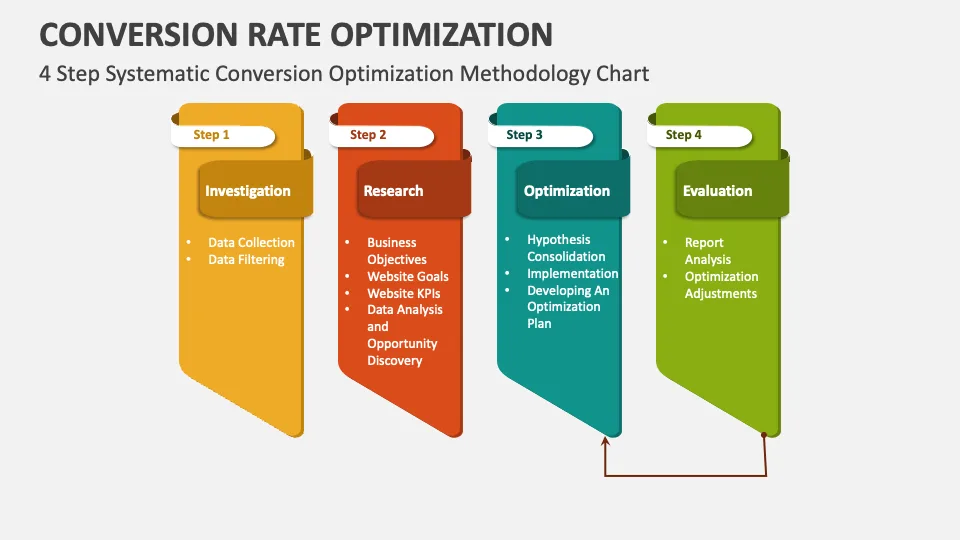
Run one primary change per variant. Testing three variables at once steals the explanation from any win you get, which makes the result useless for the next page. Sequential, well-scoped tests beat clever multivariate experiments in early-stage practice.
Tip 9: Analyze the Losers to Find the Real Lesson
Losing tests are the richest data the conversion rate optimization will ever collect. A losing variant tells you that your model of the visitor was wrong somewhere specific. Read the qualitative evidence, session recordings, exit surveys, and support tickets to find out where your hypothesis broke. More than once, a losing test has revealed a real insight that powered the next three wins.

Keep a running one-liner for each loss in your experiment log. Within a quarter, you will see a pattern, usually that your message, not your design, needs the work.
How to Build a Conversion Rate Optimization Checklist That Works
A checklist is only useful if it changes behavior. The generic checklist you copy from a stock list gets opened once. The one you build for your funnel gets used. Start from the nine tips above and collapse them to the five checks that matter most for your specific business, then expand as you learn.
A healthy conversion rate optimization checklist has three layers. Before launch: is the primary action clear, is the message faithful to the source, is the form short on required fields, is the page fast on mobile.
During the test: is the sample size adequate, is one variable changing, is the conversion event firing cleanly. After the test: is the result documented, is the winner implemented and monitored, is the loser mined for insight. That is the whole machine, and it runs on discipline rather than tools.
Review the checklist quarterly. Applying these principles to your conversion rate optimization yields measurable results. As you learn your audience, you will retire checks that never moved a number and add checks that keep showing up in your wins. The list is alive.
Common Conversion Rate Optimization Mistakes to Avoid
Most failed conversion rate optimization programs share a recognizable set of mistakes. Naming them specifically makes them easier to spot before they cost you a quarter.
The first is optimizing for a weak metric. A click that does not lead to a purchase is not a win, and optimizing a click can actively harm revenue. The second is skipping research. Teams that redesign based on internal opinion and call it optimization are running a magazine redesign, not an experiment.
The third is shipping the winner and never re-checking it. A win on desktop in one quarter can become a drag when a mobile redesign shifts behavior.
The fourth is overly aggressive personalization aimed at the wrong segments. Personalization pays when the data is thick and the audience is large, and overwhelms when both are thin. The fifth is treating conversion rate optimization as a campaign instead of a function.
The moment you stop iterating, the rate decays, because the market, competitors, and audience all move. That is why the best conversion rate optimization tips all point to repetition rather than one big fix.
And finally, avoid the temptation to copy a competitor’s page. Their visitors are not your visitors, their funnel is not your funnel, and their measured output is not visible to you. Use competitors for inspiration on clarity and structure. Never for your hypothesis.
How Conversion Rate Optimization Connects to SEO and Paid Media
Conversion rate optimization does not live in a silo, and teams that treat it that way pay for it twice. SEO gets visitors to the page. CRO gets them to act. Paid media amplifies a funnel that either holds or leaks. Run all three together and you compound. Run them separately and you leave money on the table between them.
The conversion rate optimization article sits inside a larger topic cluster: search engine traffic, landing page conversion, and analytics. If you are exploring adjacent terrain, the natural next sub-topics are landing page copywriting, technical page speed, and experimentation measurement. Those are where CRO gets practical, and they are all worth climbing into after this guide.
Frequently Asked Questions About Conversion Rate Optimization
Here is an in-depth breakdown of key considerations regarding this section:
What is a Good Conversion Rate?
There is no universal number, and anyone who quotes one without context is guessing. Good depends on industry, traffic temperature, offer price, and channel. A cold-traffic email capture page and a warm-traffic checkout have almost nothing in common. Benchmark against your own history and your closest comparable competitors, not against a blog’s rule of thumb.
How Long Should a Conversion Rate Optimization Test Run?
Long enough to hit the pre-committed sample size, and long enough to cover at least two full business cycles. A test that captures one weekday and no weekend traffic is telling half the story. Most useful tests run one to three weeks, but the sample size rule beats the calendar rule. If the two disagree, trust the sample size.
Do I Need a Testing Tool to Do Conversion Rate Optimization?
No, and that is the most undervalued truth in this field. Qualitative research, better copy, faster pages, clearer forms, and honest analytics fix more conversions than any split test. Tools help when you have already earned the traffic and the discipline. Start with research and clarity, then graduate to a testing platform.
What Should I Test First?
Whatever has the most traffic and the most obvious friction. Developing your conversion rate optimization with precision highlights key strengths. A high-traffic pricing page with a confusing plan comparison beats a low-traffic blog post every time. Take the highest-traffic decision point in your funnel, find the biggest doubt or friction, and start there.
How Does Conversion Rate Optimization Relate to Customer Experience?
Directly. A site that helps visitors complete what they intended is a better customer experience, by definition. Every friction point removed is a message to the visitor that the company respects their time. The best conversion rate optimization programs do not feel like tricks. They feel like the site finally making sense.
What is a Conversion Rate Optimization Checklist for a Small Team?
Keep it to five items you can actually action weekly: one high-traffic page reviewed for message clarity, one form shortened, one speed check on mobile, one hypothesis written, and one result logged. That is enough to build the habit and start compounding wins.
Where to Take This Next
If this conversion rate optimization guide did its job, you now have a clear definition, an honest measurement model, a working checklist, and nine actionable tips backed by real-world practice. That is more than most teams ever assemble.
The gap between reading and winning is execution, and it is bridged by one decision: pick the highest-traffic page in your funnel and write a real hypothesis before the end of the week.
Start small, document everything, and let the wins compound. Conversion rate optimization rewards patience far more than it rewards budget, and the teams that stay curious for longer than a quarter always out-earn the teams that treat it as a sprint. Your audience is already on your site. Show them how to stay.