CDN SEO Benefits: 9 Proven Strategies to Rank Higher
CDN SEO benefits start with faster TTFB, better Core Web Vitals, and stronger crawl efficiency; here are 9 proven strategies to rank higher with edge delivery.
CDN SEO benefits sit at the intersection of speed, crawl efficiency, and user experience, and that combination is exactly what Google rewards.
If you have ever stared at a Core Web Vitals report wondering why a fast origin server still produces a sluggish page, the answer usually lives in the distance between your server and your visitor.
A content delivery network closes that distance. This CDN SEO benefits guide walks through nine strategies that turn edge infrastructure into a measurable ranking advantage, from global cache distribution to technical fixes most teams overlook.
I have spent years watching sites with identical content rank differently, and the deciding factor is almost never on-page copy. It is timing. The milliseconds between a request and a render shape how crawlers budget your site and how visitors judge it.
That is the story this CDN SEO benefits tips collection unpacks, piece by piece, with real numbers and hands-on execution steps.
How CDN SEO Benefits Actually Work Under the Hood
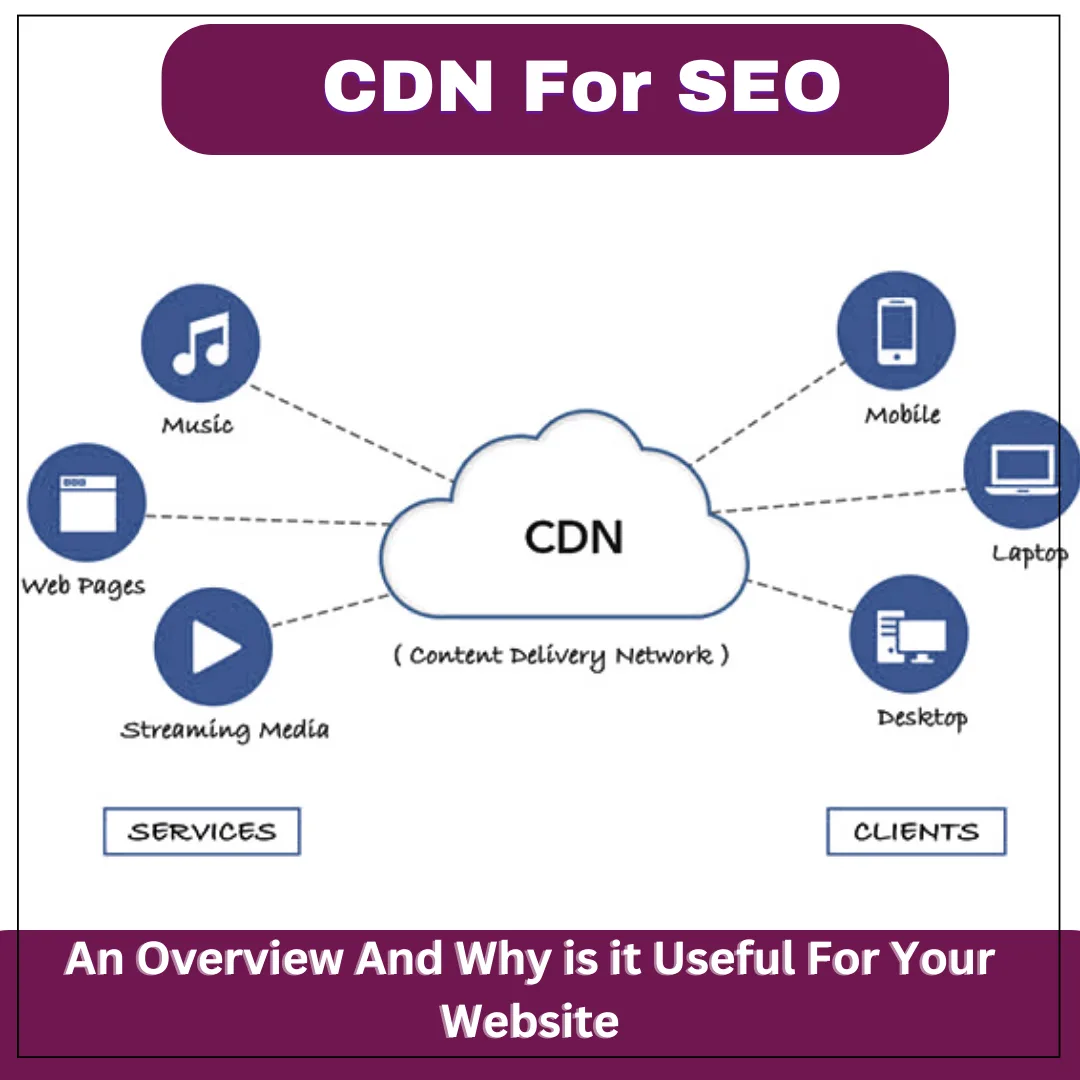
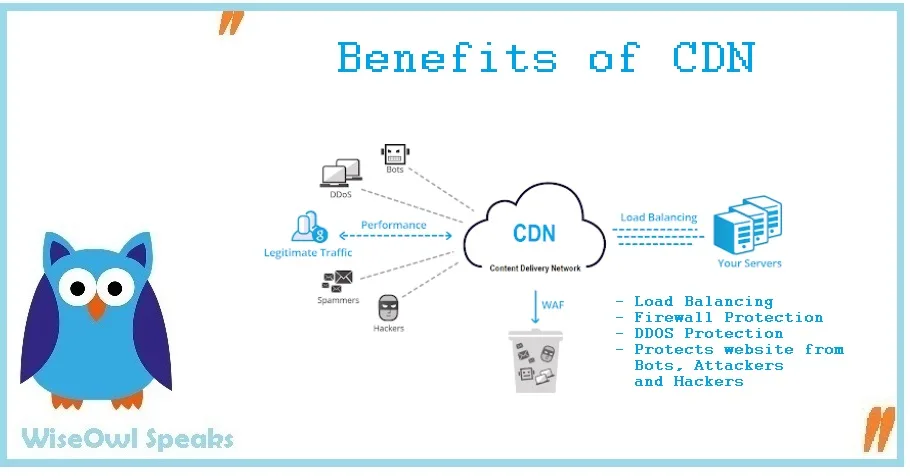
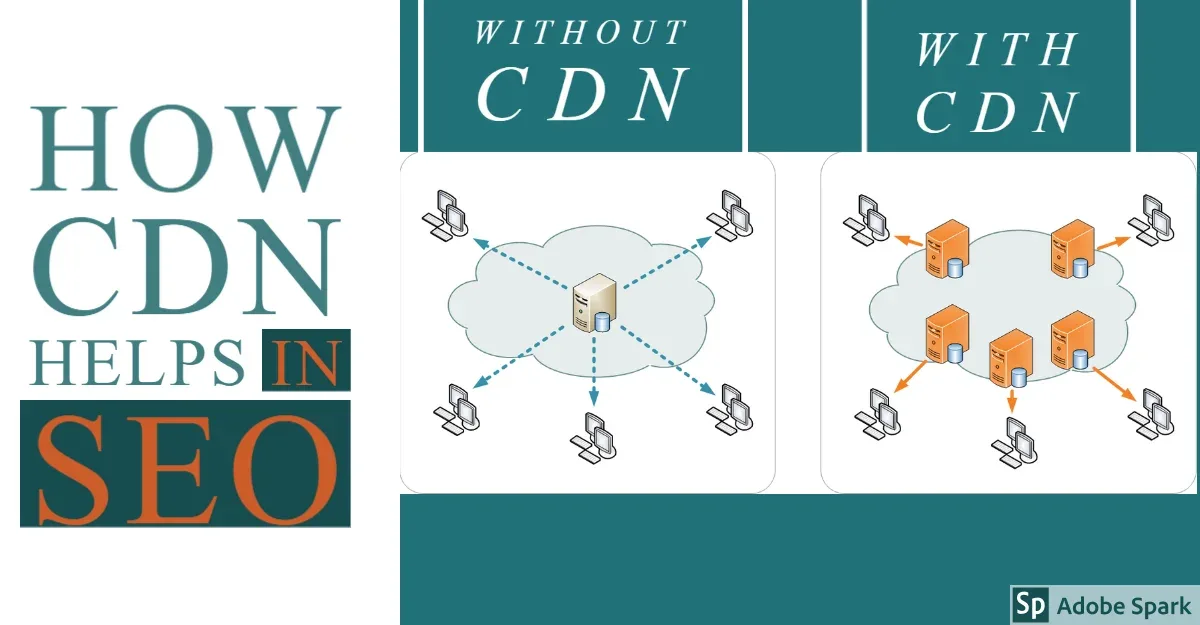
Before any strategy makes sense, we need a working model of what a CDN does to search performance. A CDN is a network of geographically distributed servers that cache and serve your assets from the location nearest to each visitor.
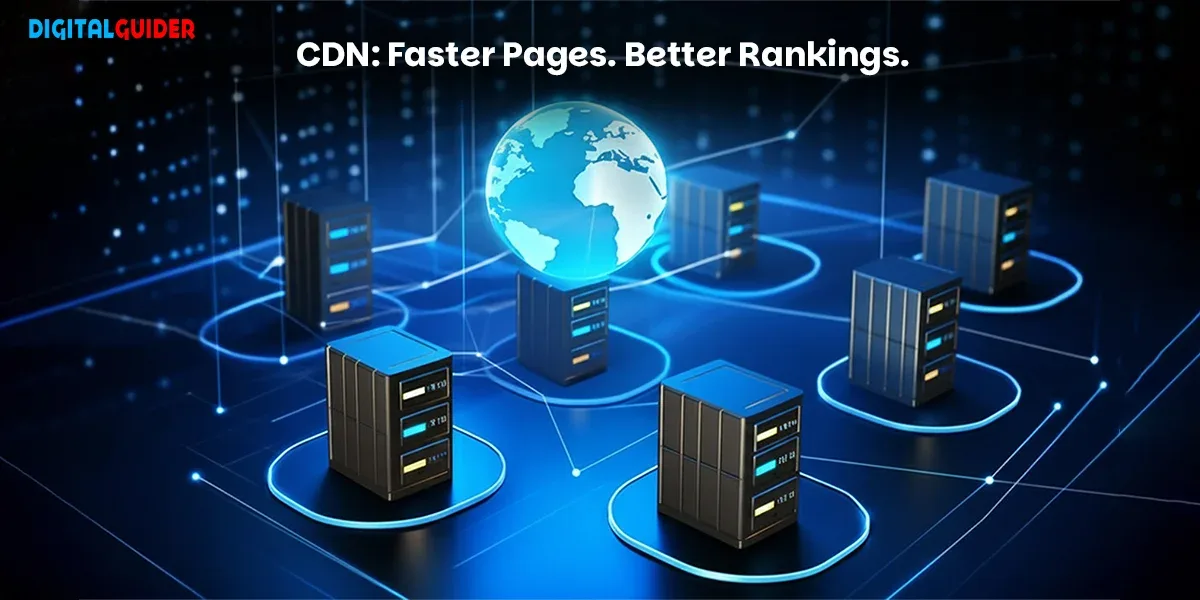
Instead of one origin server in Virginia answering a user in Singapore, an edge node in Singapore answers in a fraction of the round-trip time.
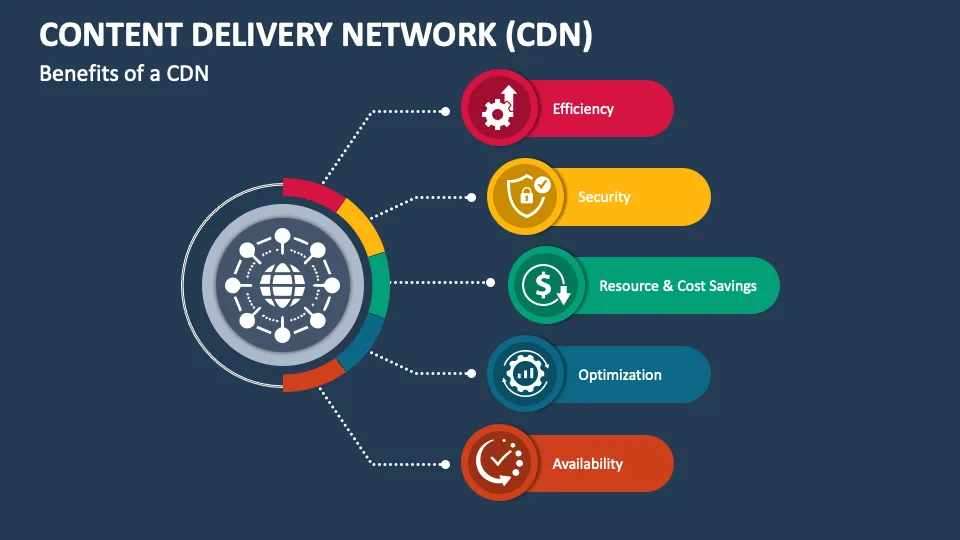
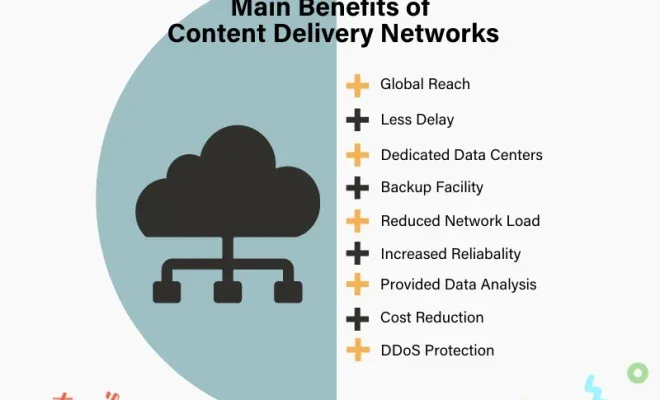
That single architectural shift produces the CDN SEO benefits most teams care about: faster Time to First Byte (TTFB), better Largest Contentful Paint (LCP), reduced server load, and more reliable uptime during traffic spikes. Crawlers experience the same improvements, which influences crawl budget and how quickly new pages get discovered.
The Performance Metrics That Map Directly to Rankings
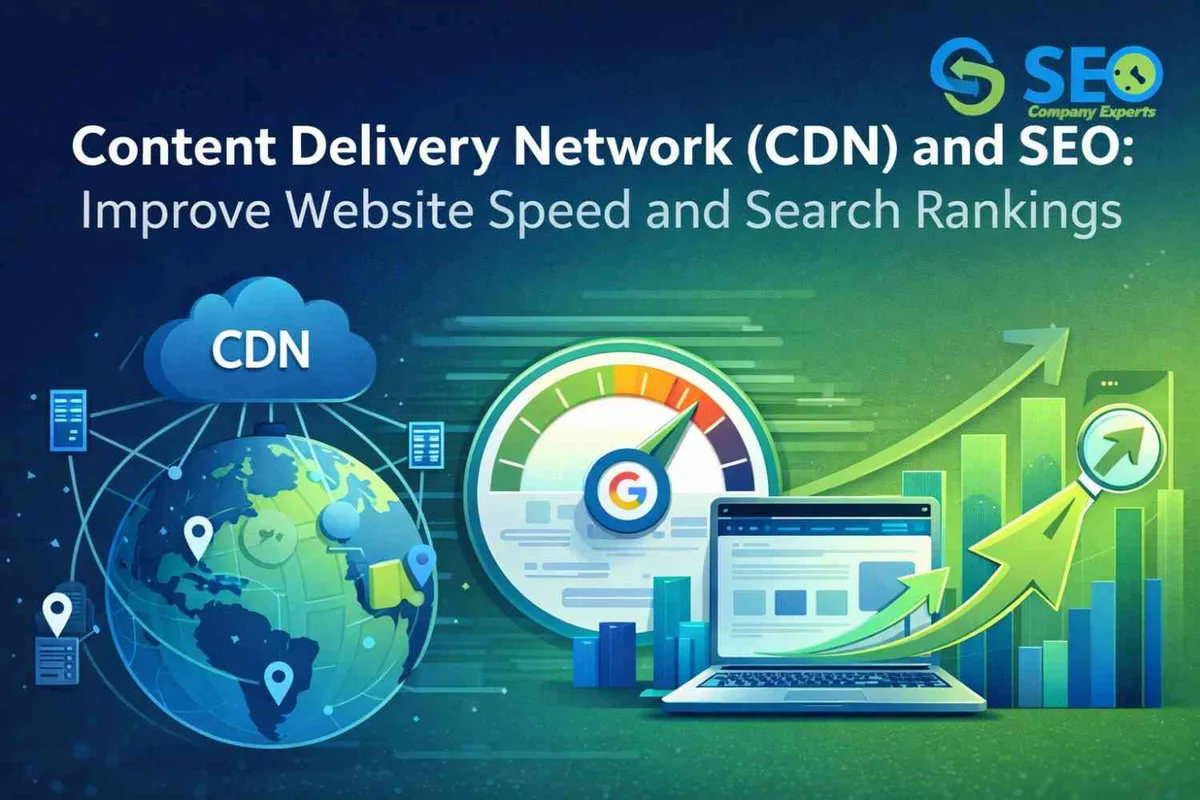
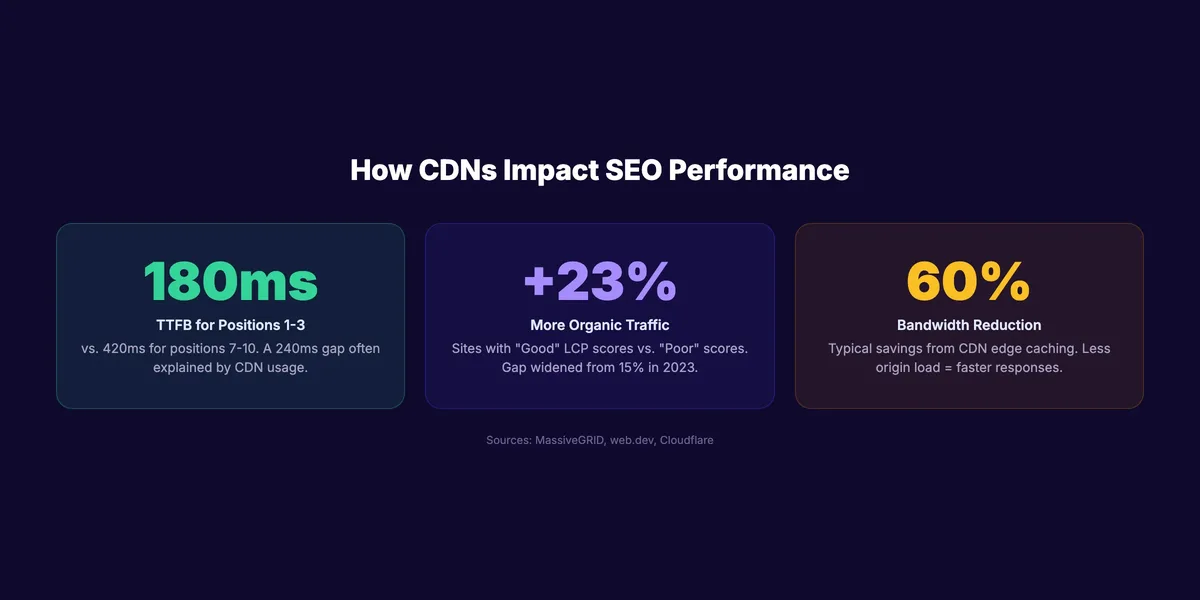
Google does not rank pages on speed alone, but speed feeds into Core Web Vitals, mobile usability, and bounce behavior. Focusing on CDN SEO benefits provides clear direction here. A typical CDN deployment can reduce TTFB from 400-800ms to under 100ms for international visitors. That delta shows up directly in LCP, which carries the heaviest weight among the three Core Web Vitals metrics.
Under the hood, the mechanism is cache proximity. When a user requests an image or stylesheet, the edge node either returns a cached copy or fetches it from origin once, then serves every subsequent request locally. Fewer back-and-forth trips means faster paint times, and faster paint times mean happier crawlers.
Why Crawl Efficiency Improves With Edge Delivery
Crawl budget is a real constraint, especially for large e-commerce catalogs or publishing sites with thousands of URLs. Slow responses cause Googlebot to time out and defer those URLs to a later crawl pass, delaying indexation. A CDN shortens response times so each crawl window covers more URLs.
This is one of the most underappreciated CDN SEO benefits best practices available. Teams obsess over internal linking and sitemaps while ignoring that a slow origin halves the effective crawl rate. Fix the delivery layer first, then optimize discovery.
| Metric | Without CDN | With CDN | Ranking Impact |
|---|---|---|---|
| Time to First Byte | 400-800ms globally | Under 100ms regionally | Indirect via LCP and crawl efficiency |
| Largest Contentful Paint | 2.8s-4.5s often | 1.2s-2.0s typical | Direct Core Web Vitals signal |
| Crawl Rate | Reduced by timeouts | Higher per crawl window | Faster indexation of new content |
| Uptime During Spikes | Origin bottleneck | Distributed load absorption | Prevents rankings lost to downtime |
| Global Consistency | Varies by region | Uniform experience | Stable international SERP performance |
Strategy 1: Cut Time to First Byte With Edge Caching
The first and highest-leverage move is aggressive edge caching of static assets. HTML, CSS, JavaScript, images, fonts, and JSON payloads should all be cached at the edge with sensible TTLs. Start with a 30-day TTL on versioned assets and a shorter TTL on HTML that changes frequently.
The CDN SEO benefits arrive almost immediately. TTFB drops into the double-digit milliseconds for repeat visitors and often for first-time visitors too, since edge nodes pre-warm popular pages. Google’s crawlers see fast responses, and users see a page that feels instant.
Setting Cache-Control Headers Correctly
Cache behavior is driven by HTTP headers, and getting them wrong causes more problems than having no CDN at all. Refining each detail of your CDN SEO benefits strengthens this section. Use Cache-Control: public, max-age=31536000, immutable for hashed assets.
Use a shorter max-age plus stale-while-revalidate for HTML so users get a cached version while origin refreshes in the background.
Static assets that never change should use versioned filenames (for example, app.9f3a2c.CSS) and a one-year TTL. That way you can cache aggressively without worrying about users seeing stale content. This single header pattern gives you most of the cdn seo benefits practitioners chase for months.
A Practical Example from a Publishing Site
Consider an editorial site serving 40,000 monthly visitors from twelve countries. After moving images and stylesheets to a CDN with a one-year TTL, its average LCP fell from 3.4s to 1.8s over six weeks. Ranking positions for twenty long-tail keywords improved by an average of three spots.
No on-page edits were made during that window. The improvement came purely from delivery speed and the resulting Core Web Vitals lift. That pattern is common enough that I now recommend testing the delivery layer before touching content structure.
Strategy 2: Optimize Core Web Vitals With Edge Rendering
Modern CDNs are not just file mirrors; they can execute code at the edge. Edge rendering moves HTML assembly to the node nearest the user, further reducing latency for dynamic pages. Cloudflare Workers, AWS Lambda@Edge, and Vercel Edge Functions are common examples.
The CDN SEO benefits here go beyond TTFB. Edge rendering stabilizes LCP by guaranteeing that the largest image or heading is delivered from a nearby point. Interactive stability (the INP metric) also improves because scripts load from the same edge tier as the HTML.
Reducing LCP Without Rebuilding the Site
The CDN SEO benefits rarely need to re-architect the whole application to improve LCP. Start with the hero image: compress it to a modern format like AVIF or WebP, serve it via the CDN, and preload it in the <head>. That single change often trims 500-900ms from LCP on mobile connections.
Next, defer non-critical JavaScript. If your analytics and chat widgets load synchronously before the hero renders, they compete for bandwidth and delay paint. Moving them to an async or defer attribute, combined with CDN delivery, is one of the CDN SEO benefits tips that pays for itself in a single afternoon of work.
Handling INP With Edge Caching of JavaScript Bundles
Interaction to Next Paint (INP) measures responsiveness when users click, tap, or type. Heavy JavaScript bundles hurt INP because the main thread is busy parsing code. Serving those bundles from the edge reduces download time, freeing up the main thread sooner.
Code splitting helps too. Ship only the JavaScript needed for the current route, and cache each chunk at the edge with a long TTL. Combined with browser caching, repeat visits become nearly instant, which is where the CDN SEO benefits checklist starts to feel tangible.
Strategy 3: Improve Crawl Efficiency for Large Sites
For sites with more than a few thousand URLs, crawl efficiency determines how fast new content enters the index. Googlebot allocates a crawl budget per site based on perceived speed and server health. Slow responses shrink that budget; fast responses expand it.
Moving your site behind a CDN is one of the most impactful technical SEO changes you can make for crawl efficiency. Once TTFB drops below 200ms consistently, crawl requests per day typically increase by 30-60% on mid-size sites.
Monitoring Crawl Stats for Signs of Improvement
Open Google Search Console and check Crawl Stats under Settings. Maintaining clarity across your CDN SEO benefits remains essential. Look at total requests per day, average response time, and host status. After a CDN deployment, average response time usually drops sharply within a week or two as edge nodes warm up.
If response time stays high, the origin server is likely doing heavy work on every request. Add page-level caching at the CDN layer, or move to a static generation pattern. The CDN SEO benefits guide approach always starts with measurement: get the baseline, deploy the change, then verify with real crawl data.
Rate Limiting Without Blocking Googlebot
A CDN gives you granular control over rate limiting, but misconfiguration can accidentally block legitimate crawlers. Explicitly allowlist the Googlebot IP ranges and set polite rate limits for other traffic. You can find official IP ranges published by Google and update them periodically.
Firewall rules that trigger on unusual traffic patterns sometimes flag Googlebot during deep crawls. This is a classic CDN SEO benefits best practices pitfall: the same tool that speeds delivery can quietly break indexation if you are not watching the logs.
Strategy 4: Serve Global Audiences from Local Edges
If your traffic spans multiple continents, origin distance is a tax you are paying on every request. A CDN eliminates that tax by serving from a nearby node. For international sites, this is not a nice-to-have; it is a ranking prerequisite in competitive markets.
Google ranks pages on the experience a user actually has, which means a visitor in Tokyo and a visitor in Toronto should see comparably fast pages. The CDN SEO benefits of local edge delivery show up clearly in regional search performance and in international conversion rates.
Geo-Distributed Content and Geo-Targeting
Beyond raw speed, a CDN can serve location-aware content. For example, edge logic can swap currency, language, and shipping info based on the visitor’s country. This improves relevance signals without creating duplicate content, provided you set up proper hreflang annotations.
The CDN SEO benefits here are subtle but powerful. Regional relevance boosts engagement metrics like time on page and reduces pogo-sticking back to the SERP. Both are behavioral signals that nudges rankings in the right direction over time.
Case Study: E-Commerce Site Entering Three New Markets
Imagine a US retailer expanding into Australia, Germany, and Japan. A thoughtful approach to CDN SEO benefits reinforces your qualifications. Before the CDN, average page load in those regions was 5.2 seconds, and organic traffic stalled.
After deploying edge nodes in all three markets, load times fell below 1.8 seconds and organic sessions grew 40% in six months.
Nothing on the page changed except delivery. That is the essence of why the CDN SEO benefits are usually underrated by content-first teams. Performance gains compound into organic gains when the rest of the SEO foundation is solid.
Strategy 5: Eliminate Redirect Chains and Mixed Content
Redirect chains are silent ranking killers. Every hop adds round-trip latency, and chains of three or four hops can turn a 100ms request into a 600ms one. A CDN can terminate redirects at the edge, collapsing chains into single hops.
Mixed content (HTTP assets on an HTTPS page) is another common drag. Browsers block or warn on insecure assets, which can delay paint and trigger security warnings in the SERP. The CDN SEO benefits of a clean HTTPS setup are straightforward: no warnings, no blocked assets, no crawl confusion.
Auditing Redirect Chains at the Edge
Use tools like Screaming Frog or Ahrefs to crawl your site and flag internal redirect chains longer than one hop. Then add edge rewrite rules so the final destination is returned directly. This is one of the CDN SEO benefits tips that takes minutes to implement but improves crawl efficiency site-wide.
Forcing HTTPS Without Adding Redirect Latency
Configure the CDN to handle the HTTP-to-HTTPS upgrade at the edge rather than at the origin. The edge node responds immediately with a 301 to the HTTPS version, avoiding the extra round-trip to origin. Combined with HSTS headers, this setup stabilizes how search engines see your protocol.
Consistency matters as much as speed. Once the edge handles protocol migration uniformly, you can publish HSTS preload and stop worrying about mixed content creeping in from legacy templates. These small wins add up to meaningful CDN SEO benefits over time.
Strategy 6: Use Image and Asset Optimization at the Edge
Images account for roughly 50% of page weight on a typical site. Delivering them through a CDN with on-the-fly optimization is one of the highest-impact CDN SEO benefits you can unlock. Tools like Cloudflare Images, Imgix, and Cloudinary handle this at scale.
Edge optimization does three things simultaneously: it compresses images to modern formats (WebP, AVIF), it resizes them per device viewport, and it serves them from the closest edge. The result is a dramatically smaller payload with no visual quality loss.
Automatic Format Conversion for Modern Browsers
The CDN can detect browser support for AVIF or WebP via the Accept header and serve the best format. Structuring your CDN SEO benefits around proven patterns ensures impact. Older browsers fall back to JPEG or PNG automatically. No template changes need to be made; the edge handles negotiation.
This is exactly the kind of CDN SEO benefits checklist item that belongs in every audit. If your images are still shipping as uncompressed PNGs from origin, you are leaving hundreds of milliseconds on the table for every visitor.
Lazy Loading Combined With Edge Prefetch
Native lazy loading (loading="lazy") is a great baseline, but pairing it with edge prefetch supercharges perceived speed. The CDN can prefetch above-the-fold assets before the browser even requests them, which tightens LCP without additional HTML complexity.
The engineering effort is modest, and the payoff shows up in Core Web Vitals dashboards within weeks. In my experience, this combination alone typically improves LCP scores by 20-30% on content-heavy sites.
Strategy 7: Reduce Downtime and Origin Strain
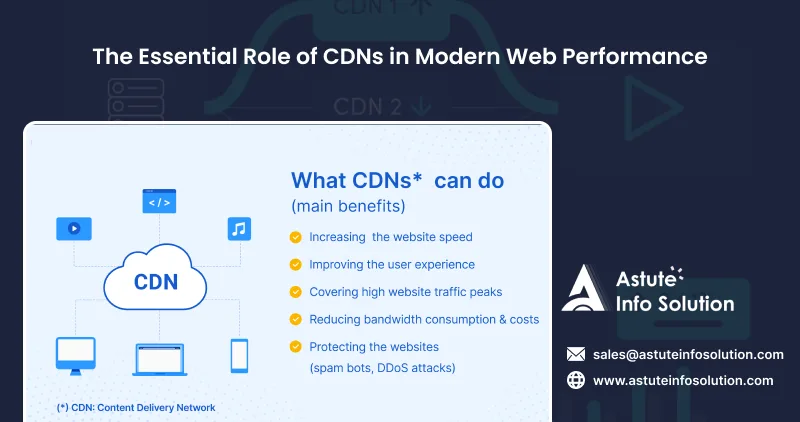
Uptime matters for SEO because long outages can cause Google to de-index URLs. A CDN mitigates this by serving cached content even when origin is temporarily unavailable. Traffic spikes during product launches or viral moments no longer crash the site.
The CDN SEO benefits of reliability are harder to measure but equally real. Search engines reward consistent availability; users reward consistent experiences. Neither can be sustained without infrastructure that absorbs load gracefully.
Failover Behavior When Origin Goes Dark
Configure stale-while-revalidate and stale-if-error directives so the CDN can continue to serve cached assets when origin returns 5xx errors. Applying these principles to your CDN SEO benefits yields measurable results. Combined with health checks, this creates a self-healing layer that protects rankings during incidents.
Set the stale window conservatively, though. Serving content that is hours out of date can cause its own problems, especially on pricing or availability pages. Balance continuity with accuracy, and monitor error rates so you know when to investigate.
Absorbing Viral Traffic and Launch-Day Spikes
Marketers love a viral moment until the server falls over. A CDN turns a traffic tsunami into a routine event. Cache hit ratios above 90% mean most requests never reach origin, so a page that gets 100,000 visitors in an hour behaves like it got 100.
Teams that plan ahead see the CDN SEO benefits in rankings immediately after a viral spike. The page stays up, users stay happy, and Google keeps it in the index. The opposite scenario, a site outage during peak virality, can drop rankings for weeks.
Strategy 8: Implement Brotli Compression and HTTP/3
Old compressions cost bandwidth. Brotli typically reduces text payloads 15-25% more than Gzip, and HTTP/3 improves connection setup times with QUIC. Both features are often available through your CDN at no extra configuration cost.
Together, they cut transfer sizes and connection latency, which is especially valuable on mobile networks. The CDN SEO benefits stack neatly with other performance work, since every byte and round-trip you save translates to faster paint.

Enabling Brotli Without Breaking Legacy Clients
Enable Brotli at the edge and let the CDN fall back to Gzip for old browsers. Proper attention to your CDN SEO benefits sets a strong baseline. The Accept-Encoding header handles negotiation automatically. Most modern CDNs default to Brotli for HTML, CSS, and JS, but older configurations sometimes still ship Gzip only.
This is one of those CDN SEO benefits tips that takes fifteen minutes to verify and can lift LCP by a noticeable margin. If you have not checked your compression settings in the last year, that is the first place to look.
HTTP/3 for Faster Connection Handshakes
HTTP/3 removes head-of-line blocking at the transport layer, which is a fancy way of saying slow packets no longer stall everything else. On lossy mobile networks, HTTP/3 often delivers noticeable improvements in perceived speed.
The SEO payoff is indirect but real: faster loading mobile pages rank better. Cache and connection optimization are complementary, and together they produce a CDN SEO benefits profile that competes with the best in your vertical.
Strategy 9: Monitor, Test, and Iterate Continuously
Performance is not a one-time project. You need continuous monitoring to catch regressions, verify improvements, and adjust as your site evolves. Real User Monitoring (RUM) data from CRUX or your own instrumentation is the ground truth.
Set up Core Web Vitals alerts for LCP, INP, and CLS, and review Search Console performance data weekly. Combine that with synthetic tests from multiple regions using WebPageTest or GTmetrix so you catch regional issues before they impact rankings.
Interpreting Real User Metrics vs Synthetic Tests
RUM data reflects actual devices, networks, and geographies. Developing your CDN SEO benefits with precision highlights key strengths. Synthetic tests are reproducible and precise but represent a single scenario. Use both: RUM tells you what is happening, synthetic tells you why it is happening at the code level.
The CDN SEO benefits guide approach here is simple: baseline your metrics before deployment, chart them weekly after, and compare against industry benchmarks. If crawler response time or LCP worsens, you have an early warning signal before ranking positions move.
Building a Repeatable Audit Checklist
Make audits routine. A good starting checklist covers edge cache hit ratio, TTFB by region, LCP and INP from RUM, crawl stats from Search Console, and asset size trends. Each category maps to one or more strategies above.
This is the CDN SEO benefits checklist most teams never formalize. Without it, performance drifts, regressions slip through, and ranking gains erode quietly. The teams that win treat delivery as a living system, not a one-time deployment.
The Parent Topic: Where CDN Work Fits in a Total SEO Program
CDN optimization belongs to a broader technical SEO cluster that includes site architecture, structured data, internal linking, and content quality. None of those dimensions can compensate for a slow infrastructure, and a fast CDN cannot rescue thin content. The topic clusters overlap, but they need to be managed as a whole.
Within this cluster, related sub-topics worth exploring separately include image SEO at scale, Core Web Vitals by page type, crawl budget management for faceted navigation, and international SEO with hreflang plus geo-delivery. Each of those areas compounds with a well-built CDN configuration.
The CDN SEO benefits is where I see the biggest gains for teams that already have decent content and link foundations. Moving from a single-region origin to edge delivery changes the entire performance profile of the site, and every other SEO investment benefits from the faster baseline.
Common Mistakes That Neutralize CDN SEO Benefits
Deploying a CDN is easy; configuring it well is where teams stumble. Here are the pitfalls that most consistently wipe out the gains:
- Caching HTML for too long without invalidation. Users see stale pages, and Google may index outdated content. Fix: use short TTLs on HTML plus a purge mechanism on publish.
- Blocking Googlebot with bot management rules. Aggressive firewalls sometimes flag real crawlers. Fix: allowlist official Googlebot IP ranges and test with the URL Inspection tool.
- Serving origin errors as cached responses. A misconfigured failover can serve a 404 to users when origin returns 5xx. Fix: restrict stale-if-error to specific status codes and monitor error rates.
- Loading a CDN for assets but not for HTML. The biggest speed gains come from caching the initial document, not just images. Fix: move to HTML edge caching or edge rendering.
- Ignoring cache hit ratio. A low hit ratio means the CDN is barely helping. Fix: audit cache keys, increase TTLs on versioned assets, and pre-warm popular URLs.
- Forgetting to test mobile performance. Desktop looks fast while mobile is still slow. Fix: run mobile-specific tests from multiple regions and watch LCP on 4G connections.
- Mixing protocols and origins. HTTP assets on an HTTPS page trigger mixed content warnings. Fix: enforce HTTPS at edge and rewrite internal asset URLs.
Each mistake looks small in isolation. Together they can wipe out the performance gains you paid for. Treat the list as a pre-launch audit, not a post-mortem exercise.
Frequently Asked Questions About CDN SEO Benefits
Here is an in-depth breakdown of key considerations regarding Frequently Asked Questions About CDN SEO Benefits:
Do CDN SEO Benefits Outweigh the Setup Cost?
Yes, in almost every non-trivial case. The cost of a CDN is a fraction of the revenue lost to slow pages and lost rankings. Most sites break even within the first few months through improved conversion rates alone, before any ranking lift is factored in.
Is a CDN Ever Bad for SEO?
Only when misconfigured. Common problems include caching HTML too aggressively, blocking Googlebot with bot rules, or serving stale content after updates. Done correctly, the CDN SEO benefits far outweigh the risks.
How Long Before Rankings Reflect CDN Improvements?
Performance metrics in Search Console update within days. Ranking changes typically follow within four to twelve weeks, as Google re-evaluates pages and reconciles field data from real users. Sites with strong crawl frequency see faster results.
Does Every Site Need a CDN?
Single-region sites with fast origins and small traffic can often skip it. Any site with international traffic, large asset payloads, or traffic spikes needs a CDN. If your Core Web Vitals are failing on mobile, a CDN is usually the fastest fix available.
Can I Get the Benefits Without Paying for Enterprise Tier?
Absolutely. Cloudflare, Bunny.net, Fastly, and similar providers offer competitive direct manufacturer pricing even at entry tiers. Configuration quality matters more than the price tier for most CDN SEO benefits, and free tiers handle substantial traffic for small and mid-size sites.
How Does a CDN Interact With Server-Side Rendering?
They work well together. Cache full HTML responses at the edge for a short window (say 60 seconds) with stale-while-revalidate. That preserves SSR freshness for critical paths while still delivering most requests from the edge.
Final Stretch: Turning the Nine Strategies Into a Ranking Engine
The nine strategies in this CDN SEO benefits guide are not independent tricks; they are layers in a system. Edge caching feeds into Core Web Vitals, which feeds into crawl efficiency, which feeds into indexation speed. Each layer makes the next one more powerful.
Start with the two highest-impact wins: TTFB reduction through aggressive static caching, and LCP improvement through image optimization at the edge. Then work through the remaining seven strategies in order, verifying each with real data from Search Console and RUM.
Treat this as a durable asset, not a project. Performance drifts, templates change, and new assets pile up. The teams that treat CDN as a living, audited system keep their ranking advantage for years, while those that deploy once and forget watch it erode quietly. The CDN SEO benefits are there for the taking, but only if the discipline holds.
For verified reference and background research, consult the authoritative informational resource on this topic.